

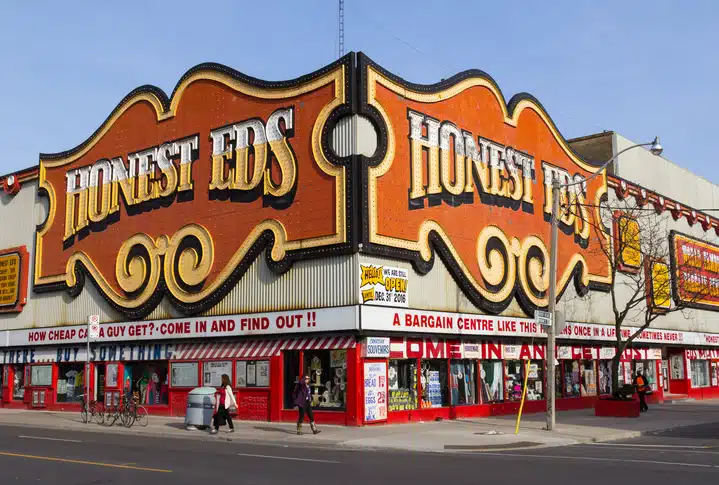
For years, construction fencing and excavation dominated the former Honest Ed’s site at Bloor and Bathurst, leaving Torontonians to imagine what might eventually emerge from one of the city’s most closely watched redevelopment projects. Today, as pedestrian walkways reopen, retailers prepare to launch, and residents begin occupying completed buildings, Mirvish Village is finally beginning to reveal itself as something more than a conventional mixed-use development.
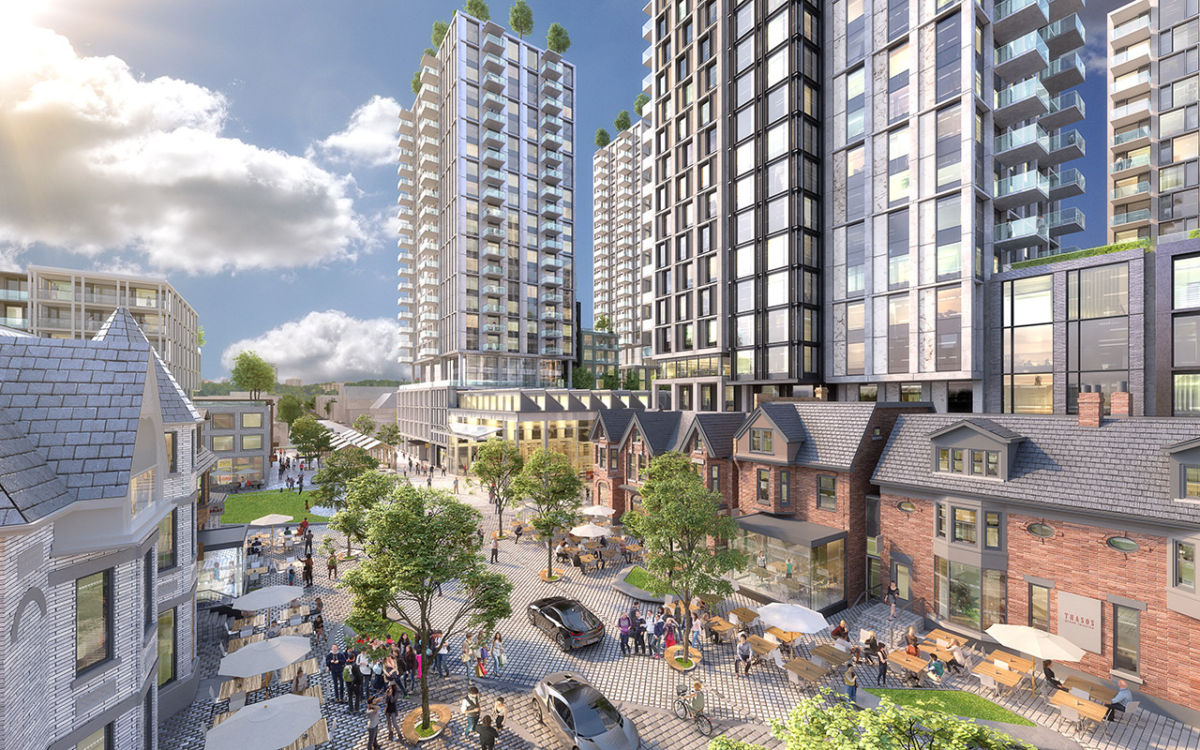
Walking through portions of the newly accessible site now feels markedly different from many of Toronto’s newer large-scale projects. Restored Victorian homes line sections of Markham Street beneath modern residential towers, narrow pedestrian laneways open into intimate retail corridors, and landscaped public areas begin connecting together spaces designed to encourage people to linger rather than simply pass through. The atmosphere feels intentionally urban, layered, and distinctly tied to the surrounding Annex neighbourhood.
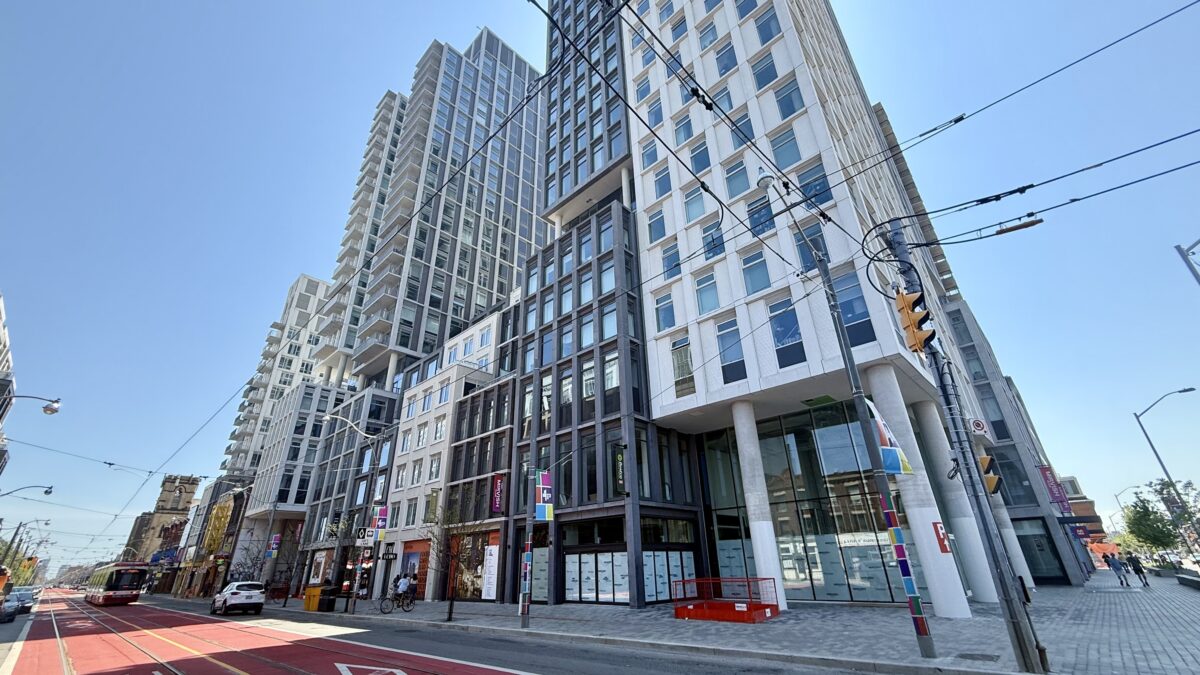
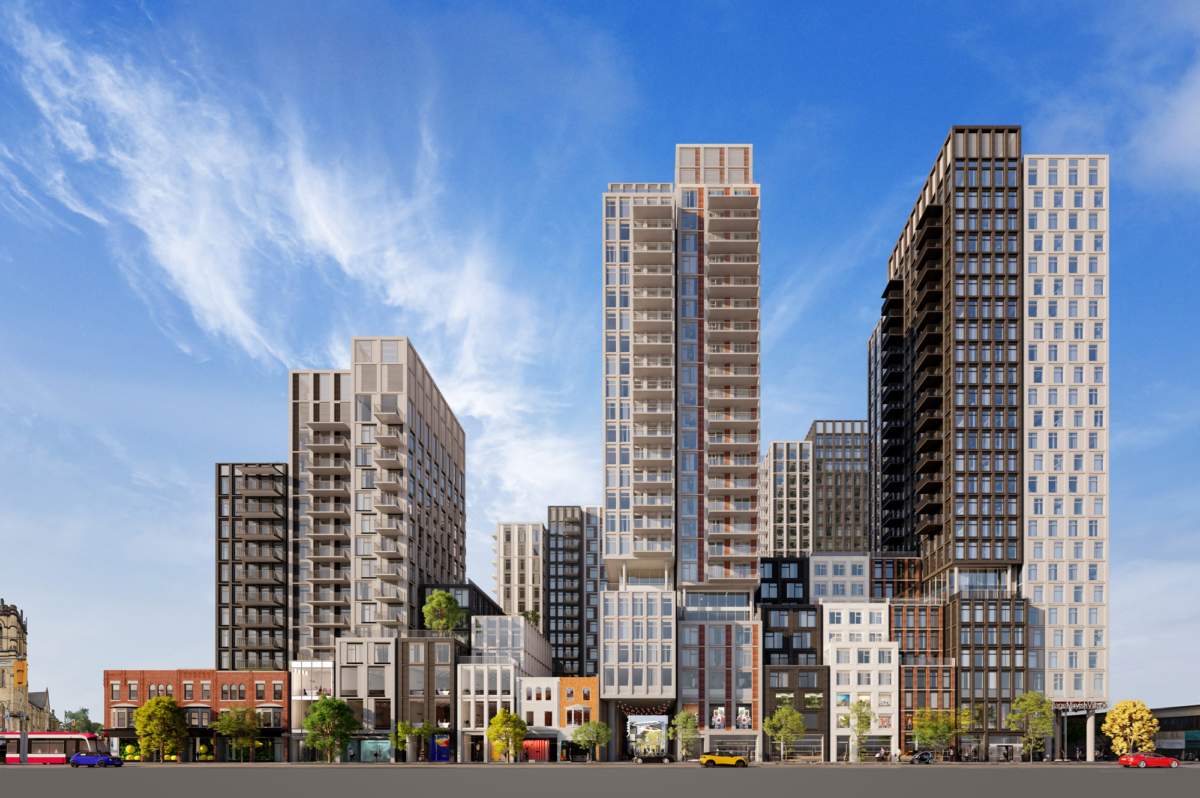
Located on the historic site of Honest Ed’s and the original Mirvish Village, the development includes approximately 900 purpose-built rental residential units and roughly 200,000 square feet of commercial space anchored by tenants including a grocery store, a food hall and live music venue, an LCBO location, and the Toronto School of Management.
Yet the broader ambition behind the Honest Ed’s redevelopment extends well beyond simply adding density or retail space to the neighbourhood. Mirvish Village is attempting to create a neighbourhood-scale ecosystem that blends housing, hospitality, culture, entrepreneurship, and pedestrian-oriented public space into a single integrated environment rooted in the identity of the surrounding community.
Independent Retail Drives the Tenant Strategy
According to Noelle Goulding, Sales Representative with The Behar Group, who together with project partners Avi Behar and Rami Kozman, is overseeing retail/commercial programming and leasing for the development, the merchandising strategy has intentionally prioritized independent operators and experiential concepts over a more conventional national-chain-heavy approach.

“It’s been very intentional,” Goulding said during an interview with Retail Insider. “We’re really trying to focus on bringing in thoughtfully curated operators, including second and third locations for many of these concepts, as well as new first-to-market concepts such as Book Bar. We want to bring something different to the community while still honouring the character of the neighbourhood, and that’s really what the vision has been.”
That strategy reflects the character of the surrounding area, where The Annex, Harbord Village, Palmerston-Little Italy, and nearby University of Toronto populations create one of Toronto’s most active and eclectic urban districts. Leasing materials indicate that more than 60,000 University of Toronto students and daytime users are located within walking distance of the site.
Pedestrian activity around the intersection is also substantial, with more than 20,000 people estimated to pass through the Bloor and Bathurst area during an eight-hour period.
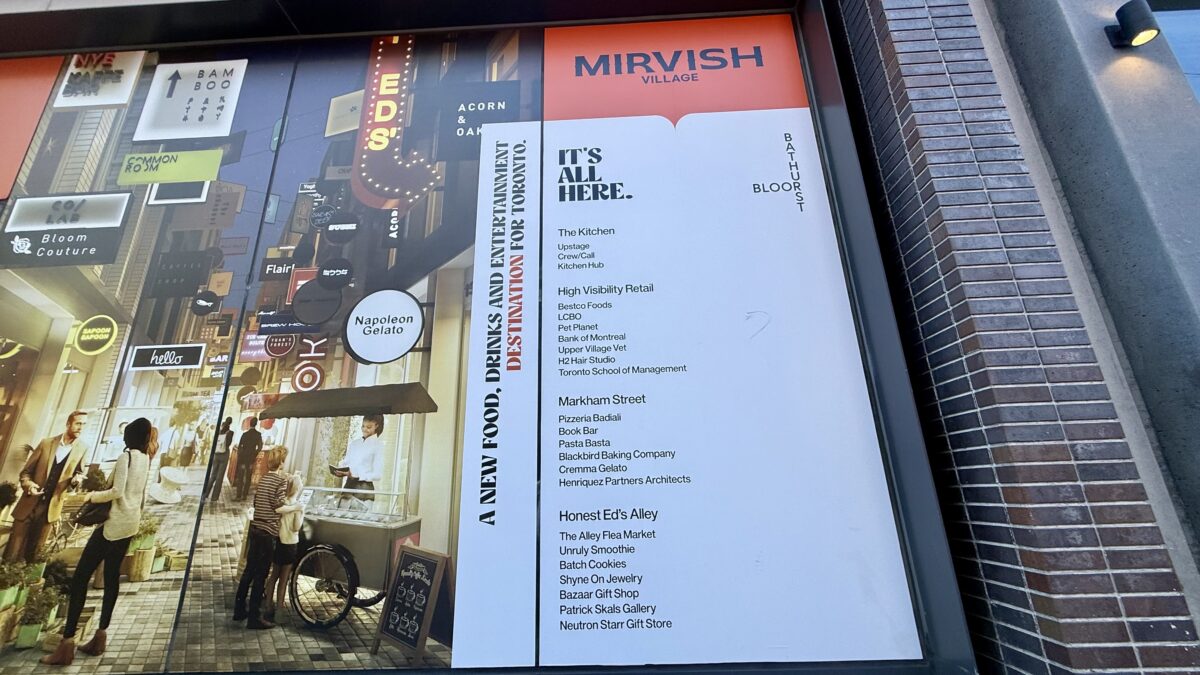
Rather than relying primarily on formulaic quick-service chains, Mirvish Village has focused on tenants that contribute to a more layered street-level environment. Current and planned operators include Pizzeria Badiali, Blackbird Baking Co., Pasta Basta, Crema Gelato, and Book Bar, a bookstore and wine bar concept opening within one of the restored heritage homes.
Book Bar, Goulding explained, exemplifies the type of hospitality-driven retail environment the project hopes to cultivate.
“It’s set up like a library. You can have a glass of wine, browse through books, and either purchase them or stay and enjoy them there,” she said. “It works really well with the heritage houses and contributes to that cozy, comfortable feel.”
The approach also reflects broader changes occurring across urban retail real estate, where developers increasingly view curated food, hospitality, and experiential retail concepts as essential ingredients for creating active pedestrian districts.
Honest Ed’s Alley Reimagines Retail Incubation
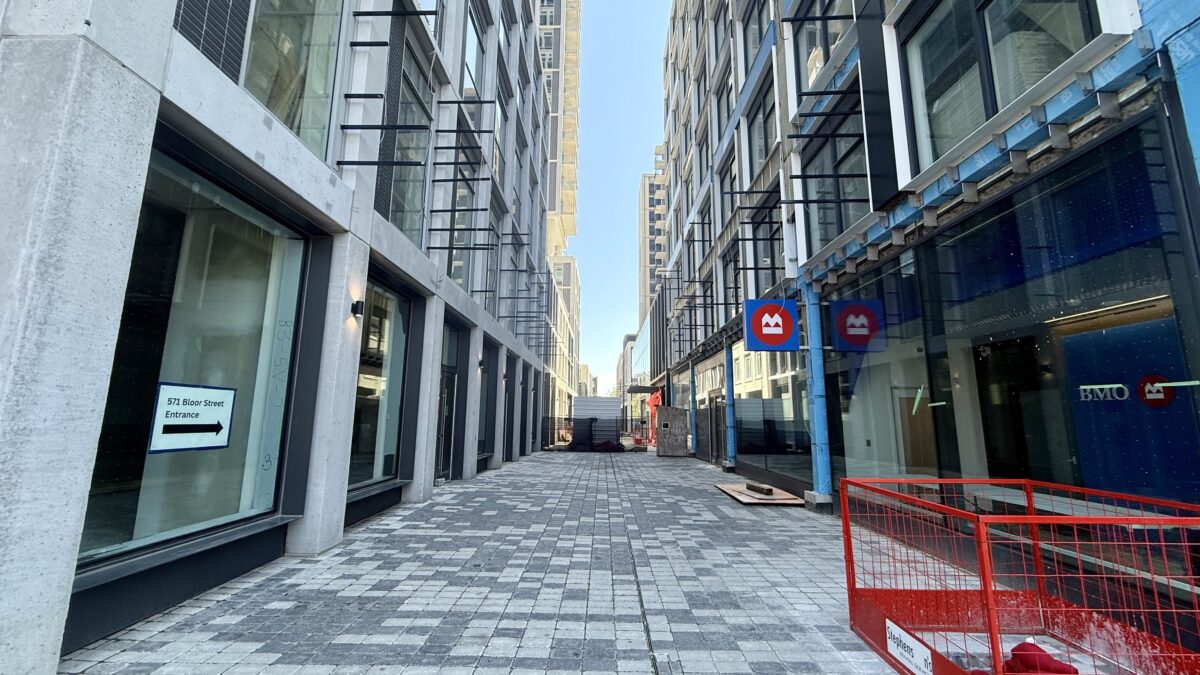
Among the project’s most unusual retail features is Honest Ed’s Alley, a narrow pedestrian laneway inspired in part by Tokyo’s illuminated side streets and designed as an incubator space for entrepreneurs and emerging businesses.
The alley contains approximately 25 micro retail units ranging from roughly 160 to 400 square feet. Unlike conventional storefront leasing structures, the spaces are intended to reduce barriers for smaller operators through shorter lease commitments and more flexible financial requirements.
“It’s designed as a flexible, low-risk opportunity for brands to enter the market and test their concepts in a high-visibility environment,” Goulding said. “Corporate covenant, which is typically a requirement in other retail environments, is not needed here. This is another aspect of the Mirvish Village development giving back and embracing the local community and these mom-and-pop shops.”
The concept arrives at a time when rising rents and operating costs have made it increasingly difficult for independent retailers to secure storefront space in Toronto’s urban core. Developers across North America have increasingly experimented with smaller-format leasing models and incubator retail concepts as they search for ways to generate more authentic street-level activity within large master-planned developments.
Honest Ed’s Alley also introduces a visual identity rarely seen within Toronto retail projects. Leasing materials describe neon lighting and signage inspired by Tokyo alleyways, creating an environment designed to remain animated throughout the day and evening. At night, the narrow laneway is expected to glow with illuminated signage, compact storefronts, restaurant activity, and pedestrian movement, creating a more intimate atmosphere than typically found within newly built mixed-use developments.
As completion nears, leasing activity within the alley has accelerated rapidly. Goulding said only a limited number of units remain available.
One recently finalized lease involved Good and Nice Cleaners, a local business that operated within Bathurst Station for more than 30 years before relocating into the project.
“That’s been really exciting to see,” Goulding said. “A number of these local tenants that already have a customer base in the neighbourhood are now looking to test out a micro retail unit.”
In many ways, the return of longstanding neighbourhood operators may become one of the clearest indicators of whether Mirvish Village successfully reconnects with the community identity historically associated with the site.
The project’s pet-friendly orientation has also influenced portions of the merchandising strategy, with tenants including Pet Planet and the forthcoming Upper Village Vet positioned to serve both residents and surrounding neighbourhood populations.
Heritage Restoration Shapes the Public Realm
A defining architectural element of Mirvish Village is the restoration and adaptive reuse of heritage homes along Markham Street, where preserved historic structures now sit alongside contemporary residential towers rising above the site.
According to leasing materials, the restoration strategy was intended to revive the artistic and cultural atmosphere that once characterized the area during the 1960s, when galleries, artists, and independent businesses lined the street.
“The whole spirit of the project has been to honour the Mirvish family and the existing legacy,” Goulding said. “Even with Honest Ed’s Alley, it’s about trying to support local independent entrepreneurs.”
She added that the coexistence between restored heritage buildings and contemporary density has become one of the project’s defining design characteristics.
“You have these really character-driven heritage houses, and then you have the residential towers above, but you’re not compromising one over the other. They’re existing together.”
The restored homes now house a mix of retail, hospitality, and creative uses that contribute to the increasingly pedestrian-oriented atmosphere emerging along Markham Street. Mature trees, stone paving, outdoor seating areas, narrow walkways, and intimate storefronts help create a scale and rhythm more commonly associated with organically evolved neighbourhood retail districts than with newly built large-scale developments.
That distinction may ultimately become one of the project’s most closely watched tests. Many mixed-use developments across Toronto have attempted to manufacture street life and authenticity through carefully curated retail environments, though relatively few have successfully recreated the spontaneity and layered energy associated with longstanding urban neighbourhoods.
Mirvish Village appears acutely aware of that challenge.
Food, Entertainment, and Public Space Become Central Amenities
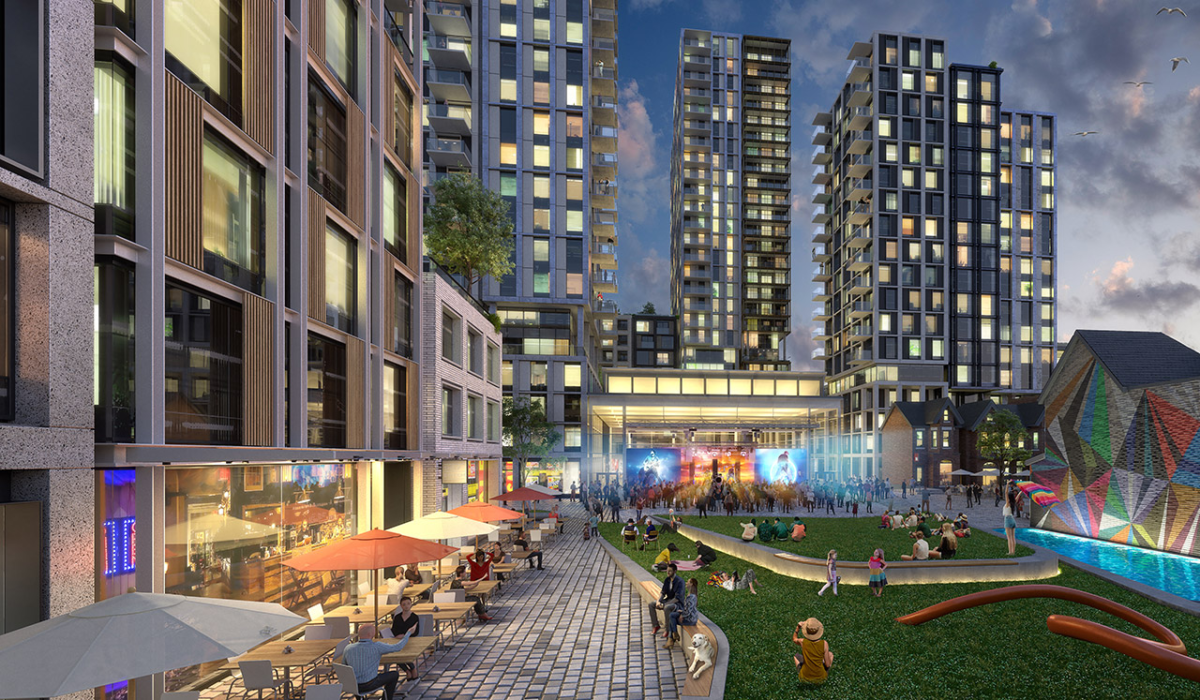
Another major focal point of the project is “The Kitchen,” a 19,000-square-foot food hall and event venue positioned beside a central public park.
Rather than operating as a traditional food court, the venue is being developed as a hospitality and cultural destination featuring approximately 13 restaurant vendors, bars, live entertainment, and extensive programming.
Large garage-style doors will open directly into the adjacent park during warmer months, allowing concerts, comedy performances, live music, and public events to flow between indoor and outdoor spaces.
“We’re basically considering that the beating heart of the project,” Goulding said. “We’re focusing on programming events such as live music, comedy shows, and other community-focused experiences throughout the week. We want it to serve as an amenity both for the residents and the broader community.”
Food operations within the venue will be managed through Kitchen Hub, allowing multiple restaurant brands to operate individual kitchens while sharing ordering and delivery infrastructure.
The emphasis on recurring programming and public activation reflects another major shift occurring within retail real estate, where developers increasingly view cultural events and hospitality experiences as critical to sustaining urban foot traffic and creating neighbourhood identity.
A New Experiment in Toronto Urban Development
Mirvish Village also stands apart because the project is entirely purpose-built rental housing rather than condominium development, a relatively uncommon approach at this scale within Toronto’s contemporary intensification landscape.
Residential occupancy has already begun within portions of the development while additional retail openings are expected throughout the summer.
The combination of rental housing, heritage preservation, curated retail, hospitality programming, and pedestrian-oriented public space reflects a broader shift occurring across North American cities as developers attempt to create integrated districts that function as complete neighbourhood environments rather than purely transactional retail destinations.
Whether Mirvish Village ultimately succeeds may depend on whether a carefully curated development can genuinely recreate the spontaneity, diversity, and neighbourhood energy that made the original Mirvish Village and Honest Ed’s such enduring parts of Toronto’s urban identity. As more tenants open, patios fill, music spills into the public spaces, and pedestrians once again move through the site late into the evening, the project will begin facing its most important test: whether a master-planned development can evolve into a place that truly feels alive.













hi, when did you start leasing and I’m comparing a few places in the area, so I was wondering when your building first started leasing and when move‑ins began. I’d really like to be in something newly built compared to another rental nearby.