The last two remaining Zellers locations in Canada will finally shutter. Product in both stores is now being cleared out in anticipation of the permanent closure of the once iconic retail chain. Both of the existing stores are still owned by the Hudson’s Bay Company and for the past several years, have been used as clearance centres for merchandise from Hudson’s Bay’s main stores. The closures come at a time of unprecedented competition amongst value-priced retailers. Not all may survive in the end as they fight for market share while international retailers continue to enter the market.
Online news publication Narcity was first to announce that both locations would be shuttering, after signs went up last week on the front of a suburban Ottawa Zellers location indicating that the store would be closing permanently. Retail Insider phoned both stores and confirmed that while there isn’t a specific timeline for the Ottawa closure, the Toronto location will close at the end of January 2020, if not before.
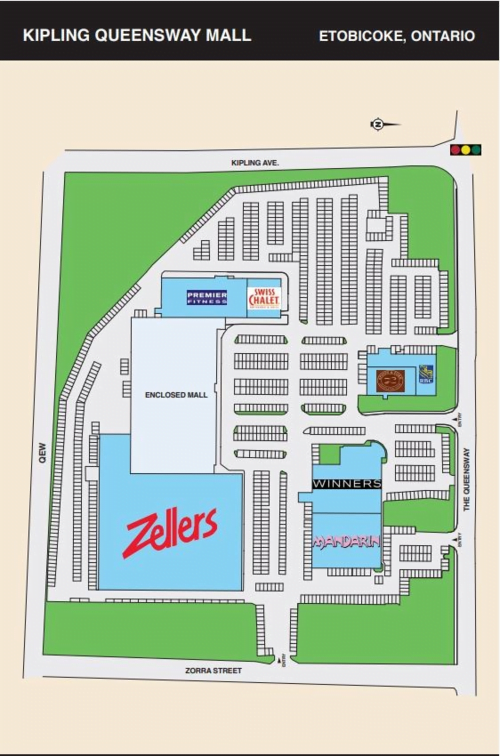
The Toronto Zellers store is located at 1255 The Queensway in the city’s Etobicoke area on the west side of the city. The store is located in the dated Kipling Queensway Mall and spans about 90,000 square feet on one level. Kipling Queensway Mall is visible from the busy Gardiner Expressway and is near a large Ikea store. Kipling Queensway Mall includes an enclosed mall component as well as several smaller anchors surrounding it on the site, including a location for restaurant chain Mandarin as well as discount chain Brands Gone Wild, which replaced a former Winners store.
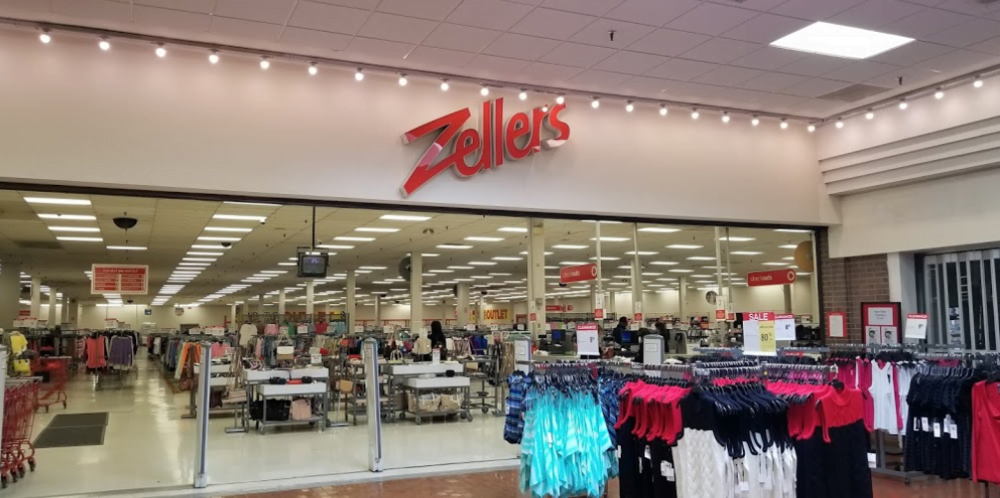
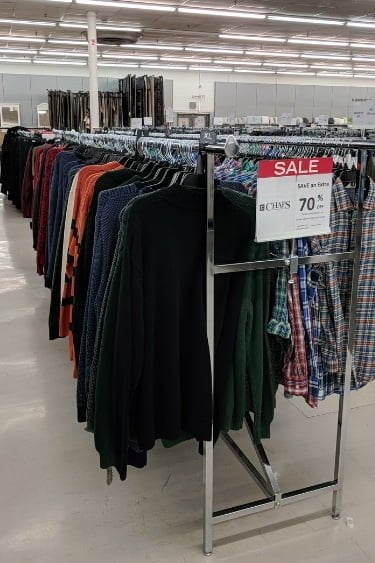
The suburban Ottawa Zellers store is located in the Bells Corners area of Nepean. That Zellers, which spans about 100,000 square feet on one level, shares the complex with a Loblaws grocery store. The Nepean Zellers store was once a Kmart location back when the company had stores in Canada. The 112 store Kmart chain was acquired by Zellers in 1998 and stores were either closed or converted to become Zellers stores that year.
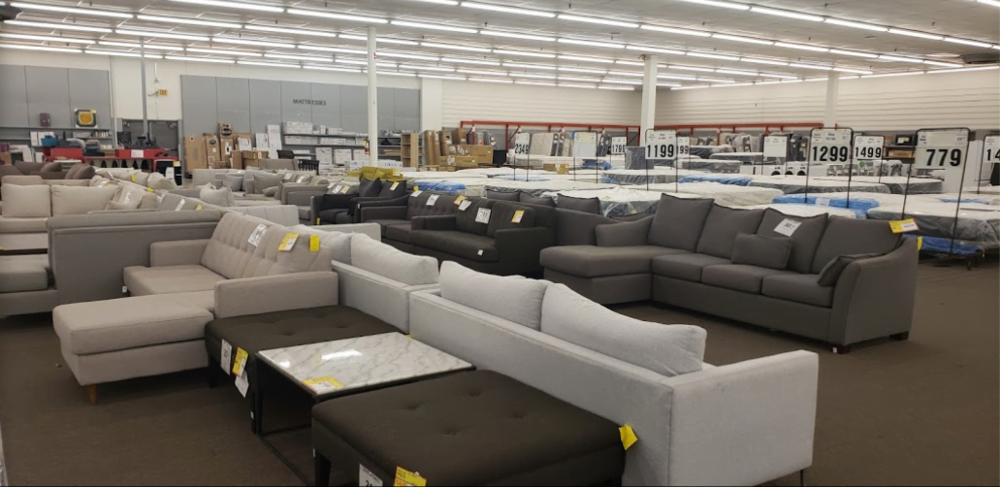
Both of the remaining Toronto and Ottawa Zellers stores sell clearance product from Hudson’s Bay’s mainline stores as well as from the now defunct Home Outfitters chain.
The closure of Zellers is part of some of the big changes to the Hudson’s Bay Company under the direction of CEO Helena Foulkes, who has been involved in strategic decisions including the shuttering of Home Outfitters as well as some Saks OFF 5TH locations in the United States. Last week WWD reported that clothing subscription rental website Le Tote was in talks to acquire US-based Lord & Taylor chain, also currently under the Hudson’s Bay Company corporate umbrella.
In January of 2013, Retail Insider reported that three Zellers stores would be operational in Canada after Hudson’s Bay Company Governor Richard Baker sold most of Zellers’ units to Target, which had announced its expansion into the Canadian market. At the time, the Queensway Zellers location in Toronto was to operate alongside a Zellers store at Place Bourassa in Montreal, as well as one at the Semiahmoo Shopping Centre in Surrey/White Rock, south of Vancouver.

The Place Bourassa store closed in early 2014. Interestingly, a previously shuttered Zellers location in suburban Ottawa reopened in April of 2014 and is now one of the two remaining units open as of today. In September of 2014, the Semiahmoo Centre Zellers closed permanently.
Value-priced Zellers was founded by Walter P. Zeller in London, Ontario, in 1931. The Hudson’s Bay Company acquired Zellers in 1978. The Zellers logo, visible on the last two remaining stores, was adopted in 1975. In 1976, Zellers thrived with sales in excess of $400 million annually and in the same year, Zellers acquired discount chain Fields. Joseph Segal, who at the time was president of Fields, was appointed president of Zellers as part of the transaction.
At its peak in 1999, Zellers had 350 stores across Canada. Walmart, which entered the Canadian market in 1994 after acquiring Woolco, became a significant competitor to Zellers. The Zellers chain lost significant market share as a result. In 2006, the Zellers chain had 291 stores and saw losses of $107 million on sales of $4.2 billion.


In 2008, the Hudson’s Bay Company and its subsidiaries, including Zellers, came under the ownership of NRDC Equity Partners, which was headed by Richard Baker. Hudson’s Bay’s namesake stores were positioned as more upscale under the creative direction of retail veteran Bonnie Brooks, while Zellers was seen as a drag on the business.
In January of 2011, the Hudson’s Bay Company announced that it would sell the Zellers lease agreements for up to 220 Zellers stores to US-based Target for $1.825 billion. Zellers subleased the properties and continued to operate them as Zellers until March of 2013. At the time, Zellers was down to 273 stores.
The Hudson’s Bay Company retained 64 Zellers locations for a time and in July of 2012, the company liquidated the Zellers chain entirely, which concluded in the spring of 2013.

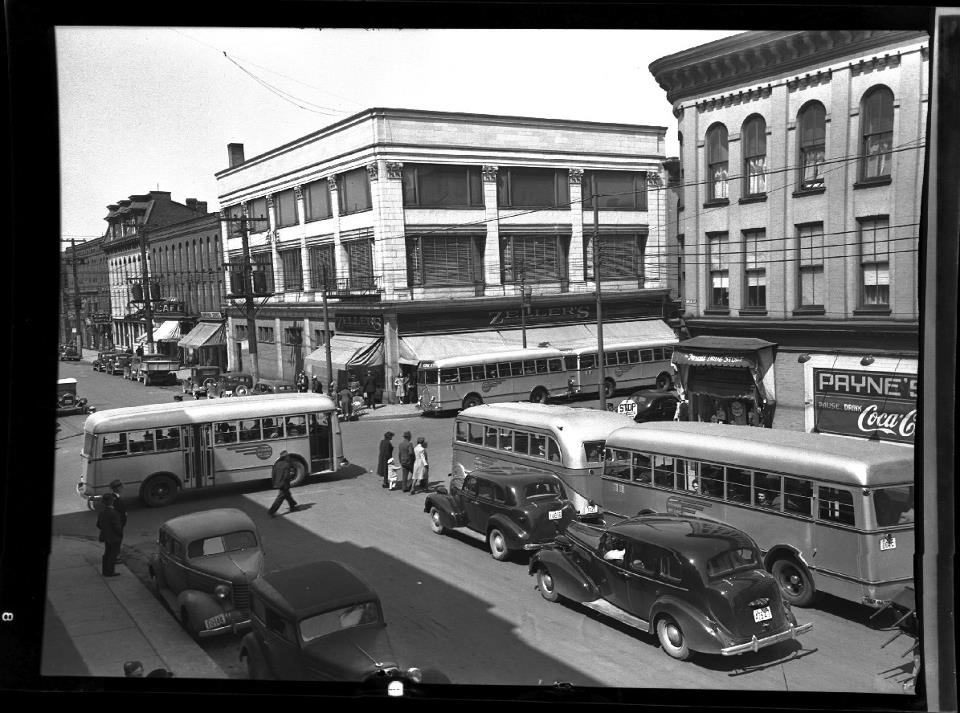
In 2013, Target ended up acquiring 189 of Zellers locations. Target then re-sold 39 units to Walmart Canada. Target identified between 125 and 135 Zellers locations that it would utilize for its own brand stores as Target made a bold entry into the Canadian market. Target failed for various reasons and in March of 2015, the Minneapolis-based retailer announced that it had filed to bankrupt its Canadian division and close all 133 Target stores — Target said that it expected to report about $5.4 billion in pre-tax losses for its fourth quarter amid the Canadian Target debacle.
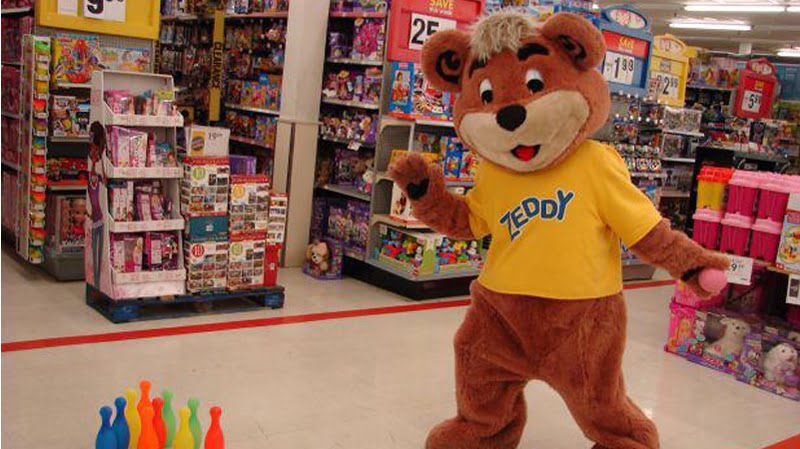
Over the years, Zellers found a place in the hearts of many Canadians. A teddy bear named ‘Zeddy’ was used as a mascot to advertise the retailer’s toy selection starting in 1986, including a children’s miniature Ferris wheel-type ride that cost $1 and played carnival music when in use. In the 1980’s, Zellers’ marketing slogans included “Only you’ll know how little you paid” and “Shopping anywhere else is pointless”.
In the late 1980’s and early 1990’s the popular “Where the lowest price is the law!” was used in Zellers advertising. Included were animated commercials featuring Batman and Robin with the villains like the Joker, the Penguin, Catwoman and the Riddler.
In the 1990’s, Zellers adopted the slogan “Truly Canadian”. Between 1997 and 2000, “Better and Better” was a slogan and “Everything from A to Z” was part of the retailer’s marketing messaging between 2000 and 2013.
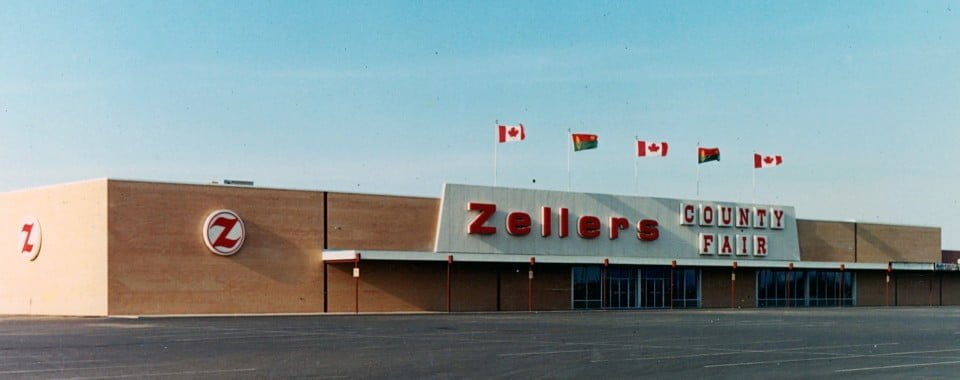
Product is currently being deeply discounted at both the Toronto and Ottawa Zellers stores, and staff at both said that the stores are busy as a result. Those looking to get one last look at a piece of Canadian history may want to visit one of the two before they’re gone forever, though neither location carries the same product that was in the original Zellers stores that closed in 2013.
Over the past decade, competition in the value-priced and off-price retail realm has been fierce. TJX group, which operates Winners, Marshalls and HomeSense banners in Canada, has continued with a multi-year store expansion that has resulted in hundreds of locations across the country. Saks OFF 5TH entered Canada in 2016 and now operates 18 stores here, and some of its product is also clearance product from Hudson’s Bay’s namesake outlets. Nordstrom Rack entered the Canadian market in 2018 with six locations, and the retailer is expected to open more if all goes as planned.
At the same time, Walmart continues to innovate to gain market share as it opens new stores and expands others. The retailer is experimenting with tech innovation and we recently reported on its prototype store at Toronto’s Stockyards, which utilizes Amazon-Go like technology. Amazon, itself, continues to gain market share in online sales as Canadians embrace the Amazon Prime free and fast shipping model. Costco is very successful in Canada, with a greater store penetration in Canada per capita than in the United States. Other inexpensive retailers such as Dollarama and Dollar tree continue to expand, while Chinese value retailer Miniso plans to open hundreds of stores. There is unprecedented competition for value-priced retailers seeking to gain and maintain market share in Canada, and more international chains are also looking at making the move into the Canadian market.
Other value-priced international brands such as Dutch value-priced retailer HEMA are also entering the Canadian market this year, while sources say Copenhagen-based Flying Tiger will also soon announce plans to open stores here. Other retailers are also said to be on the way.
American-styled outlet malls are also a recent phenomenon in Canada and can now be found in the metropolitan regions of Vancouver, Edmonton, Winnipeg, Ottawa, Montreal and in Southern Ontario. Crowds are flocking to many of these outlet centres in search of discounted designer goods. Warehouse sales are also big business in Canada, with companies such as Newmarket Ontario-based OPM Sales holding massive clearance sales almost monthly. Next month, as well, entrepreneur Mal Coven and partners will launch the ‘Biway $10 Store’ concept, which will be a deviation in strategy from Mr. Coven’s Biway chain that he ran until the early 1990’s when it was divested and was subsequently shuttered. Canadian consumers will no doubt benefit as all of these retailers and concepts seek to gain market share, making one question if all of them will survive or if we will see more chain exits/closures in the years to come.