By Doug Stephens, Founder, Retail Prophet.
Over the last 20 years, technology has transformed retail. Mobile phones have become essential conduits for communication, entertainment and commerce. Technologies like augmented reality, once a novelty, have become commonplace digital merchandising and selling tools. E-commerce, which in 2003 amounted to a rounding error on most retailers’ profit and loss statements, has become table stakes for any business wishing to survive.
But the shift is bigger than consumer-facing innovations. Amazon, once a profitless aggravation for traditional retailers, has become one of the most valuable companies in history by leaning into the behind-the-scenes science of retail: the physics, math, engineering and data of moving goods from production to consumption. And it’s not alone.
Today, we sit on the edge of yet another technology revolution in retail, with investment by retailers in AI and machine learning projected to increase up to eight-fold by 2032.
Yet, despite all the investment in technological progress, too many retailers today struggle to stay afloat, grinding it out each day, one promotion at a time. Because, while technology has advanced the mechanics of retail, it’s also opened the door to something else: a historic explosion in new competitors to traditional retailers – from third-party marketplaces and direct sellers to Asian discounters and social media influencers – all of which are now battling it out for finite, fleeting and increasingly fragmented slivers of consumer attention.
Indeed, the existential challenge facing most retailers today is how to command disproportionate levels of attention. And how to do this when superior selection, convenience and price have largely become the domain of large international marketplaces and mega-chains, and digital advertising is relentlessly more expensive while declining in its effectiveness?
The answer lies less in deploying new technology and more in something almost never discussed in retail circles: art. Because, as it turns out, attracting attention and promoting recall are what art does best. In fact, a growing body of scientific evidence suggests that art, regardless of form, has a uniquely stimulating effect on our brains.
According to Daniel J. Levitin, author of “This is Your Brain on Music: The Science of Human Obsession,” listening to a favourite song or a familiar style of music lights up almost every region of our brain, including areas linked to memory. Experiencing art has been proven to boost blood supply to the brain, producing rushes of dopamine and activating both cognitive and emotional activity.
Most importantly, consumers are looking to retail to play a more artistic role in their lives. In a recent study, BoF Insights found that a majority of Gen-Z shoppers in the US described fashion as their favourite “entertainment category” to spend money on, outranking other categories like dining, video games and music. They refer to retail not as commerce or shopping, but as “entertainment.”
For young consumers in particular, shopping and entertainment are merging and if retailers want to generate disproportionate levels of attention and recall, while giving shoppers the “entertainment” they want, they need to begin thinking less like retailers and more like artists.
It starts with a story
So, what is it about art that our brains love so much and how can retailers tap into it to garner outsized levels of attention? Research suggests there are two keys.
The first key is understanding that art is a vehicle for storytelling.
Stories have played a vital role in human development since the dawn of civilization. From
Greek mythology to nursery rhymes, from books to film, stories are an intrinsically human vehicle for communication, socialization and learning. In fact, a study by the London School of Business found that when dry factual data is expressed through a story, readers are likely to remember almost 60 per cent more than if the same set of facts were simply listed as such.
Stories that are told through art also contribute real value to our lives. The protest songs of the 1960’s incited action against the Vietnam war, promoted community and invited a sense of belonging. Musical films of the 1940’s offered moviegoers distraction and relief from the horrors of WWII. Documentary films enhance our understanding of history, society and world events. And, of course, art can push the boundaries of design, birthing new aesthetics and unique functionality.
Done properly, retail can serve the same important human needs and there are worthy emulators to follow.
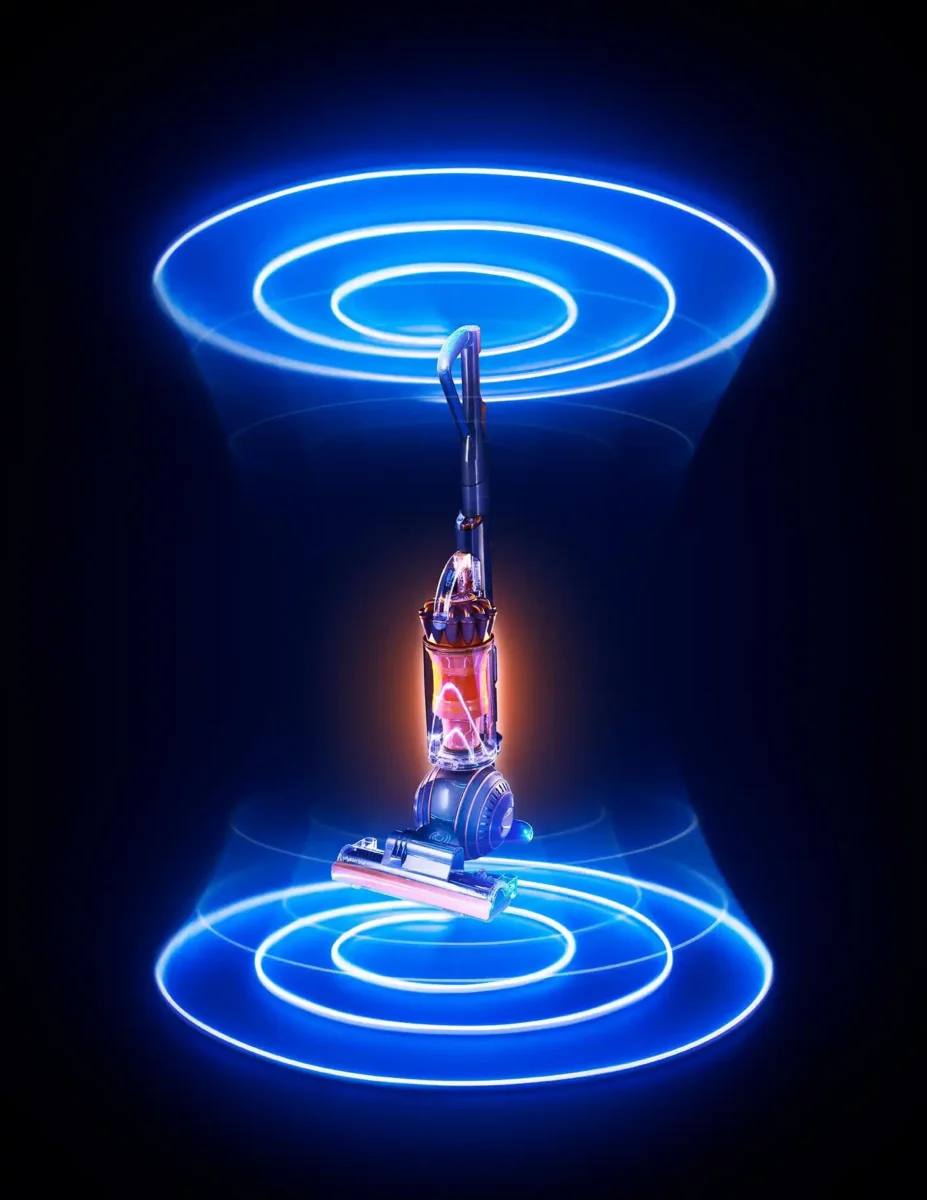
Patagonia, for example, puts a story of environmental activism at its core, inciting their values-based community of consumers to act against climate change. US toy store chain Camp builds themed stories into beautifully crafted entertainment experiences for families, while selling toys in the process. New York based B&H Photo and Video has spent over 50 years telling a story of superior expertise, informing and enlightening customers on the subject of photography and film, becoming world-renowned in the process. And Dyson has never wavered from its story of superior engineering and design, turning mundane items like vacuums and hair dryers into status symbols and functional forms of art. When we buy from these kinds of brands, we’re not just buying a product. We’re also buying in to their story. And it is four areas – culture, entertainment, expertise and design – that offer strong, ownable footholds from which brands and retailers can successfully compete, without attempting to out-compete Amazon and others on price, convenience or selection.
From products to productions
But a brand story cannot simply be a platitude or vague idea buried somewhere in the company’s mission statement. It must, like a production, come to life for consumers across their experience. For Patagonia, this means telling the story of environmental activism, every day, in varied ways, at every touchpoint along the consumer journey, from their website content and ad media through to the recycled materials used to build their stores and offices; from the fibres used in their garments to the character and values of the people they hire.
Every message, every moment, every person and every experience ladders up to a story about saving the planet. And it’s not just a story. It’s the only story. And it is through their commitment to telling the story, that Patagonia has developed a loyal, global community of customers, coming to the brand, not simply for a product but also for a sense of shared values and community.
Dyson, on the other hand, goes to remarkable lengths to act out their story of the superior design, engineering and beauty of their products. All content, merchandising and messaging, and even their gallery-like stores, belie the mundane nature of their product category, elevating the things they sell (and their prices) into the realm of art. In doing so, they appeal to the powerful human needs for beauty and status.
Despite their obvious differences, both brands have become the cognitive defaults in their categories and have done so by maintaining an obsessive focus on telling their unique stories, stories that link directly to tangible human needs. In doing so, they have set themselves apart from the sea of commodity competition in their categories.
Becoming unforgettable
However, a brand’s job is not simply to be experienced but also to be remembered, offering more reason for retailers to turn to art. Art has been
proven to create deeper, longer-term memories, than other data forms. Perhaps this explains why decades-old song lyrics or movie lines are retained in our cognitive filing cabinets. Art tends to lodge itself deeply into our memories.
The key to unlocking this power comes by first understanding that the human memory is not an unidimensional thing. In fact, we have at least six unique memory inputs. First, roughly 20 per cent of our memory of an experience is generated from visual inputs or our iconic memory, which processes what we see. The remaining 80 per cent is divided between our echoic or sound memory, our olfactory memory, our gustatory or taste memory, our haptic memory to process what we feel, and our cerebellum, which processes the emotions conjured by the experience as a whole. Studies have established the inordinate power that scent has on our physiology. That smelling a rose, for example, activates exponentially more brain activity than simply looking at a photo of a rose. Other research has shown that playing French and German music in a wine store, on alternating days, for example, results in a disproportionate percentage of sales swinging in lockstep to French or German wines, even when shoppers are oblivious to the music that was played during their visit. The influence of involving motor skills to boost memory, cannot be underestimated. Students asked to draw a listed series of words, remembered 175 per cent more of them than a control group asked simply to memorize the list. The more of these memory pathways a retailer unlocks within a given experience, the more unforgettable the experience becomes.
Regrettably, most retailers tend to focus almost exclusively on the visual elements of their customer experience, all but ignoring the other, arguably more powerful sensory inputs. In doing so, they negate 80 per cent of their brand’s opportunity to be remembered. To remedy this, retailers would be wise to ask themselves what a blindfolded shopper would take away from the experience in their stores. What, if anything, would they hear, smell, feel and taste? And how each of these sensory inputs should support the brand story.
These two things in concert – a meaningful overarching story that’s connected to core human needs, underpinned with sensory and emotional involvement – are more likely to produce disproportionately more information about the experience, forge deeper neural pathways and, thus, create deeper recall within people. This might explain why, according to our research, such retailers also tend to enjoy better than average revenue growth, profit margins, customer loyalty and earned media values.
Rehumanizing retail
As for technology investments, retailers would be astute to consider these costly choices the way any great film, music or stage director might: by prioritizing those technologies that help to tell their unique story more clearly, impactfully and sensorially.
We’ve spent the last 20 years exploring the science of retail. Consequently, retail today is bigger, faster and infinitely more convenient than ever before. But regrettably, in our pursuit of the science of retail we’ve lost much of its humanity. The psychology, physiology and sociology that sits at the centre of why we shop and how it serves our deeper needs as human beings; the stories and experiences that make a brand worthy of attention and recall.
In a world rife with competition, commodity sellers and consumers in search of meaningful experiences, a return to the art of retail may be just what the industry needs.
——-

Doug Stephens is the founder of the global consultancy Retail Prophet and the author of three bestselling books on the future of retail, including the recently released “Resurrecting Retail: The Future of Business in a Post-Pandemic World.”
Other articles by Doug Stephens include From Chaos to Competitive Edge: Doug Stephens Explores Retail’s Next Big Leap