Home Blog Page 1007

Aussie Eyewear Retailer Bailey Nelson Continues Rapid Canadian Store Expansion

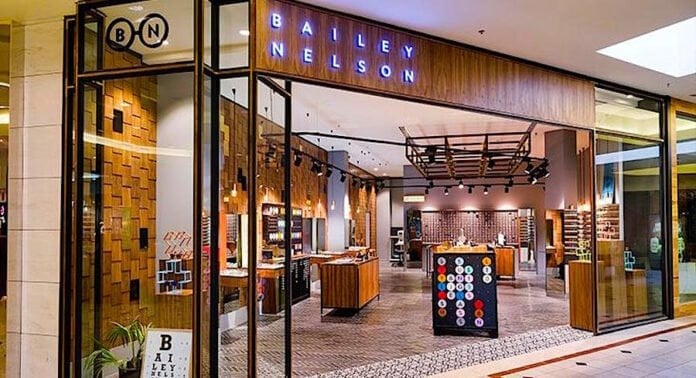
Bailey Nelson PHOTO: RETAIL INSIDER

Australian eyewear retailer Bailey Nelson continues to aggressively expand its footprint in Canada as the company is on a mission to make eye care simpler, more fun and stylish for all Canadians.

Its newest store was opened recently in Calgary’s CF Market Mall – the company’s 15th location in Canada – and is a clear indicator of the consumer demand for Bailey Nelson’s high-quality products and one-stop shop eyecare services.

The company opened its first Canadian store in Vancouver on Robson Street in June of 2017.

PHOTO: BAILEY NELSON (CF MARKET MALL)

“It’s been a relatively rapid build out for us,” said Nick Perry, company founder, adding that the company has 68 locations globally.

“We’re planning to open seven to eight locations this financial year. We just opened RBC Plaza in Toronto and we just opened Park Royal in West Vancouver. CF Market Mall is the third and we’re planning to do seven this financial year which ends in June 30 because we’re in the Australian year.

“Our longer-term goal is we want to be at 50 locations in the next three years or so in Canada. I’m incredibly proud and grateful for the team of people that we’re working with and the reception that we’ve had from Canadian consumers.”

PHOTO: BAILEY NELSON (CF MARKET MALL)

Founded in Bondi Beach in 2012, Bailey Nelson has quickly grown into a global brand lead by an incredible team with boutiques in Australia, London, Canada and New Zealand.

The company believes that buying glasses should be one of life’s pleasures. So it created a formula to make it one.

“Put simply, buying glasses should be one of life’s pleasures. And we’ve created a formula to make it one. We start with a process that’s clever and honest. We use it to craft eyewear that’s both beautiful and affordable. And we hire people who are passionate and genuine. It’s not rocket science. It’s just caring enough about what you’re doing to do it right. We strive to deliver fantastic eyewear frames at a reasonable price, backed up by great service. Our vision is to improve the eyewear industry every day; and whilst we’re at it, we hope to empower individuality and self-expression through our beautiful, affordable eyewear, inviting stores and incredible people. So that’s us. That’s Bailey Nelson,” says the company on its website.

Perry said Bailey Nelson’s consumer is on average 30 to 31 years old.

PHOTO: RETAIL INSIDER

“We do skew slightly lower than that in some instances and we get many young people that bring in their parents because the price of our multi-focal is about half to a third what you’d pay at (other places),” he said.

“We’ve been warmly received in Canada because people are looking for other options out there. Traditionally when we were launching the business in Australia it didn’t feel like a modern retail offer and it didn’t really speak to young people. It was sort of overly medical and it didn’t seem like a modern kind of retail offer and it also didn’t speak to that young sort of segment of the market that wasn’t as concerned necessarily about their health aspects. They just wanted a great service, fairly priced, delivered by really passionate people.

PHOTO: BAILEY NELSON

“What sets us apart is we’ve got an optometrist – a passionate optometrist in every location – so we just don’t want to be a cheap pair of frames to buy online. We want to sort of be the solution for you for your eyecare and eye health needs for the rest of your life. If you come to us, you get a modern retail experience. It’s fun. We’ve got passionate staff. And it’s a much, much better price than what you would get elsewhere.”

Perry said the company had to adjust its product for the Canadian market. The company’s product and design engine from the beginning was really geared toward serving the Australian market.

“Traditionally speaking in Canada, the eyewear replacement cycle is kind of three years. Traditionally you’re going every couple of years and then you’ll convert because it’s a high commitment, expensive purchase. We have very passionate staff and we’ve got great high-quality products but it’s very fairly priced because we design and manufacture. We only sell our own products. We’re noticing that people are coming back every eight to nine months. So, we’re really sort of changing that buying cycle because we’re making it an attractive purchase.”
Edgy Outerwear Brand ‘Moose Knuckles’ Opens Manhattan Flagship Amid Multi-Store Expansion

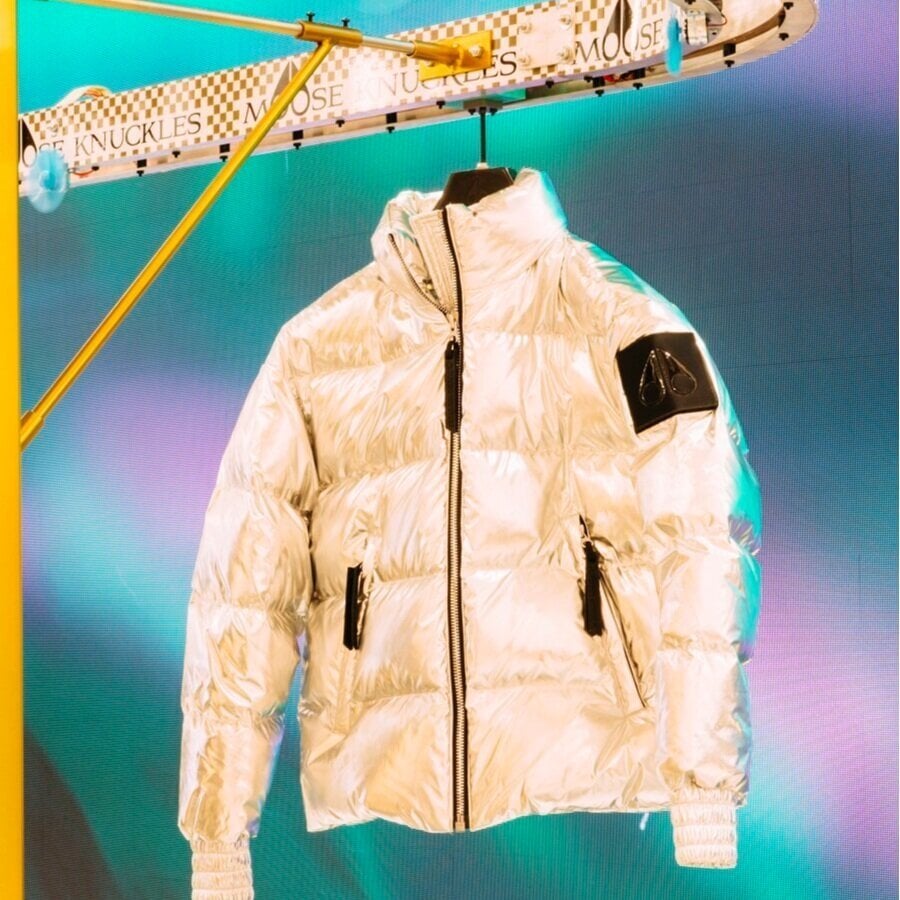
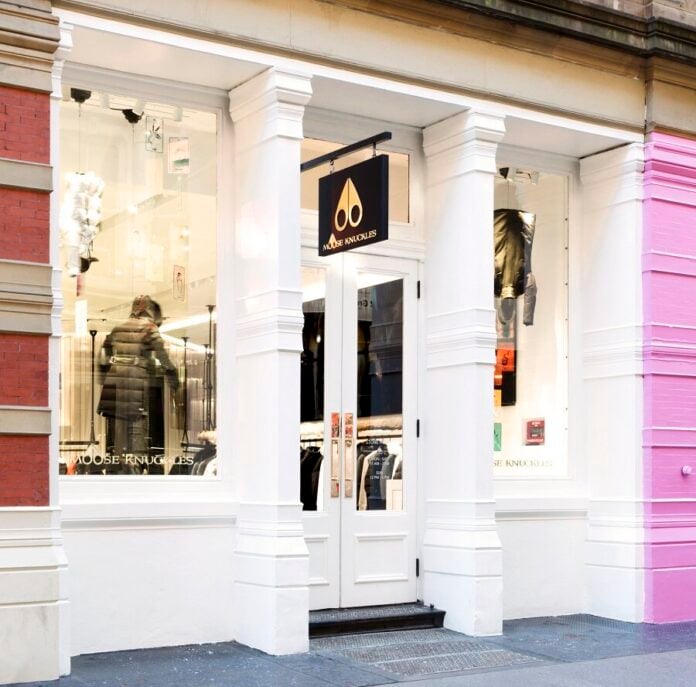
PHOTOS: MOOSE KNUCKLES

Luxury outerwear brand Moose Knuckles, based in Montreal, has opened its first U.S. store in the heart of Soho in New York City as the retailer continues to experience tremendous growth in its brand internationally.

“In today’s retail landscape, it’s vital for us to have a direct connection with our consumers. We couldn’t have chosen a better space to open our first U.S. store. This city embodies what Moose Knuckles is about. It’s raw, it’s real and one of a kind. We’re thrilled to have consumers enjoy the Moose Knuckles universe in real life,” said Ayal Twik, the company’s co-CEO, about the 3,500- square-foot flagship store.

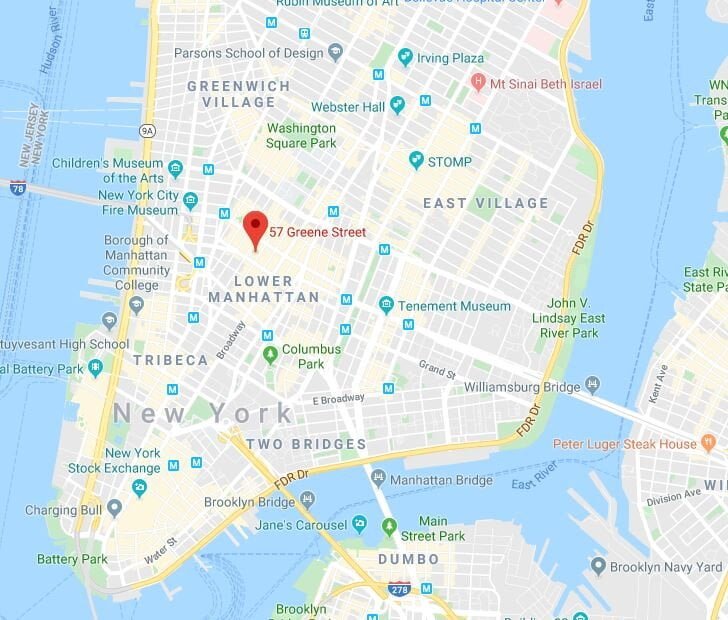
The store is located at 57 Greene Street.

PHOTO: MOOSE KNUCKLES
NYC LOCATION IN LOWER MANHATTAN. CLICK FOR INTERACTIVE GOOGLE MAP.

“Canadian outerwear is doing really well internationally. We were really fortunate to hit this moment where outerwear – luxury outerwear – has become the new handbag. So it becomes a status symbol. Something you can wear every day. There’s a lot of use per wear,” added Twik. “Canadian outerwear is hot.

“We have a young demographic. We’ve always taken the approach that we never want to sell. We always just want to release fun and entertaining content, messages that resonate with our customer and if our customer wants to buy then great. If not, that’s okay too. Fashion, especially luxury fashion, can be a very pretentious, serious business and we always just wanted to have a good time, have fun, make fun of things, make fun of ourselves, and really just do things that made us happy as owners and as employees. I think that message really resonated.”

While the company’s product has a utilitarian function, Twik said one of the keys to the retailer’s success is spending time, effort and money being fashion forward – “taking a down filled coat, which is often not very flattering, and made it really sexy and flattering.”

The company opened a store two years ago in the Yorkdale Shopping Centre in Toronto. It also has two outlet locations – one at the Premium Outlets Montreal in Mirabel, and one at the Outlet Collections Niagara near Niagara Falls.

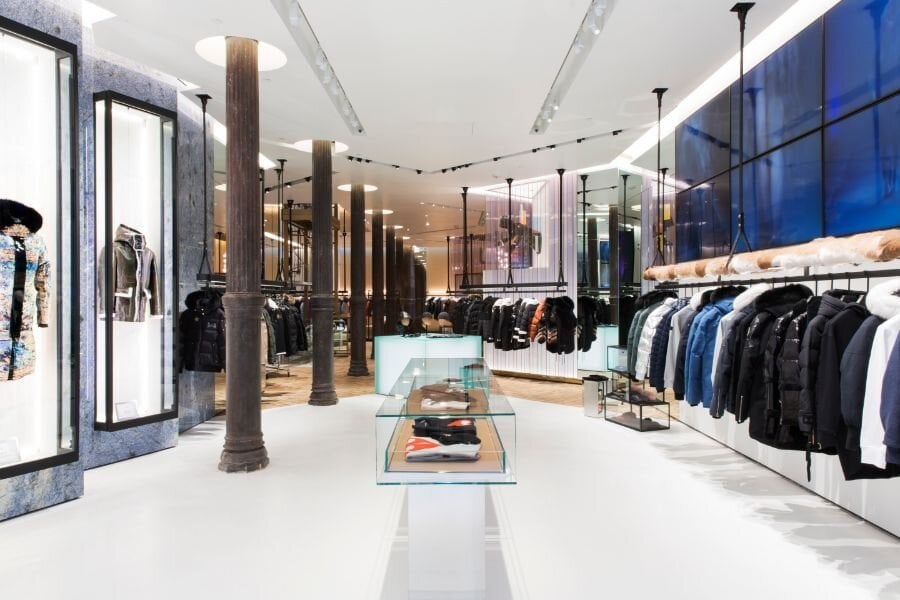
Twik said the New York store “is really unlike any store that anybody has ever seen. You have to see it to believe it.” The retailer said the store in New York will focus on the brand’s signature collections, but consumers will also be able to shop the complete range of products within the boutique’s unique and immersive retail space.

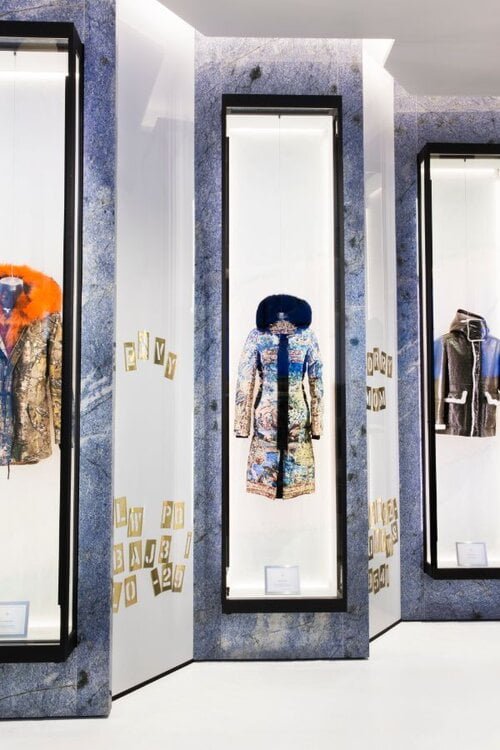
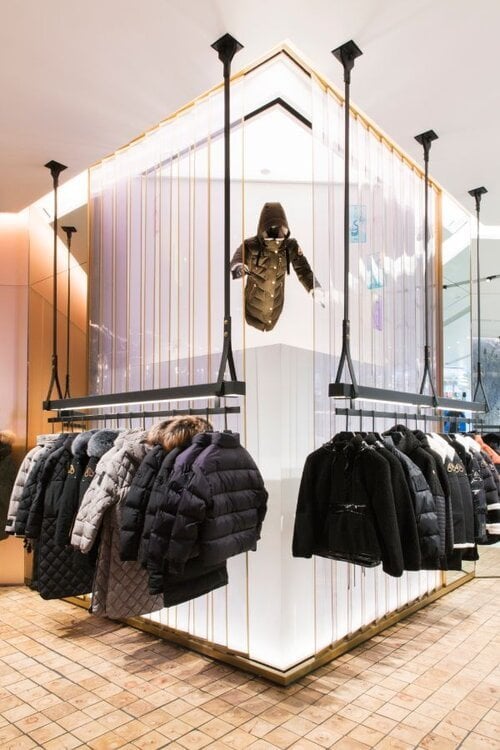
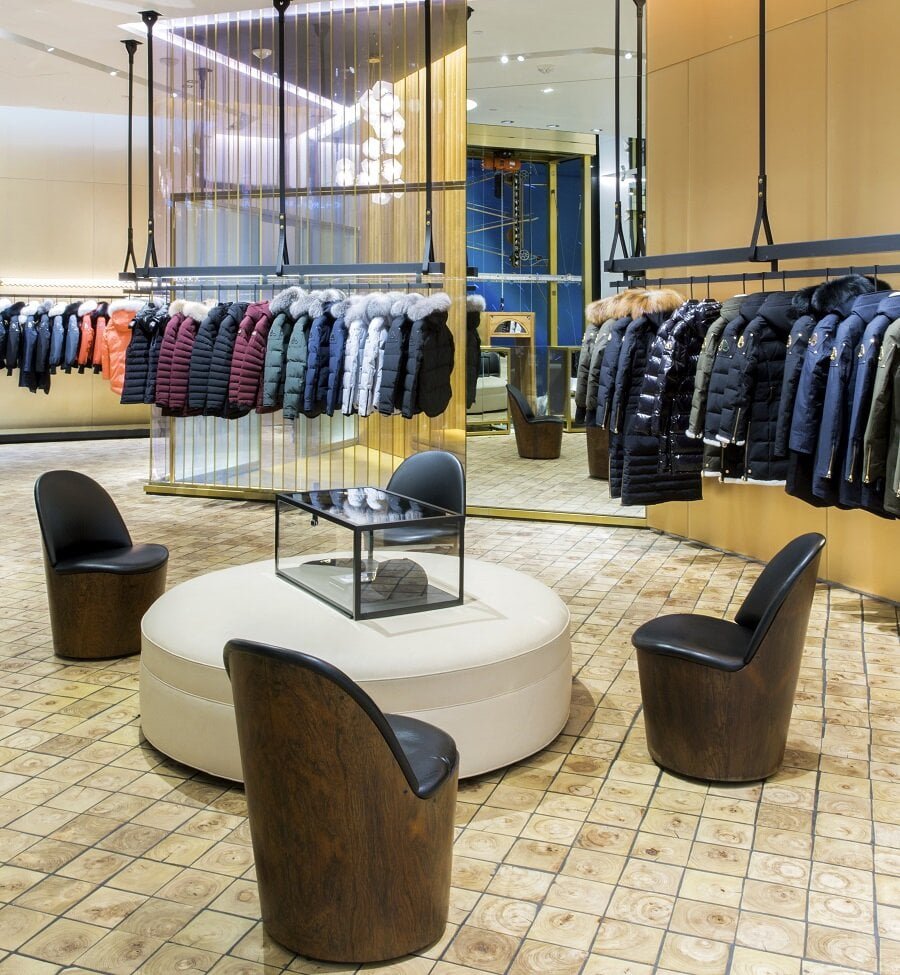
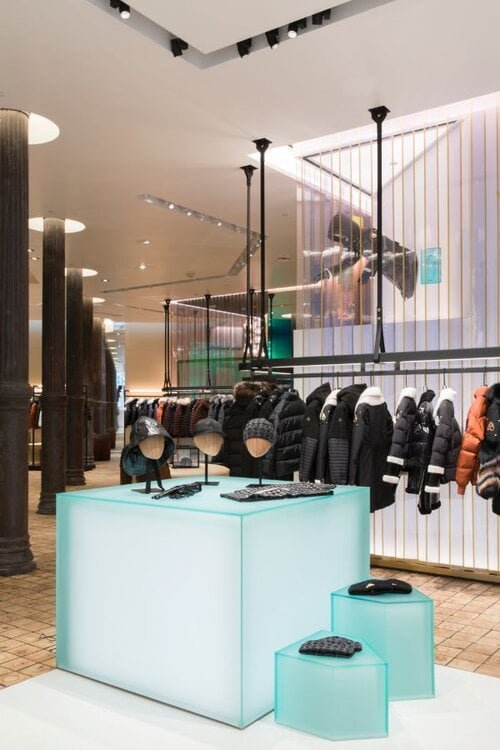
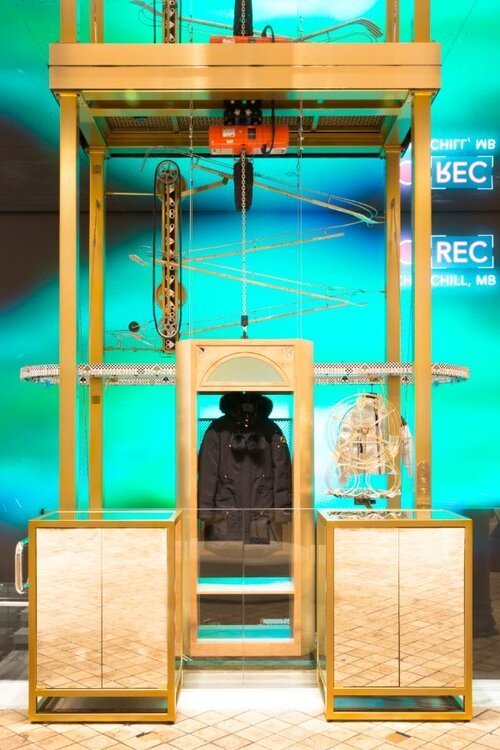
“Prominently located in the heart of Soho, the new boutique draws inspiration from the brand’s exuberant yet sophisticated aesthetic and blends distinguishable architecture into a surreal retail experience. Bespoke grain wood tiles, reclaimed cast-iron columns, and original and reproduced eye-popping installations including a two-storey Rube Goldberg-inspired kinetic-fixture—comprised of hockey sticks, Newton’s 8-ball cradle, and railcar tracks— characterize a mind-bending visual experience, transporting consumers into Moose Knuckles’ grandeur universe,” said the retailer.

“On the ground level, the boutique is fronted by custom gold glass, mirror polished stainless steel, a multi-level screen erected to the right of the store showcasing a live stream of the northern lights, and refurbished architectural elements bringing Architect Steve O’Neil of O’Neil Langan Architects, raw yet polish vision to life. The interior is defined by an intricate custom plaster displaying a birds-eye view of glaciers from above; epitomizing the brand’s view on the outdoors. Custom display vitrines throughout, house various product categories and create a story around every corner.

PHOTO: MOOSE KNUCKLES

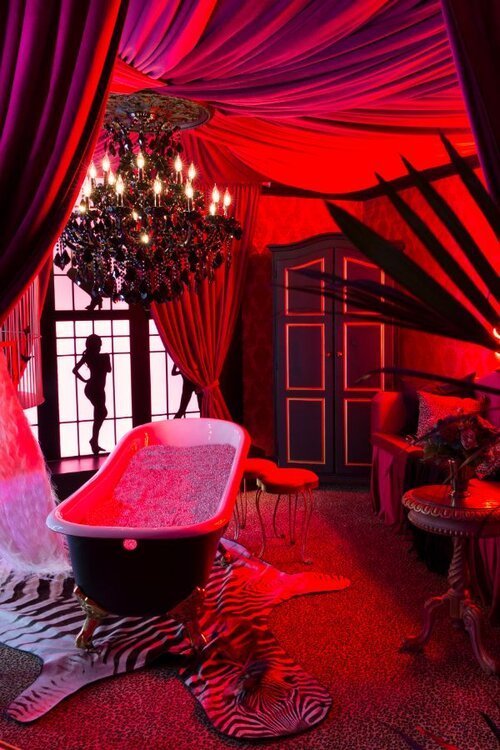
“The bold backdrop serves as a canvas to showcase the brand’s statement men’s, women’s and kid’s lifestyle collections including the mainline and fashion. In the cellar level, past heavy curtains in the vestibule, Moose’s invite only, VIP room is a sensual wonderland, a haven with red velvet walls, luxe fabrics and fine upholstery.”

Recently, Twik and co-CEO Noah Stern, were named this year’s EY Entrepreneur Of The Year 2019 Québec winners.

Since 1921, Stern’s well-known coat manufacturing family has been protecting Canadians from the cold — a relentless quest that inspired Noah to team up with Ayal to start their own company in 2007, said EY in a press release.

Moose Knuckles Canada was founded in 2009 in Montreal.

From a modest start of three employees and an order book of 350 coats for a single Canadian customer, Noah and Ayal now employ over 200 people spread between offices in Montréal, Toronto, New York and Milan, and are carried by luxury retailers in more than 25 countries, said EY.

PHOTO: MOOSE KNUCKLES

“Noah and Ayal paved their own way to the top of the outerwear market by never wavering on quality make and materials at a competitive price for their customers,” says Luc Charbonneau, EY Entrepreneur Of The Year Québec Program Co-Director. “Their unique perspective and style has built a strong brand and international success. We’re proud to celebrate these two unstoppable entrepreneurs.”

Twik said what really propelled the company’s growth was when it started getting in organically with the Korean community in Toronto. Korean youth started wearing the Moose Knuckles jacket. Within a year or two, the company was getting many calls from stores in Korea trying to get access to the brand.

“We had no idea. We had no illusions of exploring outside of Canada. We didn’t know what we were doing at the time but that kind of motivated us to expand internationally. So we started to sell in Korea. Now we have 20 concessions inside Korea. Korea is one of our biggest markets and unbeknownst to us Korean celebrity culture is followed very closely by other Asian countries, especially China,” said Twik.

“So a lot of Korean celebrities were wearing our stuff, and then in China a lot of Chinese kids started wearing it and we got a lot of demand. A third of luxury products worldwide are purchased by Chinese either in China or outside of China. And so that really fuelled our growth, gave us the confidence and now we’re sold internationally on a wholesale model in all the best stores around the world including obviously Holt Renfrew in Canada and Sporting Life but also in the U.S. like Nieman Marcus, and Saks Fifth Avenue and Nordstrom and Bloomingdale’s. In Europe at Selfridges, Harrods, Le Bon Marché and others.

“Really all the top luxury stores worldwide. Only a few years ago did we expand into the U.S. We have an office now in New York. We have an office now in Milan that serves the European and Asian business. And we’re just growing very quickly. We’re growing at 70-80 per cent a year. It’s been really exciting. Trying to keep up with the growth has been our biggest challenge.”
Andrea Elliott, head of stores for the company, said the retailer will be looking at any of the major markets in Canada for future store expansion where the product will resonate.

“We don’t have a disclosed list at this moment, but we are looking at cities like Montreal, Calgary and Vancouver,” she said. “We’ll do the same in the United States and we will also do the same in Europe.”
Twik said there are many cities that want the Moose Knuckles product. There is a demand across Canada and it’s just a question of the company finding the right real estate and the timing to do it efficiently.

“We plan on it. We can’t open all the locations that everyone wants us to open. It’s just not physically possible at one time,” he said.

Retail Veteran Opens Unique Curated Multi-Brand Store in Toronto [Photos]

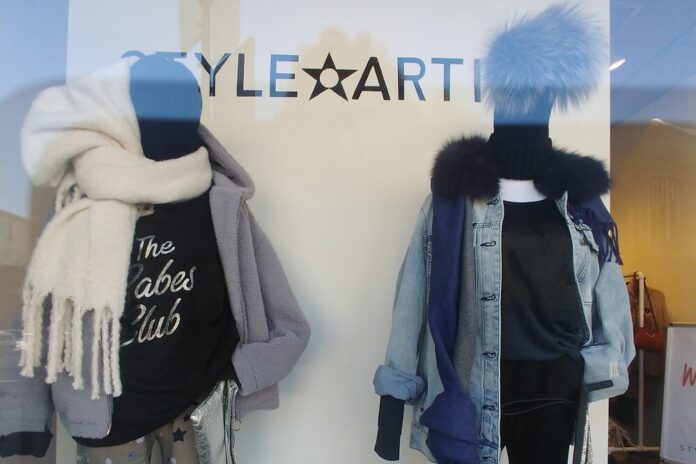
PHOTO: STYLEARTIST

Retail industry veteran Catherine Abela recently opened the first permanent retail space for her concept store STYLEARTIST, which is located on an upscale stretch of Avenue Road in Toronto, a short walk north of Davenport Road.

STYLEARTIST began in 2016 as an online business with a range of brands including some well-known names as well as some unique niche brands that may be difficult to find elsewhere. The initial business model was an online personal styling and shopping service with a curated selection of brands and styles that Ms. Abela was fond of.

As a test last year, she opened a waterfront pop-up store in the Muskoka area in Port Carling, Ontario, which proved to be an immediate success. While the online business continued to thrive, customers began asking if there was a physical retail space where they could try on product, particularly in Toronto.

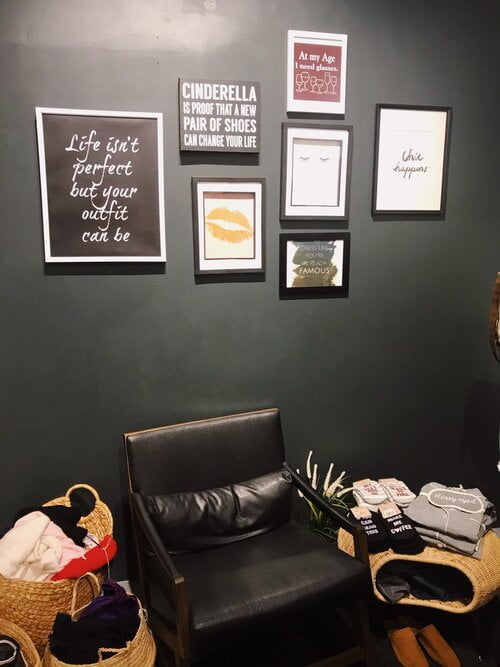
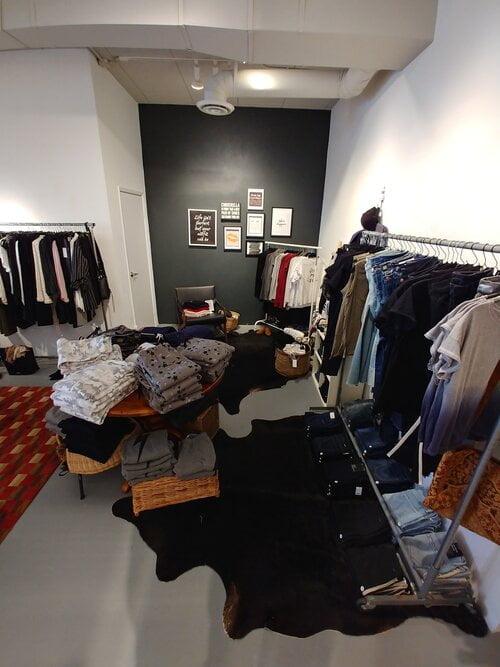
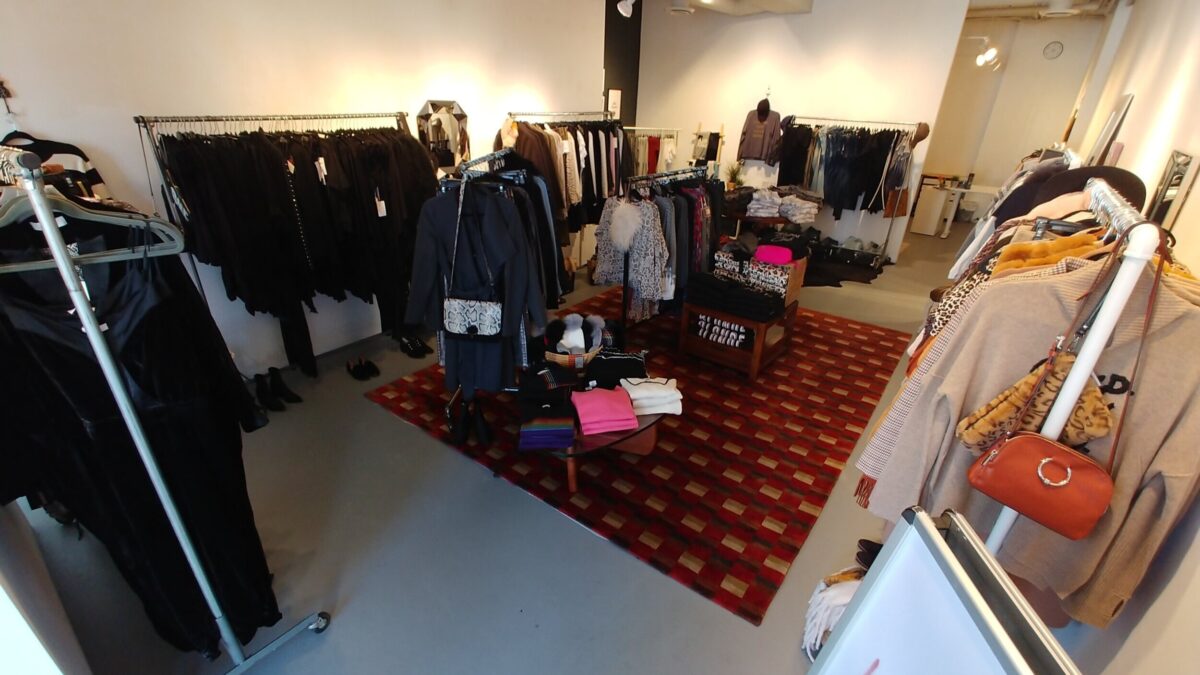
Ms. Abela chose a 950 square foot retail space at 214 Avenue Road in Toronto’s ‘Ave & Dav’ area for a permanent storefront, which features a simple interior with product grouped by lifestyle. Included are racks of clothing for ‘work’, ‘rest/relaxation’, ‘play’, and other activities. Clothing is grouped by ‘look’ and is colour coordinated for shopping simplicity, with footwear and accessories placed nearby to complete an entire outfit. At a time of unprecedented selection, the STYLEARTIST retail space aims to simplify the shopping process for time-starved women, while pairing staple pieces with some trendier items that Ms. Abela says helps boost a woman’s confidence.

After opening over the summer, the Avenue Road retail space has already seen strong sales numbers. Many pieces have sold out quickly, including a popular sneaker style as well as a range of sweaters. Brands carried in the store include well known upscale names such as Zadig et Voltaire, Rebecca Minkoff, Vince, and others, while a range of lesser-known brands are also carried in the store. Some Canadian brands feature prominently, including Montreal-based Soia & Kyo and Vancouver-based Brunette.

A denim area features a wide range of jeans from brands such as J Brand and Mother Jeans — both brands have been very successful at STYLEARTIST, according to Ms. Abela.

PHOTO: STYLE ARTIST

Catering to the customer is key to a multi-brand retailer’s success, said Ms. Abela. That includes opening the store off-hours for some clients, who may come into the store for a private shopping appointment while having a glass of wine for example. The space is also available for shopping parties, with the host receiving a store credit depending on the amount spent during the event. Stylists are also welcome to bring clients to the store — local stylist Yana Brikker, who was recently featured in Retail Insider, attended the store’s grand opening event last month and was enthusiastic about the new concept store.

The name STYLEARTIST came to be from a partnership with Ms. Abela and an artist who co-launched the retail operations in 2016. Ms. Abela has a history in the retail industry that spans more than two decades, including merchandising roles at Town Shoes as well as at Hudson’s Bay. She created and launched several private labels during her career and worked closely with Canadian fashion icons such as Jeanne Beker and David Dixon to develop, market and sell exclusive product lines.

STYLEARTIST’s launch included an online proprietary personal shopping engine called STYLEWIZARD, which is a free one-of-a-kind online styling tool that women can use to assemble a range of looks depending on lifestyle. She said that she found that large retailers sometimes had difficulty reacting quickly to the changing needs of clients and thus, she created the online styling tool that helped grow traffic to the website while helping gain brand awareness.

Image: STYLEARTIST

By giving women the option of shopping online as well as in a physical space, Ms. Abela explained that sales have also increased on STYEARTIST’s e-commerce site, while at the same time increased face-to-face interaction in the retail store has led to relationship marketing. She noted that in a physical retail space, it’s also easier to up-sell clients on different products, such as a pair of shoes or jewellery that might work well with particular garments. Several months ago, Retail Insider discussed ‘the halo effect’ in an ICSC study that found when e-commerce retailers open physical storefronts, sales increase across both channels.

While there are currently no other storefronts planned for Ms. Abela’s STYLEARTIST retail concept, she says that she is considering markets such as Florida. It’s also an excuse to spend some time in a warmer climate, though she says her “happy place” is still Ontario’s Muskoka, where she and her husband also have a home.

Retailers Rank High Amongst Canada’s 40 Most Valuable Brands

Brandz Top 40 Logo

Banks lead the first BrandZ Top 40 Most Valuable Canadian Brands ranking with RBC coming out as the country’s most valuable brand worth US$23 billion.

The study was done by WPP and Kantar and is the only brand valuation ranking to combine rigorous analysis of financial data with in-depth consumer research to determine the value the ‘brand’ brings to businesses, and their shareholders. Over the past 20 years BrandZ has interviewed over 3.7 million consumers from 51 markets around the world, including over 52,400 from Canada.

Kantar is the world’s leading data, insights and consulting company. WPP is a creative transformation company through communications, experience, commerce and technology.

“We’re very excited about this. This is part of a global study that Kantar has been conducting for 20-some years around the world over 50 markets. Although we’ve been doing this for some time around the world this is the first time, we have conducted the full valuation study in Canada,” said Scott Megginson, President of Kantar Canada.

“There are a number of different studies around the world that rank brands on trust or value but what’s really different about this study is that we do take a look at the brand valuation from publicly-released data but we’re the only study that talks to the consumer in the surveys and that way we can figure out the value that brand truly brings outside of all the other assets.”

Here are the BrandZ Top 10 Most Valuable Canadian Brands 2019:

The report said the strong performance of RBC, ranked No. 1, and TD Bank, ranked No. 2, reflects the significant role that banks have in the Canadian economy, with six bank brands accounting for 46 per cent of the total US$143.6 billion value of the Top 40.

The study found that Canadians generally have a more positive opinion of their banking brands than consumers in other markets. This could be attributed to confidence in the strength of government regulation, and a reflection of the fact that no major banking bailout was required during the last financial crisis. Canadian banking brands also score well for being wise (indexing 110, where 100 is the average) and assertive (113).

In fact, Canadian banks also index above average for social responsibility (118), although brand trust remains slightly below average at 97. However, that’s still significantly higher than in other markets; the category scores just 90 in France and 91 in Belgium.

The report also found that telecoms is the second-largest sector in the ranking, accounting for 22 per cent of total value.

“While the sector is highly valuable there is a lot of room to build brand equity. Potentially due to the high cost that Canadian consumers pay for their services in contrast to other markets, Canadians have a less positive view of brands in this sector, considering them to be untrustworthy (the trust index score is 93), with poorer advertising (98) and a lower perceived purpose (97) than telecoms brands in other markets. Globally, we see that healthy brands consumers love are on average 70 per cent more valuable than frail brands – creating a huge opportunity for an already valuable category,” said the report.        

But Canadian consumers perceive even their most valuable brands to lack innovation. With 100 the average for all brands, Canada’s Top 30 indexes just above the average at 102, with only the Top 30 Spanish brands scoring lower (101), while the No.1 market for this measure, the U.S., is significantly higher at 116, said the report.

“Canada’s comparatively low innovation scores indicate there is a big opportunity for Canadian businesses, across all sectors, to grow their brand value by showcasing their innovation and clearly communicating how their products are better than those of their competitors,” said Megginson. “Focusing on innovation and differentiation will boost value and consumers’ perceptions of what is ‘premium’, enabling businesses to command premium pricing and, in turn, make their brands more exportable.”

Megginson said that when you take a look at Canada’s top 40 list every single one of them are in the service industry in one form or another.

“What we see here is that Canada’s service industry makes up the most valuable brands, but we have a lot of gaps in customer experience. That’s something we find in the study both as a challenge but a big opportunity going forward,” he said. “If you look globally at how some retailers are creating new experiences, how the ecommerce is, it’s probably the biggest opportunity for the Canadian brands 

“One other point there’s also the big lack of differentiation. We’re seeing fewer and fewer disruptive brands in Canada than say in other markets.”

Although customer experience rates low in Canada, Megginson said this is a big opportunity for Canadian retailers.

“It just feels like we’re playing catchup. We’re not thinking about customer experience as part of our brands in the retail landscape in Canada and that is a big, big opportunity.”

On average, the Top 30 brands in the ranking get just 20 per cent of their exposure (a combination of revenue, volumes sold and profitability) outside Canada, said the report which is a dramatic difference to say France where the brands in the luxury dominated ranking get 75 per cent of their exposure overseas 

“If we want to build bigger brands, then there is work to do,” said Megginson. “Canadian businesses can be much bolder about exporting, given the huge scale of the U.S. market next door and the highly positive perceptions of Canada internationally. Creating brands with a strong identity and a meaningful difference from other players in the market is an important foundation for Canadian businesses that want to be a success outside the country, proven by internationally successful brands like Canada Goose and Lululemon.”

Youtube video

Here are some of the other key trends highlighted in the report for Canada:

  • Having a strong purpose is key. Brands in the ranking consumers perceive as having a strong purpose are 78 per cent more valuable than those that score poorly. Among the Top 30 brands in the Canadian ranking, the average score is 109, the 10th highest of the 13 market-specific rankings published by BrandZ;

  • Retail accounts for seven per cent of the value of the ranking. The 12 retail brands in the Top 40 score highly for being approachable and trustworthy, but less so for differentiation and being well known. On the latter the category averages a score of 114, significantly behind the 144 average for the rest of the ranking; and

  • Being meaningfully different adds value to brands. Brands in the ranking that consumers see as bringing meaning to their lives in a way that is different are on average 46 per cent more valuable than those with a low difference. Lululemon (No. 5, US$7.6 billion) scores highest on perceived difference (178) followed by Canadian Tire (No. 22, US$1.3 billion) with 134.

Megginson said the brand contribution is generally quite low in retail in Canada which is driven by the lack of differentiation and “what we call salience which is being well known. There’s so many of them.”

“Canadian retailers are really in the shadows of these global ecommerce giants. We have these huge conglomerates dominating and differentiating in the market. We’re losing ground. Canadian retailers are really losing ground to what I call consolidated online solutions,” he said.

One bright light Megginson pointed out was Lululemon, which is the fastest riser in the global study and really making waves.

“And that’s through their understanding of their consumer, mastering trends like athleisure. Even helping create these trends.”

Luxury Watch Brand ‘TAG Heuer’ Opens 1st Standalone Canadian Storefront [Photos]

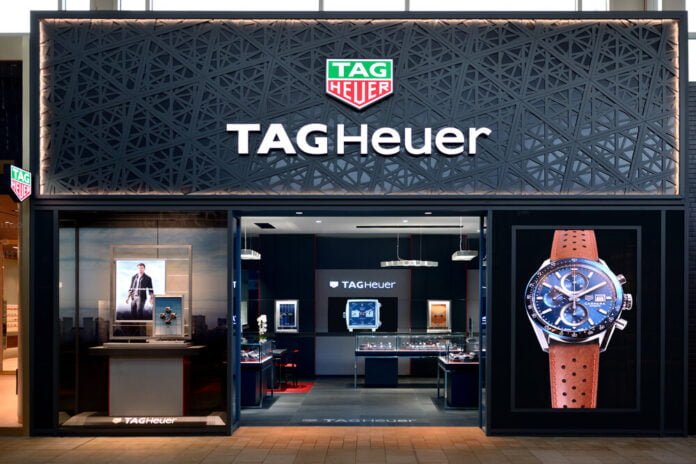
PHOTO: TAG HEUER

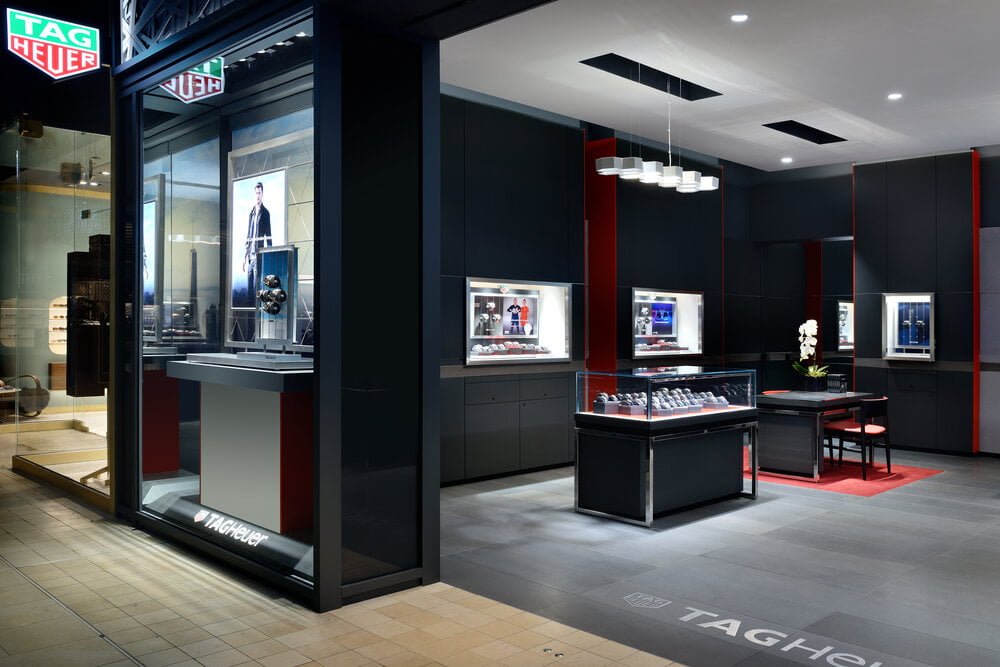
Swiss luxury watch and accessory brand TAG Heuer has officially opened its first standalone Canadian store at Toronto’s Yorkdale Shopping Centre. It’s the latest international brand to enter the Canadian market by opening a store and is another example of a brand adopting a direct-to-consumer model which is a significant trend in the retail industry.

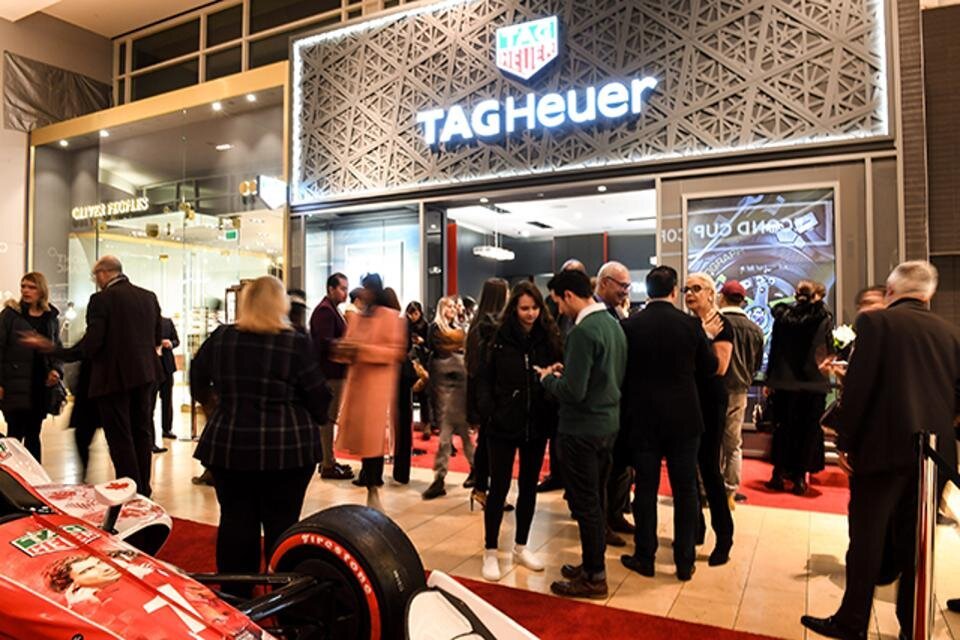
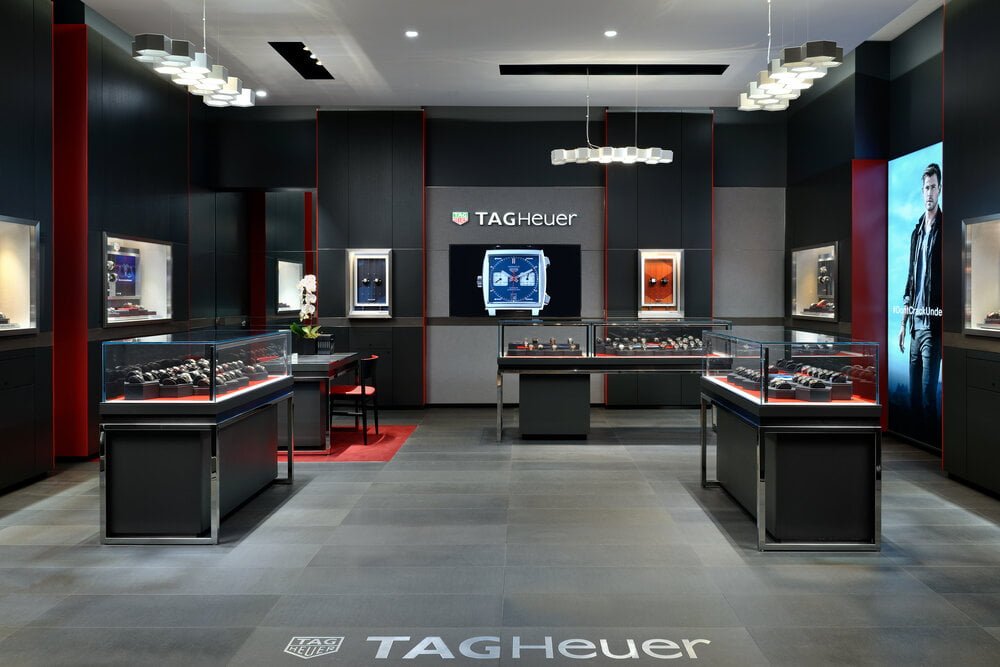
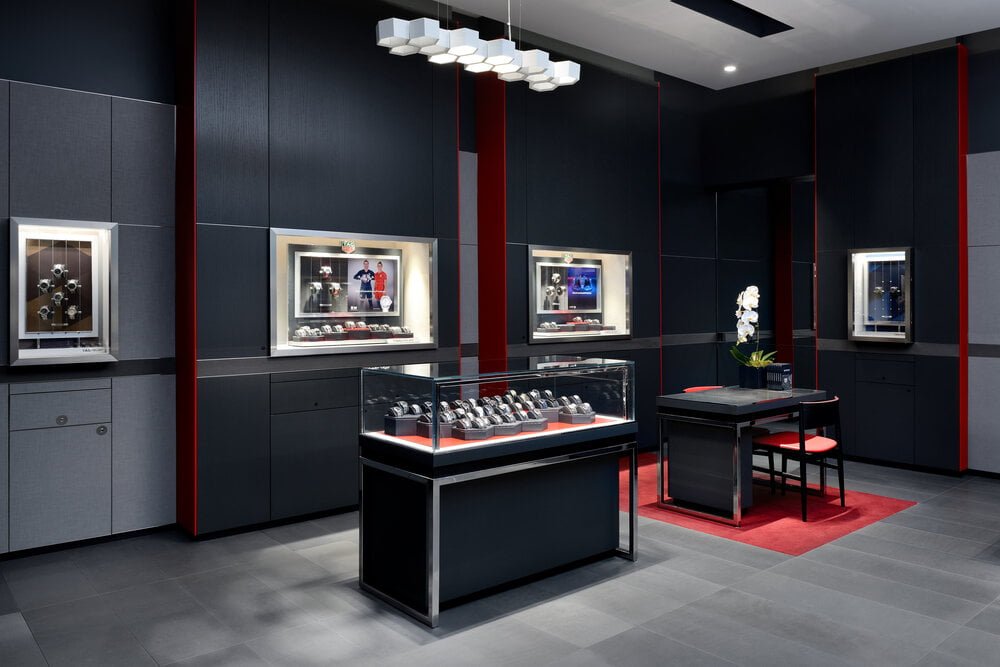
The 762 square foot Yorkdale TAG Heuer boutique features the brand’s latest store design. A metal facade features interlocking metal triangles based on the TAG Heuer ‘shield’ with overlapping layers referencing the internal mechanisms in a watch. The high-quality interior features monochromatic tones of grey and black that complement the stone flooring which is said to reference the brand’s Swiss roots of heritage and craftsmanship. Touches of red, including carpeting and trim, highlight the brand’s partnerships and attachment to the world of motor racing. This includes the Aston Martin Red Bull Formula 1 team, the Formula 1 Monaco Grand prix among others. Construction on the project took several months of precision work and top-notch project management, according to custom retail build specialist Amachris Corporation which built the beautiful new space.

Within the boutique, TAG Heuer’s timepieces and accessories are displayed in branded showcases. Styles include the Carrera Heuer 02 Tourbillon, new green-dial Aquaracers, as well as the iconic Monaco which celebrates its 50th anniversary this year. The brand’s core collection of watches are also on display including chronographs, which are highly desirable to a market seeking quality as well as brand recognition.

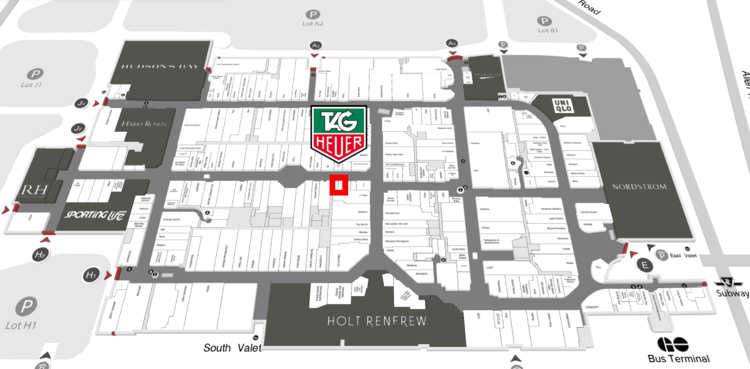
CLICK IMAGE FOR INTERACTIVE YORKDALE MALL MAP
PHOTO: TAG HEUER

The company designs, manufactures and markets watches and fashion accessories. It also licenses its name for eyewear and mobile phones, and markets a line of men’s accessories including wallets, belts, bags, jackets, bracelets and cufflinks. The brand was founded in 1860 by Edouard Heuer. In 1999, French luxury goods conglomerate LVMH acquired 100% of TAG Heuer. The name TAG Heuer combines the initials of “Techniques d’Avant Garde” with the founder’s surname.

TAG Heuer watches can be priced well into the thousands of dollars, depending on the design and materials used. The company has innovated with its designs over the years — in 1911, Heuer received a patent for the “Time of Trip”, which was the first dashboard chronograph that was designed for use in automobiles and aircraft. Its design includes two large hands that are mounted from the center pinion to indicate the time of day, while a small pair of hands, mounted at the top of the dial (12 o’clock position) indicates the duration of the trip. TAG Heuer operates in four production facilities.

TAG Heuer has paid numerous celebrities over the years to endorse its products with a few names such as Chris Hemsworth, Tiger Woods, Leonardo DeCaprio, Brad Pitt and others.

PHOTO: TAG HEUER
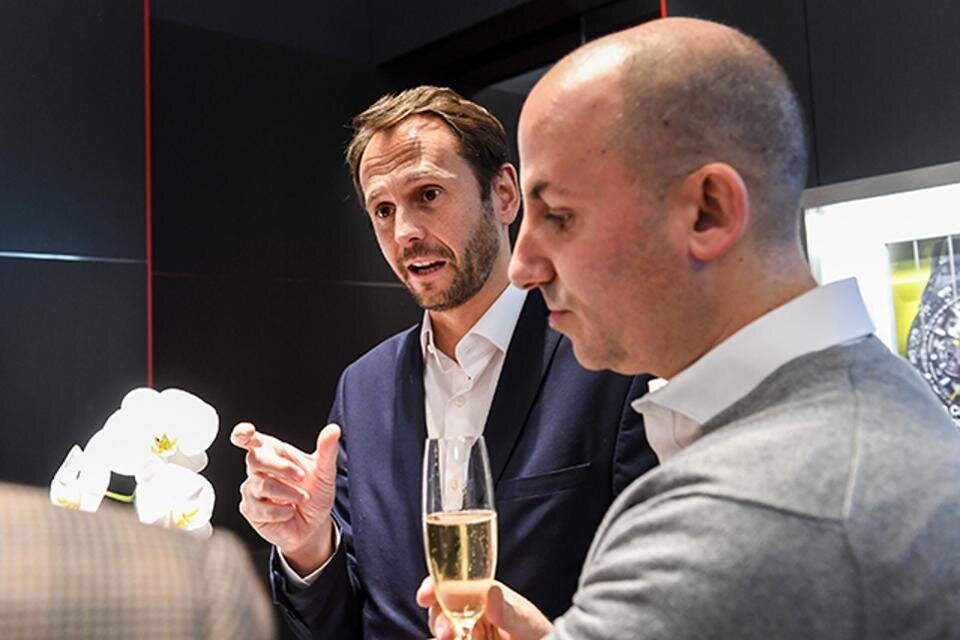
BENJAMIN BEAUFILS, PRESIDENT OF TAG HEUER NORTH AMERICA. PHOTO: TAG HEUER

“We are very happy to open our first store in Canada after 35 years in the market. During this time, we have experienced tremendous organic growth and we are excited to now offer our own standalone boutique. TAG Heuer is investing in retail more than ever to ensure we are engaging with our customers through exceptional service and a rich brand experience,” said Benjamin Beaufils, President of TAG Heuer North America. “This is an important milestone for us as we keep growing our retail network and consolidate our presence in Toronto.”

The Yorkdale TAG Heuer boutique is the brand’s ninth retail location in North America. In the U.S., boutiques can be found in New York City, Dallas, Houston, Miami, Orlando and Las Vegas. Globally there are 4,500 points of sale, including 170 TAG Heuer boutiques as well as the brand’s global e-commerce site.

Various retailers in Canada carry the TAG Heuer line. In the Toronto area, retailers carrying the brand include Maison Birks’ Yorkdale, Bloor Street, CF Fairview Mall, CF Sherway Gardens and CF Fairview locations, which feature small TAG Heuer shop-in-stores. Family-owned Toronto-based multi-brand jeweller European Boutique opened a licensed TAG Heuer shop-in-store in its renovated CF Sherway Gardens location in the fall of 2017, and the retailer also features TAG Heuer shop-in-stores at CF Toronto Eaton Centre and Square One locations. Hudson’s Bay’s CF Toronto Eaton Centre flagship carries an assortment of TAG Heuer watches, as do jewellers such as Bandiera, Berani, L’Oro, and several others. Raffi Jewellers’ Yorkdale location also carries a selection of TAG Heuer.

PHOTO: TAG HEUER

Additional corporately-owned TAG Heuer storefronts could open in Canada, with Vancouver expected to be the next target market. While the Toronto TAG Heuer shop is contained within an enclosed shopping centre, many luxury brands are seeking street-front retail spaces in downtown Vancouver, particularly in the Alberni Street ‘Luxury Zone’. Vancouver’s Oakridge Shopping Centre is said to be in talks with luxury brands to open there, with Tiffany & Co. having recently relocated to a new wing that will become a ‘luxury run’ set to rival downtown Vancouver, according to landlord QuadReal. Montreal could also be a target for a freestanding TAG Heuer unit, and Toronto’s Bloor-Yorkville would be an obvious choice for a second flagship Toronto location. Although TAG Heuer has prime locations in other global cities, Yorkdale has managed to secure this brand as well as several other luxury brands not otherwise available in Toronto’s downtown core.

TAG Heuer’s corporate store launch marks a trend being seen in the Canadian retail industry. Many brands are going direct-to-consumer by opening free-standing stores, in some cases bypassing wholesalers and multi-brand retailers altogether. The same brands are also opening Canadian e-commerce sites, which in effect are another local storefront.

International brands continue to target Canada by opening stores, and 2019 is another banner year as Retail Insider tracks movements of international brands entering the country. In early 2020, we’ll tally up the number of international brands that entered Canada by opening stores, and also analyze how the competition could affect homegrown retailers.


View this post on Instagram


Swiss luxury watchmaker, TAG Heuer has officially opened its first Canadian flagship store at Yorkdale Shopping Centre. Amachris is extremely proud to have built this space, bringing the retailer’s vision to life! The 760 square foot boutique features the brand’s latest store design, which includes an intricate metal facade, referencing the complex internal mechanics of a watch. The high-quality grey and black fixtures complement the beautiful stone floors, while red details seen in the carpeting and trim, highlight the brand’s involvement in the world of motor racing. Building this store was another great project to work on, as it marks a fantastic international brand entering the Canadian market! 🙌🏼😍 . . Photography: @tagheuer . . #luxuryretail #designbuild #retailinsider #retaildesign #tagheuer #projectmanagement #generalcontractor #Amachris

A post shared by Amachris Corporation (@amachriscorporation) on

Canadian Home Furnishings Retailer ‘EQ3’ Opens Impressive NYC Flagship Amid Expansion [Photos]

exc-5dd1f43bb1497a3f86fcfa7b

Canadian home furnishings retailer, EQ3, opened its first – and flagship – store in New York City recently as the company continues to expand its footprint across North America.

Mark Letain, President of EQ3, which is based in Winnipeg, said the company is opening six new stores this year.

“In 2020, we actually don’t have any plans at this point. This is a massive expansion for us. We’ve almost increased our store count by about 50 per cent. We’re going to wait and see how this year goes and then we’ll continue our expansion in 2021,” said Letain.

“We’re already in some discussions. We want to see how these new stores work out.”

The company stands for “emotional quotient in three dimension.”

“It kind of talks to the living space and the fact that your furniture reflects who you are,” said Letain.

The concept of EQ3 was launched as a wholesale initiative at the High Point Market in North Carolina in 2001 as an extension of a product line of Palliser Furniture. Palliser Furniture Upholstery Ltd. is a furniture manufacturing company headquartered in Winnipeg. It manufactures and distributes upholstery furniture products throughout Canada, Mexico and the United States.

Letain said at the time of EQ3’s launch modern furniture was under-represented in the North American market. At first, it was heavy on the bedroom and dining room side of the business and upholstery.

“It really took off. There were a few retailers that liked it so much that over the course of the next year or two they rebranded themselves EQ3 – the whole store. But it started off as a wholesale concept selling to other retailers and became a bit of a franchise,” he said.

The franchise model was changed in about 2009-2010 to a corporate model. Today, Letain said the company will have 20 stores by the end of this year.

“We’re going to open up our third Chicago location. We’ve opened up three this year. This one’s in Oakbrook. Oakbrook mall is the third most productive mall in the United States. It’s a luxury mall selling about $1,000 per square foot. It’s a great mall. Some of your online giants who when they first went into brick and mortar this is one of their beginning locations,” said Letain.

In Canada, the company has stores in Vancouver, Calgary, Winnipeg, three in the Greater Toronto Area, Ottawa, Quebec City, three in Montreal, and an outlet in Laval.

In the United States, there are also two stores in San Francisco and one in Connecticut.

“One thing that is unique to us is we’re vertically integrated. There’s not that many furniture companies that are that vertically integrated – meaning that we design our products, we manufacture most of what we sell, all the upholstery that we design ourselves and manufacture in Winnipeg right out of our head office,” said Letain.

“Everything we sell is just unique design. Other furniture retailers just can’t go and buy it in China or source it somewhere else. They’re all our designs and typically we manufacture it. That makes us different. Seventy per cent of the product we make ourselves through our own original designs and our own manufacturing capabilities. The remaining 30 per cent we source in places like India for rugs and lighting and dining out of China.”

Letain said one of the key messages the company is getting out to the public these days is “Canadian by design.”

“We like to consider ourselves as a bit of a design house because we do original designs and we do work with other designers. I think that makes us unique,” he said, adding that as much as the company can it is trying to do its own deliveries.

“We’re trying to control all those parts of the supply chain that affect customers as much as we can.”

Letain said the company is putting the new stores in high profile locations and it believes that’s how it’s going to build brand awareness in the United States – the big market where it is going to grow.

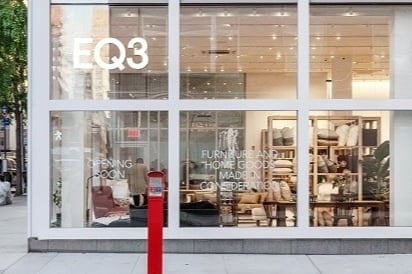
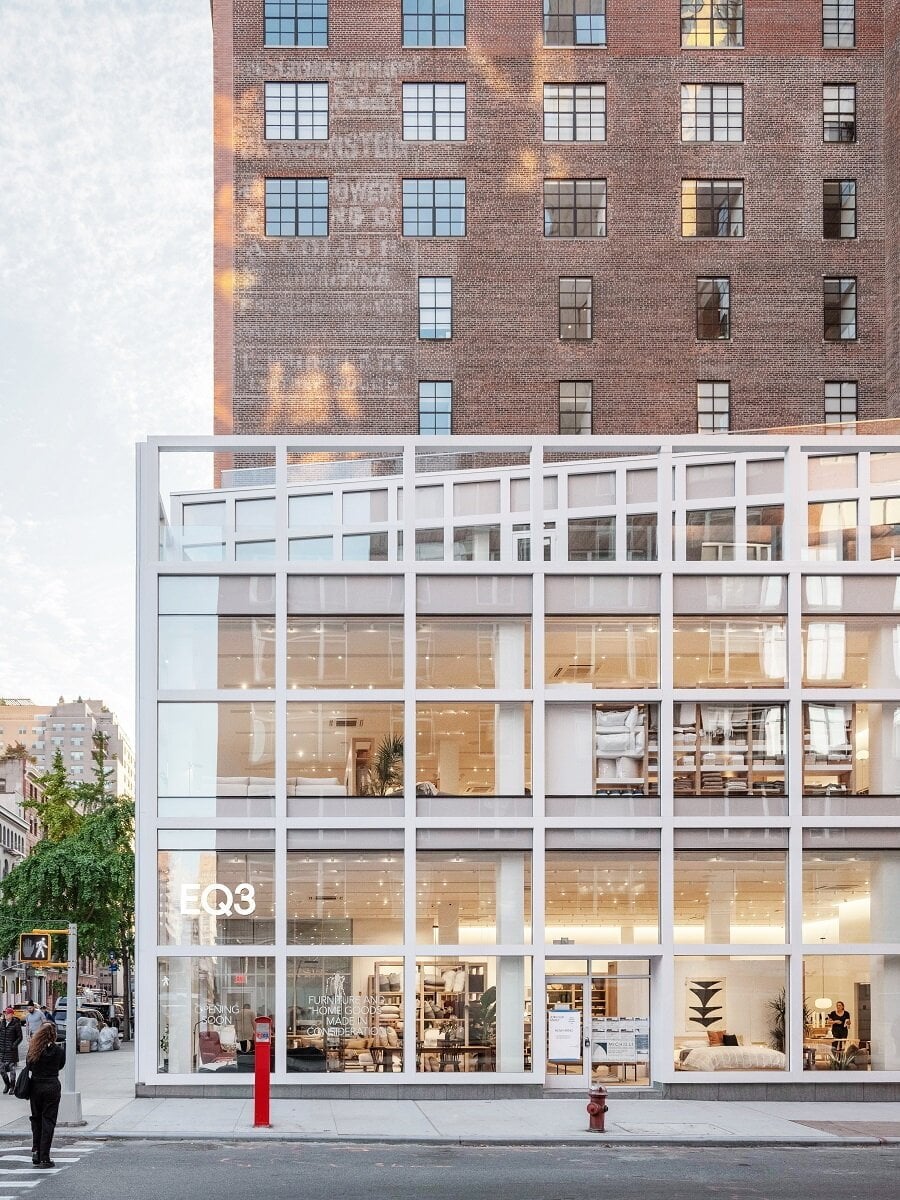
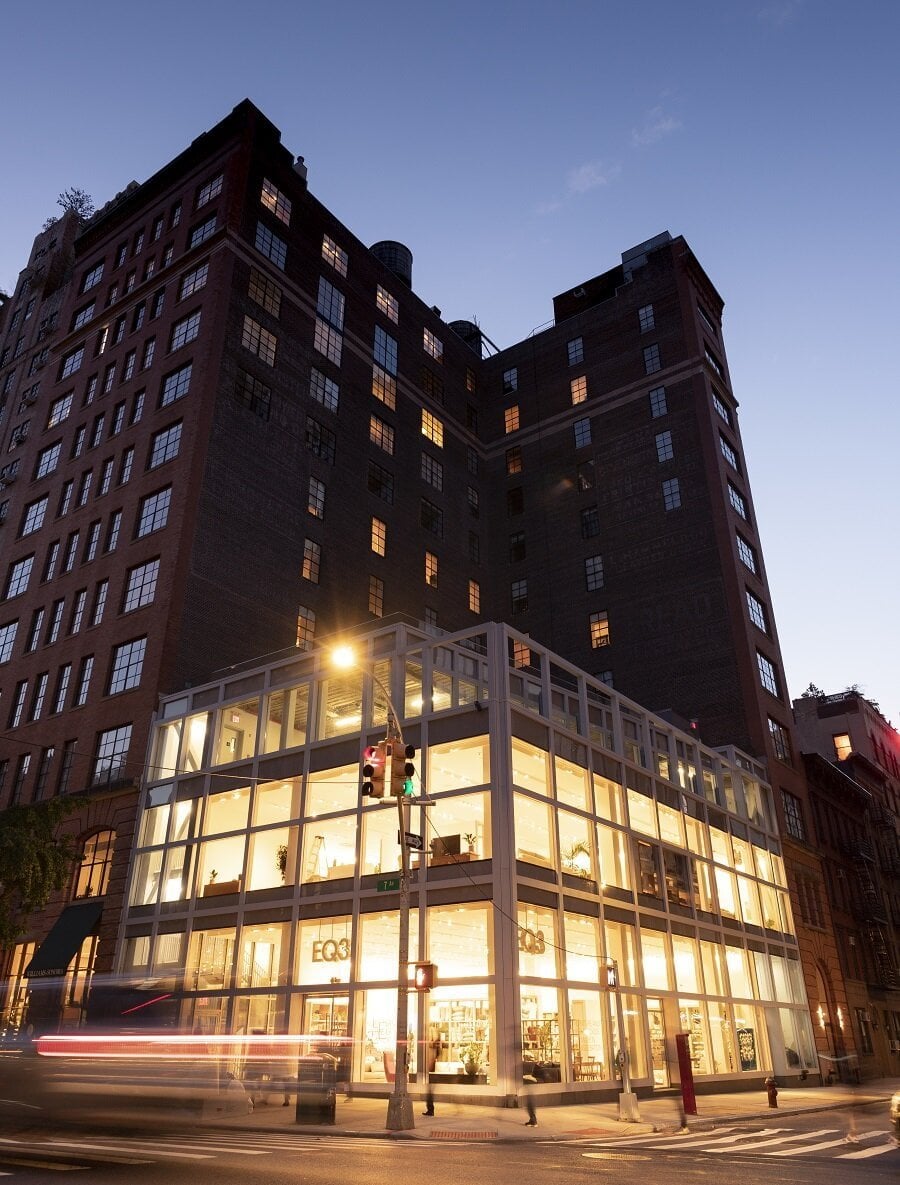
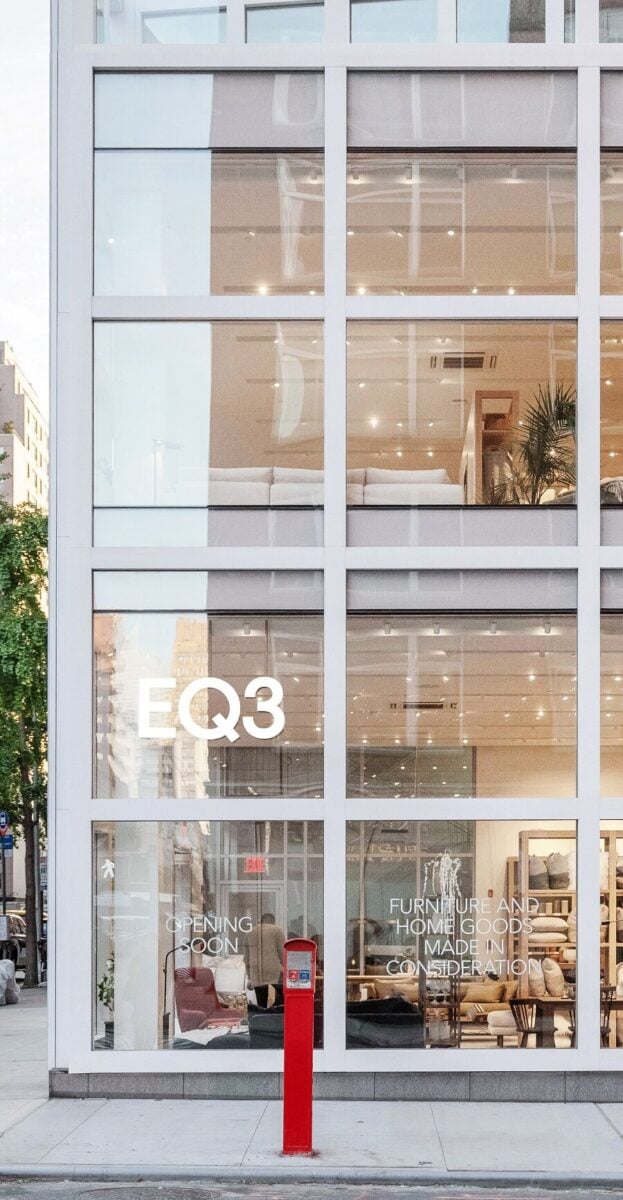
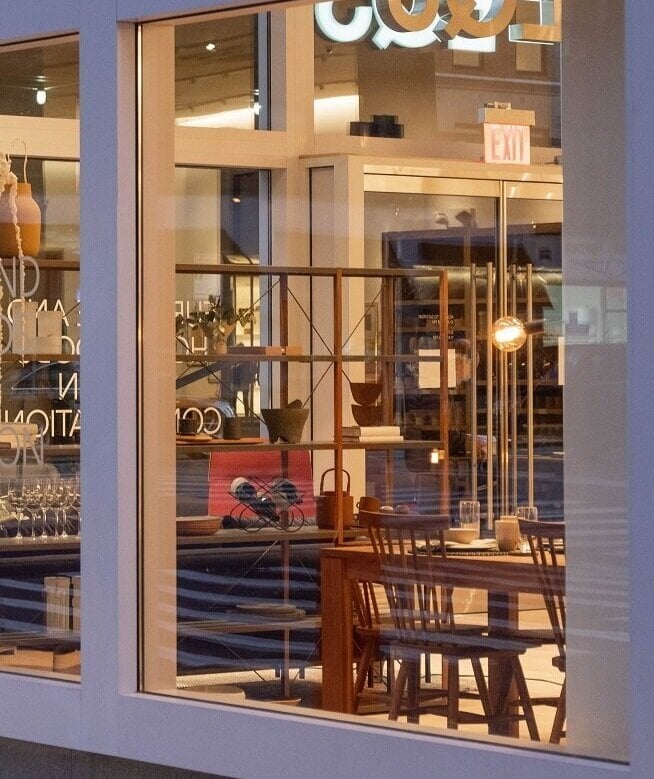
The three-level, 11,800-square-foot space in New York City is located in the Chelsea furniture design district at 116 7th Avenue. The store is one of only a handful of new retail builds in the area as most brands coming into the neighbourhood renovate existing spaces. Designed by Thom Fougere, EQ3 consultant and former Creative Director, the entire exterior uses a clean 8’ x 8’ repeating steel grid creating a multitude of framed vignettes. Product stories for furniture, lighting and accessories come to life in the soft grey frames for passers-by. The vignettes transform routinely with the changing product assortment.

In contrast to the brick and stone buildings in the area, the new EQ3 store becomes a beacon of glass and light, says the retailer.

“It’s not so often you get to design and have a building spec to your own design in Manhattan. Having an original store location, three floors, in Chelsea, in Manhattan, in a really great furniture – one of the major furniture destinations still in New York,” said Letain.

The company has three stores in the Chicago area.

“What we’re doing in Chicago is kind of heralding our true entrance into the United States marketplace. We’re letting them know that we’re here to compete and we think we’re really at a great midpoint price point. We’re not opening price point but we’re not luxury. We’re in that nice middle area of price point and we think we’re going to be really well poised to effectively compete against the Crate and Barrels of the world and the West Elms.”

Upscale Sportswear Brand ‘Stone Island’ Opens 1st Canadian Flagship [Photos]

PHOTO: STONE ISLAND

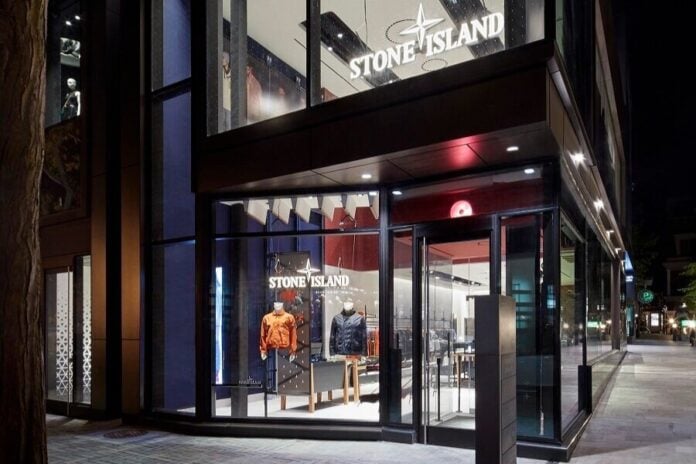
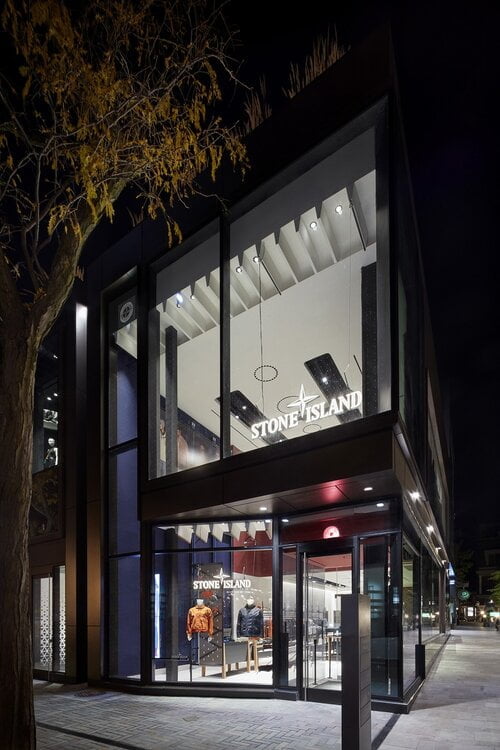
Upscale Italian men’s apparel brand Stone Island has opened its Canadian flagship on Toronto’s Yorkville Avenue. It’s the latest high-end retailer to open a storefront on the rapidly changing street which boasts an affluent shopper demographic. 

The new store carries Stone Island’s full range of fashions and accessories for men, as well as Stone Island’s ‘Shadow Project’ collection. The brand is known for its quality and innovation, having developed more than 60,000 different recipes of dyes throughout the years. Technical sportswear design (through considerable research and development) and fabrics has helped the brand gain a ‘cult’ following for its products featuring the compass-like Stone Island badge on the left arm of garments. 

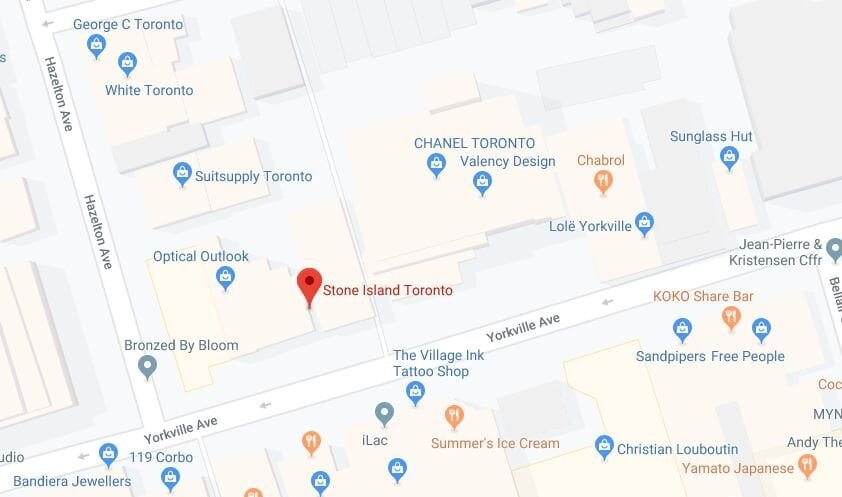
STONE ISLAND LOCATION ON YORKVILLE AVENUE IN TORONTO. CLICK FOR INTERACTIVE GOOGLE MAP.

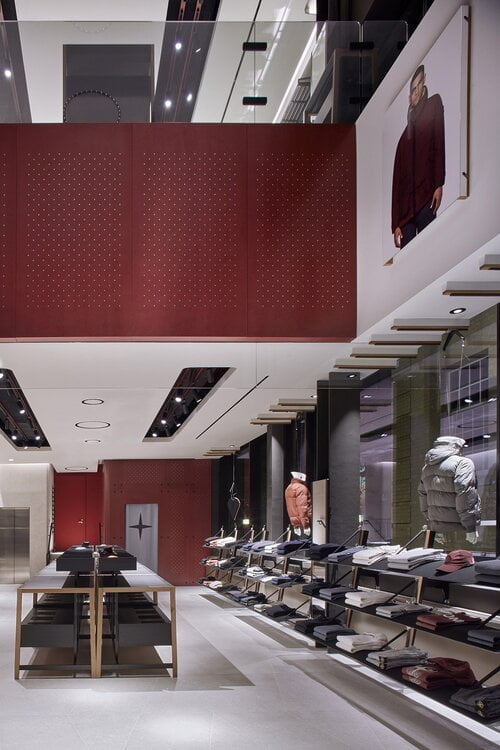
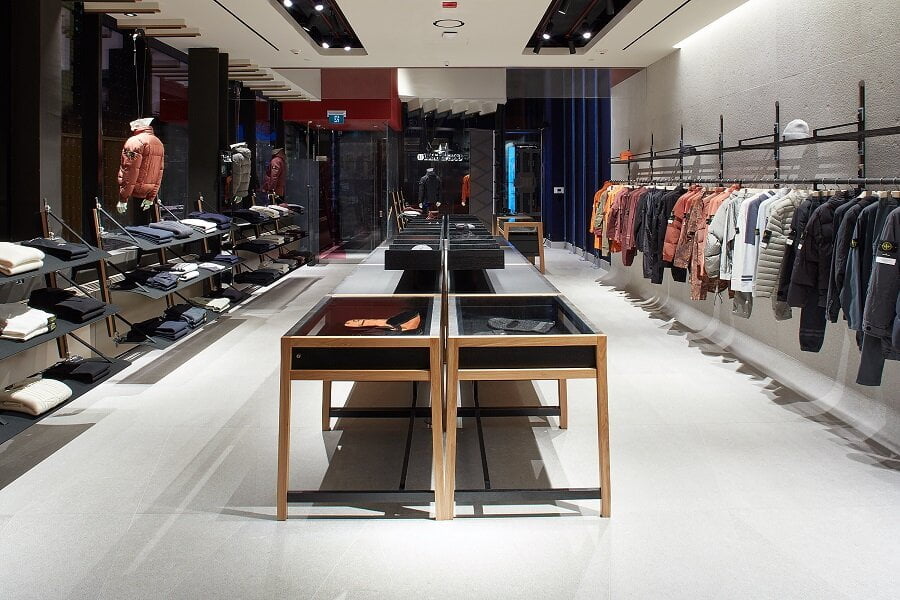
Located at 104 Yorkville Avenue, the dramatic 2,500 square foot Stone Island store features large corner windows that offer a view from the street. The interior design was created by industrial designer Marc Buhre from Heidelberg (Germany), who also founded architectural firm Zeichenweg TM. The “highly functional design” includes bush-hammered stone flooring which is also used on walls, which is interspersed with through-coloured MDF and metallic mesh on a steel substructure. Furnishings in the retail space are made of black-stained natural oak. Hangers are composed of carbon bars and anodized aluminium, while shelves are in shades of anthracite.

Hilary Kellar-Parsons, who recently joined Aurora Realty Consultants, represented Stone Island in the lease deal with landlord First Capital Realty

The two-level Stone Island flagship is located in the 102-108 Yorkville Avenue complex that was developed by First Capital Realty to attract luxury retailers to the area. Other tenants in the complex include North America’s largest Brunello Cucinelli flagship, a new-concept Versace store, and upstairs is a spa concept recently profiled in Retail Insider called Majesty’s Pleasure. A high-end Japanese restaurant called ‘Hana’ will open next month on the lower level of the complex.

It’s the third standalone storefront for Stone Island in North America. The company also operates corporately-owned stores in New York City and Los Angeles. Globally, Stone Island operates 26 freestanding stores as well as 18 concessions. Of the 26 standalone stores, nine are in Italy including two units in Milan as well as in Rome, Florence, Venice, Turin, Verona, Forte dei Marmi, and in Riccione. Other European stores are found in Munich, Hamburg, Frankfurt, Sylt, Paris, Cannes, London, Amsterdam, Antwerp, and Stockholm. In Asia, Stone Island stores are located in Tokyo, Seoul, Daegu, and Hong Kong. 

PHOTO: STONE ISLAND
PHOTO: STONE ISLAND

Stone Island was founded in 1982 by designer Massimo Osti. It was created as a parent brand for his first label, C.P. Company, which was founded in 1974. In 1992, Carlo Rivetti and family, already stakeholders since 1983, bought 100% of the brands, and founded Sportswear Company SpA. In August of 2017, Sportswear Company SpA sold a 30% stake in its business to Singaporean Sovereign wealth fund Temasek Holdings. Carlo Rivetti is currently Sportswear Company’s President and Stone Island’s Creative Director.

Prices for the brand skew towards the high-end, with some outerwear styles selling for more $1,000 each and sweaters selling for more than $500. In Canada, Stone Island clothing can be found in upscale edgier multi-brand retailers such as SSENSE, Haven, CNTRBND and TNT, among others. Stone Island also experimented with temporary shop-in-shops at Holt Renfrew, which are said to have performed well.

Celebrities such as Drake are known to wear the brand — given that Drake is building a mansion in Toronto’s Bridle Path area, it is expected that he may become a customer in the new Toronto store. 

DRAKE WEARING STONE ISLAND. PHOTO: GETTY IMAGES

Stone Island’s popularity is due in part to its brand collaborations, as well as a roster of celebrity fans who wear the brand. Stone Island has collaborated with popular brands such as Supreme and Nike with considerable success. Such collaborations are increasingly common in the industry, with product ‘drops’ often selling out quite quickly, while creating hype and greater brand recognition.

Stone Island initially became fashionable among the Italian youth subculture called Paninari — an affluent scene that would congregate in panino/sandwich shops. Not long after, the brand became a favourite among British soccer fans and then music fans who were drawn to Stone Island’s specialized dyes and pioneering fabrics. 

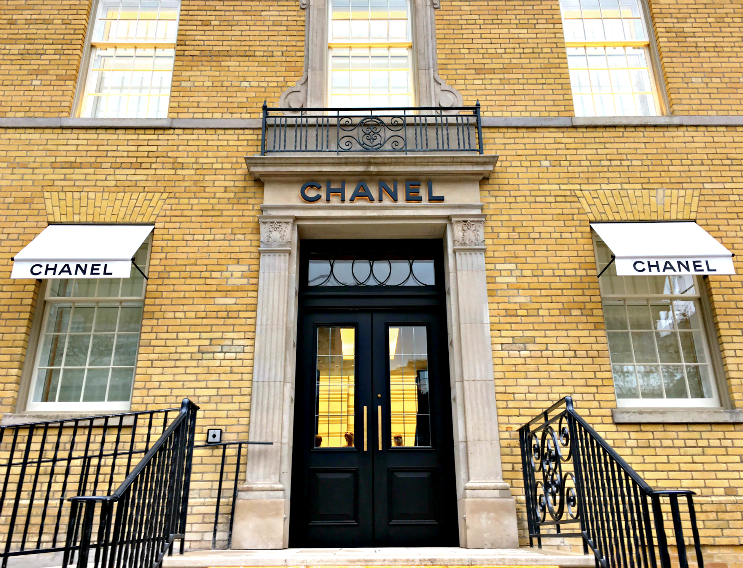
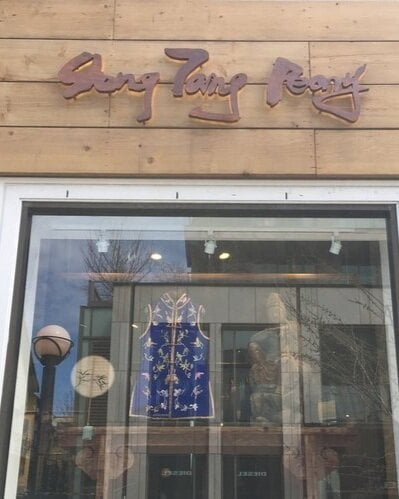
The Yorkville Stone Island flagship is situated alongside some of the world’s biggest brand names. Chanel’s Canadian flagship, located at 98 Yorkville Avenue, is expanding to more than 9,500 square feet after having opened in November of 2017. Versace and Brunello Cucinelli are situated directly to the west of Stone Island. Across the street, luxury brands operating stores include Christian Louboutin, Off-White and Sheng Tang Peony. First Capital Realty, which owns the building that Chanel currently occupies, plans to add other luxury brands to the area that will involve re-tenanting retail spaces recently vacated by Diesel and Anthropologie. At 101 Yorkville Avenue, as well, First Capital Realty will build a new luxury focused mixed-use project that will include three flagship retail spaces as Yorkville Avenue finds its place as one of the most prestigious retail addresses in North America. 

CHANEL YORKVILLE. PHOTO: CRAIG PATTERSON

While the company hasn’t discussed other Canadian locations, the Vancouver market could be in line for a Stone Island flagship at some point. The city’s affluent Asian population, including locals and visitors, is said to be primarily responsible for the openings of many luxury stores in the downtown Vancouver ‘Luxury Zone’ which is flanked by the Trump Tower on West Georgia Street and the Hotel Vancouver. Alberni Street has become an address of choice, particularly on its 1000 block. The 1100 block of Alberni Street, which currently houses an Urban Fare grocery store as well as several boutiques and restaurants, is said to be the next target for luxury brands in Vancouver’s downtown core as demand for space in the area requires further expansion in the area. 

Stone Island’s direct-to-consumer storefront will become competition for multi-brand retailers carrying the line in downtown Toronto. Upscale edgy retailer CNTRBND carries a selection of Stone Island products, as does the Holt Renfrew men’s store at 100 Bloor St. W. which is said to be remaining there indefinitely despite a previous announcement that it would move back into the 50 Bloor St. W. Holt Renfrew flagship. The TNT store at Yorkville Village carries Stone Island, as does Capsule on Yorkville Avenue. Other downtown Toronto retailers carrying the Stone Island brand include Due West, Kenshi, and Nomad. It remains to be seen if sales of Stone Island in these stores decreases with the opening of the mono-brand Yorkville Avenue flagship.

Williams Sonoma to Exit Quebec Amid Multiple Store Closures in Canada 

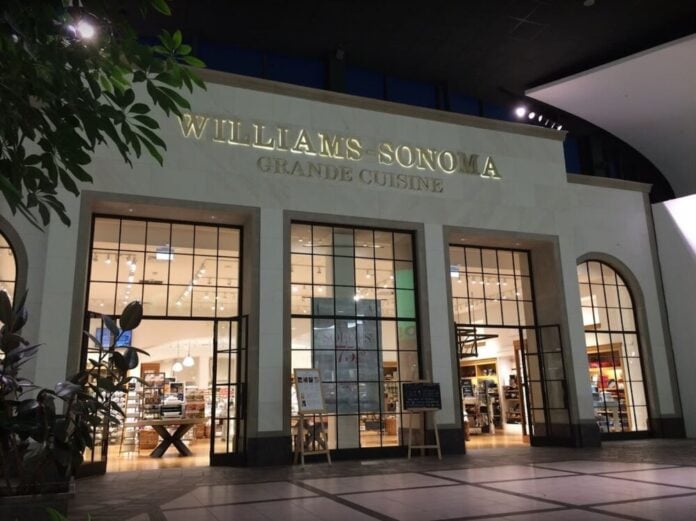
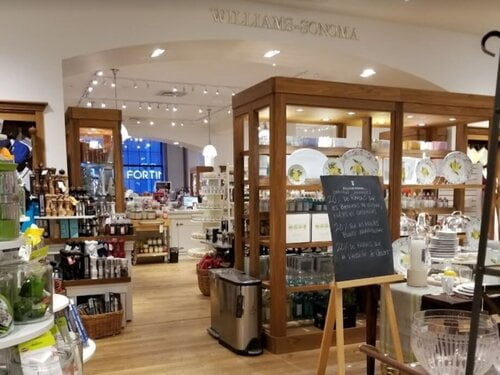
WILLIAMS-SONOMA LAVAL. PHOTO: GOOGLE MAPS

San Francisco-based kitchenware and home furnishings retailer Williams Sonoma has announced that it will close both of its stores in suburban Montreal. The Williams Sonoma store in Vancouver is also closing at the end of the year, according to sources.

This follows the closing of an Edmonton store several months ago. The company’s sister brand Pottery Barn will also close its Edmonton location next month as the retailer shrinks its Canadian footprint. 

On Williams Sonoma’s social media over the weekend, the company announced that it would be closing its stores at CF Carrefour Laval near Montreal, as well as its store at Quartier DIX 30 in Brossard. Comments on Instagram posts indicated dismay with questions as to why both units were shuttering. 

Both stores will close in January according to Maxime Frechette, who brought the store closures to our attention on Saturday.

Williams Sonoma entered the Quebec market in November of 2012 when it opened the CF Carrefour Laval unit. The store’s current 6,400 square foot storefront occupies a prominent location in the mall across from a La Maison Simons store. The Quartier DIX30 Williams Sonoma store, which spans just over 6,500 square feet, is located near the centre’s Sporting Life store and is next to sister brand Pottery Barn and Pottery Barn Kids, which will remain open for the time-being. 

A post this month on Reddit, above, indicates that Williams Sonoma’s Vancouver store will also be closing at the end of this year. Retail Insider wasn’t able to confirm these details as of Sunday evening when provided the information, though the post is specific. “Asked one of the associates and she confirmed that they’ll be closing after Christmas,” the post says.

The closure of the Vancouver store is more than likely given the fact that JLL has listed the 4,412 square foot retail space at 2903 Granville Street for lease. The stretch of Granville Street has seen multiple vacancies which some retailers have attributed to high taxes and rents, as well as changing shopping patterns.

The Pottery Barn store at West Edmonton Mall is also scheduled to close at the end of the year. It follows the closing of the Williams Sonoma store at West Edmonton Mall in the spring — Williams Sonoma opened at West Edmonton Mall in September of 2012 to much enthusiasm. The West Edmonton Mall Pottery Barn store spans 14,200 square feet over two levels, including a 9,130 square foot main floor — the store is located next to the mall’s recently opened Uniqlo store. The 7,000 square foot Williams Sonoma space at West Edmonton Mall is now occupied by a Browns Shoes location.

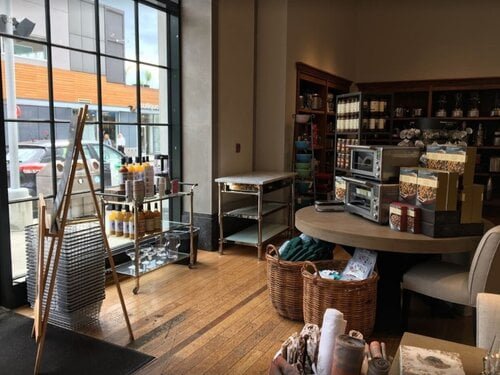
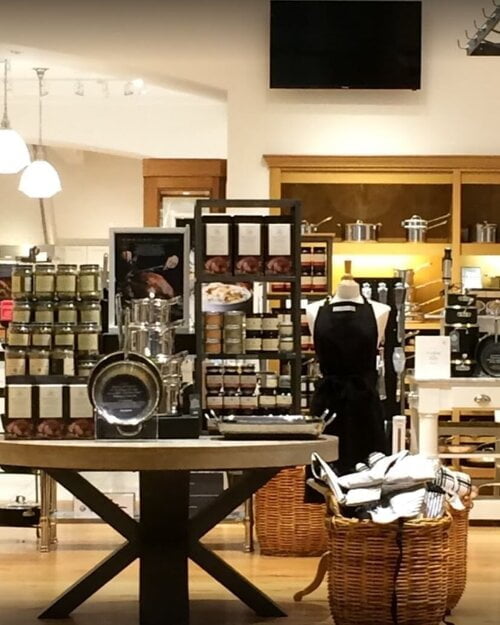
WILLIAMS-SONOMA QUARTIER DIX 30. PHOTO: GOOGLE MAPS

While some are questioning the future of Williams Sonoma in Canada, a companies earning call over the summer indicated that business is good here. Laura J. Alber, President and CEO of Williams Sonoma, said, “Our total international business continued to show strength. We see a lot of strength in Canada actually.” The Australian operations are a different story however. “Our Australia business is probably the weakest honestly, but there we’re able to continue to reduce costs as we change our operating model there, so that is a good thing too. And we are in general very optimistic about our ability to really grow in these international markets and do it profitably.”

Despite her comments, Williams Sonoma will operate only four stores in Canada by early 2020 after several store closures in recent memory.

One of the most high profile Williams Sonoma store closures came in early 2017 when the retailer shuttered its Canadian flagship store at 100 Bloor Street West in Toronto. The adjacent Pottery Barn store in the same building subsequently closed as well. French luxury brand Hermès replaced Williams Sonoma when it opened a flagship in November of 2017. A Zegna flagship opened next to Hermès in December of 2018. The space formerly occupied by Pottery Barn on Bloor Street remains vacant and is listed for lease by CBRE

Williams Sonoma entered the Canadian market in October of 2001 when it opened a store at CF Toronto Eaton Centre. A store at Toronto’s Yorkdale Shopping Centre followed in November of that year — in 2016, the Yorkdale store relocated to the Nordstrom-anchored expansion wing after luxury conglomerate Richemont Group leased the Williams Sonoma space for four of its brands (Piaget, Panerai, IWC, Vacheron Constantin). The Bloor Street flagship opened in the spring of 2002 and was considered to be the Canadian flagship. 

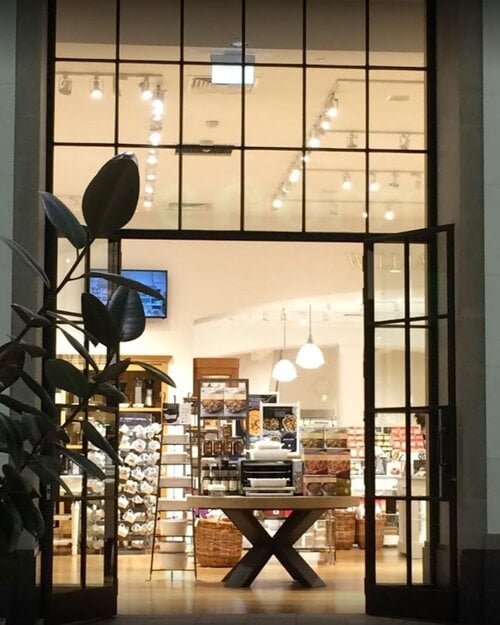
WILLIAMS-SONOMA QUARTIER DIX 30. PHOTO: GOOGLE MAPS

In an interview with the Globe & Mail in 2001, Williams Sonoma said that it planned to open as many as 40 Canadian stores over five years, located in all 10 of Canada’s major cities. The company subsequently expanded to open units in Vancouver, Edmonton, Calgary, Toronto and Montreal. 

Oddly, the Williams Sonoma website does not include the CF Chinook Centre location in Calgary. On a phone call with the store on Sunday November 17, an employee explained that the company had neglected to add the Calgary store to the Williams Sonoma Canadian website, and that the store was remaining open as far as they were aware.

Williams Sonoma continues to operate stores in Vancouver, Calgary and Toronto. The soon-to-close Vancouver Williams Sonoma store is located at 2903 Granville Street in a well-heeled retail area that has recently seen several retailers and restaurants shutter. Three Toronto stores include CF Toronto Eaton Centre, Yorkdale Shopping Centre and CF Sherway Gardens. 

Pottery Barn operates stores in Vancouver, Calgary, Edmonton and Toronto, with a sole Quebec location being located next to Williams Sonoma at Quartier DIX30. The Vancouver Pottery Barn store is located three blocks from Williams Sonoma at 2600 Granville Street and there are questions about its future as well, according to sources not wishing to speak on the record for this article. The Calgary store is located at CF Chinook Centre, and two Toronto Pottery Barn stores are housed at CF Sherway Gardens and at the Yorkdale Shopping Centre. 

Sister brand West Elm operates stores in Vancouver, Calgary, Toronto and Montreal. One of the Toronto stores relocated in February of 2018 and was featured with photos in Retail Insider

Williams Sonoma and its two other brands face steep competition in Canada as other homewares retailers seek to gain market share. At the same time, Canadians are known to be frugal and some of Williams Sonoma’s pricing could be classified as being in the premium category. TJX-owned HomeSense, which sells off-price home goods, has been expanding rapidly across Canada along with Winners and Marshalls banners. The HomeSense expansion has been made possible in part to the demise of Target and Sears in Canada, which resulted in available retail space for new large format retailers to expand. 

Various other retail chains are also competing with Williams Sonoma’s banners in Canada. Bed Bath & Beyond, also offering reasonably priced goods, has expanded across Canada though it too is said to be struggling. Large format Crate & Barrel operates nine stores in Canada in the same markets as Williams Sonoma. That includes stores in Vancouver, Calgary, Edmonton, Toronto and Montreal. 

Other retailers seeking market share include Toronto-based Kitchen Stuff Plus, which has found success offering value-priced kitchenware that has seen stores open throughout the region. Retailers such as Stokes have been expanding by opening new stores in Canada, while large format retailers such as Linen Chest and Canadian Tire have expanded their kitchen and home offerings. Home furnishings behemoth Ikea continues to expand its Canadian operations by opening new stores, and recently announced plans to open at least one store in downtown Toronto. There are plenty of other examples, including Chinese variety retailer Miniso which carries kitchen products at low prices.

WILLIAMS-SONOMA QUARTIER DIX 30. PHOTO: GOOGLE MAPS

Not to mention, e-commerce continues to grow in Canada as many consumers choose to shop online. Some are international — US-based retailer Wayfair operates a Canadian shopping website, for example.

It remains to be seen what the future of Williams Sonoma will be in Canada. Some landlords have said that some Canadian shopping centres stores have not been meeting sales projections. Some shopping centres have seen a reduction in foot traffic amid a shift in the Canadian retail industry.

Increased cost of living, a shift of spending to technology and mobile devices, and the shift towards seeking out ‘experiences’ has seen increased spending in restaurants, which leave kitchenware stores in a bind in some markets. Brands themselves have also been opening standalone stores in Canada, including Le Creuset and Zwilling which have both opened a network of locations over the past several years. Both also operate Canadian e-commerce sites.

A Tailored Plan for Retailers to Successfully Combat the Disruptors

IMAGE: OMNICHANNEL RETAIL

By Antony Karabus

As digital shopping continues to grow at a rapid pace, it is causing tremendous disruption to the economic model that retailers have relied upon to build and run their businesses. Today, retailers are competing with other traditional brick-and-mortar stores, the digital giants like Amazon and Wayfair, as well as new digitally driven threats from rental and resale businesses such as Rent the Runway, The Real Real, and Stitch Fix

This disruption represents a fundamental shift in shopping behaviour that will accelerate as a new generation of digital and value-savvy consumers become an even greater economic engine. Retailers that rely heavily on traditional brick-and-mortar sales as their primary source of growth must urgently adapt or face significant declines in operating earnings and working capital.

Why? The digital environment is evolving. 

  • Amazon and Wayfair continue to rapidly grow sales and share. Consider this: while Amazon grows by more than 20 percent annually, most traditional retailers experience flat to slightly positive comparable sales, if successful. Amazon has taken an additional USD20 billion in sales each year out of the market share that was previously attributed to traditional retail stores — on top of the USD20 billion each previous year. That cumulative impact is huge.

  • Also troubling is the fact that, despite the liquidation, bankruptcies, and downsizing of numerous traditional retailers over the past few years, little of the market share released was captured by traditional retailers. Rather, Amazon — as well as the discount channel and value chains — captured most of this available market share. 

  • Following the leader isn’t always the answer. Amazon is also continuously raising the bar and innovating, pushing retailers to keep up for self-preservation. But often all the traditional retailers are doing is increasing their costs and complexity without bringing additional top-line sales. Amazon continues to invest heavily to deliver goods faster to customers. When Amazon introduced Prime membership, for example, and its two-day (now evolving to one-day) free shipping guarantee, traditional retailers tried to match that offering. But, while Amazon can leverage their 100-million-plus Prime membership base (representing USD10 billion in annual fees) and profits from their hugely successful Amazon Web Services business to offset shipping and other related costs, traditional retailers aren’t so fortunate.

  • Everything old is new again. Companies have increasingly been jumping into the rental apparel market to try to capture customers. Macy’s is exploring an apparel rental service and Bloomingdale’s service is about to launch. Many others are getting onto this trend also. The proliferation is, in part, fuelled by the desire of brick-and-mortar retailers to adapt to changing consumer habits and find new revenue streams. According to a report from data analytics firm GlobalData, the rental subscription market was valued at around USD1 billion in 2018 and is expected to grow more than 20 percent a year, reaching USD2.5 billion by 2023.

Given this evolving landscape, it is not surprising to see numerous retailers experience significant declines in their operating earnings and working capital. While some struggle for survival, others are no longer in business. 

To remain competitive and play to their strengths of offering a physical experience that allows customers to “touch and feel” the merchandise, many brick-and-mortar retailers have adopted omnichannel offerings. Importantly, however, a recent HRC Advisory survey among C-Suite executives at more than 30 North American retail chains found that, if not implemented properly, omnichannel strategies can inspire a host of additional challenges on the financial and customer-service front.  

For many retailers, e-commerce represents a cannibalization of earlier sales from their physical stores. Which means they must incur additional capital and operating expenses to achieve the same total sales level — if at all. This has resulted in a significant deleveraging of store operating infrastructure costs (store occupancy, labor and other costs) and a decline of as much as 40 percent in retailer EBITDA-to-sales performance.  

Common issues to avoid in making the shift to an omnichannel strategy include:

  • The high cost of digital sales. Providing customers with the flexibility to shop online or in store may sound like a profitable plan. But the reality says otherwise. Revenue from multiple channels may equal prior total store sales but this is only made possible by the addition of massive capital and operating costs, with no overall incremental sales bump. 

    In its aim of serving digital and omnichannel sales, the retail landscape has evolved from a largely fixed-cost environment to an increasingly variable-cost one. While digital sales now account for up to 15 percent — and as much as 40 percent or more (for those with a digitally connected customer demographic) — of total sales, unfortunately, for most retailers, up to 95 percent of those digital sales represent a channel shift from their brick-and-mortar stores — not incremental sales. 

    Many of these chains, moreover, cannot justify investments in store upgrades to maintain their brand standard, a necessary tool for keeping and attracting younger customers to their stores. Our research found that 40 percent of store fleets have not undergone a meaningful remodel in more than 10 years (the number is closer to 60 percent for capital-constrained retailers).

  • Inventory management, serial returners and other challenges. Retailers trying to adapt to the new retail environment using omnichannels often face a steep learning curve, with challenges along the way. Unproductive inventory often gets “trapped” in the wrong store or distribution centre, for example. Addressing that issue is an expensive one, whether through transfers, deep markdowns, liquidation or write-offs. And then there are the costs of free shipping and serial returners, the latter a particularly serious issue that severely undermines profitability, according to studies conducted by our firm. 

  • Raising the level of play. Any retailer looking to rise above these challenging times must up the ante with a compelling customer service experience and seamless omnichannel offering. One of the strongest weapons retailers have in their arsenal, omnichannel allows them to increase sales, traffic and customer loyalty. 

But it’s not easy to get right. Retailers must ensure their inventory is accurate and integrated across channels. Getting the execution right means the product is available where and when it’s needed to meet customer demand, while minimizing markdown and inventory liability and potential customer order cancellations. And, of course, brick-and-mortar retailers must implement the right tools, processes, infrastructure and organization for the greatest chance of success in this new digital environment. 

Traditional retailers are experiencing the many, seemingly insurmountable effects of the evolving environment. And they’re incurring high costs trying to exceed customers’ needs across all channels as well as e-commerce demands and the invasion of Amazon. But it does not have to be this way. A bespoke approach with tailored solutions can help them rise above and survive these difficult circumstances. It’s no longer a question of whether to take the next steps, but how soon they can begin. Once they do, positive outcomes are sure to follow.  

A Five-Step Plan to Thrive in Retail Today 

  1. Understand how the changes to the digital retail environment have impacted your chain’s economic model and what the implications are.

  2. Determine the implications on inventory management, shrink and markdowns of returns from digital sales and of omnichannel.

  3. Determine the new or additional capabilities to be enabled to operate in the new environment, including talent, technology, fulfilment, advanced analytics, improved inventory management and other.

  4. Determine the best use of your store fleet to create the right combination of stores to service customers and others as mini-fulfillment centers.

  5. Understand the wants and needs of your customers to best determine where and how to invest into store environment and other customer-facing capabilities.

Antony Karabus is CEO of HRC Retail Advisory, a leading retail consulting firm that has assisted over 150 national retail chains since 1990 to adapt their economic operating model to compete more profitably and effectively in the evolving, increasingly complex retail environment. Antony has more than 30 years’ experience consulting to retailers on how to improve their financial performance. He can be reached at akarabus@hrcadvisory.com.

KitKat Opens Innovative First-in-Canada Experiential ‘Chocolatory’ Retail Concept [Photos]

PHOTO: CRAIG PATTERSON

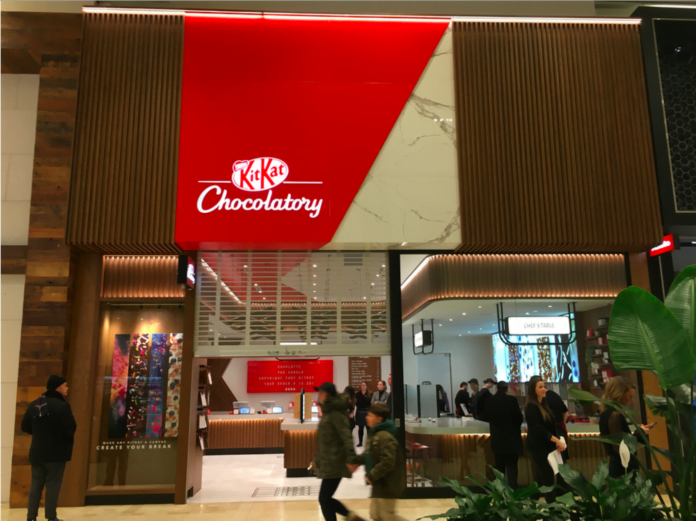
Nestlé-owned chocolate brand KitKat has opened a highly experiential retail concept at Toronto’s Yorkdale Shopping Centre. It’s the first permanent location of its kind for the brand in North America, and represents a brilliant example of a brand engaging with consumers in an effort to create loyalty and gain market share. It’s also the first in the world to feature a ‘chef’s table’, which in itself is another interactive component of the new ‘KitKat Chocolatory’ concept, giving visitors the opportunity to custom-design their own KitKat chocolate bar. 

A branded KitKat facade welcomes guests into the bright retail space with an interior designed to be showcased on social media. The 1,200 square foot Chocolatory guides visitors along a personalization process where KitKat bars are custom-designed using a wide variety of ingredients. With more than 2,000 flavour combinations, customers may be compelled to return to try out different options. 

Youtube video

The design of the space includes subtle references to KitKat itself. White floor tiles mimic the shape of a KitKat bar, and lighting fixtures on the ceiling appear to be pieces of a KitKat chocolate bar as well. Dark chocolate wood tones on millwork located under tables as well as on the ceiling again reference chocolate, contrasting with a red-and-white colour scheme that is also on-brand. Advertising and design company OneMethod (which was involved in the Sweet Jesus ice cream concept) and ModelCtzn designed the unique retail space. Vaughan-based Unique Store Fixtures was responsible for the production of millwork, stone countertops, metal and signage. Arlin Markowitz, Selina Tao and Teddy Taggart of CBRE Toronto negotiated the lease deal on behalf of Nestlé with Yorkdale’s landlord Oxford Properties Group.

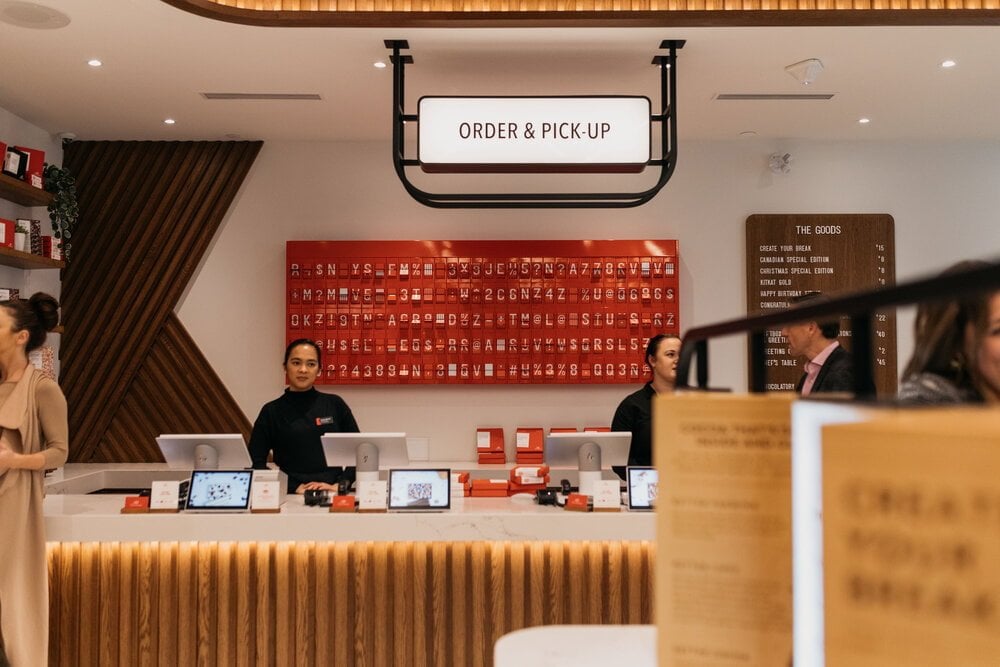
Upon entering the Chocolatory, a variety of choices to customize KitKat bars are provided on menu boards located on a central island, and orders can be made on clipboards hanging on an adjacent wall. A variety of ingredients can be chosen, along with a preferred chocolate type that includes dark, milk, and white chocolate. Displays along a wall provide inspiration for a guest’s KitKat creation and when a decision is made, visitors order from a desk at the back of the retail space that doubles as a checkout point when the final product is ready. 

PHOTO: KITKAT

Youtube video

Behind the order/cash desk is a split flap display similar to what one might see at an airport. Messaging on the board may include the name of an individual who has recently ordered a customized KitKat bar, adding an element of fun as well as a vibrancy as the board’s messaging constantly changes. 

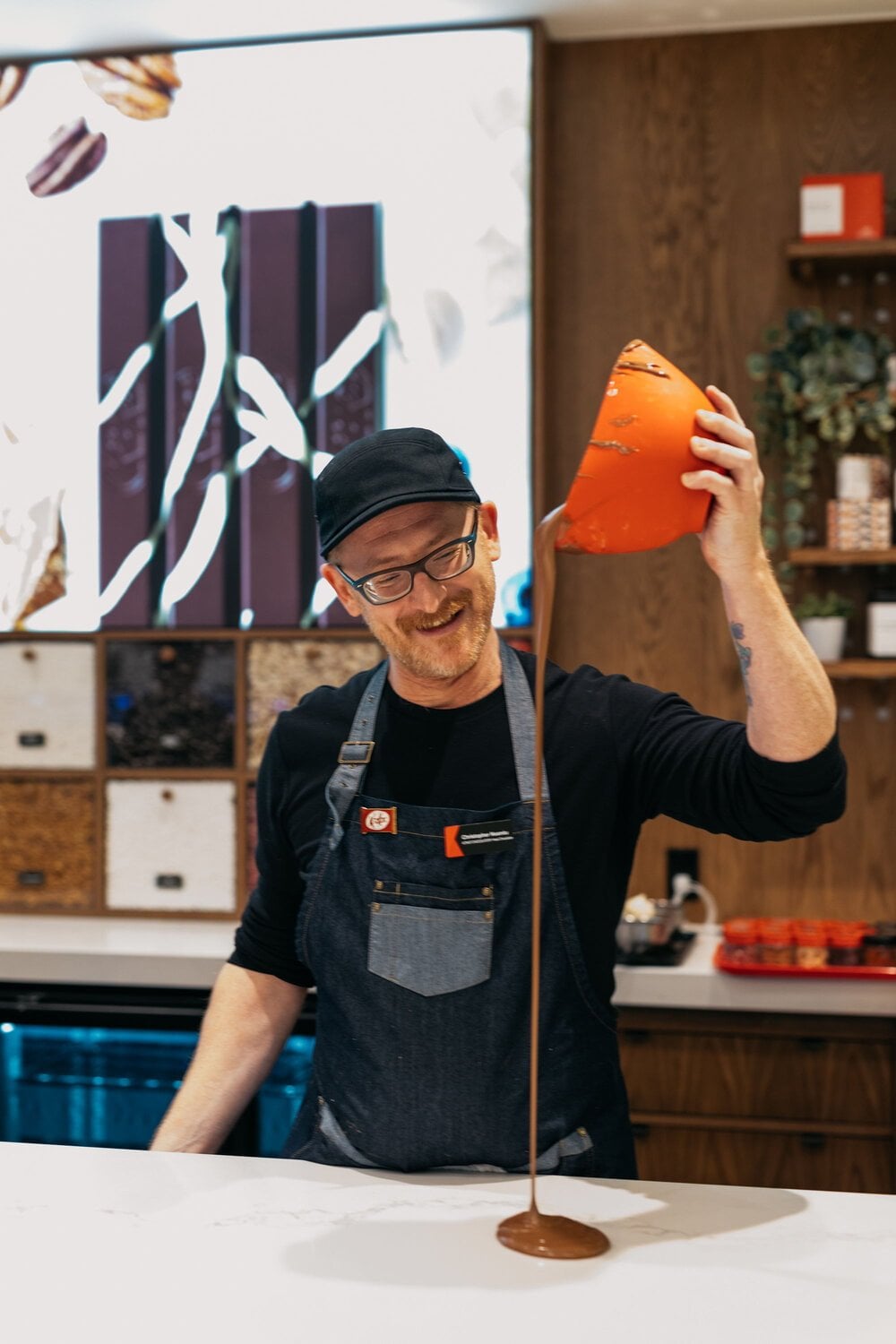
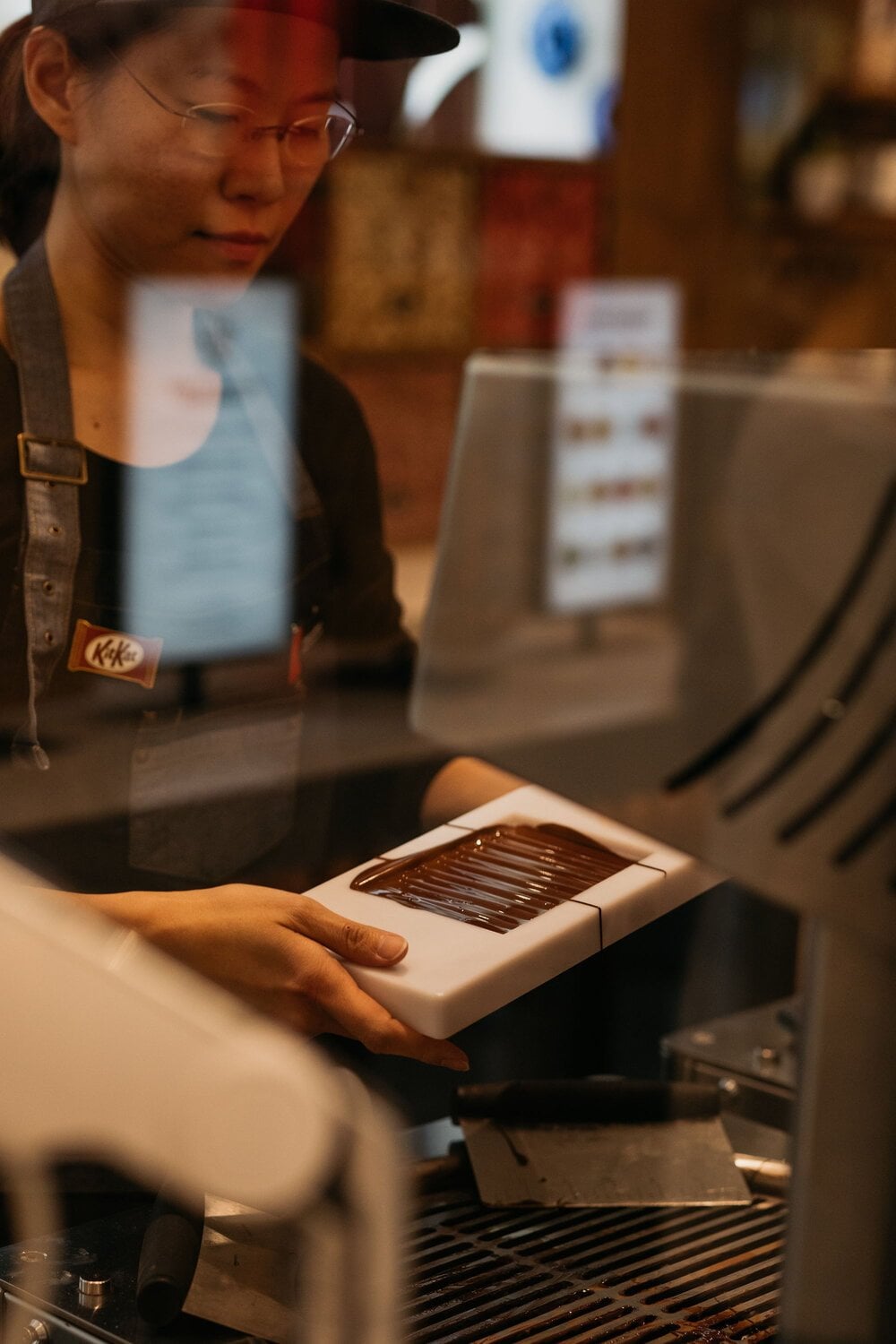
To the right of the order/cash desk is an open-concept customization kitchen where visitors can watch their customized KitKat bar being made by a team of trained chocolatiers. After the heated chocolate is infused with a variety of ingredients ranging from nuts to cookies to flowers, the chocolate bar is placed in a cooling unit for approximately 90 minutes (or less) until it has hardened. Guests are given a device to notify them of when their personalized KitKat bar is ready for pick-up, which also encourages shopping at other retailers in the mall. 

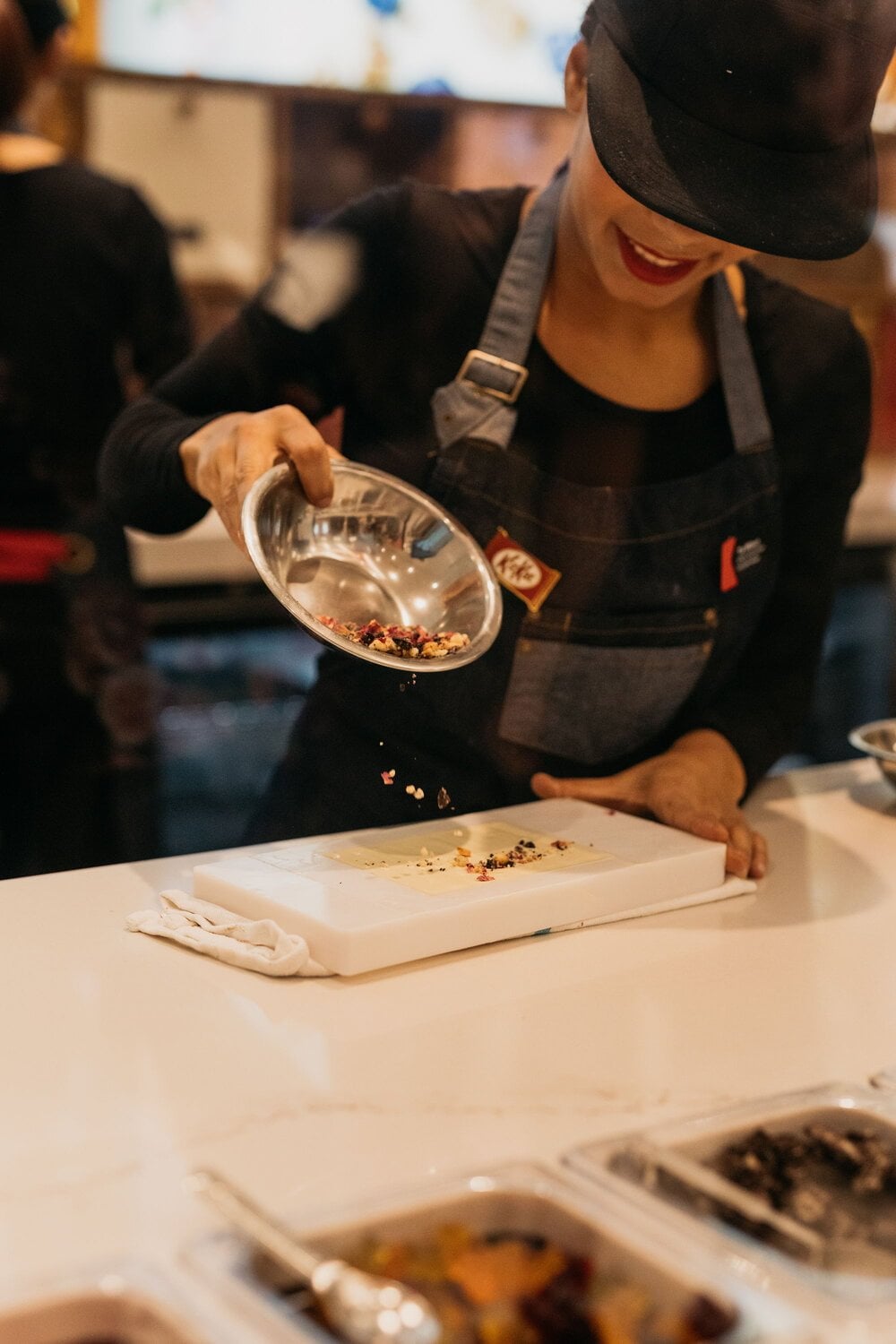
Up to three ingredients can be chosen to customize a KitKat bar from a menu of 16 options. Those range from rainbow sprinkles to rippled potato chips, rose petals, organic gummy bears, mini marshmallows, peanut butter chips, pretzels, and others. More than 2,000 different flavour combinations are possible. Packaging can also be customized and personalized with a message, and gift boxes, gift cards, and personalized greeting cards are available. Some flavour toppings are limited-edition depending on the season — one option currently available is crushed candy canes ahead of the Christmas season, for example. 

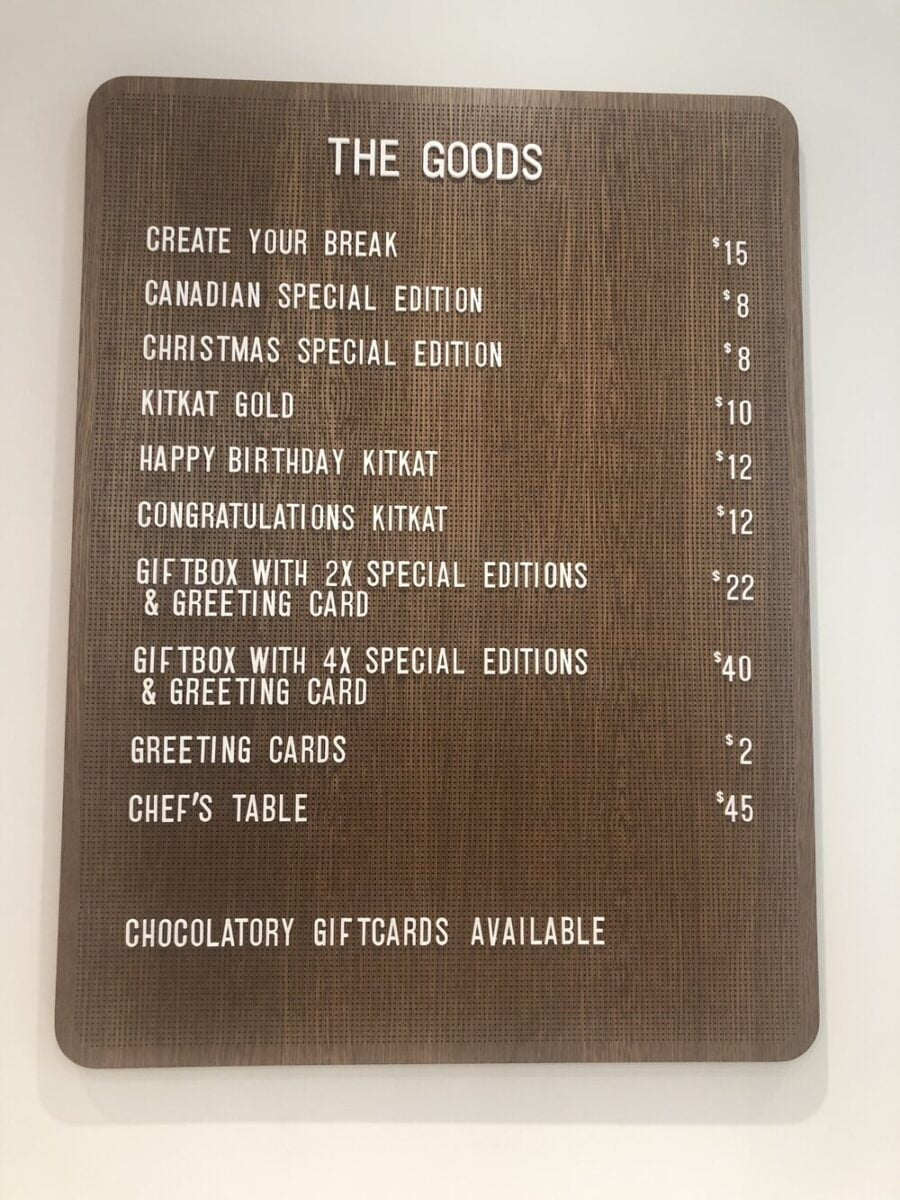
A customized ‘Create Your Break’ bar costs $15 — while it’s more costly than a chocolate bar at the corner store, the overall experience, quality, and flavour may arguably be worth the cost. Families may be tempted to bring their children to the KitKat Chocolatory, though its appeal spans to every age group. 

Youtube video

One unique feature in the KitKat Chocolatory is a Chef’s Table, which is a first in the world for the concept. Four seats are available for guests to sit, learn from, and watch Head Chocolatier, Christopher Neamtu, discuss the history of chocolate while educating consumers through demonstrations. As part of the experience, Mr. Neamtu will create customized KitKat bars using some flavour ingredients that are only available at the Chef’s Table. The cost is $45 per person, and there are only 32 seatings at the KitKat Chef’s Table per week. Many of the sittings are on Saturdays and Sundays, with weekdays also having a selection of time-slots. The Chef’s Table can be booked in-store or online at http://chocolatory.kitkat.ca where an appointment can be booked on OpenTable

Youtube video

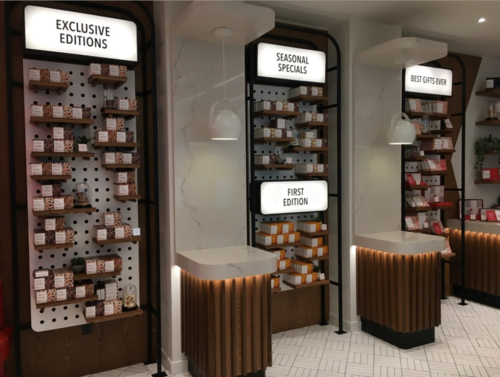
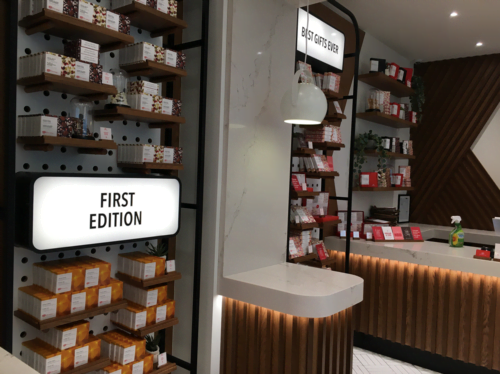
Special edition KitKat chocolate bars can also be purchased in the new Yorkdale Chocolatory. That includes a range of handmade, limited-edition KitKat chocolate bars featuring ‘unconventional Canadian and seasonal flavours’, including the first edition KitKat Gold which is described as “a rich, caramelized, white chocolatey take on the classic KitKat bar”. Only 15,000 of the KitKat Gold chocolate bars have been created.

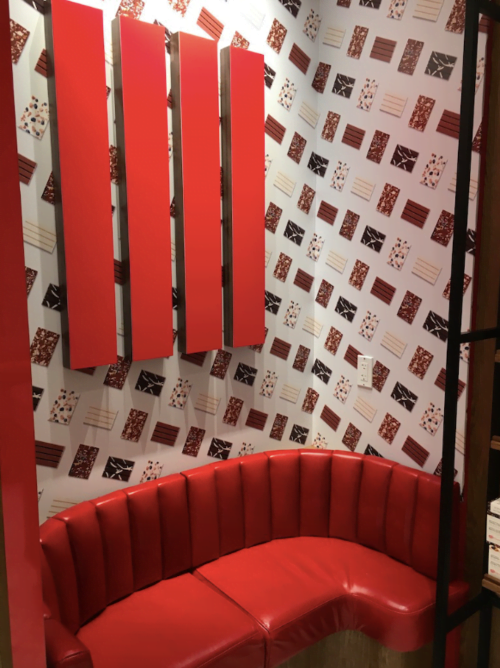
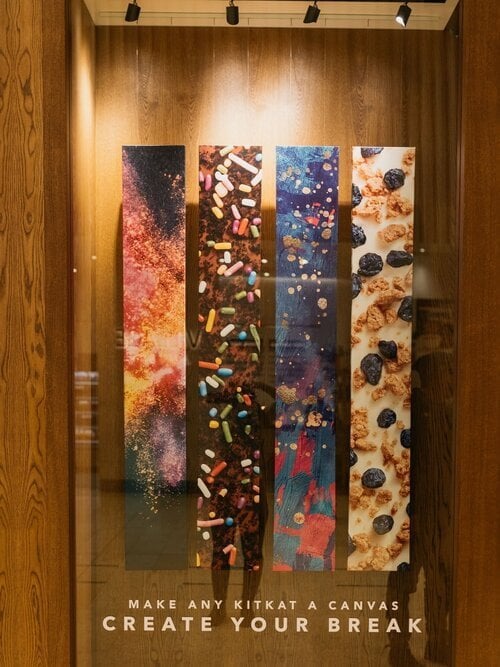
Social media is expected to play a big part in getting the word out about the new KitKat Chocolatory. A seating area near the front of the store welcomes visitors to sit and take a photo, and marble tabletops throughout the retail space encourage guests to take photos of their creations. To create awareness for the Chocolatory within Yorkdale, an art installation featuring large painted chocolate bars will be displayed in a central area in the mall near Sephora and Zara stores. 

The Yorkdale KitKat Chocolatory is one of only a handful in the world, and a first in North America. Other global locations include several in Japan as well as in Sao Paulo Brazil, Kuala Lumpur Malaysia, and in Melbourne Australia. The Japanese are particularly fond of KitKat and have the option of buying flavours not available elsewhere. Ryan Saunders, Vice President Marketing, Nestlé Canada, explained that the company will gauge the success of the Yorkdale Kit Kat Chocolatory prior to seeking out retail spaces for more Canadian locations. During the first couple of minutes of a media tour on Tuesday November 12, at least a dozen people wanting to come in had to be turned away as the Chocolatory was not yet open to the public. Given the apparent interest, not to mention the engaging retail concept, the Yorkdale location is likely to be highly successful and more Canadian locations are likely. 

The KitKat Chocolatory concept is a unique exercise in brand building. The highly engaging space will enhance KitKat’s brand awareness while also providing an emotional connection through the personalization process as well as social media posting potential. Chocolate is also said to release dopamine in the brain. KitKat is one of many chocolate bar brands available at stores across the country. The Chocolatory concept will put KitKat on the top of mind for many consumers, which could result in a boost in sales of KitKat’s chocolate bars in other retailers as well. 

A SEATING AREA WHERE VISITORS CAN TAKE PHOTOGRAPHS FOR SOCIAL MEDIA. PHOTO: CRAIG PATTERSON

In some respects, KitKat’s Chocolatory represents the future of brick-and-mortar retail. The space is bright, fun, and at times, loud, creating a heightened level of excitement. For those customizing chocolate bars, the wait and subsequent eating (or gifting) of the product will again be memorable. The immersive experience makes the consumer feel part of the overall innovation process. Personalization is something that has come to be expected particularly with younger demographics, who are also now spending more on experiences, as well as food and beverage. The social media potential in the space is also significant, all of which makes for a winning concept that other brands should examine. 

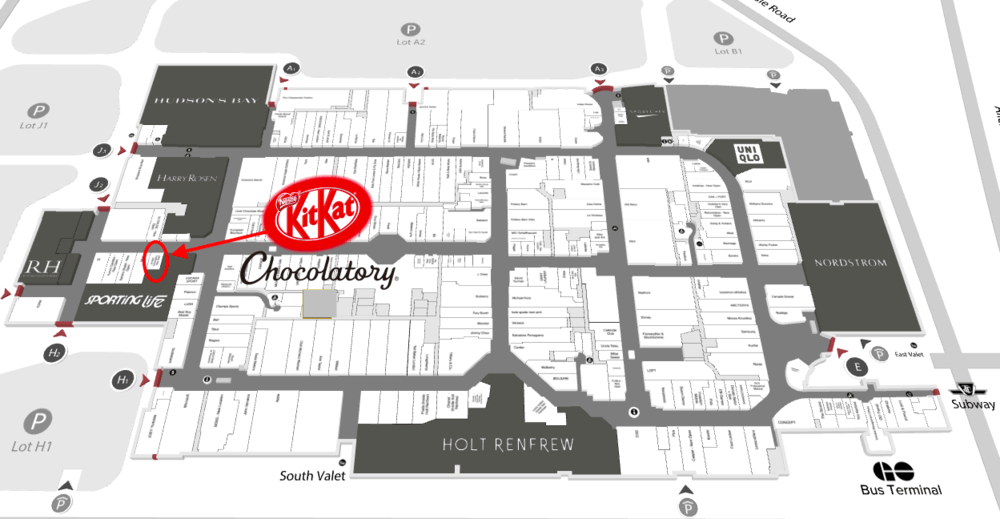
The Yorkdale KitKat Chocolatory is located in the mall’s newest expansion wing, anchored by a four-level RH flagship as well as a Sporting Life store. While the wing’s pedestrian flow has been somewhat less than more established sections of Yorkdale, KitKat is likely to become an attraction that will increase footfall into the new wing. Several other food and beverage options are available in the RH-anchored wing at Yorkdale. That includes Canada’s first by CHLOE. vegan restaurant, iQ Foods, Village Juicery, and a unique Japanese restaurant concept called TORA featuring a food delivery conveyor belt system. The RH store itself features a stunning restaurant space flanking its mall entrance, and visitors to the Miele concept store can also eat various food offerings free of charge using Miele kitchen technology. As well, construction hoarding recently went up for an upscale Chinese restaurant concept called Yu Seafood, which will occupy nearly 10,000 square feet over two levels. The wing is also currently home to a space housing a “Santa’s Chalet” where visitors can have photos taken with Santa Claus himself. 

Neslé’s Ryan Saunders explained that Yorkdale was chosen for Kit Kat’s first Chocolatory for several reasons. The shopping centre is home to many first-to-Canada retailers, as well as unique concept stores such as Dyson and Fumé Lounge. Yorkdale pulls in locals and tourists with its compelling retail mix that includes flagship locations for major retail chains, as well as the densest clustering of luxury brands of any place in Canada. Yorkdale is also Canada’s most productive shopping centre in terms of annual sales per square foot, and could surpass the $2,000 benchmark in 2020 with recent year-over-year growth.

ART WORK PROMOTING THE NEW KIT KAT CHOCOLATORY. PHOTO: KITKAT YORKDALE