Canadian home furnishings retailer, EQ3, opened its first – and flagship – store in New York City recently as the company continues to expand its footprint across North America.
Mark Letain, President of EQ3, which is based in Winnipeg, said the company is opening six new stores this year.

“In 2020, we actually don’t have any plans at this point. This is a massive expansion for us. We’ve almost increased our store count by about 50 per cent. We’re going to wait and see how this year goes and then we’ll continue our expansion in 2021,” said Letain.
“We’re already in some discussions. We want to see how these new stores work out.”
The company stands for “emotional quotient in three dimension.”
“It kind of talks to the living space and the fact that your furniture reflects who you are,” said Letain.
The concept of EQ3 was launched as a wholesale initiative at the High Point Market in North Carolina in 2001 as an extension of a product line of Palliser Furniture. Palliser Furniture Upholstery Ltd. is a furniture manufacturing company headquartered in Winnipeg. It manufactures and distributes upholstery furniture products throughout Canada, Mexico and the United States.
Letain said at the time of EQ3’s launch modern furniture was under-represented in the North American market. At first, it was heavy on the bedroom and dining room side of the business and upholstery.
“It really took off. There were a few retailers that liked it so much that over the course of the next year or two they rebranded themselves EQ3 – the whole store. But it started off as a wholesale concept selling to other retailers and became a bit of a franchise,” he said.
The franchise model was changed in about 2009-2010 to a corporate model. Today, Letain said the company will have 20 stores by the end of this year.
“We’re going to open up our third Chicago location. We’ve opened up three this year. This one’s in Oakbrook. Oakbrook mall is the third most productive mall in the United States. It’s a luxury mall selling about $1,000 per square foot. It’s a great mall. Some of your online giants who when they first went into brick and mortar this is one of their beginning locations,” said Letain.
In Canada, the company has stores in Vancouver, Calgary, Winnipeg, three in the Greater Toronto Area, Ottawa, Quebec City, three in Montreal, and an outlet in Laval.
In the United States, there are also two stores in San Francisco and one in Connecticut.
“One thing that is unique to us is we’re vertically integrated. There’s not that many furniture companies that are that vertically integrated – meaning that we design our products, we manufacture most of what we sell, all the upholstery that we design ourselves and manufacture in Winnipeg right out of our head office,” said Letain.
“Everything we sell is just unique design. Other furniture retailers just can’t go and buy it in China or source it somewhere else. They’re all our designs and typically we manufacture it. That makes us different. Seventy per cent of the product we make ourselves through our own original designs and our own manufacturing capabilities. The remaining 30 per cent we source in places like India for rugs and lighting and dining out of China.”
Letain said one of the key messages the company is getting out to the public these days is “Canadian by design.”
“We like to consider ourselves as a bit of a design house because we do original designs and we do work with other designers. I think that makes us unique,” he said, adding that as much as the company can it is trying to do its own deliveries.
“We’re trying to control all those parts of the supply chain that affect customers as much as we can.”
Letain said the company is putting the new stores in high profile locations and it believes that’s how it’s going to build brand awareness in the United States – the big market where it is going to grow.
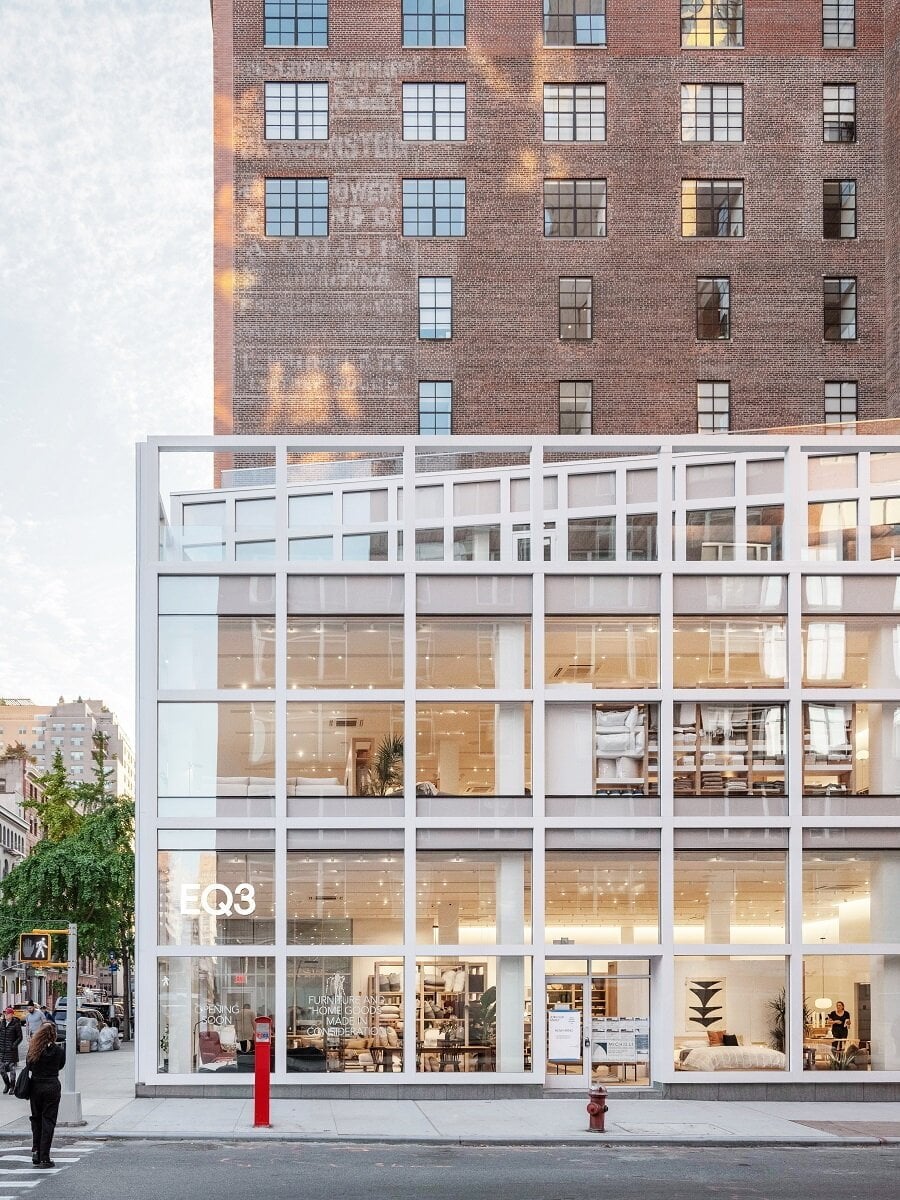
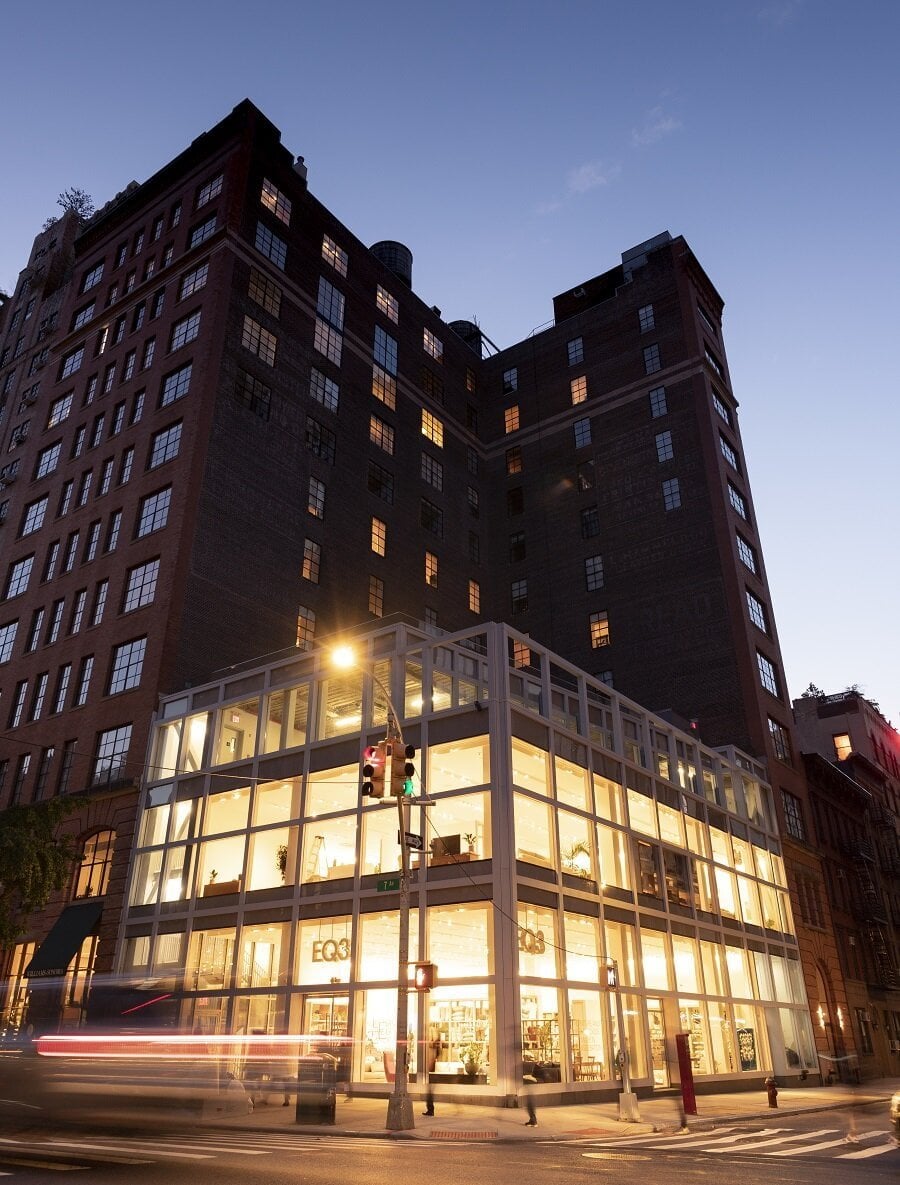
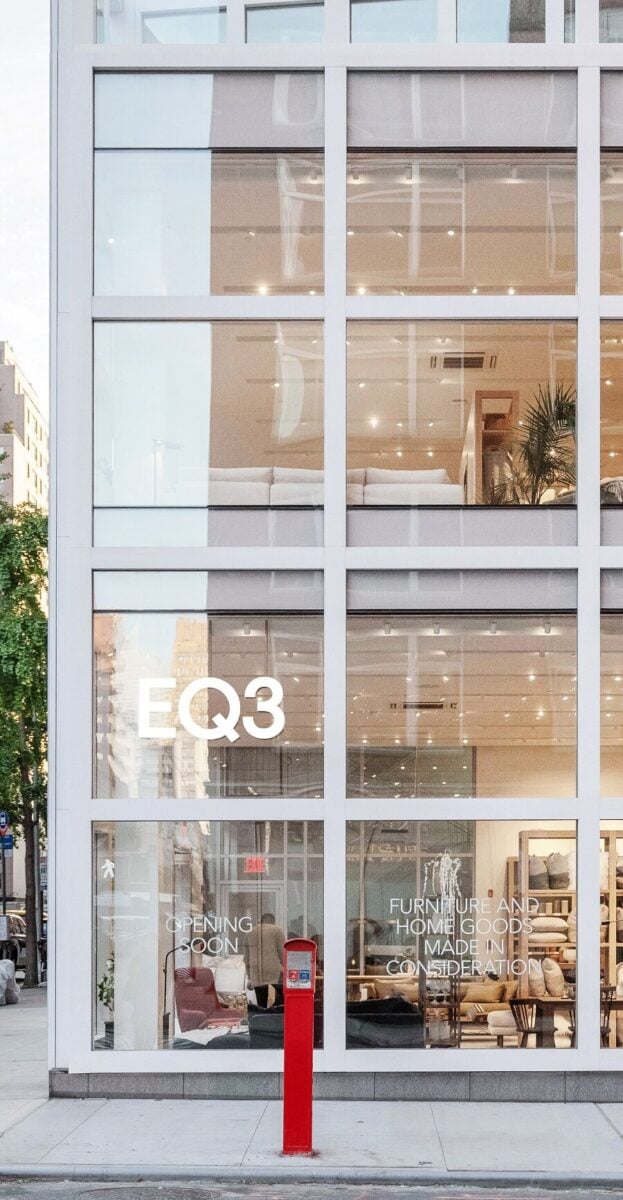
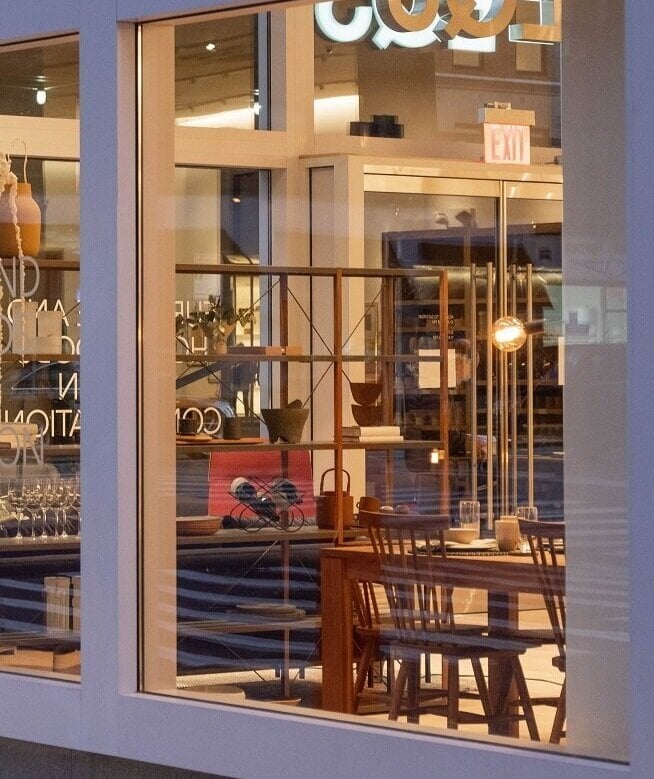
The three-level, 11,800-square-foot space in New York City is located in the Chelsea furniture design district at 116 7th Avenue. The store is one of only a handful of new retail builds in the area as most brands coming into the neighbourhood renovate existing spaces. Designed by Thom Fougere, EQ3 consultant and former Creative Director, the entire exterior uses a clean 8’ x 8’ repeating steel grid creating a multitude of framed vignettes. Product stories for furniture, lighting and accessories come to life in the soft grey frames for passers-by. The vignettes transform routinely with the changing product assortment.
In contrast to the brick and stone buildings in the area, the new EQ3 store becomes a beacon of glass and light, says the retailer.
“It’s not so often you get to design and have a building spec to your own design in Manhattan. Having an original store location, three floors, in Chelsea, in Manhattan, in a really great furniture – one of the major furniture destinations still in New York,” said Letain.
The company has three stores in the Chicago area.
“What we’re doing in Chicago is kind of heralding our true entrance into the United States marketplace. We’re letting them know that we’re here to compete and we think we’re really at a great midpoint price point. We’re not opening price point but we’re not luxury. We’re in that nice middle area of price point and we think we’re going to be really well poised to effectively compete against the Crate and Barrels of the world and the West Elms.”