Home Blog Page 1028

Majority of Canadians Actively Shopping for Food with Non-Plastic Packaging: Study

Single-use plastics—or SUPs—are a very hot topic for Canadians. SUPs are used only once, then discarded or recycled. They include most food and product packaging, plastic bags, straws, coffee stirrers, and beverage bottles. Reduction of SUPs has emerged as a key environmental concern in Canada and around the world.

The Agri-Food Analytics Lab at Dalhousie University has just released the results of an exploratory study of societal attitudes in Canada toward SUPs: The single-use plastics dilemma: Perceptions and possible solutions. The aim of the study is to better understand the views of Canadian consumers on SUPs in the food industry, and to explore possible solutions.

The vast majority of Canadians surveyed—93.7%—said they are personally motivated to reduce single-use plastic food packaging because of its environmental impacts. 89.8% believe that regulations to reduce use of SUP packaging for food should be strengthened. 

Study co-author Dr. Sylvain Charlebois, Senior Director of the Agri-Food Analytics Lab, points to the complexity of reducing single-use plastics in the food supply. “Respondents were more concerned about the environment than food safety, but food safety is still a key issue for retailers and food producers,” he explains. “We recommend standardization of plastic packaging across Canada, and better alignment between food safety regulations and agri-food’s environmental obligations at all levels of government.”

Other study recommendations include incentivizing compostable packaging (plant-based polymers); encouraging the use of recyclable materials like cardboard, paper and foil wrapping; a voluntary phase-out of plastic bags; and enhanced support for research and commercialization of compostable packaging.

“One interesting finding is that 89.1% of respondents said they could use more education about recycling, plastic use and overall environmental impacts,” says study co-author Dr. Tony Walker of Dalhousie’s School for Resource and Environmental Studies. “This might be somewhat surprising, considering how much airtime environmental issues are getting these days. It points to an opportunity to bring more Canadians on board with reducing single-use plastics and adopting other environmentally sustainable practices.”

Other important findings include:

  • 71.2% of respondents support a ban of all single-use plastics used for food packaging. The study found that region, age and socio-economic determinants are significant factors in how Canadians view the SUP issue. Millennials and Gen Zs are generally more mindful of SUPs than previous generations, and people earning more than $150K per year are slightly more motivated than those earning less. Participants in the Atlantic Region and Quebec were most motivated to reduce SUPs, while participants in the Prairies were the least. 
  • 56.4% of respondents reported actively shopping for food with non-plastic packaging. Women are more likely than men to actively shop for non-plastic packaging, but 56.6% of respondents say that in the next six months they intend to increase purchases of food in green packaging. 
  • 89.8% of respondents believe plastic packaging should be changed to green alternatives. 37.7% of respondents are willing to pay more for an item in biodegradable packaging; the younger the respondents, the more willing they are to pay a premium.
  • 52.9% would accept paying a government tax to disincentivize use of plastic food packaging, but there is little interest in paying fees to food companies to reduce SUPs. Bans on SUPs are not as popular as developing and using new packaging technologies—biodegradable/compostable solutions are most popular with Canadians.

Co-authors on this study include Janet Music, Research Associate from the School of Information Management and Eamonn McGuinty, Research Associate and student in the Master of Resource and Environmental Management program. The study was conducted over six days in May 2019. It surveyed 1,014 people across the country. The margin of error is 3.2%, 19 times out of 20 (margin of error not applicable to categorized data).

Canadian E-Commerce Continues to See Explosive Annual Growth: Study

While Canada’s economy is considered to be among the developed ones globally, it would be more appropriate to call its e-commerce market developing due to the high rates of annual growth it’s been experiencing, according to a report by Admitad.

In its annual report for 2018-2019, the global affiliate network, which helps advertisers and publishers develop their online business around the world, cites eMarketer data indicating the volume of online retail in Canada for 2018 promised to grow by 26.3 per cent and reach almost $43 billion (nine per cent of the total Canadian retail income). It also said Statista believes that the volume of online retail in the country by 2023 will reach $55.4 million.

“As far as industry coverage is concerned, there are at least 26.8 million unique users in Canada. In 2018, more than 72.6 per cent of the population made purchases online, and by 2023 the proportion of online purchases promises to exceed 75 per cent annually,” says the Admitad report.

Image: 225 King Street East

“The average purchase amount per user for the year is $1,493. The main payment method is credit cards; 71 per cent of buyers prefer to pay online. E-wallets and debit cards rank second. The hottest season in Canada is the end of the year, just like in the USA. It is worth noting that the highest average amount is due to such events as Christmas, Black Friday and Cyber Monday, as well as the end of school holidays (back-to-school) in August, Mother’s Day (May), Father’s Day (June), St. Valentine’s Day and Thanksgiving Day.”

Admitad says that in 2018 mobile devices brought about 30 per cent of all sales to online retailers which is about 2.6 per cent of the total retail income.

“Canada is the largest US neighbor in the Americas, and this largely determines the structure of its e-commerce market. Almost all of the largest online trading sites are American services such as Amazon, eBay, Etsy, Walmart, Best Buy, Newegg. Separately, it is worth highlighting Shopify as this service allows creating own online store (including work on a dropshipping model through partner networks),” says the report.

It says the largest category of Canadian e-commerce is “Clothing & Shoes”, which in 2018 online retailers saw at least $11.8 billion, or 29.5 per cent of total income.

“The main trends in the e-commerce market are active mobilization, multi-channel sales (omnichannel) and cross-border trade. By some estimates, nearly half of Canadian customers buy goods from abroad.

This trend may be due to two factors: the high users’ dependence on retailers from the US and the inability of Canadian business to compete with them. Moreover, almost half of the local small business representatives do not even have their own website,” says Admitad.

“During the year, a total of 1.25 million sales were made, of which almost half has accounted for the fourth quarter. The average monthly number of sales exceeded 104,000. The percentage of deviation from the highest average sales amount was 20.8 per cent; on the decline it was 26.6 per cent. The most active months by dynamics of consumer activity were October (126,000) and November (121,600). The smallest number of sales was observed in February (76,600); the maximum deviation the monthly average back then was as high as 27,700 orders.”  

The report says the average amount for all categories in 2018 is $103.5. The highest average amount is in March ($131.3) and September ($125.8). November hit the lowest point with $77.1, another significant decline was noted in April ($77.6).

The largest category in Canadian e-commerce was Goods from China.

While consumers are getting better deals from international retailers who don’t have to charge a tax like the GST/HST, it puts Canadian online retailers at a disadvantage in terms of competitive pricing.

But that also has a broader context. It hurts the Canadian economy in general not having those taxes collected on international retail purchases.

“The internet has no borders and the popularity of online shopping is growing every year. Governments in Canada have sadly lagged on the related tax and duty collection and Canadian retailers have been directly impacted,” said Michael Kehoe, Broker / Owner of Fairfield Commercial Real Estate Inc. in Calgary and Government Affairs Chair Prairie Provinces for the International Council of Shopping Centres.

“Canadian couriers by licence must collect and submit duty and taxes owing on the delivery of goods purchased outside the country. Postal service is another issue and Canada is losing significant tax revenue. At present there are three postal stations for parcels in Canada; Vancouver, Montreal and Toronto. Vancouver is now automated for duty and tax collections while Montreal and Toronto should be automated by spring of 2020. Canada Customs is working with Canada Post Corporation to move forward to develop a level playing field for Canadian retailers. It has been estimated that Canada and Provinces lose $1 billion per year in uncollected duty and tax related to online shopping. All are small dollar value amounts averaging around $10.

“Canada Post Corporation is estimating a 10 per cent annual increase in postal parcel imports in the near-term. Canadian online retailers work hard to compete and the current value of the Canadian dollar compared to the American dollar or the Euro can be advantageous to creating retail sales. HST is not a factor on exported goods. The retail industry in Canada has been seeking tax fairness and a level playing field for years.”

 The Admitad report also found:

  • The number of people purchasing goods in online stores is steadily growing. In 2018, the number of customers on the web was close to 1.8 billion people, and in 2019 it is expected to exceed 1.9 billion. This is almost a quarter of the world population;

  • The average penetration rate of online shopping in the world is expected to reach 63 per cent in 2019;

  • The share of e-commerce in retail keeps increasing. Although in 2017 the world average share barely exceeded 10 per cent, in 2018 the figure rose to almost 12 per cent. According to Statista, the share of e-commerce in 2019 can grow to 13.7 per cent;

  • The costs of online mobile advertising keep growing. In the US, by 2020 the volume of the mobile advertising market will exceed all other “traditional” channels;

  • The total volume of online retail sales is also growing, promising to step over $3 trillion in 2019. According to preliminary data, in 2018 it has not yet reached the mark;

  • Amazon is the world’s largest e-commerce platform with a capitalization of more than $810 billion, followed by Alibaba Group with $393.8 billion as of early January; and

  • Credit cards are currently the most frequently preferred means of payment (30 per cent), followed by debit cards and digital wallets (21 per cent each). In 2019 online wallets, such as PayPal and AliPay, may become the most preferable means of payment. Judging by the forecast, they are expected to become responsible for over 30 per cent of all sales.

Ford Launches 1st in North America “Smart Lab” Retail Concept in Québec City

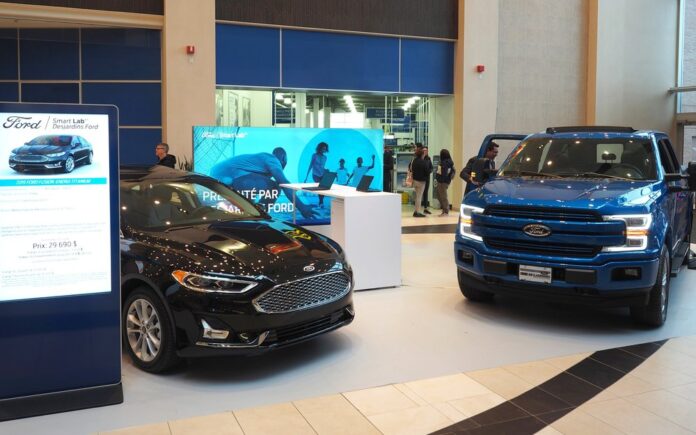
FORD SMART LAB AT LES GALERIES DE LA CAPITALE PHOTO: FORD VIA GUIDEAUTOWEB.COM

By Retail Insider

The company that brought us the Model T and changed transportation forever is looking to shake up the auto industry yet again. Ford, in collaboration with Desjardins Auto Collection, debuted a new “Smart Lab” concept at les Galeries de la Capitale in Québec City, which is a first in North America for the brand.  The “Smart Lab” is designed to cater to changing consumer shopping and buying preferences, according to Ford.

When it comes to buying a car, many consumers are browsing online before they embark on the physical experience of seeing, touching, and driving the car, according to Ford. One of the main pain-points the “Smart Lab” addresses is the pressure to purchase same-day shoppers often feel at a traditional dealership. 

The idea for the “Smart Lab” was inspired by a concept developed by Ford dealers in Torino, Italy.  The “Smart Lab” is, as a small retail concept, strategically located in high traffic areas in an effort to increase interest in people who may not have considered purchasing a Ford vehicle.  Ford advisors are on-site to interact with visitors and promote the brand. Visitors are able to take the vehicles for test drives on nearby streets to truly experience driving a Ford vehicle. Those who are ready to make a purchase at les Galeries de la Capitale can do so through the partner dealership, Desjardins Auto Collection.

RENDERING OF AN ENTRANCE TO GALERIES DE LA CAPITALE. IMAGE: OXFORD PROPERTIES
FORD SMART LAB AT LES GALERIES DE LA CAPITALE PHOTO: FORD VIA GUIDEAUTOWEB.COM
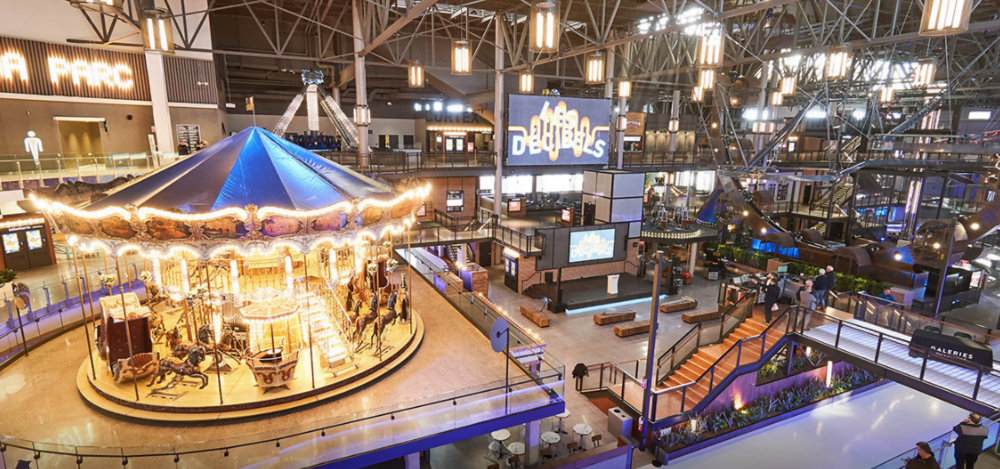
RECENTLY RE-OPENED ‘MEGA PARC’ AMUSEMENT PARK AT GALERIES DE LA CAPITALE. IMAGE: OXFORD PROPERTIES
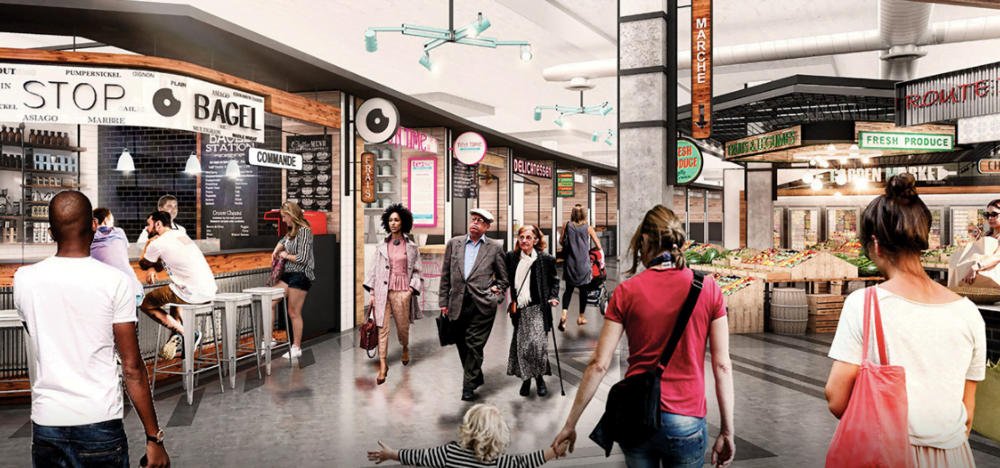
RENDERING OF THE NEW FOOD HALL/MARKET OPENING THIS FALL AT GALERIES DE LA CAPITALE. IMAGE: OXFORD PROPERTIES

The automotive company has reportedly doubled its investment in customer experience this year. More and more, we continue to see how crucial customer experience is to the success of a retail sales environment. Last month, Ford showcased the “Smart Lab” concept in Brussels, Belgium and plans to introduce four additional designs by the end of 2019.

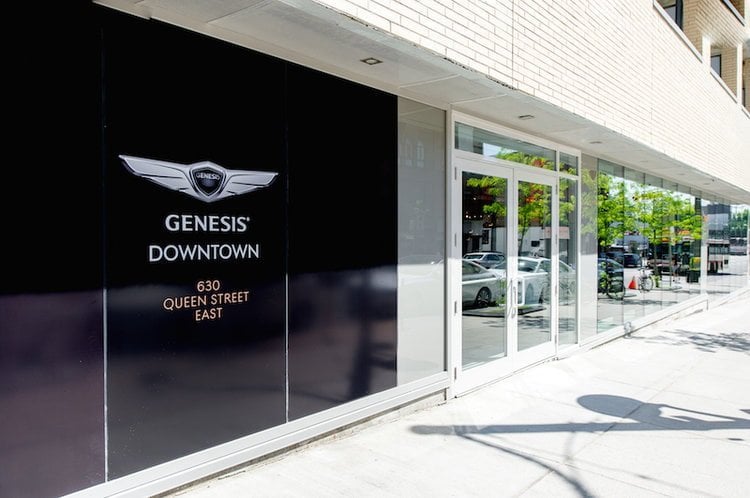
Though a first for Ford, this type of activation is not novel to the automotive industry. Most recently, Retail Insider reported on Genesis’ partnership with Pearson International Airport in Toronto, ON. The very busy airport sees foot traffic numbers in the millions; the Ford “Smart Lab” employs a similar location strategy. Prior to their airport showroom, the automaker opened an unusually located showroom in downtown Toronto at the base of the Sync Lofts. Genesis also operates showrooms at Square One Shopping Centre in Mississauga, and CF Carrefour Laval in Laval, QC.

Back in March of this year, we reported that Tesla was putting the brakes on their plans to shutter most of their physical stores to focus on their e-commerce. In addition to keeping their existing stores open, the company announced they would reopen stores in high traffic locations that had previously been closed. At CF Markville, shoppers can find the Mercedes me store by Mercedes Benz, which is the most like a traditional store of the aforementioned automotive concepts. Offering a selection of automobiles, clothing, and accessories, the Mercedes me store gives loyal Mercedes Benz customers an opportunity to interact with the brand in a new way.

The most innovative automotive activation we’ve seen recently is Cadillac’s “Cadillac Live” concept. Described as part personal shopper and part live, interactive digital showroom, “Cadillac Live” allows customers to to connect to the brand from any device and offers one-on-one human interaction. Though digitally-based, “Cadillac Live” requires purchases to be made in a showroom unlike Genesis and Tesla.

Animal-Free Brand “Wuxly Movement” Seeks to Dominate Canadian Outerwear Market

PHOTO: WUXLY MOVEMENT

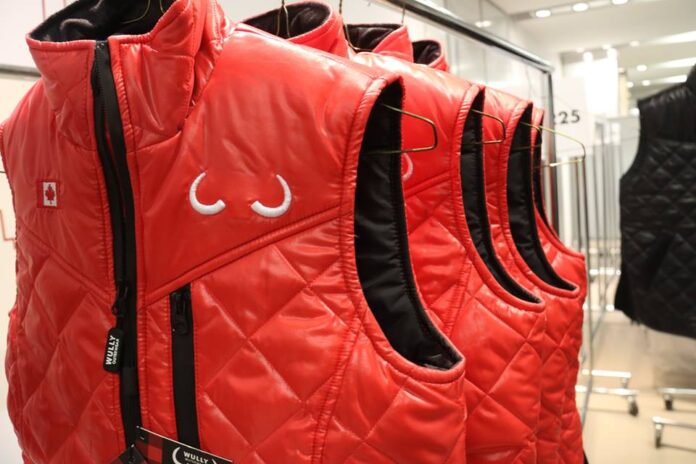
Wuxly Movement is a proud animal-free outerwear company based in Toronto. As the world’s luxury brands are increasingly discontinuing the use of animal fur and exotic skins in their collections, Wuxly is proudly out in front with the times, creating animal-free outerwear that effectively rivals the warmth, and perceived elevated social status, of wearing fur. Co-founders James Yurichuk (BC Lions, Toronto Argonauts player) and Anthony DeBartolo have never wavered in their stance and continually strive to make their production, products, and packaging as green as they can be.

Wuxly started lean in numbers, with everyone wearing multiple hats. It started with a small group of like-minded persons with passion, vision and an eagerness to get the brand off the ground. The company did not bring in outside investors, and this decision did come with extreme challenges and pressure, but Yurichuk explains that they had a solid group of advisors and a strong team that allowed them to excel in the current retail climate. It was a way that allowed them to run the business with total control of the vision. “Having the ability to make decisions on positivity rather than profit strengthens the integrity of the brand. The integrity attracts the talent and people that want to work on a purpose-driven project.”

Wuxly employs a unique production process that utilizes military grade and innovative sustainable fabrics and implements the most stringent fair labour practices. Their VeganTech Shells are sourced from a 100-year old company in Montreal which employs a ‘clean water’ policy—every ounce of water that leaves the facility is clean, after being tested and treated for any water pollution.  Additionally, they reuse the heat from the dyeing process to help power the facility.

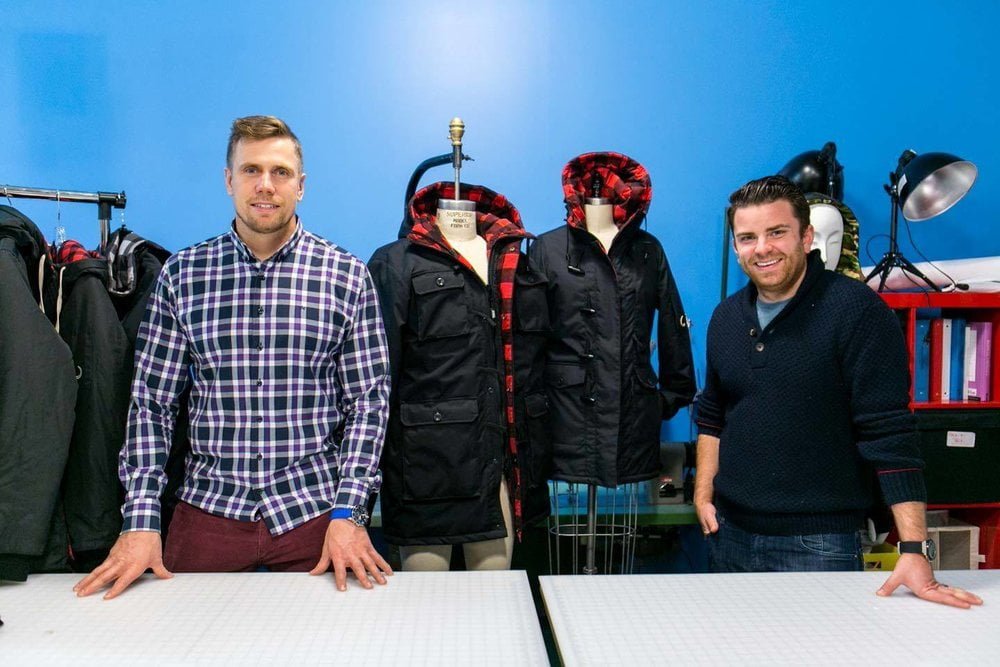
CO-FOUNDERS JAMES YARICHUK (LEFT) AND ANTHONY DEBARTOLO (RIGHT) PHOTO: WUXLY MOVEMENT

The Wuxly manufacturing facilities also implement some of the highest labour standards in the world, and local production allows the company to work with, and give back to, the community. They pride themselves as being a connector brand being inclusive for all people, regardless of lifestyle or priorities. Consistent throughout branding is the word ‘warmth’ and all the connotations that this evokes. “Canadians are known as warm people, it’s in our DNA, and we have certainly delivered warm products to the world,” says Yurichuk.

“What makes our brand position unique is that warmth extends beyond the product itself.  It is treating workers warmly by making it in fair labour conditions in Canada, the technical and recycled materials we utilize that respect our planet and peacefully leaves animals out of the equation.  Lastly, it’s treating our community warm by creating a lasting relationship that they can contagiously spread back into the world. It’s a full circle of 360-degree warmth for us.  I think all groups can get down with warmth.”

The company is currently establishing its design house on Queen Street West in the Trinity Bellwoods Parks. Facing the park, the location is easy to overlook, and that is how the company wants it. “It’s our lair, it’s where we cultivate a small rebel force of young talent,” says Yurichuk. “Trinity-Bellwoods is a happy and warm place, a neat hub for creative and fashion minds alike. There’s a fresh, fun and cool vibe that spills from the park.  This aura definitely makes its way into the Wuxly Barn, reverberates through our team and is evident in the products and experiences we deliver.”

GRAPHIC: WUXLY MOVEMENT

Trade Up Program

Unique to Wuxly is the Trade Up Program, which encourages patrons to bring in outerwear that has fur and contains down and receive a credit towards the purchase of either a men’s Elk Parka or a women’s Doe Parka. Their website lists brands that are acceptable and not acceptable for Trade Up. Luxury outerwear brands such as Canada Goose, Moose Knuckles, Mackage, Nobis, and Moncler, are included and will garner a trade-in value of $75-$275.

The program is one of many attractive features of the brand, especially for those in the growing vegan lifestyle community, which have embraced the brand and their stance. The Wuxly mission ‘Living Warm,’ contributes the traded-up jackets (minus fur trim) to partner homeless shelters such as Lookout Society, The Mustard Seed, Refuge des Jeunes De Montreal, Eva’s, Brands For Canada, and Youth In Transition, for distribution to those who need warmth to survive.

Brand Expansion

Wuxly is introducing three new parkas as part of their Fall/Winter Collection that will appeal to a broader audience and be suitable for all winter conditions, including one that will be completely waterproof, good down to temperatures of -30C, and more streamlined with an urban look.

Additionally, Ontario’s thriving film industry made over 50 requests in the past year for heavy duty jackets. This progressive industry is demanding animal-free products for their production people, the local movie set suppliers, and Wuxly is looking forward to collaborating to ensure that those in this demanding industry have the parkas that protect them against the elements.

Moving Forward

IMAGE: WUXLY MOVEMENT

The brand is stocked in 21 locations across Canada in most provinces (1x NB, 1x QC, 16x ON, 1x MB, 2x AB) and at Moo Shoes in New York. British Columbia is a province with a demographic that will definitely embrace Wuxly and the company is currently planning a vendor strategy.

Led by the Brand Development Team, and spearheaded by Julie Crossland, the company has been nurturing a relationship with Sports Chek over the last year and a half. The Canada-wide sporting goods chain has been watching the brands direction and after a strong showing at Toronto Fashion Week this past February, activity has stepped up.

“Manoeuvring between wholesale, e-commerce, and direct to consumer retail takes multiple layers and depth.  Now it’s about taking our level of execution to the next level, combining our passion with excellence, and creating warm moments for our clients and community,” says Yurichuk. “We will begin the roll-out of Fall 2019 with strategic locations across Canada; a few notables include Yorkdale, Collingwood, and Chinook Centre in Calgary.”

Although the brand has undergone many name changes since launching in 2012 as Mammoth Outerwear, then Wully Outerwear, and since August 2018 has been known as Wuxly Movement, they have always been dedicated to their core belief to create outerwear that is warm, cruelty-free, and vegan.

As the shift in the marketplace away from animal products continues to grow, brands such as Wuxly, are ahead of their competition and will continue to innovate and lead the way with their humane policies, extensive field-testing, and great style.

Brief: Luxury Brand Closes Only Canadian Store, Miniso Launches New Canadian Concept

Brief Collage

By Retail Insider

Italian Luxury Jeweller Pomellato Closes Only Canadian Storefront: The Pomellato boutique at CF Pacific Centre in Vancouver closed last month. The 1,050 square foot shop was a franchise of Vancouver-based Vestis Fashion Group. Pomellato opened in October of 2014 next to a Max Mara boutique that remains open and is run by the same franchisee. When the Vancouver store opened, franchisee Catherine Guadagnuolo said that the store stocked a one-of-a-kind $150,000 sapphire ring as well as considerably less costly items. 

The Vancouver Pomellato store was strategically located beside the mall entrance to the Four Seasons hotel, and was located up the hall from Harry Rosen, Zegna, Links of London, Canada Goose, Maje, Apple, Bose and Mackage on the mall’s ‘upper level’. A three-level H&M store located across from Pomellato recently expanded by adding a level. 

Pomellato was founded in 1967 and in 2013, it became part of the Kering Group luxury conglomerate. The brand has stores worldwide, and is known for its colourful gems that it uses in its designs. In Canada, the brand wholesales in a handful of upscale stores in Canada, including Bandiera Jewellers in the Toronto area, Berani Jewellers in Toronto, Château d’Ivoire in Montreal, and at Saks Fifth Avenue’s stores at CF Toronto Eaton Centre in Toronto and at CF Chinook Centre in Calgary. 

Vancouver’s Pomellato was one of only five standalone storefronts for the brand in North America. Pomellato also operates stores in New York City (741 Madison Avenue), Beverly Hills (214 N. Rodeo Drive), Chicago (41 E Oak Street), and Miami (Aventura Mall). 

Thank you to Urban Toronto’s ACT7 for notifying us of this closure. 

Bayview Village Partners with Weddingbells Magazine on “I Do, I Do, I Do” Pop-Up: Toronto’s Bayview Village Shopping Centre continues to innovate with colourful and unique temporary activations. its latest is a partnership with Weddingbells magazine that will see a month-long wedding-themed pop-up operate over the course of June. 

“Whether you’re a bride or groom-to-be, in a wedding party or on the guest list, our nuptial themed pop-up has unique moments and ideas to prepare everyone for wedding season,” says Rachael Tang, Marketing Director, Bayview Village. “We’ve partnered with some of the best vendors, experts and artisans to offer elevated experiences in a gorgeous, interactive space.” 

Included is fashion, jewellery and makeup consultations as well as couple-themed cooking classes, nutrition and financial seminars. Special events, activations and seminars are listed on Bayview Village’s website. 

The multi-room “I Do, I Do, I Do” space includes ‘the Marketplace’ which features wedding-related items such as flowers, accessories and wedding fashion from: Blossom and Bloom, Pop-Up Flower Shop, Humble Bee Candles & Co.,Valencienne, Felichia Bridal, NARCES, Camellia Wedding Gown and Brøsche Bridal Couture Lab. The ‘Something Blue Lounge’ is described as being a relaxing space with treats from Bread & Roses Bakery Café, while the ‘Gifted Lounge’ includes a curated collection of the best wedding gifts from the merchants of Bayview Village. A ‘Kissing Booth’ features Instagrammable moments where visitors may “pucker up and post” (it’s not limited to couples) as well as ‘The Love Ball’, which is a love-inspired interactive art installation. 

Landlord QuadReal, which operates Bayview Village, has been innovating with some of the most unique pop-up spaces Toronto has seen. Visionary Melissa Evans-Lee, who is now Vice President, Retail, National Marketing at QuadReal, as well as her team, have been instrumental in creating “haute” experiences at the Toronto shopping centre as well as with QuadReal’s other properties across the country. 

Gluten-Free ‘Almond Butterfly’ Opens 2nd Storefront Amid Expansion Plans: Toronto-based gluten-free cafe and bakeshop concept Almond Butterfly has opened its second location at 792 Dundas Street West just west of Bathurst Street. It follows a location at 100 Harbord Street in Toronto’s Annex neighbourhood that opened in 2014. The company was founded in Montreal in 2014 as a home-based business prior to co-owners David Piesina Melody Saari relocating to Toronto. 

In October of 2018, the co-owners told Retail Insider that they planned to open six or more Toronto locations within the next 10 to 15 years, and the timeline could be more aggressive depending on growth. The company said that it might look at franchising locations. 

Mr. Piesina said, “We think Toronto has a lot to offer. It reminds me of New York. Each neighbourhood has its own mini strip, like a mini downtown. Every main drag in Toronto has a lot of residential behind it. There is a very strong urban presence here. It’s a foodie paradise here, with tons of opportunity for businesses who can set themselves apart from the crowd.”

The company is also contemplating a US and global expansion. Stan Vyriotes and David Wedemire of DWSV Remax Ultimate Realty are working with Almond Butterfly and negotiated the Dundas Street lease deal on behalf of the tenant. 

GEE Beauty Launches 1st-Ever Muskoka Pop-Up: Toronto-based GEE Beauty is opening a pop-up store in Ontario’s cottage country for the first time, and it will include a mix of beauty offerings as well as an edited mix of fashions catering to the location. The pop-up will operate July 2 to July 15 and will be open seven days a week.

The pop-up boutique will be located in Port Carling in the Dukes Building at 2 James Bartleman Way — Port Carling is a popular summer destination and is strategically located between Lake Muskoka and Lake Rosseau. Included in the pop-up will be brow and lash treatments, makeup applications and express facials as well as a range of curated beauty, skincare and wellness lines. Brands will include Dr. Barbara Sturm, Dr. Sebagh, Le Labo, Goop, Xirena, GEE Beauty’s own Prime Skin makeup collection, and 6 By GEE Beauty home essentials.

GEE Beauty operates a storefront in Toronto’s Rosedale area at the corner of Roxborough Street West and Yonge Street, with an adjacent lifestyle shop called 6 by GEE Beauty. The retailer also has a storefront in Miami Beach, Florida. 

Plateau Streetfront Retail Spaces Come Available in Montreal as Retailers Shutter: Two interesting retail spaces have come on the market in Montreal’s character-filled Plateau as some retailers are closing stores. Included are two retail spaces on Rue St-Denis Street, one of which was vacated by Urban Outfitters at 4301 St-Denis and another formerly occupied by Aveda at 4311 St-Denis. 

The Urban Outfitters space spans two levels and about 5,000 square feet with a 20-foot cathedral ceiling over its entrance. There’s room for a patio space in the front if a new tenant so desires. The two-level space at 4311 St-Denis includes a main floor of 1,925 square feet as well as a basement level with about 1,000 square feet. The space also features a wide sidewalk with an opportunity for a private patio. 

As well and nearby at 4238 St-Laurent, a retail space formerly occupied by Artemano is for lease. The space spans 4,400 square feet on one level and is available immediately. 

All spaces are being listed by Patrick Abezis of Think Retail (514-963-1762). 

Rue St. Denis and St-Laurent boast considerable character with stone architecture that is unique in North America to Quebec. The Plateau area features a mix of independent and national retail brands, as well as a medium-density residential area.

Jeff de Bruges Continues Expansion in Quebec and Possibly Ontario: French chocolatier and ice cream house Jeff de Bruges recently opened a kiosk at Carrefour Industrielle Alliance in Montreal as part of an ongoing expansion strategy. The 175 square foot space is contained within the 210,000 square foot historic building, which was once a Simpson’s department store and now houses a roster of restaurants and shops, as well as anchors La Maison Simons and a Scotiabank Theatre. 

Jeff de Bruges was launched by Philippe Jambon as a chocolatier in 1986. It started selling ice cream in 1990 and now operates more than 500 stores across France, including corporate and franchised locations, as well as nearly 40 international locations. The chocolates are imported from Belgium and ice cream is locally sourced and in Quebec, that supplier is Bilboquet. The stores have an ‘industrial chic vibe’ with a modern turquoise and brown palette that’s reflected in its packaging.

In September, as well, Jeff de Bruges will move from a temporary pop-up space to a new 650 square foot location at the overhauled Montreal Eaton Centre, which is seeing a $200-million redevelopment. It will replace the brand’s debut location at nearby Place Montreal Trust.

Jeff de Bruges is looking to expand in super-regional malls across the Province of Quebec and possibly open a location in Ottawa. It has two strong formats—kiosks of about 175 sq. ft. and inline stores of 500 to 850 square feet. The retailer is working with Tony Flanz of brokerage Think Retail for its expansion. 

Hillcrest Mall Adding New Retail Tenants: The Hillcrest Mall in Richmond Hill, just north of Toronto, recently added several new retail tenants with more to come. Recently the centre saw openings for fashion retailers Marks and Kiddie Kobbler (footwear) as well as food/beverage options including Mr. Pretzels and Szechuan Express. 

Coming soon, Hillcrest will see the openings of Hong Kong-based Mujosh, lingerie retailer La Vie En Rose and American Eagle. A new Tim Hortons and Real Fruit Bubble Tea will also debut in the centre. 

Landlord Oxford Properties has invested well over $100-million in Hillcrest since 2015, having renovated the centre while repurposing retail space vacated by retailers such as Target. The refreshed centre is one of the most attractive in the region. It was also the first of Oxford’s malls to feature beehives on its roof, and the initiative has since been expanded to other Oxford properties across the country. 

Japanese-Themed Variety Retailer ‘Oomomo’ Opens Massive Markham Flagship: “Authentic Japanese variety store” concept Oomomo , which was founded in Vancouver in 2017, has opened its largest store to date in Markham, just north of Toronto. The 23,000 square foot two-level retail space marks a shift for the brand, which will begin carrying more ‘high quality’ and ‘trendy’ items priced from $2 to $50. 

The Markham store is located at First Markham Place, which is a large Asian-themed strip mall at 3255 Highway 7. Markham and the immediate area is known for its predominantly Asian population. For a limited time, the store features pop-up stations that Oomomo says “will visually transport customers to Japan without leaving Toronto and experience a little bit of Japanese culture”. 

Products in Oomomo stores include Japanese ceramics, beauty products, Japanese snacks, stationery, cleaning supplies, kitchenware, organizer, gift wrapping supplies — a selection of product from Japanese brand Daiso is also on hand. 

Oomomo’s first store opened at West Edmonton Mall in the summer of 2017, which was followed by a store in December at CF Shops at Don Mills in Toronto. A second unit has opened in Edmonton as well as in suburban Vancouver. The company says that it  plans to open between 20 and 30 stores in Canada in the coming years. Store locations will ideally be in excess of 10,000 square feet for new locations, according to the retailer. 

“Japanese” Variety Retailer Miniso Launches ‘$10 Below’ Stores: Value-priced Chinese retailer Miniso, which positions itself as being a Japanese lifestyle brand, has launched a new retail concept in Canada where all products are priced at under $10. Two of the retailer’s existing Ontario units — at CF Toronto Eaton Centre in Toronto and at Pickering Town Centre in Pickering, have been repositioned for the new concept which the retailer says is “Mini price, Big surprise”. 

Miniso entered the Canadian market in 2017 with plans to open 500 stores across the country. Miniso has already opened more than 50 units and it appears to be growing quickly again. Last week it opened its first leased concession in Canada within a Walmart store in Toronto’s Stockyards area. The 3,000 square foot Miniso ‘shop-in-store’ is part of the innovative Walmart store that we profiled which includes ‘Amazon-Go’-like scan-and-go technology, among other innovations. 

Miniso’s Canadian operations were in question at the start of this year after Miniso’s Chinese parent company applied to put the Canadian division into bankruptcy amid claims of fraud. A settlement was reached and the Chinese division is said to be now running the Canadian operations, which are said to be highly successful in terms of sales numbers.

Another interesting “$10 store” concept will open in Toronto in September. Mal Coven of the former BiWay retail chain is launching a new ‘BiWay $10 Store’ concept with its first location set to open at 5990 Bathurst Street in Toronto’s North York.

Shopping Centres Support Toronto Raptors National Basketball League Finals: Across the GTA and beyond, landlords have been decking the halls with installations in support of the Toronto Raptors, which have a chance of winning this year’s NBA Finals. 

Ahead of Game 1 last week at CF Toronto Eaton Centre, flags were installed in the property in a ceremony that included Nav Bhatia (Raptors Superfan) and Mitch Marner (Toronto Maple Leafs). 

At the TD Centre office complex in Toronto’s Financial District, as well, landlord Cadillac Fairview coordinated lighting that spelled out ‘We the North’. 

Above is a slideshow of some photos supplied by Cadillac Fairview. Best of luck to the Toronto Raptors from everyone at Retail Insider.  

Retailers Among Canada’s Most Trusted Brands: Study

The fifth annual Gustavson Brand Trust Index discovered one interesting trend this year – the top three most trusted brands in Canada are membership-based businesses.

And what’s becoming increasingly more important is the values of a business.

The Index is produced by the Peter B. Gustavson School of Business at the University of Victoria. Another key trend it discovered is that consumers are more willing to place a brand in positive light when criticism is responded to with honest and authentic remedies.

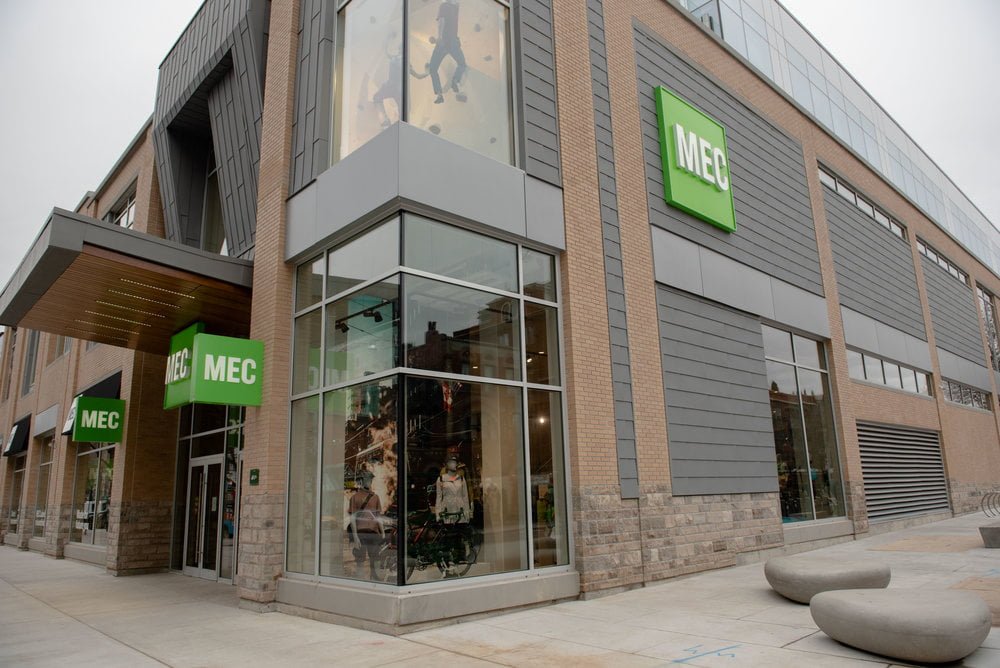
PHOTO: MEC

The most trusted brand in Canada was MEC (Mountain Equipment Co-Op) followed by CAA (Canadian Automobile Association) and Costco Wholesale. Rounding out the top 10 most trusted brands in Canada are: Home Hardware, Home Depot, Fairmont Hotels and Resorts, Band-Aid, Shoppers Drug Mart/Pharmaprix, Interac, Columbia Sportswear, and Canadian Tire.

The report said MEC led this year’s ranking despite consumer criticism over the lack of diversity in their advertisement but their adept response to concerns ensured they maintained consumer trust.

“Consumers are paying closer attention to a brand’s values and its social responsibility,” said Dr. Saul Klein, Dean of the Gustavson School of Business. “Being honest and authentic, and communicating a plan of action when faced with criticism, for example, ensured that MEC didn’t lose trust among its customers – and that made all the difference.”

Klein said the Index first began with the concern that very broadly across society there was an erosion in trust in key institutions, in business. That was a bit disturbing but it begged the question as to what could be done about it.

The Index was created to measure the extent to which Canadians trust all of the major consumer-facing brands and to try to understand more about what’s driving trust. And of course to try to show that trust matters.

 “Our Index continues to highlight the importance of a company standing up for its values, through its words and its actions, and the effect this has on consumer trust,” said Klein. “The Brand Trust Index also shows that failures on this front can lead to drastic negative impact on a brand’s overall trust among consumers.”

The 2019 Gustavson Brand Trust Index measured opinions of over 7,200 Canadian consumers on 313 national brands across 26 different product categories.

Klein said there is a very high correlation between the extent to which people trust a brand and the likelihood to recommend that brand. There are also indications in the Index that trust is a leading indicator of revenue growth.

Looking at the top three companies in this year’s ranking, he said there is something about that membership relationship that allows the brands to better understand the customer. They know them better. It allows them to respond better to those customers. There’s also a much stronger affinity or loyalty there in membership-based organizations.



This year’s report also found:

  • Consumers have different expectations of brands depending on what they sell – consumers place more value on relationship trust with service-based brands. In contrast, consumers place more value on functional trust with product-based brands;
  • While trust in key institutions has eroded significantly over the past few years, the average brand trust score for all brands surveyed in the 2019 trust index has gone up compared to last year;
  • Female consumers are more trusting than their male counterparts, while millennials are less trusting compared to any other generation; and
  • Eight out of 10 brands at the bottom of the Gustavson Brand Trust Index also ranked among the brands that Canadians are least likely to recommend.

What is driving trust? Klein said there are really three dimensions underlying trust in a brand. One is a very functional one. Does a brand deliver its promises? Is it reliable, consistent, good value for money, good quality?

The second gets to more about the personal relationship the individual consumer has with the brand and it’s about relational trust. People trust brands not only because of their functional attributes but also because of what they do for people and how they treat people. Do they communicate with consumers honestly? Do they respect consumers’ privacy? Do they go out of their way to fix things when things go wrong?

Klein said there’s a third dimension that no one really has been looking at but he thinks it’s the most exciting one going forward – and that’s the value-based dimension. Consumers are looking to use their purchasing power to have a bigger impact in society and they want to support brands whose values are more aligned with their own. Conversely, they don’t want to be spending money on brands even if they provide good functional and service levels if they have alternatives who are behaving in a more responsible way. Does the brand respect and protect the environment? Do they treat employees well? Do they make positive contributions to the local community? Do they have a positive impact on society?

Photo: Michaels

“What we’re suggesting is that over time it becomes harder and harder for brands to differentiate themselves on purely functional and relational characteristics and that values are becoming and in the future will become even more important,” said Klein.

The report also discovered what it described as “dismal performance” of social media platforms with declines in trust for Facebook, Snapchat and Instagram. This erosion of trust in social media continues from small losses in the 2018 study to much larger distrust amongst consumers in 2019, with social media brands now accounting for four of the nine least trusted brands in Canada, said the report.

“The dimensions of trust are becoming more important. We see a bit of an evolution going on. If you go back probably more than 20 years, products were sold and brands were developed based on very functional characteristics and over time product quality improved and it became harder and harder for businesses to differentiate themselves from others on a purely functional basis,” said Klein.

“What we saw happening really in the 1980s and into the 1990s was a shift towards competing more on a service dimension. So products became seen as vehicles to deliver services and while two organizations could have the same product, if one had better service quality associated with that then that brand would be able to differentiate itself and succeed in the marketplace.”

Now, Klein said a new trend is developing as it’s going to become harder and harder to differentiate yourself as a brand based on service. The value basis will become the key differentiator going forward.

“It’s not to say that consumers are going to trade off product quality or good service but other things being equal and increasingly it will be harder to differentiate on product and service values become the important differentiator,” he said.

“It’s really about being authentic in what you do. We think that’s the evolution.”

ALDO Footwear Brand ‘Call It Spring’ Announces it has Gone Vegan

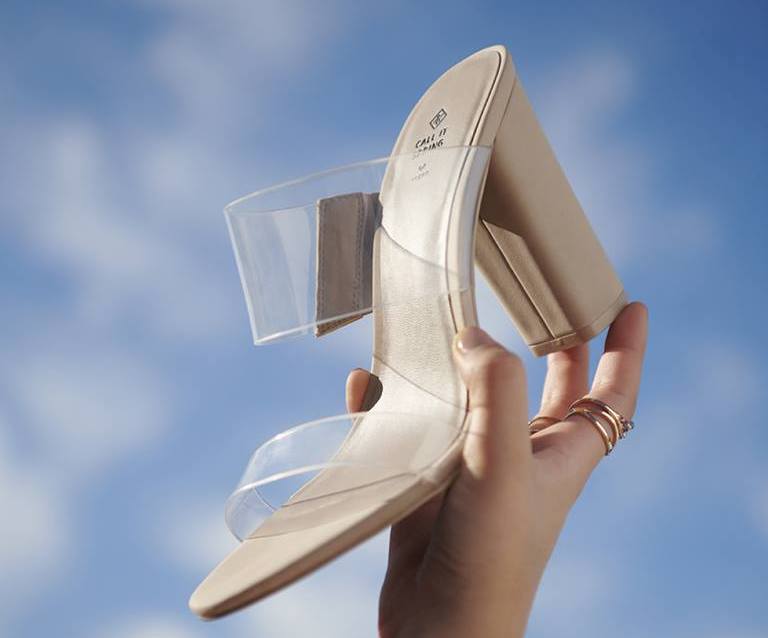
The ALDO Group’s signature brand Call It Spring has joined a growing set of Canadian retailers that includes Matt & Nat, Wuxly Movement, Native and Nice Shoes, in offering fully vegan product lines.

The buying public have made it very clear over the past few years that they are aware of the reality of global warming, the incredible amount of textile waste polluting the earth, and are actively seeking to support brands that are making changes to increase the sustainability levels of their offerings.  

Luxury brands, including Prada, Gucci, Burberry, Versace, and Michael Kors have bowed to consumer pressure and have removed fur from their collections with many citing sustainability and consumer demand for the change as key reason.

Image: call it Spring

In September 2018, Call It Spring announced that it was shifting its strategy to reach the huge demographic of Generation Z buyers, which they felt were being underserved.

At the time, vice president Monia Atijas said, “We recognize that it’s not just about the product for our customers. The new generation is hyper-aware of social issues – they demand transparency. They are the first generation to grow up knowing only a world with Internet. So as a brand, it’s our responsibility to give them the answers they are looking for.”

Not even a year later, Call It Spring has transitioned to 100% animal-free product offerings. While the majority of Call It Spring products were already 90 percent vegan, changing the remaining 10 percent of materials and sourcing for a global fashion brand did require considerable planning.

Speaking about the transition to vegan, Atijas explains: “This has been a journey for Call It Spring. The first step, deciding to make vegan fashion more accessible for our customers, was an obvious one. We then had to conduct a thorough assessment of all products, identify what materials and components needed to be replaced, develop a vegan policy that outlined what materials were no longer permitted, and devise steps to ensure all products would be entirely free from animal materials or derivatives—animal skins, feathers, fur, hair, wool fibres, shells, real silk, and animal-based adhesives or components.”

Image: Call it Spring

Customers can now shop for the PETA-Approved Vegan products online and at more than 400 stores globally and can identify vegan options by looking for the “V” on the boxes, soles of the shoes, and on product pages online.

As part of the brand’s journey and its recognition that vegan fashion does not always equal sustainable fashion, Call It Spring is also working to improve its sustainability. All Call It Spring packaging is FSC-certified, and as a brand under the ALDO Group, it is a proud member of the Sustainable Apparel Coalition, and part of the first fashion footwear and accessories company in the world to be certified climate neutral.

“We’re extremely proud to offer the same on-trend and affordable options as always, but now with the added benefit of our shoes, accessories, and handbags being completely animal-free,” said Alyssa Whited, Global Marketing Director. “This is more than a single collection or product offering. It is a key step in Call It Spring’s brand promise to create a better tomorrow, together. We wanted to make it easier for our customers to shop for affordable, animal-friendly options, and to feel good about their choices, without compromising on style. For this reason, we have gone fully vegan without increasing our prices.”

 The ALDO Group is Montreal-based and a world-leading creator and operator of desirable footwear and accessory brands. With 3,000 points of sale in over 100 countries around the world, the organization operates under two signature brands, Aldo and Call It Spring, and a multi-brand retail concept, GLOBO. The ALDO Group is also an industry-recognized wholesale distributor and third-party sourcing provider of fashion footwear, handbags and accessories. In addition to its head office in Montreal, the ALDO Group has international offices in Europe and in Asia.

Furla Secures 1st Canadian Store Location as it Launches Retail Expansion

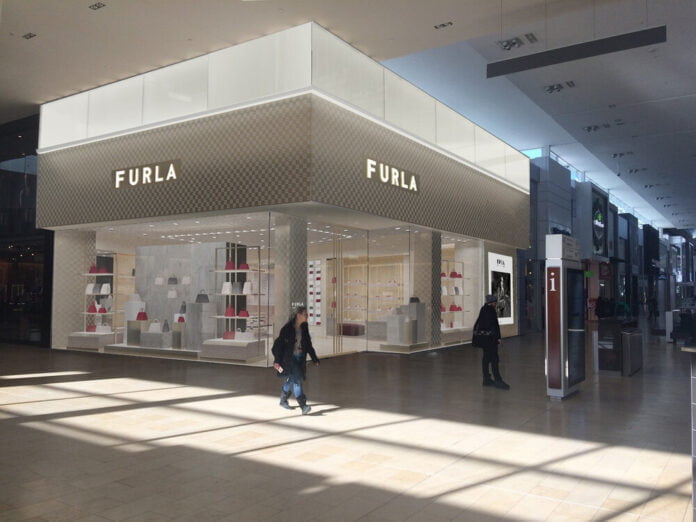
Furla Yorkdale Rendering

Italian luxury brand Furla has secured its first standalone retail space in Canada as it kicks off a national expansion that could see multiple locations open in a joint venture partnership. Furla the latest international brand to enter the Canadian market by opening direct-to-consumer retail storefronts. 

Construction hoarding went up late last week at Toronto’s Yorkdale Shopping Centre for the new Furla boutique, which will span almost 1,500 square feet according to lease plans. Furla’s Yorkdale location is in a space once occupied by Vince Camuto, strategically positioned across from Holt Renfrew and along a corridor of the shopping centre that is expected to be repositioned for luxury brands over the next couple of years. 

Montreal-based Halcyon Brands is bringing the Furla brand back to Canada with standalone stores, and is working with Jeff Berkowitz of Aurora Realty Consultants in its search for retail space for its Canadian expansion. 

CONSTRUCTION HOARDING AT FURLA’S NEW YORKDALE LOCATION. PHOTO: JEFF BERKOWITZ
CLICK FOR INTERACTIVE MAP OF YORKDALE SHOPPING CENTRE

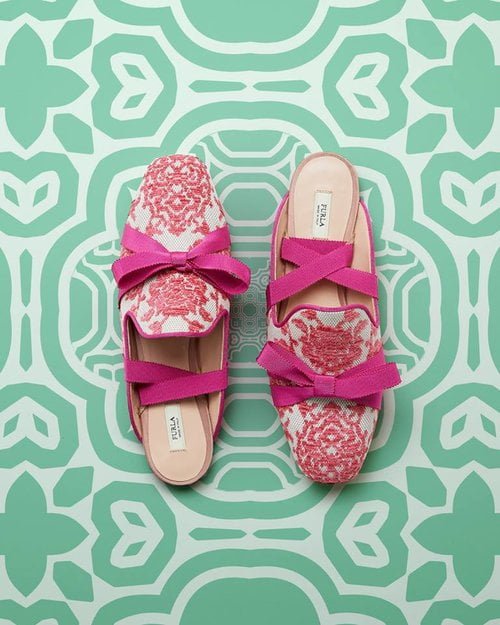
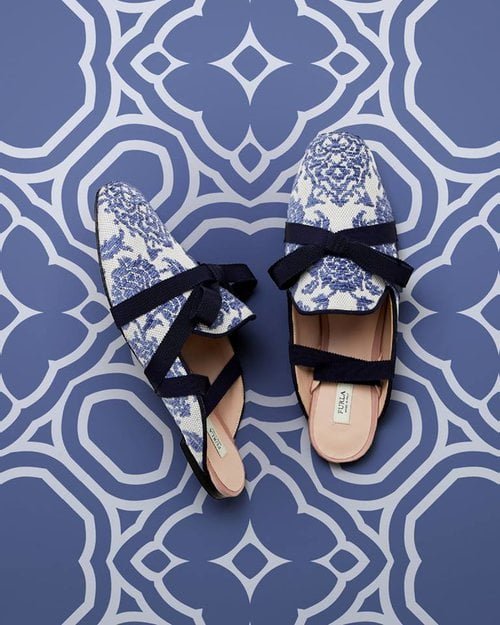
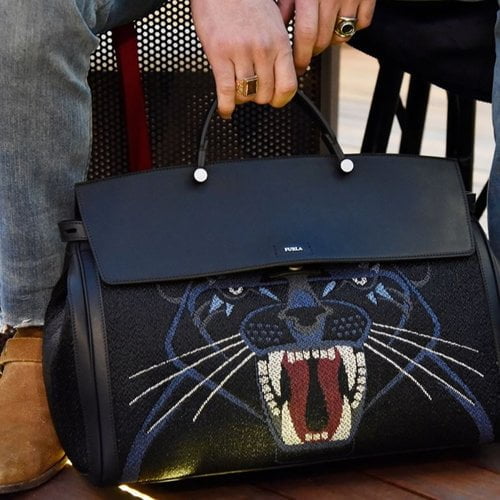
Furla was founded by the Furlanetto family in 1927, and it continues to remain family-owned. The company produces various product categories that include leather goods such as handbags and shoes, as well as an expanding category of accessories that include eyewear, jewellery and watches. Furla’s headquarters are in Bologna, Italy, in a historic 18th-century villa. In 2015, the company opened a five-storey tall ‘Palazzo’ in central Milan.

Furla’s pricing is a bit lower than that of brands such as Chanel, Hermes and Louis Vuitton, which Furla says gives it a competitive advantage. “It is the only brand in the fast-growing premium segment that gives customers an authentic Italian experience with an attractive value for money proposition, positioning itself as one of the major global players in the leather goods market,” according to the company. Furla also has regional headquarters in New York City, Hong Kong and Tokyo, and the company employs more than 1,600 people. Interestingly, about 90% of these are women who represent more than 100 nationalities, with an average age of 36. 

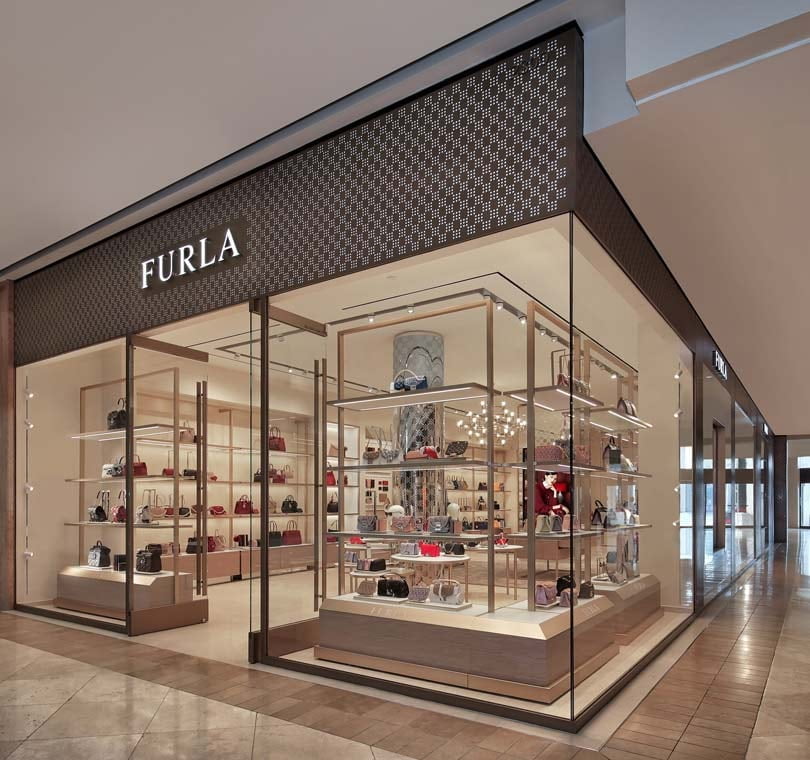
A ‘NEW LOOK’ FURLA BOUTIQUE OPENED AT SOUTH COAST PLAZA IN COSTA MESA, CALIFORNIA, IN JANUARY OF 2019. PHOTO: FURLA

Furla has more than 1,600 points of sale worldwide, with approximately 1,200 of those being in multi-brand retailers and department stores. Furla also operates a network of nearly 450 stores worldwide in 100 countries, with about half of them being directly owned and the rest being franchised, as is the case in Canada. In the United States, Furla operates stores and outlet stores in major markets in California, Nevada, Texas, Florida, New York and Massachusetts. In Canada, the brand can be found in a handful of prestigious retailers including a shop-in-shop at the Peace Arch Duty Free store on Highway 99 in Surrey, south of Vancouver. When Bonnie Brooks was brought in to revive the Hudson’s Bay Company in 2009, a selection of Furla bags were carried in the Toronto and Vancouver Hudson’s Bay flagship stores for several seasons. 

More Canadian Furla locations are expected. According to Aurora Realty Consultants’ website, Furla seeks standalone retail spaces spanning between 1,000 square feet and 1,500 square feet on major high streets as well as in enclosed malls. While it hasn’t been revealed which cities are in line for new Furla stores, the Toronto and Vancouver markets continue to see the most action from higher-end brands looking to open locations, and Furla’s quality and value proposition might also make it successful in Montreal and possibly in the Calgary and Edmonton markets if the brand gains traction. 

Technically this isn’t the first time that Furla has had standalone stores in Canada, though this expansion is said to be an entirely new one under the Halcyon joint venture partnership. Readers may recall past Furla storefronts at 41 Avenue Road (south of the former ‘Hazelton Lanes’) in Toronto as well as at 1008 West Georgia Street (corner of Burrard Street) in Vancouver. Both locations closed well over a decade ago — the Avenue Road building will eventually be demolished for a luxury residential condominium building, and the former Vancouver location will become part of a two-level, 6,000 square foot Hermes flagship store that is expected to open in September. 

In Toronto, Yorkdale continues to see more first-to-Canada retail openings than any single location in Canada. The busy shopping centre is also the most productive in Canada in terms of annual sales per square foot, and the centre now boasts more than 30 standalone luxury brand boutiques, with more on the way according to sources. 

While Holt Renfrew has been at Yorkdale for decades, the centre’s luxury expansion began to take off after landlord Oxford Properties secured Tiffany & Co. as a tenant in 2009. A ‘luxury run’ spanning northward from Holt Renfrew’s main entrance was created, with luxury brands subsequently being positioned in adjacent corridors. A corridor leading past Furla towards Yorkdale’s Zara and Sephora flagships will be repositioned for luxury brands, including a major luxury brand that will occupy substantial square footage north of the new Furla store. As much of Yorkdale’s square footage becomes occupied by luxury brands, the centre is becoming something like South Coast Plaza in Costa Mesa, California, which boasts several wings housing many of the world’s biggest names.

We’ll continue to monitor Furla’s store expansion into the Canadian market, as well as report on international brands opening their first stores here. In 2017, Canada saw more than 50 international brands enter the country by opening their first stores, and last year was a robust one with more than 30 international brands opening stores. It appears 2019 could surpass our count for 2018 as brokers and landlords continue to reach out to international brands to expand into the Canadian market. 

Lightspeed Announces Acquisition of Chronogolf Amid Tremendous Annual Growth

CHRONOGOLF TEAM WITH LIGHTSPEED CEO DAX DASILVA (FAR RIGHT), LIGHTSPEED PRESIDENT JP CHAUVET (FAR LEFT) AND LIGHTSPEED CFO BRANDON NUSSEY (BLACK SHIRT, FRONT OF PHOTO) IN MONTREAL. PHOTO: LIGHTSPEED

Montreal-based Lightspeed, the powerful cloud point-of-sale system for independent retailers and restaurants, announced last week that it has acquired innovative golf course facilities management company Chronogolf. Lightspeed also just announced its year-end results, which saw 36% annual growth after a highly successful initial public offering in the spring of this year. 

Montreal-based Chronogolf was an existing Lightspeed partner prior to the recent acquisition. Chronogolf is an innovative cloud-based software offering that facilitates management for golf course operators around the world. Chronogolf saw tremendous success by using the Lightspeed platform for both the retail and restaurant facets of its business software, which it combined with its booking and management solutions.

Moving forward post-acquisition, Lightspeed’s inventory-rich, cloud-based software will help new and existing customers in the golf industry drive business growth and maximize efficiency. Complementing Lightspeed’s existing product offerings, such as Lightspeed Loyalty and Lightspeed Payments, the Chronogolf software will offer customers a fully-integrated point-of-sale and golf course management solution. This will provide the opportunity for these businesses to streamline their operations on one system, from pro shop to restaurant to tee sheet.

“Since Lightspeed’s inception, our focus has been to provide technology to small and medium-sized businesses in verticals with complex operations, so they can work smarter, make data-driven decisions, and create the best possible experience for their customers. Running a golf course combines retail, restaurant, and ecommerce—areas that are core to our business,” says Dax Dasilva, Founder and CEO of Lightspeed. “Expanding within the golf vertical is just one example of our commitment to these complex SMBs around the world.”

IMAGE/CHRONOGOLF/LIGHTSPEED

As part of the acquisition, the Chronogolf team, including Co-CEO’s JD St-Martin and Guillaume Jacquet, will join Lightspeed.

Key Features of Chronogolf by Lightspeed include: 

  • Run Your Pro Shop from Anywhere: Users can track customer experience across the facility with seamless POS integration, connect to payment terminals, cash drawers, printers and terminals, and access sales and inventory data from anywhere.

  • Boost Restaurant or Snack Bar Sales: Users can turn tables faster and serve guests better with the cloud-based restaurant POS that is built to handle everything from clubhouse drinks to fine dining. 

  • Increased Potential Sales Opportunities: Users can follow customers from green to restaurant through seamless POS implementation, customize menus and floor plans, improve communication between front and back-of-house and boost table turnover by taking orders and payments from any location.

  • Custom Integrations Powered by Lightspeed: Users can take a pro shop online by syncing the POS with Lightspeed eCom, process payments and end-of-day settlements with Lightspeed Payments, reward members and keep customers coming back with Lightspeed Loyalty, pull insightful reports to improve the business with Lightspeed Analytics, and automatically post sales data and reduce errors with Lightspeed Accounting.

  • Tee Sheet: Chronogolf by Lightspeed simplifies schedules with a user-friendly tee sheet, while being able to create unlimited categories, book and reorganize tee times instantly. 

Montreal-based Lightspeed is a cloud-based ecommerce platform that powers small and medium-sized businesses in over 100 countries around the world. It’s a smart, scalable, and dependable point of sale system that offers an all-in-one solution that helps restaurants and retailers sell across channels, manage operations, engage with consumers, accept payments, and grow their business. 

LIGHTSPEED AND CHRONOGOLF EXECUTIVE TEAM. LEFT-TO-RIGHT IN PHOTO: BRANDON NUSSEY, LIGHTSPEED CFO; DAX DASILVA, LIGHTSPEED FOUNDER & CEO; JD ST-MARTIN, CHRONOGOLF CO-CEO; GUILLAUME JACQUET, CHRONOGOLF CO-CEO; AND JP CHAUVET, LIGHTSPEED PRESIDENT. PHOTO: LIGHTSPEED

In March of this year, Lightspeed became one of the top 10 technology initial public offerings on the Toronto Stock Exchange (TSX: LSPD). Lightspeed has now announced its fiscal fourth quarter and full fiscal year 2019 financial results ending March 31, which are overwhelmingly positive. 

Highlights include a full fiscal year revenue growth of 36% to $77.5-million, and a gross transaction volume which grew by $4-billion to a total of $14.5-billion. 

“It’s been a great year for Lightspeed and for our customers. Our revenue grew 36% for the full fiscal year, and we completed our initial public offering. We also added two significant new products to our overall offering. We launched Lightspeed Loyalty to both our Retail and Restaurant clients in North America and Europe, and we made Lightspeed Payments generally available to our US Retail client base in late January. All of this creates momentum toward our main goal, which is to help complex SMBs thrive in a world with rapidly changing consumer expectations,” said Mr. Dasilva. 

LIGHTSPEED CEO AND FOUNDER DAX DASILVA PUSHING THE BUTTON TO COMMENCE TRADING ON THE MORNING OF MARCH 8, 2019. PHOTO: LIGHTSPEED

Lightspeed’s full fiscal financial highlights include:

  • Total revenue of $77.5 million, an increase of $21.3 million or 36%, 

  • Recurring Software and Payments revenue of $68.7 million, marking an increase of 34%,

  • Gross profit growth of 36% to $53.9 million as compared to $39.6 million in 2018, and

  • A net loss of $183.5 million as compared to a net loss of $96.2 million. (Net loss was impacted by a non‑cash charge of $191.2 million, offset by an associated $30.8 million deferred tax benefit, each related to our preferred shares which converted into common shares prior to Lightspeed’s IPO). 

Lightspeed summarized its 2019 operational highlights to include the following points: 

  • Customer locations grew by 20% to more than 49,000 as of March 31, 2019,

  • Positive net dollar revenue retention (which Lightspeed says further reinforced the stickiness of the Lightspeed platform),

  • A record number of new customers signed in the quarter and fiscal year was driven by strong customer momentum from complex Retailers and Restaurateurs in North America and around the world. 

  • Successful launch of Lightspeed Loyalty to the Company’s retail and restaurant customer base in North America and Europe. Included strong early adoption with more than 1,500 customer locations using Lightspeed Loyalty.

  • Strong initial adoption of Lightspeed Payments after launch on January 30, 2019 to U.S. Retail customers with demand coming from both new and existing clients of Lightspeed.

  • Approximately one third of unique customers have now purchased more than one Lightspeed module. 

Looking forward to 2020 and beyond, Lightspeed anticipates revenue, cash flows used in operating activities and Adjusted EBITDA to be in the following ranges:

First Quarter 2020

  • Revenue of $23.0 – $23.5 million

  • Cash flows used in operating activities of approximately $6 million

  • Adjusted EBITDA in the range of ($6 million) – ($7 million) 

Full Year 2020

  • Revenue of $107 – $110 million, representing annual growth of 38-42%

  • Cash flows used in operating activities of $7.5 million – $9 million

  • Adjusted EBITDA in the range of ($16 million) – ($18 million)

We’ll continue to provide updates on Lightspeed as it continues on its remarkable growth trajectory while catering to independent businesses in Canada as well as worldwide. 

*Partner content. To work with Retail Insider, contact: craig@retail-insider.com

Canadian Retail Sales Growth Struggles Forward: Expert

The latest data from Statistics Canada for March 2019 show low retail sales growth, but also modest improvement over even lower growth of prior months. Total Canadian retail sales were up 1.7% year-over-year in Q1 2019 on a not seasonally adjusted basis. While this was the weakest first quarter in 4 years, it still edged ahead of Q4 2018 when growth was a mere 1.3%. But even if things are looking up, there’s still a long way to go. 

Per the above chart, the 3 month trend (orange line) is at a low point, which in turn is driving down the underlying 12 month trend (green line). And things are still getting softer. Total retail sales increased only 0.4% year-over-year for the 3 months ending January 2019, the weakest consecutive 3 month performance in 6 years. 

Food and Drug

Food & Drug appears to be the best performer of the major retail sectors, which is not often the case. In Q1 2019, retail sales gained 3.3% year-over-year, almost double that of overall total retail. The 3 month trend (orange line in the chart above) is running still slightly ahead of the underlying 12 month trend (green line). 

Supermarkets & other grocery stores had a good Q1 2019, with retail sales increasing 4.6% year over-year. This represents a notable improvement compared to a 2.4% gain for all of 2018. 

Health & personal care stores are the next largest piece of the Food & Drug sector, and their retail sales gained a more modest 2.2% in Q1 2019. While not a big increase, this was about on par with their average performance of the past 12 months. 

After above average sales gains in previous months, convenience stores and specialty food stores seem to have hit a speed bump and have now cooled off. This might only be a temporary setback … or not. 

Store Merchandise

Retail sales in the Store Merchandise sector were up 2.1% year-over-year in Q1 2019. This is relatively weak by historical standards, but also a considerable improvement over the mere 1.0% gain recorded for the preceding quarter, Q4 2018. 

The 3 month trend (orange line in the chart) appears to be starting a comeback after a near-death experience. The underlying 12 month trend (green line) is still weak however, and is at the lowest point that it’s been in since at least 2013. 

A number of retailer segments had a poor Q1 2019, including electronics & appliance stores (retail sales down 6.5% year-over-year), sporting goods, hobby, book & music stores (down 2.2%), and home furnishings stores (down 0.4%). Retail sales at shoe stores were up, but only by a scant 0.3%. 

On the other side of the ledger in Store Merchandise, there were few strong gains in Q1 2019. Sales at miscellaneous store retailers were up 8.5% year-over-year, but this was mostly because of the addition of the new cannabis stores segment. The next best performance was at clothing stores, with retail sales up 4.4% in Q1 2019. 

Note that Statistics Canada is now suppressing the breakdown of general merchandise stores for confidentiality reasons. The figures in the “By The Numbers” table below are estimates based on previous trends. 

Automotive & Related

Automotive & Related had a rough year in 2018 and much of this has continued into 2019. Total sector retail sales barely squeaked out an increase in Q1 2019, rising by a mere 0.2% year-over-year. But even this was better than the 0.2% sales decline suffered in Q4 2018. 

Retail sales at new car dealers however are showing some signs of life. In Q1 2019, their sales were up 2.4% year-over-year, after having declined 0.6% for the year 2018. The much smaller used car dealers segment had the highest gain in the sector, with retail sales up 11.5% in the first quarter. 

Gasoline station retail sales are still holding back the Automotive & Related sector, and indeed Canadian retail overall. Sales were down 6.5% in Q1 2019 due to lower pump prices. 

By The Numbers

Special Note: Statistics Canada revised historical data with the February 2019 release. Unadjusted monthly data were revised back to January 2018, while seasonally adjusted data were revised back to January 2015. Those keeping score should update their files. The analysis in this report is always based on unadjusted data. 

For definitions of store types, see Statistics Canada NAICS

Canadian E-Commerce Sales

StatsCan started providing ecommerce retail sales data in January 2016. While the amount of data is limited, some trends appear to be emerging. Here are some results. 

Overall, e-commerce represented about 3.3% of total Canadian retail sales in Q1 2019, including both pure play operators as well as the online operations of brick & mortar stores. Canadian consumers however also buy online from foreign websites which is not captured in these numbers. 

Canadian e-commerce sales were up 19.3% year-over-year in the first quarter of 2019. This was significantly higher than for location based retail which gained 1.7%. 

Note that location based retail is the same as that in the preceding large “By The Numbers” table. It’s what’s normally reported as Canadian retail sales. Except that it isn’t. Location based retail excludes another section called Non-Store Retailers (NAICS code 454), which includes electronic shopping and mail-order houses, which in turn is where (mostly) pure play e-commerce businesses are. For the 12 months ending March 2019, electronic shopping and mail-order houses had an estimated $11.2 billion in e-commerce sales. 

But that’s not the only source of e-commerce, as (mostly) bricks & mortar location-based retailers also sell online. For the 12 months ending March 2019, this group had an estimated $7.6 billion in e-commerce sales. With electronic shopping and mail-order houses, there’s a grand total of $18.8 billion in e-commerce sales by Canadian operators over the year. Note that this does not include foreign e-commerce purchases made by Canadian consumers, but it does include e-commerce purchases made by foreigners at Canadian businesses. 

For electronic shopping and mail-order houses, an estimated 85.3% of their sales are allocated to e-commerce. For (mostly) bricks & mortar retailers, it can be estimated that just 1.2% of their total sales are attributable to e-commerce. 

In the final section of the above table, (mostly) pure play operators (namely, under electronic shopping and mail-order houses) generated an estimated 59.5% of all e-commerce sales in Canada, while (mostly) bricks & mortar location-based retailers’ share of e-commerce is 40.5%. 

For more explanation on the e-commerce numbers, see Statistics Canada: Retail 

This analysis is updated monthly as new numbers are published by Statistics Canada. If you would like notification of when an update becomes available (and you’ve read this far), please connect with Ed Strapagiel on LinkedIn