

Value-priced Chinese variety retailer Miniso which positions itself as a ‘Japanese lifestyle brand’, says that it has reached an agreement with franchisees to keep its Canadian stores open. While this sounds like good news on the surface, sources are saying that the company’s expansion could be in trouble amid lawsuits and low employee morale as the retailer rapidly expands its stores in Canada with a goal of operating 500 locations in the next several years.
John Grieve, a lawyer with Fasken in Vancouver who represents Miniso Canada’s parent company Miniso Guangzhou LLC, told the Canadian Press in a statement that instead of heading to court, Miniso Guangzhou LLC and its Canadian franchisee have reached an interim agreement.
That agreement will involve Miniso keeping its Canadian stores operating while at the same time delivering inventory to Canadian operations while both sides “work towards a long-term solution”.
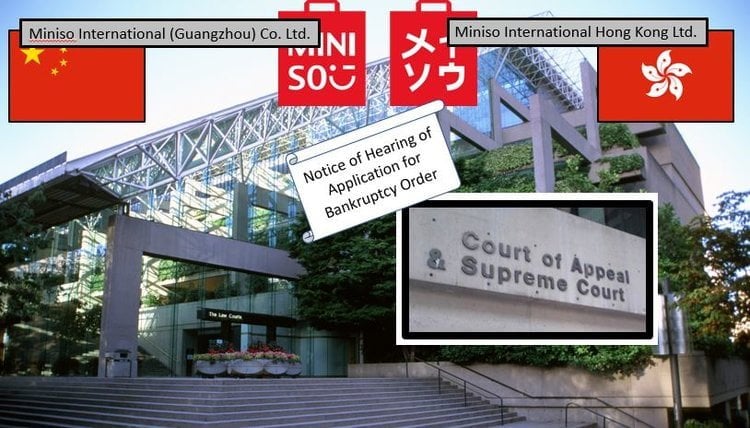
Mr. Grieve’s comments follow last month’s controversy where Miniso’s Chinese parent company, Miniso Guangzhou LLC, filed to bankrupt Miniso’s Canadian operations after claims that the Canadian division was acting fraudulently with such activities as disposing of inventory, transferring registered trademark rights to third-party corporations, and not meeting liabilities when due.
In the filings, Miniso’s Chinese parent company claimed that Miniso’s Canadian division owed about $2.4-million in loans as well as about $13.3-million in inventory (both in US dollars).
On December 17, Miniso issued a statement claiming that it has reached a preliminary agreement, which appears to be true — the company also issued a press release after we broke the story of the lawsuit where the Chinese parent company said that it wanted the Canadian operations to be taken over by a trustee. In the press release, Miniso’s Chinese parent company (which it refers to as ‘Miniso Group’) said that “their overarching objective is to preserve the Miniso brand in Canada for the benefit of the public”. Furthermore, it stated, “Miniso Group hopes that, by having an independent court officer appointed to oversee the Miniso Canada operations, it can reinstitute supply and preserve the good name and reputation of Miniso in Canada. Miniso Group will do whatever it takes to ensure the Miniso Brand in Canada is preserved and the public are well served through the Miniso outlets.”
The Canadian Press reported widely on January 7 that an agreement had been reached, however it didn’t dig deeper into the matter and simply quoted Mr. Grieve’s statement about an “interim agreement”.

Since we published our story on Miniso’s woes on December 17, several former employees have reached out to Retail Insider with less-than-positive stories about working for the company. Miniso Canada could still be in trouble particularly in Quebec, as well, where it has not met language standards that include french language on products and overall branding. One former employee explained how Miniso had been put on notice by the Office québécois de la langue française, or the ‘Language Police’ as some call them. Multiple lawsuits for unpaid construction projects also plague the retailer.
The language issue could result in Miniso losing millions of dollars if the ‘Language Police’ follow through with threats to fine Miniso. Fines can be steep, with a maximum fine being $20,000. According to law firm Blakes, if a business is put on notice and doesn’t adhere to language laws, there “is the possibility that an additional fine may be imposed on the offender equal to the financial gain the offender realized or derived from the offence”. A source, who recently resigned from the company, explained how the Chinese parent company “didn’t understand” the language requirements and furthermore, it appeared to be unconcerned in complying with the law.
A former employee at Miniso explained in detail how Miniso’s expansion, while rapid, has been taxing on everyone involved. Miniso’s Canadian expansion appeared to be successful quickly — a source said that the “daily average sales and profitability were unmated by other developing countries” and with that, Miniso Canada is said to be one of the world’s top five markets globally in terms of total sales volume. In this retail climate, the claim is phenomenal, while at the same time internal operations were in turmoil.
With the expansion came pressure from the Chinese parent company to expand rapidly — the goal was to open 500 stores in three years, which is ambitious for any retailer entering a new market. What resulted are long hours, weekend work and overtime, with some employees spending nights in sleeping bags in a company warehouse. One former employee said that for the first time, they had taken sleeping pills and anti-depressants to deal with the situation.
After entering Canada in 2017, Miniso began to pick up the pace of opening stores last year that has seen about 50 open to date. Given the rapid expansion, the source explained how there was “no time to celebrate” as new locations would have to be strategized. It took nearly a year from the opening of Miniso’s first store in Canada to its 10th. In less than four months after that, Miniso went from operating 11 stores to 40 in Canada. The source said that one of the challenges was getting enough product into stores — deliveries were delayed and payment terms became a challenge. Another issue was design copyright — the source claims that some of Miniso’s products from China infringed on design copyright from a “more famous Japanese brand”.

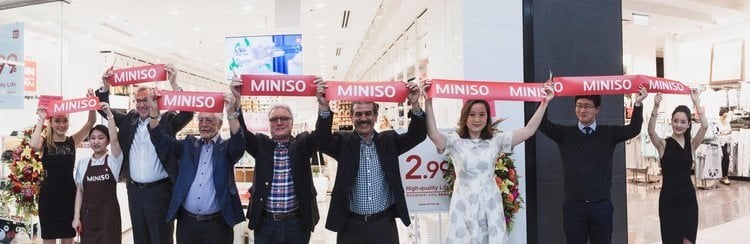
Miniso held a Miniso Canada Merchants Conference in Toronto in the summer of 2018, according to the source. Many attended, including venture capitalists looking to invest in Miniso Canada. This was a threat to the Chinese parent company said the source, causing further friction between Miniso’s Chinese parent and Canadian division. There were also supply issues more recently where only 30 of 80 ordered shipping containers arrived with Miniso product from China — stocking Canadian stores became a challenge and some non-Miniso branded products were added to the retail mix to avoid empty shelves.
A source also claims that some assets were transferred out of the company, matching claims made in the Chinese parent company’s application for bankruptcy in December. There was also a claim that some imports were not declared and that proper sales records were not kept, which could result in an investigation by the CRA.
Some brokers we spoke with explained how Miniso Canada’s dealings were “unethical” in some respects, and requested we not go into further detail so as to not identify the source. Another source claims that Miniso Canada induced highly skilled retail professionals to leave secure employment in order to launch Miniso in a new province. Within six months of establishing several stores in the province, the retail professional’s employment would be terminated so that the local licensee could take over the thriving operations. The ownership arrangement of Miniso Canada was said to be unique — the Canadian division would initially own a slight majority of the provincial franchise for Miniso and after opening several stores, the local partner would gain a majority share in order to continue with the operations.
Another source explained how Miniso Canada used employment recruitment services in order to hire primarily “Asian” looking store staff in order to “maintain its branding”. Miniso’s Glassdoor rating is 2.1 with comments from Canadians such as:
-”All the good Managers are leaving only people with family References and with no experience are taking over.” (Current assistant store manager in GTA)
–”confuse order everyday from management” (former truck driver in Coquitlam)
-”No real training (supervisor talked to me for less than 5 min to tell me what to do). No benefits for part timers (not even a small discount for purchases)
– Unorganized work hours (sometimes *being told* not being asked to come in early a couple hours before original shift) (from a current employee in Scarborough)
-”Upper management is so busy opening a brand new store every single week that they neglect caring about the people that work in these stores. They have failed to consider the fact that due to their lack of proper communication and respect for store managers/keyholders/store associates, the employee turnover rate is high.”
–”Instead of guiding and helping us on what needs to be fixed or improved, upper management thinks yelling at us like we’re misbehaved children is the right way. It’s extremely humiliating and downright verbally abusive. We’re trying our absolute best every single day but to them it isn’t enough and never will be.”
-“Head office people constantly watch all of us on CCTV cameras to see if we’ll mess up. They don’t use those cameras for loss prevention, it’s for spying on YOU. They even screenshot and send pictures of their delusional assumptions to a group chat full of Miniso managers and keyholders in the whole entire city!!!! (last 3 from a current store associate in Toronto)
Indeed.com also has plenty of comments about Miniso’s operations. One comment we’d seen a few times in different forms: “Very unorganized shipments, 2 shipments a week each consisting of 6 skids (which is way too much for a novelty store). Therefore, stock rooms became a mess, no where to take breaks (well you were not really given breaks anyways). A very dangerous work environment, there were boxes staked 6-8 boxes high most of the days. We received Christmas stock in April – lack of communication between warehouse and operations. It seems like everyone in management lacks common sense, they are all money driven and not practical.”
On top of that, there are several pending lawsuits from companies that claim to have not been paid by Miniso Canada, including construction companies that built some of its stores. Court filings are public record in most provinces, and some are searchable online.
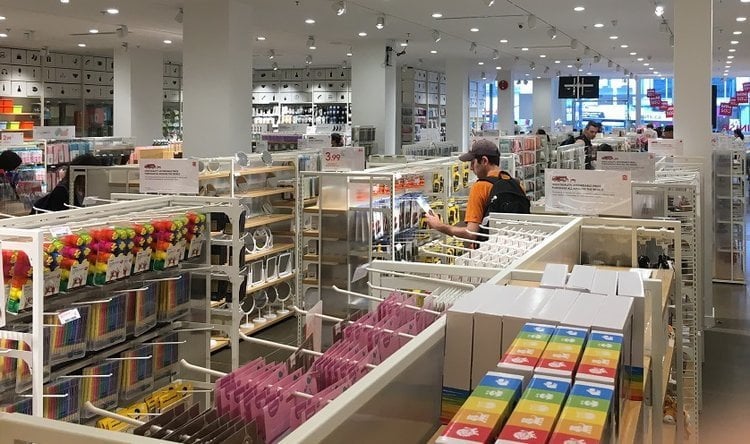
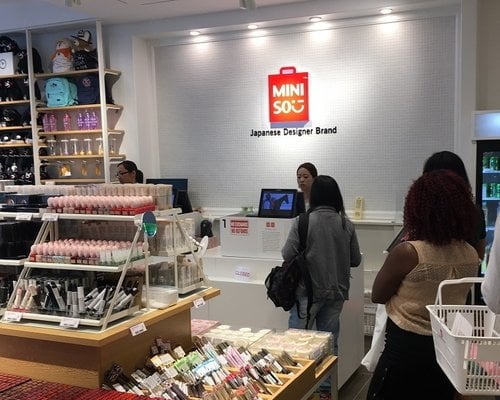
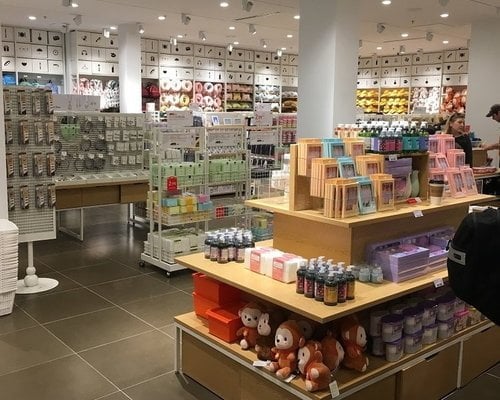
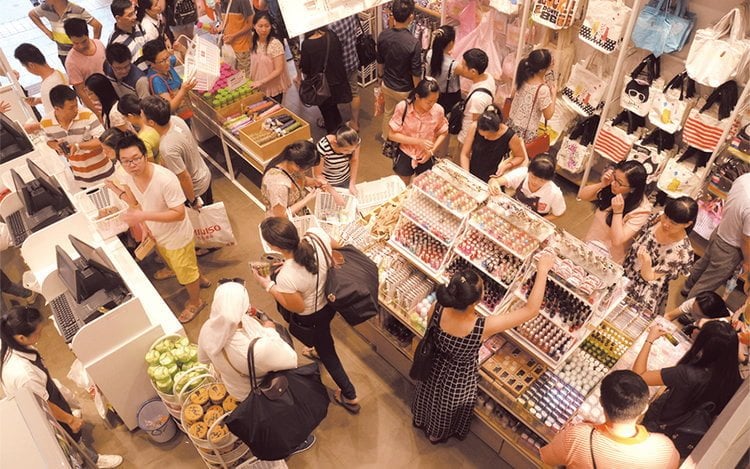
At the same time, Miniso’s overall concept is exceptional. It offers a variety of inexpensive items that are well-designed, in store environments that are bright and upbeat. Last week, we visited a Miniso store at CF Toronto Eaton Centre, and it was packed with shoppers and there was a lineup at the cash desk. That location features a mix of Miniso-branded products as well as some non-branded products, which wasn’t the case when the chain entered Canada. If Miniso can sort its operations out in Canada, it could become a successful retailer and indeed meet its goal of opening 500 stores. We hope everything works out for the best, and it appears that there’s still work to be done.








Miniso is absolute trash and there’s nothing buyable there.