Home Blog Page 1044

L.L.Bean Continues Canadian Expansion with 1st Toronto Store [Photos]

Exterior of the new Don Mills L.L. Bean store. Photo: L.L. Bean

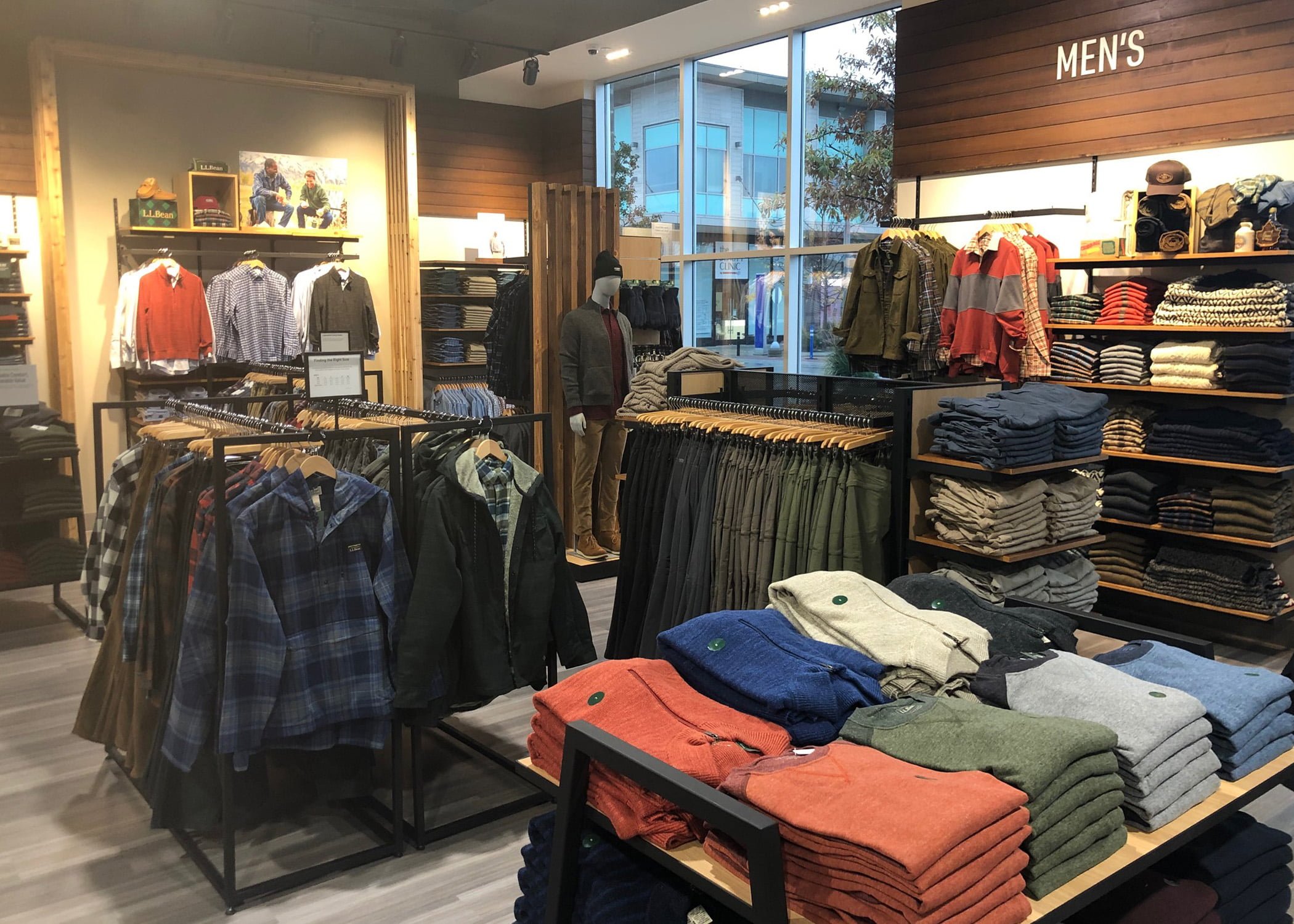
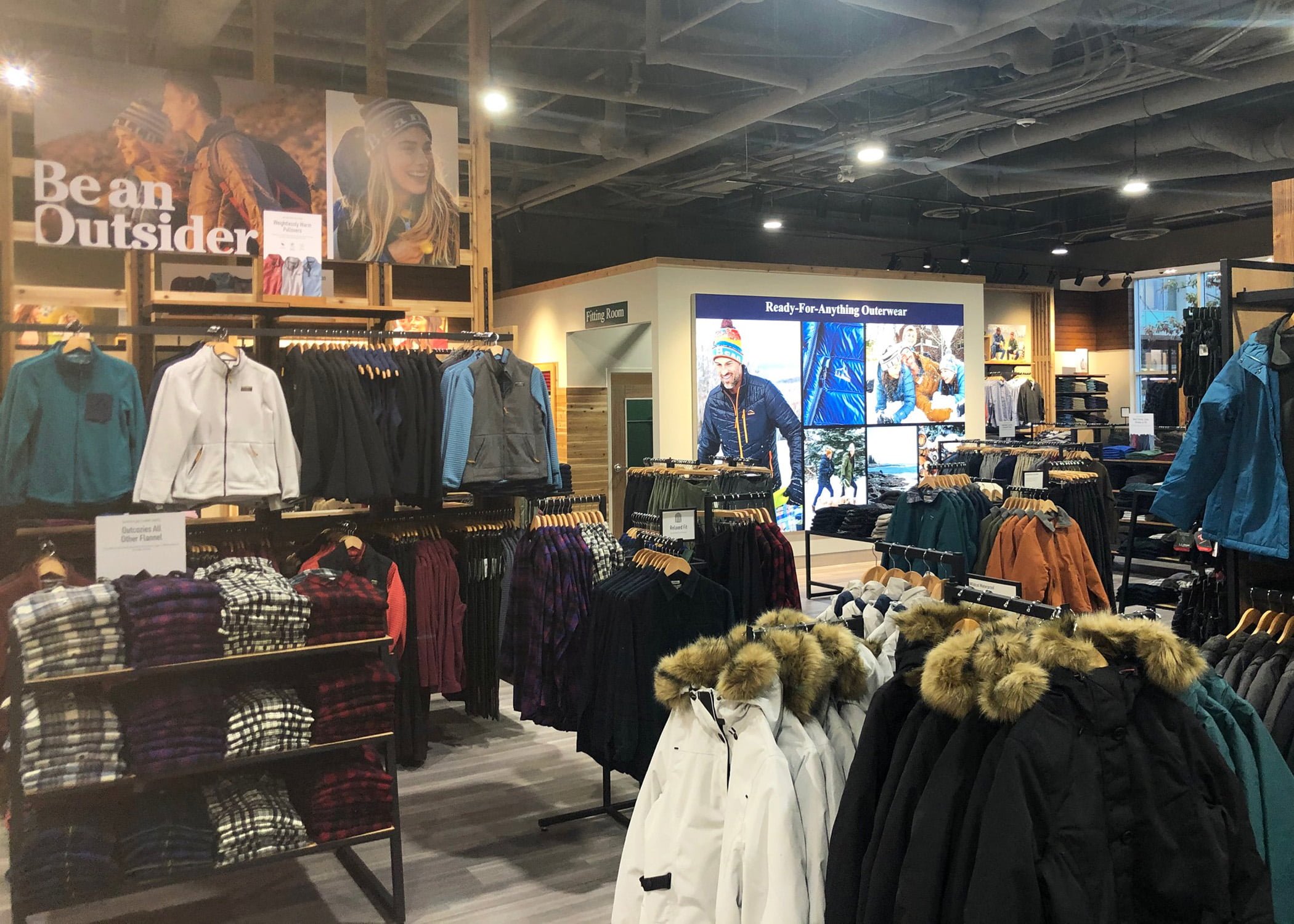
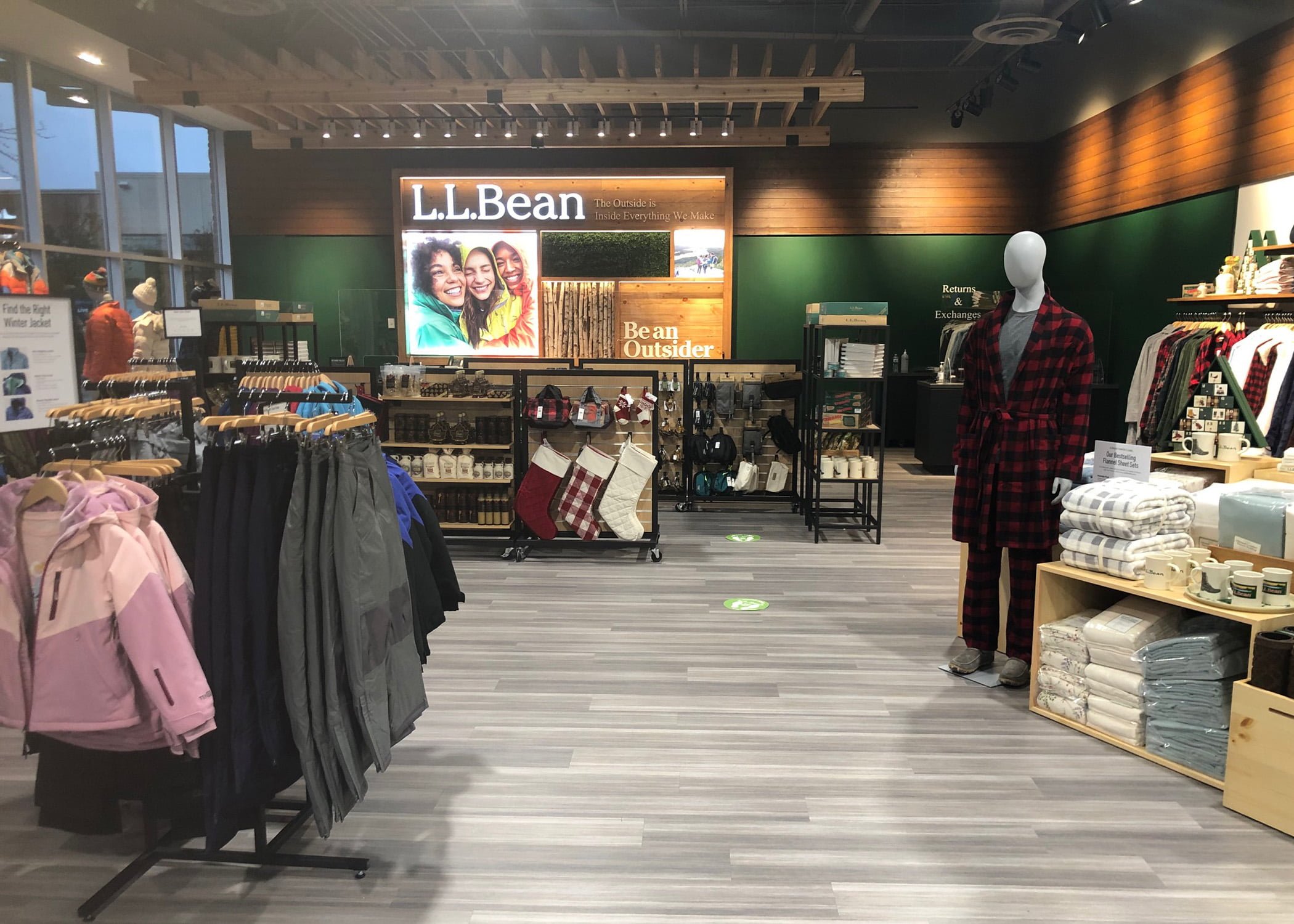
Iconic US-based retailer L.L.Bean has capped a year of expansion into the Canadian market with the recent opening of a location in CF Shops at Don Mills in Toronto.

It is the company’s fourth store in the country and third opening in 2020.

DON MILLS L.L. BEAN LOCATION MARKS FOURTH CANADIAN LOCATION FOR COMPANY

L.L.Bean says that it has had a long and meaningful relationship with Canadian customers for decades. The retailer launched its Canadian e-commerce site in the fall of 2018, followed by the introduction of a Canada-specific catalogue. Less than a year later, the first retail location opened its doors in Oakville Ontario in August 2019. L.L.Bean then opened stores in Ottawa (third week of August 2020) and Barrie (first week of July 2020). It also opened a small outlet store in Vaughan Mills this year.

“We are excited about the success of the three stores that have already opened in Ontario as well as the overall success L.L.Bean is having in Canada this year,” said Howie Kastner, President of Jaytex Group, L.L.Bean’s Canadian partner. “As L.L.Bean at the CF Shops at Don Mills opens its doors to our loyal Canadian customers, we are able to continue to expand this iconic brand and most importantly, encourage more people to get outside.

“This store is interesting because our typical square footage is between 13,000 and 15,000 square feet. This one is 8,500 square feet. It’s a little smaller than our normal footprint but we thought we really needed a store in Toronto. It’s the biggest market in Canada for the catalogue and online business. So we took this space which is a great location. We’re carrying everything we carry in the other stores, it’s just a smaller footprint.”

CLICK FOR INTERACTIVE MAP OF DON MILLS

Brokerage Oberfeld Snowcap represents L.L.Bean in Canada under the direction of Andrew Laudenbach.

Kastner said, “We have been looking for more locations across the country. We’re looking in Vancouver, Victoria, Calgary, and in the Maritimes. We’ll probably open between three and five stores next year. We only open them if the deals are right and the centre is right and fits all our criteria. We’re really excited about our expansion in Canada and we’re going to keep growing and give the customer more options to be able to shop the brand.”

CANADIAN SALES HAVE GROWN FOR L.L. BEAN DESPITE COVID-19 PANDEMIC

Despite the pandemic, L.L.Bean sales in Canada have grown. E-commerce sales are up significantly compared to 2019 and the brand has seen a two-fold increase in first-time Canadian shoppers.

“Following the successful opening of the new Barrie and Ottawa locations in addition to the number of customers reconnecting with the outdoors this year, we are grateful to our Canadian customers for welcoming L.L. Bean to their communities. While we are opening our final store for the year, we look forward to what 2021 will bring for L.L.Bean in Canada,” said Greg Elder, vice president of retail and international of L.L.Bean.
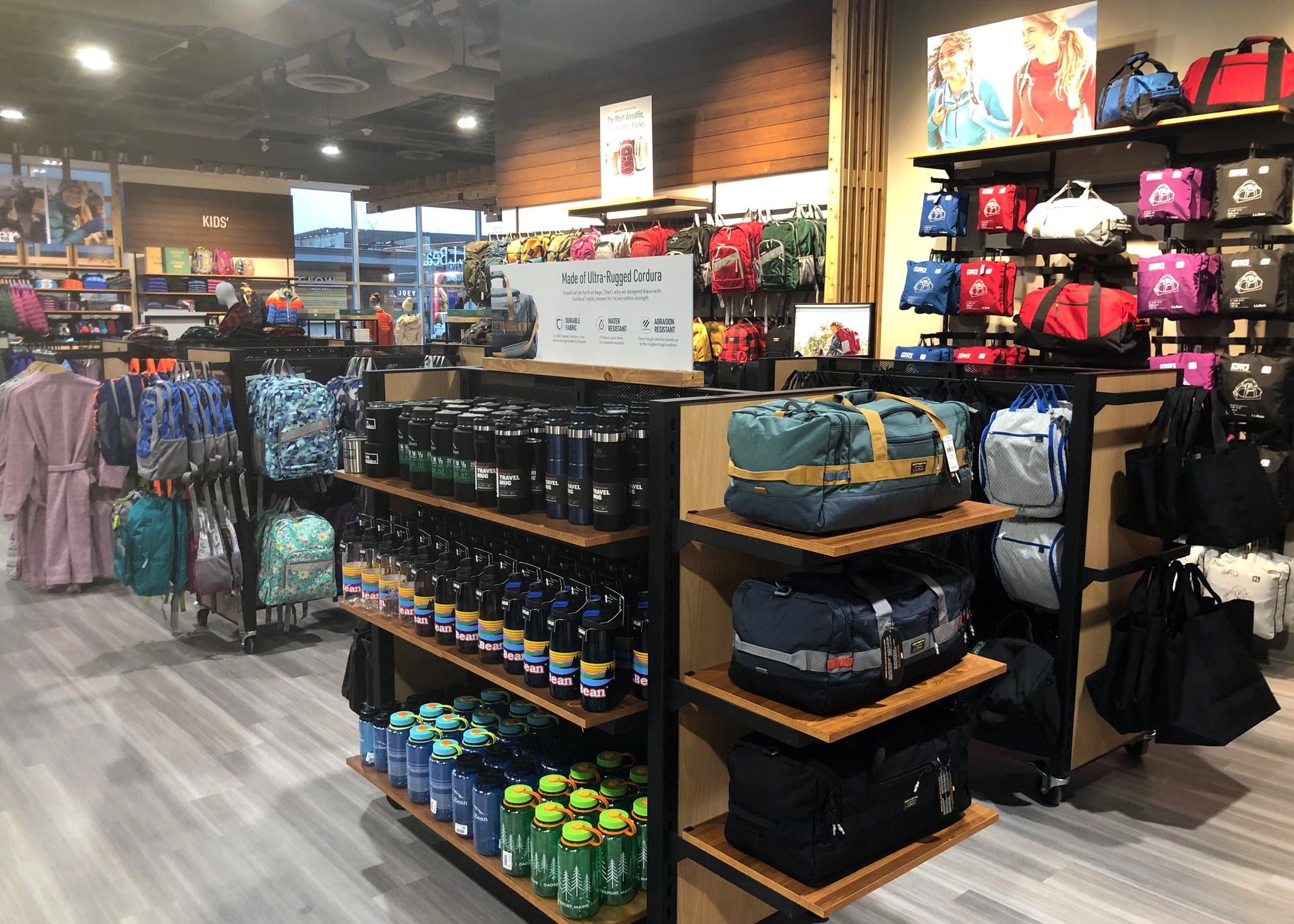
Kastner said the Canadian market has been great for L.L.Bean. The customers are loyal and thrilled to be able to shop in stores in Canada as opposed to having to go to the U.S. or having to shop online for outdoor gear, footwear, and apparel.

“The common message is thank you for coming to Canada. They’re just really happy.”

L.L.Bean, Inc. is a leading multi-channel merchant of quality outdoor gear and apparel. Founded in 1912 by Leon Leonwood Bean, the company began as a one-room operation selling a single product, the Maine Hunting Shoe. L.L.Bean is a family-owned Maine company, led by Executive Chairman, Shawn Gorman, the great grandson of Leon Leonwood Bean, and Stephen Smith, President and CEO. It currently operates 54 stores across the United States and 28 stores in Japan. The 220,000-square-foot L.L.Bean retail store campus in Freeport, ME, is open 24 hours a day, 365 days a year and welcomes more than three million visitors every year.

The Jaytex Group, founded in 1978 is a privately-owned company with a diverse portfolio of private label and lifestyle licensed brands in Canada. Partners include Kastner, Eric Grundy, and Leo Grunberger.

“The e-commerce business has actually been fantastic. Even with the addition of the retail stores here, the e-commerce business continues to grow. This year will probably be one of the best in Canada in the company’s history. Lots of new customers. It’s been great for the brand in Canada across all channels.” said Kastner.

How Twin Brothers from Western Canada Founded 2 Rapidly-Growing Direct-to-Consumer Home Furnishings Brands

ANDY (LEFT) AND SAM PROCHAZKA. PHOTO: GOODMORNING.COM

Andy and Sam Prochazka have been in business together since Grade 11 in Edmonton, selling candy out of their lockers when they saw the school had a monopoly on the snack market.

Today, the twin brothers, who are 40, are successful owners and operators of two very profitable online businesses in Canada that have been growing at a rapid pace.

Edmonton-based GoodMorning.com, where Sam is President and CEO, was started in 2009 as one of the first direct to consumer online mattress companies with about $40 million in sales in 2019.

Vancouver-based Article, where Andy is Co-founder and COO, was launched in 2013 and is a direct to consumer furniture brand grossing more than $100 million in annual revenue.

CANADIAN-BASED COMPANIES GOODMORNING.COM & ARTICLE HAVE EXPERIENCED SIGNIFICANT GROWTH AMID COVID-19 PANDEMIC

GOODMORNING.COM MATTRESS DELIVERY. PHOTO: GOODMORNING.COM

Both businesses have experienced further and significant growth since the pandemic hit in March. Both companies just made the Globe & Mail’s list of Canada’s Top Growing Companies, a ranking conducted by Report on Business magazine.

Canada’s Top Growing Companies ranks Canadian companies on three-year revenue growth. GoodMorning.com earned its spot with a three-year growth of 398 percent. Of the 400 companies selected, GoodMorning.com placed No. 123 and is one of only seven companies from Edmonton who made the list. Article earned its spot with a three-year growth of 460 percent. Of the 400 companies selected, Article placed No. 108.

“At GoodMorning.com it really started as what — I believed at that time — was soon to become an obsolete shopping experience. I walked into a mattress store, got a high-pressure commission-driven sales pitch justifying an extortionate price tag, was not provided any kind of risk-free experience, and walked away from that pretty sour. And I realized there had to be a better way — it was pretty obvious there was a better way — and so I put together this business model. Doing it online is a big part of a better way,” said Sam, who is also Co-Founder and Director at Article.

“We have a propensity to be slightly reclusive ourselves, I think. So this notion of being able to control your experience without the high-pressure sales environment, and the  awkwardness of going into a shop and trying to imagine how those products would manifest in your own environment — without actually being in your own environment — is an uncomfortable experience,” added Andy, who is also Co-Founder and Director of GoodMorning.com. “The economics and the savings of not having to maintain those expensive showrooms, and the personnel, and all the inevitable complexities that a company does — we can take those costs and focus on the value chain, on better prices, better sourcing, more direct-from-factory to the customer’s house. We can just make that experience a lot better.”

The roots of their entrepreneurial spirit comes from their grandfather from Australia, but originally from the Czech Republic, who started an import business importing frozen fish from Europe. Frozen food at the time — right after the Second World War — was a new thing in Australia and it became successful. So the twins grew up with that impression left by their grandfather.

“In high school, Andy and I opened our first company, selling candy bars from our lockers. Pop and chips. That was surprisingly successful actually. I think after that we were a bit hooked to it. It just seemed like there was a lot of opportunity to contribute, offer value, and get into that value chain in society,” said Sam.

“There’s something about competition and finding these opportunities out there that exist everywhere. There’s always opportunity and there’s always areas that are being served sub-optimally in the market. It’s innate, I think, seeking those opportunities out and answering them. Kind of comforting actually, I think.”

ARTICLE DINING ROOM INTERIOR. PHOTO: ARTICLE
ARTICLE LIVING ROOM INTERIOR. PHOTO: ARTICLE

The brothers went to Old Strathcona High School in Edmonton and then both received degrees in computer engineering from the University of Alberta.

These are indeed tough economic times for most entrepreneurs in the country as the COVID-19 pandemic continues to take an economic toll everywhere. How do they as entrepreneurs get through these times?

“As an entrepreneur, in my experience, you’re always pushing into uncertainty. We’re in a state of particularly high uncertainty presently because of the macro events. The real key here — and I wish I could tell my 20 years-ago-self more vehemently that if you focus on your customer — and you make sure you actually listen to your customer and do away with your own internal voices as to what you think the customer wants — and deliver the value that they’re asking for, that can be your North Star. Then you’ll make it through these kinds of times,” explained Andy.

“I have to agree with Andy,” said Sam. “The only other thing I will add to it is we find ourselves in these online businesses so we’re in many respects very fortunate. But there are a lot of businesses out there that are not as fortunate as we are. We are still able to sell during this time and supply our customers with what they need. That’s certainly working in our favour. And I think that this period of uncertainty has largely accelerated the adoption of the types of businesses that we’re in. In many respects, we will benefit to some degree out of this. But the good thing, I think, in these periods of adversity and with the way that the free market works, is that there will be opportunities that come out of this that we can’t imagine right now. And they will evolve over time. And so I’m excited to see what those are.”

Cadillac Fairview Innovates with Virtual Food Court Experience Platform

CF EATS WEBSITE

Canadian shopping centre owner Cadillac Fairview has launched an innovative and unique platform to help food services and restaurants cope with the challenges brought on by the on-going COVID-19 pandemic.

CF Eats is a virtual food court experience — an online directory of restaurants and food retailers in CF properties across Canada that offer takeout and delivery.

CF EATS AIMS TO HELP FOOD SERVICES AMID COVID-19 PANDEMIC

Jose Ribau, Executive Vice President of Digital & Innovation with Cadillac Fairview, said the goal of innovation is to always be in the market and go to where the customer preference is.

“And during COVID obviously it’s always a moving target. For our retailers who are focused on their restaurants or that are dining services or even food courts, this has been an extremely challenging time for them and most recently in Quebec and Ontario certain districts and areas have been shut down again for another month,” said Ribau.

“So one of the journeys we’ve been focused on is food. Food is a big part of someone’s shopping trip and so we’re not only on the physical side always trying to reinvent the mix of tenants that we have on the property but on the digital side there’s varying degrees of maturity in terms of those that offer delivery, pick up, curbside, ordering, etc.

“What we’ve done is piloted our own version of the Eats program. CF Eats is basically the portal that consolidates all of those restaurant and dining service offerings into one website. So if you want to order locally you can actually go to one site and it will pull all of the information and present to you different options. So if you want to order from New York Fries and you want to order from Wendy’s and want to order from a bunch of different food outlets as well as restaurants you can do so through one portal. This is our effort to provide a level of service to help these retailers.”

Ribau said that with the current challenges posed by increasing COVID numbers this is a way for CF to motivate customers to still shop locally but virtually.

“We’re offering it across the country,” he said. “It’s selectable by mall.

“We want to remind people and retailers that there are other ways that landlords can help and this is one that we hope will help both our shoppers and our retailers understand the mall is part of the community and people who work in that mall are part of our community. So anything we can do to help support them locally is really what this is all about.

“We can talk a lot about the innovation and technology but ultimately if you ask me why we’re doing this we have a role to play in the community and we think this is just another extension of that.”

Canadian Retail Getting Back On Track, Sort Of: Ed Strapagiel

BLURRED IMAGE OF SHOPPERS IN THE LEAD UP TO HOLIDAY SEASON

The latest numbers from Statistics Canada show that total retail sales increased 3.2% year-over-year for the 3 months ending August 2020 on a not seasonally adjusted basis. That’s not bad, considering that retail sales growth for all of last year was just 1.2%. But while the trend looks good, it may not last with a second (or third) wave of COVID pandemic, and if stores and shopping malls have to be shut down again. Furthermore, how things are playing out can vary greatly among different types of retailers.

After a disastrous Q2, the 3 month trend (orange line in the chart above) has finally crossed back into positive territory. The underlying 12 month trend (green line) has stabilized and is poised to improve in the months ahead. After 8 months or 2/3 of the year, Canadian retail sales in 2020 are still down 5.4% from a year ago.

Food & Drug

The Food & Drug sector appears to have prospered from the pandemic, recording historically high year-over-year retail sales increases for most of 2020 so far. For the 3 months ending August 2020, retail sales were up 6.6% versus a year ago. The underlying 12 month trend (green line in the chart above) has gone from a near record low at the start of the year to a near record high currently.

Sales at supermarkets & other grocery stores gained 9.3% year-over-year for the 3 months ending August. People may be cooking and eating more at home rather than going to restaurants. Convenience stores, specialty food stores, and beer, wine & liquor outlets also recorded healthy sales increases in the latest 3 month period.

Health and personal care stores had some weak months earlier in the year but now appear to have recovered somewhat. Their retail sales were up 4.2% for the 3 months ending August 2020.

Store Merchandise

After a vicious dip in Q2, retail sales growth in the Store Merchandise sector has now just as quickly turned positive. For the 3 months ending August, retail sales were up 5.8% year-over-year. Some of this might be latent demand being exercised now that stores and malls have reopened, in which case things may cool off somewhat in the next few months.

The underlying 12 month trend (green line in the chart above) still has some way to go to get back to pre-pandemic levels. Year-to-date retail sales are still down 3.5% after 8 months. There is likely to be some permanent loss as many consumers have become more comfortable with e-commerce, and/or remain uncomfortable with in-store shopping.

Many retail categories had significant sales increases in the latest 3 month period, including general merchandise, building material and garden equipment & supplies dealers, electronics and appliance stores, and even the grab bag “other stores” group.

On the other hand, clothing and clothing accessories stores remain a major COVID casualty. Their retail sales were down 19.9% for the 3 months ending August, and down 34.4% year-to-date after 8 months of 2020. Fashion retailers are dropping like flies.

The Automotive & Related sector was particularly hard hit by COVID. Note that the scale in the above chart goes down to -50%, twice as low as Store Merchandise. While things have become less bad in recent months, the 3 month trend (orange line in the chart above) is still in negative territory.

Sales at new car dealers may be bouncing back. Their retail sales were still down 0.6% year-over-year for the 3 months ending August, but this was their best such result since the start of the pandemic and a much better result than the 36.1% decline in Q2.

Gasoline stations however remain in poor shape, with retail sales down 16.1% in the last 3 months and down 18.7% year-to-date. This is as a result of both lower consumption and lower gas prices.

By The Numbers

Special Note: Statistics Canada revised historical data with the February 2019 release. Unadjusted monthly data were revised back to January 2018, while seasonally adjusted data were revised back to January 2015. Those keeping score should update their files. The analysis in this report is always based on unadjusted data.

For definitions of store types, see Statistics Canada NAICS.

Canadian E-Commerce Sales

The chart below suggests that Canadian e-commerce sales are cooling off, but the trend is merely going from “white hot” to “red hot”. For the 3 months ending August, retail e-commerce sales were up 69.3% year-over-year. Some of this business may never return to in-store shopping, but just how much remains to be seen.

Overall, e-commerce represented about 5.1% of Canadian retail sales for the 12 months ending August 2020, including both pure play as well as brick & clicks stores. Note that Canadian consumers may also buy online from foreign websites which is not captured in these numbers.

Location based retail is the same as that in the preceding “By The Numbers” table. It’s what’s normally reported as Canadian retail sales. Except that it isn’t. Location based retail excludes another section called Non-Store Retailers (NAICS code 454), which includes electronic shopping and mail-order houses, which in turn is where (mostly) pure play e-commerce businesses are. For the 12 months ending August 2020, electronic shopping and mail-order houses had an estimated $19.1 billion in e-commerce sales.

But that’s not the only source of e-commerce, as (mostly) bricks & mortar location-based retailers also sell online. For the 12 months ending August 2020, this group had an estimated $11.9 billion in e-commerce sales. With electronic shopping and mail-order houses, there’s a grand total of $30.0 billion in e-commerce sales by Canadian operators. Note that this does not include foreign e-commerce purchases made by Canadian consumers, but it does include e-commerce purchases made by foreigners at Canadian operations.

For electronic shopping and mail-order houses, an estimated 91.1% of their sales are allocated to e-commerce. For (mostly) bricks & mortar retailers, it can be estimated that 2.0% of their total sales are attributable to e-commerce.

In the final section of the above table, (mostly) pure play operators (namely, under electronic shopping and mail-order houses) generated an estimated 61.6% of all e-commerce sales in Canada, while (mostly) bricks & mortar location-based retailers’ share of e-commerce was 38.4%.

For more explanation on the e-commerce numbers, see Statistics Canada: Retail E-commerce in Canada.

Centennial Rolls Out First-to-Market U.S. Omni-Channel Shopping Platform

DALLAS – October 27, 2020 – Centennial, a real estate investment firm with a national portfolio of shopping, dining, entertainment and mixed-use destinations (www.CentennialREC.com), announced today it has successfully launched a brand-new omni-channel shopping platform called “Shop Now!” in seven U.S. markets. The new platform, created by Adeptmind, a leading technology company specializing in artificial intelligence and e-commerce applications, will give shoppers at each of Centennial’s seven properties nationwide the ability to search all products and in-store inventories from select stores in their local Centennial mall via that property’s existing website. Shoppers can then decide if they prefer to use the tool to purchase online or simply pre-plan their in-person visit. For downloadable photos of the platform, click here: http://ow.ly/4q3d30rdvaq.

“Our new Shop Now! platform will be a game-changer for Centennial shopping centers this year,” says Whitney Livingston, Centennial’s COO. “Shop Now! is incredibly intuitive and easy to use. It gives people the opportunity to use the search bar or the Shop Now! navigation on their local mall websites to shop the products of multiple retailers in that local shopping center, then order online and, depending on retailer options, pick up in the store, curbside, or have their purchases delivered straight to their doors. It also allows them to plan their visits in advance by searching for both everyday purchases and wish-list holiday items online before they come to the mall. With the Shop Now! platform, we are doing something new and unique by meeting our customers where they want to shop, whether that’s online or in person, and giving them the tools to remain loyal to their local retailers in the process.”

Until now, shopping at a local mall and shopping online were, for the most part, two very separate ways to shop. What Centennial has done with this new omni-channel program is to conquer the barrier between brick-and-mortar and online shopping, melding in-person shopping and online shopping into a single local experience. It’s good for local retail. It’s convenient for shoppers who want to pick up their purchases direct from participating retailers to save on shipping charges, yet still shop from the comfort of home. And it’s a convenient time-saving method for customers to search their local Centennial mall for exactly what they want without having to walk the whole mall or search each retailer’s individual site just to locate a single item. Additionally, visitors can book services like hair and nail appointments or order food from mall restaurants through each mall’s website directory.

“The new Shop Now! platform transforms each Centennial mall into a mini-Amazon, but with a more customer-friendly, local experience,” says Jesse Michael, Managing Director, Adeptmind. “By enabling the products at each local mall to be easily searchable, then providing customers with in-store, curbside or door-to-door delivery options, we’ve given the shopper a much deeper way to connect with their local mall than ever existed before.”

Centennial’s new Shop Now! e-commerce platform will be rolled out in two phases. In Phase 1, which launched last week, shoppers will be able to visit Centennial’s shopping center websites and search for the product they are looking for – “red shoes” for example – and the site will display the red shoes available from the center’s directory of applicable retailers. To refine their search, they will be offered filters and guided discovery tools as well as information on in-store availability from select retailers.

More than 70% of the retailers in each Centennial mall have listed their products on the platform to date, with the majority expected to be accessible by the holiday shopping season and the remaining, mostly local retailers, being brought on board over time. Centennial’s goal is 100% retailer participation, which it expects to achieve by the time Phase 2 rolls out next year.

In the first phase of the new Shop Now! program, once shoppers make their selections, purchases will be completed via individual retailer transactions at checkout. The second phase of the Shop Now! platform will include a streamlined single-cart checkout process as well as the addition of physical hubs for easy pick-ups and returns.

About Adeptmind Adeptmind was founded in 2017 by two former employees of the Microsoft-exited tech startup Maluuba. As a leading AI based, e-commerce product discovery company, Adeptmind uses state-of-the-art active and deep learning techniques to enhance the customer purchasing journey. With offices in Toronto, San Francisco and Paris, Adeptmind supports more than 400 retailers, shopping centers, and small- to medium businesses with innovative technology in and around the world. To learn more, visit the Adeptmind website at www.adeptmind.ai and follow Adeptmind on LinkedIn.

About Centennial Centennial is a national owner of major shopping, dining, entertainment and mixed-use destinations. Rooted in retail since 1997, the company is focused on shaping the evolution of American retail by creating a superior multi-faceted shopping experience. Centennial properties serve not only as a place of commerce, but a place of community. For more information, visit CentennialREC.com.

Media Contacts:

Deborah Blackford

Blackford & Associates

blkfrd@earthlink.net

714-280-8765

Karen Franse

Blackford & Associates

karenfranse@gmail.com

386-649-1887

Carmen Herlihy

Blackford & Associates

cherlihypr@gmail.com

646-770-2623

Anne Morello

Adeptmind

anne@northpr.ca

Voilà by Sobeys Continues Canadian Expansion Amid Home Delivery Grocery Disruption

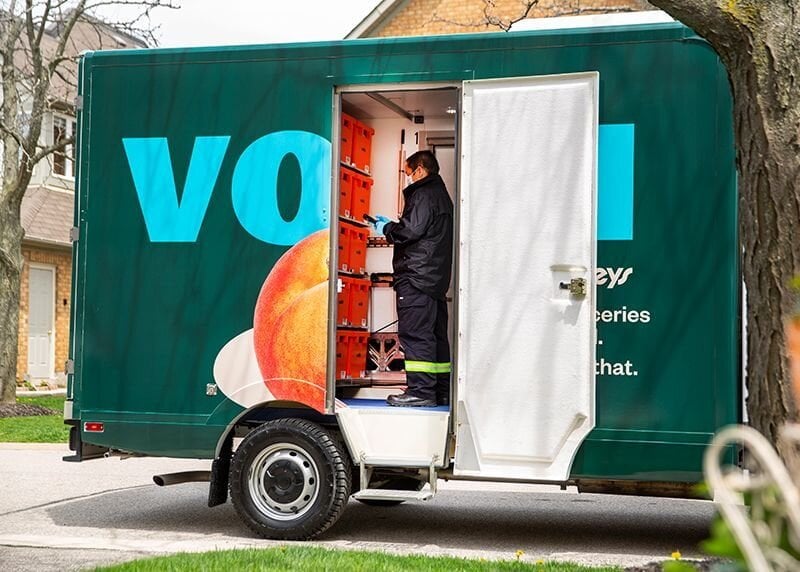
VOILA BY SOBEYS HOME DELIVERY SYSTEM. PHOTO: SOBEYS

At Sobeys, the health and welfare of Canadians has always been the company’s top priority. For more than 110 years, the Stellarton, Nova Scotia-based grocer has been taking care of the needs of its customers through its offering of fresh, quality products and the provision of exceptional food and grocery retail experiences. The company describes itself as a “family nurturing families” and says that the collective passion and mission of those working for Sobeys is to “nurture the things that make life better, including great experiences, families, communities and the lives of our employees”. Operating under its numerous banners in more than 1,500 stores that are located in all 10 provinces across the country, Empire manages to successfully achieve its mission. And, with the announcement in June of the launch of its online grocery delivery service, Voilà by Sobeys, Empire seems to have elevated its commitment to Canadians even further.

The service, which officially rolled out at the end of June with an initial availability throughout the Greater Toronto Area, delivering anywhere between Hamilton and Oshawa, is powered by Ocado Group which provides industry-leading technology e-commerce and warehouse robotics technology. Ocado provides Voilà by Sobeys with an end-to-end online grocery platform that satisfies every step of the online shopping journey, from click to delivery and all touchpoints in between. The service comes after a little more than a couple of years of development, and perhaps at just the right time, too.

In a Time of Need

Intended to meet a modestly growing appetite among Canadians for food home delivery services, its introduction to the market occurs at a time of unprecedented growth in the grocery e-commerce space, growth that has been spurred on by a sudden increased demand by Canadian consumers as a result of the impacts of the COVID-19 global pandemic. Voilà helps Sobeys meet this demand. But, more than that, as Julie Filion, Head of Marketing for Voilà, points out, the very nature of the e-commerce model that the company has introduced distinguishes its offering from those of its competitors, enabling it to provide freshness, quality and accuracy, all while addressing the health concerns of Canadians during this difficult pandemic period.

“What sets our service apart from others being offered in the market is the fact that we use an automated robotic warehouse to pick and assemble e-commerce orders,” she explains. “Because the product is centralized, it allows full visibility into our inventory, meaning that customers can be assured that what they see on the Voilà website is actually in stock, as opposed to the challenges that are evident in some of the other business models being deployed. We also use our own temperature-controlled vehicles, which allows us to guarantee our product from a food safety standpoint. From the warehouse to the customer’s door, the frozen products stay frozen and the refrigerated products remain at an optimal temperature. The incredible amount of control that the model provides us from these perspectives enables great experiences for the Voilà customer.”

State of the Art Automation

The fulfillment centre, located just north of Toronto in Vaughan, Ontario, was constructed as part of Sobeys’ partnership with Ocado, announced in 2018, making it the exclusive Canadian partner of Ocado. The technology that Ocado brings to the Voilà operation is impressive, which includes front-end website functionality and mobile ordering capabilities; last-mile routing management technology for the temperature-controlled delivery vans; as well as a number of additional customer service tools. And, perhaps most impressive is the level of sophisticated automation involved, allowing Sobeys to leverage Ocado’s grid and the power of robotics. In addition to the remarkable control that the centralization of product allows Sobeys with respect to food safety standards and inventory, the robots, according to Filion, make the entire food delivery service incredibly seamless for the customer.

“It takes the robots in our warehouse an average of about five minutes to pick and pack a single grocery order,” she explains. “It’s a highly efficient way of executing on grocery delivery without the need to compromise on quality or freshness. And because we’re constantly doing control checks on all of the inventory in our warehouse and on orders before they leave the facility, Voilà customers are assured that the product they receive is of consistently high quality and standard. The technology allows us the ability to offer a fully integrated solution that supports and enables a best in class online grocery experience for our customers.”

Filion explains further that it has been a commitment of Sobeys for a very long time to provide a better way for Canadians to shop online. And she believes that the variety and assortment available through Voilà’s service is yet another way in which it provides a more than solid foundation to realize its long held commitment to its customers. By placing an order of at least $50, plus a delivery fee of $7.99, customers can select from an assortment of somewhere in the region of 15,000 products, including fresh meat and produce, the full line of the grocer’s private label brand, Compliments, and an array of products to satisfy just about any wellness, baby and pet need. In addition, items from the company’s Farm Boy offering, as well as a wide range of health, wellness and beauty products from Well.ca, are available through Voilà, making it the first home delivery service to offer these products online. Delivery is available seven days a week, from 6 a.m. to 10 p.m.

Addressing Concerns Around Safety

In addition to the efficiency, quality, and scope of the Voilà offering, the company is also putting measures and protocols in place at its fulfillment centre, implementations that are meant to address public health concerns related to the spread of COVID-19 and to ensure Canadians a safe grocery home delivery option. To this end, Filion says that Voilà is doing everything it can by conducting robust and frequent cleaning and sanitization of its warehouse and delivery vehicles; reinforcing the company’s already-high hygiene and sanitization standards for all its teammates; equipping all Voilà teammates with gloves and masks, and all delivery vans with sanitizer and cleaning supplies, in addition to adhering to already prescribed physical distancing practices and protocols. These are measures that Filion says are necessary to provide Canadians with the best, most assured, grocery home delivery service during this challenging time. And they are measures and adjustments that the company continues to make ongoing as our public health situation and customer demand for the service continues to evolve.

“We’ve made it a focus to make sure that we’re providing an extremely safe shopping experience for the Voilà customer as well as for our employees and delivery teammates,” she says confidently. “We follow all of the safety guidelines and standards recommended by our public health agencies, including contactless delivery to the customer’s door. COVID-19 has affected all of us. It has affected the way we do things. And that includes our behaviour as consumers. What we have found throughout 2020 is that Canadians are not only craving the ease and convenience presented by grocery home delivery, but they are also seeking the most reliable and safe service as well. We think Voilà meets all of those needs, and more.”

Delivery Model of the Future?

As part of the Voilà service, Sobeys is also piloting its curbside pickup option at three locations in Nova Scotia as it ramps up its grocery options for customers. And it feels so strongly about the viability and consumer appetite for the Voilà model of automated grocery home delivery that it’s already started development of its second fulfillment centre. Located in Pointe-Claire, Montreal, Voilà par IGA will serve the areas between Montreal and Ottawa with an estimated launch date still pending. And, according to Filion, it’s really just the beginning for Sobeys’ newly launched e-commerce offering.

“Although the Voilà service is fulfilling a very specific need for customers today, the efficiency and quality that it offers will drive lifelong behaviour changes when it comes to how people shop for groceries. We’re really confident in the model we’re using and want to be able to eventually roll this kind of service out to Canadians across the country in order to improve their online grocery experiences, satisfying their needs and making their lives better. Sobeys is a company that has always put family and the health of its customers first. Through Voilà, we have the opportunity to reinforce all of the company’s brand values and everything it stands for in a really powerful way.”

Racism in Hiring: Why “No Canadian Experience” is Unacceptable [Opinion]

A business series set in various locations in a modern workspace office building.

By Suzanne Sears, Best Retail Careers International Inc.

If we want to make meaningful change in ending racism in the workforce, we are forced to look at the unspoken, but nonetheless prevalent, racism in hiring and discrimination against newcomers to Canada.

As a Recruiter, I am often challenged with the issue of not being able to submit resumes for ‘New Canadians’ to employers, regardless of how extensive or relevant their education and experience is. I have found myself needing to argue with Human Resource professions as to why they should at least give new Canadians an interview.

As a blanket requirement, demanding Canadian experience is discriminatory and illegal under the Ontario Human Rights Code as well as other national legislation.

THE ONTARIO GOVERNMENT SPELLS OUT HIRING GUIDELINES CLEARLY

“Some employers may mistakenly believe that the only way for a job applicant to show that they “have what it takes” to be effective or “fit” in a Canadian workplace is to show that they already have experience working in Canada. These employers may think that a Canadian experience requirement can be used as a short-cut, or a proxy, to measure a person’s competence and skills. “Even where employers and regulatory bodies may be acting in good faith, a candidate’s Canadian experience, or lack thereof, is not a reliable way to assess a person’s skills or abilities. And, imposing requirements of this nature may contravene the Code. A requirement for Canadian experience, even when implemented in good faith, can be a barrier in recruiting, selecting, hiring or accrediting, and may result in discrimination.”

Human Resource leaders have the ability to right many of the wrongs regarding racism in the Canadian work field, starting by granting interviews to new Canadians. We are all familiar with the stories of fully qualified teachers, engineers, doctors, marketing professionals, financial analysts, etc., who are driving buses or taxis for no other reason other than the lack of Canadian credentials or experience. Credentials may take years to acquire, but Canadian “experience” may be impossible to achieve if no firm will hire newcomers in their speciality at their previous levels.

“In some cases, requiring applicants to have Canadian experience may be disguised discrimination, and a way to screen out newcomers from the hiring process.” – Ontario Human Rights Code

BEST RETAIL CAREERS

This lack of Canadian experience issue seems to be applied to more racialized populations rather than to white European newcomers. Experience gained in Britain, France, Germany, etc., is less often discounted as “irrelevant” to Canada than similar experience in India, Iran, Iraq, or the Philippines, for example. With education and experience nearly identical, a conclusion can be drawn that points to the ethnicity of the candidate.

80% of all immigrants come to Canada with post-secondary educations. That level continues to rise every year, yet their unemployment rate is nearly double that of native-born Canadians. Aboriginal people suffer about 5% higher unemployment rates than the rest of Canadians, but it is often attributed to the lack of jobs in the places they live. Whether this is entirely true or not is debatable.

The unemployment rate for immigrants of less than 5 years residency was 9.5% in 2019, while for Canadian born it was 5.7%. The total percentage of immigrants in the population is 5.9%, yet the unemployment rate for them, even 5 years of Canadian residency, was nearly double the rate for native Canadians.

Racism in the workplace is a constant and real battle for visible minorities.

“…the rule or standard itself must be as inclusive as possible of individual differences, rather than maintaining discriminatory standards with accommodation for those people who cannot meet them. Even then, there may still be a need to accommodate individual differences up to the point of undue hardship. This ensures that each person is assessed according to his or her own personal abilities instead of being judged against presumed group characteristics.” – Ontario Human Rights Code

This would mean assessing people on an individual basis, and would include considering non-Canadian experience and other qualifications. Candidates should be assessed on an individual basis rather than being screened out based on general rules.

All prior work experience should be assessed, regardless of where it was obtained. Employers should seek job-related qualifications — for example, the ability to plan a project and complete it to required timelines, or the ability to show familiarity with Canadian laws, industry norms or standards. Candidates should be given the opportunity to establish relevant skills and experience in a variety of ways. The essential question is, are they qualified to do the job?

Job ads, for example, should state clearly the specific skills and work experience that are required for each of the duties associated with the position, and job requirements must be related to the position.

While most Human Rights tribunals make it perfectly clear that an applicant should have a fair chance at every job, what they cannot mandate is employers accepting applications and interviewing new Canadians or other racial groups.

In some cases a person’s name is a giveaway to their nationality. My tests as a Recruiter have shown that submitting a resume with a “foreign” name vs. without has a definite impact on the number of interviews granted for that candidate.

Many do not realize that the only legitimate question when hiring is, “are you eligible to work in Canada” No other nationality based question is legal.

Human Resource leaders have a duty to not only ensure that new Canadian workers obtain an interview, but also receive a fair chance at being hired. It is up to Human Resource leaders to enforce the legal standards, and ensure compliance of provincial and Canadian Human Rights Codes. It’s not enough to have the policy anymore. Thorough training and hiring managers to report on progress and accountability for eliminating racism in your organization is now recommended.

ACTIONS SPEAK LOUDER THAN WORDS

  1. Remove Name Bias: Applicant tracking systems (ATS) should be blind. They do not need a candidates name. No name required, and assign each candidate a number before you make contact automatically after they submitted your applicant form;
  2. Remove Address Bias: ATS systems do not require candidate addresses prior to hiring: eliminate this entirely;
  3. Remove Brand Bias: Brand bias is a huge part of racial bias in hiring. Those who do or have worked for big North American brands are far more likely to receive an interview than those who did not. Most interviewers feel it is critical to know the “brand” a candidate worked for prior to outreach. A “black out” of the name of corporation prior to reviewing the skill stack should be the initial application, specific work experience can be covered in the interview;
  4. Remove Educational Bias: It is not essential to know which school a candidate attended, or which year they graduated. Eliminate the space for the school name and date they attended. The school name can indicate North American experience vs. foreign; and the date requirement creates an age bias. All that is required is the credentials acquired (eg. Masters Degree);
  5. Remove Skill Lists: Instead of vague job descriptions that list things like “able to inspire teams”, “able to multitask”, the skill stack should be specific — intermediate level of excel, able to lead up to 50 people, etc;
  6. Stop defining jobs by arbitrary experience levels such as 3 years of this, 10 years of that. Adopt consistent standards — entry level, junior, intermediate, and senior. This is not necessarily a racist issue specifically, but it is also a huge part of discrimination overall for candidates;
  7. Ensure ATS forms only permit jobs that go back no more than 10 years;
  8. Remove all references to citizenship status and replace with: “Are you eligible to work in Canada?”

According to the Toronto Census profile for 2019, out of 6.2 million people in the Greater Toronto Area (GTA), 49% are visible minorities. Bottom line: If you want the best candidates, you can no longer afford to ignore 49% of the potential talent pool. As Canada continues to become increasingly multicultural with 300,000 immigrants arriving annually, considering out-of-country experience will be crucial.

My firm, Best Retail Careers International, launched a recruit-by-membership program to help the industry retain the best talent. For luxury retailers, we also launched Luxury Careers Canada which is working with the top brands and retailers, and features a job board with available positions. We have access to over 50,000 potential candidates directly and even more through word-of-mouth.

Uniqlo Opens Massive Downtown Montreal Flagship as it Enters the Quebec Market [Photos]

EXTERIOR OF NEW UNIQLO STORE IN THE OVERHAULED MONTREAL EATON CENTRE. PHOTO: MAXIME FRECHETTE

Japanese fashion retailer Uniqlo has opened its first Montreal store, and it’s impressive. It is the largest Uniqlo store in Canada and features several firsts in this country. The store is hoped to give an injection into downtown Montreal’s retail which has struggled due to the COVID-19 pandemic as well as because of extensive construction to revitalize Ste-Catherine Street West.

Located at the recently overhauled Montreal Eaton Centre, the Uniqlo flagship spans more than 40,000 square feet over two levels with about 32,000 square feet dedicated to retail space. The store also features a children’s reading area with curated books from local Montreal bookstores and a collaborative pop-up space which will initially feature a flower shop display where customers can shop from Montreal floral design studio, Bell Jar Botanicals, until November 15th.

MONTREAL’S UNIQLO STORE IS FIRST CANADIAN STORE WITH STREET-FACING ENTRANCE

It is the first Uniqlo store in Canada to feature a street-facing entrance, with the store’s facade facing both onto Ste-Catherine Street as well as Boulevard Robert-Bourassa. In total, the store has five access points — two from the street, one from the main level of the Montreal Eaton Centre, one on the second, and an entrance from within the Time Out food hall.

The Montreal Uniqlo store features an expansive range of apparel for men, women, and children. The store also features a small selection of home goods including bedding which isn’t available at other Uniqlo stores in Canada. The Montreal store is the second in Canada to feature at UT department featuring graphic printed t-shirts that often sell-out quickly.

The store also has something of an eco-focus including RE.UNIQLO, an initiative to recycle used garments and redistribute to those in need.

“We are excited to welcome Montrealers to our new store, to not only enjoy our high quality and functional LifeWear apparel, but to also experience community collaborated areas that are exclusive to this UNIQLO store and not in any of our other stores in Canada,” said Yuichiro Kaneko, CEO of UNIQLO Canada. “With a continuous demand for UNIQLO from our customers, we are delighted to make LifeWear more accessible to Canadians as we continue adapting to new lifestyles.”

The LifeWear line is described as meeting “the needs of everyone’s daily lifestyles to make their everyday life better and more comfortable. Whether that is to protect you against a cold winter wind, keep you dry on a rainy day or to look smart for an important occasion, LifeWear is simple, high-quality, everyday clothing with a practical sense of beauty that is always evolving. LifeWear is available in a variety of colours and styles for people of all ages.”

Because of the COVID-19 pandemic Uniqlo has implemented health and safety protection measures including physical distancing while shopping, frequent cleaning of high-traffic areas in front and back of house, hand-sanitizing stations which are located at the entrance of the store and at cash registers, and acrylic barriers at checkout counters and fitting room counters. All staff have their temperatures taken daily and are required to wear personal protective equipment. All customers are also required to wear a face coverings and to have temperatures taken before entering the store as well — this now appears to be a practice at all Uniqlo stores in Canada.

NEW UNIQLO STORE SET TO INJECT SOME LIFE INTO DOWNTOWN MONTREAL AFTER COVID-19 PANDEMIC

It is hoped that Uniqlo will give a needed injection to downtown Montreal, which has seen retail sales plummet amid the pandemic as well as construction to Ste-Catherine Street. Driving downtown and parking is said to be challenging and some businesses are saying that business is down as much as 90%. A report by the Urban Development Institute of Quebec on Thursday of last week noted that 26% of downtown Montreal’s businesses have closed temporarily or permanently, and that number could grow. Montreal is planning on offering free weekend parking downtown for the rest of the year to bring shoppers back at a critical time, especially given that construction in downtown Montreal is expected to be ongoing for years.

EXTERIOR OF NEW UNIQLO STORE IN THE OVERHAULED MONTREAL EATON CENTRE. PHOTO: MAXIME FRECHETTE

The Montreal Eaton Centre has seen an overhaul that includes a new Time Out Market food hall as well as new Samsung, Sephora, Pandora, and Ernest storefronts among others. Browns Shoes will open a two-level B2 flagship at Montreal Eaton Centre next year. The first downtown Decathlon store in Canada opened at Montreal Eaton Centre in the fall of 2019.

Uniqlo has been expanding its Canadian operations since its first store opened almost four years ago in Toronto. Jeff Berkowitz of Aurora Realty Consultants represents Uniqlo as broker in Canada and he negotiated all of Uniqlo’s store leases in Canada.

In September of 2016, Uniqlo’s first store in Canada opened at CF Toronto Eaton Centre in Toronto. The store spans nearly 33,000 square feet over two floors. Last year the store added a 4,500-square-foot mezzanine space to house a first-in-Canada ’UT’ shop-in-store to showcase the retailer’s graphic t-shirt collection.

A second Uniqlo store opened in October of 2016 at Toronto’s Yorkdale Shopping Centre, also considered to be a flagship store in terms of size and presence with more than 30,000 square feet over two levels. Following that opening, Uniqlo began to expand further into the Greater Toronto Area as well as into the Vancouver market for the first time.

The Greater Toronto area is now home to Uniqlo stores in Oshawa Centre east of Toronto, Upper Canada Mall in Newmarket, CF Markville in Markham, Square One in Mississauga, Vaughan Mills near Toronto. Last fall a pop-up opened at First Canadian Place in Toronto’s Financial District which has been decimated due to the COVID-19 pandemic.

In British Columbia, Uniqlo’s first store  opened in October of 2017 at Metropolis at Metrotown in Burnaby, in a 20,630-square-foot, two-level space. That was followed by the opening of a 17,900-square-foot location at Guildford Town Centre in Surrey in March of 2018, and then stores at CF Richmond Centre in Richmond and Coquitlam Centre in Coquitlam.

Uniqlo is noticeably absent from downtown Vancouver and a location is expected to be announced when a lease is finalized. Some have speculated that Uniqlo could replace the Victoria’s Secret flagship store at the north-east corner of Robson and Burrard Streets.

Uniqlo expanded beyond the Toronto and Vancouver markets in the fall of 2019 when it opened its first store in Alberta at West Edmonton Mall in Edmonton. More stores in the Edmonton and Calgary markets are expected with Calgary’s CF Chinook Centre expected to be a prime target, among others.

The Montreal area is Uniqlo’s fourth major market to see Canadian stores which could eventually number in the dozens if all goes as planned. Sources say that the next location for Uniqlo in Quebec will be at the CF Carrefour Laval shopping centre near Montreal.

Quebec City’s 1st Suburban Mall Marks 60 Years with Plans for Mixed-Use Development

ENTRANCE TO LES GALERIES DE LA CANARDIERE. PHOTO: ECONO-MALLS

Les Galeries de la Canardière, considered to be Quebec City’s first shopping centre, celebrated its 60th anniversary on October 1, and it has big plans for the future.

Natacha Menard, Director of Leasing for the shopping centre, which is owned by a limited partnership and managed by Econo-Malls, said it has embarked on a mixed-use redevelopment with the first phase of the project being a 126-unit residential rental building with some commercial space on the first floor. That project will begin this coming spring.

LES GALERIES DE LA CANARDIERE IS LOCATED IN AN AREA CONDUCIVE FOR A MIXED-USE DEVELOPMENT

Menard said Econo-Malls has been working with a residential developer on the redevelopment project for Les Galeries de la Canardiere, adding that the shopping centre is located in an area conducive to mixed-use development as the area was rezoned to high density by the City.

“We now see all around the site, many office buildings and housing units that were constructed in recent years. These developments and the City’s vision for the area will result in significant pedestrian traffic to the centre. Mixed-use developments are the way of the future. It’s a place where people can live, work, and play, all in one location,” said Menard.

“That’s what the City wants. Lots of density in that area.”

CLICK FOR INTERACTIVE MAP OF LES GALERIES DE LA CANARDIÈRE

Les Galeries de la Canardiere located in the heart of the Ecoquartier D’Estimauville is home to many retailers, restaurants, recreational, and other services catering to the needs of its community. These include, A&W, Subway, Pizza Charest, Lunnetterie Visque, rock climbing centre Delire, Econofitness, Dollarama, Bijouterie Suisse, Pharmacy Lavoie, and many more. The shopping centre is 178,560 square feet.

Menard said the pharmacy is currently undergoing an interior and exterior renovation.

“Right now we’re trying to market for lease the spaces that are available. We’re trying to market it towards more services given that the area is very residentially dense. So we feel that services would be essential for this community,” she said.

“We’re hoping to attract some nationals here and we’re hoping to attract people that want to do services. All kinds of services — medical clinics would really be good here. We’re a community mall. We service the local community.”

According to the shopping centre’s website, the Galeries de la Canardière are historically the first shopping centre in Quebec City.

“The urban development of the years 1910-1920 led to the construction of houses in what would become the parish of Saint-Pascal Bylon and the constitution of Giffard as a municipality. However, the subdivision of the land located opposite the Saint-Michel-Archange hospital — planned as early as 1913 — is slow. In the 1950s, the growth of the surrounding neighbourhoods made this central site a favourable place for services and shops. It must be said that the site is vacant and located at the centre of a large and growing population basin,” it said.

“Also, when in 1956 the municipal administration changed the zoning of the place to allow businesses and the establishment of a “shopping centre”, the Association des merchants retailers of the district of Quebec saw a evil eye this new competition. Although the new zoning is adopted quickly, the project takes time to get started. Finally, in 1959, the building permit for a shopping centre worth $ 1.5 million was granted and work began in the winter of 1960.

“In May 1960, an important part of the structure of Des Galeries de la Canardière was erected. This is the first shopping centre in Quebec City and the second in the region, Place Sainte-Foy which opened in 1958. On September 29, 1960, the shops at the Canardière Shopping Centre , as it was then called, welcome their first customers. Inspired by what is done in the United States, its functional and open architecture allows quick and direct access to the businesses that are part of it.”

Le Chateau Shutting Operations After CCAA Filing

Le Chateau storefront at Square One Shopping Centre - Photo by Square One

Another Canadian retailer will be shutting down this year following the COVID-19 pandemic store closures in the spring. Montreal-based Le Chateau will shut its operations which includes 123 storefronts in Canada as well as an e-commerce site. 

The 60 year old retailer says that it spent much of the pandemic trying to refinance or sell the business which was ultimately unsuccessful. “Its already evident impact on consumer demand for Le Chateau’s holiday party and occasion wear, which represents the core of our offering, has diminished Le Chateau’s ability to pursue its activities,” the company said.

“Regrettably, these circumstances leave the company with no option other than to commence the liquidation process.” 

LE CHÂTEAU. SINCE 1959. PHOTO: LE CHÂTEAU (ABOUT US)

Le Chateau’s application for protection from its creditors under the Companies’ Creditors Arrangement Act (CCAA) was being heard by a Quebec court on Friday.

The retailer said in a statement that the pandemic has had an “evident impact on consumer demand for Le Château’s holiday party and occasion wear, which represents the core of our offering [and] has diminished Le Château’s ability to pursue its activities.”

While Le Chateau liquidates its 123 stores, the company will remain fully operational. The eventual closure will result in the loss of about 1400 jobs with 900 of those in the stores and an additional 500 positions at Le Chateau’s head office. 

LE CHÂTEAU TEAM MEMBERS. PHOTO: LE CHÂTEAU WEBSITE (LE CHÂTEAU CULTURE PAGE)

“We regret the impact this will have on our people and can assure you that we explored all options available to us prior to taking this difficult decision,” the company said.

Le Chateau was scheduled to have its annual general meeting on Thursday and it was cancelled two days prior without explanation beyond saying that the company “will provide further updates in due course”. Industry insiders this week immediately speculated that a filing would follow.

Over the three-month period up until July 25, Le Château only sold $14.7 million in its stores and online — down almost $50 million from the same time last year. As of July 2020, Le Chateau says it had about $118 million in assets and $201 million worth of liabilities.

Gordon Brothers and Merchant Retail Solutions are to be appointed as consultants to implement the liquidation. PricewaterhouseCooper Inc. will become its monitor in the CCAA proceedings. If the application is granted, Le Chateau will obtain interim financing from Wells Fargo Canada to maintain operations for the short-term during liquidation.

Le Chateau’s exit from malls will create further headaches for landlords who are already grappling with vacancies following other store closures. A research document provided to Retail Insider shows that Le Chateau had more than 700,000 square feet of retail space in Canada. The largest Le Chateau location is at the CrossIron Mills shopping centre near Calgary, spanning 8,842 square feet. The top selling unit was said to have been at West Edmonton Mall prior to the pandemic, with sales surpassing $1,000 per square foot for the 5,680 square foot space in the mall’s ‘Phase 3’.

This week we also reported that Calgary-based swimwear brand Swimco had shut its 25 Canadian stores after an attempted restructuring in the summer. About 30 other retail chains in Canada, as well as countless independent retailers have also filed for creditor protection and in some cases have shut down entirely. Experts expect more retailers to file for bankruptcy protection in the coming weeks and months as retail spending in some segments slow amid a second wave of the COVID-19 pandemic. In early 2021 it is expected that more stores and other businesses in Canada will close than at any time in history, including some household names looking to rightsize operations.

Le Chateau was founded in 1959 in Montreal by Herschel Segal as a menswear store. In 1962 womenswear was added including European fashions from places such as Carnaby Street in London. It was the first to introduce bell bottoms to Canada and in its early years was considered to be a trendsetter. The company’s IPO on the Toronto Stock Exchange was in 1983. The company had closed about half of its stores since 2015. Last quarter saw the company turn its first profit in about 13 years. Last year we reported that Le Chateau had planned to expand into the United States through a new e-commerce site. 

Herschel Segal’s cousin David Segal founded David’s Tea which this year filed for creditor protection and closed all but 18 stores. Herschel’s daughter Sarah Segal is the founder of Squish Candy which has also restructured with only a handful of locations remaining.