Advertisement
Home Blog Page 1046

Union Station Unveils Impressive Food Court as Part of Multi-Year Mega-Development

‘VIDEO CUBE’ AT THE CENTRE OF THE NEW FOOD COURT. PHOTO: CRAIG PATTERSON

The busiest transit hub in Canada, Union Station in Toronto, is undergoing a multi-year overhaul that is adding commercial uses to the historic property. The latest phase to be unveiled is Union Station’s new food court, featuring 10 new tenants in a dramatic 25,000 square foot space featuring unique ceiling orbs and ample digital signage.

The Union Station Food Court was made possible by excavating below the water level to create a space featuring high ceilings, including a central area visible from Union Station’s concourse level. The excavation has created space for two new transit concourses as well as a new lower-level retail concourse, and the food court is the first part of this level to become available to the public.

Two escalators provide access down to the food courts from the GO York Concourse as well as the York West Teamway which will make the food court busy at various times of the day — more than 300,000 people pass through Union Station daily, making it twice as busy as Toronto’s Pearson International Airport.

Escalators leading from the concourse to the new food court. Photo Craig Patterson

“The Union Food Court is the latest of  multiple retail offerings we have brought to Union this year”, said Lawrence Zucker, President and CEO of Osmington, Union Station’s retail developer. “Together with our full-service restaurants, independent retailers and ongoing free programming throughout the Station, we invite visitors and residents to come down to experience the new Union.”

Seating capacity for the Union Station Food Court is 600 and the new food retailers include the following:

  • Bangkok Buri
  • Loaded Pierogi

  • McDonald’s 
  • Paramount Fine Foods
  • Pizza Pizza

  • Roywoods
  • Scaccia

  • Shanghai 360
  • Sushi Shop
  • Tim Hortons

Design firms DIALOG, in collaboration with PARTISANS and retail design consultants GH+A, were responsible for designing the space.

Digital signage for each tenant adds a dynamic element to the new dining floor and other digital signage is found throughout, including a large four-screen ‘cube’ at the centre that can be utilized to broadcast everything from brand messaging to live-streaming major events. Lighting throughout can be manipulated depending on theme — the colour blue might be used for a Toronto Maple Leafs game, and green for St. Patrick’s Day, for example.

As well, the space features speakers throughout to play music, and there’s an on-site Toronto Public Library kiosk.

Immediately to the east of the new food court will be a market food hall that will open next year, spanning about 50,000 square feet. To quote the Union Station website: “Heading home and don’t know what to eat tonight? Thinly sliced charcuterie, farm-fresh veg, crispy baguette, and a bottle of Ontario pinot noir are begging to be brought home and served up.” When open, Union Station will become a foodie destination for the city and over the past year as well, the complex has added several new full-service restaurants to the mix.

Opening soon as well will be beer hall/sausage concept WVRST, in the adjacent York Street Promenade near a set of escalators leading down to the food court.

Union Station’s multi-year revitalization is being led by the City of Toronto, and the massive project involves both restoring heritage elements as well as transforming the station into a major multi-use destination. The revitalization is an $800-million City initiative supported by investments of $164 million from the Government of Canada and $172 million from the Government of Ontario. In 2009, Osmington (Union Station) Inc., a subsidiary of Osmington Inc., entered into an agreement with the City of Toronto to become the retail developer of Union Station with a 75-year head lease.

The Union Station Food Court, as well as other dining and retail options, will serve commuters as well as the rapidly growing neighbourhood surrounding Union Station. Some new towers east of Yonge Street will be nearly 100 storeys tall, in an area that will only get busier as everything comes together. 

Over the past several years, Union Station has been under construction — the heritage complex is being restored, and retail is being added in order to serve the busy area. The ”Front Street Promenade” is considered to be Union Station’s ‘main street’ as tenants are skewed towards local retailers. The goal is to convey to visitors to the station a ‘sense of Toronto’ at Union, reflecting unique offerings throughout the city.  Several retail spaces in the Front Street Promenade were unveiled in early 2018, housing an innovative grouping of local retailers and restaurants. Included are tenants such as Danish Pastry HouseNaked Beauty BarPeace CollectivePilot Coffee, and CXBO Chocolate. More recently, Union Station’s Front Street Promenade added tenants including Forno CulturaGreenhouse JuiceCalii Love, and The Detox Market. A 300-square foot pop-up space houses various tenants — in September, Louis Vuitton hosted a pop-up in conjunction with an exhibit outside of Union Station facing Front Street.

Being a busy commuter hub, restaurants are also being added — Amano and Union Chicken both opened last December in the “York Street Promenade”, as well, and both are already packed daily, particularly for lunch time.  

Union Station is a remarkable transit hub, serving 300,000 weekday passengers via commuter Metrolinx’s GO Trains, GO busses, and UP Express to Pearson Airport, as well as a busy TTC subway station, VIA Rail, and the PATH (indoor walkway system connecting buildings). The Air Canada Centre sports facility is connected to Union Station to the south, serving fans of hockey, basketball, and various musical and entertainment-related performances and events. 

Union Station already gets more than 63 million annual visitors — that’s 13 million more than CF Toronto Eaton Centre, which is considered to be North America’s busiest shopping centre. With a significantly projected increase in employment and residents in the area, Union Station’s visitor numbers are expected to spike even more. 

Office towers employing thousands surround Union Station and during rush hour, the area is densely packed (as is the case for game nights, as well). The Toronto Convention Centre is nearby as is the CN Tower, Ripley’s Aquarium and various other attractions — in many respects, Union Station is a significant city destination and it will be getting considerably busier as more office buildings are built nearby, more people utilize public transit, and thousands more people move into the area, which has gone from being sleepy to vibrant in less than a decade. 

A forest of skyscrapers is sprouting up south of Union Station as well as east of Yonge Street. Many of the new neighbourhoods will be connected directly to Union Station via the city’s indoor pedestrian PATH system, and Union Station anticipates becoming something of a neighbourhood retail and social hub for those living nearby. Already, thousands have moved into new condominium towers in the adjacent South Core area, with thousands more workers housed in new office towers that have been sprouting up in the area.

One significant project that is expected to bring between 15,000 and 20,000 more employees into Toronto’s downtown core is the new CIBC Square, being developed by Ivanhoé Cambridge. There will be two towers: a tower at 81 Bay Street will be completed in 2020 along with a new park, and a second tower is set to be completed by 2023.

Union Station’s updated ‘Bay Street Promenade’ will eventually house more national retailers. Given its positioning on Bay Street, this part of Union Station will feature ‘more popular’ brands — the reasoning is that more commuters will be time pressed passing through this area, giving them less time to explore and discover the local brands housed elsewhere in Union Station.

The Great Hall, considered to be one of Canada’s most iconic ‘urban rooms’, will act as an anchor to the centre — at the corner of Front Street and Bay Streets will be a signature restaurant, boasting a contemporary interior and a heritage facade.

The multi-phase, multi-year Union Station transformation will ultimately end up anchoring one of the most vibrant urban areas in North America, as Toronto’s Central Business District solidifies its position as a world-class centre. More phases are planned at Union Station, and we’ll be following up and reporting on new developments periodically. 

IQOS Unveils Flagship that Isn’t Allowed to have Storefront Signage [Photos]

Peter Luongo - IQOS

It’s a store with no name but Rothman, Benson and Hedges Inc. has launched a flagship outlet in the West Edmonton Mall dedicated to help people quit smoking with its IQOS product.

Because of Health Canada regulations, the brand can’t be identified in store signage. The store, which is the fifth location in Canada, opened on Black Friday and it is the company’s first in an enclosed mall.

The Heat-not-Burn technology of IQOS is being sold in the 2,000-square-foot retail space. The tobacco products are developed in Switzerland and supported by category-leading science and technology, offering current adult smokers a smoke-free alternative to conventional cigarettes.  

Peter Luongo, the Managing Director of Rothmans, Benson & Hedges, the Canadian subsidiary of Philip Morris International, said the Edmonton store is the first time the company is deploying the global execution of the store brand.

“So in terms of the look and feel of the store, the product assortment that’s available, it’s very different from what we’ve done to date in Canada,” he said.

The company currently has standalone streetfront locations in Toronto, with two stores, and one each in Vancouver and Calgary. The Edmonton store’s footprint is more than double the size of the other Canadian stores.

“We think it’s very helpful to have something that’s easily accessible for people where adult smokers will be able to find and access and learn more about,” said Luongo about the West Edmonton Mall store.

“I think we can continue to expand our footprint. One of the reasons we wanted to try in the West Edmonton Mall was to see how much more successful we can be if we’re in a high traffic location like West Edmonton Mall. I see opportunities for a number of additional stores, particularly to cover effectively the larger cities. We want to have it convenient for people to not only find and buy the device but also to get service if they have any issues with the device and to really provide a good experience for someone that they’ll only get in a retail environment.”

The on-going expansion is part of Philip Morris International’s goal to replace cigarettes with smoke-free products.

The company says that globally about 70 to 90 per cent of people who buy  IQOS use it exclusively or predominantly. PMI has invested over $4.5  billion US on research, development, and production to ensure adult smokers have better options.

It estimates that approximately 5.9 million adult smokers around the world  have already stopped smoking and switched to PMI’s heated tobacco product.

“We were looking at a retail footprint in Edmonton. We didn’t have a real store here yet so we saw it as a good place to expand. We were able to work very well with the team at the West Edmonton Mall in terms of finding the right location, finding the space that worked for us. And we’re just very excited about the opportunity to do more in Edmonton as opposed to adding an additional store in a city where we already had some presence,” added Luongo.

Because of the Health Canada regulations, the company is currently trying to figure out the best way to rename the stores to comply with the rules but also to let smokers know that it has alternatives to cigarettes available in the store.

“We still have to figure out what that name is. For the time being, we have essentially a store with no name but there are ways to know that we’re here. If people go online to our IQOS.com website they can search for our store locations,” said Luongo.

“At the end of the day, with something’s that’s relatively new and doesn’t have a high level of awareness yet, word of mouth is much more important for us today than just having the brand name.”

IQOS is an electronic device that generates a nicotine-containing aerosol  by heating tobacco at controlled temperatures below 350 degrees Celsius where burning /combustion does not occur. What’s key is IQOS  heats  tobacco instead of burning it. There’s no smoke, no fire, no ash and less  smell.

“Many experts agree that nicotine, while addictive, is not the primary cause  of smoking-related diseases. IQOS is designed to be satisfying and  acceptable for smokers who want to use tobacco products,” said the company.

“A Heatstick or HEETS needs to be inserted into the device. Heatsticks contain tobacco, but are not cigarettes, they are made with a specially designed high-quality tobacco blend and are manufactured specifically for  IQOS. The user experience will typically last 6 minutes or 14  puffs.  IQOS  consists of three components: a pocket charger, a holder, and a heated tobacco unit. The holder is a battery-operated electronic system that heats  tobacco within a precisely controlled temperature range. This is achieved  via a heating blade, which acts as both a heater and a temperature sensor.  When the heated tobacco unit is inserted into the tobacco holder, the  heating blade is embedded in the tobacco. Once turned on, the heating  blade heats the tobacco to a maximum temperature of 350 degrees  Celsius. In its capacity as a temperature sensor, the heating blade ensures  that the temperature of the tobacco never exceeds this temperature.”

In the next few weeks, Luongo said, the company will be rolling out the next generations of the IQOS device. The new Edmonton store was built with those products in mind in how products are displayed and explained. 

Unique Fashion Brand ‘Kotn’ Opens 3rd Store as it Launches Expansion

Kotn Gastown (Image: Kotn)

Unique Toronto retailer, Kotn, which sells high-quality everyday wear made from authentic Egyptian cotton, has opened its third store with plans to continue growth into the United States and internationally.

With stores already in place in Toronto and New York City, the brand’s latest store is in Vancouver’s Gastown neighbourhood and all sales from Black Friday and Cyber Monday will go towards building two new schools in Egypt where the company sources its material.

“We do Black Friday a little bit differently,” said Rami Helali, CEO and co-founder of Kotn. “We don’t go on sale. We don’t do anything like that. But 100 per cent of sales, every single dollar we get in, we use to build more schools in the region where our farmers and the cotton is grown.”

Kotn Gastown (Image: Kotn)

The Vancouver store is located on Water Street in about 1,200 square feet. The Toronto (Queen Street West) store opened in March 2017 and the New York (SoHo district) store opened in August of this year.

The brand partners with Egyptian cotton farmers in the Nile River Delta to keep costs low while helping to revive a struggling agriculture business.

“We work directly with the farmers. In this region they’re all small farms. Family-owned farms . . . We work directly with these farmers. We provide subsidies in the form of fertilizers and agricultural consultants every year and guaranteed pricing. Through our work with the farmers we realized that we want to have a long-term impact on this community that’s 20 to 30 million people in the region that can have a profound difference in how this region and how the country and to larger scale the entire region future looks like,” said Helali.

Kotn Gastown (Image: Kotn)

“We had lots of conversations with the farmers and we realized that access to education was a big, big problem for their kids and to ensure there was no child labour on the fields and at the same time creating a better tomorrow. We decided to start this initiative a year and a half ago. So we’ve already built two schools – one of which was from last year’s Black Friday. And this year from Black Friday to Cyber Monday, 100 per cent of sales will go toward building two new schools in the Nile Delta where the cotton is grown.”

Helali said the company is looking to expand to more stores in 2019 both in Canada and the United States.

“For us it’s really about having an ongoing conversation, an ongoing connection with our customers, both digitally and physically. We have lots of customers that shop both online and in stores and it enables us to get product feedback and kind of improve and hear what our customers are looking for and what is really working for them,” said Helali.

Kotn Gastown (Image: Kotn)

“At the same time, it provides a community hub for us to kind of bring in parallel brands or experiences or people to hold workshops or events in the space and help us get integrated and closer to the communities that we’re in. Both Canada and the U.S. are in the pipeline right now.”

Helali said he couldn’t provide an exact number of stores that will be included in the expansion but the company is looking to do a “handful” of more stores in 2019 in combination with pop-ups.

“We actually will be taking steps to do a Middle Eastern expansion. I don’t mean there’s going to be physical, permanent stores right away in the Middle East but we’re going to be taking steps towards that market and that community there,” he said.

BENJAMIN SEHL, RAMI HELALI AND MACKENZIE YEATES. PHOTO: KOTN WEBSITE

“We’re telling an authentic story. It comes from a real passion of ours . . . We’re telling an authentic story. An authentic journey. I think people now want to make sure that what they’re consuming isn’t bad for the environment and the people that are making it. We’ve had the privilege of building this company from scratch.

“By working directly with all the partners in the supply chain, we’re able to offer a really high-quality product at a fraction of the price of our competitors. It’s kind of the combination of the ethics and the philosophy that goes in to the way everything is built.”

Kotn launched in Toronto in 2015 when founders Helali, Mackenzie Yeates and Benjamin Sehl noticed a gap in the marketplace – high-quality, well-fitting basics weren’t affordable for everyday wear.

Kotn opened their first school in 2017, providing education for 40 students. They have mandated that more than 50 per cent of the students are girls as the illiteracy rates are especially high for women in the region. Kotn funds the building of a school and its teachers.

Omni-Channel Retailers Experiencing Operational and Execution Challenges: Study

exc-5bea0916758d46bc0c0b5237


(Photo: Square one via Oxford Properties)(Photo: Square one via Oxford Properties)

(Photo: Square one via Oxford Properties)

By Mario Toneguzzi

Retailers are experiencing operational and execution challenges in their pursuit of ecommerce which have both disappointed consumers and increased costs to the retailers, according to a new report by HRC Retail Advisory.

The company’s Omni-Channel Inventory Management Study found that 80 per cent of study participants – senior executives at 30 North American retail chains – offer some omni-channel capabilities.

“Brick-and-mortar retailers have overextended themselves as they’ve tried to leverage their physical store fleets,” said Antony Karabus, CEO of HRC Retail Advisory. “E-commerce and omni-channel fulfillment and high e-commerce returns have led to sharply rising freight costs and product margin challenges.


HeroHR.JPGHeroHR.JPG


Prime+Hero.pngPrime+Hero.png

“Meanwhile, consumers expect ever faster delivery, pressuring retailers to meet those expectations to remain competitive. Very few retailers have formal scorecards to measure the performance and profitability of their omni-channel efforts, which often means they can’t effectively and rapidly take the corrective action needed to improve both customer service and profitability.”

For the most part, e-commerce sales by brick and mortar stores are transfers essentially from their brick and mortar locations.

“Brick and mortar sales, comp sales, are dropping one, two, three per cent and their online sales are going up 10 to 40 per cent, depending on the maturity of their e-commerce operation. Because online sales in Canada are still a very small percentage, typically high single digits, low double digits, so if you’re getting a 30 per cent increase in online sales it equates to a three per cent decline in brick and mortar sales,” said Karabus.

“For the vast majority of retailers, what’s happening is you’re getting significant increases in e-commerce sales and small ongoing declines in store level sales. And you’re ending up in about the same position you were before in total sales. It’s just a different composition. Slightly more weighted away from brick and mortar toward e-commerce. The result of that is it’s causing significant pressure on the retailer earnings because of the free shipping, free returns, the high cost of digital marketing and other costs to enable e-commerce capabilities.”


Photo:    Kate KiscoxPhoto:    Kate Kiscox

Photo: Kate Kiscox


Other key highlights from the study include:

●     Buy or reserve online, pick up in-store (BOPIS/ROPIS) is not consistently reliable, as systems often tell shoppers that an item is available in a specific store when the store does not actually have it in stock. In fact, 66 per cent of retailers said that the reliability of BOPIS/ROPIS is inconsistent due to retailer inventory inaccuracies. Due to the inventory accuracy issue, 84 per cent of retailers only reflect online that items are available in a store for BOPIS/ROPIS if the system shows that there are multiple units of the applicable item on hand for that store to minimize the risk of disappointing customers;

●     Inefficiencies in shipping online orders are causing delays, as 77 per cent of retailers ship primarily from e-commerce fulfillment centres instead of from local stores that may be closer to customers’ homes or offices, which would allow customers to receive their orders more quickly. These retailers only use local stores as a backup when the e-commerce fulfillment centre is out of stock, even though using store-level inventory is often a better option to fulfill customer orders more quickly and provides the dual benefit to the retailer of reducing overstocked inventory in those stores, which would avoid future markdowns for those items;

●     Nearly 70 per cent of retailers are not optimizing their customer order systems to prioritize filling the entire order from one location, causing split shipments and increasing freight costs. As a result, there is a higher likelihood of a customer receiving their order in multiple boxes, which creates both a negative consumer experience and higher freight costs for the retailer;

●     Almost 80 per cent of retailers are not effectively allocating inventory to local stores based on customer demand from that specific location.; and

●     Only 14 per cent of retailers surveyed are using predictive analytics, and most of these retailers are struggling to figure out how to integrate such analytics into operational processes. Most of these retailers are using predictive analytics to support decision-making in a narrow function, such as determining which store to fulfill an online order from or to enhance new product testing. A further 10 per cent of retailers had initiated the use of these tools but subsequently discontinued use of the technology due to operational/process challenges and unclear benefit cases. Only 14 per cent of retailers formally consider the work required to fulfill in-store omni-channel activities in staffing their stores.


Photo:    Kate KiscoxPhoto:    Kate Kiscox

Photo: Kate Kiscox


“Retailers have to find some way to fight back against Amazon and one of the best ways to fight back is omni-channel,” said Karabus, adding that the retail initiative is both a defensive mechanism as well as an offensive mechanism in the battle for the retail dollar.

“The key message for retailers is you have to do omni-channel at some point in the not-too-distant future otherwise known as click and collect. You have to be able to do it. But don’t rush into it. Plan properly. Plan carefully . . . It’s not easy but it’s going to be mandatory to fight against Amazon and to satisfy the new desires and expectations of consumers. You don’t have a choice. It’s a question of when not if.”

Having worked with numerous U.S. retailers, HRC Advisory has developed six key recommendations for retailers. Karabus said retailers have to make sure these six things are done right:

1.   Offer the omni-channel capabilities that are most important to your customer. Determine the desired customer experience (ability for customers to order, pick up and return their orders anywhere) and prioritize the investments to enable the most important capabilities based on both improving customer experience and retailer profitability;

2.   Assess Inventory Accuracy. Identify and address foundational barriers and issues impacting inventory accuracy through organizational, process and systems enhancements;


3.   Integrate Inventory Across Channels on a Timely Basis. Identify and eliminate barriers that prevent all inventory from being accessed, shared and leveraged on a timely basis, such as ensuring product that is available for sale in physical stores is also available on the website on a timely basis to meet customer needs and to optimize inventory productivity and profitability;

4.   Develop Success Metrics and Omni-Channel Scorecard. Define performance and execution success measures at the outset given the increased complexity of omni-channel capabilities and the need to maintain profitability;

5.   Redefine the Role of the Store in Enabling Omni-Channel. Identify and address the impact to store-level roles, compensation, order-picking, packaging and fulfillment; and

6.   Increase Sales through Proactive Add-On Selling Efforts. Develop formal add-on selling practices and leverage data to augment customer service efforts at the time of customer pick-up and/or returns.

For more information on HRC Retail Advisory, please visit www.hrcadvisory.com.


Mario Toneguzzi, based in Calgary has 37 years of experience as a daily newspaper writer, columnist and editor. He worked for 35 years at the Calgary Herald covering sports, crime, politics, health, city and breaking news, and business. For 12 years as a business writer, his main beats were commercial and residential real estate, retail, small business and general economic news. He nows works on his own as a freelance writer and consultant in communications and media relations/training. Email: mdtoneguzzi@gmail.com

Inside MUJI’s Largest Flagship Outside of Asia, in Downtown Toronto [Photos/Video]

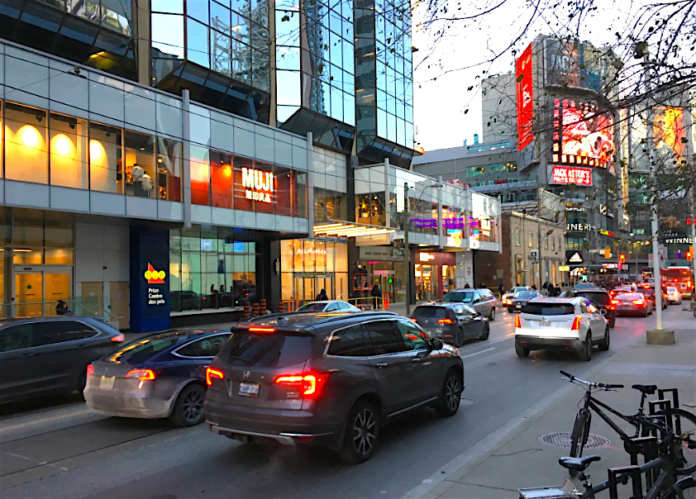
DUNDAS STREET WEST IN TORONTO AT 4:45PM ON THURSDAY, NOVEMBER 22. PHOTO: CRAIG PATTERSON

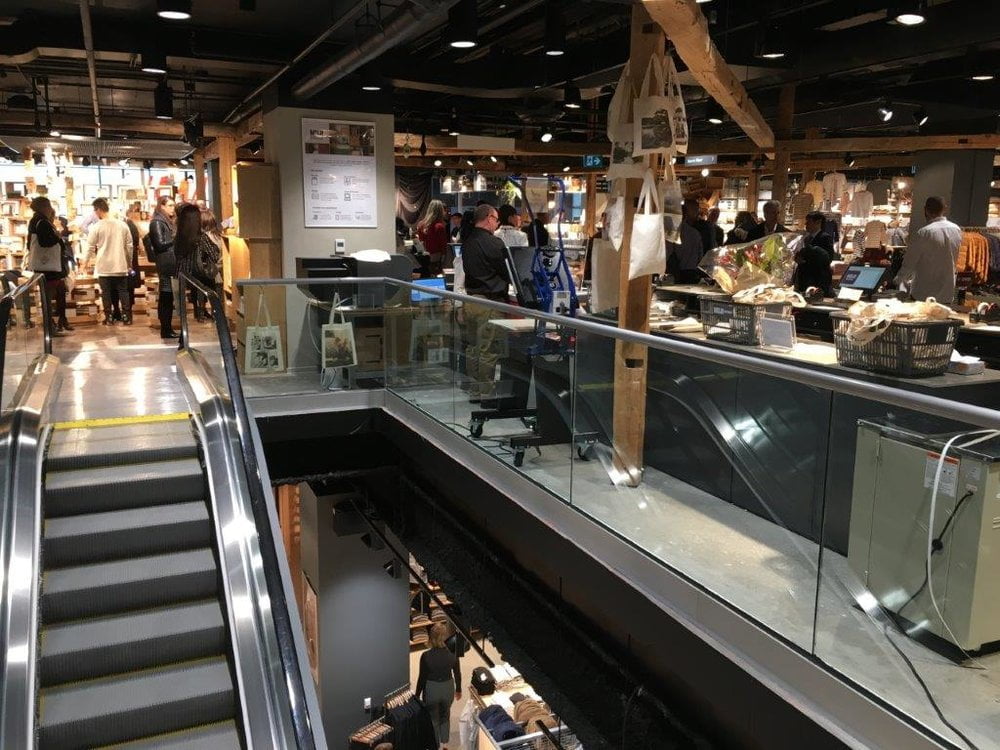
Minimalist Japanese retailer Muji has unveiled its largest store in Canada to date, steps away from Toronto’s Yonge-Dundas Square. The 19,110 square foot store is the first in Canada to span two levels and is now the largest Muji store in the world outside of Asia. The store opens to the public at 10:00am on Friday, November 23.

The massive two-level retail space at the Atrium complex was made possible by annexing second-level former office space in the mixed-use building, which spans an entire block along Dundas Street West between Yonge Street and Bay Street. Muji’s address is 20 Dundas Street West, which faces across the street towards CF Toronto Eaton Centre’s H&M flagship.

INTERACTIVE GOOGLE MAP

The updated Muji flagship replaces a 4,373 square foot store which opened at 20 Dundas in 2014 — back then, Muji stores were generally smaller and have been progressively getting larger as the company continues to open stores and gain loyal customers and brand awareness. Muji’s Atrium location relocated to a temporary space on Bay Street for several months while its original store was substantially expanded and renovated to create the new mega-flagship.

“During these four years since we expanded to Canada, we opened seven additional stores and gradually increased our range of products and services,” says Toru Akita, President of MUJI North America. “By allowing us to reach out to more people and to further convey our philosophy, the Atrium flagship store will open a new chapter for MUJI in Canada. Through interactive events, innovative projects, and new partnerships, we wish to connect and evolve together with local communities and contribute to the creation of a better quality of life.”

PHOTOGRAPH OF A STORE FLOOR PLAN HANDED OUT TO GUESTS AT THE MEDIA GRAND OPENING ON THURSDAY, NOVEMBER 22. PHOTO: CRAIG PATTERSON

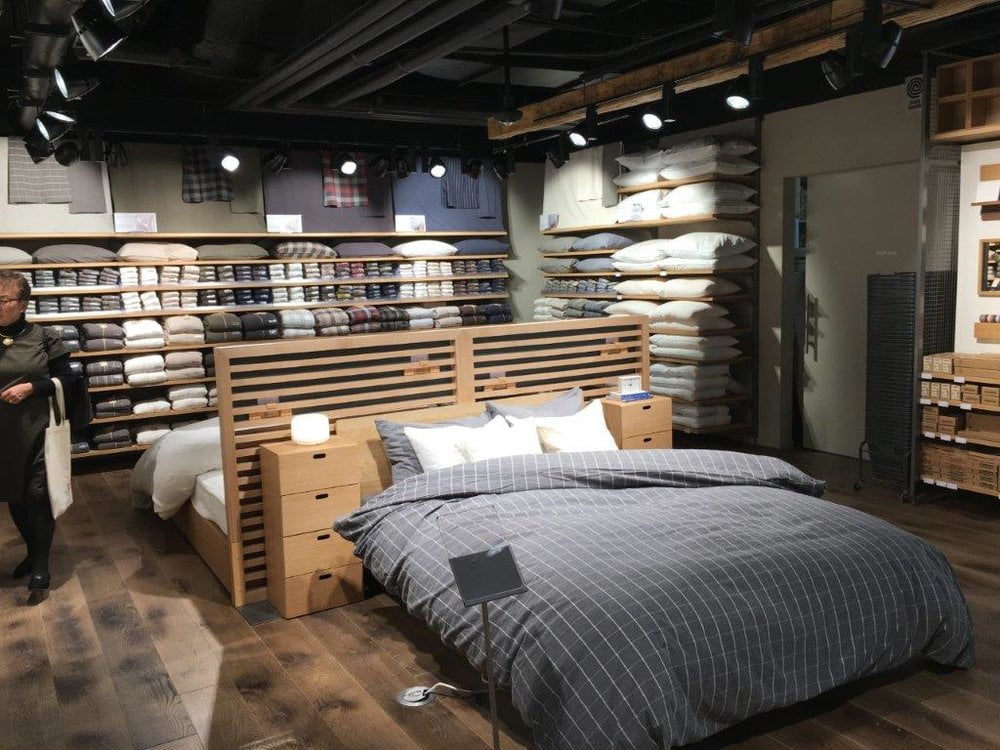
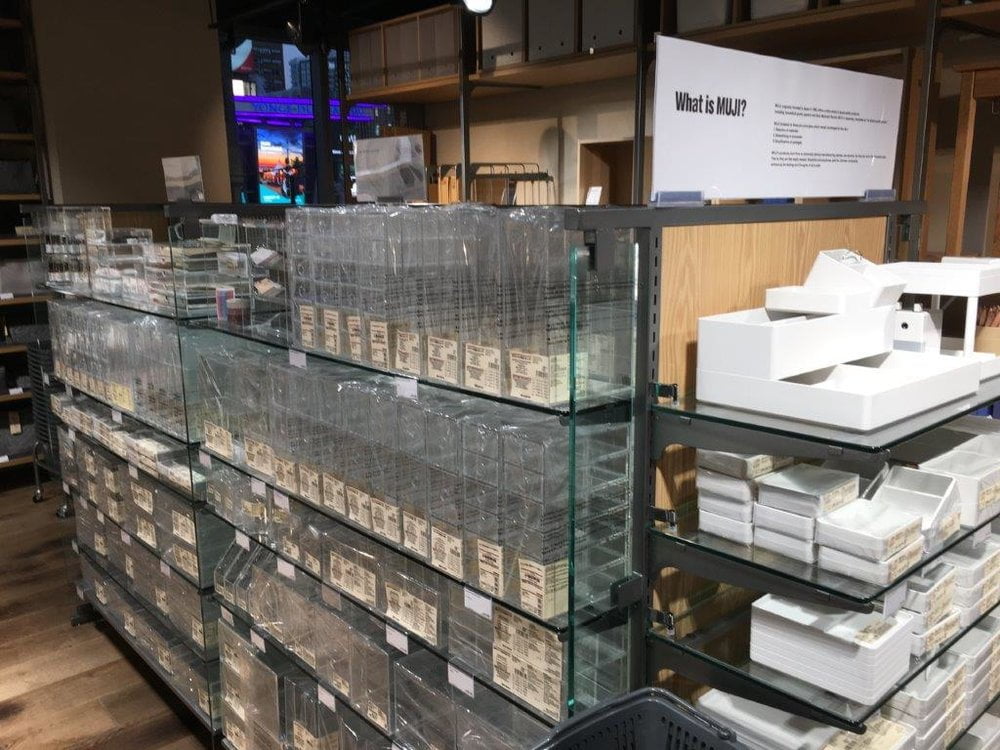
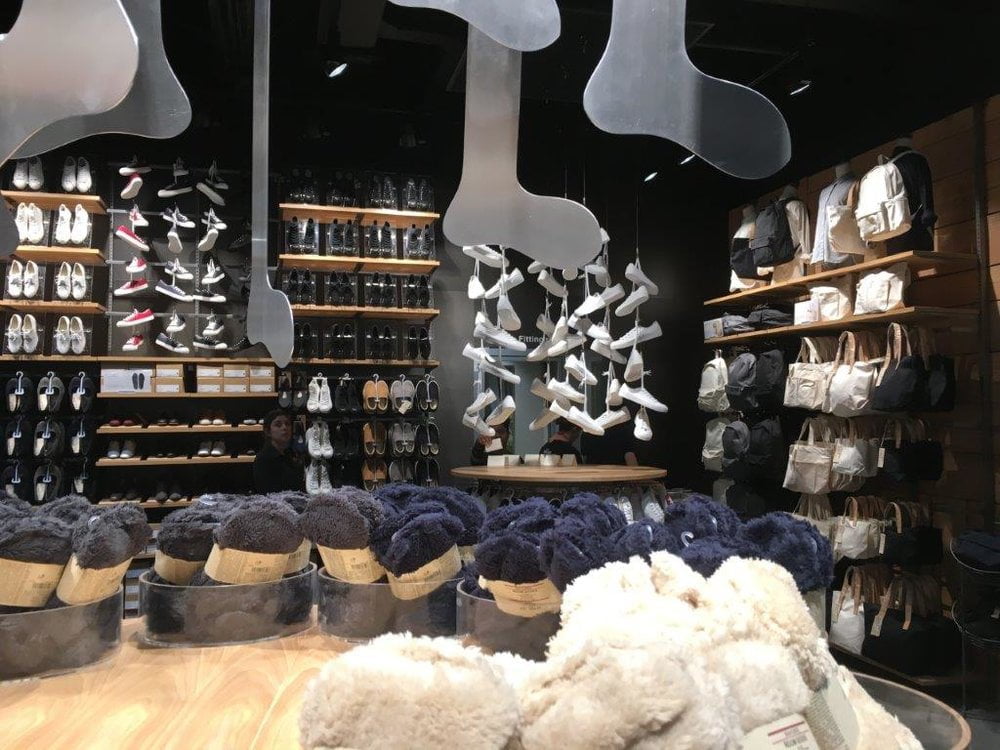
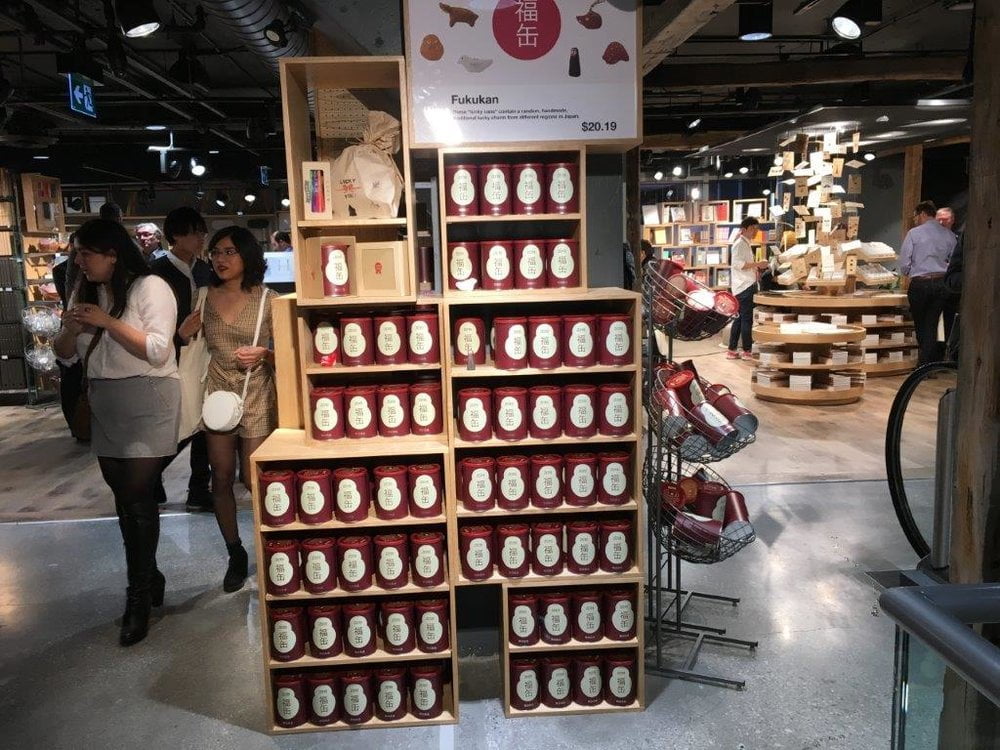
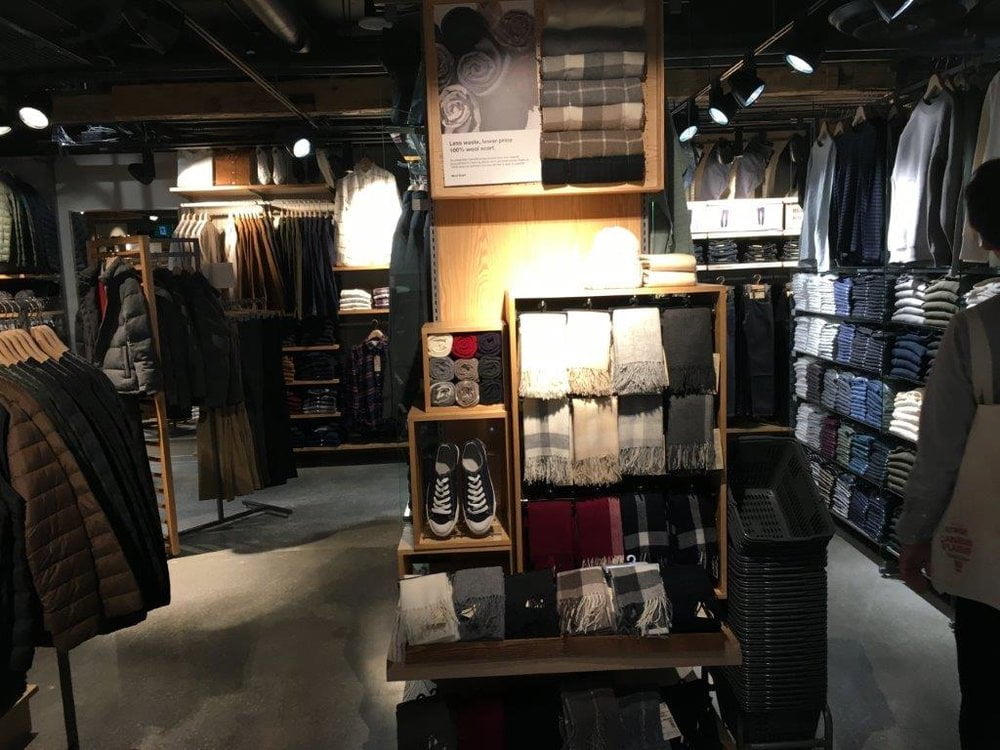
The store carries Muji’s full range of merchandise with more than 4000 items including household goods, apparel, and food. Being that this is a flagship store, Muji Atrium features the following:

  • A coffee counter featuring several Toronto-based coffee roasters on a rotating basis,

  • An ‘aroma bar’ where customers can create a customized fragrance blend by choosing from more than 40 essential oils, and

  • ‘MUJI YOURSELF’, the in-store customization area featuring various services such as embroidery, stamps, sticker printing, and alterations

‘MUJI YOURSELF’ CUSTOMIZATION AREA. PHOTO: CRAIG PATTERSON
AROMA BAR. PHOTO: CRAIG PATTERSON

As well, for the first time outside of Japan, Muji has introduced two new customization services for customers to personalize their Muji products. These include:

  • A digital fabric printing service that allows customers to print a photo directly from their phone on to select Muji apparel and home fabric items, and

  • A laser engraving service which allows customers to have letters engraved onto a vast selection of Muji products such as business card holders, pencil cases, trays, and small storage units.

The Muji flagship is also the only Muji location in Canada outside of British Columbia to carry books, made-to-order curtains and rugs, the MUJI Labo collection, maternity wear, as well as brand new activewear collection.

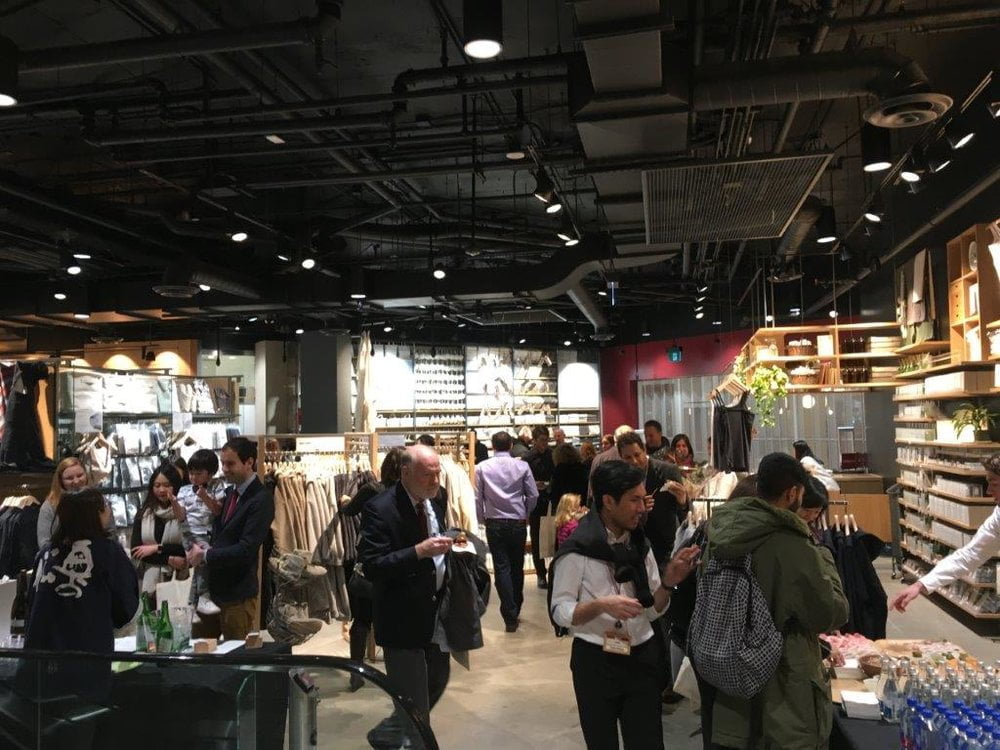
The store held a media launch and grand opening during the evening of Thursday, November 22, coordinated by Toronto public relations firm Zenergy Communications. Food was provided throughout the store, including a sampling of food options sold in the store. Dignitaries, including Mr. Akita, officially opened the store with a sake and a drum ceremony.

[Below: Muji North America President Toru Akita discusses the new store at the media opening on Thursday, November 22]

LEFT-TO-RIGHT: STYLIST YANA BRIKKER, RETAIL RECRUITER SUZANNE SEARS, MUJI NORTH AMERICA PRESIDENT TORU AKITA, AND RETAIL INSIDER’S CRAIG PATTERSON ON THE EVENING OF THURSDAY, NOVEMBER 22.

[Above: MPA Inc. President Mike Parker discusses the new store at the Thursday evening media event]

The store’s ground floor features entrances from both Dundas Street as well as from within the Atrium complex, and it includes the store’s aroma bar, alterations, embroidery area and the ‘MUJI Labo’ fashion line, as well as an assortment of fashions and accessories. The second level, which is considerably larger than the ground floor in size, contains areas for the coffee bar and books area, interior advisory, a customization counter (with gift sealing, digital fabric printing and laser engraving), as well as the ‘MUJIYOURSELF’ area with label printing and stamp station. The second level also features a wide range of home goods, food and a large area dedicated to Muji’s famous pens and stationery.

As mentioned above, Muji entered the Canadian market with the opening of the downtown Toronto store in November of 2014. That was followed by a 5,225 square foot store at Mississauga’s Square One in November of 2015, followed by the October 2016 opening at Toronto’s Yorkdale Shopping Centre (6,375 square feet) and the Summer 2017 debut of a 6,000 square foot space at CF Markville, north of Toronto. A store at Scarborough Town Centre, measuring about 6,800 square feet, opened in March of this year. 

On Canada’s West Coast, Muji currently operates three stores — Metropolis at Metrotown was the first when it opened in August of 2017, followed by the Robson Street flagship store in December and most recently, a 6,355 square foot store at CF Richmond Centre which opened in April of this year

The Robson Street flagship spans 14,507 square feet on one level and was the largest Muji location outside of Asia until the opening of the expanded Toronto flagship. As well, The Metropolis at Metrotown store, which measured 7,770 square feet when it opened, was recently expanded to 12,305 square feet on one level to bring it in line with the experience, product selection, and footprint of the Robson Street flagship. 

Brokerage CBRE has been involved with MUJI’s negotiations across Canada, led by Arlin Markowitz, Senior Vice President of CBRE’s Downtown Toronto Urban Retail Team.  CBRE Vancouver‘s office, including Martin Moriarty and Mario Negris, were involved in the three Vancouver deals.

Real estate services firm MPA Inc. represents the Atrium and MPA’s president, Mike Parker, negotiated the Muji deal with CBRE on behalf of the landlord.

Last year, Muji’s North American President, Toru Akita, said that he expected MUJI to operate between 15 and 20 stores in Canada by the year 2020, and a source working with the company says that the retailer has already mapped out many of the locations where it plans to expand, which may include malls as well as urban street front locations (Mr. Akita confirmed that a search for a Montreal flagship is ongoing). With more than 800 stores worldwide and 7,000 products, MUJI is short for Mujirushi Ryohin, or ‘no-brand superior items’, and was founded in 1980 as the private-label brand of a major supermarket chain.

Being that the Toronto opening is significant for the company, Muji is launching two unique initiatives in the city. A “What is MUJI?” pop-up exhibition launched on November 19th, and it will operate through to December 23rd at the former temporary location for MUJI at the Atrium. The mini exhibition “will bring to life MUJI’s philosophy by presenting the brand’s most iconic products and illustrating the concept behind their design.” Admission is free and weekly prize draws will be held for visitors, and more information here.

As well, on November 24th, Masaaki Kanai, Chairman of Ryohin Keikaku (MUJI’s parent company), will present “The Philosophy and Design of MUJI”, followed by a discussion with guests from related industries, at the University of Toronto. The presentation will look at the evolution of MUJI’s strategies since its founding in 1980, and explore how the brand is heading towards the future while maintaining its ideology. Free admission with reservation. More information is available here.

What Retailers Can Learn From the Fortnite Phenomenon

PHOTO: EPIC GAMES WEBSITE

If you’re a retail marketer and you’re not paying attention to Fortnite yet, it’s time that you do.

The multiplayer game from Epic Games has exploded in popularity in the past year, and innovative brands across industries are now capitalizing on its success. Just this month, for instance, the NFL announced a partnership that allowed Fortnite players to sport uniforms from the league’s 32 teams in the online game. Blue Apron, Casper and Dollar Shave Club are also already on the Fortnite bandwagon.

A recent study from Reach3 Insights provides interesting findings on how companies can effectively leverage the popularity of Fortnite. We conducted the study in collaboration with Rival Technologies, which provided software that allowed us to send conversational surveys through Instagram and other messaging apps. To reach as many Fortnite players as possible, we partnered with TheSquatingDog, a popular Twitch streamer, who posted about our study via an Instagram story.

In the process, we engaged more than 900 Fortnite players, many of them members of Generation Z. Insights from this study are useful not just to those in gaming, but to any company that wants to better connect with Gen Z consumers. Here are some notable takeaways.

Understand what brands players already love—and why

In our study, we asked players to tell us about their favorite brands. Not surprisingly, Fortnite came up on top, with 20% picking it. PlayStation (17%), Xbox (16%) and YouTube (14%) also fared well.

If you’re looking to market to Fortnite players, it’s worth looking into the brands that this group already loves. On the surface, it’s easy to assume that these brands are top of mind because they’re related to gaming, but that’s really just scratching the surface.

We found, for instance, that Fortnite helps build friendships among Gen Z consumers by  providing a common ground for them to bond over. Retail brands should engage players in conversations to further explore the social aspects of the brands they love. How do these companies build community, and how might you replicate that approach?

Let players show off their status and achievements

One thing that we heard loud and clear is how much Fortnite players love skins. If you’re not very familiar with Fortnite, skins are essentially outfits or costumes in the game. They don’t provide any type of advantage in the game, but skins allow players to express their personality or show their allegiances to other players.

These virtual goods have become a currency of cool among Gen Z players. Since more skins become available as you progress in Fortnite, they represent achievement and status in the game.

Releasing special, limited-edition skins is one interesting way retailers can partner with Fortnite. If you’re an apparel brand like Supreme, you might follow the NFL’s lead, for instance, and create a digital version of your products. If you’re Taco Bell, you might explore creating your own taco shops in Fortnite. Key to pulling this off is ensuring that it feels organic and not forced—bonus points if your virtual good are something players can personalize and make their own.

That said, it’s worth noting that creating virtual goods does come with risks. In the NFL’s case, some Fortnite players used it as an opportunity to troll the league—by mimicking the controversial kneeling protest in the game. Engaging with your customers first will reveal risks you have to be aware of as you’re developing virtual goods.

Build physical versions of virtual goods

Another way retailers could take advantage of the popularity of Fortnite skins is by creating their physical version. Hasbro is already doing this—the toymaker released a Fortnite version of Monopoly. It is also releasing a Nerf gun inspired by the game next year. Fortnite apparel and accessories are also already in works from Fashion UK.

Demand for Fortnite merchandise is high. Experts are predicting that Fortnite Monopoly and Funko Pop Fortnite will be two of the hottest toys of the 2018 holiday season. Is your product one that would be a good match to bring Fortnite into the real world?

Work with streamers

Partnering with Epic Games makes a lot of sense for toy and apparel manufacturers, but it’s not necessarily an option for many consumer goods brands. Our study suggests there’s another option: by partnering with streamers.

The popularity of Fortnite has turned online streamers such as Tyler “NInja” Blevins into celebrities. And according to the players we engaged in our study, these popular gamers are very influential. In fact, Fortnite players see online streamers as being on the same level as mainstream celebrities such as Steph Curry, Cardi B or Ariana Grande. Nearly 50% of the players we chatted with picked a streamer (Ninja, NICKMERCS, dakotaz) as their fave over Steph, The Rock or other celebs.

Some brands already recognize the power of streamers in reaching Gen Z consumers. Earlier this year, Red Bull announced Blevins as an official endorser. Another company, Gillette, signed Guy “Dr DisRespect” Beahm.

That said, it’s smart to do in-depth research before partnering with streamers. Our study shows most Gen Z players simply subscribe to the streamer’s channel or just watch, but they don’t do any other interaction. In fact, the players we spoke with stated they aren’t likely to check out a streamer’s sponsors. To maximize ROI from your partnerships, engage your target audience and explore which online celebrities have real influence beyond simple name recognition. Research should also reveal if there is a connection between an influencer’s expertise and your offering.

Another innovative way you could work with influencers is by partnering with them to engage Gen Z players for insight, in the same way that we partnered with TheSquatingDog for this study. This is something we assist clients with us well, helping them find the right influencers and leveraging the appropriate research technology to engage their followers and fans for insights. Talking to this digital-first audience—who tend to not be a part of traditional research panels—is essential to making sure you aren’t missing out on an important voice.

Conclusion

To stand out, retailers should take inspiration from other industries. The rise of Fortnite and gaming in general is one trend the retail industry should pay attention to. And as our study shows, gaming has much to teach retail about marketing and connecting to the lucrative Gen Z market.

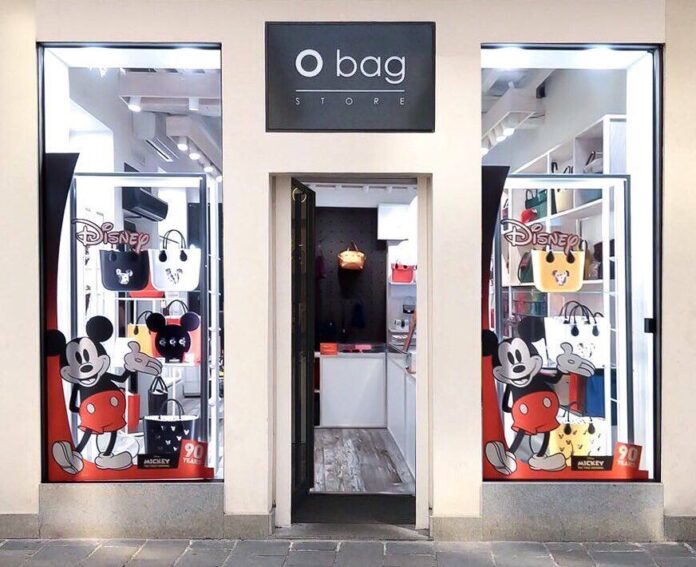
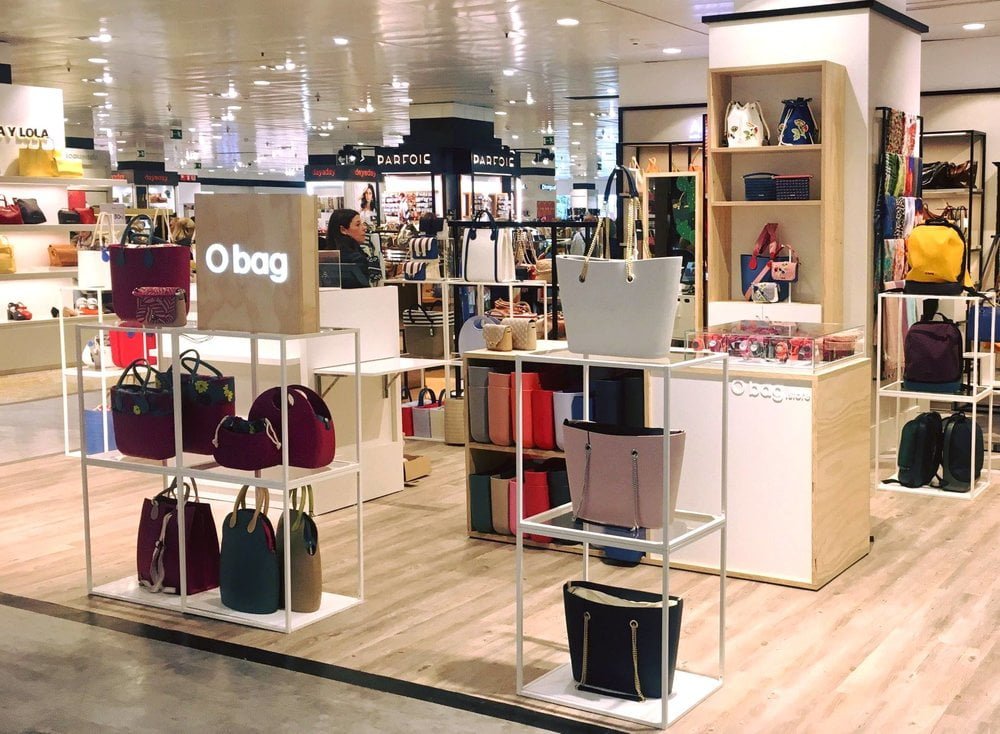
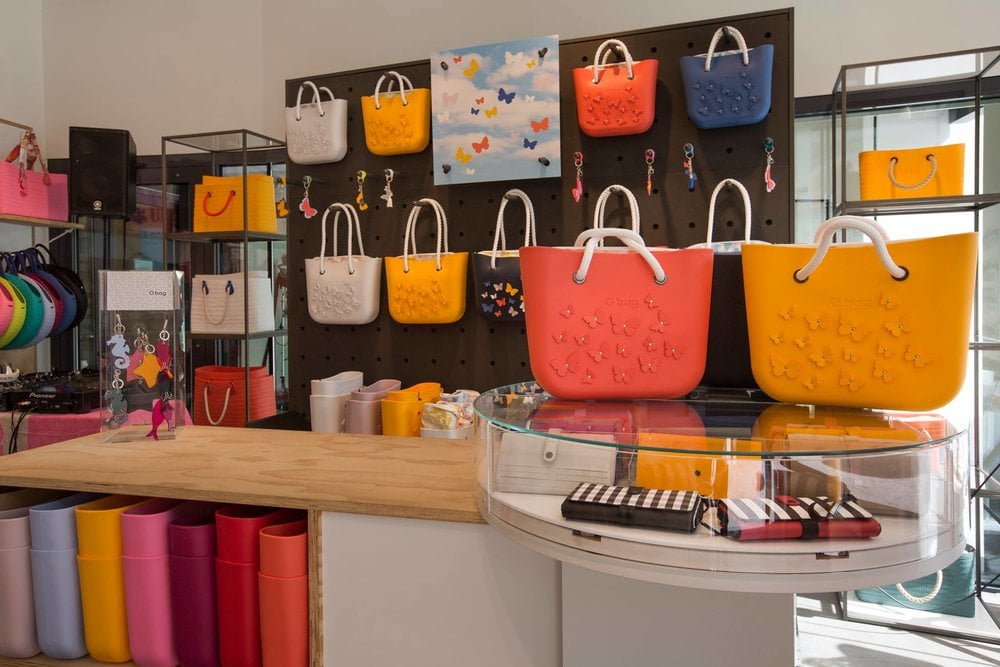
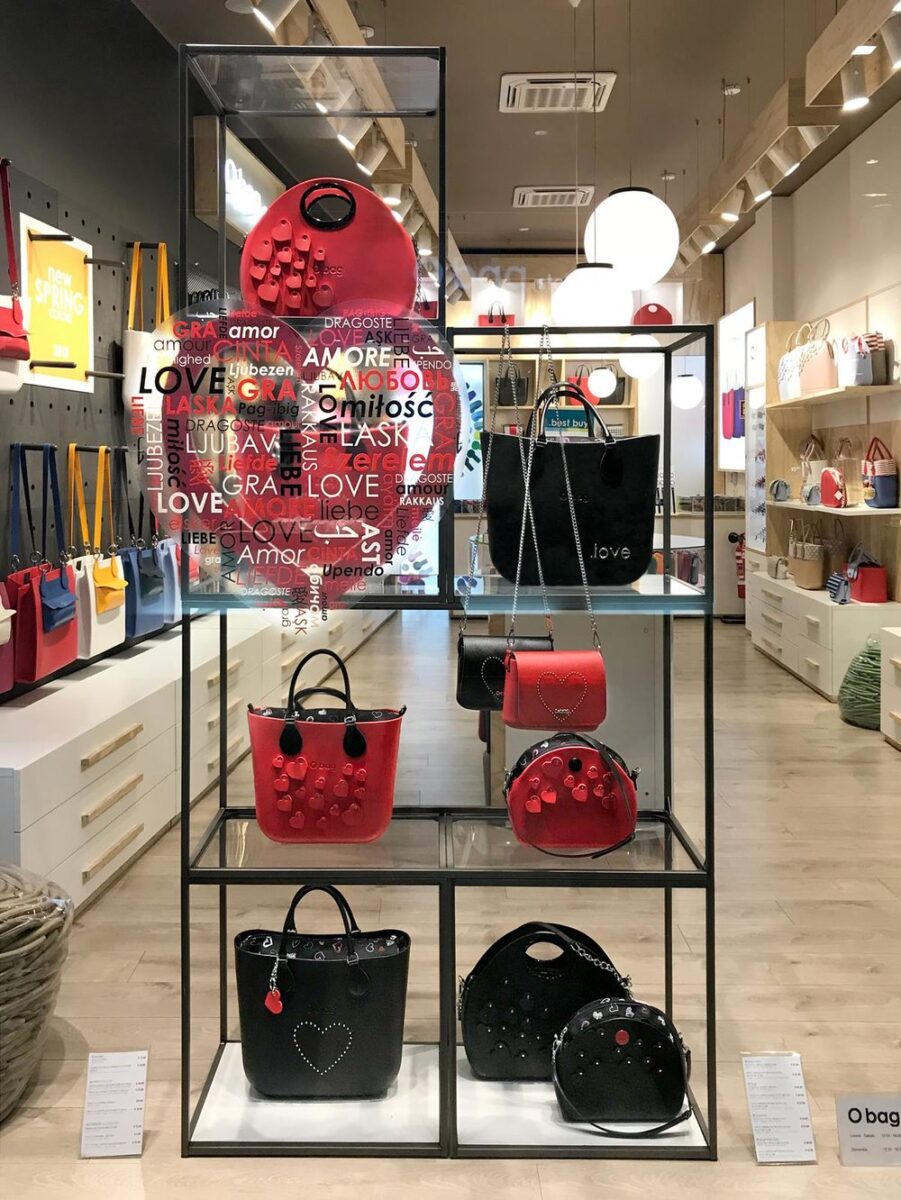
Italian Bag Brand ‘O bag’ Launches Aggressive Canadian Standalone Store Expansion

Over the last few years Carmine Di Fruscia has expanded the Mr. Pretzels brand across the country in a very aggressive and successful way.

Now, the president of Mr. Pretzels in Canada, is taking his retail experience and skills to another offering – customizable Italian hand and shoulder bags.

Di Fruscia, who has the Canadian rights to O bag and plans to introduce the concept nationally, said the potential is there for about 50 stores across Canada over the next five years for the retail brand that began a few years ago in Padua, Italy.

“I saw it about four years ago. I was very intrigued because my wife wanted to buy a purse at the time. In Italy you can buy purses anywhere you want. So when she told me she wanted this O bag I put it on my GPS and it was two and a half hours of driving. I said ‘oh my God, I’ve got to go out driving two and half hours to buy a purse in Italy when you can find Gucci, any purse you want within walking distance?’,” said Di Fruscia.

O Bag
Image: O Bag

“Anyway, the good husband that I am I drove two and a half hours, I went into the store and I found the store to be okay, intriguing because you buy the purse, the base of the purse, and then you buy accessories. You personalize it. You make it yours by changing the strap, by changing the inside. The inside is a cover that goes out a bit so it decorates it. It can become a winter purse or back and it can become a summer purse. All by changing the strap in the inside.”

After buying the purse, Di Fruscia was walking in a mall with his wife, who was carrying the new purse, and strangers were stopping her and asking her where she bought the bag. It was so beautiful.

“This happened a few times and it just so happens that the following year I was going back to Italy and now my wife had a list of people that wanted this O bag. My daughter. Her friends. It appealed to different generations,” he said.

The company has been expanding all over Europe, United States, Mexico and elsewhere, said Di Fruscia.

“When I started talking to them they were excited about Canada. They hadn’t reached Canada yet. They had nobody. I fell in love with the brand. I fell in love with the concept. And I have the rights now. We are going to be expanding.”

He said the first store will be opening in the Rockland shopping centre in Montreal within a couple of weeks, he said. The second store will open at CF Carrefour Laval in the spring of 2019.

“We’re going to be working very closely with all landlords to expand the brand across Canad. We want it to expand pretty rapidly,” said Di Fruscia.

“It appeals to pretty well everybody.”

SHANGHAI OPENING. PHOTO: O BAG FACEBOOK
Inside of an O Bag Store

According to the company’s online store, “O bags are beautifully simple, stylish and practical. The bodies are made of a lightweight foam called XL Extralight®, which is soft and warm to touch, waterproof, strong, flexible and anti-microbial. O bags are available in our online store in numerous colours and with various interchangeable handle choices in high-quality leather, faux leather and rope.

“You can create your own bespoke O bag Italian handbag with a wide range of accessories; inner zip-up bags for added functionality, privacy and security; then add a finishing touch with trims in faux fur, wool or cotton. Build a collection of bag parts and interchange at will. You may never meet someone else with the same looking O bag as yours!”

“Numerous colours and mix and match handles and accessories allow customisation to suit your style, outfit and taste. The brand aim is to give our customers greater freedom to express themselves sartorially and to accessorise in a distinctive and ever-changing way. The perfect marriage of form and function explains our cult following amongst those appreciative of practical and aesthetic design.”

For any landlords interested in having O bag as a tenant, contact Carmine Di Fruscia at: 514-349-3911 or email: carmine@ptg.ca

Belmont Market in Victoria Adds Retail to Architecturally Attractive Mixed-Use Community

exc-5bf4f34f2b6a2890e19cd304

Crombie REIT is developing the 160,000-square foot Belmont Market as part of a massive mixed-use development in Langford, just outside of Victoria on Vancouver Island.

The Market will include a landmark 53,000-square-foot Thrifty Foods grocery store.

Kevin Pritchard

Kevin Pritchard, director of development in Western Canada for Crombie REIT, said the retail project is well under construction with close to 130,000 square feet. Future phases will handle the rest of the retail square footage.

He said the Market will play a large role in continuing to establish Langford as a vibrant and growing community.

“We’re targeting to do a high level of community focused development there,” said Pritchard.

Thrifty Foods will open in the spring of 2019. The Market will also include Starbucks, Fatburger, Scotiabank, A&W, Freshii as well as the CEFA Early Childhood Education daycare centre (6,200 square feet) and Anytime Fitness. And many other tenants.

“We’re really trying to create a centre that’s full of amenities to complement the community,” he said, adding that the first tenants will start to open for business in early 2019.

There will also be a 12,500-square-foot office component that will house the Thrifty Foods headquarters.

The retail part of the project will also comprise streetfront spaces on four mixed-use buildings on the site which will anchor a main street.

“We’re looking to be fully leased up and construction complete by the end of 2020,” added Pritchard.

At this point, about 110,000 square feet of retail is committed. Of the 50,000 square feet remaining about 14,000 square feet is under active negotiation.

“We’ve got some pretty good velocity here and I think that’s a testament to the type of development that we’re trying to bring to Langford,” he said.

Ledcor Property Development is doing the residential portion of the more than 20-acre, master-planned community, called Belmont Residences, which will eventually include about 440 units with a mix of rental and for sale condos. The residential component will have six, four to six storey buildings and a some townhouses – 156 rental housing units and 284 market housing units.

The first residences to be occupied will be the fall of 2019.

“And the first buildings that will be completed will be rental,” said Pritchard.

He said full build out of the residences will be market dependent.

The Belmont Residences website said the project is targeting first-time home buyers, working professionals, and downsizers with one, two and two-plus flex bedroom configurations starting from the low $300,000s to the low $600,000s.

“Vancouver Island is feeling some of the effects of what’s going on in the Lower Mainland,” explained Pritchard. “So there’s a lot of desire to move to Victoria. From what we’ve seen in Langford, there’s a large portion of the population that’s younger. So with that we see Langford as being kind of the growth node. It’s really quite focused on growing and evolving as a municipality. The planning staff has been absolutely phenomenal to work with there.

“What we’re trying to do with the Belmont Market is really elevate the level of architecture here as well. We’re going with a rural contemporary theme. We’ve invested a significant amount of money in realizing the original vision on the site.”

The community will also be home to three plazas. One plaza will be heavily landscaped with benches and spread out and it will have a commemorative plaque of the history of the site. There will also be a centralized plaza that will bring together the high street with a podium where people can sit and meet in a nicely landscaped area with good attention to lighting. Retail tenants will be able to capitalize on patio space that will spill out into that space “creating a good heart to the site,” said Pritchard.

“And then we have one plaza that essentially anchors the high street and that will serve more as a general community park. So there will be a play structure there. Grass.

The other nice thing is the Galloping Goose Regional Trail. That trail system will actually connect into our site via that plaza. It’s really going to be a place where people can flow right in and enjoy the amenities in the community.”

The Belmont Market is being developed on the site of the former Belmont Secondary School which operated until 2015. The acquisition of the Belmont Market property helped to support the funding and construction of two new schools that replaced the aging institution – a new Belmont Secondary School and Royal Bay Secondary School.

Crombie is one of Canada’s leading real estate investment trusts with a $4.6 billion real estate portfolio and a large pipeline of potential development properties centred in Canada’s largest cities. It has 286 properties nationwide.

Amazon Opens First-Ever Alexa Smart Home Retail Space in Canada [Photos]

exc-5bf22a5e575d1f96f7197604

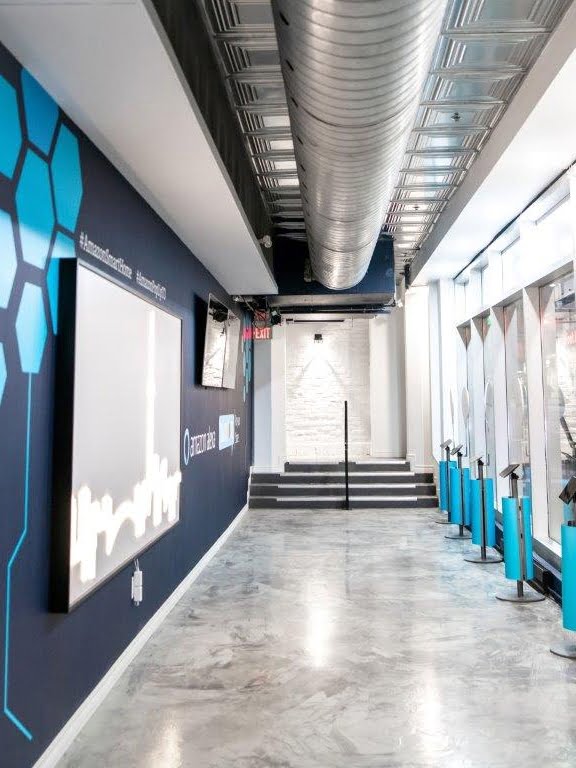
Arriving just in time for holiday 2018 shoppers, Amazon Canada has opened an Alexa Smart Home Pop-up Shop. This is the first ever Amazon pop-up to open in Canada and is located at CF Toronto Eaton Centre, with a Yonge Street-facing entrance near Shuter Street. It opened last week and it will be open through to December 31, 2018.

This interactive and immersive shopping experience allows shoppers to experience what it is like to live inside a fully integrated Alexa-powered smart home. Amazon Alexa is a voice controlled virtual assistant that allows users to playback music, set alarms, stream podcasts, access real-time information including news and weather and also control smart home devices, such as lights and thermostats. At the pop-up shop, shoppers will be able to interact with Alexa and Alexa-compatible smart products in various rooms including the living room, kitchen, bedroom, bathroom and exterior. To showcase the potential of Alexa in homes, Amazon Canada has partnered with top national brands including Samsung, Philips Hue, ecobee, HP, Sonos, iRobot, Bell, Brim, Ring, Audible, Tuft & Needle, Filtrete and First Alert.

Two of the experiences that shoppers can discover at the Alexa Smart Home Pop-up Shop include:

This pop-up shop approach by Amazon Canada illustrates that brick and mortar retailing is still relevant. As of July 2018, in Canada e-commerce represents 2.8% of the total retail trade. Although e-commerce is growing by double digits, 15.7% year-over-year for the 3 months ending July 2018, there is still substantial room in the brick and mortar channel for retailers to capture sales. 

Other online retailers are also leveraging pop-up shops this holiday season. Wayfair, a furniture and home decor e-commerce retailer, is launching two pop-up shops in shopping centres in the United States.

Pop-up shops are a win-win for both e-commerce retailers and shopping centres. For e-commerce retailers it provides an opportunity to bring their brand to life in a physical format. The pop-up stores may generate sales however it is a great marketing channel to help drive brand awareness and increase customer engagement. With so many retail vacancies due to store closures such as Sears Canada, Jean Machine, Town Shoes, Bombay Company and Bowring from this past year, mall landlords can leverage pop-up shops to fill the gap of vacancies. If the pop-up shops prove to be successful, they even may convert to permanent leases.

It will be interesting to see if pop-up shops are here to stay or will be popping down in the future.

BRIEF: Gucci Launches Home Furnishings Shop-in-Stores, Redevelopment at CF Richmond Centre

Gucci Launches Home-Furnishing Pop-Ups at Holt Renfrew as well as in NYC

Photo: Gucci

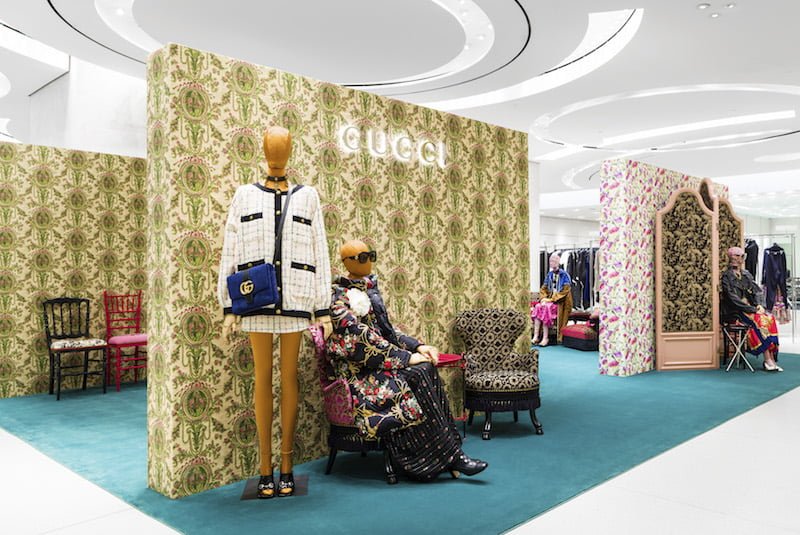
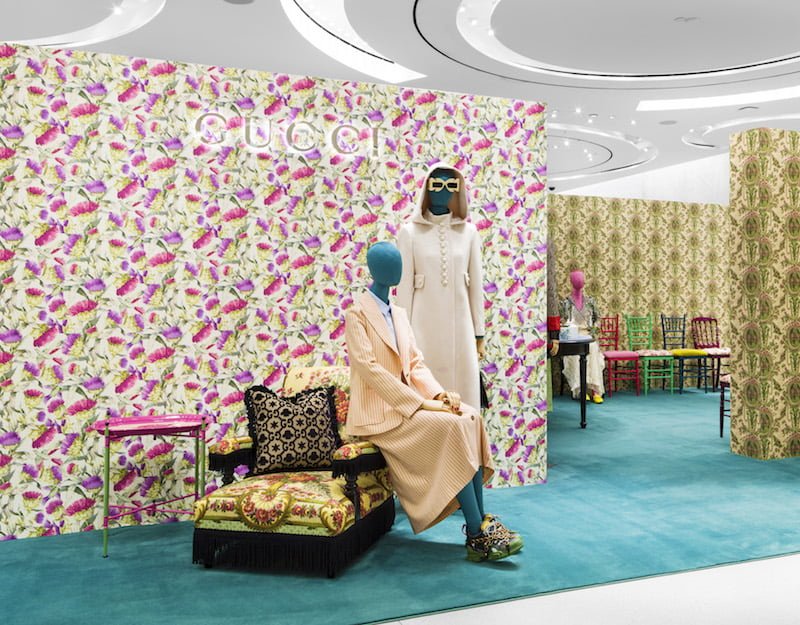
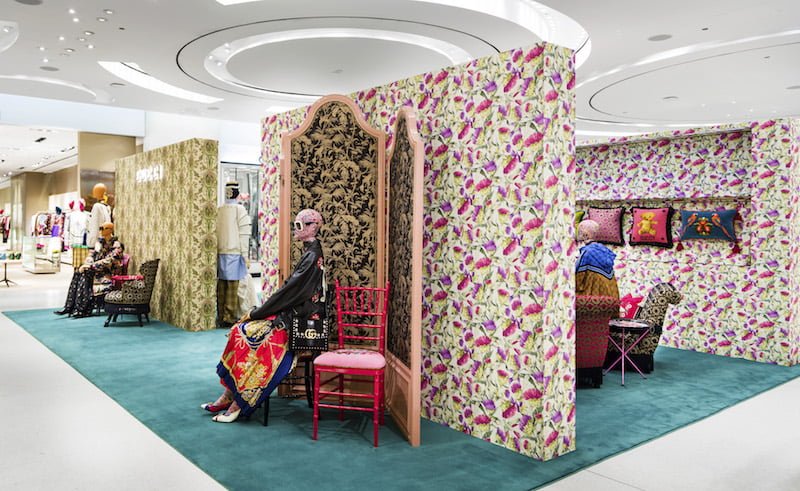
Italian luxury brand Gucci has launched a unique set of pop-ups for its home furnishings line at Holt Renfrew’s 50 Bloor W. flagship in Toronto, as well as at its Toronto Yorkdale and Vancouver stores. All three will be open until early January 2019.

The pop-ups feature a range of chairs, tables, pillows, candles, and wallpaper, all part of Gucci’s colourful new aesthetic that could see it become the world’s top-selling luxury brand, surpassing Louis Vuitton.

The Bloor Street store’s pop-up is located on the store’s second level across from Gucci and Chanel boutiques, and is steps away from the recently revamped footwear hall. Yorkdale’s is on the store’s main level. The Vancouver Gucci pop-up is located on the store’s pedway that connects Holt Renfrew to other retailers at CF Pacific Centre.

Holt Renfrew’s Vancouver pedway is especially unique as it is literally above a busy street, and the space has housed several unique pop-ups such as Prada and Moncler.

Last week, Gucci opened a massive outlet store at the Toronto Premium Outlets, and there have been line-ups since. Gucci also operates standalone stores in Toronto and Vancouver as well as concessions in Holt Renfrew stores nationally – Gucci is bullish on Canada and will be renovating/expanding its standalone units as well as adding a ‘World of Gucci’ concession to Holt’s Yorkdale in 2019.

*Photos were provided by Gucci. 

Kotn’s Black Friday and Cyber Monday with a Charitable Twist

Toronto based e-commerce brand Kotn has a unique campaign the works for Black Friday and Cyber Monday – nothing will go on sale, but 100% of Kotn’s profits will go to rebuilding 2 schools in Egypt. The initiative runs from November 23 – November 26. 

A related Egyptian connection — Kotn began as a strong menswear brand of everyday essentials and launched their first collection of womenswear made from ethically-sourced Egyptian cotton in 2017.

Kotn is building schools in the region of Egypt where their cotton is grown to stop the illiteracy epidemic in the region. Last year, Kotn set a goal to completely fund their second school with 100% of the profits from Black Friday and Cyber Monday. The goal was not only met but was overshot by more than $10,000 – a total of $56,330.52 was raised. 

For Black Friday and Cyber Monday 2018, Kotn has set a goal to completely rebuild 2 schools in need. Both schools, El Lebeidy and Fatthallah Ghazy, are located in their cotton farming communities. Instead of building from scratch, Kotn found that the need is currently to rebuild schools that had not been cared for and are no longer functional. Kotn is not only building out the schools, but is providing all the infrastructure around them including salaries for teachers, laptops, maintenance for the roads that link communities to the schools, books and supplies, science labs, water and electricity, furniture, technical training for facilitators, etc.

Cadillac Fairview Announces Partnership with SHAPE to Transform CF Richmond Centre

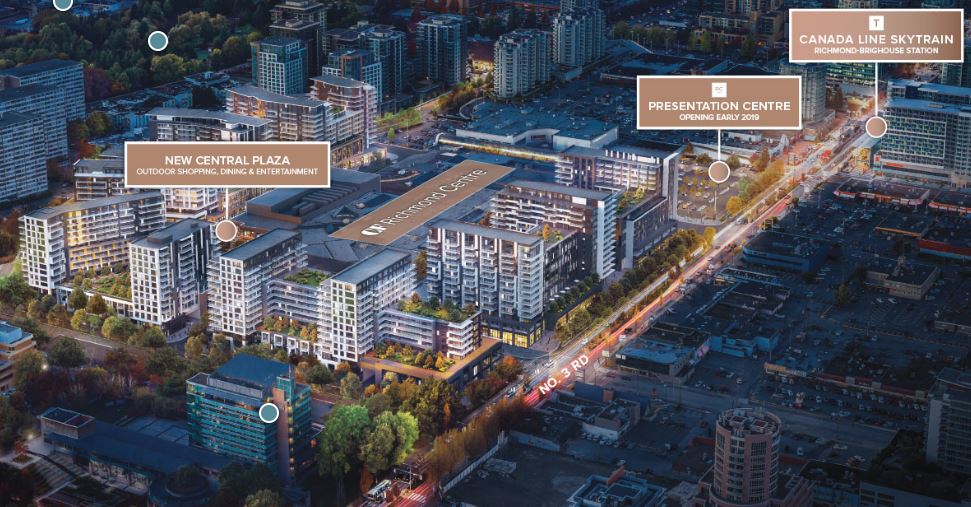
Cadillac Fairview has partnered with SHAPE to transform CF Richmond Centre into a 27-acre mixed-use master planned community that will feature retail as well as a walkable and connected living environment, shopping, dining, and entertainment.

At the centre of the transformation is the renowned CF Richmond Centre that is currently home to major brands such as Apple, Zara, Aritzia, Uniqlo, Lululemon, Le Creuset, Clinique, The Bay, Cactus Club, and much more.

Once complete, there will be a boutique street front shopping to international brands, green spaces, lively streets, and a new central plaza. There will be over 2,000 new homes added, from studios to townhomes.

Homeowners will have access to over 150,000-square-feet of amenities including entertainment suites, music and multimedia rooms, games and children’s playrooms, multiple lounge areas, and outdoor gardens.

In conjunction with the announcement is a Richmond Centre Gift Card offer for those who register to receive exclusive updates. Ten $500 Gift Cards valid at Richmond Centre will be distributed after the January 14, 2019 deadline.

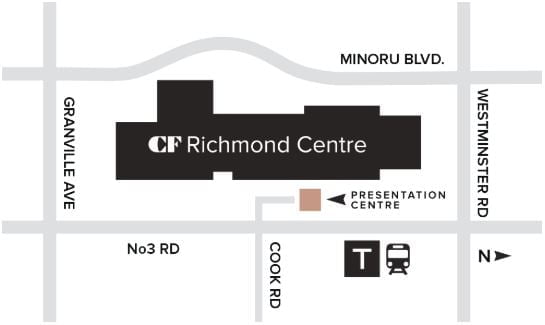
The Presentation Centre will be opening in early 2019 at 6331 No. 3 Road at CF Richmond Centre.  

Club Pilates Seeks Kitchener/Waterloo Location

Club Pilates, which is expanding across Canada, is seeking space in the Kitchener/Waterloo area. Franchised studios are equipped with Pilates Reformers, EXO-Chairs, and Spring Boards, as well as mats, balls, weights, and barres. It is the fastest growing and largest premium network of group Pilates studios in the world, with more than 430 locations open and 600 under development throughout 2019-2020. This year, it has opened  locations in Calgary as well as in Vancouver (Kitsilano) and in South Surrey, BC (CBRE’s Martin Moriarty & Mario Negris represented the landlord in the Kitsilano deal)

Club Pilates seeks 1,500 — 2,000-square-foot locations with 20-foot minimum width (rectangular with clear-span preferred) in food-anchored neighbourhood shopping centre with full signalized intersection access. Ideally, inline spaces are preferred where pieces of equipment can be mounted on both sides of the wall — the occupancy load is generally 12-14 students and one instructor during classes from early morning through to evenings. 

Aurora Realty Consultants has partnered with Club Pilates and Don Gregor is the contact person for interested landlords. Email: dgregor@auroraconsultants.com or call: 905-853-3580.

Bayview Village Launches Hammam Spa Pop-up to Bring Further Joy to Shopping Season

In advance of its second permanent location of 13,000-square-feet, scheduled for fall 2019, Bayview Village has opened a luxury pop-up feature in an urban spa sanctuary within its successful downtown location. Offering many award-winning services and skincare products, the temporary boutique will be open through the winter season.

Holiday services include complimentary face mapping skin analysis with a Dermalogica expert and an introduction to Céla, Canada’s first luxury skincare line founded by Hammam Spa owner, Celine Tadrissi.

The Hammam pop-up space is designed to be a modern oasis featuring a marbled palette of cool greys, greens, and gold with a central focal moment for product experiences and demonstrations. The boutique’s walls are decorated with a curated assortment of Hammam’s best-selling products including Dermalogica, SkinCeuticals, Petite Amie Skincare, OverEZ, and Céla. Two private, mini treatment rooms allow guests to enjoy facials and targeted skin peels.

The second permanent Toronto location in the fall of 2019 will be within the east wing of Bayview Village. Designed by Antonio Tadrissi and his team at Prototype Design Lab, the full-service, co-ed day spa will feature a 500-square-foot Hammam Steam Room and an additional 13,000-square-foot for private rooms and treatments.

If you are in need of a break from pre-holiday shopping, start your relaxation at the pop-up, which is open Monday – Friday, 10:00 am – 9:00 pm, Saturday from 9:30 am – 6:00 pm and Sunday from 12:00 pm – 5:00 pm.

Haute Couturier Guo Pei Entrances with VAG Exhibition and Limited Edition Doll

The Vancouver Art Gallery (VAG) has made available a limited edition doll to accompany the successful Guo Pei: Beyond Couture Exhibition which features more than forty complete looks from the haute couture designers most iconic runways from 2006 to 2017.

The dolls are not exact replicas of the original pieces housed in the VAG’s rotunda, as the details would be impossible to duplicate, but are statuesque versions suitable for collecting. The VAG will be the only authorized dealer of the dolls in Canada.

With a price tag of $500, there are 999 dolls in three editions which are differentiated by different wig colours. Each doll comes with a Limited Edition certificate and is hand cast and hand painted.

Fans of the designer and doll collectors can visit the Beyond Couture until its last day on January 20, 2019.

Palladio Jewellers Relocating after 20 Years

PHOTO: LEE RIVETT

For over 50 years, Vancouver-based Palladio Jewellers has created captivating pieces of jewellery using the purest metals, rarest precious gems and finest, graded diamonds. Their collections for both men and women exemplify Palladio’s fashion forward taste and superior workmanship.

For the past 20 years, Palladio was located at the Terminal City Club at 855 West Hastings, and maintained an exquisite showroom which carried an extensive selection of finely crafted timepieces from an exclusive collection of world-renowned manufacturers such as Vacheron Constantin, Parmigiani Fleurier, Rolex, Jaeger-LeCoultre, Panerai, Girard-Perregaux, Raymond Weil, and Franck Muller.

In December, the retailer will be moving into a corner retail space at 900 West Hastings Street, directly across from the Vancouver Club. The retail space most recently housed the flagship location for defunct footwear retailer Ingledew’s shoes and prior to that, it housed a 5,000-square-foot Chanel store which relocated inside Holt Renfrew in 2010.

The lease deal for Palladio’s new store was handled by brokerage CBRE in Vancouver, under the direction of Adrian Beruschi, Mario Negris and Martin Moriarty.

Experience Canada’s Only Parka-Insulated Winter Lodge: Life in the Back 40 at the Woods Parka Lodge in Haliburton

Retailer Sport Chek and outerwear brand Woods have launched a one-of-a-kind winter getaway, giving adventurous travelers a chance to spend the night at Canada’s first and most likely ever parka-insulated winter yurt – The Woods Parka Lodge. At the lodge guests can snowshoe up to 60-acres of snowy countryside, engage with private yoga lessons, or just chill and watch the stars.

Located in Kennisis Lake in the Haliburton region, this original design winterized yurt was inspired and built with the new Alverstone Expedition Parka from Woods. The same durable materials that explorers have depended on for over 100 years to face some of Canada’s harshest winters was used to drape this yurt, resulting in ultimate protection from the cold and harsh winter weather.

The Woods Parka Lodge experience will be available for booking exclusively on Airbnb for a limited time on a first come, first serve basis. Upon arrival, guests will be treated to a Woods Alverstone Expedition Parka or McBride Bomber Jacket to keep them comfortable and warm for the duration of their stay and to take home with them. 

For more information or to book a stay, visit here.

Club Monaco x Reigning Champ Release Heritage Crest Capsule

Iconic Canadian retail brand Club Monaco and Vancouver-based athletic wear designer Reigning Champ have teamed up to create an exclusive capsule collection featuring Club Monaco’s heritage crest from 1985 which is now available for holiday shopping.

Handcrafted in Reigning Champ’s factory, the five-piece capsule features two unisex T-shirts designed in the brand’s custom developed Ringspun Jersey and three unisex sweatshirts in Midweight Terry that pay homage to both brand’s Canadian roots. The vintage-inspired heritage crest capsule collection is available in limited quantities across Club Monaco’s Canadian stores and e-commerce.

The capsule collection was first available at Club Monaco’s Bloor Street flagship in early November with the first 250 purchasing customers receiving a limited edition Reigning Champ x Club Monaco tote bag as a gift and optional personalization of their sweatshirts and T-shirts with embroidered monogramming.

Million-Bottle Milestone: Non-Alcoholic Beverages Distribution Deal Bolsters Grocery Store Offerings for Hill Street

Hill Street Beverage Company Inc. will be increasing its retail presence in Canada now that it has secured new national distribution agreements with Loblaws, and National Importers. These distribution agreements have contributed to the achievement of a major sales milestone: 1,000,000 bottles of alcohol-free wine sold by the company since it was founded in 2008.

Hill Street Beverage Company is the world’s most award-winning company exclusively focused on alcohol-free beer, wine, and adult format beverages. Hill Street products include Hill Street Craft Brewed Lager, Designated Draft alcohol-free beer, Vin(Zero) wines, and Vintense wines.

This news follows an announcement by the Company last month that it had signed an exclusive regional sales and distribution agreement with Clarke, Drouin, Lefebvre Inc. for the province of Quebec, which significantly expands its availability in the region via 3,000 independent depanneurs and regional Quebec chains.

Collectively, these distribution agreements move Hill Street towards achieving its stated goal of having products in 7,000 outlets by the end of 2018. In addition, Hill Street has applied for licenses to produce and sell cannabis-infused adult beverages in Canada and plans to do so as soon as cannabis-edibles become legal, which is currently expected by the fall of 2019.