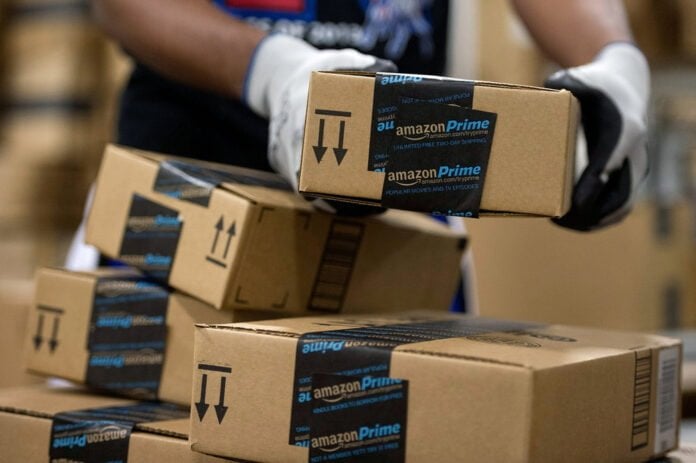
Seattle-based retail behemoth Amazon has provided an update on the popularity of its membership-based Amazon Prime in Canada, including information about product orders as well as its various streaming services. Amazon provided a ‘Best of Prime’ infographic, located below, to illustrate.
Perhaps the most startling is the revelation that Canadians ordered more than double the products with Amazon Prime free same-day delivery in 2018 over the year prior — Amazon is clearly gaining market share with its loyalty-focused Prime initiative, at a time of unprecedented competition in Canadian retail as an unprecedented number of international brands enter the market.
Amazon revealed that in Canada over the past year, the most gifted items from Amazon Prime were the Kindle Paperwhite e-reader, the Alexa-powered Amazon Echo Dot bluetooth smart speaker, as well as the larger Amazon Echo speaker. On ‘Amazon Prime Day’ in July, the best selling items in Canada included the Fire TV Stick and the Instant Pot 6 Qt. Amazon says that sales from small-and-medium-sized businesses far exceeded $1-billion during Prime Day in the summer.
Globally, more people signed up to become Amazon Prime members than at any time in its history, and they ordered about 2-billion products — which isn’t surprising given how quickly Amazon Prime has taken hold of the global market. In the spring of 2018, Amazon revealed that it had more than 100-million Amazon Prime subscribers around the world, each paying fees for free and fast shipping as well as Amazon’s video, music and video-game services.
Amazon also provided updates on the ‘most binge-watched’ original series videos on its Prime Video, as well as the most streamed music artist on Amazon Music. With its video-game ‘Twitch Prime’ offering, Amazon saw more than 50-million free game downloads — all three services are free for Amazon Prime members.
Amazon Prime costs an annual fee of $79 in Canada (Canadian dollars), which is a bargain compared to in the US where the annual fee is US $119. Amazon has said that it will likely raise the Canadian Amazon Prime fee in the future.
Loyalty programs such as Amazon Prime are being adopted by other retailers. Last week Loblaw announced its own program with an annual fee of $99, and Lululemon piloted a $128 loyalty fee in Edmonton this year which proved successful enough to roll it out into other markets.
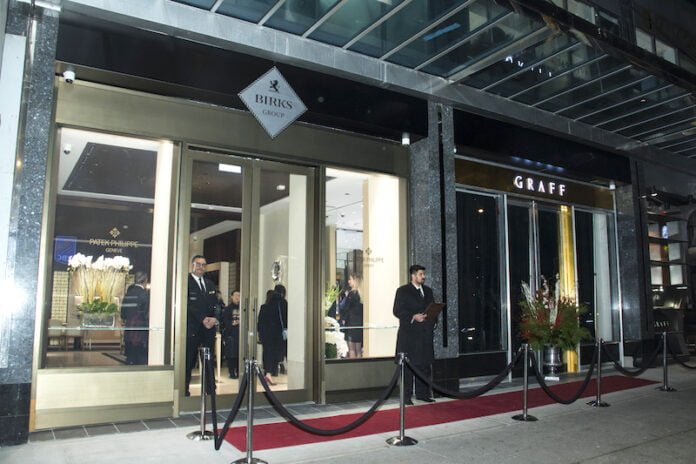
Patek Phillipe Geneve and Graff Boutique store opening on Dec 6, 2018 in Vancouver Canada
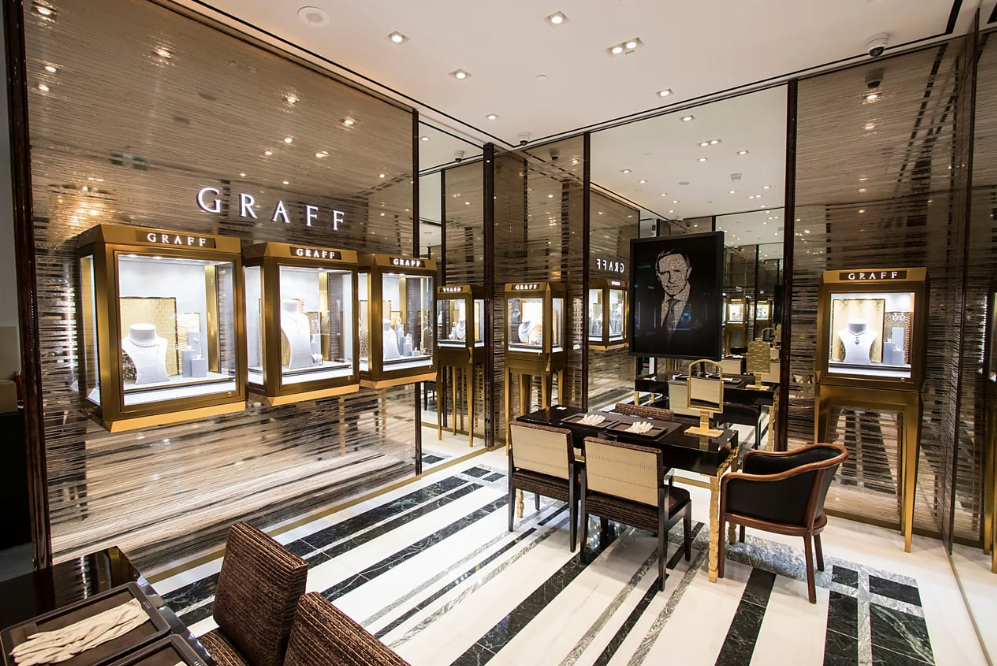
Canada’s first boutique for UK-based diamond retailer Graff has opened at 1018 West Georgia Street, and Swiss luxury watch retailer Patek Philippe has opened next to it. Both are operated by Montreal-based jewellery retailer Birks and feature separate street-facing entrances, further enhancing downtown Vancouver’s ‘Luxury Zone’.
The Birks partnership marks the first time that Graff has had a retail presence in Canada. Graff launched at Birks’ store in Toronto’s Yorkdale Shopping Centre in November, temporarily, while the Vancouver store was still under construction. The Patek Philippe boutique is the first storefront for the brand in Canada, and selected retailers also carry the pricey pieces.
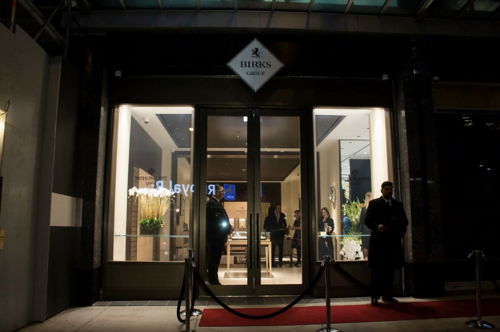
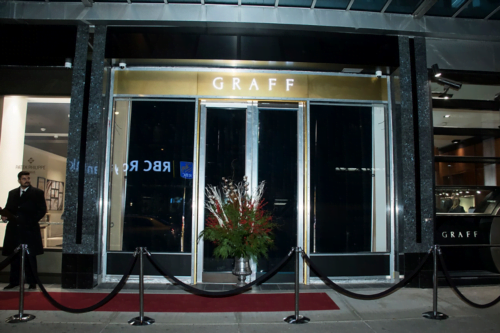
The Graff and Patek Philippe boutiques are connected internally with the same cashiers while from the outside, they have their own entrances and retail signage. The Graff boutique features signage over the door saying ‘Graff’, while the Patek entrance is a bit more subtle with a Birks logo over the entrance doorway, and Patek Philippe branding in the windows.
PATEK PHILIPPE STOREFRONT
GRAFF STOREFRONT
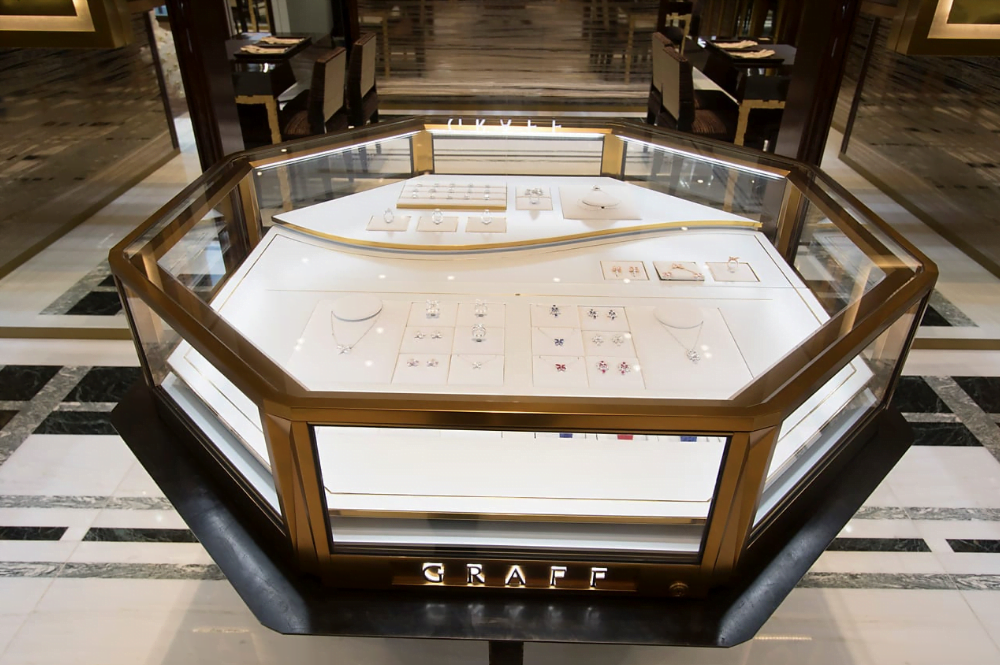
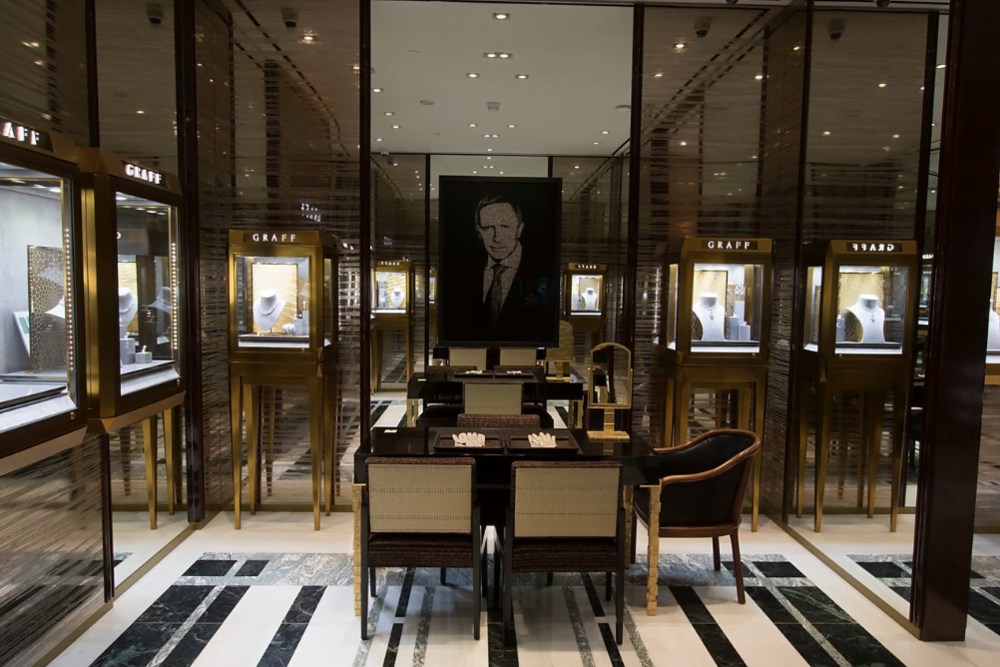
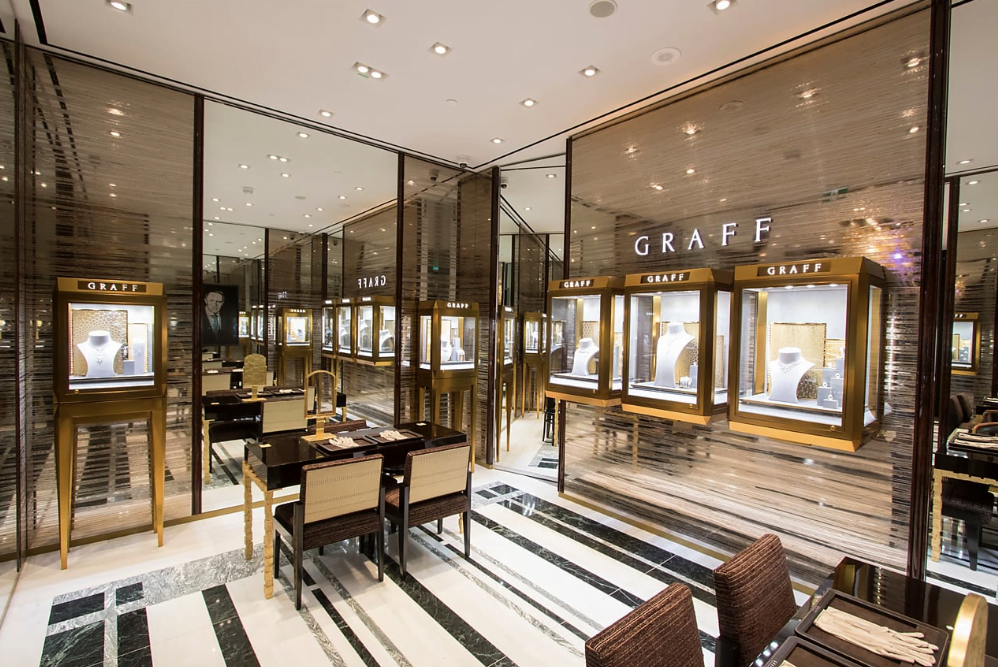
The 575 square foot Graff salon features a selection of Graff jewellery, engagement rings and timepieces. The impressive interior includes brushed- gold vitrines showcasing one-of-a-kind high jewellery suites, fine jewellery collections and timepieces. As it becomes more established, some pieces on display in the Vancouver Graff salon will be one-of-a-kind and some will be priced in excess of $1-million — though it also has some less costly items with prices beginning at about $6,000. Graff was founded by Lawrence Graff in London in 1960, and the brand’s boutiques can be found in major cities globally. In the United States, Graff operates six standalone stores in New York City, Bal Harbour FL, Chicago, Las Vegas, Palm Beach and San Francisco, as well as concessions at Saks Fifth Avenue stores in New York City, Beverly Hills, Greenwich CT, Houston, and at Tyson’s Corner in suburban Washington DC.
Graff Boutique
1 of 4
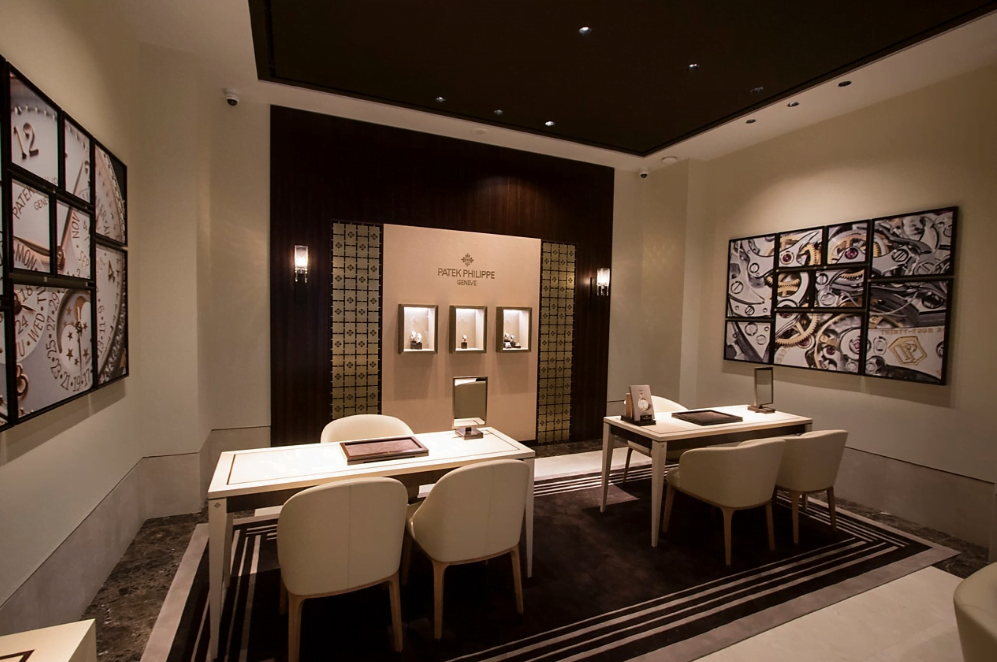
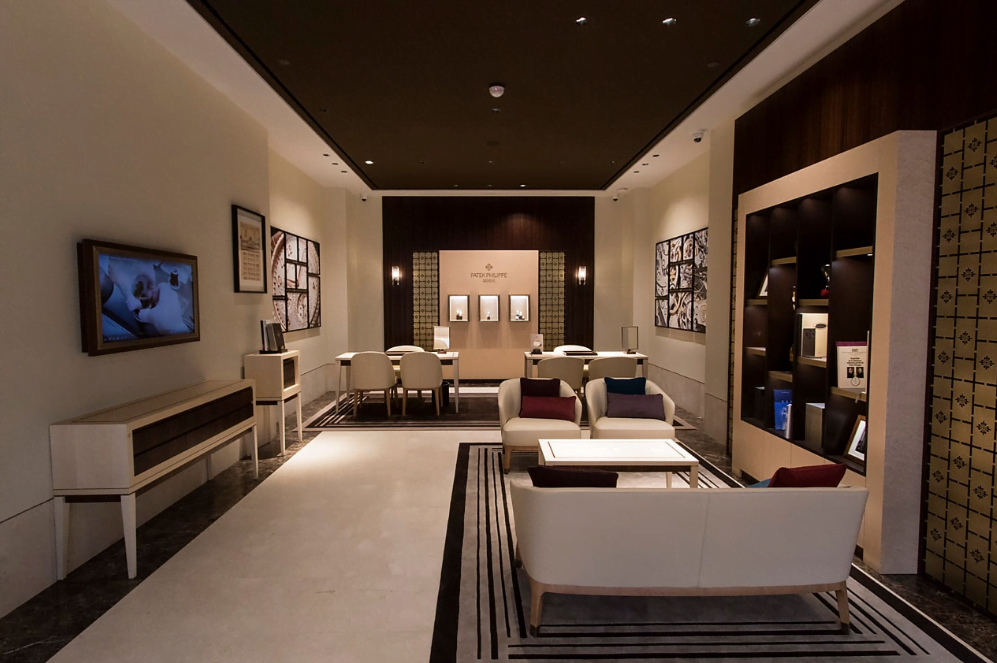
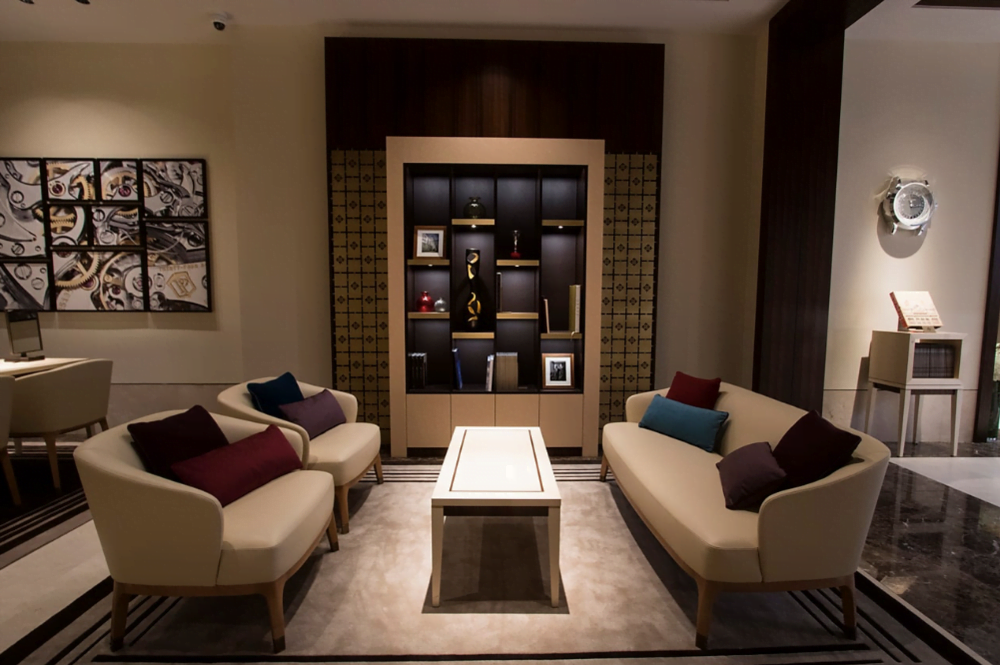
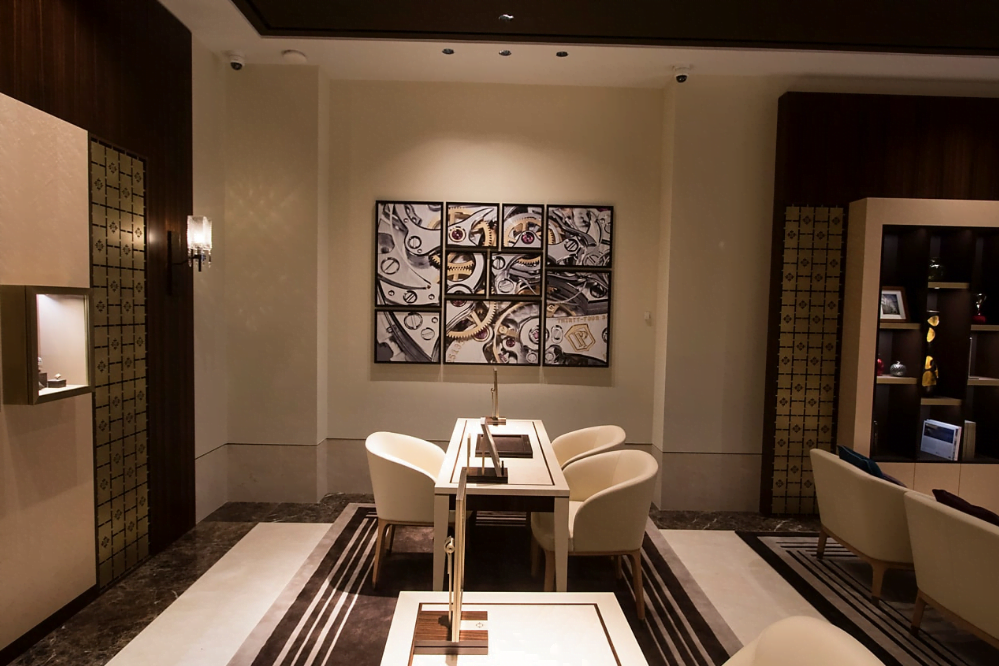
The similarly-sized Patek Philippe salon features a subdued and luxurious interior with beige walls and furniture that contrasts with dark trim. The boutique features a range of pricey Patek Philippe timepieces, some which can be priced into the six figures. Geneva, Switzerland-based Patek Philippe was founded in 1851, and it designs and manufactures timepieces and movements, including some of the world’s most complicated watches. The company has been owned by the Stern family since 1932, and it has distribution in more than 400 retailers globally. The company operates only a handful of storefronts globally and Vancouver is one of few cities in the world to have a standalone space dedicated to the brand.
Patek Philippe Boutique
1 of 5
Both boutiques are expected to do well in Vancouver — both are popular with an affluent Asian demographic, and Vancouver is known to be a significant target for Asian tourists as well as residents who have chosen to live in the city either full-time or part-time.
LEFT-TO-RIGHT: LANCHO CEPHIVENUS (CEO OF CHOBEE AESTHETIC MARKETING), JEAN-CHRISTOPHE BÉDOS, (PRESIDENT AND CEO OF BIRKS GROUP INC., AND HELEN SIWAK, WEST COAST CORRESPONDENT FOR RETAIL-INSIDER
Vancouver is seeing an unprecedented number of luxury brands moving into its downtown core, many of which focus on jewellery and watches as well as leather goods and other accessories. West Georgia street is now finding itself becoming a luxury retail address of its own, located a short block north of the Alberni Street ‘Luxury Zone’ that has been undergoing a transformation for the past several years. Several more luxury brands will be moving into the area — Hermès is building a two-level flagship adjacent to Graff and Patek Philippe facing the corner on Burrard Street, Montblanc and Vacheron Constantin will open in the former Blubird retail space on Alberni Street, and Cartier will relocate to the space currently occupied by Hermès at 755 Burrard Street which also fronts onto Alberni Street, and others are said to be in the works.
*All photos in this article are courtesy of George Pimentel.
“Our appreciation of Harry Rosen and its strong retail heritage goes back almost four decades,” said Ermenegildo Zegna, CEO of the Group. “We are very fortunate to have a partner whose vision and business approach mirrors our own, and I am proud of being able to take our collaboration to the next level as we expand our presence within Canada.”
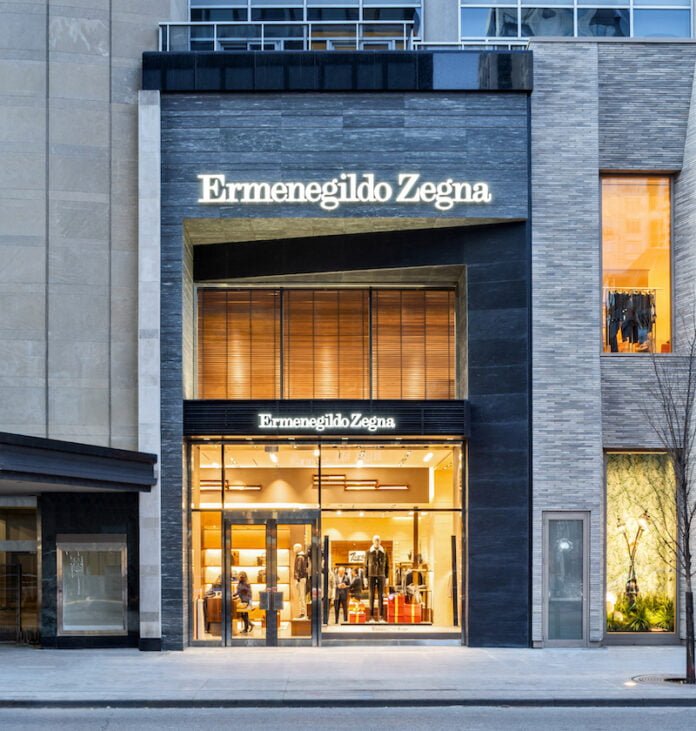
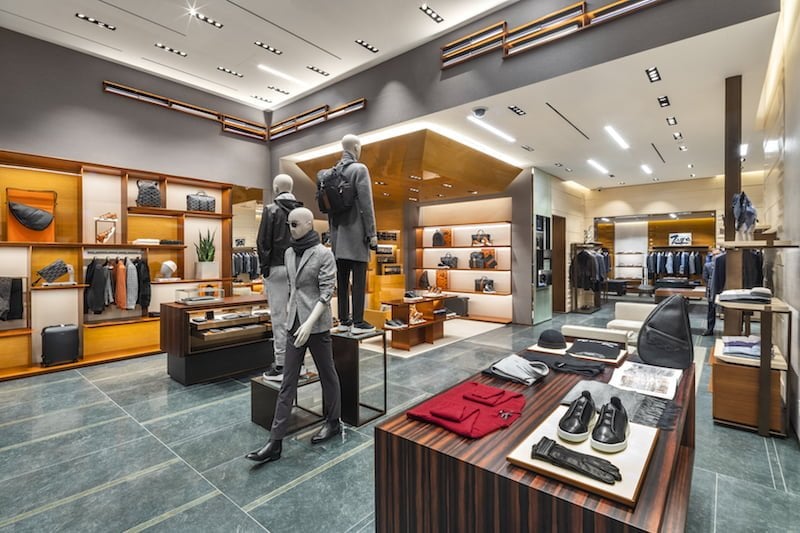
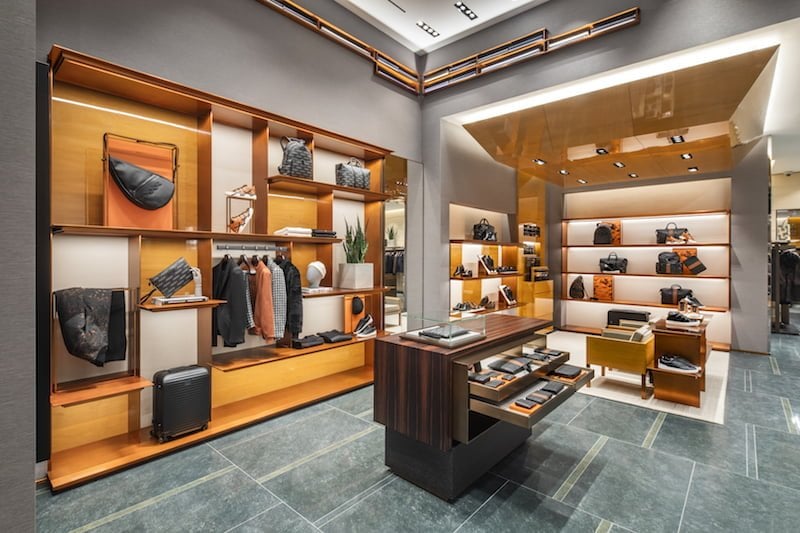
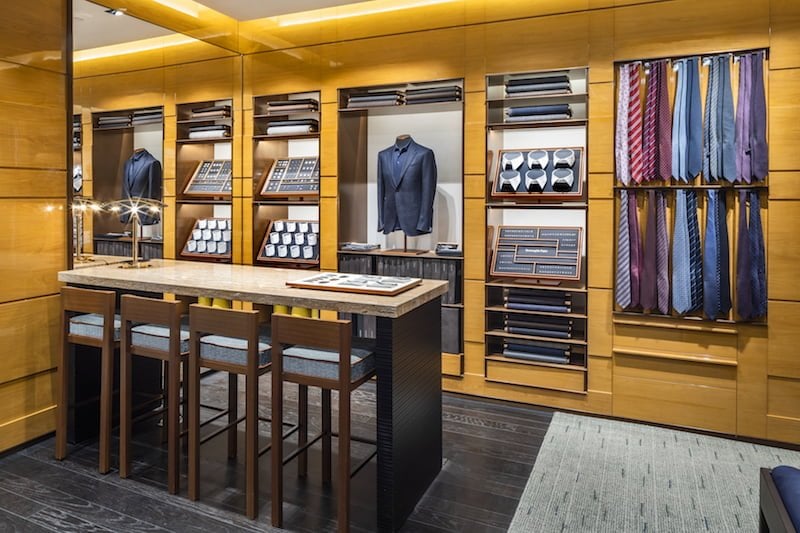
The interior features high-quality materials such as wood and stone, creating a luxurious feel to the space, and it includes a dedicated made-to-measure area to accommodate private appointments. Collections carried in the new store include Ermenegildo Zegna mainline as well as some pieces from the Z Zegna collection, as well as an assortment of footwear and accessories, including items made from Zegna’s Pelle Tessuta, which is a light and tactile fabric made from nappa leather that is woven like yarn.
Ermenegildo ZegnaErmenegildo Zegna
The new Bloor Street flagship also carries the pricey Ermenegildo Zegna Couture collection (some pieces are marked by a signature ‘XXX’) with pieces that can be priced well into the thousands of dollars.
Harry Rosen has had a partnership with Zegna brand for decades and the boutique expansion is a natural progression, according to Harry Rosen CEO Larry Rosen.
“We take great pride in our longstanding relationship with the Ermenegildo Zegna Group, and admire its profound commitment to craftsmanship, luxury and social responsibility,” explains Larry Rosen, CEO, Harry Rosen Inc. “Our families have been in business together since the 1970s and after all these years, we continue to share many of the same values. It’s an honour to work with Zegna and we look forward to celebrating the success of these new openings.”
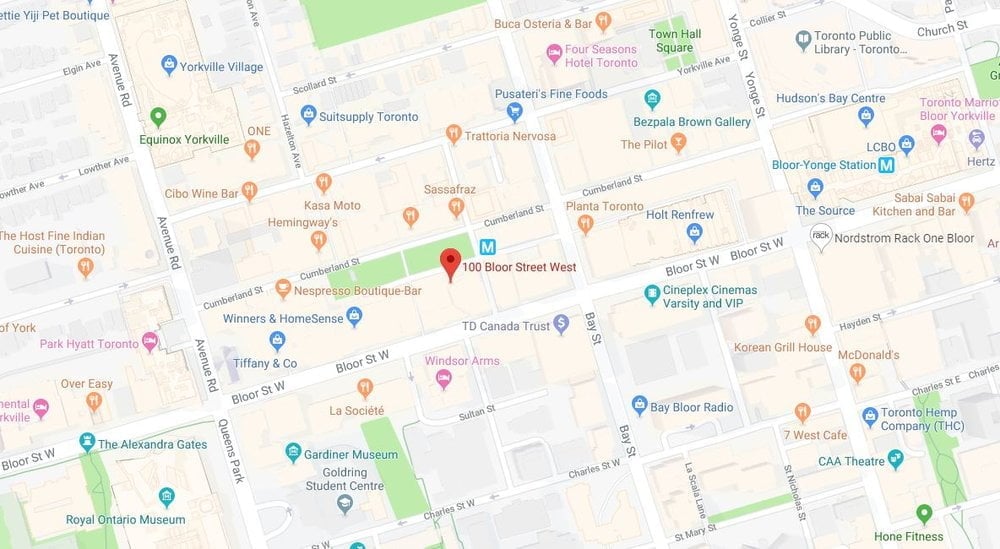
Harry Rosen’s 55,000 square foot multi-level flagship, located at the northeast corner of Bloor Street West and Bellair Street, is about 180 feet east of the new Zegna boutique. Harry Rosen’s second-level includes a roster of some of the world’s top luxury brands for men, including an impressive Zegna shop-in-store that continues to operate, which was the first in the world to feature Zegna’s updated design. The Harry Rosen shop-in-store offers “the Harry Rosen experience” which includes its exceptional customer service.
Zegna is the top selling brand in the Harry Rosen chain, which boasts eight Zegna shop-in-shops across the country, as well as the two standalone flagships.
Ermenegildo Zegna
The standalone flagships are intended to attract brand fans seeking the “pure” Zegna experience and the brand is seeking to operate standalone stores in the world’s major cities — there are plenty of Zegna fans and the brand is considered to be one of the world’s leading luxury labels for men.
We recently profiled the Vancouver Zegna boutique’s re-opening at CF Pacific Centre — the 4,730 square foot store, which is located across the hall from Harry Rosen’s CF Pacific Centre flagship, saw an overhaul that brought it in line with Zegna’s newest global flagships, and was also based on a design concept by Peter Marino.
More standalone Zegna boutiques could open in Canada, though nothing is confirmed as of yet. Harry Rosen is also considering opening standalone boutiques for some of its other leading brands (including Dutch custom menswear brand Atelier Munro). Harry Rosen is considered to be one of the world’s top multi-brand menswear stores and some of its brands do very well — the Tom Ford boutique at its Bloor Street store competes for top sales globally with shop-in-stores at Bergdorf Goodman in New York City and at Harrod’s in London, according to Mr. Rosen.
Loblaw’s latest e-commerce move is a significant one. The number-one food retailer in Canada has launched a subscription program for its PC Optimum members, which includes more than 16 million people. For $99 yearly, members of the newly-created PC Insiders Program can get perks such as extra points for certain products purchased online, along with free delivery. This is clearly based on the Amazon Prime program, which costs $79 in Canada. But Loblaw’s commitment to free delivery for online purchases is the first true sign that the company is willing to get into the ring with the Seattle-based online giant.
For the longest time, Loblaw focused on Walmart’s ascent into the food retailing stratosphere in Canada. But now Loblaw is fixating on Amazon, because it has no other choice. Based on most surveys on this topic, only 2% of Canadians currently purchase the majority of their food online. But similar surveys suggest more than a third of Canadians are now considering ordering food online, and on a regular basis. On the other hand, estimates suggest almost half of Canadians aren’t even thinking of going online to grocery shop. While it seems that actually seeing and touching your food before buying it is still preferred, a growing number of Canadians are starting to appreciate the benefits that come with grocery shopping online, especially for staple or regularly purchased items.
Online grocery shoppers are a different breed of consumer. They tend to be more rational, more disciplined, and less inclined to buy on impulse. Scary thought for the grocery sector, which is known for clinging to very traditional ways of conducting business. But things are different now, due to an aging population, coupled with the fact that much of the Canadian workforce cannot imagine life without the internet.
Loblaw’s recent rollout tells us two things. First, the company is capitalizing on what is already considered one of the most successful loyalty programs in the country. This is one of the main reasons Loblaw bought out Shoppers Drug Mart in 2013. For grocers, loyalty not only pays, but it is now essential. On average, Canadians recurrently visit 2.3 different stores and spend about 32 minutes per visit. This means that the average Canadian appears to be spending less time in a grocery store, but will visit more locations, and it’s a trend that is likely to continue. In other words, shoppers are becoming more strategic and are willing to consider more outlet options to obtain similar products. This is known as the omnichannel approach, and it’s the main reason online shopping matters so much right now. A higher number of contact points with the customer can leverage the entire business and increase loyalty.
Secondly, membership fees can go a long way. Raising some cash to support their online infrastructure will allow Loblaw to gradually expand its cyber reach. Online delivery is a grocer’s most important dilemma when looking at e-commerce. The “click and collect” model was always meant to serve the industry, more so than customers. But no one, absolutely no one, wants to pay for shipping. It’s anything but convenient to have to go and pick up your order after shopping online. Loblaw’s PC Insiders play is a clear commitment, showing it wants to use a model that can offer what customers really want, while at the same time making money selling food online. Truly a first in Canada, at least for now.
Amazon Prime has over 100 million members worldwide. The vast majority reside in the U.S., of course, but some unofficial estimates suggest that Canada is home to over 3 million Amazon Prime members. This is nothing compared to PC Optimum’s 16 million members, but PC’s membership is free. Converting these members into paying PC Insiders will not be easy. Still, we shouldn’t be surprised if Loblaw does well with the program, with results likely exceeding the company’s goal of 100,000 members over the next 6 months. The market is poised for it.
Besides Amazon, another non-traditional food retailer is causing grocers to lose sleep at night. In September, Costco launched a pilot shipping program in Ontario. With over 5 million very loyal paying members in Canada, it is likely to launch a similar program in other provinces in the months to come. This is a real menace for grocers like Loblaw, so it crucial to be launching PC Insiders now. Loyalty has its rewards, and so does good timing.
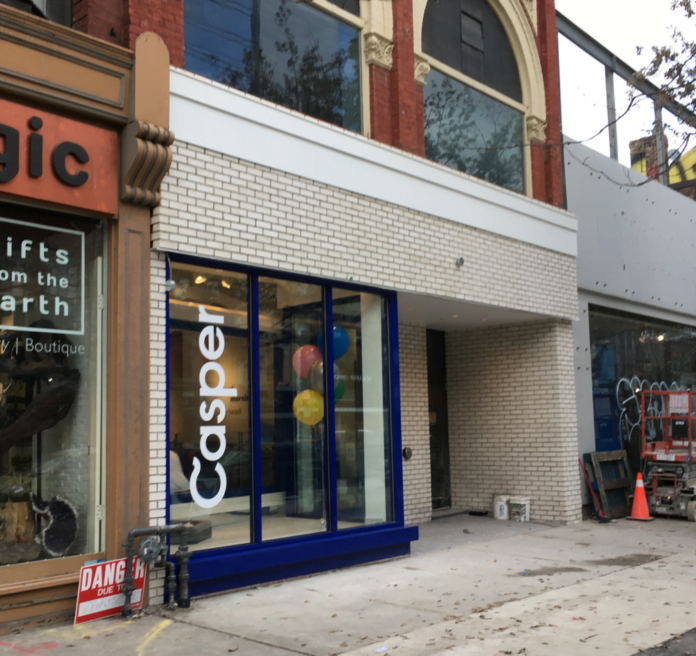
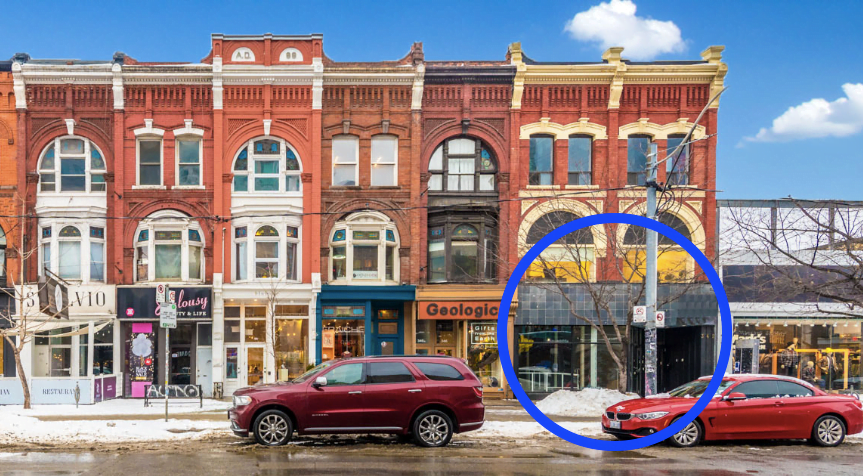
CASPER 342 QUEEN STREET WEST STOREFRONT (PHOTO: CRAIG PATTERSON)
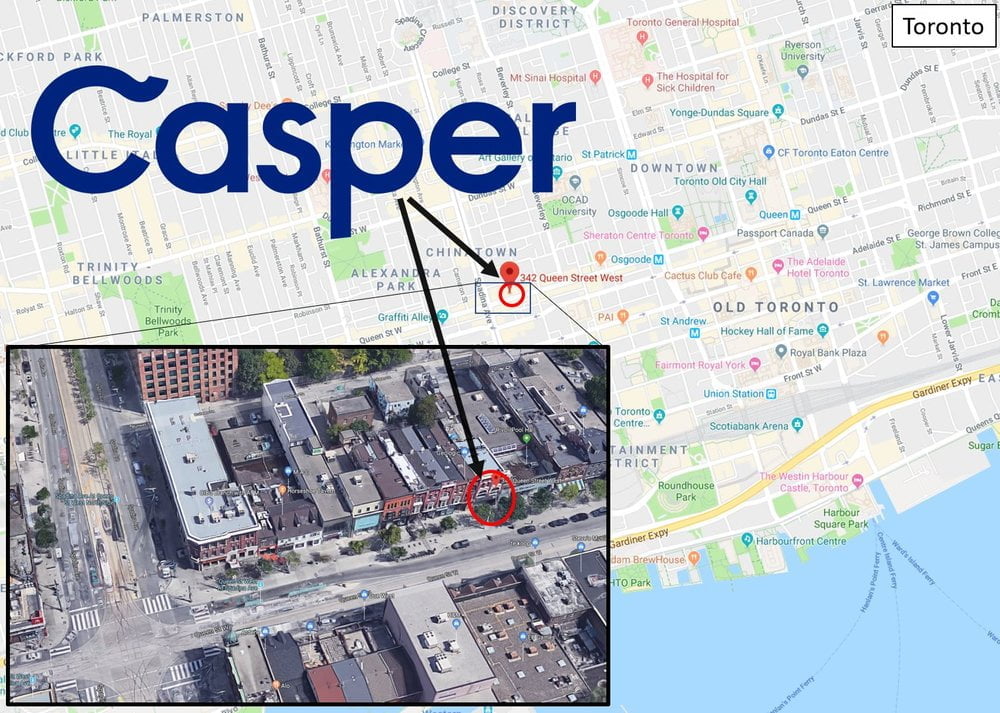
New York City-based sleep brand Casper has opened a large permanent showroom at 342 Queen Street West in downtown Toronto, which will also house the brand’s Canadian headquarters at the back of the space in the spring of 2019 when office renovations are completed. The Toronto location is Casper’s second in Canada, and more retail spaces are set to open in British Columbia, Alberta, Ontario and Quebec over the next couple of years.
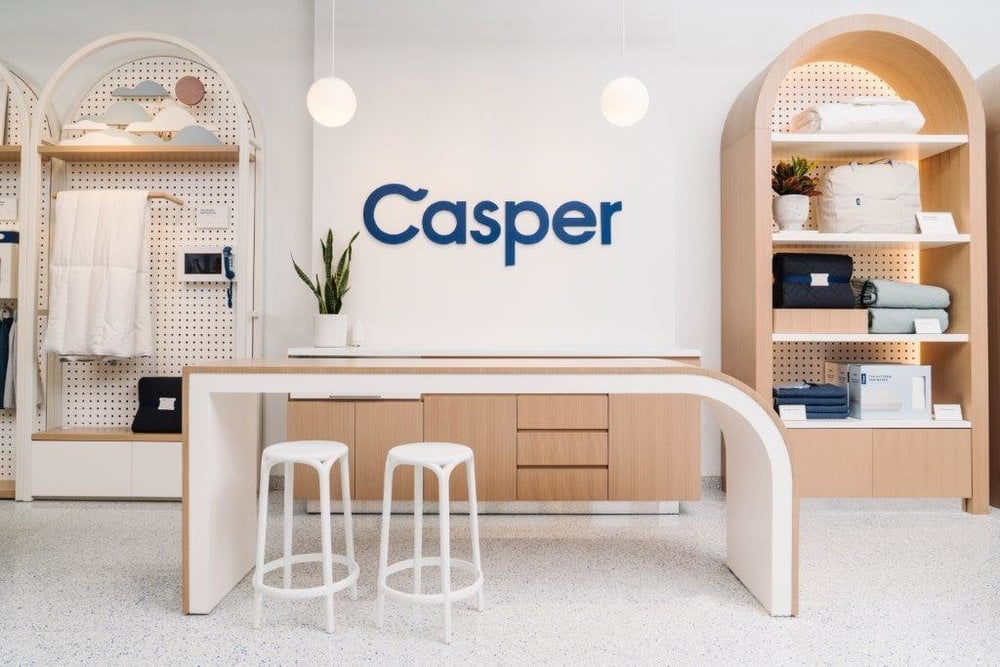
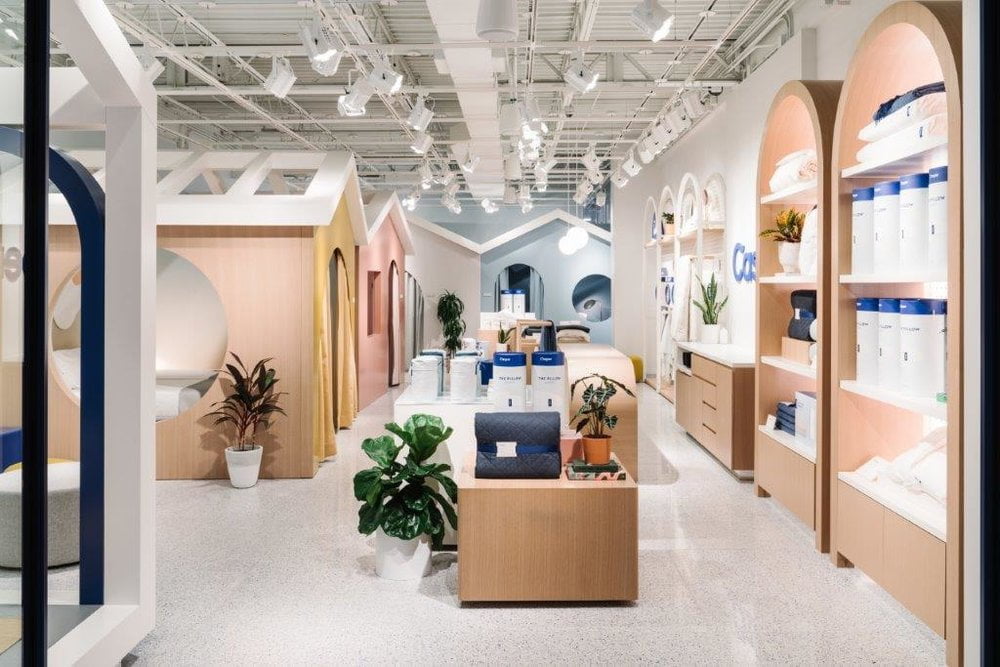
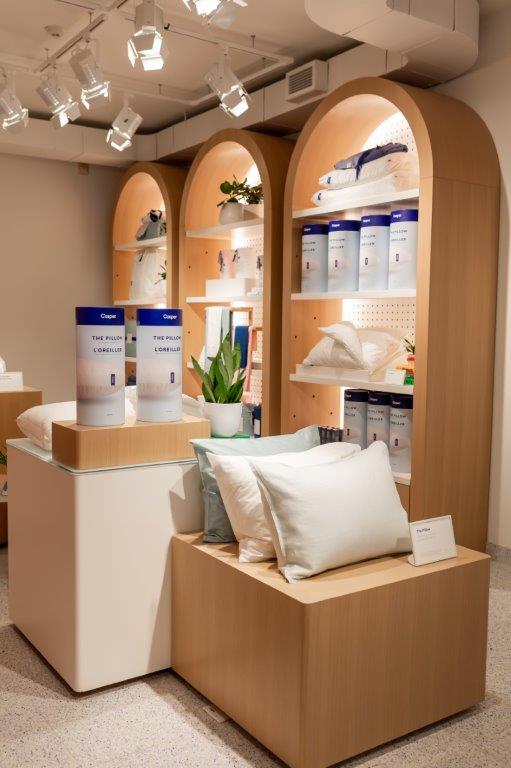
The 2,000 square foot Queen Street Casper location features the brand’s full assortment of products, which includes mattresses, sheets and pillows, bed frames, and even dog beds. The showroom allows shoppers to interact with Casper products and become educated in a way that wasn’t possible when Casper was an exclusive e-commerce retailer.
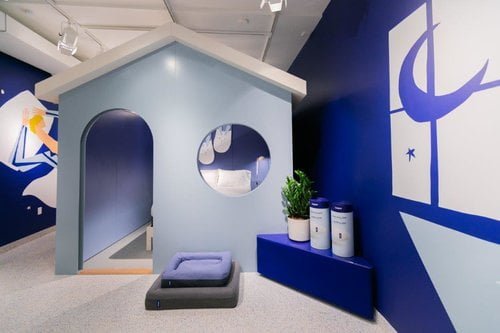
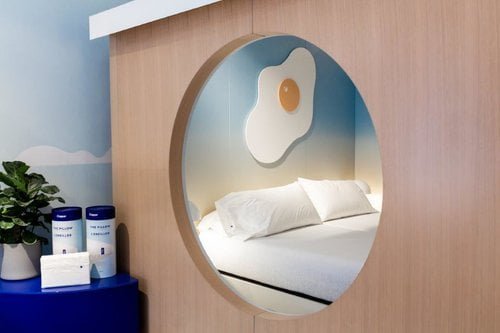
A series of five ‘nap houses’ act as mini-showrooms to display different Casper products such as pillows, bed sheets, bed frames, bedside tables (not to mention different styles of mattresses). The ‘houses’ towards the front of the store feature ‘morning themes’ which move progressively towards ‘nighttime themes’ at the back of the elongated retail space. These can be reserved online privately for 15-minute test-naps.
Image: CASPERCASPER’S RETAIL SPACE CIRCLED IN BLUE. IMAGE: CBRE TORONTO
A separate room area contains a pillow-testing area with a selection of casper pillows that can be tested out on a custom-designed platform that looks like a desk.
Light wood trim is featured throughout the store, with Terrazzo flooring with blue flecks are reflective of Casper’s branding. Casper says that the store incorporates the brand’s newest retail design which will be implemented moving forward. Artwork throughout the retail space, by Toronto based artist and designer Kellen Hatanaka (his previous partnerships include Frank And Oak, the Birreria Volo beer hall, and Cask Days beer festival) brightens up the space with whimsical ‘bedtime scene’ murals throughout.
Quadrangle is working with Casper as its collaborating architect in Canada. Quadrangle designed the 342 Queen Street West space and is also designing upgrades to the CF Sherway Gardens location.
Image: CASPER
Image: CASPER
Image: CASPER
“The demand to experience Casper products in-person continues to grow exponentially,” said Nicole Tapscott, Vice President and General Manager of Casper Canada. “We saw tremendous success from our first Canadian retail store, and are thrilled to open a second location paired with our Canadian headquarters in Toronto, as we invest further in the market.”
Arlin Markowitz and Alex Edmison of CBRE’s Toronto Urban Retail Team acted as listing agents for 342 Queen Street West. Mary Mowbray of Colliers represented Casper in the lease deal. The retail space formerly housed a Lululemon store which relocated to a larger space nearby. Interestingly, Quadrangle Architects also designed the former Lululemon space which opened in 2006, as well as the relocated store.
Casper launched its Canadian operations in 2014 online and it began showcasing some of its products in host retailers. Casper’s first permanent Canadian retail space opened at CF Sherway Gardens in Toronto in May of 2017 in a 2,300 square foot retail space in the mall’s centre-court. Ms. Tapscott said that the CF Sherway store will see some design upgrades that will be similar to the new downtown Toronto location.
Casper operates more than 20 ‘Sleep Shops’ across the United States and Canada, and it plans to open 200 retail stores over the next three years. In Canada, there are plans to roll-out locations in British Columbia, Alberta and Quebec, as well as more in the Ontario market.
Image: CASPER
Casper also parters with retailers such as Hudson’s Bay, Indigo, and EQ3 to carry an assortment of Casper products in their stores.
Casper was founded in New York City in 2014 as a direct-to-consumer online retailer and has celebrity backers including Leonardo DiCaprio, Tobey Maguire, Adam Levine and Ashton Kutcher. The company boasts sales in the hundreds of millions of dollars annually.
The mattress-in-a-box phenomenon is taking hold in Canada in a big way, and the competition has never been fiercer. Late last month, Sleep Country Canada announced that it had acquired Canadian mattress-in-a-box brand Endy for $88.7 million — the move is significant because Sleep Country is the largest mattress retailer in Canada, and Endy is said to be the top-selling mattress in the country with annual revenues on track for $50-million this year. Various other brands continue to enter the market, such as Leesa and Tuft & Needle, and there’s even now a plant-based mattress called Haven Mattress Company which is based in Kelowna.
With Christmas coming up and the holiday season in full swing, mCommerce provides huge opportunities for brands to drive new and existing customers back into the funnel. According to Criteo, December 23rd (closely followed by Christmas Eve and Christmas) was the biggest day in the history of mCommerce in the North America, with 48% of all purchases being made on smartphones. Specifically, shopping apps tend to generate higher conversion rates than mobile web – up to 3 to 5 times higher in some countries.
When it comes to mCommerce, China is the biggest market with the biggest spenders, cashing in $25.4 billion sales during Singles Day (11/11) in 2017. Sales exceeded those of Black Friday and Cyber Monday combined (CNBC), rendering it the world’s biggest online shopping event. However, Christmas Day sales in China are not as popular as Singles’ Day or New Year sales, so it appears that brands are also looking to the West for maximization opportunities. In fact, Chinese and APAC retail apps are rapidly soaring through the ranks of the Canadian app stores at this time of year. As such, we look to Chinese mCommerce apps to examine what lies behind their success as they penetrate the Canadian market. We also look at the best practices that Western mobile advertisers can learn and apply during the holiday season – and beyond.
Get the Basics Right
Product, prices and customer service are deal-breakers. Successful Chinese mCommerce apps, such as the market-leading Alibaba (China’s eCommerce behemoth that took in more than $1 trillion sales in 2017), are well-stocked with products at competitive prices and regularly offer exclusive deals such as “buy 1, get 1 half price.” So, during the Christmas time, try offering something for free, for example: a gift card or voucher, or free credits, to stand out from the competition. Customer service is crucially important, too. A company offering good customer service will earn the customers’ trust resulting in positive reviews and ideally, repeat purchases. Once the basics are in place, make sure that your eCommerce website is optimized for mobile.
Make Mobile Payments Quick and Painless
China is leading the mobile payment revolution, with most customers adopting cashless and eCommerce payment methods, and the ability to make payments with smartphones pretty much everywhere. Back in 2016, China’s mobile payments were already 50 times the size of America’s $112 billion market (iResearch) and valued at $5.5 trillion. In 2017, mobile payments in China amounted for 74% of all online payments (WalktheChat). It is easy to understand why mCommerce in China is such a huge success: customers value convenience. Being able to safely and easily pay via mobile devices (in China largely via Alipay and WeChat), Chinese consumers can make quick and spontaneous purchases. While it may take a while for Western mobile infrastructures to develop at the same pace, mCommerce players in North America and EU should adopt a mobile-first approach and offer a trusted digital payment infrastructure.
Encourage Positive Reviews with Effective ASO
What do APAC’s market-leading retail apps like SHEIN, Lazada, Zalora and Zaful have in common? Strong App Store Optimization (ASO). One thing setting Chinese retail apps apart is their key focus on improving app store rankings and providing real-time keyword ranking systems. You can also use ASO to ensure that users find your app and to encourage positive reviews from users, leading to installs. Some tips: use an app name that stands out; use relevant keywords; ensuring that description and notes are frequently updated; and use screenshots and videos that are visually consistent with the app, helping users get an idea of the look-and-feel. For extra help, there are several ASO tools on the market that can help to improve your ranking and visibility.
Get Social
WeChat is a must-have social network for brands, and consumers are likely to access the websites directly via “WeChat Stores” than actual mobile sites. Weibo is another major social platform. Retail apps such as Pinduoduo (new market leader) have tapped into social by combining low prices with group discounts, which users can unlock by rounding up their friends on social media (for Westerners, it functions similarly to Groupon in its heyday). Social mCommerce is still a new concept to the North American and European markets, but with 1.5 billion users on Facebook Messenger and 1.3 billion on WhatsApp globally, this will eventually change. Meanwhile, Follow China’s lead and incentivize customers to market your app on social media channels by offering them and the friends they attract with promotional codes. This season more than ever, invest strongly in social campaigns depending on where your target audience is (SHEIN has a huge presence on Instagram) to target and retarget consumers.
Branding-First
Another characteristic of the eCommerce market in China is its strict monitoring of web and mobile content. Chinese retail apps place huge importance on branding and reputation by steering clear of content that is political, sexual and offensive in nature and avoiding their mobile ads appearing on illegal sites. Instead, they run social influencer and branding campaigns, giving their brands a more authentic appeal. Make sure your mCommerce app is also brand-safe for the Christmas season and beyond. Speaking of content, it is definitely king in China, where consumers are interested in content that’s entertaining and fun – so create tailor-made content that sets your app apart and emphasizes a brand story, leveraging that to keep users engaged.
Take Advantage of the Supply Chain
Ecommerce platforms in China are strongly integrated with brick-and-mortar stores. With Online to Offline (O2O), consumers can “click and collect” by ordering products from a store’s website and collecting them at a local branch – avoiding delivery fees and crowded retail spaces. Earlier this month, China’s biggest offline retail group Hema Food Market was invested in by Alibaba, allowing consumers to order produce online and have it delivered from their nearest store. QR scans are also very popular in China, drawing customers from offline to mobile. While Canada still has a while to catch up on this trend, ensure that any online to offline transaction is smooth and efficient by training staff properly or use instant messaging to seal the deal online.
Markus Malti
Markus Malti is a Managing Director at WeQ as well as its co-founder. WeQ are experts in mobile ad tech, driving user acquisition and engagement at a global scale. The team of over 100 professionals, covering over 30 nationalities, is led by industry veterans from the mobile advertising space and combines a client-centric approach with purpose-built, state-of- the-art technology. Connect with Markus on LinkedIn.
For years, Mal Coven was a household name in the Canadian retail industry.
Now, as Coven prepares to turn 90 next year, he’s planning a resurrection of sorts of the Biway brand he built years ago but with a different concept.
The BIWAY $10 STORE is expected to make its debut next August in the Toronto market.
“We have a great location. Couldn’t ask for more. I’m so excited,” said Coven of the future site of the store in North York. It will consist of 7,500 square feet.
“The BIWAY $10 STORE is unique because we have adopted techniques used by supermarkets, fine specialty shops and the original Biway stores in presenting our merchandise. We are adopting the supermarket technique of using cut cases in presenting health and beauty aids and food. We are adopting the children’s shops clear visual department signing. We are adopting the original Biway stores technique of presenting. One storey makes it easier and simpler for the customer to make their buy. We are adopting wider aisles so the customer can move more freely between departments.”
MAL COVEN’S AUTOBIOGRAPHY
Coven was one of the leaders in building the discount Biway store to about 250 locations across Canada over 28 years but operations shut down in 2001. He wrote a book about that experience – How I Succeeded in Retirement and the Biway Story.
Coven said the new chain under the same name will have a new concept and four additional stores will be open by the last quarter of 2020. The concept is based on $10. Items can be bought five for $10, four for $10, three for $10, two for $10 or one for $10.
“Nothing will be sold for more than $10. But there will be multiples of $10. They can buy one of the multiples. I already own in storage $100,000 worth of goods that I’ve bought at retail. It’s packed away for me. It’s stuff from branded goods. They’re huge.
“I have jackets that they’re selling for $38 and $40. Biway will sell them for $10. I’ve got 300 jackets. I have shoes from them priced at $26-$28 but we’ll be selling them for $10.
“I’ve gone to people. They’ve made commitments to me. I haven’t bought any more goods but they’ve made commitments to me. The store is going to be gangbusters. We’re going to have an average sale of $30 to $40. My plan is to do $3 million (in sales) but we’re going to do more than that . . . Our average sale at Biway used to be $12-$13.”
The Biway brand name of course is a seller in the Toronto market. Coven points to a survey by Goldfarb and Associates that found 96 per cent of people in Ontario are aware of the Biway name – 52 per cent shopped there regularly and 32 per cent shopped occasionally. The survey also found that 90 per cent thought Biway sold good quality merchandise, 95 per cent felt it gave good value, and 95 per cent would be interested in visiting a new Biway.
Coven said the Biway name will be an instant draw from day one.
Coven said the BIWAY $10 STORE is better prepared to launch its opening than any of the original Biway stores – better quality, better brands and better layout to make shopping a more enjoyable and comfortable experience for the whole family.
Coven said the store will sell “brands you know at prices you love.”
The store will be selling children’s wear from newborn and that will be about 35 per cent of the store’s goods.
“We’re not really a discount store in the normal sense of the word,” said Coven.
But the store will sell an assortment of other goods and products typically found in discount stores.
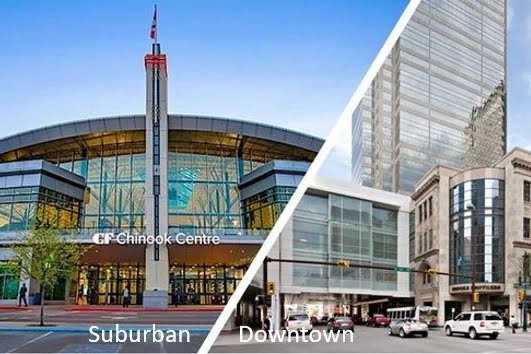
Calgary’s retail scene is seeing disruption as CF Chinook Centre adds luxury retailers to its mix. Downtown Calgary, which for years has been the go-to place for high-end shoppers, is now competing with the suburban CF Chinook Centre for shoppers as Louis Vuitton relocates into the mall, which also houses Nordstrom and Saks Fifth Avenue.
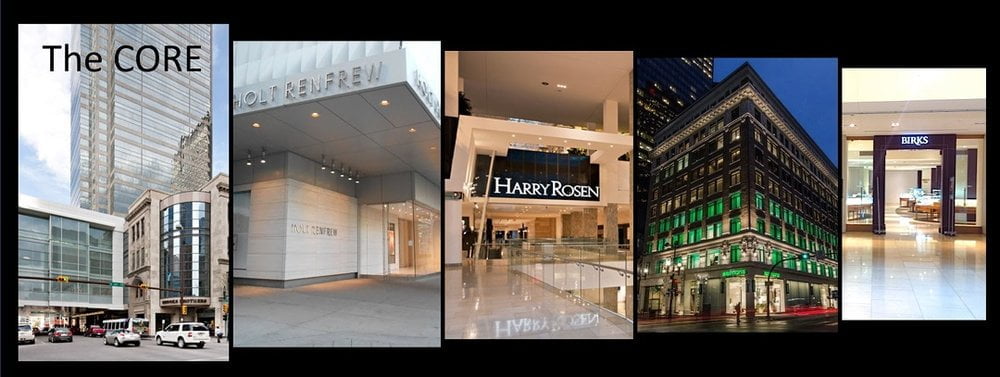
Until the oil downturn of 2014/2015, downtown Calgary was a thriving retail centre housing an impressive multi-level Holt Renfrew store as well as a strong Harry Rosen, Birks and other prestige retailers. The recession resulted in a loss of jobs and office workers and with that, a loss of some high-end shoppers that would otherwise frequent the core in search of status goods.
The Holt Renfrew store, which relocated from a 35,000 square foot space to a 151,000 square foot premises in 2008 still houses the top selection of luxury concessions and shop-in-stores in the city. The street level features storefronts for brands including Hermes, Loro Piana, Gucci, Prada, Celine, Tiffany & Co. and Miu Miu and upstairs on the women’s floor, brands such as Chanel, Akris and Dolce & Gabbana occupy hard-shops (Chanel is a leased concession). Louis Vuitton’s exit from the downtown core is concerning and could signal a shift as other brands also look at CF Chinook Centre, according to some vendors at Holt Renfrew.
As well, sales are said to have gone down significantly at Harry Rosen’s two-level store at Calgary’s The CORE, and some brands have exited including the Giorgio Armani mainline. Sales are said to be challenging at Birks and at La Maison Simons, which opened in the spring of 2017, and is still seeking out shoppers for some of its designer departments including its ‘Edito’ departments which carry some of the world’s leading brands for both men and women. Hudson’s Bay, which operates a 500,000 square foot flagship downtown, has decided against carrying some contemporary brands for women including Sandro and Maje, which both operate concessions at Hudson’s Bay’s CF Chinook Centre location.
CF Chinook Centre stands to gain wealthy shoppers with the opening of its 4,450 square foot Louis Vuitton boutique, which carries a more expansive offering than the downtown Calgary Holt Renfrew concession. CF Chinook Centre also houses a clustering of upscale stores including Tiffany & Co., Harry Rosen, Tesla, and Canada Goose, as well as prestige retailers such as Le Creuset which operates a colourful storefront at CF Chinook Centre. Mackage is said to have secured a space in the mall as has upscale skin care brand Aesop, and popular vegan accessory brand Matt & Nat will also open in the mall in early 2019.
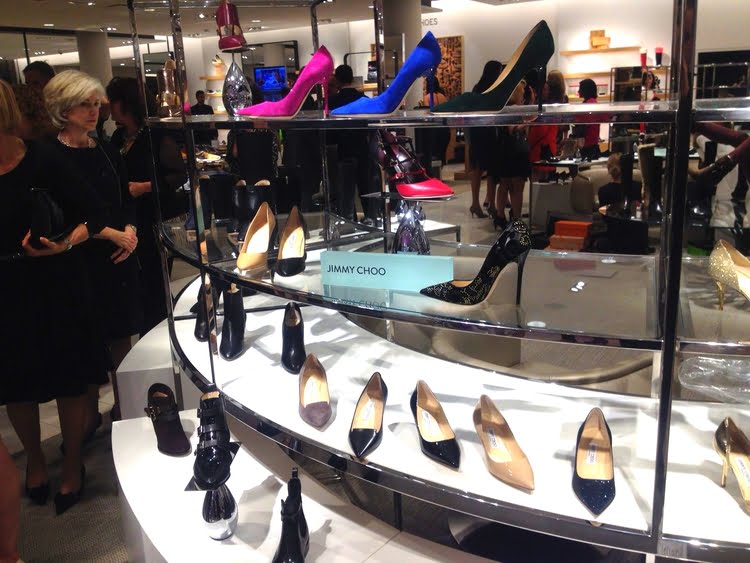
On a recent visit to Calgary, however, it was clear that neither the Saks Fifth Avenue or Nordstrom stores at CF Chinook Centre carry nearly the same number of luxury brands found at Holt Renfrew in the city’s downtown core. While Saks Fifth Avenue carries a range of pricey handbags and shoes from some of the world’s leading luxury brands, it carries almost no true luxury branded apparel for women or men. The mall’s Nordstrom store, interestingly, carries a small range of luxury brands in its women’s ‘Collectors’ department though a sales associate noted that many of the brands that were introduced into the department in 2014 are no longer in the store. The economic downturn appears to have hit the suburbs as well as downtown.
What’s resulting is a showdown between the downtown core and the suburbs, with a split in luxury retailers similar to that of Toronto where the Yorkdale Shopping Centre is attracting luxury brands at the expense of the downtown ‘Bloor-Yorkville’ area, which for decades has been the primary location for luxury-branded boutiques in the city. It’s only been in the past few years that luxury brands have been opening stores in suburban malls in Canada, which is a phenomenon more common in the United States.
At the same time, Holt Renfrew in downtown Calgary continues to maintain a roster of top brands that are not found at CF Chinook Centre and as well, the downtown CORE offers dramatic charm and an urban authenticity that is lacking in suburban centres. It remains to be seen where high-end retail in Calgary will be located in the next decade as landlords jockey to attract affluent consumers.
For many retail business owners, negotiating a good lease or lease renewal against an experienced agent or landlord can be a challenge. While a retailer thinks of marketing, markups, and managing, savvy real estate agents and brokers are specialized sales people. Their job is to sell retail business tenants on leasing their location at the highest possible rental rate.
Retail business tenants may go through the leasing process once or twice in their entire lifetime – yet they have to negotiate against seasoned professionals who negotiate leases every day for a living.
As we explain in our book, Negotiating Commercial Leases & Renewals FOR DUMMIES, there is much to remember whether you are leasing a new location for the first time or negotiating a lease renewal for your retail business. Here are some tips:
Negotiate to Win: All too frequently, retail tenants enter into lease negotiations unprepared and don`t even try winning the negotiations. If you are not even negotiating to win, you won`t. With big commissions at stake, you can be sure the landlord`s agent, on the other hand, is negotiating fiercely to win. Retail tenants should remember that it is okay to negotiate assertively.
Be Prepared to Walk Away: Try to set aside your emotions and make objective decisions. Whoever most needs to make a lease deal will give up the most concessions. A good retail business in a poor location will become a poor business.
Ask the Right Questions: Gathering information about what other tenants are paying for rent or what incentives they received will position you to get a better deal. Consider that your landlord and his agent know what every other tenant in the property is paying in rent, so you must do your homework too.
Brokers … Friend or Foe? Agents and brokers typically work for the landlord who is paying their commission. It is not normally the agent`s role to get the retailer tenant the best deal – it is their job to get the landlord the highest rent, the biggest deposit, etc. Often, the higher the rent you pay, the more commission the agent earns. If you are researching multiple properties, try to deal directly with the listing agent for each property, rather than letting one agent show you around or show you another agent`s listing. Your tenancy is more desirable to the listing agent if he can avoid commission-splitting with other agents.
Never Accept the First Offer: Even if the first offer seems reasonable, or you have no idea of what to negotiate for, never accept the leasing agent`s first offer. In the real estate industry, most things are negotiable and the landlord fully expects you to counter-offer.
Ask for More Than You Want: If you want three months free rent, ask for five months. No one ever gets more than they ask for. Be prepared for the landlord to counter-offer and negotiate with you as well. Don`t be afraid of hearing `no` from the landlord – counter-offers are all part of the game.
Negotiate the Deposit: Large deposits are not legally required in a real estate lease agreement. Deposits are negotiable and, more so than anything else, often serve to compensate the landlord for the real estate commissions he will be paying out to the agent(s). If you are negotiating a lease renewal and your landlord is already holding a deposit of yours, negotiate to get that deposit back. The Lease Coach is frequently successful with negotiating to have the tenant’s deposit returned.
Measure Your Space: Retail business tenants often pay for phantom space. Most retail business tenants are paying their rent per square foot, but often they are not receiving as much space as the lease agreement says.
Negotiate, Negotiate: The leasing process is just that – a process, not an event. The more time you have to put the deal together and make counter-offers, the better the chance you have of getting what you really want. Too often, retail tenants mistakenly try to hammer out the deal in a two- or three-hour marathon session. It is more productive to negotiate in stages over time.
Educate Yourself and Get Help: Unless you have money to throw away, it pays to educate yourself. Taking the time to read about the subject or listen in on a webinar will make a difference. And, don`t forget to have your lease documents professionally reviewed before you sign them. With hundreds of thousands of dollars in rent at stake, personal guarantees and other risks, you can`t afford to gamble. In leasing, retailer tenants don`t get what they deserve, they get what they negotiate.
The Food Price Report 2019, recently released by Dalhousie University and the University of Guelph, suggests that vegetable prices will go up by as much as 6% next year. Unlike meat or fish, fewer alternatives exist when it comes to replacing vegetables. According to the report, El Nino will be to blame, since Canada imports a great quantity of vegetables from certain regions prone to drought during El Nino periods. This includes primarily the Western United States and Northern Mexico. And, yes, 2019 is going to be an El Nino year. The 6% increase is in addition to the 4.8% hike that vegetable prices underwent already in 2018. Given that we could experience a second consecutive year of significant price increases, many wonder whether eating local produce is the better option. Well…not quite.
Global supply chains have allowed us to become more efficient and have given consumers more choices and affordable food products, but eating local has its advantages, too. The environmental case for eating local is almost undisputed. You can significantly reduce your carbon footprint just by increasing your locally-grown food consumption. One other advantage of local foods is price consistency. That’s right, prices are perhaps generally higher but much less volatile when short-circuit distribution systems are involved. This makes sense, as the number of intermediaries is limited, compared to global food chains. Global supply chains are exposed to environmental fluctuations, and differing economic conditions, which can all lead to more trouble. Extensive, large-scale networks will always give markets what they need at the right time, at the right place, at a decent price, and with an acceptable level of quality, until something goes terribly wrong. A single failure can lead to a hugely disruptive scenario, affecting many people.
Case in point: the romaine lettuce disaster in November. Grown in California and Arizona, fresh lettuce is delivered to Canadians at a decent price. But with the recent e-coli outbreak in romaine lettuce, not only did some people get sick, but the prices of leafy greens in Canada are now skyrocketing. With the Canadian Food Inspection Agency preventing romaine lettuce from coming into Canada, importers must procure similar products elsewhere, and are likely paying more to get these precious salad greens into our stores. Trying to meet consumer expectations is what drives importers to look for alternatives. Consumers will want their leafy greens, even in winter, no matter what. Eventually, the situation will go back to normal and most will have forgotten about the romaine lettuce crisis. That’s the nature of market failures. Systems adapt and improve over time.
Many envy the stability and sustainability of local food systems. They are easily containable, and frankly, conveniently manageable. Unlike global supply chain systems, transparency is a non-issue, since most producers usually know each other. Buying locally-grown vegetables whenever available can also give some peace of mind to budget-strapped shoppers. You will likely pay more, but at least prices, for the most part, are highly predictable. Simplicity has its virtues, but it also comes at a cost. Local foods are typically 20% to 40% more expensive than the cheapest imported substitutes available in the same marketplace.
Research shows that city dwellers are more likely to favour locally-grown or manufactured food products, for the simple fact that agriculture is often a distant concept to them. In fact, many Canadians have never actually been to a farm. Buying local is the one way to feel a real connection with agriculture and farmers. There is also more wealth in cities versus rural communities, which makes price a secondary factor. Although price remains a consideration for urban dwellers, it is more important to less wealthy consumers living in rural areas. And that is where global supply chains come in.
The fact that Canada is an open economy has both advantages and drawbacks. Given that Canadians have access to the fifth most affordable food basket in the world, relative to household income, global supply chains appear to be serving them well.
So, don’t despair: getting our vegetable fix from all over the world is not such a bad idea. Our nordic climate does not give us many options. But global supply chains do come with their fair share of risks, which in turn generate price volatility. And buying local produce can be critical to our agrifood economy. In many parts of the country, it is apparent that local vegetable production is a priority, through vertical farms, greenhouses using novel technologies, and other initiatives. Access to more locally-grown vegetables, and striking a balance between local and global, will be key. But price hikes affecting vegetables are a challenge for many right now, especially those with limited means. As such, visiting the freezer aisle may not be such a bad idea. It may not taste the same as the fresh version, but you will get the same nutritional value out of these frozen veggies.
Finally, one piece of good news: authors of the Food Price Report 2019 do suggest that the price of both meat and fish products will drop next year, by up to 3%. This is a first in the study’s nine-year history. So, meat lovers can rejoice and can do their own happy dance around the BBQ come next summer. Just don’t forget to eat your veggies.