

Advertisement
Home Blog Page 1056

BRIEF: UNIQLO Continues Rapid Expansion, Wicker Emporium Chain to Close After 47 Years

exc-5bc0092db208fc8737a3a603

By Helen Siwak, Retail Insider Brief Editor
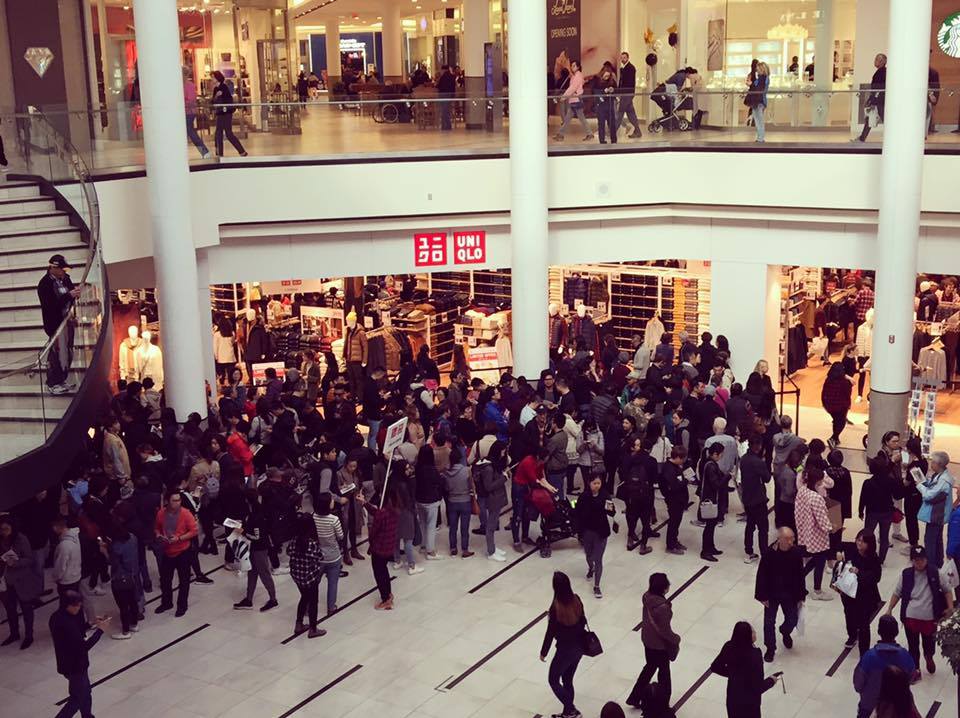

Photo: Uniqlo Canada FacebookPhoto: Uniqlo Canada Facebook

Photo: Uniqlo Canada Facebook

Uniqlo Opens at CF Markville: Japanese fashion retailer Uniqlo is continuing with its rapid Canadian store expansion with the opening on Friday of a new 18,560-square-foot store at CF Markville in Markham, just north of Toronto. This follows the recent opening of a 28,150-square-foot store at Vaughan Mills, also just north of Toronto and next month, Uniqlo will open a 19,850-square-foot store at Mississauga’s Square One shopping centre. 

In the span of about two months, Uniqlo opened four stores in Canada — a store opened on September 14 at Coquitlam Centre in suburban Vancouver. Prior to that date, Uniqlo had five stores in Canada — two in Toronto and three in the Vancouver area. The two Toronto stores were the first in Canada and opened in the fall of 2016. 

All of Uniqlo’s Canadian stores are currently in the Toronto and Vancouver areas. Could Uniqlo expand into other markets in Canada? The company has said that it could open as many as 100 stores in Canada, so it’s not so much of a question of “if” but “when” — over the course of October, Uniqlo has hosted pop-up events in Montreal, Ottawa and most recently, Winnipeg. While not to speculate, Uniqlo also hosted PR events in Toronto and Vancouver prior to opening permanent stores. Cross fingers! 

Jeff Berkowitz of Aurora Realty Consultants represents Uniqlo as broker in Canada.
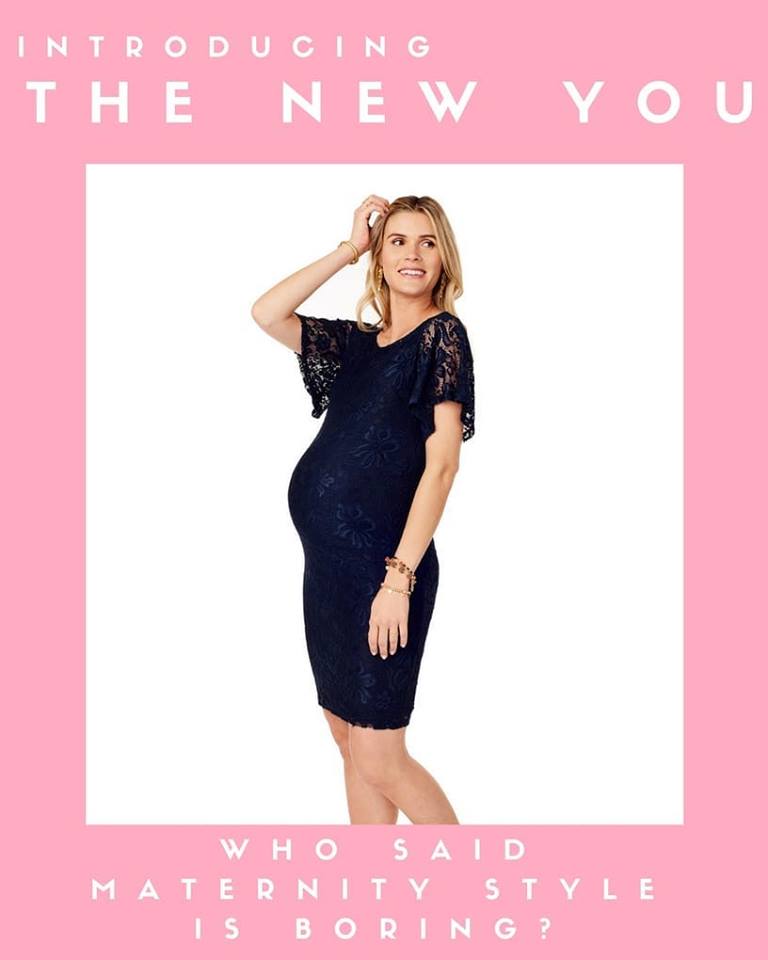

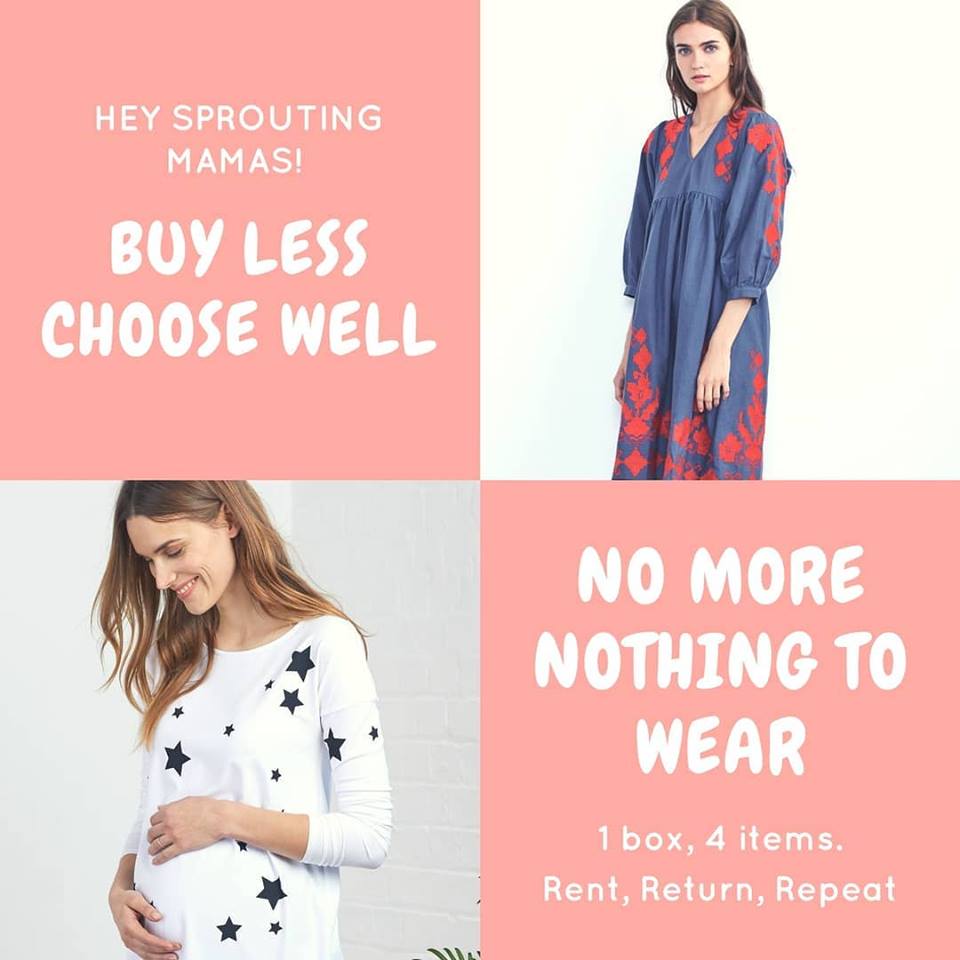
Sprout Collection – Rentable Maternity Wear: To quote the Sprout Collection website “Maternity wear is often touted as the blackhole of fashion. High quality and well-designed maternity wear is also difficult to obtain and outrageously priced.” 

Sprout Collection is a new business that is quickly gaining traction in Canada with rent-able maternity and nursing fashion. It’s cost-effective, sustainable, and the first of its kind in the country, providing women access to an unlimited closet of maternity and nursing wear.

Launched in Toronto by lawyer and entrepreneur Joyce Lim in May 2018 (the same month she gave birth to her daughter), the business was inspired by her own struggle to find affordable but well-made maternity clothes throughout her pregnancy.  

Differing from the emerging dress/runway rental companies such as Rent frock Repeat or Vancouver’s FlauntBox, Sprout dresses women for a month at a time to accommodate their growing bellies. Offering three types of Membership subscription plans, which range from $99/month to $119/month with free shipping for Canadian domestic deliveries and returns, Sprout provides the convenience and the selection that women need. The process is clearly outlined on their FAQ page for those not familiar with clothing rental services.

Current listings include versatile quality brands Isabella Oliver, J Brand, Seraphine Maternity, MISA Los Angeles, and more.



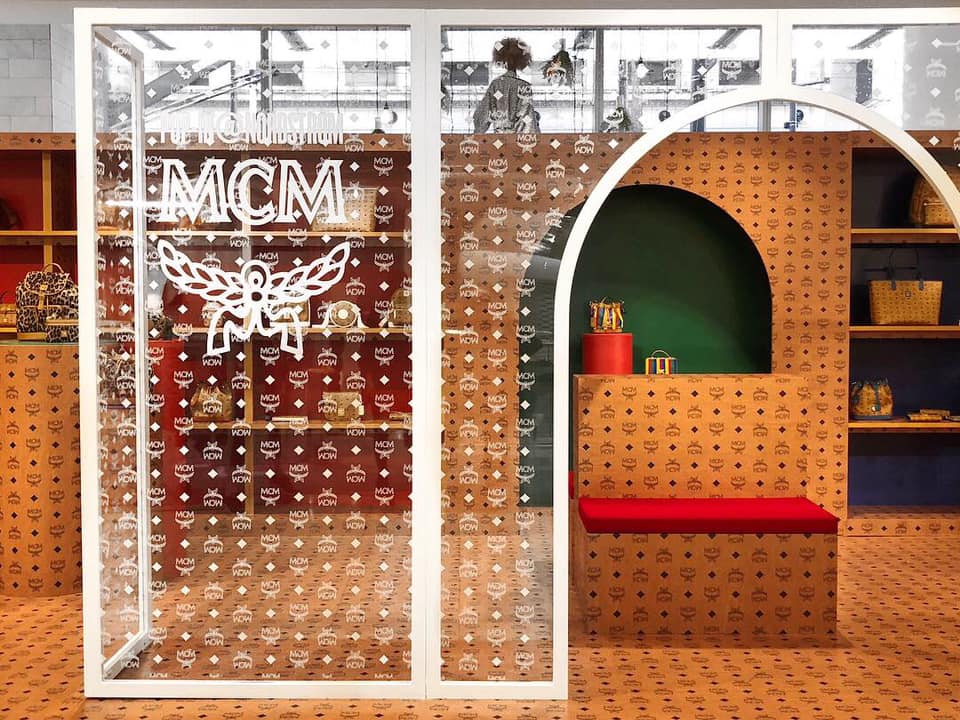
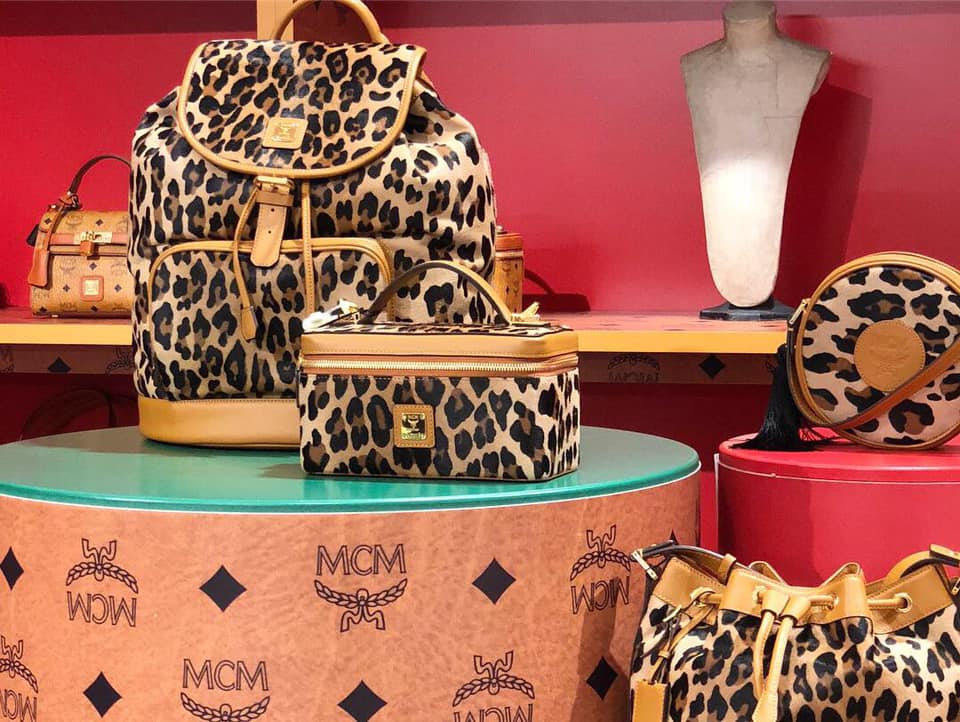
Pop-in@Nordstrom MCM Brings the Beat of NYC Streets to Canada: Available at select Nordstrom locations (Vancouver, Toronto, Seattle, Dallas, NYC, and Los Angeles), Olivia Kim’s curated Pop-In@Nordstrom MCM showcases a capsule collection of bags and small leather goods crafted from MCM’s signature all-over monogram cognac visetos printed leather. The vintage-inspired silhouettes are bold in hues of red, green and blue, and a selection of pieces crafted from leopard-print hair-calf are embellished with custom gold-plated logo hardware.

The pop-in shop contains more than 100 exclusive items, and in addition to handbags and leather goods, Pop-In@Nordstrom MCM features limited-edition monogrammed lifestyle items including Wilson basketballs and footballs, Everlast boxing gloves and punching bags, hats by New Era, Champion crewneck sweatshirts and hoodies, slides, umbrellas and more. Prices range from $60 for the water bottle to $2,795 for the MCM vintage golf bag.
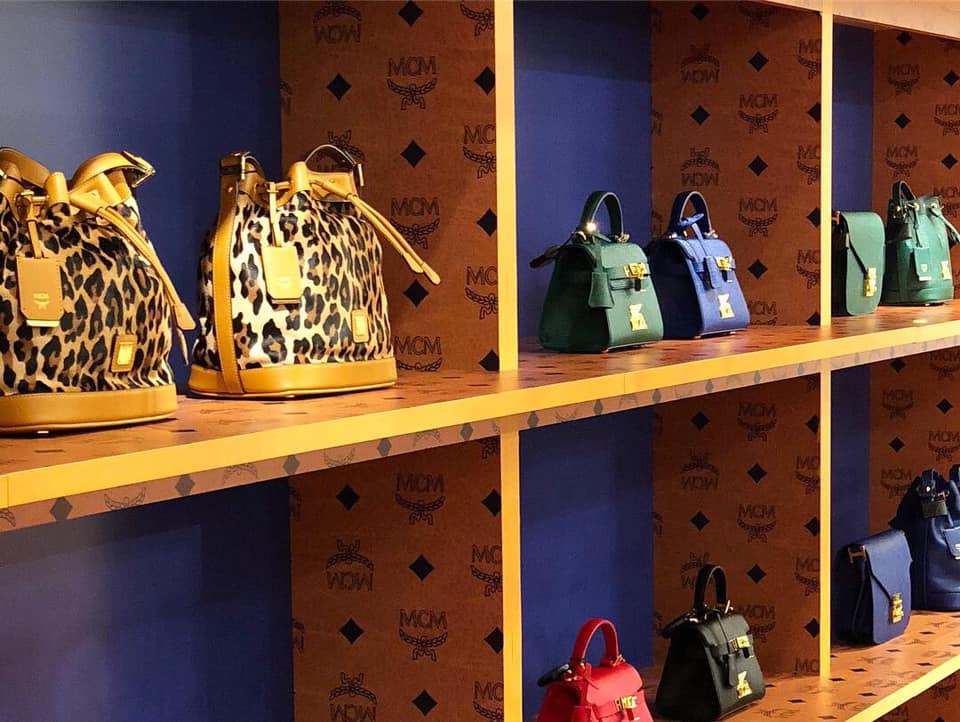
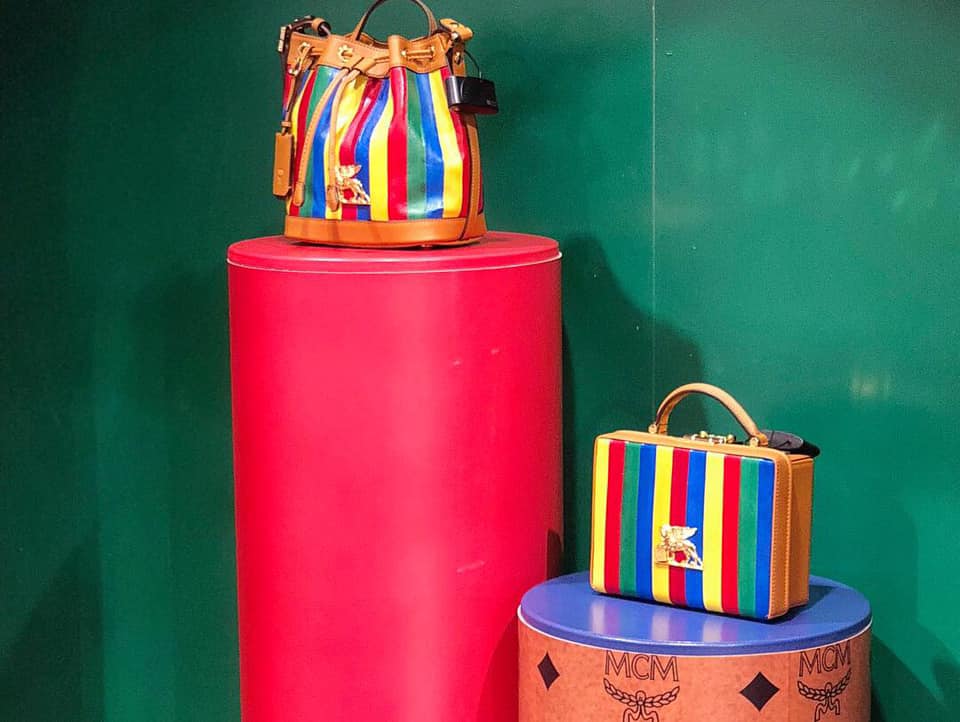
Kim has created a collection of MCM eye-candy which celebrates the heritage, history, and future of MCM. The Sue Kwon photo campaign which accompanies the capsule collection includes infamous rapper-provocateur Slick Rick and was styled by Misa Hylton, herself legendary among hip-hop’s biggest names – Missy Elliott, Lil’ Kim, Mary J. Blige, Beyoncé – for creating trends since the 1990s.

MCM also sells at upscale retailers nationally (such as Saks Fifth Avenue and Holt Renfrew) and the brand also has a standalone store on Bloor Street West in Toronto which opened last year.

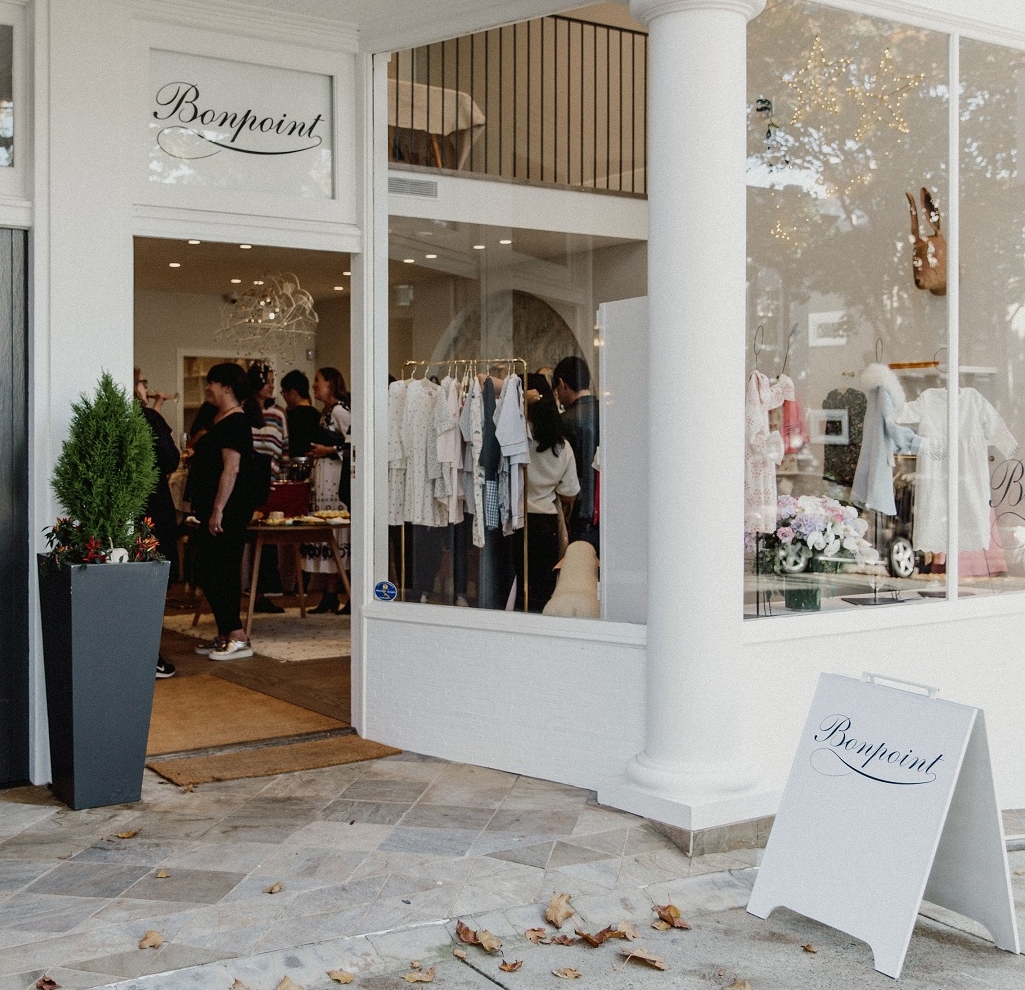
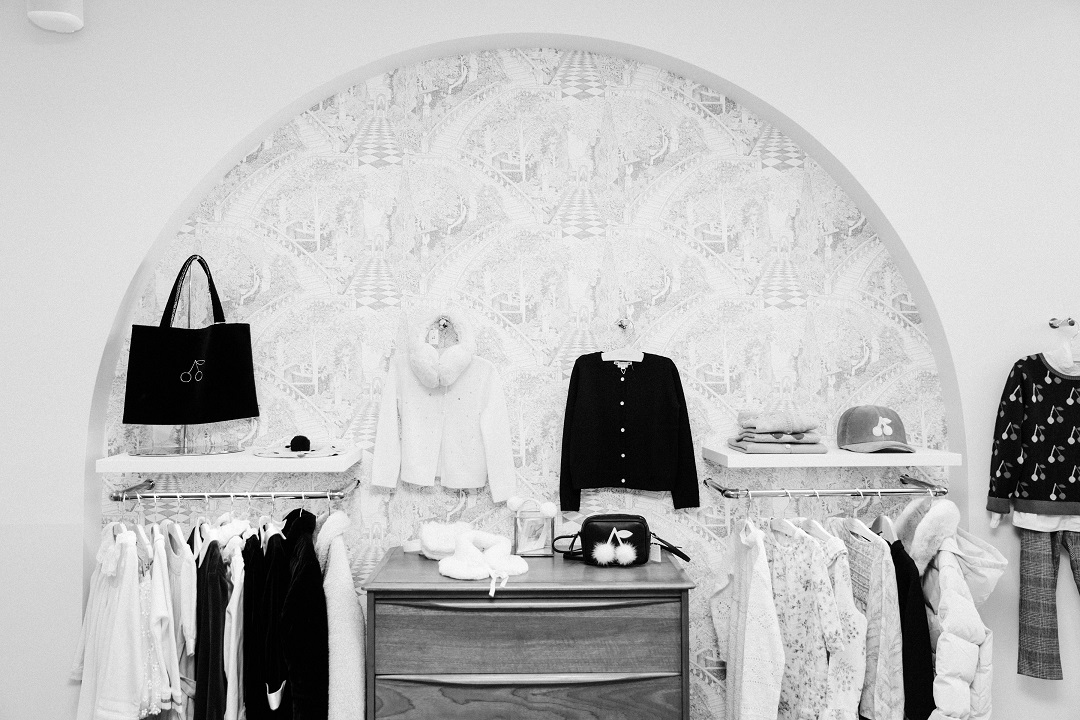
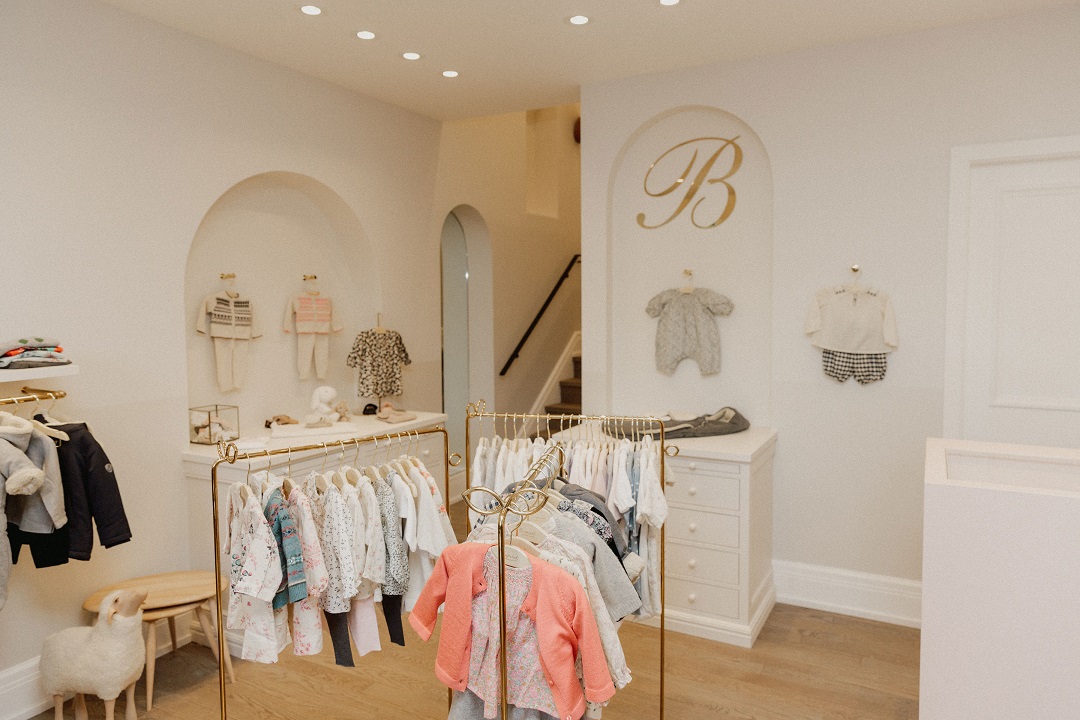
Bonpoint Opens 1st Canadian Store: Paris-based children’s luxury fashion retailer Bonpoint made its Canadian debut over the weekend with a standalone store in Vancouver. The 920-square-foot boutique is located at 1512 W. 14th Avenue in the city’s Fairview area, and is being run in partnership with upscale multi-brand children’s retailer Isola Bella, which operates a retail space in Vancouver’s Kerrisdale area.

Bonpoint sells upscale children’s fashions including newborns, and also has a line of footwear, sunglasses, perfume and skincare. Some garments can cost into the hundreds of dollars each, which means its target market is households with discretionary income.

The company was founded in 1975 with a single store in Paris, and the company has since expanded to include retail and wholesale accounts globally. Bonpoint has nine stores in the United States, all of which are generally located in upscale locations.  

CBRE Vancouver represented the retailer in the lease deal under the direction of Martin MoriartyMario Negris and Chloe Hamelin

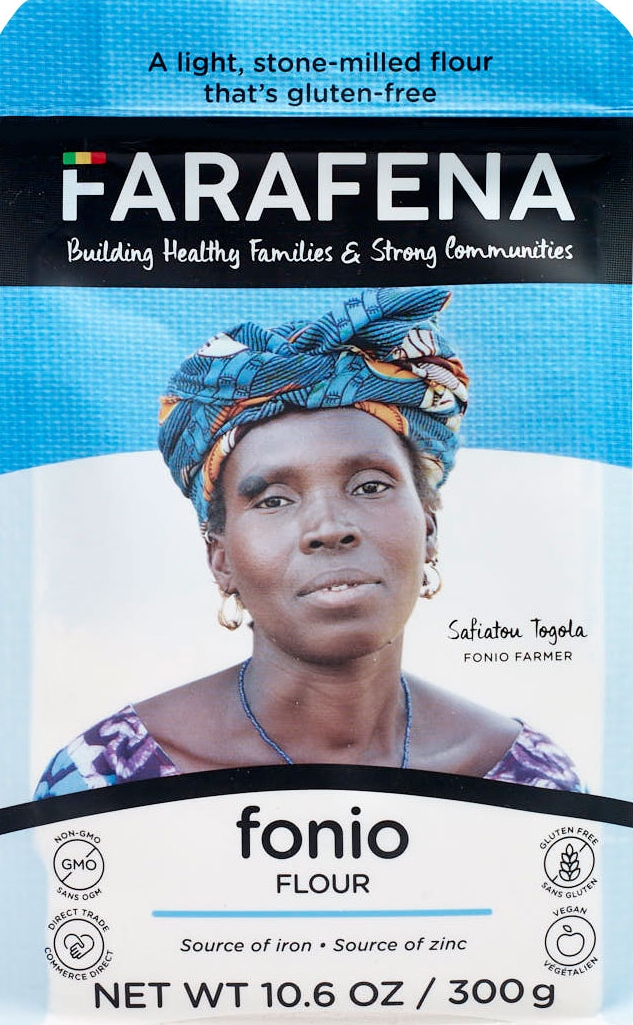
Farafena Expands Offerings of Sustainable African Superfoods in Canada: BC-based superfood company, Farafena has announced its expansion into 600 stores across Canada including 500 Loblaw stores. The nutrient-dense, African-grown, and sustainable products include powders of ancient grains – fonio, baobab, moringa.

The company’s vision is simple: to share our healthy, sustainably farmed food with the world, while improving the lives of women farmers and their communities in Africa. The company currently partners with over 850 African women farmers in nine villages, bringing nutrient-dense, African-grown products to Canadian tables.


To date, Farafena’s engagement with women farmers in Africa has provided increased business opportunities and product earnings well above the national average. This is resulting in women being able to start micro businesses, build homes for their families, and educates their children – as well as improving the health and prosperity of rural villages while supporting traditional farming practices.

Look for Farafena’s products available at over 600 retailers including Whole Foods, Loblaws, Real Canadian Superstore, Save-on-Foods, Urban Fare, and HY Louie IGA


Van Der Hout Jewelry (2).jpgVan Der Hout Jewelry (2).jpg

NYC Transplant Brings Big City Bling to TO with Van Der Hout Jewelry: For 15 years, Karen Van Der Hout supervised retail accounts in New York City for major jewelry wholesalers. Now based in Toronto’s North York, Karen set up her own jewelry company – Van Der Hout Jewelry in Summer 2017 – specializing in personalized fine jewelry. 

Success has been swift through word-of-mouth via Toronto socialites, Instagram influencers like Ania Boniecka, Beckerman twins Cailli + Sam, and Valeria Lipovetsky who are enthralled with her customized solid gold necklaces, earrings, rings and bracelets, bearing the initials and names of their children and loved ones. 

While Karen was initially selling to friends and family through her Instagram page, demand grew so quickly that she launched dedicated e-commerce through Shopify in early Fall 2017. 

VDHJ is riding the ‘personalization’ trend, favoured by such luxury brands as Louis Vuitton, Fendi, and Valentino, as almost all of her items are customizable.  Necklaces offered are white, yellow or rose 14K gold, a particular chain length, and any engraving. 

In the year since, without any financial backers or major marketing effort, VDHJ is boasting sales in the mid-6 figures!


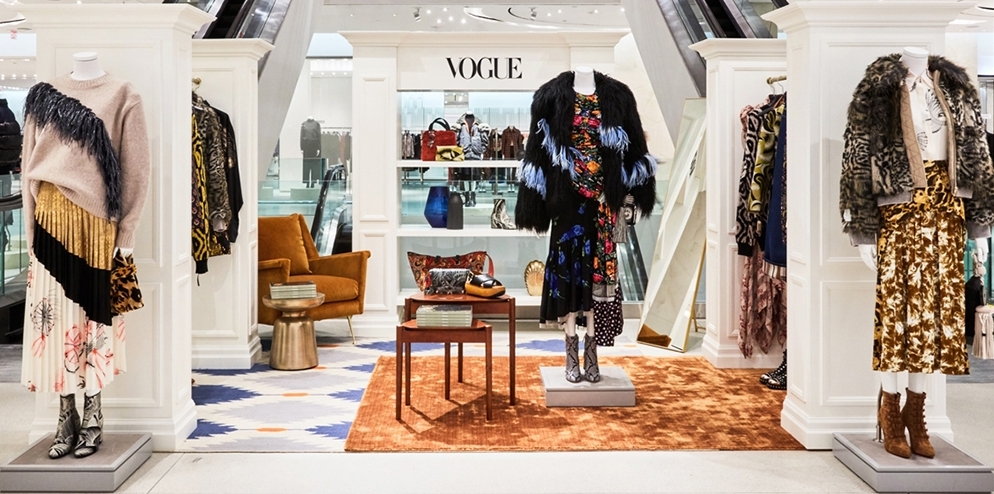
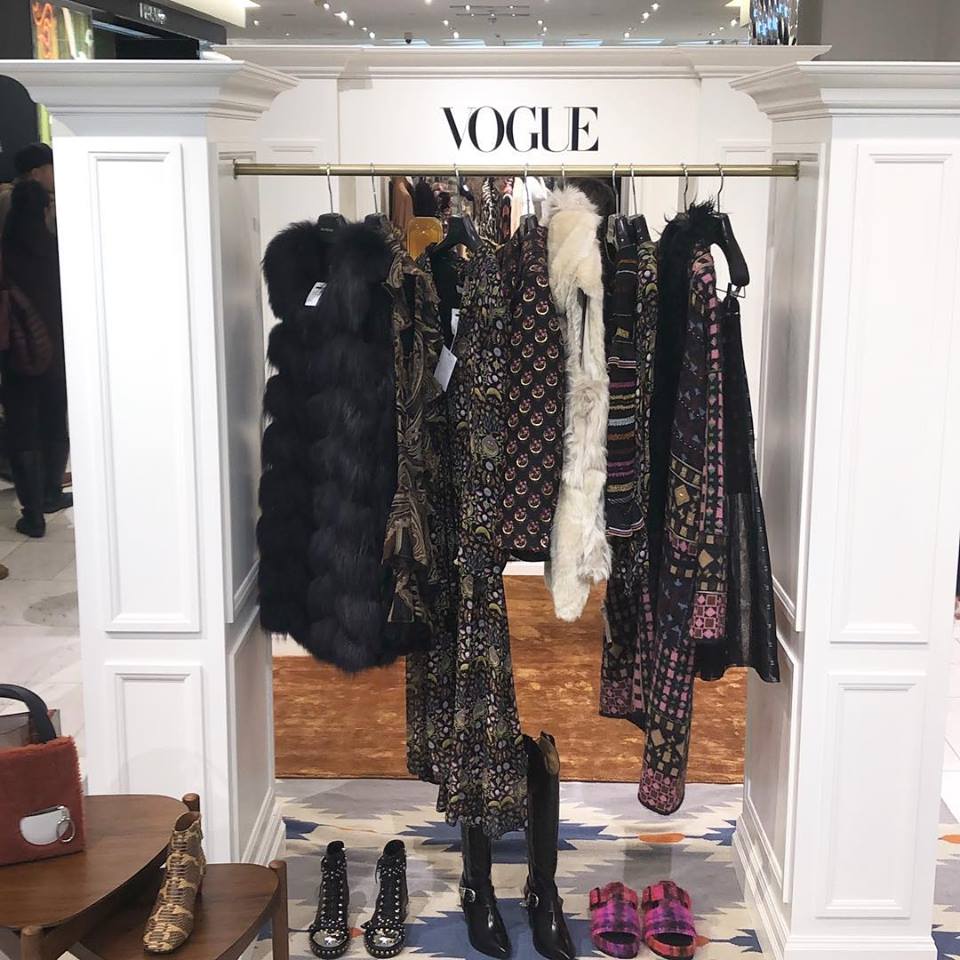
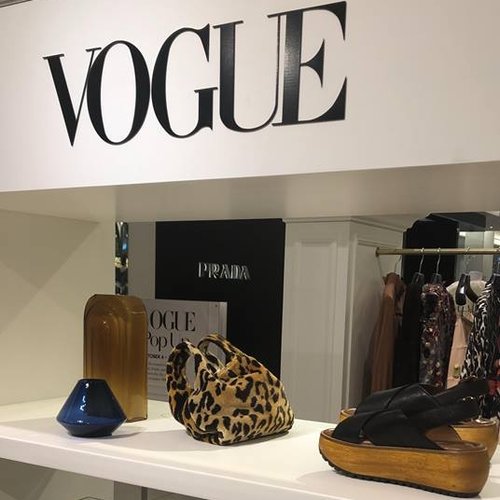
Vogue’s Selections for the Season Popping Up at Holt Renfrew: Holt Renfrew and Vogue have opened three new trend-driven pop-up spaces inside Holt’s locations across Canada. The chic white spaces have been created in Vancouver, Calgary, and Toronto. The merchandise, which is available online as well as in-store, through to October 28, was specially selected by Vogue’s new Fashion Director Virginia Smith and former Vogue Accessories Director Selby Drummond

Identifying Fall 2018 reflective elements as Global, Bright, and Timeless, the spaces are divided into ready-to-wear and accessories. For Global, the duo selected Dries van Noten with faux fur trims, Hayward, and Dior, for Bright it is Gucci, Adidas x Raf Simons and Kenzo, and Timeless features Saint Laurent, Chloe, and Acne Studios

Images by Sarah Darcy Style.


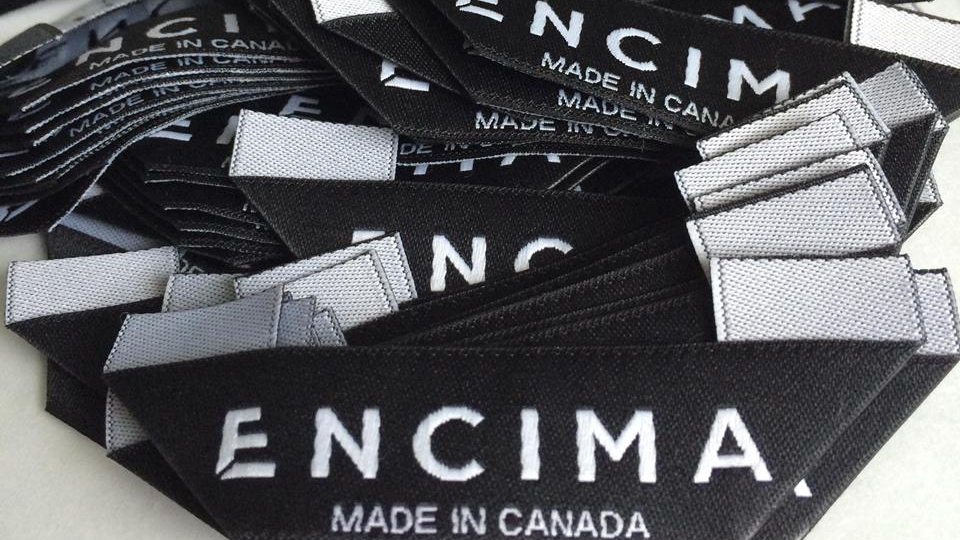
Vancouver’s Encima Clothing Closing with Celebratory Pop-Up: After almost four years, made in Vancouver brand, Encima will be closing down and doing so in style. The brand, founded/designed by husband and wife duo Faizaan and Suzy Lalani, have partnered with Cle Management to host a one-day pop-up event to sell off all remaining inventory and to close this business chapter with a celebration.

The brand was known locally for its high-quality contemporary men’s wear which was designed and manufactured in Vancouver. Their recent Lookbook featured clothing with a streetwear feel with unique cuts. The collections have included jackets, longline hoodies, draped cardigans, and buttoned shirts in muted hues which suited the west coast aesthetic.

The brand launched in 2015 and gained some traction by presenting at local fashion events, was stocked online and at Get Fresh Company in Toronto, and briefly at defunct Alfie Italia in Gastown and Rivermen in Mississauga.

Lalani has invited the public to shop with all items being under $100, and for those in the industry or interested in getting into manufacturing in Canada to come and ask questions of Encima’s experience to share with others looking to follow their dreams.

The event will take place at 430 Homer Street on Saturday, October 20th from 11am-7pm, with the celebration portion with DJ and beverages starting at 5 pm. 

10501693_395241523972791_2376657623395815118_n.jpg10501693_395241523972791_2376657623395815118_n.jpg


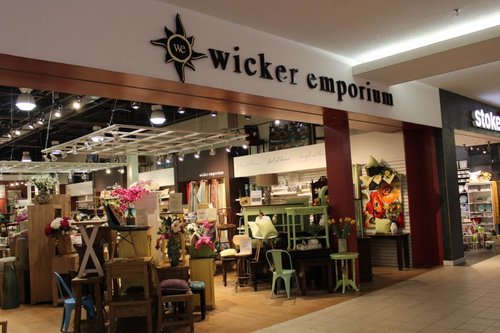
Wicker Emporium Chain to Shutter Operations: Retail Insider reported in July that Halifax-based retailer Wicker Emporium had run into financial troubles though it would attempt to continue with its operations. It’s now been reported that the company will close all of its stores after 47 years of business. 

Last week an employee, wishing not to be named, told the Halifax Chronicle Herald that the furniture and home decor retailer will be closing its six remaining stores as a result of the bankruptcy. The company has assets of $720,000 and liabilities of nearly $5.4-million, according to the Office of the Superintendent of Bankruptcy. 

The chain was founded by entrepreneur India-based Madan Kapahi in 1972 and five years later, he moved to Halifax to expand operations that sold goods from around the globe. The family-owned business had 23 stores in 2014. 


Helen Siwak is the publisher of EcoLuxLuv.com Magazine, a Marketing & Media Strategist for numerous luxury based companies and content creator for local digital and print publications. When not writing, she is attending fashion events, traveling, and advocating for animal/human rights. helensiwak@yahoo.com.

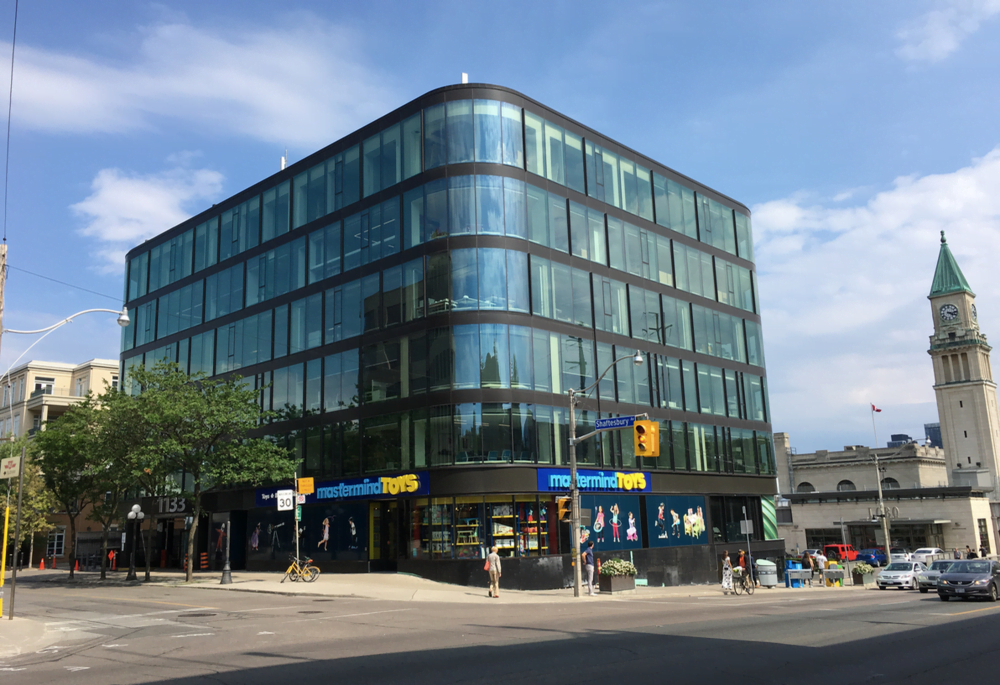
Mastermind Toys Announces Strategy Shift Amid Massive Store Expansion

Image: Mastermind Toys

Canada’s largest specialty toy and children’s books retailer, Mastermind Toys, has launched its first-ever loyalty program, click-and-collect, as well as an expansion that will include stores in smaller markets. The company is profitable and confirms that it has been experiencing healthy double-digit sales growth. 

The loyalty program is called ‘Mastermind Toys Perks’ and will be available at stores nationwide as well as online. The company did some market research and found 94% of respondents indicated a strong desire for a loyalty program. What’s resulted is a partnership with Bond Brand Loyalty to create a program that recognizes and rewards loyal shoppers with exclusive and meaningful perks.

It’s free and easy to join, according to the retailer, with an impressive roster of benefits. Members enjoy free gift-wrapping and loot-bag assembly in stores, receive sneak previews and early alerts about new and tough-to-get items, get access to members-only promotions and events, not to mention receive customized offers and personalized toy recommendations. Perks members will also receive surprise gifts and rewards throughout the year to mark milestones like birthdays and holidays.

MASTERMIND STORE IN TORONTO’S ROSEDALE/SUMMERHILL AREA. PHOTO: CRAIG PATTERSON

“As the competitive Canadian retail landscape continues to transform at an extraordinary pace, finding new ways to connect with our customers is our top priority,” said Jon Levy, CEO, Co-Founder, and Chief Merchant, Mastermind Toys. “Our customers asked us for a loyalty program and it’s been in development for more than two years. We’ve carefully considered every facet in order to interact with our loyal customers in a more personal and relevant way. It’s also our way of saying thank you, we recognize and truly value your ongoing business,” he added.

Mastermind Toys is also the latest retailer to launch ‘click-and-collect’, where shoppers can reserve product online and pick it up at their preferred store locations. Within an hour of receiving the request, store staff set aside the selected items for the customer. Having launched in the summer, it’s feedback has been overwhelmingly positive with 93% of users saying they were “satisfied/very satisfied” with the service, and with the same percentage saying they are “likely/very likely” to use the service again.

“This service is so convenient and just makes sense for so many shoppers: customers that want a specific, special toy; that want to quickly come into a store, pay, get it gift-wrapped and roll out. For customers that prefer to pay cash, don’t have time for shipping, or just need to handle an item before they commit, this is the ideal,” said Humphrey Kadaner, President and COO, Mastermind Toys.

And there will be more physical stores in Canada to choose from — by mid-November, the company will have opened six new Mastermind Toys stores in 2018, in St. Albert (Edmonton region), Alberta; Saskatoon, Saskatchewan; Hamilton, Ontario; St. John’s, Newfoundland; Sydney, Nova Scotia; and in Owen Sound, Ontario. When all are open, Mastermind Toys will have 65 stores and 1,175 employees in eight Canadian provinces. 

The company has identified significantly more retail opportunities than expected for the company — when we first began reporting on Mastermind Toys in 2014, the company said that it expected to top out at 70-75 stores. Seeing success in a variety of markets and store formats, Mastermind Toys now plans to open at least 30 stores across Canada over the next three years, with 12 of those planned for 2019 alone. If the company reaches 12 locations next year, it will be the most in the company’s history — 2017 was a record breaking year for Mastermind Toys when it opened 11 stores across the country. 

Furthermore, Mastermind Toys said in a press release that it plans to more than double its existing store count within the coming six years, which will bring its store count to more than 120 nationwide. 

With that expansion, the company says that it plans to open approximately 25 stores in smaller markets. That expansion begins this fall with units in Sydney and Owen Sound as mentioned above, to be followed by units in Prince George, B.C. and in Medicine Hat, Alberta, which will both open in early 2019. Mastermind Toys says that it will announce more locations at a later date. 

“We believe there’s a tremendous opportunity for Mastermind Toys to expand into smaller, untapped markets, providing consumers with convenient access to the quality, educational toys we offer,” said Mr. Kadaner.  “We look forward to introducing customers in these communities to our fun and engaging specialty toy shopping experience.”

Mastermind Toys was founded in Toronto in 1984 by brothers Andy and Jon Levy, who wanted to offer shoppers a classic toy store experience. Its first location measured only 300 square feet, selling children’s software and home computers. It now carries thousands of educational toys, books, games, arts and crafts, puzzles and science kits. The Levy brothers partnered with Birch Hill Equity Partners in 2010, facilitating the company’s national expansion. 

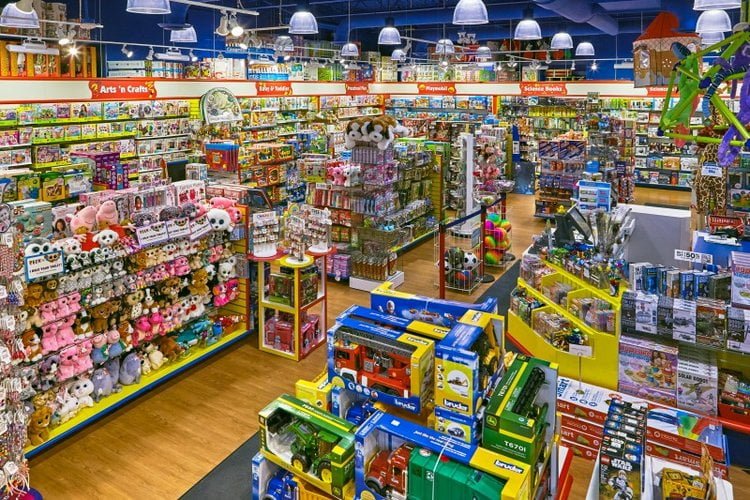
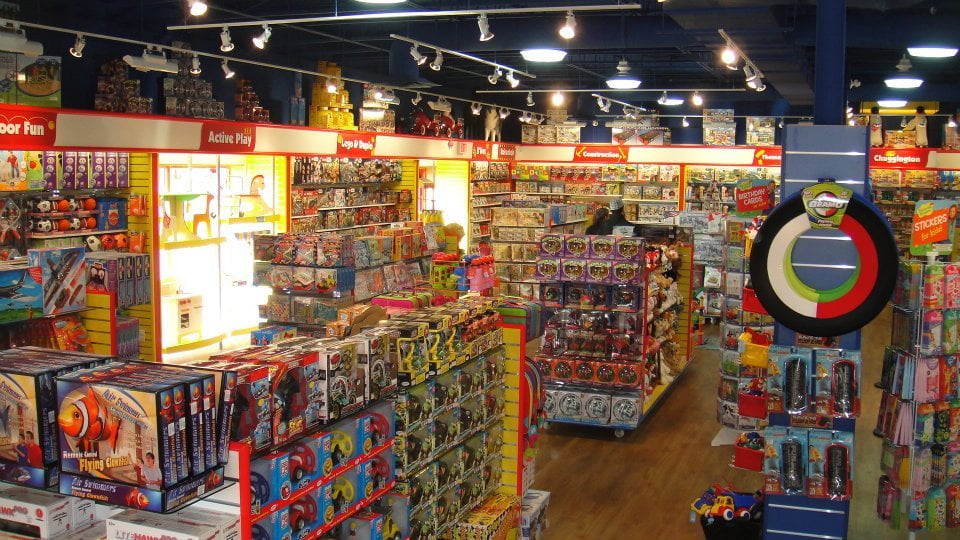
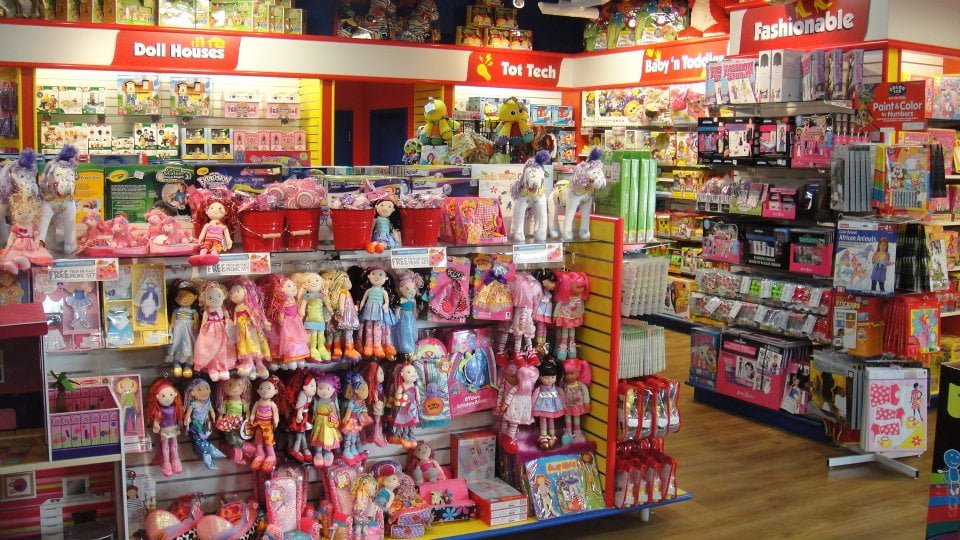
The company now boasts a curated selection of more than 10,000 of the best specialty toys, games and books, including first-to-market and exclusive items at a variety of price points. Unique brands and products include lifelike Hansa plush animals, fashion-forward ‘Our Generation’ dolls, the Moonlite Storytime Projector, Bruder and Siku vehicles, Magformers building toys, and Creativity for Kids craft kits, as well as top global brands such as LEGO®, Melissa & Doug®, Hape®, Ravensburger®, PLAYMOBIL® and Meccano.

Can Canada Learn From Australia’s High Tax Free Threshold?

PHOTO: PLATINUM FREIGHT MANAGEMENT

By Peter McRae, CEO of Platinum Freight Management

Canada’s $20 tax-free-threshold is about to rise to $150 after holding low at $20 for at least 30 years. It can be called a necessary response to an increasingly global marketplace, but the impacts of the change could be positive, negative or neutral, time will tell. I for one will be watching closely for the next year, as a Customs Broker licensed in Australia, New Zealand and Canada. We can look at Australia’s experience of a high tax-free threshold to consider the possible impacts of the change in Canada.

In an increasingly global marketplace, the economic cost of importing – and how to tax imports appropriately – is difficult to determine, but immensely important. There is no one answer on how governments should tackle their own Tax-Free Threshold (TFT), or if they should even have one (Canada and New Zealand have long sat in this camp). The magic number on a country’s TFT is still a work in progress. Australia has recently debated this issue and then aborted its own plans to change. Here we see Canada moving a little in Australia’s direction, so perhaps there is something Canada could learn from the Australian way.

Canada has operated an efficient import processing system for many years, working with an almost zero TFT. But in responding to a global marketplace and adjusting in order to participate more fully in it, can Canada remain efficient in the future?

PHOTO: CANADA BORDER SERVICES AGENCY FACEBOOK

The change from virtually no TFT to $150 TFT is modest. Compared to Australia’s $1000 threshold, we could say it will be too modest still. But it will still have impact, both positive and negative.

Canada, Mexico and the US have operated for years with the North American Free Trade Agreement (NAFTA) and this change could be tied up in discussions around NAFTA. We can surmise that, given that USA provides its citizens with an $800 threshold, a step is being made to increase trade between them. The change does promote spending, and the US wants Canadians to spend it in the US. On the flip side, it works for Canadian consumers too. Suddenly Canadians can access the same items cheaper, simply by buying across the border. The benefits of buying online will increase, particularly if the seller offers free shipping, which it often will. Good news for the purchaser, and for the international online retailer.

The postal companies and the express carriers will also win in two ways – they will get more business as shipping increases, and the packages will move through faster, unimpeded by red tape in Customs Processing, this translates to better efficiencies and impressive meeting of KPIs.

This is a huge advantage for the Canadian Border Services Agency (CBSA) too. At present, every single parcel entering Canada must be verified from the declaration sticker or the consignment note to determine taxes due. If no tax processing is required, the requirement for CBSA officials to closely monitor each package will be significantly lessened. There will be huge reductions in bottlenecks to process and release small parcels. This takes the pressure off border processing staff. But it could also mean reductions in head count for processing teams.

PHOTO: CANADA BORDER SERVICES AGENCY FACEBOOK

Which leads us to the downsides.

Canada’s retail landscape will be heavily affected, as has been highlighted already by the Retail Council of Canada. The change upsets the playing field for Canadian retailers. Customers will continue to try on items in store, where retailers are paying for rent, insurance, utilities, advertising and employment, as well as duty and GST/provincial taxes on the items they import to sell locally. But after sampling in store, customers can buy online for less. Being so close to the US, shipping times will be short.

Australia has the same issue but, on our distant shores, the cost of shipping hikes up the price often beyond what the local retailer is charging. While our playing field is far from fair, distance can limit the financial appeal of buying online compared to buying locally.

Another major concern is around revenue loss through fraud. Yes, CBSA will collect less tax for goods worth under $150, that much is clear and a non-issue for Canada, but only if the declared value is accurate. Which, if it’s not being checked as closely, could be easier to get away with. Here’s where Australia is the example. The loss to Canada could move into the billions when Canada’s new TFT opens the flood gates. Let’s hope Canada heeds but does not follow the Australian example.

SHIPPING CONTAINERS (PHOTO: UNSPLASH)

I have talked about this at length through the Australian lens. Less Customs officials examining the small print on the importing declarations, or not even checking the declarations if the value states under $150, means more parcels slip in unnoticed. If authorities are no longer looking, they are inviting importers to value far more expensive goods just under the limit and then just slip through unnoticed.

In March this year the Canadian International Freight Forwarders Association has already addressed its concerns regarding fraud. The Financial Post reported in 2017 that Canada is already losing $1 billion in taxes via the postal system. If there is $1 billion being lost now, what will this figure be in two or five years under a looser system?

In Australia, importers don’t have any reason to be honest if they don’t have any reason to believe they will be caught. And in Australia they don’t get caught. But perhaps in Canada they will, it remains to be seen. The biggest stopgap will be the number of processing staff kept on, and the regulatory decisions about how much to check and how often.

Australia, Canada, New Zealand and the United States are parties to the World Customs Organization (WCO). In applying the WCO cross-border e-commerce framework of standards, it has been addressed that customs authorities will continue to face challenges around illicit trade and fraud. The WCO Customs Risk Management Compendium explains the risk significance matrix, if the consequence is high and if the likelihood is high then extensive management is required.

High likelihood must be countered with high consequence. Australia has not put in place high consequences to its high likelihood for fraud, which is where Canada could observe and learn. This will be the difference between massive economic loss over time and an importing system that is moving with the times and responding to the increases in global trade.

For further information about Platinum Freight Management, go to www.platinumfreight.com.au

Peter McRae is a Certified Customs Specialist in Canada and the USA. He is also a Certified Trade Compliance Specialist in Canada. With 20 years industry experience, McRae runs a successful customs brokerage that he founded in Australia in 2000. Platinum Freight® Management is a leading independent customs brokering and freight forwarding company operating in Australia and with international offices, including New Zealand and soon Canada.

For further information or to contact Peter McRae, please contact Kristy Gordon with K’s Word Communications.

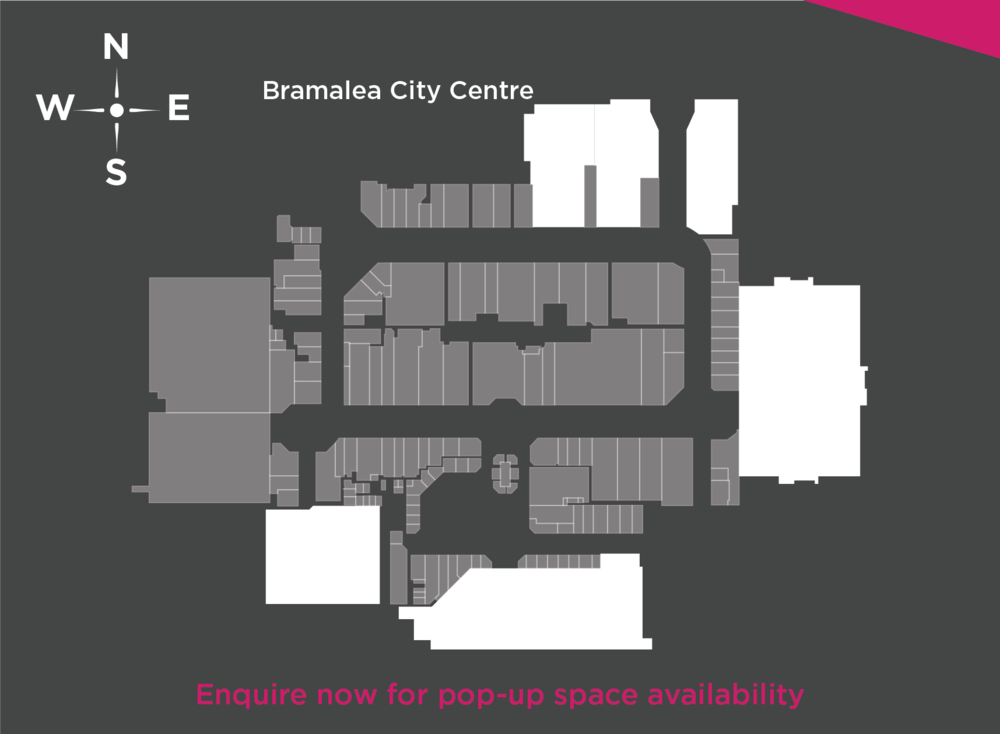
Bramalea City Centre Launches Short-Term Retail Space Initiative

exc-5bbd39d8c83025c49d880d47

A new concept is helping malls adjust to the changing retail landscape by connecting landlords with short-term retailers.

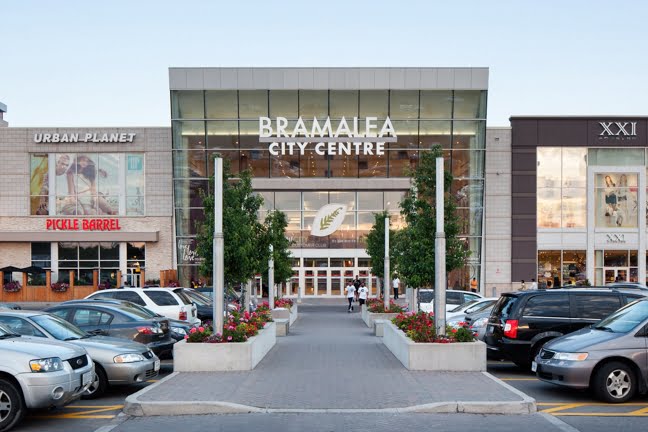
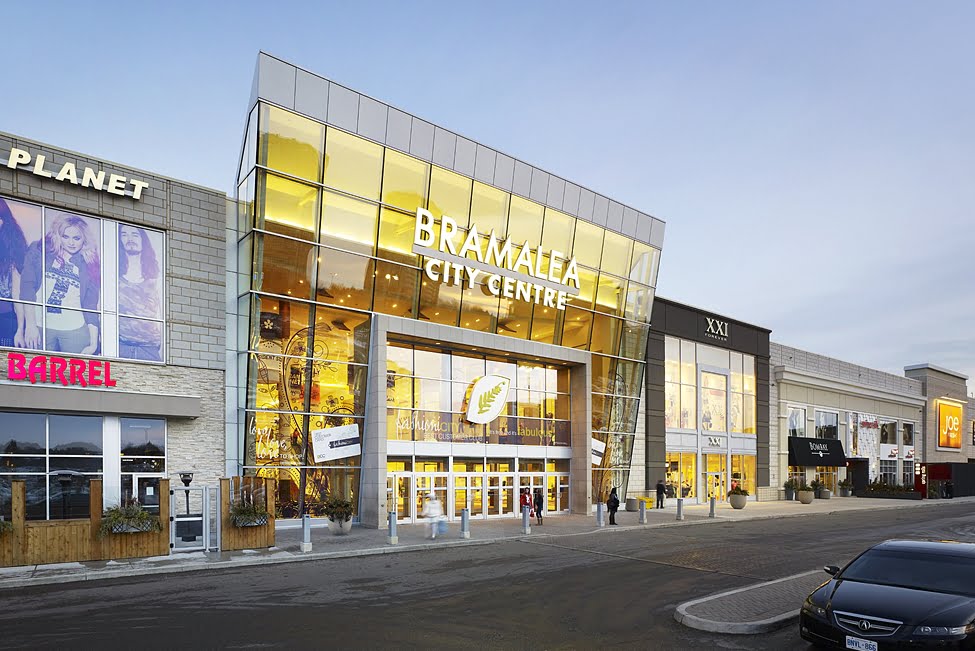
The pop-up go initiative has been launched in the Bramalea City Centre in the heart of Brampton, Ontario.

Linda Farha, founder and ‘Chief Connector’ at pop-up go, said the concept is a response to a changing retail world where shopping centres are now looking to pop-up retail to offer different retailers opportunities to do business and therefore to grow traffic in those malls.

“I realized that there was no real website where people could actually find inventory of available space for pop-up. So that’s how pop-up go started. So in essence what the website offers is an inventory of available space but beyond that – I call that the reactive zone – and the proactive zone is really us seeking out ways to help create traction whether it’s a new concept that needs to kind of get traction to their pop-up or a landlord who has available space and needs traction to get pop-ups to look at their space,” said Farha.

“When it comes to the retailer, or the pop-up, we provide a turn key solution.”

Farha started the Toronto-based company about two and a half years ago.

Christina Mossa, Specialty Leasing Manager at Bramalea City Centre, said the goal is to bring creative and innovative opportunities to the shopping centre and this initiative is a perfect way to do that.

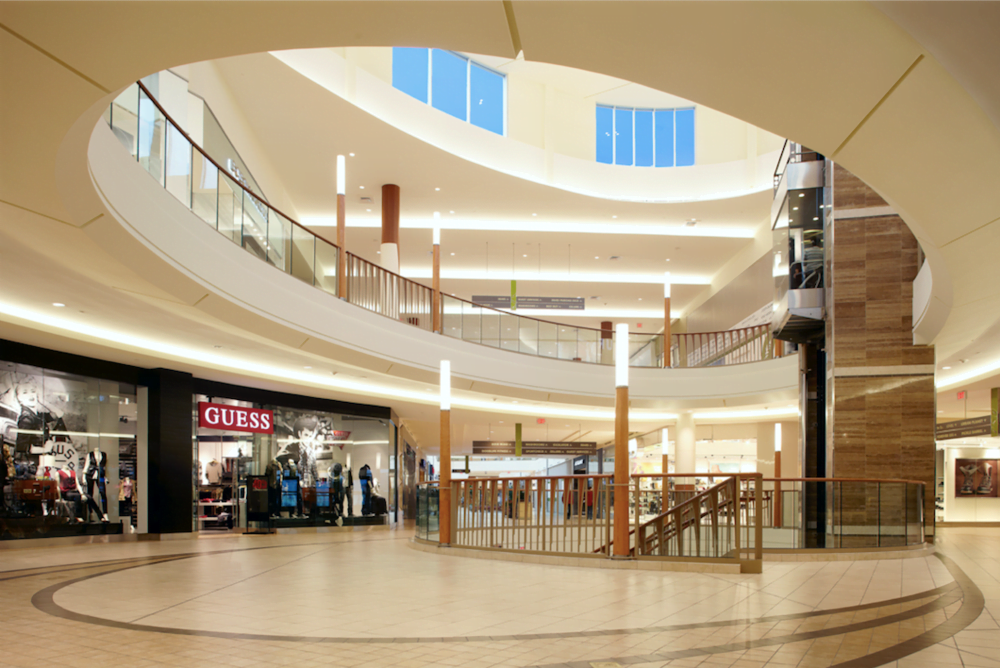
Bramalea City Centre is the fourth largest enclosed shopping centre in Ontario, and the seventh in Canada. The newly-expanded, two-level shopping centre offers 1.5 million square feet of retail shopping space, showcasing a tenant mix of over 350 stores and services including Saks Off 5th, Forever 21, Aritzia, Sephora, and Browns Shoes.

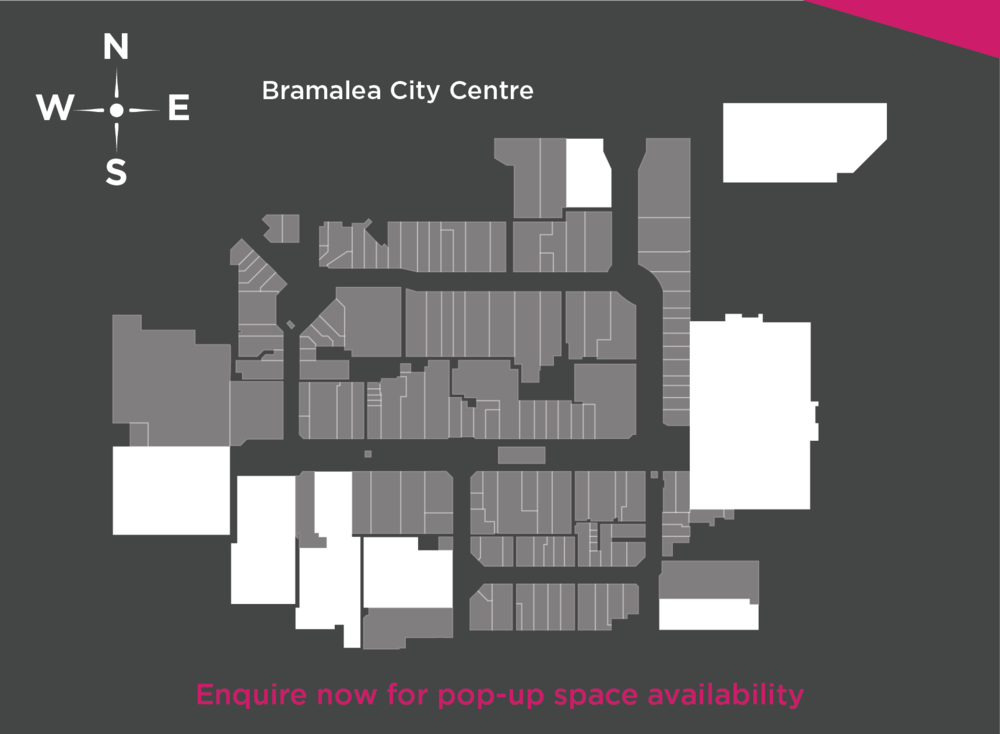
It will offer convertible retail merchandising units and common area spaces in a range of sizes with various features to suit a variety of pop-up events.

“We’re always looking for new things to help invigorate the shopping experience for our customers. pop-up go aligns perfectly with our expectations in that they can help facilitate securing new and different retailers. The short-term duration of the lease allows us to cycle in different concepts that our customers will find interesting,” said Mossa, adding that Bramalea City Centre is looking at gaining two to three pop-up stores working collaboratively with pop-up go.

“Bramalea City Centre is focusing on bringing some new innovative and unique stores as pop-up experiences. Bramalea City Centre would like to focus primarily on storefronts however, kiosks would be welcomed based on availability and use.”

Farha said pop-up go will be working with landlords across the country to roll out this initiative nationally, as well as expanding the concept into the United States.

“We have people coming to us and they’re like ‘oh I’ve got a retail concept or I’ve got a brand I want to promote and I’m looking for a location’ and we kind of review what exactly they’re looking for in terms of the profile they’re looking for and then we basically give them a whole bunch of opportunities of different spaces that could be of interest to them,” said Farha.

The concept is a growing trend in the retail world.

“It’s a trend that’s been around for some time. Probably more so in the U.S. Even now big retailers are doing it like Macy’s and Nordstrom. A lot of these retailers are doing the same thing. Of course, these large department stores are almost like malls in themselves. They’re taking the same approach as well within their stores,” added Farha.

The pop-up space can be either a permanent physical space or a kiosk type setting.

“It depends on where it is and the needs of the particular property,” she said. “It could be anything. Sometimes we do parking lots. It’s all over the board.”

The Village at Vaughan Mills Provides Retail Opportunity

exc-5bb2a9cd24a69422368882c2

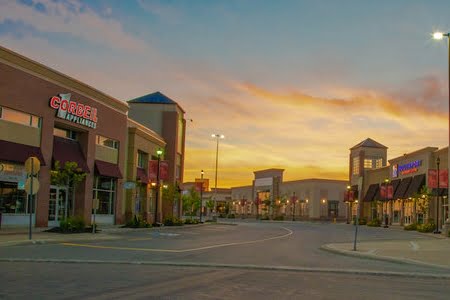
Bentall Kennedy (Canada) LP Brokerage is marketing for lease a 14,275 square foot retail pad site (divisible) in a high traffic location with great signage opportunity onto Vaughan Mills Circle, available immediately.

The Village at Vaughan Mills is a unique lifestyle power centre located at 255 Bass Pro Mills Drive in Vaughan, directly adjacent to super-regional mall Vaughan Mills. The centre benefits from its immediate proximity to Vaughan Mills, which averages 14 million visitors annually, as well as its excellent access and exposure to Highway 400.

Anchored by renowned banners, Leon’s, La-Z Boy, Prima Lighting, and Kimmberly Capone Interiors, the Village at Vaughan Mills is home to several other premium designer shops, specialty services and showrooms, as well as popular restaurants, Canyon Creek Chophouse and 255 By Alta Rossa Ristorante.

Situated in the affluent and rapidly growing community of North Vaughan, approximately 40 minutes north of downtown Toronto, there are more than 42,000 households within a five kilometre radius of the shopping centre, with an average household income in excess of $146,000. 

For more information, please contact Paul Ceresne (Sales Representative) of Bentall Kennedy (Canada) LP Brokerage at 1 (866) 681-2715 or pceresne@bentallkennedy.com.

Bentall Kennedy (Canada) LP Brokerage, 65 Port Street, Unit 110, Mississauga, Ontario, L5G 4V3 www.bentallkennedy.com

Chip Wilson Family Sells ‘Kit and Ace’ Fashion Brand to Company CEO

MOUNT ROYAL VILLAGE IN CALGARY. PHOTO: KIT AND ACE

Vancouver-based ‘technical cashmere’ brand Kit and Ace has announced new ownership and a new direction, as it finally sees profitability after more than four years in operation.

CEO George Tsogas, who had led Kit and Ace since April of 2017, tells Retail Insider that he bought the company from Chip Wilson’s company Hold It All Inc. for an undisclosed sum with the deal having closed on August 31 of this year.

GEORGE TSOGAS. PHOTO SUPPLIED

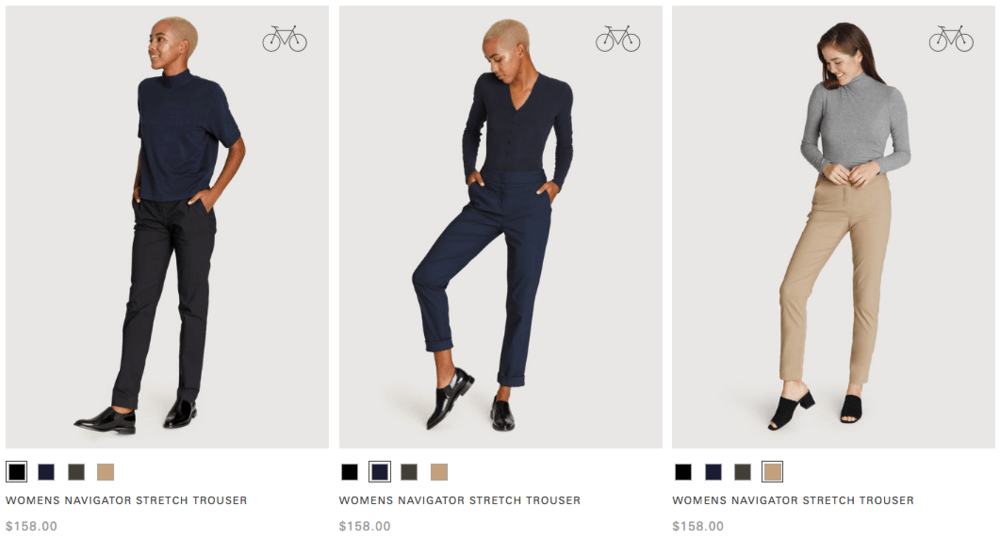
Kit and Ace, which was founded in 2014 as a luxury-focused ‘technical cashmere’ brand, became profitable for the first time in July of 2018, according to Mr. Tsogas. The company expects to further grow with a focus on the ‘modern commuter’ who might travel by bike, foot or on transit in large cities. The company’s ‘Navigator Collection’, which launched in the spring of this year, is geared towards the urban commuter by providing ‘office-ready clothing options’ as Kit and Ace renews its focus towards technical apparel.

The Navigator Collection, which launched for men in April with a range of trousers, joggers, shorts, blazers and jackets, introduced women’s trousers in August of this year, with more categories on the way. The Navigator Collection features venting, secure pockets, and reflectivity for cyclists that is made from a technical fabric that is said to be water-repellant, durable, easy-care and comfortable. The new line is the first step in transitioning Kit and Ace’s product line to technical commuter wear, according to the company.

SCREEN SHOT FROM KIT AND ACE WEBSITE

In order to ensure that its products perform, Kit and Ace has introduced the ‘bike test’ into its design process to make sure clothing holds up to increased movement, outside elements, and moisture, while maintaining an office-appropriate look upon arrival. “If it works on a bike, it will work for any commute,” according to Kit and Ace.

“With the world’s urban population surging, we are seeing a new segment of commuters that are riding their bikes to work and want to be office-ready but haven’t had apparel options to do so,” said Mr. Tsogas. “The commuter way of life is technical and functional, yet allows you to show up to the office looking put-together and  professional, without needing to change into something new. This is what we’re bringing to our apparel.”

Chip Wilson, best known for having founded Lululemon, will remain as a mentor to Kit and Ace as the brand continues to transform under Mr. Tsogas’ leadership.

SCREEN SHOT FROM KIT AND ACE WEBSITE

Kit and Ace launched in July of 2014 and was initially led by Chip Wilson’s wife Shannon Wilson and son J.J. Wilson, though sources confirm that Chip Wilson was quietly involved with activities such as lease negotiations for some of the company’s first retail stores.

The company expanded its base of stores quickly after its summer of 2014 launch, which began with pop-up stores in various Canadian and, soon, international centres. Longer-term leases were eventually signed as Kit and Ace grew to more than 60 stores globally and 700 employees in early 2016. 

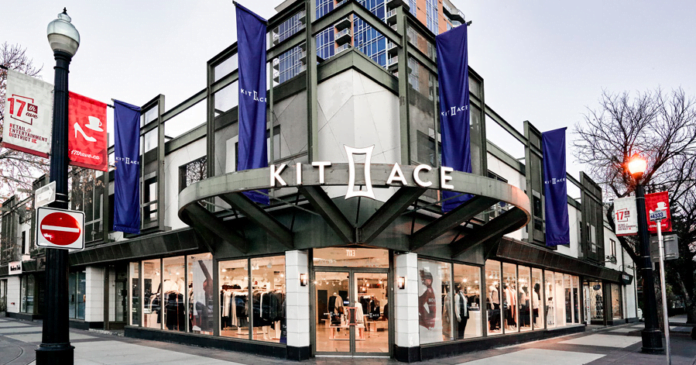
By March of 2017, Kit and Ace’s store count was reduced to 41 stores, prior to an April 2017 announcement that all but nine Canadian stores would remain open. Since then, three more stores closed and at the moment, Kit and Ace operates six locations with two of those in Vancouver, two in Toronto, and one store each in Calgary and Oakville, Ontario. The Vancouver Gastown flagship recently relocated to 151 Water Street from 165 Water Street due to a redevelopment.

The other Vancouver store is in the Kitsilano area at 2235 W. 4th avenue. The Toronto stores are both street-front spaces on popular streets — a ‘Mink Mile’ store is located at 102 Bloor Street West, which also houses a coffee concept called ‘Sorry Coffee’. The other Toronto store is at 779 Queen Street West on trendy ‘West Queen West’. The Oakville location is at 171 Lakeshore Road East and the Calgary location is at Mount Royal Village, a First Capital Realty-owned property just south of the downtown core. 

‘SORRY COFFEE’ AT KIT AND ACE AT 102 BLOOR ST. W. IN TORONTO. PHOTO: KIT AND ACE

More Kit and Ace store locations are planned, according to Mr. Tsogas, though not nearly at the rapid rate seen in 2014 and 2015. Two pop-up locations will be used to test the market, which could become a strategy moving forward as the brand looks to new markets. This month, the company launches temporary locations at Metropolis at Metrotown in Burnaby as well as at CF Chinook Centre in Calgary, both of which will operate through to February of 2019.

To serve the urban commuter, more in-store coffee shops could be in the works, according to Mr. Tsogas.

In order to move the brand forward, Mr. Tsogas revealed that staff will be offered an equity stake in the company as incentive. Canada will be the focus as will the United States before Kit and Ace relaunches an international store expansion. Kit and Ace’s new strategy is to be a ‘problem solver’ according to Mr. Tsogas, offering a unique product that is also practical to the modern urban dweller looking to look good while commuting in the city.

Comparing Toronto’s Luxury Retail Areas and Offerings to Chicago

exc-5b722cb7575d1f3a6fb2b83f

Toronto and Chicago share many similarities. Both cities have millions of residents and are located on the Great Lakes, and share similar climates and geography. What’s interesting is to analyze how luxury retail has clustered in both cities — Chicago is more centralized with luxury retail being in one street-front urban area, while Toronto’s luxury offerings are more spread out and in many instances, in enclosed shopping malls. The United States is known for malls being the place to go for luxury stores and therefore, Toronto could be said to be ‘more American’ than Chicago in that respect.

For the tourist seeking out luxury retail, Chicago is something of an easier choice in terms of clustering and general proximity of luxury stores. Chicago’s North Michigan Avenue, aka ‘The Magnificent Mile’, anchors the north side of the downtown core leading up to the city’s affluent Gold Coast neighbourhood. North Michigan Avenue is a mix of retailers that range from luxury brands such as Chanel and Rolex to big-box retailers such as Best Buy. Over the past decade, there’s been a noticeable shift in luxury brands moving onto and adjacent to Oak Street, which occupies the top-end of the Magnificent Mile stretch of retail which ends at the Drake Hotel and Lake Michigan. As of late, brands have been choosing Rush Street and Walton Street — Dior and Versace recently opened at that corner, for example, and in 2015, Giorgio Armani relocated the city’s standalone store from Michigan Avenue to Oak Street (in the former Emporio Armani space). 

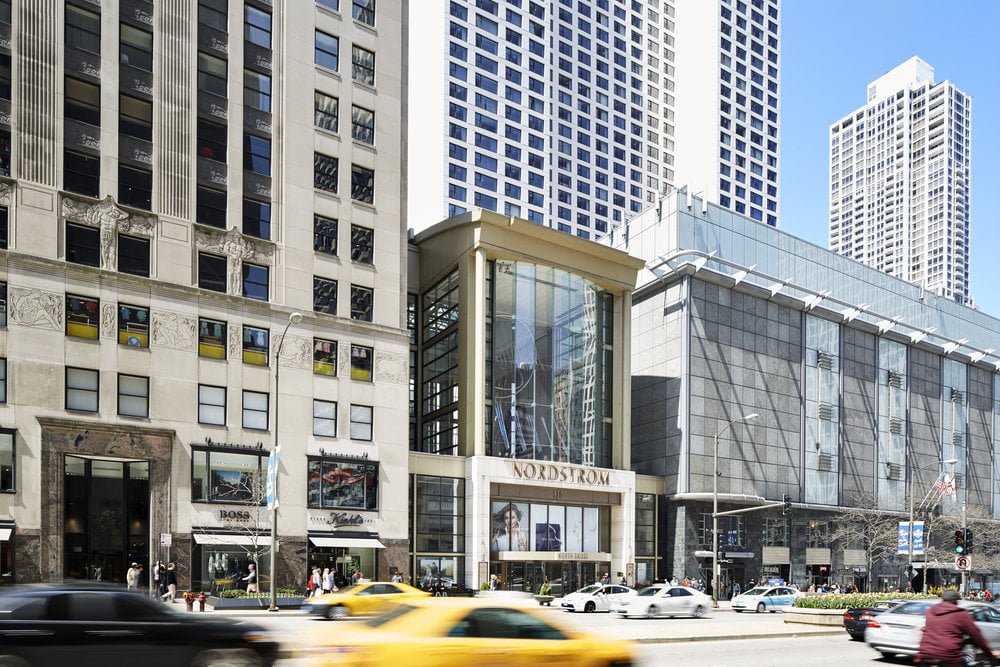
Chicago’s upscale department stores are also generally clustered in the area surrounding the ‘Magnificent Mile’. Neiman Marcus and Saks Fifth Avenue anchor the street’s intersection with Chicago Avenue, while Barneys New York and Bloomingdale’s are located further up near the Oak Street section of the Gold Coast. Nordstrom, which challenges the Vancouver location as the chain’s top producer, is located closer to The Loop (Chicago’s grand answer to Toronto’s Financial District) as part of the Shops at North Bridge complex. 

Several suburban malls in the Chicago area feature a handful of luxury retailers and luxury department stores, though to a lesser extent than in years prior. Neiman Marcus operates stores at the Oakbrook Center west of the city as well as at the Shops at Northbrook in the north, while Bloomingdale’s and Nordstrom are anchors at the Old Orchard shopping centre in Skokie. All three malls feature a handful of standalone luxury brand boutiques (Tiffany & Co. is at all three, while Louis Vuitton operates standalone units at Oakbrook and Northbrook), though nothing in these malls compares to the selection of luxury stores found at Toronto’s Yorkdale Shopping Centre

Toronto, as a comparison, has a surprising number of ‘luxury nodes’ for a city of its size. These operate with varying degrees of success, with Toronto’s Bloor-Yorkville and Yorkdale dominating, while others attempt to also cash-in on high-spending locals and tourists. 

The Bloor-Yorkville area in downtown Toronto has been, for decades, the heart of the city’s luxury retail scene. Bloor Street West, the former Hazleton Lanes (now called ‘Yorkville Village’), and the Manulife Centre were three important addresses earlier on and more recently, Yorkville Avenue is being positioned to be Canada’s answer to Rodeo Drive in Beverly Hills. More luxury brands will move in as the area continues with a remarkable transformation. 

When Tiffany & Co. opened at the Holt Renfrew-anchored Yorkdale Shopping Centre in 2012, it was the beginning of a movement that would see more than two-dozen luxury brands open standalone units and concessions in the centre. Many brands are now choosing to open at Yorkdale instead of in Bloor-Yorkville. It’s hard to blame them — Yorkdale has ‘proven numbers’ according to those in the industry, recognizing that the centre is Canada’s most productive shopping centre in terms of annual sales per square foot. The clustering is working. More wealthy shoppers are frequenting Yorkdale, and more luxury brands want to move into the centre to sell to them. 

What’s resulted is a ‘split situation’ in Toronto where luxury stores such as Bulgari, David Yurman, Longchamp and even Ladurée can only be found at Yorkdale, at least for now. Some luxury stores are selling considerably more than initially anticipated and in many instances, brands are paying a percentage rent in addition to a base rent that is significantly enriching the landlord. Speculation persists that some of these stores might open downtown locations in order to offset these rents and split sales, though to date Yorkdale continues to have many stores not found elsewhere in the region. 

The Greater Toronto Area has added several other ‘luxury nodes’ to the mix. The CF Toronto Eaton Centre has been courting wealthy shoppers as Cadillac Fairview continues to take the downtown mall more upscale, adding flagship Saks Fifth Avenue and Nordstrom stores to the mix (both opened in 2016). CF Toronto Eaton Centre also houses standalone locations for upscale brands such as Links of London, Hugo Boss, Sandro and Maje, going after some of the dollars that might otherwise head north to Bloor Street. Some speculate that the addition of higher-end brands at CF Toronto Eaton Centre has resulted in reduced foot traffic on Bloor Street, though that’s more anecdotal. 

Two other GTA shopping centres are seeking to court wealthy shoppers with their expanding luxury offerings. CF Sherway Gardens, located near Toronto’s border with Mississauga, boasts standalone locations for De Beers, Tiffany & Co., Caudalie and Loding, as well as partner boutiques for Chopard and Montblanc. CF Sherway Gardens is also anchored by a luxury-heavy 143,000 square foot Saks Fifth Avenue store, as well as a more modest and smaller Nordstrom location

Square One in Mississauga, not to be outdone, debuted an impressive looking luxury wing in the summer of 2016 which is anchored by a dramatic marble-clad 140,000-square foot Holt Renfrew store, housing concessions for brands such as Tiffany & Co. and Gucci. Salvatore Ferragamo (the largest in Canada), Rolex and Links of London all operate nearby. Landlord Oxford Properties is said to be courting other luxury brands to the centre, though some brokers are saying that the Greater Toronto Area is seeing “too many” luxury nodes for a market of its size, and are now focusing primarily on the ‘two Yorks’ — Yorkville and Yorkdale, with the latter winning out in many cases as brands bet on Yorkdale being more of a ‘sure thing’ in terms of foot traffic, not to mention year-round climate control. 

As a result, Toronto is a harder city to shop for luxury consumers. For luxury consumers visiting from markets such as China, the Toronto market proves to be somewhat confusing in terms of having so many different luxury nodes. Most visitors are unlikely to visit all five ‘nodes’, and may instead spend their time either in the downtown core or up at Yorkdale. Given that both areas have stores that the other one doesn’t, visiting just one means missing out on other brands — something that isn’t an issue in a city such as Chicago, where almost all luxury stores can be found in the core. 

In Europe, the high-end districts in most major cities are located in the downtown core, on highly manicured streets as well as in small urban plazas. Luxury nodes in Paris, London, Milan and Zurich are all overwhelmingly in their respective downtown cores, as with cities such as Chicago and Boston, for the most part. 

In some respects, Toronto could be compared to Melbourne, Australia, which features two primary luxury shopping areas. Central Melbourne houses several key retail streets such as Collins Street, which houses some very impressive luxury flagships for some of the world’s top brands — some of which don’t even have stores in Canada yet. The city’s luxury department store, David Jones, is also in the core, a short walk away. 

Melbourne’s Chadstone Shopping Centre is comparable to Toronto’s Yorkdale, with the Melbourne mall housing several first-to-Australia luxury stores for brands such as Valentino, Balenciaga and Givenchy. The stunning suburban shopping centre boasts sales well in excess of $1-billion annually, as does Yorkdale, and the mall also houses upscale anchors such as David Jones. One might look at the retail mix at Chadstone to get an idea of what might be opening at Yorkdale over the next couple of years — luxury brands that are expanding into malls often do so in a pattern, as is evident closer to home in markets such as the King of Prussia Centre near Philadelphia, and the Houston Galleria as examples. 

The United States has many examples of luxury retail in suburban shopping malls and in some cities, the only substantial luxury retail offering is in a shopping centre that isn’t downtown. Houston is home to the Houston Galleria and nearby River Oaks District as an example — both boast a vast number of luxury stores, some of which aren’t even in Canada yet. Atlanta, Denver, Charlotte also feature high-end malls where most of their luxury retailers are contained. 

In some respects, competition is good and back at home here in Canada, Toronto’s five ‘luxury nodes’ will all continue to compete to attract limited luxury shopping dollars. It will be interesting to watch over the next several years how the market plays out — some retailers are doing better in some locations than others, and there could be store closures and relocations if the GTA luxury market continues to polarize with its dominant centres. Toronto, as a city, might be best served to also invest further into its infrastructure and overall aesthetics — an international visitor we spoke with, who is very observant and well travelled, provided some negative feedback about Toronto, saying they’re unlikely to return. That means that there’s not only competition within the Toronto market for luxury retail nodes, but the city is now competing with attractive global cities for luxury tourist dollars. It’s something for civic leaders to consider moving forward, though the messaging often falls on deaf ears. 

Retailers Choosing Ontario’s Kawartha Lakes See Success and Quality of Life

exc-5b91c323575d1f6f954b2c5c

More business owners and retailers are finding the charm of setting up shop these days in the City of Kawartha Lakes, which is becoming a popular destination for entrepreneurs.

And the municipality in Central Ontario, a short drive from Toronto,  is doing everything it can to make it an attractive place to do business.

Graeme Barrie, owner of cyber-security company Netmechanics, is a perfect example of seeing the value of doing business in Kawartha Lakes, specifically in Lindsay where he moved to in the past year from Bruce County.

Graeme Barrie

“I saw the opportunity with the services that were being offered from the City to help build a business,” he said. “There’s so much here in terms of smaller communities and Lindsay proper. It’s called ‘Kawartha Lakes’ for a reason. It’s all water. It’s all lakes. Really the big thing is the work-life balance. Being able to enjoy outdoor activities. Snowmobile in the winter. Fish in the summer.”

“But we’re still close enough to larger urban centres. It’s a 40-minute drive to Oshawa or 30-minutes to Peterborough. An hour and 20 and I’m in downtown Toronto. I’ve got close proximity to those markets but still have my piece of paradise. The business side of things has been great. The last two months it’s just been booming in the sense of all the attention I’m getting, the support from the City.”

Barrie was aided by the City’s Starter Company PLUS Program which helps new entrepreneurs. Since 2017, the program has been providing opportunities for entrepreneurs to acquire small business training, mentoring and grant money to help them start or expand their businesses.

Cheri Davidson, Manager of Communications, Advertising and Marketing with the City of Kawartha Lakes, said the municipality is addressing perceived barriers for businesses opting to move to cottage country, as outlined in the recent study by the Federation of Ontario Cottager’s Association (FOCA).

Cheri Davidson

“The first barrier is access to high speed wireless and cell networks which is critical for doing their business. We’re very excited that as part of the Eastern Ontario Regional Network, we’ve been able to move forward on a $200-million project to increase cell phone coverage in our region,” she said. “So improvements are being made and it’s really opening up WiFi and cell access to businesses so that they can be working at their cottage with full access to the global economy.

“The other concern that entrepreneurs mentioned in the recent study by the Federation of Ontario Cottager’s Associations is that they wouldn’t necessarily have a peer group or a networking community of like-minded entrepreneurs that they would have in Toronto, the GTA, Ottawa or other big cities. What we are being told is that there is a vibrant community of entrepreneurs in Kawartha Lakes. As long as you’re willing to put yourself out there and join the Chamber or join the BIA (Business Improvement Association), and do the things that any successful business person would do, there are those networks.”

The City of Kawartha Lakes has a year-round population of 75,000 people which swells by a significant amount during the summer months.

One of the city’s initiatives to drive business to the area is its Small Business and Entrepreneurship Centre, a well-integrated resource for the business community, giving new owners the resources needed to succeed and help them make connections.

“It’s a vital part of our economic development and it’s there to help people like Graeme Barrie and others who are looking to either relocate into the Kawartha Lakes area or people who are already here who are looking to start or expand their current business,” said Davidson. “It’s an amazing resource –  they have a set of mentors, they have access to grants and other funding opportunities, they have excellent training sessions for businesses to really lock in on the fundamentals. They will make sure that their business model is sound and then most importantly, connect those people to the right mentors, to the right business people, to the right suppliers in our community so they can really get started and have a good foundation.”

Davidson said the city has also been removing red tape and helping Kawartha Lakes “be truly open for new business.” She added that there is a thriving retail industry in the downtown communities such as Lindsay, Bobcaygeon and Fenelon Falls.

Sarah Fournier moved from Toronto to Kawartha Lakes a few years ago and started a business making a reusable food wrap that is made from beeswax.

“We moved here from downtown Toronto because we were ready to ditch the crazy city lifestyle and settle in a place that would be good to start a family,” said Sarah Fournier, owner of Sweet Green Studios. “You forget that the stars exist when you live in Toronto. House prices ultimately drove us out. We’ve never regretted our decision to move here.”

Fournier also was a recipient of a grant from the Starter Company PLUS Program.

“It’s been a reality check for me about how to set up a business properly. I have a long way to go, but this program has given me the tools and answers to do it properly,” she said.

The City is also in the final stages of developing its Community Improvement Plan, which is intended to trigger investment in its communities and support the efforts of business and property owners through loans, grants and rebate programs.

Retail West Conference in Vancouver, November 6, 2018

Retail West Conference 2018

Retail Council of Canada’s annual Retail West Conference will be held in Vancouver on November 6, and tickets are still available. This year’s conference will take place at the Westin Bayshore Hotel in downtown Vancouver, featuring spectacular harbour views only a stone’s throw from beautiful Stanley Park [Buy Tickets Here]

Some of Canada’s most innovative retailers will meet at Retail West to share their perspectives and learnings on the latest trends and developments, and discuss what it takes to create outstanding customer experiences in modern retail.

The day will begin with an overview on USMCA (United States-Mexico-Canada Agreement) and what it means for retailers in Canada, presented by Retail Council of Canada’s President and CEO Diane J. Brisebois. Canadian retailers are expected to feel the effects of USMCA as the duty-free de minimis level is raised from $20 to $150. 

The impact of legal cannabis will also be a hot topic at this year’s Retail West conference, which will include several sessions that will bring together licensed cannabis producers, wholesalers, retailers and legal experts to inform you and to open doors in this new market.   

Speakers at Retail West include:

  • Ashley Freeborn, Founder / Principal / Managing Director, Smash + Tess

  • Drew Green, President and CEO, INDOCHINO

  • Melanie Teed-Murch, President, Toys “R” Us Canada

  • Mat Povse, Senior Vice President of Retail and Geek Squad Services, Best Buy Canada

  • Jim Caldwell, President and CEO, OK Tire Canada

  • Brendan Seale, Head of Sustainability, IKEA Canada

  • Lauren Wong, Vice President, Sales and Marketing, Hello Fresh

  • Nick Whitehead, Vice President of Market Development, Aurora Cannabis Inc.

  • Mike Vioncek, CEO, Fire & Flower Inc.

Retail West will take place in Vancouver on November 6, 2018 at the Westin Bayshore Hotel.

To register for tickets, visit  http://retailwest.ca.

Ethical Brand ‘Outland Denim’ Expands Operations in Canada

exc-5baff8aff4e1fcc6feb2b5c7

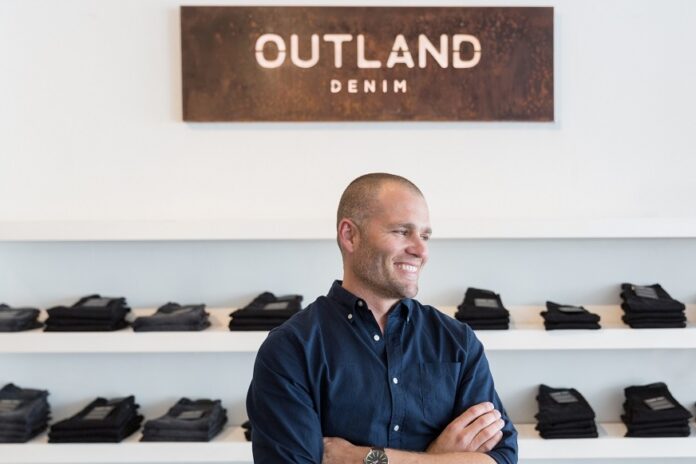
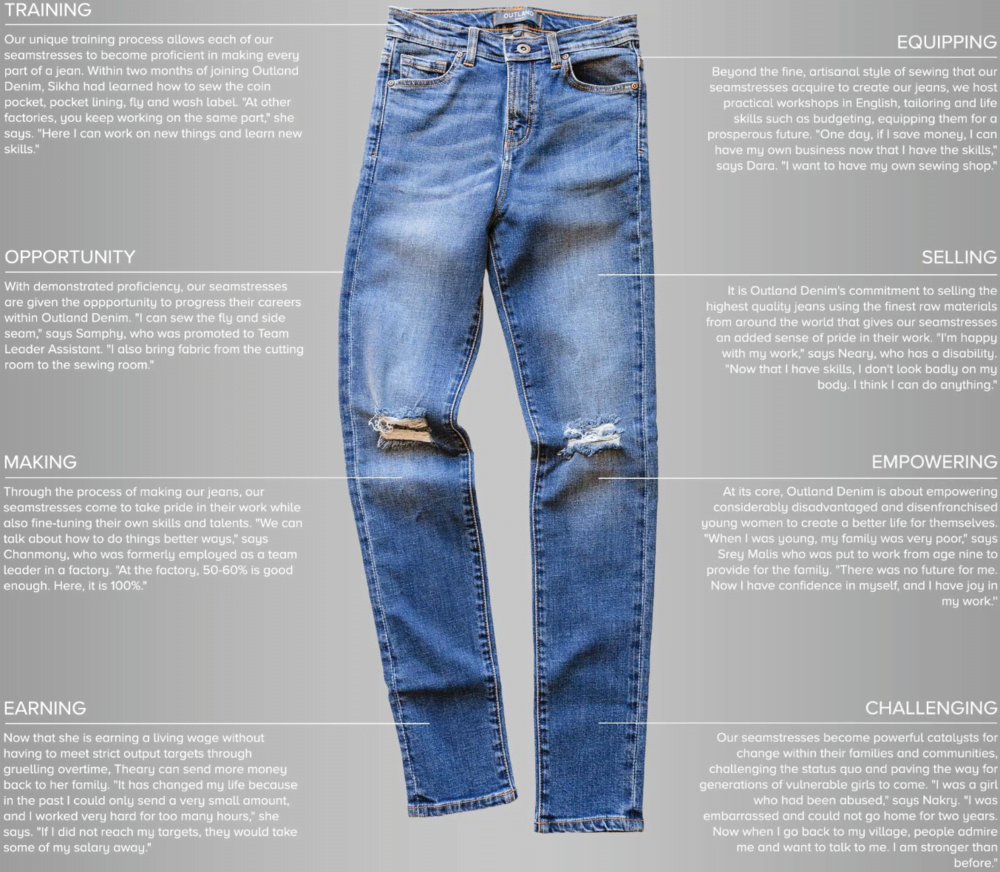
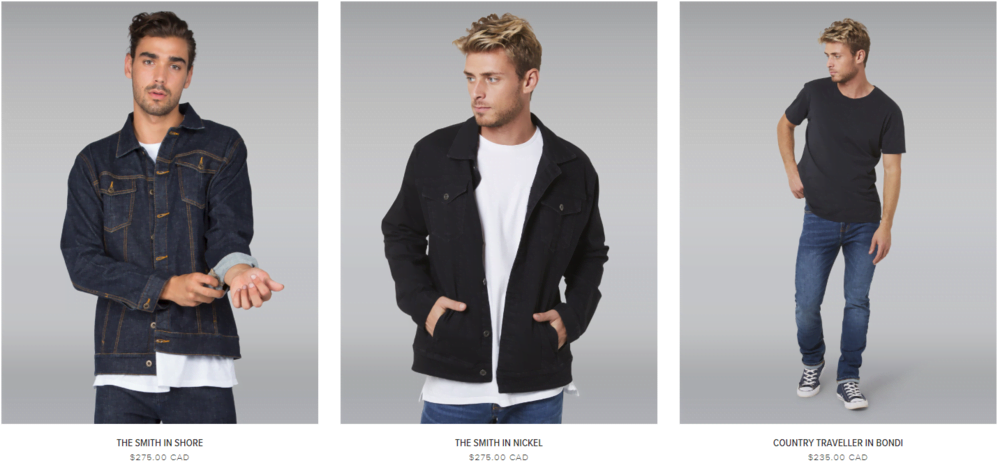
Outland Denim, the sustainable Australian fashion brand with a mandate to combat human trafficking, has expanded its wholesale operations in Canada through high-profile retailers such as Harry Rosen, Holt Renfrew and now Sporting Life.

Outland Denim was started in 2011 with a mandate to combat human trafficking (and the sex trade) in Asia. James Bartle, a former Australian motocross racer, wanted to create a fair, conscious and sustainable fashion brand – and a new model for doing business. The brand started with pop up sales at music festivals in Australia. Today it is a Certified B Corporation global brand, having launched in Canada in 2018 with Holt Renfrew and Harry Rosen.

The company rescues people from the sex trade in Cambodia and gives them a living wage and way out of the poverty cycle.

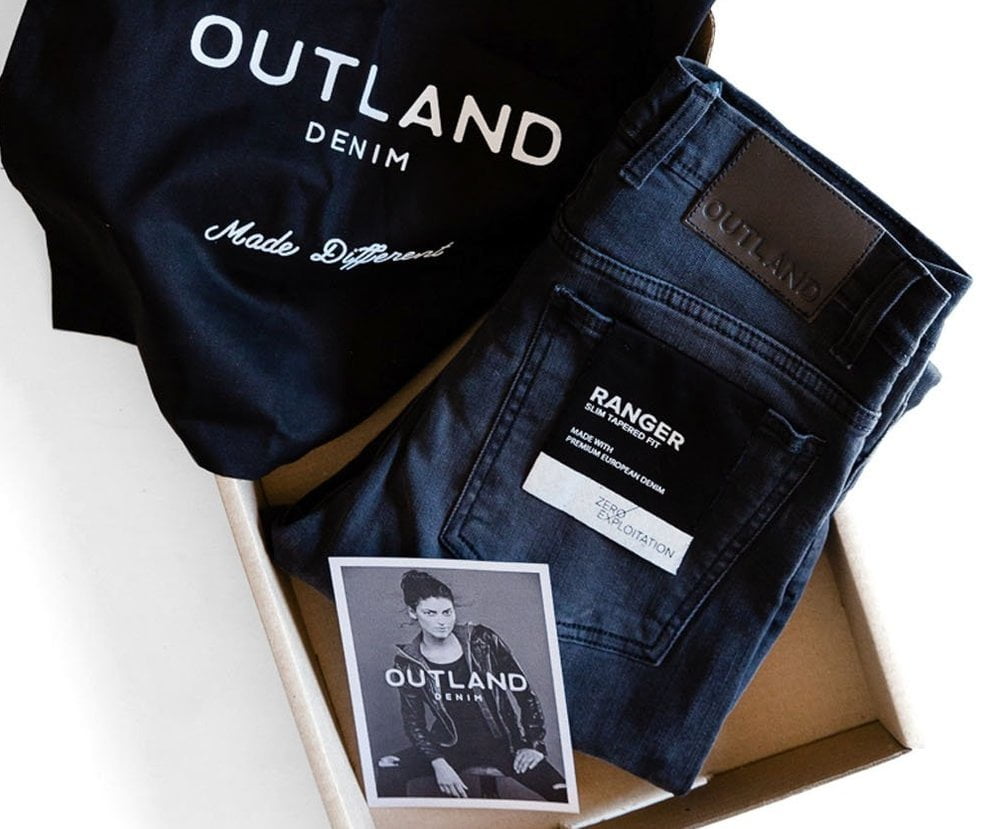
The company is also 100 per cent sustainable using vegetable dyes, recycled zippers and rivets, ethically sourced cotton.

The company manufactures its jeans in Cambodia employing about 100 people.

“We know that true sustainability is only ever going to be achieved if we’ve very strategic about the way we scale,” said Bartle.

“We started selling (in Canada) in the spring 2018 with a very, very soft sell to test the market . . . We’re brand new in Canada. We’re selling men’s with Harry Rosen and women’s with Holt Renfrew. And we have Sporting Life and a range of different independent stores as well as online.”

Bartle said the company is hoping to grow its brand in Canada.

“Canadians have been early adopters of the brand. Your biggest retailers have seen what this brand can offer,” said Bartle, adding that the advantage those retailers get with the unique brand is bringing new customers to those locations.

“As they start to learn that we’re sold in those stores, we’re bringing the kind of customer that’s looking for that ethical purchase.”

The genesis of Outland Denim really began when Bartle encountered an anti-trafficking group at a music festival and then traveled to Asia to see how human traffickers prey on vulnerable young girls to service the sex industry.

According to the company website, after learning that once a girl has been rescued and supported through her recovery, a sustainable career path is vital for securing her future, Bartle created the “Denim Project,” which would enable those girls who demonstrated an interest in sewing to put their new skills to use.

“I’ve always lived in jeans. If you were going to produce anything, why wouldn’t you produce the most staple part of a person’s wardrobe? Jeans aren’t a throw-away item, but something you keep for years,” he said.

The company says it is committed to sourcing the most ethically and environmentally sound raw materials, from organic denim and pocket lining to recycled packaging.

As a Certified B Corporation, Outland Denim is part of a group of businesses that meet the highest standards of verified social and environmental performance, public transparency, and legal accountability to balance profit and purpose.

The company is based in the little town of Tamborine Mountain, about an hour’s drive from Brisbane, Australia, which is where its flagship store and office is located. Its manufacturing operation – The Sewing Room –  is based in Kampong Cham, Cambodia, about three hours from the capital, Phnom Penh.