Advertisement
Home Blog Page 1057

Davids Footwear Kicks Off National Retail Expansion with 1st New Store [Feature]

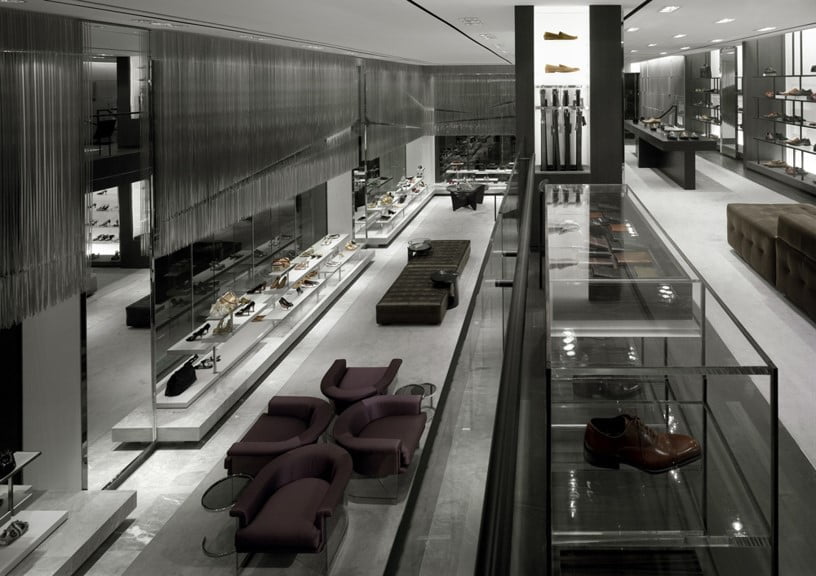
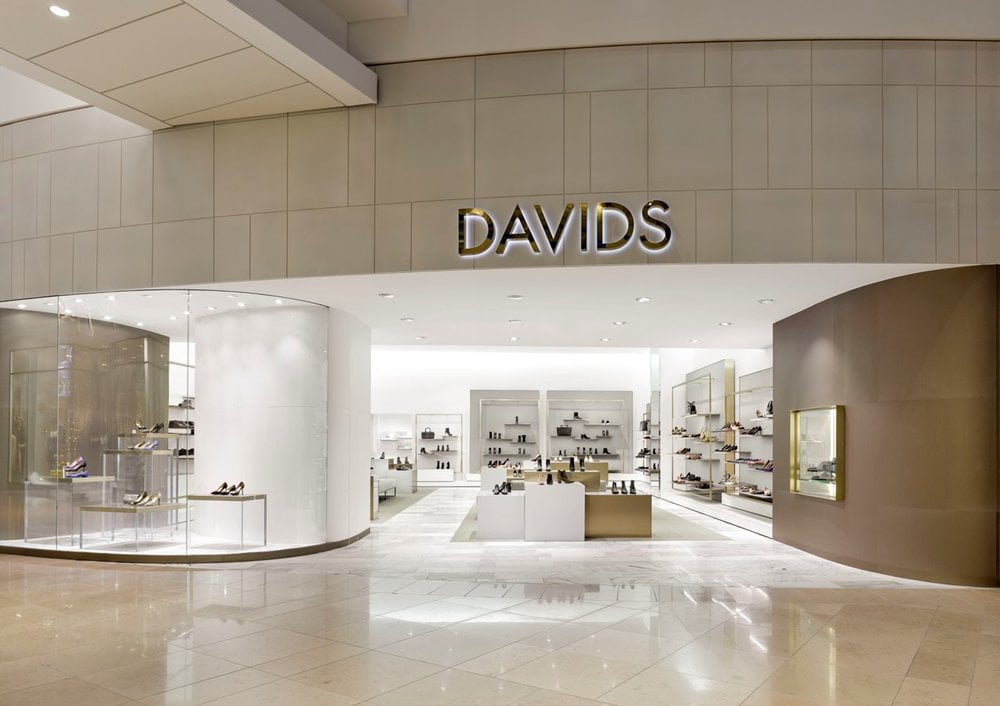
Davids Footwear at CF Rideau Centre (PHOTO: DAVIDS FOOTWEAR)

Toronto-based Davids Footwear has opened its first store outside of Toronto at Ottawa’s CF Rideau Centre, and the company plans on eventually operating about 15 stores across the country. Davids carries some of the world’s top luxury brands in its stores, and it is expanding its brand matrix as well as operations following a strategic partnership with luxury menswear retailer Harry Rosen.

The Harry Rosen partnership was announced in November of 2017 and as part of the deal, Harry Rosen’s CEO Larry Rosen was named as CEO of the Davids Footwear chain as well. Richard Markowitz, grandson of the founders of Davids, is the COO of Davids and is leading the strategy of the footwear retailer’s national expansion.

The CF Rideau Centre store in Ottawa is strategically located adjacent to Harry Rosen’s store in the mall. In fact, Davids new retail space was created by carving out about 2,100 square feet from the Harry Rosen store, in what most recently housed a separated men’s shoe department. The clustering of the two luxury stores makes sense as it draws in customers from the area, and that clustering is further enhanced by nearby retailers such as Tiffany & Co., Kate Spade and Birks.

Davids Footwear at CF Rideau Centre (PHOTO: DAVIDS FOOTWEAR)

Davids Footwear was established by Louis and Julia Markowitz in Toronto in 1951 with a standalone store location on College Street near Euclid Avenue, located between Kensington Market and Little Italy. Recognizing an opportunity to bring premium brands to the Canadian market, the Markowitz’s set out to buy prestige brands and as a result, they became the fist footwear retailer in Canada to work directly with some of Europe’s finest fashion houses.

In 1971, Davids Footwear was a trailblazer when it opened a store at 66 Bloor Street West in an area that had yet to become established as a high-end retail area, now known as the ‘Mink Mile’. Davids replaced a Toronto Dominion Bank branch that had occupied the base of the 1200 Bay Street mixed-use building, and it was a bit of a risky move — the street was known to be home to several large banks, though it was beginning to attract the attention of retailers looking to cater to affluent residents in nearby Rosedale and Forest Hill.

Davids Footwear remains at 66 Bloor Street West to this day, in an impressive 6,000 square foot flagship retail space that was designed by award-winning Toronto-based design firm Burdifilek. The Bloor Street store was recently expanded by taking over an adjacent space formerly housing sister retail brand Capezio — the Capezio nameplate was discontinued as part of Davids strategy to become Canada’s pre-eminent luxury footwear chain.

As part of the consolidation, Davids Footwear now carries several new ‘contemporary’-priced lines such as AGL, Golden Goose, and Vagabond, and the company continues to expand its own private label Davids line which has gained a considerable following of its own. The goal was to broaden the retailer’s appeal to a wider range of clients, and it continues to also focus on some of the world’s top brands such as Christian Louboutin, Valentino, Manolo Blahnik, Salvatore Ferragamo, Valentino and Jimmy Choo, among others. Stores also carry an assortment of designer handbags and accessories to compliment the footwear assortment.

Davids Footwear Bloor Street Flagship (Image: Davids Footwear)
Davids Footwear Yorkdale Shopping Centre

Besides the Bloor Street flagship and the new Ottawa store, Davids Footwear operates three other standalone units in major shopping centres in Toronto. The Bayview Village store opened in the year 2000, followed by a store at Yorkdale Shopping Centre in 2005 and then, in 2015, at CF Sherway Gardens in a new expansion wing across from Harry Rosen. All four Toronto stores were designed by Burdifilek, and all three mall stores are said to be the top-performing footwear retailers at each centre.

As part of the Harry Rosen partnership, Davids Footwear is gaining access to some new luxury brands not previously carried in its stores, which will be announced at a later date.  

As part of Davids expansion this fall, the company has launched a billboard campaign for the first time to promote its new Ottawa store. A national print campaign also seeks to further create consumer awareness as the company expands. Davids has introduced a new POS system, new warehousing and, this month, will be introducing a new loyalty program to further strengthen its brand.

As well, Davids’ enhanced e-commerce platform showcases styles carried in its stores and by request, customers may also receive personalized messages between store visits on events, sales, new designer arrivals and curated ideas designed to match an upcoming event or milestone. It’s a similar level of customer service that has made Harry Rosen one of the most respected menswear retailers in the world.

Davids Footwear Bayview Village (Image: Davids Footwear)
Davids Footwear Bayview Village
Davids Footwear Sherway Gardens (Image: Davids Footwear)

In terms of brick-and-mortar expansion, Richard Markowitz said that the company is anticipating opening approximately 10 more locations in Canada, bringing its total store count to about 15. Stores will ideally be in the 2,000 to 3,000 square foot range, either in AAA malls or on urban street fronts and, as part of its strategy, sometimes near existing Harry Rosen stores.

Markets such as Vancouver are targets for Davids Footwear chain as it expands and solidifies itself as a leading national chain similar to that of Harry Rosen for menswear in Canada.

The goal, as well, is to offer a curated assortment of footwear and accessories that distinguishes Davids from department store retailers as well as a handful of multi-brand footwear competitors. It’s an edited assortment of the finest brands that continues to see Davids growing customer loyalty with affluent shoppers, particularly at a time of unprecedented competition in the Canadian footwear market.

We’ll continue following Davids Footwear as it expands its product assortment as well as its operations into new markets in Canada.
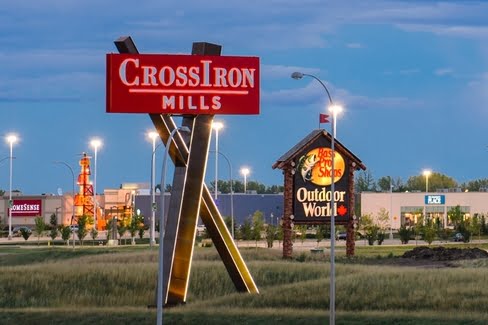
CrossIron Mills Deemed ‘Huge Success’ in Crowded Calgary Retail Market

exc-5baff911104c7bdf73cb81cc

Next August, CrossIron Mills will celebrate its 10th anniversary as it has defied many initial doubters who thought the shopping centre concept would struggle with its location just outside of Calgary’s city limits.

But the 1.1 million-square-foot mall, on one level with about 220 stores, has authored a huge success story since it opened its doors in August 2009 in the Balzac area of Rocky View County along the Queen Elizabeth II Highway.

“CrossIron Mills has evolved into a retail powerhouse in 10 short years  and is one of the top tier shopping centres in Western Canada,” said Michael Kehoe, an Alberta-based retail specialist with Fairfield Commercial Real Estate in Calgary. “Mall owner Ivanhoe Cambridge has successfully adapted the American-style ‘Mills’ concept to several markets across Canada and CrossIron Mills stands out as a major success story.

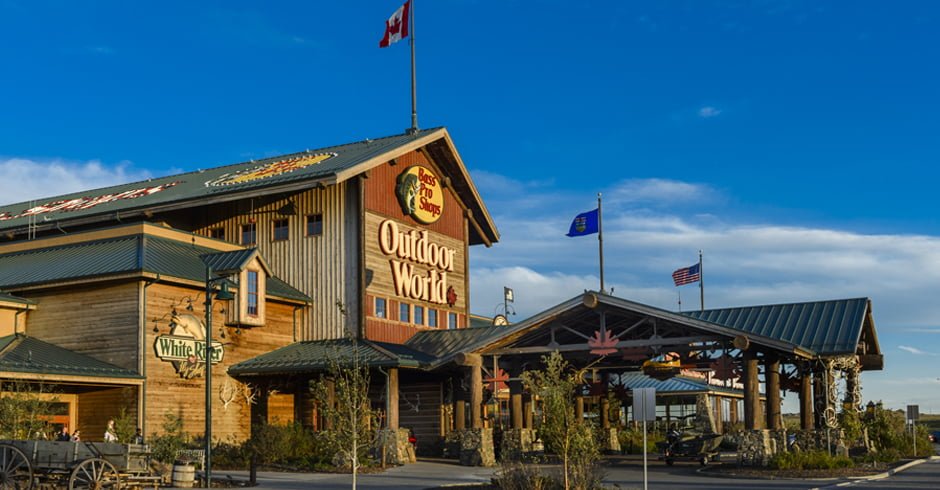
“The shopping centre is a true regional draw with its unique tenant mix and Bass Pro Shops that attracts shoppers from as far away as Saskatchewan and eastern British Columbia. The Calgary Ring Road highway system makes the centre accessible to the majority of Calgarians. The entire Balzac commercial node in Rocky View County with CrossIron Mills as the centrepiece is experiencing a robust development phase with new large format retailers and amenity projects such as hotels and new restaurants under construction or in the final planning stages.”

James Moller, general manager of CrossIron, said the mall is 98.4 per cent occupied and at the end of the year it will be at 99.1 per cent occupied.

“That’s the highest ever,” he said.

As an example of the mall’s growing popularity, Moller cites an interesting number. The traffic in August was higher than last December. August had close to 1.1 million visits to the mall while December 2017 was just over one million.

“It was a combination of a few things. July traffic was a bit soft. We all remember July. The weather was fantastic. We didn’t have the smoke (from the B.C. wildfires). I think everybody was really enjoying being outside,” said Moller. “August we had the smoke roll in over Alberta and I think people were looking for getting out of the heat and out of the smoke. That was a good portion of that. We had some new stores open up.

“August traffic was up almost 12 per cent. Sales were up 11.4 per cent from a year ago.”

New stores recently opened include the Sketchers superstore turning into an anchor store for the mall at about 20,000 square feet. Asics shoes opened in September. Kate Spade New York is also a fairly new store in the mall. Earlier in the year Aritizia, Vintage Caffeine, Auntie Anne’s Pretzels and the Miniso Japanese dollar store were also new additions to the mall.

Moller said Aldo has relocated in the mall as it built a brand new store.

“As part of the 10-year anniversary next year we have lots of people doing renovations. We have Van’s Shoes doing renovations to its store. We have Kernels Popcorn doing their store. La Vie En Rose is renovating their store and adding Bikini Village to that. We’re excited about that,” said Moller.

Across the street from the mall, McDonald’s is opening a new location and drive-thru which will open in the spring of 2019.

CrossIron Mills will also be installing a centre-wide new Christmas decor program in mid-November.

“It’s a new theme. There’s installations everywhere. We’re adding more than we’ve ever had. Some of the areas and the wings in the shopping centre didn’t have Christmas decor in previous years. So that is happening.”

For the holiday season, CrossIron will have its shopping shuttle system in place to bring shoppers out to the centre from four locations in Calgary – the Brentwood LRT Station, the Southland LRT Station, the Calgary Tower and the Calgary International Airport.

While CrossIron Mills is busy preparing for the busy holiday season, thoughts of next August and its 10-year anniversary are also dancing in the heads of the mall administrators.

“It’s a big year. We’re already in the planning stages for the anniversary. We’re working through that marketing and planning for a spectacular event to mark the 10th anniversary on August 19, 2019. So it’s a little less than a year away and we’re excited about that,” said Moller.

OPM Sales to Host Premium Warehouse Event in Newmarket, October 10-14

Photo: OPM Sales

By Retail Insider

OPM Sales is hosting a 5-day premium warehouse sale event at 400 Harry Walker Pkwy South in Newmarket, just North of Toronto, from Wednesday October 10 to Sunday October 14.  OPM Sales is well known for holding these warehouse sale events, where they work closely with major brands and vendors, which enables them to offer the public brand names at substantial savings.

This October Sale, they will be hosting Wolverine Worldwide who will feature their leading footwear brands such as Merrell, Hush Puppies, Sperry Top-Sider, Keds, Saucony and Wolverine at up to 60% off.

OPM Sales will also be featuring a massive coat sale, with tons of fall and winter coats up to 75% off.  Coat brands will include names such as Tahari, Laundry by Shelli Segal and White Label, Buffalo David Bitton, HFX and Perry Ellis. 

As well, Italian designed brand Mario Serrani women’s samples will be available for up to 60% off.  This includes blazers, jackets, sweaters, blouses, pants, skirts, dresses and more.

OPM Sales is considered to be a leader in the industry, with over 60,000 square feet of premium warehouse retail space.   They optimize your supply chain, clear your inventory and turn it into cash.  Their support and marketing team works closely with participating vendors to help facilitate a successful sale event.

Their traffic is derived from an extensive email database collected since 2012, as well as satisfied returning customers who have positive feedback.  OPM Sales’ ever-growing crowds are also made possible through their targeted print advertising as well as social media and digital marketing initiatives. 

For retailers and businesses interested in vendor opportunities with OPM Sales, please contact Matthew for more information at: matthew@opmsales.com

Visit OPM Sales and experience a premium warehouse sale event for yourself. 

Hours for the sale are: Wednesday, October 10 to Friday, October 12 from 10:00am to 8:00pm, and Saturday October 13 and Sunday October 14 from 10:00am to 6:00pm. 

For more information visit: opmsales.com

 For directions and map click here: OPM Sales – Map                              

Partner content. To work with Retail Insider, contact: craig@retail-insider.com

Valentino to Open 1st Standalone Flagship in Canada

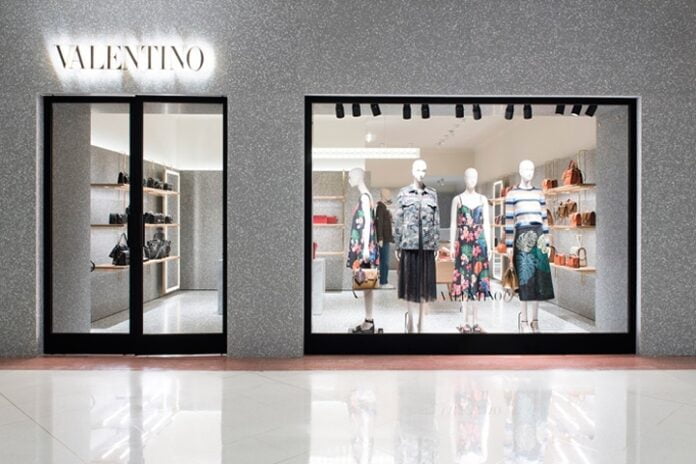
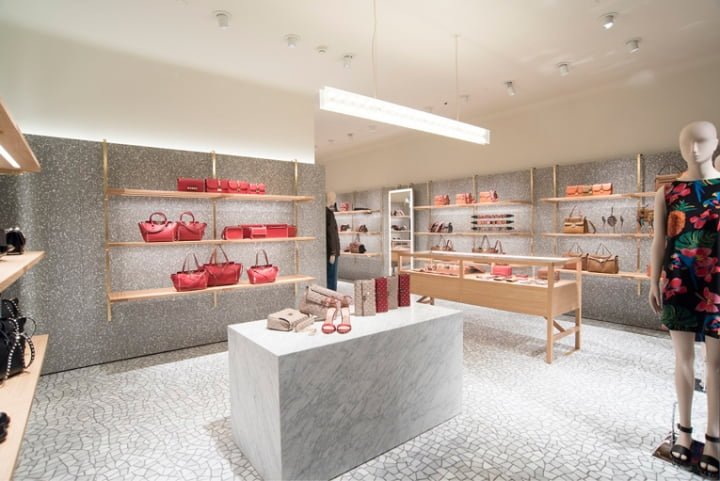
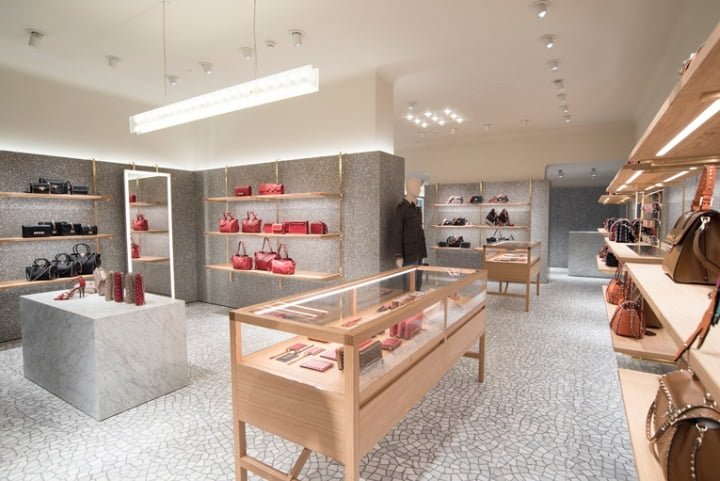
VALENTINO (CIDADE JARDIM MALL IN SÃO PAULO) PHOTO: RETAIL DESIGN BLOG

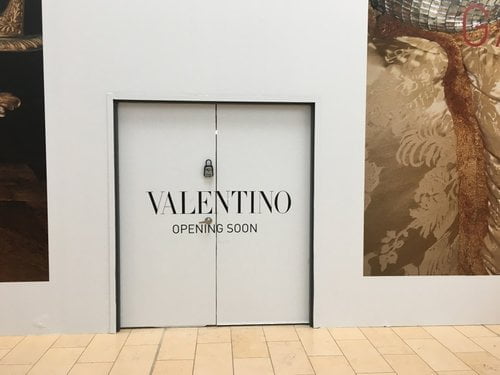
Italian luxury brand Valentino will open its first standalone Canadian store this winter at Toronto’s Yorkdale Shopping Centre. It’s the latest luxury brand to open at Canada’s most productive mall, which is on track to become a global leader in brands as well as retail innovation. 

Valentino will occupy about 4,700 square feet on one level in Yorkdale’s 2012 expansion. The store will be located between Bottega Veneta (which is also scheduled to open November 1) and Aritzia-owned Wilfred, across from the mall’s Holt Renfrew store which is about to see an expansion. Valentino is known for its ready-to-wear offerings for both women and men, as well as accessories, leather goods and footwear. 

CBRE represented Valentino under the direction of Senior Vice President Arlin Markowitz of the Toronto Urban Retail Team, as well as Andrew Goldberg, Vice Chairman of CBRE in New York City. Oxford Properties Group is the landlord of Yorkdale Shopping Centre.

YORKDALE CONSTRUCTION SIGNAGE. PHOTO: CRAIG PATTERSON

Valentino is also available in Canada at several of Canada’s most prestigious retailers, some of which have entire ‘hard shop’ areas dedicated to the brand. Valentino has been growing its Canadian distribution steadily over the past three years or so. In September of 2015, Nordstrom unveiled separate shop-in-store boutiques at CF Pacific Centre in Vancouver for Valentino accessories and women’s fashions, which was followed by a dedicated Valentino men’s area, which was a first for Nordstrom. In February of 2016, Saks Fifth Avenue opened its CF Toronto Eaton Centre flagship, which also featured separate shop-in-stores for Valentino accessories and women’s ready-to-wear. In the fall of 2016, when Nordstrom opened its Yorkdale store, it also included separate Valentino shop-in-stores for accessories and women’s ready-to-wear — we spotted a $38,000 Valentino dress when we toured the Yorkdale Nordstrom store ahead of its October grand opening. 

Holt Renfrew also carries a range of Valentino women’s and men’s ready-to-wear, as well as accessories and shoes. Holt’s hasn’t dedicated spaces for Valentino ‘hard shops’ in the same way as US competitors Nordstrom and Saks in Canada. A handful of other prestigious retailers carry the Valentino brand in Canada, which has been present in retail and wholesale for decades. In the 1980’s and 1990’s Valentino had several licensed boutiques in Canada. In Toronto and Montreal, fashion retailer ‘Chez Catherine’ operated Valentino boutiques at her stores at Toronto’s Hazleton Lanes and at Montreal’s Ogilvy. In Vancouver, Farideh French Imports operated two small Valentino boutiques in the downtown core — one was at 723 Burrard Street in a space now occupied by Tiffany & Co., and another was located on the third level of the Pan Pacific Hotel back when it featured a small luxury shopping area that also housed boutiques for Celine, Furs by Jacques, and multi-brand luxury accessory retailer Collections International. 

PHOTOS (ABOVE AND BELOW) OF THE VALENTINO IN FIRST STORE AT CIDADE JARDIM MALL IN SÃO PAULO

Toronto’s Yorkdale Shopping Centre is adding more first-to-Canada retailers than any single location in the country. Several of its most recent announcements have already been available in the centre — Valentino, as mentioned above, can also be found at Nordstrom and Holt Renfrew. Bottega Veneta, which is opening next to Valentino at Yorkdale in November, has a presence at Holt Renfrew. And Chloé, which recently opened at Yorkdale, has separate hard-shops for accessories and women’s ready-to-wear at Nordstrom at Yorkdale, not unlike those for Valentino.

More luxury brands are confirmed to be moving into Yorkdale and we’ll report on these when permitted.

Automated Drugstore Concept ‘Pharmabox’ Aims to Disrupt Canadian Retailing

Image: Pharmabox

A disruptive U.S.-based automated drugstore concept called Pharmabox is breaking into the Canadian market with plans to expand across the country.

Pharmabox, Inc., based in Miami, launched three years ago and now operates approximately 30 of its self-service kiosks across the U.S. and on Royal Caribbean cruise ships. The kiosks sell more than 140 items typically carried in pharmacies, such as shave gel, cough syrup, mouthwash, toothbrushes, soap, deodorant and over-the-counter pain killers, such as Tylenol and Advil, among many other items.

The company has engaged Terry Samuels, owner of retail consulting company Tersam Management in Toronto, to manage the company’s expansion into Canada and internationally. Samuels says he’s already seen broad interest from many different regions.

Image: Pharmabox

“We’re getting inquiries from all around the world—without any marketing, just from people seeing the machines, and they’ve been reaching out,” he says. “The machines are eye-catching and innovative. They’re doing very well.”

Pharmabox aims to provide convenient destinations for consumers to buy everyday items in high-traffic areas, such as shopping centres, casinos, airports, colleges, universities, fitness centres and hospitals.

“It’s applicable in many places,” Samuels says. “We all get headaches often, and you don’t always want to go looking for a headache pill.”

The machines feature touch-screen displays and accept cash, credit cards, Apple Pay and Android Pay. They also feature software that automatically notifies the company when a product is low on stock, to ensure it can be restocked quickly.

As the company expands, it’s looking for licensees to partner with. According to Samuels, the concept presents a potentially lucrative opportunity for businesses “that would like to have a grab-and-go impulse model to fulfill the immediate grab-and-go needs of the consumer in high traffic environments.”

Although Pharmabox has had success in shopping centres in the U.S. market, expanding into shopping centres in Canada could be a challenge, Samuels notes, since many malls already have large drug stores as tenants. However, he sees potential for major pharmacy chains such as Shoppers Drug Mart and Rexall to partner with Pharmabox, to establish additional convenient points of sale for their customers.

For retailers that are struggling with high rent costs, Samuels says the kiosks could allow them to reduce the size of their stores, and create a supplemental point of sale within a shopping centre. 

“What that would do, ultimately, is reduce their costs in mall space,” he says. “They’ll still have the big mall space, but less—and they’d have a point of convenience machine.”

Samuels expects to eventually secure licensees for Pharmabox machines across Canada.

*Photos in this article are via Pharmabox.

Chip Wilson Family Sells ‘Kit and Ace’ Fashion Brand to Company CEO

Kit and Ace at Mount Royal Village in Calgary (PHOTO: KIT AND ACE)

Vancouver-based ‘technical cashmere’ brand Kit and Ace has announced new ownership and a new direction, as it finally sees profitability after more than four years in operation.

CEO George Tsogas, who had led Kit and Ace since April of 2017, tells Retail Insider that he bought the company from Chip Wilson’s company Hold It All Inc. for an undisclosed sum with the deal having closed on August 31 of this year.

GEORGE TSOGAS. PHOTO SUPPLIED

Kit and Ace, which was founded in 2014 as a luxury-focused ‘technical cashmere’ brand, became profitable for the first time in July of 2018, according to Mr. Tsogas. The company expects to further grow with a focus on the ‘modern commuter’ who might travel by bike, foot or on transit in large cities. The company’s ‘Navigator Collection’, which launched in the spring of this year, is geared towards the urban commuter by providing ‘office-ready clothing options’ as Kit and Ace renews its focus towards technical apparel.

The Navigator Collection, which launched for men in April with a range of trousers, joggers, shorts, blazers and jackets, introduced women’s trousers in August of this year, with more categories on the way. The Navigator Collection features venting, secure pockets, and reflectivity for cyclists that is made from a technical fabric that is said to be water-repellant, durable, easy-care and comfortable. The new line is the first step in transitioning Kit and Ace’s product line to technical commuter wear, according to the company.

SCREEN SHOT FROM KIT AND ACE WEBSITE

In order to ensure that its products perform, Kit and Ace has introduced the ‘bike test’ into its design process to make sure clothing holds up to increased movement, outside elements, and moisture, while maintaining an office-appropriate look upon arrival. “If it works on a bike, it will work for any commute,” according to Kit and Ace.

“With the world’s urban population surging, we are seeing a new segment of commuters that are riding their bikes to work and want to be office-ready but haven’t had apparel options to do so,” said Mr. Tsogas. “The commuter way of life is technical and functional, yet allows you to show up to the office looking put-together and  professional, without needing to change into something new. This is what we’re bringing to our apparel.”

Chip Wilson, best known for having founded Lululemon, will remain as a mentor to Kit and Ace as the brand continues to transform under Mr. Tsogas’ leadership.

Kit and Ace launched in July of 2014 and was initially led by Chip Wilson’s wife Shannon Wilson and son J.J. Wilson, though sources confirm that Chip Wilson was quietly involved with activities such as lease negotiations for some of the company’s first retail stores.

The company expanded its base of stores quickly after its summer of 2014 launch, which began with pop-up stores in various Canadian and, soon, international centres. Longer-term leases were eventually signed as Kit and Ace grew to more than 60 stores globally and 700 employees in early 2016. 

By March of 2017, Kit and Ace’s store count was reduced to 41 stores, prior to an April 2017 announcement that all but nine Canadian stores would remain open. Since then, three more stores closed and at the moment, Kit and Ace operates six locations with two of those in Vancouver, two in Toronto, and one store each in Calgary and Oakville, Ontario. The Vancouver Gastown flagship recently relocated to 151 Water Street from 165 Water Street due to a redevelopment.

SCREEN SHOT FROM KIT AND ACE WEBSITE

The other Vancouver store is in the Kitsilano area at 2235 W. 4th avenue. The Toronto stores are both street-front spaces on popular streets — a ‘Mink Mile’ store is located at 102 Bloor Street West, which also houses a coffee concept called ‘Sorry Coffee’. The other Toronto store is at 779 Queen Street West on trendy ‘West Queen West’. The Oakville location is at 171 Lakeshore Road East and the Calgary location is at Mount Royal Village, a First Capital Realty-owned property just south of the downtown core. 

More Kit and Ace store locations are planned, according to Mr. Tsogas, though not nearly at the rapid rate seen in 2014 and 2015. Two pop-up locations will be used to test the market, which could become a strategy moving forward as the brand looks to new markets. This month, the company launches temporary locations at Metropolis at Metrotown in Burnaby as well as at CF Chinook Centre in Calgary, both of which will operate through to February of 2019.

‘SORRY COFFEE’ AT KIT AND ACE AT 102 BLOOR ST. W. IN TORONTO. PHOTO: KIT AND ACE

To serve the urban commuter, more in-store coffee shops could be in the works, according to Mr. Tsogas.

In order to move the brand forward, Mr. Tsogas revealed that staff will be offered an equity stake in the company as incentive. Canada will be the focus as will the United States before Kit and Ace relaunches an international store expansion. Kit and Ace’s new strategy is to be a ‘problem solver’ according to Mr. Tsogas, offering a unique product that is also practical to the modern urban dweller looking to look good while commuting in the city.

Why We Think Businesses are Out to Get Us

Why We Think Businesses are Out to Get Us

Justin Welby, the archbishop of Canterbury, made headlines in the U.K. recently for his speech at the Trades Union Congress conference in Manchester, England.

His remarks were forcefully pro-union and strongly disapproving of corporations, the profit motive and the wealthy.

He singled out Amazon for not paying their fair share of taxes in the U.K. and the gig economy as a “reincarnation of an ancient evil.”

To the archbishop, capitalism, with its pursuit of profit and inequality of outcomes, is inherently immoral.

Other religious leaders have, over the years, made similar points. In 2015, Pope Francis denounced capitalism and the pursuit of money and, in 2008, the then-archbishop of Canterbury, Rowan Williams, wrote an article for a British magazine criticizing capitalism in the wake of the financial crisis.

Such negative views of business and profit are hardly uncommon.

A recent article in the Journal of Personality and Social Psychologydocumented widespread anti-profit beliefs.

In my research with some of my graduate students, I have found that people often take a dim view of businesses, interpreting many different actions —such as a small price increase or a product recommendation — as an attempt to take advantage of consumers.

Viewed as conscious entities

But what underlies these views? Why is business and the pursuit of profit so maligned?

We think the answer lies, in part, in how people view firms and the resulting inferences they draw from the attempts of these firms to make a profit. To the first point, people seem to view companies as conscious entities — as living, breathing organisms with thoughts, feelings, intentions and motives.

Research using functional magnetic resonance imaging (fMRI) scannershas found that patterns of neural responses when considering other people’s mental states (the parts of the brain involved in “theory of mind”) are indistinguishable from the pattern of responses when considering the behaviour of organizations.

What this means is that people are likely to attribute distinctly human motives to business actions that are the product of entirely different processes.

In addition to viewing companies as people, consumers often view their transactions with firms as zero-sum — like sharing a pie, where more for one person means less for the other. This means that when companies are perceived to be making a profit, that profit is viewed as coming at the expense of customers.

Distrust of profitable firms

This is where profiting becomes problematic. Because we mentally view firms as people, this is seen as a wilful act — a deliberate attempt to take advantage of customers — and it violates an important norm of interpersonal conduct, a moral norm even, that forbids benefiting at another’s expense.

We have found that a wide range of actions by businesses appears to be interpreted in this light: price increases, discounts for other people, product recommendations and even advertisements.

Even when people don’t buy goods or services from a company, and therefore no profit is made, perceptions that a firm tried to profit lead to negative responses.

Even sales clerks are suspect

In one extreme example, we found that even when a salesperson recommended the cheaper of two alternatives, customers still assumed it was to benefit at their expense.

Our research has not yet investigated how firms can mitigate such reactions or whether they even can. If our results are anything to go by, some readers may think that these are legitimate reactions that should not be curtailed.

However, we would point out that a purchase is a consumer decision. No company is forcing consumers to buy their products against their will.

What’s more, businesses bear the burden of the risk in offering products for consumers’ consideration; the products that they make available to us are often a tremendous source of value in our lives; and, ultimately, the only reason companies develop and offer such products is to make a profit. Otherwise, what would be the point of going into business?

*This article was originally published on The Conversation.

By Laurence Ashworth, Associate Professor, Marketing, Queen’s University, Ontario

Eyewear Brand ‘Oliver Peoples’ Enters Canada with First Stores [Photos]

Oliver Peoples  at Yorkdale (Image: Craig Patterson)

Los Angeles-based luxury eyewear retailer Oliver Peoples has opened the first of two standalone stores in Canada at Toronto’s Yorkdale Shopping Centre, and a second will open soon in the heart of Vancouver’s Alberni Street ‘Luxury Zone’. The company is targeting affluent shoppers with its choice of locations. 

Oliver Peoples’ frames are “anti-logo” with prices that can be well into the hundreds, which differentiates Oliver Peoples from other recent entrants that offer more in the way of value pricing. Oliver Peoples’ frames are known to be worn by celebrities and the brand has an impressive following on social media. 

The company was founded in 1987 with a boutique in West Hollywood, and it is now sold in its own boutiques as well as in upscale multi-brand retailers that carry eyewear. Its designers are in Los Angeles and frames are manufactured in Italy and Japan. Oliver Peoples was acquired by eyewear conglomerate Luxottica in 2007. 

The new Yorkdale store, which spans 742 square feet, is near luxury brands such as MontblancPiaget and Van Cleef & Arpels. The store opened to the public on Friday, September 28, in a retail space formerly occupied by Teavana. 

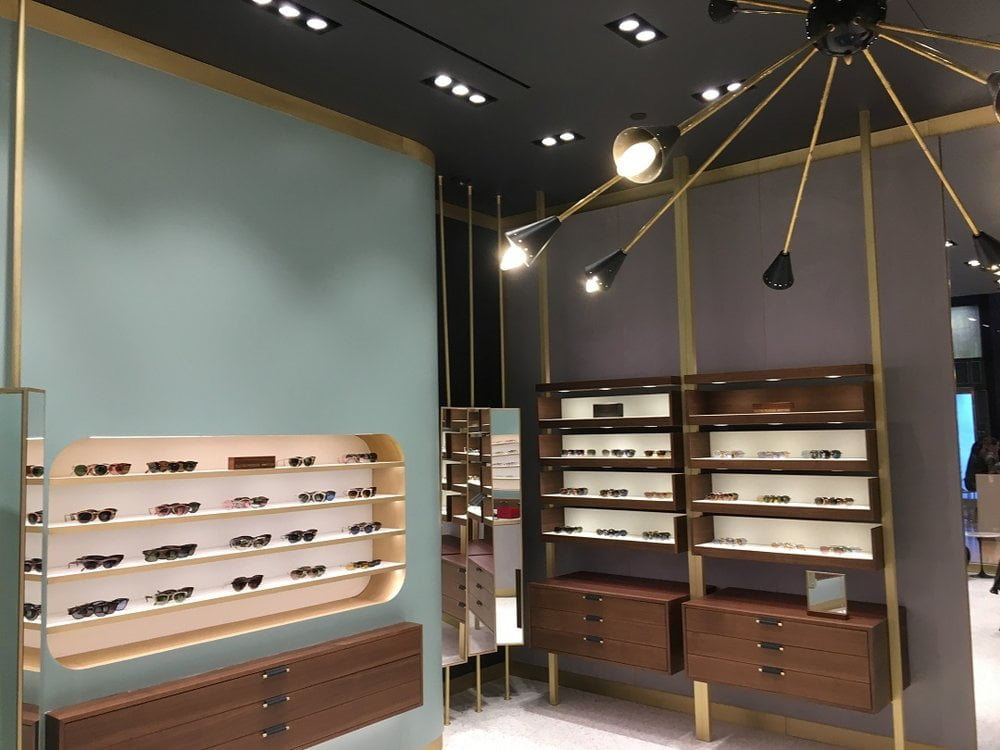
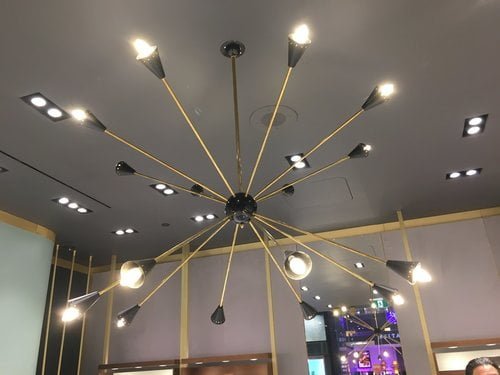
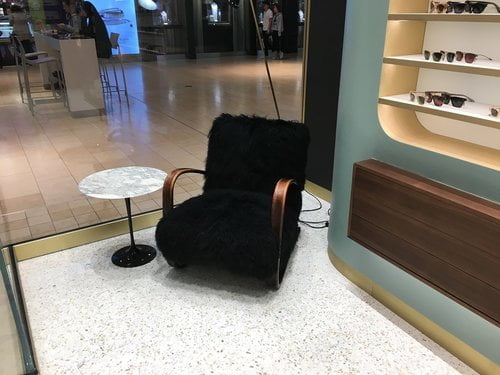
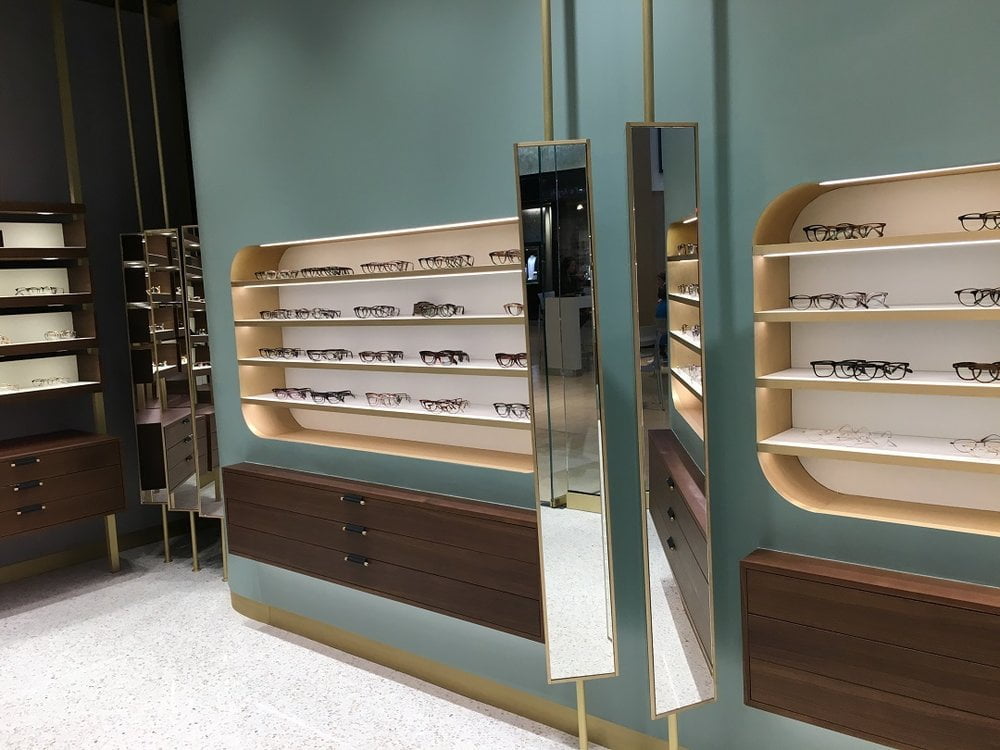
The store’s interior is inspired by “Mid-Century California,” according to the company, with accent walls of suede sage, 1960’s ribbed walnut wood, contrasting brass detailing, and Verde Alpi marble. Stilnovo lighting fixtures illuminate the space, and Zanuso armchairs provide seating for guests. 

Terrazzo marble flooring is featured throughout the store. 

To mark the Yorkdale opening, the store is offering a limited edition OP-40 30th frame in tortoise acetate with ‘vibrant green lenses’ that the company says is inspired by the boutiques interior design.

The Vancouver store will open on October 12 at 1061 Alberni Street. The 687 square foot boutique is being constructed from modifying a retail space that, until recently, was occupied by Shefield & Sons Tobacconists. Oliver Peoples’ Alberni Street store is located at ‘centre ice’ on Alberni Street, bounded on both sides by Richemont-owned luxury brands. Directly to the west are locations for Van Cleef & Arpels and IWC Schaffshaussen which both opened in December 2017, and to the east Richemont has leased the former Blubird space where Montblanc and Vacheron Constantin is said to be opening in part of it, with more details to follow. 

The Vancouver boutique’s interior will be similar to the Yorkdale store, according to the company — Giampiero Tagliaferri, Creative Director of Oliver Peoples, revealed that the store’s mustard coloured Zanuso style armchairs will add a pop of colour, and “represent the changing colors of fall foliage.”

To mark the opening of the Vancouver store, it will exclusively offer a limited edition OP-505 frame — it’s one of the first Oliver Peoples frames to have been released, and the customized OP-505 is featured in washed teal acetate, 18K gold metal, and mirrored goldtone lenses.

The Vancouver Oliver Peoples lease deal was negotiated by Mario Negris and Martin Moriarty of CBRE Vancouver

As with its first two Canadian stores, Oliver Peoples chooses premium locations for its stores and in some instances, it’s very clear that the brand is going after a wealthy shopper. In Houston, Texas, for example, the retailer has a store at the prestigious River Oaks District — one might otherwise expect the store to be at the busy nearby Houston Galleria (which also has plenty of luxury stores).

In Chicago, Oliver Peoples is located amongst luxury stores on Rush Street just south of Oak Street and the retailer has opened stores on premium streets such as Sloane Street in London, Ortega y Gasset in Madrid, Grant Avenue in San Francisco and Madison Avenue in New York City.

Premium mall locations include top names such as South Coast Plaza in Orange County, King of Prussia near Philadelphia, Westfield Valley Fair in Santa Clara California, and others. Oliver Peoples has more than 30 stores internationally, according to its website, and distributes in more than 60 countries worldwide. 


View this post on Instagram


Our new optical frame Elyo, offered in rich acetates and features adjustable nosepads. Discover new styles on #Oliverpeoples.com and our boutiques now.

A post shared by Oliver Peoples (@oliverpeoples) on

Canada’s Anfibio Boot Co. to Open 1st Standalone Retail Store

RENDERING: ANFIBIO

In celebration of its 50th anniversary, Montreal-based winter footwear company Anfibio Boot Co. announced the opening of its first-ever concept store, a new branding, and a new Fall/Winter collection.

“We recently decided to further promote and enhance our brand by selling directly to consumers,” explains Pina Passarelli, President of Anfibio. “Having the opportunity to connect directly to consumers through our own selling platform is very exciting.”

Anfibio Boot Co. prides itself for bringing heritage craftsmanship and authentic style to customers in Quebec and across Canada for the past half-century. Everything is made in their Montreal shoe factory, with no plans to change. While up to this point, this established brand has only had wholesale operations; they recently made the decision to enter the competitive retail market. The opening of their first concept store will happen in November in the Villeray district of Montreal.

Handcrafted in Canada. Manufacturing process is shown below.

“The opening of our first store will, in a way, serve as a new marketing strategy for the brand,” adds Ms. Passarelli. “When working with retailers, the feedback is always a year out. [This] will give us the opportunity to receive direct contact with our clientele, which will provide us with immediate feedback.”

They look forward to having this opportunity to see customers’ reactions firsthand. Overall, getting a pulse on what works and what doesn’t, in addition to getting closer to their clients and increasing brand awareness will be invaluable to the continued success of the company.

In addition to the exciting news of the concept store opening, Anfibio will also be launching new products and collections.

Anfibio’s latest collection honours the brand’s 50th anniversary with a revamped design direction that blends artistry with fashion. Traditional handmade practices and continental craftsmanship are at the heart of each chic and contemporary style – from combat, equestrian and biker silhouettes for her to sneaker-inspired looks for him. But timeless classics, including a sleek knee-high boot and a retro Chelsea style, pay homage to Anfibio’s origins.

Every piece of the “tribute” collection is made from waterproof customized hides treated with only the best premium-grade oils and dyes.

“We employ 50 people and most of them have been with us for decades. Montreal and Anfibio’s people are part of the brand’s DNA and we are very proud of that,” says Ms. Passarelli. “Anfibio is a family business, and all the raw materials are high-quality; for us there is no compromise about that. Our final product may be at a higher price point, but it’s durable, it’s quality and above all, it’s local.”

Downtown Calgary’s ‘The CORE’ Shopping Centre Optimistic as Traffic Increases

THE CORE (PHOTO: CUSHMAN & WAKEFIELD)

Calgary is a city built on the success of the oilpatch.

When the oilpatch is booming, the city feels the impact in a positive way in many different areas including the retail industry. But when the oilpatch is struggling, that ripple effect is a painful one for retailers as less discretionary spending takes place.

The CORE shopping centre, which spans three city blocks in the heart of Calgary’s downtown, knows the ups and downs of the oilpatch very well  over the years and is closely tied into that economic cycle. 

THE CORE – PHOTO: CUSHMAN & WAKEFIELD
‘THE CORE” IS THREE CITY BLOCKS (PURPLE, YELLOW, AND ORANGE) TIED TOGETHER BY A BRIDGE (BLUE). PHOTO: CUSHMAN & WAKEFIELD

When oil prices collapsed in the latter half of 2014, it led to two recession years in Calgary in 2015 and 2016. And as always happens historically, thousands of jobs were shed by corporate Calgary with its head offices concentrated in the core. However, the economy began its slow rebound to recovery in 2017.

“We’re actually coming out of a fantastic 2018 heading into hopefully another strong year. In 2018, we are up in almost everything. In traffic, in sales, in gift card sales. So we’re really excited,” said Allison Onyett, marketing director for The CORE which is managed by Cushman & Wakefield Asset Services.

As of the end of August, The CORE was sitting at a 6.4 per cent increase in traffic year-to-date with some months being up as much as 20 per cent over last year. Gift card sales were 68 per cent higher this year year-to-date than last year. Weekend traffic increased in 2017 by 8.8 per cent and the shopping centre is maintaining that increase this year.

PHOTO: CUSHMAN & WAKEFIELD

“It is positive. However the numbers are still not those pre-recession numbers. We’re up over previous years. We’re still struggling to get to that pre-recession time. We were definitely affected by the layoffs in downtown Calgary. The downtown workers is traffic that is constantly passing through and as soon as you lay people off in the downtown core that is having fewer people walking through our centre every day,” said Onyett.

“So we’ve had to work really hard to come up with a marketing strategy that is event based, weekend based and engaging to further drive that traffic in from the suburbs that wouldn’t be here just because they’re working here but actually are coming to The CORE as a destination.”

The CORE has about 560,000 square feet of retail space.

“We are sitting at about a 20 per cent vacancy with permanent tenants. We’re actually almost fully leased coming into the fall here with a mix of both permanent and temporary tenants,” explained Onyett. “Some of them will come in just for the holiday season or some will be here for even a year or two. That’s still considered temporary. We’re actually running out of space to put some of these stores.

PHOTO: CUSHMAN & WAKEFIELD
ATRIUM SPANNING THREE CITY BLOCKS. PHOTO: CUSHMAN & WAKEFIELD

Michael Kehoe, an Alberta-based retail specialist with Fairfield Commercial Real Estate in Calgary, said The CORE shopping centre with its anchor department stores is one of the largest enclosed shopping centres of any city centre, of a market with under two million people, in North America and attracts millions of visitors every year.

“Holt Renfrew and La Maison Simons anchor The CORE and provide a powerful draw to the project and the surrounding retail centres such as Bankers Hall and Scotia Centre. Downtown Calgary with close to 30 per cent office vacancy has affected the customer footfall, retail sales and vacancy levels at The CORE. Recent proactive landlord leasing strategies leading to retiring less productive retail tenants in favour of more current and up-to-date retailers is paying off with higher sales productivity and encouraging increases,” said Kehoe.

“The 2017 opening of La Maison Simons at The CORE has been a solid attraction and addition with their success especially on the weekends which is encouraging. As the office sector goes so goes The CORE and tenant retention and attraction challenges will continue.”

PHOTO: CUSHMAN & WAKEFIELD
PHOTO: SIMONS

Onyett said the most significant addition to The CORE is Simons which opened in March 2017.

“We’re definitely feeling what we call the Simons effect. We’re seeing an increase of traffic. We did a survey in the mall and 31 per cent of our shoppers indicated that they were here specifically to go to Simons,” added Onyett.

The mall along pedestrian-friendly Stephen Avenue begins at Simons at its east end and continues to the west end with Holt Renfrew.

“What’s nice about us and it’s truly Canadian of us is that we’re anchored by two Canadian retailers. Simons on one end and Holt Renfrew on the other,” she said.