Advertisement
Home Blog Page 1071

Urban Athletic Brand ‘RYU’ Announces Significant Store Expansion

QUEEN STREET STORE IN TORONTO. PHOTO: RYU

Vancouver-based RYU (Respect Your Universe), the men’s and women’s performance-based urban athletic apparel and accessories brand, is launching into the United States with big plans to open numerous stores in North America in the coming years.

Marcello Leone, the company’s CEO, told Retail Insider that RYU opened its first American store August 2 in Venice Beach, California. The second and third stores in the U.S. will open in Williamsburg, New York and Newport Beach, California in September.

He said a store at CF Sherway Gardens in Toronto should open by the middle of November.

The company’s first location opened in Vancouver in December 2015. There are currently five stores in Canada – four in the Vancouver area and one in Toronto on Queen Street West.

“The plan is to be methodical to continue to let this young brand grow and to continue to expand our categories and continue to build a tribe so our expansion looks like five stores for 2019, five more stores in 2020, five more stores in 2021 and five more units in 2022,” said Leone.

“So you would have a total of 29 by the end of 2022. Those retail experiential centres obviously we go and do a brick and click approach. So our ecomm business is very important and the data that we collect from our ecomm helps facilitate our urban centre growth out for our retail experiential centres. We make a tremendous amount, a lot of effort, on our ecomm side of our business and the brick and mortar side of the business. In this business today you need both.”

RYU was founded in 2011 as a mixed martial arts brand based in Portland, Oregon. Leone was originally an investor. In 2014, Leone, a Canadian fashion entrepreneur, took over the business and incorporated in Vancouver.

In just 18 months he transformed and relaunched RYU into a new category, ‘urban athletic apparel’ and has set his sights on taking the brand global.

“The tailored fit of RYU combines function with fashion and I’m determined to introduce the world to urban athletic apparel,” said Leone. “Whereas athleisure takes you from the gym to the coffee shop, RYU takes you from a workout to more sophisticated urban environments.”

“Athletic apparel can be crowded too and therefore you really need to have a point of difference. And for us the point of difference started with the individual, the athlete, the citizen and we built our company based on developing urban athletic apparel, looking at the precious amount of time that people in urban settings require.”

The company’s website says RYU was built on the fundamental understanding that we are multi-faceted and multi-disciplined.

“It’s about respecting your choices, individualism and journey. It is knowing at our core that we are all connected and that it’s our differences that make us extraordinary. And human,” says RYU.

Vancouver store on Thurlow Street.

“Living with integrity is tough. Yet it is in this toughness, this humanity, that we find true beauty. We believe beauty is achievement earned – not an aesthetic bestowed. Our beauty is measured by our thoughts and actions and extends to our designs, team, partnerships and community. Where being respectful is a way of life, not a tag line.”

“You are more than your training, your workout or the sport you play. You have chosen a healthy, active lifestyle that inspires everyone around you. That’s why we build and engineer products that are not only the best to train in, but are tailored for any urban setting. An innovative way of thinking how we live, dress and perform. We believe if we can facilitate your performance, you will lead the way for everyone. By choosing to respect our differences, and honour our humanity, we can truly celebrate our oneness.”

Leone said the company uses its retail centres as places where people can get together, share together and spread the message of being better in the world and helping the world.

Queen Street store in Toronto.
QUEEN STREET STORE IN TORONTO. PHOTO: RYU

RYU is also launching the new multi-channel creative campaign, entitled #YourUniverse that features urban cult tastemakers from music, art, dance and culture that bring the RYU range to life in their everyday environments.

Editor’s Note: Aurora Realty Consultants represents RYU in Canada, under the direction of broker Jeri Brodie

Purolator Innovates as it Introduces Canada’s 1st Mobile Quick-Stop

Image: Purolator

By Ramsey Mansour, Vice President, Corporate Strategy and Marketing, Purolator

It’s no secret that the retail sector is undergoing significant disruption, particularly when it comes to e-commerce, which is fundamentally changing the retail landscape and altering consumer expectations at an unprecedented pace. Today’s consumers expect a fast, effortless experience, not just at the point of purchase, but also through to delivery and returns. For retailers, providing a sense of certainty for consumers is imperative, yet achieving it in the highly disruptive and uncertain e-commerce environment requires a new approach to innovation that moves beyond the execution of typical and traditional growth strategies.
As renowned author, consultant and teacher at MIT Sloan School of Management David Robertson pointed out at a recent Purolator event on retail innovation and omnichannel strategies, innovation can be likened to dating: retailers should expend the same amount of effort learning about their customers and finding ways to become bigger parts of their lives. The product or service itself is only the beginning. Making a customer’s experience even more compelling by removing barriers and truly understanding their needs and wants is what ensures retailers remain relevant and sought-after. In an e-commerce world, this means catering to customers who are more spontaneous, mobile and motivated by these experiences – and who are demanding flexibility and speed like never before.

Purolator introduces Canada’s first Mobile Quick Stop
These considerations are at the heart of Purolator’s latest endeavour, the Mobile Quick Stop (MQS). Laurie Weston, our director of retail, recognized how the dynamic needs of e-commerce required an equally dynamic solution to add to Purolator’s core offerings. 

In late summer 2017, with the peak holiday package season approaching, Laurie and a cross-functional team saw an opportunity to transform a truck from Purolator’s fleet to become a mobile, temporary location for consumers to pick up their parcels and a natural extension of our retail network and corporate stores.

Working with Purolator operations management, Laurie’s team identified a pilot community with a large number of residential deliveries and a gap for convenient package pickup. On October 15 through to the end of the holiday season, Toronto’s Liberty Village – an urban, densely-populated neighbourhood in the city’s west end – became the host of the specially-wrapped MQS truck, allowing local residents to experience the convenience of claiming their packages within a few blocks of their homes.

Just three months from idea to inception, the MQS was a first of its kind in Canada and addressed several “last mile” business challenges driven by the dynamic nature of e-commerce. It offered:

Convenience and flexibility: The MQS provided customers the ability to pick up packages outside the home but still in the neighbourhood, avoiding missed deliveries if not home or if key pieces of information such as buzzer codes were missing from the package labels – a common occurrence for condo dwellers.

This local convenience for pickup was of particular importance for consumers who live in urban centres, often do not own a car and appreciate being able to walk or bike to a pick-up location.  In fact, during the holiday pilot, we noticed a high pick-up rate in the first 24 hours of a package delivery vs. if the package had been taken to a terminal.

Mobility based on demand: In a traditional B2B final-mile delivery model, demand is fairly predictable and timing and flow of volume doesn’t change often. That’s not the case with e-commerce, where peak season and online shopping “events” affect every stage of the value chain in very unpredictable ways.    

The MQS offered the flexibility to move to different locations within a neighbourhood based on fluctuating volume and demand, slashing the need for re-deliveries and ultimately elevating the customer experience by offering a window of pick-up times that were convenient for today’s busy consumers. In fact, a web-based app allowed customers to enter their Purolator package ID number to not only check the status of their package, but also to see the location of the MQS truck and its hours of availability.

On-time delivery: For consumers (and delivery companies), a package that arrives on time is at the heart of the ideal delivery experience – and consumers are expecting their shipments to arrive faster than ever before. In fact, only 42 per cent consider three- to four-day service fast. The vast majority (83 per cent) expect their deliveries within two days – and that’s shrinking even more through services like Amazon Prime.  

When a customer misses a delivery and the shipment must be re-delivered or picked up at a terminal, that means the package isn’t arriving when the customer wanted or needed it. With the MQS, an employee was able to call the customer that night, giving them the opportunity to get their package the same day. This can have a cascading effect on retailers, who reap the benefits of a positive customer experience throughout the entire purchase cycle.

The possibilities of the MQS
The pilot MQS in Liberty Village received overwhelmingly positive feedback, with an overall customer Net Promoter Score (NPS) of 93.7 and an average of 90 packages picked up per day.  Following the holiday season, the pilot truck moved to the Scarborough, Ont. GO Transit station (in a partnership with Metrolinx), where it will remain until the end of December. While Scarborough features very different characteristics than Liberty Village, it is still an urban setting, and the MQS is located at a busy transit hub for commuters who typically aren’t home to receive packages during the day. Customer feedback continues to be strong, with positive comments on the convenience of picking up and dropping off packages on the way home from work. 

The potential for the MQS is enormous, and the pilot trucks have demonstrated that there is an opportunity to increase the fleet – both during the peak holiday season and all year round – depending on volume, weather and customer wants and needs. Its ability to evolve, both in scale and in function, to include new experiences and offerings to meet the changing needs of consumers and retailers alike demonstrates that it’s possible to continue to elevate the e-commerce experience even at the last mile, and there are already big plans in store for Holiday 2018.   

So what does it all mean?
The retail market is undergoing significant change and we often believe that a significant transformation is required to be successful in this environment. However, the opposite can often be equally true.

In an uncertain market, innovation is essential, but it doesn’t have to be daunting. The success of Purolator’s MQS demonstrates that great ideas don’t have to be difficult, challenging, transformational or cost-prohibitive. Keeping sight on what you do best – coupled with a laser-focus on what your customers need and want is the key to staying ahead of the game. Innovating around the box, truck, store or other core strength is a great starting point. All it takes is a great idea, an enthusiastic team and support from all levels of the organization to bring it to life.

By Ramsey Mansour, Vice President, Corporate Strategy and Marketing, Purolator

Why Canadian Retail Is Going Online & What That Means

By Patrick Foster

The story of Canadian ecommerce has been a very interesting one indeed. While online retail swept into dominant positions in big countries across the globe, the Canadian market was quite reluctant to move with the times, leading to a significant developmental lag. Various reasons for this have been floated, but whatever the cause was, things have finally changed.

Today, the ecommerce industry in Canada is in the midst of a major boom, and the coming years should see yet more retail move into the digital world. But why is online retail now finding some purchase, and what does it mean for the country? Let’s investigate.

Canada’s odd ecommerce lag

Given the size and general advancement of Canada, you’d think that it would have taken up ecommerce around the same time the United States did, but no. Relative to other large nations, it has been slow to embrace the new retail model. It would be unfair to use the U.S. as a sole point of comparison because the population difference is so immense and it’s the home of Amazon, the company that practically owns ecommerce — but we can add the United Kingdom for a fairer comparison.

Going by this direct three-way study from 2015, we can see that both the U.K. and the U.S. were massively outperforming Canada when it comes to online trade. In fact, going purely by spend per citizen, the U.K. was in the lead (possibly due to its density). So why the difference?

The slow progress of Amazon in Canada

Well, I think it’s fair to identify the main reason as Amazon’s incremental inroads into Canada. Amazon’s UK site launched in 1998, but its Canadian site didn’t launch until 2002 — and while Amazon Prime launched in the U.K. in 2007, it didn’t reach Amazon.ca until 2013. Concerned about the prospect of Amazon pricing out local businesses, Canadian provinces were slow to allow any progress.

What’s so special about Amazon? Perhaps nothing inherently, but it’s widely functioned as a game-changer. When Canada was a nation dominated by brick-and-mortar retail, there wasn’t so much incentive for any one company to introduce its customers to the ecommerce model — doing so would essentially have invited the erosion of their main business model.

But now that Amazon has established a meaningful foothold in Canada and is making more of its services and products available in the north, the genie is out of the bottle, and it isn’t going back in. As a result, traditional retailers are being forced to adapt to the digital world or imminently perish.

To a large extent, you can view this as a natural and inevitable correction. Unique circumstances saw a tech-savvy nation with robust shipping infrastructure resist incursion from foreign retailers and thus extend the lifespan of the brick-and-mortar setup, but sooner or later a tipping point was going to be reached. Now that Canadians are familiar with the convenience of ecommerce, it’s only going to get bigger.

Trying to combat overseas dominance

The next decade is going to be extremely interesting for the Canadian online retail industry. Though it still lags behind most of the rest of the world, it looks like businesses are increasingly realizing that they need to put in the work to catch up. After all, the worry is that leaving it too late will allow international retailers like Amazon to saturate the ecommerce marketplace and see huge amounts of revenue drain from the Canadian economy.

A survey of top Canadian executives late last year found that they were worried about the threat of foreign retailers but also bullish about the prospect of aggressive adoption of digital strategies. You can understand the concerns, because one look at the ecommerce stats from 2016 shows the dominance of U.S. companies. Canadian companies are so behind the curve that it may be some time before they pose any threat to the industry juggernauts.

Years after fighting the advance of Amazon, Ottawa is now considered Canada’s tech hub — Shopify took its build-your-own-store ecommerce system to massive success from its headquarters there — and it currently houses some promising tech firms that show a lot of potential (some examples here). But there’s really no way of knowing if the coming years will give rise to a native Canadian ecommerce store capable of competing with the top dogs. Unless someone can rival Amazon’s convenience, that battle may already be lost.

What this all means

As we’ve seen, now that the ecommerce model has found a foothold in Canada, it isn’t going to be dislodged. For consumers, this is very good news — conventions such as free shipping or same-day delivery should continue to spread, and prices will become more tempting as more retailers move online and strive to win business.

For Canadian retailers, though, the ecommerce revolution will continue to be a trial by fire. Those that don’t have online stores will need to invest heavily in changing their operations or finding unique ways to offer things that customers can’t get online. It’s a challenging time, but also one rich with opportunities — businesses that commit to innovation will find the Canadian marketplace a very supportive environment for growth.

Canada is an advanced nation of internet users, but circumstances conspired to slow the progress of its retail system for a time. Today, the dam that held back the tide has long since burst, and Canadian consumers are embracing online retail in a big way. While Canada’s ecommerce industry still lags behind, its current growth predicts a big future — one that can be good for consumers and retailers alike.

Nordstrom Rack Announces 3 Canadian Fall Store Opening Dates

SOUTH EDMONTON COMMON NORDSTROM RACK. PHOTO: NORDSTROM/CAMERON DEVELOPMENTS

Nordstrom has announced the opening dates of its next three Canadian off-price Nordstrom Rack stores, as it continues with a national expansion that could see as many as 15 locations over the next several years. Nordstrom Rack’s first three Canadian stores are now open at Vaughan Mills in suburban Toronto, at Deerfoot Meadows in Calgary, and at 1 Bloor Street East in downtown Toronto, which is considered to be the company’s Canadian flagship

The next three Nordstrom Rack stores confirmed to be opening in Canada are in Ontario and Alberta. 

On September 6, 2018, Nordstrom Rack will open at Heartland Town Centre in Mississauga, just west of Toronto. The store will span about 35,000 square feet in a massive big-box centre that includes anchors such as Walmart, Costco, Canadian Tire, Home Depot and grocery store Seafood City, which also houses a new location for Filipino restaurant chain Jollibee. Heartland Town Centre will become the third Nordstrom Rack location in the Greater Toronto Area, which means half of the six confirmed Nordstrom Rack stores in Canada will be located in the area. 

On October 11, 2018, Nordstrom Rack will open at The Ottawa Train Yards in Ottawa. The 750,000 square foot power centre spans 110 acres of property which, when viewed on a map, is shown to be remarkably close to Ottawa’s urban core. Other anchors include Walmart, Golf Town, SAIL, DSW Shoes and a unit for the wildly popular Ottawa-based grocery chain Farm Boy. Nordstrom Rack will occupy about 35,000 square feet over one level at Ottawa Train Yards. 

VAUGHAN MILLS STORE. PHOTO: NORDSTROM

On October 25, 2018, Nordstrom Rack will open its Edmonton location at South Edmonton Common in Edmonton, which will become the second Nordstrom Rack location in Alberta. South Edmonton Common, which is considered to be Canada’s largest retail power centre, boasts an impressive roster of anchors such as Ikea, Canada’s largest Canadian Tire, and Canada’s first location for ‘The Rec Room’. We recently profiled the centre in Retail Insider and developer Cameron Developments is celebrating 20 years of operations this month as well. Nordstrom Rack’s Edmonton store, as well as the other two discussed above, will span approximately 35,000 square feet over one level. 

Canada’s Nordstrom Rack stores feature fashions, accessories and shoes with savings of up to 70% off regular prices. Merchandise includes a mix of product from full-line Nordstrom stores, as well as some items specifically purchased from top brands sold at Nordstrom. 

Nordstrom has said that it plans to operate between 10 and 15 Nordstrom Rack stores in Canada, addressing a market that was arguably under-served. At the same time, TJX Canada’s off-price concepts Winners and Marshalls continue to open stores at a rapid pace Canada-wide, not to mention its off-price home concept, HomeSense. The Hudson’s Bay Company’s off-price Saks OFF 5TH concept is also expanding, with plans to operate approximately 25 stores across Canada by the end of this year. 

Brokerage Northwest Atlantic represents Nordstrom and Nordstrom Rack for its Canadian site selections, and big news this week as it’s been announced that Chicago-based Jones Lang Lasalle (JLL) has acquired Toronto-based Northwest Atlantic. 

INSIDE THE VAUGHAN MILLS STORE. PHOTO: NORDSTROM

Nordstrom also operates six full-line stores in Canada and there are currently no plans for more, according to the retailer. Nordstrom opened its first Canadian store at Calgary’s CF Chinook Centre in September of 2014, followed by locations at Ottawa’s CF Rideau Centre in March of 2015, at CF Pacific Centre in Vancouver in September of 2015, and two Toronto stores in the fall of 2016 — at CF Toronto Eaton Centre, and at Yorkdale Shopping Centre. Nordstrom opened its sixth Canadian store at Toronto’s CF Sherway Gardens, in September of 2017.

Nordstrom’s ‘Anniversary Sale’ continues from now until August 6 at its full-line stores. It’s Nordstrom’s ‘biggest and best’ sale of the year and this year’s event had a unique marketing twist. Four fashion-savvy comedians were brought in to help promote the sale across various media channels including actress Liza Koshy (Double Dare host and star of Liza on Demand); Daniel Levy, writer, producer and Schitt’s Creek actor; Phoebe Robinson, comedian and NY Times bestselling author; and New Girl actress Hannah Simone. The campaign was shot by Mary Ellen Matthews (best known for her portraits of celebrity guests and the cast of Saturday Night Live) and the comedians also filmed short videos promoting the retailer’s “Show Us How You #NSALE” sweepstakes, where customers can submit an Anniversary Sale photo or video via social media or online to express their enthusiasm for the sale and win a $500 Nordstrom Gift Card. The Anniversary Sale originated in the 1960s and is the company’s biggest event of the year. This event offers brand-new arrivals at sale prices for a limited time – then prices go back up after two weeks.

Vancouver Restaurateur Open Controversial Religion-Themed Food and Beverage Concept

Image: Hail Mary's

If there is something you need to get off your chest and are feeling the call of Confession, forego climbing the cathedral steps, and pull up a stool at Hail Mary’s at 670 East Broadway in Vancouver. Order what’s on tap, a panko-crusted deep-fried avocado, and make yourself comfortable as you wait your turn to duck into the crushed velvet ‘confessional.’

Hail Mary’s is the latest Canadian food and beverage concept to utilize religious symbolism and controversy to sell its wares, joining the likes of national chain Sweet Jesus ice cream and Vancouver-based Perverted Ice Cream, among others. 

Hail Mary’s is the newest member of the East Broadway & Fraser Street community, contained in a brick-clad 650-square-foot holy ‘hole-in-the-wall.’ Decorated in shades of blood red and black with gold stencilling, Hail Mary’s is a retro kitsch kitchen and bar offering an eclectic menu, good range of local alcohol and spirits, and a collection of iconography that would make a nun blush.

Image: Hail Mary’s

The location is no doubt diverse. If so inclined, the owners of Hail Mary’s, Haley White and Mike Zalman, could stand at their door and feast on food from around the world. Across the street is the newly-launched zero-waste Nada Grocery, to the west is Pizzeria Barbarella, Filipino Siga Siga, and Chinese main-stay Anna’s Cake House; to the east the fragrant Noor Convenience and Donair.

With a legal capacity of 30 seats, and a build-out time of 40 days and 40 nights (really), the duo has packed a lot of character into the tiny space. When asked about the inspiration for Hail Mary’s, White explains: “The concept for the aesthetic of Hail Mary’s was born out of a strong appreciation for religious iconography and imagery,” and adds that there may have been “a message from God” involved.

White was the general manager of Whip Café at 6th and Main for three years, and Hail Mary’s is partner Zalman’s third restaurant. He also owns and operates two Slickity Jim’s – one on Main Street and the other on West 7th. All three restaurants have a style reflective of a Gen-X mindset that fondly embraces the past and does not mind taking a poke at things revered. At Hail Mary’s the extensive use of Catholic iconography is not meant to be a statement about the church but about embracing the imagery and the sentimentality that these images hold in the memories of many.

Although the location has only been open for two weeks, White already has their customers pegged. “Disenfranchised Catholics, iconophiles, East Van locals, our wonderful friends, tourists, people getting off the back door of the B-Line bus, Mom and Dad.” 

With a staff of six, the duo split time with White in the front-of-house taking confessions and orders, and Zalman in the kitchen wearing a ‘The Sin is Within’ Hail Mary’s branded t-shirt whipping up Korean Chicken Lettuce Wraps, Vegas Vegan Burger, Nachos, a tangy Watermelon Salad, and Mac & Cheese. Like the neighbourhood, the menu has something for everyone.

Highlights are the unisex Sinners and Saints washrooms, The 7 Deadliest of Sins signature drink, and a coffee nook that my Polish Baba would sell her soul for.

Not willing to reveal the cost of the venture, White teases that it was “a small piece of our souls.” Which begs the question, is competition that fierce in Vancouver’s restaurant scene with the addition of lines of food trucks, and gut-wrenching trends like poutine, tacos, poke/pokerittos, and ramen gripping the city, that a soul sacrifice is required? We may never know, but with another Strange Fellows Cider under my belt, I may be enlightened.

From a business perspective, the addition of Hail Mary’s into the west coast landscape, in the footsteps of the Sweet Jesus expansion into Canada and the United States, and Perverted Ice Cream heating up on Vancouver’s Robson Street, could this be the beginning of a trend in blasphemic businesses? Heaven only knows! 

US-Based Brokerage JLL Acquires Canada’s Northwest Atlantic

exc-5b63650f88251b35562130f4

Chicago-based brokerage Jones Lang LaSalle (JLL) announced that it has acquired highly-respected Toronto-based Northwest Atlantic. It’s a significant announcement for the Canadian retail industry, as Northwest Atlantic’s representation mandate includes brands such as Apple, TJX (Winners/Marshalls/HomeSense), Cineplex, Indigo, DSW Shoes, Nordstrom and many others. 

The acquisition allows JLL to expand its current retail advisory business in Canada significantly, with an aim to provide a range of real estate and leasing services to retailers seeking to enter, expand or operate in Canada. Northwest Atlantic will operate as a boutique practice team, according to JLL. 

Canada could see a record-breaking number of international retailers entering Canada this year by opening stores, and plenty of other companies are expanding their footprint in Canada. Northwest Atlantic’s business is broad as it represents leading global, national and local retailers across all categories, and specializes in the leasing of power center, street-front and enclosed mall retail segments. Representatives specialize in supporting retailers with market penetration strategy, demographic analysis, trade area definition and delineation, roll-out strategy, site identification, selection and acquisition, transaction negotiation, corporate approval process support, renewals and dispositions, and relocation analysis.

“Retailers’ needs are changing dramatically as e-commerce impacts everything from site selection to store configuration and supply chain logistics. Our new partnership and combined operations with Northwest Atlantic enhance and broaden the scale and scope of our service offerings for retailers,” said Brett Miller, CEO, Canada, JLL.

Northwest Atlantic is a significant player in the Canadian retail industry, representing more than 65 retailers and having transacted more than 75-million square feet of retail real estate across the country. Founded in 1991, the privately-held Northwest Atlantic is owned by 11 shareholders, including CEO Tim Sanderson, and Principals Lawrence Hildebrand, Chris Wood, Scott Lee and Dianne Lemm

“We joined JLL because of its Practice Team structure, which allows us to continue operating as a specialized unit and does not change our hands-on approach with our clients,” said Mr. Sanderson, now Executive Vice President, JLL. “We are now able to add resources, technology, a deeper research platform and increased geographic coverage across Canada and globally. We can now give our clients access to a full suite of offerings from JLL that we didn’t have on our own, such as office and industrial services, project management and capital markets expertise through JLL’s National Retail Investment Group.”

As part of the arrangement, 45 Northwest Atlantic employees (including 22 brokers across Toronto, Montreal and Vancouver), will join JLL and integrate with JLL Canada’s existing retail team. As a result, the new Northwest Atlantic executive team will report to and partner closely with Brett Miller, CEO of Canada for JLL and with Naveen Jaggi, President of Retail Advisory Services for JLL Americas.

“We’ve been growing our retail advisory services throughout the United States since 2015, and looking for the right cultural fit to increase our presence in Canada. Northwest Atlantic’s client-centric mentality and unwavering commitment to their clients’ success made them the right group to add to our expanding global retail business,” said Mr. Jaggi. “By joining forces with the Northwest Atlantic team, we’ve now created an opportunity for our clients worldwide to tap into a unified business across the United States and Canada for seamless, platinum advisory services.”

JLL’s business in the United States is massive — it’s the largest third-party retail property manager in the United States and partners with retailers, investors and owner/operators through its team of professionals around the world. JLL is a Fortune 500 company with nearly 300 corporate offices, operations in over 80 countries and a global workforce of 83,500 as of March 31, 2018 (JLL is the brand name, and a registered trademark of Jones Lang LaSalle Incorporated). 

MUJI Announces Downtown Toronto Mega-Flagship [Rendering]

exc-5b62369470a6ad4e5cf27043

Minimalist Japanese retailer Muji has provided an update on the expansion of its downtown Toronto store, including a rendering showing how it will have a significant presence on Dundas Street when it opens this fall. The expansion will more than quadruple the size of the store at 20 Dundas Street West, which was Canada’s first Muji location when it opened in November of 2014. 

Muji confirms that the two-level store will span a whopping 19,125 square feet, which the company confirms makes it the largest Muji location outside of Asia. Renderings show that a considerable amount of its retail space will be on the second level of the Atrium complex in which Muji is located — the retail space is being created out of office space in the large mixed-use complex. 

The 19,125 square foot store is considerably larger than the original 4,373 square foot store which opened at 20 Dundas in 2014 — back then, Muji stores were generally smaller and have been progressively getting larger as the company continues to open stores. 

The store’s location is strategic, being located steps off of the busiest pedestrian crossing in Canada — Yonge Street and Dundas Street, and is across the street from the CF Toronto Eaton Centre which, with more than 50-million annual visitors, is the busiest shopping centre in Canada. Several major brands operate flagships in the immediate area including H&M, Michael Jordan, Adidas, Samsung, Uniqlo and Nordstrom, among others. 

The expanded Toronto flagship will surpass the size of Muji’s Robson Street flagship in Vancouver, which opened in a one-level 14,507 square foot space in December of 2017. Muji hasn’t yet revealed what departments will be included in the expanded Toronto flagship, though the Robson Street flagship might provide some insight — books, custom monogramming and live plants can all be found in the downtown Vancouver store, which has become an attraction on Robson Street’s 1100 block. 

Some Muji stores in Asia feature food and beverage offerings (including its ‘Café & Meal’ concept) and in Japan there are even fresh grocery offerings. A Muji store in Osaka, spanning more than an acre in size with about 46,300 square feet of retail space, is currently the retailer’s largest store globally. 

Muji is said to be doing stellar sales in Canada, and particularly on the West Coast where it recently announced that its Metropolis at Metrotown unit, which spanned 7,770 square feet when it opened in August of 2017, will be expanded this fall to an impressive 12,305 square feet on one level. The idea is to bring the store in line with the experience, product selection, and footprint of the Robson Street flagship. 

Muji’s Canadian stores have been growing progressively larger as they open in Canada. As mentioned above, Muji entered the Canadian market with a 4,373 square foot store in downtown Toronto in November of 2014. That was followed by a 5,225 square foot store at Mississauga’s Square One in November of 2015, followed by the October 2016 opening at Toronto’s Yorkdale Shopping Centre (6,375 square feet) and the Summer 2017 debut of a 6,000 square foot space at CF Markville, north of Toronto. A store at Scarborough Town Centre, measuring about 6,800 square feet, opened in March of this year. 

On Canada’s West Coast, Muji currently operates three stores — Metropolis at Metrotown was the first when it opened last August, followed by the Robson Street store in December and most recently, a 6,355 square foot store at CF Richmond Centre which opened in April of this year

Brokerage CBRE has been involved with MUJI’s negotiations across Canada, led by Arlin Markowitz, Senior Vice President of CBRE’s Downtown Toronto Urban Retail Team.  CBRE Vancouver‘s office, including Martin Moriarty and Mario Negris, were involved in the three Vancouver deals.

Last year, Muji’s Canadian President, Toru Akita, said that he expected MUJI to operate between 15 and 20 stores in Canada by the year 2020, and a source working with the company says that the retailer has already mapped out many of the locations where it plans to expand, which may include malls as well as urban street front locations. 

Known for being innovative and its products being affordable and unbranded, Muji carries various household items, furniture, appliances, stationery and apparel. With hundreds of stores worldwide, it saves money by spending little to nothing on market research and advertising. MUJI is short for Mujirushi Ryohin, or ‘no-brand superior items’, and was founded in 1980 as the private-label brand of a major supermarket chain.

iQ to Open Flagship and Expand Operations

exc-5b611c57575d1fbdb30b9fdf


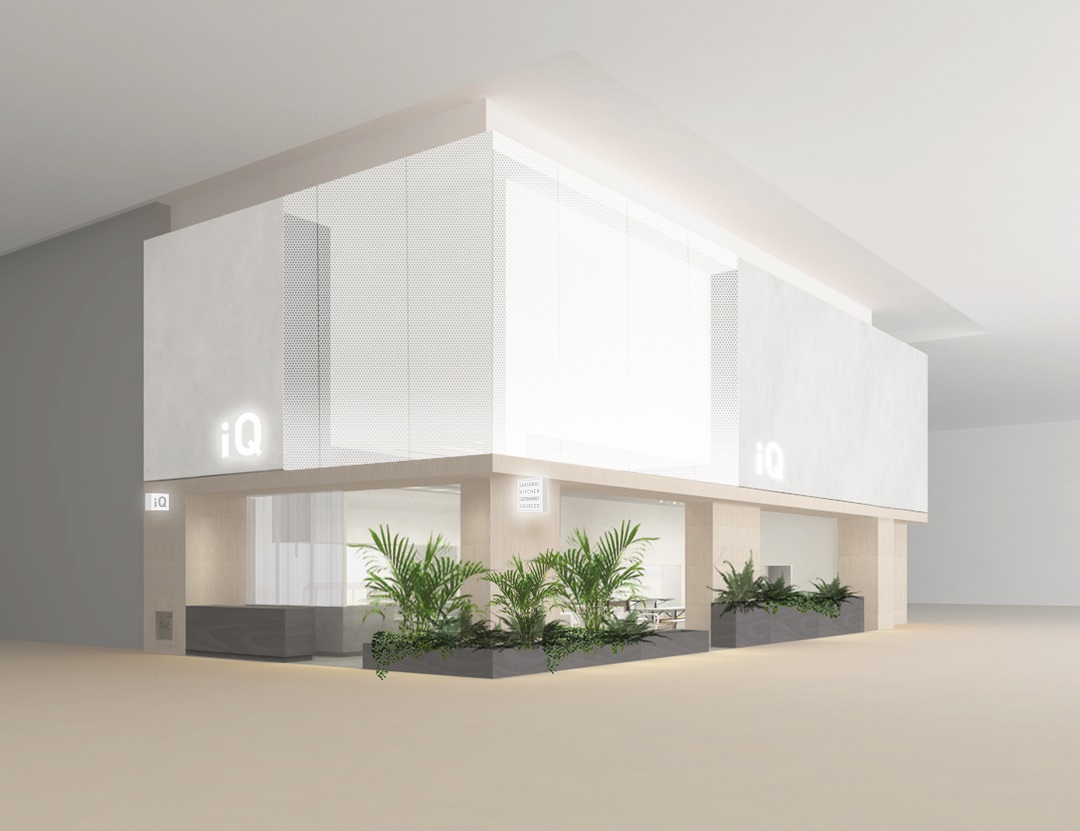
Rendering of the new Yorkdale locationRendering of the new Yorkdale location

Rendering of the new Yorkdale location

By Craig Patterson

Toronto-based healthy eating concept iQ continues to grow its operations, with more locations in the works as it ramps up an expansion which could see it become a national brand. The company will unveil its largest location yet at Toronto’s Yorkdale Shopping Centre towards the end of the summer, and founder/CEO Alan Bekerman says that more iQ locations are in the works.

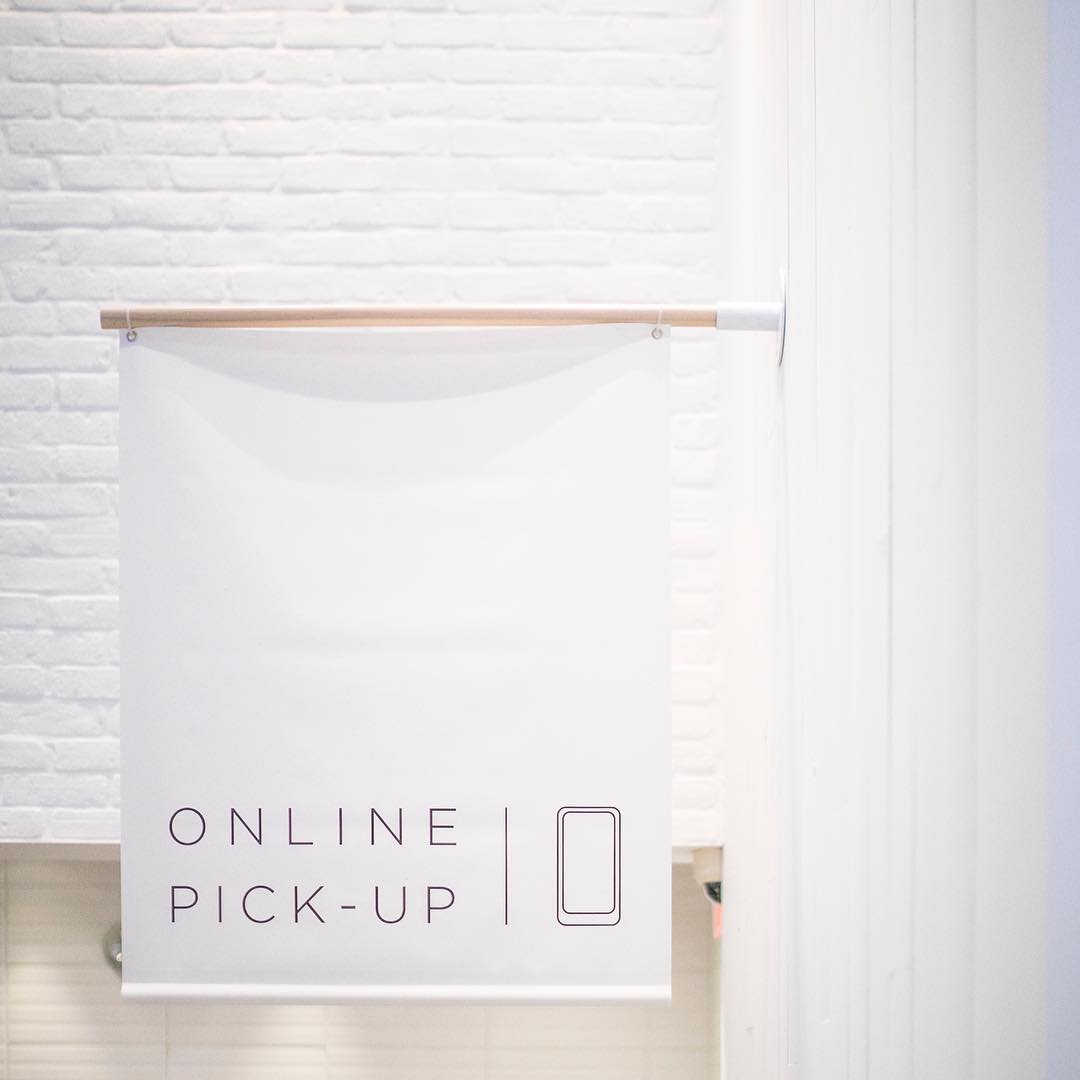
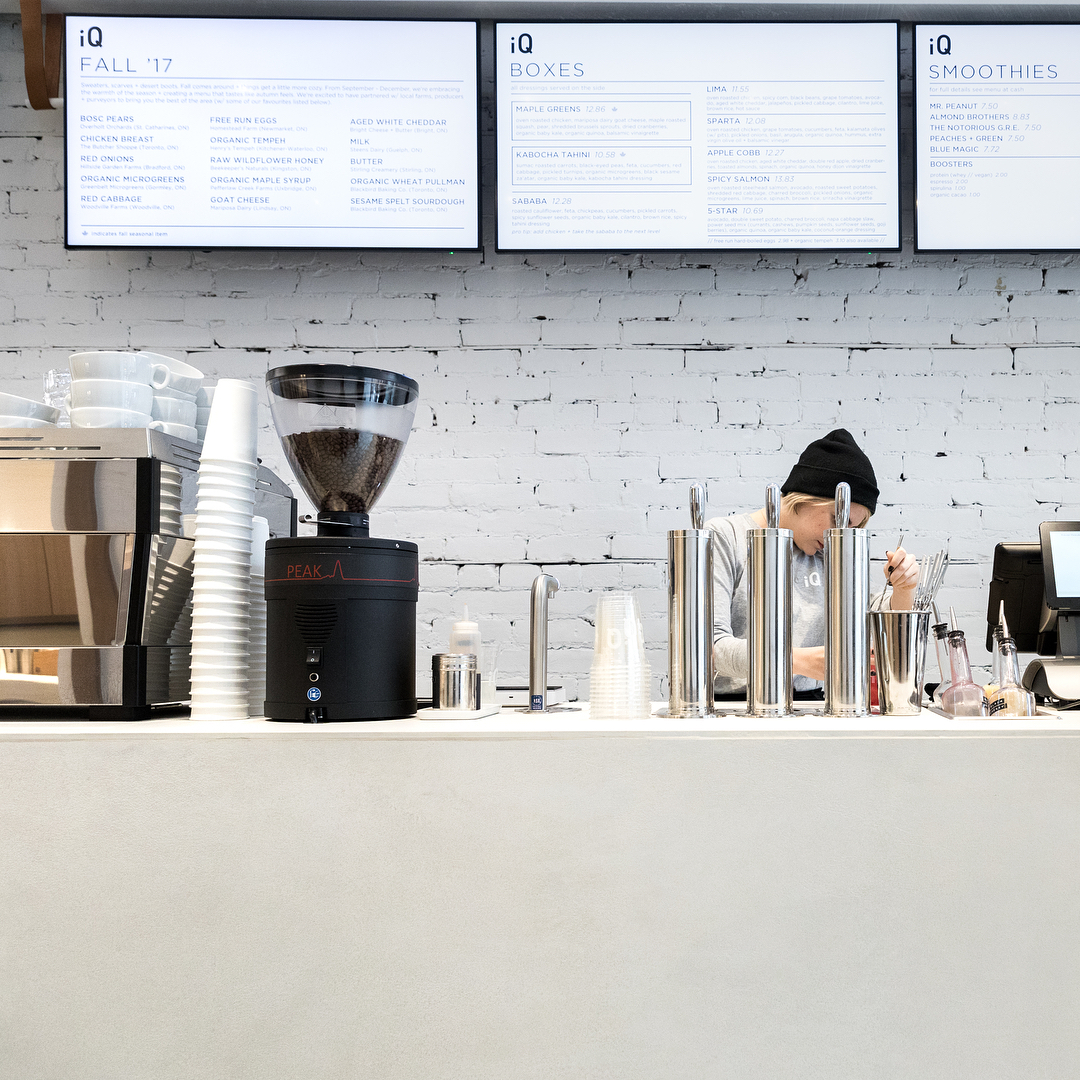
Mr. Bekerman founded iQ in 2011 and since then, the company has opened seven locations in seven years. Its first location opened in 2011 at the TD Centre in Toronto’s Financial District in about 460 square feet, and it was a hit from the very beginning. A second location opened nearby at Brookfield Place in 2012 and in 2014, iQ unveiled a considerably larger location at the base of the 18 York office tower in Toronto’s burgeoning SouthCore, south of Union Station.


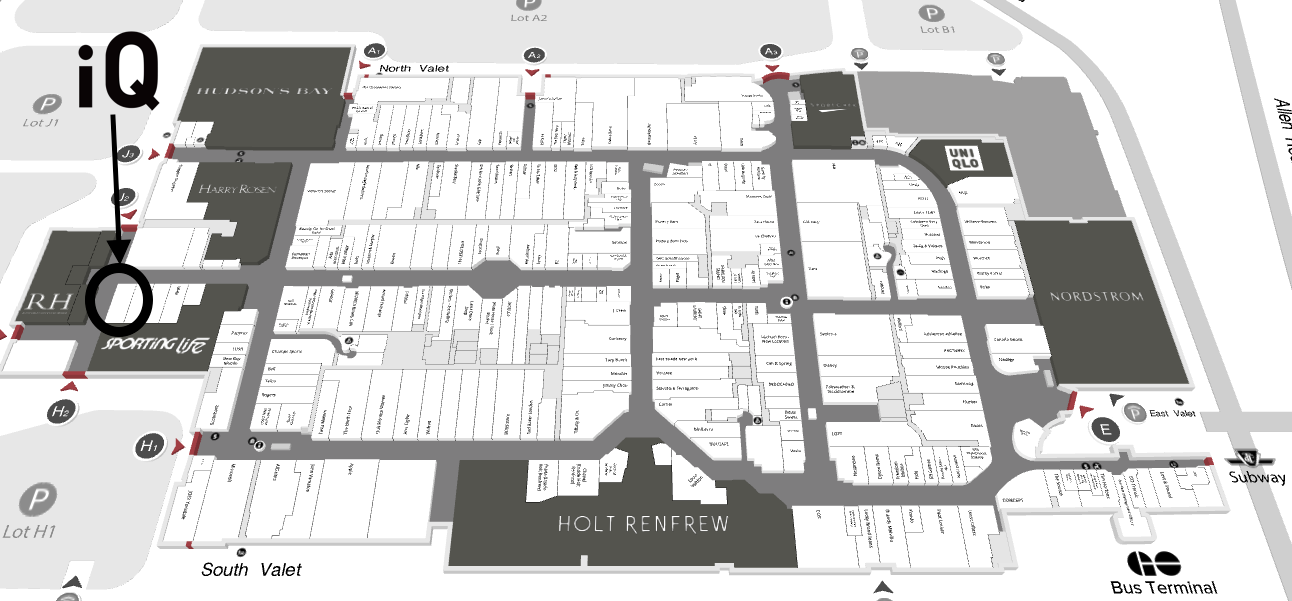
Click for interactive Yorkdale Mall MapClick for interactive Yorkdale Mall Map

Click for interactive Yorkdale Mall Map


Brookfield Place LocationBrookfield Place Location

Brookfield Place Location


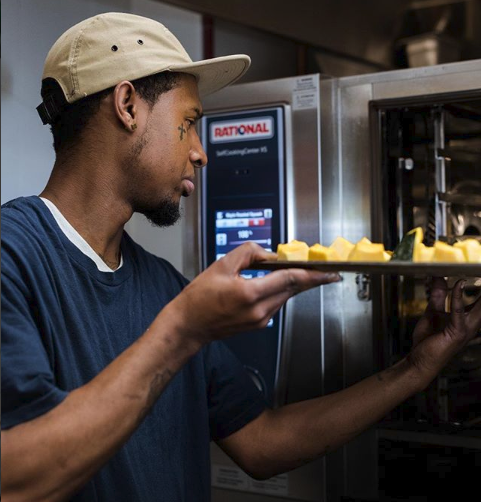
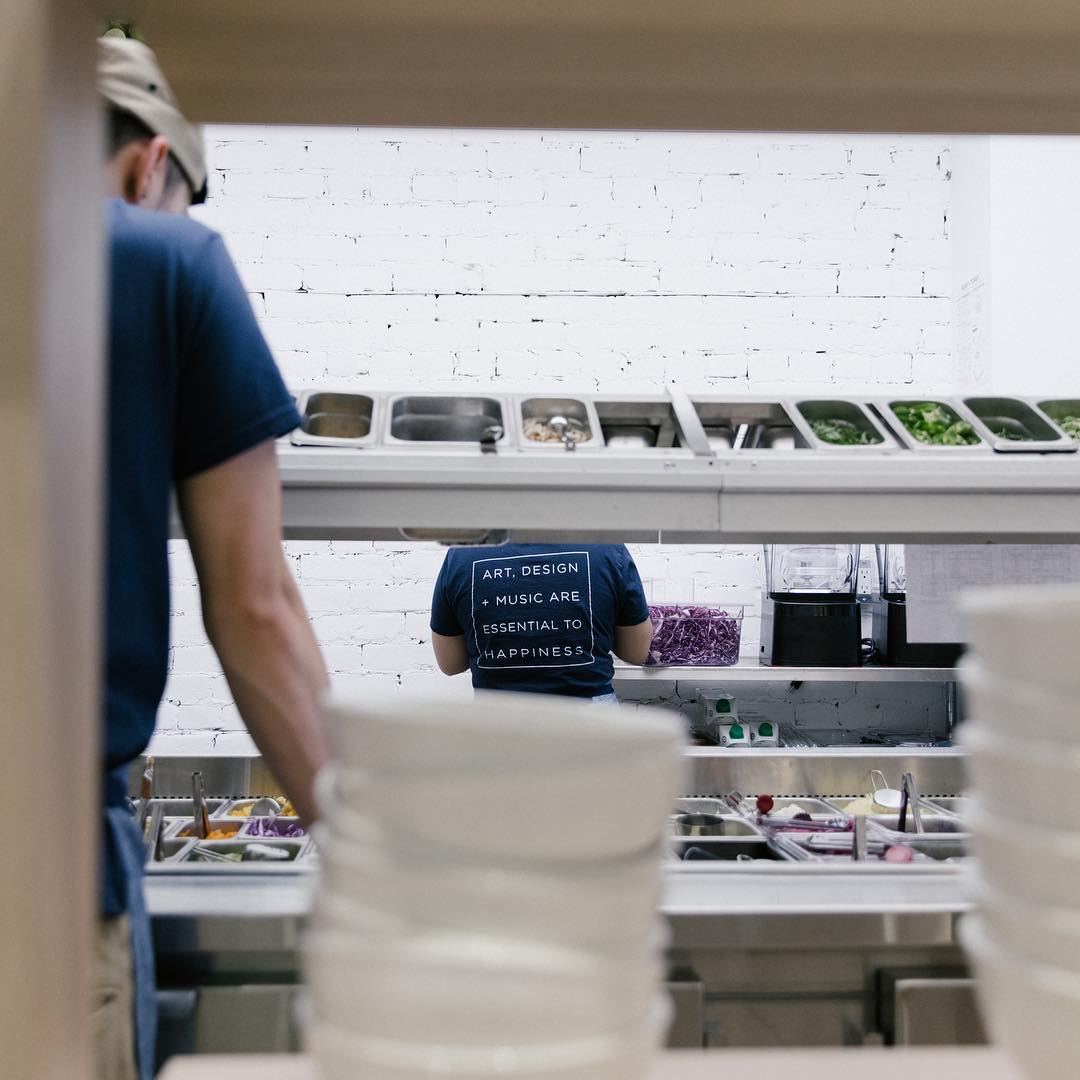
Food Prep Team Leader at TD Centre LocationFood Prep Team Leader at TD Centre Location

Food Prep Team Leader at TD Centre Location

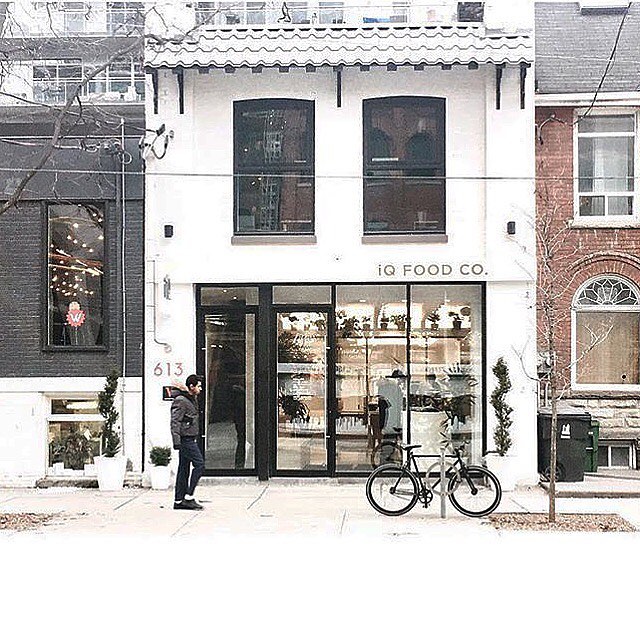
In 2016, iQ partnered with Toronto-based Greenhouse Juice to open a joint location at First Canadian Place in Toronto’s Financial District — by that time, it was clear that workers in Canada’s business centre had embraced iQ’s healthy food options as well as Greenhouse Juice’s offerings (that company is also expanding). In 2016, as well, iQ opened a 300-square-foot concession at the Equinox fitness centre at Yorkville Village in Toronto, marking iQ’s first foray outside of the tight geographic clustering of its first four locations. In 2017, iQ opened a larger-than-usual location at 613 King Street West, in an historic area which is rapidly transforming to become one of the most interesting and densely populated areas of the city.

Towards the end of the summer, iQ will unveil its flagship location at Toronto’s Yorkdale Shopping Centre, marking the brand’s first location outside of Toronto’s downtown core. The Yorkdale location will span almost 2,300 square feet in a strategic corner location across from the mall’s stunning RH (aka Restoration Hardware) and Sporting Life stores. Mr. Bekerman explained that a flagship is ideally a ‘best location’ for a brand and while this might be true for the Yorkdale location when it opens, he says that the goal is for every new location to be better than the last as each is a learning experience.


Brookfield LocationBrookfield Location

Brookfield Location


25014496_395449280867962_2062858322523979776_n.jpg25014496_395449280867962_2062858322523979776_n.jpg


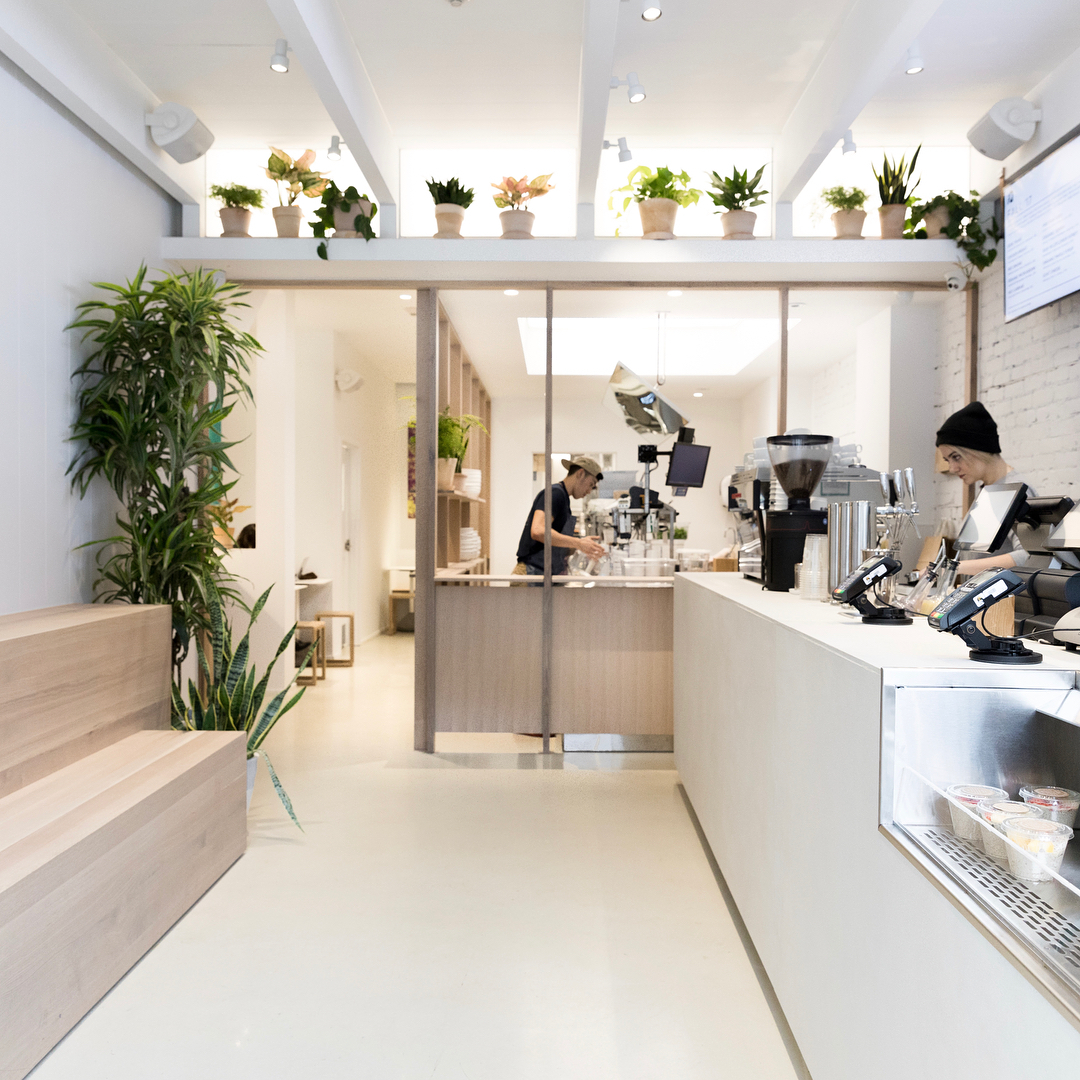
iQ’s retail spaces vastly range in size, and Mr. Bekerman explained that each of these have been used to test the concept prior to an even greater rollout. While the smaller locations have been wildly successful, future locations will ideally be in the 2,500 square foot range, he said.

Larger iQ locations allow for more of an “experience” he explained, by offering seating, a place for customers to line up, and the ability to play music in order to create a curated environment. Shopping centres have been transforming over the past several years, and now landlords are seeking to add food and beverage offerings through their mall properties in order to create foot traffic to other retail categories, not to mention give shoppers a place to relax and refuel.

Mr. Bekerman also expressed gratitude to iQ’s broker Vanessa Oliver of Regent Street Retail and Restaurant Real Estate Solutions, who is working with iQ’s expansion under mandate and has negotiated multiple lease deals on behalf of the retailer.


26865697_1785861211457992_2751510651460386816_n.jpg26865697_1785861211457992_2751510651460386816_n.jpg

King Street West Location:

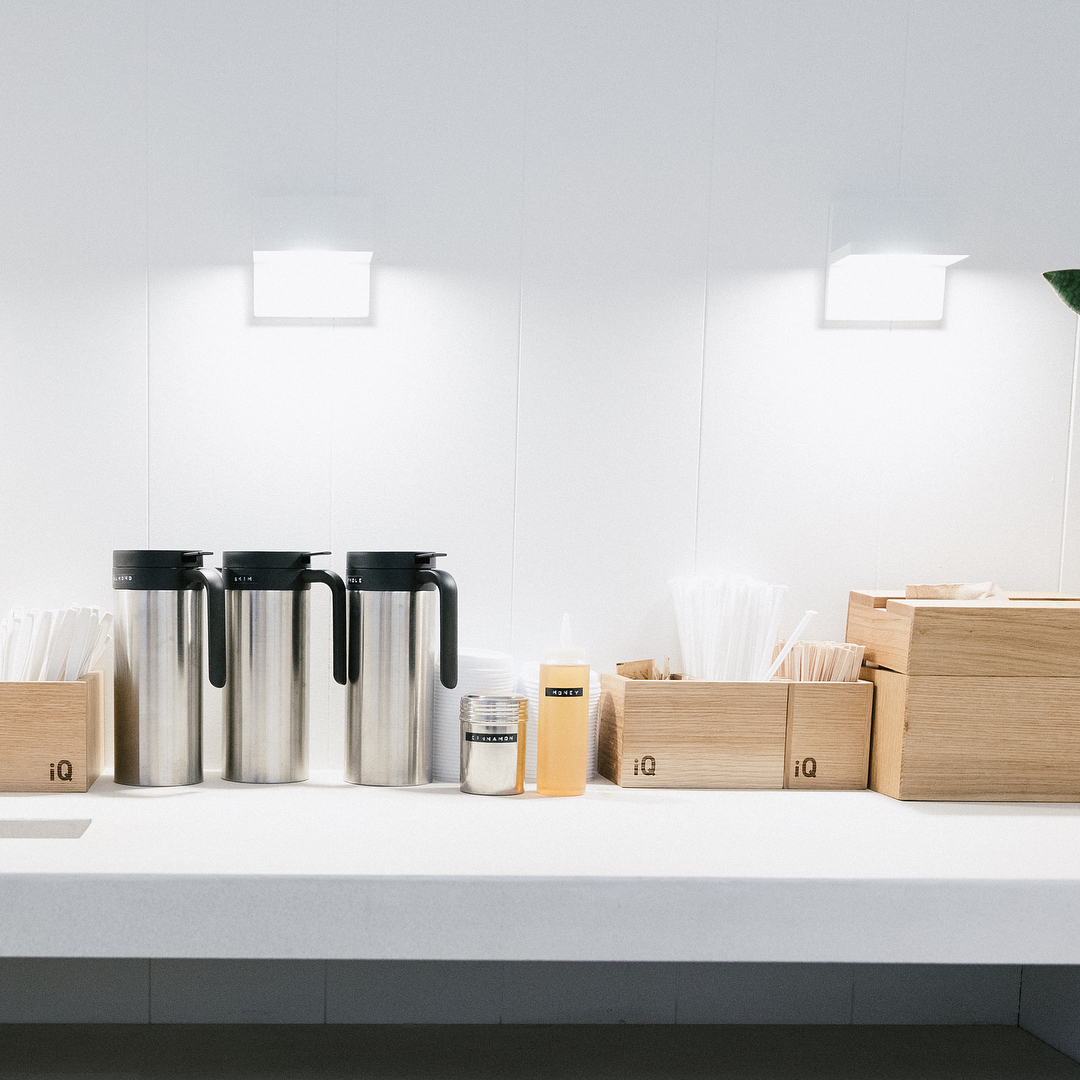
iQ’s popularity is, in many respects, a product of the company’s simplicity. Mr. Bekerman explained that he founded the company out of frustration with the lack of health food options in downtown Toronto — he himself worked in Toronto’s Financial District when he decided to launch a concept that would utilize the highest quality ingredients such as whole grains, lean proteins, and good fats, offering healthy food that is also served quickly and conveniently. The company’s website notes that its menu shifts with the seasons, and that it devotes itself “to scratch cooking + embracing the type of food that we feel good about eating everyday”. Nutritional content is the focus with dishes that are “clean, colourful and light”. iQ partners with local farmers and suppliers where it can, and it also proudly serves Pilot Coffee at its locations.

Two more Toronto iQ locations are in the works, and their exact locations will be announced shortly. One will be in midtown Toronto, Mr. Bekerman said, while the other will be up in North York.

Looking to the future, Mr. Bekerman said that he’s working with broker Vanessa Oliver of Regent Street to eventually expand the concept outward beyond the Greater Toronto Area. While nothing is confirmed as of yet, locations could some day open in other Canadian provinces and maybe even beyond as iQ continues to perfect its concept.


Craig Patterson, now based in Toronto, is the founder and Editor-in-Chief Retail Insider. He’s also a retail and real estate consultant, retail tour guide and public speaker. 

Follow him on Twitter @RetailInsider_, LinkedIn at Craig Patterson, or email him at: craig@retail-insider.com.

Kenneth Cole Expands Canadian Operations Including 1st Retail Stores

Image: Kenneth Cole on Queen Street

New York City-based fashion brand Kenneth Cole is expanding its wholesale and retail network in Canada, which includes opening standalone stores in major Canadian cities. The company has just unveiled its first standalone store in Canada on Queen Street West in Toronto with a second location already confirmed, and this fall 16 men’s shop-in-stores will debut at Hudson’s Bay stores across the country. 

The 1,800 square foot Toronto flagship, located at 315 Queen Street West, carries ready to wear clothing, footwear and accessories for both men and women under the Kenneth Cole New York label. The store’s interior is punctuated with raw steel, concrete, brick and glass, aiming to create a welcoming environment which also speaks to the Kenneth Cole brand. Kennth Cole joins a rapidly growing roster of national and international brands that have located standalone stores on the more ‘popular’ section of busy Queen Street West. Ryan McGrath of Northwest Atlantic acted on behalf of Kenneth Cole in the lease deal, with Brandon Gorman of Cushman & Wakefield acting on behalf of the landlord (The Pearl Group). 

The store’s interior references Kenneth Cole’s “trailer story” — designer Kenneth Cole began selling women’s shoes in the back of a production trailer in December 1982, and the Toronto store’s interior is a nod to the brand’s heritage. That includes the “use of clean lines, strong artistic works and purposeful messaging,” according to the company.

The Kenneth Cole flagship store will be located at 315 Queen St. West in Toronto (CNW Group/Kenneth Cole Productions Inc.)

Kenneth Cole has already secured a second store location at Vaughan Mills just north of Toronto, according to Daryle Perrin, Vice President of Licensed Brands, of Haggar Canada. That store is scheduled to open in September. Kenneth Cole signed an expanded agreement with Haggar Canada Co. to manufacture, market and distribute men’s and women’s apparel and distribute men’s and women’s footwear in this country. 

He said that the Queen Street location “represents modern street front retail” in an area that is extremely diverse. Toronto’s bustling Entertainment District is directly to the south, and the area is seeing a population explosion that is adding thousands of new residents to the area. To the north is the Art Gallery of Ontario, Ontario Collage of Art and Design and neighbourhoods such as Kensington Market and Chinatown, and a few blocks to the east is the City’s Financial District, which is considered to be Canada’s most important business address. 

Mr. Perrin said that more standalone Kenneth Cole locations are expected in Canada’s larger cities. The Vancouver market is strong and includes a substantial tourist component, while the more ‘traditional’ Calgary market is another example of a city where the brand has taken hold. 

Image: Kenneth Cole on Queen Street

Kenneth Cole’s standalone store expansion is part of a greater effort to expand the brand further into Canada. This fall, Kenneth Cole will unveil 16 ‘soft shops’ at Hudson’s Bay stores nationwide, recognizing the importance of the retailer to the brand, not to mention Hudson’s Bay being the remaining traditional department store retailer in Canada. The soft shops will include some of the design elements seen in the Queen Street flagship, including the use of raw steel in its fixtures. 

Hudson’s Bay also carries Kenneth Cole’s men’s footwear line in most of its stores, and Kenneth Cole women’s footwear is now carried in 10 Bay stores, according to Mr. Perrin, with plans to further expand the brand into Hudson’s Bay as well as other independent retailers in the country. 

Kenneth Cole’s fashions are sometimes referred to as being an ‘Urban Uniform’ which features mix-and-match pieces made from fabrics that are intended to be comfortable for a busy person on the move. Designs are ‘modern classic’, which should resound with downtown Toronto residents as well as many Canadians that are seeking out reasonably priced, versatile fashions. 

Online shopping is also an important component to Kenneth Cole’s business and as part of its Canadian expansion, its website is also seeing an expanded focus. Ultimately the goal is to be an omnichannel retailer with components of direct-to-consumer, wholesale and e-commerce. 

We’ll be following this brand as it continues to expand its presence in Canada. 

Grocery Disruption in Canada as Retailers Fight for Online Dominance

PHOTO: GROUPON

One after the other, grocers are going virtual. All of them, at some point over the last 12 months, have announced some sort of commitment to an e-commerce strategy. Costco launched its home delivery pilot in Ontario, while Maxi’s, Loblaws‘ discount stores in Quebec, were the latest to jump on the virtual bandwagon with their Click and Collect program. In other words, grocers are no longer content with waiting for customers to walk through the door, ready to spend money on food. Grocers are now accepting that they must increasingly go after and work harder for the money.

The proverbial wake up call for food retailers came a year ago when Amazon purchased Whole Foods in the U.S. in August 2017. The biggest concern among grocers was that it would drive down prices, even in Canada. This has not yet happened, at least not in any direct way. Food inflation is not strong, but neither is the sector experiencing any deflationary pressures.

SAVE ON FOODS (OVERWAITEA) ONLINE STOREFRONT.

What is happening: consumers gradually walking away from the average traditional grocery stores. Some are drawn to specialty stores, but many are buying online, and often from suppliers selling unique products not available through the major outlets. Habits are changing. Some estimate online food sales to be at about 1.5% of all food retail sales in Canada, with some grocers seeing online sales growth reach double digits. Given that we are one of the most connected nations in the world, the current 1.5% of sales could go up to 7% within the next 10 years, which equates to approximately $10 billion in sales. This would represent over 800 decent-sized stores in today’s food distribution landscape.   

Canada is essentially catching up to several other industrialized countries. Ireland and the United Kingdom are at 7.5% in online grocery sales. France is at just over 5.5%. Canadians are nowhere near that level, as most of us never considered online food shopping until just recently. Now, it’s in the media almost every week, enticing Canadians to think differently about food outlets and how they might want to shop.

Grocers weren’t overly enthusiastic in embracing e-commerce either. Other than Sobeys in Quebec and Longo’s Grocery Gateway in Ontario, not much virtual shopping was going on. Reluctant grocers were concerned about lost foot traffic and reduced same-store sales, precious metrics in the business. But Amazon’s clear commitment to food retailing changed everything. The sector is now playing defense and retailers are trying to embrace their new reality. Basically, an online shopper is more rational and strategic. Senses and emotions can trick you into buying certain products you don’t need or “shouldn’t” be buying in the first place. In a physical store, want overpowers need, much more often than you might think. Online, however, impulse buying is almost impossible. Grocers are slowly having to learn how to add on sales while transacting with a customer who has access to neatly presented information in real-time, all the time — a scary thought for the conservative type in the industry. 

For some Canadians though, saving money through online shopping is not that easy. On the one hand, free applications allow the tech-savvy to save. On the other hand, the process excludes certain consumers. It involves some research, knowledge of software use, and especially time. Some are comfortable with this, but not everyone. But since the Internet and social media have become so prominent in our lives, chances are that, over time, the number of shoppers willing to buy food online will outnumber those reluctant to do so.

PHOTO: WOWCHER

Location means something different in food retailing now. More competition will only make things more complicated for grocers. If it’s death by a thousand cuts for the industry, everyone wants to be the one holding the blade. Loblaw and WalMart have very dissimilar approaches — no surprise — driven by in-house thinking. While Metro has been a little quiet compared to others, Sobeys has entered a partnership with U.K.-based Ocado, a powerhouse in online shopping. This could make for an interesting duo in the sector. Costco has now announced it wants to play in the online space which could also be damaging for the establishment.

Everyone wants in, but in the end, only a few will deploy an e-commerce strategy that will “click” with Canadian consumers.