Advertisement
Home Blog Page 1103

Canadian Retail Saw Remarkable Gains in 2017

exc-5a4bd2ea8165f5fe3470e99f

While there’s plenty of news of a so-called ‘retail apocalypse’ (mainly in the United States), it appears to be generally untrue for many retailers in Canada over the past 12 months. 

The following is an analysis by noted retail consultant Ed Strapagiel, who publishes a monthly report with his perspective on the state of the Canadian retail industry. This is Mr. Strapagiel’s take on the year 2017, showing that retail sales were strong in many categories, overall, compared to the year before. Included are several charts laying out Mr. Strapagiel’s analysis, followed by a summary of sales by store-type and e-commerce sales. 

By Ed Strapagiel

For the 3 months ending October, total Canadian location-based retail sales increased 7.5% year-over-year on a not seasonally adjusted basis, according to the latest Statistics Canada data. The positive momentum just keeps on rolling. 

Year-to-date retail sales are now 7.0% ahead of last year after 10 months of 2017, and the underlying 12 month growth rate (green line in the above chart) is also up 7.0%. If October is any indication, both these measures should at least maintain their current levels to year end. At this pace, 2017 is poised to be one of the strongest years for Canadian retail in recent memory. 

The big growth drivers are new car dealers and gasoline stations, where retail sales growth is at a high level versus a year ago, as expected. Supermarkets and other grocery stores are the chief drag on overall retail sales, which has been the case for several years. The real star of 2017 however is the Store Merchandise sector, where sales gains have really taken off. 

For the 3 months ending October 2017, retail sales in the Food & Drug sector were up a modest 2.9% year-over-year. This is within the historical range, but still not particularly robust. The underlying 12 month trend (green line in the above chart) has been slowly weakening for most of the year. 

Retail sales at grocery stores were up just 0.7% year-over-year for the 3 months ending October, and have gained only 1.0% year-to-date in 2017. Of note is that the small specialty food stores group is bucking the trend with retail sales up 7.5% year-to-date so far this year. 

In 2016, strong retail sales increases at health & personal care stores more than offset the weakening picture at food & beverage retailers. This effect is not nearly as pronounced as it was a year ago. 

The exceptionally high retail sales growth rates in the Store Merchandise sector have cooled somewhat in the last couple of months. Nevertheless, the 3 month trend (orange line in the above chart) is still above historical norms and continues to run ahead of the underlying 12 month trend (green line). Early reports also indicate that many retailers had a good Christmas season. At the current pace, Store Merchandise could have a 2017 sales growth rate that’s a 10 year high. 

Building material & garden equipment/supplies dealers are having a particularly good year in 2017, with year-to-date sales up 13.2%. Electronics & appliance stores are also up by double digits, recording an 11.1% gain year-to-date after 10 months. 

In fact, all retail store types in this sector are up on a year-to-date basis. The main laggard is home furnishings stores, with retail sales up a relatively modest 1.6% so far this year. 

Note that Statistics Canada is now suppressing the breakdown of general merchandise stores for confidentiality reasons. The figures in the table below are estimates based on previous trends. 

Retail sales growth in the Automotive & Related sector remains at record high levels. The two main components, vehicle dealers and gasoline stations, are both producing strong sales increases. 

New car dealers are likely to hit an all-time sales record in 2017, in terms of both units and dollars. Their year-to-date retail sales are up 10.5% after 10 months of the year. 

Gasoline station sales have gained even more, with retail sales up 12.8% year-to-date. This is mostly due to increasing pump prices rather than people buying more gas. 

BY THE NUMBERS: 

For definitions of store types, see Statistics Canada NAICS

Overall, e-commerce represents about 2.5% of Canadian retail sales for the 12 months ending October 2017, including both pure play operators as well as the online operations of brick & mortar stores. Canadian consumers however also buy online from foreign websites, spending which is not captured in these numbers. 

Year-to-date results for 2017 (10 months) show that Canadian e-commerce sales are up 35.5% from a year ago, a much higher gain than for retail in general. 

Note that location based retail is the same as that in the preceding large “By The Numbers” table. It’s what’s normally reported as Canadian retail sales. Except that it isn’t. Location based retail excludes another section called Non-Store Retailers (NAICS code 454), which covers electronic shopping and mail-order houses, which in turn is where (mostly) pure play e-commerce businesses are. For the 12 months ending October, electronic shopping and mail-order houses had an estimated $8.5 billion in e-commerce sales. 

But that’s not the only source of e-commerce, as (mostly) bricks & mortar location-based retailers also sell online. For the 12 months ending October, this group had an estimated $6.6 billion in e-commerce sales. With electronic shopping and mail-order houses, there’s a grand total of $15.1 billion in e-commerce sales by Canadian operators over a 12 month period. Note that this does not include foreign e-commerce purchases made by Canadian consumers, but it does include purchases made by foreigners at Canadian e-commerce businesses. 

For electronic shopping and mail-order houses, an estimated 82.7% of their sales are allocated to e-commerce. For the (mostly) bricks & mortar crowd, it can be estimated that just 1.1% of their total sales come from e-commerce. 

In the final section of the above table, (mostly) pure play operators (namely, under electronic shopping and mail-order houses) generate an estimated 56.4% of all e-commerce sales in Canada, while (mostly) bricks & mortar location-based retailers’ share of e-commerce is 43.6%. 

For more explanation on the e-commerce numbers, see Statistics Canada: Retail E-commerce in Canada

This analysis is updated monthly as new numbers are published by Statistics Canada.  [Connect with Ed Strapagiel on LinkedIn]

Record Breaking Year for International Retailers Entering Canada

exc-5a4acb8371c10bd7b35b7ea8

According to our research, about 50 international retailers entered Canada in 2017 by either opening standalone stores, or by opening concessions within a larger host retailer. It’s the most that we’ve seen in the 5+ years that Retail Insider has been publishing, and could be a record. 

The number is particularly surprising, given widely reported news that there is a ‘retail apocalypse’ — though there’s no doubt that some homegrown retailers may be struggling amid all of the new competition that is fighting for Canadian consumer dollars. We think that Canadian retail is in transition and that those offering the best value proposition will succeed, though there are segments that could be close to the saturation point as stores continue to open. 

Canadian shopping centres continue to outperform those in the United States on average, for example, and Retail Council of Canada’s newly released Canadian Shopping Centre Study shows that Canada’s top malls continue to thrive, with Toronto’s Yorkdale Shopping Centre again coming out on top with annual sales per square foot of $1,653. It’s a fact that many of the new international retailers that enter Canada do so by opening their first locations at Yorkdale, and 10 of them did so in 2017, according to our research. 

In order to give us time to put it all together with descriptions, we’ll publish our list of international retailers that entered Canada in 2017 in a lengthy post later this week. 

For 2018, we’ve already got a rather extensive list of brands that will be opening their first retail stores in Canada, and we’ll be reporting on these throughout the year. It’s unclear if 2018 will see as many new openings as in 2017 — though in 2016, we thought we’d seen a lot when we mapped out 21 new international retailers and in 2015, when we counted 28 of them. Things are getting interesting and a lot of retail space will be coming available when Sears Canada shutters its Canadian operations, resulting in millions of square feet of retail space to absorb. 

Happy New Year, and welcome back to Retail Insider. 

TripAdvisor Chooses Canada for 1st Retail Store 

Image: TripAdvisor

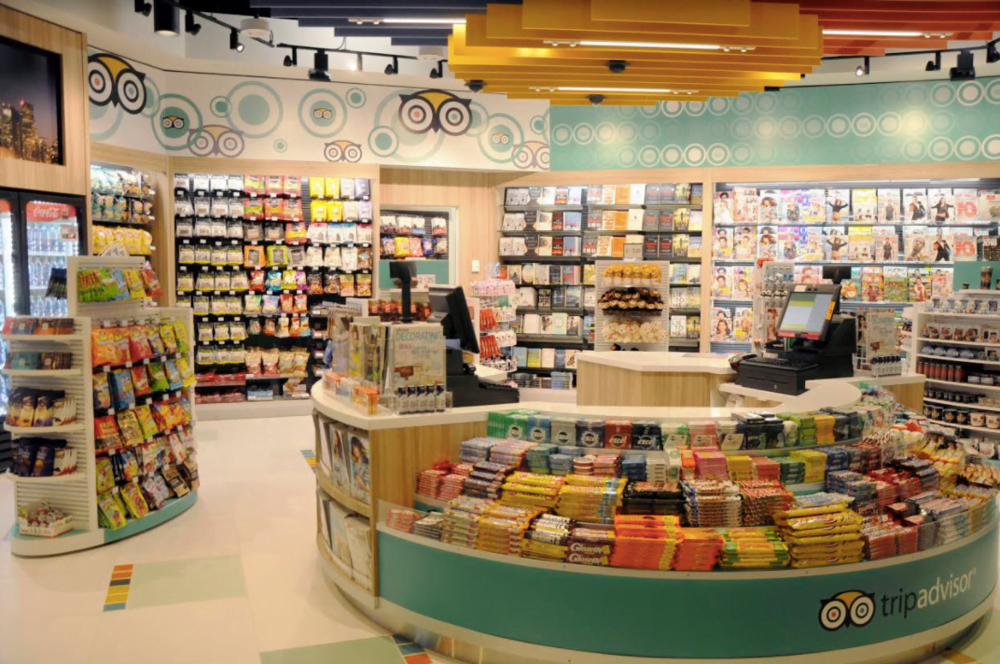
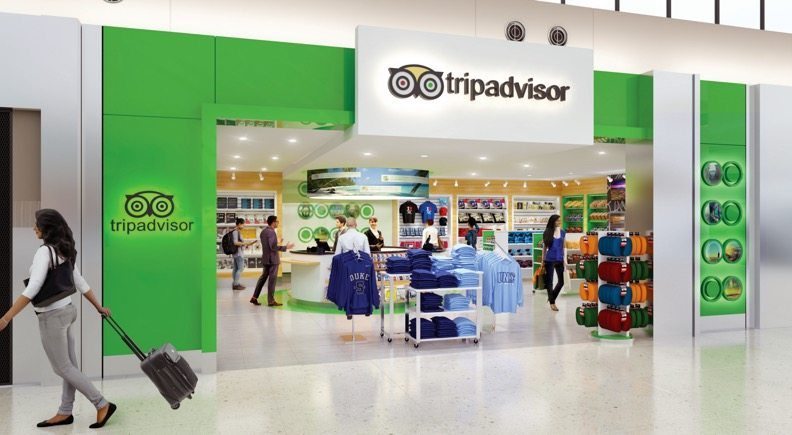
The retail space, located in Pearson Airport’s Terminal 1 Domestic, is as much experiential as it is about the products contained within. In addition to offering travel essentials, the store includes a large, interactive screen that visitors can use to learn more about Toronto and the surrounding area. Customers can access the latest TripAdvisor reviews and traveler photos for nearby hotels, attractions and restaurants. 

The Paradies Lagardère/TripAdvisor partnership began in 2016, with a goal of working in partnership on the retail concept which will be expanded to other airports in 2018 such as Raleigh–Durham International Airport (RDU), George Bush Intercontinental Airport in Houston (IAH), and Phoenix Sky Harbor International Airport (PHX).

“Paradies Lagardère works with its airport and brand partners to create enhanced customer experiences and stay on the cutting edge of offering innovation and technology,” said Gregg Paradies, president and CEO at Paradies Lagardère. “What’s most exciting about introducing the world’s very first-ever TripAdvisor travelessential store is that we’ve incorporated an interactive tool that’s not only entertaining and fun, but is truly useful in helping travelers. This unique store is a great addition to the Toronto Pearson program and an exciting destination for its guests.”

Image: TripAdvisor

“We are thrilled to be partnering with Paradies Lagardère and extending the reach of the TripAdvisor brand into the Toronto Pearson International Airport,” said Nicole Brown, Senior Director of Brand Partnerships, TripAdvisor. “The TripAdvisor travel retail store concept allows us to further our mission of helping travelers worldwide plan and book the perfect trip by offering them a convenient way to purchase all the travel essentials, as well as quick access to our more than 570 million reviews and opinions on 7.3 million accommodations, restaurants and attractions via innovative in-store touchscreens.” 

Paradies Lagardère specializes in three key airport concessions areas: Food and Beverage, Travel Essentials and Specialty Retail. Within Travel Essentials and Specialty Retail, the company offers a mix of categories including fashion, luxury, electronics, convenience, sports, luggage, jewelry, and souvenirs. The company has won a few awards recently — it was recognized for excellence in specialty retail, earning ARN Awards for Best Specialty Retail Brand Operator for its Brooks Brothers concept stores, and Best Airport Retail Store Design for its Dylan’s Candy Bar location at Dallas Fort Worth International Airport.

TripAdvisor is the world’s largest travel website with more than 570 million reviews and opinions covering the world’s largest selection of travel listings worldwide — that includes 7.3 million accommodations, airlines, attractions, and restaurants. TripAdvisor also compares prices from more than 200 hotel booking sites, with TripAdvisor-branded sites being available in 49 markets with a whopping 455 million monthly unique visitors. 

RENDERING OF THE RALEIGH–DURHAM INTERNATIONAL AIRPORT TRIPADVISOR LOCATION

Photos of the new Pearson Airport TripAdvisor retail space are courtesy of Paradies Lagardère. 

How Blockchain Technology Could Transform the Food Industry

exc-5a3b0245ec212d4d993b60bc

By Sylvain Charlebois, Professor in Food Distribution and Policy, Dalhousie University

There has been a lot of noise on cryptocurrencies and Bitcoin of late. While some suggest cryptocurrencies are a fraud, others believe them to be the next biggest economic revolution the world has seen since the internet. Bitcoin has brought to light blockchain technology, which offers great potential for food safety and verification in the agrifood sector. Yet it is far from being the panacea for a range of issues affecting the industry — at least for now.

Simply put, blockchain technology is a way of storing and sharing information across a network of users in an open virtual space. Blockchain technology allows for users to look at all transactions simultaneously and in real-time. In food, for example, a retailer would know with whom his supplier has had dealings. Additionally, since transactions are not stored in any single location, it is almost impossible to hack the information.

For consumers, blockchain technology can make a difference. By reading a simple QR code with a smartphone, data such as an animal’s date of birth, use of antibiotics, vaccinations, and location where the livestock was harvested can easily be conveyed to the consumer.

Food safety

Blockchain makes a supply chain more transparent at an all-new level. It also empowers the entire chain to be more responsive to any food safety disasters. Massive organizations such as Nestlé and Unilever are considering blockchain technologies for that reason.

Walmart, which sells 20 per cent of all food in the U.S., has just completed two blockchain pilot projects. Prior to using blockchain, Walmart conducted a traceback test on mangoes in one of its stores. It took six days, 18 hours, and 26 minutes to trace mangoes back to its original farm.

By using blockchain, Walmart can provide all the information the consumer wants in 2.2 seconds. During an outbreak of disease or contamination, six days is an eternity. A company can save lives by using blockchain technologies.

Blockchain also allows specific products to be traced at any given time, which would help to reduce food waste. For instance, contaminated products can be traced easily and quickly, while safe foods would remain on the shelves and not be sent to landfills.

Preventing fraud

However, it will work only if the data at the source is accurate, as current practices in the industry are much more open to human error. Much of the compliance data is audited by trusted third parties and stored either on paper or in a centralized database. These databases are highly vulnerable to informational inaccuracies, hacking, high operating costs, and intentional errors motivated by corruption and fraudulent behaviour.

Blockchain operates anonymously, so mistakes would be traceable to individual culprits. Considering recent food-fraud scandals in Canada and elsewhere, this feature is not trivial. Blockchain technology provides a method with which records are kept permanently.

Most importantly though, it facilitates data-sharing between disparate actors in a food value chain. Many retailers have sold fraudulent food products unknowingly. With the use of blockchain, those days could come to and end.

Faster, fairer payment

Blockchain will allow everyone to be paid more quickly, from farm to plate. Farmers could sell more quickly, and be properly compensated as market data would be readily available and validated.

Blockchain technology could represent a legitimate option for farmers who feel compelled to rely on marketing boards to sell their commodities. The use of blockchain could prevent price coercion and retroactive payments, both of which we have seen across the food supply chain.

Blockchain technologies could “Uberize” the agrifood sector by eliminating middlemen and lowering transaction fees. This can lead to fairer pricing and even help smaller outfits desperate to get more market attention.

Limits of blockchain

Our current traceability systems need work, and blockchain technologies could be the evolution they need. Given its architecture, blockchain technology offers an affordable solution to both small-to-medium enterprises (SMEs) and large organizations. However, there are noteworthy limitations.

The amount of information which can be processed is limited. Since all of the information would be out there and accessible, several contracts between organizations would need to be secured for some level of confidentiality to be retained. How to balance confidentiality with transparency would need to be worked out.

The agrifood arena is filled with secrets. Blockchain technology as it is currently being deployed would be problematic for many food companies. For many, blockchain is just a solution looking for a problem. Simply put, some companies, like Walmart, have more power and influence over other companies within the same supply chain.

Marketplace confusion limits participation

In addition, blockchain is really in its infancy and most people are uncertain about its potential. The innovation in blockchain architectures, applications and business concepts is happening rapidly. It’s a decentralized, open-source organism which is challenging to grasp for many, including governments.

In food, innovation is always desirable until it becomes real. Once it manifests itself, guards go up. Some organizations are moving ahead while others wait to see what happens. The marketplace is currently fueled with confusion due to the Bitcoin phenomenon, which is labelled by many as being irrational and ridiculous. Cryptocurrencies allow for transactions to occur while using blockchain technology, but it remains just an option.

Nevertheless, the most important challenge for blockchain technology remains participation. All parties must adopt the technology in order for it to work. In food distribution, not all companies are equal and some can exercise their power more than others.

A successful integration of the blockchain requires the engagement of all participating organizations. Walmart’s blockchain will likely be successful because it’s Walmart. But thousands of companies do not have the same clout.

Blockchain technology in agrifood has potential but it needs work. Industry public leaders should embrace blockchain as an opportunity and should be added to a digitalization strategy currently affecting the entire food industry. Transparency, productivity, competitiveness and sustainability of the agrifood sector could be enhanced.

Nonetheless, research should look at how to generate evidence-based blockchain solutions to democratize data for the entire system before we get too excited.

Dr. Sylvain Charlebois is Dean of the Faculty of Management at Dalhousie University in Halifax. Also at Dalhousie, he is Professor in food distribution and policy in the Faculty of Agriculture. His current research interest lies in the broad area of food distribution, security and safety, and has published four books and many peer-reviewed journal articles in several publications. His research has been featured in a number of newspapers, including The Economist, the New York Times, the Boston Globe, the Wall Street Journal, Foreign Affairs, the Globe & Mail, the National Post and the Toronto Star. Follow him on twitter @scharleb.

This article was originally published on The Conversation. Read the original article.

We’ll be Back January 2, 2018 — Happy Holidays and Happy New Year

We won’t be publishing articles or aggregating Canadian Retail News From Around the Web again until January 2, 2018. Happy Holidays from everyone at Retail Insider, and we’ll see you in the New Year. 

BRIEF: Chanel Expands at Yorkdale, hr2 to Shutter Next Week, Nespresso Opening at Metrotown

exc-5a380d6e085229e36d1dc7fd

Chanel Expands at Yorkdale

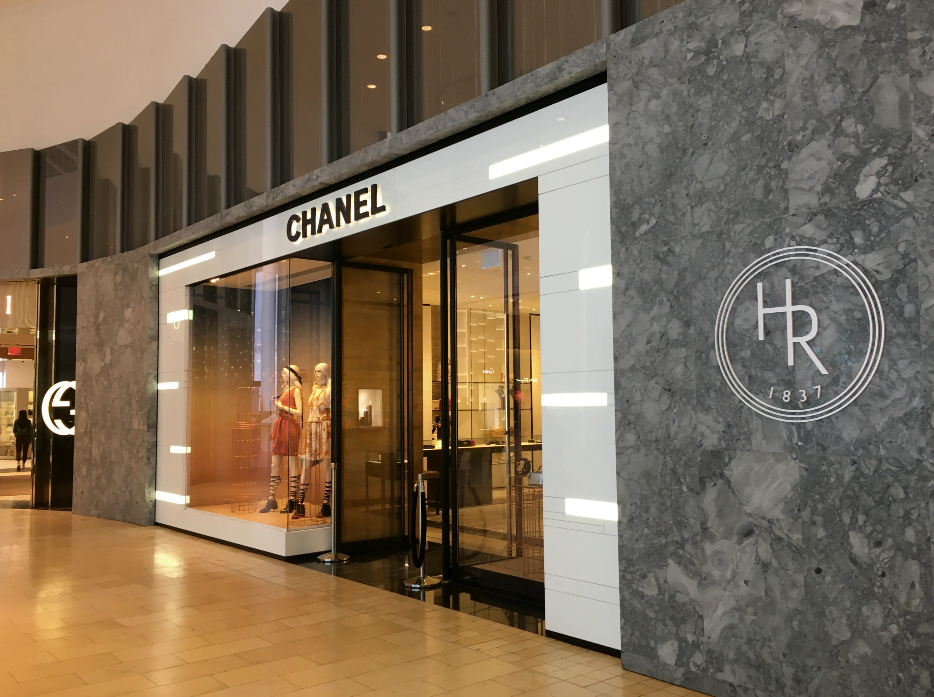
French luxury brand Chanel continues to expand its Canadian operations — last month it unveiled an impressive 8,550 square foot flagship on Yorkville Avenue in Toronto, and it has now opened an expansion at its concession in Holt Renfrew at Toronto’s Yorkdale Shopping Centre

It’s not just any Chanel concession, however — it’s the third largest Chanel boutique in Canada, now with approximately 4,000 square feet of space including the roughly 600 square foot expansion that saw Chanel annex retail space formerly occupied by shop-in-stores for shoe brand Roger Vivier and Michael Kors accessories. 

Chanel operates five concessions at Holt Renfrew stores in Canada — the Vancouver concession, which grew to 5,060 square feet last year, is the only Canadian retail space to feature Chanel’s ‘High Jewellery’ collection with some pieces surpassing $1 million each. Other Chanel concessions are at Holt’s in Calgary, Toronto at 50 Bloor Street West, and in Montreal. The Montreal Chanel boutique will be relocating to an expanded ‘Holt Renfrew Ogilvy’ at some point as Holt’s and Ogilvy merge, and it hasn’t yet been revealed how large the boutique will be, though it’s confirmed that it will be on Holt Renfrew Ogilvy’s ground floor, which will become something of a ‘luxury avenue’ for Montreal. 

Toronto is currently the only city in Canada with a standalone Chanel boutique — if it weren’t for Holt’s, Canada would likely have several standalone Chanel stores like countries such as Australia. 

(Both photos were taken by Craig Patterson and are of the mall entrance and in-store Holt Renfrew entrance for Chanel at Toronto’s Yorkdale Shopping Centre) 

Swarovski’s Mississauga Pop-Up a Prototype for New Stores

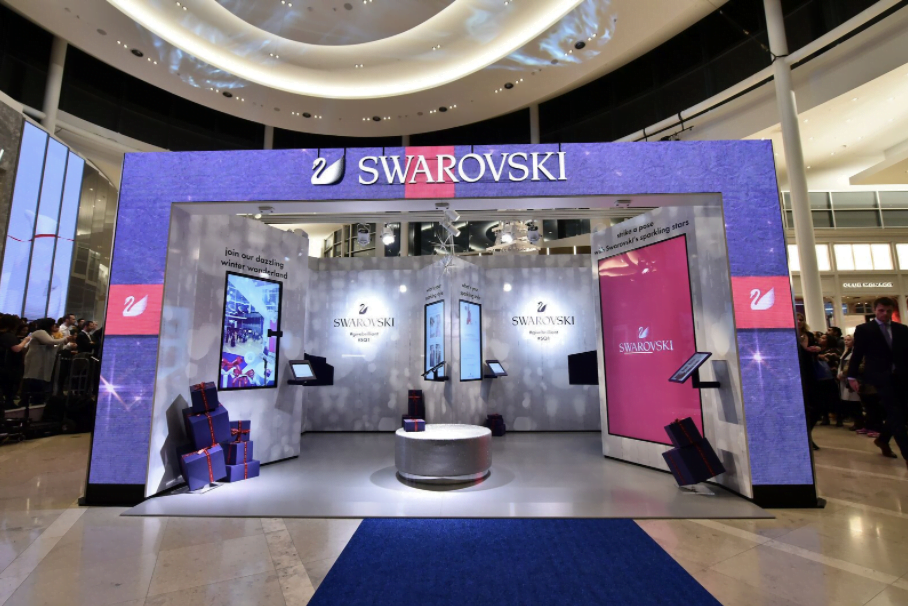
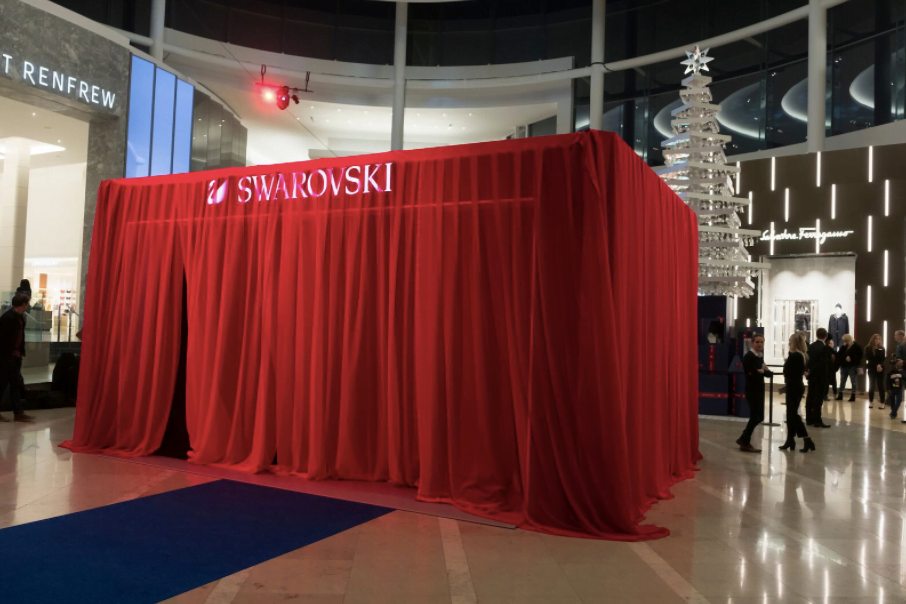
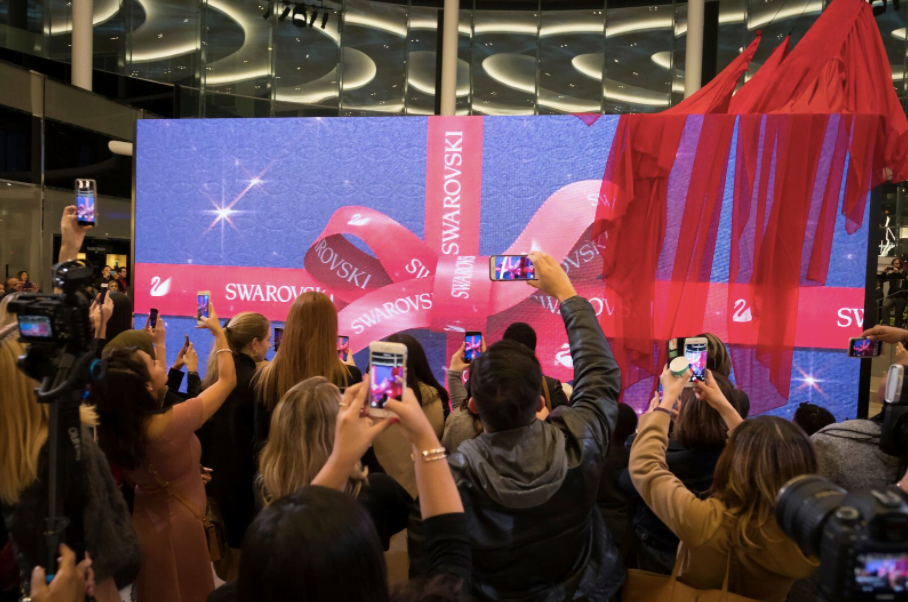
Swarovski, known for its beautiful Austrian crystal designs, is amplifying its presence in Canada, with a twist. Last month Swarovski unveiled a unique pop-up ‘sparkle’ space at Mississauga’s Square One Shopping Centre, which is a first of its kind in the world for the brand. 

The pop-up, which will remain in the mall’s beautiful ‘Luxury Wing’ near Holt Renfrew until early January, doesn’t have product for sale — rather, it’s there for consumers to interact with the brand with augmented reality, digital screens, and other components that integrate with the company’s online store. It includes ‘The Stylefinder’ where guests can try on jewellery, an interactive mirror that creates fun and festive portraits, and a ‘selfie wall’ where guests can snap photos. As well, Swarovski was responsible for the stunning movable holiday tree beside the pop-up, which has been photographed thousands of times. 

The design and functionality of the Square One pop-up space could be rolled-out into Swarovski’s permanent retail stores according to Swarovski’s CEO Robert Buchbauerand — the pop-up is a way to test out new ideas, products and concepts. The future of retail is expected to be a merging of physical and digital, and Swarovski is on point. 

Mississauga’s Square One was chosen for the pop-up because the area is diverse, and the mall is busy, according to Mr. Buchbauer. We interviewed him and will be publishing a separate article about Swarovski’s Canadian expansion in early 2018 — this is our last post on Retail Insider for the year. 

*Top photos are of the pop-up unveiling last month, courtesy of Paul Hillier Photography. Below is a video of both the pop-up as well as Square One’s Unique Holiday Tree. 

Nespresso to open at Metropolis at Metrotown

Nestlé’s Nespresso retail concept is opening locations rapidly across Canada — last week we reported on new Edmonton and Calgary storefronts, and now signage has gone up for a new Nespresso retail space at Metropolis at Metrotown in Burnaby, near Vancouver. 

Nespresso’s other Lower Mainland location is at Vancouver’s Oakridge Centre — the Oakridge boutique is by far the smallest in Canada, — Metrotown’s will be considerably larger. 

Nespresso operates various retail concepts in Canada, ranging from pop-ups to the lavish restaurant/retail space on Cumberland Street in Toronto, which spans 14,000 square feet and has soaring ceilings. 

Metropolis at Metrotown has been opening a lot of new stores lately, some of them first-to-market such as UNIQLO and MUJI. We recently reported on the centre in a feature article

Holt Renfrew to Shutter its hr2 Division Next Week

It’s closing time for Holt Renfrew’s ‘premium off-price’ hr2 division — The concept  launched in the spring of 2013, was expected to expand nationally, but only ended up opening two stores.  

Hr2’s first location, measuring about 25,000 square feet, opened in March of 2013 at the Quartier Dix30 retail centre in suburban Montreal. A second location, spanning just over 28,100 square feet, opened in May of 2013 at Vaughan Mills in suburban Toronto. 

Both hr2 stores carry an assortment of brands for women and men that are generally at a lower price point than at Holt Renfrew’s main stores. Brands are purchased specifically for hr2 as part of the separate division, though there is also a small selection of clearance product from pricier Holt Renfrew locations. Holt Renfrew operated a clearance centre at Vaughan Mills for a number of years called ‘Holt Renfrew Last Call’, which was replaced by hr2 in the same retail space in 2013. 

Potential competitors are expanding furiously — Winners and Marshalls are both opening at least a dozen stores each in Canada next year, and the Hudson’s Bay Company’s Saks OFF 5TH plans to operate 25 Canadian stores by the end of next year. Early next year, as well, Nordstrom Rack will open its first Canadian stores, with plans for between 10 and 15 in Canada over the next several years. 

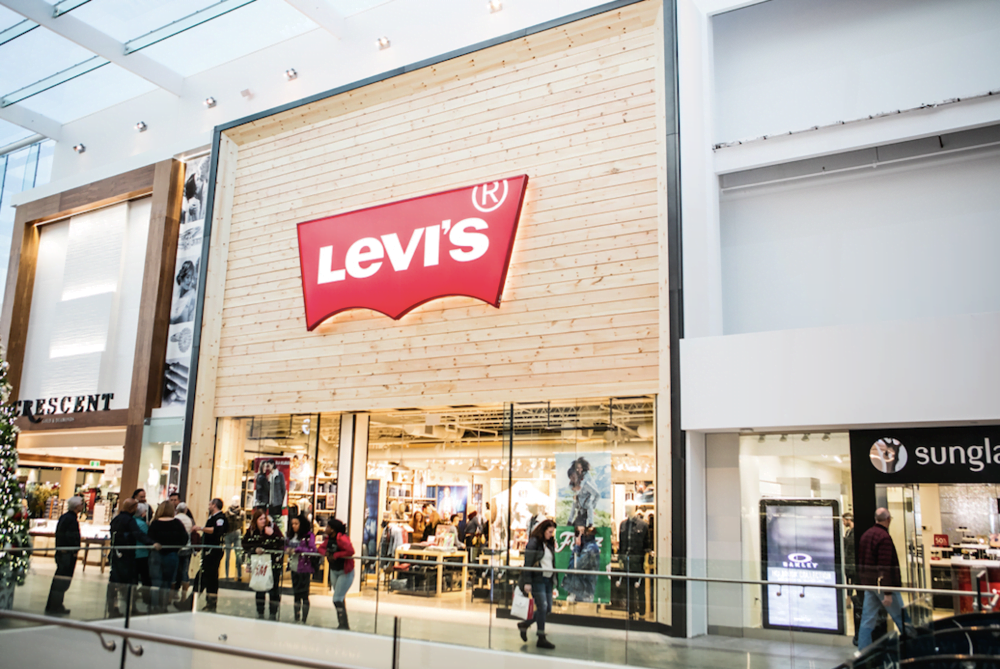
Levi’s Opens Store in Halifax

Iconic denim brand Levi’s has landed at the Halifax Shopping Centre, considered to be the leading mall in the Maritimes. Levi’s Brand PresidentJames ‘JC’ Curleigh attended the opening last week — it was a special opening for him, as Halifax is close to his heart — he grew up in Halifax, attended St. Mary’s University, met his wife there, and he visits the city regularly. 

The new 2,000 square foot Halifax Levi’s store carries a broad assortment of the Levi’s® Red Tab Collection for men and women in a wide range of fits and styles, with a décor featuring framed graphics and potted succulent plants native to California — a nod to the brand’s Northern California roots. 

Levi’s has been opening new stores across the country, and has added customization stations at several of them — being able to customize purchases is a trend being seen among leading retailers, including Roots and Moose Knuckles, which both offer customized jackets. 

TNT The New Trend Opens at Bayview Village

Edgy Toronto-based multi-brand retailer TNT The New Trend has unveiled a men’s store at Toronto’s upscale Bayview Village Shopping Centre. The 1,990 square foot men’s space expands TNT’s presence at Bayview Village to 7,340 square feet. 

The store carries some edgy brands not found elsewhere in the mall, or even in Toronto, for that matter  — TNT is a unique retailer with stores in Toronto and Montreal, and it recently opened its first international location in Melbourne, Australia

In Toronto, TNT also recently unveiled its ‘TNT Concept’ at Yorkville Village. The multi-purpose retail space is currently dominated by menswear, though that could change given that the space can be reconfigured for a variety of uses, and is adjacent to North America’s first Eleventy boutique, which opened in the fall. 

Bayview Village will see an overhaul over the next few years that will include adding new retailers, retail space, and other mixed uses such as residential. It’s a trend that we’ll be seeing more into 2018 and onwards, as mall landlords see the opportunity to capitalize on real estate that may be intensified for residential and other non-retail uses. 

Premium Japanese All-Matcha Cafe Opens at Mississauga’s Square One

Popular Japanese café concept TSUJIRI opened a location at Mississauga’s Square One this week — TSUJIRI is known for its matcha desserts with strong and bold flavours. 

The company is more than 155 years old and uses ingredients sourced directly from Japan. Its high quality and air-dried storage method of tea leaves makes its matcha treats taste smoother and less bitter than other competitors, it says.

TSUJIRI opened its first shop outside of Japan seven years ago and has now successfully expanded into 10 countries. Its other two Canadian locations are in Toronto — one on Dundas Street downtown, and the other in North York. It looks like this is one to watch for a national expansion, given its current international locations, not to mention lineups at its Toronto cafés. 

OUT HERE Launches E-Commerce Site

Toronto-based women’s fashion retailer OUT HERE, which has a storefront on Bay Street in Yorkville, has launched an online store to cater to the glamorous gown girls of Toronto — OUT HERE’s colourful window displays have been known to catch the eye of passers-by. 

It’s Canada’s first and only women’s luxury boutique dedicated to Brazilian designers, and it’s also unique in that a considerable amount of its profits are donated to charity, including the building of a 600-child orphanage in Mozambique.

Entrepreneur Marcus Chaves and partner Gabriel Cesar operate the 800 square foot storefront at 1282 Bay Street, in Toronto’s affluent Yorkville area, which opened earlier this year

The online move makes sense — Instagram has been key to building brand awareness, Mr. Chaves explained. He’s built relationships with clients who have seen his merchandise on the social media platform. 

Approximately 90% of OUT HERE’s stock is from 12 Brazilian designers, with almost all of them being exclusive in Canada. Prices range between $500 and $10,000, with the upper-end items including impressive hand-beaded gowns. The store also carries Canadian outerwear designer Sentaler — one of the only brands that isn’t from Brazil, but has a charitable component. 

La Vie En Rose Launches on ShopShops

Canadian lingerie brand La Vie En Rose is one of the first brands to launch on the app called ShopShops

ShopShops is an interactive new retail platform that bridges American retailers to new generation of Chinese Shoppers legitimately and directly, by bring-in the physical shopping experiences on-line, by fulfilling consumers needs with experiences, curation and interaction. La Vie En Rose is particularly unique to the situation, given that it’s Canadian. 

The Death of Retail Stores in Canada is Greatly Exaggerated: Study

CF Toronto Eaton Centre (Image: Getty Images)

The death of bricks and mortar retail stores may be greatly exaggerated, according to results of a new study by Microsoft, Retail Council of Canada and research tool WisePlum.

It found that it’s not a retail apocalypse that’s taking place in the industry these days but really a transformation.

Diane J.Brisbois, President and CEO of Retail Council of Canada

Diane J. Brisebois, President and CEO, of the Retail Council of Canada, says she was not surprised that 90 per cent of retail activity in Canada is still in-store.

“I think it’s simply because bricks and mortar has been around much longer than online retail and so it’s to be expected that it still represents the great majority,” says Brisebois.

The survey of 5,000 Canadian consumers found that bricks-and-mortar stores capture most of the retail sales in every major vertical. The report, From Omni-Channel to Frictionless Retail: Insights on Today’s Consumer With Advice and Tips for Retailers found that for discount, grocery and department stores, more than 90 per cent of sales occur in store.

Gastown in Vancouver (Image: Craig Patterson)
Square One in Mississauga (Image: Oxford)

The study showed that consumers like the physical retail store experience because it offers instant gratification with the ability to browse, compare prices, read flyers, touch product, and purchase.

“What I did find fascinating is that while online shopping is still new compared to traditional bricks and mortar, it has not taken very much time for customers to expect the same kind of experience online as in-store,” says Brisebois.

“In the study, consumers who were surveyed were very honest about what irritated them both in-store and online . . . The customer is expecting a friction-less experience regardless of where they shop . . . Consumers want a quick and convenient experience when they shop – no matter what channel they use.”

Holt Renfrew in Vancouver (Image: Craig Patterson)

The study found that online shopping is gaining ground, particularly with younger shoppers. Physical stores need to offer entertaining, exciting and engaging experiences that differentiate a retailer from an online-only competitor.

“The study really supported what we call total retail which means it’s not good enough to just be online. Retailers are not good enough to just be a bricks and mortar retailer. You have to be a total retailer which means you need to be where the customer is,” says Brisebois.

“That’s the reason we’re seeing a transformation. Not an apocalypse. But a transformation . . . The reason you need to be good in all channels is that a lot of studies have shown that a customer shopping in your different channels will usually spend more than a customer that just shops in one channel, which explains why the online retailers like Amazon . . . have gone from the pure play online to also looking at bricks and mortar . . . When a retailer is able to provide that, a retailer gets a larger share of the customer’s wallet.”

CF Sherway Gardens (Image: Cadillac Fairview)

She says emerging technologies are going to draw consumers into stores and retailers need to change their one-time purchase mindset to one that builds experiences around the customer’s actual lives.

The study showed that problems encountered with online transactions far exceed in-store purchases but this does not dissuade online consumers from referring friends to an online store versus a physical one.

“For online retailers to continue to grow their market share, they will have to invest in their user experience,” says Paula Courtney, Product Owner and General Manager at WisePlum. “Our research found 34 per cent of Canadians would chose a different channel for repurchasing an item if their original channel choice wasn’t as easy as they thought it would be. Building a good customer experience is critical if you want your customers to return.”

The study also showed customers initiate 2.7 activities on average before completing an in-store purchase. But lineups, lack of staff and other inconveniences can easily frustrate a consumer looking for instant gratification.

Yorkdale Shopping Centre (Image: Oxford)

Online experiences take longer with customers initiating an average of 3.4 activities such as price comparisons, reading reviews and comparing products before making a purchase.

The study clearly demonstrates retailers must strive to provide customers the ability to interact and shop across channels, creating a fluid and frictionless brand experience.

“Retailers need more than another study that quotes facts and statistics about the Canadian consumer. From the beginning, it was our goal to provide not only a benchmark of the marketplace but also a tool that helps them answer the question – So what?”, says Dave Rodgerson, Retail Industry Lead for Microsoft Canada. “Working together, we have created thought leadership that will help Canadian retailers understand how to react and remain successful in this time of digital transformation.”

The white paper can be found here: https://www.retailcouncil.org/from-omnichannel-to-frictionless-retail.

Retailers Continue to Descend on Vancouver’s Luxury Zone [Feature]

Image: Alberni Street

Vancouver’s Alberni Street is now considered to be one of the most prestigious retail addresses in North America, with luxury brands continuing to open stores in an area that has been dubbed the city’s ‘Luxury Zone’. Several luxury brands have recently opened flagships in the Luxury Zone, with more on the way for 2018.

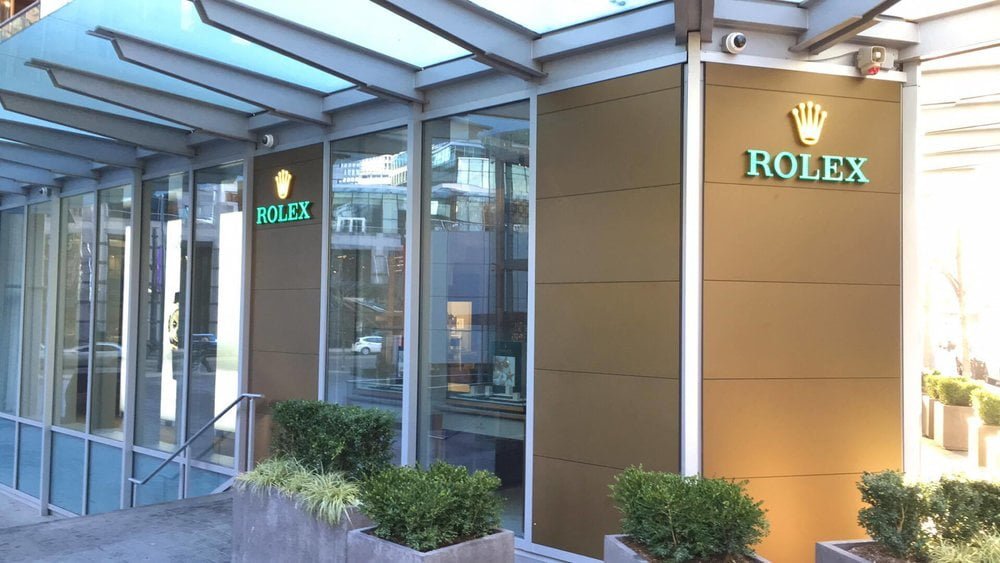
Van Cleef & Arpels and IWC Schaffhausen are the latest luxury brands to have opened this month on the 1000 block of Alberni Street, which is now lined by some of the biggest names in luxury retail. Jimmy Choo will join the mix in early 2018, the largest Rolex store in the Western Hemisphere is in the process of expanding even more at 1119 Alberni Street, and other developments are on the way.

Vancouver is a hot luxury retail market, fuelled by affluent locals and tourists. Investors are noticing as well — a recent CBRE report confirms that retail investment volumes in the first half of 2017 surpassed all of 2016, the previous record year, by 75%. CBRE notes that retail sales on Alberni Street now surpass that of Toronto’s prestigious Bloor Street West (aka ‘The Mink Mile’) with rents on Alberni Street now up to 50% higher than on popular Robson Street.

“The expansion of international brands into the Vancouver retail market is transforming the city,” said Martin Moriarty, Associate Vice President of Retail Leasing and Investment at CBRE Vancouver. “In this market, we are now doing more exciting deals than ever before because brands from cities all over the world, including London, Tokyo, Paris, Geneva and Sydney, are attracted to Vancouver’s growing international reputation. This is good news for Vancouverites and the competitive retail environment in our beautiful city.”

Alberni Street wasn’t always a luxury address. In the 1980’s, it was a relatively sleepy street with restaurants and office towers, and in the early 1990’s a duty free store relocated to the street — two actually, with one winning the rights to operate as such. Burrard Street was the place to be in 1991 when Chanel opened a 1,300 square foot store at 755 Burrard Street (Coach currently occupies the space). Local multi-brand luxury group Collections International operated several boutiques in the area at the time — the ground floor space now occupied by Tiffany & Co. once housed small shops for Collection International boutiques including Nina Ricci, Alfred Dunhill (opening again in the city in 2018), Goldpfeil, Fendi, Valentino (which once had two Vancouver boutiques) and even a small Hermes corner at the back of a larger Collections International retail space with the address 1005 Alberni Street.

The duty free store changed hands in 2005 when Spanish group Aldeasa won the rights to operate the Alberni Street store (as well as the airport location), though the downtown store closed several years later after unfortunate circumstances — the loss of a tour bus parking space resulted in drastically reduced revenues, and a lawsuit was eventually settled that included terms that Aldeasa could vacate its Alberni Street space (as well as a court settlement valued in excess of $3 million). In 2009, Brooks Brothers took much of the duty free store’s ground space while Michaels crafts moved upstairs when Aldeasa closed in 2012 — and soon after towards Thurlow Street, Dollar Tree opened its first Canadian store in the basement of the commercial podium of The Carlyle building at 1080 Alberni Street.

Dollar Tree wasn’t open that long, however — The Carlyle’s landlord, Concord Pacific, bought them out as it decided to turn The Carlyle’s retail podium into a luxury address — something that was in more demand than a dollar store, or the 7-Eleven that was located on the ground level. After a substantial renovation to the retail podium, retailers Tory Burch and De Beers opened in The Carlyle in the fall of 2013.

Burberry initially helped elevate the street, also inspiring the repositioning of The Carlyle. In the fall of 2008, Burberry opened a 3,300 square foot store at the base of the newly opened Shangri-La Hotel, and it stood as the only luxury brand in the immediate area for several years. All the while, brokers and landlords had a vision — the 1000 block of Alberni Street, as well as the 700 blocks of Burrard and Thurlow Streets, would become a luxury retail precinct where the world’s top brands would pay top dollar for retail space.

The strategy worked — Moncler opened in The Carlyle (748 Thurlow Street) in December of 2015, Prada opened a large flagship in the spring of 2016 (1098 Alberni Street), and Saint Laurent opened next to Moncler (748 Thurlow Street) in the summer of 2016. CBRE Vancouver was instrumental in coordinating several of these leases.

In the fall of 2015, the commercial podium of the newly completed 745 Thurlow Street office tower included opening stores for Brunello Cucinelli and Versace. In both deals, the retailers were represented by Stan Vyriotes and David Wedemire of DWSV Remax Ultimate Realty Inc., who also did the Jimmy Choo deal and are working with other luxury clients to secure space in Vancouver’s Luxury Zone. They confirm that more luxury brands are interested in moving into the area, which has resulted in an exceptional clustering of stores from many of the world’s leading luxury brands.

Alberni Street locations for Jaeger-LeCoultre, Lao Feng Xiang, Rolex and Hublot have also since opened — Hublot’s impressive two-level, 3,200 square foot space is one of the brand’s largest locations globally. Northwest Atlantic broker/Principal Brodie Henrichsen represented Hublot in the deal — Mr. Henrichsen has been instrumental in several deals in the area (including Tory Burch, De Beers and Moncler at The Carlyle), and in an earlier interview explained that there continues to be considerable demand from luxury brands seeing to be in the area.

Tiffany & Co., as well, recently tripled in size to unveil an impressive two-level retail space with ample marble and two sweeping staircases. Luxury watch brand Omega, which originally opened at the Fairmont Hotel Vancouver for the 2010 Winter Olympics and subsequently tripled in size, will also be seeing a renovation in 2018. Dior’s largest store in North America and one of Louis Vuitton’s most productive stores, globally, are also located in the hotel’s lobby, along with outposts for Gucci and St. John Knits.

CBRE’s Marin Moriarty explained how Vancouver’s Luxury Zone is expanding even further onto West Georgia Street — CBRE coordinated a deal with super luxury brand Stefano Ricci, which opened in early 2017 at 1139 Alberni Street next to the new Trump Tower. Mr. Moriarty explained that the 1100 block of Alberni Street is expected to see retailers eventually replace a row of restaurants on the south side of that block, possibly with a mix of luxury and aspirational brands. New retail space on the block is also being created at the base of the HSBC office tower at 1188 West Georgia Street.

West Georgia Street is already seeing luxury moving in — watch retailer Global Watch Company recently converted its 925 West Georgia retail space into a standalone Chopard boutique which opened last month with a splashy party. Luxury tea brand TWG now has 1070 West Georgia Street address (its first in North America) at the base of an office tower with a passage directly to the new Van Cleef & Arpels flagship.

It’s a good news story for Vancouver, which has more luxury retail than most cities of its size. “Alberni Street is a terrific asset for downtown Vancouver,” explained Raymond Shoolman, retail expert at DIG360 Consulting Ltd. in Vancouver. Luxury stores puts a city on a map, and he explained how a wealthy international clientele, including wealthy Asian shoppers and those who might otherwise shop in Paris or New York City, will now more likely visit and shop in Vancouver. Some of Vancouver’s wealthiest residents are in the city only part-time, he explained, and having flagships for top brands will keep these people shopping, not to mention potentially attract new wealthy residents and visitors.

Luxury Brand Observer Helen Siwak said that she was impressed with how quickly Vancouver’s Luxury Zone has added new stores. “It was only several years ago that the area was a nondescript enclave, and now it’s a bona fide luxury retail address”. She noted that Alberni Street’s lease rates are considerably lower than those in global cities such as New York City’s 5th Avenue, London’s Bond Street or Paris’ Champs Elysees — but that some of the stores in Vancouver are doing similarly high retail sales.

More big changes are on the way for Vancouver’s Luxury Zone into 2018 and onwards. One interesting development is the laneway between the 1000 blocks of Alberni Street and Robson Street — pricey streetwear brand Off-White will be opening a store there in late January of 2018. Restaurant Italian Kitchen, which recently relocated to a new space on Burrard Street, will be replaced by a location for Vancouver-based jeweller Montecristo. And on Burrard Street, Vancouver will see two new flagships before the end of the decade — in a recent conversation, Hermes CEO Axel Dumas confirmed with us that the company will open a large two-level flagship at the southwest corner of Burrard and West Georgia Streets (similar in size to the recently unveiled Bloor Street flagship in Toronto), and Cartier will eventually relocate from Howe Street into the current Hermes space at 755 Burrard Street. It’s becoming clear that Vancouver’s Alberni Street Luxury Zone has transitioned to become one of Canada’s most prestigious and desirable retail addresses, and it could soon be considered the national leader as new luxury brands continue to open stores in the area.

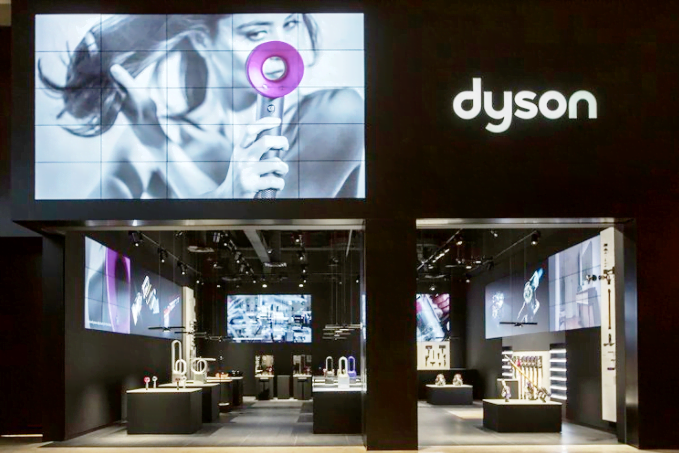
Dyson Unveils 1st Canadian Retail Space [Photos]

Dyson at Yorkdale Shopping Centre

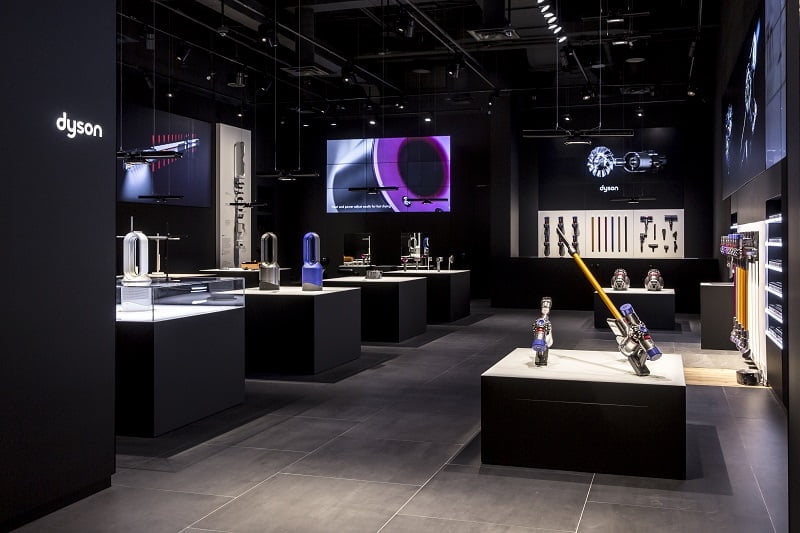
UK-based household and technology ‘reinvention’ brand Dyson has opened its first freestanding Canadian ‘Dyson Demo’ store at Toronto’s Yorkdale Shopping Centre. It’s Dyson’s fourth retail space in North America, as well as one of only 19 showrooms globally. 

The highly experiential Yorkdale retail space is designed to encourage people to pick up, test, and understand Dyson’s technology. Interactive demonstrations bring to life the science at the core of Dyson machines, with ‘Dyson Experts’ on-hand to explain machines and provide recommendations that will best suit customers’ lifestyles.

Included are features such as hair styling stations featuring the Dyson Supersonic™, and a Dyson air purifier smokebox demonstration. 

“It is by picking up and experiencing Dyson products that you are able to understand why and how we use new technology to improve performance.  The Dyson Demo encourages people to be hands-on. The Supersonic ™ salon introduces hair science to shoppers, many for the first time, and nowhere else can you choose various types of dust and debris to test a vacuum cleaner, ” said Jake Dyson, Research and Development Director. 

Yorkdale’s Dyson is located in a 1720 square foot retail space in between the mall’s Nespresso and Freedom Mobile locations as per the mall floor plan above. Toronto-based design firm Quadrangle designed the showroom.

Dyson’s product portfolio is expansive, and includes battery-enabled and autonomous vacuums, bladeless fans, air purifiers, humidifiers, lighting, hand dryers and, most recently, the Dyson Supersonic™ hair dryer. All can be experienced in the new Yorkdale store.  

Dyson’s first store in the world opened in Tokyo in the spring of 2015, followed by locations in Paris, Moscow, Jakarta, London. Over the past few months, three locations have opened in the United States, including a flagship at 640 5th Avenue in New York City as well as showrooms in San Francisco (Geary Street on Union Square) and at the suburban Tyson’s Corner Center near Washington, DC. 

Interestingly, Dyson’s first physical retail space was in Paris in the 1970’s — there, a showroom allowed consumers to test Dyson vacuums before buying. The company has come a long way since then, and is known to innovate and re-work technology to make it perform optimally.

Photos in this article were provided courtesy of Dyson. The store opens to the public on the morning of Thursday, December 21. 

Comparing Canada’s Ardene to International Fast Fashion Retailers

By Karl McKeever

London has seen a fresh injection of new entrants on its high streets in recent months. The most notable recent addition was that of Polish fast fashion retailer Reserved; bringing its brand to the UK for the first time. Signalling its intent, its flagship store occupies prime retail estate on Oxford Street in the capital – its launch fronted by model Kate Moss, once the jewel in the crown of Topshop and owner Sir Philip Green.

H&M has also been opening new fascias apace, with its Weekday and Arket brands landing. The Weekday fashion and denim brand opened in London and Paris simultaneously, while the latter opened two stores – Regent Street and Covent Garden – within days of each other.

Great news for H&M. Or is it? While these new store fascias – along with Cos, & Other Stories, Monki, Cheap Monday and parent company H&M – are undeniably good, they represent only very subtle derivatives of a singular thought. Fresh, lively new branding and continuous rethinking of concepts may help to keep a brand alive. But what happens once the initial excitement of a new opening has diminished?

MONKI REGENT STREET LONDON

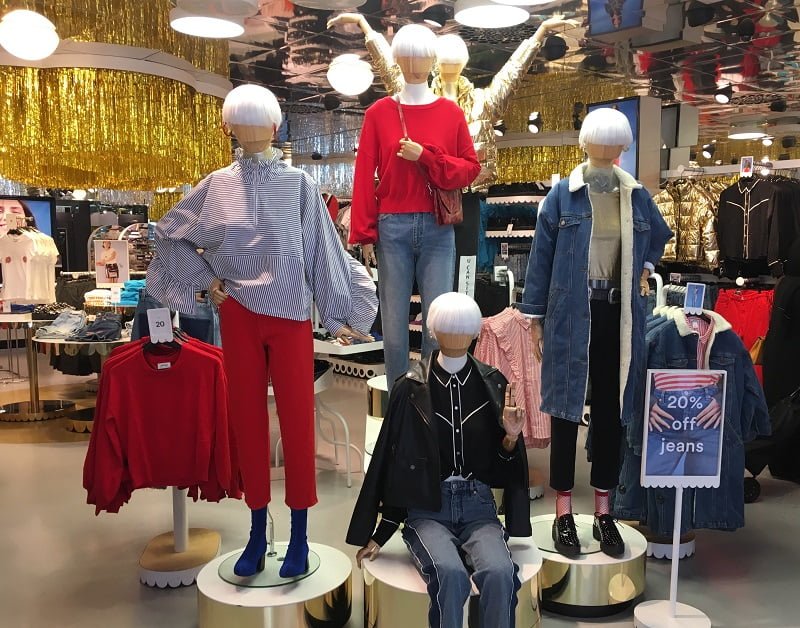
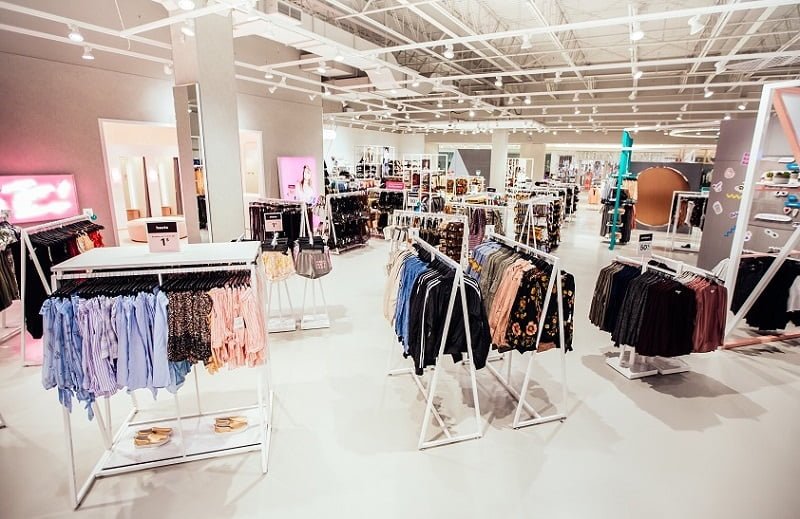
Which turns my thoughts to Canadian fast fashion retailer Ardene. In a bid to reinvigorate its retail footprint, it too has recently launched the first in its series of high-concept large format stores, designed to transform the retail experience for its Generation Z core target shopper. This includes a phone charging station, social media section, dedicated product zones and a hangout area.

While I was impressed with the look and feel of the store, on a recent visit to Toronto, I have to be honest and say that I could have been stepping into any one of a number of recent debut concept stores. Familiar fixtures and fittings evocative of other retailers meant that the personality of the brand was quickly diluted.

Don’t get me wrong: this is a strong, credible concept, and an admirably audacious step by a business keen to breathe new life into the brand. But given the desire for Gen Z to seek out the individual, the new and the unfamiliar, Ardene’s new concept perhaps reflects the ubiquitous cloning of the well-researched, rather than deliver the sharp intake of breath at the sight of something untried and untested that its shoppers may long for.

ARDENE
ARDENE

Imitation may be the greatest form of flattery, but the remarkable ‘cloning’ effect we’re seeing in many new store openings recently is a serious concern. Reserved’s flagship store on Oxford Street is sharp and well researched, but so close to being a replica of its competitor Zara that, when I visited the store, some shoppers seemed genuinely confused about which store they had wandered into.

Too many retailers seem to have fallen into a ‘more of the same’ trap. Sure it’s easy to do. “It’s edgy. It’s new. Look at their success – we’ll have some of that please.” But retailers must resist this temptation and work harder to define their own distinctive voice. Retail design agencies have a responsibility too – to push back, to challenge and to not take the path of least resistance. The best brands did not become the best because they copied others, but because they did things differently.

Without a clear and unique voice, most retailers find it difficult to sustain the buzz around their stores once the fanfare of the initial launch has left town.

As we head into 2018, what does the future hold for these stores? Can the likes of Ardene, Weekday or Reserved be able to sustain the buzz they created with their launches? Perhaps, if they pay careful attention given to visual merchandising and branding. But with a copycat attitude and box ticking approach, it’s unlikely. I for one will be watching with interest.

Karl McKeever

*See below for more photos, via Visual Thinking.

Karl McKeever is the founder and driving force behind Visual Thinking, a globally recognised retail transformation agency. A renowned retail expert, he has worked with an impressive roster of major global retail brands, including: Gap, IKEA, Harley-Davidson, John Lewis, and Marks & Spencer during his 30 year career. He has also appeared as a judge on BBC TV series, The Apprentice.

ARKET ON REGENT STREET IN LONDON
WEEKDAY REGENT STREET LONDON