Advertisement
Home Blog Page 1109

Trendy Ossington Avenue Sees Changes with Major Retail Additions

exc-58235e68725e25b7506c4942

Ossington Avenue is on track to become one of Canada’s trendiest retail strips. Located in Toronto’s west end, the north-south street lies just outside of Toronto’s downtown core, with its main retail strip bordered by Dundas Street West to the north and Queen Street West to the south. A mixture of small local businesses and larger retail chains populate the street – everything from artisanal craft shops, clothing retailers, restaurants and bars.

Although primarily known for its local establishments, the street is also now populating with international retailers. Starbucks was one of the first major names to set up shop on the strip in 2012. Tiger of Sweden, and Shinola have also opened up their first Canadian stores along the strip. Most recently announced is a Lululemon Men’s Store, coming next year.

Toronto is a city filled with thriving neighbourhoods and shopping districts. Over the past year, most retailers focus their retail efforts in the downtown core. CF Toronto Eaton Centre has seen a major influx of new retailers, and neighbourhoods such as Yorkville and Queen Street West have seen new retailers open street-front spaces over the past several years. 

A neighbourhood like Ossington seems non-traditional for Toronto retail. Guaranteed retail success is not necessarily found in this area of Toronto, compared to the city’s established shopping nodes. With only a few brand name retailers that are currently on Ossington, why are more retailers suddenly interested in setting up shop here?

“We’re getting more calls from retailers that want to come to Ossington Avenue,” says Aly Damji, VP of Commercial Real Estate at Hullmark Developments, a Toronto-based real estate company that currently owns nine commercial properties in the neighbourhood. 

Mr. Damji explained over the phone last week that sudden interest in Ossington Avenue isn’t necessarily shocking.  “Retail has become more of an experiential experience. As retailers drive higher online sales, they look for retail spaces in neighbourhoods that speak to the culture of their brand”, he said. 

American luxury brand Shinola opened its first Canadian store over in the summer of 2016 at 1000 Queen Street West. Shinola opted for a 1,800 square foot space on Ossington, rather than open a store in Yorkville like most luxury retailers. “When [Shinola] looked at other retailers on Ossington, it aligned with their brand really well,” says Mr Damji. “They have a hard corner spot at Queen and Ossington, which tackles both markets of Ossington and Queen Street West”.

Vancouver apparel brand Reigning Champ has opened their first Toronto location in the Ossington neighbourhood. According to Mr. Damji, Reigning Champ discovered that their brand had a strong presence in the Toronto market through online sales. Despite Reigning Champ initially focusing on opening their first location on Queen Street West, Mr. Damji says an Ossington store is more of a brand statement for them. “As they drive higher online sales, they look for stores that speak to the culture of their brand.”

Canadian athletic apparel retailer Lululemon opened its first Canadian Lululemon Men’s store at 96 Ossington Avenue in the former Harley Davidson cafe space. Mr. Damji also reassures that more brand name retailers are on the way, and should be announced within the next year.

Another addition to the street in 2017 was Toronto’s first location for Vancouver-based fitness concept Ride Cycle Club, founded by J.J. Wilson, son of Lululeomon founder Chip Wilson. 

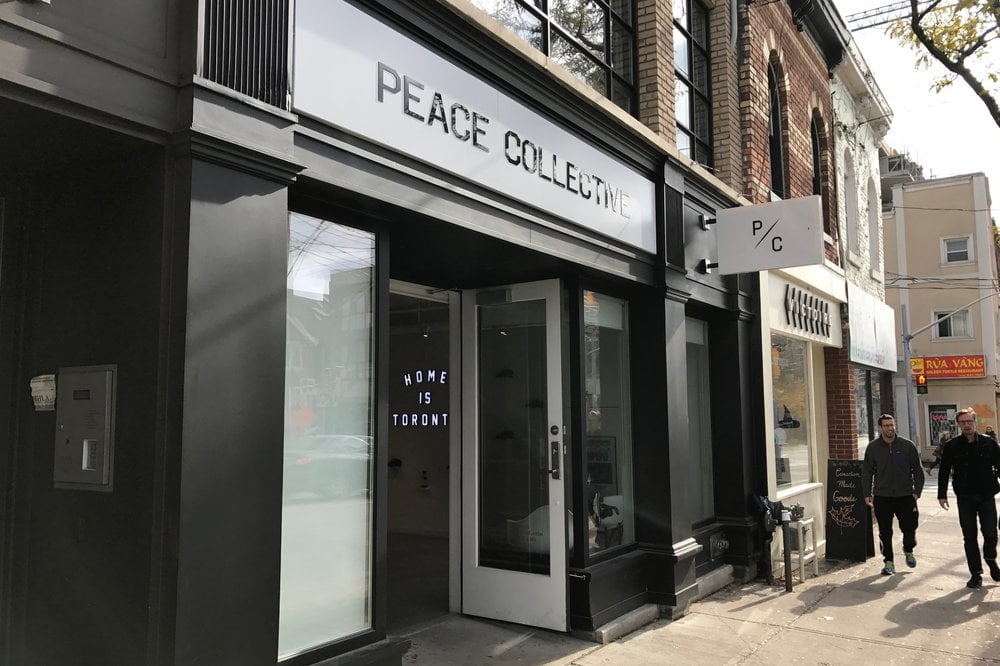
According to Sales Representative Jackson Turner, brokerage CBRE has been involved with a number of deals on the street, including Reigning Champ, Lululemon Men’s, Peace Collective, as well as the new Ride Cycle Club.  

How are these brands truly performing on Ossington? According to Mr. Damji, Shinola and Reigning Champ have both seen higher than expected sales and foot traffic.”Initially we felt that brands were locating on Ossington solely for the brand statement”. Mr. Damji credits Ossington Avenue’s success with the street’s connection to nearby West Queen West, which has been bringing great weekend foot traffic to the area.

As more major retailers begin to fill Toronto’s trendy Ossington Avenue, there is a question on the minds of nearby residents and retailers — can small retailers and brand name retailers co-exist, or is one of Toronto’s trendiest neighbourhoods facing possible gentrification? 

“That is something we look at ourselves. We are very conscious about the neighbourhood.” says Mr. Damji. “Ten years ago, Queen West had a mixture of international retailers but also local retailers as well” Mr. Damji continues, ensuring that retail development on Ossington will be more responsible and that the company wants to see local business thrive in this area.

Mr. Damji says the key to a successful street of retail is co-existing, and that without smaller retailers, a successful neighbourhood loses it’s cool “vibe” that retailers initially loved when moving into the area.

“A lot of retailers who were in the Queen Street West node are starting to move to Ossington. We want to make sure the local retailers do well,” Mr. Damji ensures.

We’ll be watching the transformation of Ossington Avenue in the coming months, as the area continues to welcome national and international brands to an already compelling neighbourhood street. 
Study Ranks Canada’s Top Retail Streets

exc-5a16176dec212d9bd36d0755

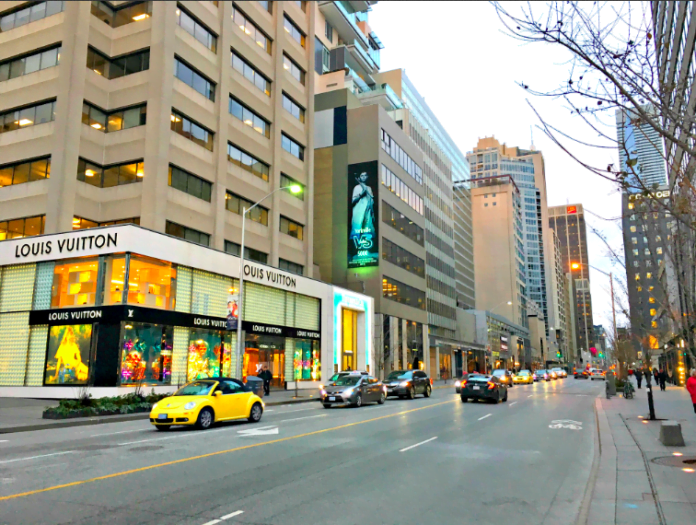
A study released this month by Cushman & Wakefield ranks global retail streets based on rents per square foot, with seven Canadian locations included. What’s interesting is according to the Cushman report, five of the seven Canadian high streets saw decreases between June of 2016 and June of 2017. 

The report, called Main Streets Across the World 2017, tracks 451 of the top retail streets around the globe, ranking the most expensive in each country by their prime rental value. Cities in Canada to rank in the study include Toronto, Montreal, Vancouver, Ottawa, Edmonton and Calgary. 

Toronto’s Bloor Street West, aka ‘The Mink Mile’, came out on top again this year with a prime rental value of $300 per square foot. That’s down from $325 in 2016, according to the report. Things will no doubt be changing for Bloor Street West between now and the year 2020 — the street will see more new retailers and redevelopment than any similar street on the continent.

Hermes prepares to open a flagship at 100 Bloor Street West on November 22, 2017. Photo Retail Insider

New retailers to open on the street include Canada’s first locations for APM Monaco and MCM, and a massive new Hermes flagship is set to open next week at 100 Bloor Street West. Holt Renfrew and Harry Rosen are renovating their existing stores, and new developments to the area include retail at 1 Bloor Street East (including Nordstrom Rack and a Mark McEwan grocery store), 1 Bloor Street West (which reportedly could feature Apple as an anchor), and the redevelopment of the commercial podium of Manulife Centre, which will include the addition of a 50,000 square foot Eataly location in 2019. Retail Insider will be doing an in-depth feature on Bloor Street West next month. 

Vancouver’s Robson Street ranked second in the study, with rents asking $183 per square foot. That’s down from $215 in 2016 — the street is in a state of transition, and there are currently some vacancies on the 1000 and 1100 blocks. Things are looking up for Robson Street — on December 2, Japanese retailer MUJI will open its largest store outside of Asia on Robson Street, and we’re told that several exciting announcements are on the way for the street. Interestingly, once sleepy Alberni Street, located a block north, has become the city’s luxury retail address, and rents reflect that. According to a recent report by CBRE, Alberni Street’s rents are now up to 50% higher than those on Robson Street, and Alberni Street’s retail sales are often higher than those on Toronto’s prestigious Bloor Street West. 
Vancouver’s Robson Street. Photo Ritchie Po

Montreal’s Sainte-Catherine Street West came in at a close third, with rents of $175 per square foot — down from $180 in 2016. The street is seeing the addition of popular new retailers, and is about to embark on a multi-year infrastructure project that will include new heated sidewalks, among other improvements. Sainte-Catherine Street will continue to go more upscale at its east and west ends between now and 2020. On the west side at 1307 Sainte-Catherine Street West, an expanded 250,000 square foot ‘Holt Renfrew Ogilvy’ store will include ground-floor boutiques for luxury brands such as Chanel, Louis Vuitton, Hermes and Prada. Towards the east end of the retail strip at Philips Square will be a 200,000 square foot Saks Fifth Avenue flagship, which will be located at the back end of the city’s flagship Hudson’s Bay department store. The opening date for Saks is currently unknown — it was announced to be opening in early 2018, but we’re told there are some delays. 

Montreal’s ste-catherine St. W. is going to be seeing some big changes over the next few years, including new streetscape and heated sidewalks

Toronto’s Queen Street West ranked fourth in the study with retail rents at $110 per square foot — unchanged from 2016. Queen Street West between University Avenue and Spadina might be compared to Vancouver’s Robson Street — both feature popular chain national and international tenants, as well as a mixture of some local retailers. Queen Street West is seeing some new developments including a new MEC flagship that will open in late 2018 — and while there are some vacancies on the strip, these are expected to be filled with new retailers in due course. 

Edmonton’s Whyte Avenue, which technically is 82 Avenue NW, ranked fifth with rents of $48 per square foot. That’s down from $50 per square foot, according to the study. Whyte Avenue remains Edmonton’s most popular retail high street, with many local and some national and international tenants. Given its chilly climate, Edmonton is an overwhelmingly mall-dominated market so asking rents on streets are considerably less than those in top malls such as Southgate Centre and West Edmonton Mall

Whyte Avenue in Edmonton. Photo University of Alberta

Sussex Drive and Wellington Street in Ottawa ranked sixth with rents of $45 per square foot, up from $40 in 2016. The stretch of Sussex drive just north of Rideau Street boasts a lovely collection of boutiques in an attractive setting — Le Creuset operates next to fashion retailers Kaliyana and ca va de soi in a row of heritage buildings. Busy CF Rideau Centre is nearby, and it features national and international retailers such as Nordstrom, La Maison Simons, Tiffany & Co., Harry Rosen and others. 

Calgary’s 17 Avenue SW. ranked seventh with rents of $43 per square foot per year, down from $50 in 2016. The commercial street includes a mix of local, national and international retailers, in a rather pleasant environment that is anchored by First Capital Realty’s ‘Mount Royal Village’ multi-use commercial project. Calgary is a city overwhelmingly dominated by malls — CF Chinook Centre and CF Market Mall are top performers in Canada, and even downtown Calgary is dominated by a large indoor retail complex called The CORE, anchored by Holt Renfrew, La Maison Simons, Harry Rosen and Hudson’s Bay

Rendering of Mount Royal Village in Calgary, via First Capital Realty

New York City’s 5th Avenue (between 49th Street and 60th Street) boasts the highest retail rents in the world, topping out at US $3,000 per square foot. That number was unchanged from the year prior. Other leading streets in the United States include Rodeo Drive in Beverly Hills (US $875), Union Square in San Francisco (US $700), North Michigan Avenue in Chicago (US $550) and Lincoln Road in Miami (US $300). Toronto’s Bloor Street West, as a comparison in the study, ranked at US $231 — making it appear to be a bargain in comparison. 

Other top international streets, all in US dollars, included Hong Kong’s Causeway Bay ($2,725), London’s New Bond Street ($1,719), Milan’s Via Montenapoleone ($1,433), Paris’ Champs Elysees ($1,407), Ginza in Tokyo ($1,200) and Pitt Street Mall in Sydney Australia ($1,000). 

[Read the Full Report]

Study Predicts Online Shift for 2017 Winter Holidays in Canada

exc-5a0ce5be24a694752b623528

For the first time, more Canadians will be doing their holiday shopping online than those visiting bricks and mortar stores, according to a new survey.

The Accenture 2017 Holiday Shopping Survey says Canadian shoppers are continuing to leverage technology for convenience.

Kelly Askew, managing director of retail strategy practice in Canada for Accenture, says convenience is very important to consumers.

“That’s showing itself with the continued rise in online shopping . . . The majority of Canadians are going to do their shopping online,” says Askew.

The survey is in its sixth year.

Askew says Accenture expects to see online shopping continue to grow so bricks and mortar retailers need to ensure they are doing everything they can to create a differentiated experience where customers are going to want to come to stores for other reasons than just completing a transaction.

“It’s a question of time. People are time starved. They are not setting aside days to go to the mall and do their holiday shopping,” adds Askew.

The survey found that 66 per cent of shoppers said they are familiar with Google Home and 75 per cent are already using it/would definitely use it/are willing to use it and 61 per cent are using – or are aware of – Amazon Alexa, to buy gifts this season. Also, 66 per cent of Canadian shoppers who responded to the survey said they first check Amazon before looking or buying anywhere else.

Nearly half of respondents want online wish lists to make the task of holiday shopping easier.

“This year, Canadians are putting a high premium on convenience and digital when it comes to getting their holiday shopping done,” says Robin Sahota, managing director of Accenture’s retail practice in Canada. “Canadians are also moving toward being shopped and wrapped earlier than ever before, which means retailers must seize the opportunity to innovate and by offering a distinctive experience, lay the foundation for more profitable, year-round relationships. The key is to define their purpose, engage in a way that is memorable and be clear about the role they will play in shoppers’ lives.”

The survey says the rise of constant discounts from deal websites and Amazon Prime Day have lured more than half of Canadian shoppers, who are now shopping for holiday gifts throughout the year, including 65 per cent of older millennials (age 28-37) and 63 per cent of Gen Z (18-20) consumers. It says fewer Canadians are likely to shop on Boxing Day this year (64 per cent), down from 70 per cent last year. Also, 57 per cent of shoppers said they are less inclined to shop on Boxing Day and 48 per cent are less inclined to shop on Black Friday.

“There is a growing trend that shows Canadians are less willing to shop during major deal days, specifically Boxing Day and Black Friday,” says Askew. “Winning over the Canadian consumer will require providing active, rather than passive, shopping inspiration. This might mean proactively offering gift recommendations for a certain person, to help retailers influence a consumer’s purchase before they even think about searching for ideas.”

Brief: APM Monaco Enters Canada, Canada Goose Opens in Calgary, Cheesecake Factory Opens 1st Canadian Location

Brief

APM Monaco Opens 1st Canadian Store: Monaco-based jeweller APM Monaco has opened its first Canadian boutique in Toronto, with more expected to follow. 

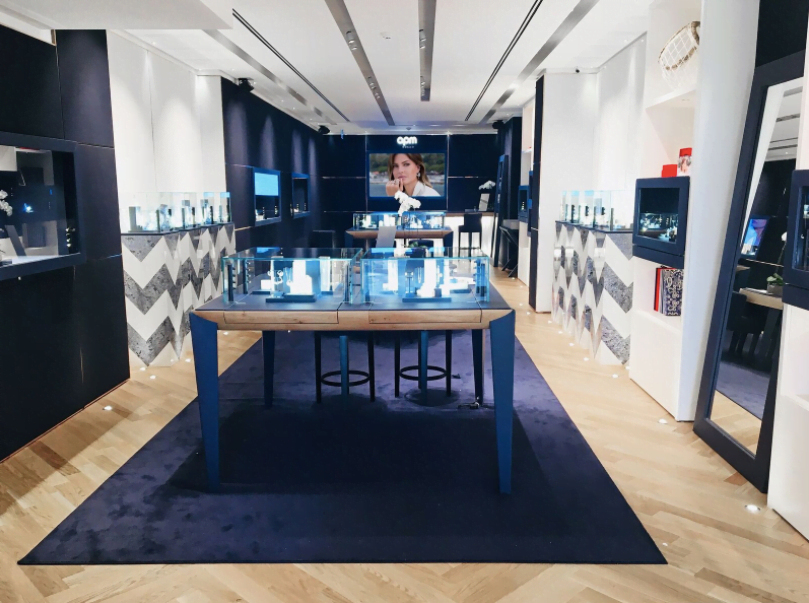
The 1,700 square foot Toronto store is located at 89 Bloor Street West, across from Harry Rosen and Holt Renfrew Men. APM Monaco’s store design is inspired “by the Monaco lifestyle” with a signature navy and white colour combination. The attractive retail space was built by Montreal-based Vergo Construction, which works with national and international retailers on their store build-outs. 

The Toronto APM Monaco retail space was most recently occupied by Roots KidsJordan Karp and Ryan Morein, now with brokerage Savills, represented APM Monaco (for both the Bloor deal as well as for its national rollout), and CBRE Downtown Toronto’s Arlin Markowitz, Alex Edmison and Jackson Turner acted on behalf of the landlord in a sublease deal involving Roots

APM Monaco was founded in 1982 by Ariane Prette as a jewellery brand specializing in creating traditional gold, diamond and precious stone pieces for other jewellers. In 2011, the Prette family launched the new APM line (standing for Ariane Prette Monaco) that is made from the purest form of silver, carefully selected cubic zirconia and one-of-a-kind freshwater cultured pearls, among other high-quality materials. 

Its products are handmade with their own manufacturer to ensure consistency. Designs are also “influenced by Monaco and the South of France,” according to the company, “with a touch of Monegasque flair”. Creative director Kika Prette (daughter-in- law of Ariane Prette) introduces four new collections a month with 12 fashion themes a year. 

APM Monaco has over 160 stores worldwide, and it’s growing quickly — a rapid US store expansion is currently in the works and sources confirm that Vancouver is a target for at least one APM Monaco store location. 

Browns Shoes Continues Store Expansion: Popular Montreal-based multi-brand Browns Shoes continues to open stores in Canada, maintaining its position as a significant national retailer. 

Photo: Browns Shoes

The company has revealed that it will be opening several stores over the next few months — this fall, a Browns store will open at Les Promenades Gatineau in Quebec, and in early 2018 the retailer will open a Browns store at Hillcrest Mall in Richmond Hill, north of Toronto. 

Eric Ouaknine, Director of Retail Experience at Browns Shoes, says that 2018 will be a busy year for the company — new stores will open under the company’s Browns and B2 banners, and some existing locations will also see renovations, expansions or relocations. We’ll provide updates as they can be revealed. 

Browns Shoes currently operates 60 stores throughout Canada, and is represented in Canada by brokerage Oberfeld Snowcap. Browns Shoes is a family-owned business, founded in 1940 in Montreal by Benjamin Brownstein. The company is now third-generation run. Stores feature designer brands as well as in-house brands including Mimosa, Browns Couture, The Wishbone Collection, Luca Del Forte, Intensi and B2. The B2 brand became so successful in its own right that it now boasts its own freestanding stores, which also carry various other designer brands.

Canada Goose

Canada Goose Opens 2nd Canadian Store in Calgary: Toronto-based outerwear and fashion brand Canada Goose has opened its second standalone Canadian store in Calgary. Canada Goose’s first store in the world opened at Toronto’s Yorkdale Shopping Centre in October of 2016, and the company now has stores in New York City, Chicago, Tokyo and London, with a unit to open soon in Boston. 

The 3984 square foot store at CF Chinook Centre replaces BCBG, which vacated its Canadian stores several months ago. 

Canada Goose says it plans to operate between 15 and 20 stores globally by the year 2020. 

Canada Goose’s second Canadian store was intended to be in Vancouver, according to sources, but securing real estate was a problem. 

Zadig & Voltaire Montreal Location Revealed: It was a bit of a secret where Zadig & Voltaire would be opening its Montreal store. The Paris-based fashion brand opened its first standalone Canadian store this month at Toronto’s Yorkdale Shopping Centre, in a 2,000 square foot space. 

Zadig & Voltaire

Retail Insider’s Montreal correspondent, Maxime Frechette, has discovered the location of Zadig & Voltaire’s Montreal store, which opens this fall. Signage went up yesterday at 4891 Sherbrooke Street West in the city’s affluent Westmount community, in a space formerly occupied by UGG. The stretch of Sherbrooke Street West has a terrific mix of contemporary brands, and Zadig will fit right in. 

Jeff Berkowitz of Aurora Realty Consultants represents Zadig & Voltaire in Canada, and negotiated the Westmount deal. Montreal-based Axxys Construction is building the store, and recently completed the Yorkdale unit. 

Until several months ago, Zadig & Voltaire was carried at Holt Renfrew — Holt’s is parting ways with some brands as it amends its retail strategy to include carrying some of the world’s most popular luxury brands — with many of those operating as shop-in-store concessoins. 

Cheesecake Factory Opens 1st Canadian Location at Toronto’s Yorkdale Shopping Centre: Popular full-service American restaurant chain Cheesecake Factory has opened its first Canadian location, spanning in excess of 10,400 square feet with two covered patios. We’re seeing full-sized restaurants opening in Canadian malls more than ever, as landlords diversify their properties with more food and beverage offerings. 

(THE CHEESECAKE FACTORY CANADA – INSTAGRAM)

There were substantial lineups on opening day

Cheesecake Factory replaces a Milestones restaurant that occupied a space facing north, near Yorkdale’s Hudson’s Bay store. The restaurant features imported limestone floors and custom wood columns, hand-painted murals and modern lighting. 

Cheesecake Factory is known for its extensive food offerings, including having a menu with over 50 signature cheesecakes and desserts. Cheesecake factory opened as a bakery in Los Angeles in 1972, and its first restaurant opened in Beverly Hills in 1978. The Company, through its subsidiaries, owns and operates 208 full-service, casual dining restaurants throughout the United States and Puerto Rico, including 194 restaurants under The Cheesecake Factory® banner; 13 restaurants under the Grand Lux Cafe® banner; and one restaurant under the RockSugar Pan Asian Kitchen® banner. As well, the company has 15 international restaurant locations that operate under licensing agreements in the Middle East, Asia and Mexico. 

Lindt Opens Retail Space and Cafe in Vancouver: Swiss chocolate brand Lindt has opened a retail concept and cafe in downtown Vancouver. The 1,800 square foot space opened earlier this month at Vancouver’s recently overhauled Exchange Tower

While most Lindt locations are dedicated to selling chocolate, the Vancouver space takes things one step further with an in-store cafe, with a menu including chocolate truffles, chocolate bars, Lindor Truffles, and a chocolate drinks bar — not to mention premium chocolate bars that can be gift wrapped for the holidays.

Acting for the landlord in Lindt’s new retail space were the CBRE Vancouver team, under the direction of Mario Negris, Adrian Beruschi and Martin Moriarty

*Photos: Martin Moriarty.

Mark’s Rebrands: The retailer formerly known as Mark’s Work Warehouse, and most recently as simply ‘Mark’s’, is again rebranding to become Mark’s Well Worn. The new positioning seeks to drive growth with a net new consumer for the retailer, while maintaining a deeply entrenched sense of pride and respect for the brand’s industrial roots. We’ll be doing a more in-depth feature later this week on what it all means for the company, which operates under the Canadian Tire umbrella. 

Hermes Prepares to Open Mink Mile Flagship: Construction hoarding is coming down on the large new Hermes flagship at 100 Bloor Street West in Toronto, which is scheduled to open to the public on Wednesday, November 29. We’ll feature an article on what will become one of the brand’s largest locations globally, including interior photos of the space. 

Construction has been ongoing for months on the two-level space, which replaces a Williams Sonoma store that closed in January of 2017. A standalone Holt Renfrew Men’s store is located immediately east of Hermes, and it will soon be revealed that a luxury brand has leased space on the west side of Hermes as well. 

Signage at the current 130 Bloor Street Hermes indicates that it is closing temporarily for about a week prior to the opening of the new store. The new store’s facade is a light coloured stone — see photos directly below, taken the afternoon of Tuesday, November 21. 

Retail Insider will now be regularly including these briefs as part of our expanding reporting mandate. For more information, contact Editor-in-Chief Craig Patterson at: craig@retail-insider.com

For more of today’s retail news, visit:

Canadian Retail News From Around The Web: November 22, 2017

Twin Roads Socks Growing Ecommerce and Physical Retail Channels

Image: Twin Roads

The blossoming trend in men’s fashion these days led Joe Trubiano to a unique retail concept which began about four years ago in Montreal.

“We’re in the socks business. Men’s socks. I could tell there was something happening in menswear in general. It’s starting to flourish. There is a real growth in menswear in terms of percentage versus even ladies wear only because all of the sudden menswear is becoming a little bit more creative, different. A little bit more casual. It allows men to go out and do things a little bit differently than they did in the past. And that’s why I think the sales are coming certainly in menswear,” says Trubiano, founder and president of Twin Roads.

“Certainly one of the things that is totally new and different are socks. Socks have become the way for many men to sort of express their individuality. In the past when things were a little bit more dressy – you think of office wear suit and ties – ties were then perhaps the way men used to express their different personalities. Fewer and fewer men wear ties these days. One of the things that is out there that helps make men personal, a little bit different from the next guy is the socks that he wears. There’s definitely a boom in business in men’s socks. You see it all over the place. It really is a business that’s taking off.”

Twin Roads

Twin Roads is primarily a business based through its website but Trubiano says about seven or eight boutique stores in Montreal carry its line of socks.

Previously, Trubiano used to manufacture and import ladies wear from China and Italy. He had sales representatives pushing out the product. Now, he is going to take that concept to socks as he’s finding sales reps in Canada and the U.S. who will be soliciting business through their connections in smaller stores throughout North America.

For next year, he’s considering setting up pop-up shops in malls for specific times of the year such as Father’s Day and Christmas.

“There is business to be had doing it that way. I think pop-up shops will be something that definitely will work very well for us,” says Trubiano, adding that he sees that concept expanding to other markets outside of Montreal.

Twin Roads

Twin Roads sells socks made in Italy for about $12 a pair. They’re combed cotton with a very good quality. Next year, Trubiano says the company is going one step above in quality and will also offer mercerized cotton which is a bit finer and softer. It will sell for about $18.

“You get this incredible feeling when you touch them. Wow. Never mind when you put them on,” says Trubiano.

“The idea really is to create a better sock. Anybody who ever touches our socks or just feels them their first comment is ‘wow these really feel nice, they look great’.”

And socks have even become big news these days.

Trubiano says Prime Minister Justin Trudeau has become the ideal spokesman for socks. Trudeau has caused a stir since he took office for his colourful and sometimes themed socks such as Star Wars.

“The stuff he wears is pretty amazing. He’s obviously into it,” says Trubiano.

Twin Roads

Why Canada is Wary of Online Grocery Shopping

By Michael von Massow, Associate Professor, Food Economics, University of Guelph

Canadian grocery giant Loblaw recently announced it’s closing some stores and introducing home delivery of groceries in the Toronto market, while Walmart says it’s expanding its home delivery service.

While it may feel that the Canadian market is late to the online grocery game — there are several chains that have been offering it in the United States for years, for example — it’s really a natural evolution reflecting differences in Canada.

Online grocery shopping has received a lot of attention but remains a relatively small proportion of total grocery sales in Canada. Total online grocery expenditure is estimated at approximately $2 billion with growth predicted to climb to almost $4 billion in the next couple of years. The current activity is largely focused in and around Toronto and Vancouver.

That’s tiny given an annual retail food market of almost $100 billion, $80 billion of which is focused on traditional grocery stores.

Online grocery shopping represents a larger share of total food purchases in other markets. While the U.S. proportion is predicted to grow to 20 per cent by 2025, it currently represents approximately four per cent of total food purchases. Many European markets are somewhat higher, with Great Britain estimated at almost seven per cent.

This begs the question: Are sales in Canada low because demand is low, or because there are not many good options outside of Toronto and Vancouver?

Canadians shop differently

Canadians are much less likely to shop online than Americans. Estimates of online shopping range from 2.5 per cent to 6.5 per cent of total retail sales. By comparison, online purchases are estimated to be closer to 8.5 per cent to nine per cent in the United States. It’s unsurprising, then, that online grocery sales are lower in Canada than in the U.S.

Canadians also express a strong preference for shopping for food in stores.

Globally, 70 per cent of consumers prefer to get their groceries by visiting stores, but that number is 81 per cent for Canadians. There are lots of reasons why shoppers prefer picking up groceries in person, including cost, the ability to choose products on impulse and the issue of scheduling and waiting for delivery.

There are clear differences between the markets in the U.S. and Canada. They help explain why Canadians have been slower to embrace online grocery shopping here.

The Canadian grocery market is dominated by Loblaw, Metro and Sobeys, representing almost two thirds of the retail market. Walmart and Costco are estimated to have almost 10 per cent of the market and are gaining ground. By comparison, the U.S. market is much less concentrated.

Big-box stores have posed bigger threat

Given that Canadian consumers have expressed a strong preference for in-store shopping, the main competitive pressure is coming from bricks-and-mortar big box stores.

Some have argued that the Amazon purchase of Whole Foods was, in part, an acknowledgement that some bricks-and-mortar stores are necessary, particularly for fresh produce categories.

It’s hardly surprising then that retailers have not made expansion to online shopping and home delivery a competitive priority. Why beef up online options when customers aren’t clamouring for it?

Nonetheless, pressure is coming from smaller players and non-traditional grocers. A strong and well-positioned regional brand, Longo’s Brothers, is prioritizing growth through its Grocery Gateway division in the Toronto area.

Longo’s has seen significant growth at the expense of the big chains, but that growth is on a relatively small customer base. Grocers are preparing themselves anyway, in the event that Amazon’s online and home delivery options are a huge success. That threat is driving traditional grocers to increase online offerings.

Online execution is hard

Executing online sales is difficult, however.

Grocery retailing is a relatively low-margin business, and there are costs associated with online shopping and home delivery, especially the “last mile” — the final leg of the delivery to the customer’s door.

The cost of delivery for the grocer is also highest in the early days, before a big customer base has been built up. That’s resulted in partnerships to facilitate delivery. Walmart, for example, uses Uber and Deliv to allow for same-day delivery for individual customers, so route planning and trucks aren’t needed.

What’s more, consumer wariness and resistance to a number of elementsunique to online grocery ordering pose challenges. There are often delivery and membership fees, which raise the cost of shopping. Consumers also have to wait for the order. Not only is delivery delayed, but it needs to be coordinated so someone is there to accept delivery.

(A WORKER FOR LOBLAW’S CLICK AND COLLECT SERVICE GATHERS A CUSTOMER’S ORDER AT ONE OF THE GROCERY CHAIN’S OUTLETS IN TORONTO IN JUNE 2016. THE CANADIAN PRESS/CHRIS YOUNG)

Grocery companies are making efforts to address these concerns.

Some retailers are offering pickup at stores or other central depots. Amazon and Walmart have proposed having drivers enter houses to put food in the fridge and avoid the need to have a consumer at home.

After all, there are clearly benefits for grocers who offer online shopping and home delivery.

Order sizes for groceries are likely to be bigger, and more regular, than for books, electronics or other items. Once a customer has tried an online food retailer, they may be less likely to switch. They become familiar with the interface, and an algorithm can make recommendations based on past purchases to speed up the order process, creating customer loyalty.

Increased offerings may also drive demand to some degree, but retailers don’t want to establish unprofitable channels without some assurance that demand exists and will grow.

Right now, the fact that online represents a smaller share of total food expenditures in Canada than elsewhere has more to do with consumer preferences than with an industry lagging in its offerings.

Online grocery shopping options will grow if more consumers become interested, but it’s unclear how quickly wary Canadians will embrace them.

Michael von Massow is an Associate Professor in the Food, Agriculture & Resource Economics (FARE) department at the University of Guelph in 2010 after completing his PhD. Michael’s specialty is the Structure and Performance of Food Value Chains, Economics of food demand – both restaurant and retail, Management Science/Operations, Pricing Strategy. Follow him on Twitter at @mikevonmassow.

University of Guelph – https://www.uoguelph.ca/fare/users/mvonmass

Personal blog – https://mikevonmassow.wordpress.com/

Food Waste blog – https://guelphfoodwaste.com/

Restaurant blog – https://restaurantsustainability.wordpress.com/

This article was originally published on The Conversation. Read the original article.

Celebrity Chef Ricardo Larrivée Expands RICARDO Retail Concept and Café 

Image: RICARDO

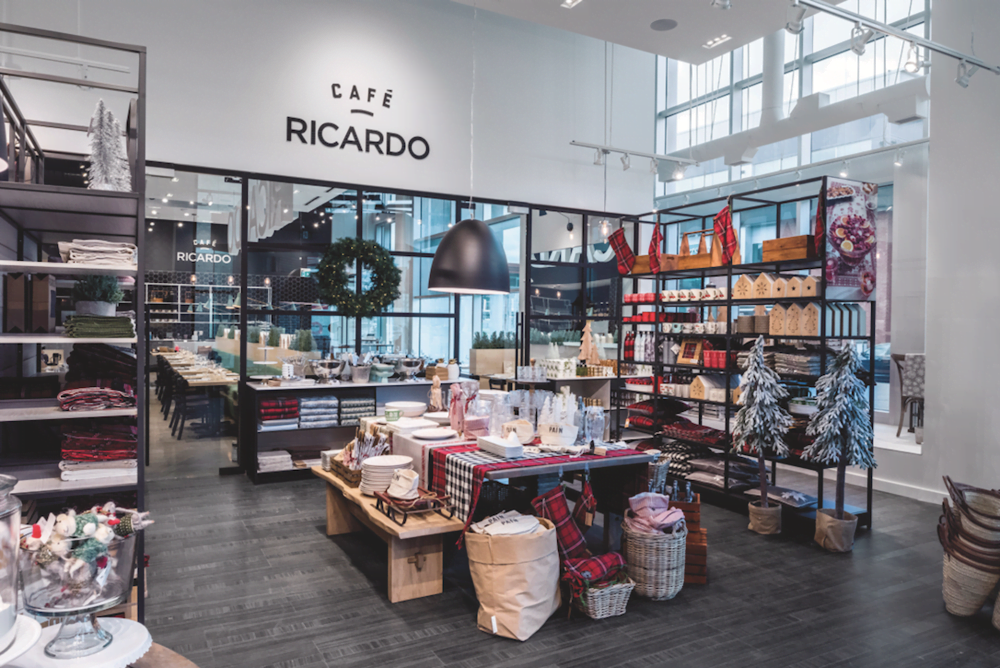
Television personality Ricardo Larrivée is expanding his business holdings with the opening of an 8,000 square foot RICARDO Boutique + Café in Laval —  the second location for the unique concept. Mr. Larrivée says that he has plans to take the RICARDO concept national with multiple locations. 

The new Laval RICARDO is located at Centropolis Laval, and it features a wide assortment including kitchen accessories, Art of the Table collections, cookbooks, magazines, gourmet and other related products. There’s also a café space with 80 seats, as well as an outdoor terrace that seats a further 30 to 40 guests. 

The RICARDO retail space is also rolling out an expanded selection of savoury gourmet products, in addition to an expanded assortment of sweets such as chocolates, caramels and marshmallows. 

RICARDO’s first location opened in Saint-Lambert, Quebec, about three years ago. The combined retail space/café was created out of space in the front of the RICARDO head office. Mr. Larrivée explained that he wanted a retail space to showcase his products, which wholesale in over 600 stores. 

Image: RICARDO

Retail spaces allow Larrivée to showcase RICARDO’s brand in its entirety, as a way to grow brand recognition while also creating a gathering place for fans and foodies. “People want an experience,” explained Larrivée.

Of the hundreds of items that are stocked, about half are RICARDO branded while the other half are international products for which RICARDO has secured the exclusive Canadian rights. “The product must be great,” explained Larrivée, noting that the shopping experience is easier for the consumer because instead of offering an expansive range of products such as a potato peeler, RICARDO offers “the best” in one or two styles. He also ensures pricing is competitive. 

RICARDO retail locations in Ottawa and Quebec City are in the works, and Larrivée says that he’d like to eventually open RICARDO Canada-wide — markets such as Vancouver are on his radar, though he noted the challenges of finding 8,000 square feet of space at a reasonable price. Markets such as Toronto and Calgary will also be targets, though he’ll wait to find the “proper space at the right price”. Ideally, any spaces should include the potential for an outdoor patio area for café seating. 

Image: RICARDO

Manon Parisien of Aurora Realty Consultants is representing RICARDO as broker for the expansion, and negotiated the Laval lease deal. 

Larrivée says that he’s developed a world-class brand that is distinctly Canadian, and that the concept will be perfected further over time to keep things fresh and interesting. RICARDO also just launched a new e-commerce site that retails the entire range of RICARDO products (including its Art of the Table collections, cookbooks and magazines), which ships throughout Canada as well as internationally.

Ted Baker Sees Growth in Canada as it Expands Retail Network

exc-5a091419f9619a1bb024e008

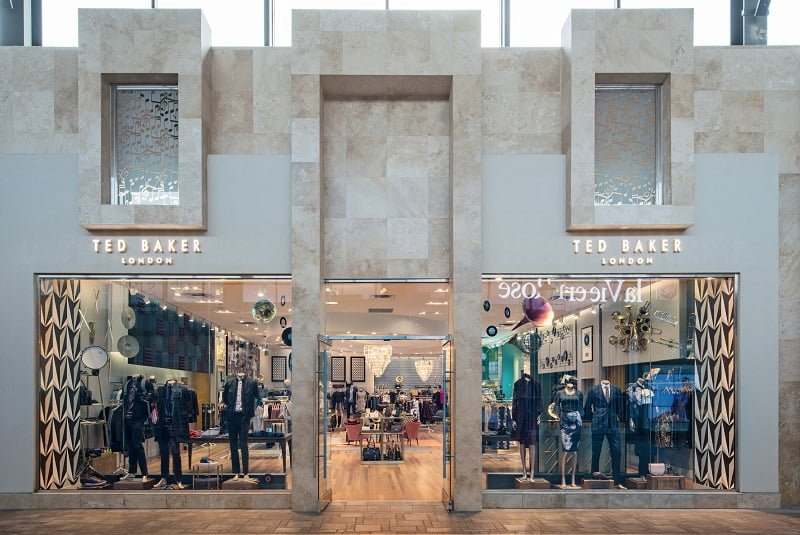
Popular British fashion brand Ted Baker continues to grow its presence in Canada, by opening new stores and shop-in-store concessions, while also expanding its wholesale network. 

Last week, Ted Baker opened its first store in the province of Quebec at CF Carrefour Laval, near Montreal. The 3,680 square foot retail space is located next to COS, which also opened this month in the mall’s wing that is anchored by La Maison Simons

Northwest Atlantic Principal/Broker Dianne Lemm acted on behalf of Ted Baker in lease negotiations with landlord Cadillac Fairview

No two Ted Baker stores are alike, according to Craig Smith, the company’s Digital Commerce Director who is based in London. He explained that Ted Baker is doing exceptionally well in Canada, and that the company continues to expand its distribution both with its wholesale channels, as well as boutiques and concessions. 

Ted Baker recently opened dedicated shop-in-store concessions at Hudson’s Bay stores in downtown Toronto and Vancouver and according to the company, more concessions could follow.

With the opening of the CF Carrefour Laval store, Ted Baker will operate seven full-priced stores and two outlet locations in Canada. The retailer opened its first Canadian store at Toronto’s Yorkdale Shopping Centre in October of 2012, followed by its first Canadian outlet store at Toronto Premium Outlets in August of 2013. A second full-priced Ted Baker location opened in October of 2014 at CF Toronto Eaton Centre, with a Vancouver location at CF Pacific Centre following in June of 2015. In September of 2015, Ted Baker opened at Toronto’s CF Sherway Gardens and in 2016, it opened three Canadian stores — at CF Rideau Centre in Ottawa in May, at CF Chinook Centre in Calgary in September, and at the McArthurGlen Designer Outlets in Vancouver in June of 2016

Ted Baker also has a network of more than 30 full-priced and outlet stores in the United States, as well as concessions in most Bloomingdale’s store locations. 

Leger Study Ranks Ontario’s Top Retailers

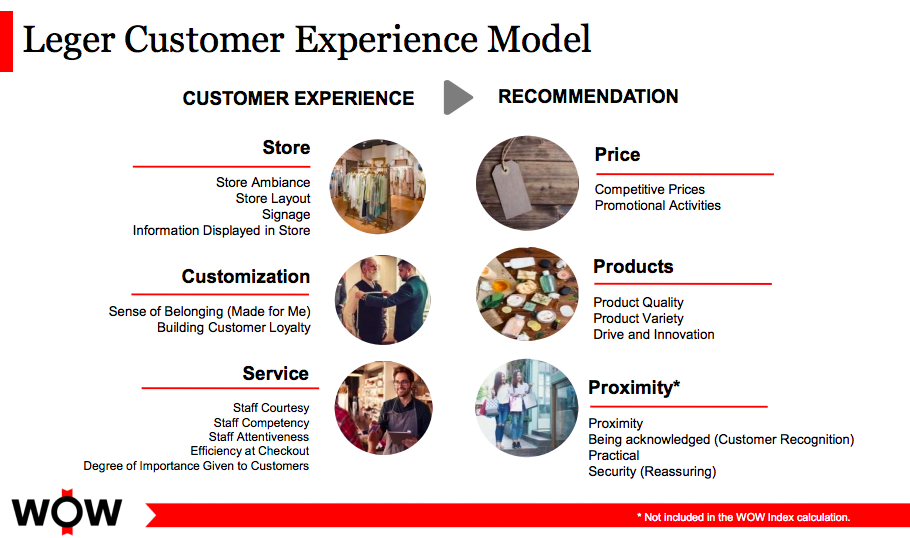
2017 WOW Customer Experience retail index by Leger

Beauty retailer Lush has been named the top retailer in Ontario in the 2017 WOW Customer Experience retail index by Leger – a polling, research and strategic marketing firm.

The WOW Index assessed the customer shopping experience of 151 Ontario retailers in an online survey of more than 20,000 respondents.

“We’re very pleased to be able to win that award. It’s always nice to be recognized. This one’s especially nice because it’s the customers voting. We’re in a field of very strong retailers and it’s gratifying to come out on top of that list for sure,” says
Andy McNevin, chief operating officer of Lush, which opened its first store in 1996 in Vancouver.

“If you look at Lush and the cornerstones of the brand, innovation is a big one. Each time you come into a Lush store you should see something new. We’re generally introducing 250 or 300 new products or gifts a year and we only have 500 skews in the store. So lots of innovation.”

(Click image below for full list, via Excel spreadsheet) 

2017 WOW Customer Experience retail index by Leger

“I think we provide really genuine customer service. So sort of an in-store spectacle. You get lots of sound, and energy, colour and smell just trying to create a sensory playground.”

Other keys to the brand’s success, explains McNevin, are fresh, handmade products in a sort of farmers’ market set up. Everything it sells is made in Canada, using fresh fruits and vegetables, the highest quality essential oils and 100 per cent vegetarian raw materials.

He says the company was founded on ethics and is an activist in campaigning on several issues including animal advocacy, environmental protection and humanitarian causes.

Rounding out the top 10 Ontario retailers in the WOW Index after Lush are: Penningtons, Kiehl’s, David’s Tea, Addition Elle, Bath & Body Works, Aveda, Mountain Equipment Co-op, Carter’s Oshkosh and Yves Rocher.

Christian Bourque, Executive VP and Partner at Leger, says the WOW Index was started seven years ago in Quebec and was introduced into Ontario the following year.

2017 WOW Customer Experience retail index by Leger

The weighted index has 16 variables and retailers can see how they rate and compare to their competitors in a number of retail sectors. 

“Out of the 16 variables that we measure, the one that is most important in terms of driving the model is ‘this store was designed with somebody like me in mind’,” says Bourque. “We call it the Penningtons variable. I feel it’s very important regardless of who you are. If you’re not in tune to the needs of your customers walking into the store, you’ll basically die.”

“In the case of Penningtons, they’ve brought this to a level that I think is scholarly almost.”

He says key variables in the index include store layout, ambiance and the physical store itself, customer service, product offering, price competitiveness and innovation.

Each retailer was assessed by 400 recent customers, 15 years of age or older. Data collection took place from mid-September to mid-October. Data is weighted to ensure a representative selection of recent customers for each retailer (gender, age and region).

The Index also found that 49 per cent of customers who have a mobile phone or tablet have used a retailer’s mobile app in the past year – 21 per cent for grocery; 16 per cent for apparel; nine per cent each for music, pharmacy and footwear.

CHANEL Opens Impressive Canadian Flagship [Photos]

Chanel Canadian Flagship on Yorkville Ave in Toronto

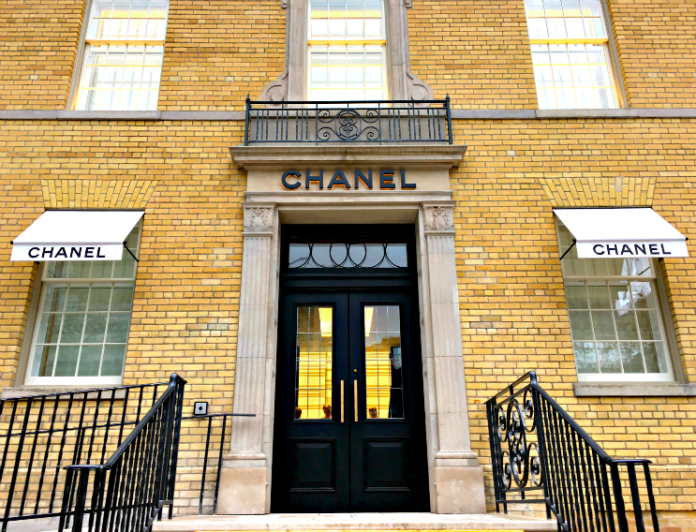
Iconic French luxury brand Chanel has opened its Canadian flagship at 98 Yorkville Avenue in Toronto. The two-level space spans about 8,550 square feet over three floors, and marks a milestone in the transformation of Yorkville Avenue into a significant luxury retail address. 

The store was busy with a constant stream of visitors over the weekend despite a rainy Saturday, and many were buying. Doormen and valet parking staff greeted shoppers to the new store, which is currently the only standalone location for Chanel in Canada. 

The flagship features two levels of retail space totaling about “600 square metres”, according to a press release. The Yorkville Avenue building includes a ground floor that is about 4,100 square feet, a second level spanning about 3,000 square feet, and there’s a non-retail basement providing Chanel an additional 1,450 square feet. Everything is housed in a commercial building featuring an historical facade. 
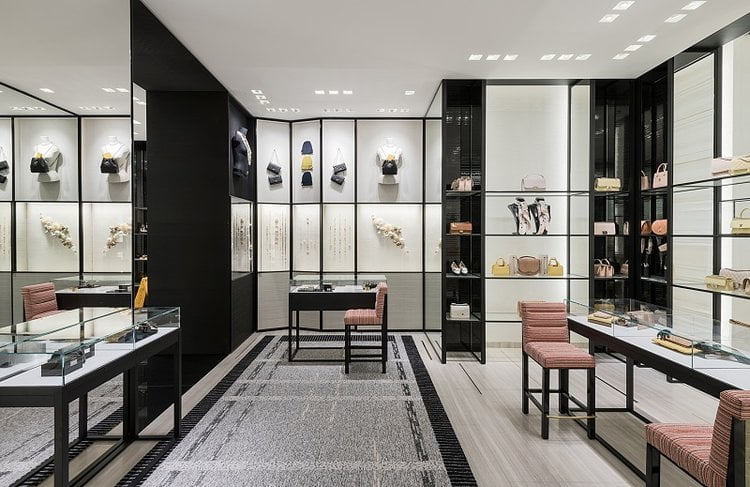
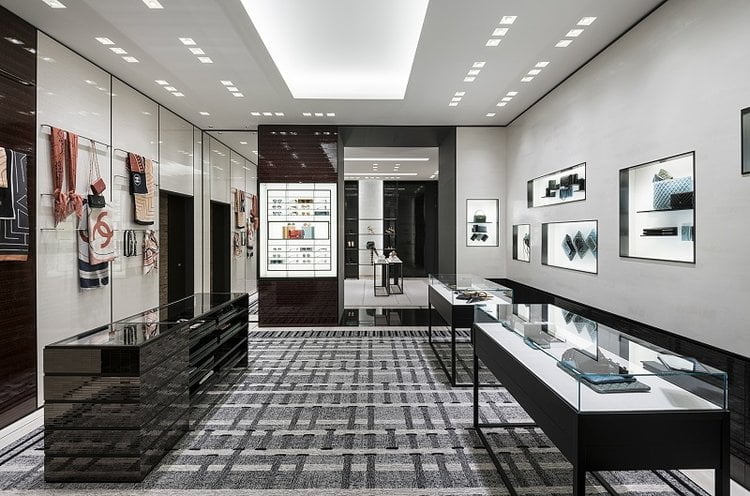
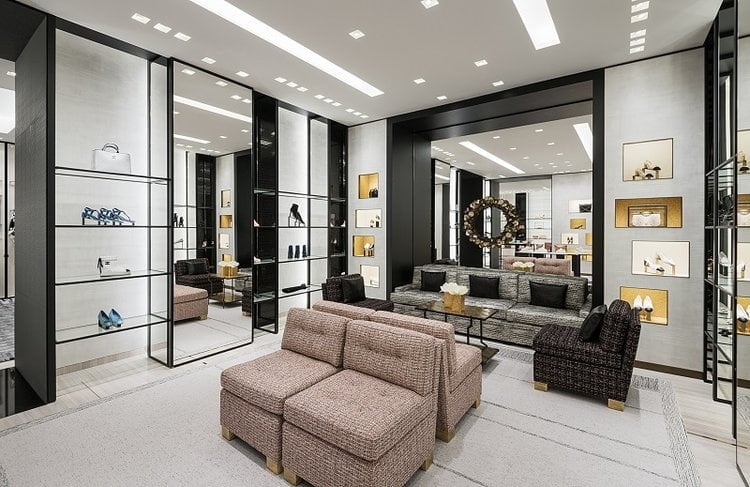
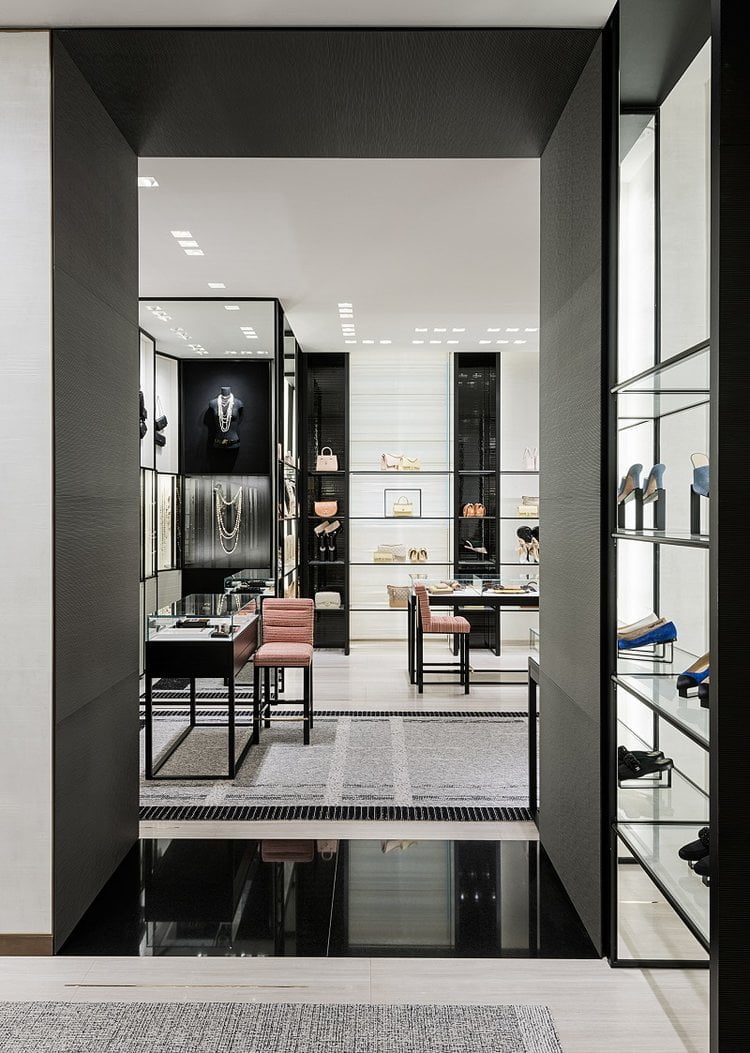
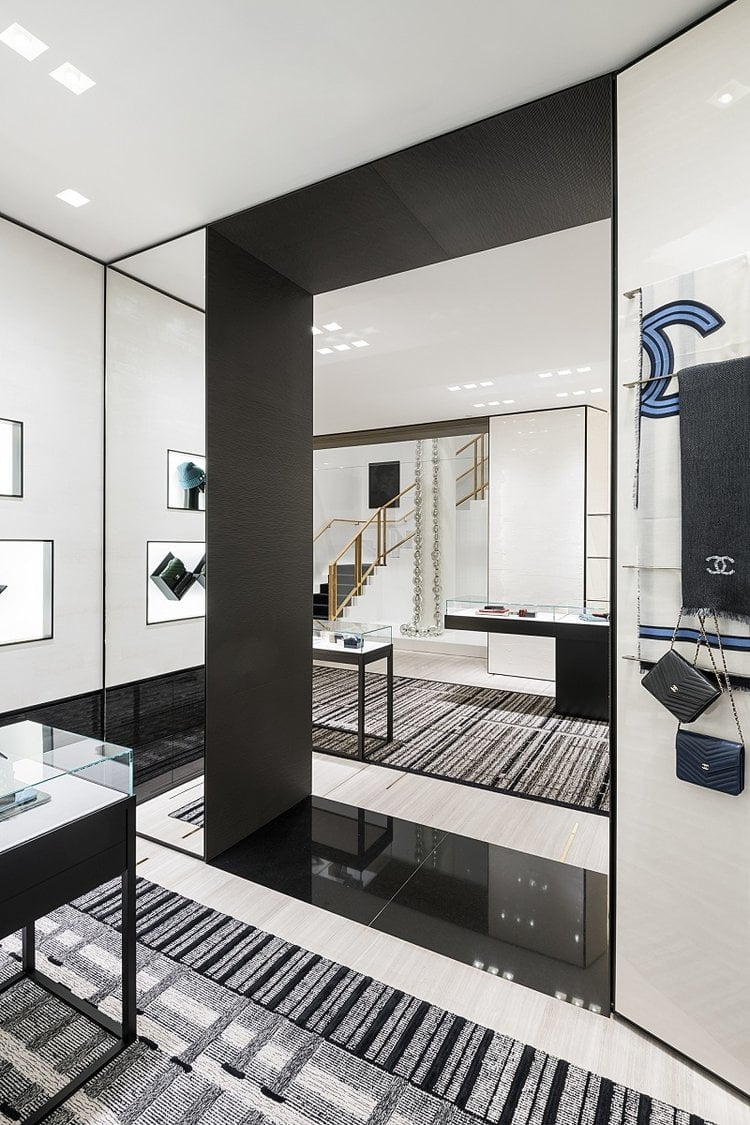
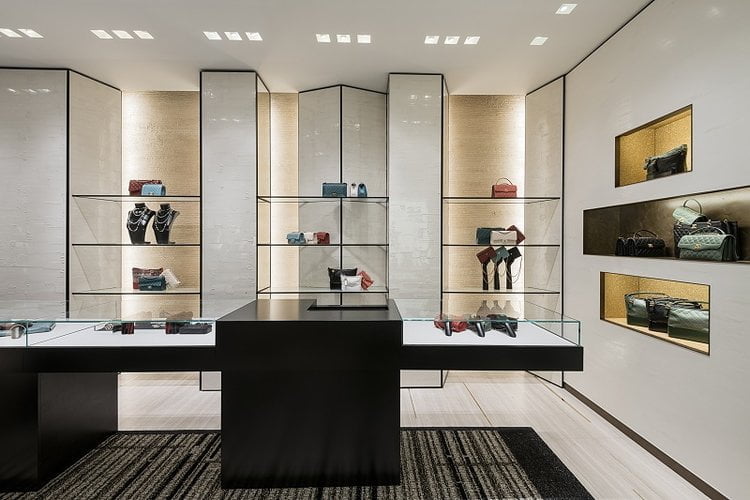
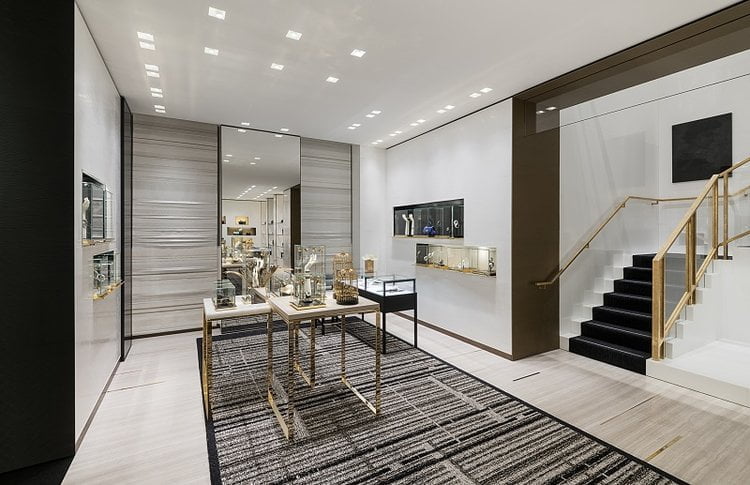
Architect Peter Marino conceived the flagship’s interior design. The store includes bespoke artwork and furnishings, with Chanel’s iconic colours of black, white and gold used throughout. There are “elements inspired by the Coromandel screens of Mademoiselle Chanel’s Parisian apartment,” including ample use of custom fabrics in the store’s silk/wool carpeting, in the draping of the walls, as well as on woven window panels in ivory, gold, black and champagne. The environment is very much self-contained — the woven window panels prevent shoppers in the store from seeing outside, and there are no products displayed in the store’s outward-facing windows to those passing by.

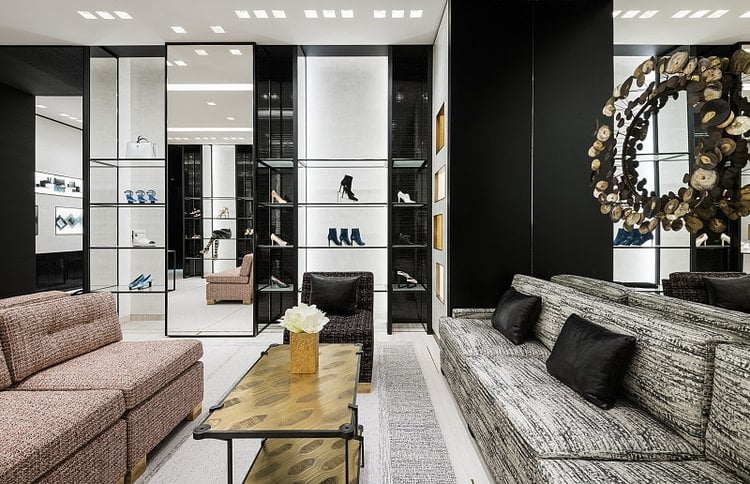
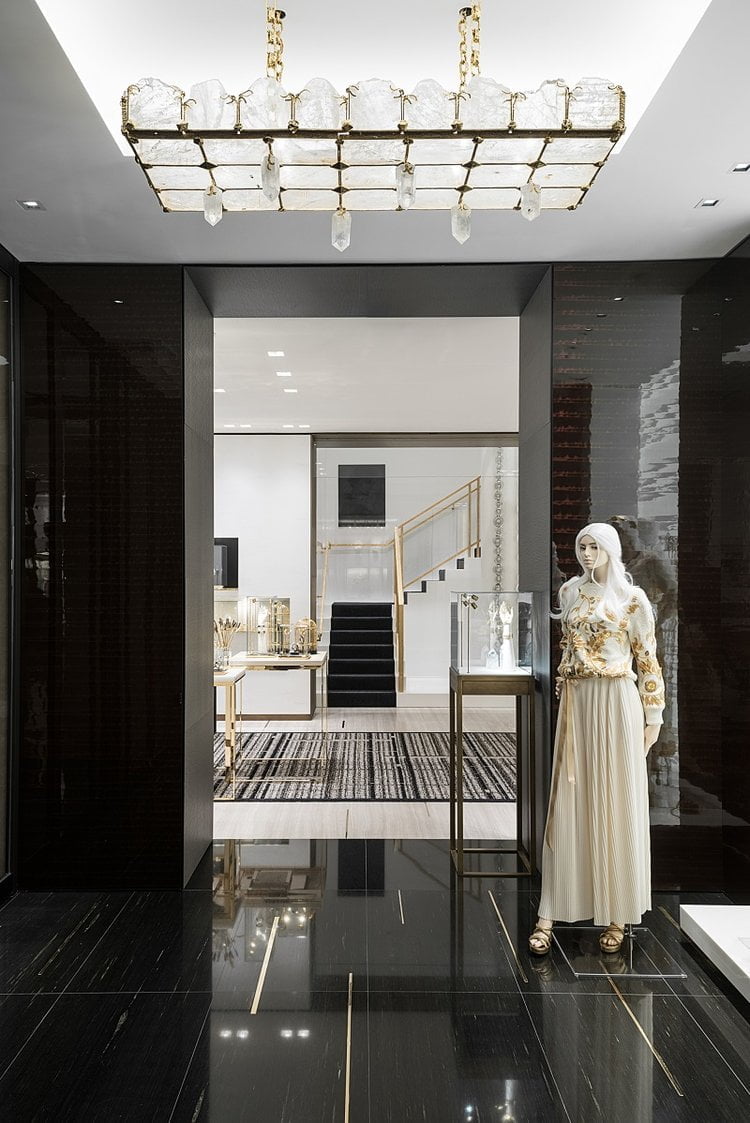
The store’s ground floor features four separate rooms, accessed from an entrance foyer that features a rock crystal and polished bronze Goossens chandelier. To the right of the foyer/gallery, the first space is dedicated to costume jewellery together with a selection of handbags; a second salon is dedicated solely to shoes, and is embellished with a brass ‘Raindrops’ wall mirror by Curtis Jere, and an engraved brass and bronze table by Michael Pohu. A third salon is devoted to a range of eyewear, small leather goods and other accessories like scarves, while the fourth salon showcases a selection of bags (including CHANEL’s Gabrielle bag Cruise novelties and the BOY CHANEL handbag), as well as Watches and Fine Jewellery. All four spaces are accessorized with French Montano ‘ribbon’ chairs in blackened bronze. 

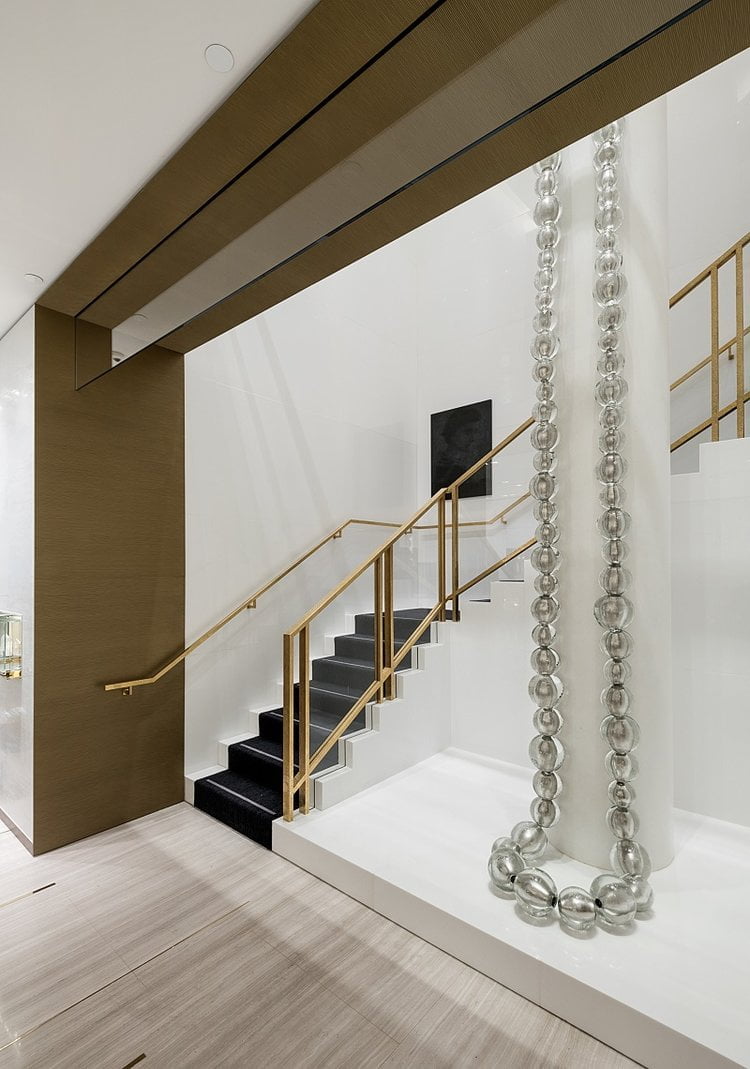
Leading upstairs is a white stairwell adorned with a white and gold beaded 3D pearl necklace that descends about 25 feet, and is visible from both the ground and upper floors. The art piece was commissioned by Jean-Michel Othoniel, known for his longstanding collaboration with the House of Chanel. 

POLISHED BRONZE GOOSSENS CHANDELIER IN THE ENTRANCE GALLERY
GROUND FLOOR ACCESSORY ROOM
GROUND FLOOR SHOE SALON

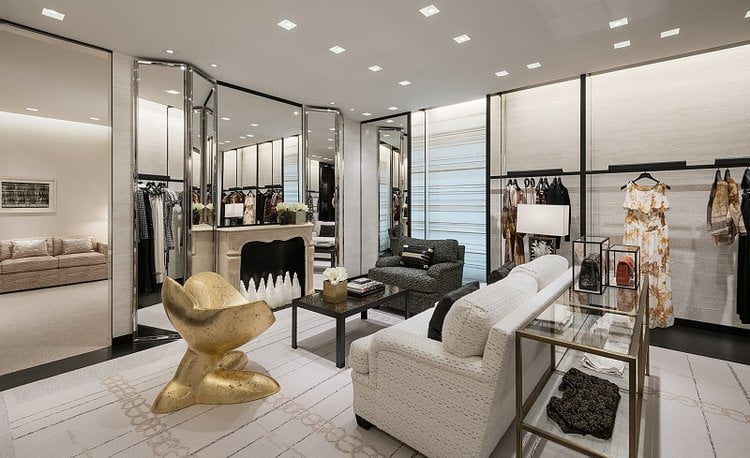
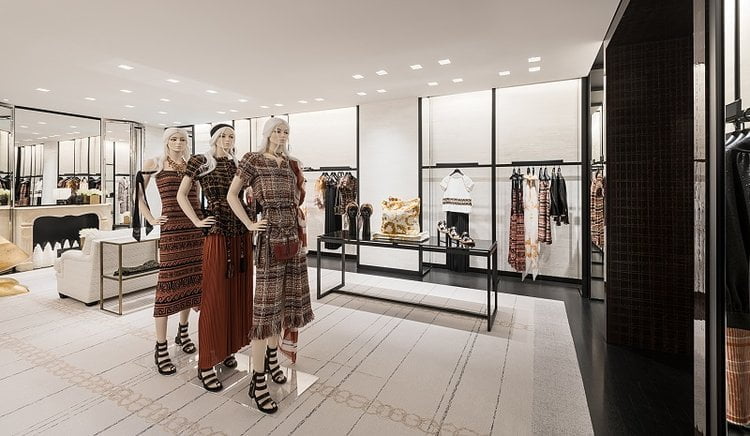
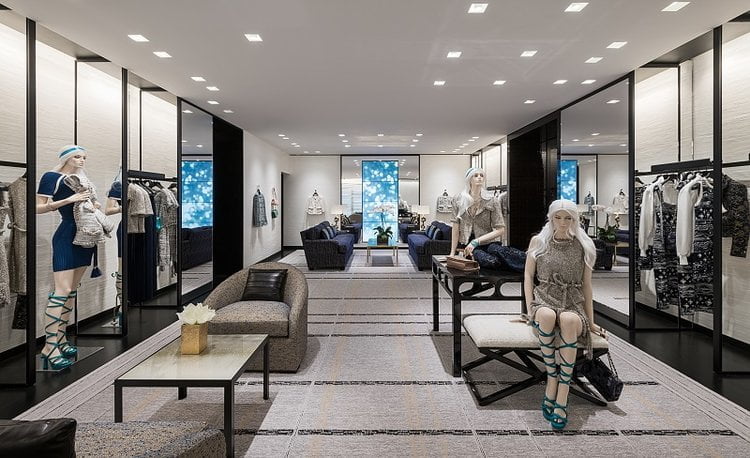
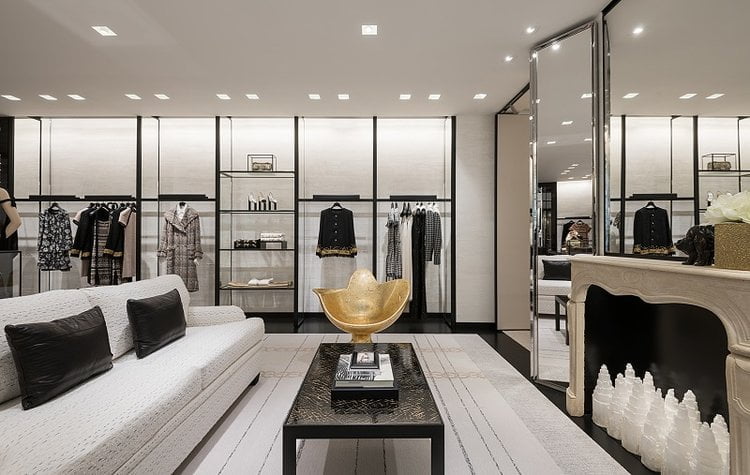
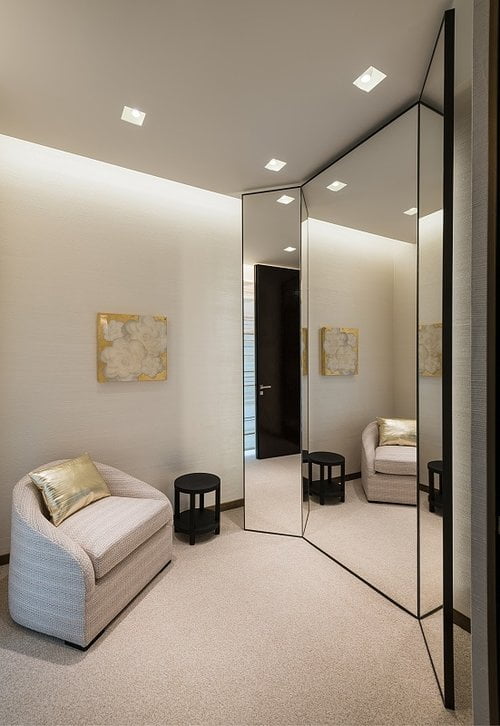
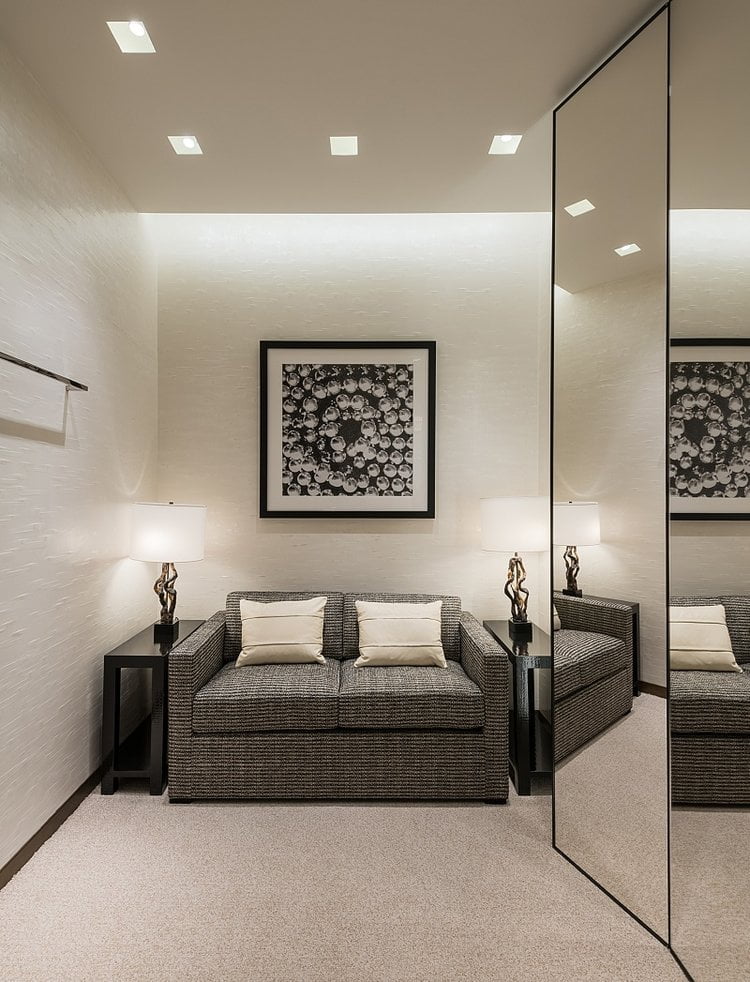
The store’s second floor is dedicated to Karl Lagerfeld’s Chanel ready-to-wear collection — there are two salons that were “designed to reflect the intimacy of a private home, by including delicate French artisanal objects such as lamps with beaded detailing as well as a fireplace made of limestone”. A third salon can be closed off to create a luxurious private shopping area for clients, with versatility for other uses. There are also three luxurious fitting rooms adorned with art work. 

The store currently lacks a salon carrying Chanel’s ‘High Jewellery’ collection that is found in some of Chanel’s top stores — some High Jewellery pieces are priced at over $1 million each, requiring a very special (wealthy) client. There are fewer than 50 Chanel stores globally that carry the High Jewellery collection and in North America, the only Chanel stores carrying it are in Beverly Hills, Las Vegas (The Wynn), Bal Harbour Shops, two in New York City, and in Vancouver. The 5,060 square foot Vancouver Chanel boutique, which is located on the ground floor of Holt Renfrew at CF Pacific Centre, showcased a $3 million ‘pigeon blood’ broach when the expanded boutique opened to the public in June of 2016. The Toronto Chanel flagship will be getting High Jewellery pieces twice a year (including during TIFF) to start, and the company will gauge the Toronto market to determine if Chanel High Jewellery will eventually find a permanent home in the new Yorkville Avenue flagship. 

Chanel’s most recent Toronto flagship (which shuttered in December of 2016) opened in April of 1989 in The Colonnade at 131 Bloor Street West. Strong sales saw the 3,100 square foot store eventually annex a second level, growing to more than 7,300 square feet. Prior to opening at The Colonnade, a Chanel shop-in-store operated within multi-brand luxury store Creeds at nearby Manulife Centre

WHITE AND GOLD BEADED 3D PEARL NECKLACE THAT DESCENDS ABOUT 25 FEET, AND IS VISIBLE FROM BOTH THE GROUND AND UPPER FLOORS. THE ART PIECE WAS COMMISSIONED BY JEAN-MICHEL OTHONIEL
SECOND FLOOR READY-TO-WEAR SALON

Chanel had operated a temporary ‘flagship’ concession at Holt Renfrew at 50 Bloor Street West since the December 2016 standalone flagship closure. Chanel will remain at Holt’s, though in a smaller space. 

Retail Insider first broke the story on Chanel relocating off of the Mink Mile in November of 2015, when it was revealed that brokers Stan Vyriotes and David Wedemire of DWSV Remax Ultimate Realty Inc. had acted on behalf of Chanel in a deal with landlord First Capital Realty to open the new flagship. Mr. Vyriotes and Mr. Wedemire have since been busy negotiating deals for other retailers on the street — upscale streetwear retailer CNTRBND opened a new location at 135 Yorkville Avenue several months ago, and luxury brands Jimmy Choo and Brunello Cucinelli will open beside Chanel in an under-construction retail complex towards the end of 2018. Yorkville Avenue has found its place as a luxury address in Canada, and Chanel marks a milestone in the street’s remarkable transformation. 

Toronto is currently the only city in Canada to boast a freestanding Chanel store. The brand closed its 5,000 square foot freestanding Vancouver store in the summer of 2010, moving ready-to-wear to an expanded Chanel concession on the second level at Holt Renfrew in CF Pacific Centre. That concession expanded and moved to the ground floor in the summer of 2016, as described above, when Chanel deemed it appropriate to again expand its presence in Vancouver. Chanel first entered the Vancouver market in 1991 with a 1,300 square foot unit at 103-755 Burrard Street (now occupied by Coach), prior to moving to the now-shuttered 5,000 square foot 900 West Hastings Street location, which was most recently tenanted by defunct shoe retailer Ingledew’s. 

SECOND FLOOR DRESSING ROOM
CHANEL+Yorkville+Boutique

Chanel also operates shop-in-store concessions at Holt Renfrew in Calgary, Toronto (50 Bloor Street West), Toronto (Yorkdale Shopping Centre), and in Montreal. The Yorkdale concession, which was already more than 3,000 square feet, recently annexed an additional 600 square feet of space with the expansion that will be revealed shortly. As well, in Montreal, Holt Renfrew just announced that Chanel will be moving into the new 250,000 square foot ‘Holt Renfrew Ogilvy’ store in 2020, which is being created by merging the city’s Holt Renfrew and Ogilvy stores, resulting in Holt Renfrew closing its smaller Montreal store on Sherbrooke Street West. 

Chanel provided all of the photos of the interior of the store for this article, and Craig Patterson took photos of the exterior of the store on the afternoon of November 19, 2017. See below for more photos of Toronto’s new Chanel flagship. 
*****

(ENTRANCE FOYER/GALLERY)
GROUND FLOOR ACCESSORY ROOM
GROUND FLOOR SHOE SALON
(GROUND FLOOR ACCESSORIES SALON, INCLUDING SUNGLASSES)
LOOKING TOWARDS THE STAIRWAY ON THE GROUND FLOOR
GROUND FLOOR ACCESSORIES
GROUND FLOOR ACCESSORIES, STAIRWAY LEADING UPSTAIRS
ANOTHER LOOK AT THE IMPRESSIVE STAIRWAY SCULPTURE