
Advertisement
Home Blog Page 1111

Moose Knuckles to Open 1st Freestanding Store

Moose Knuckles Website

Popular Canadian sportswear brand Moose Knuckles will open its first permanent standalone store this fall at Toronto’s Yorkdale Shopping Centre. Prior to opening in October, Moose Knuckles will open a pop-up at Yorkdale that will also be used to test out a new customization app. 

Moose Knuckles is a fairly new brand — it was founded in Montreal in 2007, by Mark Peros and Will Poho, and much of its manufacturing is done in Winnipeg. The company endeavours to make “the leanest, toughest and most luxurious sportswear in the world,” and its product lines include a range of weatherproof coats, lightweight jackets, knitwear, shirting, and accessories.

Quality is key, with special attention paid to tailoring, materials and hardware — luxury-grade fox fur from Finland is used as trim, and 725 to 800-fill powder gray duck and goose down is used as a thermal insulator. Moose Knuckles products are available in some of the world’s top retailers and in North America, the brand’s clothing is available at Holt Renfrew, Sporting Life, Saks Fifth Avenue, Nordstrom, Bloomingdale’s, and other leading retailers, and it’s also available globally at prestigious retailers such as Globus in Switzerland, KaDeWe in Berlin, and at Harrod’s in London. 

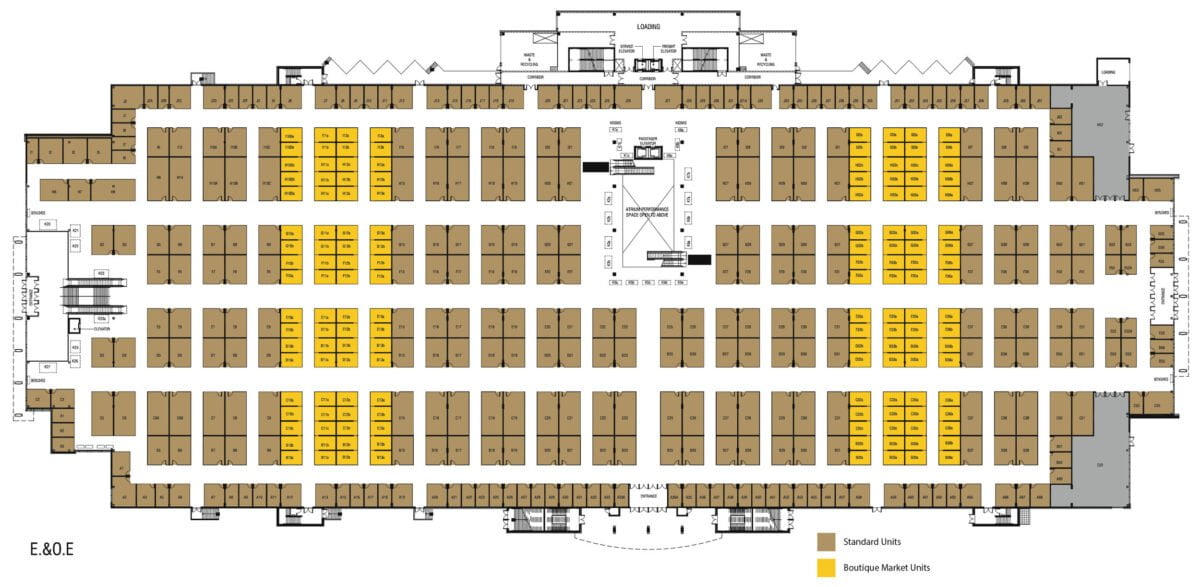
(CLICK FOR INTERACTIVE YORKDALE MALL FLOOR PLAN)
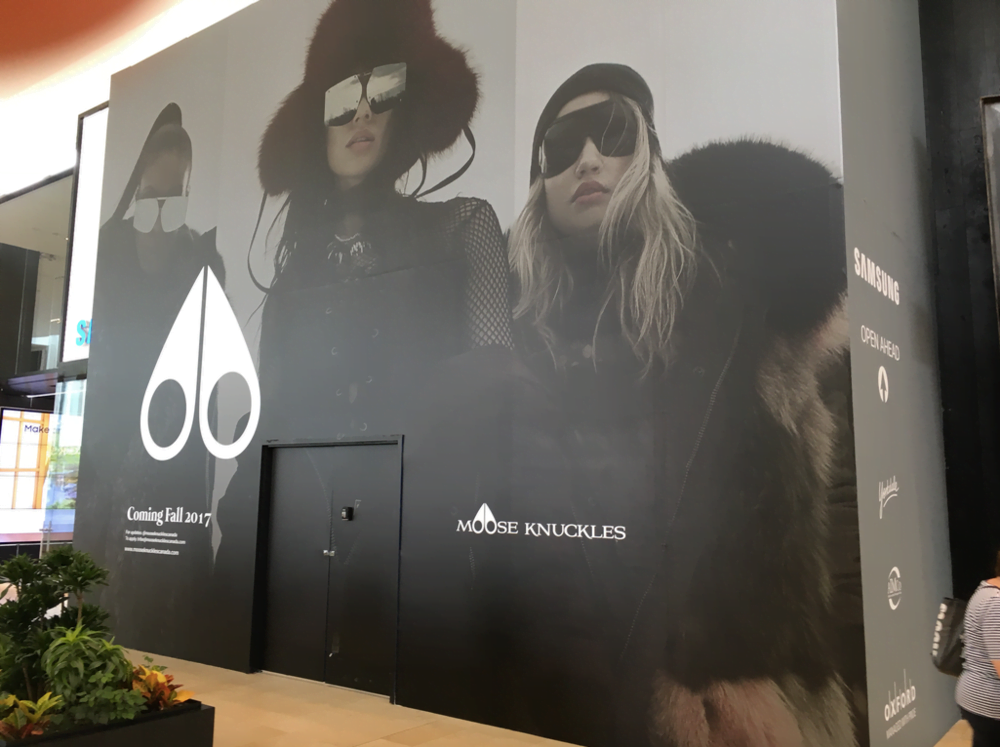
(CONSTRUCTION SIGNAGE AT YORKDALE. PHOTO: CRAIG PATTERSON)

Prices are towards the high-end, with men’s fall/winter jackets ranging in price between $475 for a bomber jacket to $1,795 for a fur-lined canvas parka, with women’s jackets a similar price point. Moose Knuckles features a selection of men’s and women’s ready-to-wear — shirts are priced between $125 and $250. There is rain gear, hats and vests, and the website also features summer items such as men’s swim trunks (regularly priced at $148) and $38 flip-flops in a variety of designs. A selection of branded accessories is available, including a ‘Moose on the Go Duffle Bag’ priced at $288, and a flask priced at $88. Children’s jackets are also available, priced between $395 and $450 on Moose Knuckles’ ecommerce site

Moose Knuckles’ first permanent freestanding store is scheduled to open in October of this year, spanning more than 2,750 square feet store in Yorkdale’s Nordstrom-anchored expansion wing (which opened in October of 2016). Moose Knuckles will be located in the retail space between technology brand Samsung and Canadian outdoor clothing and sporting goods brand Arc’teryx

Stan Vyriotes and David Wedermire of DWSV Remax Ultimate Realty Inc. represented Moose Knuckles in its lease deal with landlord Oxford Properties

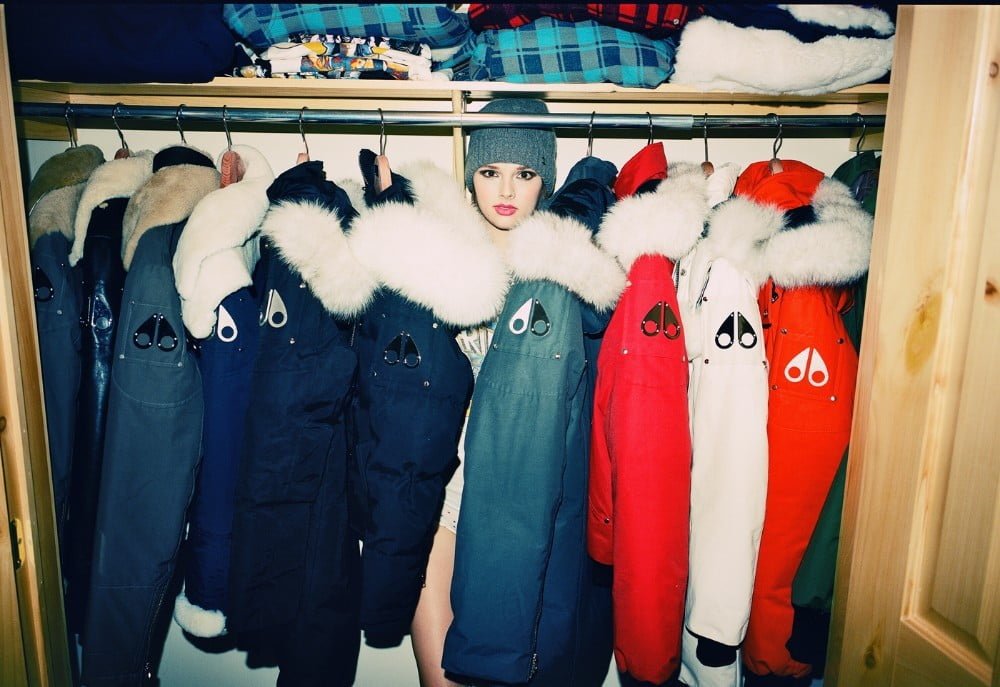
On Thursday, August 24, Moose Knuckles will open a roughly 3,000 square foot pop-up location at Yorkdale, in Lululemon’s former retail space (Lululemon relocated to Yorkdale’s Nordstrom wing in October). Located across from Holt Renfrew and Anthropologie, and adjacent to Diesel and Wilfred, the pop-up will remain open until the unveiling of the permanent retail space. The pop-up will coincide with the launch of a Moose Knuckles customization app, which can be used to customize different coat styles.  
(PHOTO: MOOSE KNUCKLES)

Yorkdale’s Moose Knuckles location will be designed by award-winning firm Burdifilek, which has been involved in creating some of the world’s most attractive retail spaces. Burdifilek recently won the prestigious International Store of the Year Award from the Retail Design Institute for its Mackage store at Toronto’s Yorkdale Shopping Centre. 

Renowned for designing modern and unexpected spaces that defy conventions, each Burdifilek retail concept embodies a unique brand identity and experience. The flagship for Moose Knuckles will be located in the expansion wing almost directly across the hall from Canada Goose, which opened its first freestanding store in the world at Yorkdale in October of 2016. The 4,500 square foot Canada Goose store is on track to be one of the top-selling stores at Yorkdale in terms of overall annual sales. Canada Goose recently opened its second location in the world in New York City, and it has announced locations to open in Chicago, and in London UK. 

While Yorkdale will be Moose Knuckle’s first freestanding corporate store, the company also has 16 concessions in South Korea. 

Premium outerwear and accessory brand Nobis was one of the first Canadian competitors to open a freestanding store. In August of 2015, Nobis debuted a 3,000 square foot store at 360 Queen Street West in Toronto, and the brand continues to wholesale extensively in upscale retailers in Canada, as well as worldwide. 

Toronto’s Yorkdale Shopping Centre launches more first-to-market retailers than anyplace in Canada, and the trend will continue into 2018 with a number of new, exciting retail concepts that will be announced periodically over the next several months. First-to-market tenants will include fashion, food, and even a unique technology concept that recently launched its own stores. Yorkdale is a special centre indeed — it ranked as the country’s most productive mall in terms of annual sales per square foot in Retail Council of Canada’s Shopping Centre Study, and it also boasts the highest concentration of luxury brands within a single Canadian shopping centre. In fact, Yorkdale now rivals Toronto’s Bloor-Yorkville, as well as downtown Vancouver’s ‘Luxury Zone’, as the most comprehensive ‘luxury node’ in the country. 
Brick-and-mortar Retailers’ Secret Weapon: Conversion Rate Optimization

While declining store traffic continues to dominate the headlines and remains the most frequent reason cited for lackluster store performance, the fact is, it’s only part of the story. If it’s true that store traffic has experienced a permanent and intractable decline, then what are brick-and-mortar retailers to do?

In the aftermath of the dot-com bubble in the early 2000’s, online marketers realized that they couldn’t merely focus on generating website traffic, rather they needed to focus on conversion – that is, get more visitors to buy. The same is true in brick-and-mortar retailing. As Jeff Gennette, CEO of Macy’s stated in a Bloomberg interview, “the key will be for us to convert – we’ll get the traffic.”

Today many brick-and-mortar retailers track store traffic and measure conversion, but the question is, what do they actually do to optimize their in-store conversion rates? The answer for many is, not much.

In the online world, Conversion Rate Optimization (CRO) has become an industry unto itself, spawning a global community of consultants and service providers, formal methodologies and over a hundred books dedicated to the topic on Amazon alone. There is only one book on brick-and-mortar conversion listed on Amazon.

Given the difficult business conditions so many brick-and-mortar retailers are facing, it’s baffling that CRO hasn’t become more of a focus if not an obsession.

There are a number of factors that may be preventing CRO from taking hold with brick-and-mortar retailers, but just like online marketers discovered after the dot-com bust, focusing on conversion can not only help them survive, but even thrive despite traffic declines.

Tracking Conversion vs. Optimizing Conversion

Most major tier-one retailers today track traffic and conversion rates in all their stores, so the basic data needed to conduct CRO already exists. For the retailers that misguidedly use sales transaction counts as a proxy for traffic – sorry, beyond being a grossly inaccurate measure for store traffic, they don’t even possess the basic data needed to calculate conversion rates, so optimization is a non-starter.

But just because a retailer has the data, doesn’t mean they’re doing much with it or as much as they could be. CRO is defined as a system for increasing the percentage of visitors that convert into customers. The key word in this definition is “system.” 

In the online world, conversion rates are influenced by a website’s page layout, colors, buttons, call-to-action and checkout among other factors. All these variables contribute to conversion and CRO is the systematic process of tweaking and adjusting these factors in a way that leads to measurable and sustained improvements in conversion rate.

In physical stores there are a large number of variables that impact conversion rates including store layout, inventory levels, merchandising mix, promotional activity and most importantly the front line associates and managers who run the store and serve customers. And herein lies the challenge with CRO for brick-and-mortar retailers – variability. This variability in physical stores not only makes applying conversion improvement initiatives across stores consistently a challenge, but it also makes measuring results more challenging too.

Testing and Measurement to Prove Results

A vital tenant of CRO is testing and more specifically A/B testing. In the online world this is easily accomplished by setting up two variations of a webpage and then directing an equal amount of traffic to each site. Conversion results of website A are compared to website B and the winner is declared.

But A/B testing is much more difficult for brick-and-mortar retailers since, unlike websites, every store is unique – store layouts, inventory levels, geographic location including proximity to competitors and demographics of shoppers in the trading area, weather conditions, microeconomic factors and variations in the skill, experience and effort of the store staff all create variability which make comparisons challenging.  

So unlike online conversion rate optimization where changes can easily be made and consistently applied with a few keystrokes, in brick-and-mortar stores adjusting variables like staff levels for example must be applied at the store-level.

There’s another important difference between online and brick-and-mortar conversion optimization tests: traffic. In an online experiment, traffic can be precisely controlled so each website version receives the same amount of traffic.

In brick-and-mortar stores, the amount of traffic each store receives can’t be controlled and can vary significantly by store. Since conversion rates tend to be inversely related to traffic (i.e. when traffic goes up, conversion rates tend to decline), extra care needs to be applied when interpreting brick-and-mortar conversion optimization test results. 

But just because the conversion variables are harder to control in physical stores doesn’t mean that conversion rates can’t be optimized or measured using A/B testing.

Here’s an example to illustrate.

The Test: Simplified Reporting and Conversion Coaching

The challenge store personnel have with improving conversion rates is twofold: first, they can’t easily see where the conversion opportunities are being missed and second, they struggle with how to adjust behaviors in-store to improve conversion. A series of A/B experiments were conducted with a group of 600 brick-and-mortar stores across four different retail segments.

In each case, a sample set of stores was identified and clustered into A and B groups. The group A store managers received a simplified daily conversion scorecard indicating where conversion rate sags were occurring along with a series of brief conversion coaching sessions conducted by phone to discuss the conversion patterns and behaviors they should consider undertaking to improve conversion rates. Group B store managers did not receive the simplified reporting or coaching.

The result: group A stores consistently outperformed group B stores. You can read more about the findings at headcount.com/ROIstudy.

Start with the Biggest Conversion Driver – People

While there are many variables that impact in-store conversion rates, staff scheduling and deployment are at the top of the list since front-line associates and managers play a critical role in converting store traffic into customers. An effective CRO system for brick-and-mortar retailers must begin with ensuring staff schedules are aligned to store traffic patterns. But aligning staff schedules to traffic is only the first step.

Second, retailers need to examine how staff are deployed – tasking versus servicing customers. Aligning staff schedules to traffic will not improve conversion rates if staff are focused on tasking instead of serving customers.

Third, retailers need to measure associate and manager productivity by analyzing conversion rates by hour attributed to each employee. This will enable retailers to identify top performers, create benchmarks and identify employees who may require additional coaching or training.

Conversion Rate Optimization can Mitigate Traffic Declines

In today’s rapidly changing and difficult environment, brick-and-mortar retailers can ill afford to squander the sales opportunities that they do have. Stemming the tide of store traffic declines may be difficult if not impossible for retailers to do, but that doesn’t prevent them from focusing on the traffic opportunities they do have and applying CRO strategies.

Conversion rate optimization is not a panacea, but it can go a long way in helping brick-and-mortar retailers deliver better business results, despite the traffic declines.

And just like the online survivors of the dot-com bust, brick-and-mortar retailers need to realize that it’s not just about the amount of traffic in their stores, but what they do with the traffic that matters most. 

Squish Candy Embarks on National Expansion 

Image: Squish Candy

Montreal-based Squish Candy, North America’s first artisanal candy store specializing in over 100 flavours of gourmet gummies, is in expansion mode.

Sarah Segal, the company’s chief executive officer, told Retail Insider that it will be opening two more stores in the Toronto area (Square One in Mississauga and CF Sherway Gardens in Toronto) before the end of this month and one in St. Bruno, Que., bringing its total store count to 14.

And it has plans to expand across Canada to about 30 stores in the next two to three years as well as exploring moving into the U.S. market.

“We’re a gummy specialist company. We’re extremely creative and we try to have the widest assortment of innovative and fun gummy gifts and unique flavours. We’re really playing in that gifting market,” says Segal.

“We want to have an original twist on our packaging. We have a lot of fun with it. Trying to break the traditional mold of gifting and trying to get it to reflect our not-so-serious approach to gifting. We do that with our concepts, with our candy shapes, with our names. It’s really a very creative experience because we really respond to our customers.”

The first store opened in 2014 in Montreal. Currently, there are six stores in Quebec, four in Ontario and one in Vancouver (at Hudson’s Bay). The first venture outside of Quebec was in Toronto in 2015.

“As part of our expansion, we’re really trying to fill out Canada. We’ve done very well in suburban markets as well as downtown. So we see a real reception in all kinds of areas. A wide variety,” says Segal.

“There’s a lot of potential in Vancouver and in the whole Western area. That’s exciting. And also the East. We’ve got a ton of interest from the Maritimes.”

The Scarborough store was a new approach with a co-tenancy with two other stores but this Squish is re-locating to its own space. 

“We’re doing a similar concept in Square One where we have co-tenancy (with two other stores). We’re really excited because it really shows the flexibility of our concept,” says Segal. 

“We’re trying to move away from a traditional retail approach of here’s our 600-square-foot location and we need big space. We do fantastic numbers at about 250 square feet and also at 1,200. I find that’s the most exciting, especially in this retail landscape to have that flexibility with our concept. We’re very responsive. We try to maximize the opportunity with where we see the traffic with our customers. We want to be there.”

Segal says Squish also has an “incredible” vegan product which has helped the store stand out in the market. 

*Editor’s note: Oberfeld Snowcap represents Squish Candies as brokerage in Canada. Stores are designed by architect Konstantin Nifakos and associates at EVOQ Architecture.

MINISO Announces National Expansion Plans

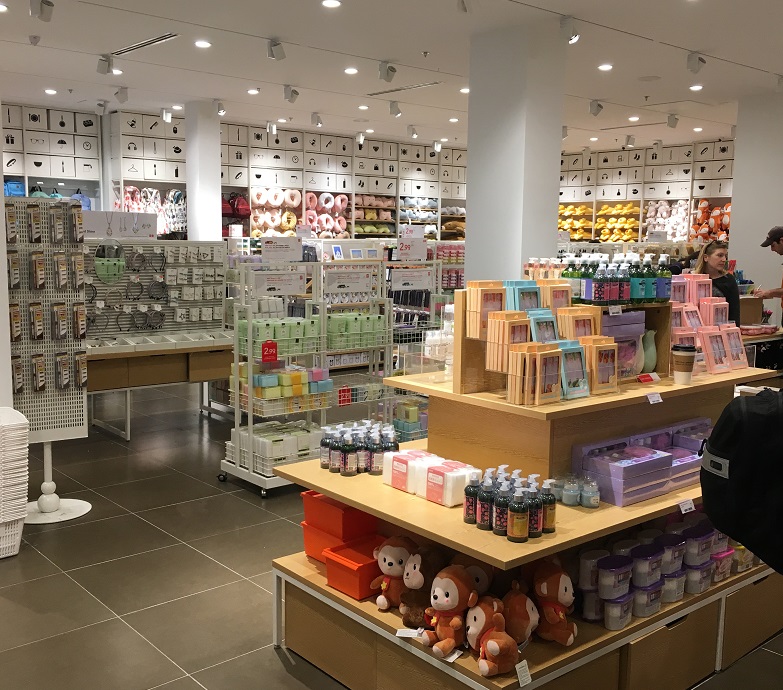
Vancouver MINISO at 550 Granville Street (Image: Lee Rivett)

Value-priced Chinese variety retailer MINISO, which positions itself as a ‘Japanese lifestyle brand’, has initiated its Canadian expansion in the British Columbia Lower Mainland with plans to expand nationally in the coming months. The company confirms that it plans to open as many as 500 stores in Canada in the coming years, and its initial target markets will be Vancouver, Toronto and Montreal. 

Yi Ma, vice-president of business development for MINISO, discussed MINISO’s entry into Canada, which initially has involved opening corporately-owned stores. On April 15 of this year, the company quietly opened its first Canadian store at 1256 W. Broadway in Vancouver, followed by a store at Tsawwassen Mills in May. On Saturday, August 12, MINISO unveiled its Canadian flagship — a 4,900 square foot location at 550 Granville Street, which is across from Holt Renfrew and once housed a retail location for Grand & Toy

Stores will continue to open in the Lower Mainland, according to Mr. Ma, including stores in Richmond (at 8010 Saba Road) and at Simon Fraser University’s Burnaby campus (8920 University High Street), with intentions to open about 15 stores over the next 15 months. At the same time, MINISO is working on lease deals in Toronto and Montreal, and has already secured two Ontario locations that will open in October of this year — one in the heart of downtown Toronto, and another at Stone Road Mall in Guelph. 

Vancouver MINISO at 550 Granville Street (Image: Lee Rivett)

He noted that MINISO is seeking a strong joint venture partner as part of its Canadian expansion, utilizing a licensing model in order to assist with growth. That will assist MINISO with its plans to open between 30 and 50 Canadian locations over the next 12 months. After establishing operations in Vancouver/Toronto/Montreal, MINISO will examine other markets and is seeking retail spaces that are ideally in the 1,300 square foot to 5,000 square foot range. 

The company’s goal is to eventually operate about 500 locations in Canada, potentially providing stiff competition to several homegrown retailers including Dollarama. MINISO might be compared most closely to Japanese retailer Daiso, which currently operates one store location at Aberdeen Centre in Richmond, BC. MINISO’s price point is slightly higher than Dollarama and Daiso, however, with the majority of items priced between $3 and $5. 

Vancouver MINISO at 550 Granville Street (Image: Lee Rivett)

MINISO’s product offerings are also extensive, including home goods, kitchenware, underwear, cosmetics, toys and even electronics. Products are branded by name and are considered to be of exceptional quality for the price. 

The company was co-founded in 2013 by Japanese designer Miyake Junya and Chinese entrepreneur Ye Guo Fu, and is headquartered in Guangzhou, China. MINSO’s goal is to open 6,000 stores globally by 2020, averaging 80 to 100 store openings per month. MINISO’s signage and branding appears similar to that of fast-fashion Japanese chain UNIQLO — which isn’t a surprise, considering that MINISO openly names itself as a competitor to UNIQLO as well as Japanese variety retailer MUJI. All three are now present in Canada, with UNIQLO and MUJI set to debut their first Vancouver/Lower Mainland locations this fall. 

*Photos in this article are of the new Vancouver MINISO flagship at 550 Granville Street, and were taken by Lee Rivett on August 15, 2017. 

New Horizon Mall on Track for March 2018 Completion [Plans/Video]

A new Asian-style mall in the Calgary region is set to be completed by March of next year with about 95 per cent of the more than 500 stores already sold out.

Eli Swirsky, president of The Torgan Group, which is developing the New Horizon Mall with the MPI Property Group, told Retail Insider that great progress is being made in the construction of the unique shopping centre, located directly across from CrossIron Mills in Rocky View County just north of Calgary city limits.

“We are almost sold out. More than 95 per cent,” said Swirsky, of the concept where business owners buy space, as opposed to renting it, in the shopping centre.

“It’s a great concept. It’s a proven concept that’s unique and it appeals to the small investor. This is a project for the ma’s and pa’s, not for the big chains. It’s something that is hard to find and people are really liking it – to be able to control their own destiny and have their own store . . . The concept is unique. In Alberta, there’s nothing like it.”

It will have more than 500 retail stores in 320,000 square feet on two floors. On the main floor, stores will range from 285 square feet to 855 square feet and are priced between $169,000 and $700,000. 

“It will be a window shopper’s wonderland with thousands of ever-changing displays showcased behind generous glass storefronts. This floor will also be home to the main stage which will host numerous events during the year, including cultural events, holiday celebrations and fashion shows. For the first time ever in Alberta, each retail store is purchased not leased,” say the developers in information posted on the mall’s website.

The second level will feature 26 sold out units and will seat over 300 shoppers. The second level will also have a traditional Chinese stage that will serve as a cultural venue. 

Ledcor Construction Ltd. is heading up the project.

There are more than 350 underground parking stalls as well.

“It’s a great destination as far as location. It’s a proven retail destination. People know they’re going to succeed,” says Swirsky. “So they just have to open their store and people will flood in.”

*Photos are courtesy of New Horizon Mall. 

Luxury Yorkville Avenue Retail Space Attracts Potential Tenants

Image: 110 Yorkville Avenue

A multi-level retail space on Toronto’s Yorkville Avenue has recently come available for lease, and it is particularly unique because of its location. Yorkville Avenue, particularly between Avenue Road and Bellair Street, is becoming a significant luxury address for retailers. The retail space at 110 Yorkville Avenue is positioned at centre ice. 

Immediately to the east of the 110 Yorkville Avenue property are two under-construction retail buildings that will feature flagship locations for Chanel and Jimmy Choo, as well as a soon-to-be-announced luxury brand that will be housed in a four-level retail space. To the west of 110 Yorkville is the multi-level brick building that houses luxury retailer V Hazelton, which also operates a shop-in-store location for Italian luxury brand Kiton with its own prominent Hazelton Avenue corner signage. Directly across the street, luxury footwear and accessory brand Christian Louboutin opened its two-level Canadian flagship last summer, and Virgil Abloh’s first North American location for Off-White also recently opened several doors down. 

The 110 Yorkville Avenue retail space is very unique, and can be modified in a variety of configurations for fashion or food uses. The ground floor includes about 933 square feet of retail space, and the landlord will build a brand new storefront to specifications. A 1,519 square foot lower level is an extension of the building with 18 foot high ceilings with skylights at the rear. In total, 110 Yorkville Avenue features in excess of 4,000 square feet of available space for a special tenant that wishes to be seen by some of the world’s wealthiest consumers. 

Image: First Capital REIT

Yorkville is considered to be Canada’s most prestigious high-density neighbourhood, in a similar fashion as London in Mayfair, or the Upper East Side in New York City. Yorkville is also growing substantially, with thousands of new residential units planned to be coming onto the market over the next several years. Yorkville, itself, is seeing streetscape improvements that are making it look truly world class. In the case of Yorkville Avenue, the recent addition of paving stones to its street and sidewalk offers a unique character, creating an elegant street that looks unlike any other in the city. 

110 Yorkville Avenue is available for immediate possession. For more information and to discuss this property, please contact Emily Masuda, Broker, Retail Services, at Cushman & Wakefield: 416-359-2398 or by email: emily.masuda@cushwake.com

As well, for more information, visit: www.cw-cm.ca/110YorkvilleAve.

[PDF Package]

Retail Insider will be occasionally profiling interesting retail spaces. For more information, contact Craig Patterson at: craig@retail-insider.com.

Alberta Retail Numbers Surpass Pre-Recession Peak

Calgary, Alberta (Image: Tourism Calgary)

The most recent retail sales numbers in Alberta indicate the province has finally surpassed the pre-recession peak reached in October 2014.

According to Statistics Canada, retail sales in Alberta grew both in April and May by 0.9 per cent and 1.6 respectively to $6.81 billion.

“The fact that retail sales in the province have increased in nine out of the last 10 months is welcome news for retailers and another sign that the recession of 2015/16 is in the rearview mirror,” says a report by ATB Financial’s Economics & Research Team.

“In per capita terms, Albertans outspent the rest of the country at retail stores by an average of $234 per month last year despite the economic downturn in the province. This gap is explained by a combination of factors – Alberta’s higher employment rate and higher average income – and highlights some of the underlying strengths of the provincial economy that remain in play even during recessionary periods.”

IMAGE: WEST EDMONTON MALL

Michael Kehoe, an Alberta-based retail specialist with Fairfield Commercial Real Estate in Calgary, says the impact of the economic slowdown that began in late 2014/early 2015 in Alberta had a short-term impact on retail sales in the province

“Within a matter of months consumer confidence and pre-downturn spending patterns had returned to a sort of new-normal,” he says. “Consumer preferences driven by a value-oriented state-of-mind swept over the local retail and food service industry. Restaurants from fine dining to quick/fast casual adapted to changing customer preferences. 

“New stores and restaurants across the value spectrum continue to open across the greater Calgary regional district. The market appears to be less dependent on the oil and gas industry as we move forward with a more diversified economy and a get-on-with-it business attitude.”

MICHAEL KEHOE, RETAIL SPECIALIST WITH FAIRFIELD COMMERCIAL REAL ESTATE IN CALGARY

According to Statistics Canada, the take-home pay of employed Albertans rose 1.7 per cent in May to $1,120 per week, which was the first year-over-year increase in the province since the spring of 2015. It is also the highest level of wages among the Canadian provinces.

“May’s wage report is yet another signal that shows Alberta is finding its feet after a tough couple of years.,” says ATB Financial.

Another sign of the retail recovery is in wholesale trade where Alberta recorded its seventh increase in eight months, according to StatsCan. Wholesale activity in the province reached $6.8 billion in May, growing by $289 million or 4.5 per cent from April. May’s total was the highest level since April 2015 and was the largest monthly dollar gain in Alberta since July 2013.

“May’s total wholesale number confirms that Alberta not only has a sturdy retail sector, but Alberta’s economy may be picking up a bit of steam,” added ATB Financial.

Kehoe says the greater Calgary region enjoys a quiet momentum and a feeling of prosperity knowing that it is the head office capital of Canada’s energy sector and the retail and distribution hub of Western Canada. 

“Calgary’s shopping centre and retail store network is an ever-evolving component of the City’s infrastructure,” explains Kehoe. “It delivers goods and services to citizens and visitors across the region with new retail development driven by modest population growth and consumer demand.”

Alexanian Debuts New Signature by Shelley Alexanian Store Concept, Modernizing Flooring Retail [Photos]

The family behind one of Ontario’s oldest carpet retailers has launched a new store that takes a more contemporary approach to the flooring retail business.

The Signature by Shelley Alexanian flagship store recently opened in the Castlefield Design District of Toronto, near Eglinton Ave. W. and Dufferin St. The store is an extension of the Alexanian carpet, flooring and window coverings chain, which dates back to 1925 and operates 19 stores throughout Ontario.

Shelley Alexanian

“It’s a departure from our traditional stores,” says Shelley Alexanian. “It’s a complete departure from anything in the flooring industry.”

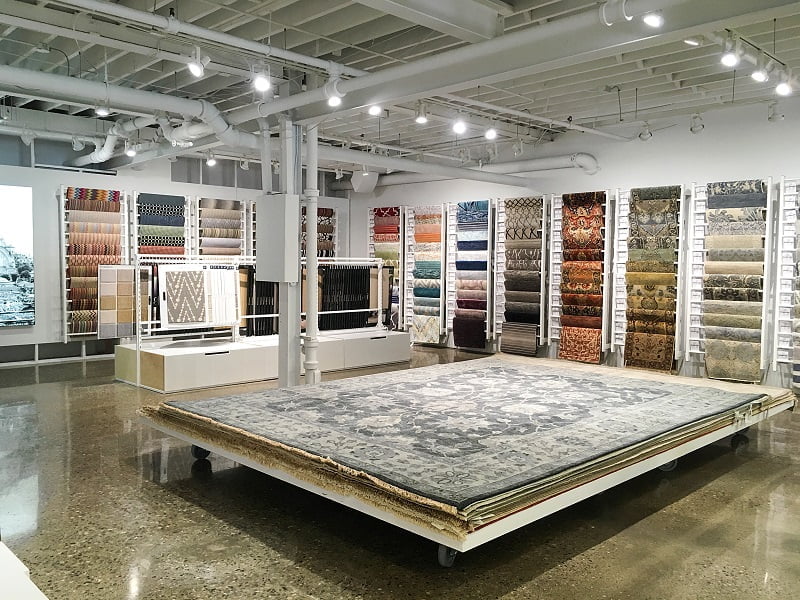
The store aims to make floor shopping a vibrant and enjoyable experience for shoppers. Approximately 12,000 square feet in size, the store was designed to look like an oversized boutique, with products on display against a clean, white background.

Whereas the vast array of options in a flooring retailer can be overwhelming, Alexanian sought to create a space that was easy for shoppers to navigate. “I wanted something that wasn’t cluttered, that was visually very comfortable,” she says.

The store boasts four different types of lighting, so that customers can see how products would look under the lights in their own homes.

iPads are available in the store, which customers can use to access an app that provides pricing and other details about the products in store.

Customers are also offered espresso and cappuccinos, and a play area is available to keep kids occupied while their parents are shopping.

“It can be sort of mundane to go into a traditional flooring store,” Alexanian says. “I wanted to raise the bar, and create an innovative, fun and dynamic environment.”

The Signature store aims to be a one-stop shop for flooring, with a wide range of products such as hardwood, tiles, laminate, vinyl, marble, carpet, area rugs and more. It also carries a range of window coverings and California shutters. The store offers professional installation of all products available.

The merchandise differs from the selection available in the other Alexanian stores, with Signature boasting more contemporary styles and bolder colours and designs.

Castlefield was the perfect location for the new store, Alexanian says, since the area has become a destination for home design.

“For someone redoing their home, they would be inclined to come to this area if they wanted really progressive, contemporary, and more current design options,” she says.

The prices of the products in store range considerably, Alexanian adds, to appeal to a broad spectrum of customers.

The store aims to cater to both designers and consumers. For the designer community, the Signature store hosts regular workshops where designers can learn more about the various products and materials.

Alexanian says she might consider opening more Signature stores in the future.

Editor’s Note: Don Gregor of Aurora Realty Consultants acts as broker for Alexanian, and negotiated the Signature by Shelley Alexanian lease deal. 

Honestly, Are Your Awesome Promotional Email Campaigns Being Unfairly Blocked by the Opposition?

By Eric Nykamp CEO of Raange, Inc., Guest Columnist

Let’s Talk About Your Business! Email Me @: Contact_Me@raange.com; Text Me @: (514) 613-3324 with Keyword ‘Blocked’

Did you ever wonder how your job relates to football? Let me shed some learning on the doubters..

They say the longest yard in football is the very last one separating you from the end zone.

You’ve spent many grueling hours training and preparing yourself for this opportunity – also armed with an amazing touchdown dance – but there are 11 menacing players on the opposing team who don’t want you to succeed; their sole goal is to block you from the end zone.

To succeed it comes down to teamwork, data, insights and calling the right play.

Football and marketing have quite a bit in common. Take email campaigns for example, your team works together to test and execute the perfect email campaign, but there are dark forces at work trying to block you from the end zone: the customer.

Don’t let the opposition block your email from your customer.

Spam filters, message categorization, fake email addresses and bad subject lines, this is the opposition that you need to prepare for to get through to your customer.

The menacing opposition explains the dismal industry statistics:

●      10% (in Canada) of emails are automatically doomed to the spam folder;

●      Sub 15% open rates in Retail; and,

●      An Avg CTR of 7%.

Meaning if you send 100,000 emails (assuming all go to real email addresses), assume 10,000 are automatically lost to the spam filter. Only 15,000 emails will be opened – on a good day – and less than 1,050 people will have clicked through to view your email at the end of the day. Some people are happy to get these results!

Ouch. Let’s call a timeout to regroup.

What if we can call a different play, wherein we use an audible (football 101: switch to a better play) that has a 95% open rate, with no spam filter. Suddenly, 95,000 emails would be opened, paired with the same CTR and you have more than 6,600 people view your email. That’s nearly a 660% increase in readers. I’ll let you finish the revenue projections…

Teamwork will help your email campaign get through the blockers

Email campaigns alone might not help you achieve your goal. That’s why it’s important to employ a team approach to targeting your customers. Try sending your digital campaigns by using a business SMS service, and we guarantee you’ll hit the end zone with almost 700% more accuracy.

Eric Nykamp is CEO of Raange, Inc., Founder at Mamoth-Group, TAARGA, RAANGE and Mamoth-Labs! Internet Strategist, Entrepreneur, Inventor, Investor, Husband, Father, Insomniac.

My goal is to elevate traditional brick & mortar retailers to quickly and easily transition to the latest marketing concepts and communication channels, to rebuild trusted dialogue with past, present, and future customers.

*Partner content. To work with Retail Insider, email: craig@retail-insider.com

Decathlon Announces 1st Canadian Location

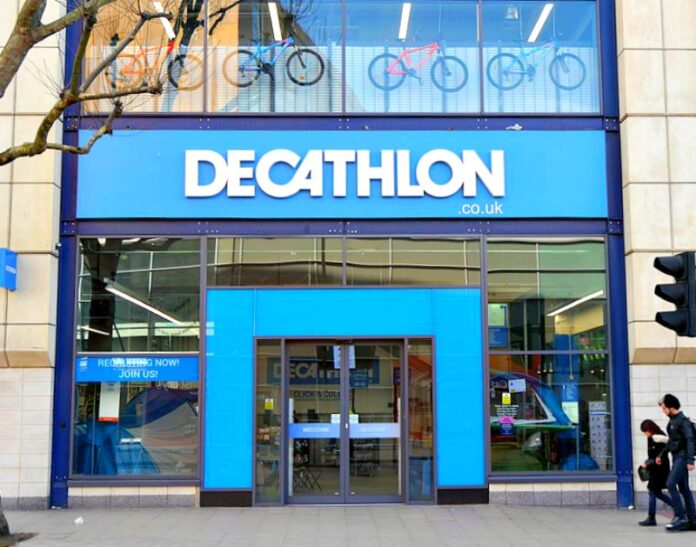
Decathlon Storefront

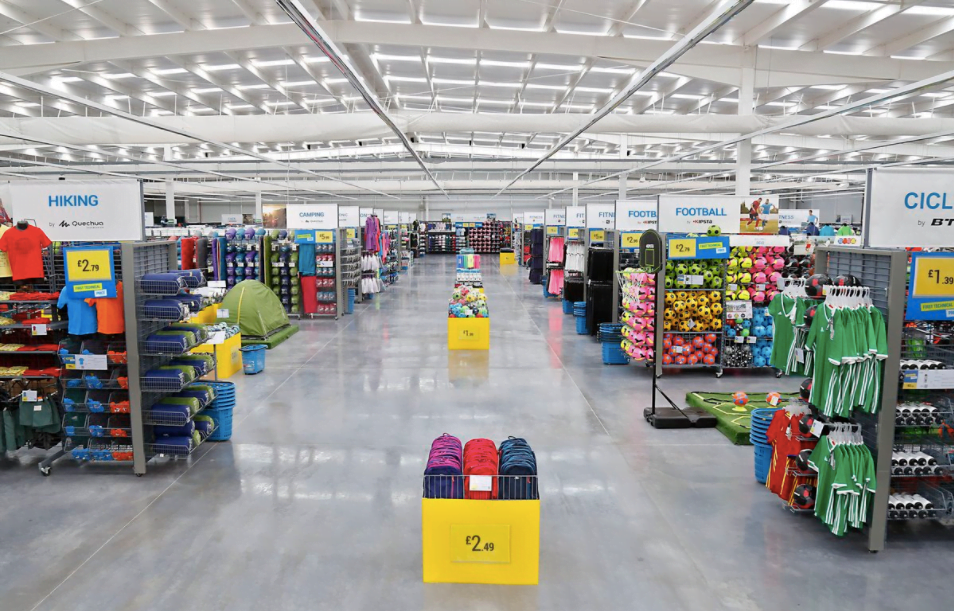
Value-priced large format French sporting goods retail chain Decathlon has announced that it will expand into North America in the spring of 2018 with a location in suburban Montreal. Decathlon could disrupt the Canadian retail industry if it expands nationally, potentially threatening homegrown retail chains including FGL SportsSAIL, Sportium, MEC, and even retailers such as Canadian Tire

Founded in France in 1976, Decathlon Group has more than 1,100 stores in 28 countries, with more than 78,000 employees and revenue of about C$15 billion. It designs, manufactures and distributes a wide range of sports-related equipment and accessories, with over 20 in-house brands dedicated to different sports, and each with its own design team. The company has yet to enter the United States, though it opened a store last year in Mexico. 

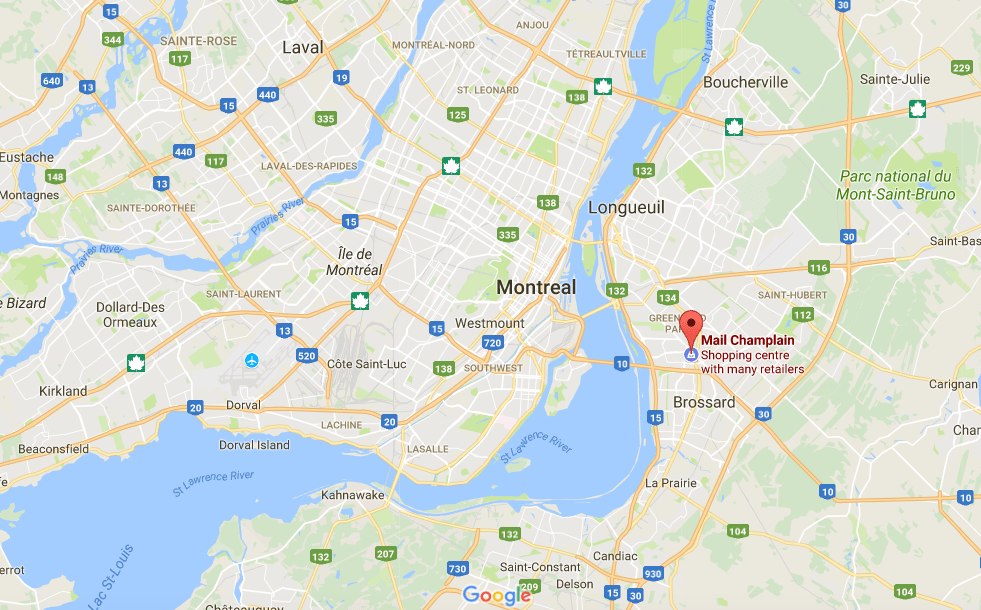
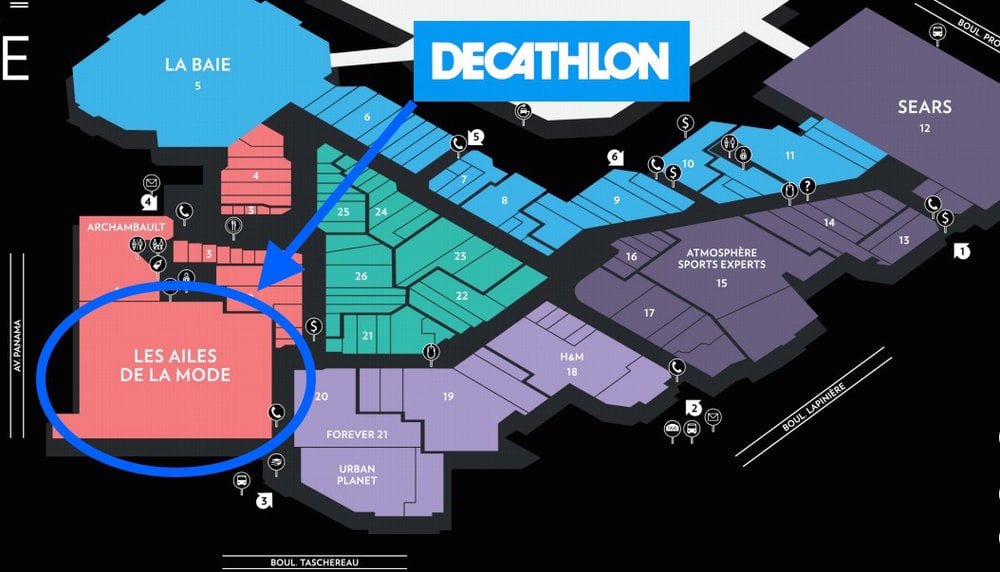
Decathlon’s first Canadian store will open in the spring of 2018 at Mail Champlain in Brossard, just outside of Montreal. The company made the announcement in french on its newly launched Canadian website, which notes that the company’s Canadian headquarters are at 1 Place Ville Marie, in downtown Montreal. 

(CLICK FOR INTERACTIVE MAP)
(PHOTO: DECATHLON, VIA TWITTER)

Mail Champlain could be the first of multiple locations for Decathlon, though the chain will be cautious with its expansion, according to a November 2016 report in La Presse (in French). Oberfeld Snowcap represents Decathlon as brokerage in Canada (Contact: Sylvain Charron) and according to Oberfeld Snowcap’s website, Decathlon is seeking retail spaces in the 35,000 square foot to 45,000 square foot range in commercial centres that may also include power centres as well as freestanding locations. 

Decathlon will compete with a wide range of retailers in Canada, given that it carries well-priced sporting goods as well as some related apparel categories. FGL Sports (operating under multiple banners including Sport Chek, Atmosphere and Sports Experts), Sportium, MEC and SAIL could be most affected, and retailers such as Canadian Tire and Walmart, which also carry value-priced sport-related product, could also take a hit if Decathlon takes off in this country. Competition will certainly be present at Mail Champlain, which currently features a combined Sports Experts/Atmosphere space in the mall, spanning about 30,000 square feet. According to Oberfeld Snowcap’s website, Decathlon’s Canadian expansion plans are currently focused within the province of Quebec though given its penetration in other countries, that could be expanded to other regions at some point. 
*Thank you Carl Boutet for notifying us of this announcement. 

*Top photo: Edward Hands via Wikipedia.