Advertisement
Home Blog Page 1154

Woolrich Partners with Brokerage for Canadian Expansion

America’s oldest outdoor clothing company, Woolrich, is expected to open its first Canadian store this year, with plans for more as the brand launches new Canadian retail operations. Woolrich has partnered with Aurora Realty Consultants for the expansion initiative. 

The company was founded in Pennsylvania in 1830 for the purpose of manufacturing fabric for the wives of hunters, loggers and trappers. Later, the company also outfitted clothing supplies to the American Civil War. It includes two labels: Woolrich Outdoor, distributed in North America, and Woolrich John Rich & Bros., the contemporary high-end outerwear line that is distributed worldwide.

Woolrich Inc. and Woolrich Europe announced a merger in November of 2016, creating a company called Woolrich International. Longtime Italian partner W.P. Lavori in Corso now controls the new company, with Woolrich International’s head office to be located in London UK. Annual sales in 2016 were US $190 million, and the company is projecting annual growth of 12% between 2017 and 2020, where it anticipates revenues of US $300 million while employing 500 people. The new company has earmarked about US $50 million to open more than 60 stores globally, including in Canada. 

Woolrich currently operates 25 stores, globally, including two full-priced stores in the Unites States (Boston at 299 Newbury Street and in New York City at 125 Wooster Street) as well as one outlet in Pennsylvania. 

The company is working with Aurora Realty Consultants on its Canadian store expansion, under the direction of Jeff Berkowitz and Ashley Lebofsky. According to the brokerage’s website, Woolrich stores will ideally be in the 2,500 square foot range, and could locate either within malls or on urban street fronts. 

Woolrich is expected to open its first Canadian store in Toronto in 2017, followed by a 2018 expansion into major urban Canadian markets. In a December 2016 article in the Financial Post, Woolrich told journalist Hollie Shaw that Vancouver is also a target city for the brand. 

RCC to Host Retail Marketing Conference this Spring

Retail Council of Canada will host its Retail Marketing Conference on Tuesday April 4, 2017, at the International Centre in Mississauga, ON. The conference will explore the latest (and most surprising) trends in retail marketing today. A full agenda, focused on #WhatsNext (conference hashtag) for the retail marketing industry has just been released, and registration is now open.

The intense day-long conference is specifically designed to give retail marketers an overview on the most recent developments in three key areas: Mobile and e-Commerce, Direct Marketing Strategy and Social & Visual Media. 

The impressive lineup of speakers includes some of Canada’s leading retail innovators and brands: 

  • Scott Adel, Head of OMNIchanel at Frank & Oak, 
  • Heather Loosemore, Senior Director, Marketing Communications at Walmart Canada, 
  • Julia Sousa, Director, Integrated Marketing, Wines, Vintages and CSR, LCBO,  
  • Jeff Tate, Vice President, Marketing at Henry’s, 
  • Jen Lee Koss co-founder of BRIKA , 
  • Frederick Lecoq VP, Marketing & eCommerce at Golf Town, 
  • George Curtis, Director of Direct/Database Marketing at Macy’s and many more. 

The full listing of speakers is available at www.rccretailmarketing.ca

Session topics have been curated to help conference participants quickly learn how to adapt to market shifts and focus and fine tune their marketing tactics for success.

[Register Here]

Diane J. Brisebois, President and CEO of Retail Council of Canada, will open the conference with Frank and Oak’s Scott Adel and explore the evolution of personalization in the retail reality that is now a blended customer adventure between a store’s digital presence and its physical experience. 

Jennifer Stein, Vice President, Integrated Communications at APEX Public Relations will then lead a fascinating discussion with Heather Loosemore from Walmart and Julia Sousa from LCBO on what digital and social media presence means for more traditional marketing tools and channels using examples from award-winning Walmart (Walmart Fresh) and LCBO (Taste Local, Love Local) campaigns.

One of the most intriguing highlights of the conference is sure to be around the ‘future of the retail flyer’. Flyer experts and marketing leaders will debate how the retail flyer will find its role in blended campaigns, tip the audience on the latest flyer innovations and speculate on how Millennials will need to be engaged to ensure the flyer maintains its powerful relevance. On the panel are: Frederick Lecoq, Vice President of Marketing and eCommerce at Golf Town; Chris Bryson, Founder and CEO of Unata Inc.; William George, Vice President, Marketing at McKesson Canada; Tobiasz Dankiewicz, Co-Founder of reebee; Jeff Tate, Vice President of Marketing at Henry’s and Mark Zwicker, Senior Vice President of Enterprise Business Development at St Joseph Communications.

“As we were looking for the most intriguing developments in retail marketing to share at our conference, we were really surprised to learn about the evolving role of the retail flyer!” said ‎Darrell Cook, Vice-President of Retail Strategy at Geomedia Inc. 

To add further authenticity and substantiation to what retail marketers need to do to connect with Millennials, a group of five exceptionally accomplished Millennial retailers will take the stage to speak about what brands have done to connect with them. Hear from Fatima Zaidi, Vice President of Business Development at 88 Creative; Katherine Andrikopoulos, Digital Performance Media Manager at Cossette; Richard Wong, Vice President of Marketing  at #paid; Marlon Rodrigues, Head of Marketing at Demac Media; and Sarah Bugeja, Manager of Demand Generation at Loblaw Digital. 

The full agenda can be viewed at www.rccretailmarketing.ca/schedule.

*Customized content. For more information, contact Craig Patterson at: craig@retail-insider.com

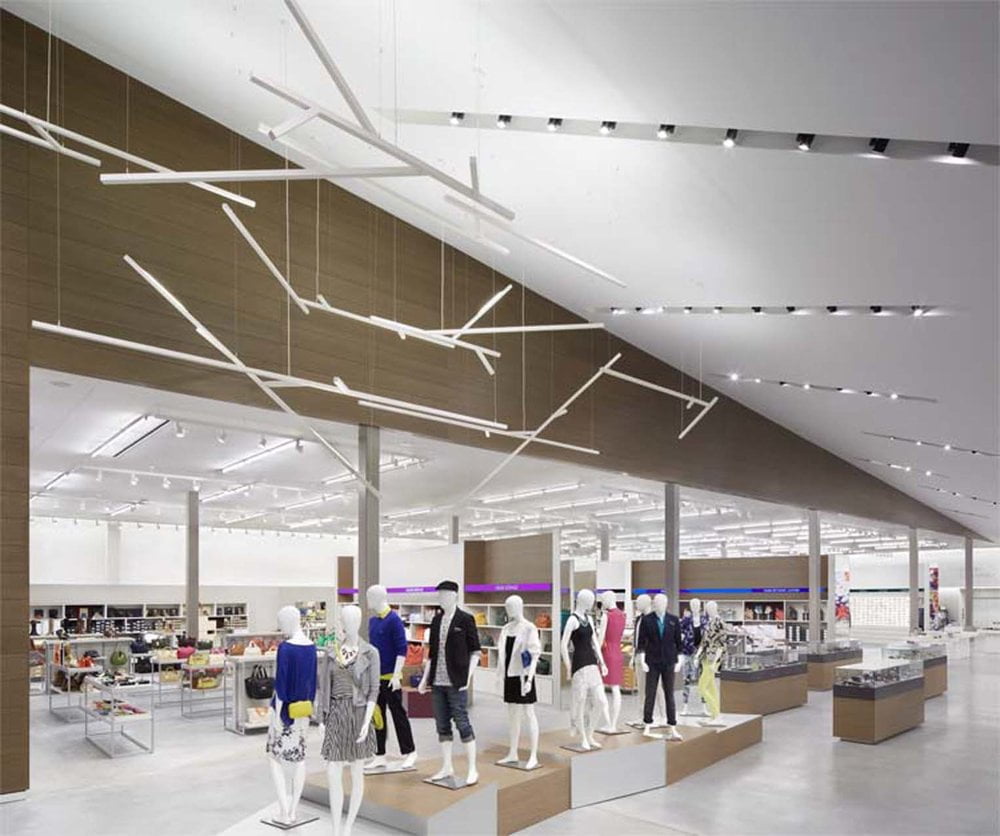
Holt Renfrew to Shutter hr2 Division

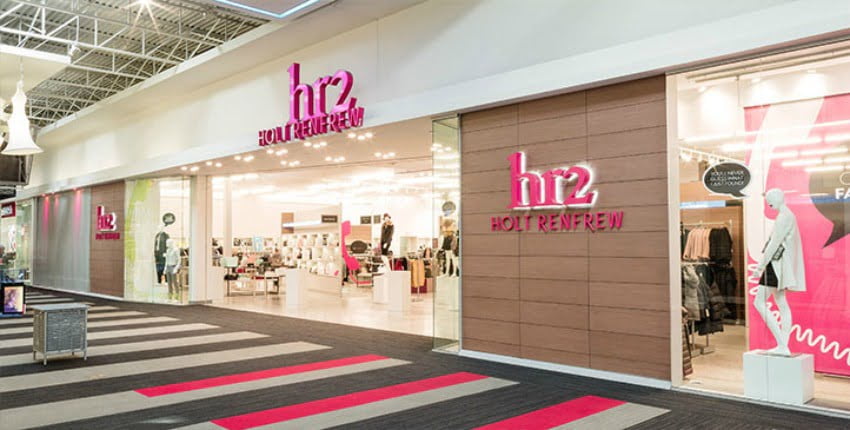
(PHOTO: HOLT RENFREW)

Holt Renfrew will shut down its ‘premium off-price’ hr2 division in mid-2017. The concept, which launched in the spring of 2013, was expected to expand nationally, but only opened two stores.  

Holt Renfrew president Mario Grauso told WWD in an interview that the decision to shutter hr2 was made so that the company could focus on its “core luxury business”, which consists of seven full-line stores in Vancouver, Calgary, Edmonton, Toronto, Mississauga and Montreal. 

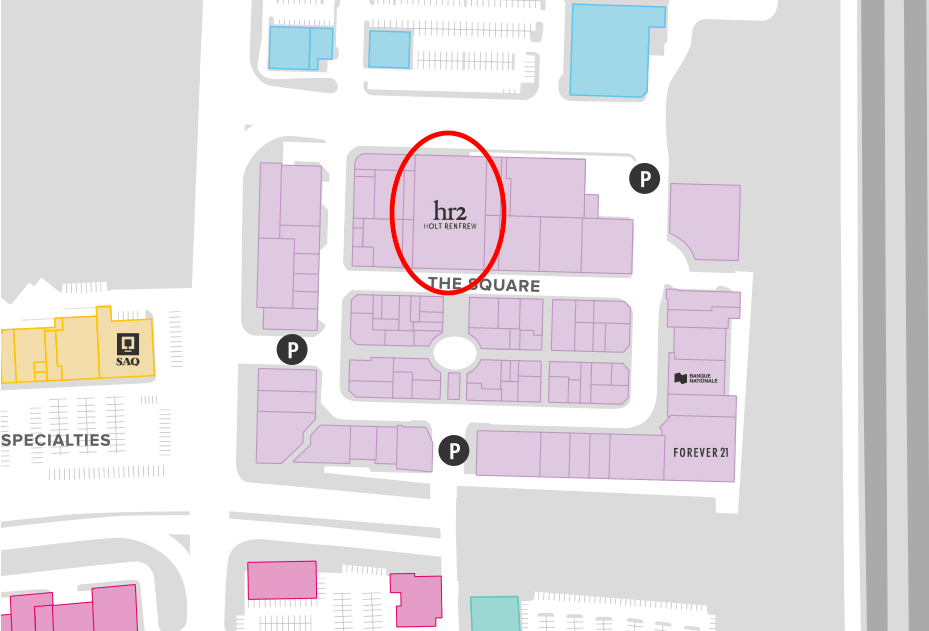
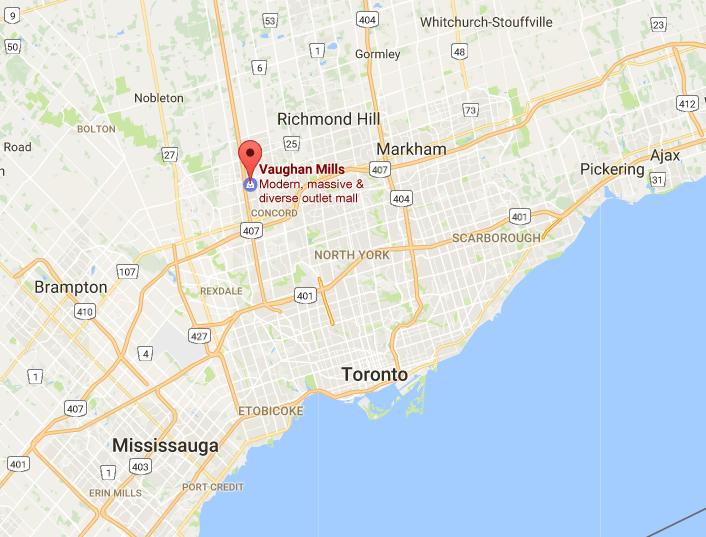
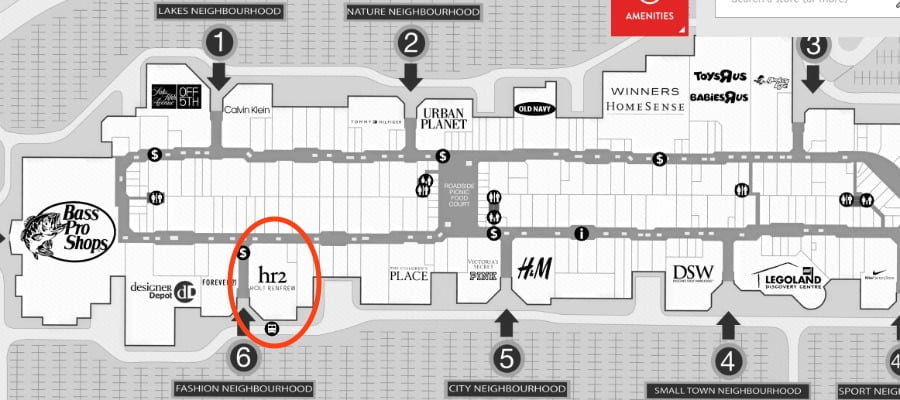
Hr2’s first location, measuring about 25,000 square feet, opened in March of 2013 at the Quartier Dix30 retail centre in suburban Montreal. A second location, spanning just over 28,100 square feet, opened in May of 2013 at Vaughan Mills in suburban Toronto. 

(PHOTO: JANSON GOLDSTEIN)
(CLICK ABOVE FOR INTERACTIVE QUARTIER DIX30 RETAIL FLOOR PLAN)

Both hr2 stores carry an assortment of brands for women and men that are generally at a lower price point than at Holt Renfrew’s main stores. Brands are purchased specifically for hr2 as part of the separate division, though there is also a small selection of clearance product from pricier Holt Renfrew locations. Holt Renfrew operated a clearance centre at Vaughan Mills for a number of years called ‘Holt Renfrew Last Call’, which was replaced by hr2 in the same retail space in 2013. 

(CLICK ABOVE FOR INTERACTIVE VAUGHAN MILLS FLOOR PLAN)

Sources say that hr2 was profitable, but that it was out of line with Holt Renfrew’s strategy to be the country’s premium multi-brand large format luxury retailer. Holt’s has recently seen considerable competition from the likes of Saks Fifth Avenue, Nordstrom, and Harry Rosen. Saks opened two full-line stores in Toronto in the spring of 2016, and sources say that the New York City-based retailer has taken some market share from Holt’s. Seattle-based Nordstrom, which entered Canada in the fall of 2014 with a store in Calgary, now operates five stores — including flagships in downtown Vancouver and Toronto, as well as a luxury-heavy store at Toronto’s Yorkdale Shopping Centre. In an earnings call last week, Nordstrom said that its Canadian business in 2016 saw sales of about US$300 million, projecting $1 billion in eventual sales from six full-line stores as well as its soon-to-launch Canadian Rack division. Upscale menswear retailer Harry Rosen continues to renovate stores and expand its designer offerings, while boasting a loyal clientele. 

Holt Renfrew’s Mr. Grauso, who became president in September of 2016 after running Joe Fresh, told WWD that there are no immediate plans to develop an alternative lower-price strategy, nor are there plans to open any new full-line Holt Renfrew stores in the foreseeable future. 

Hudson’s Bay Company’s off-price concept Saks OFF 5TH plans to operate about 25 Canadian stores by the end of 2018, and it recently announced five more locations set to open this spring. Nordstrom’s off-price Nordstrom Rack will open its first Canadian stores early next year, with plans for between 10 and 15 locations. TJX-owned Winners and Marshalls continue to open stores at an aggressive pace in Canada as well, with no end in sight for their respective expansions. 

(PHOTO: HOLT RENFREW)

Inside Samsung’s Canadian Retail Strategy

South Korean conglomerate Samsung launched its first Canadian location in 2012, and has been perfecting its retail model ever since. The company now operates five Canadian stores that highlight the brand’s products, in unique retail environments that merge experiences with attractive retail design. 

The company’s first Canadian retail store, spanning 1,500 square feet, opened in the spring of 2012 at Metropolis at Metrotown in Burnaby. A second store followed in February of 2014, when Samsung opened a 1,900 square foot unit at CF Richmond Centre, also in suburban Vancouver. A 2,200 square foot West Edmonton Mall store followed in November of 2014, and a 2,535 square foot CF Sherway Gardens store in Toronto followed in November of 2015. 

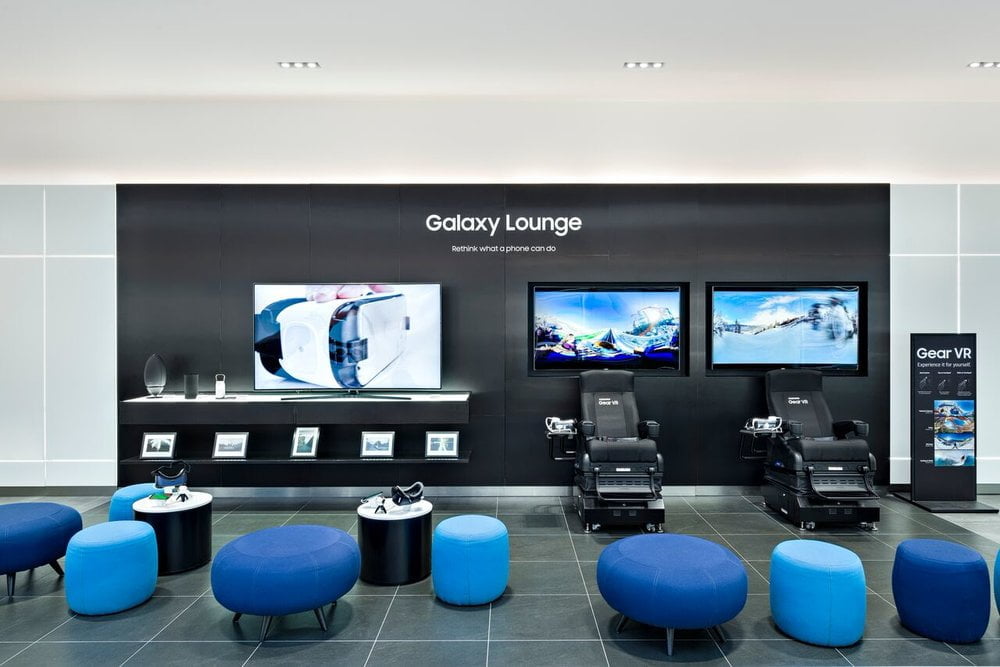
Most recently, in October of 2016, Samsung unveiled a 3,395 square foot in the Nordstrom-anchored expansion wing at Toronto’s Yorkdale Shopping Centre. The store, designed by innovative Vancouver-based design firm Cutler, features stunning bright interiors that highlight product contained within. 

Samsung’s stores promote the company’s products by “allowing Canadians to experience a retail environment where inspiration meets innovation,” according to Patricia Heath, Vice President, Retail Excellence at Samsung Canada. Retail locations allow consumers “to discover Samsung technology first hand, inviting them to explore the GALAXY of possibilities with a focus on Samsung’s mobile ecosystem”, she notes. 

Ms. Heath discussed the new Yorkdale store, describing how it features immersive experiences that showcase Samsung’s innovations. The retail space “truly brings the brand to life – whether through a showcase of the full Samsung mobile ecosystem, a first-in-Canada 4D Gear VR experience, a Gear 360 camera demo area and the largest assortment of Samsung mobile accessories in Canada,” she said, also noting that the store has a separate customer service area that assists consumers with technical support and a consultation areas that provides them with product knowledge and training.

“We want visitors to our Yorkdale location to leave with a sense of discovery—a newfound understanding of how Samsung’s ‘Live Connected’ philosophy can come to life for them and seamlessly integrate into their everyday life,” said Ms. Heath. 

She went on to say, “consumers need to see, touch, feel products and understand how they can seamlessly integrate into their lifestyle—and they can do just that at our Yorkdale retail experience.”  This sentiment is shared by Farla Efros, retail expert and President of HRC Retail Advisory, who described how experiential stores are particularly attractive to Millennials and ‘Generation Z’, who are seeking out experiences as well as the latest gadgets. 

Lighting is a remarkably important component to drive sales in retail stores, according to Maarten Koorn, Chief Operating Officer at MyPlace Building Services Ltd. Mr. Koorn, who’s company does maintenance work (as well as construction) for major retailers, notes that sales in some stores often go down when lights burn out in certain areas. “We replace lighting as quickly as possible if they go out, otherwise retailers tell us that sales drop”, said Mr. Koorn. 

As to whether or not Samsung will open more Experience Stores in Canada, Ms. Heath wouldn’t comment, except to say “Samsung is committed to bringing Canadians closer to the Samsung products they are passionate about through innovative experiences—be it through retail, product launches and events or a variety of other experiences.  We are excited for what 2017 has in store.” 

Given the foot traffic witnessed in the new Yorkdale Samsung, we’d be surprised if Canada didn’t see more locations in the coming years. 

Photos by Vincenzo Pistritto

Organic Grocer Launches Ontario Expansion

Nature's Emporium in Burlington (Image: Nature's Emporium)

Newmarket, Ontario-based organic grocery concept Nature’s Emporium is expanding its operations throughout the Greater Toronto Area. A Burlington location opened last week, and the retailer is looking to further expand in the region, including stores in Toronto’s rapidly-growing urban core. 

The family-owned retailer now has three stores, with plans for more. Founded in 1976 as a food vendor at an Ajax flea market, the company grew in the 1990’s to open full-sized stores including a 50,000 square foot store in Newmarket, as well as a 20,000 square foot store in Vaughan. Last week, it opened its third store in Burlington, spanning 18,000 square feet in a commercial plaza at 2180 Itabashi Way, featuring organic food, as well as a cafe concept. 

A fourth Nature’s Emporium, currently in the works, will anchor a development in Whitby, Ontario, as part of a new shopping centre development at Taunton Road and Brock Road. More locations will follow, according to the company’s representative broker Don Gregor of Aurora Realty Consultants

New Nature’s Emporium stores will ideally be in the 17,500 square foot to 25,000 square foot range, targeting upscale markets where residents are more likely to purchase organic food. According to Mr. Gregor, target cities for Nature’s Emporium include Mississauga, Kitchener-Waterloo, Guelph and Barrie, as well as locations within the city of Toronto. In Toronto, targeted areas include Etobicoke, The Beach, Bloor West Village, and the King Street West/Liberty Village area, with the Yonge & Eglinton and Yonge and St. Clair areas having also been considered. Nature’s Emporium could also expand into downtown Toronto with a target size of about 15,000 square feet — a smart move, considering that the area is seeing unprecedented growth. 

(PHOTO: NATURE’S EMPORIUM)

Downtown Toronto, as well as the Yonge Street corridor spanning northward, are both growing rapidly. As a result, unique retail opportunities abound as their populations expand. The Yonge & Eglinton area is growing quickly as new condominium towers are being built, with nearly 10,000 residential units in the pipeline. The area around Yonge and St. Clair will also see upscale development, with more announcements to be made shortly. Toronto’s downtown core is by far the biggest growth area of the three, with the city’s core population forecasted to grow at a rate unseen in any Canadian downtown. The current downtown population of approximately 250,000 residents is projected to almost double by the year 2041, creating new retail opportunities in various categories. Many of the new downtown Toronto residents are younger and earn relatively high incomes — a perfect demographic for organic grocers. Retirees with money are also flocking to the downtown core, attracted by convenience, entertainment and culture. 

Nordstrom Launches ‘The Lab’ at 2 Canadian Flagships

Seattle-based Nordstrom has launched ‘The Lab’ at two of its Canadian flagship stores. The new incubator project is being launched in only five Nordstrom stores globally, and one of the designers featured has a Canadian connection. 

Conceived and curated by Nordstrom’s Vice President of Creative Projects, Olivia Kim, ‘The Lab’ showcases and supports five designers selected for the inaugural season: Eckhaus Latta, Vejas, Eric Schlösberg, A.W.A.K.E. and Dilara Findikoglu. Ms. Kim and her buying team selected a handful of looks from the five designers, including exclusive and custom-made items reflective of each designer’s aesthetic.

Self-taught Canadian designer Vejas Kruszewski won the prestigious LVMH Prize for young fashion designers last year, valued at approximately $218,000 Canadian. 

‘The Lab’ is being launched within Nordstrom’s ‘SPACE’ departments, which Ms. Kim launched in the Fall of 2015. Nordstrom’s flagships at CF Pacific Centre in Vancouver, and at CF Toronto Eaton Centre in Toronto, launched ‘The Lab’ collections in stores this week. Other Nordstrom stores to feature ‘The Lab’ include the downtown Seattle flagship, The Grove in Los Angeles, and at the Chicago Michigan Avenue flagship — as well as online at Nordstrom.com/SPACELab

SPACE features a cross-category collection of apparel, accessories, home goods and fragrance from emerging and advanced designers. Ms. Kim wanted to develop a place dedicated to recognizing fledgling talent, saying, “a brand has to be relatively established in order to support a substantial wholesale business. We wanted to find a way to show the truly new brands just starting out, and to recognize the great, raw talent out there, to say we see you, and we want to support you.”

She went on to say, “there are incredible demands on a young designer trying to grow their business, and we wanted to say ‘you may not be able to produce enough of a collection for eight stores right now and that’s okay.’ The Lab is for the designers who have just launched their collections, did their first show, maybe used their friends as models and showed in a basketball court in the Lower East Side. It’s true, authentic and they’re creating beautiful collections that we want to share with our customers.”

The Lab will be an ongoing program in SPACE at Nordstrom, refreshed with new brands each season in order to give each designer a spotlight to help grow their businesses.

Independent Optical Retailer Sees Success Through Personalization And Unique Store Design

Toronto-based optical retailer Glass Monocle, which recently opened near the former Honest Ed’s, is already seeing success through personalized products and services – and a space that helps it standout. Its co-founders are contemplating expanding into multiple locations, after launching a branded store developed by BUILD IT.

Founded by opticians Kinnard Chan and Jacky Wong late last year, Glass Monocle features a modern 1,700 square foot retail space that is equally focused on offering trendy optical frames, as well as exceptional medical services. The founders, who are passionate about the optical industry, set out to create a more ‘localized’ experience to differentiate from large chains that dominate the industry. 

The strategy appears to be paying off, with consistent five-star reviews on Google, Yelp and Facebook. Customers describe the store’s “attitude” and “vibe” in a positive way. 

Mr. Chan explained the store’s ‘balance’ is between medical and fashion, which is different than many optical retailers. Traditionally, optometrists have opened retail operations with a selection of frames to choose from, which in some instances has been an afterthought to the clinic itself. On the flip-side, some eye glass retailers have focused primarily on styles, with little or even no focus on optical health. 

Mr. Chan and Mr. Wong set out to create a retail concept that balances the medical side with the optical frame fashion side — a friendly service that also ensures that customers are being screened for optimal optical health, including testing for glaucoma and other eye diseases. On the fashion-side of the business, Glass Monocle stocks designer optical frames that are ‘on-trend’ with the demographics of the Annex community — an area with a mix of students, professionals and an increasingly affluent, urban demographic that characterizes much of downtown Toronto. 

Glass Monocle’s co-founders worked with Alburt Lefebvre and Simon Shahin of BUILD IT to build out the designer 590 Bloor Street West store. Mr. Lefebvre explained that he assisted not only with the construction and design of the space, but even with securing the initial location in Toronto’s hot Annex neighbourhood. Once designs were ready, Mr. Chan explained that it took the BUILD IT team only six weeks to build-out the store — a remarkable feat considering the complexities involved in building such a retail space. 

The store’s interiors are simple and functional, featuring a long cash desk (resembling a bar), bright lighting, and simple millwork against a white backdrop. The elegant, simple design sets off the fashion frames contained within. The front of the store is devoted to retail, with the middle area acting as a waiting area for patients to access medical services at the back of the retail space. Mr. Lefebvre brought in Toronto-based Aboveground to help coordinate the space, which his team at BUILD IT then executed for the client. 

Mr. Chan and Mr. Wong are enthusiastic about the future, having been warmly received by customers and the local community. After creating a successfully branded retail environment, they’re looking into eventually expanding their concept into multiple locations. Bigger isn’t always better, explained Mr. Chan, and Glass Monocle will be mindful to keep its sights on what makes it unique while considering its options for growth. 

Saks OFF 5TH Announces 5 Store Opening Dates for this Spring

The Hudson Bay Company’s off-price division Saks OFF 5TH has announced the opening dates of its next five Canadian stores, all opening between March and May of this year. When all five are open, the company will have opened 14 Saks OFF 5TH’s in Canada — a remarkable feat, considering that its first stores opened less than a year ago. 

As discussed in an article last week, Saks OFF 5TH entered Canada in March of 2016 with four locations. The first four OFF 5TH’s opened at Vaugan Mills and Toronto Premium Outlets in the Greater Toronto Area (GTA), as well as at Outlet Collection at Niagara and at Tanger Outlets Ottawa. Locations that have since opened include an Ottawa store on the lower level of Hudson’s Bay Rideau Street, at CrossIron Mills in Calgary, at South Edmonton Common in Edmonton, at Tsawwassen Mills near Vancouver, and a freestanding Toronto location across from CF Sherway Gardens

Saks has just announced that it will open five Canadian stores this spring. Two will be in the GTA, one in Quebec City, one in Winnipeg, as well as a second Edmonton store. 

On March 9, Saks OFF 5TH will open two suburban Toronto stores — one at Pickering Town Centre in Pickering, measuring 30,000 square feet, as well as another at Bramalea City Centre in Brampton, with about 28,000 square feet of retail space. Both stores will be the first Saks OFF 5TH locations in Canada to open in traditional shopping malls, as opposed to outlet/hybrid outlet centres. 

On April 6 of this year, Saks OFF 5TH will open two more Canadian stores — a 33,000 square foot store at Place Ste-Foy in Quebec City, as well as a second Edmonton location, spanning about 30,000 square feet at the Skyview Power Centre in the city’s northwest side. The Place Ste-Foy store is located in retail space once occupied by Holt Renfrew, in the upscale Quebec City shopping mall that is anchored by the flagship location for La Maison Simons

On May 3 of this year, Saks OFF 5TH will open its first Winnipeg location at the highly anticipated Outlet Collection Winnipeg. The 32,200 square foot OFF 5TH store will join a number of popular retailers in the new centre, which will be the first pure designer outlet mall in Manitoba, and the second in Western Canada (we’re excluding CrossIron Mills and Tsawwassen Mills, both classified as ‘hybrid’ outlet centres). We’ll follow up with details on Outlet Collection Winnipeg in an article, closer to its opening date. 

Parent company Hudson’s Bay Company has said that it will open approximately 25 Saks OFF 5TH locations in Canada before the end of 2018. Other locations confirmed to be opening include one at West Vancouver’s Park Royal in the summer of 2017, as well as three in Montreal. A CF Galeries d’Anjou store is scheduled to open in the summer of 2017, and a downtown Montreal store (the largest in Canada at 44,840 square feet) will open in the fall of 2018. The company has also said that it will open a Saks OFF 5TH at Premium Outlets Montreal, though no definitive date has been provided. 

Competitor Nordstrom Rack, operating under the Seattle-based Nordstrom umbrella, will compete fiercely with OFF 5TH when the former opens its first Canadian locations in early 2018. So far, Nordstrom Rack has confirmed five Canadian stores, including locations in Toronto at 1 Bloor Street East, Vaughan Mills, at Calgary’s Deerfoot Meadows, at Edmonton’s South Edmonton Common, and at Ottawa Train Yards in Ottawa. Nordstrom has said that it plans to open at least 15 Nordstrom Rack locations in Canada, and potentially more if opportunities become available. 

Competitor TJX, operating Winners and Marshalls in Canada, also continues to rapidly open stores nationwide. 

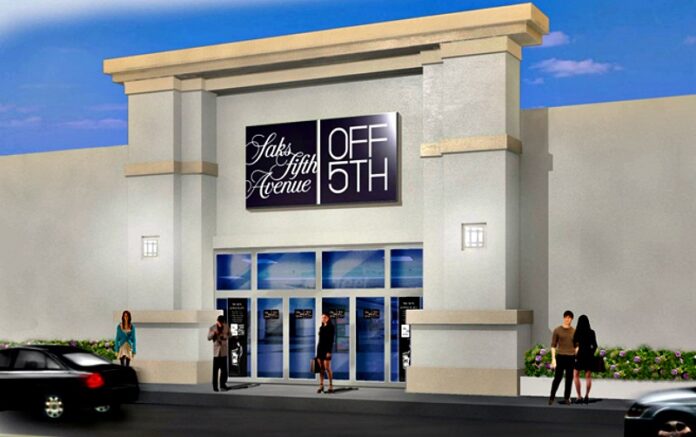
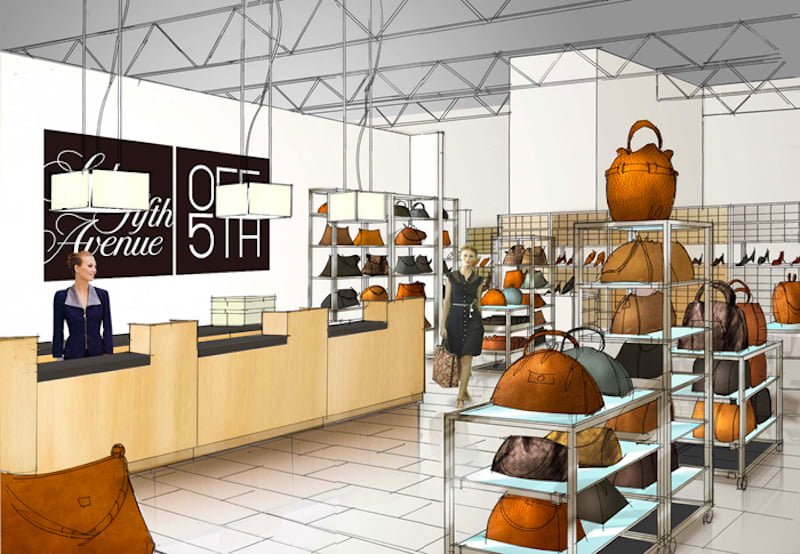
*Renderings are via Martin Roberts Design.

Upper Canada Mall to See Significant Investment

Oxford Properties has announced that Upper Canada Mall in Newmarket, Ontario, will see a $60 million investment in its former Target space. Construction has already commenced, and the redevelopment will open in phases throughout 2018. 

The enclosed 998,000+ square foot mall features over 200 stores with two major anchors: Sears and Hudson’s Bay. Co-owned by Oxford Properties Group and CPP Investment Board (CPPIB) and managed by Oxford, Upper Canada Mall is one of the region’s most productive shopping centres, with an annual productivity per square foot in excess of $750, according to a recent Retail Council of Canada shopping centre study

The announced redevelopment will include a Sport Chek replacement store, a new two-level feature court space, a 35,000 sq. ft. vertical expansion, and a unique 40,000 square foot first-to-market food market concept.

The mall’s current 26,400 square foot Sport Chek will be replaced with a one-level, 64,000 square foot location that “will focus on an enhanced overall customer experience”. Sport Chek has been opening technology-heavy flagships across the country in recent years, winning multiple awards. 

The 40,000 square foot food market concept will be particularly interesting, featuring approximately 25 best-in-class market vendors with an assortment of fresh foods and prepared take-away options, including: produce, a butcher shop, fish monger, cheese shop, bakery, a juice bar, and a gourmet gift shop. Additionally, the food market will be anchored by yet-to-be-announced full-service restaurants, located at a Yonge Street-facing entrance. Oxford Properties describes it as being “a quality driven attraction with a strong focus on the local community and will create a unique food experience. It will be a place of convenience and comfort, and a reflection of simpler times.  It will allow customers a one-stop shop, while complimenting the other amenities the mall continues to offer.”

The market also addresses a trend towards increased food and beverage in shopping centres. Oxford Properties Senior Vice President of Retail, Brad Jones, said, “Oxford is committed to enhancing the food and beverage offering across our national portfolio. The opening of the Food Market at Upper Canada Mall will create a new and elevated shopping experience for our customers, and we know it will be a welcome addition to the mall and the community.”

*top photo: Oxford Properties.

Controlling Costs in a Shifting Retail Landscape

By Antony Karabus, CEO, HRC Retail Advisory

As described in last week’s Q&A Interview in Retail-Insider, shifts in consumer behavior and expectations have permanently changed the Canadian retail landscape and as a result, physical store traffic and store sales are being meaningfully impacted as customers move online.

Retailers’ profits and losses are being pressured, with the bottom line ‘feeling the heat’. This is requiring retailers to rethink prior assumptions about the role of physical stores as well as ongoing investments in e-commerce, store level technology and more specifically omni-channel strategies.

How Did We Get Here?

Over the past five years, these changes in shopping behavior have forced retailers to establish duplicate infrastructures to enable consumers to interact with the retailers when, where, how and in whatever channel they desire.

In addition, numerous brick-and-mortar retailers are experiencing a loss of market share to Amazon.com, which is growing North American merchandise sales at almost 30% annually, versus a low- to mid single-digit increases in top-line sales for most traditional brick-and-mortar retailers with online operations.

Moreover, Amazon continues to add distribution centers and categories (while going deeper into its existing ones), while promising shorter shipping lead times, coupled with additional benefits for Amazon Prime members.

Added Infrastructure Costs

In response, retailers have tried to battle against the ‘Amazon effect’ while also meeting the needs of a consumer-centric environment. In a number of instances, retailers have made substantial investments in omni-channel while many have neglected their  physical stores — which still provide most of their sales and virtually 100% of their operating profits.

But what has played out on the Profit and Loss Statement is what’s troubling. The historic, largely fixed-cost infrastructure of retailers’ physical store channel has now been joined by a variable-cost-driven infrastructure to enable online sales.

The combination of the historic fixed-cost store-cost structure and the variable-cost e-commerce-cost structure has added significant operating and capital expenditures without, in most instances, adding aggregate top-line sales for the total retail company. This is coming about a result of a shift in sales from the physical store channel to the e-commerce channel. 

HRC Advisory Starts this Process by Asking Some Key Questions

So, the need to meet consumer demands for online shopping while protecting profits has created a conundrum for retailers. HRC recommends five key tactics to address these issues:

First, retailers should assess their business operations, organization structure, capabilities, policies and processes in an effort to create a sustainable and profitable model in this complex retail environment. 

The Key Tactics HRC Retail Advisory recommends are:

1. Decide which omni-channel capabilities will be most valued by each retailer’s particular customer, rather than investing in all capabilities. When the retailer has decided which is the most relevant capability for their business, ensure all the upstream and downstream processes and tools are equipped to deliver on the promise

2. Prioritize and decide on important decisions such as price-matching, free shipping, free returns, direct-to-customer dedicated fulfillment centers and full inventory visibility.

3. Establish the right methodology to better exploit data and related insights to drive customer-focused decisions.

4. Determine how to rethink and enhance real estate decisions in the light of the channel sales productivity issues.

5. Ensure store, supply-chain and home-office infrastructure cost is properly sized and structured to profitably serve store and omni-channel customers to enhance shareholder returns. This needs to be a bottom-up assessment, not just an attack on head-count and the “ easy targets “ of store labor and marketing costs.

Comprehensively and objectively addressing and considering these issues on a bottom-up  basis should  assist retailers to address their competitive position relative to competitors and pure-play e-retailers, and to making the right capital and operating investments to protect and even enhance earnings in the face of this new retail environment.

Understanding This New Retail Operating Economic Model

Based on HRC’s proprietary research, retailers are incurring a significant increase in the cost of enabling and fulfilling online orders and related returns, relative to the cost of physical store orders. These numbers are without allocating the cost of shared services infrastructure (such as IT, finance, human resources, payroll, executive management and other areas) to the online channel’s P&L. This additional cost burden is not sustainable in the long term if one considers the historically low earnings margin experienced by retailers.

Meanwhile, for public companies, there’s been a bit of bias on Wall Street/TSX. Shareholders and analysts have not been patient in expecting earnings from traditional retailers who are hard at work transforming their businesses to better compete and remain relevant, while they’ve been extremely patient in waiting for acceptable profits from Amazon and other pure-play retailers. And in the current climate, traditional brick-and-mortar retailers face extreme pressure from financial analysts, shareholders and activists not only to maintain, but deliver higher earnings.

The result is an increasing de-leveraging of physical store cost infrastructure as sales per square foot decline with the shift to the online channel. The exception to this de-leveraging reality is when major competitors exit the market or experience restructuring and significant store closures, allowing the remaining retailers to increase their market share in the sector, albeit in the short term. And the de-leveraging of store-cost infrastructure increases as the e-commerce penetration rate of total sales in the market increases.

Going on the Offensive

The best response to this new cost of doing business is for retailers to “take command of the game” and really go deep into leveraging their strengths and inherent advantages relative to Amazon and other pure-play e-tailers rather than trying to compete directly with these emerging competitors.

This is the Walmart effect of the 1980’s and 1990’s, but is being repeated at a much more rapid and complex pace. So while it would be a mistake to take on Amazon head-to-head at which it does best, retailers can deploy some offensive strategies. And the absolute best offensive tool that a traditional brick-and-mortar retailer has is its ability to introduce an online customer to a tactile experience in its stores, which means rethinking the role of the physical store so that it becomes an omni-channel service center and a holistic introduction to the brand, rather than just being a place to transact. 

Some of the advantages of this approach include:

• Introducing customers to physically experience the brand and the product in a store.

• Reducing the rate of return of online orders as customers can ensure the product fits, and is suitable for their needs.

• Increasing the total value of the online order by purchasing complementary items when they are in the store to pick up their online order.

• Reducing the shipping cost of the sale and potential return and provide numerous convenient locations for customers to pick up or return online orders.

With the above significant advantages, retailers should encourage online customers to visit the store in nontraditional ways such as:

• Same-day pick-up, utilizing inventory already in the store.

• Free shipping to stores for online orders.

• Samples, free gifts or discounts on additional items when customers pick up online orders in stores, to encourage additional browsing.

• Being invited to attend special invite-only events in stores, including book signings, product tastings, fashion trunk shows and so on.

And in order to effectively enable these “BOPUS” (buy online, pick up in store) and “BORIS” (buy online, return in store) omni-channel capabilities, retailers need to strengthen their inventory management practices to minimize the likelihood of disappointing online customers.

Antony Karabus is chief executive officer of HRC Retail Advisory, a leading retail consulting firm based in Toronto and Northbrook, IL. A version of this article recently appeared in WWD.com.

*Top photo: www.shopparkroyal.com.