This month, luxury Swiss timepiece brand Breitling will open its Canadian flagship at 250 Bloor Street East in Toronto. It’s a remarkable move, considering the lack of luxury retail – or any retail for that matter, nearby. Breitling’s new space could act as precedent for other luxury brands seeking Bloor Street retail space and as a best-case scenario, could see Bloor Street’s cachet expand east of Yonge Street.
Founded in Switzerland in 1884, Breitling is particularly known for its precision-made chronometers, which are useful to aviators. Prices can climb well into the thousands, particularly for premium models in precious metals and stones. The company retails in exclusive stores worldwide and also operates free-standing boutiques, with U.S. locations in New York City, Miami, Orlando, and Las Vegas.
Breitling’s new Bloor Street space will serve customers and vendors in its storefront, with its Canadian offices and repair facilities behind the retail space. Breitling’s current Canadian office, located on nearby Hayden Street, lacks retail space for the public.
Bloor Street’s luxury retail is typically confined to the stretch of Bloor Street West between Yonge Street and Avenue Road and in particular, luxury brands tend to cluster in the roughly 300 metre/1,000 foot span of between Harry Rosen (at Bellair Street) and the Park Hyatt Hotel (Bloor Street West and Avenue Road). Breitling’s new Bloor Street East location is over 800 metres/2,700 feet east of Harry Rosen, and over 500 metres/1,675 feet east of Yonge Street. Locals generally consider Yonge Street to be the dividing line between upscale Bloor Street West and the more mid-market Bloor Street East.
After learning of Breitling’s new location by industry insider Paul Amato, we began to question if Bloor Street’s retail cachet could move eastward. We consulted with luxury retail expert and HRC Advisory President Farla Efros, who explained how Toronto currently lacks a ‘Magnificent Mile‘-like stretch of retail (like that in Chicago) and how given its size and wealth, Toronto warrants something similar. She described how some luxury brands have difficulty finding the ‘right’ space along Bloor’s existing (and sometimes struggling) luxury strip and how expanding the strip eastward may provide more opportunities for brands looking to expand in Toronto.
It may be a number of years, however, before Bloor Street east becomes a bona fide luxury shopping destination. The street currently features mostly mid-market retailers, as well as various redevelopment opportunities. It will be interesting to see if developers, brokers and retailers can work together to expand Bloor Street’s upscale retail eastward and in the process, create an elongated, world-class luxury shopping strip similar to those found in cities such as New York City, London, Paris, Madrid, and Chicago.
All photos by ‘Greg’. Thank you Paul Amato, Farla Efros and Urban Toronto‘s ACT7 for information pertaining to this article.
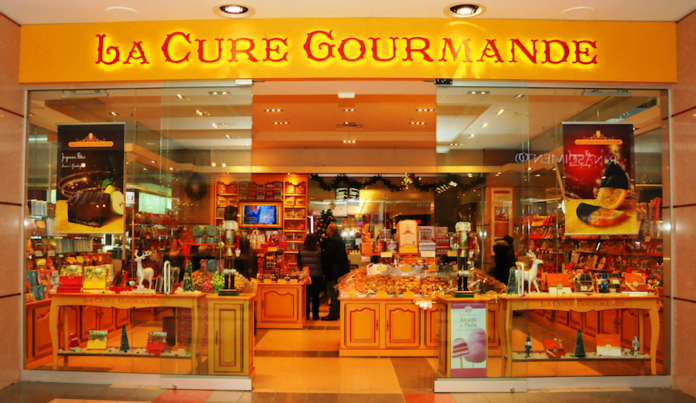
Upscale French biscuit, confectionery and chocolate shop La Cure Gourmande is looking to eventually open as many as 35 stores across Canada, after opening its first North American location in Montreal late last year. We spoke with the company’s Montreal-based franchisee Nazar Najarian, to gain insight into plans to expand the delicious retailer into various locations.
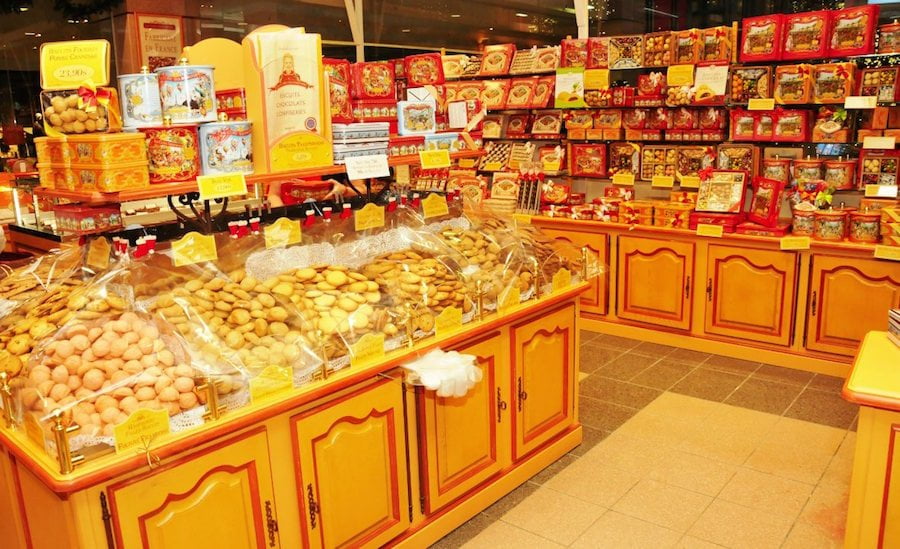
Founded in Balaruc-Les-Bains, France, in 1989, La Cure Gourmande uses traditional techniques to create a variety of edible sweet and savoury traditional biscuits, Berlandises (fruit pulp candies) Choupettes (old fashioned lollipops), chocolates, caramels, calissons, nougats mixed with strawberry paste or candied orange zest, and chocolate ‘olives’ (roasted almonds covered in dark chocolate). According to its website, “La Cure Gourmande will bring you back to childhood – you’ll feel like you stepped into Hansel and Gretel’s candy house”. Customers can fill tins and pay by weight, or purchase pre-packaged items.
La Cure Gourmande currently operates almost 50 locations around the world, including two in North America. Its first North American store opened in November of 2014 at Montreal’s Place Montreal Trust and last spring, a New York City location became its second. The company is in the process of setting up a distribution centre in the province of Quebec to serve its expanding Canadian operations.
Mr. Najarian explained how Montreal acted as the brand’s North American gateway, and how the company is already seeing tremendous success. As part of the brand’s Canadian expansion plans, La Cure Gourmande will first focus on opening more stores in the province of Quebec, then Ontario. A couple of store locations are planned for 2016, according to Mr. Najarian, with six or seven stores planned for Quebec before 2018. Ontario could eventually see 12 to 15 locations, he said, with as many as 30 to 35 Canadian locations planned for the long-term.
La Cure Gourmande’s store interiors reflect its native Provence, France. Its Montreal store was designed and fixtures supplied from France — to ensure proper design, colour and quality. Store interiors are rustic, featuring ample ochre coloured wood throughout.
Mr. Najarian explained how the brand is looking to occupy retail space in the 600 square foot to 1,500 square foot range, with an average size of about 1,000 square feet. Smaller locations would typically locate in shopping centres, while larger stores would generally be streetfront. Busy tourist-heavy areas are particularly attractive to the brand, as shoppers tend to “take their time” and “seek new experiences”, according to Mr. Najarian.
La Cure Gourmande plans to become a world leader in sweets and confectionery within the next 10 to 15 years, according to Mr. Najarian. Many more stores are planned, with a big push into the United States as well as in the Middle-East and Asia.
The following infographic, provided by yconic, reveals what factors influence youth purchase decisions in Canada. The most influential source for decision making is a store’s website and notably, Youtube is the most influential social channel. Peer influence is also revealed as a significant influencer, with all factors portrayed below.
yconic operates Canada’s largest student help platform and youth-focused market research panel. yconic helps brands and agencies better understand and build meaningful connections with youth by offering Market Research and Insights, Digital Marketing and Talent Solutions. For more information, visit we.are.yconic.com
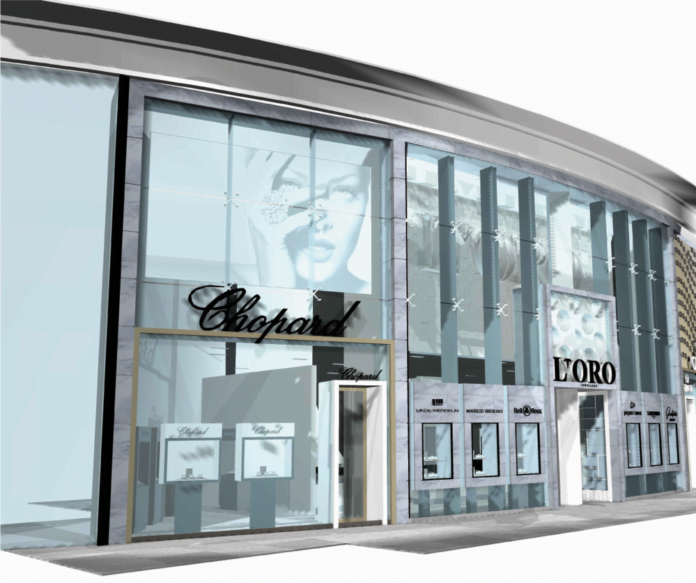
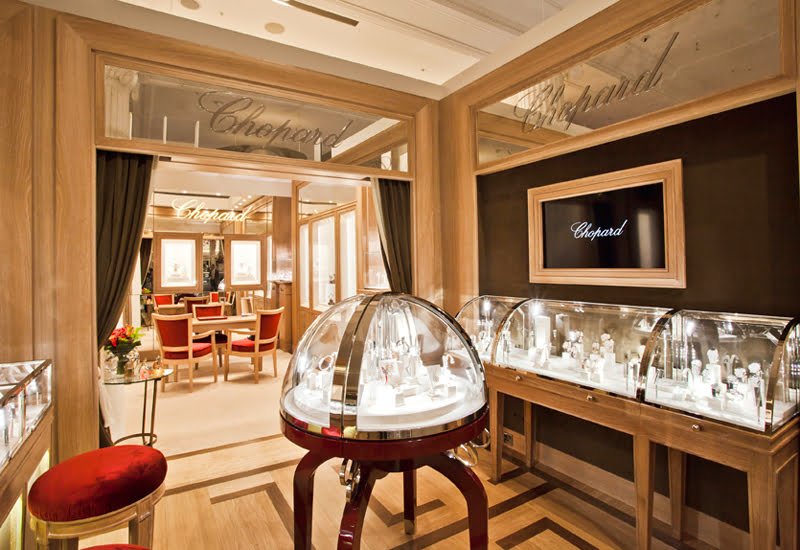
This fall, Swiss luxury jeweller and timepiece brand Chopard will open its first Canadian location at Toronto’s Sherway Gardens. The jewel box-sized boutique will be adjacent to a flagship location for multi-brand jeweller L’Oro Jewellery, with both stores to open in the mall’s substantial new expansion wing.
Chopard was founded as a watch brand in Sonvilier, Switzerland in 1860 by the then 24 year-old Louis-Ulysse Chopard. The company soon expanded into jewellery and now, Chopard designs and retails accessories such as leathergoods, writing instruments, clocks, eyewear, silk scarves, gifts and fragrances. Prices can climb into the thousands, particularly for its diamond jewellery and watches.
In late September, the 400 square foot Toronto Chopard boutique will open adjacent to the new 2,500 square foot flagship location of multi-brand jeweller L’Oro, within the new $550-million, 210,000 square foot expansion of Sherway Gardens. The same expansion will include replacement locations for menswear retailer Harry Rosen and upscale sports retailer Sporting Life, as well as about 50 new retailers. In early 2016, Saks Fifth Avenue will open in part of the mall’s former Sears space and in the spring of 2017, Nordstrom will open its third Toronto store within the mall.
Chopard also wholesales in a number of prestigious Canadian jewellers including Royal de Versailles in Toronto, Chateau d’Ivoire in Montreal, Siba in Vancouver, GemOro Goldsmith at West Edmonton Mall, as well as L’Oro’s existing boutiques at Vaughan Mills and in Markham, Ontario. In the United States, Chopard operates five free-standing boutiques in New York City, Bal Harbour FL, Costa Mesa CA, Las Vegas, and at San Francisco International Airport. It also retails at upscale jewellers as well as in selected Neiman Marcus and Saks Fifth Avenue stores.
More luxury brands for Toronto’s Sherway Gardens will be announced in the coming weeks.
Thank you Brian Winston, head of Toronto-based luxury firm WINSTON Collective, for providing information pertaining to this article.
Luxury retailer Saks Fifth Avenue just announced that it is looking to hire 365 full-time and part-time positions for its first Canadian stores, both located in Toronto. The Saks Talent Acquisition national team will be on-site daily at the new Saks Fifth Avenue recruitment centre on the sixth floor of 401 Bay Street (Simpson Tower) in Toronto, beginning August 3 and continuing into January of 2016. Applications can also be submitted to: SaksCanada@s5a.com or www.careersatsaks.com/sakscanada.
Saks is hiring for the following positions:
Men’s and Women’s, designer and contemporary
Jewellery
Footwear
Cosmetics
Personal Shopping
Marketing
Visual Merchandising
Visual Stylist
Client Services
Alterations
Asset Protection
Greeters, and more
Saks’ first two Canadian stores will open in early 2016. Its Canadian flagship, measuring 150,000 square feet will open within the Hudson’s Bay building at Toronto Eaton Centre, and a second 130,000 square foot Saks will open at Sherway Gardens in suburban Toronto.
Saks Fifth Avenue confirms that it intends to eventually open stores in Montreal and Vancouver and as well, a Calgary location is a possibility. Saks also intends to open up to 25 off-price Saks OFF 5TH locations, with its first three locations confirmed to open in the spring of 2016 in Ontario.
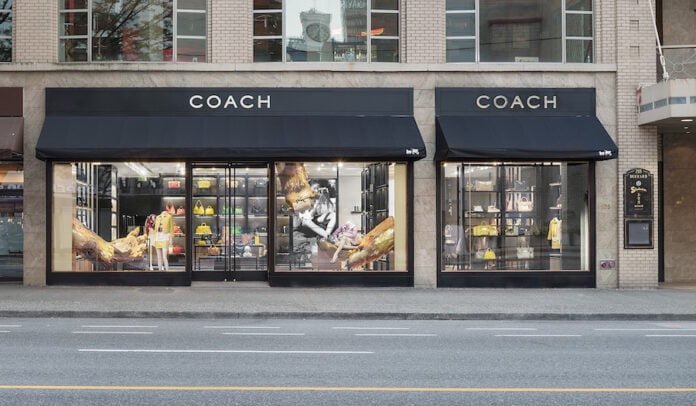
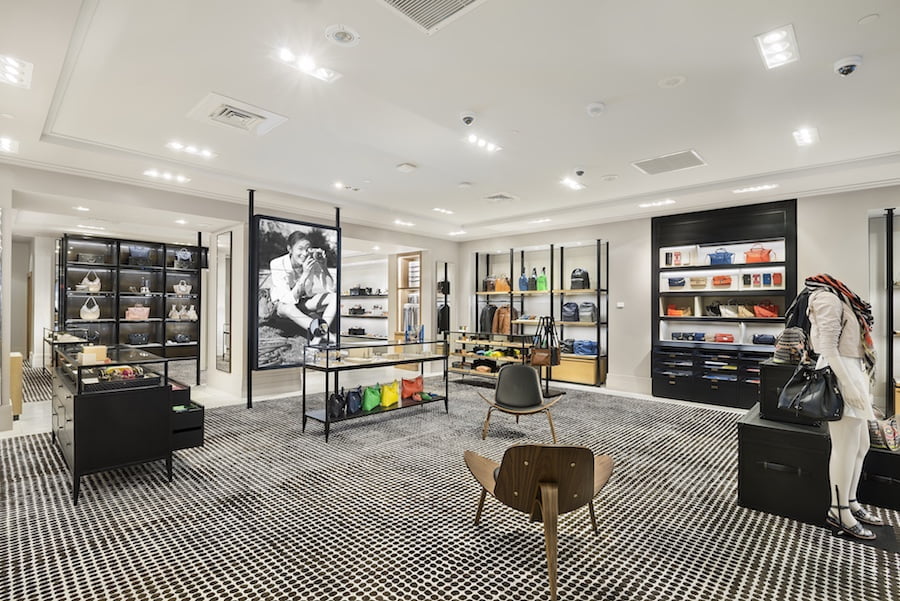
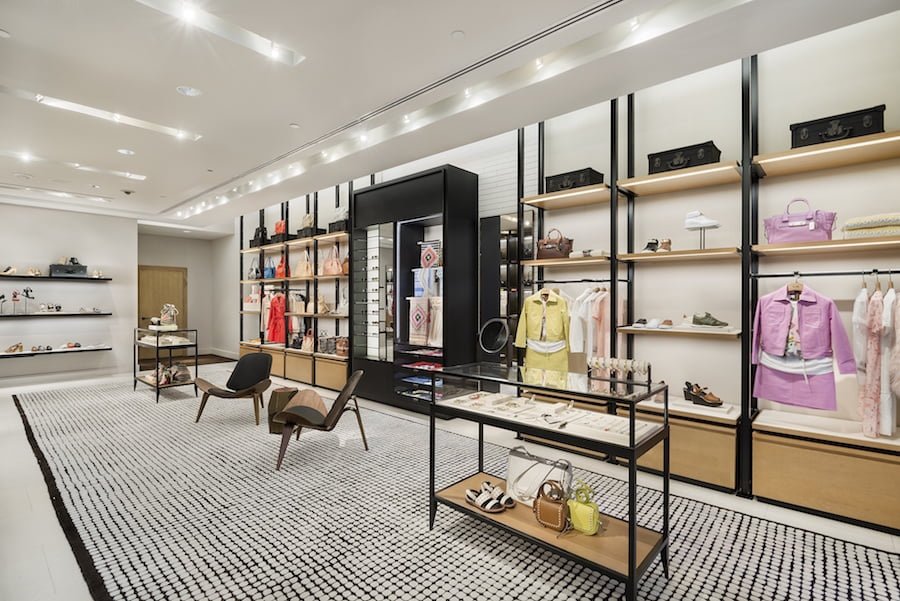
Upscale American fashion brand Coach has renovated three key Canadian flagships with a new look. Coach’s Toronto (131 Bloor Street West), Yorkdale Shopping Centre and Vancouver (755 Burrard Street) locations recently saw overhauls, featuring modern interiors by a world-renowned design firm.
The new store design was developed by Coach Executive Creative Director Stuart Vevers, in partnership with creative firm Studio Sofield, led by Designer and President William Sofield. Interiors feature contrasting textures, and luxe materials, mirroring the company’s redesigned Beverly Hills Rodeo Drive flagship, which opened in late 2014.
Interiors consist of iron spot brick pavers, reclaimed heart-pine wood flooring with custom hand-tufted wool carpeting. Powder rooms have Roman brick wall tile and granite flooring. Handbag walls incorporate seasonal artwork as backdrops, and cabinetry is fabricated from natural and ebonized ash, blackened steel, antique bronze and mahogany trim. Mid-century furniture features custom steel and leather counter stools, shoe benches in tufted leather with suede details, pearl lamb shearling upholstery on club chairs, and Pullman cloth fabric on sofas.
BLOOR STREET. PHOTO: COACH
YORKDALE. PHOTO: COACH
The three flagships carry Coach’s ready-to-wear collections — a first for its Canadian locations. Each flagship also features a wide assortment of Coach merchandise for women and men including bags, small leathergoods, footwear, watches, weekend and travel accessories, scarves and jewelry.
NEW YORKDALE STOREFRONT. PHOTO: COACH
BURRARD STREET. PHOTO: COACH
“As the Coach brand continues on the path of transformation, I wanted to create something different – different for Coach and unique in luxury,” said Coach Executive Creative Director Stuart Vevers. “I believe the new incarnation of the Coach stores that William Sofield and I created will trigger a powerful change in the perception of Coach; it is sophisticated and refined, yet playful and authentic”, he said.
According to a 2015 study conducted by Accenture, consumers feel the in-store experience needs the most improving when it comes to retail. The retail experience has become fragmented over multiple channels with inconsistent pricing and experiences. From the same study, 30% of retailers indicated the seamless shopping experience needs the most improving – that is, the same experience when making purchases online, from a mobile phone, tablet, or in-store. Given that, more and more consumers are turning to online stores for their retail experiences. Brick and mortar stores simply cannot compete with e-commerce.
E-commerce has empowered the consumer with new experiences that need to be integrated into stores. In the past 10 years, one of the biggest changes to retailers is Amazon. Amazon has effectively changed consumer behaviour through intelligent recommendations, one-click checkout, rapid shipping, and an end-to-end experience that in-store simply cannot provide. Additionally, e-commerce allows busy consumers to do this from the comfort of their own home.
While the trend for retailers to take to online has been prevalent over the past years, many online retailers have subsequently gone from “clicks to bricks”. Retail-insider.com previously covered Frank & Oak opening physical stores across Canada, but clothing retailer Frank & Oak is not the only online store making a physical presence. Warby Parker and Clearly Contacts are two other examples of online retailers moving from clicks to bricks with their own stores across North America.
Retail is rapidly changing. E-commerce has acted as a disruptive technology into the retail space forcing retailers to consider how they acquire their customers. Subsequently, online stores are faced with the challenge of competing in both an online and offline space. As e-commerce and physical retailers find equilibrium between the two spaces, expect to continue to see more closures from physical retailers and more openings of physical stores from previously online exclusive brands.
About the Author
Kate Hiscox has over 15 years of experience working in e-commerce. Both of the e-commerce stores she founded had been acquired, with her first e-commerce acquired in 2006 for $1.2 million USD. Kate is one of five children; all entrepreneurs with their own company. She is a serial entrepreneur and the CEO of Venzee, a rapidly growing SaaS platformbased in Vancouver and accelerated by 500 Startups. Venzee replaces spreadsheets with real-time integration for SMB and enterprise customers in the retail industry.
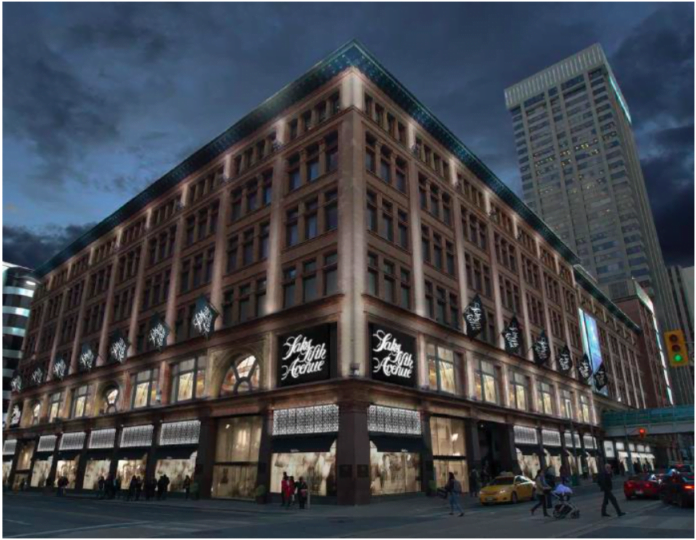
SAKS FIFTH AVENUE QUEEN STREET (RENDERING: HUDSON'S BAY COMPANY)
Saks Fifth Avenue‘s Canadian stores will feature upscale restaurants, with one dining option spanning an impressive three floors. Saks Fifth Avenue’s first two Canadian stores open in early 2016, with as many as seven planned for this country over the next several years.
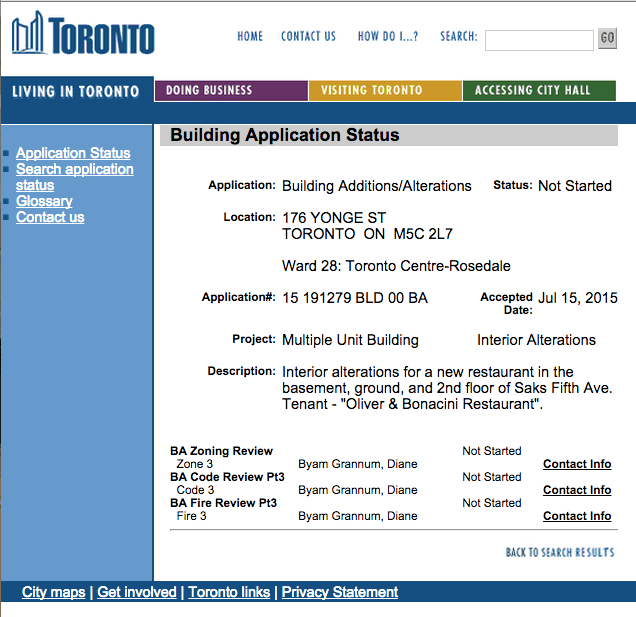
According to City of Toronto planning applications, Toronto-based restauranteur Oliver & Bonacini will operate restaurants in both the 150,000 square foot downtown Toronto Eaton Centre Saks flagship, as well as in the 132,000 square foot suburban Sherway Gardens Saks location.
Image: City of Toronto Building Application
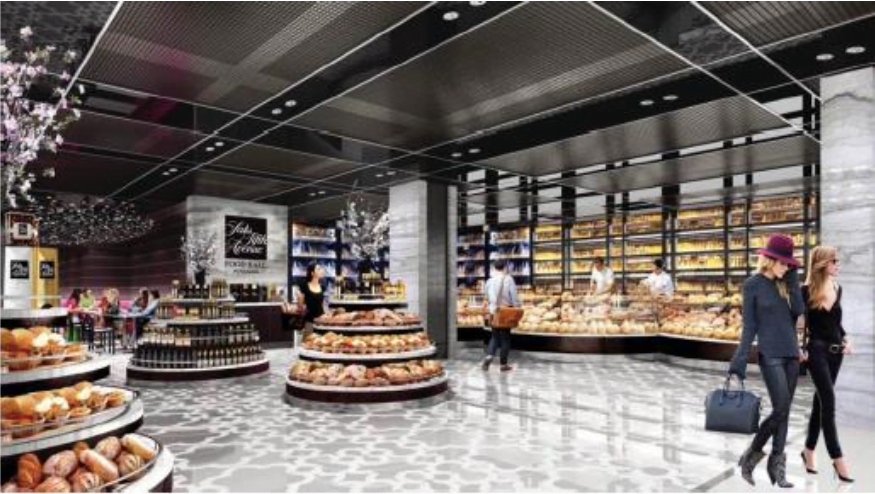
According to the application above, Olivier & Bonacini will operate a three-level restaurant space at the downtown Toronto Saks, spanning the store’s basement level, ground floor and second level. Saks’ basement will also feature a Pusateri’s Fine Foods-operated grocery floor, which will look similar to the rendering below. Saks’ ground level will include leathergoods, handbags, accessories and cosmetics, while Saks second-level will feature Saks’ men’s store.
SAKS FIFTH AVENUE FOOD HALL. RENDERING: HUDSON’S BAY COMPANY
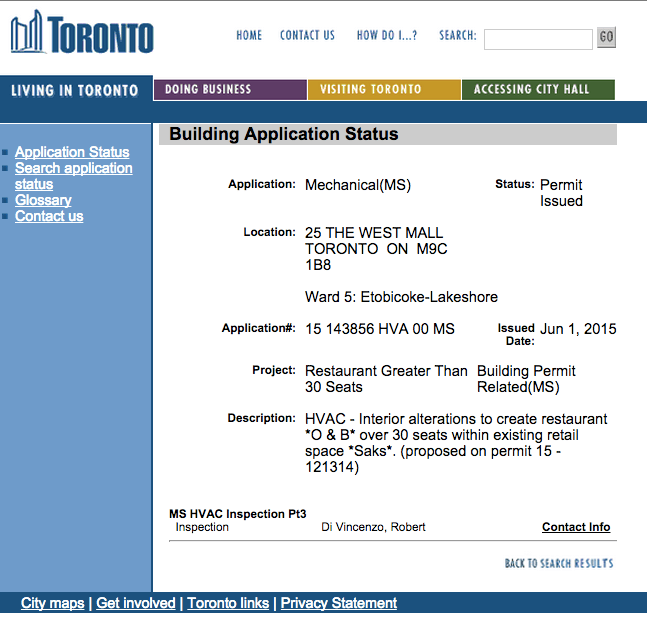
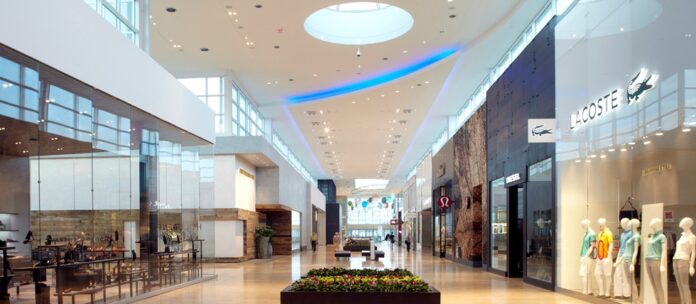
According to another planning application, Oliver & Bonacini will also operate restaurant space at Sherway Gardens’ Saks location. According to the application, the Sherway restaurant will seat in excess of 30 patrons.
Image: City of Toronto Building Application
Saks’ parent Hudson’s Bay Company has an established relationship with Oliver & Bonacini, the latter operating several food concepts within existing Hudson’s Bay stores. Oliver & Bonacini also operates some of Toronto’s finest restaurants, under nameplates Canoe, Auberge du Pommier, Jump, Luma, Biff’s Bistro, Bannock (connected to the Eaton Centre Hudson’s Bay), O&B Café Grill and O&B Canteen. The company was founded in 1993 by Peter Oliver and chef Michael Bonacini.
Saks Fifth Avenue plans to open as many as seven Canadian locations over the next several years. The company has confirmed intentions to open locations in Vancouver and Montreal, and it may also open a location in Calgary, according to sources at Saks.
YORKDALE SHOPPING CENTRE. PHOTO: OXFORD PROPERTIES GROUP
Canada is the sixth most attractive location in the world for retailers to operate, according to the recently published Arcadis Retail Operation Index (PDF). Canada scored particularly high in the index’s ‘ease of operating’ ranking, and scored strongly overall.
The Arcadis Retail Operation Index ranks 50 international markets according to five key factors that retailers consider when selecting retail locations. These include the following, with Canada’s rankings:
Infrastructure quality: Canada: 10
Ease of establishing a business and getting it ‘up-and-running’: Canada: 9
Market demand: Canada: 9
Economic environment: Canada: 10
Ease of operating: Canada: 3
The ten most favourable markets for retailers, according to the Arcadis Retail Operation Index, include:
Hong Kong
Singapore
United States
Japan
United Kingdom
Canada
Germany
United Arab Emirates
The Netherlands
Sweden
Hong Kong, Singapore and Japan, all in Asia, occupy three of the top five positions. Each country boasts governments willing to promote foreign investment, creating stability for potentially struggling retailers to improve operations. As well, each has growing middle-class populations seeking consumer goods.
Despite aging infrastructure, the United States and United Kingdom scored highly — particularly due to favourable regulatory environments and strong economic climate. Two Eurozone countries The Netherlands and Germany made the top 10, though retailers may reevaluate investment given recent issues with the Euro.
International retailers continue to enter the Canadian market. A substantial number of fashion brands enter Canada through Toronto’s Yorkdale Shopping Centre and in 2013, approximately one third of all new international retailers entered Canada through the Toronto mall. As well, a significant number of luxury brands entering the Canadian market over the next 24 months will open their first locations in Vancouver.
For reference, the ten least favourable markets for retailers to operate, according to the same index:
41. Vietnam 42. Indonesia 43. India 44. Uruguay 45. Russia 46. Pakistan 47. Paraguay 48. Argentina 49. Nigeria 50. Egypt
Antony Karabus, CEO of leading retail consultancy HRC Advisory, said: “Canada’s exceptional and transparent legal and regulatory systems and well-educated workforce contributes to its high overall rankings, particularly ‘ease of operating'”. He went on to say, “the significant growth in discretionary income levels and availability of high quality retail real estate make Canada an attractive market for international fashion and lifestyle retailers, as they continue to see opportunities for profitable growth in the Canadian market, despite increasing competition”.
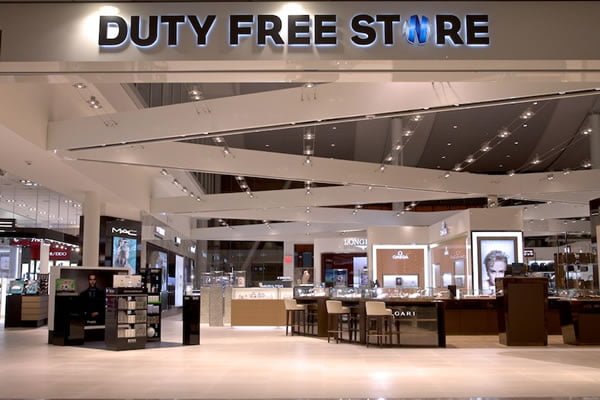
Barely 15 years ago, the retail offering at Toronto Pearson International Airport more closely resembled that of a low-budget 1980’s suburban strip mall. Chachka and tacky Canadiana, ranging from plastic CN Towers, to plush toy moose in RCMP uniforms were ubiquitous. Food court-quality burgers and fries, and day old heat-lamp chicken and veggies were some of the better food options on offer. The old, circular-shaped concrete bunker that was Terminal 1, with its low ceilings, poor quality florescent lighting, and musky odor was the main international terminal for Air Canada and most Star Alliance members.
When the new, and now current, Terminal 1 opened to the public in 2004, the retail offering still left much to be desired. More kitsch, more mediocre food, and a more questions about how Canada’s largest and busiest airport could build a brand new $4.5 billion terminal and leave the retail component so under-developed. Airports half the size, such as Vancouver International, had a retail offering that put Pearson to shame.
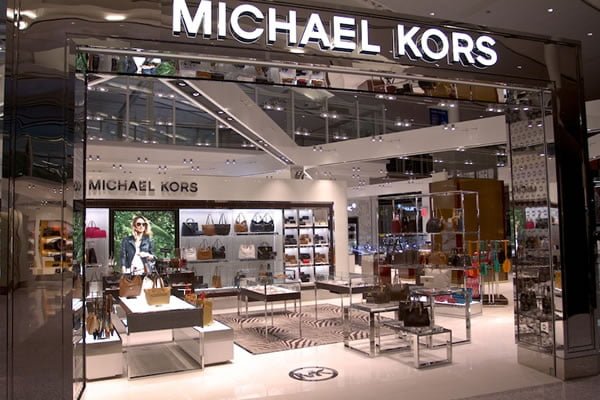
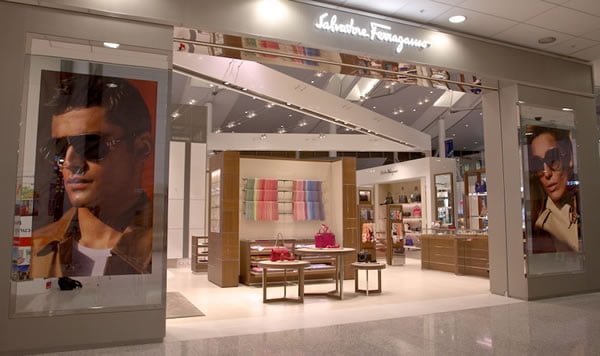
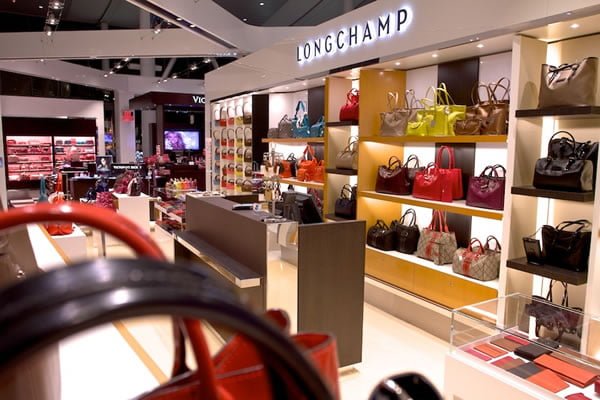
Anyone who’s ever traveled through Frankfurt, London Heathrow, Amsterdam, Hong Kong, or Dubai knows that an airport doesn’t just have to be utilitarian. Quite the opposite, in fact. Airports can, and should be retail destinations unto themselves. For decades North American airports seemed to have missed that memo. But in recent years, large North American hubs are finally starting to catch up to their European, Asian, and Middle Eastern counterparts. And Toronto Pearson is at the forefront of an airport retail revolution that has made, and will continue to make both Terminals 1 and 3 virtually unrecognizable from 10 years ago.
For those who think airport retail is a frivolous “nice-to-have while you wait impatiently for your flight”, make no mistake, shopping, and in particular luxury shopping, has become such a huge part of the airport experience that it now accounts for as much as 53% of total revenue in the case of Dubai, and 30% in the case of Pearson. The goal is to increase that to 50%.
Not to be ignored, Terminal 3 is next in line for a major overhaul, and is currently undergoing the same kind of retail transformation that Terminal 1 went through. Interestingly, back in 1991, Terminal 3 hosted North America’s only Harrods store. It was a mini-version of the iconic British department store, and it closed shortly after it opened as Toronto and the rest of the world plunged deep into recession. The closing of Harrods seemed to be a turning point in the direction that Pearson took with its retail development. Less risk, less innovation, and a whole lot more indifference to the benefits of airport retail.
As more and more of the world’s wealthy travel, Pearson, almost more-so than any other airport in North America, is perfectly positioned to reap the rewards of those who will inevitably shop more as they transit through the airport. As it stands right now, Pearson is the fourth largest port of entry into North America behind New York JFK, LAX, and Miami. Overall international traffic in North America is second only to JFK, and for the past four years Pearson has been the fastest growing airport on the continent. In 2013, the Mastercard Global Destination Cities 2013 Report ranked Toronto first in North America and thirteenth in the world for the city with the fastest air connectivity growth.
Air Canada is concentrating its entire long term growth strategy on Pearson as its global hub, and that strategy is paying off. Already passing the 38 million passenger mark in 2014, Pearson is well on its way to cracking the 40 million passenger milestone for the first time in its history. For some perspective – passenger volumes at Pearson are higher than Canada’s second and third busiest airports combined. Total passenger growth at Pearson is close to 60% higher than Canada’s next three busiest airports (Vancouver, Calgary, and Montreal) combined. International passenger traffic is higher than Canada’s next three busiest airports combined and international traffic growth volumes are over 80% higher than international traffic growth volumes at all three of Canada’s next busiest airports combined. In other words, passenger growth and volumes in Canada are disproportionately in Pearson’s favour. Most of that growth is coming from China, South America, and the Middle East, where wealthy travellers are fuelling a retail revival at airports the world over. Pearson is the first building most people travelling to or through Canada see, and it should represent not only the city of Toronto, but Canada as a whole, in the most positive way.
For Pearson, the goal is clear. Acquire a larger piece of the traveling pie and have more people connect through the airport. Roughly 33% of all passengers passing through Pearson are connecting passengers – the largest proportion in the country. Connecting passengers tend to stay longer and shop more than just “origin and destination’ passengers – so more connecting passengers means more retail options. In a recent interview with the Toronto Star, outgoing Chair of the Greater Toronto Airports Authority (GTAA), Vijay Kanwar stated that Pearson “should have a Bloor St. inside our terminal”. Arguably, a reference to Yorkdale Shopping Centre would be just as appropriate.
European, Asian, and Middle Eastern airports have long known that the airport experience is more than just a means to process passengers and get them on their way. An airport can be a destination unto itself. Airports such as Dubai and Hong Kong can barely be distinguished from high end shopping malls, but one thing is clear – everyone who travels through those airports can attest to the fact that it’s a memorable experience. Toronto Pearson’s goal to be the Hong Kong airport of North America is the right direction for the airport. And it just so happens that the current CEO of the GTAA, Howard Eng, ran Hong Kong airport for 17 years before joining Pearson.