Indeed Jobs is offering a $50 credit to companies looking to post sponsored jobs on its website. Indeed is considered to be the world’s top job site, with over 200 million unique monthly visitors from 60 different countries.
Toronto-based natural skincare brand Consonant Skincare is currently expanding across the Greater Toronto Area, having recently opened a new store at Yorkdale Shopping Centre. This marks the company’s third location, following the openings of two successful retail locations at Richmond-Adelaide Centre in Toronto’s Financial District, and at 2479 Yonge Street in the city’s Yonge & Eglinton neighbourhood.
Consonant Skincare was founded in Toronto by skincare enthusiast Bill Baker. “A friend turned me on to natural skincare around ten years ago,” says Mr. Baker, who suffered from dry skin himself before discovering natural ingredients were key to solving his skincare needs.
Consonant Skincare uses 100% natural ingredients in its product range. Although ‘all-natural’ is a term thrown around loosely in the skincare industry, Consonant Skincare is one of the few brands that holds true to the meaning. “Our skincare is truly 100% natural, without qualifications,” emphasizes Mr. Baker.
To Consonant, ‘all-natural’ means no added fragrance, no parabens, or synthetics – only ingredients from natural origin aimed to give customers their best skin. “Most natural skincare products on the market contain usually 97-98% natural ingredients. We believe the magic is in the extra 2-3%,” says Mr. Baker.
As Canadians are beginning to care more about what they put in and on their bodies, more consumers continue to search for true all-natural skincare products. Many mainstay retailers in Canada including Kiehl’s, LUSH, and The Body Shop have all explicitly marketed the ‘natural’ aspects of their brands. Consonant Skincare emphasizes that their products contain none of the harsh and irritating ingredients that can be found in other skincare brands. Their use of natural ingredients features prominently at the beginning of their ingredient list. For example, Consonant’s Natural Lip Conditioner contains pure almond oil as its top ingredient, followed by beeswax and jojoba oil – nothing else added.
Consonant Skincare’s product ranges from skin care products (moisturizers, eye creams, cleansers, serums), to body care products (bath bombs, body lotion, exfoliators).
Consonant’s product offerings remain relatively small. For example, only two different types of moisturizers are available – ultra moisturizing organic face cream, and ultra moisturizing organic face cream for “dry skin”. Why not a wider variety of selections of moisturizers like other skincare brands?
“A friend of mine said ‘You don’t need 18 moisturizers, you need one or two good options,” Mr. Baker says. Rather than confusing customers with multiple options, the company focuses on limited selection. Although the company plans to release new products that will complement its core offerings “I don’t see us ever starting to add 3, 4, or 5 moisturizers,” Mr. Baker says.
With no synthetic preservatives added to the products, how do Consonant Skincare’s products stay so fresh? “It was one of our biggest challenges to develop formulations that would stay fresh, and have a meaningful shelf life after purchase”. Consonant Skincare’s products use a combination of Lactose Peroxidase and Glucose Oxidase. This combination allows products stay fresh for 12-18 months, and also means the products don’t have to be refrigerated.
Consonant Skincare opened its first location almost six years ago on Yonge Street in the Yonge & Eglinton shopping area. A second location followed in the spring of 2015 at Richmond-Adelaide Centre in Toronto’s PATH System. Consonant’s latest location opened in October of 2016 at Yorkdale Shopping Centre — although Mr. Baker says this location will be a temporary location and that the company is searching for another space inside the mall.
Although a very new company with low brand recognition to the general shopper, Mr. Baker says the company is 100% interested in future expansion. “It has been a great year for us,” mentioning the company is accelerating at a fast rate. Consonant has begun to sell their products at Sephora in the U.S. and Canada, giving the company further brand recognition among skincare enthusiasts. The company’s products are also featured heavily in beauty magazines and lifestyle television shows as ‘top skincare picks’.
As for Consonant branded retail stores, the company plans to expand their store count. Mr. Baker says the choice for Consonant to open its own stores was to gain a closer relationship with their customers.”You’re not really hearing honest feedback from customers [without a retail store]. You’re not able to identify the current trends from customers as quickly”, says Mr. Baker, discussing the benefits of companies having their own retail spaces.
In terms of expansion, the company remains quiet on specific locations. A mall store, a street-fronting store, a store in Toronto’s PATH gives Consonant a chance to see how their store concept works in a variety of different retail spaces. “What’s interesting about our array of stores, it gives us a chance on how best to go forward”.
Vancouver-based large format outdoor consumer cooperative retailer MEC (aka ‘Mountain Equipment Co-op) has been opening locations at a rapid pace, bringing the number of new stores to five by the year’s end. According to Chief Financial Officer Sandy Treagus, more locations will open in 2017-onward as MEC continues to see considerable success.
This autumn has been particularly busy for MEC. On November 12 the retailer opened its second Edmonton store measuring 35,000 square feet at South Edmonton Common, complementing an existing downtown Edmonton location that will be relocating next year. In October of this year, MEC opened a 24,000 square foot store next to CF Carrefour Laval north of Montreal, as well as a replacement location in London, Ontario, also measuring 24,000 square feet. Earlier this week, MEC opened its second Toronto store, located next to the TTC Bessarion subway station at 784 Sheppard Avenue East. The new freestanding store spans 34,000 square feet and features an assortment of clothing, footwear and gear for outdoor activities — including cycling, running, camping, hiking, climbing, yoga, fitness, paddlesports, snowsports and travel. In-store services include a full-service ski-tech and bike-repair shop as well as bike-and pack-fitting stations and an equipment rental program, which will launch in 2017. The store is powered by renewable energy.
As well, on April 23 of this year, MEC opened its first store in British Columbia’s Okanagan, at Orchard Plaza in Kelowna. The store is about 20,000 square feet and features a massive wood overhead canopy.
(MASSIVE WOOD CANOPY IN THE KELOWNA STORE, BUILT BY VANCOUVER-BASED PEREGRINE.BUILD)
MEC now operates 21 stores in Canada. Of those, five are in British Columbia, three are in Alberta, one is in Manitoba, one in Nova Scotia, five are in Quebec, and six are in Ontario. According to Mr. Treagus, there’s plenty of room for growth in eastern Canada, where MEC’s store penetration is about half that of Western Canada.
Moving forward into 2017, MEC’s expansion will include a new store in Kitchener, Ontario, measuring about 18,000 square feet. MEC will also open two replacement locations next year — the downtown Edmonton unit will be relocated to the city’s downtown Brewery District in a new 38,000 square foot space, while MEC’s downtown Quebec City unit, which has issues with parking, will be relocated to a more suburban space, according to Mr. Treagus.
Photo: Robb Thompson
Photo: Robb Thompson
MEC will continue its store expansion plans into 2018-19 in Calgary, where it currently has only one store. A 30,000 square foot store will open at Seton Urban District in the fall of 2018, followed by the 2019 opening of a store in the new suburban community of Medicine Hill.
MEC’s 2018 plans also include replacing two prominent urban flagships, in Vancouver and Toronto. The company’s Vancouver flagship, currently located on West Broadway Avenue in the city’s Fairview area, will be relocated to a 45,000 square foot space in mid-2018 in the nearby Olympic Village area. As well, the company’s downtown Toronto flagship, located on King Street West near Spadina Avenue, will be relocated to a prominent site at Queen Street West and Soho Street in 2018. That new location will span about 40,000 square feet over two levels.
While Mr. Treagus couldn’t confirm an ultimate Canadian store count for MEC, he expressed that the retailer will continue to seek out retail opportunities as they present. Membership is growing quickly across Canada, with a lifetime membership costing only five dollars.
MEC is seeing considerable success in Canada, with overall sales expected to be close to $400 million in 2016. Formerly known as ‘Mountain Equipment Co-op’, MEC boasts over 4 million Canadian members. The company donates 1% of revenues to Canadian non-profit organizations that help conserve ecologically and recreationally important areas, and has invested over $34 million and counting into non-profit organizations that support outdoor recreation and conservation.
Swiss luxury watch brand Rolex has opened a second freestanding Canadian store at Mississauga’s Square One shopping centre, in partnership with Toronto-based Raffi Jewellers. The Rolex boutique, spanning in excess of 1,700 square feet, boasts a strategic corner location in Square One’s new ‘luxury wing’ across from the mall’s impressive Holt Renfrew.
The boutique features a wide range of Rolex wristwatches, including self-winding, mechanical Oyster Perpetual models. Staying true to the brand, the new boutique’s interior is “inspired by water and the sea,” with a wall of illuminated etched Aqua glass drawing the eye with its gently undulating wave motif. Refined interior finishes include walnut wood cabinets, bronze detailing, and floors in Crema Marfil marble. Rolex’s trademarked gold-effect crown decorates the store’s entrance, walls and display cases. Toronto-based Cumulus Architects oversaw the store’s design and build-out.
Rolex at Square OneRolex at Square One
The new Square One boutique also facilitates the servicing of all Rolex watches through Toronto-based Rolex Canada Ltd., providing a full range of after sales services.
Square One’s Rolex is the second freestanding location for the Swiss luxury brand, following the October opening of a 2,750 square foot location at the base of Vancouver’s Shangri-La Hotel, facing Alberni Street. According to the Vancouver franchisee, the Alberni Street/’luxury zone’ Rolex is the largest such location in North America.
Upscale Raffi Jewellers also operates boutiques in Toronto and Oakville. The multi-brand Toronto store, located at Yorkdale Shopping Centre, features an adjacent Jaeger-LeCoultre boutique — one of only two in Canada. Raffi’s Oakville boutique, located at Oakville Place, is dedicated to luxurious timepieces.
Calgary-based swimwear retailer Swimco is expanding its operations into Ontario, after growing to 22 locations in Western Canada since it began opening stores in 1983. Owner/President/CEO Lori Bacon explained in an interview how the company is seeing success by making customers comfortable buying swimwear.
Lori Bacon
Swimco carries over 150 brands and 1,000 styles for women, men and children. Women’s swimwear ranges in size from 4 to 24, including specialty fits for various body types. The company’s in-store ‘Fit Experts’ help consumers find what they want, in an environment meant to make consumers comfortable. Ms. Bacon explained that because some consumers may be hesitant to purchase swimwear, Swimco’s aim is to make the experience comfortable as well as positive.
Swimco was founded in 1975 as a mail-order business by Lori’s mother Corinne Forseth, in the basement of the family home in Calgary. The business originally focused on products for swim clubs and lifeguards. Ms. Forseth’s daughter Lori joined the business in 1980 and in 1983, with the help of Lori’s husband and brother, Swimco opened its first retail store in Calgary. Swimco expanded operations further in the 1980’s to include three Calgary stores as well as a Vancouver location, focusing primarily on fashion swimwear.
In the 1990’s, the family opened locations in Alberta and British Columbia, expanding into markets such as Kelowna and Victoria. In the early 2000’s, they opened in Red Deer and in December of 2011, Swimco bought-out competitor Edmonton-based Swimwear Etc.. This expanded Swimco’s store base from 14 locations to 25 in just one month, gaining the retailer a presence in Saskatchewan and Manitoba. In 2014, Swimco launched its comprehensive e-commerce site, which is now available to American shoppers as well.
Ms. Bacon said that after focusing on Western Canada, Swimco is now ready to expand eastward, beginning with Ontario. On Monday, December 12, Swimco will open its first Ontario store at Square One in Mississauga, measuring 2,100 square feet. Ms. Bacon further revealed that in early February of 2017, Swimco’s expansion will continue with a store opening at CF Masonville Place in London, ON, followed by an April opening at CF Limeridge in Hamilton.
Looking into the future, Ms. Bacon said that the Greater Toronto Area will be an important focus for Swimco, as the retailer looks to gain further market share in Canada’s most populous region. Enclosed malls are Swimco’s primary location focus, though the brand also has street front locations in Vancouver (Granville Street and on W. 4th Avenue in Kitsilano) and on 17th Avenue SW in Calgary. Ms. Bacon said that Swimco could ultimately see about 32 stores operating in Canada (possibly more depending on opportunity) , and is working with David Bishop at brokerage Northwest Atlantic on the company’s store expansion. New stores will generally be in the 2,000 square foot to 2,400 square foot range, she said.
A new study by HRC Retail Advisory finds that sales and coupons are most influential in driving consumers to shop this holiday season, with apparel being most popular among those in the 10-17 year ‘Generation Z’ age range. The study surveyed 3,100 participants in Canada and the United States to determine attitudes, behaviours and influences driving holiday gifts and shopping.
The study, conducted in October of this year, targeted four distinct demographics: Millennials with no children, Millennial parents of children under 18, ‘Generation X’ and Baby Boomer parents of children under 18, and children ages 10-17 (‘Generation Z’). Overall, the survey found that gift cards remain an extremely popular item, while apparel will surprisingly top many gift lists for both family and friends this year. Other significant findings of the survey include the following:
Sales and Coupons Drive Store Traffic: Consumers are still price sensitive and despite more modern approaches, 89% of respondents said that deep discounts (including coupons) are the key determinant of what stores they will visit for holiday shopping this year. Consumers are also motivated by visuals, with 87% of consumers saying that they are likely to enter a store based on store window displays. Additionally, 79% of consumers surveyed said they would be influenced on what stores to visit based on a retailer’s website.
Youth are Choosing Apparel Over Games for Holiday 2016: The study found that when children were asked what they’d want most if given $500 in gifts, apparel was tops, surpassing even games. Respondents said that they plan to allocate more than 30% of their budget on apparel and footwear purchases for family and friends this year. Millennial and Generation-X parents said that they are planning to spend 40% of an assumed $500 holiday budget for their children on clothing and shoes, versus a small 16% on gaming consoles and games.
Increased Popularity of Gift Cards: A whopping 83% of Millennial parents plan to include gift cards in their holiday purchases, and 32% of respondents who intend to buy gift cards indicated that gift cards will comprise at least half of their holiday budget, according to the HRC Advisory study. As well, 62% of all study respondents with a preference preferred to receive a gift card rather than an actual gift. This was consistent across all generations studied, which indicates that people would like to select their own gifts, rather than receive a gift that may be wrong for them.
Gift Card Giving Goes Up with Income: The higher one’s income, the more likely one will purchase gift cards. The study found that 83% of Millennial parents earning between $50,000 and $75,000 plan to include gift cards this year, while a remarkable 96% of Millennials that have children and earn over $150,000 plan to include gift cards in their holiday shopping. Higher earners won’t necessarily spend a greater percentage of their holiday budget on gift cards, however, as overall purchases are generally higher among those who are more affluent.
“There are limited doorbusters to drive consumers to the store this holiday season,” said Farla Efros, President of HRC Retail Advisory. “As we’ve seen over the weekend, gift cards and free shipping allow this new consumer to shop however and wherever they want. Importantly, our survey found several key attitudes and behaviours for holiday shopping that were consistent throughout the generations. Recognizing and responding to these trends, while catering to a younger group of shoppers who are gaining more and more influence within their household will be essential to a retailer’s success this holiday season and a necessary step for them to remain competitive going forward.”
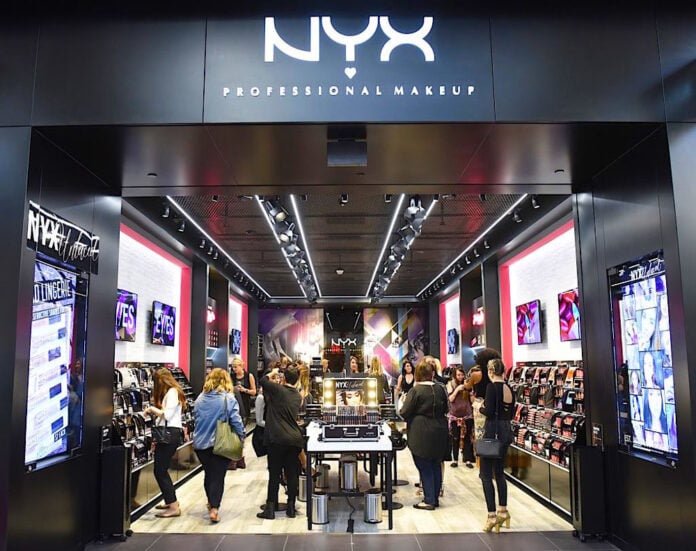
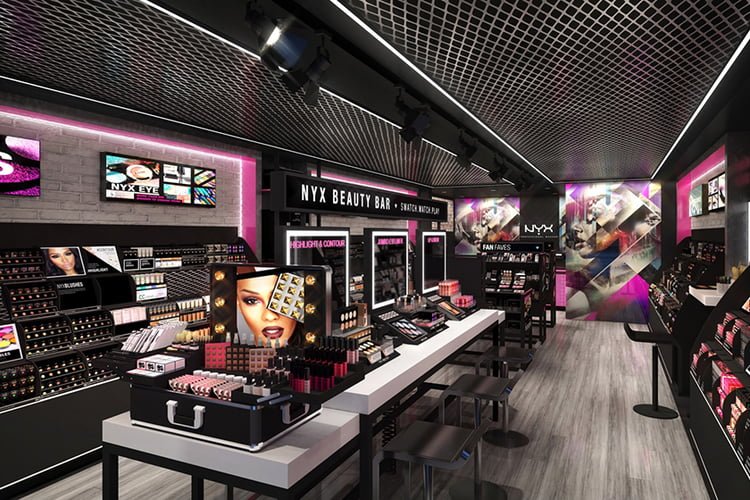
L’Oréal-owned NYX Cosmetics is seeing tremendous success with its first Canadian stores and according to its parent company’s Canadian head, NYX will look to double its Canadian store count in 2017. NYX’s first freestanding Canadian store opened in the fall of 2015, and the company now operates eight stores in this country.
Seven of those eight stores are in the Greater Toronto Area, and one is at Ottawa’s CF Rideau Centre. NYX’s first Canadian store opened at Mississauga’s Square One in October of 2015, followed by a freestanding unit shortly thereafter on Toronto’s popular Queen Street West. More locations opened in 2016 and last month, we attended the Yorkdale Shopping Centre store debut which saw hundreds of excited fans line up for an in-store promotion.
NYX (Named after the Greek goddess of the night, pronounced ‘Nix’) was founded by Toni Ko in 1999, and is headquartered in Los Angeles. The brand is known for its high quality, affordably priced rich-pigment cosmetics, which have gained a loyal following both with makeup artists as well as the general public. L’Oréal bought NYX in 2014, and has expanded the brand significantly to include product lines in retailers selling cosmetics such as Canadian retailers Shoppers Drug Mart, Rexall and London Drugs.
Photo: NYX PROFESSIONAL MAKEUP
According to L’Oréal Canada’s Chief Retail Officer, Jared MacKay, the NYX brand is “on fire” in this country. NYX is seeing exceptional growth with its freestanding stores, which compliment the brand’s wholesale accounts by enhancing brand awareness while featuring expanded product lines and experiences. He credits social media for contributing to NYX’s popularity, which has a huge following among younger consumers seeking out cosmetics at a popular price point. The brand also features a wide variety of pigment-rich cosmetics, including foundation in various shades that match almost any skin tone, unlike many competitors.
Following NYX’s Ontario expansion, the brand will look to open stores in selected Canadian markets, with a target of about eight locations in 2017. Mr. MacKay said that target markets would include British Columbia and Alberta, among other regions, and said that a number of potential deals are in the works. NYX is working with brokerage Northwest Atlantic for its Canadian store expansion, and is ideally seeking retail space in the 1,000 to 1,200 square foot range.
While the suburbs provide opportunity for retailers to open large stores with a wide range of product, dense urban cores can be challenging and as a result, some retailers may choose not to locate downtown. There are some innovative solutions available, according to Marjorie Mackenzie, Vice President of Retail at leading Toronto-based design firm figure3.
Small-format real estate may prove strategic to retailers seeking to sell to customers in dense urban areas. Rather than carrying a store’s entire line of products, smaller stores with curated product assortments could be a strategic move, catering to local tastes by carrying product tailored to local demographics.
Sears Canada is one example, noted Ms. Mackenzie. The retailer typically occupies store locations in excess of 100,000 square feet, with a wide product offering ranging from fashion to cosmetics to tools and appliances. While the fashion side of Sears struggles amid considerable competition, its Craftsman (tools) and Kenmore (appliances) brands are strong enough to spin off into their own retail locations in Canada, which would take considerably less real estate and could be accommodated in dense urban centres.
Sears Canada has a considerable amount of competition in the market, and yet its focus continues to be on fashion apparel. Ms. Mackenzie said that Sears should look at ‘what it does best’, particularly in categories of appliances, tools and baby items, and consider opening smaller freestanding locations devoted specifically to these categories.
Ms. Mackenzie explained how home furnishings brands, even possibly Sears Whole Home, could open smaller locations near thriving urban cores to cater to locals moving into the area. A store could promote paint one week, for example, with locals being invited to check out the newest shades, potentially leading to sales.
As Canada’s urban cores continue to see an increasing number of new residents, retail can strategically follow, she said. At the base of new condominium towers, for example, a furniture retailer may choose to open a location, if even for a limited time period, to cater to new residents. Transporting purchases could therefore become relatively simple and in some instances, only be an elevator ride away.
A ‘hub and spoke’ model could also be used for optimal retail productivity, according to Ms. Mackenzie, where a large retail location (such as a department store), or distribution centre could act as a ‘hub’ for a series of smaller ‘spokes’, each of which would be tailored to local areas based on postal code data. Ms. Mackenzie also used the example of a large-format fashion retailer that has a number of in-house brands. If the large retailer is unable to find enough real estate for a store housing all of its brands, it may choose to focus brands on local markets. For example, a dressier in-house fashion brand could locate in the Bloor-Yorkville area, while trendier fashion offerings might better serve a retail location on Queen Street West.
The ‘hub and spoke’ model is already being tested by some retailers in Canada, though in a somewhat different way. Ikea, for example, has launched a number of smaller ‘pick up and order point’ locations in a market that also features full-sized comprehensive locations, with fulfillment from smaller stores coming from the regional warehouses. Some financial institutions are doing it as well. For example, a full-service financial institution may also include smaller branches that may feature ATM’s and a US depository, or even a separate mortgage lending centre within close proximity to new condominium communities.
Ms. Mackenzie went on to describe the concept of a downtown ‘Ikea Design Centre’, located near burgeoning condominium communities. As locals move into the area, they may look to make furniture purchases. Furthermore, in nearby areas where established buildings are seeing unit renovations, unit owners may visit the Design Centre with dimensions of kitchens or bathrooms, for example, and purchase fixtures that can be easily shipped and built within the renovated unit.
Stores don’t need to be big to be compelling, according to Ms. Mackenzie. She used the example of the figure3-designed 158 square foot Penguin Random House store in downtown Toronto, which opened over the summer. Although the retail space is small by most standards, its configuration, functionality and branding are on-trend with the ‘Seven Principles’ of retail design. We also discussed these seven principles in more detail in a previous article discussing La Maison Simons at Square One, which has seen considerable positive feedback since opening last spring.
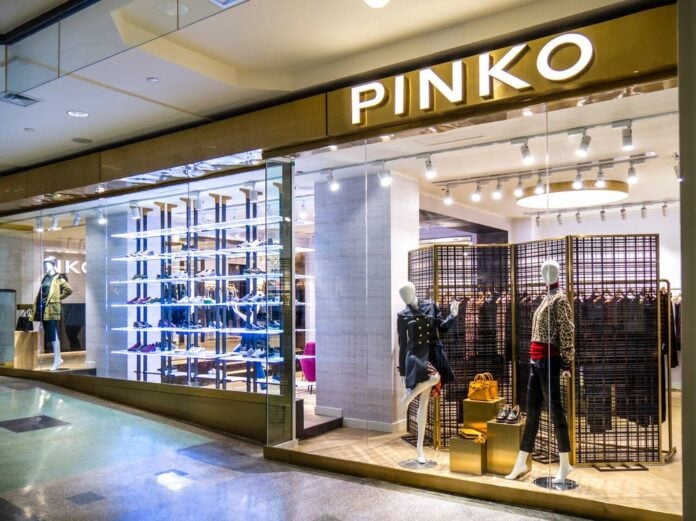
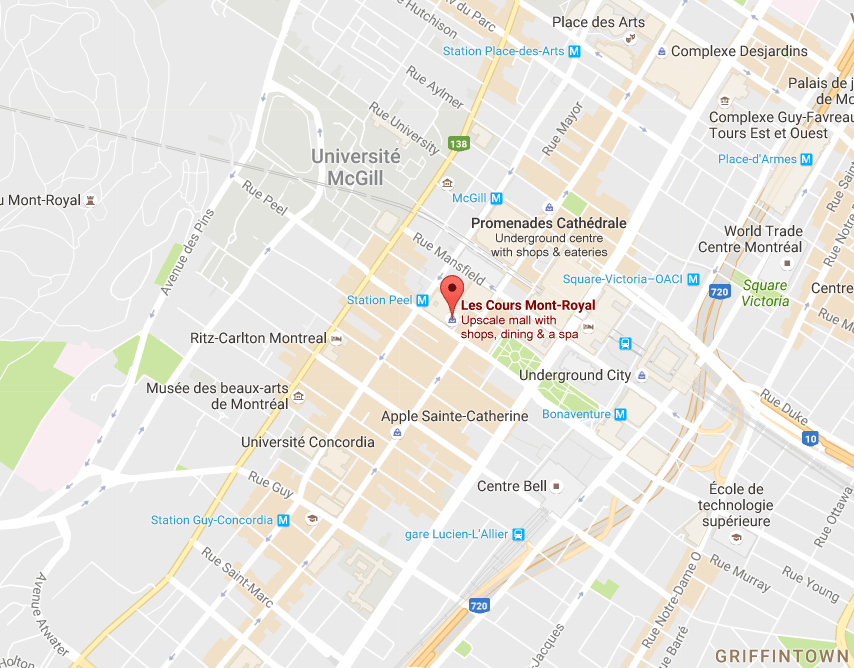
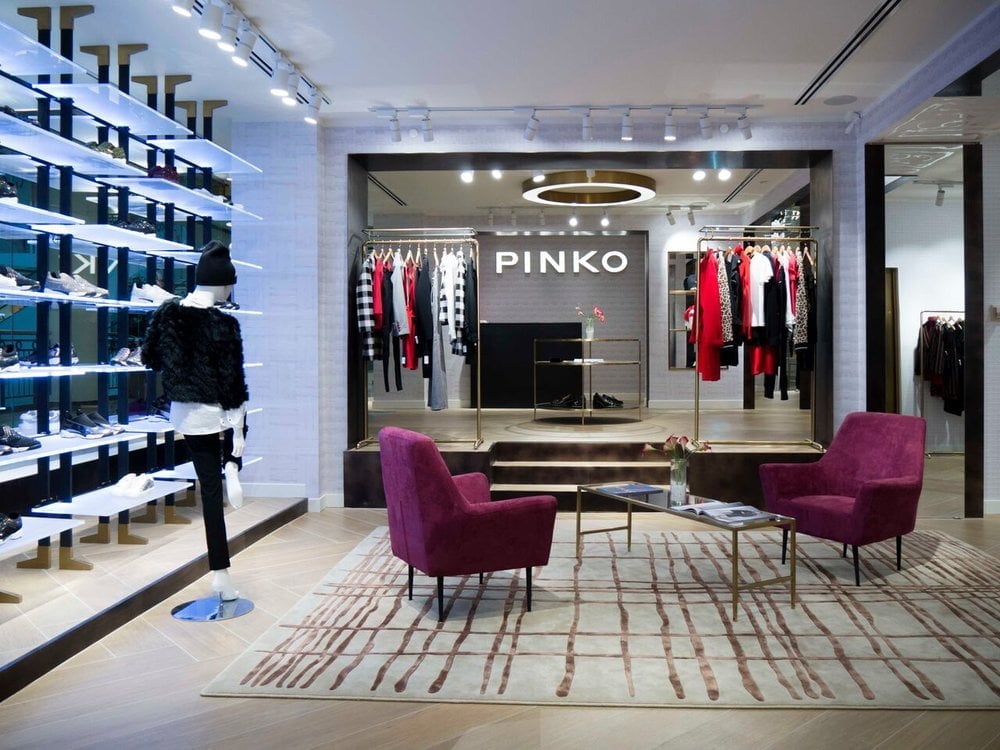
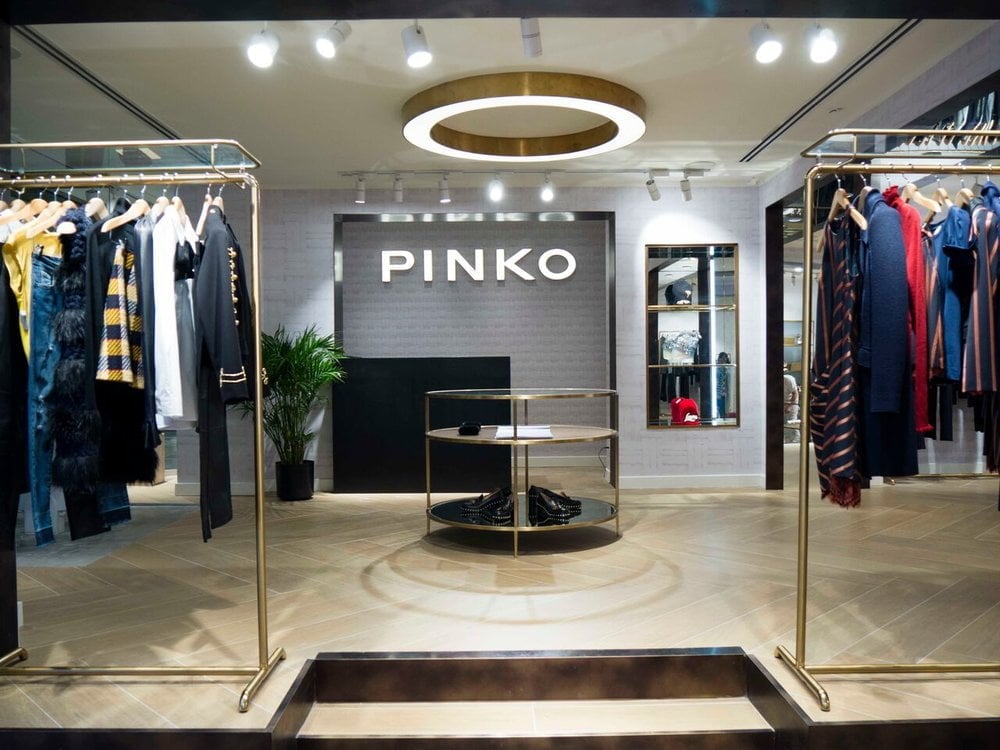
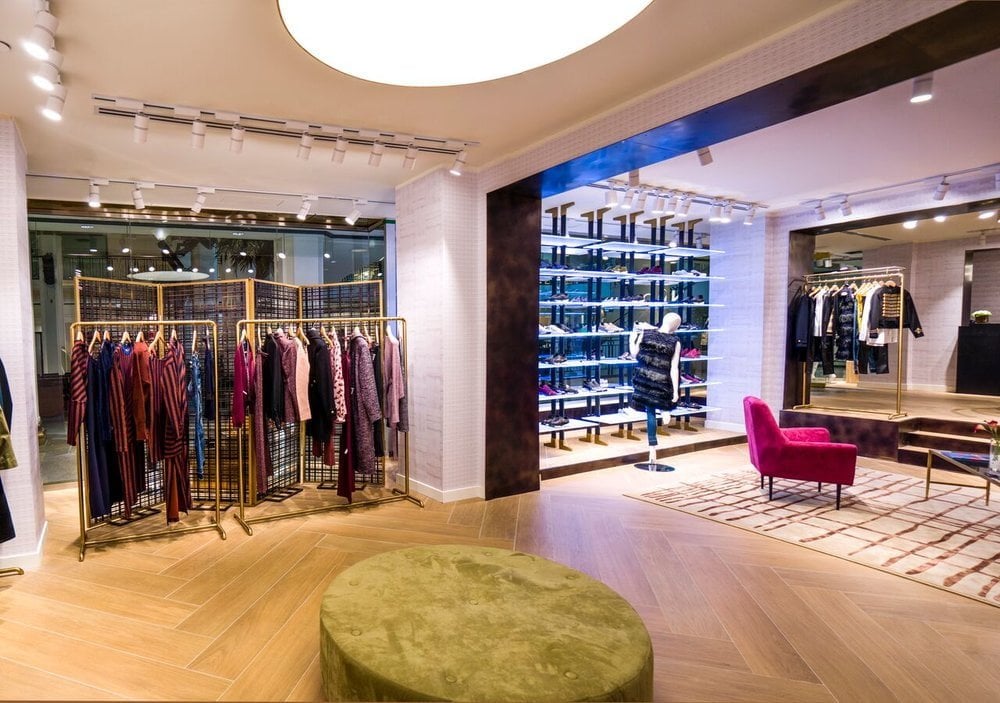
Contemporary, trend-focused Italian women’s fashion brand PINKO has opened it’s first Canadian location at downtown Montreal’s upscale Les Cours Mont-Royal. The 2,204 square foot boutique is located on the mall’s third level, and is the brand’s second North American store, following the opening of a unit earlier this month in New York City’s Soho area.
Founded in 1986 by Pietro Negra and Cristina Rubini, the PINKO fashion brand features styling that reflects the ‘Italian Spirit’, according to the company. Fun and quality are key components to the brand’s identity, with clothing styles ranging from dressy to casual/trendy.
“We are thrilled to welcome this distinctive brand,” says Valerie Law, Vice-President of Marketing for the Soltron Group (which also owns Les Cours Mont-Royal). “Our vibrant city is known for our trendsetting fashions, making Montreal and Les Cours an ideal place for PINKO’s cutting-edge collections.”
(CLICK ABOVE FOR INTERACTIVE MONTREAL MALL MAP, VIA GOOGLE)
(FOOTWEAR AREA, WITH READY-TO-WEAR BEHIND)
PINKO has stores in 24 countries (mostly in Europe) with over 170 retail stores (both corporately-owned and franchised) as well as 970 wholesale outlets. The brand can also be found in upscale international department stores and is expanding into the travel retail sector with 10 recently inaugurated stores in Italy and abroad.
Canada could see more PINKO locations, according to Ms. Law, though the company will test the Canadian market with its first Montreal store. The company is taking a similar approach to an American store expansion, she noted.
PINKO joins a number of other international retailers that have opened their first Canadian locations at Les Cours Mont-Royal. In the past, Maledetti Toscani, Desigual, and DKNY opened their first Canadian stores here, prior to expanding into other Canadian markets.
(FOOTWEAR TO THE RIGHT, READY-TO-WEAR TO THE LEFT)
*Photos of the new Montreal store, above, were supplied.
Since 2010, Vancouver-based think tank DIG360 has been tracking Black Friday behaviour in Canada. This year, DIG360 has released the following projections:
1) Black Friday, now ubiquitous in Canada, is in effect blurring into a weeks long promotion that is continuing on into December Holiday sales. Moneris called 2015 Black Friday bigger than Boxing Day. DIG360 expects that sales in 2016 may diffuse away from Black Friday. In a few years, Black Friday may lose its focus and simply be one part of a ‘November-December’ series of promotions, according to DIG360 head, David Ian Gray, and from a consumer perspective, Cyber Monday is fast becoming meaningless since the extended Black Friday is now firmly online as much as offline.
2) Black Friday promotions had plateaued at about 50% of adults in 2013 and 2014. With data collected by partner NRG Research, DIG360 determined that last year’s participation jumped to 68% of Canadians. DIG360 attributes this to a combination of the longer Black Friday selling period and increased shopping on the Internet for deals by the crowd-averse. They expect physical store shopping will level out, with any increases coming from the web, estimating that 72% of Canadian adults will be Black Friday promotional browsers and buyers.
3) Retailers continue to teach us to wait; more than 1/3 of purchasers will postpone Holiday shopping until this weekend, based on patterns in 2014 and 2015. DIG360 will also be watching for what we call “Black Friday Shadow”, a week long lull in store traffic after the Black Friday weekend ends. This first appeared in 2015 and could be a major concern for retailers.
4) Many shoppers will continue to browse without buying, underwhelmed by the breadth and depth of the deals; retailers will continue to protect margins and sell close to regular price as far into the Season as possible.
5) Almost half of shoppers will be seeking deals for themselves rather than gifts; this group is also more likely to participate on Boxing Day, and for the same purpose.
6) The low Canadian dollar will mean a drop in cross-border Black Friday shopping (online and offline) but from a very low proportion of Canadians (only 5-7% of Canadians shop the US for Black Friday). When will Canadian retailers exploit the exchange rate to lure American web shoppers?
It will be interesting to see how Canadians shop Black Friday this year, and how Cyber Monday will play out, based on the above. The DIG360-Leger 2016 Black Friday Surbey will be conducted next week, and we’ll report back with the results.