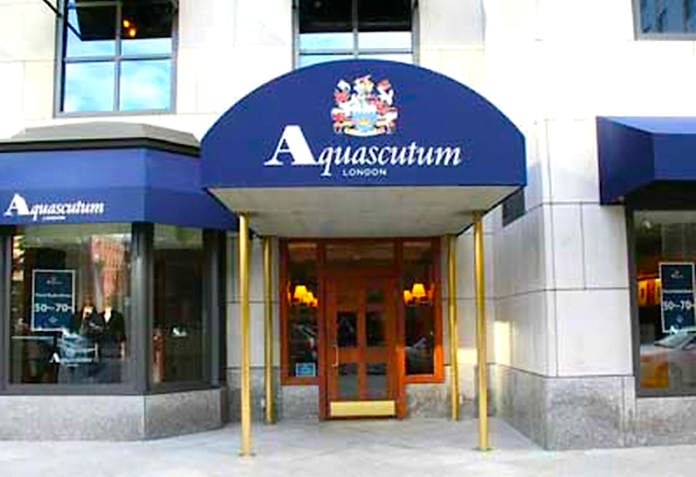
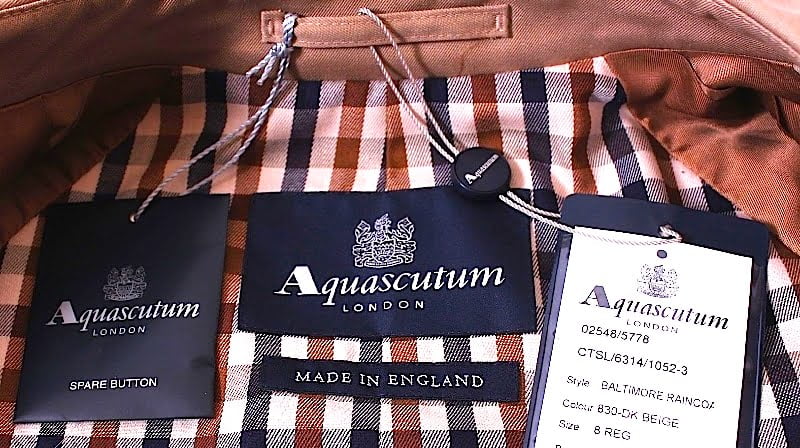
Particularly known for its trench coats and trademark club check, premium British fashion brand Aquascutum has partnered with a Canadian company to expand its brand to North America, including free-standing Canadian stores.
Toronto-based Jaytex Group, through a licensing agreement, will distribute the Aquascutum 1851 brand through both wholesale and retail channels and according to Women’s Wear Daily, will open standalone stores in Canada in the next two to three years. Jaytex also works with brands including Ben Sherman, Original Penguin and Kenneth Cole.
Aquascutum’s men’s collections are carried at Harry Rosen stores in Canada, as well as Barney’s New York in the United States.
In March 2013, Aquascutum launched a three-year strategy to build its presence in the UK and international markets. Last year Aquascutum opened two new London stores and it is seeking other store locations in 2015.
Founded in London in 1851, Aquascutum (Latin for ‘watershield’) manufactures and retails men’s and women’s clothing and accessories. The brand was family owned until 1990, when it was purchased by a Japanese conglomerate. British fashion brand Jaeger bought it in 2009 and after financial difficulties, Aquascutum became property of Chinese fashion retailer YGM Trading Ltd. in April of 2012.
For those old enough to remember, Aquascutum once had multiple Canadian store locations. In the 1980’s the brand operated free-standing stores as well as shops-in-stores in retailers such as Eaton’s, Hudson’s Bay, Simpson’s and Woodward’s, among others.
Knight Frank recently released a study (PDF) indicating that Toronto has substantially more high-net-worth individuals than Chicago. Chicago, however, has considerably more free-standing luxury stores than Toronto. We spoke with luxury retail expert Farla Efros, COO of HRC Advisory, to learn more.
According to the Knight Frank report, Toronto is home to 1,216 ultra-high-net-worth (UHNWI) individuals, compared to 827 in Chicago. UHNWI are persons with investable assets of at least US$30 million, excluding personal assets and property such as one’s primary residence, collectibles and consumer durables.
For those who are curious, the Knight Frank report indicates that Montreal has 534 UHNWI’s, while Vancouver has 262.
Chicago, unquestionably, has more free-standing luxury stores in its central core, when compared to Toronto. North Michigan Avenue, and the areas around Oak Street, Rush Street and the Waldorf Astoria Hotel boast a plethora of luxury stores. Saint Laurent Paris, Brioni, Brunello Cucinelli, Tom Ford, Marc Jacobs, Lanvin, Christian Louboutin, Piazza Sempione, Tod’s, Loro Piana, Harry Winston, Graff, Jil Sander, Ralph Lauren, Ermenegildo Zegna, Buccellati, Pomellato, Church’s, Omega, Bottega Veneta, La Perla, Christofle, Giorgio Armani and Van Cleef & Arpels operate free-standing locations in Chicago’s central core. None of these brands currently have free-standing Toronto locations.
Toronto, in comparison, houses free-standing locations for the luxury brands Mulberry, Versace, and Guerlain, none of which currently operate free-standing Chicago stores.
Furthermore, when examining upscale department stores, Chicago currently has Toronto beat. Chicago’s core features locations for Saks Fifth Avenue, Neiman Marcus, Barney’s New York, Bloomingdale’s and Nordstrom. Chicago’s suburbs include two Neiman Marcus locations, one Bloomingdale’s, and four Nordstrom stores. Toronto, in comparison, has three Holt Renfrew stores and an arguably upscale Hudson’s Bay store at Toronto Eaton Centre.
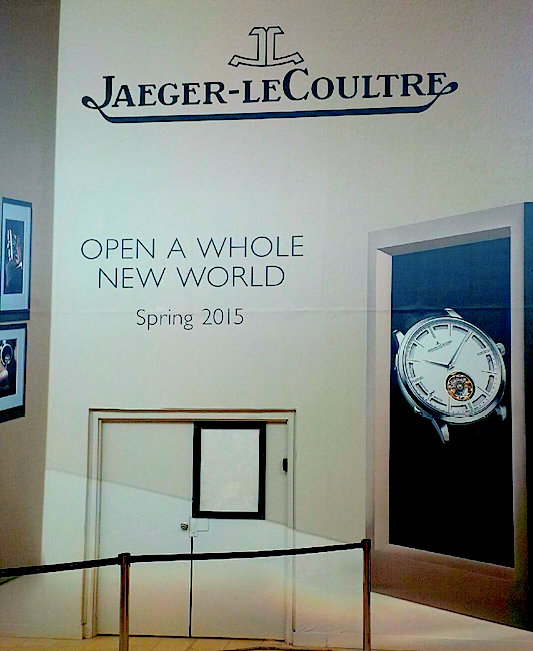
Although Chicago will see a handful of new luxury retailers over the next two years, Toronto’s luxury growth will appear to be greater in comparison, at least in the shorter-term. This spring, Longchamp, Kiton, Corum and Jaeger Le-Coultrewill open free-standing Toronto locations – and none of these are currently operating in Chicago. Furthermore, Dior, Brunello Cucinelli, Tod’s, Zegna, Omega, De Beers and a number of other premium brands are seeking Toronto retail space, with brokers saying that many more are also interested, declining to go on record for this article. Yorkdale Shopping Centre, which has seen more luxury retailer movement than anywhere in Canada recently, plans to further expand luxury offerings. Toronto’s luxury growth will be even more pronounced as upscale department stores enter the market. Saks Fifth Avenue will open two Toronto locations in 2016, and by 2017 Toronto will be home to three Nordstrom stores. Bloomingdale’s is also said to be seeking Toronto retail space, anticipating its first location opening in 2018. In 2016, as well, Holt Renfrew will open a 122,000 square foot location at Mississauga’s Square One.
Despite this potential growth of upscale stores in Toronto, Farla Efros, COO of HRC Advisory cautions that Toronto is not necessarily a slam dunk. “One would need to take into consideration that retail cost structure—retail rents and taxes, for example—to determine if Canadian shoppers could generate the productivity required to drive sustained profitability. Personal and sales tax levels are also higher in Canada”. Ms. Efros says that although numbers indicate that Torontonians are wealthier, Canadians in general tend to be more cautious spenders. She also suggests that Chicago may be a more significant destination shopping experience, enjoying the influx of millions of foreign wealthy travellers that would buoy luxury retail. Michigan Avenue is known globally, whereas Toronto’s Bloor Street, while increasingly well known, does not have the same brand awareness of Chicago’s ‘Magnificent Mile’.
Given that luxury brands do their research, Ms. Efros’ comments may explain why some brands have hesitated open stores in Toronto, while operating locations in Chicago. Things will soon change, however, as more luxury brands plan free-standing boutiques in Canada’s largest and wealthiest city.
The digital world was abuzz last Wednesday, on news of Google’s first physical store opening in London, England. The London store-in-store concept is located within Currys PC World, a U.K. electronics retailer owned by Dixons Carphone. The latter will be receiving all revenue from sales of the products.
What the Google store is not, is a typical store or store model for that matter. Touted more as a billboard, the partnership with Dixons provides an opportunity for Google to get customer face-time in real-time and in-person.
Google’s James Elias in a statement said:
“We’re incredibly excited to launch this space―the first of its kind anywhere in the world―in London with Currys PC World.
The pace of innovation of the devices we all use is incredible, yet the way we buy them has remained the same for years. With the Google shop, we want to offer people a place where they can play, experiment and learn about all of what Google has to offer; from an incredible range of devices to a totally-connected, seamless online life.
We think it’s a genuinely unique try-before-you-buy experience.”
Re-visioned Physical spaces are key to helping consumers as they research products
Omni-channel shopping is a key consumer behavior worldwide and Google has picked up on the fact that customers still want to try before they buy, touch-and-feel and certainly play!
With the fast pace of technology, many of the features and functions of new devices likely go unused by the majority of tech-owners, save the tech-savvy. Similar to the Apple Store, the Google store will “offer customers the chance to sample Google’s range of Android phones and tablets, Chromebook laptops and Chromecasts and learn about how they work together, from one device to the next, to make users’ lives as seamless as possible.”
The need for physical spaces for consumer research is an important idea and integral to the concept of omni-channel shopping and retailing. As retailers and shopping centers consider the re-visioned physical spaces of the future, we will see a greater demand for physical branded spaces. This should be a key consideration for shopping centers who are struggling to determine how they add-value to their tenants.
Branding through Flagship Locations
Some of the more theatrical features of the store that make it a real flagship for Google include an opportunity to check out:
An immersive surround screen installation called “Portal” where users can “fly” through any part of the planet through Google Earth;
A Doodle Wall where budding graffiti artists can use digital spray cans to paint their own take on Google’s iconic logo, which they can then share on social media; and
A Chromecast Pod where customers can enjoy Google Play Movies, YouTube and more, all cast through a Chromecast dongle that converts any TV into a smart TV.
Education of Products
Similar to Apple, the Google Store “hopes to host regular classes and events for the public. Classes will range from how to keep secure online …(to) simply learning how devices work.”
This is integral to customers understanding the value of the products they have purchased and getting optimal use.
Real-Life Example
Regardless of the category, education on products is an important aspect of selling high-end products. My colleague and I attended a conference in Montreal last week and we had this experience firsthand when we checked out a few med-high-end apparel stores in a shopping center. One store had a store associate who could tell us the fabric type, process, and even the difference between their products and the competitor. His enthusiasm was contagious. Five stores down, the competitor’s store associates, while extremely friendly, provided no added information on why their products were better. Both my colleague and I are looking to buy a jacket from the first store.
This is where Apple has excelled. Their store associates are educated on their products, understand the concerns and issues customers have and are part of an education process. How many times have you heard a friend say “my birthday gift from my spouse will be the new iPhone.” Google must tap into that further in order to hold and expand its Android-based products against a slew of competitors coming out of Asia and North America.
The new Google store is a step in the right direction. While most news will say Google is too late, we think it’s better late than never. Consumer behavior shows the need for re-visioned physical spaces to help customers research and buy in tandem with online stores is important. It’s the way of the future and those who don’t catch up will be closing shop.
Written by: Suthamie Poologasingham, Sr. Advisor of Digital & Omni-Channel, and Director of Research at J.C. Williams Group.
Sources: Google Press Release, Wall Street Journal; Photos: McMillanDoolittle
J.C. Williams Group is a well-known, full-service retail and marketing consulting firm. It offers clients practical, creative, and in-depth knowledge of retailing and marketing, including up-to-date know-how and techniques to make retail operations better and more profitable. You can also read their informative blog, Retaileye, here: retaileye.wordpress.com.
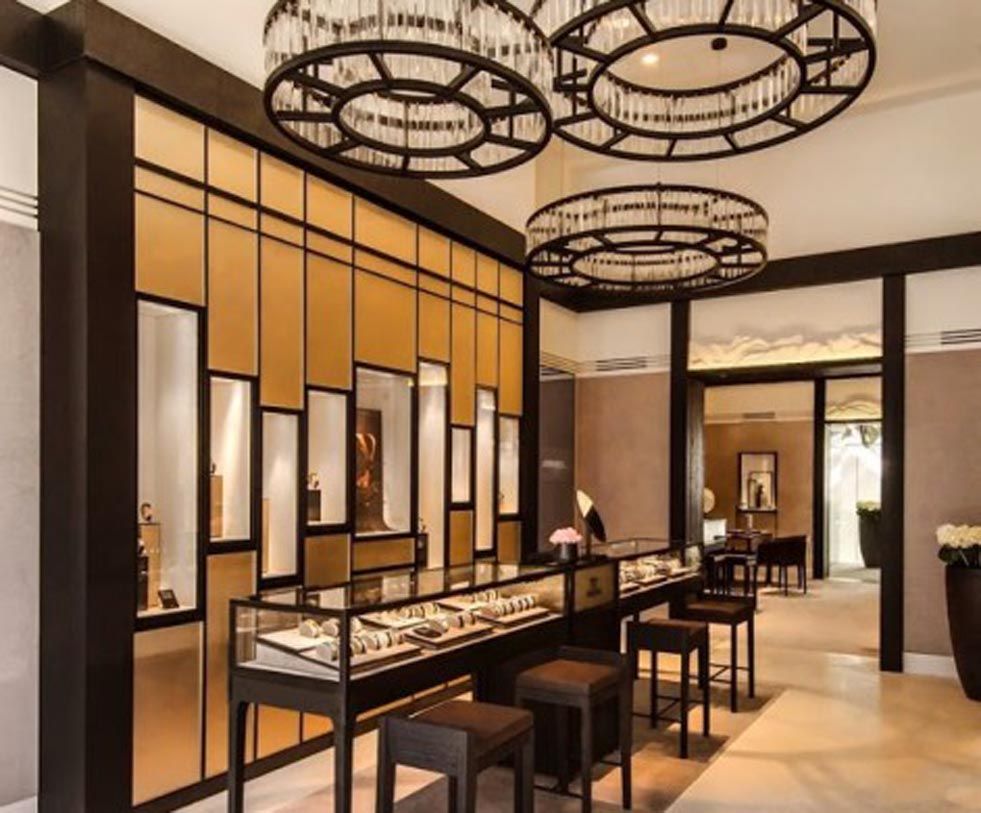
Swiss luxury timepiece brand Jaeger-LeCoultre will open two Canadian boutiques this year. In January we discussed a Vancouver location on Alberni Street, and now Urban Toronto‘s ACT7 informs us that Jaeger-LeCoultre will open in Toronto.
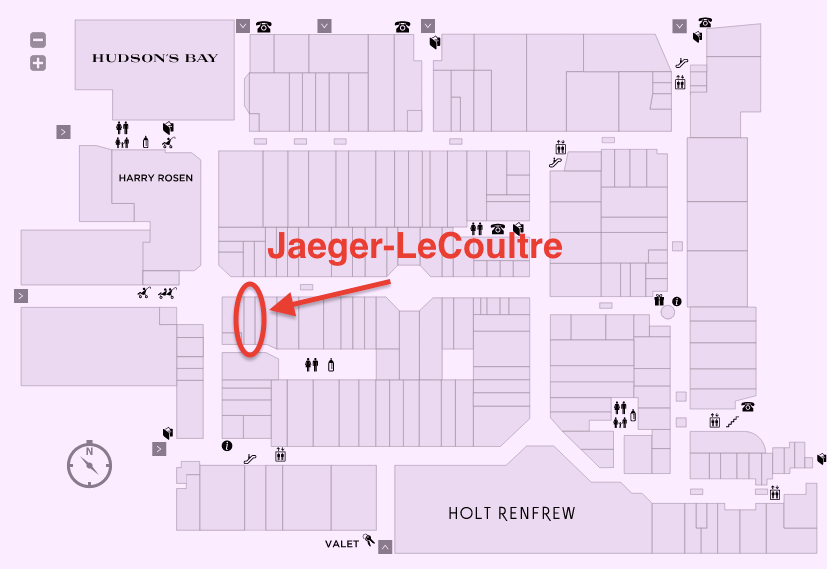
Toronto’s Jaeger-LeCoultre will be at Yorkdale Shopping Centre, and will be operated by Raffi Jewellers. The boutique will open this spring, technically making it the first LeCoultre location in the country. Jaeger-LeCoultre will locate in a 1,600 square foot space next to Raffi Jeweller’s Rolex boutique, in a retail space formerly occupied by Motherhood Maternity.
Interestingly, Both luxury brands Jaeger-LeCoultre and Rolex will be removed from Yorkdale’s now famous ‘Luxury Wing’, housing prestigious retailers such as Cartier, Tiffany & Co., Bulgari, Moncler, Versace, Jimmy Choo and others. As Yorkdale continues to welcome new luxury brands, however, we may see prestigious retailers locate in various places within the world-class Toronto mall. Even more premium brands are expected to locate in the mall’s new 298,000 square foot wing which opens next year, alongside anchors Nordstrom and Uniqlo.
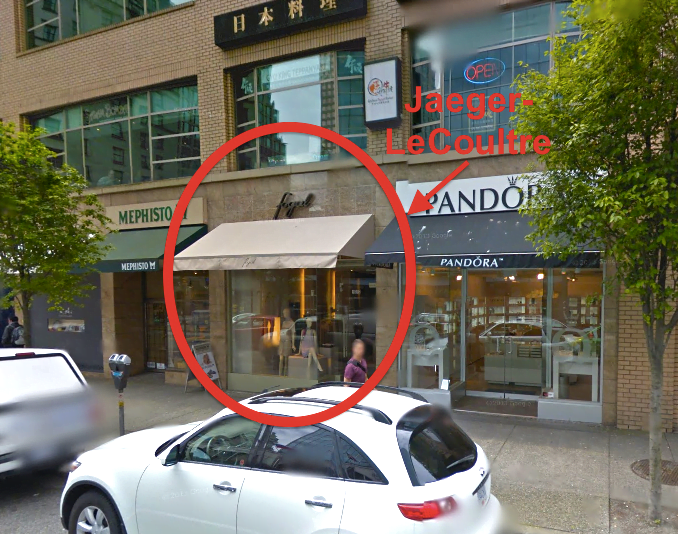
As discussed in January, Jaeger-LeCoultre will open at 1012 Alberni Street in Vancouver, replacing luxury legwear and knitwear brand Fogal of Switzerland, which vacated the small Alberni Street retail space in August of 2014. Jaeger-LeCoultre is the latest luxury brand to land on Vancouver’s upscale Alberni Street, located at the heart of Vancouver’s ‘Luxury Zone’. Next to LeCoultre will be Canada’s first location for premium Chinese jeweller Lao Feng Xiang, and the area will soon see new locations for Christian Dior, Prada, Strellson and other brands, joining already existing luxury retailers such as Louis Vuitton, Tiffany & Co., Hermes, De Beers, and others.
Founded in Switzerland in 1833, Jaeger-LeCoultre is now a subsidiary of luxury goods conglomerate Richemont. Jaeger-LeCoultre has eight locations in the United States. Of those, four are in the Miami area (Aventura, Bal Harbour, Miami Design District, Palm Beach), and two are in the Los Angeles area (Beverly Hills and South Coast Plaza). New York City and Las Vegas also each have one free-standing Jaeger-LeCoultre boutique. The brand is also carried in upscale retailers across North America.
Penguin Pick-Up is a delivery pick-up service offered by SmartCentres, Canada’s largest developer of unenclosed malls, those massive big-box power centres typically anchored by a Walmart store. Penguin Pick-Up launched a couple of months ago, and is now operating at 3 SmartCentre locations in Ontario, with a plan to roll out nationwide at an average rate of one location a month, says Egil Moller Nielsen, Senior Vice-President of e-commerce for SmartCentres.
How Penguin Pick-Up Works
Consumers can shop online at any retailer that delivers to Canada, but instead of having their order shipped to their home – often when they’re not there to receive it – they can have it shipped to a Penguin Pick-Up point for secure holding. Retail Category Consultants gave the service a test run to determine if it removed enough customer pain points to make it a regular habit for online shoppers.
The Shopping Process
Customers need to first register for the Penguin Pick-Up service and then choose the pick-up location that is most convenient for them. When we first visited the Penguin Pick-Up website, it wasn’t entirely clear what the service offering was. Were we supposed to order only from retailers who are tenants at SmartCentres? They say “Shop online”, but do not make it clear that we can “shop online like you normally would at any of your favourite online retailers”. Once we registered and picked up on how it worked, the process was quite smooth and painless.
Ordering
When we ordered from an online retailer, instead of inputting our home address as the point of delivery, we inputted the SmartCentre pick-up point address. You can request to have the address e-mailed to you so that you can always have it on hand for easy reference when shopping online.
We encountered a minor glitch when the retailer’s website notified us that the SmartCentre address wasn’t a recognized Canada Post address format, offered an alternative address format (which would not have worked because it removed a critical part of the address that identified the pick-up centre location), and gave us an option to continue anyway, which we chose to do. But as a customer, we were concerned that the order might not find its way there. Not all online retailers perform this address verification, so this situation wouldn’t occur regularly, but for a first-time customer, it raised some initial anxiety.
Delivery & Pick-Up
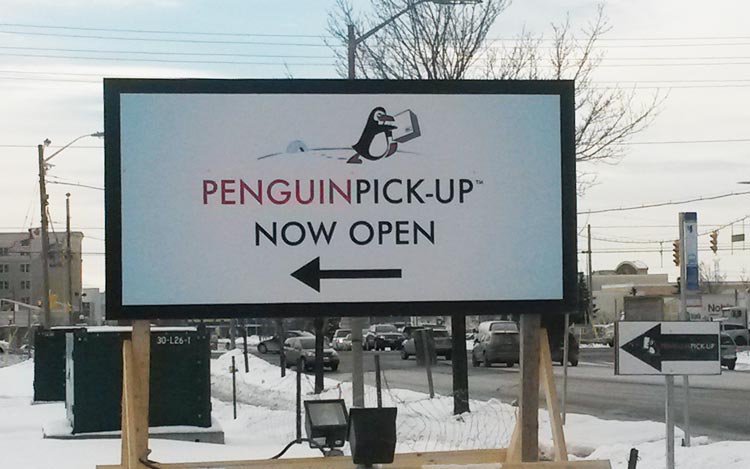
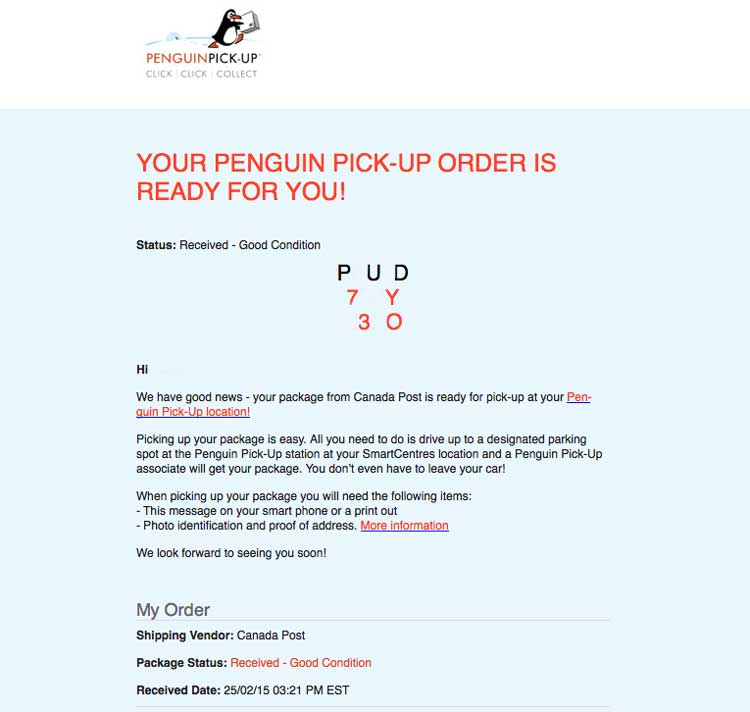
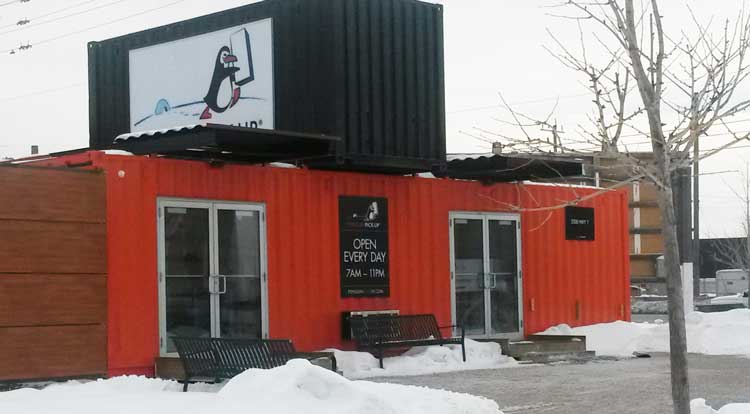
We received an e-mail notification from Penguin Pick-Up when our package arrived. The pick-up point is housed in a mobile trailer in a section of the parking lot, well signed and branded. We did not easily locate it at first; due to high snow banks and the mall being under some construction, the signage directing us to the pick-up point was not very visible and we had to phone to get a more specific location.
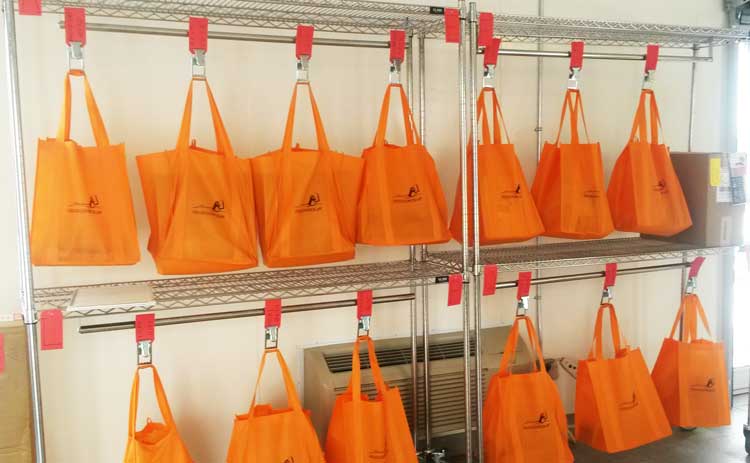
There are designated parking spots for Penguin Pick-Up customers, so there is no need to get out of your car. We were acknowledged in just over a minute by a friendly attendant. The order was brought out by the attendant as well as the supervisor on duty to recognize our first-time experience (for which we were given a free tote bag and a coupon for Shop.ca).
Additional Notes
We were asked to rate the experience on-the-spot via a mobile terminal (from a customer viewpoint, this doesn’t give the best assurances for anonymity since the employee can see your responses). The pick-up location is open from 7 a.m. to 11 p.m., offering great flexibility for customers who are picking up on the way to or from work. Nielsen says there are 24/7 surveillance cameras around the buildings, so there is no issue with overnight security.
Future Growth
The service is in infancy mode, so it was no surprise that we were served very quickly. Penguin Pick-Up has plans to accommodate groceries in the future, which will mean the addition of temperature-controlled storage. When asked what their plan was for Christmas service levels, Nielsen replied:
“We have highly skilled associates, all have been through intensive training on and off site. Each pick-up is done in less than 3 minutes and most in less than 90 seconds. In rush hours we can handle up to 100 cars an hour and do find this sufficient for the coming holiday season.”
The location we went to had more orders in than we had expected to see, given that it had just opened a few weeks earlier. The supervisor noted that the location can take in big or small merchandise, saying that they have had pieces of furniture delivered (although we’re not sure why it would be more convenient for a customer to have to then pick up a piece of furniture and take it home).
Final Thoughts
Overall, the experience was friendly and seamless. For customers whose primary concern is not being home to receive an order, Penguin Pick-Up serves as a convenient alternative. The retailer from which we had ordered offered the option of picking up from a local Canada Post outlet, which would have been more convenient for us, but since few retailers provide this option, it is not seen as a barrier for Penguin Pick-Up.
SmartCentres has a broad enough network of malls that they have excellent consumer reach, whether they are near customers’ home or workplace. From a business standpoint, however, we’re not certain how this service pays off for SmartCentres. Without the ability to draw customers into any of their tenant locations, it is strictly a value-add convenience offering. Says Nielsen:
“This is good for our customers and what is good for our customers is good for our business.”
Retail Category Consultants
Vicky Applebaum is a consultant with Retail Category Consultants Inc. and helps clients develop and implement retail strategy, marketing and innovation projects. Vicky has over 15 years of progressive retail experience in Canada in multiple disciplines.
Her experience includes advertising and merchandising at Loblaw Companies, and marketing, merchandising and category management with Shoppers Drug Mart. Her love for all things marketing also led her to work on the agency side and in independent consulting in advertising, event marketing, direct marketing, new product launches and loyalty. Born in Montreal, Quebec, Vicky holds a Bachelor of Commerce (Marketing) from Concordia University. She and her husband live with their daughter in Richmond Hill, Ontario where they operate a rental moving box business, CityBoxes.ca.
Saks Fifth Avenue‘s 150,000 square foot Canadian flagship is now under construction. Hoarding is up on Saks’ concourse level, which will house a food hall to be operated by upscale grocer Pusateri’s. We recently visited the construction site and spoke to some planners and construction crew, who indicate that Saks should be on schedule to open in the spring of 2016.
Saks’ parent Hudson’s Bay Company submitted an application to the City of Toronto to build the four level store on March 3. Plans we’ve seen show a four-level store on the Yonge Street side of the flagship Hudson’s Bay building at Toronto Eaton Centre.
Sources indicate that Saks’ ground floor will include handbags and accessories, jewellery, cosmetics, and a 5,500 square foot restaurant which will be part of a ‘three level food experience’, according to one store planner. A valet entrance will face onto Richmond Street and construction on the entrance is underway. Sources say that Saks will carry a variety of premium cosmetics brands and that there may be a segregation between the two stores, with Hudson’s Bay itself carrying an assortment of slightly less pricey brands than Saks. According to plans, there will be multiple interior access points between Hudon’s Bay and Saks. Plans also seem to indicate that there may be a new opening from the ground floor to the grocery floor below, beside existing escalators.
The Queen Street entrance to the newly combined Hudson’s Bay/Saks will act as a joint entrance to both stores, according to floorplans. A common area will welcome shoppers to Saks Fifth Avenue on one side, and Hudson’s Bay on the other.
The ground floor of the western end of Hudson’s Bay will also see substantial modifications. Canada’s largest shoe floor will move upstairs for the expansion of Hudson’s Bay, as new handbag, accessories and cosmetics departments are created for Hudson’s Bay, which will anchor the west end of the complex towards Bay Street.
Saks’ second level, dedicated to menswear, will overlook the ground floor via an existing atrium. The second-level men’s store will also be accessed via the Toronto Eaton Centre pedway, as seen in the photo above. Sources say that the pedway entrance to Hudson’s Bay/Saks will include a concierge welcoming shoppers to Saks Fifth Avenue on one side, and Hudson’s Bay on the other. A source at the company, wishing to remain anonymous, says that Saks has fought to secure some top menswear brands currently carried at competitors Holt Renfrew and Harry Rosen.
Saks’ third level will be dedicated to womenswear and private shopping suites, according to sources. Hudson’s Bay’s luxury womenswear department ‘The Room‘ will be moved to the western end of Hudson’s Bay’s third floor, according to staff in The Room, to accommodate the new Saks women’s floor at the eastern end of the building. The Room will cater to younger and emerging designers in a more ‘open’ environment, while Saks will carry a more traditional assortment of luxury brands in a series of departments and shops-in-stores.
A store planner informs us that some of the lower floors of the adjacent Simpson Tower, located at the southeast corner of Queen Street and Bay Street, will be converted to retail for the expanded Hudson’s Bay store. Until now, much of the space was dedicated to offices.
Sources at Hudson’s Bay Company have yet to confirm brands for Canada’s new Saks store, and sources say that Holt Renfrew is already beefing up its operations in anticipation, including providing some of its best concessions with their own expanded spaces with street front entrances within existing Holt Renfrew flagships.
We’ll continue to keep you updated on the progress of Canada’s Saks Fifth Avenue locations.
The ongoing increase in the level of competition in the Canadian Retail Market, together with the ongoing shift to “omni-channel retailing” has “raised the bar” on Canadian consumer expectations. The dual impact of these two major factors has pressured many home-grown retailers, in particular those who don’t have strong balance sheets and deep pools of talent, thus inhibiting their ability to effectively compete in this new environment, referred to often as the “new normal”.
If these factors weren’t enough to pressure these retailers, the recent massive decline (more than 25%) in the Canadian dollar relative to the US dollar could be the trigger that will force many of these weaker retailers to restructure or reinvent. Given the sharp increase in the rate of direct importing that is tied to the US currency, this will significantly increase the cost of merchandise for these direct importing retailers. For those with strong brands, we expect that the impact will be more muted as their ability to raise selling prices to offset the increased merchandise cost is much greater. However we expect that the retailers with weaker brands and/or more price-sensitive customers will be hard-pressed to raise prices without the risk of major decreases in volumes sold. For these weaker retailers, merchandise margins will be hard hit and profitability will be impaired, which might be a decisive factor in leading to a restructuring. This typically results in many store closures and job losses. Many of these retailers already borrow on a secured basis to fund their businesses, which will result in closer scrutiny from their lenders. Not a happy situation for the “faint of heart”
According to our industry expert Antony Karabus, CEO, HRC Advisory, a leading retail advisory firm, the combined effect of these factors will be significant for many retailers who are already struggling to retain their market share.
According to Mr. Karabus, the Canadian retail market ‘pie’ is only so large. As international retailers continue to enter the Canadian market and as stronger Canadian retailers continue to win market share, a number of weaker Canadian retailers may languish or even worse, shutter. The overall Canadian retail market will see modest growth over the next year, other than possibly a windfall from reducing the extent of cross border shopping (Canadians have a long history in driving across the border to the US for shopping, currently estimated at $8 billion). Mr. Karabus believes that cross border shopping will decline due to the weaker Canadian dollar (thus making it more expensive to shop in the US) and the increased presence of world-class retailers in Canadian malls.
In summary, the declining Canadian dollar could prove to be yet another source of stress for the weaker direct importing retailers, particularly for those unable to raise prices due to lack of brand strength. For those unable to raise prices or to hedge their inventory, margins will decline significantly. Mr. Karabus suggests that those retailers who cater to less price-sensitive customers and have strong brands and differentiated value propositions will successfully weather the low exchange rate storm without major impact to their profitability.
Mr. Karabus commented that a number of Canadian retailers are already seeing much success from their transformations and investments in stores, digital and talent, including Hudson’s Bay Company, Sport Chek, Canadian Tire, Aldo, Loblaw, Shoppers Drug Mart, Harry Rosen, Holt Renfrew, Indigo and others. These retailers have strong balance sheets, deep talent pools and strong brand assets. They have been able to afford to invest in their growth and/or transformation strategies and are able to weather the storms created by the decline in the Canadian dollar.
Mr. Karabus notes that in addition to the above investments in the retailers’ bricks-and-mortar operations, the additional investment needed to enable omni-channel and mobile shopping is significant and the payback will not be swift, thanks to the pressure imposed by Amazon.com from free shipping and free returns. However these investments fall into the category of “table stakes”—they are mandatory as consumers increasingly seek omni-channel experiences, to shop on their smart phones and the like.
What it will come down to is the increasing gap between the ‘winners’ and ‘losers’ within the industry. Although Canada has many world class retailers, there are many others who will face an uphill battle to survive and thrive.
About Our Expert:
Mr. Karabus became CEO of HRC Advisory in January of 2013. He has been a trusted and passionate advisor to retailers on strategic and financial performance issues for over 25 years. He has assisted numerous North American retailers to create significant shareholder value during this time. He has worked with numerous well known retail chains in key sectors such as department store, specialty apparel and hard lines, big box chains and food and convenience.
Antony began his career at Arthur Andersen in Cape Town, South Africa and moved with the firm to Toronto, where he founded Karabus Management as a Canadian retail advisory firm in 1990. In 2001, Karabus Management expanded into the United States, where the firm became a leading North American specialist retail consulting firm. In 2008 he sold the firm to an International Accounting/Consulting firm where he served as the leader of that firm’s Retail Consulting Services practice until he left the firm in December 2011.
Antony conducts annual surveys of Retail CFO and CEOs to determine key priorities in assisting their business to enable substantive value creation.
Antony is a recognized speaker and a published author providing thought leadership at industry forums, including the National Retail Federation, Retail Council of Canada, World Retail Congress and the Fashion Institute of Technology and providing content to The Wall Street Journal, The New York Times, Stores Magazine, The Globe & Mail, Chain Store Age, National Post, Toronto Star and Women’s Wear Daily, among others.
About HRC: HRC Advisory is a specialist boutique retail advisory firm. Together with its predecessor firms, it has been assisting Canadian and US Retail Chains to improve their profitability and strategic positioning for more than 25 years. Many of HRC’s senior advisors were previously at Senn Delaney Retail Consultants and Karabus Management following retail leadership roles. Other senior advisors at HRC have a mix of retail leadership and retail consulting experience gained with other leading firms
HRC has significant retail depth in strategic planning, buying, merchandise planning and inventory management, indirect procurement, store operations and omni-channel processes, supply chain/logistics and fulfillment, and comprehensive cost optimization services. HRC has worked extensively with both healthy top performing chains as well as developing and executing turnaround mandates at a number of retailers in difficult situations. For more information, please visit www.HRCadvisory.com.
International womenswear brand Gerry Weber plans to open multiple free-standing locations across the country. It will open eight Canadian locations this year, with its first six locations scheduled to open this spring in Southern Ontario. Although these will be Gerry Weber’s first corporate stores in Canada, the brand has operated franchised locations in Ontario and British Columbia for several years.
Founded in 1973 in Halle, Germany, moderately-priced Gerry Weber targets women over the age of 30. The brand features women’s ready-to-wear as well as accessories, leathergoods and footwear. The brand has over 1,000 company managed locations around the world, as well as more than 2,800 shop-in-stores. It employs over 5,000 worldwide. Its goal next year is to generate sales in excess of one billion Euros.
Gerry Weber currently operates four Canadian franchised locations — three in Ontario, and one in British Columbia. The Ontario locations include stores at 1177 Yonge Street in Toronto, a location in downtown Burlington, and a shop on Richmond Road in Ottawa. A Gerry Weber franchise also operates at 1849 Marine Drive in West Vancouver, operated by by iconic Vancouver-based retailer Edward Chapman.
Sources say that two more southern Ontario locations will be announced for this year, and that Gerry Weber is now seeking retail space in Western Canada.
Gerry Weber is represented by brokerage Oberfeld Snowcap. Gerry Weber seeks retail space in the 1,800 – 2,000 square foot range, ideally in enclosed malls.
We’ll update you when we learn more on Gerry Weber’s Canadian store expansion.
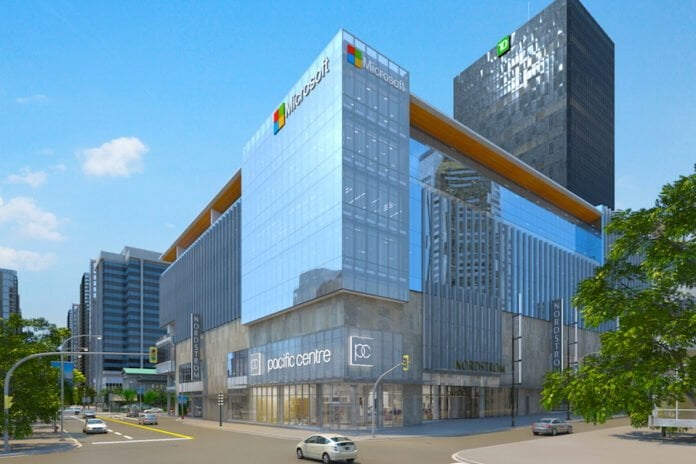
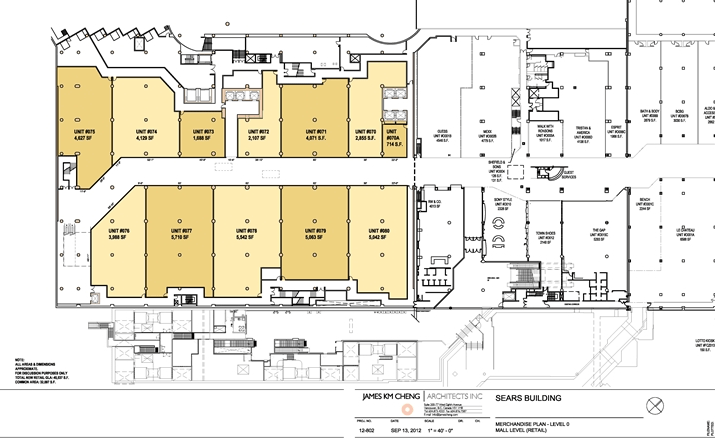
Landlord Cadillac Fairview has revealed a list of nine tenants which will occupy the retail space below Vancouver’s Nordstrom at Pacific Centre. Retailers in the 44,000 square foot space are expected to open in June of this year. The list of tenants include the following:
• B2 (by Browns Shoes) • HUGO BOSS Store • Kate Spade • Microsoft • PANDORA • Rockport • Ted Baker London • TUMI • Weekend Max Mara
“We are thrilled to announce the arrival of 9 world-class brands at Pacific Centre,” says Tom Knoepfel, Senior Vice President and Portfolio Manager, Cadillac Fairview. “These stores will enhance the shopping experience for our customers and give them another reason to shop downtown. Having the best selection of international fashion and tech retailers in one convenient location is a key factor in Pacific Centre’s continued success.”
We’ve recently discussed a number of these retailers. Last week we revealed that British fashion label Ted Baker will open its first Canadian store outside of Toronto in the mall, and we also recently discussed Kate Spade, Rockport and, last year, we revealed that Weekend Max Mara would open under Nordstrom, complementing the franchisee’s Max Mara location upstairs in the same mall.
According to Cadillac Fairview, four additional retailers will be announced in the coming weeks, and are scheduled to open in the retail expansion by fall 2015.
Designed by Vancouver-based architect James K.M. Cheng, the new building will also include a three-level 230,000 square foot flagship Nordstrom store. Nordstrom will open on Friday, September 18. The top four levels of the former Sears building have been converted to 290,000 square feet of AAA class office space and will be home to the head office of Sony Pictures Imageworks, the Vancouver offices of Microsoft, and law firm Miller Thomson.
There has been a lot of discussion about Whole Foods Market recently. This Texas-based food retailer has made headlines with strong sales growth and sweet margins, plentiful store expansions, price cuts, and much more. They certainly have made a name for themselves in a tough economic climate when other retailers are packing up and leaving town in a hurry. Even with the “whole paycheck” reputation, out there on main street, they are winning. Therefore, with all this commotion, I thought I would pay them a visit at their Mississauga Square One location (just outside Toronto).
Overall, Whole Foods is a paradise for the healthy “foodie.” There is no other way to describe them. Now don’t get me wrong, you pay a premium for what you get but wow is it ever fun! Now hold on, before I go further I must declare that I have joined the millions of North Americans who have started eating healthy recently and my affection for them may be a little biased. Here is my assessment. Take it with a grain of salt substitute!
1. Indie Grocery shop feel – when you walk through the store you feel like you are in a local independent grocer. For Toronto-dwellers, think Bruno’s. Speckled floor tiles; folksy feel; Lots of earthy colors and fixtures make you feel like you drove outside the city and stumbled upon a great hidden farmers market.
2. Huge differentiated assortment – they sell food, but they also sell a healthy lifestyle and do a great job assorting that way. In the produce section they have an organic tent that talks to great tasting products that just happen to be great for you. Seafood is “conscientiously caught.” Beef is from “Rain Crow Ranch.” Bread is “naturally kneaded.” Coffee is “sustainably sourced.” There is a “gluten-free” zone as well. Never before have I seen an end cap with a Key Value Item (KVI) of organic Kale Chips.
3. Wonderful branding and signage – as per point 2 above, they sell a lifestyle. Their use of in-store signage is excellent. They educate the shopper at every major category station with buyer’s guides and use graphics to give you that country farm feel. It all comes together to reinforce your thinking that drives you to make that smart and healthy purchase that day. Core values and quality standards are clearly and proudly posted near the cash.
4. Community – a big part of Whole Foods Market is community. It reinforces their lifestyle branding and marketing. Shoppers can sit in a large, welcoming cafe at one of many “community tables” or review local community bulletin boards. You can come in and bottle your own water here. The store acts like a healthy foodie “safe house” where all is right and everyone around them has the same philosophy about eating. A homecoming if you will.
5. Merchandising for margin – it’s not just about feeling healthy and being part of a community. These folks are very smart about making money. Their financials show it too. When you enter the store on the right, you enter a large and profitable fresh produce section which leads to an inspirational meat and seafood offering at the back. Organic is everywhere and we all know organic equals high margin. The lower profit dry goods section in the centre is memorable for lots of differentiated higher-profit items. The left side of the store consists of a profit-driving bakery and a lucrative fresh ready-made section that offers high margins yet again.
In summary, Whole Foods Market does it right! They have grown and harvested a high margin market segment and “serve up” what they want, how they want it, in a way that talks to their high-value customers effectively. They are a great example to look to for success within the retail industry.
Are you doing it as well as Whole Foods Market? Let’s discuss over a healthy salad!
Bruce Winder, Senior Advisor, J.C. Williams Group bwinder@jcwg.com, 416-705-5627
J.C. Williams Group is a well-known, full-service retail and marketing consulting firm. It offers clients practical, creative, and in-depth knowledge of retailing and marketing, including up-to-date know-how and techniques to make retail operations better and more profitable. You can also read their informative blog, Retaileye, here: retaileye.wordpress.com.