Home Blog Page 1338

Why Many Retailers Have Consistently High Employee Turnover

Employee turnover affects every organization, across all industries and your company is no exception! Some industries are more prone to facing higher rates of turnover based on the types of roles they hire for or where they are located. With the recent economic improvements in the job market and the entrance of a new generation into the workforce, retail turnover rates have seen a steady rise over the last few years. How are you dealing with these factors?

Of course employee turnover directly affects your workforce staffing needs and employee morale, but are truly aware of the huge financial costs impacting your organization? Here are the top 5 reasons why retailers see employee turnover occurring in their organizations:

Inadequate training: Employees who feel they have not received adequate onboarding and training when they joined the organization as less likely to be satisfied in their roles. Feeling underprepared and lacking the support they need is holding them back from succeeding in their current roles. A good training program will give employees the key tools to grow in their current role and prepare them for future grow with the company. Introducing mentoring, training and development programs shows your organization values and is willing to invest in your talent. If you’re attracting great talent why wouldn’t you want to develop and retain them over time?

Lack of advancement opportunities: Employees who feel they lack the ability to grow with the organization will only stick around for so long. This is mainly caused by there being limited or zero advancement opportunities for employees to work towards. This can create a lack of motivation and decreased morale for employees who want to advance their career but feel there job is limiting that ability. Additionally, this can create fear within employees regarding job security and will ultimately drive them to look outside your organization for new opportunities. Would you stay at an organization if there was no room to grow? Most likely the answer is no.

Employees felt they were not integrated into the team: Feeling part of a team is something we can all relate to, and working for an organization is no different. Employees often leave organizations because they feel their contributions and achievements are either undervalued or not recognized. Allowing an employee to feel a connection between their efforts and the business’ success will help keep them engaged and feeling a part of the team. A great way to have employees integrated into the team is to incorporate collaboration between different teams and roles, this can help increase job satisfaction and give more variety in a workday. 

Problems with work hours: A lack of flexibility in working hours has been known to cause employees to look elsewhere for new opportunities. Allowing employees the flexibility they need in their schedules will help reduce sick days, no shows and resignation. A work life balance is a topic we hear more about each day. If this is an area that your employees place a high value on, engrain that into your culture and let them feel it is an area you promote and see as important. 

Poor treatment by managers: Working with a manager who treats you poorly or fails to support your working needs will ultimately affect your performance. Employees value routine and structure, managers need to understand that their actions have a direct effect on the type of work their employees will produce. Building a strong relationship with your employees where you can openly communicate and share ideas is key. A poor working environment will only cause employees to continually turnover. This is why having best fit managers in place who can grow, engage and retain employees is so important. 

Here are some key questions to think about in regards to retaining your employees:

  • Does my organization have Career Development Programs in place?
  • How engaged is my current workforce and how do I measure this?
  • Are my employees a great fit for the organization’s culture?
  • What percentage of my workforce would I consider a “Best Fit”?

Lisa McCann is the Corporate Marketing Manager at Vancouver-based recruitment company, MindField Group.
Tips for Employee Engagement in the Retail Sector


Photo: Andrew Rush/Post-GazettePhoto: Andrew Rush/Post-Gazette

Photo: Andrew Rush/Post-Gazette

By Bimal Parmar

A good number of retail bosses who claim their customers are at the heart of their strategy, often neglect the ‘face’ of their business- their ground staff. And when the top management misses the point, things can be in limbo forever.

A recent report by Gallup says that only 30% of the workforce in the US is fully engaged with their work, the rest is actively disengaged or not engaged. Whether it’s a result of the warped economics of insufficient remuneration or no/low benefits, most employees seem to reciprocate in a similar vein.

Here are some quick tips on how to engage your retail staff.

Revamp: ‘Smart’ is the new ‘Efficient’ in Leadership

We all know what efficient leadership is. It’s about inspiring confidence, trusting and supporting your people, and the likes. It works, but it’s a bit passé. Try focussing on the following instead:

a)  Listen to your star performers– They’ve earned their value and credibility, so discuss your plans with them.  But, do what ultimately suits you. If that sounds like playing favourites, so be it. You can get by with paying less head to your cantankerous lot (don’t worry they’ll stick around). More often than not, the complaining lot isn’t the most capable one.

b) Make everyone accountable- Employees should be made architects of their own situation, and not victims. Let them know they’re equally accountable. For this, clearly define their chores. Employees who know their roles have a stronger chance of outdoing their duties. But, this sort of an arrangement works only if they feel you’re concerned about their growth.

c) Aim for a 100% Collaborative Environment – Despite their best efforts,organizations aren’t democracies. Employee votes do count in decision making, but not necessarily. Even employees know it. So try and aim for an environment where your employees collaborate, instead of imposing verdicts on them. In other words, keep them with you. A low-friction atmosphere will mean more productivity.

d) You can’t create a ‘Utopia’ – Do anything, but you can’t get away from the differences, disagreements, conflicts or arguments. Some people will always feel disgruntled. It’s a human trait, it doesn’t originate in workplaces. Make sure, at least delegating responsibilities become smooth. Schedule them properly in the right shifts so no last minute hiccups don’t occur. Employing a retail scheduling software can be a good option .

Besides, hurdles aren’t bad all the time, adverse circumstances teach you the most. Try your best and don’t be dissuaded by troubles on your work floor. 

Foster a ‘Passion’  for Serving well 

Retail Industry, especially the service industry is fuelled by passion. Starbucks is known for its excellent customer service, that focuses on offering an experience. And this experience is created by its employees on the floor. 

It’s always better to have a lively staff. Even Sir Richard Branson feels customer service is everything .

In the retail sector, your employees make all the difference. They are the relationship builders. Being a retailer you must tell your staff what’s exactly expected of them in terms of behaviour and values, besides work. They are the voice and face customers see and hear, their enthusiasm has to be contagious.

You staffers are your best brand ambassadors. They carry your firm’s image wherever they go- whether they’re inside your eatery, out on a delivery or ringing a doorbell. If they smile and deliver the order. Your company looks like an amiable place. 

Something  for the ‘Top Management’ 

One month of bad sales and everyone at the board down to the middle level makes a scapegoat out of the ground staff. Unfortunately, the people who perform these ground duties are very marginally different from one another throughout the world, in their motivation and aspirations. They only carry out the orders. 

But, what really differentiates lucky and unlucky businesses is the capability of the people above them. Educated, well-motivated managers who spend considerable time in the growth and development of their teams should be brought in. Best retail employers  are all about the progress and well being of their employees. 

The businesses who complain generally make half baked efforts that are around for donkey’s years. The management must realize most of their ground staff workers have a house to run, bills to pay, bring up children. If they don’t find enough encouragement at work, they end up becoming slaves to their paychecks.

The result- your business would do OKAY but not exceed expectations. 

Wrapping Up

An enthusiastic employee is the personification of your Brand Promise. The best way is to confront the obstacles and confide in them. Tell them you’re in this together. Pepper it with positivity and enthusiasm.

Firms like Costco are thriving examples of employee friendly companies who remained unflinching when many solid brands fell apart. Don’t let your employees feel lost. It has cost companies before and will cost them again. Walmart is a living disaster. Just get involved, get your employees involved and you’d be surprised at the talent you’ve unlocked.


About the Author

As VP of Marketing, Bimal Parmar manages the global marketing strategy and execution at Celayix. With over 20 years industry experience, Bimal is responsible for making sure the world learns about the benefits of Celayix’s solutions that include: advanced employee scheduling, time and attendance, employee communication as well as integration modules for payroll and billing.

Before joining Celayix, Bimal was Vice President of Marketing at Faronics, a leading provider of IT solutions for the Education vertical where he helped grow revenue over 50% and launched exciting new solutions. Prior to that Bimal held senior marketing and product roles at technology companies such as Business Objects and McAfee Security where he gained significant international experience working with global companies such as Microsoft, Dell, Sony, HP, Orange, Telefonica and Ricoh. 


SOR.jpg.jpgSOR.jpg.jpg

Subscribe to our daily retail news updates for Canadians

* indicates required


Nordstrom hosts charity galas for new Canadian stores: 1st sells out quickly


Photo: www.ocregister.comPhoto: www.ocregister.com

Photo: www.ocregister.com

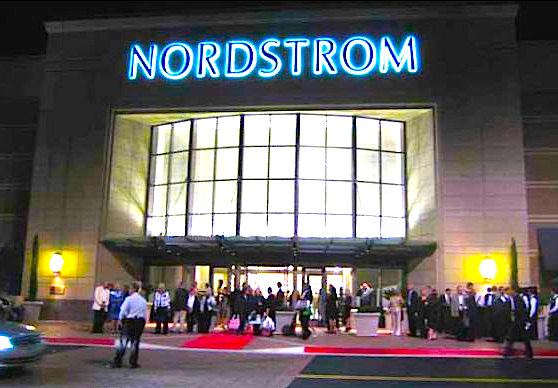
Nordstrom will host charity galas for the opening of its Canadian stores, as it does with its US store openings. Its first gala will be held on September 17th in Calgary, two days prior to the opening of its Chinook Centre store. Remarkably, all 1,800 gala tickets sold out within two weeks. Nordstrom’s second Canadian gala will be held in March of 2015, prior to the opening of its new Ottawa location. Subsequent galas will be held for Nordstrom’s new Vancouver and Toronto stores. 

Nordstrom’s Calgary gala will benefit the Alberta Children’s Hospital Foundation, as well as the Calgary United Way. Tickets went on sale last month for $100 each and according to Calgary’s Ryan Massel, sold out in exceptional time. The entire cost of the gala is underwritten by Nordstrom, meaning that all proceeds from ticket sales go to these charities. Being that 1,800 tickets were sold, over $180,000 will be going to charity. 


Over the years, Nordstrom’s store opening galas have raised millions for various charities. Many galas raise in excess of $100,000 and some, considerably more. The 2008 gala for the opening of Nordstrom’s Aventura Mall store in Miami, for example, raised more than $212,000 from its over 1,700 attendees. It will be interesting to see if Calgary’s gala surpasses these numbers. 

Nordstrom’s Calgary store opens on Friday, September 19th. The 140,000 square foot Chinook Centre store occupies part of a former Sears location, at the north end of the mall. Nordstrom’s second Canadian store opens March 6th, 2015, at Ottawa’s Rideau Centre. Its third Canadian store opens in the fall of 2015 in Vancouver. Two Toronto stores (Toronto Eaton Centre and Yorkdale Shopping Centre) will open in the fall of 2016, and a third Toronto location opens at Sherway Gardens in the spring of 2017. At least a couple more Canadian Nordstrom locations are expected to follow.  

Today’s retail news from around the web: July 17, 2014


Subscribe to our daily retail news updates for Canadians

* indicates required


Lululemon ranked most profitable apparel company in North America

Canada comes out on top, as Lululemon ranks first in a report measuring North American apparel company profitability. It outranks such prominent enterprises as Ralph Lauren, Urban Outfitters, Nike and Nordstrom. Interestingly, the company with the second-highest profit margin is also Canadian, being an apparel company based out of Montreal. 

American publication Apparel Magazine ranks apparel companies based on two criteria: they must have at least $100 million in annual sales, and they must be publicly traded on a U.S. stock exchange. Profit margins were determined for the most recent fiscal year, and Lululemon’s came out on top at 17.57%.

Lululemon’s profit margin was down from the previous year, when it measured a more robust 19.8%. However, Lululemon ranked second last year, behind Chinese menswear brand Zuoan, which slipped to fourth place this year. 

According to the study, Lululemon’s sales jumped 16.11% from last year, with its net income increasing by 2.98%. Sales of almost US $1.6 billion saw a net income of US $280 million. Next year’s profitability may be less, however, as the company struggles with both management and public perception issues. 

Lululemon bested several large American companies, in terms of percentage profitability. For instance, TJX (which owns Canadian off-price retailers Winners and HomeSense, as well as Marshalls) ranked 14th with a profitability of 7.79%. TJX was the highest-selling of the 50 top retailers in terms of sheer numbers, with sales in excess of US $27 billion. Nordstrom’s profit margin was 6.03%, with sales in excess of US $12 billion. Fashion brand Ralph Lauren ranked seventh for profitability, with a 10.42% return on sales estimated to be almost US $7.5 billion. 

According to the report, the highest overall sales increases were by American conglomerate Ascena Retail Group (owner of retailers Lane Bryant, dressbarn, maurices, Justice and Catherines), increasing 40.6% between 2013 and 2014. Net income was down, however, at 3.21% from 4.84% in the previous year. 

Impressively, the second most productive apparel company in the top 50 is also Canadian. Montreal-based Gildan Activewear Inc. saw profit margins of 14.66%, up from 7.62% the year before. With annual sales in excess of $2 billion, Gildan manufactures and markets branded clothing, including undecorated blank activewear such as t-shirts, sport shirts and fleeces, which are subsequently decorated by screen printing companies with designs and logos. The company also supplies branded and private label athletic, casual and dress socks to retail companies in the United States, including Gold Toe Brands, PowerSox, SilverToe, Auro, All Pro, and the Gildan brand. The company also manufactures and distributes Under Armour and New Balance brand socks, as well as Mossy Oak outdoor clothing products. Gildan has approximately 34,000 employees worldwide and owns and operates manufacturing facilities in Central America and in the Caribbean.

The entire Apparel Magazine report can be downloaded here. 

Despite its profitability, Lululemon’s share price is currently less than half of what it was in October. Its currently trading at less than US $39 per share, while in October it traded as high as US $77.75. 


Strellson continues its Canadian expansion with a second location

exc-53c2f394e4b0beb5fe1956fc


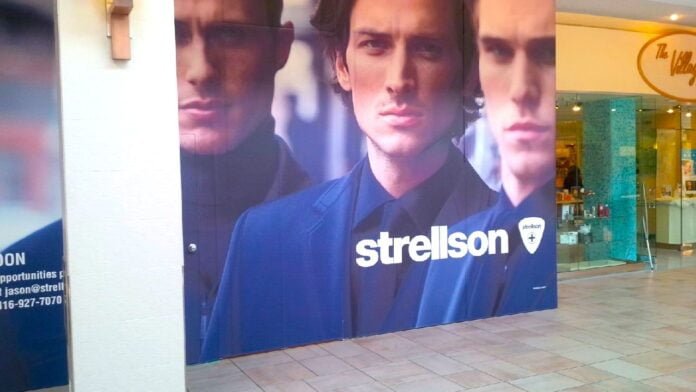
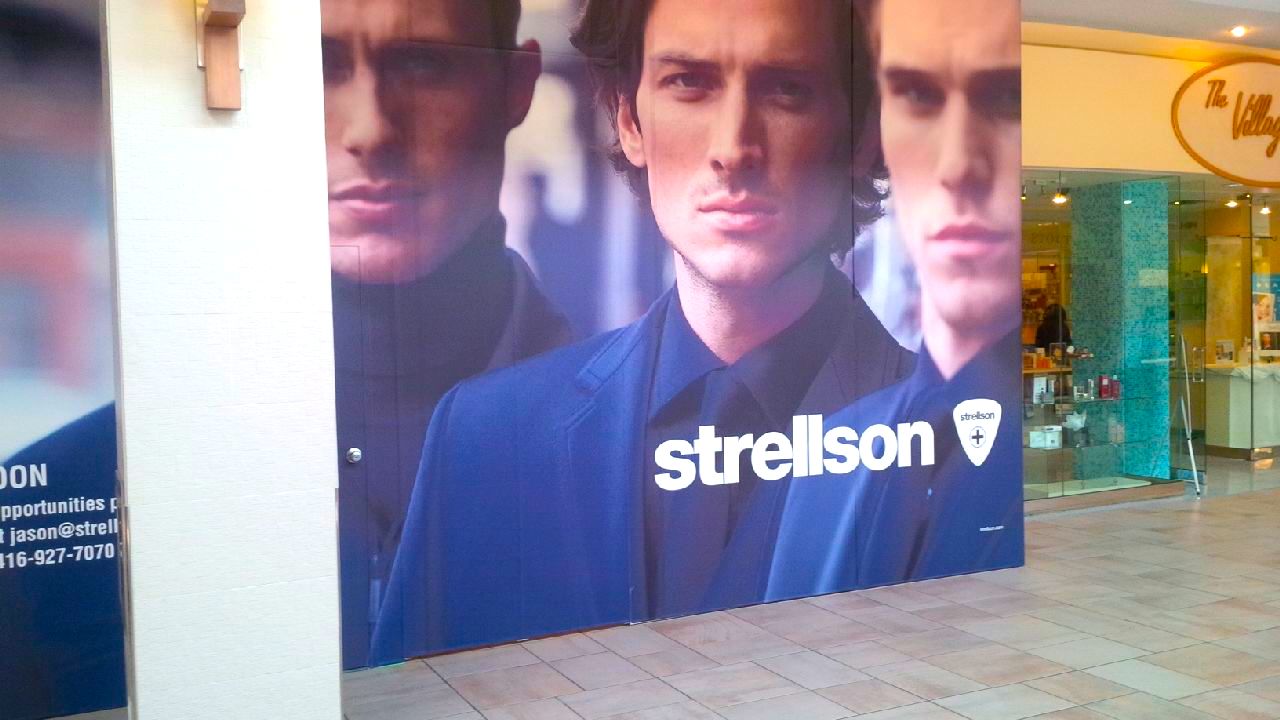
Hoarding over Bayview Village's new Strellson store, currently under construction. Photo: ACT7, Urban Toronto.Hoarding over Bayview Village's new Strellson store, currently under construction. Photo: ACT7, Urban Toronto.

Hoarding over Bayview Village’s new Strellson store, currently under construction. Photo: ACT7, Urban Toronto.

Upscale Swiss menswear brand Strellson continues its Canadian store expansion, with a second location opening soon at Toronto’s Bayview Village. Toronto will be the only city in the world to boast two free-standing Strellson stores, and furthermore, Toronto is North America’s only city to feature any free-standing Strellson locations. Strellson continues to work with a Toronto-based broker to open new Canadian stores, and as we reported last month, the brand wants to open an Ottawa flagship. 


Urban Toronto‘s ACT7 sent us a photo of the hoarding over Bayview Village’s new Strellson store, currently under construction. Strellson will locate in a large space within the mall, alongside upscale retailers such as Andrew’s and TNT The New Trend. Bayview Village is unique in that it carries many smaller, upscale stores and brands not found elsewhere. Bayview Village’s location is enviable, being close to some of Canada’s wealthiest neighbourhoods. 

Founded in 1993, Strellson is Switzerland’s largest menswear manufacturer. Owned by Holy Fashion Group, it produces mid-to-high priced menswear (both dressy and casual), accessories and related products, targeting men in the 25 to 40 age range. It retails in about 40 countries. 

According to Developers & Chains, Strellson is also looking for flagship retail space in Downtown Ottawa, either within the Rideau Centre or in a high-profile street location. Currently, Strellson’s only North American location is at 170 Bloor Street West in Toronto, at the base of the Park Hyatt Hotel, at the northwest corner of Bloor Street and Avenue Road. The 1,700 square foot store opened in November of 2012.

More Canadian Strellson locations are expected to follow, and we’ll update you when we learn more. 

CANADIAN RETAIL NEWS: Tuesday, July 15, 2014 [News from around the web]

Subscribe to our daily retail news updates for Canadians

* indicates required


Major e-commerce brands are opening brick-and-mortar stores

exc-53c4aec5e4b053fc7d14f9ee


Photo: www.modernfellows.comPhoto: www.modernfellows.com

Photo: www.modernfellows.com

By Steven P. Dennis

Amidst all the breathless pronouncements about the inexorable decline of brick and mortar retail emerges an interesting phenomenon: some of the fastest growing and most exciting internet-only brands are opening stores.

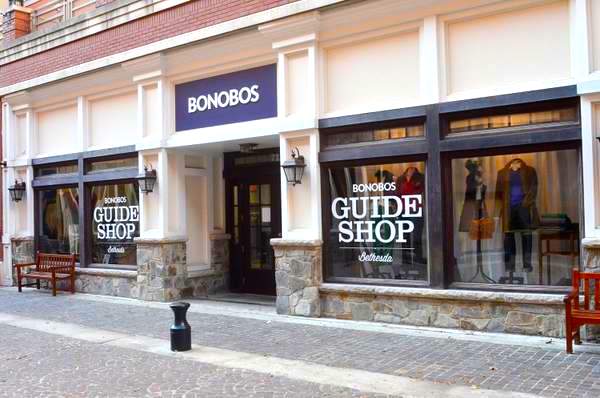
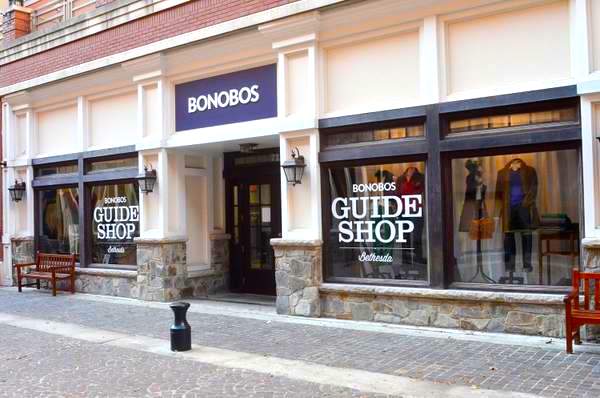
Recently, Bonobos raised $55MM largely to accelerate its foray into “Guideshops.” Other e-commerce innovators such as Warby Parker, Trunk Club, Nasty Gal and Bauble Bar are all expanding into physical store fronts. Expect more announcements soon, not only from earlier stage companies, but from larger direct-to-consumer brands as well. This seemingly counter-intuitive trend reflects a few realities.

First, most of these venture capital funded darlings have thrived in their first few years by exploiting a highly specific customer niche and leveraging the heck out of the advantages of a direct-to-consumer model. Alas, the number of customers who are willing to buy product sight unseen, without working directly with a sales person and lacking the instant gratification that physical stores provide, is comparatively small when it comes to product categories where fit, material quality and fabrication are important. For these brands to continue to grow–and have a chance for material profitability–physical locations aren’t a nice-to-do, they are a necessity.

Second, brick and mortar retail is different, not dead. In most product categories, for many, many years to come, the overwhelming majority of sales and profits will continue to come from, or be influenced directly by, physical locations. Regardless of whether a brand started as an actual store or as a virtual entity, the ones that will ultimately win will offer a tightly integrated experience across their various channels and touch-points. They will eschew traditional mass, one-size fits all strategies and embrace more personalized missions. There remains plenty of business to be done in brick and mortar locations–if you have something remarkable and meaningfully customer relevant.

Finally, when we think about the market or the customer we inevitably get it wrong. Global pronouncements about industry dynamics or the “typical” consumer are rarely particularly illuminating and almost never sufficiently actionable. The brands that are winning–the ones that are stealing share from you–go beyond the averages and the mega-trends. They understand how to apply technology to create frictionless commerce. They delve into data and apply customer insights that inform stronger acquisition, growth and retention tactics. They are committed to experimentation. They treat different customers differently. And on and on. None of this is fundamentally rooted in how a brand started or whether trends tend to favor its success.

Of course it’s far from certain that these previously web-only brands will successfully transition to an omni-channel world. Some will stumble mightily. A few will fail completely. Others will see their growth stall at only a handful of profitable locations.

The one thing for certain is that for quite a lot of customers, the benefits of physical shopping are here to stay. For traditional players the rush to close and down-size their store base may have some merit. But it’s equally likely the problem isn’t just the real estate portfolio.


Steven Dennis is a senior omni-channel retail executive and strategic growth advisor at SageBerry Consulting , LLC. . He is also a Former Chief Strategy Officer at Neiman Marcus. [More about Steven P. Dennis] Published with permission. This post originally appeared at Steven P. Dennis’ Blog on July 14, 2014. Copyright 2014. Follow Steven P. Dennis’ Blog on Twitter.

CANADIAN RETAIL NEWS: Tuesday, July 15, 2014 [News from around the web]

Subscribe to our daily retail news updates for Canadians

* indicates required


Giorgio Armani to open 1st Canadian outlet

exc-53c02653e4b0a3814e0b77f7

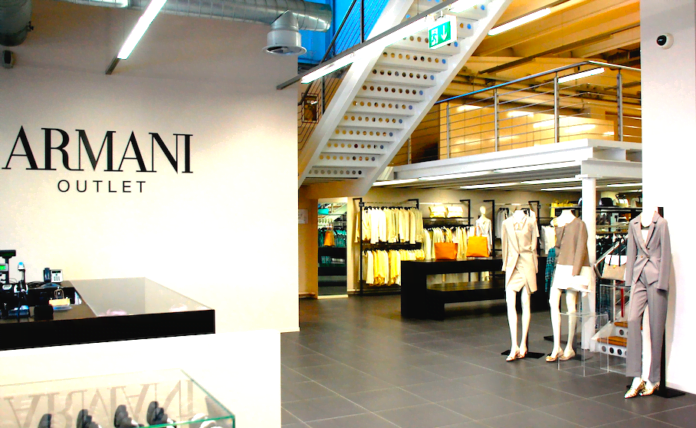
Giorgio Armani‘s first Canadian outlet opens late next month at the Toronto Premium Outlets. Armani is currently recruiting management and staff for the new store, and will be holding a job fair towards the end of this month. Armani’s Toronto outlet could be the first of multiple Canadian locations, as it rolls-out the concept throughout North America. We consulted with a retail expert on the new store, who explained how Armani must maintain exceptional customer service and merchandising so as to not devalue its brand.

Reviewing Giorgio Armani’s career website, it seems to suggest that the brand is growing its outlet store division, with several new US locations. Giorgio Armani has 46 outlet stores worldwide, including 10 US locations. As many as four new American outlets could open by this fall, from what we see on the website. 

Sources at Giorgio Armani’s corporate office in New York City wouldn’t confirm what collections will be carried at Toronto’s outlet store, nor where the product would come from. In Canada, Giorgio Armani’s pricey Black Label women’s collections are currently carried in shops-in-stores at Holt Renfrew in Toronto, Montreal and Vancouver. The Black Label men’s collection is carried in select Harry Rosen stores. Its less expensive Armani Collezioni, Emporio Armani, Armani Junior and Armani Jeans lines are carried at various retailers in Canada. As well, Canada is home to 12 A/X Armani Exchange locations, the company’s least expensive label. 

Sources speculate that Toronto’s Armani outlet could be the first of multiple Canadian locations. Currently under construction and scheduled to open this fall, the Montreal Premium Outlets will feature upscale outlets including Max Mara, Ralph Lauren and Coach. Vancouver’s luxurious McArthurGlen Designer Outlets are scheduled to open in the spring of 2015, and is the first North American project for the British-based outlet developer. We can’t confirm if either will house Armani outlets, at this time. 

Retail expert Suzanne Sears, owner of Best Retail Careers International Inc., provided us with an excellent analysis of Armani’s first Canadian outlet. Ms. Sears says that the success of Armani’s outlet store will partly depend on which, if not all, Armani banners are included in the store. The challenge for Armani’s outlets, according to Ms. Sears, is to find the local ‘Euro street style’ shopper who isn’t already buying Giorgio Armani either at full price on Bloor Street, in major malls, or on their travels abroad. These consumers are likely familiar with what Armani fashions are from what season, and their time is as valuable as any potential outlet discounts. If an Armani outlet doesn’t deliver, it risks devaluing the entire brand. 

Ms. Sears says that Armani cannot compromise on service and presentation, if it wants its outlets to succeed. Some brands, according to Ms. Sears, believe that that lower outlet prices mean that they can hire less experienced staff, as well as pay less attention to the presentation of the outlet’s merchandise. Ms. Sears says that a top complaint from many outlet mall shoppers, when shopping for luxury brands, is that they want value without compromising the quality of display and service associated with the brand, right down to the packaging of the product. Ultimately, she says: “Armani is a brand people respect and want to own. If they are able to deliver a full service experience and hire and train top people, they should do very well.”

Today’s retail news from around the web: July 14, 2014

Our article of the day: 

Giorgio Armani to open 1st Canadian outlet


Top Stories – Canada: 

–Women’s clothing retailers face tough year, more bankruptcies: analysts [Huffington Post]

–Infant formula bottles with broken seals prompt food safety warning.
Canadian Food Inspection Agency issues warning after containers found with tamper-proof seal broken [CBC]

–Review: BMW’s all-electric i3 now in Canada, offering good range at a reasonable price [CTV]

–How American Apparel fell into ‘dangerous trap’ of retail expansion hype [Financial Post]

Canadian News – Region-By-Region:

–Construction to revamp Ste-Catherine St. worries merchants [CBC Montreal]

–Bilingual signs aim to attract wider range of customers to Vancouver’s Chinatown grocers (with video) [Vancouver Province]

–Update on Ottawa’s Lansdowne Park (including a retail component, anchored by Winners) [Ottawa Citizen]

–Student’s business plan turns into a pop-up bike store at The Forks market in Winnipeg [Winnipeg Free Press]

–Eaton family member creates a scarf line referencing the former Canadian retailer [National Post]

–Dov Charney’s American Apparel fate hinges on three unknown directors: Chain’s reshaped board will evaluate the findings of a probe into his conduct and vote on his fate [Montreal Gazette]

–Wal-Mart offers lower prices to online customers [Retail Dive]

–Walmart Sees Gold in Small Neighborhood Grocery Stores [Triple Pundit]

–Gap Store Sales Unexpectedly Fell In June [Business Insider]

–Amazon seeks delivery drone permission from FAA [CBC]

Interesting Articles: 

–69% of shoppers would switch brands to earn points [Fierce Retail]

–Shopping Cart Abandonment: Online Retailers’ Biggest Headache Is Actually A Huge Opportunity [Business Insider]

–Burberry shareholders revolt over pay package for new CEO Christopher Bailey [CTV]

–Seattle’s First Legal Pot Shop Runs Out Of Marijuana [Huffington Post]

–Levi’s jeans struggles to find its identity in a saturated denim market [Business Insider]

Interview: DSW Designer Shoe Warehouse’s Canadian expansion

Image: DESIGNER SHOE WAREHOUSE.

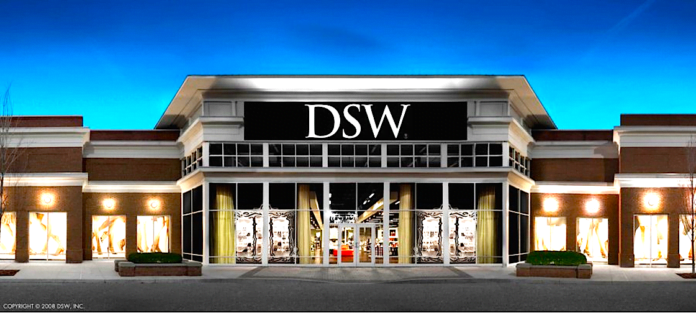
We interviewed Town Shoes President and CEO Bruce Dinan about DSW Designer Shoe Warehouse‘s Canadian store expansion. In April, DSW bought a 49.2% stake in Town Shoes, paving the way for DSW’s entry into Canada. Mr. Dinan says that DSW stores will eventually roll-out across the country, and that its Canadian stores will essentially be the same as those in the United States. Its first two Canadian locations open early next month and, later, DSW will launch its Canadian e-commerce website. 

DSW’s strategy for entering Canada is initially a cautious one. Its first two locations, both in suburban Toronto, will test the market before it opens other Canadian stores. DSW will ensure that these first stores are able to provide the same quality experience of its US locations and once confident enough, DSW will open stores Canada-wide. Its first two Canadian locations open August 7th at Heartland Town Centre in Mississauga, and at Woodland Hills Shopping Centre in Newmarket. 

According to Mr. Dinan, DSW’s Canadian stores will be about the same size as its American locations. Its first two Canadian stores, both about 20,000 square feet, are only slightly smaller than DSW’s average store size of 22,000 square feet. DSW ultimately seeks Canadian retail space in the 18,000 to 24,000 square foot range. 

Although DSW’s first two Canadian stores are suburban, Mr. Dinan says that he isn’t averse to opening inner-city locations, provided that the right space becomes available. In the United States, DSW has urban locations in areas such as San Francisco’s Union Square, Washington DC’s Georgetown, Downtown Boston, as well as several Manhattan stores. In Canada, busy centres such as Downtown Toronto and Vancouver could therefore house urban DSW stores.

Buying Town Shoes was a strategic move on the part of DSW. Not only does DSW gain Town Shoes’ Canadian market expertise, it also secures its pre-existing national distribution network. Mr. Dinan says that as far as he’s aware, DSW intends to purchase all remaining shares of Town Shoes. The 62 year old Town Shoes brand will also continue to grow and expand in Canada, as will company-owned The Shoe Company, Shoe Warehouse, and Sterling Shoes.

Each Canadian DSW store will have over 22,000 pairs of shoes. Handbags and accessories will also be carried. About 80% of the brands in DSW’s American stores will be carried in Canada. Canada’s DSW stores will also carry some brands exclusive to Town Shoes. 

DSW is hugely popular in the United States, with 410 stores in that country. Its name indicates its business model – it sells designer shoes at discounted prices. The company has hundreds of millions in cash and no debt. 

DSW’s Canadian e-commerce site launches later this year, with thousands of shoes available to purchase online. Over 180,000 Canadians are already enrolled in the company’s rewards program. 

John Varvatos to open more Canadian stores?

exc-53bde942e4b0d8c304bc8153

Upscale New York City-based menswear designer John Varvatos could open more Canadian stores. Varvatos’ first Canadian location opened last year and according to sources, the brand seeks to further expand its Canadian presence. A free-standing Vancouver store may be in the works, and the brand will also be carried at Nordstrom and possibly in Saks Fifth Avenue‘s Canadian stores. 

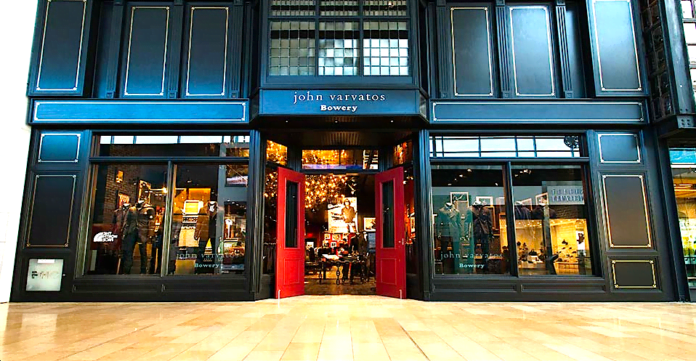
John Varvatos’ first Canadian store opened last November in the newest wing of Toronto’s Yorkdale Shopping Centre. Yorkdale management specifically courted Varvatos for the mall, visiting New York City to sell the idea of a Toronto location. The 3,600 square foot Varvatos sits prominently in some of the mall’s most valuable retail space, in-between AllSaints and the mall’s Apple Store, across the hall from the busy Tesla Motors showroom. 

Interestingly, John Varvatos’ Toronto store opened before any others in prominent American cities such as Chicago and Washington, DC. Varvatos recently told Women’s Wear Daily that a Chicago store is in the works, however, as is a new Beverly Hills unit. 

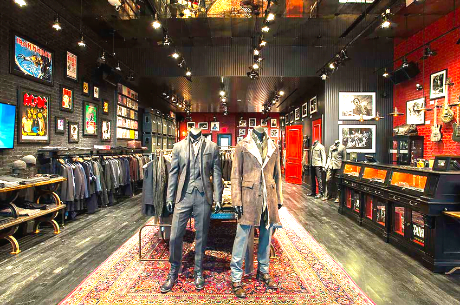
Inside Yorkdale’s John Varvatos store.

The Varvatos brand launched in 2000 with a store in New York’s Soho. The brand has since expanded into footwear, leathergoods, eyewear, watches and fragrances. Varvatos currently has 15 boutiques worldwide, including 13 American stores and two other locations in London and Toronto. Varvatos will soon open in Bangkok, Thailand and Houston, Texas.

Prices for Varvatos’ collections vary. In its Toronto store, prices range from $75 for a t-shirt to just under $2,500 for a suit to close to $3,000 for a leather jacket. 

Detroit-born John Varvatos began his fashion career when he joined Polo Ralph Lauren in 1983. He moved on to Calvin Klein in 1990, where he was appointed head of menswear design and oversaw the cK brand. During his time at Calvin Klein, Varvatos is credited for having invented the ‘boxer brief’ style of men’s underwear, simply by cutting the legs off of a pair of long john underwear. Varvatos returned to Ralph Lauren in 1995 as head of menswear design and created the Polo Jeans Company, before starting his own label in 2000. 

A recent article in Women’s Wear Daily mentions what several sources have told us: that John Varvatos could open a Vancouver store. Speculation persists that Varvatos could open at Vancouver’s Pacific Centre, though we can’t confirm this. A source at Nordstrom says that, as far as they’re aware, the Varvatos brand will be carried at the company’s Canadian stores. Another source says that Canada’s Saks Fifth Avenue stores may carry Varvatos, though this isn’t certain. John Varvatos is currently carried at upscale Canadian retailers including Holt Renfrew and Harry Rosen. 

CANADIAN RETAIL NEWS: Thursday, July 10, 2014 (Updated Continuously)