Major e-commerce brands are opening brick-and-mortar stores

Date:

Share post:


Photo: www.modernfellows.comPhoto: www.modernfellows.com

Photo: www.modernfellows.com

By Steven P. Dennis

Amidst all the breathless pronouncements about the inexorable decline of brick and mortar retail emerges an interesting phenomenon: some of the fastest growing and most exciting internet-only brands are opening stores.

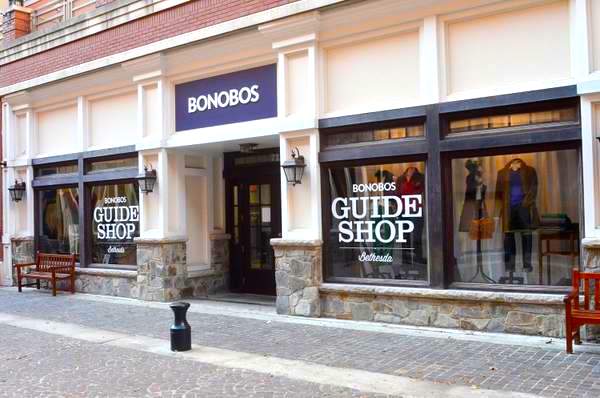
Recently, Bonobos raised $55MM largely to accelerate its foray into “Guideshops.” Other e-commerce innovators such as Warby Parker, Trunk Club, Nasty Gal and Bauble Bar are all expanding into physical store fronts. Expect more announcements soon, not only from earlier stage companies, but from larger direct-to-consumer brands as well. This seemingly counter-intuitive trend reflects a few realities.

First, most of these venture capital funded darlings have thrived in their first few years by exploiting a highly specific customer niche and leveraging the heck out of the advantages of a direct-to-consumer model. Alas, the number of customers who are willing to buy product sight unseen, without working directly with a sales person and lacking the instant gratification that physical stores provide, is comparatively small when it comes to product categories where fit, material quality and fabrication are important. For these brands to continue to grow–and have a chance for material profitability–physical locations aren’t a nice-to-do, they are a necessity.

Second, brick and mortar retail is different, not dead. In most product categories, for many, many years to come, the overwhelming majority of sales and profits will continue to come from, or be influenced directly by, physical locations. Regardless of whether a brand started as an actual store or as a virtual entity, the ones that will ultimately win will offer a tightly integrated experience across their various channels and touch-points. They will eschew traditional mass, one-size fits all strategies and embrace more personalized missions. There remains plenty of business to be done in brick and mortar locations–if you have something remarkable and meaningfully customer relevant.

Finally, when we think about the market or the customer we inevitably get it wrong. Global pronouncements about industry dynamics or the “typical” consumer are rarely particularly illuminating and almost never sufficiently actionable. The brands that are winning–the ones that are stealing share from you–go beyond the averages and the mega-trends. They understand how to apply technology to create frictionless commerce. They delve into data and apply customer insights that inform stronger acquisition, growth and retention tactics. They are committed to experimentation. They treat different customers differently. And on and on. None of this is fundamentally rooted in how a brand started or whether trends tend to favor its success.

Of course it’s far from certain that these previously web-only brands will successfully transition to an omni-channel world. Some will stumble mightily. A few will fail completely. Others will see their growth stall at only a handful of profitable locations.

The one thing for certain is that for quite a lot of customers, the benefits of physical shopping are here to stay. For traditional players the rush to close and down-size their store base may have some merit. But it’s equally likely the problem isn’t just the real estate portfolio.


Steven Dennis is a senior omni-channel retail executive and strategic growth advisor at SageBerry Consulting , LLC. . He is also a Former Chief Strategy Officer at Neiman Marcus. [More about Steven P. Dennis] Published with permission. This post originally appeared at Steven P. Dennis’ Blog on July 14, 2014. Copyright 2014. Follow Steven P. Dennis’ Blog on Twitter.

CANADIAN RETAIL NEWS: Tuesday, July 15, 2014 [News from around the web]

Subscribe to our daily retail news updates for Canadians

* indicates required


RELATED ARTICLES

Subscribe to the Newsletter

Subscribe

* indicates required

RECENT articles

From The Desk: Retailers adapt formats and expansion amid labour, cost and consumer shifts

Canadian retailers adjust store formats and expansion amid labour challenges, cost pressures and uneven spending, balancing growth with operational control.

Daily Synopsis: September 25, 2026

Competition Bureau seeks info on grocers in new wave, Marc Giroux steps in as CEO of Metro Inc., Pokemon thefts rise, Starbucks closing some Canadian locations, ABC Books shutting on Yonge St. in Toronto, and other news.

Aritzia’s Store Network Has Shifted South as U.S. Expansion Accelerates

Aritzia now operates more boutiques in the United States than in Canada as the Vancouver-founded retailer directs most new-store growth south of the border. Its mature Canadian network offers a useful template for the company’s push toward a potential 180-to-200-store U.S. footprint.

Starbucks undertakes massive refresh of North American locations and closing 250 stores

A refresh of Starbucks cafés is designed to bring customers back to what they love most about the coffeehouse: great coffee, craft, connection, and community.

Tommy Gun’s Original Barbershop has ambitious growth plans in Canada and internationally

Tommy Gun’s CEO Keenan Fisher discusses the Canadian barbershop brand’s growth, franchising strategy and plans for 80-plus new locations worldwide.

MEC to Open Small-Format Whistler Store as Retailer Tests New Concept

MEC will open a 2,200-square-foot store in Whistler Village, testing a smaller retail format backed by curated inventory and its broader online assortment.

Lavazza Targets Canadian Growth as It Moves to Double North American Business by 2028

Lavazza is expanding its Canadian presence as part of a strategy to more than double its North American business by 2028, with growth opportunities in distribution, Western Canada and experiential marketing.

Guac Mexi Grill Marks 10 Years With 56 Locations, Eyes U.S. Expansion

Oakville-based Guac Mexi Grill is marking its 10th anniversary with 56 Canadian locations and plans to add 10 to 15 restaurants annually while expanding into the U.S. and India.

Rawcology Founder Tara Tomulka turns personal health journey into growing plant-based food business

Rawcology has grown from a nutrition blog into a food brand offering organic, low-sugar products, with founder Tara Tomulka eyeing further growth in Canada and international markets.

AI transforming retail pricing, from dynamic discounts to personalized offers

McGill professor Maxime Cohen examines how artificial intelligence could reshape retail pricing, customer discounts, fairness and the future of AI-driven commerce.

Retailers face growing trust challenge as AI reshapes customer personalization

Amperity co-founder Derek Slager explains why accurate customer data, privacy, transparency and governance are becoming critical as retailers expand AI-powered shopping experiences.

Daily Synopsis: September 24, 2026

Economists optimistic amid new retail data, consumers could benefit from Empire ending property controls, Starbucks closing 250 North American locations, OVO marks 25 years of Degrassi, and other news.

Natural, organic and wellness sector facing growing pressure from tariffs

The Canadian Health Food Association (CHFA) warns of impacts across the NOW industry that generates approximately $39.7 billion in economic output, contributes $18.7 billion to Canada’s GDP, and supports approximately 147,100 full-time equivalent jobs, according to research by MNP.

Kraft Dinner teams up with Solly’s Cream Soda for unique beverage

KD is teaming up with Solly’s Craft Soda to give fans a new way to satisfy their KD cravings in a beverage that combines the taste of cream soda with a hint of KD’s iconic cheesiness

Payroll employment increases in retail trade: Statistics Canada

From February to July, payroll employment in this sector generally trended up, with an overall increase of 25,300 (+1.3%).

Fuel costs, tariff pressures drag small business confidence down in September: CFIB

Weak demand remained the leading growth constraint for nearly half (49%) of small businesses, while shortage of skilled labour persisted for 41% of small firms.

Central Walk Details Redevelopment of Former Bay Spaces at Woodgrove and Mayfair

Central Walk owner Ruby Liu details plans for 310,000 square feet of former Hudson’s Bay space at Woodgrove  Centre in Namaimo and Mayfair Centre in Victoria, including H Mart, Haidilao and TM Wander.

8 in 10 Canadians cutting back on restaurants: Restaurants Canada

Restaurant sales are expected to reach $130 billion in 2026, but rising costs and thin margins continue to depress bottom lines.

Retail sales dip in July: Statistics Canada

The largest decrease was observed at general merchandise retailers, in which retail sales were down 1.9% in July, after increasing 2.5% in June.

7-Eleven Brings Korean Bestsellers to Canada as Global Food Strategy Expands

7-Eleven Canada is importing top-selling Korean snacks from another 7-Eleven market for the first time, extending a food strategy that increasingly draws on products tested elsewhere in its global network. The move follows the success of its Japanese-style egg salad sandwich.