Home Blog Page 1342

Fossil continues its cross-Canada expansion, seeks new retail space

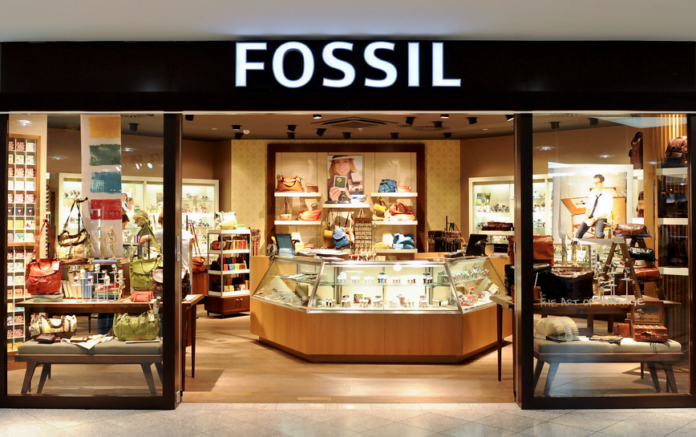
Photo: Fossil

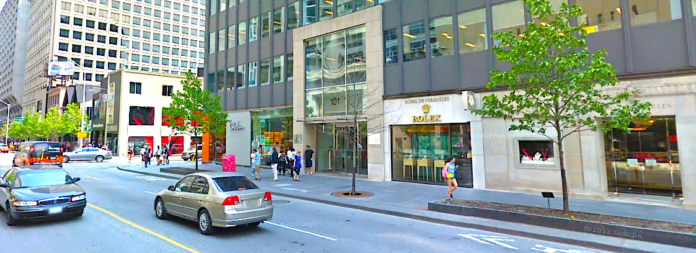
American watch and accessory brand Fossil continues its cross-Canada expansion. It is actively seeking retail space as it continues aggressively opening stores in various cities. Fossil recently opened five stores in just over one month, and it plans to operate 33 Canadian locations by the end of this year. It also just opened its Canadian flagship on Bloor Street in Toronto, which is a prototype for future locations. 

Fossil is especially interested in new retail space in Toronto, Calgary and Vancouver. The retailer currently has three Calgary stores, as well as four in Vancouver and six in Toronto. Fossil seeks retail space in super-regional malls, as well as downtown street-front spaces. For its full-priced stores, Fossil ideally wants space between 1,200 to 1,500 square feet with a 23.5+ foot width. Its outlet stores are twice as large, ideally occupying about 3,000 square feet. 

In April, Fossil opened stores at Masonville Place in London, Ontario, Lime Ridge Mall in Hamilton, Quartier Dix30 in Montreal, and an outlet at The Outlet Collection at Niagara in Niagara-on-the-Lake, Ontario. 
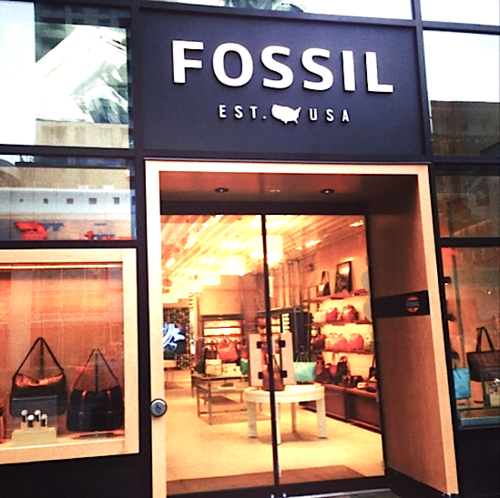
FOSSIL’S 2,650 SQ FT CANADIAN FLAGSHIP JUST OPENED AT 50 BLOOR ST. WEST IN TORONTO, IN A RETAIL SPACE FORMERLY OCCUPIED BY ALDO SHOES. PHOTO: BLOOR-YORKVILLE BIA, VIA INSTAGRAM. 

Later this year, Fossil will open stores at the Montreal Premium Outlets, Market Mall in Calgary, Polo Park in Winnipeg, as well as an outlet at the Tanger Outlets in Ottawa. In May of 2015, Fossil will open at Vaughan Mills, just north of Toronto. 

Fossil’s new 2,650 square foot Toronto flagship showcases the company’s new, upscale and modern design prototype. It boasts a street-front presence at the Holt Renfrew Centre, 50 Bloor Street West. Fossil replaces Aldo, which abandoned the location several months ago. Although considered Canada’s flagship, Bloor Street’s Fossil measures slightly smaller than the Yorkdale Shopping Centre location, with about 2,670 square feet.  

Fossil operates more than 550 corporate stores around the world, with net sales in excess of $3 billion. 

Sources: Monday Report on Retailers/Think Retail
The heart of omni-channel is still the physical store

exc-538f770be4b0272ab59f701d

By Steven P. Dennis

You can fixate on the decline of brick & mortar retail all you want, but for the foreseeable future–in the vast majority of product categories–more than 90% of sales are still going to be done in physical stores.

You can make a big deal of the hyper growth in your digital channels, but don’t forget that many of those customer relationships started in a store. And many of the sales you ring up as a web order originated through exploration done in a physical location.

Sure, there are a handful of web companies where expansion into brick & mortar sites is secondary and mainly serves as a way to address the shortcomings of a purely digital experience. But for the overwhelming majority of brands, the physical store will be the dominant driver of sales, whether that revenue is actually booked in a store or not.

The other often neglected fact is that for many retailers their most profitable customers purchase regularly in both brick & mortar and e-commerce channels. If the physical store experience wanes, you can expect overall sales and profits to suffer. 

As industry analysts and the press hyper-focus on a company’s e-commerce performance, the danger is that physical locations get short-changed. We are already seeing many retailers disinvest in their stores. These brands should tread very carefully.

As there is a continued rush to “right-size” store counts, many retailers will discover that closing stores will dramatically affect their e-commerce growth in the vacated trade areas. If your store closing analysis doesn’t include the impact on your web sales you are making a huge mistake. Too many stores were opened pre-recession. Too many stores will be closed in the next few years. Tread carefully here as well.

Without question you should be investing mightily in digital capabilities and just about anything mobile. But physical retail is likely to remain the heart of omni-channel for most brands for a long time. 

You can go on and on about omni-channel this and omni-channel that, but screw up the store experience and you will be paying the price for years to come.


Steven Dennis is a senior omni-channel retail executive and strategic growth advisor at SageBerry Consulting , LLC. . He is also a Former Chief Strategy Officer at Neiman Marcus. [More about Steven P. Dennis]

Published with permission. This post originally appeared at Steven P. Dennis’ Blog on June 4, 2014. Copyright 2014. Follow Steven P. Dennis’ Blog on Twitter.

GO BACK

One-stop Canadian retail e-news. Subscribe:

* indicates required


Most of Hudson’s Bay’s merchandise will be available online by the end of this year

exc-538bba66e4b01a84edc557aa


Hudson's Bay website retail insider.pngHudson's Bay website retail insider.png

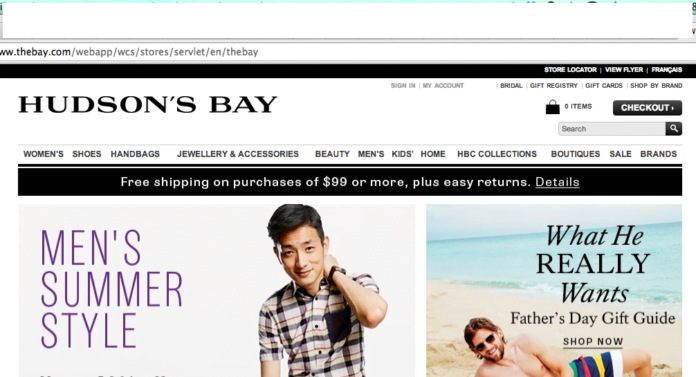
About 80% of Hudson’s Bay‘s flagship in-store merchandise will be available on its website by the end of this year, according to company president Liz Rodbell. Even more impressively, its website will offer a wider variety of sizes and colours than those available in-store. Hudson’s Bay expects that more than 10% of its total revenues will come from online sales within the next four years, up from 3.5% this year. Despite these gains, Canada’s Hudson’s Bay website lags behind parent Hudson’s Bay Company‘s (HBC) online initiatives in the United States. 


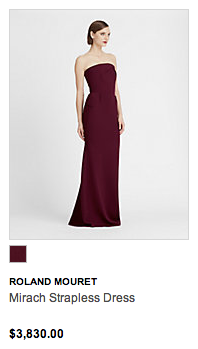
Roland Mouret dress from Hudson's Bay's luxury women's department 'The Room. Click image to visit the website link. Roland Mouret dress from Hudson's Bay's luxury women's department 'The Room. Click image to visit the website link. 

Roland Mouret dress from Hudson’s Bay’s luxury women’s department ‘The Room. Click image to visit the website link. 

The online-focussed strategy will see the company’s website become a destination unto itself, considering the increased trend towards online shopping. Men’s ‘big-and-tall’ clothing, for example, will only be available on Hudson’s Bay’s website. Hudson’s Bay already carries a considerable amount of product online, from relatively inexpensive items to luxury goods, priced into the thousands. 

Merchandise from women’s luxury department The Room, for example, is prominently displayed with its own website link. A limited selection of designers and products are listed, and those available are pricey. A Roland Mouret dress, priced at $3,830, is the most expensive clothing item. A $1,415 crystal-encrusted Casadei shoe is available, along with a variety of other pricey footwear. There are handbags priced into the thousands, including a $3,250 Proenza Schouler PS11 Classic handbag. Last year, a similar bag on the website cost over $8,000, which isn’t surprising, considering that The Room carries some of Canada’s most expensive clothing and accessories.


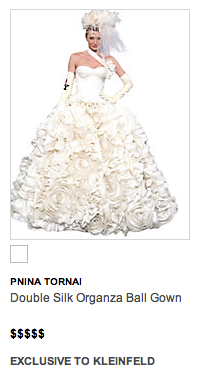
Kleinfeld's bridal gowns, priced as high as $32,000, don't include prices on the website. Kleinfeld's bridal gowns, priced as high as $32,000, don't include prices on the website. 

Kleinfeld’s bridal gowns, priced as high as $32,000, don’t include prices on the website. 

Kleinfeld Bridal, operating on the seventh floor of Hudson’s Bay’s Toronto flagship, also offers product on the website. Gowns featured in-store are priced between $1,400 and $32,000. Prices aren’t listed on the website, however, and gowns must be tried on and altered in the store. 

TopShop and TopMan merchandise featured on the site is priced lower than in the United States, even with the weaker Canadian dollar. This is because Hudson’s Bay has an agreement with the British fast-fashion brand to keep Canadian prices lower. 

Online sales account for 11% of all revenue for parent company HBC, which includes American retailers Saks Fifth Avenue and Lord & Taylor. HBC’s online sales reached $207 million last quarter, according to CEO Richard Baker. The company hopes to raise online sales to 20% over the next five years. Americans are generally more receptive to online shopping, according to company president Liz Rodbell, who presented at yesterday’s Store Conference 2014 in Toronto. 

GO BACK

One-stop Canadian retail e-news. Subscribe:

* indicates required


Identifying High & Low Performers with Retail Employee Assessments

exc-538cee60e4b0c07f82710059

By Lisa McCann

Have you ever wondered how to make all your retail employees like your top 10%?

Surveying your current workforce and identifying your high and low performers will help you better understand what you need to drive better hires. Using tools such as employee assessments and performance summaries allow you to gain insights into the key areas high performers are succeeding in and their associated skills. Analyzing your low performers is also important because you can focus in on the areas that you think are causing them to lag behind their peers. The first step is to understand what differentiates these two groups is to focus on the variations in their skills, capabilities, personality traits, and behaviours.

Where are the Competency Gaps?

Your current workforce needs to take your employee assessments. The questions will provide you with insights into what key competency areas high performers are excelling in comparatively to low performers. You can then plot your employee scores over each competency and see which areas have skill gaps. These are the important competencies to place a higher weight on in the assessment scoring.

It’s also important to understand which employees are having long term success and are growing within the business. These are employees who you will want to understand their key competency areas and how they differ from those who turnover. This will help you again weigh in on what a great hire looks like and their associated score.

Why Focus on Low Performers?

Low performers can give you immense insights into skills gaps within your current workforce and future needs that will start to arise. When you see the differentiators between high and low performers you can start to red flag those low scoring competencies in the employee assessments. If a candidate ranks substantially low on something that is deemed essential for employee success in the role, they will be red flagged. In terms of current employees, this helps your organization decide how to best deal with current skills gaps and what training or development programs you may choose to implement to improve your workforce. A current employee may rank high in a customer service role, but their selling abilities may be lacking. This may allow you to transition the employee into another area of the business where their strengths could be used or opt to implement a training program to help them better their selling skills.

What Roles Drive Results?

Looking at the key roles within your organization and which are driving front-line business results will help you create a stronger assessment tool. If certain roles are essential to business results, you will want to ensure that they are being filled with best fit candidates. These are areas you will want to build out in an employee assessment to ensure you are hiring candidates who will match your expectations. Scoring will never be perfect but if you can continuously reassess your optimal scores and make improvements based on post hire results, you will drive better hires each time. Additionally, strategic planning comes into play when you start to understand which employees are successful in the long term with your organization. These are employees you will want to build training and retention programs for to make sure that your organization is developing top talent.

Lisa McCann is the Corporate Marketing Manager at Vancouver-based recruitment company, Mindfield Group.

GO BACK

One-stop Canadian retail e-news. Subscribe:

* indicates required


Canada Faces Increased International Competition for Retail Expansion Dollars: Report

exc-538ce6a6e4b05f8b8742dc5f


bloor street toronto retail insider.pngbloor street toronto retail insider.png

A new report by CBRE finds that although foreign retailers continue to enter the Canadian market, they’re doing so less than before. As global markets have largely recovered from the recession, international retailers now have an increased number of expansion opportunities to consider. The report, entitled , analyzes 334 leading retailers in 61 countries. The report suggests that the Canadian retail market recorded fewer new entrants last year than the year before. 

The report notes that in 2012, Canada ranked sixth in the world for the most new foreign retail entrants. Toronto was listed amongst the twenty most targeted cities. In 2013, Canada no longer ranked among the countries attracting the most new retailers, and it did not have a city ranked among the top 20 most targeted markets. 

Canada still ranks highly, however, in terms of the variety of global retailers that are present in cities. In 2013, Canada had 35% of global retailers present, enough for us to rank 20th in the world. Comparing city-by-city retailer penetration rates, Toronto slipped from 37th to 38th place, Vancouver jumped from 56th to 51st place, Calgary climbed one spot to 76th, and Montreal remained at 83rd place. 

Last year, the bulk of new international entrants were in the luxury and fashion categories. Homewares and food were the other active categories. 

“While Canada remains an appealing destination for global retailers, our competitors are catching up and Canada has had to relinquish our unusually large share of the spotlight,” said Ross Moore, Director of Research for CBRE in Canada. “One reason for the decrease in new retailers coming to Canada is that there is little to no vacancy in highly sought after shopping centres and high street locations. It is only natural for there to be a pause while developers and supply chains adjust to the influx of brands from years past.”

“The retailers that entered Canada with a limited number of stores have been busy expanding their footprint across the country,” Moore added. “No longer satisfied with a single location, usually in Toronto, we have seen retailers pursue opportunities in Vancouver, Calgary and Montreal. As a result, most Canadian cities had their rankings improve in terms of overall retailer representation.”

GO BACK

One-stop Canadian retail e-news. Subscribe:

* indicates required


Nordstrom currently hiring 400 staff for its Calgary store

exc-538cfc4de4b04de129ac9835


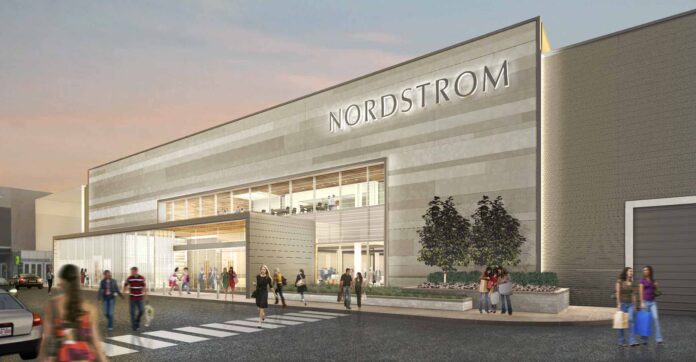
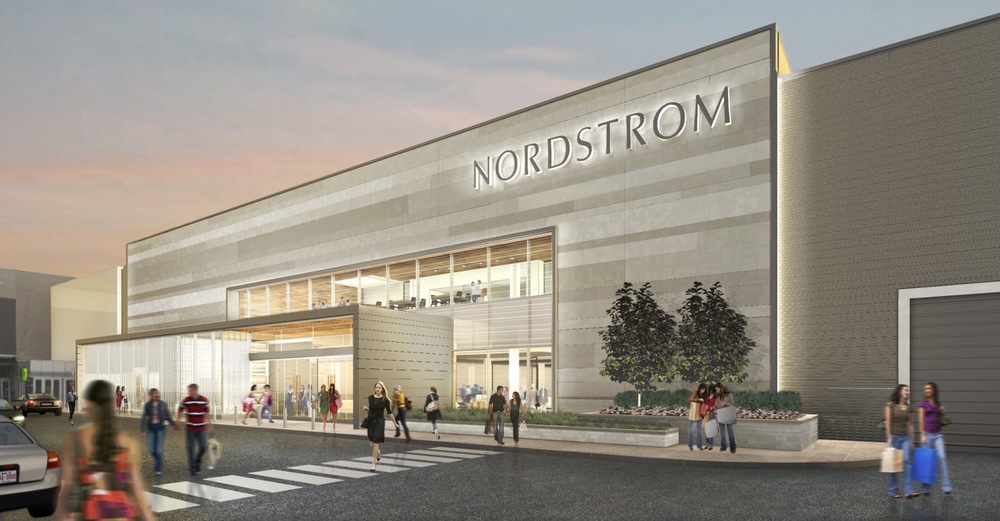
Nordstrom, Chinook Centre, Calgary. Image: NordstromNordstrom, Chinook Centre, Calgary. Image: Nordstrom

Nordstrom, Chinook Centre, Calgary. Image: Nordstrom

Nordstrom is currently hiring approximately 400 staff for its Calgary store. Job applications are currently being accepted, and interviews begin this Friday. Chinook Centre will be the company’s first Canadian location, with the 140,000 square foot store opening on September 19th. 

Nordstrom’s website provides a link where applicants may create a profile and apply for jobs. Calgary’s jobs have yet to be posted on the site, despite interviews commencing this week. The site will reportedly post hundreds of Calgary-based jobs, shortly. 

The Calgary Herald reports that positions in the Calgary store are available in all areas of operations, including sales in men’s, women’s, and children’s apparel, shoes, accessories, cosmetics, designer, and various support positions in alterations, facilities, and loss prevention. Additional positions are also available in the store’s restaurant and coffee bar.

In January, Nordstrom announced that Shelia Woodridge was appointed to manage the Calgary store. Ms. Woodridge is an American who began her Nordstrom career in Dallas. In April, Nordstrom announced that John Banks will head its new Ottawa store, which will open in the spring of 2015. 

According to the Calgary Herald, Nordstrom hired 28 Canadian department managers in February. They are currently in Seattle, attending a nine-week, cross-cultural training program that began on April 28th and ends on June 27th. New managers are learning about Nordstrom firsthand by working in a store with a fellow mentor manager. The company will also reportedly offer a training program in Calgary for new non-management employees.

Calgary’s Nordstrom replaces part of a 173,000 square foot former Sears store. Extensive renovations will see Calgary’s Nordstrom boast the latest in the chain’s updated interior store design. We’ll discuss the look of Canada’s new Nordstrom stores in the next few days. 

GO BACK

One-stop Canadian retail e-news. Subscribe:

* indicates required


The price gap is real between Canada and the US

exc-538d0aede4b02a4d88c0519a


By Retail Assembly

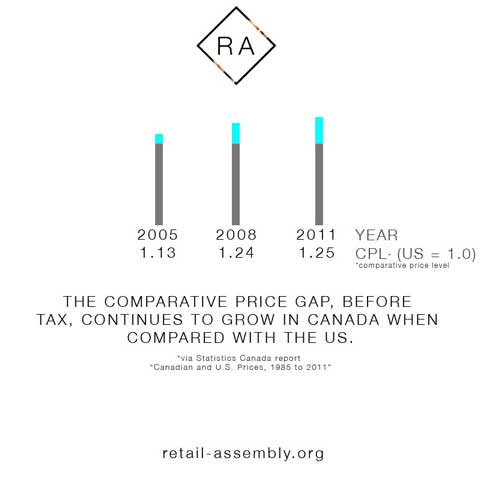
Canadian consumers are right, there is a price gap between the cost of goods in Canada and cost of goods in the United States. This has been an issue that retail buyers, wholesale reps and Canadian distributors have been struggling with for well over a decade.

Most Canadian cities are located within a few hours of the US border. Better sales, better brands, and better pricing have been consistent reasons cited by customers for shopping in the US, instead of Canada. Although there is better brand availability in Canada, pricing is still a concern.

The retail industry has largely attributed higher taxes, shipping, customs and duty for this perception. But a new Statistics Canada Report indicates that the before-[consumer-]tax price of non-regulated goods is almost 25 percent higher. 

Read the rest of this article at Retail Assembly.

One-stop Canadian retail e-news. Subscribe:

* indicates required


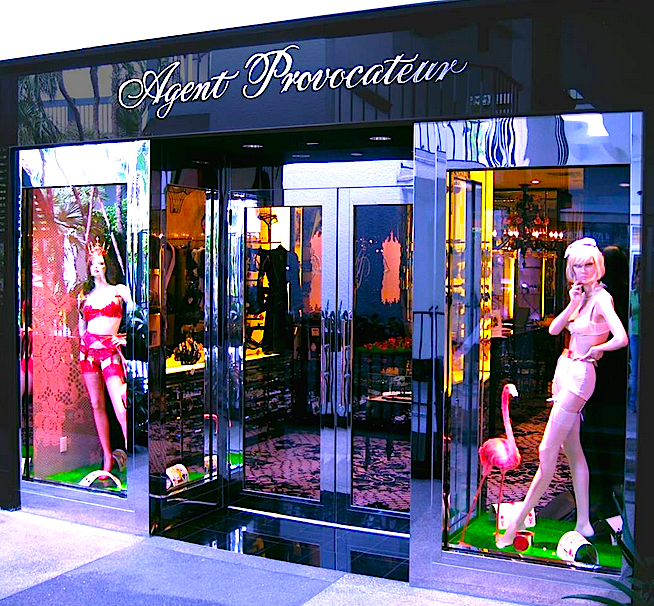
Agent Provocateur to open free-standing Canadian flagship

exc-538b95e8e4b0eba84f5e56f9


Photo credit: http://juliettelonguet.over-blog.comPhoto credit: http://juliettelonguet.over-blog.com

Photo credit: http://juliettelonguet.over-blog.com

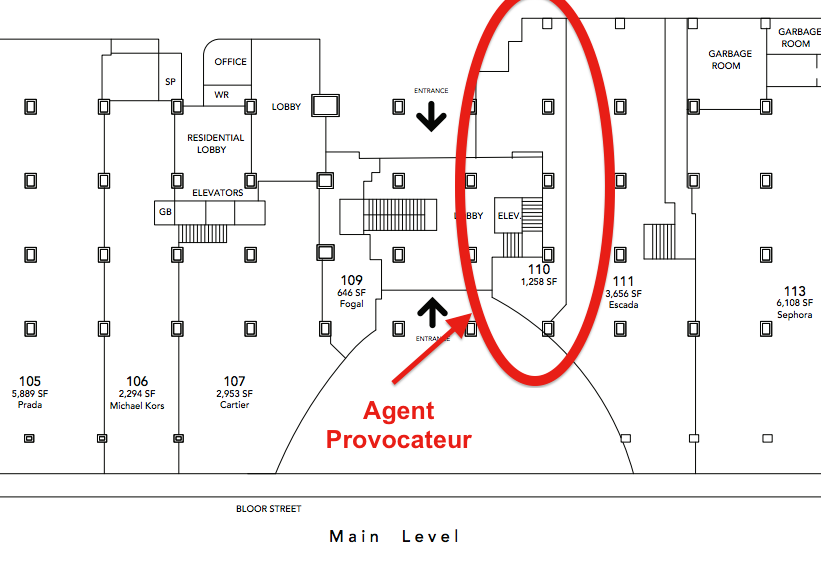
British lingerie retailer Agent Provocateur will open a flagship store at Canada’s most luxurious retail plaza. Located within The Colonnade at 131 Bloor Street West in Toronto, Agent Provocateur will occupy two small retail spaces next to Escada. 


From the lease plan of The Colonnade, 131 Bloor St. W., Toronto. Click image for entire lease plan (.pdf)From the lease plan of The Colonnade, 131 Bloor St. W., Toronto. Click image for entire lease plan (.pdf)

From the lease plan of The Colonnade, 131 Bloor St. W., Toronto. Click image for entire lease plan (.pdf)

According to the City of Toronto Building Application website, Agent Provocateur will occupy spaces #110 and #116 within The Colonnade. According to lease plans provided by landlord Morguard, the combined space measures 1,258 square feet. Click the image to the right for a pdf of the complex’s entire retail lease plan. 

Agent Provocateur is considered to be a luxury lingerie company. It was founded in 1994 by the son of British fashion designer Vivienne Westwood. It is known for its potentially racy ad campaigns, including the video below starring Kylie Minogue, below (caution, potentially not safe for work).

There are currently three small Agent Provocateur boutiques in Canada. All are concessions within Holt Renfrew‘s flagships in Vancouver, Montreal and Toronto (Bloor Street). Each concession measures about 150 square feet, substantially smaller than the new Toronto flagship. Holt Renfrew’s first Agent Provocateur concession opened in March of 2012 in Vancouver, followed by Montreal in October of 2012, and Toronto in November of 2013. 

Vancouver was once home to Canada’s first and only free-standing Agent Provocateur store. The franchised location opened on Alberni Street in late 2007, and it closed in the summer of 2011. Sources say that the franchise owner lacked retail experience, contributing to the location’s failure. 

There are 11 free-standing Agent Provocateur stores in the United States, as well as four concessions within Bloomingdale’s stores. 

GO BACK

One-stop Canadian retail e-news. Subscribe:

* indicates required


Mall Review: Galeries d’Anjou (Montreal)

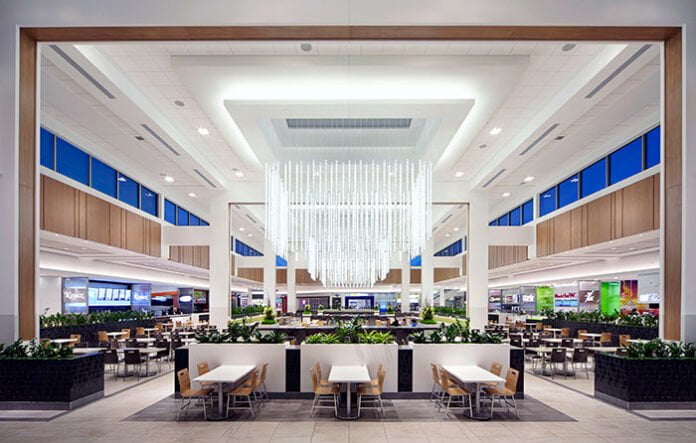
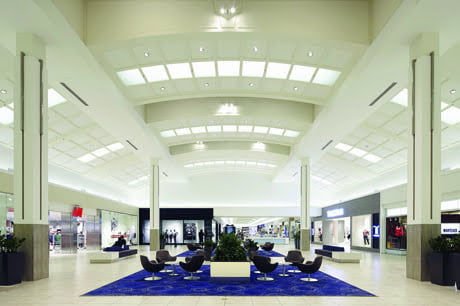
STUNNING FOOD COURT RENOVATION AT LES GALERIES D'ANJOU. PHOTO: SAVOIA CANADA INC.

Review of Les Galeries d’Anjou in Montreal, by Saul Carliner

This is my new favourite mall in Montreal, which is saying a lot because other malls in the area like Carrefour Laval and Quartier Dix30 have significantly upped their game in the past year.

But the late 2013 additions of Simons and Target prompted transformations throughout the mall. Hudson’s Bay – once one of the dowdiest in the chain—to transform itself into a chic La Baie d’Hudson and carve space for Topshop/Topman within the building.

PHOTO: SAVOIA CANADA INC.

The addition of Simons (easily the nicest one in Quebec, which is saying a lot as it is even nicer than the flagship Simons in Quebec City) prompted a number of other positive changes:

  • A Starbucks to hang out in, the addition of some new stores including the imaginative Kasa Living
  • An entirely new food court near Target.  In addition to a superb selection of dining options (including definitely-not-greasy-fast-food providers Grillades Torino and Smart Burger), the new dining area is light, bright, and airy with plenty of seating and comfortable, attractive wood tables and chairs.  The dining area provides more than a quick meal; it’s a great place for a nice meal.  And the real china (part of a sustainability initiative) only adds to the higher-end ambience.

The additions have brightened a mall that was already refreshed less than 10 years ago with the arrival of The Brick and the more recent launch of Linen Chest.  But it also raised the mall from a mid-market mall to something more upper-end and further distinguish it from aging neighbour Place Versailles.

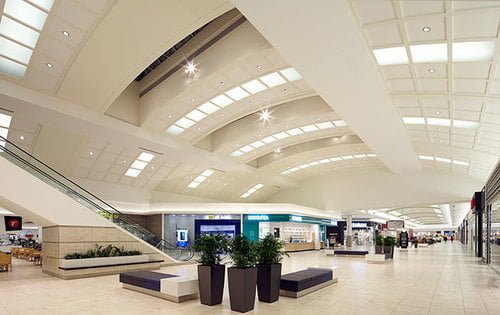
PHOTO: IVANHOE CAMBRIDGE

Special kudos to both Hudson’s Bay and Simons for their new stores.  As noted earlier, the Bay has completely transformed.  Simon’s has one of the largest men’s departments in its chain and is the only store in the chain that has a restaurant (a cute bistro, at that).

In the decade that I have been following this mall, the landlord (Cadillac Fairview) has continually demonstrated its commitment to keeping the mall fully occupied and up-to-date.  Stores do not stay vacant for long and the mall has been through two major and several minor remodels during this time.  According to the Wikipedia page for Galleries d’Anjou, the mall has continually changed anchors as the needs arose, whether they arose from consumers or, more frequently, from changes in the fortunes of the anchors.  The most recent renovations, however, have strengthened the mall and made it more of a must-visit destination.

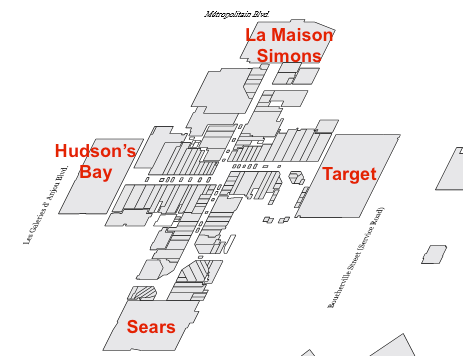
MALL FLOORPLAN

Fast Facts about the Mall

Anchors: The Brick, La Baie d’Hudson, Linen Chest (no entrance from inside the mall.) Sears, Simons, Target National chains: American Eagle. Centre du Rasoir, Cuir Danier, H&M, Jean Coutu, L’Equippeur, Reitmans, Sony. Swarovski. Topshop/Topman.

On mall property—but not in the mall: Best Buy. Future Shop. L’Academie. Wendys.

Variety of merchandise: Excellent.  La Baie d’Hudson and Simons have the broadest selections of fashion.  For a mall, the selection of household supplies, personal care supplies, electronics and sporting goods is excellent.

Special notes: Great restaurants and electronics are located in freestanding buildings outside the mall but on the mall property.

Food court: A true dining experience.  Asian (Manchu Wok, Thai Express), Middle Eastern (the amazing Grillades Torino). High-end fast food (Smart Burger, Subway), and an ice cream place.  Even nicer, the large, airy, bright dining area with real plates and silverware. 

Wikipedia page: http://en.wikipedia.org/wiki/Galleries_d%27Anjou

Website: http://www.lesgaleriesdanjou.ca

Saul Carliner is a Montreal-based writer and consultant who focuses on the design of edu marketing and edu-tainment experiences.  For more information, visit mallsacrossamerica.wordpress.com and www.saulcarliner.com.  

6 of Canada’s top 25 most valuable brands are retailers

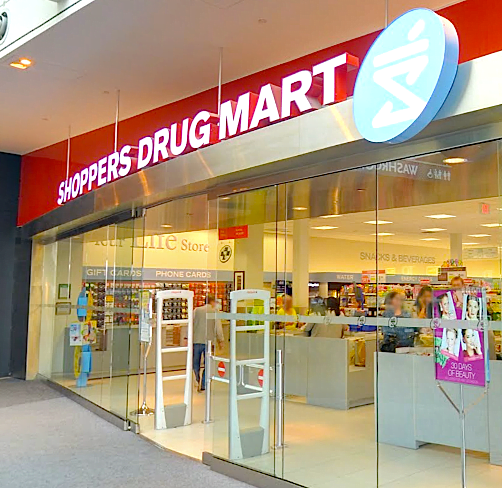
Image: Shoppers Drug Mart

A new ranking of Canada’s top 25 most valuable brands includes six retailers. The report, published every two years by consulting firm Interbrand, attempts to assign monetary values to brands. Eligible brands must be profitable, prolific, and provide publicly available financial information.

The six Canadian retailers’ ranks and estimated brand values are as follows:

7. Shoppers Drug Mart: $3.193 billion,

9. Lululemon Athletica: $2.92 billion,

13. Canadian Tire: $1.708 billion,

15. Dollarama: $1.273 billion,

19: Winners: $763 million,

25: La Senza: $324 million.

Interbrand’s report includes brands that have Canadian origin, even if the brand is foreignly owned. Winners and La Senza are both examples: both are American owned, though they were founded in Canada.  Winners is owned by TJX Companies, and La Senza is owned by Limited Brands.

Five of the six above-mentioned retailers were in Interbrand’s 2012 top 25 ranking. The sixth entrant, Montreal-based Dollarama, is an interesting case study. Dollarama broke “virtually all of the established retail rules,” according to the study. Dollarama doesn’t advertise, except to promote new store openings. It doesn’t put items on sale, nor does it run in-store promotions. Also lacking loyalty programs or coupons, Dollarama flies in the face of conventional retail strategies. And it’s working: it plans to add 400 more stores to its already 800 Canadian locations.

The report is also disappointing. Only one of the previous five ranked retailers gained brand value between 2012 and 2014 and that was Winners, gaining 12%. Shoppers Drug Mart remained the same between 2012 and 2014, while Lululemon lost 10%, Canadian Tire lost 9%, and La Senza lost 11% of its brand value.

The full Interbrand report can be downloaded here.

Which Canadian retailers would make the top 25, if privately-held brands were eligible? Feel free to comment below or message us on Twitter.