Home Blog Page 1341

Nordstrom’s Canadian stores will look different than most US locations [With Slideshow]

exc-5382a95ee4b06fe80abd67f4

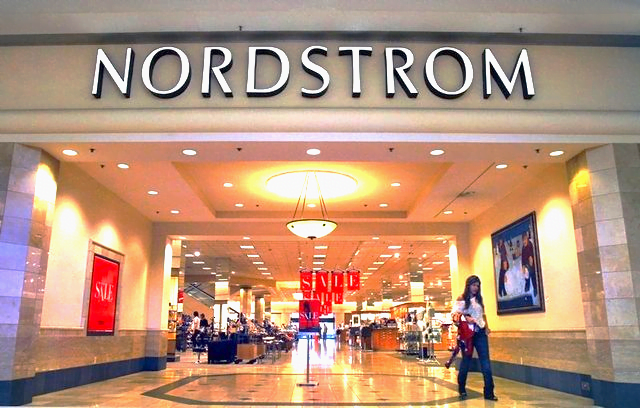
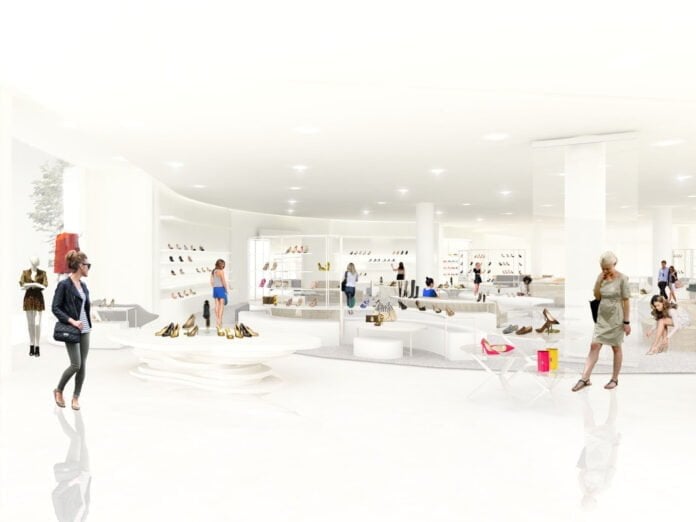
Nordstrom‘s Canadian stores will look somewhat different than most of its American locations. The company will adopt a more contemporary look for its store interiors, with windows providing natural light, while most American Nordstrom stores feature a conservative cream-colour aesthetic, void of sunlight. New and recently renovated Nordstrom stores provide insight into the look of its Canadian stores, including a recently overhauled Los Angeles location. Images in this article can be clicked to enlarge, and an annotated slideshow of Canadian Nordstrom stores is provided below.

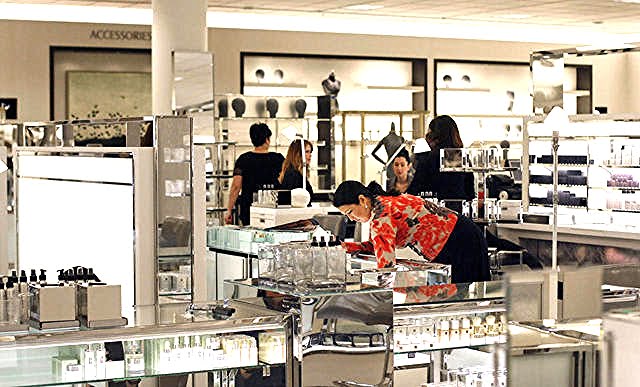
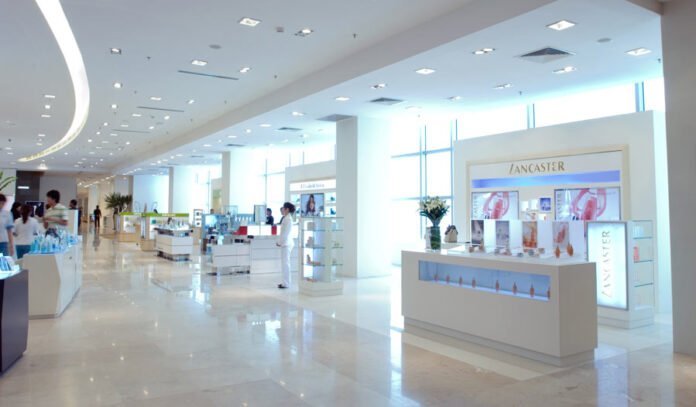
Sources tell us that Nordstrom’s extensively renovated location at The Grove in Los Angeles gives insight into the look of Nordstrom’s new Canadian stores. Natural light floods portions of the Los Angeles location through a point-supported glass exterior, a first for the company. Its interior, characteristic of new and recently renovated Nordstrom stores, features a clean black-and-white aesthetic. Although tiled ceilings are still present in some departments, smooth ceilings characterize its pricier departments, including designer handbags and its costly womenswear department, Collectors. White marble floors characterize its pricier departments, while high-gloss ceramic tile covers much of the rest of the store.  

For years, Nordstrom’s store design was conservative and formulaic: tiled ceilings with protruding spotlights, cream-coloured floors, wood accented menswear departments, and a generally conservative feel. Contrasting sharply is competitor Bloomingdale‘s, typically featuring a glamorous shiny black-and-while store aesthetic, bright interior lighting and dramatic high ceilings. Interestingly, Bloomingdale’s seemingly upscale store interiors lead many to believe that Bloomingdale’s stores are more ‘exclusive’ than Nordstrom, despite the fact that Nordstrom stores generally carry more luxury labels than most Bloomingdale’s locations. 
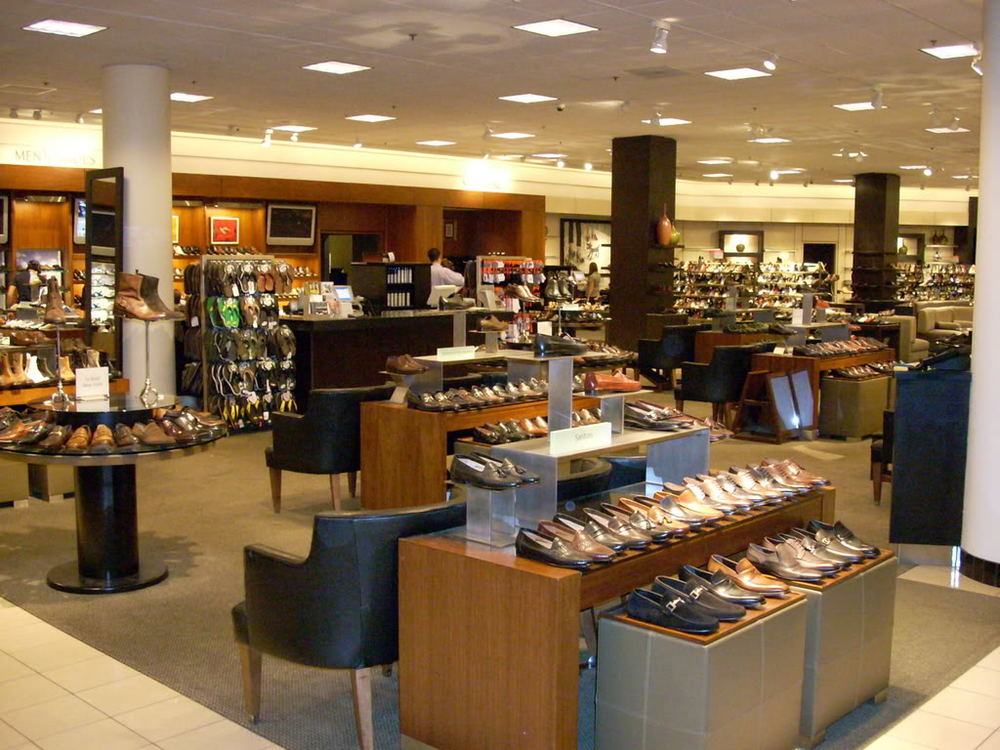
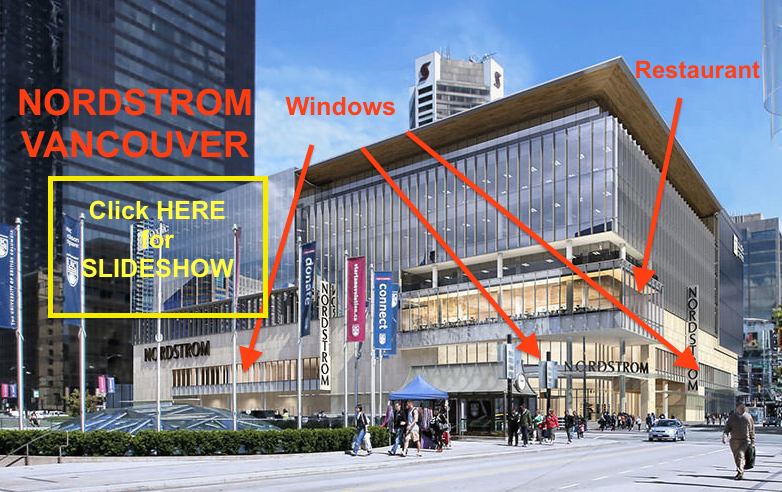
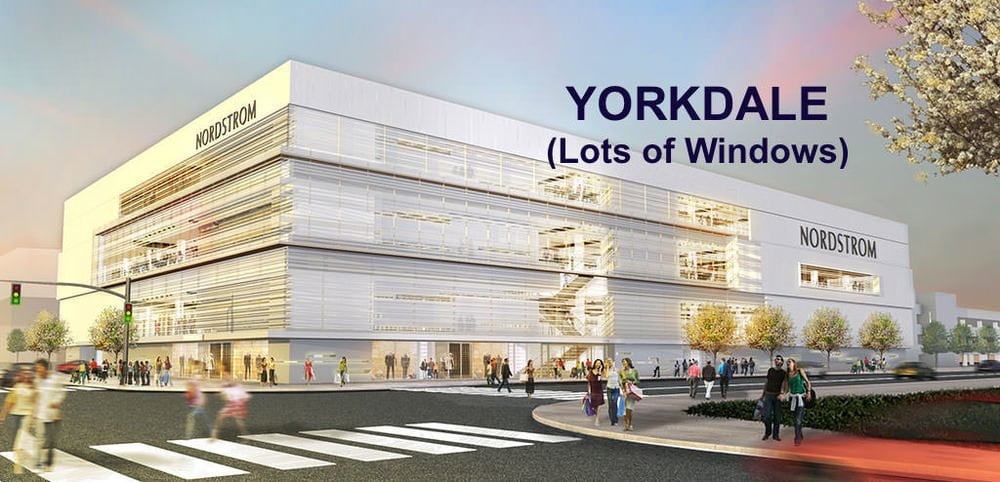
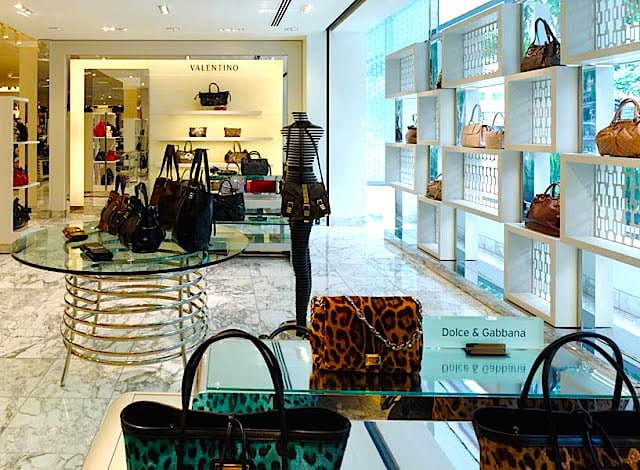
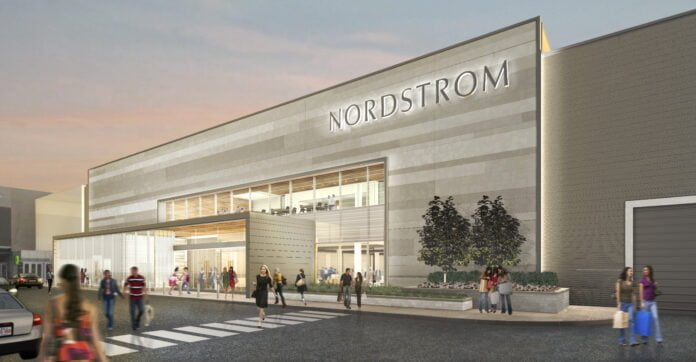
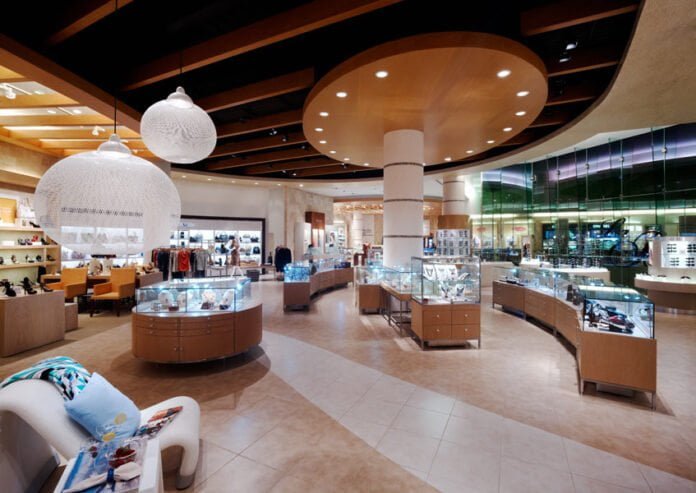
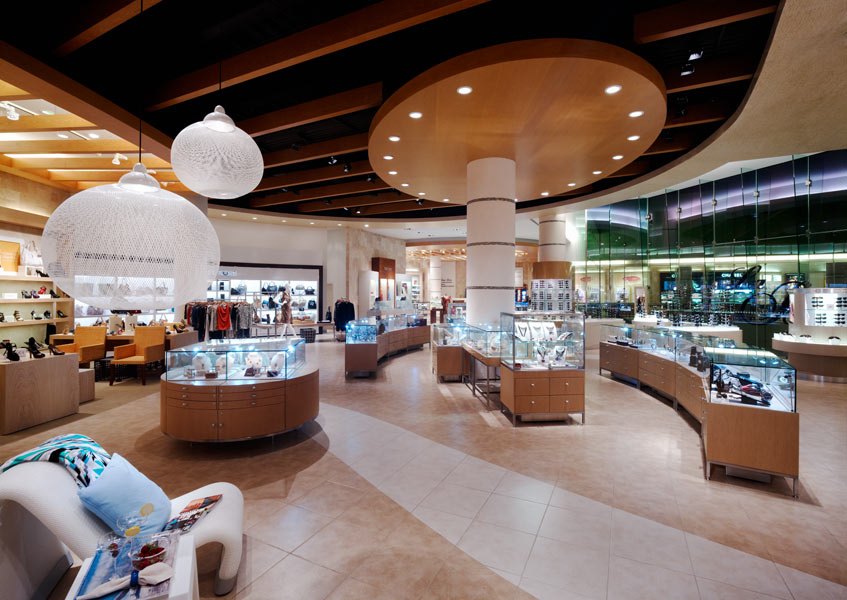
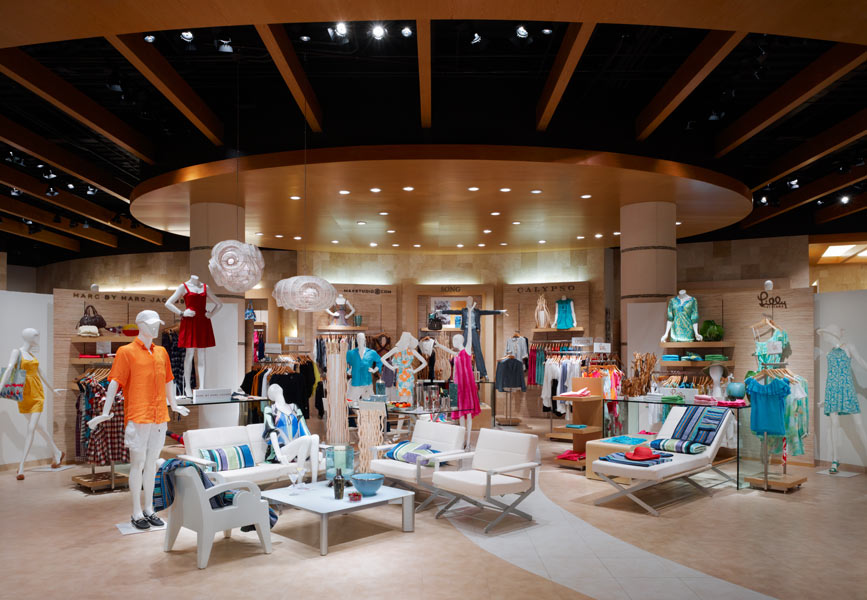
Renderings of Canada’s Nordstrom stores indicate that windows will feature prominently in several of the store’s locations. Its 230,000 square foot three-level Vancouver flagship, scheduled to open in the fall of 2015, has windows on all three levels. Its ground floor will have windows along much of the Granville Street frontage, possibly exposing its handbags department in a similar way to its Naples, Florida store (photo to the right). The protruding glass box on the store’s third level is for a restaurant concept which we’ll discuss shortly. (See slideshow, above)

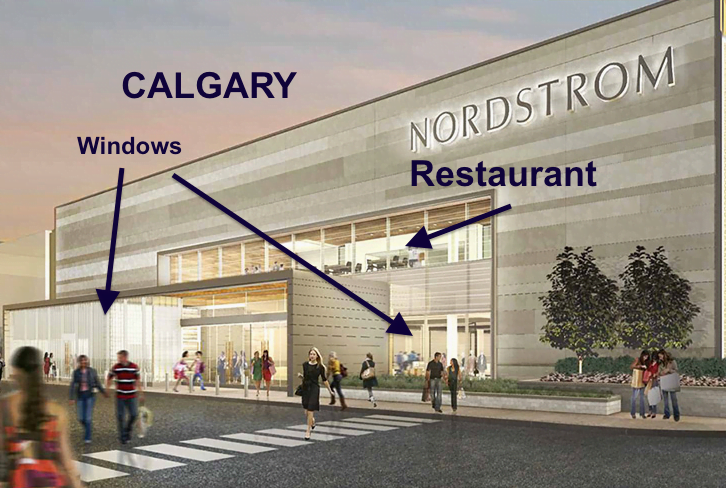
Nordstrom’s Calgary and Ottawa stores both appear to feature some windows, though not as many as in renderings of its Yorkdale Shopping Centre store. Opening in the fall of 2016, Yorkdale’s Nordstrom appears to have ample windows on all of its levels. Being east-facing, the store will be sun-flooded on a bright summer morning. (See slideshow, above)

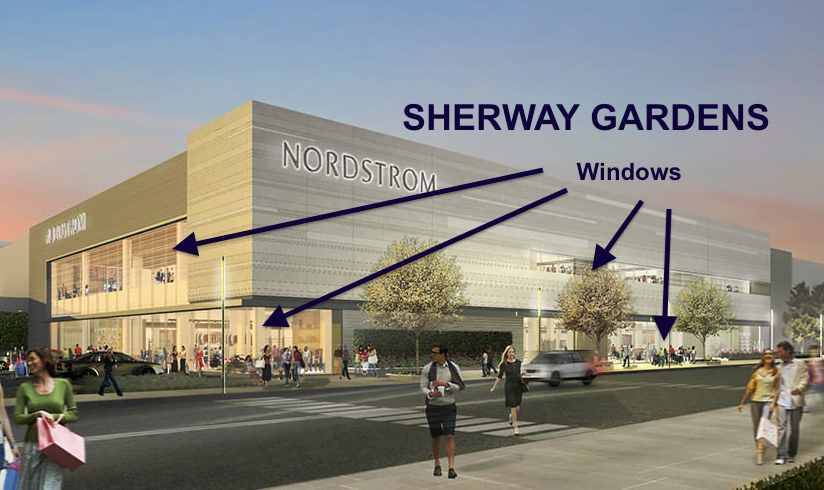
Nordstrom’s Sherway Gardens location, scheduled to open in spring of 2017, appears to have extensive windows over much of its exterior. Its ground floor appears to be wrapped in windows, while its second level features some windows as well. Facing south, much of the Sherway store’s ground floor will be bathed in natural light. (See slideshow, above)

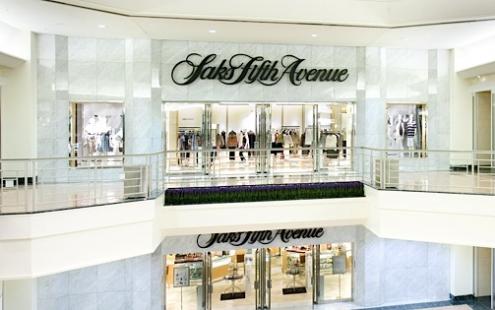
Although some departments at Nordstrom’s Canadian stores will feature smooth ceilings and marble floors, sources tell us that Canada’s Nordstrom stores will still have tile ceilings in several of its departments. It will be interesting to see how Canadians react to Nordstrom’s Canadian store interiors, as competition from Holt Renfrew and Saks Fifth Avenue will be fierce. 

Will Holt Renfrew be de-throned as North America’s most productive department store?

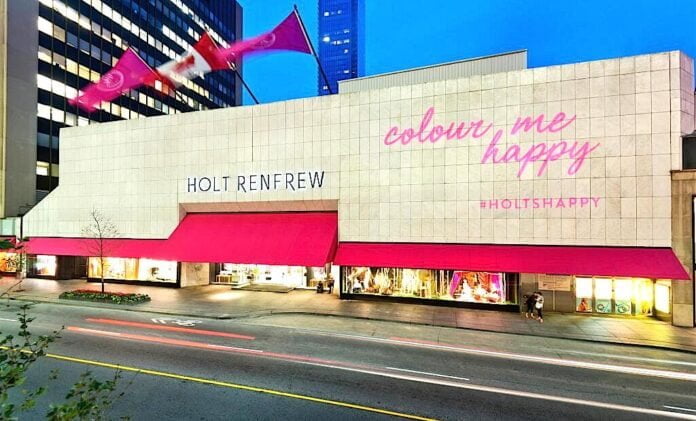
HOLT RENFREW RECENTLY INSTALLED MAGENTA COLOURED AWNINGS TO ITS FLAGSHIP STORE AT 50 BLOOR ST. W. IN TORONTO. PHOTO: HOLT RENFREW, VIA TWITTER.

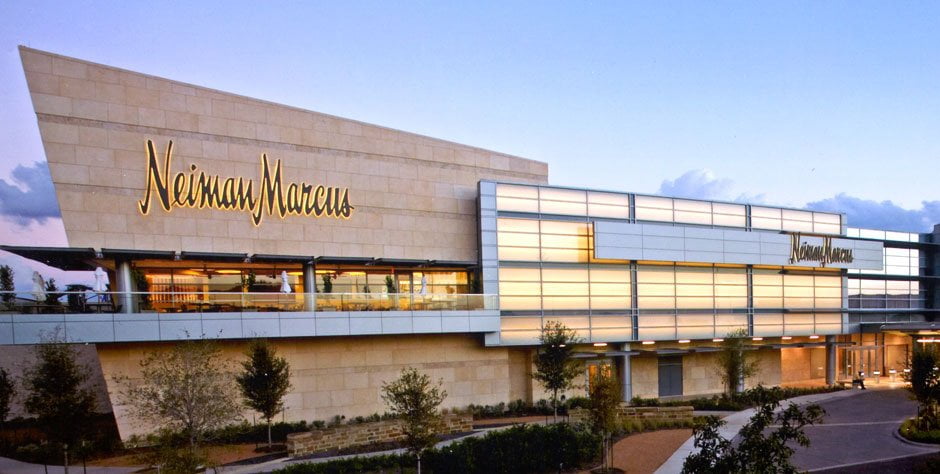
Holt Renfrew will have to fight to maintain its status as North America’s most productive department store. With per square foot annual sales exceeding $1,000, Holt Renfrew far surpasses productivity at Neiman Marcus, Saks Fifth Avenue and Nordstrom. However, competition will increase for Holt Renfrew as Saks Fifth Avenue and Nordstrom both open in Canada, and online shopping becomes commonplace. An unintended consequence could be an over-saturation of Canadian luxury retail, to be explained below. 

Sources estimate Holt Renfrew’s yearly sales to be in excess of $800 million. Its fleet of nine stores span a total of almost 800,000 square feet, according to our calculations from various sources. Holt Renfrew plans to expand its store footprint substantially, occupying in excess of 1.1 million square feet by 2017. 

Its North American peers sell substantially less. Neiman Marcus, North America’s second most productive department store, sells an estimated US $575 per square foot annually. Nordstrom is next, selling $470 per square foot, while Saks Fifth Avenue’s sales estimates are $437. 


Luxurious American retailer Neiman Marcus trails Holt Renfrew’s productivity, with annual per square foot sales of US $575. 

Holt Renfrew’s store space is expanding rapidly. Its Toronto Bloor Street flagship, measuring over 180,000 square feet, will expand to over 200,000 square feet by the end of 2016. The combined Ogilvy/Holt’s in Montreal will measure 220,000 square feet by 2017, resulting in the closing of Holt’s 84,000 square foot Montreal store. Sources say that Holt’s Vancouver store, currently 140,000 square feet, will expand by as much as 40,000 square feet by 2016. As early as next year, Calgary’s 121,000 square foot store could see the addition of a 25,500 square foot fourth floor. In the spring of 2016, a 120,000 square foot flagship will open at Mississauga’s Square One. A replacement Edmonton location is rumoured, while the future of Holt Renfrew’s Sherway Gardens store remains unclear. 

As Canadian luxury retail expands, affluent Canadians are more likely to shop at home. Some of the nation’s wealthy currently prefer to shop abroad. Holt Renfrew wants to change this, upgrading its stores and adding about 40% to its existing store space. Productivity will likely suffer as a result, given that the Canadian market is unlikely to grow at the same rate. Substantial new retail space for Saks and Nordstrom could see Holt’s sales productivity reduced substantially.  

Holt Renfrew will soon be contending with fierce competition. Saks Fifth Avenue will open as many as eight Canadian stores, and has already announced its first two locations. In 2016, a 150,000 square foot Saks flagship will open within the Hudson’s Bay building at the Toronto Eaton Centre, while a 132,000 square foot Saks will open at Sherway Gardens. A third Toronto Saks location, as well as stores in Vancouver, Montreal and Calgary, are expected to follow. Given the expected size of Saks Fifth Avenue’s Canadian stores, Canada could eventually see between 800,000 and over 1 million square feet devoted to Saks.

American Nordstrom stores achieve annual per square foot sales of about US $470.

Nordstrom, for its part, has already announced six Canadian store locations, totalling approximately 1,067,000 square feet. As many as four more stores could be announced, adding substantially more space to Canada’s increasingly crowded upscale department store market. 

It will be interesting to watch Holt Renfrew’s strategy vis-a-vis the new competition. Saks and Nordstrom both anticipate strong Canadian online sales. At the same time, Holt Renfrew is expanding its own online offerings. Website sales aside, it will be interesting to watch as Canada’s upscale department store market grows from its current 800,000 square feet to more than triple that size within the next three years. Fallout is likely, and market saturation is possible, as Canada could soon exceed the United States in terms of upscale department store retail space per capita. 

VIDEO: The future of Canadian retail

We found the above video interesting. It examines the future of Canadian retail, from technology to the increased proliferation of American retailers. It discusses the ‘blurring’ between retail and technology, as eCommerce continues to grow. Stores will become ‘showrooms’ where customers can buy products to be shipped, while larger stores become the equivalent of distribution centres. Technology is key for some Canadian shopping malls, from social media presence to innovative parking lot wayfinding. Technology also benefits American retailers in their expansion to Canada, as many already know what we like from what we order online.  

The video demonstrates an interesting technology that provides a virtual ‘fly through’, allowing retailers to see what their store will look like if built in a mall. Pop-up stores were also mentioned in the video, as they are seeing increased interest from both consumers and retailers. We’ve decided to write an article about the proliferation of Canadian pop-up stores as a result. 

Below is a video by Retail Council of Canada‘s President and CEO, Diane J. Brisbois. She discusses the transformation she’s seeing in the retail landscape, from social media to the evolution of the omni-channel. She argues that the biggest challenge for retailers is finding the right ‘fit’, finding the most effective ways to meaningfully connect with consumers. 

“Technology has been the great enabler,” says Brisebois. “It’s the platform that’s changing retail faster than we’ve ever seen before.”

Below, Canadian Tire President Michael Medline says that technology, new digital channels and “the always on customer” are disrupting retail immensely. He says that technology is important, but notes that the human experience of shopping and deciding on purchases remain paramount.

Below, Diane Brisebois describes Canadian Tire’s ‘Store of the Future’, presented at Store Conference 2014.  

We hope you have an excellent weekend, and we’ll be back on Monday. 


Eataly Coming to Canada: Update

exc-53978737e4b0b28690e3fd92

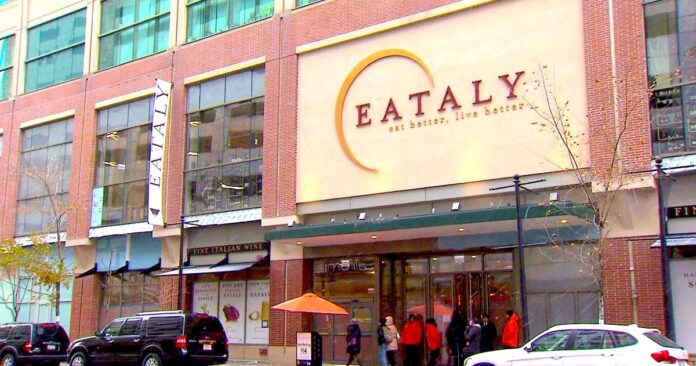
We’re updating our previous article where we discussed Eataly‘s coming to Canada. The article gained a lot of attention, speaking to the immense popularity of the large-format Italian food retail concept. Several sources told us that Eataly was in talks to partner with a large Canadian retailer, in an effort to come to Canada. We were also informed of ongoing talks with a landlord for retail space in Toronto’s Yorkville area. New information has come to light since then, possibly confirming Eataly’s future Toronto opening, as well as plans for Eataly locations in other Canadian cities. 

Our February article reiterated what sources were telling us: that Eataly was in partnership talks to open in Toronto. We were asked to keep the identity of the potential Canadian business partner private, as well as the possible Yorkville-area Eataly location. Eataly initially denied the reports of a Toronto location, only to retract and tell online food website, Eater, that a Toronto location wouldn’t open for “another three years or so”. Then in April, a source at Chicago’s Eataly told Toronto Star food reporter Jennifer Bain that Toronto’s Eataly would open in about three years. We’ve since heard from sources that a Toronto Eataly is still in the works, though it won’t likely open before 2017. 

A source at Eataly, speaking on the condition of anonymity, provided us some interesting details. Although uncertain of the progress of its Toronto negotiations, the source confirmed Toronto to be a “high priority” for the company. The source went on to explain that other Canadian cities were possible Eataly targets and that Montreal, specifically, could some day see Eataly in its downtown core. When Vancouver was discussed, the source cited the city’s increasing sophistication, as well as its thriving tourism. The source also revealed that into the more distant future, other Canadian cities could house Eataly locations, provided that landlords made conditions favourable and local markets met Eataly’s criteria for culinary sophistication. 

Eataly wants to be in Toronto’s Yorkville area. Yorkville is experiencing an unprecedented level of retail expansion and redevelopment of existing retail space. Examples of this abound. Hazelton Lanes is renovating and expanding, while One Bloor Street East is currently under construction. Sources say that the Manulife Centre may see renovations, and that the Holt Renfrew Centre will be redeveloped with an expanded Holt Renfrew flagship, as well as substantial new retail below a tall residential tower. Neighbouring Cumberland Terrace is expected to eventually be redeveloped, and some large new retail spaces will accompany several massive residential towers to be built near Toronto’s new Four Seasons Hotel. Redevelopment of 80 Bloor Street West will see substantially more retail, and the future of some of 100 Bloor Street West’s tenants is uncertain as well. Furthermore, the Hudson’s Bay Centre, at the northeast corner of Yonge and Bloor Streets, is ripe for redevelopment: Saks Fifth Avenue recently abandoned plans to replace Hudson’s Bay with a 300,000 square foot store. 

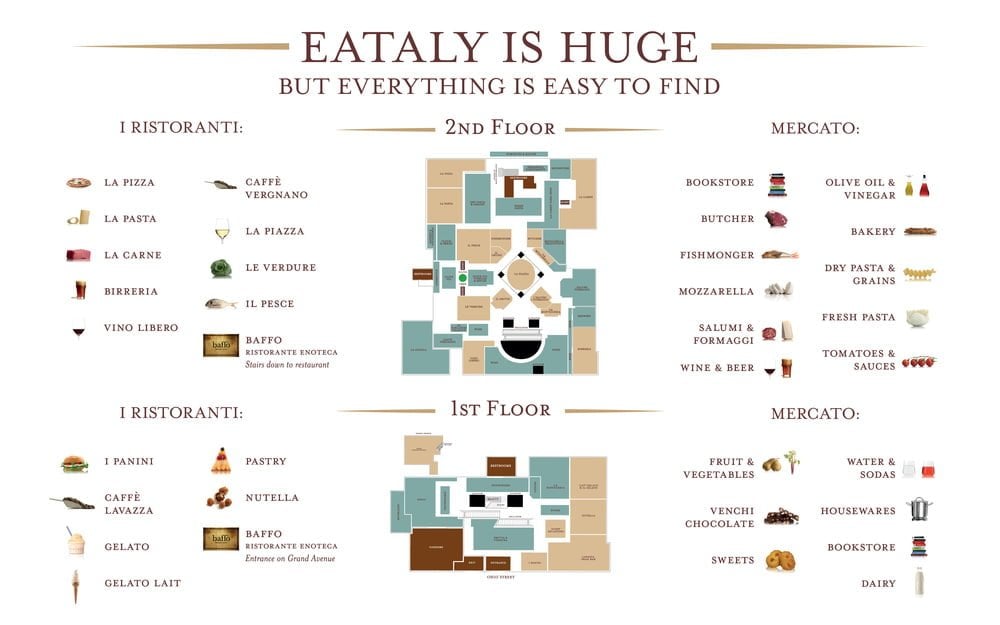
Eataly boasts 27 worldwide locations, though only two in North America: a 58,000 square foot space in Manhattan, and a 63,000 square foot location in Chicago. Its 2013 Manhattan sales targets were estimated at a whopping $85 million. In December, its notoriously busy Chicago location had to temporarily close because it ran out of food. Eataly has 10 locations in Italy, 13 in Japan, one in Dubai and one in Istanbul, Turkey. 

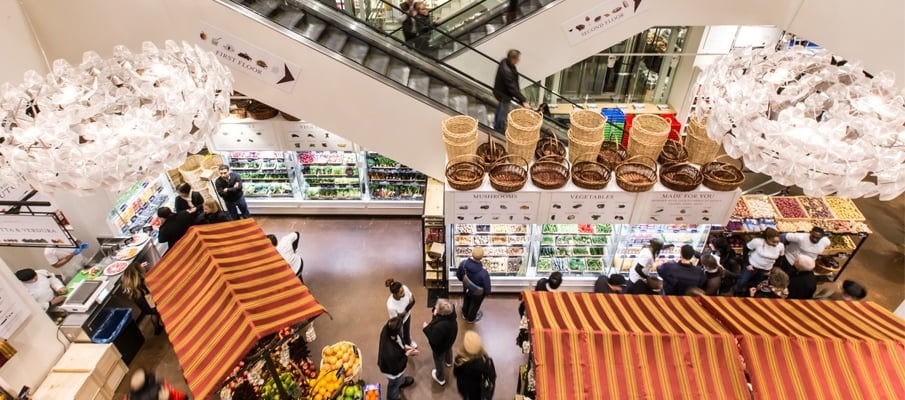
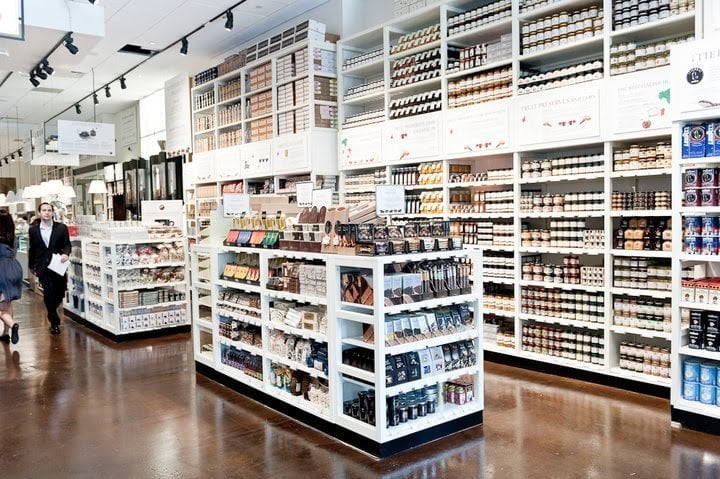
Eataly was founded in Turin, Italy, in 2007. Founder Oscar Farinetti wanted to combine elements of a lively, open environment with a learning centre to create an atmosphere conducive to shopping, tasting, and learning about high-quality Italian foods. Inspired by the European food-hall concept, its massive stores are populated with tasting areas and gourmet restaurants to complement the upscale food offerings. Customers can taste the artisan products, learn about them from educated staff, and buy the ingredients to recreate Eataly’s restaurant food at home, all at fair prices. 


H&M Home collection shops coming to Canada

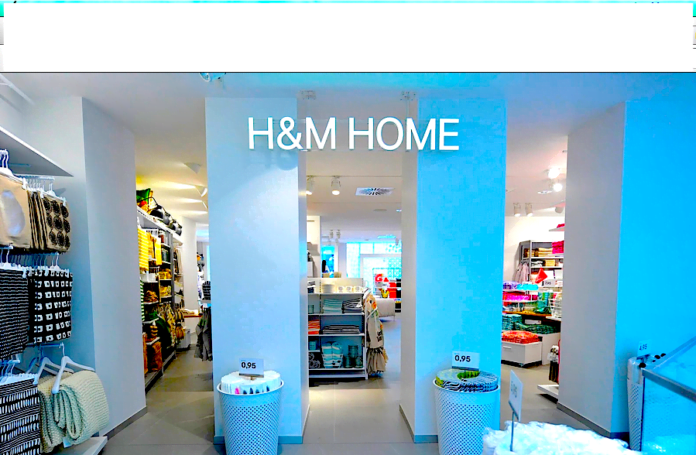
Image: H&M Home

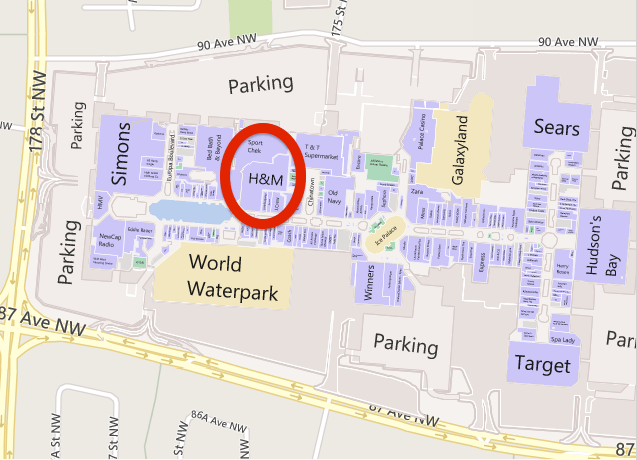
Canada’s first H&M Home collection shop opens on Thursday at the H&M flagship at West Edmonton Mall. This shop-in-store prototype, whose purpose is to test the Canadian market, will eventually be rolled-out in selected H&M stores nation-wide. Prices are reasonable, and the colourful collection focusses on home furnishings. 

H&M’s Home collection launch coincides with the re-opening of the renovated 32,000 square foot West Edmonton Mall H&M store. We’ll follow up this article with photos of the renovation, since it they will be an indication of what’s in store for other Canadian H&M store locations. H&M is using West Edmonton Mall, as are a number of other retailers, as a testing ground prior to a national launch. Edmonton is a reasonably affluent city with a wide spectrum of shoppers. 

Prices for H&M’s Home collection are reasonable, ranging from $3.95 for napkins to about $100 for a knitted wool throw. Pillows are in the $6-20 range, while duvet covers are priced between $30 and $60. Products for most household rooms are available, and can be viewed with prices on H&M’s Canadian website. 

The collection launched in 2009, though this is the first time it’s been available in Canada. H&M Home’s first North American shop-in-store opened last November in Washington, DC. According to its website, its only other American Home shop is within a New Orleans H&M store. 

“We are very proud to house the very first H&M Home in Canada as part of the remodel of the store. We are sure it will be hugely successful with our customers,” said David Ghermezian, President of West Edmonton Mall. 

The H&M Home store launch (and re-launch of the entire) takes place at 12:00 noon on Thursday. The first 300 people in line can receive up to $300 off their entire purchase. Restrictions apply, according to H&M’s website. 

HR Challenges Retailers are Currently Facing

Editor’s message: If you’re looking for new software to improve your business, look no further than this human resource software from Cezanne.

By Lisa McCann

Retailers strive to build strong performing workforces but with changing demographics and market trends, sustaining a strong workforce long term is becoming more and more challenging.

So how can a company better prepare to build a workforce for long term business success? It all starts with understanding which HR challenges are currently affecting retailers across Canada.

You can start by thinking about the following:

  • Where is my organization expecting to grow (or shrink) in the next few years?

  • How will this affect my current workforce?

  • How will this affect how I source potential candidates?

  • Will any new talent gaps arise due to these changes?

There are two main external areas that are creating HR challenges today, these include the rising war for talent and continuous technological changes in the market:

War For Talent

Currently, companies are seeing an aging population of retiring baby boomers exiting the workforce and a new much smaller generation of workers entering the market. It’s easy to see how this is soon going to become a predominant topic. We have more people exiting the workforce then entering, therefore we are making a swift change into a job seeker market. This means companies will see much higher rates of competition arise for talent. Additionally, the newer generations who are entering the market have very different values, expectations, and working styles that is causing a shift in the way companies are building their recruitment strategies.  Retailers need to quickly adapt and find ways to engage, retain and grow their workforce of different generations.

Technological Changes

Improvements in technology can be felt across all channels of our working lives but in regards to HR, technology has shifted the way companies recruit new talent. People aren’t just looking for a job description online, they want to be able to engage, interact and truly understand your employment brand. People place higher expectations on what a company has to offer and adopting new technology trends is no different. Social recruiting has become more predominant with the rise in social media usage, sites such as Facebook, Twitter, and Linkedin are just a few of the channels job seekers are using to search and apply for jobs.

Although retailers can’t have a say on the external factors that are creating HR challenges, there are numerous internal areas that need to be addressed readily to be a front runner for talent.  Here are a few common internal areas we see HR professionals struggling with today:  

Continually Sourcing Top Talent

As talent shortages increase, it’s becoming more challenging for companies to find top talent. Recruitment strategies need to be focused around attracting top tier candidates who will be committed to growing with your organization. Hiring these top tier candidates means you have to be willing to invest in your recruitment processes and implement assessments and screening capabilities that will help you drive better quality candidates. This includes putting an emphasis on cultural fit as this is becoming a predominant determinant of long term success with an organization. By planning for future success you will be saving in areas of recruitment, training, and succession planning.

Increasing Engagement Levels

Employee engagement is a hot topic in HR and has proven to reflect employees’ productivity and successes in their roles. Therefore, it’s simple, an engaged workforce means better business results… right? It’s not so simple, you need to first clearly understand what your workforce values and how you plan to support those values each day. Engagement is closely tied to productivity, turnover levels and morale. By committing to understand and improve your employee engagement levels, you will be committing to better business results long term. 

Retaining & Rewarding Your Best Employees

Attracting top tier talent is one thing, retaining them over time is another. Building a strong long term workforce is another area that creates HR challenges. More often than not you see your top performers moving on to other opportunities within a few years of entering the organization. So how do you retain these employees long term? You need to start by building a leadership development plan, where there is formal training and development in place to help employees grow within your organization. Employees often move around within a company without any formal succession planning in place. By supporting your employees with the proper training they will feel committed and well equipped for their new role.  Additionally, rewarding employees doesn’t always mean an increase in wages but a shift towards workplace benefits they value such as flexible hours or working from home.

Building an Attractive Corporate Culture

Job seekers are looking to work for a retailer whose culture emulates what they want in a working environment, whether it is a work life balance, openness and transparency, or innovation and creativity. It’s also important to maintain a strong brand reputation, this gives your employees a sense of pride in working for your organization and often attracts many candidates to apply.

Lisa McCann is the Corporate Marketing Manager at Vancouver-based recruitment company, MindField Group.

Details of Canada’s 1st Nordstrom store revealed

Image: Nordstrom

Nordstrom’s menswear department, on the store’s ground floor, will showcase an edited collection of suits, sportcoats and trousers in sizes 38 short to 50 long. Dress shirts will be available in more than 50 sizes. An in-store tailoring service will be available. Outerwear, business-casual and weekend-casual styles, jeans, and some trendier men’s clothing items will be featured in-store. Men’s furnishings including ties, socks, belts, underwear, bags and tech accessories will be available, as will luggage, fine fragrance and skincare products.

Upscale children’s wear is a category lacking in many Canadian cities. Calgary’s affluent population will make Nordstrom’s children’s wear departments a hit. Boy’s clothing including active, play and casual clothes, will be sold in sizes 2-20. Girl’s clothing, from playwear to dresses, will be carried in sizes 2-16. Baby clothing will also be featured, for kids under the age of two. In addition, kid’s shoes will also be carried, from infant to youth size 6. Designers include Burberry, Dolce & Gabbana, Oscar de la Renta, Missoni, and Moncler, as well as lesser-priced labels. 

Nordstrom’s cosmetics and beauty department will feature an ‘open-sell‘ concept with a wide variety of vendors. Jewelry at a variety of price points will be available, from inexpensive to ‘Fine Jewelry‘ by designers such as David Yurman and Roberto Coin. Designer jewelry will also be found, by some designer names also carried in its Collectors womenswear department. Both cosmetics and jewelry will be on the store’s ground floor. 

We’ve got details of Nordstrom‘s first Canadian store, including what departments and services will be included in its Chinook Centre location. Nordstrom’s most expensive designer departments will be featured for womenswear, menswear, footwear and accessories, with prices into the thousands of dollars. Not all merchandise will be as costly, however, as moderately-priced departments will also be present. Children’s clothing will be available at a variety of price points. A restaurant and a coffee bar will be featured, as will a variety of services that reinforce Nordstrom’s reputation for exceptional customer service. We can also expect similar departments and services for other Canadian Nordstrom stores as they open over the next three years. 

Luxury will be prominent at Calgary’s Nordstrom, including clothing, accessories and shoes. Its upscale women’s department, called Collectors, will locate on the second floor of the Calgary store. Boasting some of the world’s top luxury designers, Collectors departments typically carry designers such as Dolce & Gabbana, Valentino, Oscar de la Renta, Burberry, Versace, Armani Collezioni, Lanvin and others. Designer handbags, located on the store’s ground floor, include a roster of similar designers – Valentino features prominently at many Nordstrom stores, as does Ferragamo, Tod’s, Saint Laurent, Chloé and even high-priced Bottega Veneta. Given Nordstrom’s reputation for an extensive range of footwear, it comes as no surprise that plenty of designer shoes will be carried at Calgary’s Nordstrom. Its top-priced department, Salon Shoes, carries prominent designers such as Manolo Blahnik, Jimmy Choo, Miu Miu, Valentino, Gucci and many others. 

A limited selection of luxury men’s collections, located on the ground floor, will also be featured at Calgary’s Nordstrom. In the United States, Nordstrom’s designer menswear section includes Moncler, Armani Collezioni, Dsquared2, Canali and at its better stores, Lanvin, Jil Sander, Thom Brown, and Marni. The men’s designer shoe section will likely feature staple designers such as Gucci, Prada, Salvatore Ferragamo, Tod’s, To Boot New York, and others. A source tells us that Nordstrom will carry upscale men’s accessories at its Calgary store, as menswear and accessories have recently seen substantial growth at Nordstrom. 

Nordstrom isn’t all about luxury designers, however. Its Canadian website reveals that its Calgary store will carry the following lesser-priced women’s clothing departments: 

  • via C: Nordstrom’s mid-priced department which features trendy and emerging designers, including the likes of Alice + Olivia, Elizabeth and James, rag & bone, Alexander Wang, Helmut Lang, KENZO and MSGM,
  • Savvy: Nordstrom’s fashion-forward, value-priced designer department,
  • t.b.d.: Nordstrom’s trendy women’s denim department, including designers such as Citizens of Humanity, Paige Denim, Hudson Jeans, Splendid, Free People, Ella Moss, James Perse and J Brand,
  • Active and swim,
  • Juniors, and
  • Lingerie and hosiery.

Offering a wide variety of footwear and prices, Nordstrom’s lesser-priced women’s shoe departments include ‘B.P. Shoes‘ and ‘Women’s Shoes‘. Thousands of shoes will be carried, and will be displayed near the store’s mall entrance on the main level. Nordstrom’s shoe selection will rival and possibly surpass any in Canada, though Hudson’s Bay’s massive Toronto footwear salon will give Nordstrom a run for its money. 

Other in-store services will include on-site alterations, beauty stylists, certified shoe fitters, certified bra fitters, complimentary gift boxes, and a fee-based delivery service. 

Nordstrom’s coffee concept, eBar, will serve coffee beverages, smoothies, pastries, as well as a variety of fresh grab-and-go sandwiches, salads and snacks. A restaurant concept will also open on the second floor, and we’ll discuss Nordstrom’s food offerings in a separate article.

Nordstrom’s 140,000 square foot Calgary store opens at 9:30 am on Friday, September 19th. 

*Our sources for this article have asked to remain anonymous*

New Technology for Retail Execution and In-Store Support

exc-5390addce4b0b4ca734382c7

Solving Out-of-Stocks with Crowdsourced Intelligence, Mobile Alerting and an On-Demand Workforce

By Marie Jackson, CMO of Retail Solutions Inc. (RSi)

You’ve got the right placement, pricing and point-of-sale merchandising. But how do you know, at the store level, that each critical piece of your strategy is being executed correctly? How do you ensure proper execution of promotional displays, achieve new item planogram compliance or preempt risks for out-of-stocks? What if you could combine sophisticated retailer downstream data transformed into scientific out-of-stock alerts with local intelligence and serve it to your field and sales operations teams on a mobile device for immediate response, remediation and reporting?

Now you can. Retail Solutions Inc., a leader in big data analytics and real-time intelligence for the consumer products industry, has partnered with Gigwalk, a local visibility software platform changing the way brands and retailers collaborate, to bring-to-market RSi Intelligent Crowdsourcing. The new solution provides brands with end-to-end business intelligence that drives sales by delivering real-time, actionable intelligence to field operations for improved in-store retail execution on on-shelf availability.

Here’s how it works. The RSi Intelligent Crowdsourcing application blends the company’s proprietary algorithms and unmatched on-shelf alerting capabilities with Gigwalk’s reach and on-the-ground resources to give customers a laser-focused and immediate in-store activation plan. Leveraging Gigwalk’s on-demand public network of 550,000 mobile-enabled independent contractors, brands and retailers can gather localized, in-store intelligence which then gets served back to RSi for data transformation and analysis. The RSi Intelligent Crowdsourcing application then alerts field teams, through their mobile device, where gaps in the supply chain have been identified or triggers actions at the store level to correct errors in near real-time.

Each year, $800 billion in revenue is lost globally to avoidable issues like out-of-stocks. Using RSi Intelligent Crowdsourcing powered by Gigwalk, brands and retailers are armed with three tenets to success: collaboration (data sharing), visibility (finding errors or execution gaps undetected previously) and action (immediate fixes at the retail level). Here’s just a few benefits that can be anticipated from this new approach to retail execution and store support:

  • Find and fix errors in hours — not days or weeks. 
  • Easily scale workforce resources to meet the needs of critical initiatives without incurring unnecessary overhead. 
  • Algorithm-based on-shelf alerting and scorecard reporting to accurately detect store or event conditions.
  • Send real-time fix notices to store teams. 
  • Share observations with the value chain.
  • Reach any store, at any location at any time with accurate alerts.
  • Better react to market pressures and increased competition.
  • Reduce out-of-stocks and improve on-shelf availability.
  • Reclaim lost sales.

Early pilot testing, which was completed was completed with five major retailers and multiple industry leading suppliers, resulted in an average ROI of eight times the original investment. In some instances, returns as high as 18 percent were achieved in just a few weeks’ time.

To learn more about RSi Intelligent Crowdsourcing, please visit: http://www.retailsolutions.com

Uniqlo’s Canadian store locations: discussion

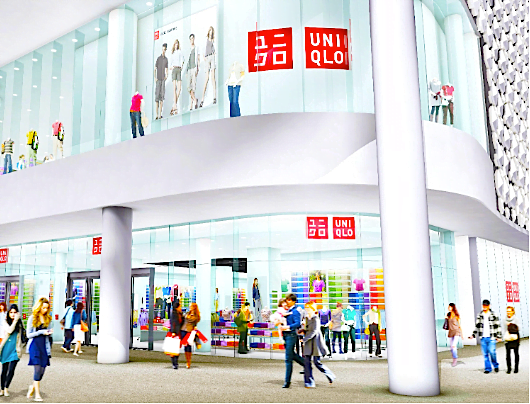
RENDERING: UNIQLO

Japanese fast-fashion retailer Uniqlo is working with a broker to open Canadian stores. Uniqlo’s choice of American locations can be considered an indication of what it wants in Canada: prime retail space on busy streets and in prominent malls. Expect large Canadian Uniqlo flagships, as well as some smaller mall-based stores. However, its cautious American expansion foreshadows what’s in store for Canada, at least in the short term, as only a handful of American cities see multiple Uniqlo locations. This will change, eventually, as Uniqlo’s goal is to become the world’s top-selling fashion retailer. We’ll explain why Uniqlo stores will open in many Canadian markets over the next several years, and we’ll then discuss some of its most likely Canadian locations. 

Sources inform us that Uniqlo is talking to Canada’s largest mall landlords as its searches for Canadian retail space. In March, the Financial Post reported that Uniqlo was in talks to open a 35,000 square foot space at Toronto’s Yorkdale Shopping Centre. Toronto and Vancouver are ideal cities for the Japanese retailer: both see exceptionally high retail sales, large Asian populations, and considerable Uniqlo brand awareness. Other desirable markets include Montreal, Edmonton, Calgary, and possibly Ottawa and Winnipeg, as the company continues expanding. 

Uniqlo’s first American stores were unsuccessful, having opened in three suburban New Jersey malls in the early 2000’s. The small stores failed to attract local shoppers, who were lacking brand awareness. Uniqlo stepped back and re-entered the United States via larger stores in prominent urban locations. Concentrating on metropolitan New York City and San Francisco, Uniqlo opened large flagships as well as stores in top local malls. It subsequently announced expansion plans for Los Angeles, Boston, and Philadelphia. Its current store opening strategy involves placing multiple stores in each market, leverage advertising dollars in each city. The American midwest is noticeably absent of Uniqlo stores, at least for now. We’re told, however, that Chicago is first for its midwest expansion once Uniqlo solidifies brand dominance on the coasts. 

In Canada, Uniqlo may use a similar geographic strategy, concentrating its first stores in Toronto and Vancouver. The company plans to overtake Zara as the world’s largest clothing retailer and to that end, we can expect Uniqlo stores in various Canadian cities. Given the retailer’s recent propensity towards opening in busy malls and on busy commercial streets, we’ll discuss a few Canadian locations where Uniqlo stores are likely. 

Toronto – Toronto is an obvious choice for Uniqlo: Canada’s largest city also boasts the nation’s most comprehensive retail. Uniqlo will likely open a large, splathy flagship in the core, either in or close to the Toronto Eaton Centre. Queen Street West is possible, as is the Bloor-Yorkville area. Sources tell us that the Yorkdale Uniqlo deal is done, with a 30-35,000 square foot location expected to open in 2016. Uniqlo will likely open in the new retail wing anchored by Nordstrom, in the northeastern portion of the new retail space. Busy malls such as Sherway Gardens and Mississauga’s Square One are also likely candidates for Uniqlo. 

Vancouver – Sources tell us that Uniqlo wants to open a large store on Vancouver’s Robson Street, which should come as no surprise: Robson is the city’s most popular shopping street, boasting flagships for Zara, Roots, Lululemon, Victoria’s Secret and others. Pacific Centre is another possibility, being exceptionally busy, and the soon-to-be home of Nordstrom as well as an expanded and renovated Holt Renfrew flagship. Oakridge Centre, Metropolis at Metrotown, Richmond Centre and West Vancouver’s Park Royal are also top contenders for Uniqlo. 

Montreal – Sainte Catherine Street is a logical choice for a Uniqlo flagship: the busy street boasts similar tenants as Vancouver’s Robson Street. Carrefour Laval has emerged as the region’s top suburban mall, hoasting millions of visitors annually. Lifestyle centre Quartier Dix30 is a possibility, are as several popular suburban malls including Les Galeries d’Anjou, Fairview Pointe Claire and Centre Rockland. 

Edmonton – West Edmonton Mall is an obvious choice for Uniqlo: the entertainment-themed mall boasts some North America’s top-selling chain store locations. We’d expect a large Uniqlo location there, if it chooses to open in Edmonton. Southgate Centre is another possibility for Uniqlo, and any further Edmonton locations are anyone’s guess. 

Calgary – Chinook Centre is Uniqlo’s likely first choice for Calgary: the popular suburban mall hosts millions of visitors, and will boast Canada’s first Nordstrom store location. Its TopShop, H&M and other flagships do exceptional sales. Southcentre and Market Mall continue to be strong, and CrossIron Mills is a possibility for Uniqlo, as well. A downtown Calgary Uniqlo is possible, though Calgary’s suburbs continue to dominate the market. 

Ottawa – If Uniqlo enters the Ottawa market, we’d expect Rideau Centre to be its first choice. The overhauled mall will feature Canada’s second Nordstrom store, scheduled to open next year. La Maison Simons will open in the mall’s expansion, a year later. Canada’s second-largest Zara store will open in the mall’s expansion, and H&M is expected to announce a Rideau Centre location shortly. Other top Ottawa malls include the Bayshore Shopping Centre, St. Laurent Centre, and Les Promenades Gatineau. 

Winnipeg – If Uniqlo chooses Winnipeg, Polo Park is its likely first choice. The city’s premier mall will soon see the opening of an H&M, and interesting plans are in store for a further mall expansion. Time will tell if the Seasons at Tuxedo and St. Vital Centre could become home to the retailer. 

Quebec City – Uniqlo could eventually open in one or more popular malls, including Laurier Quebec, Place Ste-Foy or Les Galeries de la Capitale. 

We’ll update you when we learn more about Uniqlo’s new Canadian store locations. 

Nuance brings SK-II to Canada via Toronto’s Pearson Airport

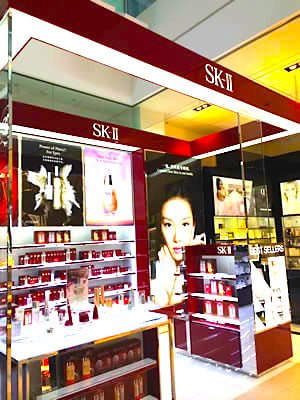
SK-II (PHOTO: THE NUANCE GROUP)

The Nuance Group is the first Canadian retailer to offer luxury Japanese skincare brand SK-II, recently introduced to Nuance’s store location in Toronto’s Pearson International Airport. Located in Terminal 1, SK-II is the latest beauty shop for Nuance, following its Jo Malone, Aveda and MAC Cosmetics boutiques, also located in Terminal 1. 

The founding of SK-II is an interesting story. Over 30 years ago, it was observed that workers in a Japanese sake brewery had elderly faces but smooth, youthful hands. SK-II scientists spent five years studying more than 350 yeast strains to discover why, eventually discovering a nutrient-rich liquid which they named Pitera: now the ‘secret key component’ within SK-II’s products. 

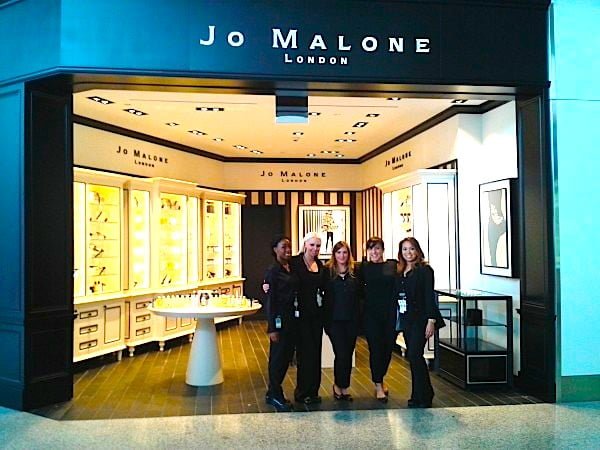
The new Jo Malone boutique in Toronto – currently the only free-standing Canadian boutique for the brand. 

Owned by Procter & Gamble, SK-II is available in 15 countries including Japan, Mainland China, Hong Kong, Macau, Taiwan, Korea, Singapore, Malaysia, Thailand, Indonesia, Philippines, the UK, the USA, Australia, the United Arab Emirates and now, Canada.

Last month, Nuance opened Jo Malone, Aveda and MAC shops at Pearson Airport’s Terminal 1. British-based Jo Malone stands out, being the only free-standing Canadian location for the brand. Jo Malone is also available at Holt Renfrew stores in Canada, and will likely be available at Nordstrom and Saks Fifth Avenue when both open Canadian locations. 

Nuance operates duty-free concessions out of eight airports in the United States and Canada, including those of Toronto, Calgary, Chicago, Denver, Fort Lauderdale, Houston, Las Vegas and Orlando. This week, Switzerland-based duty free retailer Dufry AG bought Nuance for US $1.7 billion. 

Source: Moodie Report/Nuance Group, via ACT7 of Urban Toronto.