Home Blog Page 142

Yonge North York BIA launches tourism website, self-guided food tours

Foodie Tour at MeNami Udon & Izakaya, 5469 Yonge St, North York ON (CNW Group/Yonge North York BIA)

The Yonge North York Business Improvement Area has launched a new tourism-focused website and a six-week series of self-guided food tours as part of an effort to promote businesses and events along Toronto’s uptown Yonge Street corridor.

The organization unveiled DestinationYNY.com this month alongside its inaugural Self-Guided Foodie Tours, which began Jan. 12 and run through Feb. 15, according to the BIA.

Digital platform and tours launched together

The website is positioned as a central digital hub highlighting businesses, public art and events in the Yonge North York district, while the food tours are designed to encourage residents and visitors to explore local restaurants clustered around major transit stations.

Laura Burnham
Laura Burnham

“We are excited to launch our new tourism focused website and Self-Guided Foodie Tours,” said Laura Burnham, executive director of the Yonge North York BIA. “Both will feature the unique vibrancy the Yonge North York district has to offer.”

DestinationYNY.com includes information on local businesses and promotes events such as the Yonge North York Canada Day Celebration, Dance on Yonge and the Toronto Korean Festival, many of which take place at Mel Lastman Square, the release said.

Structure of the self-guided tours

The Self-Guided Foodie Tours are organized as four separate routes, each featuring four restaurants. The tours are centred around the TTC stations at Finch, North York Centre and Sheppard–Yonge.

Participants register online and visit participating restaurants at their own pace. At each stop, participants receive a limited-edition button pin. The pins were designed by Toronto-based artist Kelsea Chatburn, whose work explores themes of memory, migration and cultural identity through food and place, according to the release.

The four tour routes are described as follows:

  • Taste of Yonge North York: An introductory route featuring Persian cuisine, fusion dishes, Thai boat noodles and gelato.
  • North of Ordinary: A Finch Station–area route highlighting Korean-Japanese fusion, Asian stir-fry options and bubble tea.
  • Munch in the Middle: A route around Mel Lastman Square and North York Centre Station featuring Mediterranean food, brunch with a Mexican influence, ice cream and a board game café.
  • Savour the South: A Sheppard–Yonge–area route focused on casual dining, including a sports bar, a diner-style restaurant and a Taiwanese bubble tea chain.

To collect the pins, participants show their Eventbrite registration confirmation at each restaurant. Those who complete an entire route can upload a photograph of their collected pins to enter a prize draw.

Contest incentives and timelines

A contest is running in parallel with the tours, offering gift card incentives to participants who complete the requirements. Five winners will be randomly selected to receive a $100 gift card to a Yonge North York BIA restaurant of their choice. The first 20 valid submissions will receive a $25 Starbucks gift card.

The contest closes Feb. 15. Winners will be contacted following a draw scheduled for Feb. 18.

Additional details on registration, tour participation and district offerings are available through DestinationYNY.com.

About the business improvement area

The Yonge North York BIA represents businesses along the Yonge Street corridor between Highway 401 and Bishop/Hendon. The organization supports member businesses through marketing initiatives, events and community-based activities, according to the release.

The launch of the website and food tours marks the BIA’s latest initiative aimed at increasing visibility and engagement for businesses in the district during the winter period.

More from Retail Insider:

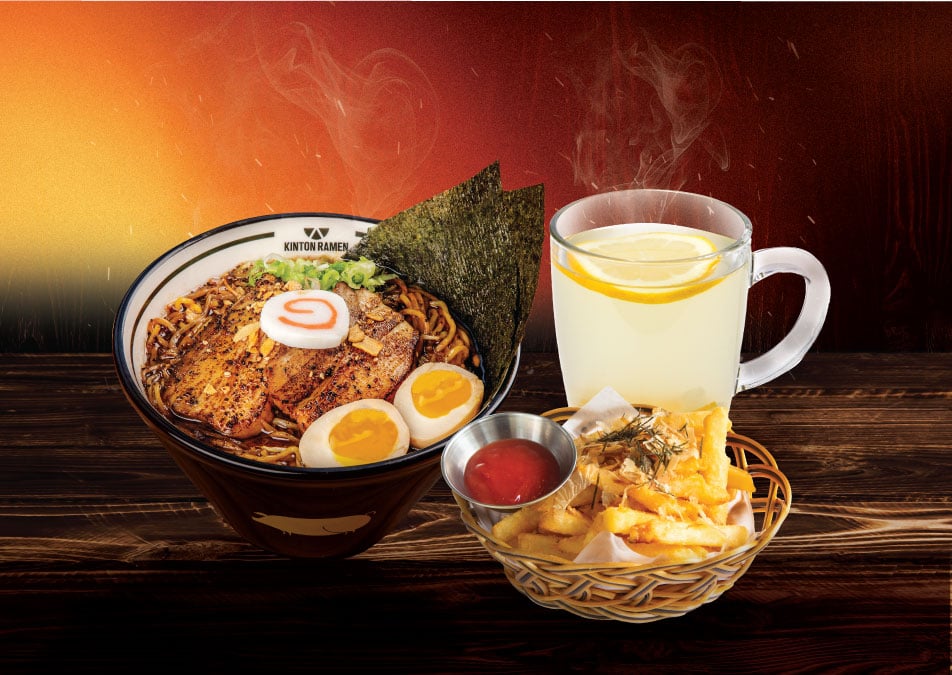
Kinton Ramen’s Uniqlo Drop Shows How Food Brands Can Win in Fashion Retail

Photo: Kinton Ramen
Photo: Kinton Ramen

Kinton Ramen’s recent limited-edition apparel collaboration with Uniqlo performed exceptionally well – ranking among the top-selling collections in-store. It was the first time a Canadian food brand launched a capsule collection with the retailer, and what started as a single T-shirt display expanded into four in-store features due to overwhelming demand.

Behind the collaboration is Alan De Luna, the marketing leader responsible for shaping Kinton Ramen into more than a restaurant chain, but a lifestyle brand with cultural relevance. He led the partnership from concept through execution, aligning creative, retail and digital teams to build a look, tone and message that resonated with both ramen fans and new customers who discovered the brand through Uniqlo.

Alan De Luna
Alan De Luna

I think (the Uniqlo collaboration) shows that people want more from the brands they have grown up with. If a restaurant has been part of your routine for years, you are excited to engage with it beyond just dining in,” he said.

“For us, this partnership also marked a moment. Kinton has grown into five provinces, and a lot of our earliest fans have been with us since the beginning. Seeing the brand partner with a global retailer like Uniqlo felt like a point of pride for them. It was a simple way to celebrate how far Kinton has come, while staying true to our Japanese roots.”

De Luna said his previous experience working with Under Armour helped him visualize early on how this could play out in a retail environment. 

“You start to recognize the signs when something is truly resonating, not just selling, and that is often what helps you earn more real estate in-store. In this case, a big signal came directly from our community. We started getting messages on social media, asking where people could find the collection and whether more inventory was coming,” he said.

“We shared that feedback with the Uniqlo team to help support demand. Combined with our loyal Kinton fan base and the limited-time nature of the drop, expanding the in-store presence felt like a natural next step rather than a big strategic move.

“We kept it close to the brand by focusing on Kinton’s favourite menu items and working closely with our internal marketing team from the start. That helped keep the creative familiar and grounded, not abstract.

“Tanya Mu did a great job translating those everyday Kinton elements into something visual, and Uniqlo helped shape it into clean, wearable pieces. Nothing felt overthought. It was about staying true to what people already recognize and love about the brand.”

De Luna said there are definitely campaigns that help grow brand awareness without immediately translating into direct revenue, and they are very aware of that. 

“Not every partnership needs to be measured the same way.With Uniqlo, the value was in reach and visibility. It introduced Kinton to a broader audience and created curiosity through physical retail presence. One of my favourite moments has been seeing people wear the T-shirts or carry the tote bags out in the real world. When a brand shows up naturally on the street, you know it has gone beyond promotion and into culture,” he said.

Source: KINTON RAMEN

De Luna said seasonality plays a big role in how they grow the brand. 

“Aki, our Executive Chef is constantly developing flavours that make sense for different times of the year, and our role in marketing is to shape the narrative around those products so they feel right for the moment. Ramencation is a good example of using storytelling to make ramen feel just as appropriate in the summer as it is in colder months,” he said.

“Long term, this approach helps us stay relevant and continue to lead the category in Canada. A strong brand strategy keeps employees, customers, and franchisees excited and invested in what we are building. Partnerships like Uniqlo support that vision by extending the brand beyond food and helping Kinton show up in everyday life, not just at the table.”

Kinton has had a soft launch for its Sainte-Catherine x Guy location in the heart of Montreal with grand opening scheduled for January 24.

Conveniently located near the Montreal Metro, the Sainte-Catherine x Guy location offers students, residents and visitors an affordable and accessible dining experience within downtown Montreal’s vibrant shopping and restaurant district, said the company.

“Since reopening our Sainte-Catherine x Guy location, the Montreal community has warmly embraced our passion for authentic Japanese ramen,” said De Luna, Senior Marketing Manager at Kinka Family, the parent company that owns and operates Kinton Ramen. “We’re proud to position this flagship location as a key part of our long-term investment in the Quebec market.” 

The Sainte-Catherine x Guy opening marks KINTON RAMEN’s first grand opening of 2026, following a strong 2025 that saw the brand expand across Ontario, Alberta, Manitoba, British Columbia and Quebec – reflecting Canada’s growing appetite for authentic Japanese cuisine. 

More from Retail Insider:

IBM study finds executives expect AI to drive revenue growth by 2030 despite uncertainty

Photo: Vitaly Gariev

A new global study from the IBM Institute for Business Value says most senior executives expect artificial intelligence to become a significant source of revenue by the end of the decade, even as many acknowledge they lack clarity on how those gains will be realized.

The research found that 79 per cent of surveyed executives expect AI to contribute significantly to their revenue by 2030, compared with 40 per cent today. However, only 24 per cent of respondents said they have a clear view of where that future revenue will come from.

Investment rising amid execution concerns

Despite uncertainty around outcomes, executives surveyed expect investment in AI to accelerate sharply. Respondents predicted AI investment will increase by about 150 per cent between now and 2030.

At the same time, the study found widespread concern about execution risks. Sixty-eight per cent of executives surveyed said they worry their AI initiatives will fail because they are not sufficiently integrated with core business activities.

Mohamad Ali
Mohamad Ali

“AI won’t just support businesses, it will define them,” said Mohamad Ali, senior vice-president of IBM Consulting. “By 2030, the companies that win will weave AI into every decision and operation. They will own powerful AI assets, move faster than competitors, bring innovations to market quickly, and deliver real, measurable business results using technology and automation.”

Findings from global executive survey

The study is based on responses from more than 2,000 C-suite executives and examines how organizations expect to evolve between 2025 and 2030. According to IBM, the findings suggest AI is emerging as a central driver of enterprise growth, but that many organizations face a gap between expectations and outcomes.

The research points to a shift in how executives expect to deploy AI spending over time, moving away from efficiency-focused uses toward innovation-led strategies.

Key findings include:

  • While nearly half, or 47 per cent, of current AI spending is focused on efficiency, respondents expect 62 per cent of AI spending to be dedicated to innovation by 2030.
  • Sixty-four per cent of surveyed executives said that by 2030, competitive advantage will come from innovation rather than resource optimization.
  • Seventy per cent said they plan to reinvest value generated from AI-powered productivity gains into growth initiatives.
  • Respondents expect AI to boost productivity by 42 per cent by 2030, with 67 per cent expecting to capture most AI-enabled productivity gains by that time.


Technology choices and competitive advantage

The study also highlights uncertainty around the specific technologies executives believe will underpin future competitive advantage.

While 57 per cent of surveyed executives said their competitive edge will come from AI model sophistication, only 28 per cent said they have a clear view of which AI models their organizations will need by 2030.

Other findings related to technology strategy include:

  • Eighty-two per cent of respondents expect their AI capabilities to be multi-model by 2030, while 72 per cent expect small language models to surpass large language models.
  • Organizations that are scaling AI across multiple workflows using smaller, custom and foundation AI models anticipate 24 per cent greater productivity gains and 55 per cent higher operating margins by 2030.
  • While 59 per cent of respondents said quantum-enabled AI will transform their industry by 2030, only 27 per cent expect their organizations to be using quantum computing by then.

IBM said this gap between expectations and adoption highlights potential opportunity for organizations prepared to invest earlier.

Impact on leadership and workforce

The research suggests executives also expect AI to significantly reshape leadership structures and workforce requirements over the next several years.

By 2030, surveyed executives expect that 25 per cent of enterprise boards will include an AI advisor or co-decision-maker. In addition, 74 per cent said AI will redefine leadership roles across the enterprise, with two-thirds believing AI will create entirely new leadership positions.

Workforce disruption is also expected to accelerate. According to the study:

  • Sixty-seven per cent of respondents said job roles are becoming shorter-lived.
  • Fifty-seven per cent expect most current employee skills to be obsolete by 2030.
  • Sixty-seven per cent agreed that mindset will matter more than skills.
  • Sixty-seven per cent also expect AI to eliminate the resource and skills constraints that currently limit their organizations.

IBM said its analysis shows organizations that position themselves as AI-first are 48 per cent more likely to create net-new job roles and 46 per cent more likely to redesign their organizational structures to generate greater value from AI. 

More from Retail Insider:

Small businesses must be top priority as MPs return to Ottawa: CFIB

Photo: Andrea Piacquadio

With a week to go before Parliament resumes, the Canadian Federation of Independent Business (CFIB) is calling on the federal government to make 2026 a year of the entrepreneur and implement policies that will support the growth and success of small businesses.

“2025 was a rollercoaster for small businesses. They had to navigate unpredictable tariffs, continued labour disputes and disruptions, and weak consumer demand, all while the cost of doing business continued to rise,” said Corinne Pohlmann, CFIB’s executive vice-president of advocacy. 

Corinne Pohlmann
Corinne Pohlmann

“The November federal budget did not provide meaningful support to small businesses. We urge Parliament to make small business priorities their priorities this winter and to strengthen Canada’s entrepreneurial landscape.”

The CFIB is Canada’s largest association of small and medium-sized businesses with 100,000 members across every industry and region. 

Small business owners report that federal budget programs such as the $51-billion Building Communities Fund and the $1-billion Regional Tariff Response Initiative (RTRI) are missing the mark, said the national organization.

Nearly four in five business owners weren’t even aware of the federal RTRI program, aimed at businesses affected by trade disruptions and tariffs. CFIB data shows that less than 1% have applied so far, a third (31%) don’t plan to apply, and 27% say the program isn’t applicable to them. As for the Building Communities Fund, it could exclude the vast majority of small businesses by providing a competitive advantage to unionized businesses. This approach would be unjust and discriminatory, it said. 

Jasmin Guénette
Jasmin Guénette

“Unsurprisingly, most SMEs feel excluded from the very government programs they were told were meant to help them. Words have no meanings if they are not translated into actions. It’s time for government to deliver policies and conditions where small businesses can grow and thrive,” said Jasmin Guénette, CFIB’s vice-president of national affairs. 

With Canada-U.S. trade talks currently suspended, 60% of SMEs say the federal government should actively work with the U.S. to reduce trade uncertainty. Other ways to help small firms manage the impact of tariffs include reducing internal trade barriers (59%) and providing broad-based tax relief (56%), finds CFIB data.

CFIB said it is calling on the federal government to:

•    Small business tax rate: Lower the small business tax rate from 9% to 6%, increase the small business deduction threshold from $500,000 to $700,000 and index it to inflation.
•    Trade with the U.S.: Ensure that the money collected through Canadian counter tariffs is returned to all affected Canadian small businesses.
•    Payroll taxes: Introduce a lower EI premium rate for smaller employers or move the employer/employee split from 60/40 to 50/50.
•    Internal trade: Include food in Canada’s mutual recognition framework.
•    Red tape: Measure and report on the total number of rules in place and introduce a “two-for-one” rule that applies to all regulations, legislation, and policies.
•    Supply chain: Ensure that there are no work stoppages or disruptions in the federally regulated transportation sector and at Canada Post.
•    Immigration: Ensure that immigration programs align with local small business labour needs.
•    Balanced budget: Implement a clear path to balancing the overall government budget with legislated spending limits outside of a global crisis. 

More from Retail Insider:
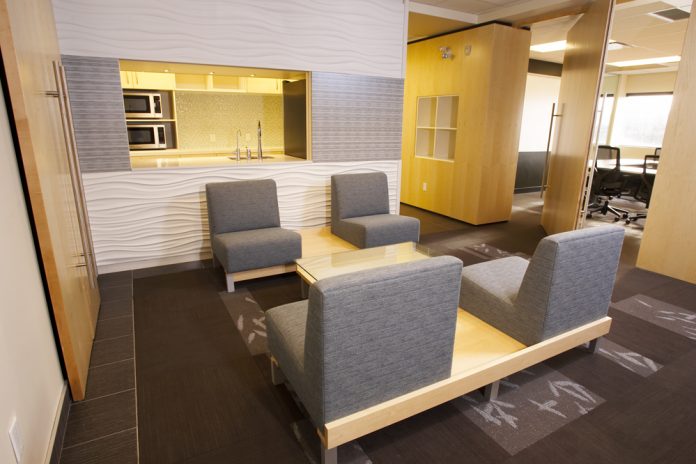
Richelieu adds Klassen Bronze to retail brand portfolio

Photo: Richelieu
Photo: Richelieu

Richelieu Hardware Ltd. has acquired Klassen Bronze, expanding its private-label offerings for the retail market and bringing the company’s total number of private brands to 10.

The addition of Klassen Bronze broadens Richelieu’s retail-focused portfolio, which includes the Richelieu, Reliable, Onward, Mibro, Task, Nystrom, Madico, Cedan and Ideal Security brands. Ideal Security was acquired earlier this year.

Expansion of retail-focused brands

Richelieu said the acquisition is intended to strengthen its position in the retail segment by adding Klassen Bronze’s product lines to its existing assortment. Klassen Bronze supplies products for residential and commercial customers, including letters, numbers, mailboxes, signs, keys, key-cutting machines and related items.

The company said the transaction supports its “one stop shop” approach for retail customers. Richelieu said that strategy is supported by its network of service centres, including facilities in Calgary serving Western Canada, Kitchener serving Eastern Canada and Chicago serving the United States.

“I am proud to see our portfolio continue to grow allowing us to better support our retail partners and further enhance our offering across Canada and the United States,” Richard Lord, president and chief executive officer of Richelieu, said in a statement.

Operational footprint and strategy

Richelieu said Klassen Bronze will be integrated into its retail market operations alongside its existing private brands. The company positioned the acquisition as part of a broader effort to consolidate a range of hardware and related products under its own trademarks, with the goal of offering retailers a comprehensive selection through a single supplier.

The company did not disclose financial terms of the acquisition.

Richelieu operates service and distribution infrastructure across North America, which it said underpins its retail and wholesale strategies. Its service centres in Canada and the United States are used to supply customers across multiple market segments, including retail.

Company profile

As of Nov. 30, 2025, Richelieu described itself as a leading North American importer, manufacturer and distributor of specialty hardware and complementary products. The company’s products are sold to a wide range of customers, including manufacturers of kitchen and bathroom cabinets, storage and closet systems, home furnishing and office furniture, as well as residential and commercial woodworkers. Its customer base also includes door and window manufacturers and hardware retailers, including renovation superstores.

Richelieu said it sources products from manufacturers around the world and offers a broad assortment of higher-end items. The company’s product catalogue includes more than 145,000 different items.

The company reported serving more than 120,000 customers through a network of 119 centres across North America. That network includes 51 distribution centres in Canada and 65 in the United States, as well as three manufacturing plants in Canada.

Photo- Richelieu
Photo- Richelieu

Those manufacturing operations include Les Industries Cedan Inc., Menuiserie des Pins Ltée and USIMM UNIGRAV Inc. Richelieu said the plants produce veneer sheets and edge banding products, decorative moldings and components for the window and door industry, along with custom products, including services supported by a 3D scanning centre.

The acquisition of Klassen Bronze adds another private-label brand to that structure, increasing the number of trademarks Richelieu dedicates to the retail market.

Looking ahead

Richelieu said the expanded portfolio is intended to enhance its ability to serve retail partners across Canada and the United States by offering a wider range of products under its own brands, supported by its existing distribution and service network.

More from Retail Insider:
Economic Uncertainty and High Prices Keep Canadian Consumers Pulling Back, Bank of Canada Survey Finds

Photo: Gustavo Fring

Concerns over high prices and economic uncertainty related to the trade conflict continue to have a negative impact on consumers, according to the Bank of Canada’s latest Canadian Survey of Consumer Expectations.

 The survey was conducted through an online panel from October 30 to November 18, 2025. Follow‑up phone interviews took place from November 21 to 27, 2025.

Overview

  • In this quarter’s survey, consumers perceived a higher likelihood of missing a debt payment and a slightly greater chance of losing their job. In this context, consumers reported weaker spending plans. Still, they perceive a greater chance than last quarter of finding a job or voluntarily leaving their job.
  • Expectations for near‑term inflation remain higher than they were before the pandemic, while those for long‑term inflation eased below pre‑pandemic levels. Tariffs are still the most frequently cited driver of inflation, although a little less so than last quarter.
  • Overall, the Canadian Survey of Consumer Expectations (CSCE) indicator declined slightly and remains subdued in the fourth quarter. A modest deterioration in financial health and household spending intentions contributed to this drop, while labour market conditions improved slightly from low levels.

“The Canadian Survey of Consumer Expectations (CSCE) indicator remains weak this quarter. It has stayed well below its pre-pandemic average since late 2021, coinciding with ongoing perceptions that the cost of living is high. In recent quarters, the indicator and its components also remained below levels observed before the start of the trade conflict with the United States,” said the Bank.

“Consumers remain pessimistic about their financial health in the fourth quarter. Respondents reported a higher likelihood of missing a debt payment, and more than last quarter believe their financial situation has deteriorated. In follow-up interviews, one person who said their financial health had worsened added, “Almost everybody’s living on credit…. It’s something that’s going to be detrimental for households.”

“This heightened concern about missing a debt payment appears to be tied to consumers’ perceptions of a higher risk of losing their job.

“Consumers’ expectations for their financial situation vary according to their views on the impacts of the trade conflict. Half of consumers think the worst effects on the economy or inflation are still to come, and those consumers have the lowest expectations for their financial health. In follow‑up interviews, one of these respondents said, “The worst thing about the tariffs is the uncertainty.… Big businesses aren’t going to invest in anything big now because of uncertainty, and that affects jobs.”

Consistent with low expectations for their financial health and elevated concerns about the labour market, consumers’ spending plans continue to be weak, said the Bank.

The CSCE consumer spending index fell slightly, though it remains close to the levels observed since the trade conflict began. One respondent said, “It’s definitely tough for my family, and we have to budget more appropriately. We look for a discount and have to be more strategic—I purchase less wants and more needs.”

The top reported barriers to spending remain the same as in previous quarters:

  • high prices of many goods and services
  • economic uncertainty
  • elevated housing costs

More from Retail Insider:

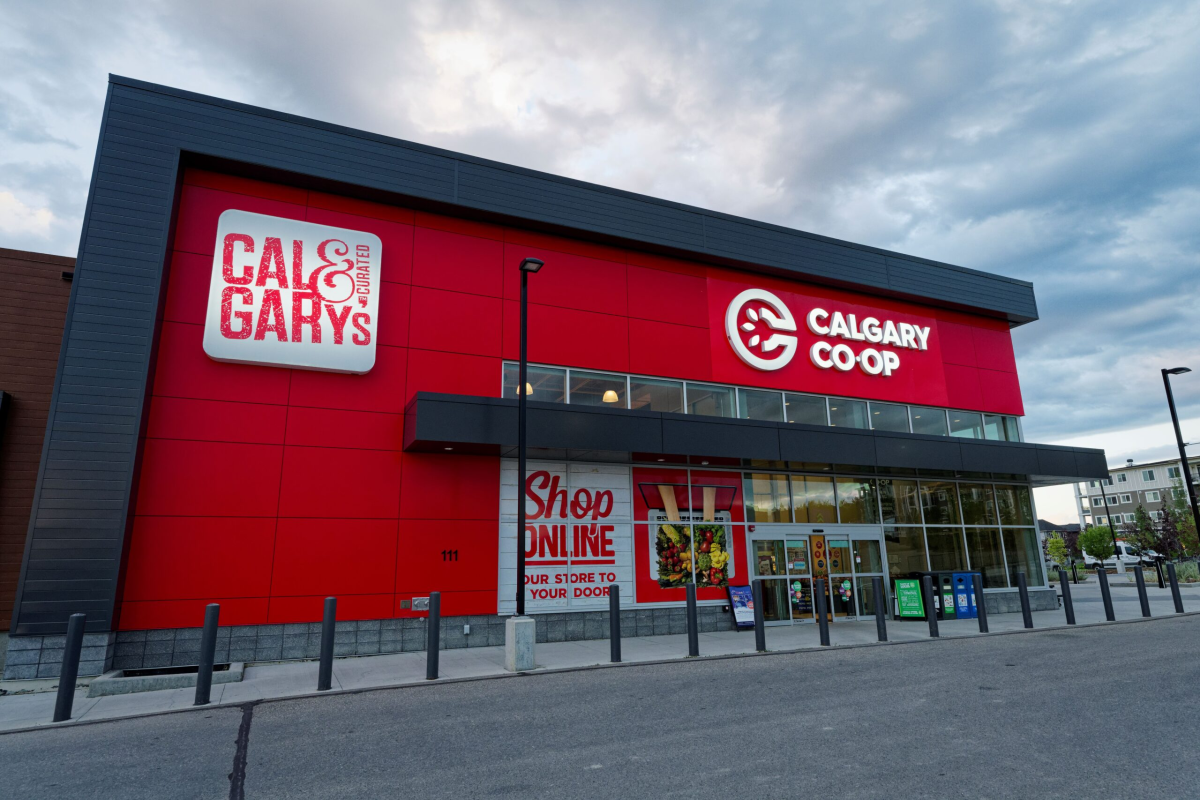
Calgary Co-op closing two of its food stores

Calgary Co-op Hamptons store in Calgary. Photo: Wheree

“Due to evolving economic and market conditions”, Calgary Co-op says it has made “the difficult decision” to close its food stores in Hamptons and Sage Hill on March 28 as well as its Hamptons Wine Spirits Beer and Cannabis locations.

“We truly appreciate the Hamptons and Sage Hill team’s efforts to improve sales, serve our members and revitalize these stores. We are working closely with the union and our team members to ensure affected employees are supported,” said in an emailed statement to Retail Insider.

“While we never want to close a food store location, we do need to meet our members where they are at, and where Calgary Co-op’s unique suite of products and services will be most meaningful and profitable.

“These closures will also allow for the re-deployment of capital to other more sustainable stores and projects including our newly re-developed North Hill food store opening in the first quarter of 2026 as well as a planned food store for Marda Loop in 2027.”

Ken White
Ken White

In a letter to Co-op members, Executive Chair Ken White said: “While we never want to close a location, we do need to make decisions that are in the best interest of our members. I can assure you we remain committed to our long-term strategy of delivering exceptional customer experiences while creating value for our members, inspiring our team members and serving our local communities.”

Michael Kehoe, Broker of Record for Fairfield Commercial Real Estate in Calgary, said: “It is extremely rare for a retailer of this stature to close two stores on the same date in what you could say are relatively normal economic times in the greater Calgary regional trade area.

“Calgary Co-op are the local heroes on the local retail scene with their clustered grocery stores, gas bars, Wine Spirits Beer and Cannabis stores that will surely be missed by residents in Sage Hill and the Hamptons. These are ‘pocket’ markets in North Central Calgary that have likely not met the firm’s expectations on sales growth in the recent past. North Central Calgary is a battleground on the grocery retailing front, think gorilla-sized competitors like Costco, Superstore and Walmart, a ‘Darwinian’ struggle for a regional player at the best of times. Development of new stores is a capital intensive venture and with new projects like Marda Loop and the North Hill these store closures are a part of a larger corporate strategy.”

Calgary Co-op’s Evolution into a Regional Multi‑Format Retailer

Calgary Co-op is one of North America’s largest retail co-operatives, with its operations concentrated in Calgary and surrounding communities including Airdrie, Cochrane, High River, Okotoks and Strathmore. The organization serves more than 400,000 members and has been built out as a diversified retail platform that moves well beyond a traditional grocery co-op model. Under the Calgary Co-op banner are full-line food centres, many with in-store pharmacies, alongside stand-alone pharmacies, gas bars with convenience stores and touchless car washes, Home Health Care centres, Wine Spirits Beer locations and co-branded cannabis stores. Calgary Co-op also owns Community Natural Foods, Willow Park Wines & Spirits, Beacon Pharmacies and The Organic Box, adding further depth in natural and organic foods, specialty liquor and health offerings.

Calgary Co-op Sage Hill store. Photo: Calgary Co-op

Over the past several years, Calgary Co-op has continued to expand and modernize its network while cementing its role as a regionally focused but multi-format retailer. The co-operative has added new mixed-use sites such as the Greystone development in Cochrane, where it opened a food centre, pharmacy, gas station with propane and car wash, and a Wine Spirits Beer store in 2025.

It has also broadened its reach well beyond the Calgary region through a majority stake in Care Pharmacies, a group of 56 independently operated pharmacies across five provinces, giving Calgary Co-op a national pharmacy footprint even as most locations continue to trade under the Care banner.

Founded to serve local members and return value to the communities where it operates, Calgary Co-op has leveraged the co-operative model to reinvest in store upgrades, new-format development and enhanced services. Its expansion into liquor, health, fuel, natural foods and cannabis reflects a strategy of clustering complementary uses around key sites, driving member convenience and trip frequency while anchoring neighbourhood retail nodes across the Calgary region.

More from Retail Insider:
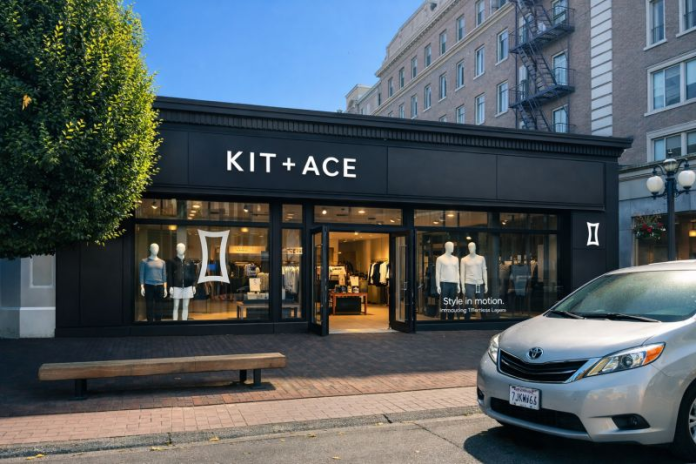
Kit and Ace to Open Store in Downtown Victoria

Rendering of the new Kit and Ace store to open in Downtown Victoria. Photo: Kit and Ace

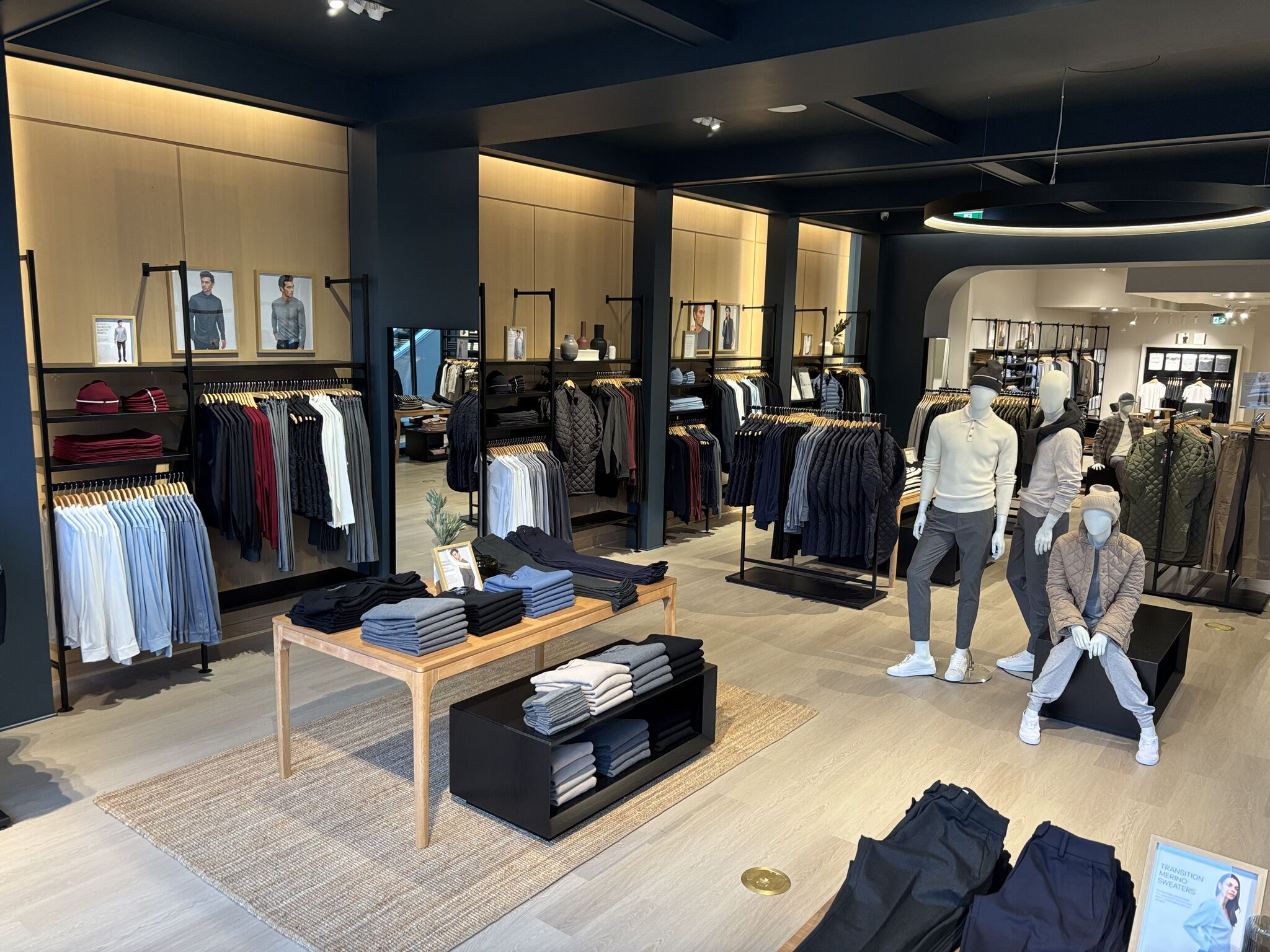
Kit and Ace is continuing its national retail expansion with the opening of a new store in downtown Victoria, British Columbia. The brand is scheduled to open a 2,200 square foot location in March 2026, at 1221 Government Street, occupying a prominent corner at the intersection of Government Street and Trounce Alley. The opening marks another step in the company’s carefully paced return to physical retail under its current ownership, following several years of contraction and restructuring.

The Victoria store will feature the brand’s full assortment of men’s and women’s apparel and is designed to serve both local shoppers and the steady flow of tourists that move through one of the city’s most established retail corridors. Government Street remains a focal point for downtown retail in Victoria, known for its mix of heritage storefronts, national brands, and independent operators.

The new Kit and Ace location occupies approximately half of a larger retail space that was previously home to W&J Wilson, a long-running multi-brand fashion retailer that closed its Government Street store in May 2021. The building at 1221 Government Street sits directly beside Trounce Alley, a narrow pedestrian passage that links Government Street with the Old Town area and continues to attract strong foot traffic throughout the year.

By taking over part of this space, Kit and Ace is reactivating a site long associated with apparel retail in Victoria. The store’s footprint aligns with the brand’s current store strategy, offering enough space to present a complete assortment while maintaining operational efficiency in a high-rent, high-traffic downtown environment.

The Legacy of W&J Wilson at 1221 Government Street

W&J Wilson was one of Victoria’s most historically significant retailers, with origins dating back to the 1860s. Founded by William Wilson, the son of a London silk merchant, the business began after Wilson arrived in Victoria in 1862 carrying trunks of clothing intended for miners heading to the Cariboo gold rush. Rather than continuing north, Wilson established a permanent retail operation after acquiring a local merchant’s business through bankruptcy.

The store operated at 1221 Government Street for more than 150 years and was widely described as Victoria’s oldest continuously operating business in its original location. Over generations, W&J Wilson built a reputation for high-quality menswear and womenswear, sourcing tailored clothing, outerwear, and accessories directly from European manufacturers. Its positioning emphasized craftsmanship and longevity over trend-driven fashion, serving a loyal local clientele as well as visitors to the city.

At its peak under the Thompson family, W&J Wilson expanded well beyond its original downtown location, operating as many as seven stores. These included additional locations in Oak Bay and Sidney, along with shops in high-end hotels as far away as Lake Louise. Over time, the business consolidated back to the core Victoria market before ultimately closing its flagship store in 2021. The arrival of Kit and Ace introduces a new chapter for a space long tied to premium apparel retail in the city.

Former W&J Wilson store in Victoria. Photo: Victoria Online Sights

Store Design and Product Assortment

The Victoria location will present the full Kit and Ace assortment across men’s and women’s apparel, with women’s continuing to account for a larger share of in-store product than in the brand’s earlier years. The shift reflects how the line has evolved under new ownership, with broader seasonal depth and expanded categories now supporting a more balanced business mix.

Consistent with other recently opened stores, the Victoria location will prioritize clarity of presentation and ease of navigation, allowing customers to engage directly with the garments. The layout is intended to support longer dwell times while maintaining a streamlined footprint suited to a high-traffic downtown environment.

A More Disciplined National Store Expansion

The Victoria opening comes amid a renewed phase of national expansion for Kit and Ace that has unfolded steadily over the past two years. Under its current ownership with Unity Brands, Kit and Ace has focused on rebuilding its physical retail presence through a more disciplined, Canada-first approach, prioritizing high-visibility urban locations, strong regional shopping centres, and select pop-up formats used to test demand before committing to permanent stores.

Recent openings have included new locations in Toronto, Calgary, and multiple markets across British Columbia, with stores positioned in both downtown settings and major enclosed shopping centres. In several instances, Kit and Ace has chosen to relocate or resize stores rather than pursue aggressive square-footage growth, reflecting a strategy centred on store productivity and long-term sustainability.

Pop-up locations have also played a role in the rollout, allowing the brand to reintroduce itself in key cities while gathering real-time insights into consumer demand. The most recent opening prior to Victoria was a pop-up store in Ottawa at CF Rideau Centre, marking the brand’s return to the national capital and signaling continued interest in underpenetrated urban markets.

Collectively, the recent openings point to a more measured retail strategy than the one that defined the brand’s early years. Rather than pursuing rapid global expansion, Kit and Ace is rebuilding its footprint market by market, with an emphasis on operational discipline, consistent brand presentation, and locations that align closely with its target customer.

Kit and Ace at Park Royal in West Vancouver. Image: Kit and Ace

From Founding to Unity Brands Ownership

Kit and Ace was founded in Vancouver in 2014 by Shannon Wilson and J.J. Wilson, positioning itself around technical performance fabrics and elevated everyday apparel. The brand expanded rapidly in its early years, opening dozens of stores across Canada and internationally in a short period of time. While the strategy helped build awareness, the pace of growth proved difficult to sustain as market conditions shifted and operating costs increased.

After a period of contraction and store closures, Kit and Ace entered a new phase in July 2023, when the brand was acquired by Unity Brands. The acquisition marked a strategic reset for the business, with a renewed focus on Canada, operational discipline, and a more deliberate approach to physical retail expansion.

Under Unity Brands’ ownership, Kit and Ace has moved away from rapid scale in favour of selective growth, using a combination of permanent stores and pop-up locations to evaluate markets before making long-term commitments. This recalibrated strategy has shaped the brand’s recent store openings and provides the framework for new locations such as the Victoria store, which reflects a focus on sustainability, productivity, and alignment between product, place, and customer.

More from Retail Insider:

Bridging Generations: BetterHelp’s Innovative Path to Mental Health Empowerment in 2025

The mental health landscape underwent a revolutionary shift in 2025, with BetterHelp emerging as a transformative force that challenged deeply ingrained societal perceptions. Through meticulous research and strategic partnerships, the platform illuminated the complex psychological terrain that prevents millions from accessing critical mental health support.

BetterHelp’s groundbreaking State of Stigma report provided unprecedented insights into global attitudes toward mental health. Surveying over 16,000 individuals across 23 countries, the research revealed a profound contradiction: while nearly 75% of respondents acknowledged the importance of mental health support, approximately 60% felt societal pressures still discouraged seeking help.

The most compelling finding centered on generational dynamics. Generation Z stood out as a paradoxical demographic – the most vocal about mental health discussions, yet simultaneously the most conflicted. Thirty-seven percent of young people believed those seeking counseling were “mentally weak,” a stark contrast to the 27% held by older generations like millennials, Gen X, and Baby Boomers.

BetterHelp’s community engagement efforts demonstrated a nuanced approach to addressing these generational barriers. The platform donated over 2,700 months of free therapy through partnerships with organizations like Six Degrees.org, Shout UK, and Be Strong. These collaborations specifically targeted frontline mental health workers and Gen Z students navigating contemporary challenges.

The platform’s podcast, “Mind if We Talk?”, became a critical tool in extending mental health conversations. Featuring discussions on topics like coping with grief, redefining masculinity, and overcoming imposter syndrome, the series transformed mental health dialogue from isolated campaigns into sustained, meaningful conversations.

In the sporting world, BetterHelp addressed unique psychological pressures facing athletes. Their “Stop the Madness” campaign revealed that one in three high-profile collegiate athletes receives abusive online messages, with female athletes experiencing three times more threats than their male counterparts. Partnerships with college basketball stars like Kiki Rice brought these challenges into the spotlight.

The platform’s commitment to accessibility was evident in its comprehensive network of over 30,000 licensed therapists operating across more than 100 countries. Their 2024 data demonstrated remarkable therapeutic outcomes: 72% of clients experienced symptom reduction within 12 weeks, with 69% achieving reliable improvement and 62% reaching symptom remission.

Most notably, 40% of new members in 2024 were first-time therapy participants – a significant milestone in reaching individuals traditionally excluded from mental health care. By offering multiple communication methods and achieving a 93% success rate in therapist matching, BetterHelp dismantled traditional barriers to support.

Strategic partnerships extended beyond individual sectors. The platform became the headline sponsor for Alcohol Change UK’s Dry January Challenge, highlighting the intricate connection between mental health and substance use. With 15.5 million Britons planning to go alcohol-free, this collaboration emphasized holistic approaches to wellness.

The Sound Mind Music Festival for Mental Health represented another innovative approach, featuring performances, wellness workshops, and panels from leading mental health organizations. BetterHelp’s involvement underscored its commitment to breaking down stigma through diverse, engaging platforms.

Fernando Madeira, CEO of BetterHelp, articulated the platform’s mission succinctly: “We exist to champion the well-being of all of us, and we envision a world where nothing stands between people and the support they need.”

As mental health awareness continues building momentum, BetterHelp’s approach offers a powerful template for meaningful advocacy. By combining data-driven research, authentic storytelling, and accessible resources, they’re transforming mental wellness from a whispered conversation to a powerful statement of collective strength and healing.

The message remains clear: seeking help is not a sign of weakness, but an act of profound personal courage.