Welcome to the Daily Synopsis by Retail Insider. We published 7 articles today covering developments in Canadian retail and wellness sectors.
Out on the Street opened a redesigned Toronto Village store that is fully accessible and expands its merchandise, revitalizing a vacant Church Street storefront while broadening its product range to include premium fashion brands alongside core LGBTQ+ apparel. Merrithew launched a new STOTT PILATES flagship and academy at Yonge and Bloor, positioning Toronto as a hub for wellness education with quality Pilates instruction and instructor training in a destination-style setting.
Tim Hortons is accelerating renovations and local hiring to defend market share ahead of Dunkin’s Canadian return with 300 stores, focusing on enhancing service and menu innovation. Meanwhile, Aldila celebrated 40 years of serving women over 40 with six locations across British Columbia and Alberta, emphasizing local community engagement and slow fashion strategies for sustainability in retail.
Poultry department in a grocery store. Photo: Canadian Poultry
Canadians are paying record prices for chicken while importing massive quantities of foreign poultry, mostly from the United States. If that sounds contradictory, it’s because it is.
According to the latest Canadian Association of Regulated Importers (CARI) figures released May 23, Canada has already imported more than 52.2 million kilograms of chicken so far this year under WTO, CUSMA, and CPTPP commitments combined. Nearly 23.8 million kilograms came directly from the United States under CUSMA alone.
And yet, wholesale chicken prices in Canada continue to surge.
Over the past year, Canada imported roughly 200 to 215 million kilograms of chicken overall, enough for approximately 1.3 to 1.4 billion meals. About 60% came from the United States. Most Canadians likely have no idea how often they may already be consuming imported chicken in nuggets, deli meats, frozen meals, restaurant sandwiches, soups, and prepared foods.
Under supply management, Canadians were promised something very different: stable supply, mostly domestic production, and predictable prices.
Instead, Canada now faces one of the tightest chicken markets in decades.
Industry sources indicate Canada’s chicken sector has underproduced relative to allocation targets in 12 of the last 14 production periods dating back to March 2024 — something many insiders say has never happened in the modern history of supply management. Meanwhile, retailers increasingly rely on chicken to offset high beef prices, intensifying demand pressures throughout the system.
The contrast with the United States is striking. American wholesale boneless skinless chicken breast prices recently fell to roughly US$1 per pound. In Canada, comparable wholesale prices have reportedly climbed near $13/kg. The price spread has become so extreme that importers are now bringing chicken into Canada over the 249% tariff wall and still making money doing so.
That should alarm policymakers.
Historically, importing over the tariff wall only occurred during extraordinary shortages. The fact that it is happening again, barely a year after the same phenomenon emerged in 2025, suggests something deeper is wrong structurally.
The most revealing part of the current market is not the official quota imports themselves, but the explosion in supplementary permits. CARI data shows “Chicken to Compete” permits are up more than 876% year-to-date. These permits are intended to serve as a pressure valve when domestic supply cannot adequately meet market demand.
In other words, the system itself is signaling distress.
Even more revealing is where the pain is being felt. Farmers are not necessarily the biggest losers. Large integrated processors continue to perform relatively well financially, while many independent processors, restaurants, and smaller operators struggle to absorb rapidly escalating input costs. Some are reportedly considering exiting the business altogether because they lack sufficient access to product.
Consumers are next.
Retail prices typically lag wholesale spikes by four to eight weeks. What Canadians see at grocery stores today largely reflects March and April pricing conditions. The wholesale increases occurring now are likely to push retail prices even higher through the summer barbecue season.
Dark meat markets illustrate how abnormal conditions have become. Canada is now importing approximately 9 million kilograms of U.S. chicken leg quarters to support domestic retail demand — despite historically exporting dark meat at discounted prices.
That is not a market nuance. That is a warning sign.
What makes the situation more frustrating is that the policy tools to address this problem already exist. Canada has mechanisms allowing supplemental imports during shortage-driven pricing events. Competition Bureau Canada, the Farm Products Council of Canada, and Global Affairs Canada all possess some authority to intervene or facilitate temporary relief measures. Yet there appears to be little political appetite to acknowledge publicly that a supply shortage exists.
Meanwhile, consumers continue paying more.
None of this is an argument against Canadian poultry farmers. Many are highly efficient producers operating within a framework designed by policymakers decades ago. But the framework itself increasingly appears incapable of adapting quickly to population growth, shifting protein demand, international trade realities, and changing consumer purchasing behaviour.
Chicken has become Canada’s affordability protein. As beef prices remain elevated, middle-class consumers naturally trade down toward poultry. But when the system cannot respond flexibly enough to rising demand, shortages emerge, imports surge, and prices escalate simultaneously.
That is precisely what Canadians are witnessing today.
If Canada intends to maintain supply management, then policymakers and industry leaders must be willing to confront uncomfortable realities honestly and transparently. Denial is not a production strategy.
Otherwise, Canada risks drifting toward the worst possible outcome: some of the highest chicken prices in the developed world combined with growing dependence on foreign supply.
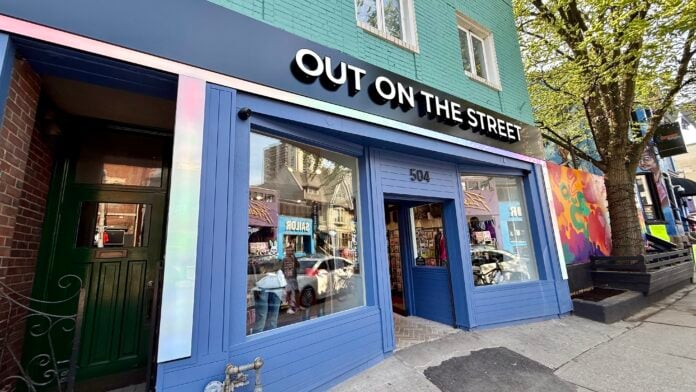
Out on the Street at 504 Church Street in Toronto. Photo: Craig Patterson
After 34 years operating from a narrow multi-level storefront on Church Street, Toronto LGBTQ+ retailer Out on the Street has entered a new era with the opening of a redesigned and fully accessible store in the heart of the Church-Wellesley Village.
The retailer officially opened its new location at 504 Church Street on May 1, relocating from its longtime home at 551 Church Street, where founder Ian Kelly built one of Canada’s best-known LGBTQ+ retail businesses beginning in 1991. What was once spread across three floors inside a heritage building has now been transformed into a bright single-level retail environment focused on accessibility, visibility, expanded merchandising, and a more immersive shopping experience.
The Out on the Street new store also arrives at a time when many long-running independent LGBTQ+ retailers across North America have disappeared amid rising operating costs, online competition, redevelopment pressures, and changing nightlife patterns. Against that backdrop, the relocation represents both reinvention and continuity for a business that remains closely tied to Toronto’s LGBTQ+ community and the evolution of Church Street itself.
“We are seeing a whole new diverse community base coming into our store,” co-owner Michael Azzopardi said during an interview inside the new location. “We are fully accessible now, so we are welcoming customers that were never able to shop at our store before.”
The move also places the retailer more directly within the Village’s busiest pedestrian corridor south of Wellesley Street, where restaurants, nightlife, retail, and Pride activity continue to anchor one of Canada’s most historically significant LGBTQ+ neighbourhoods.
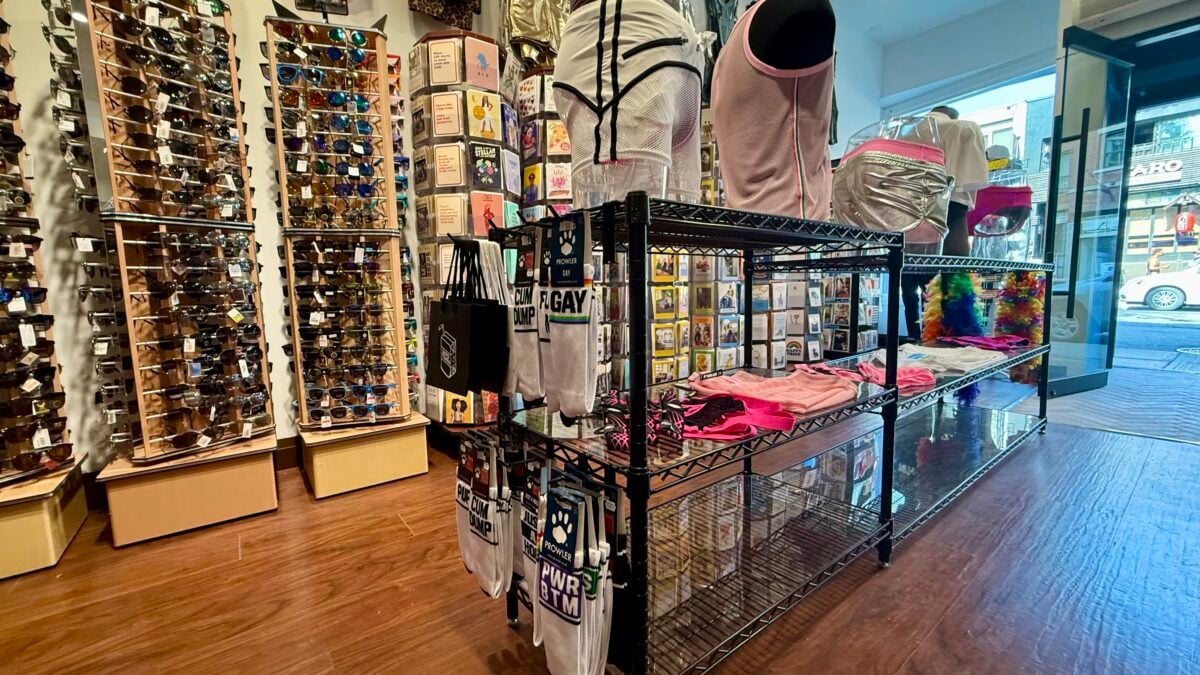
Out on the Street at 504 Church Street in Toronto. Photo: Craig Patterson
A Longtime Village Institution Evolves
For decades, Out on the Street operated from a distinctive but challenging three-level space that became a landmark for generations of customers. The store developed a loyal following through its eclectic mix of underwear, Pride merchandise, gifts, novelty products, adult items, apparel, and swimwear, becoming a staple of the Church-Wellesley Village retail landscape.
Over time, however, the building’s layout became increasingly difficult for both customers and staff to navigate.
Visitors regularly moved between narrow staircases and separate merchandise areas, while employees worked across disconnected floors that limited visibility and made merchandising more difficult.
The new one-level format has changed that dramatically.
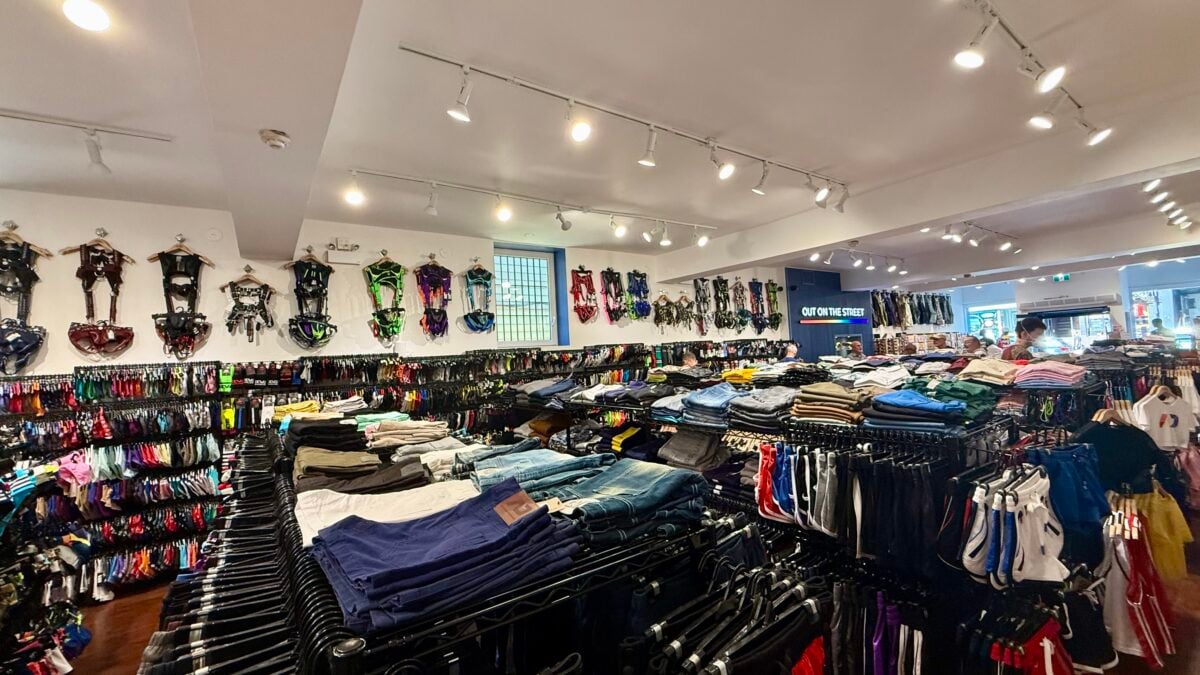
“We get to see all of our customers at the same time now,” Azzopardi explained. “Customers get to see all of our merchandise in one go instead of travelling up and down stairs. Putting outfits together is much easier because people can see everything together, and our staff are better able to assist.”
The redesign has also introduced new customers to the business, particularly those who previously found the old location inaccessible.
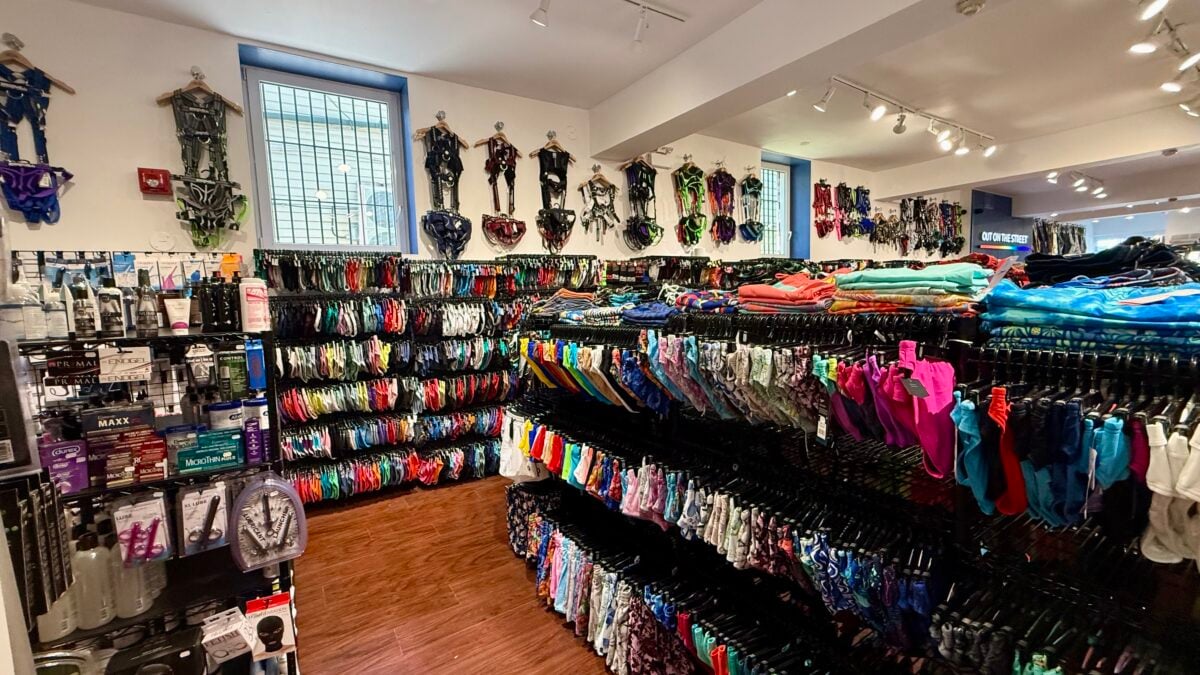
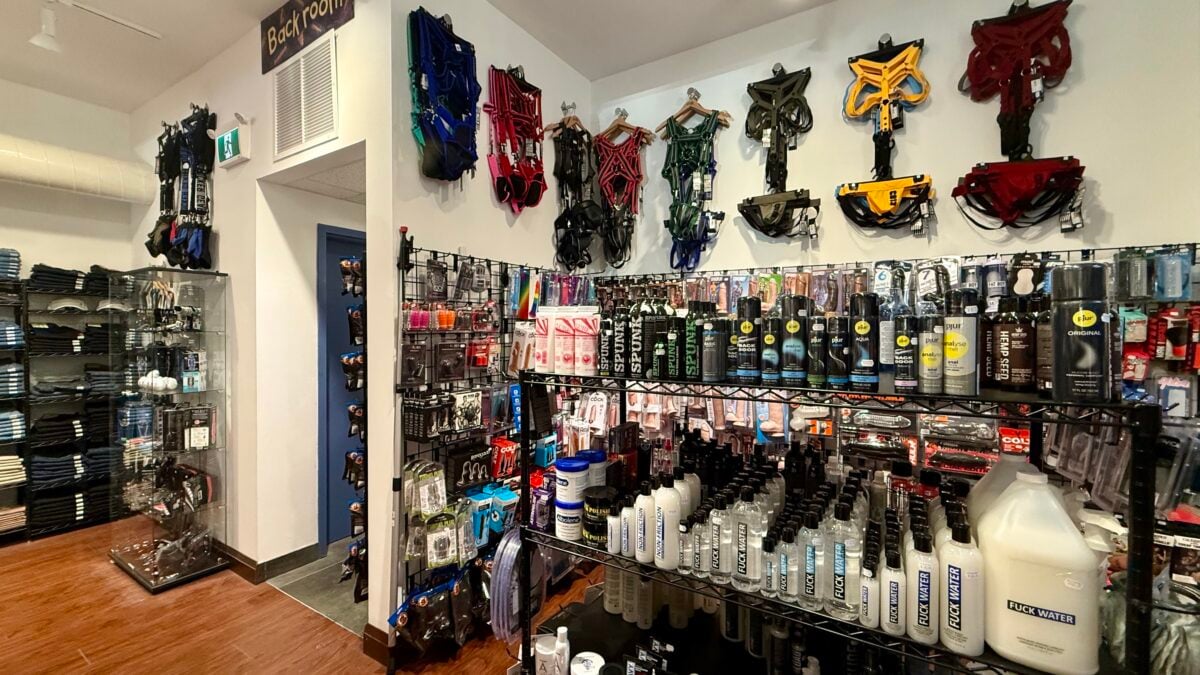
Large walls of brightly merchandised underwear and swimwear are now visible almost immediately upon entering the store, while the open layout allows customers to browse the assortment more comfortably and naturally than before. Softer lighting around the cash area creates a warmer atmosphere that contrasts with the more compartmentalized feel of the previous location.
Although the new store occupies approximately 1,600 square feet on one level, compared to roughly 1,800 square feet spread across three floors previously, the brighter layout and improved sightlines make the space feel significantly larger.
Out on the Street’s former location at 551 Church Street will continue operating temporarily as a clearance centre until approximately Halloween while the final stages of the transition are completed.
Out on the Street at 504 Church Street in Toronto. Photo: Craig Patterson
Bringing New Energy to a Vacant Church Street Space
The move has also reactivated a storefront that sat vacant for approximately 13 years.
The space at 504 Church Street previously housed hospitality concepts including George’s Play and Gatsby’s before remaining dark for more than a decade. The reopening therefore carries significance beyond the retailer itself, contributing renewed retail activity to a stretch of Church Street that has experienced both revitalization and contraction in recent years.
The geography of Toronto’s Village has shifted noticeably over the past two decades, with much of the district’s nightlife and pedestrian activity concentrating south of Wellesley Street. Independent LGBTQ+-focused businesses have become increasingly rare as redevelopment pressures, rising rents, and evolving consumer habits continue reshaping the area.
Yet Church Street remains a symbolic and cultural anchor for Toronto’s LGBTQ+ community, particularly during Pride celebrations and major community events. For Out on the Street, remaining within the centre of that activity was critical.
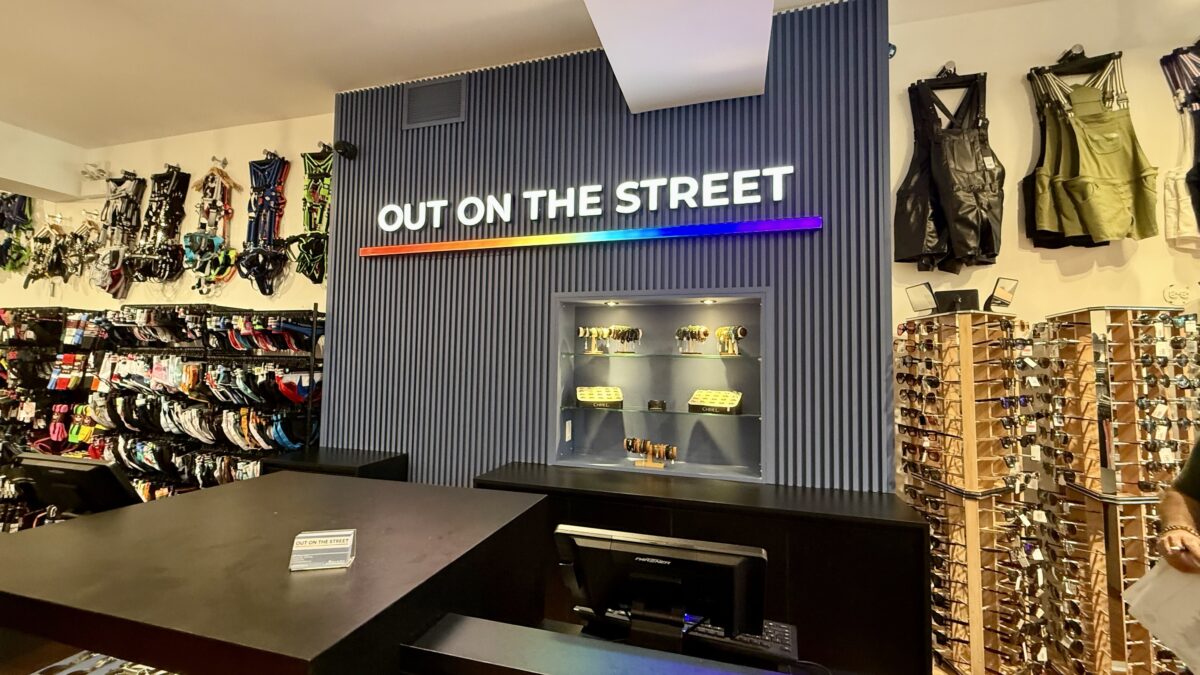
Out on the Street at 504 Church Street in Toronto. Photo: Craig Patterson
A More Contemporary Store Experience
Inside the new store, the visual transformation is immediate.
Warm lighting, refreshed fixtures, expanded product walls, digital signage, and subtle rainbow integrations create a more polished and modern atmosphere while still preserving the personality longtime customers associate with the business.
“Part of our new design was to take the rainbow and integrate it into everything we do,” Azzopardi said. “Our gift card, our business card, the colours, the lighting, even the outside digital sign.”
Rather than relying heavily on overt Pride branding throughout the store, rainbow elements have been woven more subtly into displays, signage, graphics, and environmental details.
The fitting rooms have also been completely redesigned with upgraded mirrors and lighting systems that have already generated strong customer feedback.
At the rear of the store, one small but meaningful piece of the previous location remains. “The Back Room” signage from the original store was relocated into the new space as a nod to the company’s history.
“That sign was brought over just as a little nod to our old location,” Azzopardi said. “We tried to bring in one or two pieces from the old store to maintain who we are.”
The balance between modernization and familiarity appears to be resonating with customers, many of whom have followed the retailer for decades.
Out on the Street at 504 Church Street in Toronto. Photo: Craig Patterson
Expanded Brands Reflect Broader Retail Shifts
The redesigned layout has also allowed Out on the Street to expand portions of its assortment despite operating within a slightly smaller footprint.
“Our gift cards have increased by about 150 SKUs,” Azzopardi said. “We have been able to expand more of our Addicted and ES lines. We now carry Levi’s. We now carry Psycho Bunny. We have expanded our Alpha Charlie lines.”
The addition of brands such as Levi’s and Psycho Bunny signals a broader merchandise evolution beyond nightlife and Pride-focused apparel into more premium everyday fashion categories.
That opportunity has emerged partly because of major changes within Canada’s department store landscape. Following the closures of retailers including Sears Canada and Hudson’s Bay, shoppers now have fewer destinations carrying broad denim and casualwear assortments.
“We still need to offer that to our customers,” Azzopardi said. “We saw an opportunity, we reached out to Levi’s, and we started there.”
The retailer currently carries staple Levi’s fits including the 501, 504, 511, and 512 styles, while the Psycho Bunny assortment focuses on premium polos and elevated casual basics.
“If customers are looking for not so much club wear but more everyday wear, we are now expanding those lines as well,” Azzopardi explained.
At the same time, Out on the Street continues to lean heavily into the categories that built its reputation within the Village.
“It is the biggest in the Village,” Azzopardi said of the store’s underwear assortment. “Across Canada, besides some online retailers, nobody quite does what we do.”
The retailer has also secured a Canadian-exclusive swimwear collaboration with Spanish brand Addicted.
“We now have an exclusive with Addicted,” Azzopardi said. “We have created a Canadian-brand swimwear collection with them that is exclusive to Out on the Street.”
Out on the Street at 504 Church Street in Toronto. Photo: Craig Patterson
Expanding Reach Beyond Toronto
While the retailer remains deeply tied to the Church-Wellesley Village physically and culturally, its ambitions increasingly extend well beyond Toronto through e-commerce and social media.
Out on the Street ships products nationally and internationally, serving customers in markets where dedicated LGBTQ+ retail options may be limited or nonexistent.
“We ship all across the country and even globally,” Azzopardi said.
The company recently launched a new Instagram presence under the handle “outonthestreet.ca” as part of the broader refresh tied to the relocation.
“What we are trying to do is expand our online presence into the Prairies,” Azzopardi explained. “We want people to know that we are available.”
The approach reflects how many independent specialty retailers are increasingly pairing destination physical stores with national digital reach while relying on community connection and curated assortments to differentiate themselves from mass online marketplaces.
Nearly four decades after STOTT PILATES was first developed in a Toronto apartment, the company behind the globally recognized Pilates method has opened a new flagship studio and academy above the intersection of Yonge and Bloor, reinforcing the city’s role as the centre of an international wellness and education network.
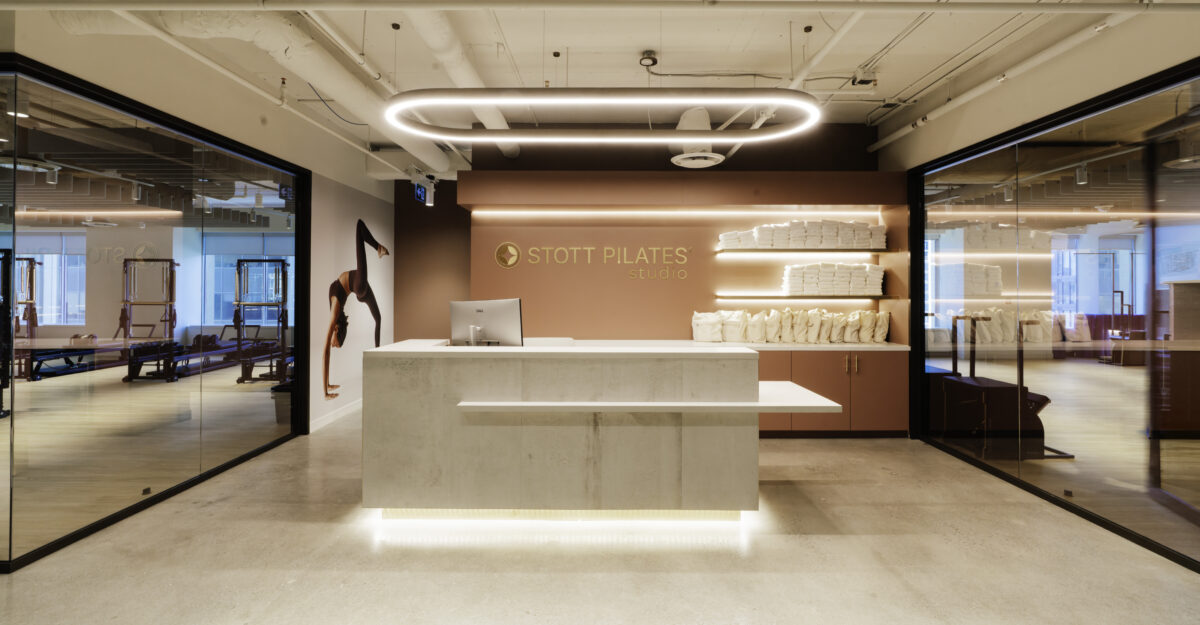
Toronto-based Merrithew recently unveiled the new facility on the 10th floor of the landmark 2 Bloor Street East complex in at the corner of Yonge, combining premium Pilates instruction, instructor education, and experiential wellness programming within a destination-style environment overlooking one of Canada’s busiest urban intersections.
2 Bloor Street East, May 2026. Photo: Craig Patterson
The opening arrives as Toronto experiences growing momentum in the Pilates and boutique wellness category, with operators increasingly pursuing premium urban locations across neighbourhoods such as Yorkville, King West, and downtown Toronto.
For Merrithew, the new flagship marks the continued evolution of a Toronto-born fitness methodology that has expanded into more than 135 countries and trained tens of thousands of instructors worldwide.
“Toronto is where STOTT PILATES began, so opening a studio here is both a homecoming and a statement of intent,” said Jim Heidenreich, CEO of Merrithew. “It reinforces our roots while signaling our continued investment in innovation and growth.”
From Apartment Studio to International Training Network
The origins of STOTT PILATES date back to the late 1980s, when professional dancer Moira Merrithew, formerly Moira Stott, suffered a foot injury that ended her performing career. After studying in New York under Romana Kryzanowska, a direct protégé of Joseph Pilates, she returned to Toronto with husband Lindsay Merrithew and began teaching Pilates classes out of the couple’s apartment.
As she worked with clients, Moira Merrithew began refining traditional Pilates instruction by incorporating modern biomechanics, rehabilitation principles, and spinal alignment concepts developed alongside physical therapists and sports medicine professionals.
The resulting methodology emphasized neutral spine posture, functional movement, and injury prevention, helping differentiate STOTT PILATES from more traditional Pilates systems while positioning it as a more science-informed and rehabilitation-oriented approach.
At the same time, Lindsay Merrithew began manufacturing specialized Pilates equipment in Toronto to support the evolving method. Over time, the company expanded beyond instruction into equipment manufacturing, instructor certification, and academy-based education.
Today, Merrithew has trained more than 80,000 instructors through a worldwide network of licensed training centres, educational partnerships, and certification programs.
Jim Heidenreich CEO Merrithew, Image: Merrithew / STOTT Pilates
A Destination-Style Wellness Environment Above Yonge and Bloor
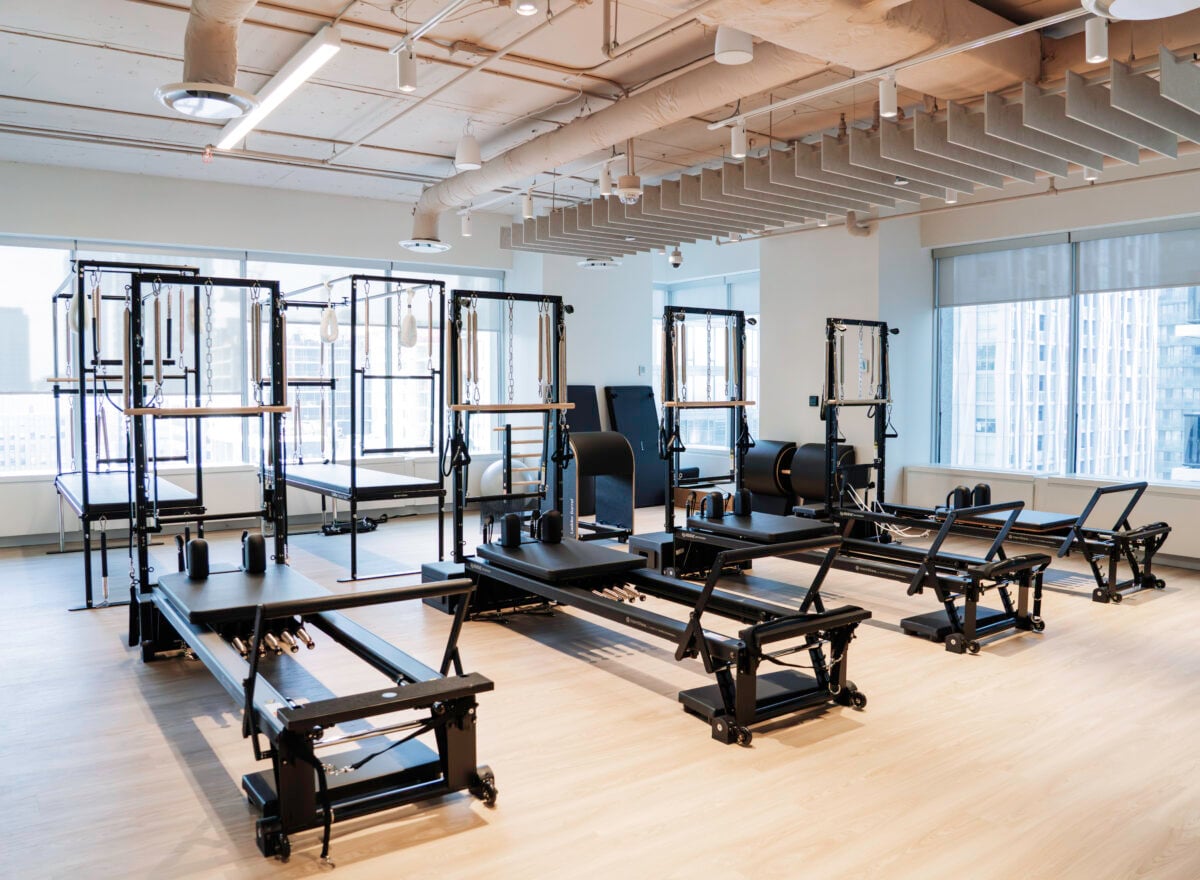
Unlike many of the smaller street-level Pilates studios opening across Toronto, Merrithew’s new flagship was intentionally designed as a destination environment integrating both consumer fitness and professional education.
Positioned above the Yonge and Bloor intersection within the office tower component of 2 Bloor East, the studio offers a more elevated and private atmosphere while remaining directly connected to one of Toronto’s busiest transit and retail nodes.
The facility includes premium training studios, dedicated academy spaces, and Merrithew’s proprietary Pilates equipment, creating what the company describes as an immersive brand environment for both clients and instructor trainees.
“This studio brings that journey full circle, it’s not just a studio, but a global hub that reflects the scale, professionalism, and scientific rigor that define STOTT PILATES today,” Heidenreich said.
The academy component is expected to attract both local and international students to Toronto, reinforcing the city’s importance within the company’s worldwide education network.
“The dual role is central to our vision,” said Heidenreich. “It operates as a premium studio for clients, while also serving as a leading academy for instructor training.”
“Toronto remains a cornerstone of our global network,” he added. “It’s not only our headquarters but also a key destination for instructor training.”
The company recently also introduced a unified membership structure at the flagship location, offering unlimited access to both matwork and reformer classes under a single plan.
Wellness-Focused Fitness Continues Expanding Across Toronto
Pilates concepts have expanded rapidly across Toronto in recent years as consumers increasingly prioritize mobility, recovery, flexibility, and long-term wellness over high-intensity fitness formats.
Many newer operators have positioned themselves as lifestyle-oriented wellness destinations featuring premium interiors, smaller-format classes, and community-focused programming, particularly within affluent urban neighbourhoods.
Heidenreich said Merrithew continues to distinguish itself through its longstanding emphasis on biomechanics, education, and precision-based instruction.
“Our approach is grounded in biomechanics, rehabilitation principles, and functional movement,” he said. “In a market that can sometimes prioritize trends over substance, STOTT PILATES stands apart by focusing on precision, safety, and long-term results.”
The company said its customer base has evolved significantly over time, expanding beyond dancers and athletes to include older adults focused on mobility as well as younger professionals seeking more sustainable approaches to fitness and wellness.
“There is a growing appreciation for quality movement and longevity,” Heidenreich said.
Entering a New Chapter
The opening also reflects Merrithew’s broader evolution following the acquisition of a majority stake in the company by ONCAP, the mid-market private equity platform of Toronto-based Onex Corporation, in 2022.
The company rebranded from STOTT PILATES to Merrithew in 2012 as it expanded into additional wellness and fitness modalities including ZEN•GA, Total Barre, and Halo Training.
Heidenreich joined Merrithew as CEO in 2024 and now oversees the company’s next phase of international growth, including continued investment in education, digital delivery, strategic partnerships, and selective flagship development in key global markets.
“Growth for us is about maintaining quality while expanding reach,” Heidenreich said. “We’ll continue to invest in education, digital delivery, and strategic partnerships.”
Jersey Mike’s Subs and its Canadian franchisor, Redberry Restaurants, say they plan to raise $1 million for Make-A-Wish Canada by 2030 as the restaurant chain expands its partnership with the charity supporting children with critical illnesses.
The pledge was announced Monday at the opening celebration for Jersey Mike’s newest downtown Toronto location at 425 University Ave., the company’s second restaurant in the city’s core. The fundraising commitment follows nearly $270,000 raised by Jersey Mike’s locations in Canada since the start of 2024, according to Make-A-Wish Canada.
The commitment adds to a growing corporate partnership between the sandwich chain and the national charity, which says 3,500 children across Canada are currently waiting for wishes to be granted. The funds are expected to support wish-granting efforts across the country over the next five years.
Ken Otto
“Through our partnership with Make-A-Wish Canada, we’ve seen that a wish can be life-changing for a child living with a critical illness,” said Ken Otto, CEO, Redberry. “That’s why we’re proud to deepen our commitment and continue supporting this mission over the next five years.”
The announcement comes as Redberry continues to expand Jersey Mike’s footprint in Canada. The company now operates 26 locations across Alberta, Saskatchewan and Ontario, including multiple restaurants in Toronto, Mississauga and Regina.
Nineteen of those locations have already participated in Make-A-Wish Canada fundraising efforts tied to grand openings, the organization said.
“As a wish mom, I’ve seen firsthand the power a wish has to lift a child’s spirit and strengthen a family during the toughest moments. This gift represents Jersey Mike’s belief in that power and our commitment to helping more families experience the hope that a wish brings.”
Make-A-Wish Canada said the funding will help it expand support for children living with critical illnesses at a time when demand for wishes remains high.
Meaghan Stovel McKnight
“This extraordinary pledge from Jersey Mike’s will change the trajectory of hundreds of lives,” said Meaghan Stovel McKnight, CEO of Make-A-Wish Canada. “Their generosity and belief in our mission ensure that more children will experience healing a wish provides, because wishes are medicine. We are deeply grateful for this partnership and the impact it will continue to make across Canada.”
The new Toronto restaurant is scheduled to open to the public Wednesday and will launch with a five-day fundraiser benefiting Make-A-Wish Canada.
Under the promotion, customers who receive a fundraising coupon distributed before the opening can make a minimum $3 donation to the charity in exchange for a regular sub sandwich. The company said customers must present a coupon to participate.
Redberry, founded in 2005, operates more than 200 quick-service restaurants in Canada under the Burger King, Taco Bell and Jersey Mike’s brands.
Jersey Mike’s, founded in New Jersey in 1956, has grown to more than 3,300 locations across Canada and the United States.
As Toronto prepares to welcome international visitors for the upcoming FIFA World Cup festivities, hospitality businesses across the city are facing mounting pressure to deliver exceptional service while navigating ongoing staffing shortages. According to hospitality industry expert and executive recruiter Val Upfold, extended bar and restaurant hours until 4:00 a.m. will intensify demands on an industry already stretched thin.
Val Upfold
Val explained that restaurants, bars, hotels, and event-related businesses have struggled with labour shortages for years, even before the pandemic. With thousands of additional tourists expected in Toronto, hospitality operators must now manage longer operating hours, increased customer volume, and heightened expectations from international guests visiting Canada for the first time.
She emphasized that businesses succeeding during the World Cup will be those that prepared early by hiring, training, and retaining staff ahead of the rush. Val noted that burnout and employee turnover remain major concerns, especially in an industry where staffing instability can directly affect customer service and brand reputation.
Beyond frontline restaurant workers, she highlighted growing demand for cooks, managers, security personnel, purchasing teams, and back-office hospitality support staff. Val also stressed that Toronto’s global reputation is on the line, with visitors likely to judge the city based on service quality, transportation, safety, and overall guest experience during the tournament.
Tim Hortons is ramping up store renovations, expansion plans and local hiring efforts as competition in Canada’s coffee market intensifies following Dunkin’s announced return to the country, according to retail analyst and author Bruce Winder.
Speaking with Retail Insider, Winder said Tim Hortons had already been planning to refurbish hundreds of locations and open new restaurants before Dunkin’ revealed plans to eventually launch 300 Canadian stores. However, he suggested the strong public reaction online likely accelerated the chain’s response strategy.
Bruce Winder
Winder noted that social media users have increasingly called for stronger competition in the coffee sector, with concerns raised about service quality, order accuracy and restaurant cleanliness at Tim Hortons locations.
He also said the company appears to be reinforcing its Canadian identity amid criticism tied to its use of the Temporary Foreign Worker Program and perceptions surrounding foreign ownership. According to Winder, the company’s pledge to hire 10,000 local workers may help improve public perception while addressing high youth unemployment.
Winder added that Tim Hortons has likely learned to balance menu innovation with operational efficiency after expanding beyond its traditional coffee-and-donut offerings in recent years.
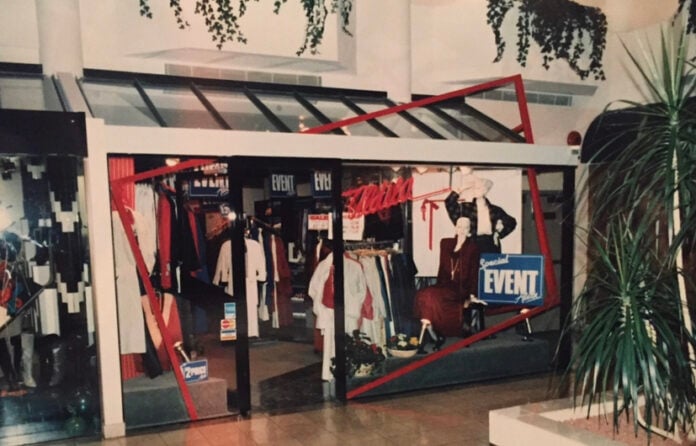
In an industry often defined by fleeting trends and “fast” consumption, Aldila is celebrating a rare and deeply personal milestone, 40 years of dressing women across the Lower Mainland,BC, Kelowna, and Calgary.
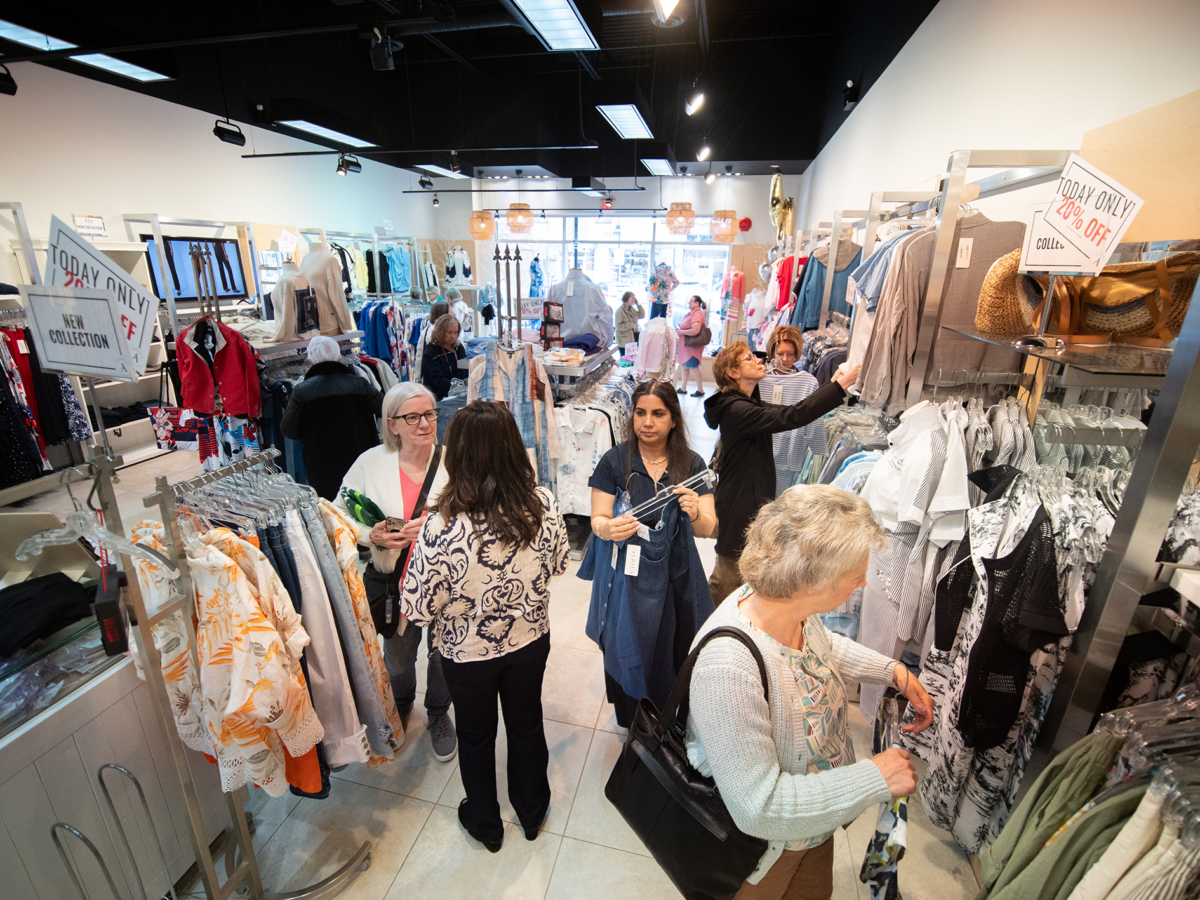
What began in 1986 as a single shop on Vancouver’s Robson Street has blossomed into a multigenerational family legacy. Today, Aldila stands as a premier fashion destination for women over 40, boasting six locations across British Columbia and Alberta – including a landmark 25th anniversary in the Calgary community.
Aldila’s four-decade journey is a masterclass in resilience and the power of the personal touch. By defying the fast-fashion movement, the boutique has spent 40 years focusing on what truly matters: the perfect fit, the longevity of a well-made garment, and building strong connections with their loyal customers. Featuring a thoughtfully curated blend of Canadian and European designers, including Joseph Ribkoff, Dolcezza, Charlie B, and their own signature Aldila Collection, the boutique has become more than a retailer, it is a curator of a collection that effortlessly weaves into every wardrobe.
Elif Costello
“Celebrating 40 years as a small, locally run business is a testament to the relationships we’ve built in our stores over the decades,” said Elif Costello, executive at Aldila. “Our focus on personal connection, curation, and quality proves that these are key pieces for a thriving business. In Calgary, reaching the 25-year mark makes our business anniversary even more special. We’ve grown with the Calgary women, and we are honoured to be a part of the city’s vibrant local community.”
Shawn Costello
Shawn Costello, Vice President, said “the organizational structure and all the decisions that we make are focused around our mission ‘empowering women through our clothing and service’.”
While much of the fashion world remains fixated on the next generation, Aldila’s enduring success proves that the 40+ woman is not a “niche” market, but a powerful community. By championing a demographic often overlooked by mainstream retail, Aldila has cultivated a loyal following that thrives on connection, proving that in a digital age, there is no substitute for the warmth of a local, family-owned boutique.
Elif is the daughter of the founders Hasan and Gulay (Sarihan). She has been part of the business for the last 22 years while Shawn joined the business eight years ago with his background in wholesale with Joseph Ribkoff for many years.
Elif said the retailer’s name is Italian and came from a song in the 40s or 50s. Her parents both really liked the song. So when they were trying to come up with a name, they both brainstormed and came up with Aldila.
“It’s a women’s retail boutique, but we’re full service. What we love to do is find the right outfits for our customers’ lifestyles,” explained Elif.
“We are a multi-brand boutique where about 96% of our brands are Canadian brands, and we have a little bit of European brands as well. Our focus really is on shopping Canadian. It really always has been. So this new shift that’s happened recently really wasn’t difficult for us to make changes because we were already focused on bringing in great Canadian brands, because we have a lot of them here in Canada, and I don’t know if our consumers know about that.
Aldila
“We want to carry slow fashion, so that just means we’re not bringing in something that you’re going to wear one season and throw out at the end of the season. Especially in a world full of fast-fashion super giants that have come in from all parts of Europe and such, we’re proud to be a little bit more slow fashion in the sense that the trends are there certainly, but we want to make sure that our customers are buying great-quality pieces that make them feel amazing.”
The average store size is 1,600 square feet and anywhere between 1,200 right up to 1,950, said Shawn.
“We really wanted to make sure that we walk before we run. At one point we had 14 locations, but we really started to put focus on that less is more. So we have six stores, and six stores that are profitable,” he said.
Elif and Shawn Costello
“Now we feel comfortable. Staffing as well is extremely important with expansion. And having the team and people who believe in the process and the mission that we’re trying to accomplish. We are looking in Edmonton right now. We have a real estate agent there that’s been actively looking. We’ve been there, we’ve pinpointed a location, and we’re kind of sticking to it.
“We’re waiting for a lease to pop up. We’re pretty strategic like that in the sense that we’ve realized what has worked. We realized what we’re trying to do. I think we need to be in more community areas and really work with community. So we might have multiple stores, but we are active in those communities where we are, doing fashion shows, being part of women’s organizations, that kind of thing. A lot of our staff are part of some of those organizations.”
Elif said the brand tries to have a bit of a give-back component to our business as well.
“We’re just trying to find the right fits and make sure that we partner with community-based organizations because, in an age where the big guys are almost like they’re shuttering, we’re still kind of a small business. We’re trying to make that impact with our customers and our communities so people remember us as well.”
Aldila
Shawn said the company has been profitable for the past six years.
“The most important part is being able to reinvest that money back into the business, and that’s what we’ve been doing. We just renovated one of our stores in Calgary because it was time. It was great to be able to say, “Okay, let’s reinvest this money.” We did a full renovation in Richmond. We were in one location for 33 years. We were at Richmond Centre Mall for 33 years, but the last few years we could tell the traffic had changed. We tried everything. We even tried a hybrid store—half the store with new goods and half the store with sale goods. We tried all these different combinations, moved staff around, that kind of stuff, to see what we were missing. But it just happened to be that the area changed, the demographics changed.
“We went to a more community area. We had our eyes set on a location for three years, and finally the landlord called us and said, ‘we’re not even advertising it. It’s yours if you want it’. I used to call him every four months, and persistence kind of pays off. ”
Elif said the brand is going into more of these lifestyle centres, getting out of the malls and more into the community hubs.
“But to really see that reception in Canada with eBay Live as a really trusted source for live shopping is a relatively new one, and I think people are really excited about it,” he said.
Karthik Rajendran
“But we’re still seeing it develop. We’re seeing Canadians still get used to the idea of shopping eBay Live, a whole new dynamic way to shop. So it’s exciting to see that evolve.”
Rajendran described eBay Live as a whole new interactive livestream shopping experience, a whole new way to shop.
“We’re trying to create these experiences where shoppers can really engage in real time,” he said.
“Both buyers and sellers can engage in real time, ask questions, get answers. What we really want to try and do is evolve with the community, with the Canadian collectibles community. So you’re going to see us expand into new categories, bring in new features that the buyers and sellers are asking for, and hopefully diversify into other new categories as well.”
Rajendran said eBay Live launched with collectibles. eBay Live is the home of collectibles, so it was the logical place to start.
“One of the big things is case breaks, for example. Being able to bring that shopping format to Canadians and collectors was a big thing for us here and something we got really excited about,” he noted.
“But then also, we are often at live events. We were most recently at the Calgary Fan Expo and the Toronto Sports Card Expo, where we get to really be in the thick of things with the passion and the fandom and the community.
“But now it’s a way for us to really bridge those experiences on the show floor and bring it to Canadians en masse through these livestream experiences where we get to connect celebrities and talent that we have at these shows and provide that access to livestream shoppers across Canada.”
Rajendran said the concept has been going well. The fact that they’re seeing more and more adoption week over week is very, very reassuring.
“But we’re seeing adoption grow week over week. We’re seeing new people, new users, discover Live,” he said.
“Right now, the best way to access it is through ebay.ca. There’s a little Live pill that goes lime green that people can access right away and be brought into this totally immersive experience where they can see live shows that are scheduled and set reminders so that they can be notified when their favourite sellers are going live.
eBay photo
“So right now, it’s great. Adoption is great. We’re going see this continue over the next foreseeable future, where we’re going see people just discover Live, get more used to live shopping, and see that development.
“We’ve got some great activations coming up. Right now, we’ve got Pokémon Nights on Fridays, which are really great. Some of our sellers rally around putting together some great events with tons of giveaways, tons of surprises, so make sure to tune into that.
“And then we’ve also got Road to the Finals right now, which is tied to hockey and obviously with the Stanley Cup, where we’re going to be sending two lucky winners to the Stanley Cup.
“These are just great ways for us to, again, give back to the community, give them exactly what they’re asking for, to be part of the collecting community and be relevant to what’s actually happening in the fandom and in sports.”
TD describes this summer’s top trend as splurging is out and saving is in.
A new survey shows Canadians are rethinking summer spending in 2026 as ongoing cost-of-living pressures, including rising fuel prices, continue to shape household budgets and travel plans.
Key findings from the TD survey:
35% of Canadians plan to spend less this summer
44% say higher fuel costs are influencing travel decisions
24% of Gen Z Canadians – the highest among all generations – plan to increase their summer spending, driven largely by social pressure
79% of Canadians plan to support local or Canadian businesses, with 48% saying it’s a stronger priority than last summer.
How Canadians are adjusting their summer budgets
TD said the survey highlights how persistent cost pressures are pushing Canadians to make more deliberate financial trade-offs. Among those cutting back this summer, 40% cite higher transportation costs as a key factor, while 62% are redirecting spending towards everyday needs, such as groceries, fuel and housing.
Canadians are also adapting in creative ways by:
Redeeming loyalty points (44%)
Choosing lower-cost alternatives such as DIY options or purchasing second-hand items (36%)
Sumaiya Bhula
“Summer comes with a lot of expectations and spending can add up quickly,” said Sumaiya Bhula, Senior Manager, Saving and Investing Journey at TD. “Simple steps like setting a realistic budget, tracking expenses and prioritizing what matters most can help Canadians stay in control while still enjoying the season.”
Sky-high fuel prices reshape summer travel plans
Travel is one of the most prominent areas where Canadians are feeling squeezed, said TD.
Amid crude oil supply constraints, 44% of Canadians polled say fuel and aviation costs are affecting their summer travel decisions. Among those planning to travel, 61% say they are actively reducing travel costs, signaling a shift in how some Canadians are approaching their summer trips, it said.
The survey also reveals a gap in financial preparedness:
46% of Canadian travellers don’t intend to purchase travel insurance this summer
29% say they can only cover up to $300 in emergency travel costs without insurance
Patricia Foley
“When travel budgets are already stretched, skipping travel insurance might feel like an easy place to save, but disruptions like a trip cancellation or unexpected medical emergency can quickly become costly,” said Patricia Foley, Associate Vice President, Life, Health & Credit Protection at TD. “Having the right travel insurance coverage could help protect your finances and your trip, allowing you to travel with greater confidence.”
Buy Canadian sentiment remains strong
As Canadians shift their summer travel plans, findings indicate that many are becoming more intentional with their vacation destinations and buying habits:
76% of Canadians planning to travel intend to stay within Canada, with 55% exploring their own province and 41% travelling elsewhere domestically
79% plan to support local or Canadian businesses this summer
48% say their desire to support local businesses is stronger than last year
Canadians are also supporting local by buying Canadian‑made products (48%), dining locally (41%) and shopping at independent retailers (32%).
Julia Kelly
“Local businesses are the heartbeat of our communities and it’s encouraging to see Canadians choosing to explore their own backyards,” said Julia Kelly, Vice President, Small Business Banking at TD. “Shifting even a portion of summer spending to local businesses helps sustain communities, while also creating meaningful experiences close to home and supporting the entrepreneurs who drive our local economies.”
Why Gen Z is spending differently this summer
Younger Canadians are taking a distinctly different approach to their summer budgeting. Gen Z Canadians are the most likely generation to increase spending this summer, with nearly one-in-four (24%) planning to spend more, said TD
Meanwhile, 32% of Gen Z say social pressure is influencing their summer spending decisions, more than double the national average (14%), it said.
Among this group, the top spending categories include:
FOMO-driven experiences (30%)
Dining out at trendy restaurants (29%)
Shareable or photo-worthy activities (28%)
Travel (24%)
Events like concerts, festivals or sporting events (22%)
Jeet Dhillon
At the same time, Gen Z is also drawing clearer boundaries. Among those invited to summer weddings, nearly two-thirds (64%) say they’ve already declined or are being more selective, far exceeding the general population (48%), added TD.
“Social media can sometimes make it feel like you have to say yes to every experience,” said Jeet Dhillon, Senior Portfolio Manager, TD Wealth. “Having a clear sense of what you value – and what fits your budget – can make it easier to enjoy summer without letting impulse or pressure derail your financial plans.”