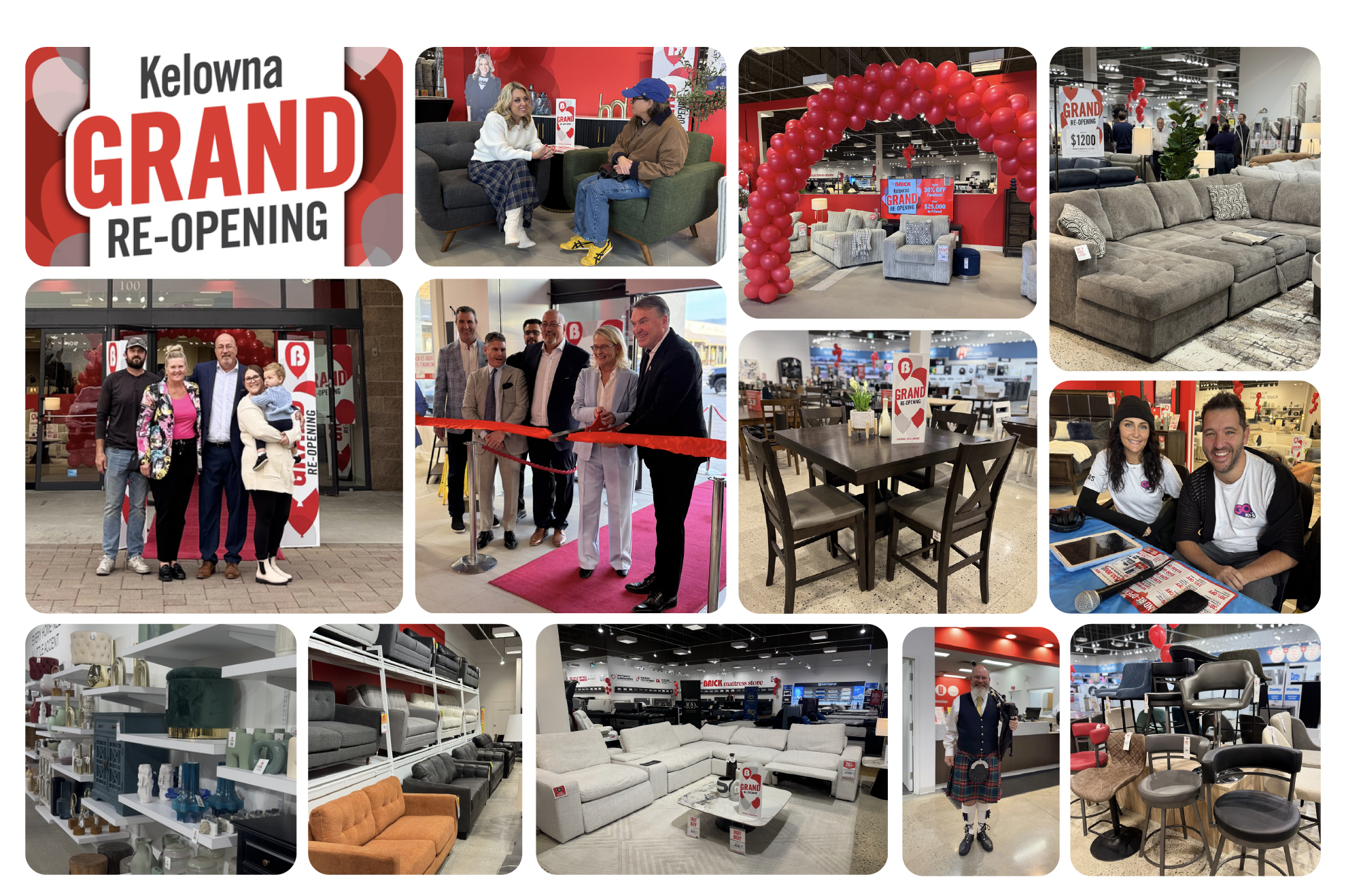
Canadian home furnishings retailer The Brick has reopened its Kelowna showroom following an extensive renovation and expansion, introducing a refreshed retail concept designed to enhance the shopping experience for customers across the Okanagan region.
The newly reimagined 44,744-square-foot showroom, located at 948 McCurdy Road, reflects The Brick’s ongoing investment in brick-and-mortar retail, even as e-commerce plays a growing role in the furniture and appliance industry. The company, which is a wholly owned subsidiary of Leon’s Furniture Limited (LFL Group), marked the reopening with a community celebration that included giveaways, celebrity appearances, and exclusive in-store promotions.
“We’re thrilled to welcome the Kelowna community back to a completely reimagined Brick experience,” said Darci Walker, President of The Brick. “Our new layout offers more inspiration, more selection, and the same great value Canadians have come to expect from The Brick.”
Darci Walker, President of The Brick
The redesigned Brick Kelowna showroom features an updated layout emphasizing lifestyle inspiration, wider product selection, and improved flow between categories. The space includes expanded displays of furniture, mattresses, appliances, and electronics, all curated to help customers better visualize complete home solutions.
The opening comes at a time when the Kelowna region continues to experience strong economic and population growth. With a city population exceeding 160,000 and a metro area surpassing 220,000, Kelowna is one of the fastest-growing mid-sized cities in Western Canada. The area’s booming housing market, rising disposable income, and increasing migration from larger urban centres have made it a key retail hub in the interior of British Columbia.
“Kelowna has always been an important market for us,” said Walker. “Our goal with this new showroom is to bring even more value and inspiration to our customers here, offering not only great deals, but also design expertise and community engagement.”
Strengthening Presence Across Canada
The Kelowna reopening reflects The Brick’s national strategy of modernizing its retail footprint while maintaining its commitment to value pricing and customer service. Founded in 1971 in Edmonton, The Brick now operates more than 209 stores nationwide across banners including The Brick Super Store, The Brick Mattress Store, and The Brick Outlet.
The company is known for its broad range of furniture, appliances, and home electronics, catering to both value-conscious shoppers and those seeking customizable home design options. One of its innovations, the SOFA LAB tool, allows customers to personalize living room furniture by selecting configurations, fabrics, and colours.
The Brick also continues to support Canadian manufacturing and has cultivated strong ties to its communities.
Through partnerships with Children’s Miracle Network, Habitat for Humanity, and Breakfast for Learning, the retailer has raised over $10.6 million for charitable causes since 2014.
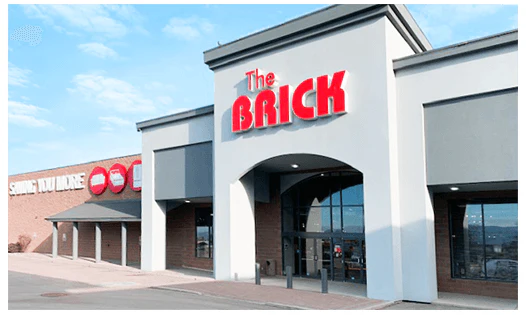
The Brick in Kelowna
Part of the Leon’s Furniture Limited Group
The Brick operates under the umbrella of Leon’s Furniture Limited, which acquired the brand in 2013 for approximately $700 million, forming what is now known as LFL Group. Together, Leon’s and The Brick make up the largest home furnishings retailer in Canada, with more than 300 combined locations and an estimated 15 to 20 percent market share.
Leon’s Furniture Limited (TSX: LNF) was founded in 1909 in Welland, Ontario, by Ablan Leon and remains a family-run business while also being publicly traded. Headquartered in Toronto, the company employs more than 10,000 Canadians and generates annual revenues exceeding C$2.5 billion.
While each brand within the LFL Group operates independently, both benefit from shared logistics and service divisions such as TransGlobal Service and TransGlobal Insurance, achieving efficiencies in operations and customer care.
Under the leadership of Terrence T. Leon, Chair, Mike Walsh, President and CEO, and Victor Diab, CFO, the group continues to pursue growth across both its retail and real estate divisions. Analysts have noted that Leon’s real estate holdings, valued at roughly C$1.5 billion, provide a strong financial foundation for ongoing expansion and store reinvestment.
A Retail Landscape of Opportunity in Kelowna
The Brick’s investment in Kelowna comes amid a thriving local retail environment. The city’s retail vacancy rate sits at just 1.42 percent, among the lowest in Western Canada, while demand for new retail space continues to rise. Mixed-use developments such as Aqua, Movala, and Water Street by the Park are bringing thousands of new residents to the area, boosting local spending on home furnishings and lifestyle goods.
Kelowna’s consumer market is supported by high homeownership levels and steady tourism traffic, with visitors from Alberta and the Lower Mainland contributing significantly to year-round retail activity. Local retail sales are strong in categories such as home improvement, outdoor living, and interior design—all areas where The Brick maintains a leading national presence.
With the opening of its reimagined Brick Kelowna showroom, the company is well-positioned to meet the needs of a diverse and growing customer base that values both design inspiration and affordability.
New TD survey data reveal that Gen Z entrepreneurs increasingly want to enter e-commerce, but face sizable barriers to success.
Key takeaways:
E-commerce focus: 1 in 4 Gen Z (25%) say they would launch an e-commerce venture using platforms like Etsy or Shopify, reflecting enthusiasm in this sector;
Barriers to success: A significant 25% of Gen Z entrepreneurs need support with the very basics of business banking, while 33% seek direct financial support;
An unparalleled economy: 75% of Gen Z aspire to own their own business amidst the worst youth unemployment crisis in over two decades.
“There are many platforms that are user-friendly, especially for a generation that has grown up with so much technology. E-commerce is also more accessible when it comes to startup capital. You don’t need the funds to buy or rent a physical space, which means young entrepreneurs can be open for business that much sooner,” she said.
Kelly said the most important financial skill any business owner needs to master is cash forecasting.
“Have you mapped out when your customers or clients are paying you? When do you need to pay your suppliers? In many cases these two streams are on different schedules. This is something we can help new business owners figure out and stay on top of. There are ways you can ‘fake it ‘til you make it’ in business, but your finances cannot be one of them, she said.
“The key for financing decisions is in your business plan: you need to map out what the business is, what challenges you might face, and more importantly, how you plan on facing the unexpected. For Gen Z, they might lack the life experience to create a thorough business plan on their own.
“And they might not realize a bank like TD can help them, either through direct guidance or by connecting them with their network of other business owners who are often eager to provide mentorship and support. We can also provide guidance on government grants and bursaries, or government backed credit facilities they might be eligible to apply for, tailored to the specific industry or stage of business they are operating in.”
Kelly said the survey found financial freedom was a leading factor in their interest in entrepreneurship.
“It makes sense that if you’re struggling to find full-time employment, being your own boss seems like a good alternative. But this doesn’t mean entrepreneurship is easy. Running a business requires you to be all-in on your idea. Our survey also found Gen Z is worried their lack of experience could lead to business failure. This is where starting your business as a side hustle can ease you into business ownership, allowing you the time and space to learn the business while it brings in extra income,” she added.
“If there is one thing business owners tell us they could use more of, it is time. While we cannot create more time, there is an opportunity for banks could take on more of a mini-CFO role through API-driven banking so that business accounts, payments and tools integrate directly with their e-commerce ecosystem. With an increase in AI-powered tools to support business, there is an opportunity to bring self-serve advice and support to businesses that are relevant for their specific industry and stage of business.”
A national group representing independent convenience stores is calling on health ministers to reconsider federal restrictions on nicotine pouches, arguing that small retailers can play a critical role in helping Canadians quit smoking.
The United Korean Commerce & Industry Association of Canada (UKCIA) is urging governments to work with licensed convenience stores in supporting tobacco reduction efforts.
Kenny Shim
“Independent convenience store operators have a long and proven record of being responsible retailers,” said Kenny Shim, president of the UKCIA. “We have always played a key role in the controlled sale of age-restricted products, and we want to be part of the solution in helping more Canadians quit smoking.”
The UKCIA, which represents nearly 2,500 independent stores across the country, is asking provincial health ministers to press federal Health Minister Marjorie Michel to reverse a 2024 ministerial order banning the sale of nicotine pouches in convenience stores.
According to Shim, the ban has led to unintended consequences, including the growth of a black market and reduced access to regulated smoking cessation products.
“By banning the sale of nicotine pouches in stores where smokers have been frequenting for years, the federal government has pushed many consumers toward unregulated, illegal products,” he said. “This not only undermines public health goals but also hurts responsible retailers who follow the rules and want to help Canadians quit smoking safely.”
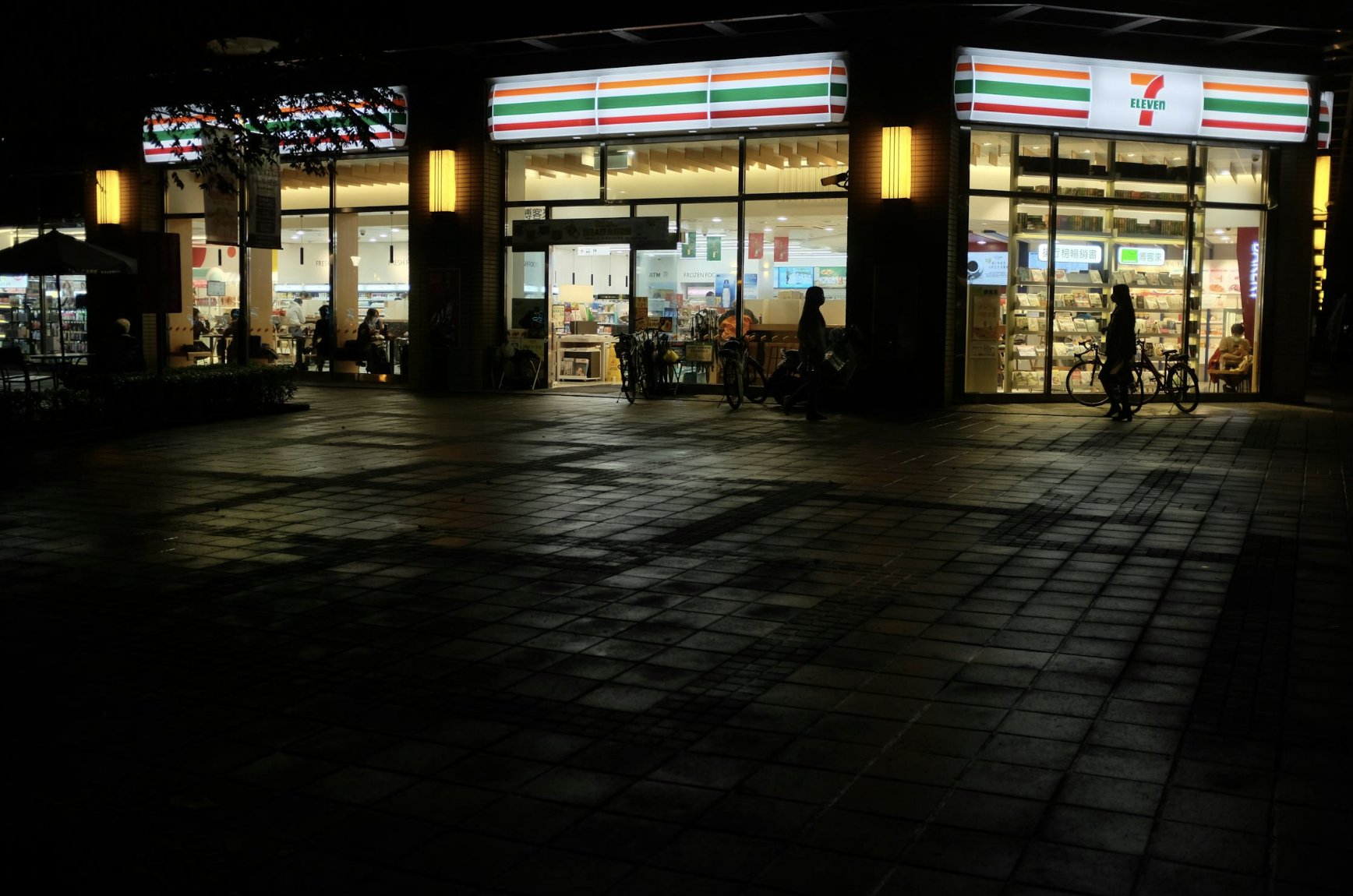
Photo: mingche lee
Shim said convenience stores are often the most accessible retail locations for adults, particularly in smaller communities. He argued that allowing the sale of approved nicotine replacement products in trusted retail environments would improve access and support Canada’s goal of reducing tobacco use to five per cent by 2035.
“If we truly want to reach the 5% smoking rate target, governments need to work with retailers, not against them,” he said. “Convenience stores can be an important partner in achieving a healthier Canada.”
The UKCIA said it hopes to engage in constructive dialogue with health officials to support both public health and the sustainability of small businesses.
Bloom Nutrition Expands Into Canada With Walmart Launch
Bloom Nutrition, a wellness brand based in Austin, Texas, has launched its Greens & Superfoods Powder at more than 300 Walmart locations across Canada, marking the company’s first international retail expansion.
The product, which is the top-selling greens powder in the United States, is now available in Canadian Walmart stores and online at walmart.ca. The launch includes three flavours: Strawberry Kiwi, Mango and Berry. Each is dairy-free, gluten-free, non-GMO, sugar-free, keto-friendly and plant-based.
Mari Llewellyn
“Our community in Canada has been asking to find Bloom in stores for a long time, and we’re so excited to finally make it happen,” said Mari Llewellyn, co-founder of Bloom Nutrition. “Bringing our Greens & Superfoods Powder to Walmart stores in Canada means we get to share the product that started it all – and help even more people bloom into their best selves.”
Founded in 2019, Bloom has seen rapid growth in the U.S., supported by its strong social media presence and digital influence, with over 12 billion views across TikTok, Instagram and YouTube. Since going viral on TikTok in 2021, the product has gained popularity for its flavour and wellness benefits, which include gut health support, reduced bloating and increased energy.
The powder contains over 30 ingredients, including organic superfoods, prebiotics, probiotics, digestive enzymes, adaptogens and antioxidants.
Joel Contartese
“Our Greens & Superfoods Powder has been a cornerstone of Bloom’s growth and retail success,” said Joel Contartese, director of international marketing at Bloom Nutrition. “Expanding into Canada represents an important step in bringing our modern approach to wellness to new markets and strengthening Bloom’s presence on a global scale.”
Bloom Nutrition says its Canadian expansion is part of a broader strategy to grow its retail footprint and global reach.
Canadian superfoods company Organic Traditions is celebrating its 25th anniversary with a full-scale rebrand and renewed strategic vision that bridges its heritage roots with a modern wellness culture. Founded in 2000 by Toronto entrepreneur Jerry Zeifman, the company has grown from a grassroots importer of ancient superfoods into a globally recognized brand with over 100 plant-based nutrition products sold across Canada and abroad.
Today, under the leadership of Ally Zeifman Mamalider, the founder’s daughter and current President of Organic Traditions, the company is entering what she calls “a new era of functional wellness.”
Ally Zeifman Mamalider
“We just celebrated 25 years of Organic Traditions, a milestone that feels both like a celebration and a rebirth,” said Mamalider. “What began as my father’s mission to heal through ancient superfoods has evolved into a modern wellness brand redefining the functional beverage space.”
From Family Mission to Modern Wellness Movement
The story of Organic Traditions began long before superfoods became a household term. In the 1990s, founder Jerry Zeifman experienced severe health challenges while working in Toronto’s construction industry. Determined to heal, he immersed himself in global wellness traditions by traveling to India, Japan, and Peru to study Ayurveda, cacao rituals, and other traditional healing systems.
What started as a personal transformation soon became a business. Zeifman began importing nutrient-dense foods like chia seeds, goji berries, and maca powder, products virtually unknown in Canada at the time. His venture quickly found a following among early adopters of holistic health.
By the early 2000s, Organic Traditions had established itself as a pioneer in Canada’s natural health sector, helping to introduce organic superfoods to mainstream retail. “He was really a visionary,” said Mamalider. “At a time when the concept of superfoods barely existed here, my dad was building relationships with farmers, traveling globally, and creating a supply chain that would later define a category.”
Image: Organic Traditions
Second-Generation Leadership and Strategic Evolution
Mamalider officially joined the company full-time in 2017, after years of involvement behind the scenes. Her entry marked a generational handoff that would transform the brand’s strategy and position it for accelerated growth.
“I realized that Organic Traditions had an opportunity to grow and scale in a very different way,” she said. “Juice bars and wellness cafés were becoming mainstream, and people were ready to embrace plant-based nutrition as part of daily life.”
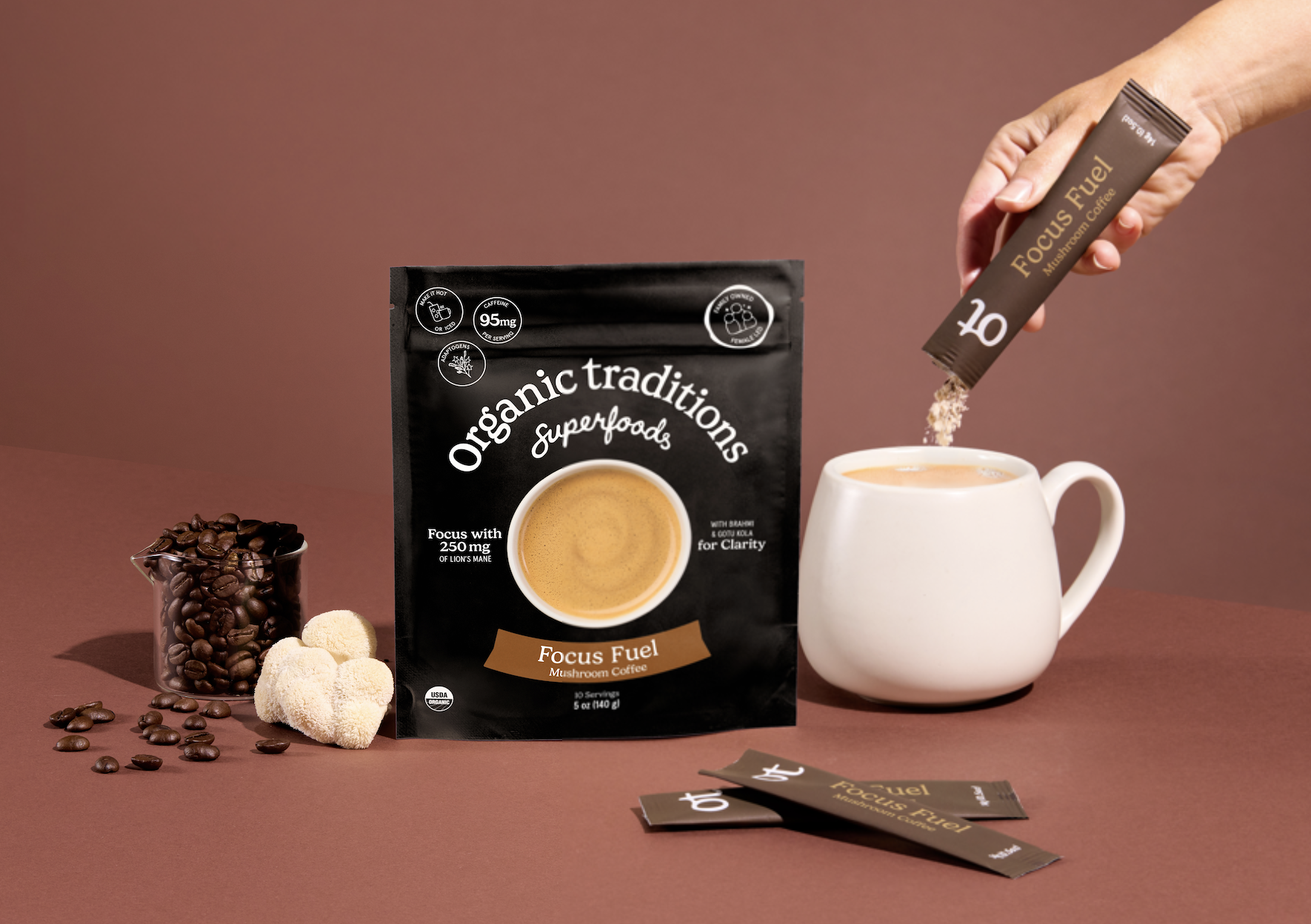
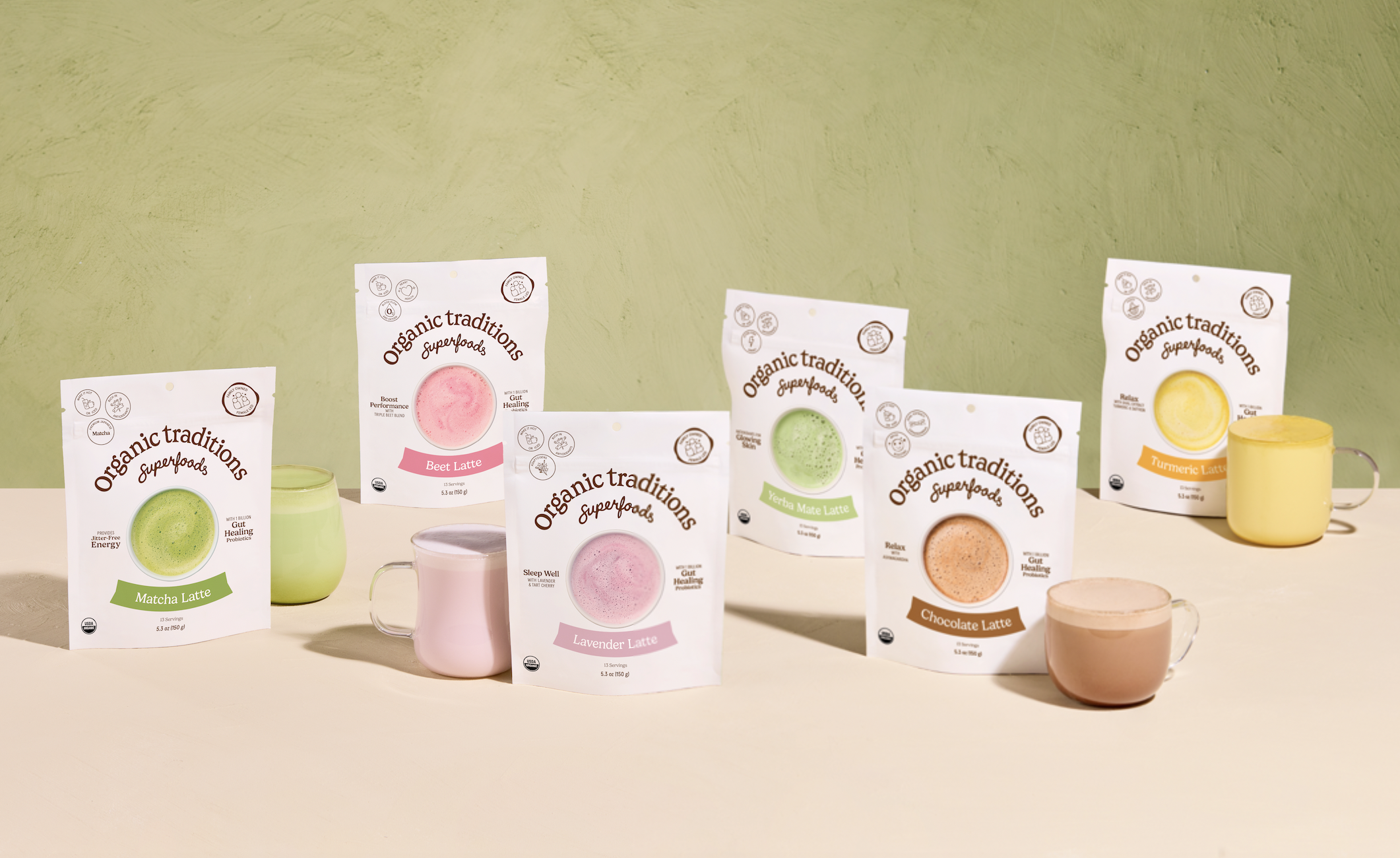
Over the past eight years, Mamalider has steered the company through a shift from single-ingredient pantry staples to functional beverages and ready-to-use blends, such as Superfood Lattes and Mushroom Coffees. These innovations were designed to simplify superfood consumption while maintaining authenticity and quality.
“People don’t want 20 different products in their pantry,” she explained. “They want something simple and elevated, a product that helps them feel good without needing a nutrition degree to use it.”
The Organic Traditions Rebrand
This fall, Organic Traditions unveiled its most ambitious transformation to date — a complete visual and strategic rebrand developed in collaboration with Toronto-based creative agency Design of Brand. Known for its work with Greenhouse Juice Co., Nutbar, and Othership, the agency was tasked with modernizing the brand while preserving its heritage.
“We didn’t want to lose the soul of Organic Traditions,” said Mamalider. “It was about keeping our story intact but presenting it in a way that resonates with a new generation of wellness consumers.”
The rebrand also included strategic guidance from retail reinvention expert Joe Jackman, founder of Jackman Reinvents, whose previous work includes transformations for Canadian Tire, Shoppers Drug Mart, and Walgreens. Together, the team conducted deep consumer research, identifying that while interest in superfoods was at an all-time high, many consumers still felt overwhelmed and confused by the category.
“People want to get into this space, but they don’t know where to start,” Mamalider said. “That insight shaped everything, from our packaging to our messaging. We wanted to make wellness accessible and empowering, not intimidating.”
The result is a bold, simplified design system that communicates key product benefits clearly and intuitively. New packaging is already rolling out nationwide across retailers and e-commerce platforms, accompanied by a refreshed website and digital presence.
Image: Organic Traditions
A National Rollout and Retail Partnerships
Organic Traditions’ rebrand is being brought to life through partnerships with major Canadian retailers, including Healthy Planet, one of its longest-standing retail partners. Together, they piloted a full shelf reset across select locations to debut the new brand identity in a cohesive retail environment.
“Healthy Planet has been an incredible partner,” said Mamalider. “They allowed us to fully implement our new look in-store so customers could experience the transition seamlessly.”
The brand also showcased its reimagined identity at the Canadian Health Food Association (CHFA) trade show, followed by a press and influencer event at Toronto’s Gatō Gastown Café, which was transformed into an immersive “superfood market” experience.
Digital Growth and Community Engagement
While Organic Traditions remains deeply rooted in retail, Mamalider is clear that the future will rely heavily on digital channels. The company’s three-pillar growth strategy centers on strengthening Canadian retail partnerships, expanding e-commerce, and innovating new product formats.
“We’re a retail-first brand, but digital is one of our biggest growth levers,” she explained. “We’re amplifying our online presence, building community through social media, and partnering with nutritionists, creators, and fitness enthusiasts who genuinely love our products.”
The company’s online platform and Amazon storefront are being optimized to reflect the new brand identity and simplify customer discovery. Organic Traditions has also embraced creator partnerships as part of its digital storytelling approach, connecting with consumers who value authenticity, transparency, and education around functional nutrition.
Expanding the Product Portfolio
Innovation remains central to the brand’s strategy. The company continues to develop new functional beverage formats that make superfoods easy to integrate into daily routines from on-the-go sachets to ready-to-mix blends that cater to the growing demand for convenience and wellness.
“Our goal is to make superfoods simple for everyone,” said Mamalider. “We’re exploring adjacent categories that align with that mission while ensuring we maintain the integrity and quality our customers expect.”
Each new formulation is backed by the same principles that have guided the company since its founding: certified organic, non-GMO, gluten-free, and vegan ingredients sourced through ethical and sustainable supply chains.
Building a Stronger Leadership Team
A crucial part of Organic Traditions’ evolution has been Mamalider’s focus on team building and leadership development. Over the past two years, she has assembled a management team with deep consumer packaged goods (CPG) experience, ensuring the company is positioned for long-term scalability.
“I’m incredibly proud of the team we’ve built,” she said. “We’ve brought in leaders who understand both the art and science of brand-building in this space. Their experience will continue to propel our growth.”
This professionalization of operations includes the implementation of a new ERP system, designed to support efficiency and transparency as the business expands internationally.
The Next 25 Years: Scaling Growth and Global Expansion
Looking ahead, Organic Traditions is preparing for the next chapter in its evolution. Expansion into the U.S. market is already underway, with products available in select retailers. The company plans to deepen its North American presence while maintaining a strong commitment to its Canadian base.
“We’re doubling down in Canada while growing in the U.S.,” Mamalider explained. “Our long-term strategy is about sustainable expansion — making sure we never lose sight of our purpose while reaching new audiences.”
As health and wellness continue to take centre stage in consumer consciousness, Organic Traditions stands poised to lead a new generation of functional nutrition brands that blend ancient wisdom with modern science.
“It’s really the perfect moment,” Mamalider reflected. “People are more aware, more curious, and more committed to wellness than ever before. We’ve been waiting for this wave, and we’re ready to meet it head-on.”
Retail Insider is streamlining its Canadian retail news from around the web to include a handful of top news stories that can be viewed quickly during the day. Here are the top stories from the past 24 hours.
One of the interesting debates that arises within mainstream media and kitchen table discussions alike is which party – grocers or global consumer packaged goods companies (CPG) – make more money? There is a lot of finger pointing when the cost of food and packaged goods increases as to whom is to blame and why.
In Canada, we are in a period of rising food inflation, not to the extent we felt during the pandemic but noticeable none the less.
Bruce Winder
There are a number of factors that have put upward pressure on grocery prices of late: tariffs, geopolitical events, weather changes & crop yields, labour costs, transportation costs & the need to expand profit margins.
I thought I would explore the last part of these factors: expanding profit margins. Which partner in the industry makes more money? Has it changed recently?
Methodology
I reviewed 3 years worth of income statements (2022, 2023 & 2024) from several global CPG companies and recorded the gross margin %, operating margin % and net income % to see how profitable they are and did the same for the 3 big Canadian grocers. I also looked at trends to see what was happening over the 3 years.
I reviewed the financials of the following CPG companies: Proctor & Gamble (P&G), Unilever, General Mills, Coca-Cola, Nestlé, Pepsi Co & Mondelēz. Some heavy hitters. I then did the same for Canada’s 3 largest grocers: Loblaw, Empire & Metro.
Findings
If I look at the 3 year simple average for the 7 CPG firms, they had a gross margin rate of 46.1 % while the 3 grocers had a gross margin rate of 25.8%. As a reminder, gross margin is the initial profit that a company makes calculated as net sales minus cost of goods sold. Clearly, the CPG companies are significantly more profitable than the grocers are within this metric.
Now, lets look at operating margin. The 3 year average of the 7 CPG companies was 17.6 %. The 3 grocers posted a 6.6% operating margin, about 38% of the packaged goods firms. Operating margin is the profit a company makes when subtracting selling, general & administrative costs from gross margin and is sometimes called EBITDA or earnings before interest, taxes, depreciation & amortization.
Finally, we work our way down to net income margin %. The 3 year average of the 7 CPG companies was 14.2%, while the 3 grocers delivered a 3 year average of 3.5% – about 25% of the margin rate of the CPG firms. Net income margin is operating margin minus interest, taxes, depreciation & amortization.
It is the true profit a company makes when subtracting all expenses from net sales. This means that for every $ 100 that each party sells, CPG firms make $ 14.2 dollars in profit while grocers make $ 3.5 dollars in profit.
Trends
Now, let’s look at trending across the 3 years. That is, have these metrics increased, stayed the same or decreased over time?
When we look at the 7 CPG firms, their average gross margin rate increased by + 280 bps. That means that what they charge grocers (or consumers if selling directly) has increased significantly more than what their costs of product is. The grocers average gross margin rate increased also but only by + 50 bps.
Operating margin was up + 20 bps for CPG firms & up + 10 bps for grocers. Net income % was up + 20 bps for CPG firms and roughly flat for grocers.
Key Takeaways
When looking at the 3 metrics together, one can conclude that the 7 CPG companies make a lot more profit, as a % than the 3 grocers. Full stop.
The gross margin rate from the 7 CPG companies has significantly expanded over the 3 year period. Much greater than the nominal growth of the 3 grocers.
Implications
Because grocers are often the last point of contact in the food and packaged goods value chain, they get the blame more often than not. I remember during the pandemic when inflation was running hot Canada’s big 3 grocers got some significant flack from consumers and governments alike.
Using an ice hockey analogy, grocers are the goalies and CPG companies are the forwards and defense. When a goal is scored against the team, everyone looks at the goaltender. The forwards may not have back checked and the defense may have been flat footed but it doesn’t matter – yell at the goalie!
I think the simple analysis presented above shines a light on where the true profitability in this sector lies and which party could be using price increases as a means to enhance margins. Maybe we shouldn’t blame the goalie after all?
Dollarama at The Tenor in Toronto (Image: Dustin Fuhs)
Retail took a front seat in this year’s Kantar BrandZ Canadian ranking, helping lift total brand value across the Top 40 by 10 percent to US$211.8 billion. The result marks a post-pandemic high and outpaces Canada’s GDP growth in the first half of 2025, underscoring the resilience of brands that meet shoppers where they are on price, convenience and experience. Kantar’s consumer research adds further context, noting that 56 percent of Canadians plan to buy more local products and services, a measurable tailwind for banners headquartered in Canada.
Speaking with Retail Insider, Scott Megginson, President of Kantar Canada, framed the performance against decades of BrandZ learning. “Powerful brands always outperform the stock markets. Strong brands do not fall as far in a downturn, and they bounce back faster,” he said. “We saw it in SARS, the financial crisis and COVID, and we are seeing it again in 2025.” His point lands squarely in Canadian retail, where value grocers and discount chains have outpaced the market in a year when shoppers have been stretching dollars across the basket.
Scott Megginson
Value retailers set the tone
Kantar highlights retail’s contribution at 11 percent of total Top 40 value, or US$24.1 billion, and notes that none of the 11 retail brands in the ranking lost value even as national retail sales slipped about 1 percent in 2025. Anxiety around the cost of living remains elevated, with 29 percent of Canadians reporting high or severe economic stress, which has sharpened demand for banners that combine price credibility with a consistent in-store and digital experience.
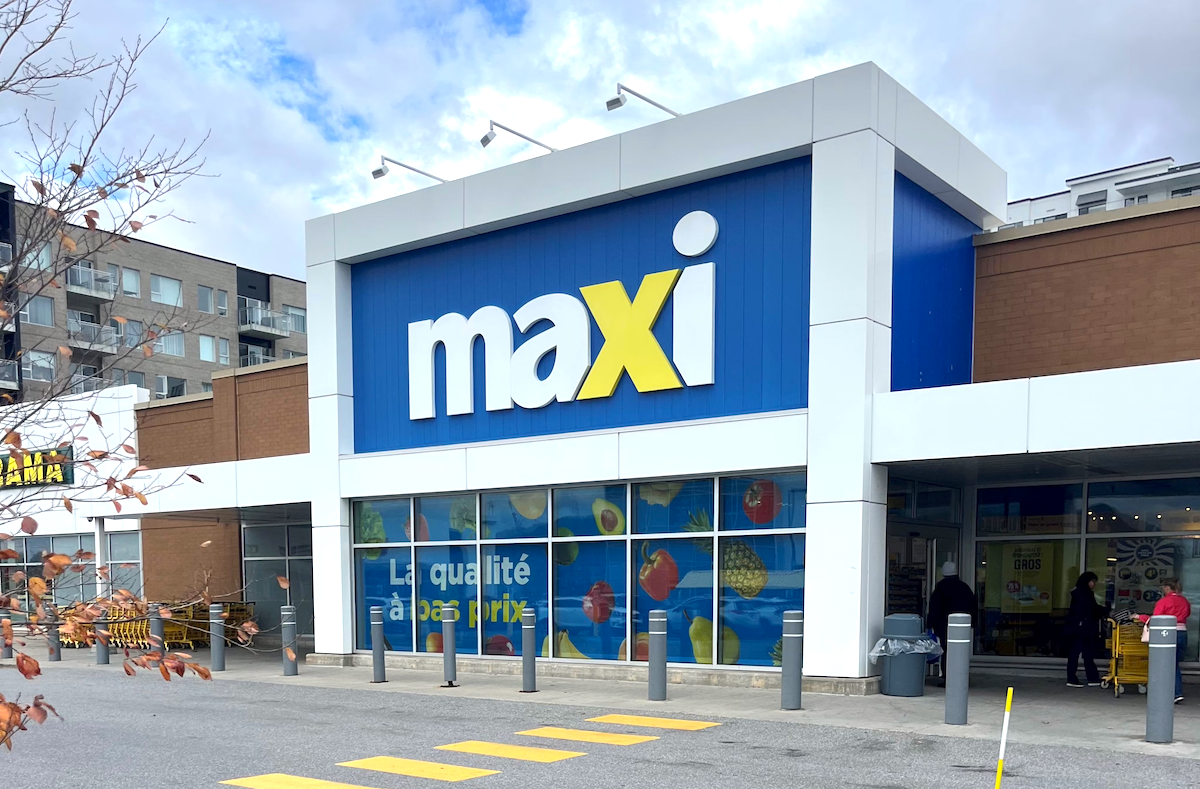
The year’s retail standouts illustrate the point. Dollarama advanced 42 percent in brand value to US$7.4 billion, placing ninth overall. Maxi rose 46 percent, buoyed in part by its expansion outside Quebec into New Brunswick. No Frills climbed 35 percent, supported by a growing footprint and an expanded fresh range to meet weekly-shop needs.
“Maxi grew its brand value by 46 percent. Dollarama has been on a tear since we began the Canadian ranking in 2019, consistently meeting consumer needs and being top-of-mind,” Megginson said. “No Frills posted 35 percent growth. The value retailers are really differentiating in Canada by delivering what shoppers need at the right price.”
Kantar’s data quantifies the dynamic. Brands perceived as offering low prices grew by an average of 22 percent, while those seen as expensive declined by 7 percent. That pricing perception was most visible in grocery, where price-led formats gained traction without abandoning experience. The report singles out No Frills for its continued focus on a clear, high-value proposition that resonates across regions.
Maxi store. Image: Loblaw
The “elbows up” effect that favours homegrown banners
Kantar’s consumer tracking this year found a pronounced buy-local tilt amid global policy shifts and tariff debates. Megginson said Canada ranked among the top markets for retaliatory sentiment, with two-thirds of consumers signaling an intention to support Canadian brands. “We coded the Canadian and U.S. brands in our dataset and compared them,” he explained. “Canadian brands grew in their brand equity, which we call demand power, while American brands overall were on a negative trajectory.” That shift helped underpin the strong performance of many domestic retailers.
There were exceptions. Megginson noted Costco as a non-Canadian banner with standout equity, boosted by a membership model, breadth of offer and a rising cohort of younger members. “It is meaningful, it meets needs, it is salient, and it differentiates in important ways,” he said, acknowledging the warehouse club’s role in shaping value expectations across grocery, general merchandise and discretionary categories.
Apparel holds its ground as Aritzia surges
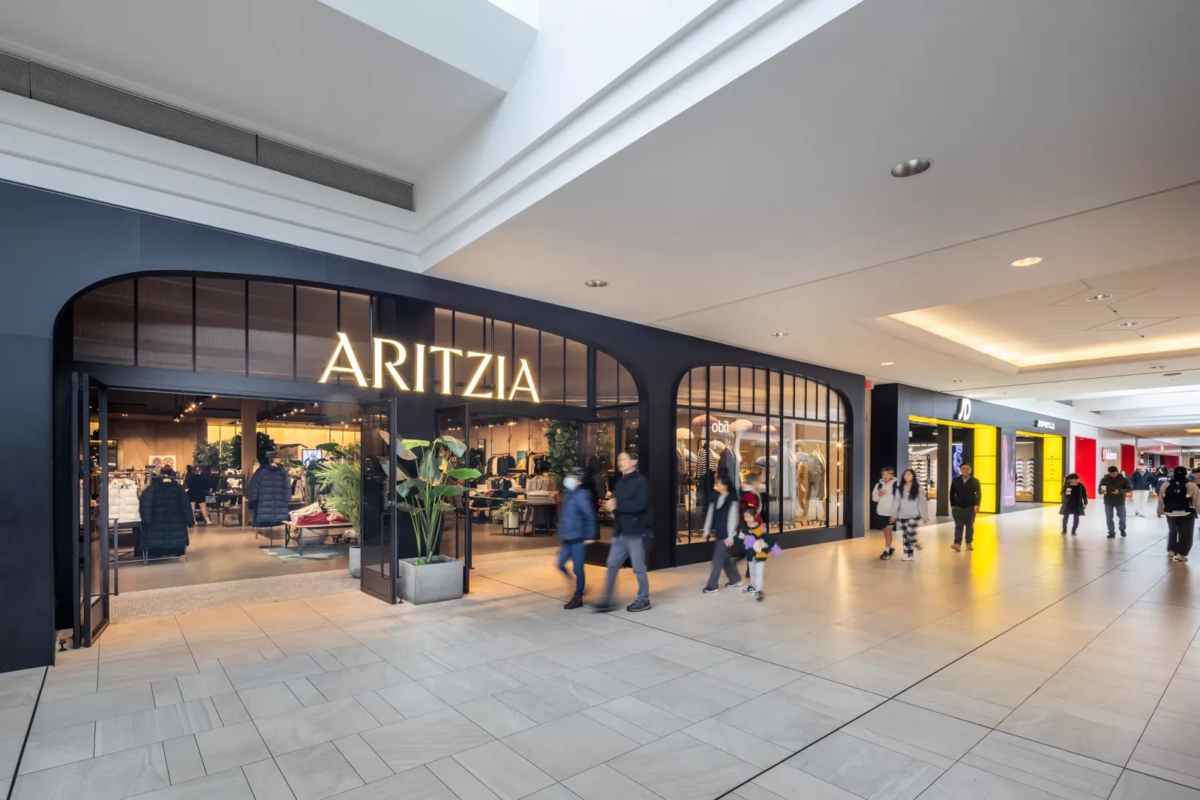
While grocery and discount dominated the retail story, apparel delivered a clear signal that distinctiveness still commands a premium. Aritzia was named the fastest riser in the entire ranking, up 55 percent in brand value to US$2.1 billion, driven by U.S. expansion, ecommerce and a strategy centered on everyday luxury that broadened its appeal beyond boutique roots.
“Not all growth is about low price,” Megginson said. “There are brands like Aritzia that deliver distinct value, and consumers will pay a premium for that when the brand is meaningful and different.”
Lululemon remains Canada’s third most valuable brand at US$15.8 billion, reflecting how far the company’s global expansion and category leadership have carried the brand, even through a tougher trading year.
Together, Aritzia and Lululemon illustrate BrandZ’s framework of Meaningful Difference, which links relevance and distinctiveness to long-term value creation. Kantar reports that brands increasing their Meaningful Difference grew at double the rate of those that declined, a finding with obvious implications for fashion retailers navigating a cautious consumer.
Canadian-developed off-price banners continued to perform well too. Winners held the No. 23 position and grew 19 percent, while HomeSense moved up four places to No. 22 with 29 percent growth. Megginson attributed the momentum to the “treasure-hunt” experience, which keeps shoppers engaged and reinforces distinct brand cues that make the trip enjoyable and repeatable.
Aritzia and JD Sports at CF Richmond Centre. Image: Cadillac Fairview
Inside grocery’s strategy shift
The playbook that worked in 2025 combined sharper value with clearer brand promises. Megginson pointed to decisions across the market that favoured strong, well-positioned banners over experiments that risked confusing shoppers. He referenced a recently shelved pilot for Loblaw’s No Name retail concept that did not meet the full spectrum of needs, contrasting it with the steady growth of established value formats. “There is untapped territory for many Canadian retailers to build on their brand equity,” he said. “The brands that focus on both value and differentiation will lead the way.”
That observation cuts to the core of Kantar’s view of brand as an enterprise asset. “If value retailers really spent a little more time looking at their brand, they could create so much more value, be even stronger, and build more loyalty,” Megginson said. He emphasized that brand and customer experience must operate as a single system. “One plus one equals three when brand and customer experience come together.”
Pharmacy’s return and the sustainability spotlight
Beyond grocery and apparel, Jean Coutu re-entered the Top 40 at No. 40 with US$614 million in brand value. Kantar credits the pharmacy chain’s focus on convenience, personalized loyalty and a broadened product strategy aimed at category needs that go beyond prescriptions. The re-entry signals the ongoing importance of pharmacy in Canadian retail, where health, wellness and convenience intersect.
Kantar also named Bonterra the Most Sustainable Canadian Brand of 2025, citing sustainability embedded across product development, manufacturing, materials, packaging and partnerships with organizations such as Veritree and 4ocean.
While not a Top 40 entrant by value, Bonterra appears in Kantar’s “brands to watch,” alongside London Drugs and Polar Ice Vodka, as an example of how sustainability and local relevance can position brands for future gains.
Telecom’s recalibration, with lessons for retail
Telecom Providers represent the second-largest category by value at 16 percent or US$33.9 billion. Several incumbents faced headwinds, yet Vidéotron grew 11 percent, aided by infrastructure investment, integrated telecom and content offers, and a customer-centric approach. Kantar credits Freedom Mobile as a disruptive force that contributed to lower prices nationwide.
The telecom story mirrors retail’s: investment in infrastructure and customer experience, plus clear value delivery, tends to correlate with stronger brand equity and pricing power over time.
Financial services still anchor the ranking, but retail drives the narrative
Financial Services brands continue to dominate the Top 40’s total value at US$121.7 billion or 57 percent of the index. RBC remains No. 1 at US$46.7 billion after a 31 percent gain, with TD second at US$24.1 billion and CIBC up 33 percent to join the Top 10. The sector’s momentum reflects both financial performance and sustained investment in client experience and brand marketing.
“It is the only valuation study that does consumer surveys as well as a financial analysis,” Megginson said, underlining BrandZ’s method for connecting consumer preference to enterprise value. For retailers, the takeaway is that consistent brand investment pays off when the macro picture turns, because equity acts as a buffer and an accelerator.
Brand equity as a durable asset in Canadian retail
Megginson noted that brand value can persist beyond store closures when equity remains in the public imagination. He referenced the enduring resonance of the Hudson’s Bay name and the recent monetization of intellectual property, which underscores what credible brand assets can command. “There is latent equity that will probably hold for years to come,” he said. For retail operators, the lesson is practical. Whether the strategy is value or premium, equity built through clear assets, reliable experience and purposeful positioning gives retailers more degrees of freedom when conditions change.
Kantar’s ranking also reminds Canadian companies that there is headroom abroad. The Top 30 Canadian brands generate, on average, 31 percent of revenue from overseas markets, well below peers in France at 85 percent and Germany at 75 percent. Even so, Aritzia and Intact Insurance are pushing outward, showing that distinctive Canadian offers can scale beyond the home market.
Retailers considering cross-border growth face a familiar checklist: clarify the value story, translate the experience, reinforce distinctive codes, and keep the brand central to every capital decision.
The retail takeaway for 2025
Canadian retail’s message this year is crisp. Value banners are winning share with disciplined pricing and consistent experiences. Apparel brands with strong differentiation are still commanding premiums. Pharmacy is reasserting its role with loyalty and convenience. And across categories, Canadian banners enjoy a home-field edge supported by an “elbows up” preference to buy local. Within that landscape, the Kantar BrandZ Canadian brands story is not only one of financial value. It is about equity built patiently through clear promises and delivered daily at shelf, online and at checkout.
“Brands are a company’s most valuable asset,” Megginson said. “There is more value to create when retailers focus on brand and customer experience together.” The data backs him up. In 2025, as wallets tightened, retail brands that combined value with distinctiveness grew fastest. For Canadian retailers, the path into 2026 is to keep that balance, deepen brand cues that shoppers love, and build the kind of equity that holds up in any cycle.
Mastermind Toys in Montreal. Photo: Mastermind Toys
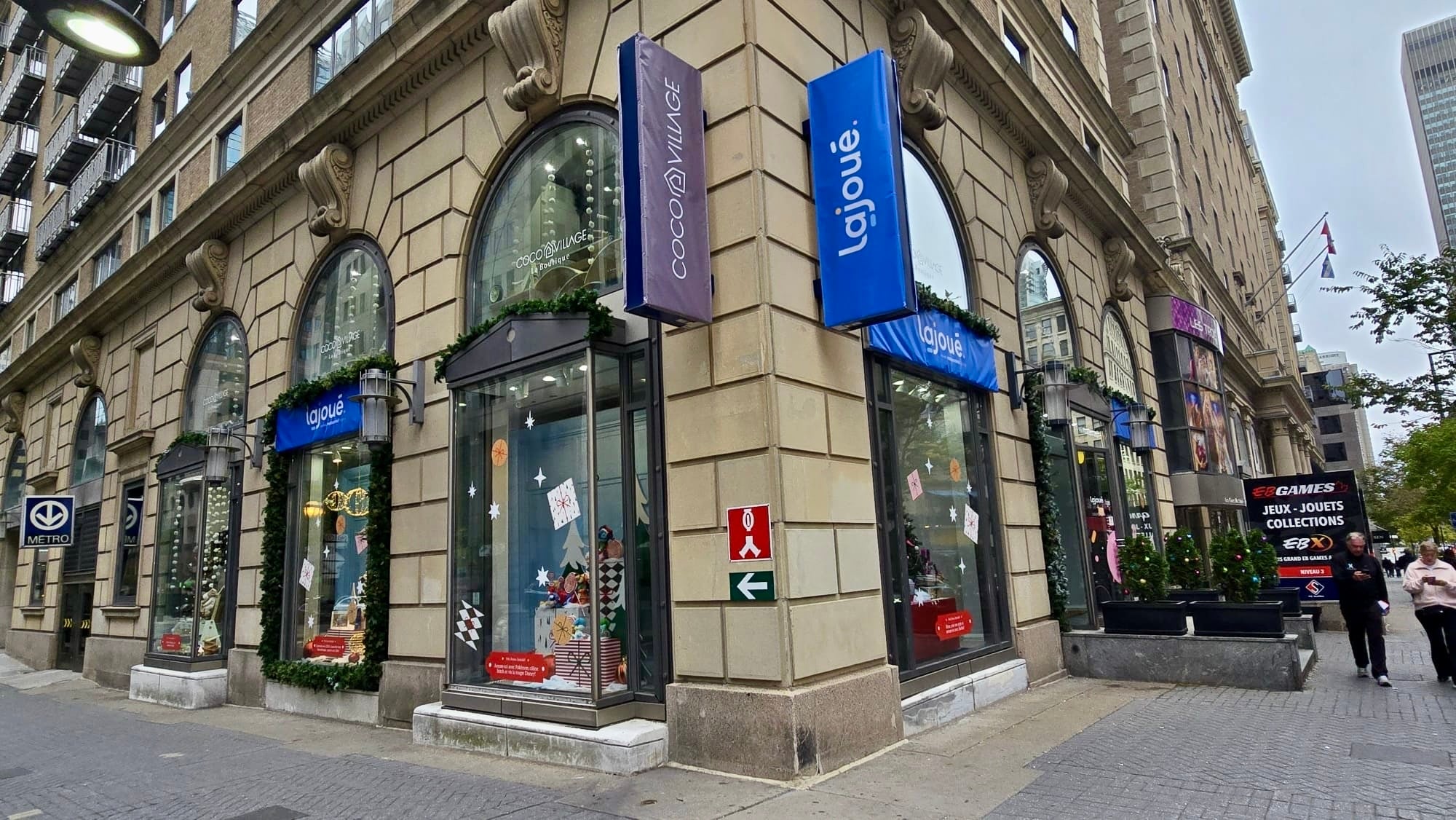
Mastermind Toys has officially entered the Quebec market with the opening of its first store in downtown Montreal, marking a major step in the company’s national expansion strategy. The 6,900-square-foot, two-level store, branded “Lajoué signé Mastermind Toys x Coco Village,” opened on October 18, 2025, inside Cours Mont-Royal, with prominent corner frontage at Peel Street and De Maisonneuve Boulevard. A Coco Village location will also open on October 23 at Promenades St-Bruno, as part of the company’s growing regional footprint.
The Quebec entry represents a milestone moment for the Toronto-based toy retailer, which now operates 48 stores across Canada. The Montreal flagship combines Mastermind’s legacy of educational and creative play with Coco Village’s high-end, Quebec-born children’s furniture and toy brand, acquired in 2024.
Marcello Piane
“This is a first for us,” said Marcello Piane, Vice President of Store Operations at Mastermind Toys, in an interview with Retail Insider during opening day. “We’re right in the heart of downtown Montreal, where we know there’s a lot of tourist traffic. People have been stopping by all morning, excited to see what Lajoué is all about.”
The retailer chose its downtown location strategically. “It’s got good street access, mall access, and it’s right near the metro, which makes it convenient for customers to come in and out,” Piane explained. The Peel Street flagship has both an exterior entrance and interior access through Cours Mont-Royal, which also houses Harry Rosen, EB Games and other premium retailers.
The store’s corner visibility and proximity to key city events, such as Montreal’s annual Santa Claus Parade, which passes near the location, add to its community presence. “We want to work with the mall to create experiences even outside the store,” said Piane. “It’s about engaging customers who are coming downtown or just passing by, giving them a reason to stop, play, and see who we are.”
Mastermind Toys in Montreal. Photo: Mastermind Toys
“Lajoué”: A Brand Tailored for Quebec
To establish its presence in Quebec, Mastermind Toys introduced a bilingual identity for its Quebec stores. The name “Lajoué,” derived from the French word “jouer,” meaning “to play,” serves as the localized brand banner, always accompanied by the tagline signé Mastermind Toys.
“La Joué means to play, to have fun,” said Piane. “We attached that name to our brand to make it relatable here. People in Montreal may not know what Mastermind is yet, so Lajoué helps them connect with what the store offers.”
The branding reflects both a legal and cultural adaptation to the Quebec retail landscape. “Nobody here would know what Mastermind is and what it’s all about,” Piane added. “This way, people can connect the dots around the type of store we have and the products we carry.”
Coco Village at Mastermind Toys in downtown Montreal. Photo: Mastermind Toys
Inside Montreal’s New Toy Flagship
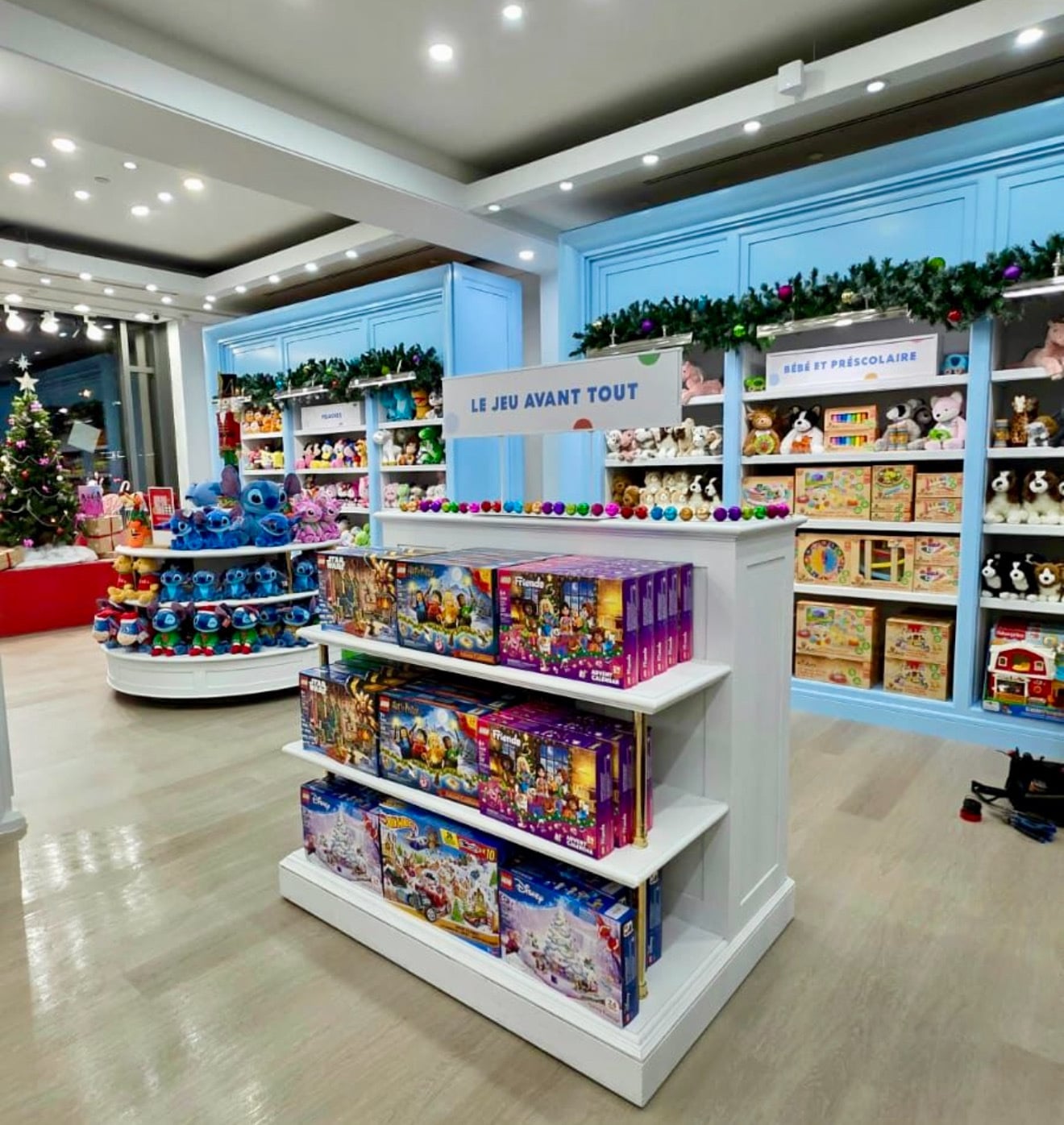
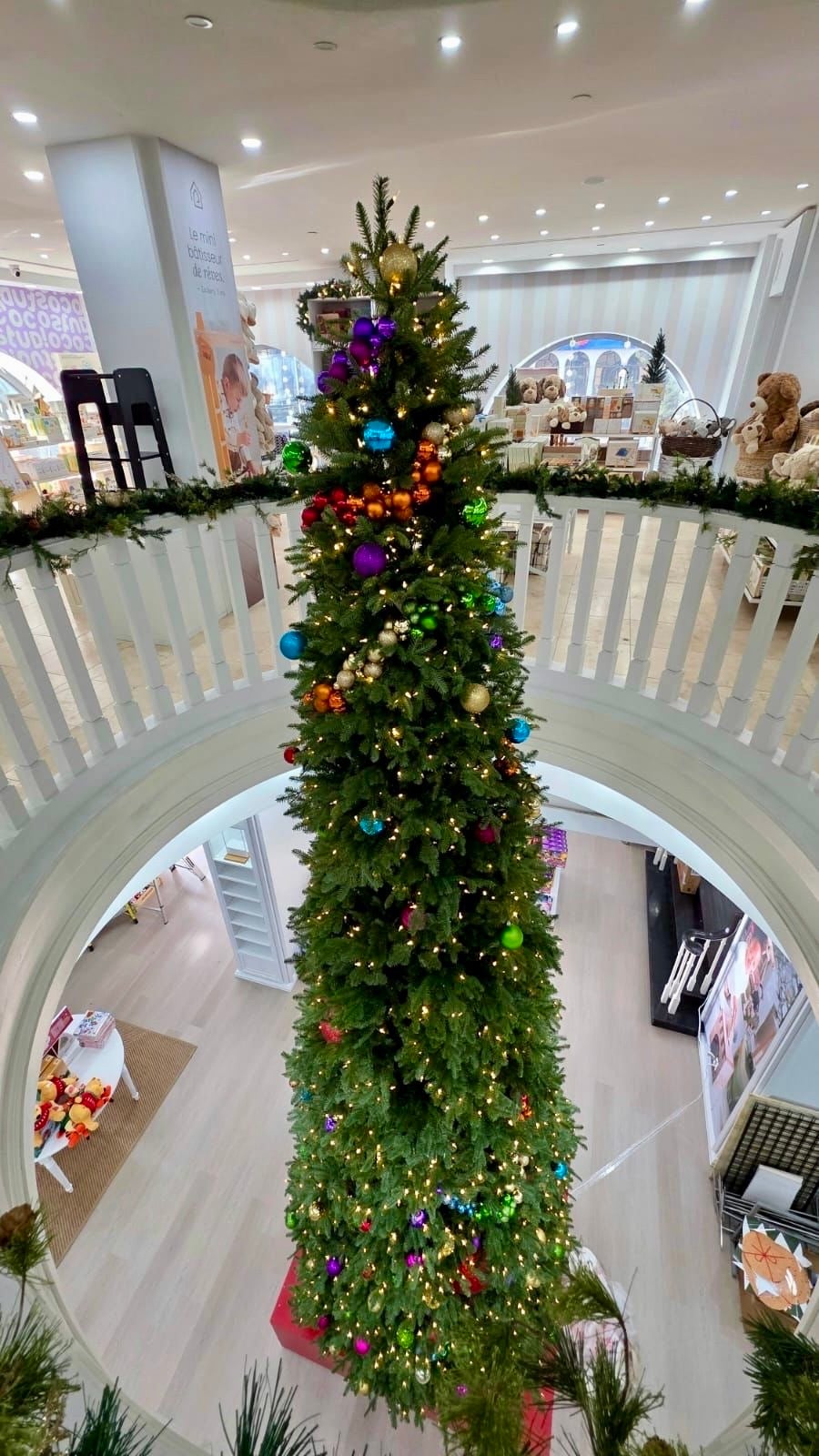
The downtown Montreal store spans 4,400 square feet on the lower level and 2,500 square feet upstairs, featuring distinct merchandising zones for different age groups and product categories.
The main floor offers trending and collectible items such as LEGO, Pokémon trading cards, and Jellycat plush toys, alongside puzzles, crafts, and novelty candy. “We have items for everyone, from infants to preschoolers, to teens, and even adult collectors,” said Piane. “We see a lot of customers coming in looking for things they grew up with, like Superman, Batman, and DC collectibles, and we make sure to have something for them too.”
Mastermind Toys in Montreal. Photo: Mastermind Toys
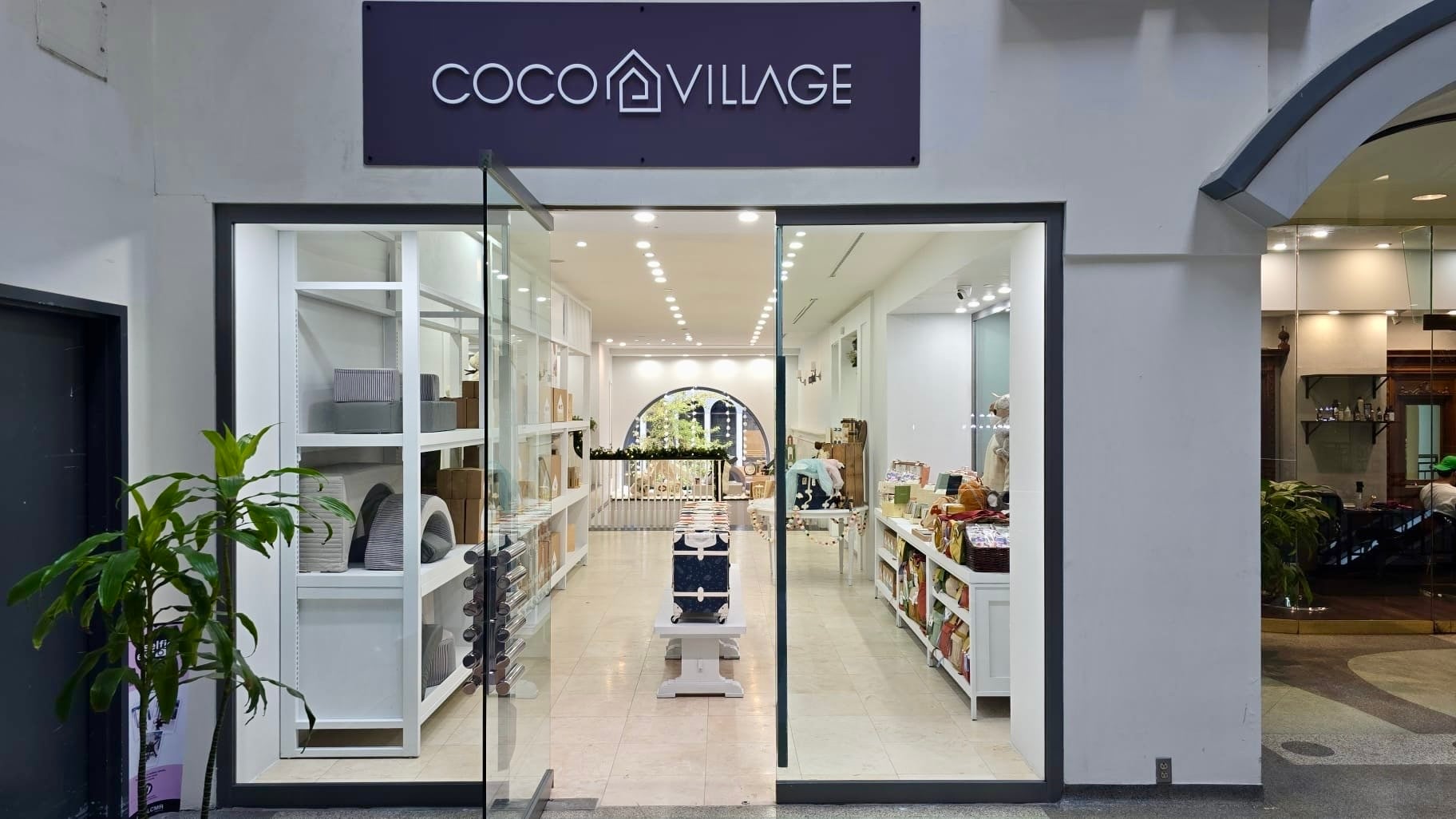
Upstairs, the store integrates Coco Village, the Quebec-born brand now part of Mastermind’s portfolio. The product line features sustainably designed wooden toys, balance bikes, and educational play furniture that blend seamlessly into home interiors. “Coco Village is high-end and unique,” Piane said. “You can only get it in our stores or online through us. It’s something very desirable for parents who want toys that are both functional and beautiful.”
The integration of Coco Village reinforces Mastermind’s identity as a purveyor of “play with purpose.” Piane described the concept as “fun meets learning,” where every item offers developmental value alongside entertainment.
A Playful Customer Experience
Mastermind Toys’ Quebec expansion emphasizes experiential retailing and personal service. Each store employs trained “Play Experts” who guide customers through product selections and educational recommendations. “We train our team to understand who you’re shopping for, what the age is, and what kind of play experience would be meaningful,” Piane explained.
The company also continues its signature free gift-wrapping service, a feature beloved by families. “When somebody goes to an event with a gift wrapped by Mastermind or La Joué, it feels special. It shows thoughtfulness,” said Piane.
As part of its omnichannel strategy, the Montreal store will support buy-online, pick-up-in-store options, allowing customers to shop digitally while still enjoying an in-person experience. “You can browse our website, add items to your cart, and pick them up within hours,” Piane said.
Rapid Buildout and Upcoming St-Bruno Opening
Remarkably, Mastermind Toys completed the Montreal store’s construction in just 18 days. “We took possession 18 days ago and quickly turned it around—new floors, paint, lighting, and a full assortment,” Piane noted. “It’s been incredible to see what the team accomplished in such a short time.”
A Coco Village store is also set to open on October 23 at Promenades St-Bruno, southeast of Montreal. Both locations will hold grand opening celebrations on November 1, coinciding with the rollout of Mastermind’s new holiday pop-up boutiques at Holt Renfrew.
Holt Renfrew Pop-Up Boutiques
Starting November 1, Mastermind Toys will debut five in-store pop-ups inside Holt Renfrew locations across Canada — two in Toronto (Bloor Street and Square One), one in Montreal, one in Calgary, and one in Vancouver.
“We’ll be like a store within a store,” said Piane. “It’s a great opportunity to work with Holt Renfrew and reach new customers during the holiday season. Each location will have a unique assortment designed for that market.”
These pop-ups will run through late December, extending Mastermind’s reach into luxury department store environments. The collaboration underscores a growing crossover between premium retail and experiential toy merchandising in Canada.
Mastermind Toys in Montreal. Photo: Mastermind Toys
A New Chapter for Mastermind Toys
Mastermind’s Quebec debut builds on a broader transformation under new ownership. The company was acquired in early 2024 by Unity Acquisitions Inc., led by Joe Mimran, Frank Rocchetti, and David Lui, after entering creditor protection the previous year. The acquisition preserved 48 stores and over 85% of staff, providing a foundation for the company’s revitalization.
In May 2025, John Bayliss was appointed CEO to lead Mastermind’s renewal. A former Walmart Canada executive, Bayliss has positioned the company’s turnaround around innovation, design, and community engagement.
Recent initiatives include the Newly Renovated Mastermind store launched in August at the Shops at Pickering City Centre, featuring sensory discovery tables, improved sightlines, and modernized branding and a curated assortment. “Pickering was a chance to refresh the look and feel,” said Piane. “We introduced glass façades, lower sightlines, and better lighting so you can see right through the store.
The company has also renovated multiple stores across Ontario, including Etobicoke, Bayview Village, Richmond Hill, and Yonge Street, with plans to update its Beaches location in Toronto in early 2026.
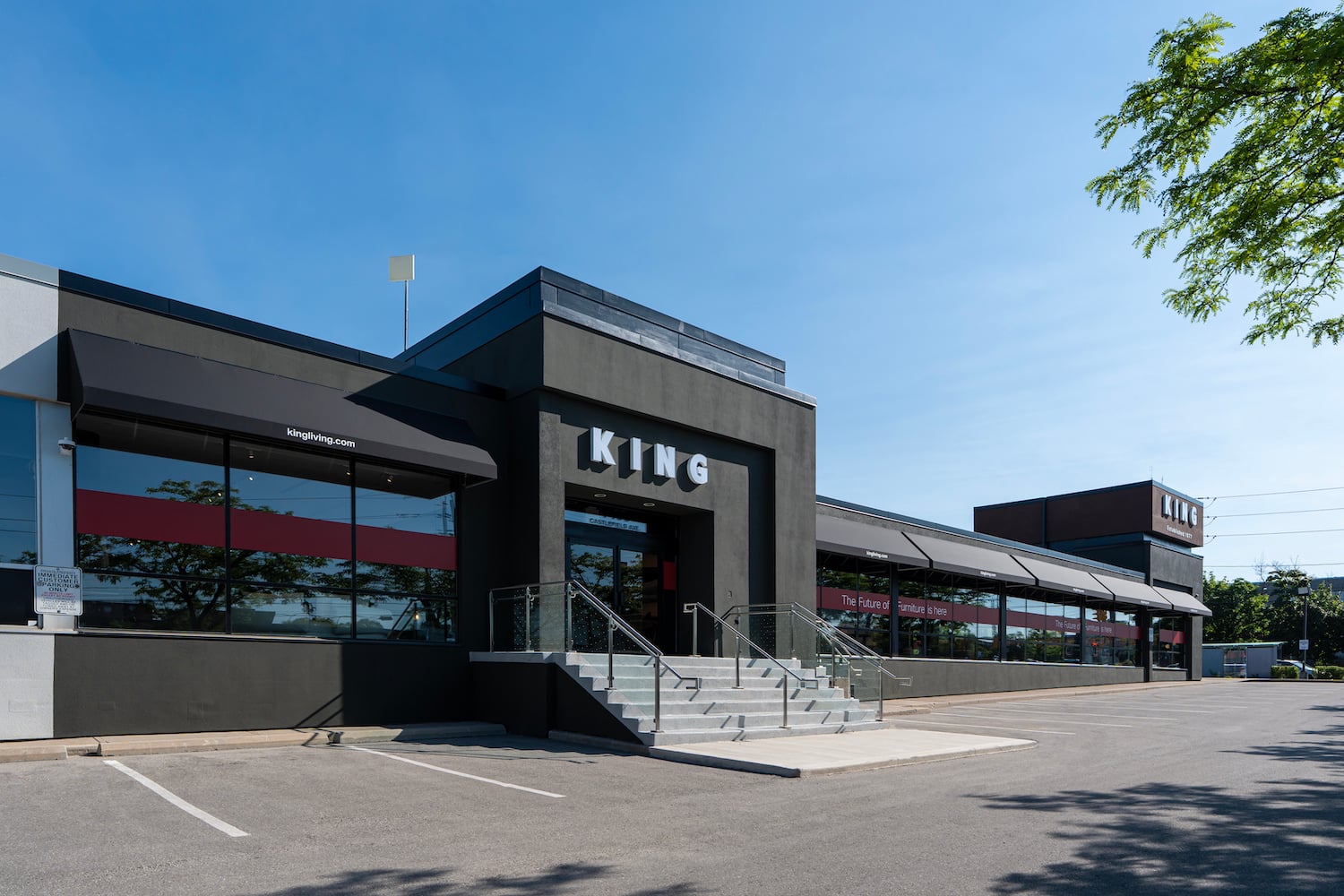
King Living showroom in Toronto. Photo: King Living
Australian luxury furniture brand King Living has opened its first showroom in Toronto at 1400 Castlefield Avenue, adding a prominent international name to the Castlefield Design District’s growing roster of high-end home and interior retailers. The 12,000-square-foot space is conceived as a destination for design-minded shoppers, interior designers, and renovators, bringing the brand’s modern sofas, modular furniture systems, lighting, and accessories to Canada’s largest market. With a focus on in-person consultations and product customization, the store positions itself as both an inspiration gallery and a working studio where clients can plan entire rooms around the brand’s Australian-designed collections.
The opening marks the next chapter in King Living’s Canadian expansion. The brand entered the country in 2019 with a two-level store on Granville Street in Vancouver, followed by a 2024 opening at Southcentre Mall in Calgary. Toronto, which opened in mid-2025, extends the brand’s footprint across three of Canada’s most design-aware cities. For Ontario, the Castlefield address becomes the only retail location operated by King Living in the province as of 2025, aligning the company with a cluster of suppliers, showrooms, and trades that attract architects, designers, and homeowners from across the Greater Toronto Area.
Ali Baker of Avison Young is the master broker across Canada and the US for King Living, and negotiated the Toronto lease deal.
King Living showroom in Toronto. Photo: King Living
Modular design, Australian attitude
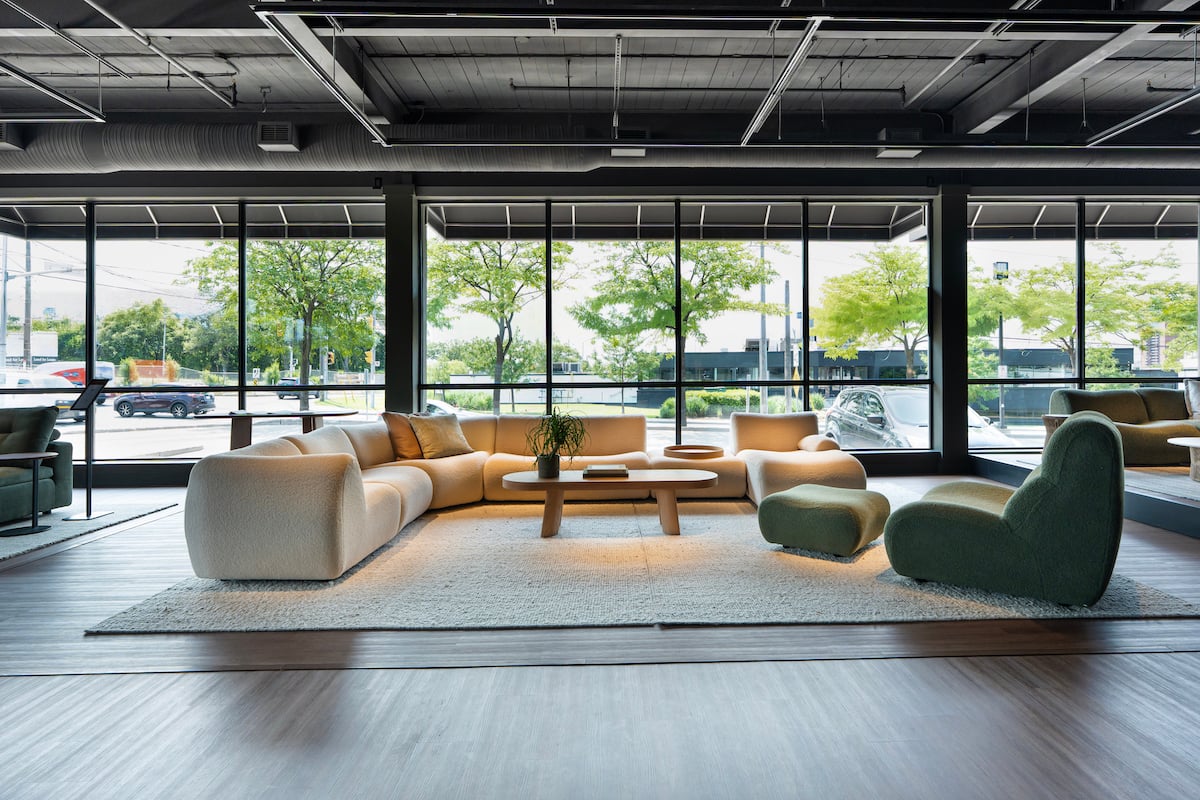
King Living is recognized for its modular design language and engineering-led approach, especially in sofas built on steel frames with removable covers and components that can be reconfigured over time. Collections such as the Aura Sofa embody the brand’s philosophy of long-life furniture that adapts to evolving spaces. The Toronto showroom presents these systems in generous vignettes that emphasize flexibility across living, dining, and bedroom, with an expanded selection of lighting and accessories that complete the home.
The brand’s service model features private consultations that begin with space planning and fabric selection, then extend to finish choices and accessory curation. In an area where many purchases are highly considered, the store functions as both a product library and a problem-solving studio. The result, especially for customers investing in premium furnishings, is a guided process that moves from inspiration to installation through a single touchpoint.
A gallery-like build, tailored to the brand
The Toronto store was delivered by BUILD IT, a construction firm specialized in high-end retail build-outs. The project transformed two former adjacent units into a single, corner-anchored retail presence with an entirely refreshed exterior and a sculpted interior designed to frame, rather than compete with, the product offering.
“What really sets this store apart are the custom details tailored specifically for the King Living brand,” said Reuben Barkin, VP of Operations at BUILD IT. “We designed integrated millwork and display units that feel more like sculptural extensions of the architecture than typical retail fixtures. The precision of the finishes, from flush reveals to hidden fasteners and seamless transitions, reflects the same craftsmanship as the furniture itself.”
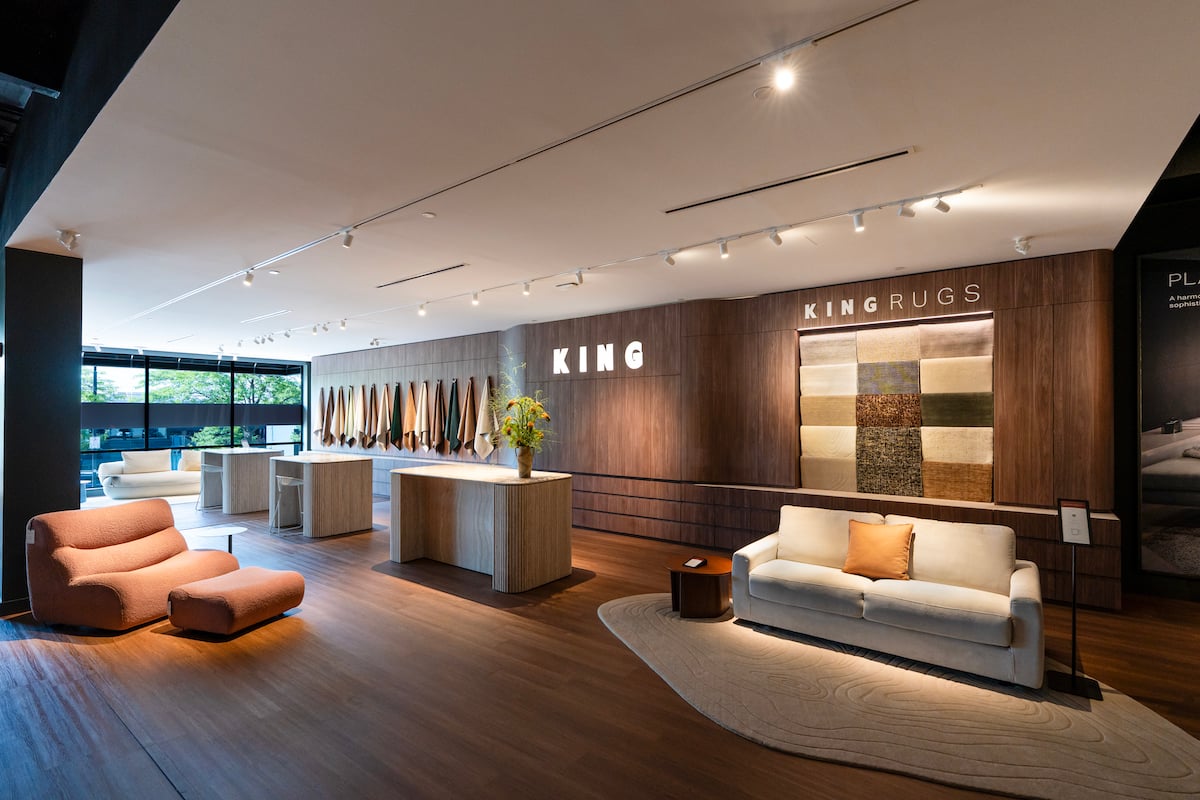
Inside, the build emphasizes clean geometry, streamlined transitions, and a restrained palette that keeps the furniture as the focal point. Surfaces in off-whites, warm greys, and charcoal establish a calm base, while selective dark tones and refined metallics create contrast. The approach resists ornamentation in favour of material honesty and fine detailing, a choice that supports King Living’s modernist ethos.
“We anchored the palette in neutrals so the furniture remains the hero,” Barkin explained. “Lighting was a key tool to dramatize clean forms and premium finishes. We used crisp, directional accent lighting to highlight key pieces and architectural elements, while ambient lighting preserves a calm, even base level.”
King Living showroom in Toronto. Photo: King Living
Lighting for consistency, day and night
One of the store’s defining characteristics is its controlled lighting environment. Rather than relying on the abundant daylight that many furniture galleries favour, the space uses a subdued interior lit with concealed strips and targeted accents. The result is a consistent viewing experience across day and night, with light directed to sculpt forms and textures in a way that remains true to the brand’s gallery-like presentation.
“The space is very dark and very subdued inside, and then there is careful spotlighting,” noted Barkin. “They wanted to control the lighting elements to create a consistent environment. That way the furniture reads the same, whether you visit during the day or in the evening.”
This decision is as much technical as it is aesthetic. By standardizing light levels and colour temperature, the team ensures fabrics, leathers, and finishes present accurately for customers making high-value decisions that often hinge on nuance.
The blade wall, engineered as sculpture
A recurring brand element across King Living showrooms is a vertical “blade” wall that serves both as a visual signature and as an architectural device to shape circulation and sightlines. In Toronto, the build introduces two sections of blades, each approximately 11.5 feet high and 16 feet wide. The components are engineered for consistency, using solid-core wood precisely shaped by a multi-axis CNC process, then veneered in oak and pressed with custom forms to achieve uniform curvature.
“The blade walls are a consistent feature in King Living showrooms,” said Barkin. “Each blade’s core is shaped for perfect uniformity, then veneered with oak and pressed to match the curve. They perform like sculpture, but they are also part of the store’s architecture.”
These elements do double duty. Visually, they create rhythm and depth. Functionally, they segment the large floorplate into distinct room settings without closing off space, preserving a sense of openness that suits the brand’s modular storytelling.
King Living showroom in Toronto. Photo: King Living
Exterior transformation and a bold corner identity
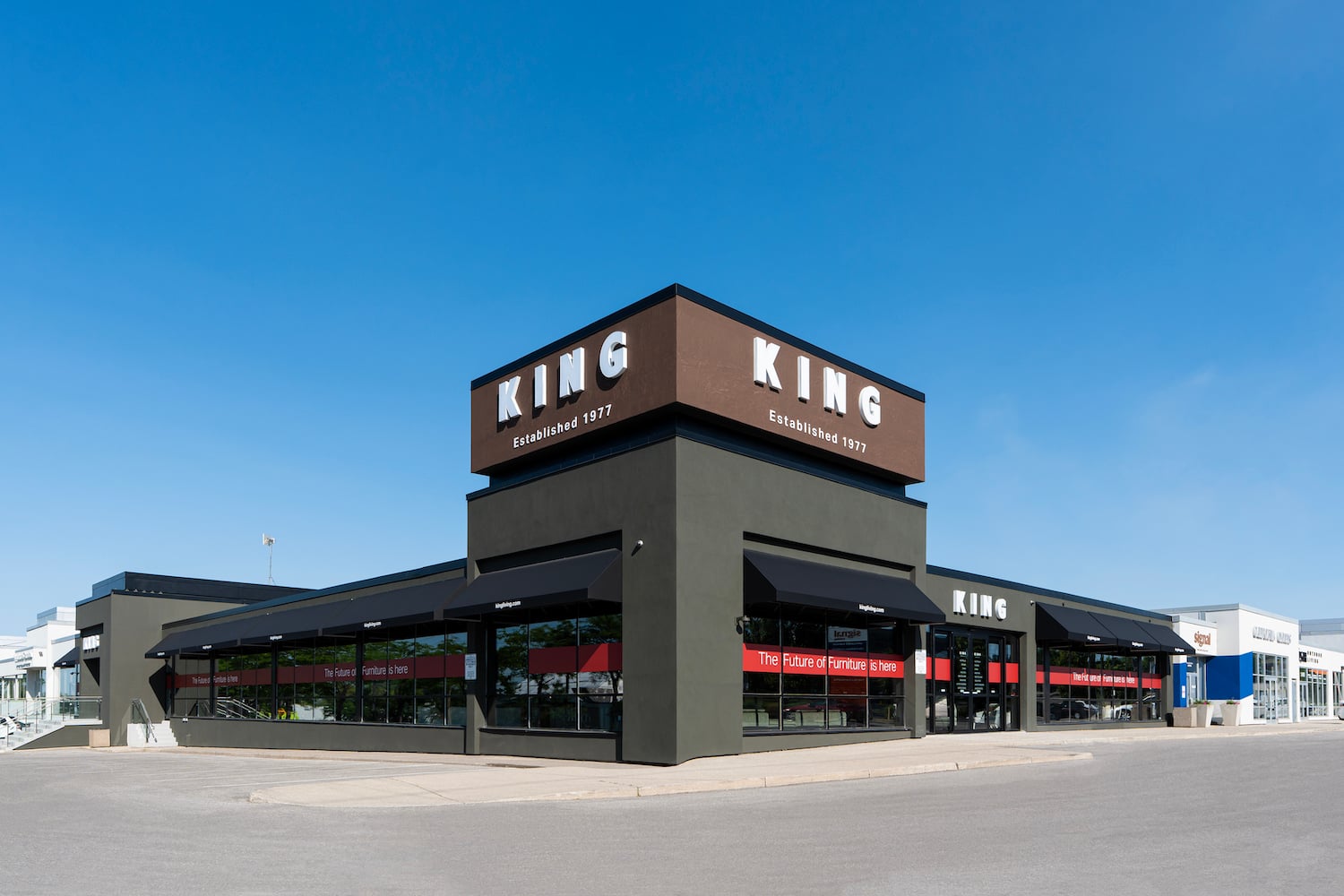
The most visible change to the property lies on the outside. A previously light-coloured stucco façade has been re-imagined with darker, more saturated cladding and strong signage that establishes the brand’s presence from the street and parking lot. The entrance was relocated to create a clearer arrival sequence, and a new signage tower anchors the corner with bold, simple branding that reads “KING” in large, luminous letters.
“The reface of the tired exterior breathed new life into this corner-anchored unit,” Barkin said. “Before you even step inside, the store creates a striking first impression. The branding starts right from the parking lot to pull you in.”
This exterior work required careful planning and sequencing, including surface preparation, cladding installation, and coordination of structural supports for awnings and signage. According to BUILD IT, the overhaul was the project’s most challenging component, made more complex by the need to remove prior branding while preserving the integrity of the base building.
Collaboration across time zones
King Living’s internal property team, led by Michael O’Connor, engaged Studio Presber Architecture + Design to lead the design. Principal Lara Presber, AAA, AIA, CPHD, WELL AP, provided the architectural direction and detailing. Although the design studio is based in Calgary and the client team operates from Australia, the project maintained strong momentum through weekly Owner-Architect-Contractor meetings and daily progress tracking.
“Communication flowed even with teams in Calgary and Australia,” Barkin said. “Through the technology we use, it felt like they were boots on the ground every day. It was a very smooth project.”
BUILD IT first became involved in May 2024 after a referral through the brand’s real estate broker, who required a full as-built survey to support space planning and permitting. Six months later, with construction documents finalized, BUILD IT won the competitive bid and began work on demolition, re-demising, interior partitions, custom millwork, decorative lighting, and the façade refresh. The total schedule ran roughly four months, with key exterior sequences timed to avoid winter conditions and align with the brand’s opening plan.
King Living showroom in Toronto. Photo: King Living
A space that lets the product breathe
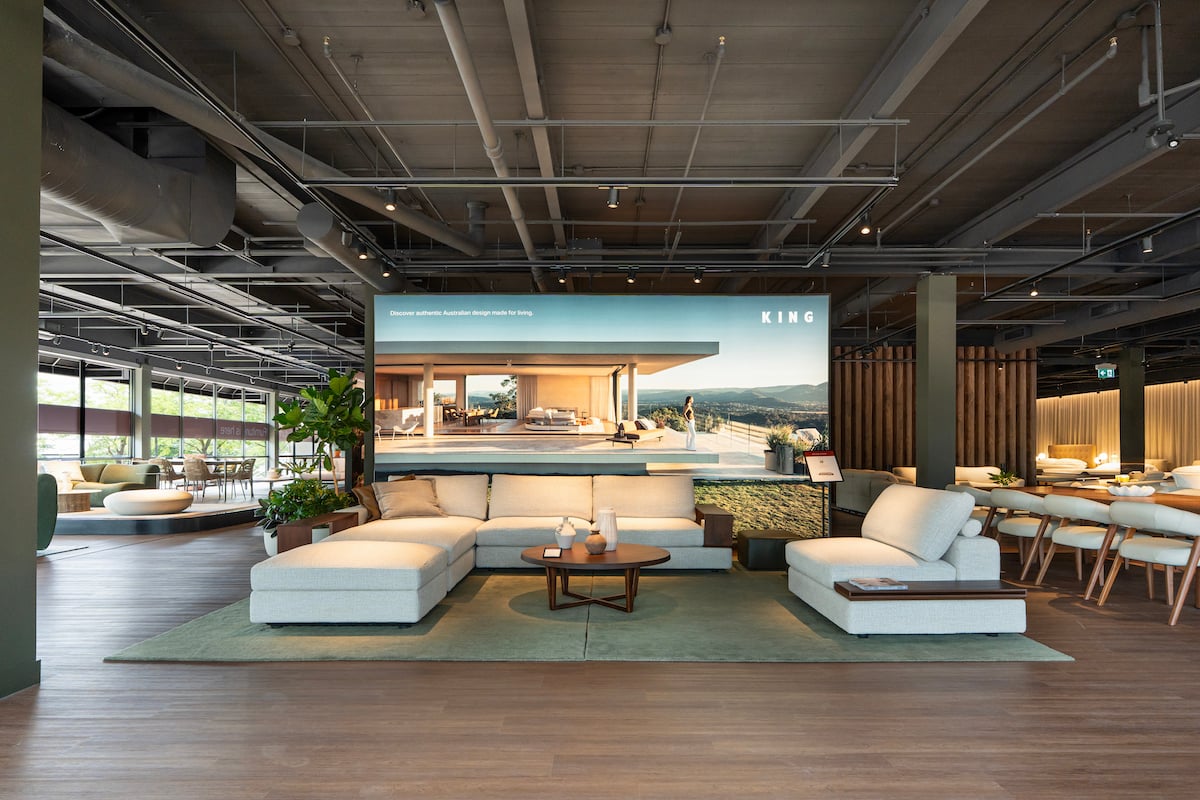
The interior layout privileges circulation and negative space. Furniture groupings are framed across long sightlines, allowing customers to understand the proportions and possibilities of each modular system. This spacing strategy serves both function and brand: it slows the pace of the visit, encourages conversation, and invites clients to imagine how components can evolve with their homes.
“King Living’s pieces tend to have breathing room around them,” Barkin said. “In the layout, we allowed generous aisles and sightlines, letting each piece command its own space. The store reads like a gallery, and the furniture is the hero.”
To support the display strategy, the construction relies on tight tolerances and fine joinery. Seams, reveals, and fasteners disappear into the background. The effect is understated and exacting, which complements the sculptural lines of the product.