Advertisement
Advertisement
Home Blog Page 245

Canada’s income gap hits record high as low-income wages decline: Statistics Canada

Photo: Tima Miroshnichenko

The income gap reached a record high in the first quarter of 2025; the highest income households gained from investments, while the lowest income households’ wages declined. Lower borrowing costs and easing inflationary pressures facilitated household saving and debt management, while declining real estate values weighed on the average wealth of younger age groups and the least wealthy, reported Statistics Canada.

“The income gap is defined as the difference in the share of disposable income between households in the top 40% of the income distribution and the bottom 40%. This gap reached a record high of 49.0 percentage points in the first quarter of 2025. The income gap increased each year following the onset of the COVID-19 pandemic. A low of 43.8 percentage points was recorded in the first quarter of 2021,” said the federal agency.

“Households’ ability to maintain their economic well-being varies with macroeconomic conditions. In contrast with prevailing high interest rates in 2023, the Bank of Canada reduced its policy rate from 5.0% in April 2024 to 2.75% in March 2025 in response to easing inflationary pressures. Along with declining interest rates, household interest payments decreased for the first time since 2022, declining by 4.8% in the first quarter of 2025 relative to the first quarter of 2024.

“While declining interest rates can lead to easing borrowing costs for households, they can also lead to lower yields on interest-bearing investments, such as savings and deposit accounts. Lower income households are more likely to benefit from declining interest rates, as they tend to be more indebted relative to higher income households. However, they also tend to have less diversified investment portfolios that focus on interest-bearing instruments rather than other forms of investments, such as equities.”

Lower income households also tend to be more susceptible to job loss during economic downturns. Amidst economic uncertainty, labour market conditions have recently weakened. Data from the Labour Force Survey show that the employment rate—the proportion of the population aged 15 years and older who are employed—has been on a declining trend since early 2023, explained Statistics Canada.

“The lowest income households (bottom 20% of the income distribution) had the weakest growth in disposable income in the first quarter of 2025 relative to one year earlier (+3.2%). This is because they were the only group that had declining average wages (-$17; -0.7%), due mainly to reduced hours of work. Labour market conditions were notably weak for people working in mining and manufacturing,” it said.

“The lowest income households also had the largest reduction in net investment income, as a decline in investment earnings (-$399; -35.3%) more than offset lower interest payments (-$107; -7.1%).”

Related Retail Insider stories:

New hospitality group Gaia House launched in Vancouver

Photo: Loula’s Taverna

Brothers Yianni and Petro Kerasiotis, the duo behind some of Vancouver’s most beloved neighbourhood restaurants, have unveiled their new hospitality group, Gaia House.

The brand brings together their family of establishments under one unified identity – from the newly opened Selene Aegean Bistro in Hastings-Sunrise, traditional Greek destination Nammos Estiatorio in Fraserhood, to contemporary Greek hotspot Loula’s Taverna on Commercial Drive, and Japanese-style speakeasy AMA

Named after the ancient Greek goddess of the Earth, Gaia is a symbol of creation, nourishment, and interconnectedness, said the company. 

Photo: AMA
Photo: AMA

“Our parents taught us what Greek hospitality, philoxenia, truly means. It’s about more than just good service; it’s about generosity, warmth, and making people feel like family,” said Yianni. “Now that we’ve opened several restaurants, we felt it was time to bring each concept together under one name. Gaia is our commitment to keep innovating in the industry while staying true to our roots.”

Yianni and Petro worked with award-winning Vancouver-based design firm, Glasfurd & Walker, to bring Gaia House to life.

Photo: Nammos Estiatorio

Creative director Phoebe Glasfurd explained the inspiration behind the brand: “Every concept under the Gaia name draws from rich, cultural roots while offering something unexpected and new. From the family-style spirit of Nammos to the refined Japanese storytelling of AMA, each Gaia brand carries its own identity, yet is united by a shared ethos: meaning, beauty, and a fresh perspective on tradition.

“The Gaia brand is represented by a unique word mark inspired by traditional Greek signage as a nod to their roots, accompanied by illustrations that capture the diverse and layered narratives of each culinary experience. Symbols from each venue are woven into a single, enchanted tapestry. Each element speaks to a story, a place, a feeling they have created.”

“Gaia House is the culmination of everything we stand for – it represents the next chapter for us, a foundation to grow from, while staying connected to where we come from,” added Petro. “It gives us the freedom to dream bigger and to keep building meaningful experiences for our guests, family, and friends. We already have exciting new projects coming up and can’t wait to share when the time comes.”

Related Retail Insider stories:

TriCity Pavilion set to open near Vancouver

Dope Bakehouse ready for solo debut in Vancouver

Photo: Selene Aegean Bistro

Coffee, cocktails and community: Ellipsis set to launch in Vancouver (Photos)

Photo: Ellipsis
Photo: Ellipsis

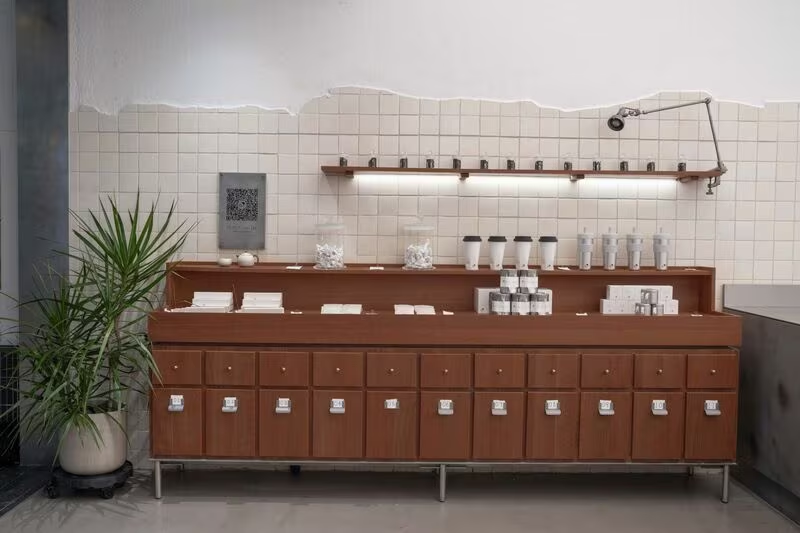
Vancouver is set to welcome a new coffee and cocktail concept promoting taking the time to pause, gather, and connect, opening later this summer.

Anchored in inspiring customers to stop, sit, and stay a while, Ellipsis is a dual bar combining coffee, cocktails, and community under one design masterpiece, says the brand. 

“Positioned inside one of the final works of late Canadian architect Arthur Erickson, the reimagined space sits within The Waterfall Building, designed in 1996 in collaboration with Nick Milkovich. The geometrically striking building was originally conceived as an art gallery, and is defined by its soaring triangular form, abundant natural light, and a tranquil courtyard with a waterfall. Featuring expansive concrete walls and a dramatic glass canopy, the unique design encourages natural light to flood the interior, resulting in a beautifully quiet but assertive spatial presence,” said Ellipsis. 

It is at 205-1540 W 2nd Ave.

Designed to be a retreat from the hustle, “Ellipsis” symbolizes the ebb and flow of time, endless possibilities and the undefined potential of each individual experience. 

“In a world that moves faster and faster, I wanted to create a space that invites us to slow down, to pause, to meet in the moment,” explained owner Ming Yang. “It’s a café, it’s a bar, but more than that, it’s a space for presence, connection and meaning.” 

Photo: Ellipsis
Photo: Ellipsis

Located on the outskirts of Granville Island, the 2,882 square foot, 47-seat space is the brainchild of Yang, a renowned café owner with years of hands-on knowledge in crafting intentional, community-rooted hospitality. While this venture celebrates a completely new offering, the level of care and service will remain the same, noted Ellipsis.

“The thoughtful redesign pays tribute to the original modernist architecture and was led by SML Studio Architecture, in collaboration with Tetherstone Construction, to capture Erikson’s vision. Brushed stainless steel surfaces, geometric millwork, and primary shapes (circles, triangles and rectangles) echo Erickson’s formal language, while reflective elements are balanced with natural materials such as wood and fabric to evoke warmth and comfort. Burnt orange upholstery and warm ambient lighting softens the structural tones, and mirrors at the base of the feature bars extend the sense of continuity and spatial openness,” it said.

Related Retail Insider stories:

Photo: Ellipsis
Photo: Ellipsis
Photo: Ellipsis
Photo: Ellipsis
Photo: Ellipsis
Photo: Ellipsis

Canadian Retail News From Around The Web For July 21, 2025

Canadian Retail News From Around The Web

News at a Glance

Retail Insider is streamlining its Canadian retail news from around the web to include a handful of top news stories that can be viewed quickly during the day. Here are the top stories from the past several days.

Inside the death of Hudson’s Bay: Why former senior employees believe leader Richard Baker should take the blame (Toronto Star)

‘Let’s not take her for granted’: Billionaire mall owner Weihong Liu welcomed by former Hudson’s Bay employees at Toronto job fair (Toronto Star)

B.C. billionaire hosts job fair in Toronto amid bid for Hudson’s Bay leases (CBC)

Loblaw: Produce prices drop 3.1% in June with shift to local products; counter tariffs could reverse gains (Grocery Business)

Could publicly-owned grocery stores break Canada’s grocery oligopoly? (Riochet)

‘More than a store’: What this 135-year-old shop in Bass River means to the community (CBC)

9 Things Cheaper at No Frills Than Any Other Canadian Grocery Store (MSN)

The Vancouver-Based Coffee Shop That Inspired Starbucks (Tasting Table)

‘The $1M bathroom break’: Jewelry store owner claims insurer denied $1M claim because employee was in the bathroom during robbery (Toronto Star)

Quebec language watchdog targets barber for ‘too much English’ — on sign, website, even Instagram (Montreal Gazette)

The Bay’s departure leaves a gaping hole in downtown Toronto. What could fill it? (CP24)

Replacing Mindbender both challenge, opportunity for West Edmonton Mall: analysts (CTV)

Saskatchewan’s first pro hockey store launches grand opening event (CTV)

Store owner reflects on four decades of music, memories and vinyl (Village Report)

Pen Centre sold: Montreal-based firm buys Niagara’s largest shopping centre for $140 million (St. Catharines Standard)

Dope Bakehouse opens in North Vancouver (Foodology)

Come inside the century-old Montreal sewing supply shop that’s now a pop-up exhibit (CBC)

Hudson’s Bay fires back at lender seeking termination of Ruby Liu deal: court docs (CBC)

‘Keep your money in Canada’: Duty-free shop owner urges travellers to buy local (CTV)

Trump tariffs live updates: Canada struck with 35% tariffs, Trump floats higher blanket rates (Yahoo)

Aritzia Q1 revenue climbs 33% (Fashion Network)

Edmonton City Centre Mall ordered into receivership (MSN)

Loblaw opens 4 discount stores across 3 provinces (Fresh Plaza)

CHARLEBOIS: Everyone’s suddenly a supply management expert but few understand it (Yahoo)

New Maxi store opens in downtown Montreal (Grocery Business)

‘Not an easy decision’: The Beer Store is closing 10 more stores in Ontario, including 5 in the GTA (CP24)

ARI opens new Spectrum boutique at Québec City Jean Lesage International Airport (Global Travel Retail)

Toronto BIA warns business owners of ‘point of sale’ scam after thousands of dollars in thefts (CBC)

B.C.’s Meiga Supermarket to close its doors this summer (Canadian Grocer)

‘It’s getting out of hand!’ Jewellery store owners speak out after a rash of recent break-ins (CityNews Toronto)

Roadwork is costing Montague businesses some customers, store owners say (CBC)

Newmarket Costco set to open in August (Grocery Business)

Supporting Driver Wellness with Dash Cams for Vans

Driving a van all day can be quite demanding. Stress, fatigue, and pressure significantly impact drivers. A dash cam helps keep drivers healthy and happy. These smart cameras monitor the road and the driver, identifying signs of trouble. From reducing stress to boosting confidence, dash cams make wellness a priority. Here’s how they help your drivers thrive.

Wellness Keeps Drivers Going

Contented drivers make a strong fleet. A dash cam for vans identifies issues that compromise wellness, like risky roads or long hours. They’re not just for safety—they support mental and physical health. Videos provide drivers with feedback to feel better on the job. A fleet that cares for its drivers retains them longer, building a loyal team.

Spotting Fatigue Early

Fatigued drivers are at risk. Dash cams with AI notice signs of drowsiness, like drooping eyes. Alerts prompt the driver to take a break. Managers get a heads-up, too, so they can intervene. This prevents burnout before it starts. Keeping drivers alert means they stay healthy and safe.

Reducing Stress with Clear Feedback

Driving under pressure feels challenging. Dash cams show how drivers handle tough spots, like busy traffic. Clips let you talk through stressful moments, not scold. For example, a video might show a driver rushing. You can suggest calmer routes. This feedback helps drivers relax, making their day easier.

Building Confidence with Protection

Drivers worry about being blamed in accidents. Dash cams provide proof. If a car swerves into a van, footage shows the truth. This protects drivers from unfair claims. Knowing they’re backed up reduces anxiety. Confident drivers focus better, feeling supported by their fleet.

Encouraging Healthy Habits

Harsh braking and other suboptimal driving habits stress drivers out. Dash cams catch these moves. AI points out harsh braking or fast cornering, helping drivers get better. Gentle coaching, backed by video, promotes smoother driving. Less jerky moves mean less physical strain, keeping drivers comfy.

Supporting Work-Life Balance

Long shifts tire drivers out. Dash cams track driving hours, helping you spot overworked drivers. Perhaps the data will highlight that a person’s time on the road is too long. Adjust schedules to provide them with breaks. This balance prevents exhaustion, letting drivers go home refreshed and ready for family time.

Easing Training for New Drivers

New drivers feel nervous. Dash cams make training more supportive. Videos show how they handle routes, like merging onto motorways. Use clips to guide, not judge. Praising good moves, like steady lane changes, boosts their mood. This builds skills without stress, helping newbies feel at home.

Keeping Fleets Legal and Drivers Safe

Rules demand safe driving hours. Dash cams help you comply. They log time on the road, ensuring drivers don’t overdo it. Pair this with telematics, like speed data, for a full picture. Audits? Your records are ready. This protects drivers from overwork and keeps your fleet legal.

Planning for Driver Comfort

Dash cams reveal tough routes that stress drivers. Footage might show a road with constant stops. Opt for smoother paths to ease their day. If a driver struggles with tight turns, offer training. These changes make driving less taxing, supporting mental and physical health.

Tech That Cares for Drivers

Dash cams are getting smarter. AI now spots distractions, like phone glances, and nudges drivers to focus. Future cams might track heart rates or stress levels. As your fleet grows, dash cams cover every van easily. This tech keeps driver wellness first, no matter how big you get.

Starting a Wellness Focus

Want drivers who thrive? Get a telematics system with dash cams for vans. Install them with ease—the installation’s a doddle. Show drivers how to use the app; it’s super simple. Start with a few vans. Check clips weekly to support your team. Soon, your drivers will feel cared for and strong.

A Fleet That Cares

Dash cams for vans put driver wellness first. They catch fatigue, cut stress, and build confidence. No more tired or anxious drivers slowing your fleet. With telematics, you create a team that’s healthy and proud. Make wellness the heart of your fleet, and watch it shine.

Canadian business sentiment likely stabilized in Q2 after earlier deterioration

Photo: RDNE Stock project

The Bank of Canada’s Business Outlook Survey on Monday is expected to show early signs of stabilization in businesses’ expectations for future sales, input prices and hiring in Q2, says an RBC Economics report.

The likely improvement follows marked deterioration in Q1, and was during a survey period (Q2 typically spans from early to late May) when threats specifically targeting Canada had receded, said the report.

“Indeed, as much as Canada was a main focus of trade grievances earlier in Q1, it was excluded from the list of U.S. trade partners facing reciprocal tariffs in April. A duty-free exemption for trade compliant with the USMCA imposed in March also remains in effect,” said RBC.

“Indicators have broadly pointed to a stabilizing economic backdrop in Q2. Job openings from Indeed.com steadied into the summer following earlier declines. Business confidence in Canadian Federation of Independent Business surveys continued to improve in July after plunging in March.  

“We expect next week’s BOS will largely mirror these trends. More significantly, the survey could highlight a divergence between sectors directly exposed to trade headwinds (such as manufacturing and transportation), which will likely maintain a softer outlook, while other sectors, particularly consumer-facing businesses, that are more positive.”

The Bank of Canada will be watching inflation expectations closely, after a string of mostly hotter consumer price index reports raised concerns that resilience in consumer spending is also leading to resilience in inflation, said RBC.

“Inflation expectations already drifted broadly higher for businesses and consumers in Q1. The early estimate of retail sales was a 1.1% decline in May from April, but to levels that are still resilient relative to low consumer confidence. Our tracking of card transactions pointed to further resilience in June,” it said.

“Broadly, that kind of a backdrop—better than feared growth and higher than wanted inflation topped with in the prospect of significant fiscal stimulus spending in the year ahead —leaves an high bar for the BoC to make additional interest rate cuts this year. We do not expect further interest rate reductions from the BoC.”

Related Retail Insider stories:

Back-to-School prices set to rise 12–15% as tariffs hit school supplies

Back to School at Winners (Image: Dustin Fuhs)

As families begin back-to-school shopping, retailers and consumers alike are quietly grappling with the ripple effects of the latest tariff wave.

David Warrick, EVP at Overhaul, a supply chain risk management company, who previously led global supply chain operations at Microsoft, is advising companies on supply chain risk and resilience at Overhaul, working directly with brands, carriers, and retailers facing tariff-related impacts.

David Warrick
David Warrick

“We’re starting to see price creep on everyday items—including school supplies—but the full impact of tariffs will likely cascade in phases. This growing pressure is driven by a mix of rising raw material costs, tariff exposure on components, and supply-demand imbalances created by uncertainty. School staples like backpacks, lunchboxes, pencils, tech accessories, and even glue sticks are particularly vulnerable, as they often rely on imported inputs—zippers from China, dyes and plastics from Southeast Asia, or packaging from Europe. Many of these categories are caught in the crossfire of the latest tariff expansions, and we’re expecting an average price increase of 12–15% across back-to-school essentials,” he said.

“Retailers have done a solid job front-loading inventory to delay price spikes—so for now, many shelves still reflect pre-tariff costs. But that buffer may run out by late summer or early fall. Sharper increases could land then or into early next year, depending on how long tariffs remain and whether additional goods are affected. Consumers should look for early signs: a name-brand notebook that’s 15% pricier than last year, fewer “3 for $1” deals, or school supply bundles with fewer items inside.”

Some of the most heavily impacted product areas include apparel and footwear—costing more to outfit kids for school—as well as electronics like laptops and calculators, where fluctuating semiconductor and component tariffs have raised costs by as much as 30% in some categories, added Warrick.

“Retailers may also quietly eliminate low-margin SKUs—like generic binders or budget pencil cases—due to shrinking profit potential under higher sourcing costs. That could mean fewer ultra-low-cost options, especially at discount and big-box stores,” he said.

“Supply is another challenge. Many retailers held off ordering due to tariff uncertainty, which softened manufacturing output earlier this year. Now, as demand ramps up, availability is tighter—adding yet another layer of inflationary pressure. Tariffs have disrupted traditional ordering cycles, turning once-routine procurement into a last-minute scramble that’s more expensive to execute.

“If parents want to avoid the brunt of any price increases, the smart move is to shop early while legacy inventory is still in circulation. You may also see some “tariff-beating” bundles as retailers move older stock—but overall, expect prices to rise steadily through the season. It’s less about one big sticker shock and more of a slow tightening of value—smaller packages, higher unit prices, and fewer markdowns.”

Related Retail Insider stories:

Fairmont Chateau Lake Louise’s indoor-outdoor, lakeside thermal bathing destination set to debut

'BASIN Glacial Waters', Fairmont Chateau Lake Louise's thermal wellness destination, to debut September, 2025. (CNW Group/Fairmont Chateau Lake Louise)

 BASIN Glacial Waters, Fairmont Chateau Lake Louise’s highly anticipated thermal bathing destination will officially open on September 15.

The debut of the world class, indoor-outdoor facility is set to revolutionize wellness in the Canadian Rockies with its contemporary interpretation of a traditional bathhouse – embedded within the landscape of Banff National Park’s high alpine, it said.

Advanced reservations for access into BASIN Glacial Waters – at this time, available exclusively to hotel guests went live Friday July 18. 

“A concept two decades in the making and realized by acclaimed AD100 Matteo Thun, BASIN Glacial Waters is inspired by the healing benefits of natural springs, thermal waters, and long-established wellness practices of Nordic sauna culture, yet reimagined through a luxury lens.  Resting at an elevation of 1600m (5,200ft) with an uninterrupted vista of Canada’s iconic Lake Louise and the impressive Victoria Glacier – the facility’s mineral-rich, natural water source – BASIN is presented in minimalistic grandeur, with organic textures and a strong sensibility towards conscious sourcing and sustainability,” said Fairmont.

“Capturing the spirit of Lake Louise was at the heart of the architectural intention, to respect the richness of the landscape with a design that represents simplicity, purity, and the uniqueness of the location. Nature and the beautiful surroundings of the lake and the forest become the protagonist – architecture and interior the stage,” said Thun of the concept.

Elements of water – from crushed ice to steam mists – are the basis; an invite to immerse into self-guided circuits flowing between varying heat and humidity states of the traditional Finnish and Bio Saunas, Aufguss Sauna, Steam Rooms, Hot Stone Massage Room, and Silent Salt Relax Room – with its gently warm glow from the Himalayan salt wall naturally ionizing the air.  In addition, a series of diverse temperature pools, including the Reflexology Pool, Infinity Pool – spanning onto the outdoor terrace – and Kneipp Walk, for standing contrast bathing.  Two wet treatment rooms further enhance the thermotherapy cycle, one of which modelled on a traditional Hammam for full-body exfoliation, explained Fairmont.

‘BASIN Glacial Waters’, designed to be embedded into the landscape. (CNW Group/Fairmont Chateau Lake Louise)

“Guests can also opt to follow one of five thoughtfully curated wellness journeys – named “Trails” – for a preferred wellness outcome.  The ‘Stillness Trail’ is a gentle sequence to soothe the nervous system and set the body into the perfect state for a deep rest, the “Presence Trail” for grounding and awareness – to counteract jet lag and calm an anxious mind,” it said.

“Designed to be experienced to an individual’s preferred pace and circuit sequence, BASIN allows for moments of introspective pause and solo reflection combined with spaces for quiet social gathering.  The ‘Glacier Lounge’ is an open, communal space to rehydrate and restore indoors, with a menu of simple, light, freshly prepared dishes.  A selection of elixirs, tonics, nootropics and adaptogens will also be on hand – and for a sense of occasion, premium Champagne and craft beverages will complement the experience.

“The ‘Aufguss Ceremony’, its roots in European sauna practices, will be a BASIN signature. Led by world-renowned “sauna masters” performing traditional oil-infused steam rituals to an intimate group of guests within the outdoor Aufguss, ceremonies will take place throughout the day.”


Emma Darby
Emma Darby

“Wellness at Fairmont has always been about creating meaningful experiences; and now, BASIN represents an evolution of this,” said Emma Darby, Global Vice President Spa & Wellness, Fairmont Hotels & Resorts.

“Our vision with this concept was to create an all-sensory space that felt both intentional and immersive, where guests can slow down, take a breath, and feel genuinely restored – all the while, set against the exquisite backdrop of Lake Louise. The BASIN experience is not prescriptive but is instead, deeply connected to the landscape and focused on the guest’s individual mindset.  This exciting addition into our global portfolio demonstrates our commitment to innovation, and how the brand is responding to – and seeking to exceed – modern guest demand for luxury wellness experiences.”

From opening, BASIN will be accessible daily and year-round, the indoor-outdoor nature of the thermotherapy experience shifting with Lake Louise’s dramatic seasonal changes.  The ‘BASIN Signature Retreat’ has been designed for guests seeking a wellness-inspired resort stay, featuring BASIN access, a ‘Glacier Lounge’ tasting, and guided wellness-in-nature experience.  Further, guests can partake in the resort’s diverse program of wellness-focused outdoor activities, such as small-group Forest Bathing, a Silent Meditation Walk to find presence within the alpine, or a natural cold plunge with guided breathwork in the glacial waters of Lake Louise itself, noted Fairmout.

Tracy Lowe
Tracy Lowe

“The introduction of BASIN Glacial Waters marks a new chapter for Fairmont Chateau Lake Louise, the cornerstone of a reimagined resort experience.  Set to become a sought-after wellness destination in its own right, its debut signifies the completion of a transformative investment of $130MM across the property – including the renovation of guest rooms and suites, and a redesign of the hotel’s Fairmont Spa. It truly is a remarkable milestone year for our heritage hotel that has graced the shores of Lake Louise for over a century,” said Tracy Lowe, General Manager, Fairmont Chateau Lake Louise.

Related Retail Insider stories:

White Spruce Partners secures Jimmy John’s multi-store expansion to Manitoba and the 1st Canadian drive-thru

Photo: Shindico
Photo: Shindico

White Spruce Partners has announced it has secured a multi-store area development deal with Foodtastic to franchise Jimmy John’s across Manitoba with the first location at 1740 Pembina Highway. The restaurant is targeting an early fall 2025 opening.

This will be Jimmy John’s first location in Manitoba, following the brand’s Canadian debut in Ontario. The 1740 Pembina location will be particularly noteworthy as the first Jimmy John’s in Canada to feature a drive-thru, marking a milestone in the company’s national rollout strategy, said the company in a news release.

Derek Nieroda
Derek Nieroda

Derek Nieroda, President of White Spruce Partners, said he is excited to bring the brand’s signature fast service and fresh subs with Canadian ingredients to a high-visibility site on one of Winnipeg’s busiest commercial corridors.

This is the first of several Jimmy John’s Derek and General Manager, Mark Beyer, have planned for Winnipeg and the surrounding areas creating fresh & fast new food options and local jobs for Manitobans, said the company.

“Bringing the first Jimmy John’s drive-thru in Canada to Winnipeg is an exciting milestone,” said Nieroda, franchisee of the 1740 Pembina location. “The excitement from the community has been incredible, and we can’t wait to open our doors this fall.”

Photo: Shindico
Photo: Shindico

Shindico Realty announced that a multi-year lease has been secured with Jimmy John’s at 1740 Pembina Highway. Possession was granted on June 15, with demolition and construction beginning the same day.

Sandy Shindleman
Sandy Shindleman

Shindico, a vital piece in this expansion, “is proud to bring Jimmy John’s to the Manitoba market,” said Sandy Shindleman, President of Shindico Realty. “This flagship location reinforces our commitment to working with best-in-class brands and delivering high-profile sites that support long-term growth”.

Founded in 2020 and headquartered in Winnipeg, MB, White Spruce Partners is a family office style private capital provider who invests and / or acquires leading small-to-medium sized businesses in order to help owners achieve their desired succession planning goals.

2025 marks Shindico’s 50th anniversary. Founded in 1975, Shindico Realty Inc. is a full-service commercial real estate company and one of the largest privately owned real estate firms in Manitoba. As owners and managers of commercial real estate, Shindico’s diverse portfolio of properties includes shopping centres, office buildings, industrial parks, multifamily apartments, personal storage, and mixed-use developments.

Founded in 1983, Jimmy John’s is a fast-casual sandwich chain known for its fresh ingredients, baked-daily bread, and trademark “Freaky Fast®” service. With over 2600 locations in the United States, and sales of over $2.5 billion USD for 2024, the brand has built a loyal following for its high-quality subs made to order in minutes. Now expanding into Canada.

Related Retail Insider stories:

Loblaw increases products carrying ‘T’ symbol impacted by tariffs

Fruit and vegetables at a Loblaws store. Image: Loblaw Companies Limited

Despite a common misconception, tariff-related countermeasures remain in place and continue to affect the cost of many goods, said Loblaw Companies Limited in its latest July Food Inflation Report.

“To help customers make informed choices, Loblaw is expanding its instore and online labelling program to mark nearly 7,500 products with a “T” symbol, indicating those directly impacted by tariffs. Behind the scenes, about one-third of all inflation-related cost increases submitted by suppliers are tied directly to tariffs — reinforcing why clarity and transparency remain a priority,” it said.

In June 2025, food prices in Canada rose by 2.8% compared to last year — a slower pace than the 3.3% increase seen last month but still higher than the headline inflation rate. The drop in fresh vegetable prices, which fell by 3.1%, helped ease cost pressure on grocery bills, with a welcome shift to more local produce as we head into the summer, said the report.

“The U.S. government continues to throw trading partners into chaos with shifting goal posts during negotiations. At time of writing, many countries (including Canada) have not responded to the latest threats of new tariffs effective August 1 and continue to negotiate; however, it’s important to note many counter tariffs remain in Canada,” it said.

“How these potential tariffs play out have different impacts on food pricing in Canada: 1. If the Canadian government imposes further counter-tariffs on U.S. food, prices at grocery stores are likely to increase; 2. U.S. tariffs on other countries where ingredients are sourced will potentially see higher prices on finished goods destined for Canada. For example, vegetables, proteins, spices, packaging and other ingredients sourced globally by U.S. manufacturers are facing import tariffs into the U.S, increasing the overall production cost; and 3. New trade agreements are signed, and tariffs (or Canada’s counter tariffs) are removed, which would reduce prices of those products,” explained the report.

“The summer months bring some of the best quality and lowest pricing options for certain fresh produce for Canadians. Locally grown lettuces, celery, and field vegetables (beans, eggplant and zucchini) come into season. As international options include higher freight costs and foreign exchange rates, during peak growing season the cost of these can typically be 15-30% cheaper than spring months.”

Related Retail Insider stories: