Tim Hortons raises a cup to National Coffee Day with four vintage hot beverage cup designs available for a limited time! (CNW Group/Tim Hortons)
Tim Hortons is marking this year’s National Coffee Day on Sept. 29 with the release of four limited-edition vintage hot beverage cup designs.
The cups, which began rolling out at locations across Canada this week, feature retro artwork from the 1960s, 1980s and two styles from the 2010s. They will be available until supplies run out.
“We’re so excited to showcase some iconic designs from the past with our National Coffee Day cup collection.”
According to Bagozzi, each customer will be randomly served one of the four designs.
“It’ll be a trip down memory lane at Tims leading up to National Coffee Day and while guests will be randomly served one of the four vintage cup designs, we know some may want to try to collect them all,” she said.
In addition to the cup designs, Tim Hortons is offering a promotion through its loyalty program.
Starting Sept. 29 and running through Oct. 4, Tims Rewards members who scan their app during four separate brewed coffee purchases will receive 400 points, redeemable for a free coffee.
The offer is available through the Tims app, where terms and conditions can be found.
Retail Insider is streamlining its Canadian retail news from around the web to include a handful of top news stories that can be viewed quickly during the day. Here are the top stories from the past 24 hours.
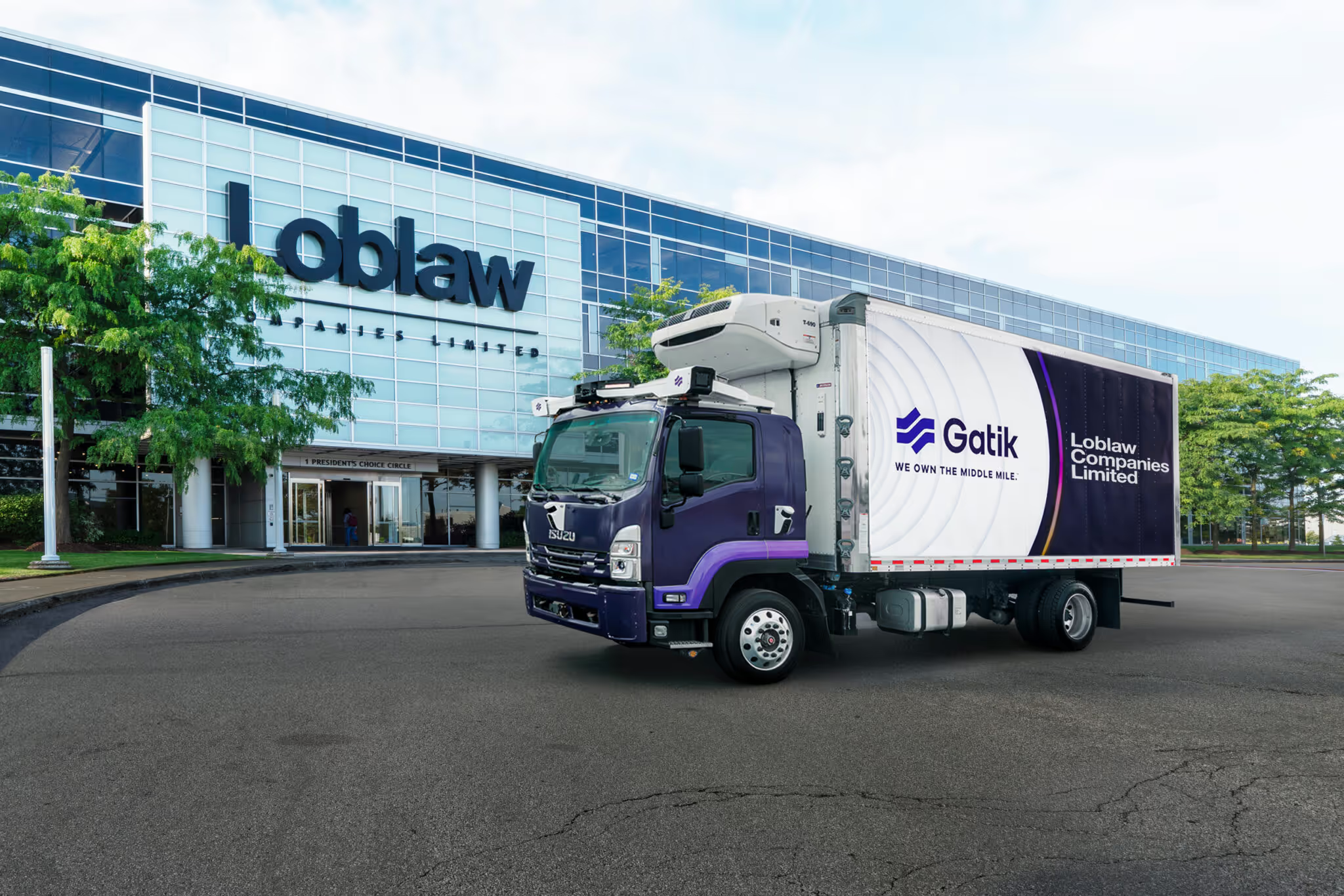
Gatik autonomous delivery truck in front of a Loblaws store. Image: Loblaw
Loblaw Companies Limited is making one of the boldest moves yet in Canadian retail logistics. The country’s largest grocer said this week that it will dramatically expand its partnership with Gatik AI Inc., a Silicon Valley and Toronto-based autonomous vehicle company, to introduce the largest commercial deployment of driverless trucks in North America.
The agreement calls for 50 autonomous trucks to be deployed across the Greater Toronto Area by the end of 2026, servicing more than 300 Loblaw-owned grocery stores. It is a leap from the modest pilot program of just six vehicles that began in 2022. For Loblaw, the expansion is framed as a way to modernize distribution while easing the pressures of a national driver shortage.
“This expanded partnership with and investment in Gatik represents a significant step forward in our commitment to innovation and supply chain sustainability,” said Rob Wiebe, Loblaw’s chief administrator, in a statement. “Autonomous logistics will enable us to move more orders more frequently for our customers.”
A Historic Step for Autonomous Freight
Executives at Gatik, which has been developing autonomous trucking platforms since 2017, say the rollout represents an industry first. “It’s the first time a major retailer has transitioned from pilot to commercial scale with autonomous trucks,” said Gautam Narang, Gatik’s co-founder and chief executive. “This is a transformational moment, not just for Gatik and Loblaw, but for the autonomous trucking sector globally.”
The company notes that the trucks, which are medium-duty vehicles designed for regional logistics, will initially operate with safety drivers before transitioning to fully driverless service. The Gatik Driver, an AI-powered operating system, has logged thousands of miles on public roads across North America. According to the company, its record of safety and reliability is a key factor in winning over regulators and retailers alike.
The Role of Regulation
The rapid expansion comes just weeks after Ontario introduced new rules governing autonomous trucking. The Automated Commercial Motor Vehicle Pilot Program, launched in August, allows medium-duty driverless vehicles to operate on all streets and highways in the province. Gatik worked with the Ministry of Transportation of Ontario to design the framework, which officials describe as both enabling innovation and ensuring public safety.
By embedding its technology within regulatory guardrails, Gatik aims to avoid the kind of scrutiny that has hindered other autonomous vehicle ventures. Unlike robotaxis, which must contend with unpredictable human passengers, Gatik’s model focuses narrowly on transporting goods within dense commercial corridors. That specialization, Narang has argued, makes the technology easier to scale.
For Loblaw, the expansion signals a larger shift in how retailers view logistics. With more than 2,800 locations across Canada and over 220,000 employees, the company operates one of the most complex distribution networks in the country. The addition of autonomous trucks promises to reduce bottlenecks, improve delivery frequency, and better handle temperature-sensitive goods such as produce and dairy.
The trucks are equipped for cold-chain logistics, ensuring groceries are delivered under tightly controlled conditions. Loblaw says customers should notice improvements in product freshness and availability, though it has not specified whether the cost savings from automation will eventually be passed on to consumers.
Investment and Strategic Stakes
Loblaw has made a strategic investment in Gatik, a move designed to deepen collaboration and accelerate the scaling of autonomous freight. Financial terms were not disclosed, but executives emphasized that the investment underlines the retailer’s long-term confidence in the technology.
For Gatik, which also operates in Texas, Arkansas, and Arizona, the deal represents a validation of its business model. Unlike many high-profile autonomous vehicle startups that have struggled to commercialize, Gatik’s business-to-business strategy focuses on repeatable, short-haul routes between warehouses and retail outlets.
That “middle mile” approach, analysts note, avoids the more complex challenges of long-haul trucking or passenger transport.
A Company Under Pressure
The announcement arrives at a delicate time for Loblaw. The company has faced intense criticism from consumers over rising grocery prices, with boycotts last year drawing national headlines. Expanding into autonomous freight may be presented as an effort to improve efficiency and lower costs, though skeptics may question whether savings will translate into relief at the checkout line.
The move also raises questions about employment. While Loblaw has not specified how many of its 220,000 employees are drivers, labour unions and critics are likely to scrutinize the impact of automation on jobs. Company officials have stressed that safety drivers will remain in place during the transition, but the long-term plan is to shift to driverless “freight-only” operations.
Gatik autonomous vehicle. Photo: Gatik
A Canadian First, a Global Signal
Autonomous trucking has been tested in markets around the world, but the scale of Loblaw’s rollout places Canada at the forefront of the industry. The expansion is being described as the largest planned deployment of driverless trucks in North America, a benchmark that could influence how other retailers and logistics firms approach automation.
The development also highlights how the retail sector, often slower to adopt emerging technology, is now investing heavily in automation under the pressures of rising costs, labour shortages, and consumer demand for convenience. For Loblaw, the deal may serve both as a competitive advantage and as a test of public trust in driverless logistics.
Loblaw Looking Ahead
Over the next year, 20 autonomous trucks will join Loblaw’s fleet, with 30 more scheduled to follow by the end of 2026. As the rollout progresses, the company says it expects a gradual shift from human-supervised to fully autonomous deliveries.
Whether the expansion succeeds will depend on more than technology. Regulators will monitor safety, customers will judge whether service improves, and labour advocates will watch closely for the impact on jobs. For now, however, Loblaw and Gatik are positioning the project as a milestone in Canadian retail, one that could set the standard for how groceries and goods are delivered in the years to come.
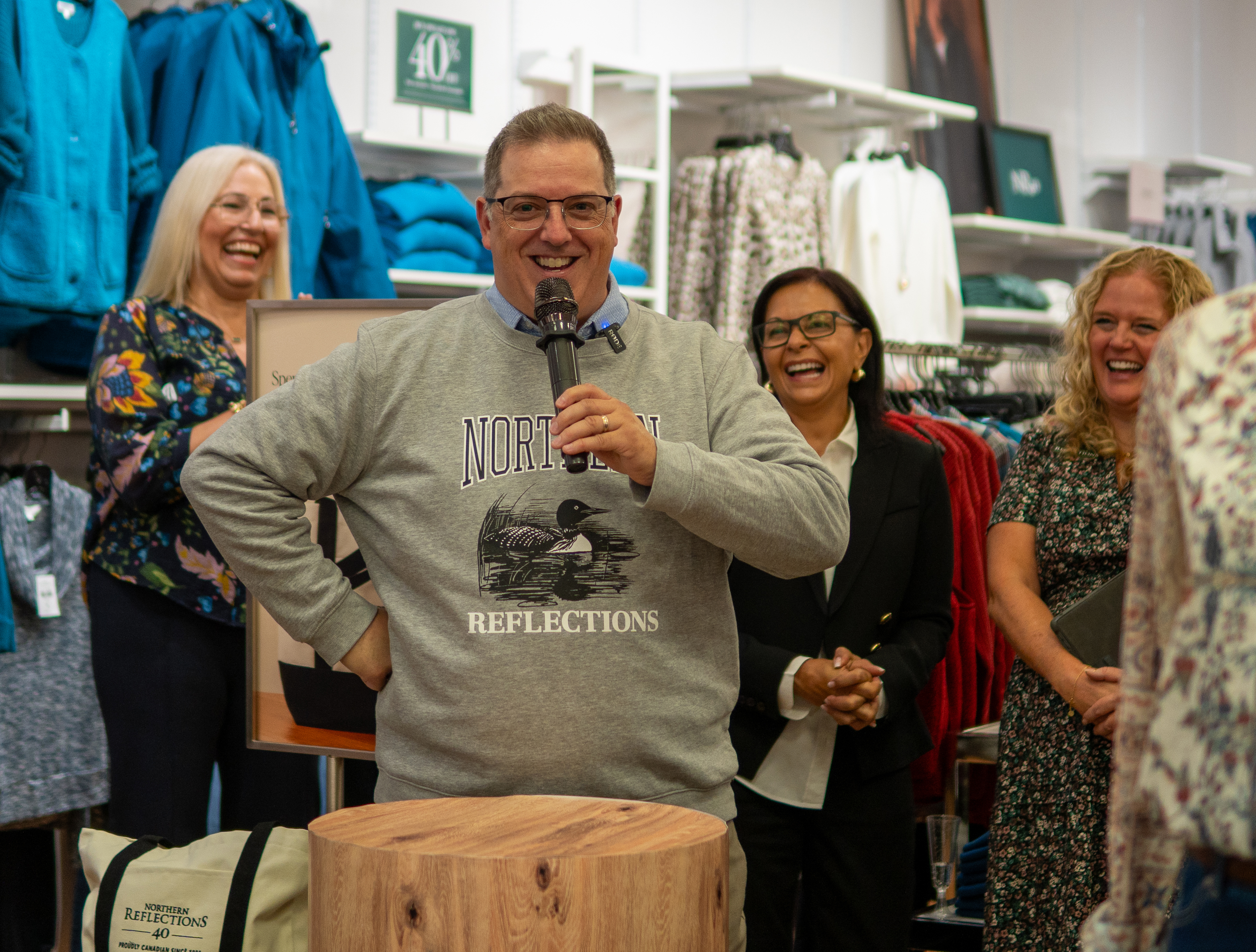
Northern Reflections 40th anniversary event at Stone Road Mall in Guelph, Ontario, September 18, 2025. Photo: supplied
Northern Reflections, one of Canada’s most enduring women’s apparel retailers, is celebrating 40 years in business this month. Founded in 1985 in Guelph, Ontario, as a division of Woolworth Canada, the brand has grown into a heritage retailer with more than 100 stores coast to coast. On September 18, the company marked its milestone anniversary with a special celebration at its original Stone Road Mall location, while also hosting events in every store across the country.
“This milestone definitely reminds us that we’re not just a brand, we’re part of communities across Canada,” said Maryann Darling, President of Northern Reflections. “We’re filled with gratitude for our loyal customers and for our incredible team who pour their heart and soul into making Northern Reflections what it is today.”
Maryann Darling
The 40th anniversary festivities were launched at the Guelph store, where Darling delivered a toast to employees and customers. A curated display of heritage product and artwork dating back to the brand’s earliest years was unveiled, alongside a limited-edition anniversary collection. A nationwide toast was also held simultaneously at 11:00 a.m. across all Northern Reflections stores.
According to Kate Alexander, Director of Retail, the Guelph event was designed as the centrepiece of the celebration. “There’s a special party at our support centre and store, with heritage product on display and a unique anniversary collection for customers. Every store across Canada has joined in with a kickoff party, and we’ve created exclusive perks like a commemorative tote bag and gift card prizes.”
The events were designed to celebrate longevity and to reconnect with long-time customers who have built multi-generational relationships with the brand.
Kate Alexander
From Woolworth to Putman Investments
Northern Reflections’ history is unusual compared to many Canadian retailers. Rather than being launched by an entrepreneur, the chain was created in 1985 by Woolworth Canada as part of the U.S.-based corporation’s mall specialty store strategy. It later became part of Venator Group and ultimately Foot Locker Inc. before its Canadian operations were sold.
By the late 1990s, the chain had reached nearly 1,000 stores across North America. After the U.S. closures, York Management acquired the Canadian network, operating it through a period of consolidation and right-sizing.
In January 2025, Putman Investments, headed by Doug Putman, acquired Northern Reflections, bringing it into a portfolio that includes Toys “R” Us Canada, HMV, and Sunrise Records. Today the retailer operates just over 100 stores, supported by a logistics hub at Vaughan Distribution Centre, shared with Putman’s other banners.
Northern Reflections 40th anniversary celebration at Stone Road Mall in Guelph, Ontario, September 18, 2025
A Heritage Brand with Generational Appeal
While Northern Reflections has long catered to mature women seeking comfortable, durable fashion, the brand is now seeing renewed interest from younger demographics. Vintage Northern Reflections garments have been appearing on TikTok, resale platforms, and in the closets of Gen Z shoppers embracing “cottagecore” and “granny-core” aesthetics.
“I’ve been thoroughly overwhelmed by the emotional attachment that customers have to our products,” Darling explained. “I’ve even sourced some of our vintage pieces through resale sites, and they command impressive prices. These pieces are being handed down through generations, which truly underscores our evolution into a Canadian heritage brand.”
Jacqui Simpson
Jacqui Simpson, Vice President of Merchandising, noted that the brand’s signature loon motif has become especially iconic. “The loon has become a symbol of who we are as a brand. It represents Canada and resonates with our customers, whether they are at the cottage, ski chalet, or enjoying the outdoors.”
New Product Launches: Kidswear and Unisex Fleece
Northern Reflections is also looking ahead. The company has begun testing new product lines that broaden its appeal.
One is NR Littles, a collection for babies and toddlers, recently introduced through partnerships with Toys “R” Us and Babies “R” Us. “This is so exciting because it allows for mommy-and-me or even granny-and-me matching moments,” Darling said. “It’s a way of welcoming a new generation of customers into the brand.”
Another is a unisex fleece line, currently in development, which taps into customer demand for versatile casualwear. While Northern Reflections historically tested a men’s division under the “Northern Elements” banner in the 1990s, the company is now experimenting with gender-neutral apparel that aligns with contemporary lifestyles.
1980s Northern Reflections advertising image
Customer Loyalty as a Cornerstone
One of Northern Reflections’ greatest strengths has been its ability to retain a fiercely loyal customer base. Store teams cultivate personal connections with shoppers, often knowing them by name and sharing in life milestones.
“There’s a social aspect to shopping our stores,” said Darling. “Customers feel happy and excited to be there, and our associates know them personally. In some communities, we’re one of the only women’s fashion retailers left, so we become an anchor for that neighbourhood.”
Alexander echoed this sentiment: “Customers buy wedding presents for our managers, and associates know details of their lives. I think that makes our stores unique, and it’s why customers say, ‘Please don’t ever leave, where would I shop?’”
This loyalty has helped sustain Northern Reflections even as the Canadian retail landscape has shifted, with many mid-market women’s retailers disappearing in recent years.
Northern Reflections 40th anniversary event at Stone Road Mall in Guelph, Ontario, September 18, 2025. Photo: supplied
Fashion That Endures
The staying power of Northern Reflections also lies in its approach to product design. Rather than chasing fast fashion, the company has consistently focused on quality and fit. Cotton sweaters, embroidered sweatshirts, and elastic-waist pants remain bestsellers, appealing to women of different ages who style them in their own ways.
1990s Northern Reflections advertising image
“Our styles are ageless and seasonless,” said Simpson. “Younger customers might belt a long cardigan and wear it with boots, while older customers style it differently. That versatility and comfort are what keep people coming back.”
Darling emphasized that affordability is also part of the equation. “Most of our pieces are under $100, which makes them accessible while still offering excellent quality. We’re not the cheapest, but our customers know they are getting real value.”
Wholesale Ambitions and Looking Forward
Beyond its stores, Northern Reflections is developing a wholesale strategy that could see its products carried by other Canadian retailers. Simpson confirmed that the company has been piloting partnerships and sees potential for expansion beyond its owned store network.
“We develop every single fabric, button, and colour ourselves,” she said. “It would be wonderful to make our brand available to more people, and wholesale will be part of that journey.”
Meanwhile, the brand continues to embrace sustainability initiatives, including recycled materials and charitable partnerships. Its loyalty program, Northern Friends, is also evolving into a more sophisticated CRM platform to better engage customers.
For Darling, the anniversary is as much about the future as the past. “Forty years in Canadian retail is something special, given the challenges in this industry. We want to keep building on that heritage while evolving with the times,” she said.
With over 100 stores nationwide, a new kids’ line, and a push into unisex apparel, Northern Reflections is positioning itself to stay relevant for decades to come. For many Canadians, the brand has become a symbol of homegrown quality and community connection.
“We’re the best kept secret in Canadian retail,” Darling reflected. “But we think it’s time more people knew about us.”
Canada’s restaurant sector is at a turning point. Rising costs are pushing more people away from eating out and back into their kitchens. Three out of four Canadians now say they dine out less often because of the cost of living. At full-service restaurants, per-person spending has fallen from about $1,165 in 2019 to roughly $1,035 today. Quick-service restaurants are holding on slightly better, but spending there has also slipped, from $1,150 to about $1,135. These numbers tell a story of a nation re-evaluating what it means to eat out, and who it is really for.
Perhaps the most telling shifts are in timing. Lunchtime visits to quick-service outlets have surged by 7.6 percent, surpassing pre-pandemic levels, largely because office workers are back downtown and looking for affordable, quick meals. Breakfast, once a marginal part of foodservice sales, is also expanding, now accounting for more than 11 percent of orders, a modest but steady increase. These are the new growth windows: less about the grand dinner outing and more about the efficient, functional meal squeezed into a workday.
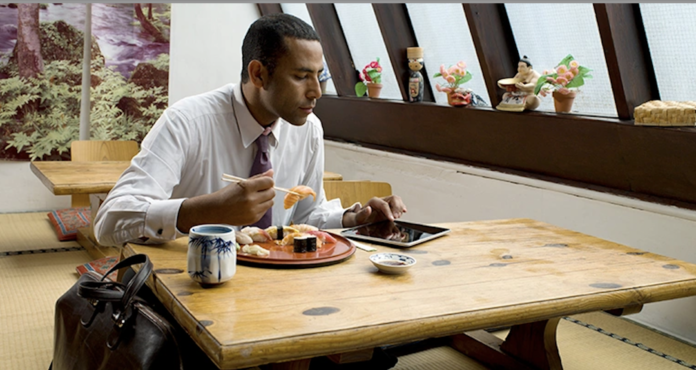
But what may prove most consequential over time is the rise of solo dining. Nearly half of Canadians report having eaten alone in restaurants, and reservations for one are up nearly 30 percent compared to last year. In Toronto, about half of all diners say they’ve chosen to go out by themselves, and more of them are opting for regular tables rather than bar seats. This marks a cultural shift. For decades, restaurants have been framed as places for families, friends, or dates. Dining out was as much about who you were with as about what you ate. The fact that so many Canadians are now comfortable dining alone tells us something profound about where society is going.
Solo dining reflects both independence and changing social patterns. Fewer group outings could mean less reliance on restaurants as community gathering spaces, and even a reduced role for the traditional “dinner date” in courtship. Digital culture has already moved much of our socializing onto screens. Restaurants, once critical venues for human connection, may increasingly serve a functional purpose: a place to eat well, quickly, and without the expectation of company. That could mean fewer multi-course meals, less alcohol consumption, and smaller average checks. For operators, this challenges the economics of the business.
Yet solo dining is not a death sentence for restaurants—it is a transformation. A meal for one can still be an experience if restaurants adapt. Smaller portion menus, comfortable single-seating layouts, and atmospheres that welcome individuals rather than make them feel out of place can all turn solo diners into loyal customers. In fact, this may be the next great market opportunity: to design spaces that don’t just tolerate a party of one, but celebrate it.
This shift points to where food culture is heading in Canada. The sit-down dinner, once the pinnacle of foodservice, is slowly losing ground to breakfast on the go, quick workday lunches, and the normalization of dining alone. Restaurants will need to rethink how they design menus, use space, and market themselves. Policymakers, too, must recognize that the foodservice sector employs hundreds of thousands of Canadians and plays a vital role in urban economies. Ignoring its transformation would be short-sighted.
The kitchen table may once again be the centre of Canadian food culture, but the restaurant table is not disappearing. It is being redefined—more personal, more functional, less about social ritual, and more about individual choice. The restaurants that survive and thrive will be those that recognize this and embrace a new reality: the future is not just about feeding groups, but about feeding individuals, one table at a time.
Mall entrance to La Maison Simons at CF Toronto Eaton Centre, September 18, 2025. Photo: Craig Patterson
Adyen, the global financial technology platform of choice for leading businesses, is partnering withSimons, Canada’s oldest private, family-owned fashion retail business.
Adyen has been selected as the retailer’s financial technology partner for its e-commerce and 19 physical retail stores across Canada, including the newly opened Yorkdale and CF Eaton Centre locations, powering all of their payments. Connecting data from all of Simons’ channels, Adyen will power flexible, cross-channel payment experiences and provide richer insights into customer preferences and behaviour, said the company.
Yannick Vial
“As Simons expands across Canada, we’re focused on delivering a seamless customer shopping experience. Partnering with Adyen isn’t just about streamlining transactions; it’s about fundamentally reshaping how customers interact with our brand, unifying every touchpoint into a singular, intelligent journey,” said Yannick Vial, Senior Vice-President, Chief Digital Development and Unified Commerce at Simons. “Our collaboration with Adyen elevates the customer experience and offers customers the same smooth checkout process in-store and online with increased personalization.”
Sander Meijers
“Simons continues to set the bar for retail in Canada, delivering thoughtfully curated shopping experiences for customers at scale. We are excited to build on this with our partnership, providing an elevated payment experience for customers nationwide,” said Sander Meijers, Canada Country Manager at Adyen. “Whether you’re adding to cart at Simons.ca or prefer to browse in-person at one of their many locations across Canada, Adyen’s platform ensures shoppers can pay how they want, where they want.”
The partnership will also expand the payment options available to customers, from offering Alipay and WeChat to Buy Now, Pay Later. Simons is the first retailer in Canada to offer Klarna in-store via Adyen, providing shoppers with a new, flexible way to pay. Currently available at select locations including Yorkdale and Eaton Centre, the payment method will be rolled out to all 19 stores by the end of fall, ahead of the holiday season. Customers can pay for their purchase using one of Klarna’s interest-free BNPL payment methods and can keep track of the purchase in their Klarna app.
Photo: Adyen
Steven Clarke
“As a forward-thinking innovator in the retail space, Simons was a natural fit to bring Klarna in-store via Adyen for the first time in Canada,” said Steven Clarke, Head of Canada & North American Partnerships at Klarna. “Building on our longstanding partnership with Adyen, we are excited to take this next step in offering flexible payments and further our mission to be everywhere for everyone.”
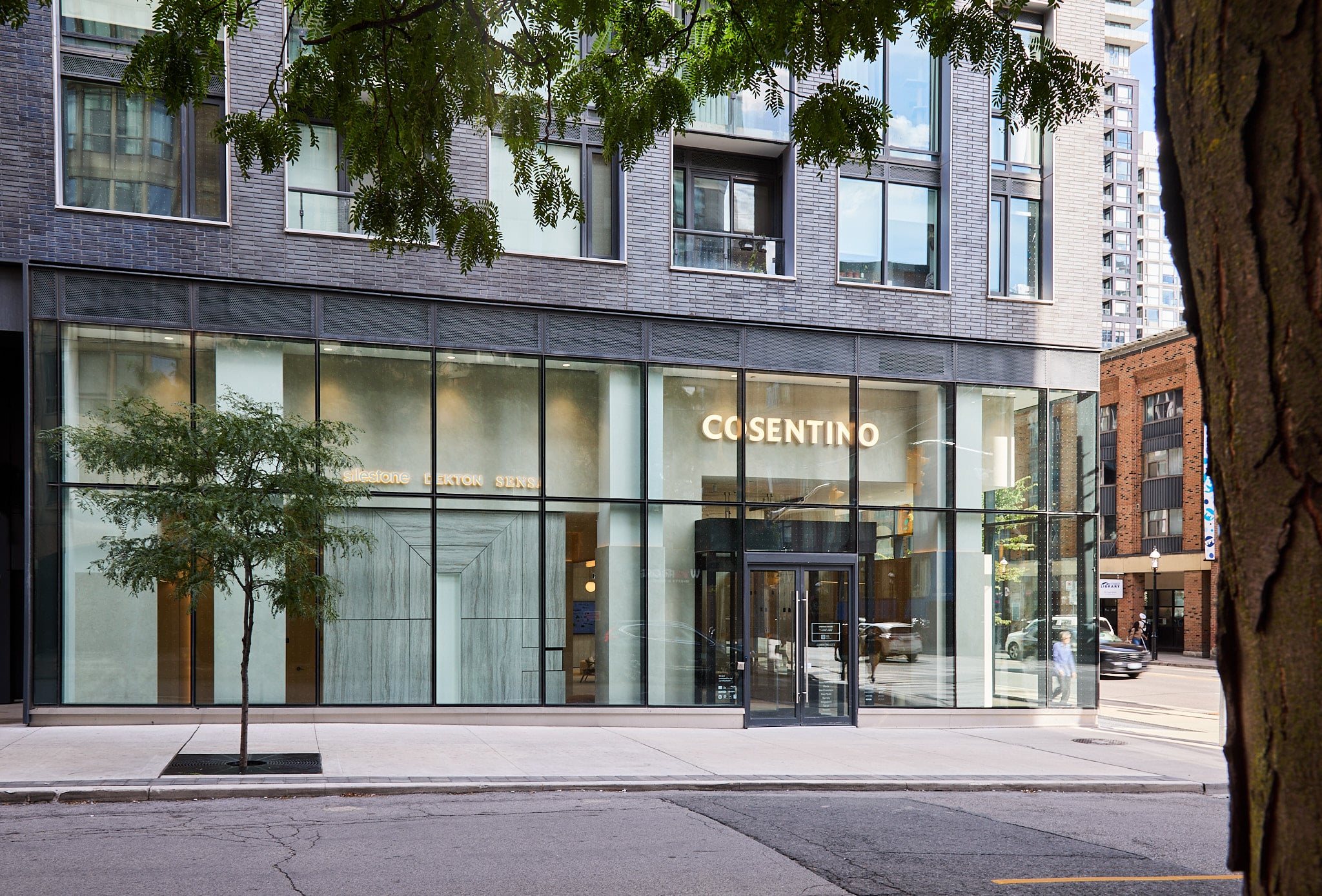
Cosentino Toronto City Centre flagship. Image supplied
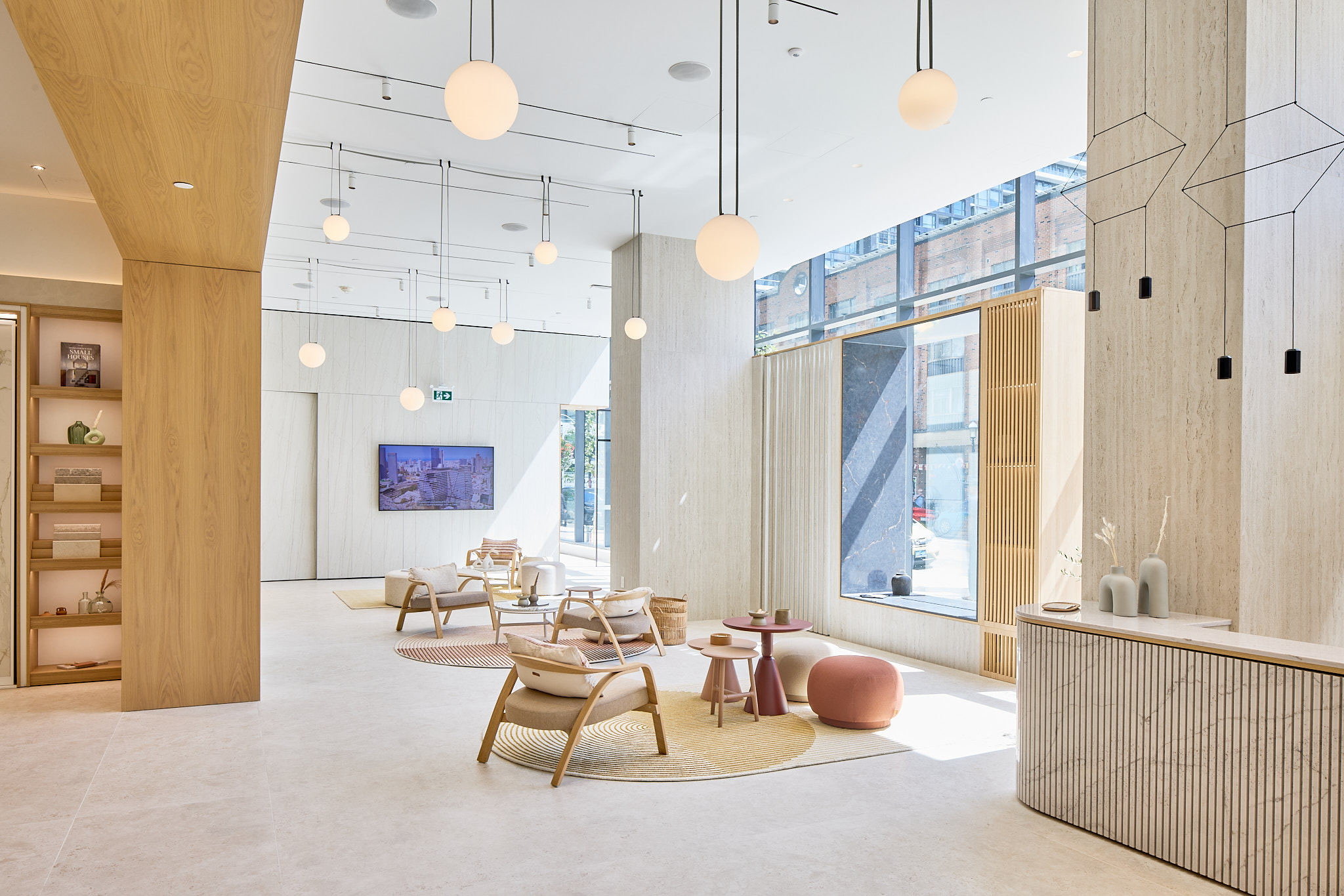
Cosentino has opened the doors to its new Toronto City Centre, relocating its flagship showroom from Castlefield to downtown Toronto at the corner of Front and Frederick Streets (143 Frederick Street). The move reflects a deliberate strategy to embed the company within the city’s vibrant design and architecture community. Rather than functioning as a simple showroom, the new flagship positions itself as a hub for collaboration, creativity, and professional exchange.
“Toronto’s design community is among the most vibrant in North America, and this new City Centre places Cosentino right at its heart,” said Karim Guirguis, Regional Director North, Cosentino. “Our goal is to create a flagship that doesn’t just showcase surfaces but serves as a living hub for inspiration, collaboration, and education, aligning Canada with Cosentino’s global vision for immersive, design-driven showrooms.”
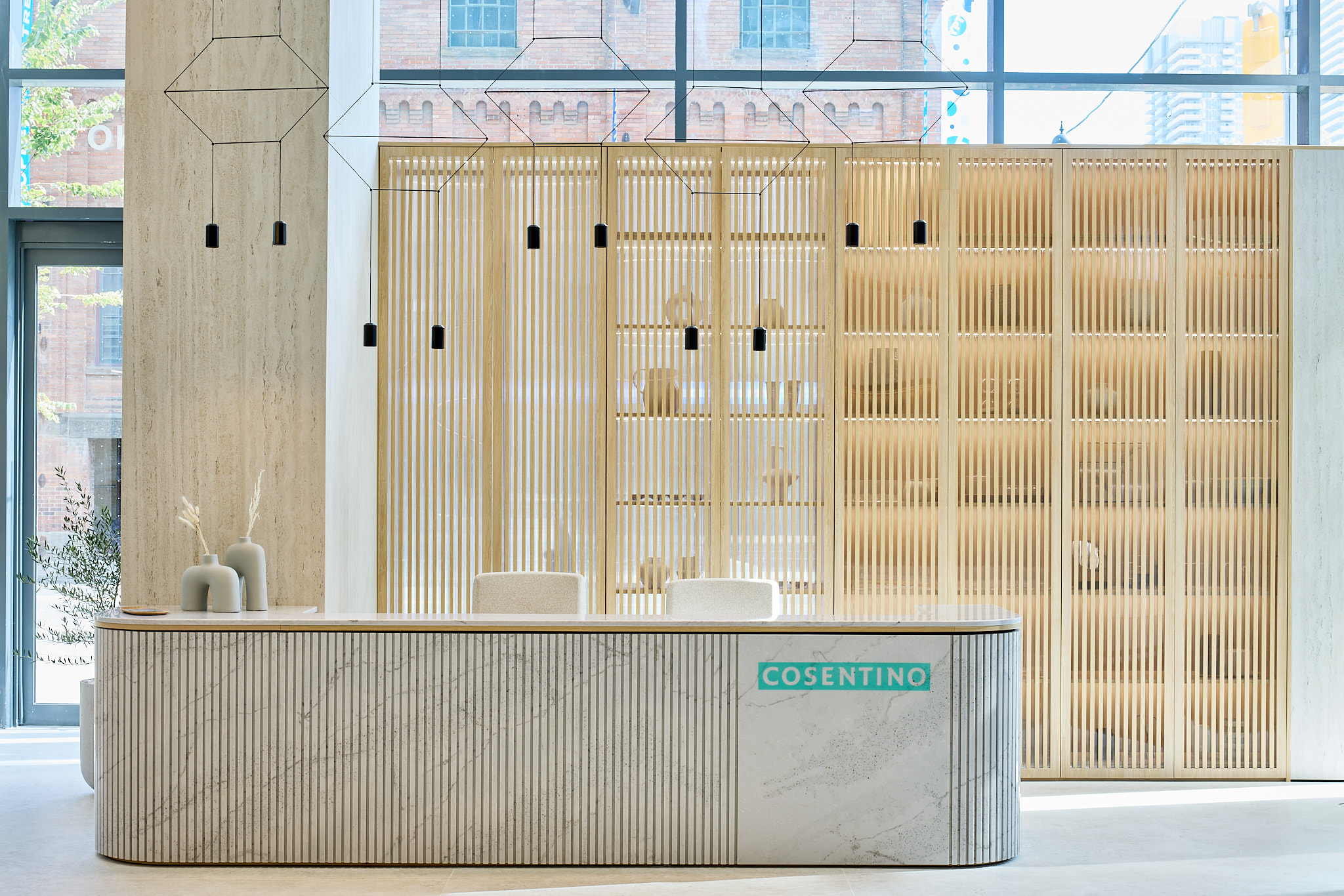
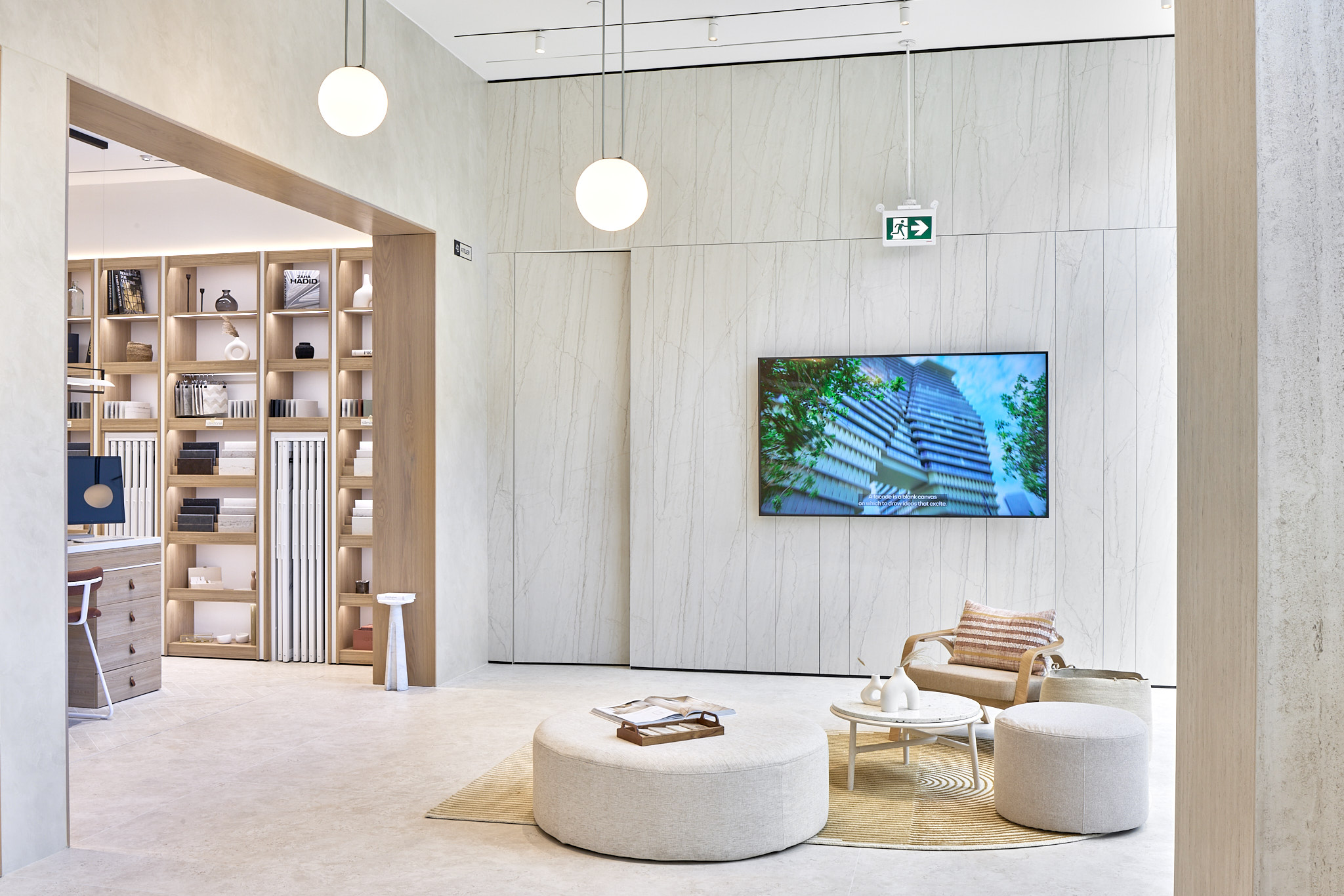
The guiding principle behind the Cosentino Toronto City Centre was to move beyond conventional surface displays. Designed by Cosentino in collaboration with Dubbeldam Architecture + Design, the new showroom integrates surfaces into real-life applications across kitchens, bathrooms, flooring, cladding, and furniture. Dedicated event and education areas reinforce its function as a catalyst for design dialogue and industry development.
“The showroom is much more than a display space — it’s a design manifesto that embodies Cosentino’s core values: longevity, beauty, elegance, and innovation,” said Cristina Hernán Mateos, Interior Design Manager at Cosentino. “While stone is often seen as cold, our spaces convey warmth and versatility, thanks to thoughtful combinations with wood, metal, and layered textures. Every detail is crafted to inspire and connect, allowing visitors to envision their own projects.”
Cosentino Toronto City Centre flagship. Image supplied
Immersive Features and Design Innovation
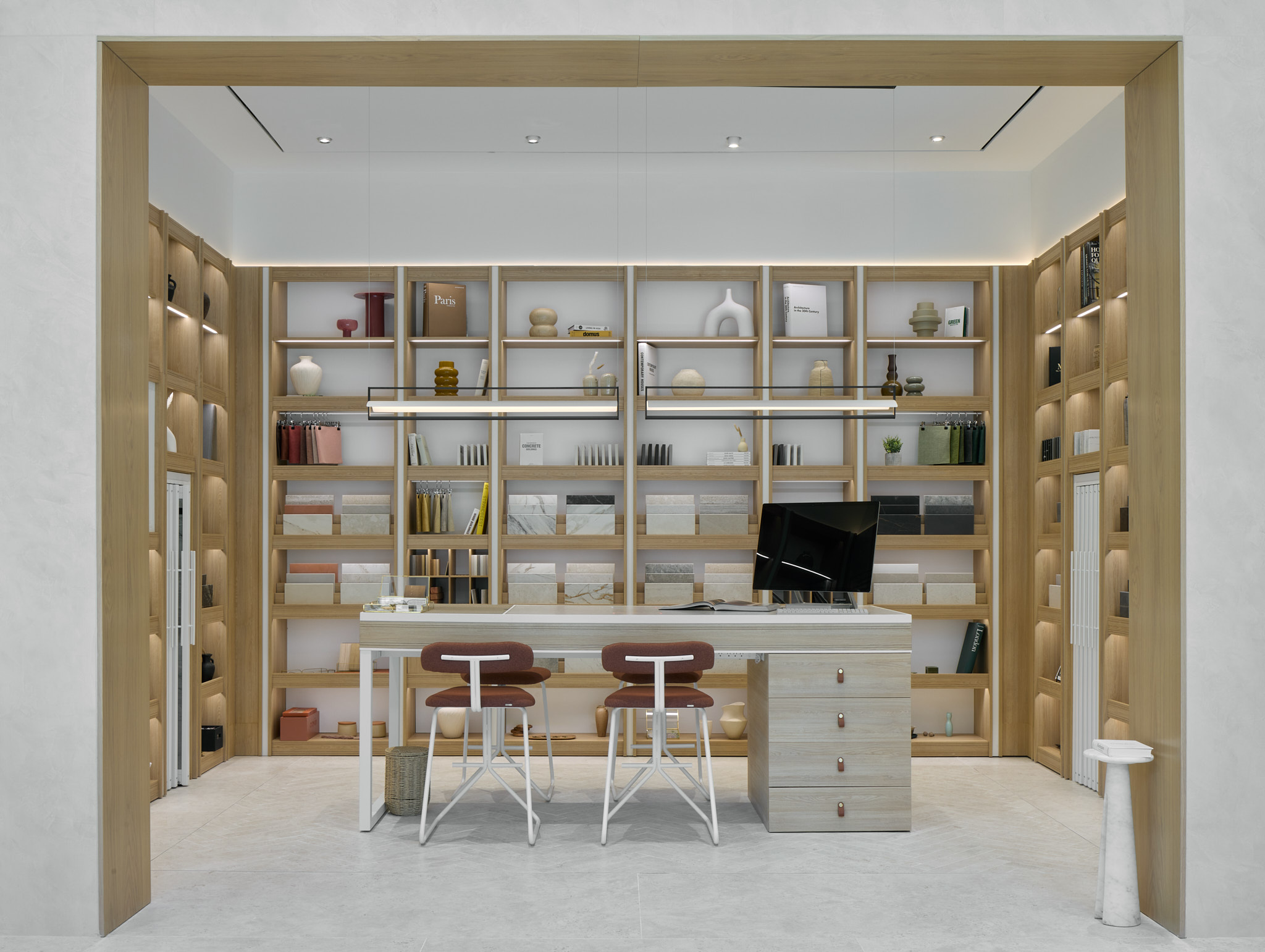
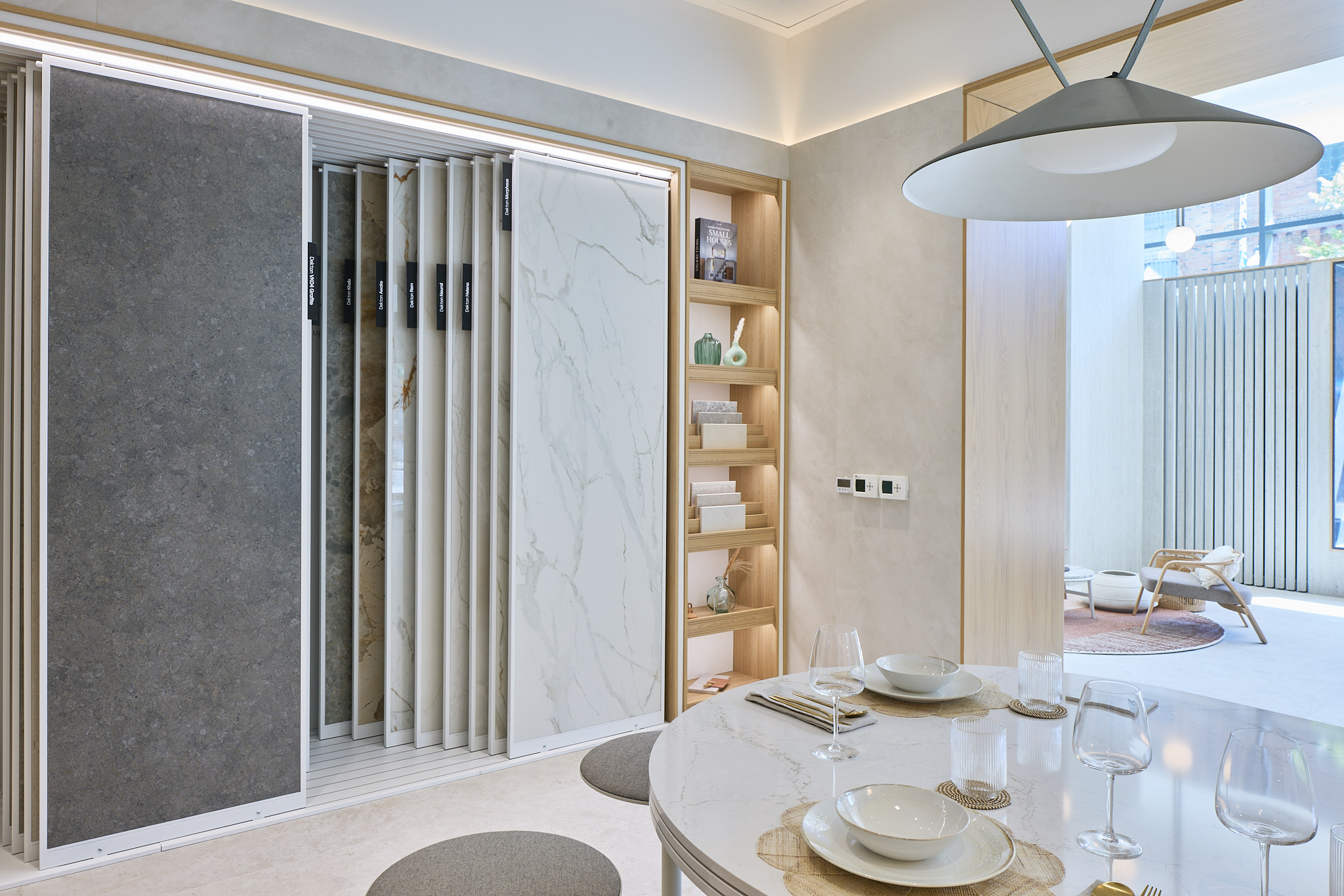
Visitors to the Toronto City Centre encounter a curated experience intended to spark creativity. Rotating metal frames display full slabs of Cosentino surfaces, including outward-facing orientations that provide striking street-level visibility. Inside, The Atelier functions as a working library where designers can pull samples and test combinations side by side, while The Bathelier showcases a fully functioning bathroom concept with operational washrooms and Cosentino’s new Zoe Top integrated sink.
Engineering ingenuity is also on display through a curved kitchen island, created by layering three 20-millimetre slabs to simulate a 60-millimetre thickness with shadow gaps, demonstrating both technical precision and aesthetic innovation.
“The goal was to design an environment that sparks discovery and supports exchange,” said Heather Dubbeldam, Principal, Dubbeldam Architecture + Design. “By blending practical resources with creative spaces, the showroom is both a working tool and a place to spark new ideas.”
Cosentino Toronto City Centre flagship. Image supplied
Showcasing Three Global Brands
The showroom highlights Cosentino’s three global brands, Dekton®, Silestone®, and Sensa®, through applications spanning flooring, wall cladding, sinks, shower trays, fireplaces, furniture, and façades. Each brand is presented in ways that reflect its unique qualities.
Dekton® Pietra Kode and Pietra Edition surfaces bring warm, earthy tones inspired by Mediterranean traditions to the flooring and walls. Silestone® Le Chic and Le Chic Bohème surfaces, placed in the reception and kitchen areas, incorporate metallic elements for a sense of glamour and individuality. Meanwhile, Sensa® natural stone demonstrates durability, sustainability, and the luxury appeal of natural materiality.
By applying surfaces to diverse contexts, Cosentino Toronto City Centre challenges the perception of stone as static, it says, by showcasing how materials can shape entire environments from hotel receptions to contemporary kitchens.
Cosentino Toronto City Centre flagship. Image supplied
Sustainability as a Core Principle
Sustainability is central to the new showroom’s message. Both Dekton® and Silestone® are manufactured using renewable energy, recycled materials, and processes that reduce water use and waste. Silestone® with HybriQ® technology has a reduced crystalline silica content, offering a safer and more sustainable solution for users.
Production at Cosentino’s facilities in Spain emphasizes energy efficiency, water recycling, and responsible sourcing, aligning the Toronto City Centre with the company’s global sustainability commitments.
Cosentino Toronto City Centre flagship. Image supplied
Partnerships Elevating the Experience
Cosentino has partnered with leading global brands to further enrich the visitor experience at the Toronto City Centre. Collaborations with Gaggenau, Kohler, Andreu World, Vibia Lighting, Freepower, Planika, Pitt, Naturtex, Gan, Gancedo, and Crevin integrate appliances, lighting, furniture, textiles, and technology throughout the space. These partnerships reinforce the notion of the showroom as a holistic destination where surfaces are part of broader, interconnected design stories.
The dynamic character of the showroom is designed to evolve over time, with seasonal installations and rotating displays ensuring the space remains relevant and aligned with the latest design innovations.
Cosentino Toronto City Centre flagship. Image supplied
An Industry Hub for Collaboration and Education
Programming will include professional education sessions, CEUs, industry awards, and networking events with design associations. By creating a venue that supports dialogue, learning, and recognition, Cosentino aims to position the City Centre as a focal point for Canada’s design community.
This evolution highlights the company’s broader strategy in the Canadian market, where it already operates showrooms and distribution centres in Montreal, Stanstead, Ottawa, Toronto, Winnipeg, Calgary, and Vancouver. Globally, the company maintains a strong footprint, with facilities in more than 30 countries and distribution across over 110 markets.
The Dorian, located in a 27-storey tower, is unique in its dual-brand concept. “The top 12 floors are part of the Autograph Collection by Marriott, which is a luxury brand, and the bottom 12 floors are the Courtyard by Marriott,” Jones explained. “The top floors offer 137 rooms, while the bottom section has 169 rooms.”
The building operates with two separate entrances and front desks, providing tailored service for each brand.
Just four blocks away, the Element by Westin opened in June. “The Element is our newest addition, and it’s exciting to see the early success there,” said Jones.
Legacy and Diversification in Calgary’s Core
Jones described how the PBA Group of Companies’ move into hospitality builds on its six-decade legacy. “PBA is about to celebrate its 60th anniversary,” he said. “Patricia Phillips, our current CEO, took over the company after her father passed away. He initially focused on commercial real estate and acquired a significant amount of land in Calgary.”
Among those assets was a downtown parking lot purchased in the mid-1980s, which became the site of The Dorian. “The Dorian is not just a hotel; it’s a tribute to Patricia’s father,” said Jones. He described personal design details throughout the hotel — such as curtain patterns and room décor — that reference the late founder’s style and story.
“In every guest room, there’s a mannequin form, a nod to how her father had all his jackets made on Savile Row in the UK,” Jones noted. “The hotel’s name comes from his favourite book, The Picture of Dorian Gray, by Oscar Wilde. It’s a beautiful way to bring family history into the hotel’s design.”
Downtown Demand and City Growth
Calgary is seeing rising demand for hotel accommodations, driven by infrastructure growth and a surging visitor economy. “During the Rotary Convention in June, hotels were full as far as Red Deer. We just didn’t have enough capacity for the 18,000 international travellers attending,” Jones said.
“Calgary offers arts, culture, employment opportunities, and incredible outdoor experiences,” he added. “It’s no surprise that so many people are moving here from Toronto and Vancouver.”
Projects like the expanded BMO Centre and the new Event Centre are expected to continue attracting major events and tourism. “We’re kind of an undersupplied hotel market, but the demand is growing,” said Jones.
Elevating Calgary’s Culinary Scene
Central to the PBA Group’s downtown offerings are its two signature restaurants: The Wilde on 27, located atop the Dorian, and Bow & Bend, atop the Element by Westin.
“Wilde on 27 is a striking, cosmopolitan dining experience with incredible downtown views from the 27th floor,” said Jones. “I would say it’s Calgary’s closest restaurant to a Michelin-star experience.”
That calibre of service helped the Dorian earn the Michelin One Key Award, a new hotel recognition launched in Canada in 2024. “I believe Wilde on 27 is what caught the attention of Michelin’s team when they visited Calgary,” Jones said.
Meanwhile, Bow & Bend is making its own name at the Element. “It’s an extension of our commitment to great hospitality,” said Jones. “It offers a unique dining experience with a focus on local ingredients and has quickly become a favourite with both guests and locals.”
Jones emphasized that the restaurants are designed not just as hotel amenities but as culinary destinations in their own right. “We’re proud of what both Wilde on 27 and Bow & Bend bring to the downtown dining scene,” he said.
Beyond Calgary’s Core
The PBA Group of Companies is also looking beyond downtown for future hospitality investments. “They’re looking at purchasing a group of select-service hotels in secondary markets like Red Deer,” said Jones.
He explained that smaller properties with fewer amenities can yield strong returns. “When you’re managing a select-service hotel that doesn’t have three restaurants, your cost base is much lower, so your profitability is much higher,” he said.
Jones believes the success of The Dorian and the Element has solidified hospitality as a viable and growing segment for the company. “They’ve really been awakened to the hotel business, and they’ll continue to expand and increase their portfolio.”
The Dorian
Dorian & Courtyard by Marriott
● The Dorian, Autograph Collection, sister to the Courtyard by Marriott Calgary Downtown, is a distinctive lifestyle hotel set in Calgary’s bustling downtown core;
Inspired by Oscar Wilde’s The Picture of Dorian Gray, it blends modern comfort with British whimsy and local charm, creating a destination with soul and style.
Developed by PBA Group of Companies, a proudly women-owned and led Calgary-based real estate company with nearly six decades of history, The Dorian reflects PBA’s vision of inspiring discovery, fostering connection, and contributing to the vitality of the city.
● Date Opened: July 21, 2022
● Number of Rooms: 308 rooms, with 133 Autograph Collection rooms and 175 Courtyard by Marriott rooms
The Wilde
The Wilde on 27
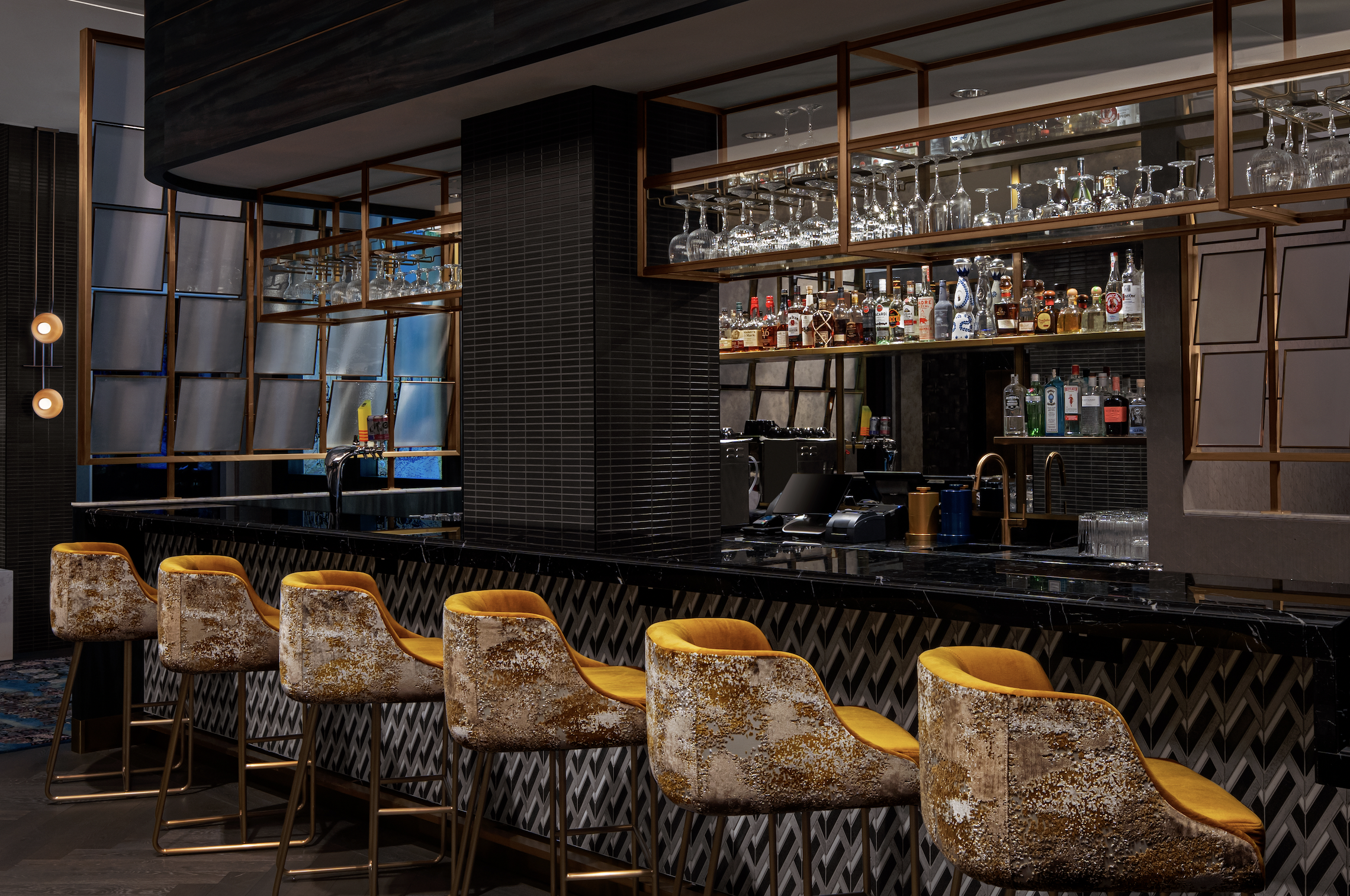
● Perched atop The Dorian hotel on the 27th floor, The Wilde on 27 offers a chic, fine dining experience that mirrors the bold spirit of Oscar Wilde. The space features an electrifying gold-accented bar with velvety white bar stools and pastel pink lounge chairs, leading into a glass-enclosed rooftop patio with sweeping views of Calgary’s downtown skyline. A crisp, white-on-white dining room completes the atmosphere, striking a balance between elegance and playfulness. As the hotel’s signature dining destination, The Wilde on 27 is designed for vibrant evenings, from handcrafted cocktails to refined dinners, set against one of the most captivating backdrops in the city.
● Date Opened: July 21, 2022
● Can seat 100
Bow & Bend
The Element Hotel Downtown Calgary
● Element Calgary Downtown is a striking example of innovation and revitalization, transforming a once-vacant office tower into a vibrant hospitality destination. The eco-conscious hotel reimagines 170,000 square feet of former office space into a lively hub for travellers and locals. The project represents Calgary’s first office-to-hotel conversion, breathing new life into the downtown core while setting a precedent for future-forward urban development.
● Date Opened: June 19, 2025
● Number of Rooms: 226 rooms
Bow & Bend Rooftop
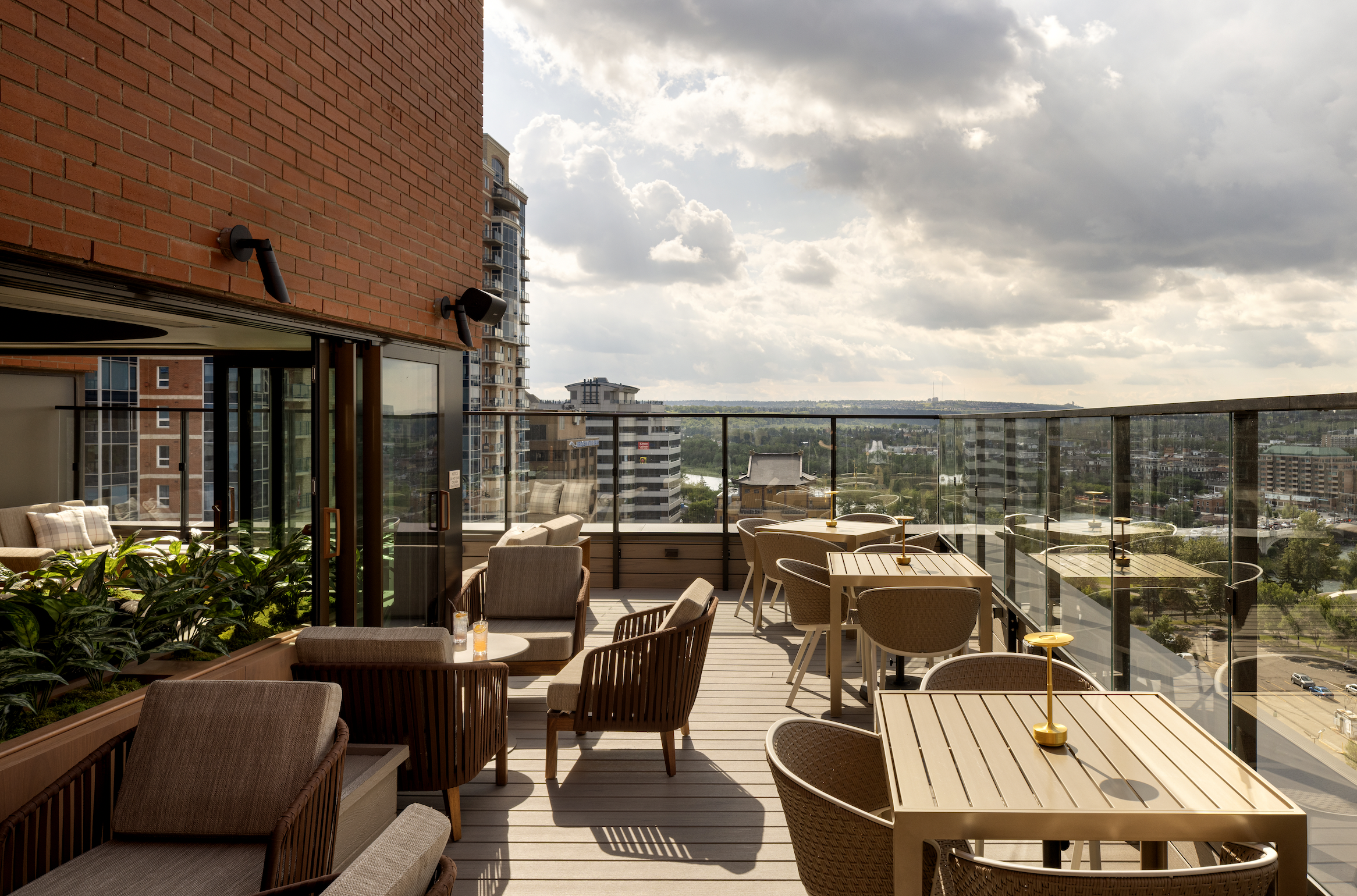
● Bow & Bend Rooftop Bar & Lounge, located on the top floor of the Element Calgary Downtown, brings a fresh perspective to Calgary’s dining scene. With panoramic views stretching across the Bow River, Kensington, and west to the Rocky Mountains, the 12th-floor venue offers one of the city’s most unexpected and spectacular vantage points. Designed as both a welcoming neighbourhood spot and a destination for visitors, Bow & Bend balances relaxed comfort with elevated style. Expansive picture windows and a spacious patio create a light-filled, airy setting that encourages guests to linger over cocktails or gather for memorable local bites.
Giant Tiger Store in Camrose, Alta. (CNW Group/Giant Tiger Stores Limited)
Giant Tiger Stores Limited is marking the 45th anniversary of Terry Fox’s Marathon of Hope by continuing its partnership with the Terry Fox Foundation, committing over $130,000 in matching donations to support school fundraising across Canada.
Now in its third year, the initiative sees more than 260 schools receive up to $500 each from their local Giant Tiger store to support their Terry Fox School Run fundraising goals. The school run program aims to honour Terry Fox’s legacy while raising funds for cancer research and inspiring community involvement.
Alison Scarlett
“We’re proud to continue our partnership with the Terry Fox Foundation, a cause that resonates deeply with our customers, stores, and communities across Canada,” said Alison Scarlett, Head of PR, Communications and Corporate Social Responsibility at Giant Tiger. “Through this partnership, we support and empower our local stores to lead school initiatives that encourage youth involvement in their Terry Fox School Run, helping to foster a Canada-wide culture of generosity, resilience and hope.”
The Terry Fox School Run remains a significant event in many Canadian classrooms, with students taking part in physical activity while fundraising for cancer research. Since the partnership began, Giant Tiger has contributed over $265,000 to the foundation.
Wendy Fric
“Thanks to the incredible support of Giant Tiger, we have been able to boost the fundraising efforts of 263 Terry Fox School Runs across Canada,” said Wendy Fric, Senior Director of School Runs at the Terry Fox Foundation. “Over the past few years, this generosity has helped inspire students to connect with Terry’s story, building a legacy of empathy, resilience and hope in classrooms nationwide.”
Fric added that Giant Tiger’s continued involvement has made the School Run “even more meaningful” during this milestone anniversary. “On behalf of the School Run Organizers across Canada, thank you Giant Tiger for supporting them to go the distance.”
Giant Tiger store teams across the country are actively engaged in their communities and support causes that have local impact. For many store owners, the Terry Fox Foundation holds personal meaning.
“Supporting the Terry Fox Foundation and our local School Run is incredibly meaningful to me and my staff,” said Luisa, store owner of Giant Tiger in Winnipeg, Man., whose store was the top fundraiser in 2024. “Terry’s legacy inspires us all, and giving back through our store allows us to honour him and this classic Canadian tradition, while supporting families in our own community who are impacted by cancer.”
According to Giant Tiger, community giving is central to the company’s identity. All 260-plus locations are locally owned or operated, reinforcing the brand’s focus on grassroots engagement.
Entrepreneurial aspirations in Canada have surged to their highest point in eight years, with 59 per cent of Canadians expressing interest in starting their own businesses, according to the latest RBC Small Business Poll.
The poll, conducted by Ipsos Canada, found that the number of aspiring entrepreneurs has increased by 13 percentage points over the past two years, returning to levels last seen in 2017. The survey also revealed that 81 per cent of Canadians believe small business ownership is a viable way to earn a living.
“Small business owners have faced many hurdles in recent years – from the pandemic to supply chain disruptions and now shifting tariffs,” said Karen Svendsen, Senior Director of Small Business and Partnerships at RBC. “What we’ve consistently seen is their resilience. They continue to pivot, adapt, and find new ways to serve Canadians in meaningful ways.”
Across the country, Ontario leads in entrepreneurial ambition, with 68 per cent of residents expressing interest in owning a small business. Other regions include Alberta and Saskatchewan/Manitoba at 60 per cent, the Atlantic provinces at 62 per cent, and Quebec at 45 per cent.
Canadian entrepreneurs are not only dreaming of starting businesses—they are also actively evolving. Sixty-one per cent of small business owners reported adjusting their strategies over the past year, while 51 per cent said they made significant changes to their business models to remain competitive.
Forty-six per cent of respondents said today’s business environment demands greater proactivity, and 43 per cent noted that risk-taking is essential to long-term success.
“For small business owners, resilience is not just about weathering the storm – it’s about using challenges as a springboard for reinvention and long-term growth,” said Svendsen. “That’s exactly what we help our clients do every day.”
Despite ongoing challenges—such as inflation and tariff-related concerns, cited by 56 per cent of owners—optimism remains strong. Seventy-five per cent said they are adapting well to market volatility, and 76 per cent described themselves as resilient.
Looking ahead, many small businesses plan to invest in digital upgrades, brand-building, innovation, and new market expansion, while maintaining a close focus on profitability and sustainable growth.
The RBC Small Business Poll was conducted online from July 4 to 8, 2025, with 2,001 Canadian adults. The results are accurate to within ±3 percentage points.