Chinese marketplaces are deepening their foothold in Canada, reshaping consumer habits and raising questions about the future of domestic retail. A recent survey commissioned by ecommerce platform Omnisend found that 60 percent of Canadians reported shopping at Temu, Shein, AliExpress or other Chinese marketplaces in 2025, up from 55 percent the year before.
The findings illustrate a growing dependence on these platforms, which have drawn millions of Canadian consumers with low prices, a broad assortment of products, and aggressive digital marketing. Even more striking, more than one in ten Canadians now say they shop on such platforms at least weekly.
Marty Bauer, an ecommerce expert at Omnisend, said in the study that, “These marketplaces are no longer fringe players. Temu is now the second most visited shopping website in Canada, just behind Amazon, and over 52 percent of Canadians say they’ve shopped there in the past year.”
Marty Bauer
Temu, owned by Chinese giant PDD Holdings, has quickly become a household name in Canada. The platform is not only luring occasional bargain hunters but cultivating a base of repeat customers. According to the Omnisend survey, 51.95 percent of Canadians reported shopping on Temu in 2025, up sharply from 39.26 percent in 2024.
That growth reflects a broader international surge by Temu, which has spent heavily on advertising, sponsorships, and discount-driven promotions. For Canadian shoppers contending with higher living costs, its offers of inexpensive household goods, apparel, and gadgets present an appealing alternative to domestic retailers.
The survey revealed that nearly 10 percent of Canadians are shopping on Temu at least once a week, while more than a quarter reported monthly visits. This kind of frequency signals not just curiosity but adoption as part of a regular shopping routine.
Shein and AliExpress Sustain Growth
While Temu leads, rivals are hardly standing still. Shein, the fast-fashion behemoth known for its rapidly shifting inventory, drew 37.84 percent of Canadian shoppers in 2025, up slightly from 34.64 percent the year before. That incremental growth has nevertheless positioned Shein as the second most visited fashion and apparel website in the country, behind only Gap.
AliExpress, the Alibaba-owned platform, also retained a notable share of the market, with 30.28 percent of Canadians saying they had used it in 2025. Although the figure dipped slightly from the prior year, the platform continues to attract value-driven buyers across categories, particularly in electronics and small goods.
Across all three, usage patterns indicate that while daily shopping remains rare, weekly and monthly transactions are climbing. Shein reported nearly 7.5 percent of Canadians using it weekly, while AliExpress counted 6.9 percent in that category.
Photo: SHEIN
Shifting Habits in Canadian Retail
The rising reliance on Chinese marketplaces in Canada underscores a significant shift in shopping behaviour. Once peripheral options, these platforms now serve as mainstream alternatives to brick-and-mortar stores, domestic ecommerce outlets, and even multinational giants.
“While daily usage remains relatively low, the real growth is happening in monthly and weekly shopping patterns,” Bauer noted. “This isn’t a passing trend—these platforms are becoming a regular part of consumers’ shopping routines”.
For Canadian households navigating inflation and sluggish wage growth, marketplaces such as Temu and Shein deliver affordability in a way that traditional retailers cannot easily replicate. Yet this growth also raises concerns about sustainability, quality, and the long-term viability of domestic brands.
Implications for Local Businesses
The expansion of Chinese marketplaces in Canada presents a direct challenge to local retailers. These platforms leverage vast supply chains, economies of scale, and aggressive pricing models that are difficult for small and mid-sized Canadian businesses to match.
“Chinese marketplaces are raising the bar on pricing and convenience, which makes competing harder for smaller ecommerce brands,” Bauer said in the report. “But local businesses have an opportunity to win on speed, service, and brand trust”.
Canadian companies, particularly small businesses, may need to rethink their strategies to remain competitive. Areas such as faster delivery, personalized service, and local brand loyalty are potential avenues for differentiation.
The Role of Ecommerce Tools
Omnisend, which commissioned the study, argues that technology can help smaller players fight back. The company positions itself as a platform that automates and personalizes email, SMS, push notifications, and customer reviews. According to Bauer, such tools can help Canadian retailers save time, enhance customer engagement, and build loyalty without the expense of large marketing departments.
Platforms like Omnisend highlight how the battle against Chinese marketplaces may not be fought on price alone. Instead, success may depend on building stronger relationships with customers and offering services that massive platforms cannot easily replicate.
A Global Context
The Canadian experience is not unique. The Omnisend survey, conducted in August 2025, polled 4,000 respondents across four countries, including 1,000 in Canada. The findings point to a global surge in the popularity of Chinese marketplaces, with similar growth seen in Europe and the United States.
Still, Canada represents a particularly fertile market given its highly connected population, urban density, and rising cost-of-living pressures. Consumers who might have traditionally sought out bargains in local discount chains are increasingly comfortable buying online from global suppliers.
Give the new A&W Plant-Based Burger a try for your next plant-based burger craving. (CNW Group/A&W Food Services of Canada Inc.)
A&W Canada has announced the nationwide launch of a new plant-based burger, expanding its vegetarian offerings and reinforcing its focus on innovative, crave-worthy menu options.
Developed by the company’s in-house innovation kitchen, the new Plant-Based Burger features a vegetarian patty topped with lettuce, red onion, tomato, pickles, ketchup, mustard, and mayonnaise, served on a toasted sesame seed bun.
Karan Suri
“All guests deserve a fantastic variety of delicious, innovative menu items,” said Karan Suri, Senior Director of Innovation at A&W Canada. “By taking the lead on our own plant-based recipe, we can ensure we are always delivering delicious, crave-worthy burgers that our guests expect from A&W.”
The new item joins a growing list of vegetarian options on the brand’s permanent menu, which already includes the Masala Veggie Burger, Crispy Veggie Burger, and Spicy Piri-Piri Potato Buddy Burger.
“At A&W, we are proud of bringing great-tasting, innovative recipes to our menu,” said Senecal. “We look forward to welcoming Canadians to try out our new A&W Plant-Based Burger, alongside our other vegetarian favourites. I’m already a fan!”
With over 1,070 restaurants across the country, the company continues to position itself as a go-to destination for classic and modern burger offerings alike.
Retail Insider is streamlining its Canadian retail news from around the web to include a handful of top news stories that can be viewed quickly during the day. Here are the top stories from the past 24 hours.
30 HAZELTON location in Toronto. Photo: Craig Patterson
Toronto’s hospitality powerhouse INK Entertainment Group has entered the beauty and wellness arena with the launch of 30 HAZELTON, a luxury med spa in Yorkville that opened to the public this month. The move extends INK’s reputation for high-touch service into a fast-rising segment of the premium self-care market, aligning advanced skin technology with the brand’s design sensibility and guest experience.
“This is a defining chapter for INK,” says Charles Khabouth, CEO and Founder, INK Entertainment. “We’ve built our reputation on creating exceptional hospitality experiences, and 30 HAZELTON allows us to extend that legacy into a thriving sector of the luxury market. By combining the artistry, attention to detail, and service we’re known for with the most advanced skincare innovations in the world, we’re setting a new benchmark for premium aesthetic experiences in Canada.”
Positioned at the heart of Canada’s most exclusive retail district, the 30 HAZELTON Yorkville med spa brings a hospitality lens to medical aesthetics. The concept is anchored by a curated platform of devices sourced from global leaders in Italy and South Korea, paired with protocols inspired by Korean “stackable” treatments that layer technologies for long-term results.
Second floor treatment room at 30 HAZELTON in Toronto. Photo supplied
A House of Design, Technology and Calm
30 HAZELTON occupies 4,200 square feet across three levels, with nine treatment rooms named for Yorkville streets to underscore its local roots. The environment blends quiet luxury with clinical rigour. A private top-floor lounge doubles as a discovery space for product education, technology previews, and team training, reflecting INK’s event fluency and the neighbourhood’s preference for discreet, service-led experiences.
“Our mission is to redefine the self-care experience, where advanced medical aesthetics meet the ease and elegance of a luxury spa,” says Erica Fung, Spa Managing Director, 30 HAZELTON. “We’ve created a destination that’s both results-driven and deeply restorative, inspired by the best of South Korea’s stackable beauty treatments. From cutting-edge technology to white-glove service, every detail is designed for today’s modern client.”
The 30 HAZELTON Yorkville med spa was shaped over a two-year development cycle, including a full year of construction to tailor the townhouse space for a premium clinical program. Fung adds that the site selection was deliberate. Yorkville’s luxury retail cachet, quieter mid-block flow and beauty-focused ecosystem aligned with the clinic’s service model and client expectations.
Erica Fung on the main floor of 30 HAZELTON in Toronto. Photo supplied
Korean-Inspired “Stackable” Protocols
At the core of the treatment philosophy is layering. Rather than relying on single-device appointments, the clinic builds protocols that address multiple skin layers in sequence. “We have so many technologies and we are able to treat every single skin concern,” says Fung. “I do want to focus on stackable treatments here.”
That approach is reinforced by partner Cartessa Aesthetics, a North American distributor that sources best-in-class devices from global manufacturers and supports regulatory pathways. “We created a new market opportunity where we don’t manufacture,” explains Gabe Lubin, Founder, Principal and Chairman of Cartessa Cosmetics. “What we do is we go all around the globe working with world class manufacturers, vetting out their technology, testing it against all the technology in the US and then just hand selecting their number one product from lots of different manufacturers.”
Lubin points to a diversified platform that allows 30 HAZELTON to customize care for a wide range of clients. “They have a widespread variety of all kinds of different technology, different energy sources to offer the most comprehensive patient experience possible,” he says. “They’ve really created an elevated patient experience for those that are truly invested in looking good, feeling good, and not stopping, but slowing down the aging process.”
Technology Portfolio Tailored to Outcomes
The clinic’s menu features an array of non-invasive and minimally invasive modalities designed for resurfacing, lifting, volumizing, contouring and hair removal. The line-up includes HELIX by DEKA, an advanced resurfacing system that pairs CO₂ and non-ablative energy for textural refinement; Everesse by Classys, a radiofrequency platform that volumizes and plumps; Ultraformer MPT by Classys, an ultrasound solution for skin tightening and contouring; Motus AZ+ by DEKA for painless laser hair removal across skin types; and RedTouch by DEKA, a collagen-stimulating laser used for pigment and scar reduction with minimal downtime. The injectable program features Stylage dermal fillers manufactured by Laboratories Vivacy in France, alongside semi-permanent makeup services that enhance brows and lips.
Fung explains how dual-device pairings can accelerate results in complex cases. “If you have a deep acne scar, or if you have a deep wrinkle, the one in the back focuses on the top layer to resurface, so it flattens the skin,” she says of a CO₂ protocol. “The one right here focuses on the inside. It doesn’t break your skin at all. It plumps it. So one plumps, you’re working from the inside and outside. What happens? Your skin becomes flatter, quicker.”
Lubin frames the strategy as synergy. “We know when you use CO₂ laser in conjunction with a radiofrequency device that lifts and volumizes and the CO₂ addresses wrinkles and lines, you get a better patient outcome,” he says. “They’re really focused on optimizing patient outcomes, having a world class experience, and making sure they had the technology to support that kind of elevated concept for their clientele.”
Third floor lounge at 30 HAZELTON in Toronto. Photo supplied
Membership Mindset and “Skin Fitness”
The clinic positions skincare as a lifestyle. Rather than one-off interventions, clients are guided to recurring, progressive plans. “It is like skin fitness, right? It’s going to the gym for your skin,” says Lubin. “You’re not gonna come and get one treatment and then five years later look like you’re 20 years younger than you are. It’s a continued commitment and investment.”
Fung notes that monthly visits mirror routines common in Seoul. “In Korea they use this as a lifestyle,” she says. “Instead of coming in just for one or two treatments, they go every single month to really focus on the longevity of their skin.” In that context, clinical care is paired with home regimens. “Using proper skincare is equivalent to you eating very healthy. So it’s food for our skin,” she says.
The 30 HAZELTON Yorkville med spa has designed packages that organize care by age bracket, skin type and concern, with an emphasis on comfort and inclusivity. “The technologies they offer are all minimal to zero pain,” says Lubin. “There’s no patient they don’t have a treatment protocol for. Most med spas, you have dark skin, we can’t treat you. You’re over 65, you’re not a candidate for resurfacing. They really have built the technology platform that appeals to the lightest skin people, the darkest skin people, people in their twenties, people in their eighties.”
A Canadian First with Dr. Barbara Sturm
As part of its debut, 30 HAZELTON has partnered with Dr. Barbara Sturm to offer seven bespoke facials, including the 30H Facial designed exclusively for the spa. The collaboration marks a Canadian first for Sturm’s treatment menu, which is widely recognized for anti-inflammatory protocols and science-backed product formulations.
“We partnered up with Dr. Barbara Sturm, so we’re exclusive to them in Canada,” says Fung. “They don’t have any other locations that offer seven of their facials. Her products are focused on anti-inflammatory. They’re so amazing and so relaxing.” The treatment rooms dedicated to the program sit alongside spaces equipped for injectables and chemical peels, allowing clients to move fluidly from restorative facials to more corrective paths within a single location.
3rd floor office at 30 HAZELTON in Toronto. Photo supplied
Why Yorkville, Why Now
Yorkville’s evolution has accelerated in recent years with a growing roster of global fashion and accessories brands, luxury home retailers, and fine dining concepts. Hazleton Avenue itself has seen a steady cadence of elevated tenants. Fung says the specific block choice was strategic for client comfort and brand positioning. “We looked around everywhere and this is the most perfect spot,” she says. “Hazelton is so luxurious. We’re right at the intersection. We’re not in the beginning of Hazelton. We’re in the middle where there’s not a lot of traffic. Everyone coming in here, if they’re walking out with a red face, you don’t have to worry about all the traffic out there.”
The townhouse layout accommodated the clinic’s blend of privacy and presentation. A dedicated education lounge on the upper level is set up for small group sessions, technology briefings and product discovery before or after treatments. “I do want it to be a VIP experience later on to educate our clients on the lasers,” says Fung. “People don’t know what’s out there until we talk about it.”
Hospitality DNA Meets Clinical Precision
INK’s expansion into aesthetics fits a broader pattern of hospitality groups diversifying into allied lifestyle categories where service, design and brand equity can unlock value. The company’s portfolio spans some of the country’s most recognized restaurants and entertainment venues, from Byblos and Amal to REBEL, Cabana Pool Bar and the VELD Music Festival. That track record in operational execution and placemaking supports a med spa model that requires both clinical oversight and the choreography of a guest journey.
Fung underscores the collaboration. “This whole project started from an idea and because I went to Korea,” she says. “We spoke and decided to collaborate together where Charles could bring in all the hospitality and give experience for the clients.” The aim is a seamless experience that moves from consultation to treatment and aftercare without friction, while preserving the textures of a luxury visit in Yorkville.
Entrance to the 30 HAZELTON location in Toronto. Photo: Craig Patterson
Health Canada Approved Platforms and Training
30 HAZELTON’s technology set is built around devices with Health Canada approvals, supported by Cartessa’s regulatory and clinical education. Lubin says the clinic invested in current-generation platforms for 2024 and 2025 rather than assembling a legacy inventory. “The technology’s pretty complacent, pretty stale” in many markets, he notes. “They have invested in all 2024, 2025 technology. The best lasers from Italy, the best ultrasound radio frequency devices from Korea.”
The clinic’s top-floor lounge functions as an internal training space as well as an event hub. That infrastructure supports protocol consistency and ongoing upskilling, crucial in a model that depends on device combinations and personalized treatment trees.
A Market Poised for Growth
The 30 HAZELTON Yorkville med spa enters a Canadian medical aesthetics sector that continues to grow as clients seek less invasive options with shorter downtimes. Toronto’s market has matured rapidly, though Fung sees room to bring a more comprehensive device mix and Korean-inspired regimen discipline to the city. “I would love to expand worldwide,” she says of the longer-term vision. “This is going to be changing the beauty industry for sure.”
Lubin points to the long arc of results as a differentiator. “It’s not just addressing the way you look today,” he says. “It’s developing natural collagen and doing the things today that’s gonna make you look way better and have a more graceful aging process 5, 10, 20 years down the road.”
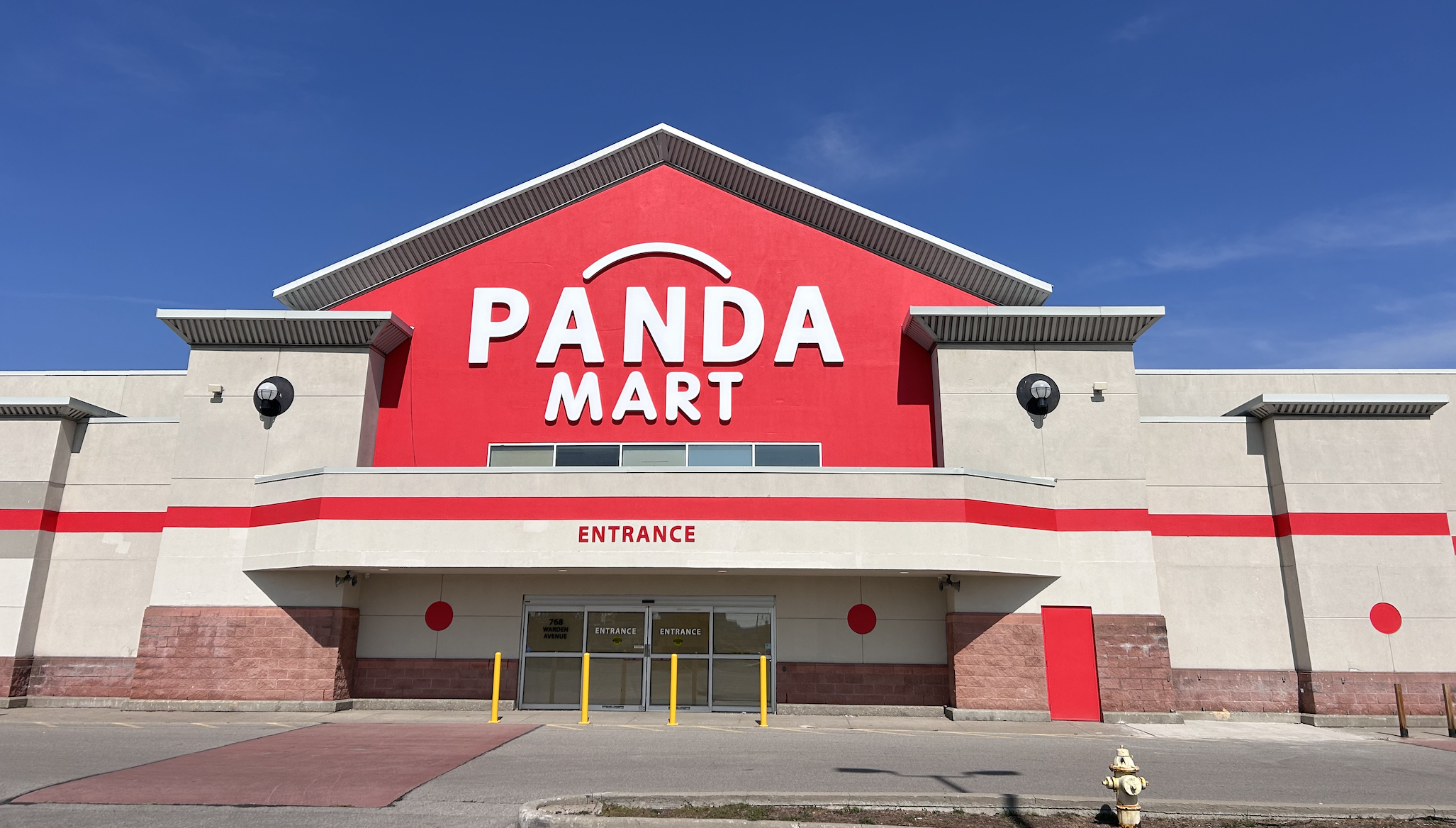
Global commercial real estate advisor, Avison Young, announced Monday the lease of 120,000 square feet at 768 Warden Avenue in Scarborough, Ontario – marking Panda Mart’s first entry into the “active, exciting North American discount retail market” with its’ flagship Canadian location opening on Friday September 26.
Semmi Liu
Avison Young’s Semmi Liu was the exclusive advisor and agent for Panda Mart Canada in securing this location, said the commercial real estate company.
The global retail supplier of household goods, novelties home décor and furniture toriginated in South Africa and has since grown to 40 stores across 12 countries, including Australia, New Zealand, Mexico – and now Canada.
“This Toronto store provides a key entry for Panda Mart into the Canadian market, and Avison Young was honoured to help select this location that will attract customers and remain highly visible for years to come,” said Liu.
Located at 768 Warden Avenue just south of Eglington Avenue, features of this property that make it highly desirable include its’ accessibility to public transit, as well as the nearby Don Valley Parkway and Highway 401, with ample on-site parking for shoppers. This is a thriving, busy mixed-use neighbourhood full of shopping, dining, and residential – making it an ideal spot for Panda Mart to call home, said Avison Young.
Retail investment in the Greater Toronto Area is booming, according to Avison Young’s latest report. In Q2, investment volume increased by 73% quarter-over-quarter and 60% year-over-year, as retail continues to demonstrate itself as an attractive, necessity-based asset in turbulent times.
Panda Mart’s Retail Concept
Panda Mart has built its reputation on a unique large-format discount concept that blends elements of warehouse shopping with the excitement of discovery. Stores are typically located in repurposed big-box spaces and can measure between 80,000 and 130,000 square feet. Each site carries between 28,000 and 53,000 products, offering an extensive assortment that spans home goods, kitchenware, hardware, furniture, toys, stationery, party supplies, electronics, artificial flowers, and more.
The brand differentiates itself from traditional dollar stores by combining an immense variety with pricing that often starts as low as forty cents. Panda Mart positions its outlets as destinations for exploration, encouraging shoppers to browse and uncover new finds at every visit. The approach has attracted significant social media attention, particularly from younger demographics seeking value-driven shopping experiences.
Origins and Company History
Founded in 2010 in South Africa, Panda Mart has grown from a regional chain to a global retail player. Its early expansion was fuelled by sourcing products from Yiwu, China, one of the world’s largest wholesale hubs. The company quickly reached over 100 stores in its domestic market while preparing for broader international growth.
By the early 2020s, Panda Mart accelerated its overseas expansion, entering new markets across Africa, Australasia, and now North America. The retailer has demonstrated a particular ability to repurpose spaces vacated by former big-box tenants, offering affordable variety in markets where other large-format retailers have retreated. This model has enabled Panda Mart to gain traction in diverse economies, from Kenya to Australia.
Today, Panda Mart operates in more than a dozen countries across multiple continents, with new openings announced at a rapid pace. In Africa, the retailer has become a major player, most notably with its flagship at Nairobi’s Garden City Mall, where it anchors alongside established international brands.
In Australasia, the chain has been expanding aggressively. Its first Australian store opened in Cranbourne in February 2025, followed by a second in Preston later that year. In New Zealand, Panda Mart has established popular sites in both Christchurch and Auckland.
Beyond these key markets, Panda Mart has also established itself across multiple African countries and is reportedly exploring opportunities in Asia and the Middle East as part of its ongoing expansion strategy.
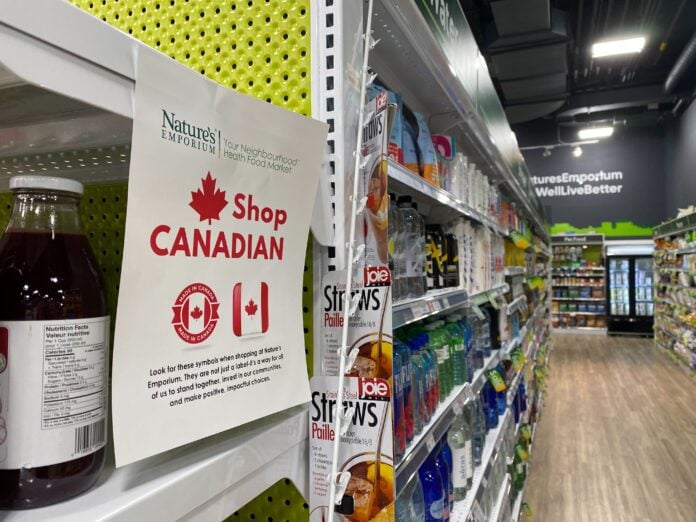
Shop Canadian/Made in Canada/shop local at a grocery store. Photo: Dustin Fuhs
July retail stayed hot in Canada, with All Stores up 5.7% YoY and All Stores Less Automotive, Food, and Pharmacies up 7.5%, evidence of resilient discretionary demand. We see three forces at work: a deal-driven consumer timing purchases differently, retailers pulling demand forward via promotions, and travel behavior keeping more spend locally. Together, they sustain strong topline even as households navigate higher costs.
This year’s Prime Day stretched to four days and was the biggest ever by sales. According to Retail Insider, Canada posted 9% growth, outpacing the U.S., with apparel and beauty leading. Consumers appear to be saving and waiting to spend, pushing up transactions while baskets shrink. The event likely created a halo across ecommerce (and price-matching omnichannel), pulling mid-summer demand forward. Retailers that leaned into “mini Black Friday” mechanics captured share; those that didn’t may have ceded it, even if August comps later even out.
Cost-of-living pressure hasn’t eased, but Canadians are adapting to a “new normal” budget set against near-term gratification. More domestic tourism and staycations kept spend local, with 3 million fewer trips to the U.S. (-33.1% YoY). Those dollars recycled into Canadian retail (apparel refreshes, beauty, outdoor, small home upgrades, and convenience) benefiting tourist hubs and suburban nodes alike.
As we move into the final quarter of 2025, JCWG is thinking about:
Will these numbers stay strong through the end of 2025?
Will Canadians with U.S. homes still travel south this year?
How early will we see Black Friday deals?
How will seasonal creep affect future sales comparisons?
How are YOU preparing for seasonal creep?
Retail Sales by Product Category, Same Month Comparison
Sales for the Month of July
Jul-25
Jul-24
YOY
All Stores
73,434,878
69,457,362
5.73%
Motor Vehicle and Parts Dealers
20,946,766
19,194,078
9.13%
Gasoline Stations
6,639,993
7,096,643
-6.43%
All Stores Less Automotive
45,848,119
43,166,641
6.21%
Food and Beverage Stores
13,913,781
13,337,704
4.32%
Supermarkets and Other Grocery Stores*
9,622,040
9,265,663
3.85%
Convenience Stores
774,087
795,198
-2.65%
Specialty Food Stores
1,027,088
964,156
6.53%
Beer, Wine and Liquor Stores
2,490,566
2,312,688
7.69%
Health and Personal Care Stores
5,916,885
5,619,743
5.29%
All Stores Less Automotive, Food, and Pharmacies
26,017,453
24,209,194
7.47%
General Merchandise Stores
9,711,249
9,310,224
4.31%
Furniture, Home Furnishings, Electronic and Appliance Stores
3,645,242
3,444,385
5.83%
Furniture Stores
1,294,030
1,184,967
9.20%
Home Furnishings Stores
734,863
688,443
6.74%
Electronics and Appliance Stores
1,616,349
1,570,975
2.89%
Clothing and Accessories Stores
3,776,110
3,382,989
11.62%
Clothing Stores
2,955,046
2,624,181
12.61%
Shoe Stores
410,339
389,022
5.48%
Jewellery, Luggage and Leather Goods Stores
410,725
369,786
11.07%
Sporting Goods, Hobby, Book and Music Stores
4,170,137
3,791,708
9.98%
Building Material and Garden Equipment
4,714,716
4,279,887
10.16%
Miscellaneous Store Retailers
2,847,884
2,489,722
14.39%
Cannabis Retailers
485,002
440,701
10.05%
Retail Sales by Store Category, Year to Date Comparison
Year-to-Date Sales Ending July
Jul-25
Jul-24
YTD
All Stores
476,889,787
454,122,846
5.01%
Motor Vehicle and Parts Dealers
136,271,393
125,761,558
8.36%
Gasoline Stations
43,161,429
45,114,367
-4.33%
All Stores Less Automotive
297,456,965
283,246,921
5.02%
Food and Beverage Stores
90,579,353
87,963,074
2.97%
Supermarkets and Other Grocery Stores*
65,111,787
62,861,860
3.58%
Convenience Stores
4,769,216
4,996,503
-4.55%
Specialty Food Stores
6,407,587
5,995,128
6.88%
Beer, Wine and Liquor Stores
14,290,764
14,109,585
1.28%
Health and Personal Care Stores
41,286,370
38,305,606
7.78%
All Stores Less Automotive, Food, and Pharmacies
165,591,242
156,978,241
5.49%
General Merchandise Stores
62,945,054
60,394,775
4.22%
Furniture, Home Furnishings, Electronic and Appliance Stores
24,495,282
23,489,825
4.28%
Furniture Stores
8,199,687
7,797,891
5.15%
Home Furnishings Stores
4,917,346
4,619,352
6.45%
Electronics and Appliance Stores
11,378,249
11,072,583
2.76%
Clothing and Accessories Stores
23,764,389
21,652,503
9.75%
Clothing Stores
18,462,124
16,743,907
10.26%
Shoe Stores
2,550,583
2,528,628
0.87%
Jewellery, Luggage and Leather Goods Stores
2,751,679
2,379,967
15.62%
Sporting Goods, Hobby, Book and Music Stores
26,626,151
24,642,527
8.05%
Building Material and Garden Equipment
27,760,367
26,798,608
3.59%
Miscellaneous Store Retailers
18,003,040
16,044,263
12.21%
Cannabis Retailers
3,168,735
2,887,003
9.76%
Ecommerce Sales
Jul-25
Jul-24
Ecommerce Sales, YTD
27,675,529
25,595,050
8.13%
Ecommerce Sales, YOY
3,811,466
3,649,183
4.45%
Regional Sales, Year to Date Comparison
Region
Year-to-Date, 2025
Year-to-Date, 2024
YTD
British Columbia
65,672,916
61,219,601
7.27%
Vancouver
33,246,986
30,586,666
8.70%
Alberta
61,897,633
58,733,440
5.39%
Prairies*
31,769,631
30,212,334
5.15%
Ontario
177,046,070
169,063,064
4.72%
Toronto
78,026,332
76,009,265
2.65%
Québec
106,103,661
102,031,569
3.99%
Montréal
52,500,057
50,683,653
3.58%
Atlantic Canada
32,673,236
31,220,769
4.65%
Territories
1,726,644
1,642,073
5.15%
NATIONAL RETAIL BULLETIN
Stay up to date with JCWG’s monthly analysis on U. S. and Canadian retail sales.
Three in four Canadians (75%) are eating out less often due to the rising cost of living, according to Restaurants Canada’s2025 Foodservice Facts report released today. That share rises to 81% for those aged 18 to 34, it said.
As a result of this pullback in dining out, the 2025 outlook for foodservice businesses is mixed. An increase in domestic tourism is driving more sales, but Canadians are spending less per capita and opting to eat at home more than they were pre-pandemic, said the national organization.
Kelly Higginson
“While conditions have improved somewhat over the past year, this is still a very challenging market, as Canadians continue to face an affordability crisis and rising operational costs are squeezing operators’ margins,” said Kelly Higginson, President and CEO of Restaurants Canada. “To stay competitive and optimize limited revenues, restaurant operators need to understand current Canadian dining trends.”
Report highlights:
Per capita, Canadians are spending $1,035 at full-service restaurants and $1,135 at quick-service restaurants. In 2019, they were spending $1,165 and $1,150 respectively.
51% of Millennials make a purchase from a restaurant at least once a week, followed by 47% of Gen Z.
Lunchtime traffic at quick-service restaurants increased by 7.6%, surpassing pre-pandemic levels, reflecting return-to-office mandates and affordability concerns.
Solo dining reservations are up 28% compared to last year, according to Open Table.
65% of Canadians are replacing a traditional meal with a snack at least once a month. Millennials (53%) and Gen Z (50%) are more likely to do this at least once a week, compared to only 32% of Baby Boomers and 42% of Gen X.
64% of Canadians ordered delivery in the past six months, with Gen Z (79%) leading the way, compared to just 49% of Baby Boomers.
41% of Canadians report that their alcohol consumption has decreased over the past year, with Baby Boomers (46%) and Gen X (45%) leading the way.
Among those drinking less or no alcohol, 71% cite health concerns, 50% social or lifestyle reasons, and 34% say they are trying to save money.
French fries/potatoes/sweet potatoes/onion rings maintained their top spot as the most often ordered food item but saw the biggest year-over-year decline (-0.7% to 14.9%), while breakfast saw the biggest growth and maintained its second spot (+0.6% to 11.6%).
Hot coffee also remained the top drink order, but saw a 1.4% decline to 39.5%, while fruit juice (+1.5% to 4.9%) and iced tea (+0.5% to 2.3%) gained the most momentum.
Sara Hamdy
“Cost of living concerns are hitting everyone right now, especially younger generations. Canadians still want to dine out or order in, but they are looking for more value for their dollar when they do,” added Sara Hamdy, Research Analyst at Restaurants Canada and one of the report’s authors.
Restaurants Canada is a national, not-for-profit association advancing Canada’s diverse and dynamic foodservice industry. Restaurants are a $124 billion industry employing nearly 1.2 million Canadians and the number one source of first-time jobs in Canada.
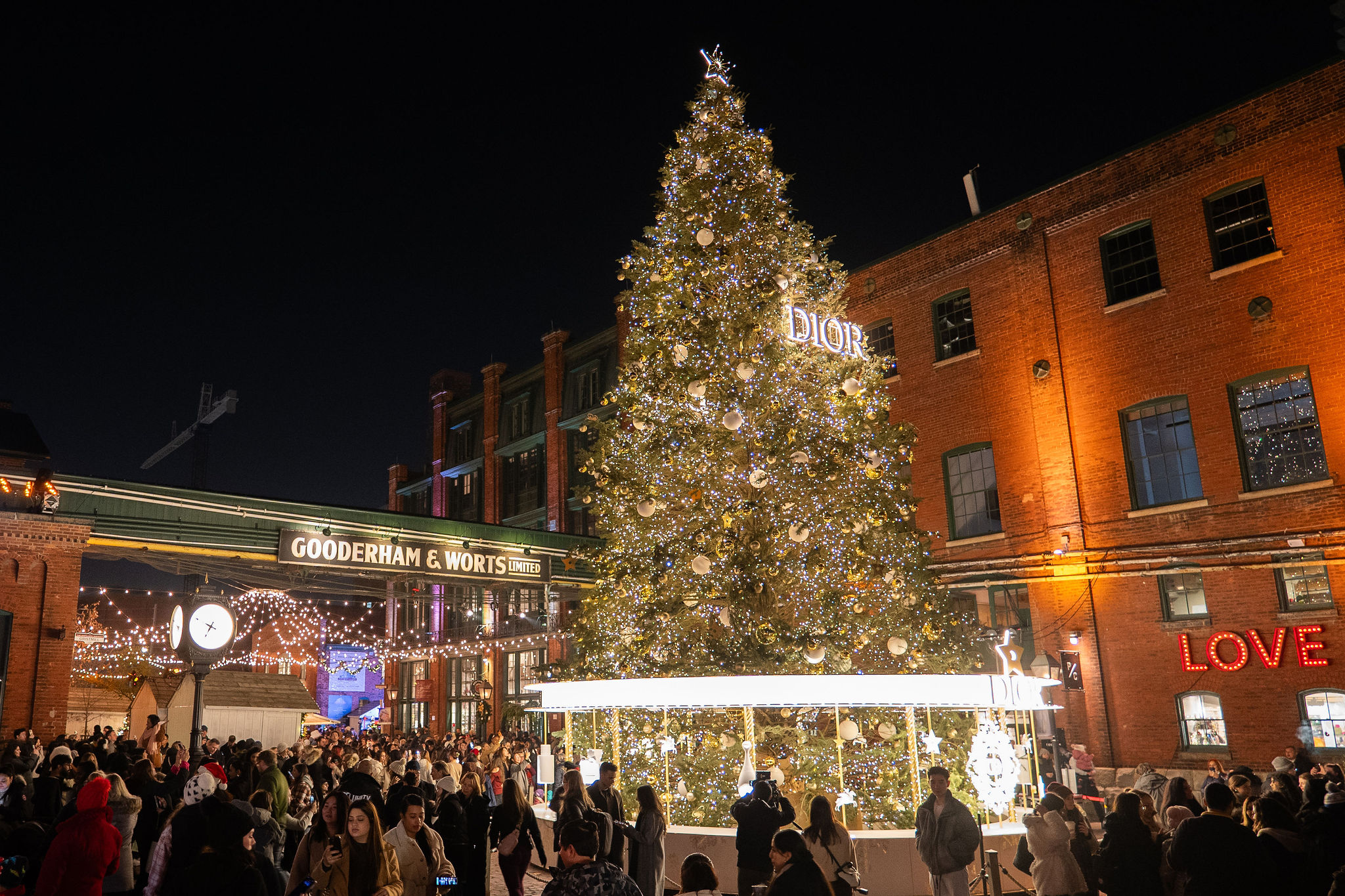
The Distillery Winter Village. Image: The Distillery District Toronto
Christmas may still be months away, but anticipation is already building as Toronto prepares for the return of one of its most cherished holiday traditions. The Distillery Winter Village will once again transform the historic Distillery District into a sparkling, festive wonderland from November 13, 2025, through January 4, 2026.
Organizers say over one million visitors are expected this season, a figure that cements its place as one of the world’s most popular Christmas markets while bringing a significant boost to the businesses that call the Distillery District home. For restaurants, cafés, and boutiques in the area, the market represents the most lucrative period of the year, with sales often rivaling the busy summer season.
Opening Night and Iconic Tree Lighting
The festivities officially begin on Thursday, November 13, at 6:00 p.m., when Toronto hosts its most anticipated seasonal moment: the lighting of Canada’s most iconic Christmas tree. The ceremony is a ticketed event, with proceeds directed to local charities. Thousands are expected to join Santa Claus for the ceremonial countdown before the switch is flipped to light up the towering tree.
At the end of the season, the tree will be donated to Habitat for Humanity GTA, where it will be turned into mulch for 60 homes scheduled for construction in 2026. This adds an environmentally responsible close to the festivities while extending the tree’s impact beyond the holidays.
The Distillery Winter Village. Image: The Distillery District Toronto
New Attractions for 2025
The 2025 season promises fresh experiences while preserving beloved traditions. A Narnia-inspired Santa’s Village will headline the new features, creating a whimsical backdrop for families. Visitors can look forward to roaming carollers, themed outdoor cocktail bars, and the Naughty or Nice Bar, a perennial favourite.
New photo installations and immersive light displays will encourage guests to capture their holiday memories, while the viral Cluny s’mores hot chocolate makes a welcome return. Organizers are also promising a robust entertainment schedule with surprise performances, Boxing Week festivities, and a New Year’s Eve celebration.
“We know it’s early to be talking about the holidays, but we wanted to give Toronto an early Christmas present by launching tickets today so everyone can start planning their visit,” said Rik Ocvirk, Vice President of The Distillery Restaurants Corp. and Director of Experiences and Events at The Distillery Historic District. “Many of The Distillery Winter Village favourites are back this year—from Santa’s Village to the Naughty or Nice Bar to our famous photo ops—but we’ve also got some exciting new experiences in store that we can’t wait to share when we announce the full line-up next month.”
Tickets are required for peak times, including Opening Night, Fridays, Saturdays, and Sundays after 4:00 p.m., Thursdays in December after 4:00 p.m., and daily from December 15 through December 31. Children under nine can attend free of charge. Tickets start at $15 plus service charges and HST, and visitors can check the event calendar at www.TheDistilleryWinterVillage.com to plan their visit.
Timed ticketing has become a key tool for managing large crowds and ensuring that the Distillery Winter Village maintains its intimate, walkable charm even as attendance continues to climb.
The Distillery Winter Village. Image: The Distillery District Toronto
Economic Impact for the District
The Distillery Winter Village has grown into one of Toronto’s most significant seasonal economic drivers. The influx of visitors brings a surge in sales for the district’s more than 40 boutiques, galleries, and specialty shops. Restaurants including Cluny Bistro, El Catrin, and Pure Spirits often book out weeks in advance, and cafés like Balzac’s Coffee Roasters see lines stretching out the door.
This seasonal boost is particularly valuable for small business owners, many of whom rely on the seven-week event to help sustain them through slower months in early winter. The market also provides employment for over 700 seasonal workers, from vendors to entertainers, reinforcing its role as a vital contributor to Toronto’s local economy.
A Historic and Cultural Setting
The Distillery District itself provides an unmatched backdrop for the holiday festivities. Once the site of the Gooderham and Worts Distillery, the area spans 13 acres and is home to more than 40 restored heritage buildings. It was designated a National Historic Site in 1988 and transformed into a pedestrian-only neighbourhood in 2003. Today, it is one of the city’s most visited cultural and shopping destinations.
The unique setting, combined with the scale of the event, has earned the Distillery Winter Village a place on many international lists of the best Christmas markets. Its mix of heritage architecture, retail, dining, and seasonal programming creates a singular holiday experience that attracts locals and tourists alike.
I attended the Amazon Accelerate seller conference this week in Seattle. The conference is designed to engage Amazon independent sellers in person, showcase new capabilities and gather feedback from the community. As a retail analyst, I found this event fascinating. Therefore, I thought I would summarize some of my key takeaways from the show for readers who may be interested.
The conference is massive, and I can see why. Amazon sellers have sold $2.5 trillion worth of merchandise over the last 25 years and about 55,000 sellers have reached the $1 million annual sales threshold in Amazon’s store in 2024. In the US alone, the seller community employed about 2 million people in 2024. Over 60% of sales in Amazon’s store are from independent sellers.
Bruce Winder
Overall, the key takeaway for myself is that small & medium sized sellers now have the tools to compete with big companies without the massive overhead investment required. Why? Two letters: AI.
Agentic AI
Amazon uses agentic AI in many of its seller tools. For those of you who are not familiar with agentic AI, it can think & plan, work independently, reach out to other environments, and adapt and learn. Unlike generative AI, agentic AI focusses on a goal, its proactive, is context aware and works autonomously. Agentic AI will then ask for final confirmation from the user, before actioning a recommended task.
Using agentic AI, Amazon allows sellers to delegate mundane but important tasks. This saves sellers hours of work so they can focus on more value-added things like product development. Sellers can also use AI to analyze and make recommendations on how to improve a seller’s business. Sort of like hiring a team of big-name consultants without the time and cost.
Amazon Seller Assistant
Using the Amazon Seller Assistant, merchants use agentic AI to list their products in a fraction of the time it would take to do so manually. About 1.3 million merchants are using Amazon’s generative AI listings tools now. Sellers can simply upload a picture and the tool can create detailed listings quickly. Inventory levels are monitored and new orders recommended. If a product is moving slowly, a markdown may be suggested. The other interesting component of the Amazon Seller Assistant is that you can ask further questions and go back and forth, like a manager would with an employee presenting a solution in a meeting. The tool is iterative.
Creative Studio
Amazon sellers can also use AI to get creative. Like having your own creative director at no cost, producing insight-based ads in almost real-time. Just provide the target audience, some inputs or references you like and presto! you have a choice of storyboards to review. It can also generate videos, music and more.
Supply Chain
Another enhancement involves supply chain and Fulfillment by Amazon (FBA). Currently about 80 billion products have shipped through FBA since it launched in 2006. With the use of AI, Amazon is now able to reduce shipping time from 1 day to same day in many cases. On average, when a seller makes this change, they see a + 20% increase in sales. FBA offers sellers improved speed, reliability, agility and scalability as they grow.
Amazon has also increased their global warehousing capabilities. The retailer will hold a seller’s inventory near where it is produced around the world. Stock is then shipped to end users, wherever they may be. Often these warehouses are in low-cost countries where supply chain and warehousing costs may be lower. AI is also used to reduce shipping errors and lower the time for sellers to classify a product for customs purposes. It also helps with navigating local country laws to ensure product compliance. By 2026, Amazon will have direct arcs (direct delivery routes from warehouse to end user) for over 95% of seller counties of origin.
One of the services Amazon offers sellers, is Amazon Multi-Channel fulfillment (MCF). With this solution, merchants can have Amazon pick, pack, and ship their orders for channels beyond Amazon.com. About 300,000 sellers currently use MCF worldwide. When a seller uses both MCF and FBA, out-of-stock rates drop 19% and inventory turnover improves by 12% on average. The big change now is that sellers can use Amazon MCF to fulfill orders on Walmart, with new capabilities for Shopify as well as SHEIN, by year-end. This allows sellers to utilize Amazon’s logistics network to reach far more customers efficiently. Amazon has changed from competitor to collaborator with this capability.
Summary
Times have changed. It used to be running a small business meant not having the tools or budget to manage your business with the sophistication of a Fortune 500 company. Entrepreneurs would often spend 16-hour days muddling through spreadsheets or shipping boxes from their garage. No more. While at the conference, I listened to countless sellers who were able to take a farmers market level business to something huge by getting the customer reach that Amazon offers. And now, they can use agentic AI to take their companies to another level with limited expense and significantly reduced effort.
Italian handbag and luggage brand Mandarina Duck is making its official online entry into the Canadian market this year as part of its ongoing global expansion strategy. The brand confirmed that its revamped e-commerce platform will soon support direct orders and shipping to Canada, enabling Canadian consumers to purchase Mandarina Duck’s colourful bags and travel accessories directly from its official online store.
This strategic move comes amid a period of steady international growth for Mandarina Duck, which is owned by South Korea’s E-Land Group. The company is forecasting €33.5 million in revenue for fiscal 2025, with e-commerce expected to represent approximately 5% of total sales. By extending its online reach to Canada, the brand is seeking to capture a growing audience of travel-inspired, style-conscious shoppers who value convenience and direct-to-consumer access.
Mandarina Duck’s new Canadian e-commerce site will mirror the brand’s latest global digital experience, designed to provide a seamless and immersive shopping journey. Orders placed by Canadian customers will be processed through the brand’s central online store, with regional shipping and secure payment processing now part of its international offer.
The company’s strategy emphasizes creating digital environments that are consistent with its physical store concept. This means Canadian customers can expect an experience that reflects Mandarina Duck’s core values of movement, innovation, and discovery. The brand has stated that both its physical stores and online channels are evolving into places of inspiration and engagement, rather than simply points of purchase.
Strategic Growth Focus on Digital Channels
Mandarina Duck’s Canadian e-commerce launch underscores a broader strategic pivot towards digital channels. While no new physical market openings are planned for 2025, online sales outside of Italy already account for roughly 60% of the brand’s total e-tail revenue. The company’s strong performance in both EU and non-EU markets has provided the confidence to move forward with the Canadian rollout, which is expected to further diversify its revenue base.
In 2025, Mandarina Duck anticipates that its monobrand stores will generate about 30% of total revenue, wholesale operations will contribute 60%, and e-tail will account for 5%. Although the e-commerce channel remains a smaller portion of the overall business, its share is growing and is seen as a key area for future international expansion.
Brand Identity and Global Presence
Founded in Bologna in 1977 by Paolo Trento and Pietro Mannato, Mandarina Duck quickly became known for its colourful and innovative leather goods at a time when much of the luggage and accessories market favoured conservative, monochrome designs. Its name and logo are inspired by the mandarin duck, a bird symbolizing travel, curiosity, and companionship.
Today, Mandarina Duck operates around 10 monobrand stores in Italy, maintains two corners within Spain’s El Corte Inglés department stores, and is present at key outlet destinations including La Roca Village and Fidenza Village. Globally, the brand is carried by about 600 wholesale retailers and is visible in international airports and duty-free locations. Its stores in cities such as Barcelona, Berlin, Milan, Seoul, Shanghai, and Paris showcase a standardized design concept first introduced at Bergamo Airport, which has since been rolled out to locations in Venice, Florence, and Verona.
Fall/Winter 2025–26 Collection and Campaign
Coinciding with its e-commerce expansion, Mandarina Duck has launched its Fall/Winter 2025–26 campaign, which celebrates Rotterdam’s distinctive architecture. The campaign pays tribute to Piet Blom’s famous Cube Houses and the Erasmusbrug bridge, highlighting themes of discovery and smart travel. The MVRDV-designed Depot Boijmans Van Beuningen Museum also features as a symbol of innovation and artistic curation.
The collection introduces several key pieces, including the Hunter Velvet line, which adds a sophisticated touch to the brand’s urban-oriented Hunter range, and the Y-Lite series, designed with ultra-light materials ideal for city breaks. Additional highlights include the Smartduck collection, which offers pared-down functional shapes for modern travel, and the Skyduck line, built to be durable yet lightweight. The popular Eco Coated series has also been updated, using 100% recycled polyester fabrics as part of the brand’s commitment to sustainability.
Sustainability and Innovation
Mandarina Duck has made sustainability a cornerstone of its product strategy in recent years. The brand’s ECO COATED collection reflects its focus on responsible manufacturing by using recycled PET polyester and other environmentally conscious materials. This approach aligns with the growing consumer demand for products that combine style with sustainability, a trend that has been particularly strong among younger shoppers in Canada.
The company’s decision to invest in an enhanced e-commerce presence in Canada also reflects a recognition of changing shopping behaviours, with Canadian consumers increasingly favouring online channels for fashion and lifestyle purchases. The move positions Mandarina Duck to engage directly with this audience, offering exclusive collections, storytelling campaigns, and a consistent brand experience across digital and physical touchpoints.