Tim Hortons says $1.3 million was raised through the sale of Special Olympics Donuts, with 100% of proceeds donated to Special Olympics Canada.
“This campaign shows what’s possible when Canadians choose to include,” says Gail Hamamoto, CEO of Special Olympics Canada. “Every Special Olympics Donut purchased will help open doors for athletes of all ages and abilities across the country – fueling confidence, connection, and opportunity through sport.
Gail Hamamoto
“We are deeply grateful to our partner Tim Hortons, their restaurant owners, team members, guests, our Special Olympics community and every supporter who believes in the power of inclusion- in sport and in life.”
The funds raised from Special Olympics Donuts support year-round, inclusive sport programs for more than 40,000 athletes with intellectual and developmental disabilities in communities across Canada, said officials.
Axel Schwan
“We’re so proud of Tim Hortons restaurant owners and their team members from across the country for raising $1.3 million through Special Olympics Donuts,” said Axel Schwan, President of Tim Hortons. “Thank you to Tim’s guests for their incredible support. Your generosity is helping to make sports more accessible for Special Olympics athletes.”
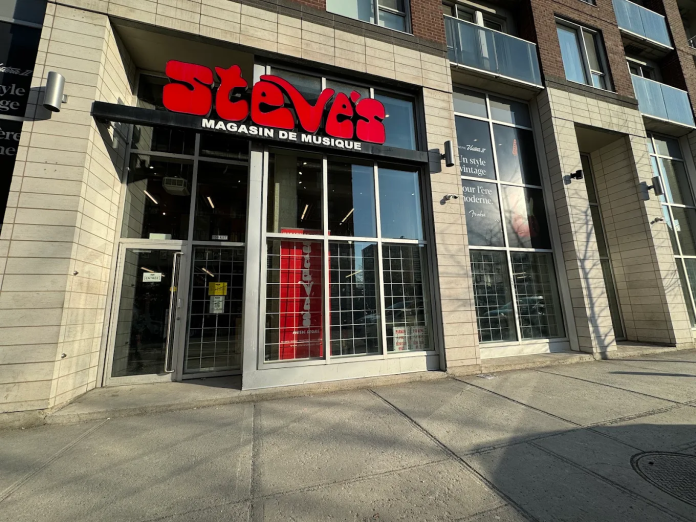
Steve's Music in downtown Montreal. Photo: Steve's Music
Montreal-founded musical instrument retailer Steve’s Music is undertaking a major restructuring that will see most of its Canadian brick-and-mortar locations close. The business will concentrate around a single flagship store in Montreal while shifting more heavily toward online sales.
The move represents a significant transition for a chain that has operated for six decades and has long served as a destination for musicians in several major Canadian cities. Management has described the initiative as a restructuring intended to keep the company competitive in a challenging retail environment.
Chain moves into liquidation across five stores
Steve’s Music currently operates five locations across Canada, including three in the Montreal area as well as stores in Toronto and Ottawa. The Montreal stores are located on Rue Sainte-Catherine East in Ville-Marie, in Dollard-des-Ormeaux, and in Greenfield Park. The Toronto store is on Queen Street West, while the Ottawa location is on Catherine Street in Centretown.
The company has launched “everything must go” liquidation sales at all five stores, with discounts of up to about 50 percent promoted for the initial weekend of the announcement. Management has described the process as a restructuring designed to “stay strong” or “remain robust” while reorganizing operations.
According reports, the intent is to close every location except the flagship on Rue Sainte-Catherine East in Montreal. That store is expected to remain open after the restructuring as the company focuses on a single physical location supported by e-commerce.
The Ottawa store is confirmed to be closing and is currently liquidating inventory. No firm final day of operation has been announced. The Toronto Queen Street West location, as well as the two suburban Montreal stores, are also part of the liquidation event and are expected to close as part of the Steve’s Music restructuring.
Customers and staff have described the closures as a major loss for local music communities, particularly in downtown Ottawa and Toronto where large, full-line music retailers have become increasingly rare.
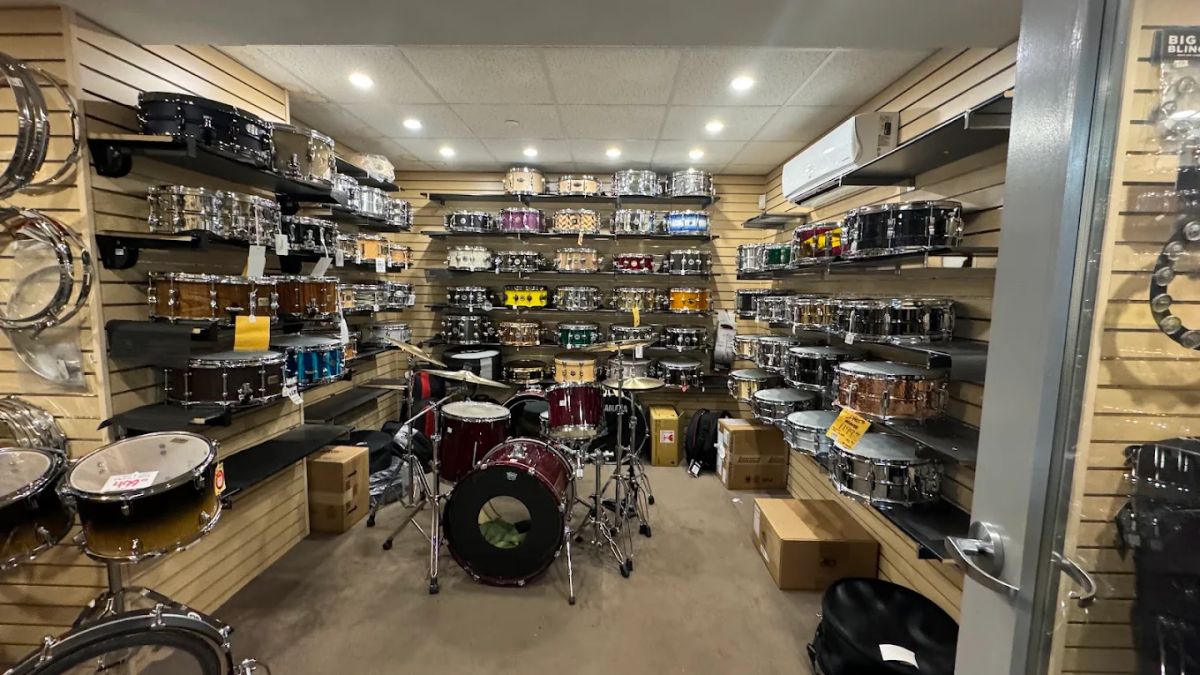
Steve’s Music in Montreal. Photo: Patrice Béliveau-Nadeau via Google Maps
Six decades of music retail history
Steve’s Music was founded in Montreal in 1965 by Steven Kirman, who opened the original store in Old Montreal at the age of 18. The business grew to occupy most of a city block on what is now Rue Saint-Antoine, becoming a landmark destination for local and touring musicians.
The company expanded outside Quebec in 1977 with the opening of its Toronto store on Queen Street West. That location introduced a “try before you buy” approach that was uncommon in the local market at the time and became a defining feature of the brand.
Over the following decades, Steve’s Music built out its presence in Montreal’s downtown core as well as in suburban markets such as Dollard-des-Ormeaux and Greenfield Park. The Ottawa location operated on Rideau Street for 42 years before relocating to Catherine Street in 2024. Management cited crime, safety concerns, and challenging operating conditions on Rideau Street as reasons for the move.
Founder Steven Kirman died in 2012 at the age of 65. The business has since been led by his son, Michael Kirman, who continues to represent the company publicly.
A long-standing role in Canadian music communities
For decades, Steve’s Music positioned itself as a full-line, mid-to-large format music retailer. Its stores carried guitars, drums, keyboards, recording gear, DJ equipment, synthesizers, and accessories, with a strong emphasis on in-person testing.
The company’s locations became important hubs for musicians of all levels. Customers often visited to test instruments before tours or recording sessions, and the brand built a reputation for its hands-on retail experience.
The Queen Street West store in Toronto, in particular, grew alongside the transformation of the surrounding neighbourhood from a gritty, alternative strip into a more mainstream commercial corridor. The ability to try instruments before purchasing remained central to the retailer’s identity and served as a key point of differentiation from online competitors.
Shift toward e-commerce amid retail pressures
Company representatives have framed the Steve’s Music restructuring as a strategic move to remain competitive in a difficult environment for brick-and-mortar music retailers. Management has pointed to changing customer traffic patterns and the continued shift toward online purchasing.
The Ottawa store’s management has publicly discussed the need to adapt as more sales move to digital channels. The company is expected to rely more heavily on e-commerce once the restructuring is complete.
The broader context includes ongoing pressure on specialty retailers from online competitors, changes in downtown foot traffic, and local operating challenges in certain urban markets.
A turning point for a legacy retailer
The Steve’s Music restructuring marks a major turning point for one of Canada’s best-known music retail chains. The company celebrated its 60th anniversary in 2025, with local media highlighting its historic role and ongoing relevance in Montreal’s music community.
As liquidation sales continue across the chain’s five locations, the future of the business is expected to centre on its Montreal flagship and online operations. The transition reflects broader shifts in specialty retail and the evolving role of physical stores in an increasingly digital marketplace.
IKEA Canada is proud to partner with the Africville Museum to host A Walk Through Africville at IKEA Halifax throughout February. (CNW Group/IKEA Canada Limited Partnership)
IKEA Canada has partnered with the Africville Museum to host A Walk Through Africville at IKEA Halifax throughout February.
The travelling exhibit will be featured in the store’s community space, offering customers and community members an accessible opportunity to learn about the history, resilience, and enduring legacy of Africville – a historic Black community with deep significance in Canada, said the retailer.
Nova Scotia is recognized as the birthplace of African presence in Canada. The province is home to more than 50 historic African Nova Scotian communities whose culture, heritage, and contributions have been a fundamental part of Nova Scotia’s history and development for over 400 years. This rich legacy continues to shape the social, cultural, and economic fabric of the province today, added IKEA.
As part of IKEA Canada’s commitment to equality, diversity, and inclusion, the retailer said the exhibit invites visitors to engage with curated photos, artifacts, and storytelling developed by the Africville Museum.
A Walk Through Africville will be on display at IKEA Halifax until February 28.
“At IKEA, we design for life at home because home is more than four walls, it’s where connection, community, and belonging are built. Africville’s story reminds us that systemic injustice can strip away the foundations of home, but hope, resilience and community endure. We are honoured to host A Walk Through Africville and create space for reflection, learning, and belonging.”
The exhibit is free and open to all during regular store hours, and guests are encouraged to explore, learn, and reflect as they walk through this important piece of Canadian history.
Juanita Peters, Director of the Africville Museum, leads a powerful conversation with Africville Elders during the exhibit opening at IKEA Halifax. (CNW Group/IKEA Canada Limited Partnership)
“We are grateful for the opportunity to bring our exhibit into a space where thousands of people can experience it,” said Juanita Peters, Executive Director, Africville Museum. “The installation allows visitors to connect with the people, culture, and history of Africville in an accessible and meaningful way. Partnerships like this help ensure that Africville’s legacy of resilience, strength, and community continues to be shared with future generations.”
Located on the shores of the Bedford Basin in Halifax, Africville was home to a thriving Black community for more than 100 years before being demolished in the 1960s under the guise of “urban renewal,” said a news release.
“Its destruction displaced generations and remains a powerful reminder of systemic racism in Canada. In 2024, Africville was designated as Canada’s first UNESCO Place of History and Memory linked to Enslavement and the Slave Trade, marking global recognition of its cultural and historical significance. The Africville Heritage Trust and Africville Museum continue to preserve and share this legacy through education, advocacy, and cultural programming.”
IKEA Canada is proud to partner with the Africville Museum to host A Walk Through Africville at IKEA Halifax throughout February. (CNW Group/IKEA Canada Limited Partnership)
Retail Insider is streamlining its Canadian retail news from around the web to include a handful of top news stories that can be viewed quickly during the day. Here are the top stories from the past 48 hours.
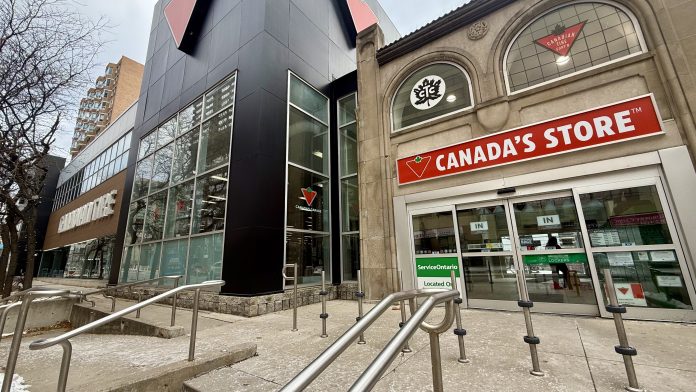
Canadian Tire [Toronto, 839 Yonge Street]. Photo: Craig Patterson
Canadian Tire has been ordered to pay $1,287,550 in fines and costs after a Quebec Court judge approved a settlement resolving 74 charges of false advertising tied to inflated “regular” prices in the Montreal area. The decision closes a case stemming from a 2021 investigation by provincial regulators and marks one of the larger penalties imposed in a deceptive pricing matter in Quebec.
The Canadian Tire false advertising case centres on allegations that certain products were promoted with reference prices that did not reflect actual selling practices. Regulators concluded that the discounts advertised to consumers were based on inflated regular prices that were rarely, if ever, used in the market.
Judge Simon Lavoie of the Court of Quebec in Montreal ratified the agreement between Canadian Tire and the prosecution, setting total fines and costs at just under $1.3 million. The penalties range from $15,625 to $18,150 per count across 74 offences.
The charges were laid under Quebec’s Consumer Protection Act after a six month investigation conducted in 2021 by the Office de la protection du consommateur, commonly known as the OPC. The agency is responsible for enforcing consumer protection rules across the province.
Canadian Tire initially entered a not guilty plea, a step that Crown prosecutor Jérôme Dussault described as the company’s legitimate right before negotiations began. Discussions between the parties led to a joint submission outlining the number of counts, the fine range per count, and the total amount. Judge Lavoie accepted that submission.
Under the terms of the agreement, Canadian Tire has 12 months to pay the full amount.
Investigation Focused on Inflated Reference Prices
The Canadian Tire false advertising case focused on how the retailer presented regular or reference prices in flyers, on its website, and on in store displays. The OPC found that some of those reference prices were artificially inflated, which made advertised discounts appear more substantial than they actually were.
According to the regulator’s analysis of sales data, the products in question were rarely sold at the alleged regular price online and were practically never displayed at that price in stores during the investigation period. Authorities concluded that the supposed regular price effectively did not exist in the market, making the advertised discount misleading.
OPC spokesperson Charles Tanguay explained that the agency demonstrated the reference prices were inflated, which misrepresented the actual discount available to consumers. From the regulator’s perspective, the issue was not that customers paid more than the advertised sale price, but that they were led to believe they were receiving a larger discount than was truly available.
The OPC said such practices undermine consumer trust and contravene Quebec’s strict rules on the use of regular or reference prices in advertising.
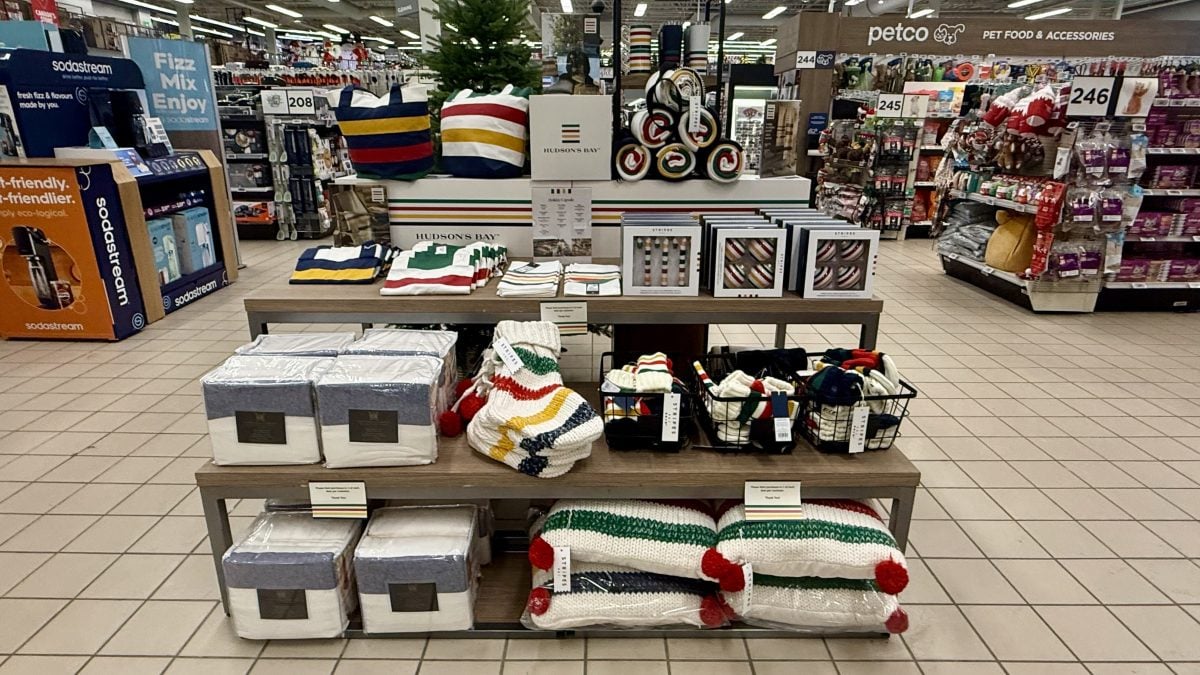
Hudson’s Bay Stripes collection at Canadian Tire [Toronto, 839 Yonge Street]. Photo: Craig Patterson
Scope of the 2021 Investigation
The investigation covered the period from April to October 2021 and examined price representations across Canadian Tire flyers, its website, and three stores in the greater Montreal area.
Seven products were initially targeted, with regulators tracking their pricing across different channels and locations. Under the settlement, Canadian Tire admitted guilt for five of the seven products investigated. These included Henckels knife sets, Cuisinart knife sets, Lagostina cookware sets, Heritage cookware sets, and a DeWalt cordless drill.
Three specific stores were part of the original investigation but were later removed from the case during negotiations for confidential reasons. Responsibility for the offences ultimately rested with the corporate entity.
Legal Framework Under Quebec Consumer Protection Law
The charges were laid under section 225(b) of Quebec’s Consumer Protection Act, which prohibits merchants from falsely indicating a regular price or other reference price for goods. The provision is designed to prevent retailers from using unrealistic or seldom used reference prices to create the illusion of large discounts.
In the Canadian Tire false advertising case, the total fines and costs reached $1,287,550 across 74 counts. The amount has been described in some commentary as a record level penalty following an OPC pricing investigation.
The case also highlights the investigative approach used by Quebec authorities. Regulators combined documentary evidence from flyers, websites, and in store signage with detailed sales data analysis to demonstrate that the reference prices were not genuine market prices.
Company Response and Position
Canadian Tire acknowledged responsibility for the five specified products and the 74 counts tied to the 2021 investigation period. The company has emphasized in public statements that, in its view, no customers were overcharged on the items in question. The issue, it said, related to how discounts were represented relative to the referenced regular prices.
The retailer has also characterized the violations as relating to a limited set of products over a defined six month window several years ago. From the company’s perspective, the matter is now resolved and closed.
Implications for Retail Pricing Practices
The Canadian Tire false advertising case underscores the strict approach Quebec regulators take toward reference pricing. Retailers operating in the province must ensure that any regular price used in advertising reflects a genuine selling price supported by actual sales history and in store display practices.
The case also signals to national chains that regulators are willing to scrutinize historical pricing data when evaluating whether advertised discounts are truthful. For large retailers and franchise systems, the outcome reinforces the need for strong compliance controls over how promotional and regular prices are set and communicated across flyers, e commerce channels, and physical stores.
This week in Canadian retail, resilience and strategic recalibration continue to shape the landscape as brands and real estate adapt to economic pressures and shifting consumer expectations. Key themes include experiential retail’s rising prominence, luxury brand expansion, and the persistent challenges specialty and legacy retailers face amid changing market dynamics. The approaching Valentine’s Day and ongoing Olympic Winter Games celebrations further underscore consumer sentiment and community engagement as vital retail drivers in this period.
Retailer News
Cadillac Fairview is actively transforming its malls into vibrant community hubs by introducing immersive experiences centred on the 2026 Olympic Winter Games and Chinese New Year festivities. This deliberate focus on experiential activations, including winter sports simulators and cultural performances, exemplifies a broader industry effort to drive foot traffic and deepen local engagement in retail spaces (Cadillac Fairview malls celebrate Olympics and Chinese New Year).
Luxury retail also marked a notable expansion with Swiss watchmaker Tudor opening new boutiques on Toronto’s Bloor Street and, soon, in Vancouver. These additions, part of a growing high-end footprint complemented by omnichannel strategies, speak to luxury’s enduring appeal and its nuanced role in an evolving Canadian market (Tudor Expands Canadian Boutique Network with Bloor Opening).
Conversely, legacy and specialty retailers face tough restructuring decisions. Toys “R” Us Canada’s filing for CCAA protection highlights the enduring pressures from high operational costs and diminished store counts, wherein real estate asset liquidation may be a critical piece of business stabilization (Toys “R” Us Canada Seeks CCAA Protection). Meanwhile, Eddie Bauer’s impending exit from the Canadian brick-and-mortar scene underlines accelerating shifts toward digital and wholesale models in the outdoor apparel segment, raising concerns about growing vacancy rates and tenant churn in retail real estate (Eddie Bauer Poised to Exit Canada as Store Shutdown Looms).
The relaunch of Westbeach under Chip Wilson’s leadership in Vancouver reflects a countervailing trend prioritizing experiential retail grounded in heritage and community. By focusing on a flagship physical presence and delaying e-commerce rollout, the brand is signalling a bet on in-person engagement and local market authenticity (Westbeach Returns With Vancouver Flagship and National Plans).
Retailer Financials / Trends / Reports
Statistics Canada’s report of a 1.8% retail sales growth for November 2025 illustrates nuanced shifts within consumer expenditure. Food and beverage sales, particularly women’s apparel, lead gains while the automotive sector experiences a downturn, painting a complex demand picture that informs retail programming and leasing strategies (Statistics Canada reports retail sales growth).
The Super Bowl remains a significant retail catalyst, with its broad audience driving spikes in food-related sales and consumer engagement. This event’s impact underscores the strategic value of targeted marketing tied to cultural moments for both food retailers and commercial space operators (Advertisers gear up for huge Super Bowl audience).
Retailer People News
Leadership appointments continue shaping retail dynamics, as Marc Cain’s hiring of Jessica R’Bibo as President of Marc Cain Canada marks a sharpened focus on penetrating key urban markets with a premium women’s apparel offering supported by both boutique and digital channels (Marc Cain Appoints New Canada President for Growth).
The entrepreneurial insights shared by Marc Lafleur, from growing truLOCAL to launching an AI venture studio, highlight the vital intersection of resilience, innovation, and mentorship. His perspective offers valuable lessons for retail and real estate sectors invested in nurturing homegrown, scalable consumer brands (Lessons learned along the entrepreneurial journey).
Retailer Op-Eds
The Super Bowl’s evolution into a major food spending occasion in Canada reflects shifting consumer behaviours towards shared, premium at-home dining experiences. This op-ed explores how such cultural events reshape grocery and foodservice strategies, reinforcing the need for retailers to tap into social and digital trends to maximise impact (Super Bowl Drives Major Food Spending in Canada).
Meanwhile, commentary on Canada’s new Grocery Code of Conduct clarifies its role in fostering fairer supplier-retailer relationships without directly lowering prices. This nuanced stance alerts stakeholders to the structural complexities behind food inflation and the importance of balanced supplier ecosystems for long-term market health (Why Canada’s Grocery Code of Conduct Won’t Lower Food Prices).
Editor’s Take
This week’s coverage points to a retail sector at a crossroads of adaptation and strategic realignment. Cadillac Fairview’s experiential activations and Westbeach’s community-centred retail-first approach underscore how brands and landlords are increasingly prioritizing immersive, localized experiences to counteract the headwinds of economic pressures and shifting consumer priorities. These approaches are not merely aesthetic but tactical, aiming to breathe vitality into physical retail spaces challenged by digital disruption and tenant volatility.
On the other hand, the luxury segment’s measured expansion, exemplified by Tudor’s boutique growth, signals strong demand resiliency where brand narratives and exclusivity underpin growth potential. This contrasts starkly with hard-hit sectors like specialty toys and outdoor apparel, where financial restructuring and market exits highlight ongoing structural vulnerabilities. In this light, the evolving consumer behavioural data around Valentine’s Day and broader discretionary spend reflect a marketplace rebalancing toward value, personalization, and emotional relevance — essential cues for merchandising and marketing strategies across all retail segments.
Finally, leadership moves and entrepreneurial insights remind us that agility and innovation remain foundational to navigating these shifts. As retail converges with technology and community, successful operators and landlords will be those who read beyond surface trends, integrating experiential retailing with strategic brand positioning and robust digital complements. The Grocery Code of Conduct conversation, alongside macroeconomic pressures reported, further emphasises that sustainable retail success requires both fair collaboration and market-driven adaptations rather than quick-fix solutions.
Creating a portfolio as a fresh graduate can be a bit tricky. You’ve got a handful of projects, maybe an internship or two, and lots of potential. But the experience bit is significantly lacking.
However, when well-crafted and presented through both digital formats and the use of professional printing services, you can show employers who you are and what you can do. The digital version will show what you are about, and the printed versions will come in handy during interviews, presentations, career fairs, and assessment centers.
But before that, you need to know how to draft and organize the portfolio so that it lets your skills shine while giving a clear idea of your potential. That’s what we’ll look at today.
Start with a clear purpose
Before you even draft the proposal, you need to think about why it exists in the first place. Who will be looking at it, and what would you like to convey to them? Even the introduction alone can make potential employers interested in your work and skills.
Since you don’t have much experience, the goal here is to highlight your potential and versatility. Each piece you include, and especially the descriptions, should be framed as an idea of what you can do. Even if it’s a small internship, let it show your skills clearly.
Showcase your strongest work first
Employers don’t really have the time to dig through every project as they are also reviewing lots of applications. This means you don’t have to display all of them, just the relevant ones or those that show a clear idea of your potential.
Maybe it’s a class project that had measurable results or an internship where you had a significant impact on a project or process. It can even be a personal project that shows your creativity and skill.
When listing them, start with your strongest work. This makes your portfolio more intriguing to employers and encourages them to go through your other projects.
Provide context for each piece
Portfolios are often a showcase of skill, but that works more in favor of experienced professionals. Instead of simply describing the project, give the story behind it. Explain the challenge, your approach, and the outcome. This will help them understand what you did and why it mattered.
Even if it’s a class assignment or volunteer project, it can showcase your abilities when framed well. Explain your role, the goals, and the results.
However, don’t go into unnecessary detail. Keep it just enough for someone to understand the significance.
Include transferable skills and achievements
When employing fresh graduates, employers are usually more focused on how they can enhance existing skills. This means your portfolio should position the skills and accomplishments that can move you from one context to another. Things like teamwork, problem solving, time management, creativity, and communication.
These types of skills show potential employers that you are adaptable and ready to contribute even if your experience is minimal. Accomplishments don’t even have to be a huge factor. If you completed a challenging assignment, led a group project, or found an innovative solution to a problem, these all matter. You can also briefly point out the impact of your work as employers tend to have a keen eye for results.
Polished printed copies for interviews and presentations
Ensure the printed version of your portfolio is clean and professional. You can use online printing services so that you can submit your digital copy, and they’ll ensure that your text is clear, the color is coordinated, and there’s consistency in the layout.
The physical copy will also appear polished, and it will give you an edge in interviews or career fairs. It will actually show that you care about details and results, which is a big plus when looking for a job.
The Just Socks Foundation has launched its 11th Annual Emergency Sock Drive, a winter campaign aimed at supplying new socks to people experiencing homelessness and hardship across Canada. The drive runs through February 15, 2026, and will culminate in a major distribution event known as the Big Sock Drop on February 13 in Concord, Ontario.
More than 40 charities from across the Greater Toronto Area and elsewhere in Ontario are expected to gather in person to pick up tens of thousands of pairs of new socks for immediate distribution. The annual campaign comes after a milestone year for the organization, which recently donated its one millionth pair of socks.
The Just Socks Foundation sock drive addresses a basic but often overlooked need. In 2025 alone, the organization distributed more than 160,000 pairs of new socks to over 100 charities across Canada, reinforcing the importance of consistent supply during cold weather months.
Foundation leaders say that socks are among the most urgently needed items for people living outside or in shelters, yet they remain one of the least donated essentials.
“New socks are one of the most urgently needed items for people living outside or in shelters — yet they are also among the least donated,” said Terry Smith, President of Just Socks Foundation. “Socks play a vital role in foot health, hygiene, and overall dignity. Our mission is simple: provide high-quality, new socks to the people who need them most, exactly when they need them.”
Individuals experiencing housing insecurity may walk up to 15 kilometres each day in search of food, shelter, and services, often with only one pair of socks. Exposure to rain, snow, and cold conditions can quickly lead to wet feet, discomfort, and serious health complications.
For health and safety reasons, most charities can only accept new socks, which makes monetary donations the most effective way to meet demand. The Just Socks Foundation sock drive focuses on converting donations directly into bulk sock purchases for immediate distribution.
Terri Smith, President of Just Socks
Supplier Partnership Supports National Distribution
The foundation works closely with long-time supplier Perri’s Corporation, which provides high-quality “comfort socks” produced specifically for the organization at below-market cost. The socks are then distributed directly to charity partners across the country.
“As a family business, we are proud to support Just Socks Foundation and its focused, practical approach to helping those in need,” said Anthony Perri, President and CEO of Perri’s Corporation. “It’s a simple item that makes a profound difference.”
The organization operates as a fully volunteer-run charity with a digital-first model. According to the foundation, about 95 per cent of funds raised are directed toward the purchase and shipping of new socks to partner charities nationwide.
Photo: Just Socks
Big Sock Drop Set for February 13
The 2026 campaign will culminate in the Big Sock Drop on February 13, when charity representatives gather at Perri’s Corporation’s Concord facility to collect tens of thousands of pairs of socks. The event provides immediate supply to organizations serving people experiencing homelessness across the region.
More than 40 charities are expected to attend the in-person distribution, which offers both logistical efficiency and a strong visual demonstration of the campaign’s impact. The Just Socks Foundation sock drive uses the annual event to ensure that donations translate quickly into tangible support for those in need during the winter season.
The foundation says that demand remains high, particularly during cold weather, when clean, dry socks can have a direct impact on comfort, hygiene, and overall health.
Photo: Just Socks
How the Public Can Support the Campaign
The Just Socks Foundation encourages donations through its online platform, where contributions are converted directly into sock purchases. According to the organization, a $100 donation provides a box containing 60 pairs of socks, while $50 provides 30 pairs. Tax receipts are automatically issued for donations over $3.
Now in its 11th year, the Just Socks Foundation sock drive continues to rely on public contributions, corporate sponsors, and charity partners to sustain its distribution efforts across Canada. Since its founding in 2013, the organization has focused exclusively on supplying new socks to homeless and marginally housed individuals, addressing what it describes as one of the most essential and under-donated items.
With winter conditions intensifying across much of the country, the foundation says the need for donations is immediate, as it works to keep people a little warmer and more comfortable during the coldest months of the year.
Future Bang & Olufsen at 135 Yorkville Avenue. Photo: Craig Patterson
Bang & Olufsen is preparing to make a formal return to Toronto’s luxury retail landscape with a new store opening at 135 Yorkville Avenue. The Danish luxury audio and visual brand has secured the Yorkville address, and marking the company’s re-entry into one of Canada’s most prominent high-end shopping districts.
The forthcoming Yorkville location follows the closure of Bang & Olufsen’s previous Toronto flagship several years ago and represents a renewed commitment to physical retail in a market the brand has continued to serve primarily through wholesale partners. The new store will anchor the brand once again within Toronto’s luxury streetscape, aligning with its global strategy of focusing on flagship and mono-brand environments in key metropolitan markets.
Bang & Olufsen currently operates branded stores in Vancouver (410 Howe Street) and Montreal (6555 St. Denis). The new Yorkville store will give the Danish luxury audio brand a physical presence in Canada’s three largest metropolitan markets, following several years without a dedicated downtown Toronto flagship.
A Yorkville Return After Several Years Away
Bang & Olufsen previously operated a dedicated Toronto experience centre at 100 Davenport Road, a location long associated with the brand in the Yorkville area. That store announced its permanent closure in 2019, following a clearance period that was communicated publicly through social media at the time. Since then, the brand has not operated a central downtown flagship, despite maintaining a presence in the Greater Toronto Area through other retail channels.
In the years following the Davenport Road closure, Bang & Olufsen products remained available to Toronto consumers through select partners, including Holt Renfrew locations in Toronto and Missisauga. The brand’s Canadian store locator has also listed an Ontario custom integration partner in North York, operating by appointment. While these channels preserved brand access, the absence of a flagship left a noticeable gap in Bang & Olufsen’s experiential retail footprint in Canada’s largest urban market.
The secured lease at 135 Yorkville Avenue closes that gap. Leasing announcements and recent brand communications have positioned the location as Bang & Olufsen’s official return to Toronto, though a specific opening date has not yet been publicly disclosed. Social media content released in early 2026 reinforces that the brand is actively preparing to reopen in the city, framing the Yorkville store as a key milestone in its Canadian strategy.
Details of the New Retail Space
The Yorkville Avenue storefront spans approximately 2,150 square feet on the main floor, according to lease plans. The space was previously occupied by CNTRBND, an upscale men’s fashion retailer known for its edgy positioning and international designer mix. CNTRBND ceased operations last year, leaving behind a high-profile vacancy in one of Toronto’s most sought-after luxury retail corridors.
The retail space was listed by the CBRE Urban Retail Team, which has been active in shaping tenant evolution across the Yorkville and Bloor luxury districts. The selection of Bang & Olufsen for the location aligns with broader leasing trends in the area, where experiential, design-driven brands continue to replace conventional apparel concepts.
Given Bang & Olufsen’s global store design language, the Yorkville location is expected to emphasize immersive presentation rather than dense product merchandising. The brand’s recent flagship concepts in major global cities have leaned toward gallery-style layouts that highlight materials, craftsmanship, and customization, positioning products as integrated elements of interior architecture rather than standalone electronics.
135 Yorkville Avenue. Photo: Craig Patterson
Brand Heritage and Luxury Positioning
Founded in 1925 in Struer, Denmark, Bang & Olufsen has spent a century refining a brand identity built on the intersection of Scandinavian design, acoustic engineering, and craftsmanship. The company has long differentiated itself from mainstream consumer electronics by treating its products as long-term design objects, often emphasizing durability, serviceability, and timeless aesthetics.
The brand’s portfolio spans loudspeakers, soundbars, headphones, televisions, and multiroom home entertainment systems. Across categories, Bang & Olufsen places significant emphasis on premium materials such as aluminum, wood, and textiles, paired with proprietary acoustic technologies. Product design often favors sculptural forms and visual restraint, allowing pieces to function as both performance equipment and interior design elements.
In recent years, the company has increasingly framed its positioning alongside luxury categories rather than traditional electronics. Management and marketing communications have likened the brand’s philosophy to that of luxury watchmakers, focusing on longevity, emotional connection, and craftsmanship rather than rapid product replacement cycles. This positioning has resonated with affluent consumers as well as design-conscious younger buyers who prioritize aesthetics and brand values alongside performance.
Financial Performance and Strategic Transition
For the 2024 and 2025 financial year, Bang & Olufsen reported revenue of approximately DKK 2.6 billion. While revenue for the full year declined modestly in local currencies, the company recorded fourth-quarter growth of about 4 percent in local terms. More notably, Bang & Olufsen achieved a record-high gross margin of roughly 55 percent for the year, with an even stronger margin reported in the fourth quarter.
The company also reported a positive EBIT margin before special items of around 1 percent and generated positive free cash flow of DKK 16 million. Management has characterized the period as a year of transition, emphasizing improved performance in branded channels and a stronger financial foundation heading into the brand’s 100th anniversary.
Bang & Olufsen has prioritized profitability, margin discipline, and brand alignment over aggressive growth. This strategic recalibration has included refining the product portfolio, reducing exposure to lower-margin distribution channels, and concentrating investment in markets and cities where the brand believes it can command premium positioning and experiential relevance.
Product Strategy and Design-Led Differentiation
Bang & Olufsen’s product strategy centres on a relatively focused assortment of high-price, high-margin offerings with longer life cycles than typical consumer electronics. This approach supports both brand consistency and operational efficiency, while reinforcing the perception of products as enduring investments rather than disposable technology.
Limited editions and collaborations play a supporting role in this strategy, creating moments of heightened visibility and desirability without diluting the core product lineup. The brand’s renewed collaboration with Ferrari, spanning the 2024 and 2025 Formula 1 seasons, exemplifies this approach, linking Bang & Olufsen’s design and performance narrative with a globally recognized luxury automotive brand.
Design language remains central to differentiation. Products are often designed to integrate seamlessly into residential environments, with mounting systems, modular components, and customizable finishes that allow for architectural integration. This design-first philosophy distinguishes Bang & Olufsen from both mass-market electronics brands and traditional audiophile manufacturers that emphasize technical performance over visual form.
Store Network and Retail Distribution Strategy
The upcoming Toronto opening fits squarely within Bang & Olufsen’s broader reconfiguration of its global retail network. The company has been actively reducing its reliance on broad multi-brand distribution and non-aligned e-commerce platforms, instead investing in mono-brand stores, flagships, and carefully selected wholesale partners that reinforce its luxury positioning.
In the United States, the brand has exited certain lower-alignment channels while redirecting resources toward branded environments. Flagship stores in cities such as New York City, London, and Paris serve as both sales drivers and brand showcases, offering immersive experiences that emphasize heritage, materials, and personalization.
These flagship environments are designed to function as halo locations within a broader omnichannel ecosystem. They support clienteling, custom installation consultations, and long-term service relationships, reinforcing the brand’s emphasis on lifetime value rather than transactional sales.
Toronto’s Yorkville store is expected to operate within this same framework. As part of Bang & Olufsen’s “win cities” strategy, the location underscores the brand’s view of Toronto as a key luxury market with sufficient scale, affluence, and design culture to support a flagship concept.
Omnichannel Integration and Digital Evolution
Alongside its physical retail strategy, Bang & Olufsen has invested heavily in modernizing its digital commerce infrastructure. The brand has implemented a headless, microservices-based platform designed to unify online and offline channels and support advanced omnichannel use cases.
This architecture allows in-store staff to access the full online catalogue, enabling endless aisle capabilities, click-and-collect options, and home delivery for out-of-stock items. It also supports tighter integration between branded stores and e-commerce, ensuring consistent pricing, assortment control, and brand presentation across touchpoints.
Bang & Olufsen has consolidated previously separate online destinations into a single brand platform, simplifying navigation and reinforcing a cohesive brand story. Digital storytelling, service integration, and appointment-based consultations increasingly complement physical store visits, particularly in luxury markets where consumers expect a seamless experience across channels.
The Toronto flagship is expected to benefit from this infrastructure, serving as both a physical showroom and a gateway to the brand’s broader ecosystem of products, services, and customization options.
Yorkville’s Evolving Luxury Retail Landscape
Bang & Olufsen’s return to Yorkville comes amid a period of sustained luxury and upscale retail activity in the district. The Bloor and Yorkville corridor has continued to attract global brands, with new openings, relocations, and flagship announcements reshaping the area’s retail mix between 2024 and 2026.
Recent activity has included the arrival of high-end home and lifestyle brands such as Frette (opening soon), new fashion flagships on side streets (including a Harry Rosen flagship opening later this year), and ongoing investment by landlords seeking to elevate tenant quality. Yorkville Village shopping centre has undergone a notable refresh, adding upscale furniture, jewelry, and specialty retail concepts while upgrading existing tenants.
Major redevelopment and flagship projects are also reinforcing Yorkville’s role as a luxury destination. The transformation of key properties into large-format flagships reflects confidence in the area’s long-term appeal to affluent shoppers, tourists, and design-oriented consumers.
Against this backdrop, Bang & Olufsen’s decision to locate at 135 Yorkville Avenue aligns with the district’s evolution toward experiential and design-driven retail. Luxury audio, positioned at the intersection of technology and interior design, fits naturally within a corridor increasingly defined by lifestyle and home-related categories alongside fashion and accessories.
Canada represents a relatively small but strategically important market for Bang & Olufsen, particularly in major urban centres. Vancouver and Montreal already host brand-operated stores, and the addition of a Toronto flagship completes a tri-city presence across the country’s largest metropolitan areas.
Retail sales reached $72.3 billion in November, an increase of 1.8% compared with the same month one year earlier. Higher sales were recorded in 13 of the 18 commodity classes, reported Statistics Canada on Friday.
In November, the largest monthly increase in dollar terms came from sales of food and beverages, which rose 5.6% compared with the same month in 2024. Sales of packaged food dry goods (+11.0%) led the gains in this commodity class in November 2025, followed by sales of fresh meat and poultry (+11.8%) and cookies, confectionery and snack foods (+8.7%), said the federal agency.
Statistics Canada said retail sales of clothing grew 10.7% in November 2025. The largest gain within this commodity class was for sales of women’s clothing (+13.5%), followed by sales of men’s clothing (+7.8%). Sales of footwear rose 9.2% compared with November 2024.
The largest decline in dollar terms in November 2025 came from sales of motor vehicles (-7.3%). The decrease in this commodity class was driven by lower sales of new motor vehicles (-12.3%). Used motor vehicles posted higher sales in November, increasing 2.5% from the same month in 2024, it added.
“Retail sales of automotive and household fuels declined 1.3% in November. With lower prices seen at the pump, sales of automotive fuels posted a decrease of 3.2% compared with the same month one year earlier,” noted the federal agency.
“The advance estimate provided by the Monthly Retail Trade Survey suggests that unadjusted total retail sales in December increased by 1.9%. Because of its preliminary nature, this figure will be revised.”