Advertisement
Advertisement
Home Blog Page 252

Think Retail Marks 20 Years as a Key Player in Canadian Brokerage

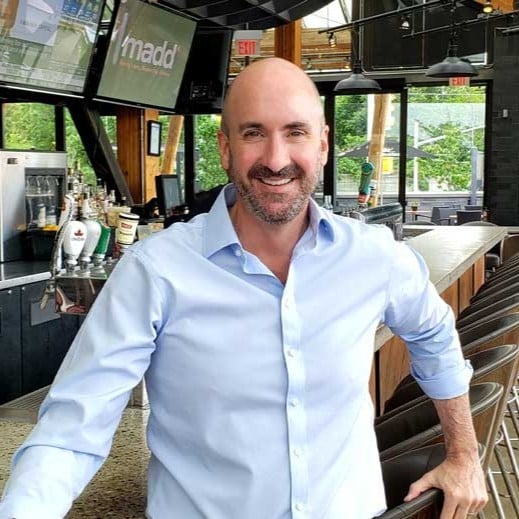
Tony Flanz. Image: Think Retail

Founded in 2005 by industry veteran Tony Flanz, Montreal-based Think Retail has spent the past two decades helping national and international retailers navigate the Canadian market. The firm, known for its boutique, client-first approach, has become one of the country’s most respected commercial real estate brokerages. Now marking its 20th anniversary, Think Retail is doubling down on its growth strategy and expanding its influence.

In an in-depth interview with Retail Insider, Flanz opened up about the company’s founding, milestones, and challenges, offering both professional insights and deeply personal stories that have shaped the trajectory of Think Retail.

Founding of Think Retail: The Pursuit of Excellence

Flanz launched Think Retail in 2005 after working with another brokerage. He saw a gap in the market for a firm that offered “white glove” service, deeper expertise, and closer collaboration.

Tony Flanz

“I had several clients who were pushing me for more resources, more time, and more expertise,” said Flanz. “I was highly motivated to provide that for them, and that was the impetus and the inspiration for starting Think Retail.”

The vision from the beginning was to differentiate Think Retail from its competitors by providing hands-on service and strategic insight. “I was very passionate and creative. I threw a lot of ideas at the wall, and most of them stuck,” he said.

Early Clients and Enduring Relationships

Flanz still remembers his first client, and the story behind it speaks to the personal relationships that define Think Retail.

“My first client remains incredibly important to me—it was a company called Bizou, owned by Marcel Labrecque. I met Marcel when I worked with Olympia & York in 1996, and we began working together shortly after I launched Think Retail,” he explained.

Left-to-right: Michael Stroll (Carbonleo), Marcel Labrecque (Bizou), Tony Flanz (Think Retail)

The relationship deepened over the years. “I did over 100 new leases, 50 renewals, and two acquisitions. I also renegotiated 120 leases through bankruptcy protection. When Marcel had a heart attack, I visited with the family twice a week for six months. That’s the kind of relationship we built.”

Think Retail’s client relationships often span generations. “I worked with Marcel’s son on a retail venture called Hot Fudge, and now I’m working with his grandson’s company, Mia, which we hope to expand into the U.S.,” he said.

Left: Kim Labrecque (Mia) and Tony Flanz (Think Retail)

Overcoming Personal and Professional Challenges

The early days of Think Retail were not without profound challenges. In the same year the firm launched, Flanz’s son was diagnosed with autism, and shortly after, his wife was diagnosed with a terminal illness.

“I had to hire a staff of therapists and educators to teach my son life skills, and I became a caregiver for my wife, which lasted 10 years until she passed away five years ago,” Flanz said.

Despite these challenges, work became a sanctuary. “The work was my salvation. It gave me a place of enjoyment and gratification, and I’m so thankful for that.”

Today, his daughter owns a successful skincare and gift store in Montreal, and his son is thriving, preparing to live independently — something Flanz calls a “dream come true.”

Tony Flanz and others at Matthews Army, 2011

Landmark Moments and Major Brands

Think Retail has introduced several international brands to Canada over the years. Some recent additions include France-based Adopt and KaleMart24. Looking ahead, Flanz revealed plans to bring Morgan de Toi, a prominent French women’s fashion brand, to the Canadian market.

Tony Flanz with the store manager of the CROCS store at Quartier DIX30 near Montreal

The firm continues to work with brands like Crocs and Le Creuset, among others. “We’re negotiating several exciting deals right now,” he said. “Stay tuned.”

One of the firm’s earliest major achievements was helping Fossil expand across Canada. “That was a turning point,” Flanz recalled. “It was my first international client and it gave us credibility in the market.”

A Changing Retail Landscape

Flanz has witnessed firsthand the seismic shifts in Canadian retail over the past 20 years. Chief among them is the rise of e-commerce and the evolution of the shopping centre.

“People want things now, including fast fashion and next-day delivery. The big players like Amazon, Walmart, and Costco have set the pace,” he said.

To keep up, landlords are reimagining retail spaces. “Cadillac Fairview, Ivanhoé Cambridge, and Oxford are transforming malls into entertainment hubs with restaurants, services, even pickleball courts. They’re no longer just fashion centres.”

He also pointed to the increasing importance of technology. “Google Maps and video calls have made our work more efficient. Before the pandemic, I might do one video call a week—now it’s 8 to 10.”

The Canadian Advantage

Despite global pressures, Flanz remains bullish on Canada as a market for retailers.

“We don’t do a good enough job of selling ourselves. There’s so much opportunity here because we’re under-retailed compared to the U.S.,” he said. “In Canada, shopping centres are 25% more productive, and there’s still pent-up demand for new concepts.”

For international retailers looking to expand, the Canadian market offers an attractive proposition. “If you serve your market well here, you’ll do even better than in places where you already have a fleet of stores.”

Columbus Cafe on Ste-Catherine Street in Montreal — one of many international brands Flanz has brought into Canada over the years.

The Evolution of Brokerage

As the retail landscape has evolved, so too has brokerage. Flanz notes a shift toward data, efficiency, and adaptability.

“Information is king today. And I still have enough ego to say I have better information than most international firms,” he said with a smile. “That’s because I’m active in the field and have long-standing relationships that provide real-time market insight.”

His client retention rate is high, and he attributes it to integrity. “I always tell my clients, I won’t lease a store that I can’t release. If I can’t stand behind it, we shouldn’t do the deal.”

Looking Ahead: ‘The Best is Yet to Come’

Think Retail is continuing to grow, with a clear focus on international retail and strategic collaborations with U.S. brokers.

“This is our ‘Best is Yet to Come’ tour,” Flanz joked. “We’re going to keep offering top-tier service, keep being passionate, and keep growing.”

He remains personally invested in every client’s success. “I’m 60 now. I want to sleep well at night knowing I’ve given the best advice. I’ve made mistakes, but I’ve learned from them. That’s the value of experience.”

More from Retail Insider:

Eleventy Opens First Canadian Store on Toronto’s Bloor Street

Eleventy at 102 Bloor Street West in Toronto. Image supplied

Italian luxury fashion brand Eleventy has opened its first freestanding corporate Canadian store on Toronto’s Bloor Street, marking a milestone in its North American expansion strategy. The new 3,500-square-foot flagship is situated in the heart of the Bloor-Yorkville luxury retail district at 102 Bloor Street West, and represents the brand’s full lifestyle expression through design, hospitality, and curated fashion collections.

The new Eleventy Toronto store showcases the Milanese brand’s smart luxury philosophy to a Canadian audience, offering both men’s and women’s collections in an immersive, architecturally sophisticated environment. The opening underscores Toronto’s growing significance in the global luxury retail market.

Eleventy at 102 Bloor Street West in Toronto. Image supplied

A Strategic Move into the Canadian Market

“This opening is a defining moment for Eleventy,” said Marco Baldassari, Co-Founder and Creative Director of Eleventy. “Toronto is a cultural and economic leader in North America, and we see it as a perfect match for our brand values of smart luxury, eternal design, and warm hospitality. We designed this space not just as a store, but as a destination.”

According to Baldassari, the brand has long-standing relationships with Canadian clients and views the Toronto location as a natural progression in serving those loyal customers. “We already have many clients who call Toronto home, and when we look to open new doors, we always start by identifying where our clients live and spend their time. We go where our clients are—and Toronto was a natural next step.”

Eleventy at 102 Bloor Street West in Toronto. Image supplied

Milanese Design in the Heart of Yorkville

The Eleventy Toronto store was designed by Milan-based Parisotto + Formenton Architetti. The interior delivers a warm and modern aesthetic through a monochrome, poly-material palette that includes brushed stainless steel, light oak furnishings, and travertine finishes. The seamless transition from exterior to interior aligns with the brand’s ethos of understated sophistication.

Sculptural lighting provides a sense of intimacy and character, while an open floor plan supports a series of bespoke spaces. These include a shoe salon, lounge, hospitality suite, and a semi-private living room, which features curated furnishings and a Wrensilva sound system offering a refined, personal music experience.

One unique feature is the inclusion of a custom Eleventy Teckell 90 Minuto Chalk Matte foosball table, which adds a playful yet luxurious element that speaks to modern Italian craftsmanship and design sensibility.

Eleventy Teckell 90 Minuto Chalk Matte foosball table at Eleventy at 102 Bloor Street West in Toronto. Image supplied

The First Eleventy Hospitality Suite in North America

A centrepiece of the new space is Eleventy’s first dedicated hospitality suite in North America. Designed to foster personal connections, the suite provides a space at the back of the store for guests to relax and engage with the brand beyond the traditional retail experience.

Weekend visitors are treated to light Italian-inspired refreshments, including pastries and curated snacks. Eleventy has partnered with Chef Roberto Marotta, a friend of the brand, to contribute to the culinary offerings, further deepening the store’s role as a place of connection and conversation.

“This space exemplifies our commitment to building meaningful relationships,” said Baldassari. “It reflects a modern interpretation of luxury—one that is rooted in community, personal connection, and warm hospitality.”

Hospitality suite at Eleventy at 102 Bloor Street West in Toronto. Image supplied

Historic Retail Address with New Life

The new Eleventy Toronto store at 102 Bloor Street West is in a space formerly occupied by Canadian brand Kit and Ace from 2015 until 2021. Before that, the storefront was home to United Colors of Benetton for many years. The property has been a fixture on Bloor Street and continues to evolve with the changing luxury landscape.

The lease deal for the new Eleventy space was negotiated by David Wedemire and Stan Vyriotes of DWSV Realty, a team known for securing major luxury leases in the area, including the new Rolex flagship across the street and Loro Piana at 111 Bloor Street West.

Bar area in Eleventy at 102 Bloor Street West in Toronto. Image supplied

A Return to the Toronto Market

This new flagship is not Eleventy’s first attempt at a standalone presence in Toronto. In 2017, the brand operated a 2,200-square-foot licensed boutique at Yorkville Village through a partnership with TNT The New Trend. That location, attached to the TNT store, closed quietly after three years. The new Bloor Street store marks a more significant and permanent return to Toronto with a clear focus on establishing a deeper brand-owned footprint.

Eleventy continues to maintain a strong wholesale presence in Canada. Its products are available at leading upscale retailers including Harry Rosen, Holt Renfrew, and independents such as Channers in London and Waterloo, and Henry Singer in Edmonton and Calgary.

“Our partners have been instrumental in building our brand in Canada,” added Baldassari. “We are incredibly grateful for their ongoing support and success. This store is a complement to those relationships—a home not only for Eleventy but also for our partners and their clients.”

Side laneway access, with a dedicated door, to Eleventy at 102 Bloor Street West in Toronto. Image supplied

Elevating the Bloor-Yorkville Luxury Scene

The arrival of Eleventy adds to a growing list of international luxury brands investing in Toronto’s Bloor-Yorkville neighbourhood. With a design-forward interior, hospitality-driven retail model, and its Milanese sensibility, Eleventy joins a cohort of global players reshaping the street’s identity.

Retail Insider has previously reported on the transformation underway in the area, including recent announcements and openings from Rolex, Loro Piana, Van Cleef & Arpels, Alexander Wang, and various others. More brands are expected to arrive as luxury retail demand grows.

Founded in 2007 by Marco Baldassari and Paolo Zuntini, Eleventy has built a global reputation for elegant, timeless design and artisanal Italian craftsmanship. The brand now operates boutiques in key global cities including New York City, Beverly Hills, Palm Beach, and Greenwich, and partners with top-tier retailers worldwide.

More from Retail Insider:

Gradient immersive retail activation with Kiehl’s proves experiential strategy drives sales (Photos)

Photo: Gradient
Photo: Gradient

In the ever-evolving world of retail, one agency, Gradient, is proving that immersive, experience-led design isn’t just a branding exercise—it’s a revenue engine.

Pauline Oudin, CEO of New York-based creative agency Gradient, recently discussed a bold pilot project with heritage skincare brand Kiehl’s, aimed at testing the power of experiential retail. And the data? “This activation gave us hard proof that immersive design pays off,” said Oudin.

Pauline Oudin
Pauline Oudin

Gradient partnered with Kiehl’s to reimagine one of the brand’s retail locations in New York’s Hell’s Kitchen. The goal: turn half of the store into a fully immersive brand experience while keeping the other half in its traditional retail format. “This particular store was performing like all the others,” Oudin explained. “But it had an underutilized, even unused section. They asked for help to transform that space into an experience—something more lasting than a typical pop-up—and to promote their winter product line.”

A Two-Sided Store Becomes a Live A/B Test

Gradient’s design effectively created two stores in one. On one side: classic Kiehl’s retail—shelves, products, testing counters, and knowledgeable staff. On the other side: a fully experiential concept, complete with transformed locker room aesthetics, surprise-filled interactive lockers, and shower installations covered in educational brand messaging.

“It became a very Instagrammable space—just like you’d see with pop-ups—but this stayed in place for three months, from late December to the third week of March,” said Oudin.

The Results Speak Volumes

Gradient, which prides itself on data-driven creativity, leveraged tracking tools to gather insights into shopper behaviour across both sides of the store. Using technology from LiveGauge, which tracks unique mobile device signals without extracting personal data, the team was able to measure dwell time and store engagement.

Among the standout metrics:

  • Shoppers who entered through the immersive side were 2.6x more likely to check out
  • Average dwell time clocked in at 13.4 minutes—55% higher than the beauty retail norm
  • Store transactions outperformed Kiehl’s national average by +8 points
  • Customers not only stayed longer—they bought more
Photo: Gradient
Photo: Gradient

“Our research confirms what retail’s sharpest minds have long felt,” said Oudin. “Engagement isn’t just nice to have, it’s a revenue driver. Today’s shopper wants more than transactions, they want to feel something. When they spend more time in a space, they absorb more. And when that experience resonates, conversion follows naturally.”

From Square Footage to Time Spent

Oudin pointed to an example from Coach stores in Asia, where retail success was no longer measured in sales per square foot, but in dwell time per customer—a metric that’s becoming increasingly relevant in the post-eCommerce era.

“If you think about it, consumers can buy almost everything online now—except maybe ultra-luxury,” she said. “So what is retail for? It’s for creating strong, memorable, emotional connections between the consumer and the brand.”

That kind of connection, she argued, demands longer, deeper interactions. “Retailers need to at least test this kind of experiential approach. Create spaces where people can truly fall in love with the brand.”

A Strategic Shift Toward Measurable Experience

Gradient itself has undergone a transformation. Once a traditional event production company, it now operates as a strategic experiential agency with a laser focus on metrics and brand impact. “When I joined seven years ago, my mission was to go from being a cost for brands to a strategic solution,” said Oudin, who previously led the U.S. office of French agency Sopexa and had hired Gradient as a client before taking the reins as CEO.

Her vision? Build experiences that generate not just buzz but data. “We’ve built internal tools that provide clients with specific metrics: how many people attended, how long they stayed, how many walked by… We’ve always wanted to integrate that into retail.”

The Kiehl’s project, she said, was a rare chance to do just that. “We’d already been working with Kiehl’s for over a year on experiences, so when they brought us the concept store idea, we jumped at the chance.”

While Oudin typically stays out of day-to-day project work, she was hands-on with this initiative. “Normally, as CEO, I’m not deeply involved unless we’re talking strategy or analytics. When data is central—that’s when I step in.”

Photo: Gradient
Photo: Gradient

The Takeaway for Retailers? Experience = Revenue

This activation, Oudin emphasized, isn’t just a case study in creative storytelling—it’s a proof point. “Every Sydney Sweeney post is worth a lot of money,” she noted, referencing Gradient’s recent work with the actress at a beauty brand event. “So if instead of two posts you managed to get her to post four or five times, you’ve bought yourself a lot of media value.”

The same principle holds true in-store. “If you can get people to stay, to explore, to post and to buy—then you’ve created a retail space that’s more than a store. It’s a platform for advocacy.”

Related Retail Insider stories:

Photo: Gradient
Photo: Gradient
Photo: Gradient
Photo: Gradient
Photo: Gradient
Photo: Gradient

Foxy Box franchise owners in Cambridge share their entrepreneurial journey and plans for expansion

A new Foxy Box Laser & Wax Bar location has opened its doors in Cambridge, Ontario, with franchise owners Tracy DeSantis and Mark Ehrlick at the helm—two seasoned professionals who are boldly stepping into the world of entrepreneurship.

The brand has a strong story. Foxy Box Laser & Wax Bar is a trailblazing, gender-neutral wax bar dedicated to delivering top-tier hair removal services with efficiency, expertise, and a whole lot of fun. Founded in 2012 by Kyla Dufresne, Foxy Box has redefined the waxing experience with a commitment to inclusivity, humour, and exceptional customer service. The company’s innovative approach includes offering a first-time free wax, a strong membership program, and a vibrant culture built around empowerment and self-confidence. As the first  wax bar in Canada to go gender-neutral and a Green Circle Certified business, Foxy Box said it is leading the industry in both inclusivity and sustainability.

Kyla Dufresne

DeSantis and Ehrlick bring their own narrative as entrepreneurs and first-time franchise owners.

Their new location opened May 10 on Hespeler Road, Cambridge’s main commercial corridor. “Being from Cambridge, we thought it’d be great if we were on the main street. So, Hespeler Road is the main street in Cambridge,” explained Ehrlick. “It’s a kind of divided up city in terms of its downtowns, but they’re all small—three cities that came together. But we’re on the main street on Hespeler Road, which is where all the commerce happens.”

The location spans about 3,200 square feet and is already bustling with activity. But DeSantis and Ehrlick are not stopping there.

“That was the plan,” said DeSantis. “We did this knowing that this is kind of our future and Cambridge is going to be the first. We’re hoping to have at least three. We want to stay in this area. So we looked at Cambridge, Guelph, and Waterloo-Kitchener area.”

“W’ve got to get one up and running, understand what that takes,” said Ehrlick. “And then the goal is to open, two more, quicker, within a shorter timeframe and then expand from there based on what we see, maybe even further reach than the KW area.”

The couple discovered the Foxy Box brand separately—both through social media. “Mark followed their journey through construction with another franchise in Hamilton, which is the closest franchise to us,” said DeSantis. “And I saw an ad for them on Facebook advertising their franchisee opportunities. And I reached out and I said, ‘Hey, I’d like more information.’”

“Mark and I were talking about, you know, this stage in our lives—if we don’t do it now, we’re never going do it. So let’s pick a business that we’re going to focus on and let’s start that journey together,” she added. “And so we reached out and just that experience of itself was amazing. And we’re like, we found our people.”

Before launching the business, Ehrlick and DeSantis had long-standing careers in other industries. “My career, my history, has been mostly in retail—sales, marketing, operations—those types of roles within the retail environment across major retailers in Canada that I’ve been a part of for the past 20 years,” said Ehrlick.

“I lost my job just with the downturn in the economy, and that’s when I kind of decided now is the time to really look at, you know, what can I do differently,” he said. “Tired of I don’t want to say working for the man… but I’ve put a lot of sweat equity into what I’ve done and had a long, successful career. But now it’s time to take care of me. For me personally, I want to do something that I get the benefit out of. And of course, having a partner like Tracy, who said, ‘I want to do the same thing,’ it was just a perfect combination.”

DeSantis also brought decades of professional experience to the table. “I was an administrative professional, so I worked decades at companies. My first career was 10 years, and then I did 12 and a half years at Sick Kids,” she said. “As my kids got older, I kind of wanted to be closer to home and not be going downtown all the time. My son moved to university in Guelph and I’m like, ‘Okay. We’re moving out of the city and I’m moving with him.’ I changed everything else in my life. I’m like, ‘Let’s do this.’ And literally, we opened our first day in the store the day before my 50th birthday.”

Like many entrepreneurs entering the franchise world, a major life shift propelled them forward. Asked why franchising made more sense than starting a business from scratch, Ehrlick explained:

“You can start your own business. You need X amount of dollars, you need capital, and you need a thick skin. Not to say you don’t need that for being a franchise [owner] as well, but there’s a system behind you. You’re not walking in completely blinded. You don’t necessarily have to have all the answers because there’s either other franchisees or a team behind you,” he said.

“For us, that really made the most sense. It allowed us to really take what our skillset is. If you look at my retail background—customer service, sales generation—and then Tracy’s background in administrative and HR, we had all of the components. All we had to focus on was managing that, because we had this great system behind us. And that’s really why I think franchising is such a great opportunity. But again, you have to find the right one that fits for you and your skillset—and that was key for us.”

“We felt comfortable with the support level that they offered us right from the start,” added DeSantis. “We went to BC to meet with them after a couple of phone calls, and we reached out to some of the franchise owners here in Ontario. But we went to BC to see where it started, to talk to the franchise owners there and make sure that what we were getting here is exactly what they were getting there.”

“To make sure again that that was a right fit for us and that if we needed to pick up the phone and call, we had that support. That was important to us,” she said. “We’re not 40 years ago where we can slowly build. We want this to be successful. We’re ambitious in our growth. But to know that we have that support, that we could do what we wanted to do in the timeline we wanted, with a company that had proven success.”

“They grew during COVID. That’s huge. When everybody else was closing down in this industry, they grew, and that spoke volumes to us.”

“That part was really important,” added Ehrlick. “We also wanted to go with a brand that was growing. Not to say there’s anything wrong with other types of models, but we wanted a brand that was growing and that we could be a part of—that kind of ground floor opportunity. And we’re still there. The brand has unlimited potential.”

As members of the Canadian Franchise Association, the couple is also embracing the benefits of industry connection. “Being in this industry, in terms of being in the franchise industry, being [part of] the Canadian Franchise Association, that whole industry—the support mechanism that’s there,” said Ehrlick.

Source: Foxy Box
Source: Foxy Box

“What’s fantastic is it’s not necessarily just about your brand. It’s about growing the industry. There’s a lot to learn—complexities behind different types of franchises and the different industries they occupy. But we have one common goal, and that’s to create a successful business that employs—and local, right?”

“You know, we make up a significant amount of businesses within the Canadian economy, and it’s good to be a part of that bigger group. I think we’re just going to start to experience what those benefits are now as independent franchisee owners.”

DeSantis added, “People are really starting to look at Canadian and small towns and home-based and local, right? It’s a great time for us, and our customers love that. The products we sell are Canadian and we’re from this area. We’re not a franchise from the States coming in and taking over—kind of thing. That kind of hits home. People are looking for that right now.”

“And that’s something that Foxy Box offers. It was started in Canada. So to share that story with our customers too… some of our customers have come from BC, so they already know that.”

“They know their reputation and they like that. They’d rather go with somebody Canadian right now. And you know what? We’ll take it every day. We’ll take it.”

Related Retail Insider stories:

Sleep Country Canada doubles down on digital with customer-centric transformation

Sleep Country Express at Walmart Canada (Image: Sleep Country)

Sleep Country Canada is undergoing a sweeping digital transformation—and at the heart of it all is a commitment to staying ahead of evolving customer expectations while staying true to its roots in sleep expertise and service.

Speaking with Retail Insider, Sari Deckelbaum, Senior Vice President of eCommerce at Sleep Country Canada, shared how the company’s forward-looking strategy is reshaping its approach to retail.

Sari Deckelbaum
Sari Deckelbaum

“Our transformation was driven by a clear vision: to double down on customer centricity and support business growth,” said Deckelbaum. “We recognized the need to evolve in response to shifting consumer expectations and to unify the physical and digital shopping journeys.”

That vision has become the foundation of an enterprise-wide initiative aimed at increasing basket size, accelerating double-digit growth, and boosting engagement across all channels. “To do that, we pursued a next-generation digital experience that personalizes every touchpoint—leveraging AI and automation—while preserving our sleep expertise and assisted selling approach, which truly sets us apart,” she explained.

Deckelbaum emphasized that the transformation wasn’t just about improving the website—it was about fundamentally reimagining how Sleep Country serves customers. “At the heart of this transformation is our commitment to long-term success, staying true to what makes Sleep Country special: our people, our sleep expertise, and our customer promise.”

The decision to innovate was grounded in a clear purpose. “Again, it really stemmed from a clear vision to strengthen our customer-centric approach and drive business growth,” she said.

While the transformation continues to evolve, its roots go back some time. “The foundational question we asked was: How do we bring the magic of our in-store sleep experts—over a thousand strong—into the digital world?” said Deckelbaum.

This led to the development of an assisted online strategy that includes enhanced personalization tools and an interactive, self-guided mattress experience. “We were guided by a deep commitment to digital innovation and a future-focused mindset,” she said. “We formed a cross-functional steering committee that ensured strong change management, stakeholder alignment, associate empowerment, and customer obsession were embedded from day one.”

Source: Sleep Country

Deckelbaum outlined a threefold approach to the digital upgrade: unify, personalize, and optimize.

“We unified channels through investments in a Customer Data Platform (CDP) and other technologies, enabling real-time insight and action. AI-powered recommendations and tailored content significantly boosted engagement and conversion,” she said.

Through Google AI tools such as Gemini and Vertex AI, Sleep Country has further strengthened its digital capabilities. “This has improved everything from site search and dynamic image creation to high-quality translations, allowing us to serve customers more effectively across languages and channels,” she noted. “The result is a deeply personalized journey—one that reflects who our customer is, what they need, and when they need it.”

Despite success with its previous model, Sleep Country recognized that change was necessary. “That’s true—our existing model was working well. But we had the foresight to recognize that consumer expectations are constantly evolving. We saw an opportunity not just to keep pace but to stay ahead,” said Deckelbaum.

Rather than a simple refresh, the company set out to build a seamless digital ecosystem. “It wasn’t just a site redesign; it was the creation of an integrated digital ecosystem. We moved away from siloed initiatives toward a unified, cross-channel experience.”

That shift included adopting a mobile-first, AI-powered BigCommerce platform. “It allows us to meet customers where they are—supporting a multi-brand, multi-language experience and laying the foundation for future growth,” she said. “We also transitioned from legacy segmentation models to real-time, behaviour-driven personalization powered by AI and our Customer Data Platform.”

And the transformation isn’t over yet. “The journey is far from over,” Deckelbaum said. “We’re building a flexible, scalable ecosystem with digital experience at the core.”

She added, “Our assisted selling model—rooted in expertise and now digitized—is a unique differentiator. Through our complete sleep ecosystem, we’re delivering better sleep through a unified, human-first experience.”

As the company continues to evolve, its focus remains unwavering. “We’re proud of where we are, but even more excited about where we’re headed—always with the customer at the heart of our next-generation strategy.”

Related Retail Insider stories:

EMERGE Brand, T2G, drives 34% revenue growth

EMERGE Commerce Ltd. , a Canadian portfolio of premium brands, on Wednesday provided an update on Tee 2 Green, its latest golf apparel and equipment acquisition, which closed on April 4.

T2G’s first quarter under EMERGE ownership, Q2 2025, delivered exceptional organic revenue growth of 34% year-over-year, exceeding management’s expectations. The strong performance was fueled by EMERGE’s targeted digital advertising and cross-brand synergies within its golf vertical. The acquisition, completed just ahead of T2G’s seasonal peak, enabled EMERGE to fully capitalize on heightened consumer demand during the spring golf season, said the company in a news release.

“As a result of the flexible deal terms and stronger-than-anticipated revenue growth, cash flow generated by T2G in its first quarter under EMERGE comfortably exceeded the $1.1M upfront cash payment made by EMERGE to complete the transaction on April 4, 2025,” it said.

“In 2024, T2G achieved revenue exceeding $6M, Adjusted EBITDA of $1M, and net income of $700K (unaudited). Management is encouraged by these preliminary Q2 results at T2G, particularly the speed at which these digital advertising and golf portfolio synergies have been unlocked, and sees potential for continued growth and optimization.”

Ghassan Halazon
Ghassan Halazon

Ghassan Halazon, Founder and CEO,  commented, “T2G’s exceptional first quarter under EMERGE, alongside continued momentum across our grocery and golf portfolio, positions us for an excellent Q2 overall, exceeding management’s expectations across revenue, profitability and cash flow. We’re especially pleased that T2G’s cash generation has already surpassed the upfront cash purchase price in less than 90 days.”

EMERGE said it expects to report its full Q2 2025 financial results in late August 2025.

EMERGE is a Canadian e-commerce and retail portfolio of premium brands. Its subscription, marketplace, and retail businesses provide members with access to offerings across its grocery and golf verticals. truLOCAL is its flagship Canadian meat and seafood subscription service, connecting local farmers with a health-conscious audience. Its golf vertical includes its discounted tee-times/ experiences brand, UnderPar, and its discounted golf apparel and equipment brands, JustGolfStuff and Tee 2 Green.

Related Retail Insider stories:

How Alcohol Sales Shifted After Canada Legalized Cannabis

In Canada, some studies indicate alcohol consumption declined slightly as medical cannabis use became more common. Did similar decreases follow recreational legalization? (Unsplash+)

By Michael J. Armstrong

Before Canada legalized recreational cannabis in October 2018, it was unclear how the change might affect beverage alcohol consumption. Would consumers drink less or more after cannabis became legal?

Drinking might decrease, for example, if people used cannabis in place of alcohol. That switch potentially could reduce alcohol-related harms. But economically, it would mean any gains in the cannabis industry would likely come at the expense of alcohol producers.

Conversely, drinking might increase if people used alcohol along with cannabis. That could boost alcohol industry profits and government tax revenues, but at the cost of increased health risks of both substances.

In response to this uncertainty, some businesses diversified. One alcohol producer bought a cannabis grower, while a cannabis firm took took over several beer brewers.

Research from the United States into the relationship between alcohol and cannabis use is inconclusive. Some studies report that alcohol use decreased in states that allowed cannabis, while others said usage increased or didn’t significantly change. Those conflicting conclusions might reflect the complex legal situation in the United States, where cannabis remains illegal under federal law, even in states that allow its use.

In Canada, some studies indicate alcohol consumption declined slightly as medical cannabis use became more common. Did similar decreases follow recreational legalization?

To investigate this question, I first collaborated with health science researchers Daniel MyranRobert TalaricoJennifer Xiao and Rachael MacDonald-Spracklin to study Canada’s overall alcohol sales.

Total sales looked stable

We started our research by examining annual alcohol sales from 2004 to 2022. During that period, beer sales gradually fell, while the sale of coolers and other drinks steadily rose. That left total sales basically unchanged.

So consumers were apparently switching from beer to other beverages. But there were no obvious effects from 2018’s cannabis legalization.

This diagram shows how beer sales declined while other beverage sales increased from 2004 to 2022. Total alcohol sales remained roughly constant.
Annual Canadian beverage alcohol sales from 2004 to 2022, in litres of ethanol content per capita. The vertical gray bar marks cannabis legalization. (Statistics Canada), CC BY-ND

We also compared monthly sales during the 12 months before legalization versus the 12 after. This included national average sales by liquor retailers and beer producers. In both cases, sales trends showed no significant changes in October 2018.

However, this research on Canada-wide sales was mainly designed to detect large changes. To find subtler ones, I focused on the province of Nova Scotia.

Some liquor stores sold cannabis

When Canada legalized cannabis, most provinces banned liquor stores from selling it to avoid tempting alcohol drinkers into trying cannabis.

THE CANADIAN PRESS/Andrew Vaughan
The logo of the Nova Scotia Liquor Commission is seen in Halifax in 2013. A store sign that says NSLC beer wine spirits

Nova Scotia did the opposite. Its government-owned liquor corporation became the main cannabis retailer. After legalization in October 2018, most provincial liquor stores kept selling only alcohol, but some began selling cannabis as well.

This unique situation prompted me to study the province’s sales. I focused on the 17 months before and 17 months after legalization.

The corporation’s total alcohol sales initially fell in October 2018, then slowly regrew. As a result, monthly sales after legalization averaged about $500,000 below their earlier levels.

More interestingly, the changes differed between the cannabis-selling stores and the alcohol-only ones. At the alcohol-only stores, sales immediately fell. They averaged $800,000 below previous levels.

But at cannabis-sellers, alcohol sales began growing. Total monthly sales from October 2018 to February 2020 averaged $300,000 above earlier levels.

This diagram shows that after October 2018, alcohol sales rose gradually at liquor stores that sold cannabis but fell quickly at stores selling only alcohol.
Seasonally adjusted Nova Scotia Liquor Corporation retail sales of beverage alcohol in Canadian dollars, from May 2017 to February 2020. The vertical gray bar marks cannabis legalization. (Nova Scotia Liquor Corporation), CC BY-ND

The divergence in sales was larger for beers than for spirits or wines.

Interestingly, alcohol-only stores located near cannabis-selling stores had changes similar to those located farther away, suggesting that cannabis-seller proximity didn’t matter.

Switching substances or stores?

My data can’t say why the sales split occurred, but I can speculate.

Consider the immediate sales drop at alcohol-only stores — this could suggest some consumers switched from alcohol to cannabis right after legalization.

Meanwhile, the lack of a drop at cannabis sellers might mean some consumers simply changed where they shopped. Instead of visiting their local alcohol-only retailer, they went to cannabis sellers to shop for alcohol and cannabis together.

The cannabis sellers’ ongoing growth might reflect people increasingly buying cannabis from licensed stores instead of illegal dealers. They went to those stores to buy weed, but picked up some extra booze while they were there.

Looking ahead

My research so far has focused on the initial post-legalization period, from October 2018 to February 2020.

I plan to study later periods next, when cannabis retailing was more widespread and perhaps more influential.

That will be more challenging, however, because COVID-19 arrived in March 2020. The pandemic disrupted sales of alcoholthough not of cannabis. It will be tricky to separate cannabis effects from pandemic ones, or from Canadian consumers’ evolving drinking habits in general.

My guess is that cannabis legalization had little short-term impact on existing drinkers overall. Most Canadians didn’t suddenly consume cannabis with their cabernet or replace vodka with vapes.

Instead, we might see gradual long-term shifts. Young Canadians now reach legal age in a context where cannabis and alcohol are both allowed. Some folks who previously would have started drinking alcohol might now choose cannabis instead, or in addition.

For now, alcohol drinking is still three times more common than cannabis use. Whether that continues, only time will tell.

About the Author: Michael J. Armstrong is an Associate Professor, Operations Research, at Brock University.

This article originally appeared in The Conversation.

More from Retail Insider:

Apple Announces COO Succession as Jeff Williams Prepares for Retirement

Jeff Williams

Apple Inc. has announced a major leadership transition with longtime executive Jeff Williams set to step down from his role as Chief Operating Officer later this month. Sabih Khan, Apple’s current Senior Vice President of Operations, will assume the COO position in what the company described as a long-planned succession.

Williams, who has spent nearly three decades at Apple and played a pivotal role in shaping its global operations and health-focused product strategy, will remain with the company through the end of the year. During the interim, he will continue reporting to CEO Tim Cook and overseeing Apple Watch, Apple’s health initiatives, and the company’s design team—responsibilities that will transition to Cook upon Williams’ formal retirement.

A Legacy Built Over 27 Years

First joining Apple in 1998, Williams was instrumental in the launch of the iPod, iPhone, and Apple Watch, and has since overseen the development of Apple’s health platforms and led the design team. His tenure also included building one of the most sophisticated and resilient global supply chains in the technology sector, supporting Apple’s growth across markets in North America, Asia, and beyond.

“Apple wouldn’t be what it is without him,” said CEO Tim Cook in a statement, highlighting Williams’ contributions across product innovation, supply chain, and leadership. “Jeff’s true legacy can be seen in the amazing team he’s created.”

Khan to Lead Operations

Khan, a 30-year Apple veteran who joined the executive team in 2019, has been credited with overseeing the company’s supply chain during a period of global disruption and strategic reinvention. Under his leadership, Apple expanded its manufacturing presence in the United States, deepened its environmental commitments, and implemented advanced manufacturing technologies across its network of suppliers.

Cook praised Khan as a “brilliant strategist” whose operational expertise has helped Apple reduce its carbon footprint by more than 60 percent. He also noted Khan’s leadership style as values-driven and collaborative—qualities seen as vital to Apple’s next chapter.

Operations Experience Anchored in Sustainability and Scale

Khan’s scope at Apple has included global logistics, procurement, product fulfillment, and supplier responsibility programs aimed at worker education and rights. He has helped position Apple’s environmental manufacturing programs at the forefront of the industry, aligning operations with broader corporate sustainability goals.

Before joining Apple’s procurement team in 1995, Khan worked in engineering roles at GE Plastics. He holds dual bachelor’s degrees in mechanical engineering and economics from Tufts University and a master’s in mechanical engineering from Rensselaer Polytechnic Institute.

Looking Ahead

Williams’ retirement, which follows his 27th anniversary with Apple and 40 years in the tech industry, comes with plans to spend more time with his growing family. “Working with all of the amazing people at this company has been a privilege of a lifetime,” said Williams. “I think [Sabih] is the most talented operations executive on the planet. I have tremendous confidence in Apple’s future under his leadership.”

With Khan’s promotion, Apple continues its commitment to internal leadership development and operational excellence—core to its global product delivery model. The transition underscores Apple’s broader strategy to maintain organizational continuity as it moves deeper into new product categories and expanded health and wellness initiatives.

Hudson’s Bay Lenders File to Block Ruby Liu Store Deal

Rendering of a Ruby Liu store at Coquitlam Centre. Image: Ruby Liu

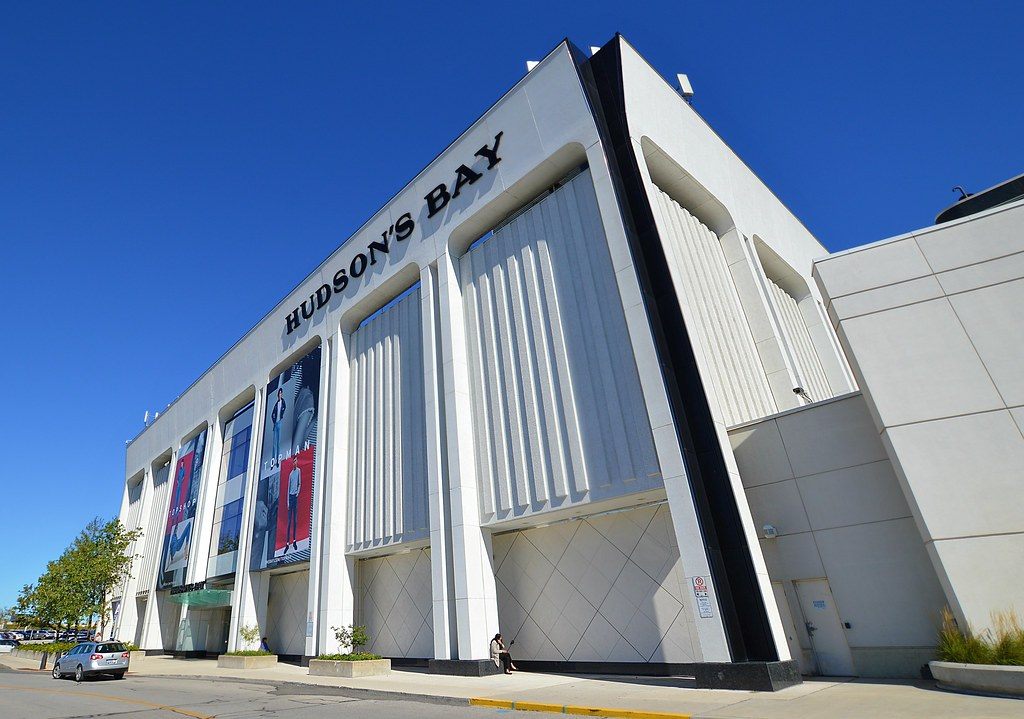
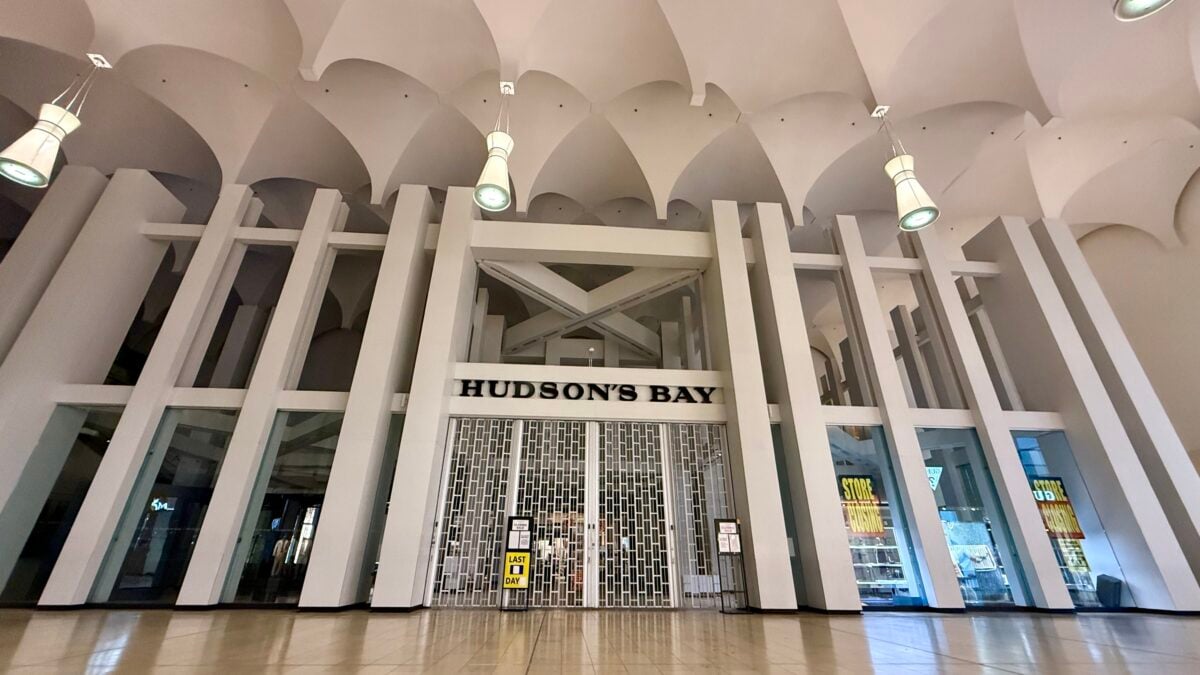
As the court-imposed July 15 deadline looms in Hudson’s Bay’s court-supervised restructuring, a key lender has asked the Ontario Superior Court to step in and halt what it describes as a costly and mismanaged wind-down. In a detailed motion, Restore Capital LLC has demanded that the company’s deal to sell up to 25 store leases to B.C.-based mall owner Ruby Liu be terminated and that the court install a “Super Monitor” to oversee the liquidation of what remains of the 355-year-old retailer.

The request underscores deepening frustrations from lenders who say their collateral is being squandered as Hudson’s Bay racks up millions in rent and professional fees tied to a deal that increasingly appears unlikely to succeed.

“Restore and Pathlight are just fed up,” said retail strategist Carl Boutet in an interview with Retail Insider. “They’ve been part of this saga since the beginning. At first, they stepped back when talks of receivership surfaced. Now, they’re saying ‘enough is enough.’”

Carl Boutet at Emsphere in Bangkok, Thailand, June 2025. Photo: Carl Boutet

Boutet says the underlying issue is the mounting cost and complexity of transferring leases to Liu. Restore alleges that Hudson’s Bay has incurred more than $18 million in unnecessary expenses, funds that otherwise could have gone to creditors. These include continued rent payments, consultant fees, and the removal of store signage.

According to court filings, Restore claims Hudson’s Bay has “frittered away” collateral and mismanaged the lease assignment process to such a degree that the appointment of a Super Monitor, or alternatively a full receiver, is now essential to protect creditor interests.

What Is a Super Monitor?

The request to appoint a Super Monitor is unusual, but not without precedent. Under the Companies’ Creditors Arrangement Act (CCAA), a monitor typically plays an advisory role, reporting to the court and overseeing restructuring efforts. However, in cases where management has lost the confidence of creditors or the court, the monitor’s powers can be expanded.

“In this case, a Super Monitor would have executive authority,” Boutet explained. “They wouldn’t just advise—they could actually act. That includes selling assets, terminating contracts, and more or less taking over operations.”

Restore suggests Alvarez & Marsal, the firm currently serving as court-appointed monitor, be granted these expanded powers. If not, they propose Richter Consulting Inc. step in as a receiver with full liquidation authority.

Liu Lease Deal Collapsing Under Landlord Opposition

The controversy centres around a proposed deal between Hudson’s Bay and Ruby Liu to take over up to 25 store leases in Ontario, Alberta, and British Columbia. While a smaller, court-approved deal involving three of Liu’s own Central Walk malls went through, landlords like Cadillac Fairview and Oxford Properties, have rejected Liu’s broader expansion plans.

Weihong (Ruby) Liu in Toronto, June 2025. Photo: Craig Patterson

“From the very beginning, we raised concerns that landlord covenants wouldn’t be met,” said Boutet. “And now, landlords are saying Liu hasn’t provided a viable business plan.”

The court filings confirm that Liu has struggled to secure landlord approvals, despite Hudson’s Bay spending millions to support the process. Restore estimates that between June 30 and August 15, Hudson’s Bay will spend an additional $7.5 million in rent and a large portion of $8.5 million in professional fees on the Liu deal alone.

Diminishing Returns and Legal Risks

Time is working against all parties involved. Hudson’s Bay’s inability to close the Liu transaction means stores remain in limbo, consultants remain on retainer, and rents continue to accrue. “This is money that’s evaporating daily,” Boutet noted. “And it’s money that should be going back to creditors.”

According to filings, Restore believes its only remaining path to recovery could be Hudson’s Bay’s pension fund surplus. It’s an option fraught with legal complexity and potential delays. “There’s a real risk that if the Liu deal isn’t wrapped up quickly, there will be nothing left,” Boutet warned.

Adding to concerns, Restore claims Hudson’s Bay failed to disclaim unassigned leases in a timely fashion and spent excessively on dismantling stores. “They acted like the money was theirs, not ours,” Restore CEO Ian Fredericks stated in an affidavit. “Our projected recoveries are now millions of dollars lower.”

A Timeline of Stalled Progress

Hudson’s Bay filed for creditor protection in March 2025. Since then, it has liquidated 80 stores and another 16 under the Saks Fifth Avenue and Saks OFF 5TH banners. While the initial court process provided some hope that select leases could be transferred and stores reimagined under Liu’s new concept, opposition and delays have stalled momentum.

“The creditors expected this would be signed, sealed, and delivered by now,” Boutet said. “Instead, we’re nearing the July 15 outside date with no resolution.”

July 15 marks the final court-set deadline for concluding the current Sale and Investment Solicitation Process (SISP). Without a court-approved path forward, Restore and other secured lenders appear poised to force the matter.

Weihong (Ruby) Liu, left, prepares to sign documents with Linda Qin at the Central Walk office at Tsawwassen Mills on Friday, May 23. Image: RedNote

Implications for Ruby Liu’s Department Store Vision

Liu, a Vancouver-based mall owner, had positioned herself as a successor to Hudson’s Bay in key locations across Canada. Her plans have included introducing a new department store concept under the ‘Ruby Liu’ banner, starting with the three Central Walk properties.

But this latest motion could mark the end of her ambitions to acquire the full portfolio of 25 stores.

“Honestly, it may be a blessing in disguise,” said Boutet. “She could now focus on her three confirmed locations and build something strong from there.”

Liu has previously expressed confidence that she could win over landlords if the court approves the lease transfer.

Lenders Signal Loss of Patience

Restore’s decision to go to court is significant for another reason—it marks a rupture in a relationship that stretches back over two decades. Restore played a pivotal role in helping take HBC private in 2019 and remained a key lender throughout the company’s recent chapter, including a $151 million loan issued in December 2024.

“They’ve been on this ride for a long time,” Boutet noted. “They probably don’t want to hear the words ‘Hudson’s Bay’ again for a very long time.”

The motion also highlights broader dissatisfaction among secured creditors with Hudson’s Bay’s wind-down strategy, noting that management and directors are no longer aligned with creditor interests.

“This isn’t just about leases,” said Boutet. “This is about how one of Canada’s most iconic companies is being dismantled.”

Pension Fund Surplus Could Become a Target

One of the more contentious aspects of the court filing is Restore’s suggestion that Hudson’s Bay’s pension fund surplus could be tapped for recovery. Pension funds are typically off-limits in restructuring processes, but surplus funds sometimes exist beyond what is needed to meet obligations.

“There’s always a debate over who that surplus belongs to,” Boutet explained. “Is it the pensioners, who could use it to preserve cost-of-living indexing? Or the creditors, who argue it’s part of the estate?”

Boutet also pointed out that HBC’s pension discussions are especially complex given that many of the company’s landlords, like Cadillac Fairview, are owned by the very pension funds that might be impacted. “It all comes full circle,” he added.

What Happens Next?

The Ontario Superior Court is expected to rule on Restore’s motion in the coming days. If approved, the appointment of a Super Monitor could significantly alter the trajectory of the wind-down.

“A Super Monitor could force a quick sale or liquidation of the remaining assets,” Boutet said. “It removes the option of further negotiation and essentially fast-tracks the end.”

For Ruby Liu, it may mean a shift in strategy that could possibly involve negotiating brand-new leases directly with landlords, outside the CCAA framework. For creditors, it could bring long-awaited clarity and recovery.

“Ultimately, everyone wants this resolved,” Boutet said. “But how it gets resolved, and who walks away with what, remains very much in question.”

More from Retail Insider:

KaleMart24 opening 7 new stores and 1st in Ontario

Photo- Think Retail
Photo- Think Retail

KaleMart24 is gearing up for a sizzling summer with deals in place to open seven new locations, including making its market debut in Ontario, according to commercial real estate expert Tony Flanz of Think Retail.

KaleMart24, dubbed “the Whole Foods of the convenience channel”, is the brainchild of entrepreneur Oussama (Sam) Saoudi who is also the CEO and founder of Montreal-based Toro Beverages

Oussama (Sam) Saoudi

The first KaleMart24 opened in Montreal in March 2024 with a 1,200-square-foot store in Berri-UQAM, the largest Metro station in the city. Today KaleMart24 has eight locations in and around Montreal, wrote Flanz on a blog on his company’s website.

The Think Retail team is helping the convenience store concept with its expansion plans.

“2025 is shaping up to be a transformative year for the brand. Think Retail is thrilled to work with Sam and his team on bringing his bold vision to life,” said Flanz.

“Up next, the plan is to open at least 20 locations in the next 12 months between Quebec and Ontario. In the meantime, confirmed openings include five stores in Quebec and two in Ontario.”

July – STATION MONT-ROYAL: 470 Avenue du Mont-Royal E MontrealGATINEAU: 306 Bd Saint-Joseph, Gatineau, QC BYWARD MARKET: 47 William St., Ottawa

August – PEEL STREET: 2025 Rue Peel, Montreal

September – PLACE BELL: 755 Boul. le Corbusier Laval, QC KITCHENER: 66 Weber St E Kitchener, ON GRIFFINTOWN: 110 Rue Peel suite 100 Montreal

Tony Flanz
Tony Flanz

“This is a timely concept that is truly making an impact with its target market: busy young professionals who prioritize making choices and purchasing products that are healthy for themselves and the planet. KaleMart24’s shelves and ready-to-eat offerings are carefully curated to meet the needs of a decerning customer base where quality is paramount,” said Flanz.

“As part of the ambitious expansion, the KaleMart24 team is seeking sites that range from 500 to 1500 square feet across Quebec and Ontario. In an exciting development, KaleMart24 will consider Calgary as a next market entry.” 

Photo: Think Retail
Photo: Think Retail

“If you haven’t visited a KaleMart24 I recommend you do, it’s a delightful experience. The stores are fresh and inviting with a thoughtful design that reflects the brand ethos around sustainability. A fresh take on the classic depanneur, KaleMart24 is a modern retail experience with the latest checkout technology, 24/7 service as well as an attractive loyalty program.”

For more information about the brand and its plans for expansion, contact the Think Retail team. 

Related Retail Insider stories: