Home Blog Page 28

Canada’s Furniture Market Still Trails U.S. Recovery, Wayfair Results Suggest

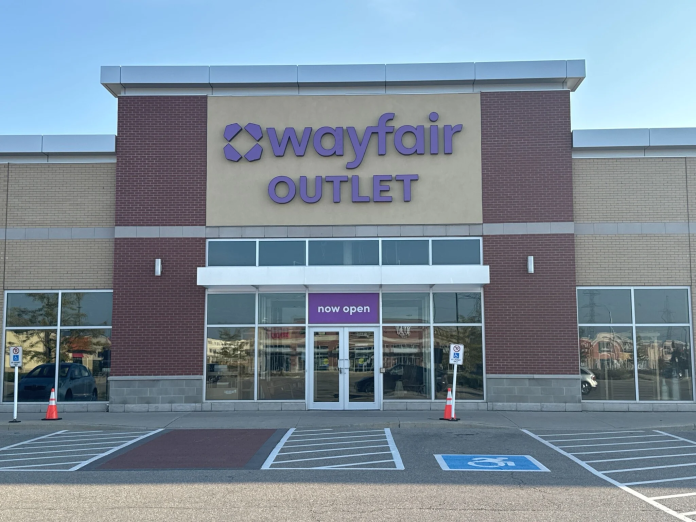
Wayfair Outlet in Burlington, ON. Photo Wayfair

Furniture purchases can reveal a great deal about consumer confidence.

Households worried about employment, housing costs or the direction of the economy can continue using an older sofa, postpone replacing a dining table or furnish a new home one room at a time. Unlike groceries and other necessities, most home furnishings can wait.

That helps explain why Wayfair’s latest quarterly results tell two different stories about the North American consumer.

The Boston-based home retailer reported its strongest U.S. revenue growth of the post-pandemic period during the second quarter of 2026. Its Canadian business, however, continues to operate in a more difficult consumer environment.

Wayfair executives said the modest improvement appearing in the U.S. home furnishings market had not extended to Canada or the United Kingdom, where consumer sentiment and discretionary spending remained under pressure.

The divergence offers another indication that Canada’s home furnishings market has yet to join the recovery beginning to emerge south of the border.

Wayfair’s U.S. Business Accelerates

Wayfair generated US$3.52 billion in net revenue during the quarter ended June 30, an increase of 7.5% from the previous year.

Revenue in the United States increased 8.7% to approximately US$3.13 billion, while international revenue declined 1.3% to US$394 million. On a constant-currency basis, the international segment was down 2%. Wayfair combines its Canadian and British operations in that segment and does not disclose separate revenue figures for the two countries.

Orders delivered during the quarter increased 6%, while active customers rose 3.2% to 21.7 million. Average order value also continued to move higher.

The company’s growth was notable because it did not depend on a dramatic improvement in the wider furniture industry.

Wayfair co-founder and CEO Niraj Shah said the U.S. category was approximately flat to slightly positive compared with the previous year, marking the first quarter since 2021 in which the company had measured any year-over-year category growth. Wayfair’s U.S. sales grew considerably faster, indicating that the retailer continued to capture market share.

Management described the improvement as early and uneven, with stronger growth concentrated among higher-income households.

Canada remains on a different trajectory.

“The macro improvement did not extend to our end markets in Canada or the U.K., which both saw continued pressure on consumer sentiment and discretionary spending,” CFO Kate Gulliver told analysts.

Wayfair did not quantify how Canada performed relative to the U.K., meaning the international decline cannot be assigned entirely, or even primarily, to Canadian operations. Gulliver’s comments nevertheless provide a direct assessment of the market from one of North America’s largest home furnishings retailers.

Canadian Furniture Sales Remain Below Last Year

Recent Statistics Canada data supports Wayfair’s description of a cautious Canadian market.

Sales at Canadian furniture retailers increased 0.8% between April and May 2026, offering a modest sign of sequential improvement. They remained 2.3% below May 2025.

The broader category encompassing furniture, home furnishings, electronics and appliance retailers increased 0.6% during the month but was down 6.1% year over year. Sales at floor covering, window treatment and other home furnishing retailers were 5.1% lower than a year earlier.

The figures suggest the category may be stabilizing in some areas without experiencing a broad recovery.

Canadian households have not stopped buying furniture, and month-to-month improvements may eventually develop into more durable momentum. Current sales levels nevertheless remain below those recorded a year ago.

The weakness also cannot be understood solely through changes in furniture prices. The larger issue is the amount of money consumers have available after paying for housing, food, transportation, debt servicing and other necessities.

A sofa does not need to become dramatically more expensive for a family to decide it is unaffordable this year. It only needs to compete with more urgent expenses.
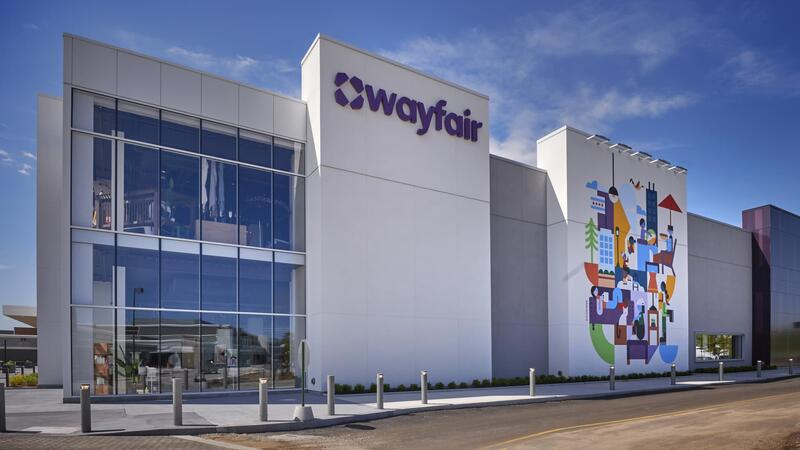
Wayfair showroom in Wilmette, Il. Photo: Wayfair

Major Purchases Remain Easy to Postpone

The Bank of Canada’s second-quarter Canadian Survey of Consumer Expectations found that consumers continued to view the economy as challenging. High prices and economic uncertainty remained a drag on household spending plans, while concerns about inflation and energy prices had increased.

Furniture is particularly exposed to this behaviour. It is a high-consideration purchase that can usually be deferred without an immediate consequence. Consumers can repair an existing item, purchase a less expensive alternative, wait for a promotion or decide that a room does not need to be completed immediately.

That places furniture retailers in a highly promotional environment. Wayfair executives said discounting remains common at the mass-market end of the category because retailers and suppliers must work harder to attract cautious consumers.

Promotions can encourage a shopper who was already considering a purchase, but they cannot fully overcome weak confidence or limited household cash flow.

Housing Activity Has Not Yet Produced a Furniture Rebound

The Canadian housing market has begun to show signs of improvement, although the recovery remains gradual.

National home sales increased 5.5% between April and May, followed by a further 0.5% increase in June. Actual June activity was 0.9% above the same month in 2025.

The Canadian Real Estate Association nevertheless forecasts that 463,336 residential properties will change hands in 2026, representing a 1.4% decline from 2025.

Housing turnover is closely watched by the furniture industry because moving households often purchase mattresses, seating, dining furniture, storage products, appliances and home décor. Improving real estate activity should eventually create additional demand, but the relationship is not immediate.

A home purchase also brings a down payment, closing costs, moving expenses and, in many cases, renovations. Buyers who stretched to enter the market may have little money left to furnish the property. Existing homeowners facing higher mortgage payments may also be less willing to replace furniture that remains functional.

The current market therefore contains an apparent contradiction: housing activity can begin to improve while furniture spending remains subdued.

Canada’s housing recovery has not yet been strong or widespread enough to produce a comparable rebound in home furnishings.

Luxury Shoppers Are Behaving Differently

Wayfair’s results also demonstrate how differently the market is performing across income groups.

The company’s specialty retail brands, including Joss & Main, AllModern and Birch Lane, grew by nearly 20% during the quarter. Perigold, Wayfair’s luxury home furnishings platform, grew by more than 35%.

Perigold now generates slightly more than US$400 million in annual sales and has an active customer base approaching 400,000. Those customers spend almost three times as much annually as the typical Wayfair shopper, according to the company.

Shah characterized the environment as a K-shaped recovery. Affluent households are proving more resilient, while consumers at the mass-market end of the category remain more sensitive to economic pressure.

That does not establish that Canada’s luxury home furnishings market is growing at the same rate. Wayfair’s Perigold disclosures primarily concern the United States, where the company is investing in physical stores, design services and a broader assortment.

The results do illustrate a wider challenge when interpreting retail growth. Strong company-wide numbers do not necessarily mean the average household has returned to discretionary spending. A relatively small group of affluent customers can generate substantial growth through larger and more frequent purchases.

Wayfair.ca Mississauga Office (Google Streetview)

Wayfair Is Becoming an Omnichannel Retailer

Wayfair’s U.S. momentum also reflects a company moving beyond its origins as a pure online marketplace. The retailer opened stores in Atlanta and Columbus during 2026, with Denver expected to follow in the fall. It has announced additional U.S. locations for 2027, including Westchester, Fort Lauderdale, Cincinnati, Princeton and Pittsburgh.

Management said more than half of the customers visiting its stores are new to Wayfair’s customer file.

The locations allow shoppers to see materials, assess comfort and better understand the dimensions of products before making a purchase. They also give Wayfair another way to acquire customers without relying exclusively on digital advertising.

This is particularly relevant in furniture, where colour, scale, texture, construction and comfort can be difficult to evaluate through a screen.

Wayfair sells products in its stores at the same prices offered online. Much of the displayed inventory also remains owned by suppliers, allowing the company to operate the locations without assuming the full inventory burden associated with a conventional furniture chain.

The result is a store that functions partly as a showroom, partly as a customer-acquisition channel and partly as an entry point into Wayfair’s much larger online assortment.

Wayfair has not announced a comparable store expansion in Canada. Canadian customers continue to have access to the company’s extensive online marketplace, but they are not yet receiving the same developing omnichannel experience being introduced across selected U.S. markets.

Wayfair executives noted that new programs cannot always be deployed in every country simultaneously. Loyalty and technology initiatives can reach international markets later because of operational and development requirements.

Even so, the sequencing could widen the performance gap in the near term. The company is deploying some of its strongest customer-acquisition and loyalty tools in the country where demand is already improving.

AI Could Strengthen the Digital Experience

Wayfair is also investing heavily in artificial intelligence as it looks to improve online merchandising while controlling costs.

The company said an internal AI production system recently created seasonal imagery for Perigold that would traditionally have required location shoots, travel, studio space, styling teams and other production expenses.

Wayfair estimated that a conventional version of the project would have cost approximately US$2 million. The AI-assisted production cost less than US$10,000, according to Shah.

The claim has not been independently verified and depends on Wayfair’s estimate of what an equivalent traditional campaign would have cost. It nevertheless demonstrates the scale of the savings the company believes generative tools can deliver.

For an online furniture retailer, the technology has uses beyond advertising. Consumers frequently need to see how individual products might look in a completed room. Producing conventional lifestyle photography for millions of items would be prohibitively expensive.

AI-generated environments could allow Wayfair to show more of its assortment in realistic settings, update seasonal presentations more frequently and help customers visualize combinations of furniture and décor.

The company is also developing AI tools to assist its in-store and virtual designers with product selection and presentations.

These investments will not eliminate the appeal of touching a fabric or sitting on a sofa. They may narrow some of the experiential gap between online and store-based furniture shopping.

Canada Is Still Waiting for Sustained Momentum

Wayfair expects company-wide revenue to grow at a high-single-digit rate during the third quarter. Management said the forecast does not depend on an improvement in the wider economy. It expects customer loyalty, product selection, delivery, stores and technology investments to continue driving market-share gains.

That confidence should not obscure the difference between gaining share and benefiting from a healthy category.

Wayfair can outperform competitors in a soft market, but Canadian households still determine the size and pace of the wider opportunity. Furniture demand is unlikely to accelerate meaningfully until consumers feel more secure about their finances and more comfortable making large discretionary purchases.

The early improvement in Canadian housing activity could eventually support the category. For now, furniture sales remain below last year, consumer spending intentions are subdued and many households are prioritizing other expenses.

Wayfair’s quarter shows that a home furnishings recovery is possible. It also shows that the recovery is arriving unevenly.

In the United States, stronger consumer segments and Wayfair’s own initiatives are creating renewed momentum. In Canada, the conditions needed for a sustained rebound have yet to fully take hold.
More from Retail Insider:

Australian Beef Could Help Keep Canadian Consumers in the Beef Aisle

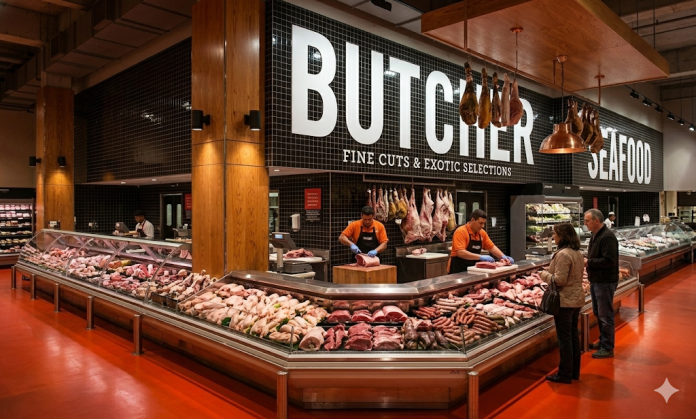
Grocery store meat butcher department. Image: RI/Google

At first glance, the presence of inexpensive Australian beef in Canadian grocery stores seems absurd. How can beef raised thousands of kilometres away, shipped across the Pacific and distributed through Canada sell for substantially less than beef produced in Alberta?

Recent comparisons circulating online have shown Australian striploin selling for approximately $24 per kilogram while a Canadian alternative was priced above $50. Understandably, Canadian cattle producers and consumers are asking how this is possible.

But inexpensive Australian beef may not be the threat to Canadian beef that many assume. For a limited period, it could actually help protect the domestic industry’s most valuable long-term asset: the Canadian beef consumer.

Canadian beef prices have reached levels that many households simply cannot absorb. Ground beef, once considered an economical protein, has become increasingly expensive. Premium steaks are now beyond the reach of many middle-income families except for special occasions. Faced with these prices, consumers do not merely purchase less-expensive cuts. They migrate toward chicken, pork, fish or other alternatives.

That substitution can become permanent.

Food consumption is largely habitual. When families stop preparing beef regularly, they develop new recipes, shopping routines and preferences. Restaurants change menus. Retailers reduce shelf space. Over time, a temporary supply shortage can cause lasting demand destruction.

This is where Australian beef can play a surprisingly constructive role. By offering a more affordable entry point, imported beef keeps consumers engaged with the category. They continue visiting the meat counter, preparing steaks and roasts, purchasing ground beef and treating beef as part of their regular diet.

In economic terms, Australian beef can function as a bridge until Canadian production recovers.

Canada’s cattle herd contracted for years and cannot be rebuilt quickly. Even when producers begin retaining more heifers, several years are required before those decisions generate significant additional beef supplies. Canadian consumers cannot reasonably be expected to wait indefinitely while paying historically high prices.

Australia, meanwhile, has a highly export-oriented beef industry, a climate that permits longer grazing seasons and efficient access to international markets. Under the Comprehensive and Progressive Agreement for Trans-Pacific Partnership, Australian beef also enjoys favourable access to Canada. Despite the distance involved, refrigerated ocean freight adds surprisingly little to the cost of each kilogram when spread across an entire container.

None of this means the products are necessarily identical. Canada and Australia use different grading systems. Canadian AAA beef is typically grain-finished and more heavily marbled, while much Australian beef is grass-fed and leaner. An Australian striploin marked at $24 per kilogram should not automatically be considered equivalent to Canadian AAA striploin selling for $52.

Country of origin, grade, feeding method and whether the product was previously frozen should therefore be clearly disclosed. Consumers deserve enough information to understand what they are comparing.

Nevertheless, the quality distinction does not invalidate the broader economic argument. A family deciding between affordable Australian beef and abandoning beef altogether is not necessarily taking a sale away from a Canadian producer. At current prices, that household may no longer be a realistic buyer of Canadian beef.

The imported product may instead preserve that household as a future customer.

Canadian beef also retains significant competitive advantages. It enjoys strong domestic recognition, established quality standards and considerable consumer loyalty. When Canadian supplies improve and prices moderate, many consumers will likely return to Canadian beef—provided they have not already abandoned the category.

Imports can also introduce some useful competitive tension into the processing and retail sectors. The price paid to cattle producers explains only part of the final shelf price. Processing capacity, labour, transportation, wholesale negotiations, retail strategies and margins all influence what consumers ultimately pay. A credible imported alternative can place pressure on every participant in that chain to justify costs and improve efficiency.

Canadian cattle producers should not be expected to sell below their costs, nor should Canada become permanently dependent on imported beef. The objective must remain a larger, more productive and resilient domestic cattle industry.

But protection from competition is not the same as protection from consumer abandonment.

If Australian beef keeps Canadians buying beef during an exceptional period of domestic scarcity, it may support rather than undermine the Canadian industry. The real danger is not that consumers temporarily purchase Australian beef. It is that persistently high Canadian prices drive an entire generation of consumers away from the beef counter.

Sometimes an imported competitor does more than take market share. It keeps the market alive.

More from Retail Insider:

Kits Eyecare reports Q2 2026 results, record revenue

KITS Eyecare photo
KITS Eyecare photo

Kits Eyecare Ltd., a leading vertically-integrated eyecare provider, announced Wednesday its financial results for the second quarter ended June 30, 2026, saying it achieved record revenue of $58.4 million, an increase of 17.8% year-over-year.

“We believe the value of our business lies in the strength of the KITS brand and the loyalty it earns — and this quarter, that loyalty showed up in the numbers,” said Roger Hardy, Co-Founder and CEO of KITS. “Repeat revenue grew 27.4% to 65.5% of revenue, average order value reached a record $213, glasses grew 54% at expanding margins, and the business generated a record $7.8 million in operating cash flow for the quarter. Very few companies grow at this rate; even fewer do it while generating cash. We are one of them. The business is now paying for its own acceleration, and we are still early.”

“Coming into 2026 we made a deliberate decision to build out our glasses business, and the results – 54% growth, with the strongest new-customer cohorts in our history validates that focus,” added Tai Silvey, President of KITS. “In the back half we intend to rebalance: sustaining the momentum in glasses while ensuring our contact lens acquisition engine remains robust. Customers are choosing KITS for all of their vision needs because of the uniqueness of our vertically integrated model – quality, value, and speed in a combination we don’t believe anyone else in the category can match. Our mission is to make eyecare easy, and more than 1.1 million active customers are telling us it’s working.”


Second Quarter 2026 Financial & Operational Highlights

For the second quarter of 2026, compared to the second quarter of 2025:

  • Revenue increased by 17.8% to a record $58.4 million compared to $49.6 million
  • Glasses revenue grew 54.0% to $11.1 million, representing 18.9% of revenue, compared to 14.5%; premium lens upgrades represented 45.2% of glasses revenue
  • Repeat revenue grew 27.4% to a record $38.3 million, or 65.5% of revenue, compared to 60.6% of revenue
  • Gross profit increased by 23.0% to $22.2 million, or 37.9% of revenue, compared to $18.0 million, or 36.3% of revenue
  • Adjusted EBITDA margin was 5.0% of revenue, with $2.9 million of Adjusted EBITDA, compared to 5.2% of revenue, and $2.6 million
  • Net Income increased by $2.2 million to $1.5 million or $0.04 per share (basic), compared to a net loss of $0.7 million or $(0.02) per share (basic)
  • Record operating cash flow of $7.8 million, representing 13.3% of revenue. Closing the quarter with a cash balance of $27.4 million and no debt
Kits photo
Kits photo

Year-to-Date 2026 Financial & Operational Highlights

For the six months ended June 30, 2026, compared to the six months ended June 30, 2025:

  • Net income was $3.4 million compared to net income of $0.9 million
  • Revenue increased 20.5% (22.2% in constant currency) to $115.9 million compared to $96.2 million
  • Glasses revenue of $21.9 million, increased 57.2% year-over-year
  • Gross profit was $45.7 million or 39.4% of revenue, compared to $35.1 million or 36.5% of revenue
  • Adjusted EBITDA improved by $1.1 million to $7.1 million compared to $6.0 million

For the third quarter of 2026, KITS management expects revenue to be in the range of $62.0 million to $64.0 million.

More from Retail Insider:

AFA Canada United in Style Marketplace Opens Next Week in Toronto

AFA United in Style

Canada’s footwear, apparel and accessories industry will gather in Toronto next week for United in Style – Spring/Summer 2027, the national marketplace presented by the Association of Footwear and Apparel Canada (AFA).

Running from August 11 to 13, 2026, the event will bring retailers, buyers, brands, agencies and other industry professionals to the Toronto Congress Centre’s South Building, Hall D. With less than a week remaining before the doors open, retailers interested in attending are encouraged to register and finalize their plans.

Event Details

Event: United in Style – Spring/Summer 2027
Dates: August 11–13, 2026
Venue: Toronto Congress Centre, South Building, Hall D
Address: 650 Dixon Road, Toronto
Hours: August 11 and 12 from 9 a.m. to 6 p.m.; August 13 from 9 a.m. to 4 p.m.

The marketplace is intended for boutiques, department stores, online retailers, buyers and other professionals working across the footwear, apparel and accessory industries.

A Focused Look at Spring/Summer 2027

United in Style gives retailers an opportunity to preview upcoming Spring/Summer 2027 collections while meeting directly with the brands and agencies representing them.

AFA Canada says attendees can expect hundreds of brands, trend-driven collections and industry networking over the three-day show. Retailers can use the marketplace to discover new labels, review products in person, build relationships with suppliers and place orders for the next selling season.

The timing places the event at an important point in the buying calendar. Retailers are already assessing next year’s assortments, making decisions about supplier relationships and identifying products that may resonate with their customers.

Having buyers and sellers together in one venue allows those conversations to take place efficiently. Attendees can examine product quality, materials, colours and styling firsthand while comparing collections across a broad national marketplace.

Time to Reconnect with the Industry

The value of United in Style also extends to the relationships formed and renewed on the show floor.

Retailers can reconnect with current suppliers, meet prospective partners and exchange market intelligence with other professionals navigating similar business conditions. For brands and agencies, the event offers direct access to buyers from across the Canadian market.

AFA Canada describes its broader role as bringing retailers and wholesalers together through events, education and industry support. United in Style is the Association’s biannual trade show and a central part of its work connecting buyers and sellers across Canada’s footwear, apparel and accessory sectors.

The Association has supported Canada’s footwear and fashion industry since 1967, evolving from its early roots into a national community focused on helping businesses connect, collaborate and grow.

Buyer Bucks Return

Retail buyers attending the August show will also be entered into the Buyer Bucks draws when they register.

AFA Canada says three draws will take place each day, with winners required to use their Buyer Bucks during the show. Additional prizes are also planned, giving registered buyers another incentive to explore the marketplace and engage with participating exhibitors.

Final Days to Make Plans

With United in Style opening next Tuesday, the remaining window for retailers to register, arrange travel and schedule supplier meetings is narrowing.

Retailers preparing Spring/Summer 2027 assortments can use the three-day event to discover collections, compare products and conduct business with industry partners under one roof. The show also provides a timely opportunity to reconnect with Canada’s wider footwear, apparel and accessories community before the next selling season advances further.

Registration and additional information are available through AFA Canada.

Consumers assume brand content is AI-generated: Cashew

Andrea Piacquadio photo

Consumers have entered a new era of skepticism toward brand content. According to new research from Cashew, nearly nine in 10 consumers (87%) believe the ads, social posts, product images and other content they see from brands are at least partly created using AI. Yet only 13% say they are very confident they can tell what is AI-generated and what is not.

The study, based on a survey of 2,149 consumers across Canada and the U.S., suggests this growing uncertainty is reshaping how brands earn trust. Rather than rewarding polished storytelling or carefully crafted brand messaging, consumers increasingly look for evidence they can verify, said the company, which provides real-time consumer insights through its AI-powered research platform, helping brands uncover original human perspectives faster than traditional research methods.

“AI hasn’t made consumers stop valuing authenticity. It has changed what authenticity requires,” said Addy Graves, CEO of Cashew. “When people assume every brand can generate authentic-looking content, trust no longer comes from saying the right things. It comes from proving your claims with real customers, transparent communication and consistent performance.”

Cashew said the findings suggest marketers may need to rethink long-held assumptions about what differentiates brands in an AI-powered world.

Among the key findings:

  • 87% believe brands use at least some AI-generated content.
  • Only 13% are very confident they can identify AI-generated content.
  • Consumers are most concerned about AI when it appears in health, finance, customer testimonials and “behind-the-scenes” content.
  • Product quality (38%) and real customer stories (31%) are most effective at helping a brand stand out today.
  • While 79% prefer authentic brands, authenticity alone is no longer a competitive advantage. It is an expectation.

“The research points to a broader shift. As AI makes polished creative easier and cheaper to produce, consumers are placing greater value on proof over presentation. Real customer experiences, transparent business practices, credible reviews and original evidence increasingly outweigh aesthetic perfection,” added Cashew.

The full report, The Authenticity Economy: What Consumers Truly Value When Every Brand Can Use AI to Generate “Authentic” Content, is available now.

More from Retail Insider:

Fendi Opens Only Standalone Canadian Boutique at Vancouver’s Oakridge Park

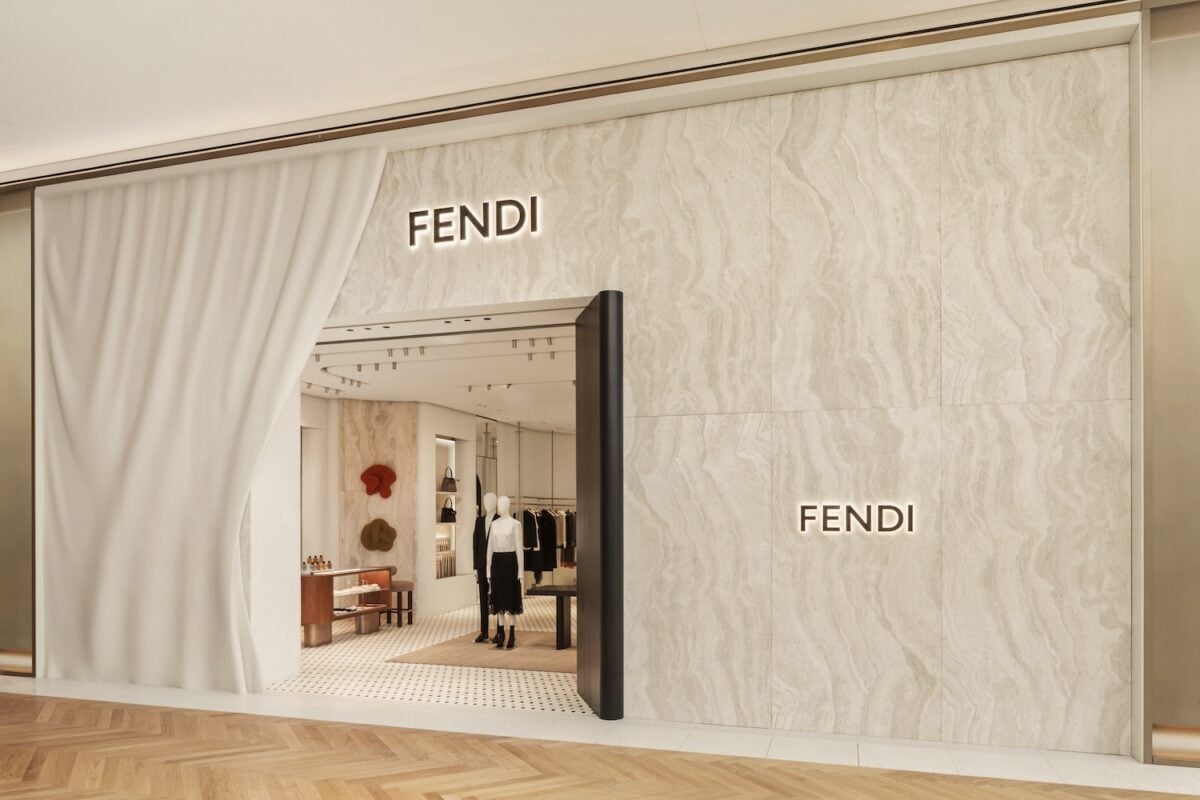
Fendi at Oakridge Park in Vancouver. Image: Fendi

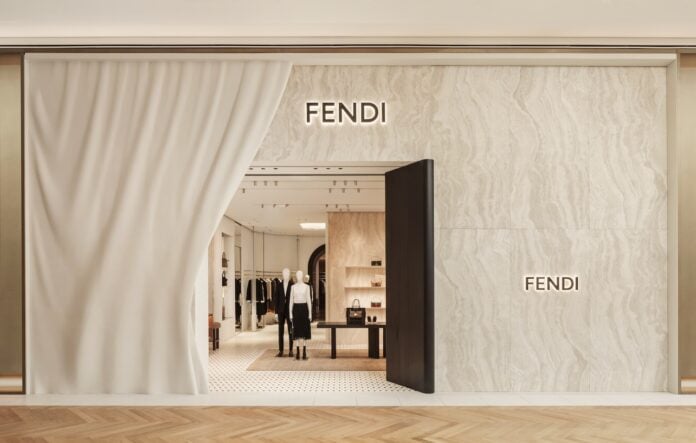
Italian luxury fashion house Fendi has opened a new boutique at Vancouver’s Oakridge Park, giving the brand its only standalone store in Canada and adding another internationally recognized name to the development’s growing collection of luxury retailers.

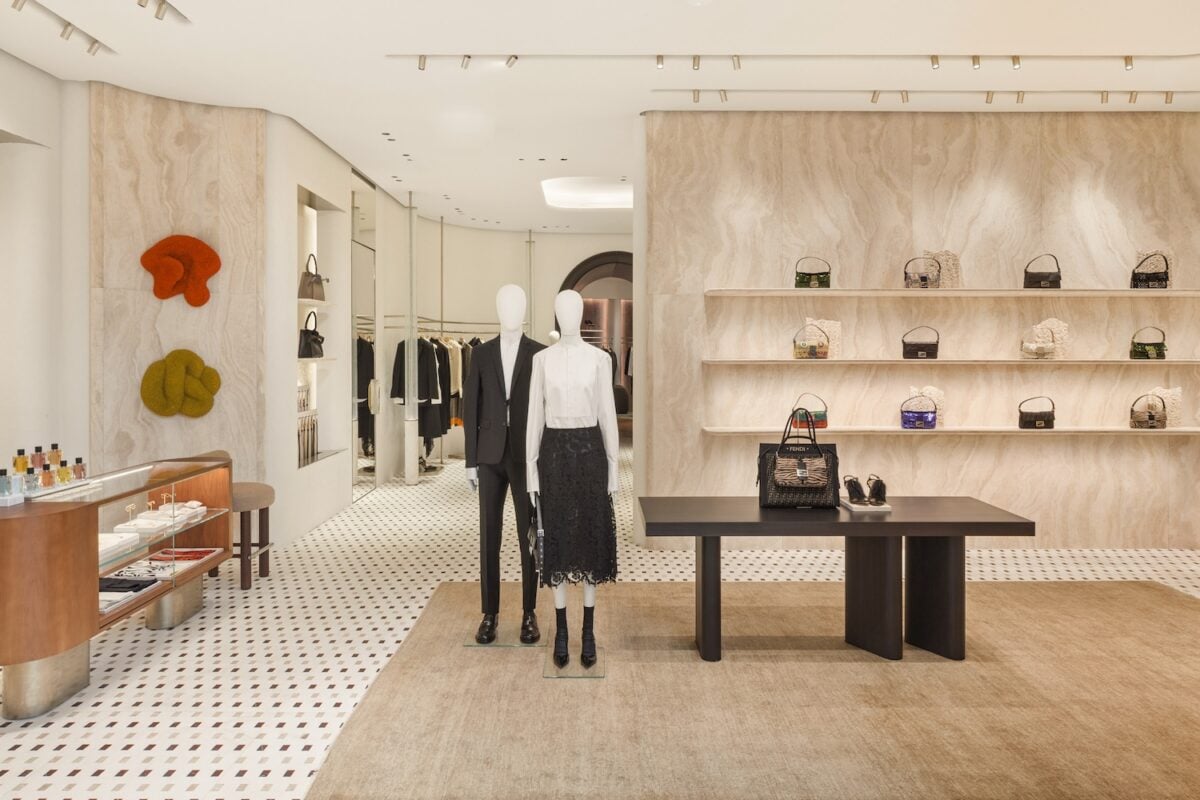
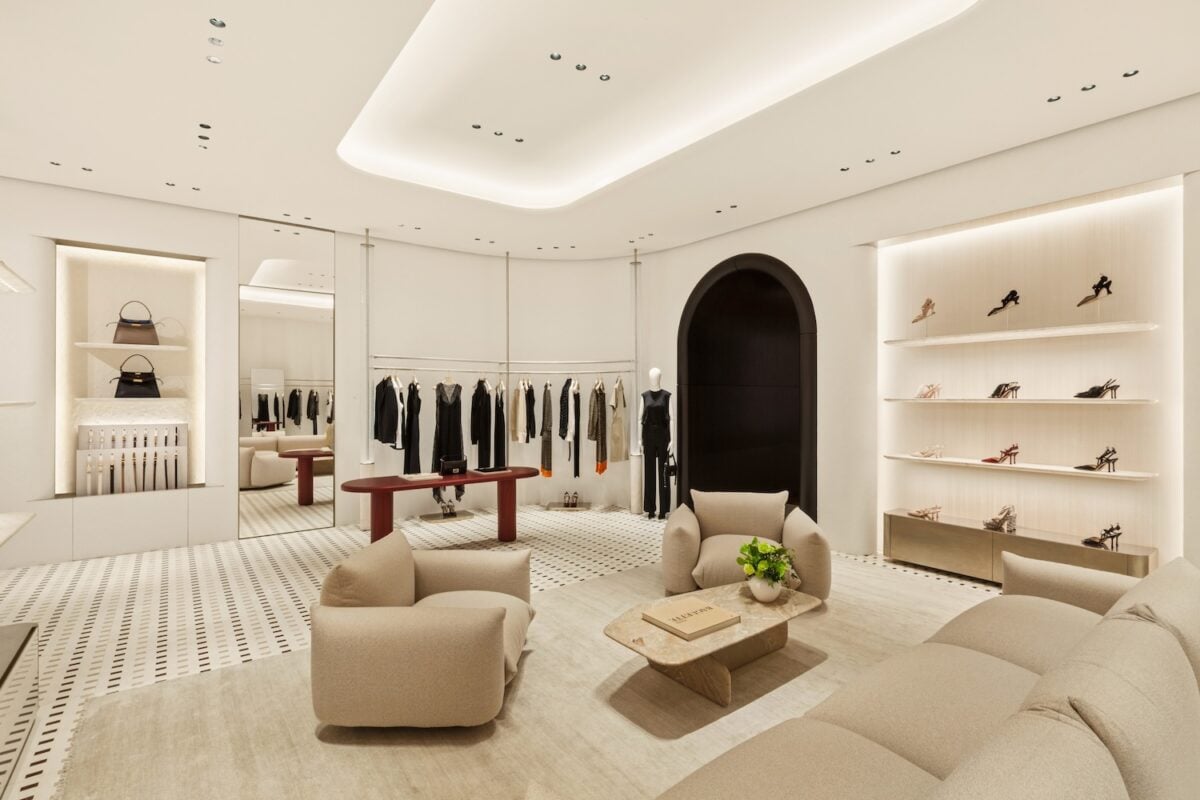
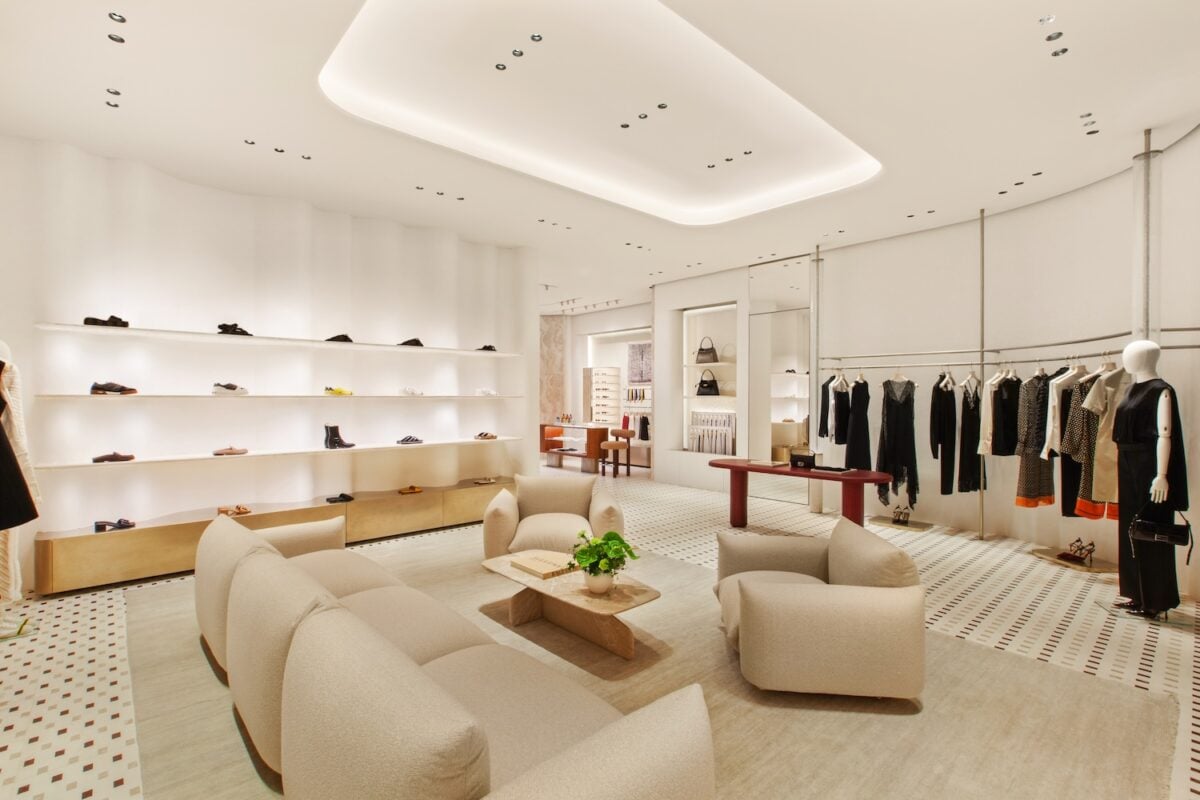
The boutique spans more than 1,689 square feet and is located between Chanel and Bvlgari on Oakridge Park’s first retail level. It carries women’s and men’s ready-to-wear, leather goods, accessories and footwear, joining an expanding cluster of directly operated luxury boutiques that has become one of the defining features of the redevelopment.

The opening represents the latest chapter in Fendi’s Canadian retail strategy. While the Italian fashion house continues to operate boutiques within Holt Renfrew stores in Vancouver, Toronto and Montreal, the Oakridge Park location is now its only standalone Canadian boutique following the closure of its temporary standalone store at Toronto’s Yorkdale Shopping Centre.

The independent format also allows Fendi to present a broader assortment than its remaining Canadian department-store locations. Unlike the boutiques operating within Holt Renfrew, the Oakridge Park store is able to carry fur products following Holt Renfrew’s decision to discontinue the sale of animal fur and exotic skins across its stores.

Fendi at Oakridge Park in Vancouver. Image: Fendi

Boutique Draws on Fendi’s Roman Heritage

The boutique reflects the Roman roots that have shaped Fendi since its founding a century ago. Its entrance features a handmade Calce Romana curtain element that reveals a ribbed travertine façade inspired by Roman architecture and materials.

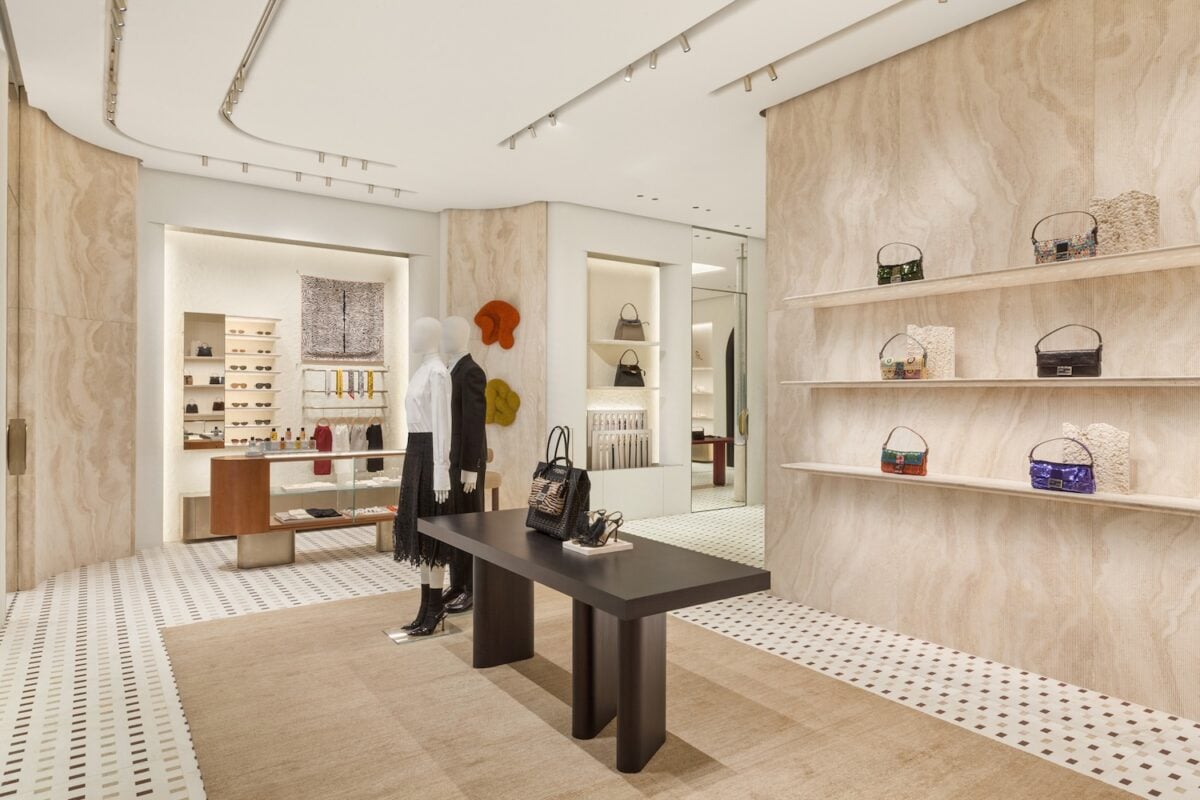
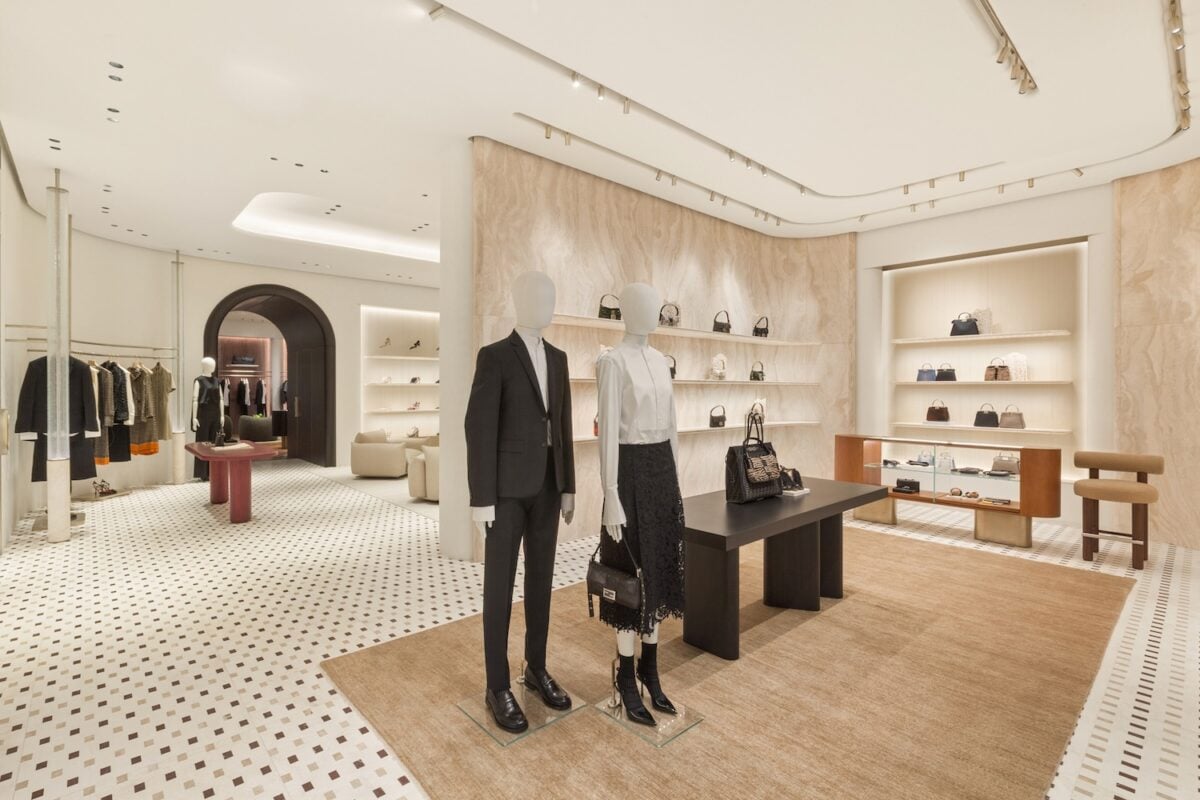
Inside, visitors enter the women’s leather goods and accessories area, where a ribbed travertine feature wall showcases the maison’s signature handbags. Flooring inspired by the domus homes of ancient Rome extends throughout the boutique, while handmade Calce Romana wave walls and Italian furnishings define the women’s ready-to-wear and footwear areas.

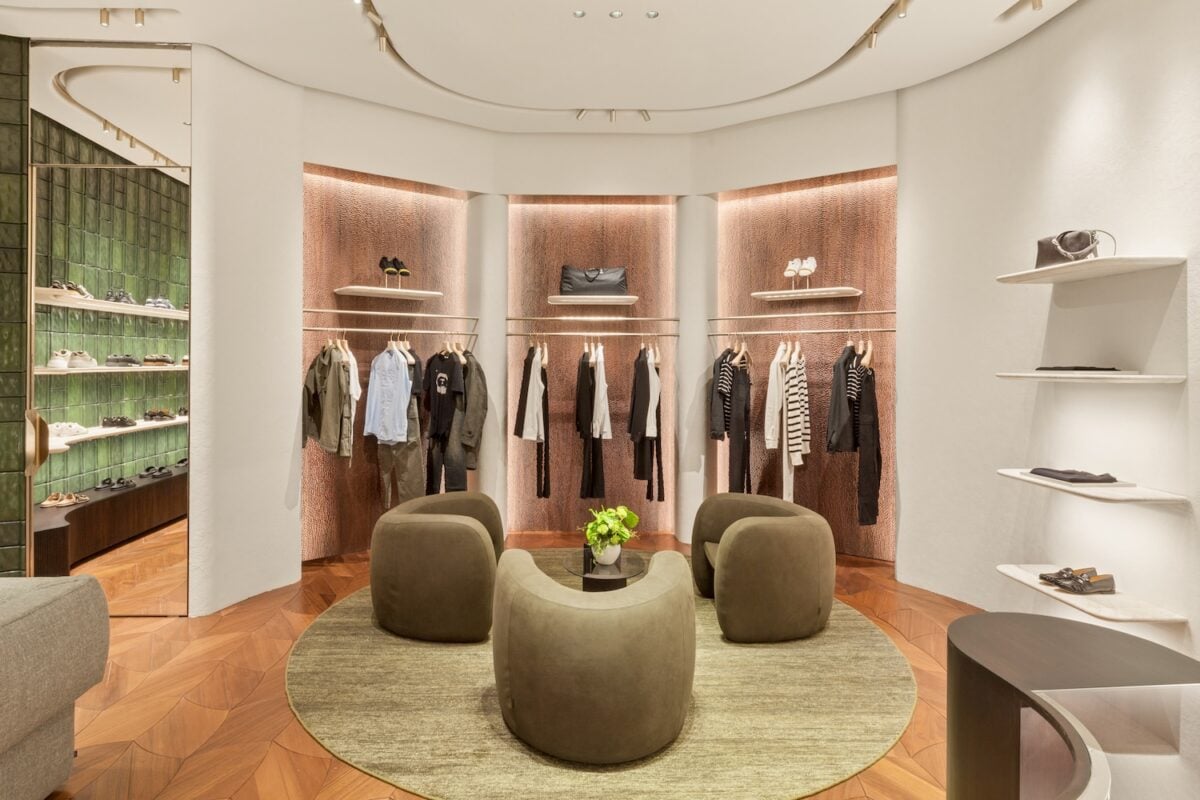
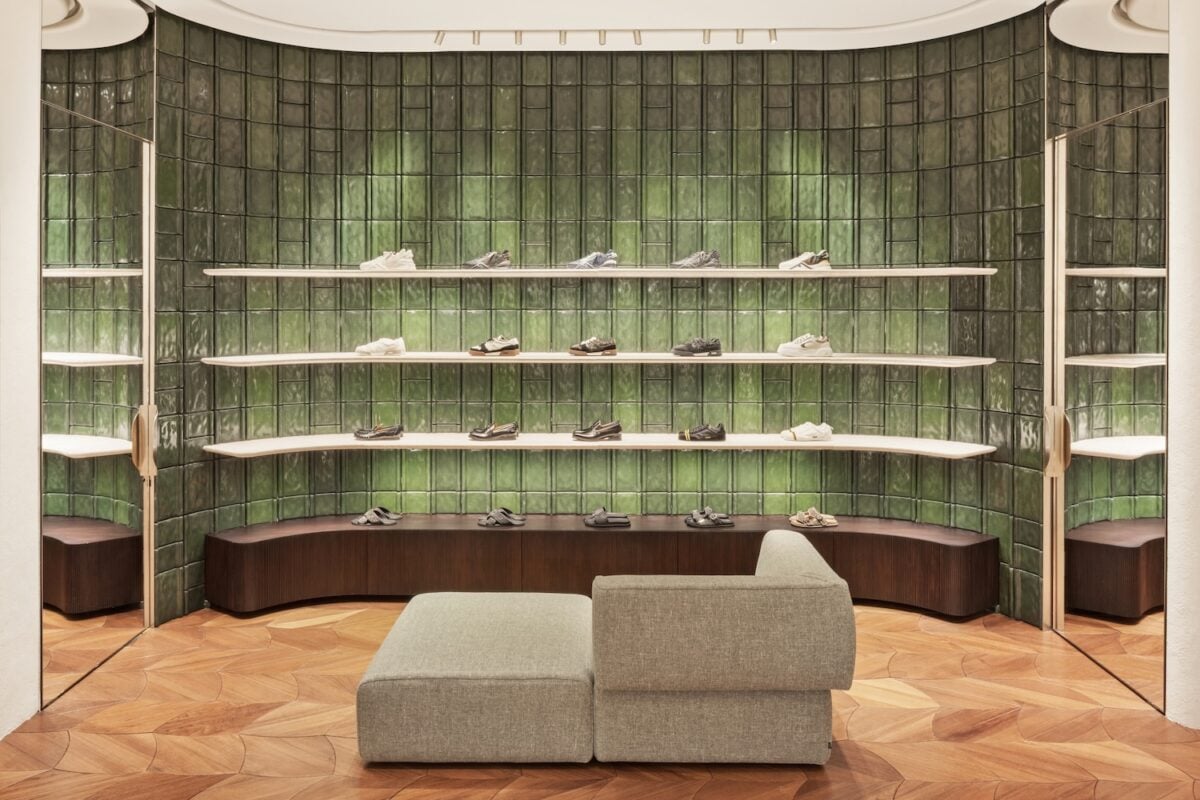
Custom ceramic works by Mexican artist Andrés Anza Cortés, created through Florence-based Secci Gallery, are displayed throughout the store. Roman-inspired walnut arches lead into the dedicated men’s department, which incorporates champagne-toned metal detailing, hammered wood display niches, parquet flooring referencing Rome’s Baths of Caracalla and custom deep-green tilework.

Fendi at Oakridge Park in Vancouver. Image: Fendi

A Century of Italian Luxury

Founded in Rome in 1925 by Adele and Edoardo Fendi, the company began as a leather goods boutique and fur workshop before growing into one of the world’s best-known luxury fashion houses. The founders’ five daughters helped expand the family business, while designer Karl Lagerfeld’s arrival in 1965 began a creative partnership that lasted more than five decades.

Today, Fendi is part of LVMH Moët Hennessy Louis Vuitton, the world’s largest luxury goods company. Silvia Venturini Fendi, a member of the founding family, continues to play a leading creative role within the house.

Leather craftsmanship and fur remain central elements of Fendi’s heritage, making the Oakridge Park boutique’s ability to offer those categories a notable distinction within the Canadian market.

Fendi at Oakridge Park in Vancouver. Image: Fendi

Fendi’s Canadian Retail Evolution

Canadian consumers have been able to purchase Fendi products for decades through wholesale distribution, particularly at Holt Renfrew. Dedicated Fendi boutiques arrived later.

The brand began establishing a Canadian concession network in 2017 with the opening of a women’s boutique inside Holt Renfrew’s downtown Vancouver flagship. Larger Fendi boutiques later opened at Holt Renfrew on Bloor Street in Toronto and at Yorkdale Shopping Centre, followed by a boutique within Holt Renfrew Ogilvy in Montreal.

Fendi recently closed its ground-floor boutique at Holt Renfrew’s Bloor Street flagship in downtown Toronto. Today, its remaining Canadian department-store boutiques are located within Holt Renfrew Vancouver, Holt Renfrew Yorkdale and Holt Renfrew Ogilvy.

In 2022, Fendi opened a separate standalone boutique at the Yorkdale Shopping Centre. Operating alongside the Holt Renfrew concession, the store carried women’s and men’s ready-to-wear, accessories, footwear and fur, and was understood to have been established under an initial two-year lease.

Following the closure of that location, Oakridge Park is now home to Fendi’s only standalone Canadian store.

Fendi at Oakridge Park in Vancouver. Image: Fendi

Vancouver’s Long Connection to Fendi

The Oakridge opening also brings Fendi’s standalone Canadian presence back to the city where it first began.

In the spring of 1996, Vancouver retailer Susan Pratt opened Canada’s first standalone Fendi boutique through her Collections International business. Located at 1005 Alberni Street, the licensed boutique focused primarily on handbags and accessories and operated until the early 2000s. LVMH pulled the brand following its full acquisition of Fendi in 2003.

The Alberni Street location later became part of Tiffany & Co.’s expanded Vancouver flagship, while Fendi shifted its Canadian strategy toward department-store boutiques and, more recently, directly operated locations.

Nearly three decades after that first Vancouver boutique opened, the city is once again home to Canada’s only standalone Fendi store.

Fendi at Oakridge Park in Vancouver. Image: Fendi

Another Milestone for Oakridge Park

Fendi occupies a prominent position within Oakridge Park’s luxury retail district, directly between Chanel and Bvlgari. The boutique joins an expanding collection of international fashion, jewellery and watch brands that includes Louis Vuitton, Prada, Miu Miu, Loewe, Loro Piana, Moncler, Brunello Cucinelli, Valentino, Dolce & Gabbana and others.

The opening continues Oakridge Park’s strategy of attracting directly operated boutiques from leading European luxury houses while reinforcing Vancouver’s position as one of North America’s most important luxury retail markets.

For Fendi, the new boutique provides a dedicated platform to present the breadth of the house’s collections while returning its standalone Canadian presence to the city where that story first began nearly 30 years ago.

Fendi at Oakridge Park in Vancouver. Image: Fendi

More from Retail Insider:

Dr. Phone Fix completes New Brunswick acquisition, expands corporate network to 45 stores

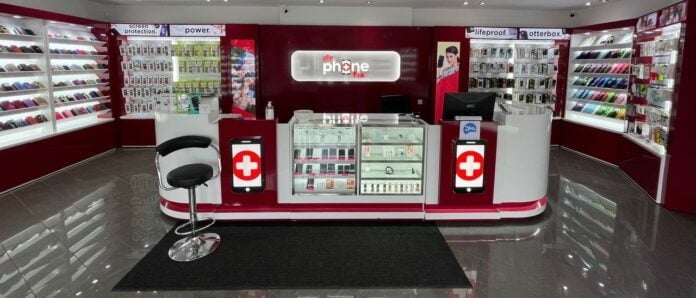
Image: Dr. Phone Fix

Dr. Phone Fix Canada Corp. has completed its acquisition of the assets of Martin Cell Phone Solutions Ltd. in Saint John, N.B., extending the company’s retail presence into New Brunswick and bringing its network of corporately owned locations to 45 across six provinces.

The company said the acquisition supports its strategy of expanding a national integrated device care platform through acquisitions, selective greenfield expansion and strategic partnerships. The transaction also strengthens its presence in Atlantic Canada following its recent expansion into Nova Scotia.

The acquisition adds an operating retail location, an existing customer base and an immediate presence in New Brunswick. Dr. Phone Fix said the acquired business will continue serving Martin’s customers while the location is gradually integrated into its operations.

“Our objective is to build a scalable national integrated device care platform by acquiring quality businesses and integrating them into our centralized operating model,” said Piyush Sawhney, Founder and Chief Executive Officer of Dr. Phone Fix. “This transaction reflects the disciplined acquisition strategy we intend to replicate as we continue expanding our national integrated device care platform, which we believe can create meaningful shareholder value. This strategy includes a disciplined purchase price, modest upfront cash, vendor alignment and operational upside through integration.”

Under the terms of the asset purchase agreement, Dr. Phone Fix acquired Martin’s assets for total consideration of $144,440.48, including $9,440.48 in inventory.

The purchase price includes:

  • $50,000 in cash paid at closing;
  • $50,000 in deferred and performance-based payments tied to revenue thresholds; and
  • the issuance of common shares of the company as partial consideration.

As part of the transaction, Dr. Phone Fix issued 352,849 common shares to Martin with an aggregate value of $44,440.48. The shares are subject to a statutory hold period of four months and one day under applicable securities laws. The company said the transaction has received approval from the TSX Venture Exchange.

Dr. Phone Fix said Martin generated approximately $350,000 in annual revenue before the transaction, based on historical financial information provided by the vendor.

The company said it plans to integrate the acquired location into its centralized operating platform, including procurement, inventory management, pricing, marketing, training and standardized store-level operating processes. It said those measures are expected to improve operational efficiency and support the location’s long-term performance.

Dr. Phone Fix said it continues to evaluate acquisition opportunities across Canada that complement its existing geographic footprint and support its long-term growth strategy.

“We continue to see attractive acquisition opportunities across Canada within a fragmented industry. Our strategy is not simply to increase store count, but to build a stronger national platform with increasing operating scale, greater purchasing leverage and enhanced capabilities to serve customers, carriers, insurers and OEM partners across Canada,” said Sawhney.

Founded in 2019, Dr. Phone Fix said it now operates 45 corporately owned retail locations across Canada, providing device repair, refurbishment, certified pre-owned devices, trade-in services and related offerings through its national retail network.

More from Retail Insider:

Goodfood seeks CCAA Protection

Image: Goodfood

Goodfood Market Corp. a Canadian online meal solutions company, announced Wednesday that it has filed an application with the Superior Court of Quebec (Commercial Division) seeking an initial order under the Companies’ Creditors Arrangement Act and the appointment of Raymond Chabot Inc. as Monitor if the Court grants the requested relief.

“If the Initial Order is granted and RCI is appointed as Monitor, the Company intends to request at the comeback hearing that the Court approve a formal sale and investment solicitation process. If approved, the SISP would provide interested parties with an opportunity to submit proposals for a sale of, or investment in, the Company or its business with a view to identifying the transaction that maximizes value for the benefit of the Company and its stakeholders. No transaction has been selected or approved at this stage,” stated the company in a news release.

“The CCAA process is intended to provide the time and flexibility needed to pursue the Company’s financial restructuring while continuing to operate the business and implement its operational turnaround plan.

“Goodfood has been implementing a turnaround plan focused on simplifying operations, reducing its cost structure and refocusing on its core meal solutions business while enhancing its customer offering. These initiatives have improved operating performance. However, Goodfood continues to face significant near-term liquidity constraints, including upcoming debt maturities and scheduled interest payments.

“After carefully considering the available alternatives, Goodfood determined that a restructuring under the CCAA offers the best opportunity to preserve value, maintain business continuity and continue implementing its operational turnaround plan.”

Image: Goodfood

“We have made important progress in strengthening our business, but our near-term liquidity pressures require a more comprehensive solution,” said Donald Olds, Lead Independent Director. “The CCAA process will give us the time and flexibility to pursue our restructuring and continue implementing our turnaround plan.”

Goodfood said it intends to continue serving customers across Canada while the restructuring proceeds under Court supervision. Management remains focused on serving customers, supporting employees and maintaining relationships with suppliers and other business partners throughout the CCAA process, it said.

Customers can continue to place orders, and Goodfood will continue fulfilling customer orders in the ordinary course. The company will continue to deliver its ready-to-cook offering and continue its ongoing efforts to improve quality, convenience and protein choices, it noted.

Goodfood employs approximately 230 people across Canada, with operations in Montréal, Calgary and Mississauga. The company said it does not expect any job losses as a direct result of the CCAA proceedings. As part of its ongoing operating improvements, the company may continue to make targeted workforce adjustments where appropriate, it added.

The company also announced that Terry Yanofsky tendered her resignation from the Board of Directors effective the close of business, August 4 noting that her prior engagements prevented her from being completely dedicated to supporting Goodfood through this busy restructuring period.

Earlier in the week, the company announced it had appointed Najib Maalouf as its new chief executive officer after Selim A. Bassoul resigned as CEO and as a member of the company’s board of directors, effective Aug. 3.

The Montreal-based company said Maalouf, who has served as president and chief operating officer since March 2026, will take over the top role immediately. Goodfood said the appointment reflects the board’s confidence in the continuity of the company’s leadership, strategy and day-to-day operations as it continues to review strategic options. The leadership change comes as the company says it intends to maintain its current strategic priorities and ongoing operations. Goodfood said the board expects no changes to its strategy or day-to-day business as a result of the transition, including its ongoing strategic review process.

In April, Goodfood Market reported a $7 million net loss in its Q2 financial results.

Olds said the board believes Maalouf is well positioned to lead the company.

“Mr. Maalouf’s deep knowledge of our operations, culture, strategic priorities, and proven results make him the right leader to guide Goodfood forward. His appointment ensures continuity in the execution of our strategy at an important time for the Company as we carefully weigh our strategic options.”

Goodfood photo
Goodfood photo

Maalouf said he intends to continue executing the company’s existing plans following his appointment.

“I’m honoured to lead Goodfood into its next chapter. Having worked closely with our teams over the past several months, I look forward to building on the progress we’ve made, continuing to execute our strategy and delivering for our customers while making the right decisions for all of our key stakeholders.”

The company said Maalouf has played a key role in improving operational efficiency and evolving its business model since joining as president and chief operating officer earlier this year. It also acknowledged Bassoul’s leadership during what it described as a period of significant change and thanked him for his contributions over the past year.

“On behalf of the Board, I would like to thank Selim for his commitment, leadership and tireless efforts over the past year. His work helped reshape the Company’s operating model, improve cash generation, and position Goodfood to pursue the next phase of its strategic process. We wish him every success in his future endeavours,” said Olds.

Bassoul reflected on his time leading the company and credited employees for their efforts during the transition.

“Serving Goodfood has been a privilege. I am proud of what our team accomplished together under challenging circumstances. Over the past several months, our employees demonstrated remarkable resilience and commitment as we streamlined operations, strengthened our financial discipline and built a leaner organization. These achievements belong to them.

“I remain deeply appreciative of our employees, customers, suppliers and shareholders for their support throughout this journey, and I wish Goodfood continued success as it moves forward.”

Goodfood said it remains committed to executing its strategy, supporting its employees and continuing to provide customers across Canada with its services as the leadership transition takes effect.

More from Retail Insider:

May Retail Sales Growth Masks Continued Weakness in Discretionary Categories

Oakridge Park in Vancouver, May 2026. Photo: Craig Patterson

May recorded 4.0% YOY growth across All Stores and 2.0% YOY across All Stores Less Automotive, Food and Pharmacies. At first glance, these figures appear encouraging; however, much like April, the underlying trends tell a more complex story. Consumer spending growth continues to be driven more by higher prices than by increased purchasing activity. With fuel prices, transportation costs and broader inflationary pressures continuing to weigh on household budgets, Canadians are increasingly prioritizing essential purchases while scaling back on discretionary spending; a trend that has persisted well into the spring and early-summer season.

Dominating May’s retail sales was the continued surge in Gasoline Stations, which recorded 30.0% YOY growth. Notably, this increase reflects higher fuel prices rather than increased driving activity. As the Consumer Price Index reported that gasoline prices rose 33.2% YOY in May, gasoline’s significant retail growth overstates its contribution to household spending as consumers have responded by purchasing less fuel. The consequences of this dynamic are evident across the broader retail landscape: dollars that might otherwise go toward a new appliance or a home renovation are instead being absorbed at the pump.

Against a backdrop of broad discretionary weakness, Clothing and Accessories Stores were a notable exception, rising 4.2% YOY, with Clothing Stores specifically up 5.3% YOY. Two Canadian retailers illustrate this strength particularly well. Aritzia reported a 43% increase in total revenue in Q1 2026, with comparable store sales rising 35%. These results were driven by well-received spring and summer collections, disciplined inventory management, and continued investment in marketing. Additionally, Groupe Dynamite posted equally impressive results, with total revenue growing 37.0% in Q1 2026. Together, these retailers demonstrate that when product resonates and value is clear, Canadians remain willing to spend despite a constrained environment.

The most significant retail declines in May were in categories where purchase decisions are easiest to delay. Furniture, Home Furnishings, Electronics and Appliance Stores declined -6.8% YOY, with Electronics and Appliance Stores posting the sharpest decline at -10.7% YOY. Building Material and Garden Equipment and Supplies Dealers were also down -4.2% YOY. This weakness is notable given that late spring and early summer typically represent the busiest period for home improvement spending.

The decline in electronics warrants particular attention. Consumer demand for traditional appliances and home electronics continues to be constrained by household budget pressures, while ongoing investment in AI infrastructure and commercial computing is reshaping portions of the broader electronics supply chain. Although the direct impact on consumer product availability varies by category, elevated costs and cautious consumer spending continue to weigh on demand. Meanwhile, ecommerce sales grew just 1.7% YOY in May. Rather than shifting online in search of lower prices, consumers appear to be consolidating purchases and shopping less frequently but more intentionally. Retailers raising free shipping thresholds may be inadvertently reinforcing this behaviour by reducing impulse purchases and encouraging consumers to wait until they can justify a larger basket.

As we move deeper into the summer season, JCWG is thinking about:

  • How much longer can discretionary retail categories withstand elevated fuel and energy costs? With household budgets still under pressure, will categories such as electronics, home furnishings and home improvement continue to lag, or is there potential for spending to rebound later this year?
  • Did the FIFA World Cup provide a meaningful boost to retail sales? Did demand for streaming devices, fan merchandise, and viewing parties generate a measurable lift in retail sales, and is that impact likely to be concentrated in host markets such as Toronto and Vancouver?
  • With higher free shipping thresholds, fewer shopping trips, and increased purchase planning, what promotional, pricing and fulfilment strategies will be most effective in driving conversion while protecting margins?

Retail Sales by Product Category, Same Month Comparison

Sales for the Month of MayMay-26May-25YOY
All Stores79,923,70776,831,8484.02%
Motor Vehicle and Parts Dealers21,983,18322,031,182-0.22%
Gasoline Stations8,257,1796,351,61130.00%
All Stores Less Automotive49,683,34548,449,0552.55%
Food and Beverage Stores14,084,29814,089,047-0.03%
Supermarkets and Other Grocery Stores*10,073,53810,097,130-0.23%
Convenience Stores717,418717,0650.05%
Specialty Food Stores1,049,8391,021,5332.77%
Beer, Wine and Liquor Stores2,243,5032,253,319-0.44%
Health and Personal Care Stores6,649,5485,974,04111.31%
All Stores Less Automotive, Food, and Pharmacies28,949,49928,385,9671.99%
General Merchandise Stores11,814,28911,200,4205.48%
Furniture, Home Furnishings, Electronic and Appliance Stores3,291,4713,530,463-6.77%
Furniture Stores1,262,4711,294,038-2.44%
Home Furnishings Stores725,011776,141-6.59%
Electronics and Appliance Stores1,303,9891,460,284-10.70%
Clothing and Accessories Stores4,155,6493,989,7214.16%
Clothing Stores3,225,3773,062,8955.30%
Shoe Stores447,904457,016-1.99%
Jewellery, Luggage and Leather Goods Stores482,367469,8102.67%
Sporting Goods, Hobby, Book and Music Stores4,508,1974,258,2335.87%
Building Material and Garden Equipment5,179,8925,407,129-4.20%
Miscellaneous Store Retailers3,030,9172,852,9246.24%
Cannabis Retailers485,024479,2501.20%
Foodservices and Drinking Places9,436,6869,038,8384.40%

Retail Sales by Store Category, Year to Date Comparison

Year-to-Date Sales Ending MayMay-26May-25YTD
All Stores344,629,907333,251,1793.41%
Motor Vehicle and Parts Dealers94,501,01894,763,624-0.28%
Gasoline Stations34,039,65030,426,74311.87%
All Stores Less Automotive216,089,239208,060,8123.86%
Food and Beverage Stores64,208,10363,151,5341.67%
Supermarkets and Other Grocery Stores*46,954,36746,036,6441.99%
Convenience Stores3,221,0383,230,456-0.29%
Specialty Food Stores4,687,9574,514,1653.85%
Beer, Wine and Liquor Stores9,344,7399,370,268-0.27%
Health and Personal Care Stores31,739,51528,514,04611.31%
All Stores Less Automotive, Food, and Pharmacies120,141,621116,395,2323.22%
General Merchandise Stores50,709,56947,341,9917.11%
Furniture, Home Furnishings, Electronic and Appliance Stores15,329,94716,496,790-7.07%
Furniture Stores5,478,4525,683,861-3.61%
Home Furnishings Stores3,354,8263,445,850-2.64%
Electronics and Appliance Stores6,496,6677,367,078-11.81%
Clothing and Accessories Stores16,843,52716,202,6993.96%
Clothing Stores13,174,56312,582,8874.70%
Shoe Stores1,677,6941,714,337-2.14%
Jewellery, Luggage and Leather Goods Stores1,991,2681,905,4784.50%
Sporting Goods, Hobby, Book and Music Stores19,674,31718,316,7307.41%
Building Material and Garden Equipment17,584,26218,037,021-2.51%
Miscellaneous Store Retailers13,412,54112,387,1258.28%
Cannabis Retailers2,353,0892,236,0655.23%
Foodservices and Drinking Places41,032,99639,496,6003.89%

Ecommerce Sales

May-26May-25
Ecommerce Sales, YTD23,577,99122,838,5823.24%
Ecommerce Sales, YOY5,133,0505,047,0851.70%

Regional Sales, Year to Date Comparison

RegionYear-to-Date, 2026Year-to-Date, 2025YTD
British Columbia46,601,99742,097,26410.70%
Vancouver23,503,61423,646,193-0.60%
Alberta45,089,13842,097,2647.11%
Prairies*22,361,45322,019,8811.55%
Ontario130,293,334126,128,5923.30%
Toronto59,302,32557,543,2203.06%
Québec75,686,27273,316,7213.23%
Montréal36,922,15936,450,7171.29%
Atlantic Canada23,355,91522,490,7953.85%
Territories1,241,7961,196,9083.75%

Daily Synopsis: Aug 4, 2026

Welcome to the Daily Synopsis by Retail Insider. We hope you enjoy the 10 articles we published covering key developments in Canadian retail.

SportChek will merge its two CF Chinook Centre locations into a larger Destination Sport store opening in 2027 as part of Calgary mall’s transformation, adding tenants like Shake Shack and Hollister. Air Canada and Hyatt launched a loyalty partnership that integrates points redemption and elite benefits across travel services. Second Cup appointed Joe Walker as CEO to drive international franchise expansion focused on the Middle East.

Retail Insider also published that Staples Canada launched its annual school supply campaign supporting local communities. New 50% U.S. tariffs are adding pressure on retailers disrupting pricing and inventory decisions. Fairleigh Dickinson University opened a new campus at Oakridge Park, diversifying retail demand in Vancouver.

🗞️ The Day’s Retail Insider Article List

🌐 Canadian Retail News From Around the Web