By Larry Leung, Founder and Experience-in-Chief, Transformidy™
Air Canada’s Aeroplan® and World of Hyatt® announced a new loyalty partnership last month, giving members new ways to earn, convert and redeem rewards across both programs. Most of the partnership is already live, with additional reciprocal elite-status opportunities expected later this year.
For frequent travellers, the announcement expands the value of two established loyalty programs. For retailers and loyalty professionals, it also provides an instructive example of how partnerships are evolving into broader customer ecosystems that extend across multiple brands and touchpoints.
Members can now link their Aeroplan and World of Hyatt accounts, earn rewards across both programs, convert points between ecosystems and access reciprocal elite-status benefits. Eligible Aeroplan Premium Credit Cardholders receive complimentary World of Hyatt Discoverist status, additional earning opportunities and annual status challenges. Eligible World of Hyatt members receive annual Air Canada flight credits, while eligible Explorist and Globalist members are expected to gain access to Aeroplan Elite Status challenge opportunities later in 2026.
The list of new benefits is substantial, but the larger story lies in how Air Canada and Hyatt are approaching customer relationships. They are working to connect separate parts of the travel experience into a journey that feels cohesive from beginning to end.
Air Canada’s Scott O’Leary described the partnership as creating “meaningful value across the full travel journey,” while Hyatt’s Laurie Blair spoke about making travel more seamless. Those comments are expected in a partnership announcement, but they also reflect a broader business objective. The two companies are attempting to connect flights, hotel stays and payment experiences into a relationship that feels continuous instead of fragmented.
A traveller may fly with Air Canada, stay at a Hyatt property, pay with an Aeroplan credit card, earn rewards in both programs and later redeem within either ecosystem. Behind the scenes, that experience depends on multiple systems, policies and organizations working together. When those elements function smoothly, customers rarely think about the complexity. They simply experience a journey that feels connected.
That is where partnerships often succeed or fail.
At Transformidy, I evaluate partnerships through what I call Experience Intelligence™: understanding how customer experience, operations, brand value and commercial opportunity intersect throughout the customer journey. The questions are straightforward. What does the customer actually experience? Where does the relationship naturally continue? What commercial opportunities are created for each partner? Can the customer promise withstand the operational realities behind it?
Execution ultimately determines whether those promises are fulfilled. Customers are generally willing to learn how a loyalty program works, but their patience disappears quickly when benefits fail to appear, points do not post correctly or status challenges become confusing. They rarely care which organization owns the underlying technology or business process. They simply know the promised experience did not materialize.
That perspective is particularly relevant for retailers. Many organizations are eager to expand through partnerships, but comparatively few are prepared for the accountability that comes with delivering a seamless experience across multiple brands. Every handoff between organizations becomes part of the customer experience, whether companies intend it to or not.
Canadian retailers already understand the value of loyalty ecosystems. Programs such as PC Optimum, Scene+, Triangle Rewards and Air Miles have demonstrated how partnerships can influence customer behaviour across multiple categories. The Air Canada–Hyatt relationship applies similar thinking within travel by bringing together aviation, hospitality and financial services in ways that encourage customers to remain engaged throughout an entire trip.
The commercial opportunity extends well beyond acquiring new members. Strong partnerships create additional customer occasions, encourage repeat engagement and strengthen long-term relationships because they become genuinely useful in people’s everyday lives. Relevance is what keeps customers participating long after the excitement of a new partnership announcement has faded.
Retailers can apply the same thinking across many sectors. Grocery programs may extend into wellness, travel or pharmacy services. Hotels can connect guests with local dining, entertainment and retail experiences. Financial institutions can create partnerships around categories where cardholders already spend time and money. The strongest ecosystems reflect how customers naturally move through their lives instead of asking them to change established habits.
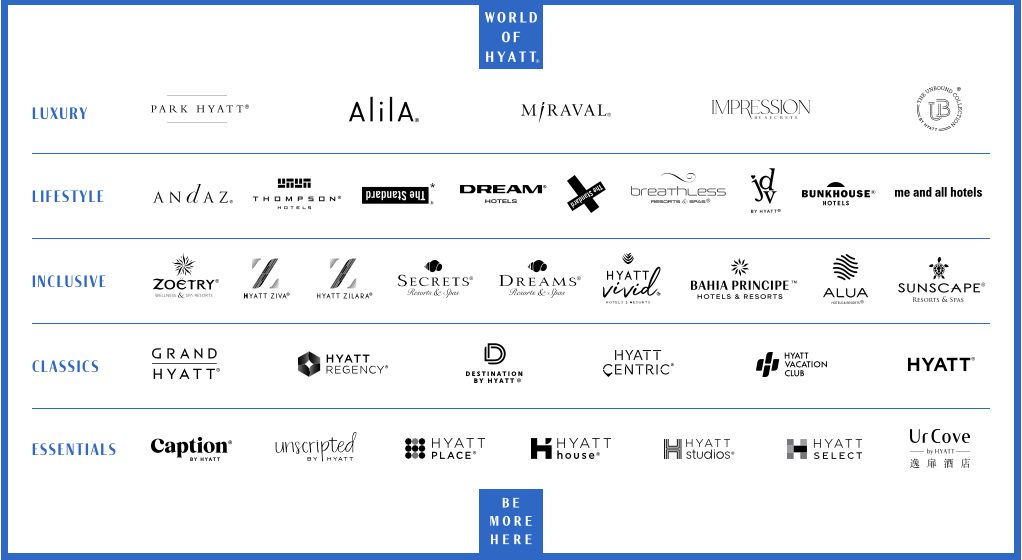
The scale of the Air Canada and Hyatt relationship is significant. Aeroplan serves more than 10 million active members and connects travellers to more than 1,300 destinations through Air Canada and its airline partners. World of Hyatt has approximately 66 million members and operates more than 1,500 hotels and all-inclusive properties across 83 countries.
Scale alone, however, does not create lasting loyalty. Customers return because a program consistently makes their lives easier, more rewarding and more relevant. Points and status remain important, but they are ultimately tools that support a broader relationship.
Air Canada brings one of Canada’s strongest loyalty ecosystems. Hyatt contributes a global hospitality network that shapes a significant part of the travel experience. If customers come to experience those brands as one connected relationship instead of two separate programs, the partnership will have accomplished something much more valuable than expanding redemption options.
For Retail Insider readers, that is the broader takeaway. Partnerships create lasting value when they remove friction, reinforce customer relationships and become a natural part of how people already live, travel and shop. The brands that succeed will be those that make those connections feel effortless from one interaction to the next.
Larry Leung is Founder and Experience-in-Chief of Transformidy™, where he advises organizations on customer experience, partnerships and commercial strategy through his Experience Intelligence™ framework.