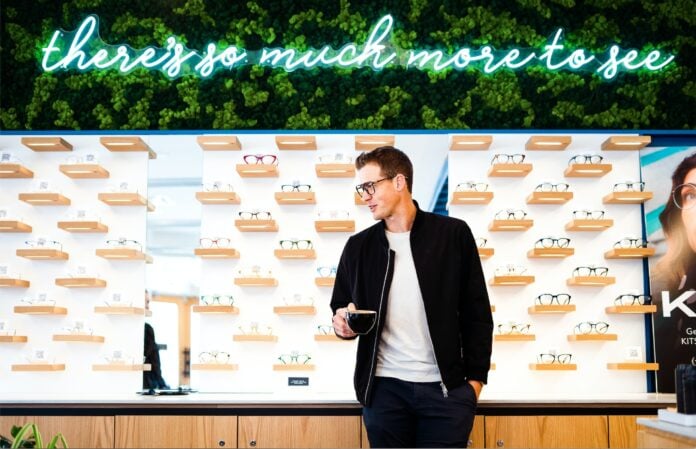
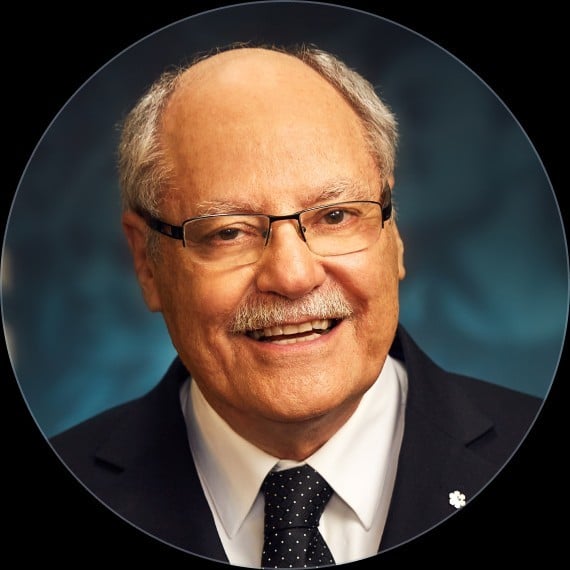
“Q3 was another record quarter of profitable growth for KITS,” said Roger Hardy, Co-Founder and CEO of KITS. “We’re adding new customers at a record pace, expanding margins, and seeing customers in both glasses and contact lenses return at record levels.
Roger Hardy
“Making eyecare easy has been a lot of fun this quarter as the team delivered exceptional results across the board for customers and shareholders. With revenue for the nine months ended September 30 up 29.7% year-over-year to $148.6 million, Adjusted EBITDA up more than 150% to $8.9 million, and net income increasing over seven-fold; our momentum continues to build.
“We remain deeply enthusiastic about the prospects of our many high-growth, high-margin initiatives and confident they will continue to create value and transform the eyecare category in the coming quarters.”
Third Quarter 2025 Financial & Operational Highlights
For the third quarter of 2025, compared to the third quarter of 2024:
Revenue increased by 25.1% to a record $52.4 million compared to $41.9 million
Gross profit increased by 31.6% to $18.1 million, or 34.6% of revenue, compared to $13.8 million, or 32.9% of revenue
Adjusted EBITDA improved by 79.0% or $1.3 million to $2.9 million compared to $1.6 million
Net Income increased by 1,367.4% to $1.9 million or $0.06 per share, compared to $0.1 million or $0.00 per share
Two-year Active Customers surpassed 1 million, an increase of 15.7% year-over-year
For the nine months ended September 30, 2025, compared to the nine months ended September 30, 2024:
Revenue increased 29.7% to $148.6 million compared to $114.5 million
Gross profit increased by 42.5% to $53.3 million or 35.8% of revenue, compared to $37.4 million or 32.6% of revenue
Net income increased by 643.1% to $2.8 million or $0.09 per share compared to a net income of $0.4 million or $0.01 per share
Adjusted EBITDA improved by 152.5% or $5.4 million to $8.9 million compared to $3.5 million
New customers of 305,000, an increase of 36.5% year-over-year
“For the fourth quarter of 2025, KITS management expects revenue to be in the range of $52 million to $54 million, with Adjusted EBITDA as a percentage of revenue between 4% and 6%. The Company intends to announce a Chief Marketing Officer in Q1 2026, to support the Company’s long-term growth strategy,” said Kits.
Retail Insider is streamlining its Canadian retail news from around the web to include a handful of top news stories that can be viewed quickly during the day. Here are the top stories from the past 48 hours.
Cadillac Fairview (CF) is proud to announce the launch of its inaugural residential rental project in Calgary, located on 61st Avenue. (CNW Group/Cadillac Fairview Corporation Limited)
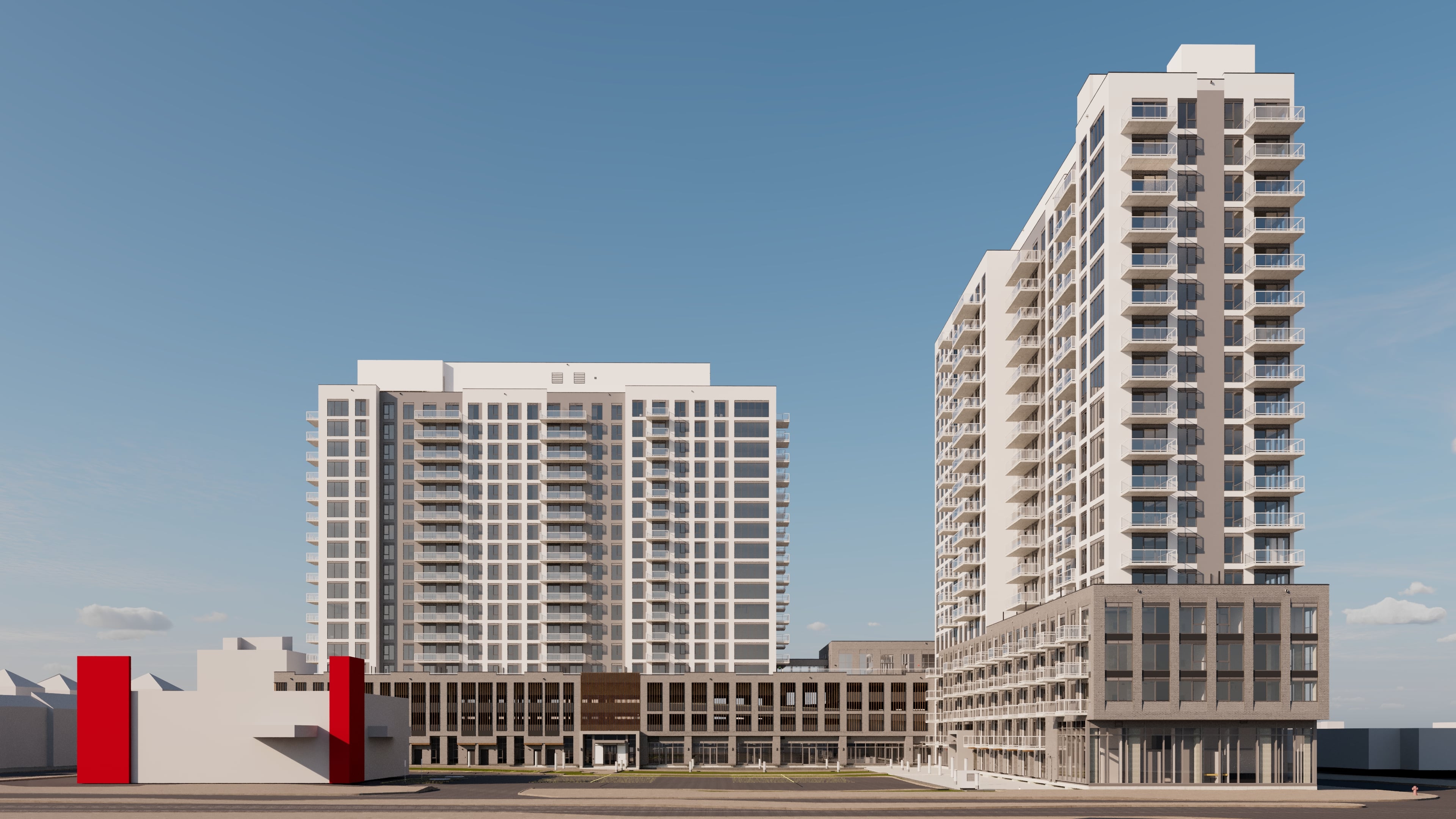
Real estate powerhouse Cadillac Fairview (CF) officially launched on Thursday its first residential rental project in Calgary, across the street from its jewel shopping mall CF Chinook Centre, as it continues to explore the possibility of a landmark residential development on the shopping centre land in the future.
The residential development includes 490 rental units across two towers, 20 and 19 storeys, respectively, connected by a multi-storey podium housing residential units as well as best-in-class amenities, including co-working spaces, lounges and wellness facilities. The project includes significant public realm outdoor spaces, four levels of parking and direct access to public transit. Designed as a transit-oriented development, the purpose-built rental project is strategically located a block from CF Chinook Centre and immediately adjacent to the Chinook LRT station, underscoring the company’s commitment to fostering vibrant and thriving communities across Canada.
Sal Iacono
“This groundbreaking residential development in Calgary is a testament to Cadillac Fairview’s vision for creating vibrant, connected communities,” said Sal Iacono, President & CEO of Cadillac Fairview. “Residential development is not new to CF and we are proud to bring essential housing to this important community as we continue to shape the future of urban living across Canada.”
He called the project a significant milestone for the company and a testament to Cadillac Fairview’s “unwavering vision for creating vibrant, connected and thriving communities” across Canada.
“The launch of our new residential building marks a significant expansion of our presence in this dynamic city and we are honoured to continue contributing to Calgary’s growth and long-term success by providing exceptional living experiences.”
This project marks CF’s fourth major residential rental project, following announcements of the Rideau Registry in Ottawa, Carré Windsor in downtown Montreal, and at CF Carrefour Laval in the Montreal Metropolitan Area.
Construction of the new building at 61st Avenue in Calgary is slated to start this month, with initial occupancy expected in summer 2028.
Photo: Mario Toneguzzi
“We’re confident that this is going to serve to transform this entire area,” said Salpeter.
The site is also located near the Chinook LRT station and a pedestrian bridge connecting that station to Chinook Centre.
Salpeter said CF’s focus on the rental residential market is part of its vision of transforming communities and creating mixed-use communities around its retail centres. It’s also part of its strategy to have a balanced portfolio with retail, office, residential and industrial.
“We’ve been working on this for years. We want to do it thoughtfully and we have incredible opportunities at the sites we own like this one at our properties to continue to densify and create that great mix,” he said.
Salpeter told Retail Insider that CF continues to look at the potential for building residential on Chinook Centre property.
“These things take time. So this is a significant start right now with almost 500 units. We’re going to get this one under construction. At CF Chinook along with all of our centres across Canada we’re active in the pre-development. We continue to look, we continue to do the master plan. We have plans here at Chinook. We have plans in the GTA at Sherway, at Fairview, at Markville where we continue to advance our densification there,” he explained.
“It’s part of our program where we look across the country and advance the plan so we’ll be ready when the time comes but looking at each market specifically. For now we’re going to see how we do with this project in Calgary and we’ll continue to see where the opportunities are for us on site at Chinook.”
Rendering: Cadillac Fairview Calgary project
Salpeter said CF Richmond Centre in the Greater Vancouver Area has delivered 1,100 condominium units and CF has an 80-unit apartment complex there as well.
“We have the best shopping centres. We’re going to make sure we’re thoughtful about how we develop around them to make sure that they continue to be the best shopping centres. But when done appropriately it allows us to build great public realms, allows us to bring density to the centres. The residential supports the retail, the retail will support the residential. And it’s all part of building communities.”
Wholly owned by the Ontario Teachers’ Pension Plan, with assets under management of $28 billion, CF manages approximately 31 million square feet of leasable space at 57 landmark properties across Canada, including CF Toronto Eaton Centre, 160 Front, Toronto-Dominion Centre, CF Carrefour Laval, CF Chinook Centre and CF Pacific Centre.
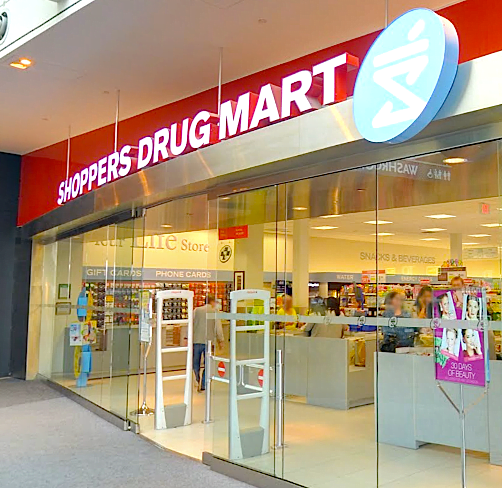
Uber Technologies Inc. and Loblaw Companies Limited announced a new partnership Thursday to bring Loblaw’s grocery and pharmacy banners to the Uber Eats app, offering Canadians more on-demand shopping options.
Through the collaboration, consumers can now shop from select Loblaw banner stores using Uber Eats, with all participating locations expected to be available nationwide by Nov. 12.
At launch, customers will be able to order from several Loblaw brands, including Real Canadian Superstore, No Frills, Maxi, Your Independent Grocer, Real Atlantic Superstore, Loblaws, Zehrs, Fortinos, Provigo, valu-mart, Shoppers Drug Mart, Pharmaprix, and stores in Newfoundland and Labrador.
Klaas Knieriem
“Uber Eats is giving Canadians more grocery options to choose from and making it easier to get anything they need delivered, whether that’s quick ingredients for dinner, groceries for the week or important health and wellness needs,” said Klaas Knieriem, Head of Retail for Uber Eats in Canada. “Welcoming Loblaw and its banners to the Uber Eats platform is helping us expand our in-app selection so that we can offer Canadians more convenience and access to the brands they trust and rely on every day.”
Lauren Steinberg
Lauren Steinberg, Chief Digital Officer at Loblaw Companies Limited, said the company continues to evolve to meet customer needs. “Canadians are looking for easy, flexible ways to shop for the things they need most, and we continue to enhance our offering to meet them,” she said. “By bringing our grocery, beauty and health products to Uber’s marketplace, we’re making it easier for customers to get quality products from the brands they trust, delivered right to their door.”
According to the companies, customers can access the new service by opening the Uber Eats app, selecting the “Grocery” or “Health” category, choosing their preferred Loblaw banner, adding items to their cart, and tracking their order in real time.
To celebrate the launch, Uber Eats and Loblaw banners are offering a variety of promotions for users, including special offers for Uber One members and first-time Uber Eats customers. Promotions and terms are available within the Uber Eats app.
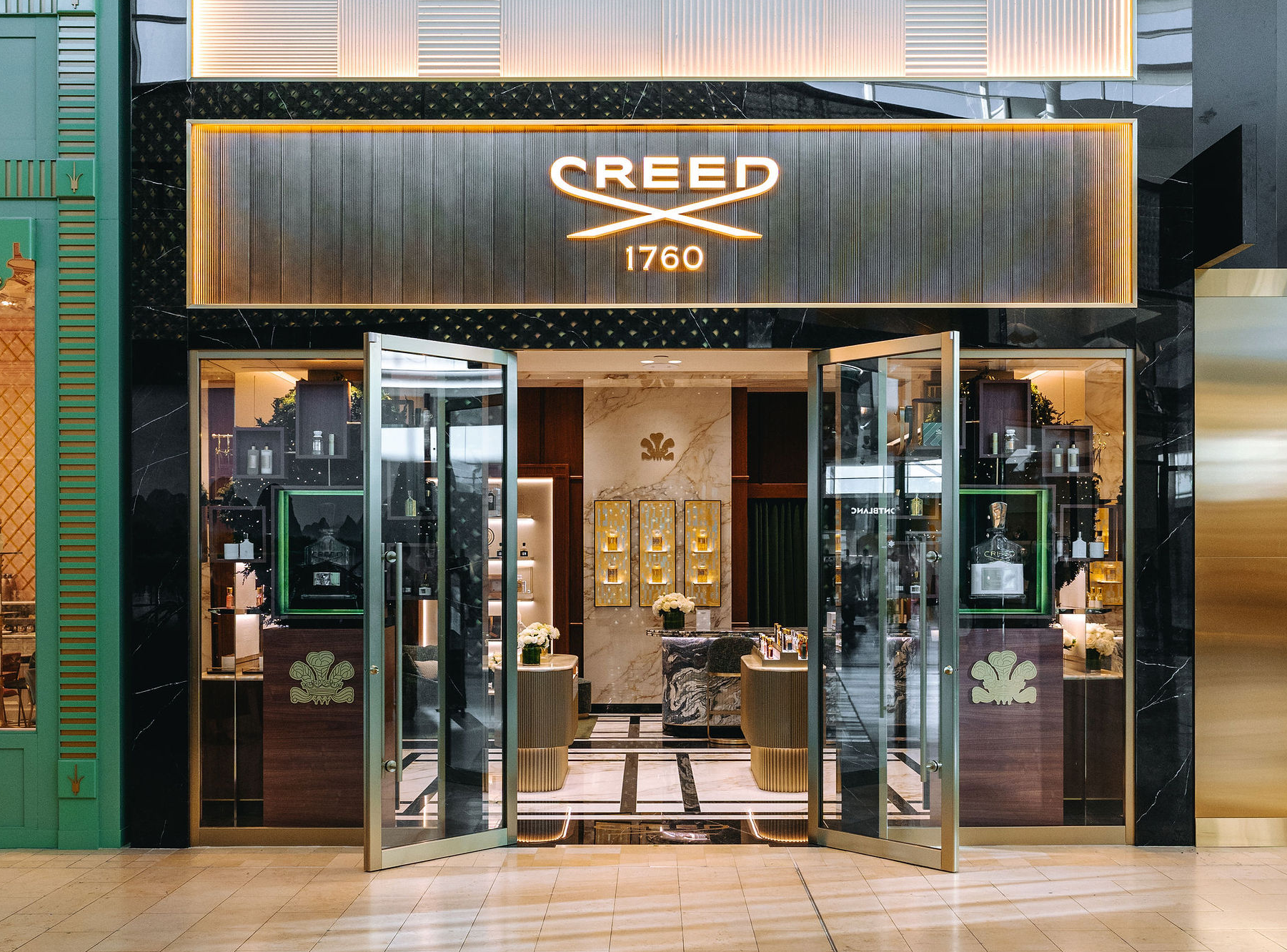
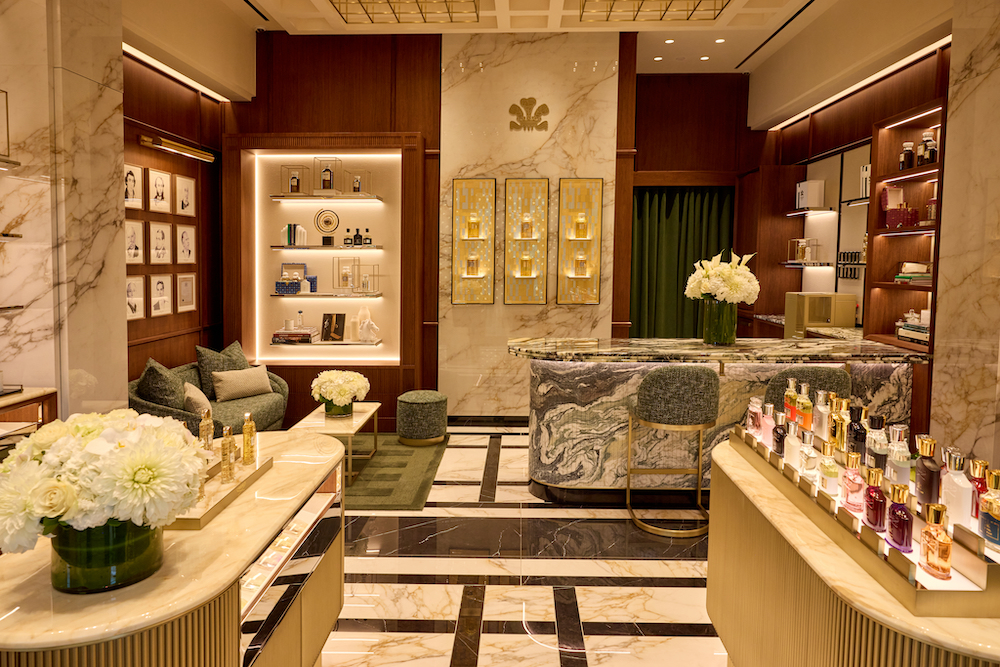
Creed boutique at Yorkdale Shopping Centre in Toronto. Photo: Creed
The House of Creed has officially arrived in Canada with the opening of its first standalone boutique at Toronto’s Yorkdale Shopping Centre. The new store represents the storied fragrance brand’s thirteenth location in North America and signals a major step in its selective international expansion strategy.
The Creed Yorkdale boutique is situated adjacent to Oliver Peoples, which recently relocated within the mall. The space joins an impressive lineup of designer brands that continue to make Yorkdale one of Canada’s leading luxury retail destinations.
The new Creed boutique spans approximately 650 square feet and has been designed to reflect the brand’s signature aesthetic seen in its stores in Paris, London, and New York. The boutique features a dramatic double-height façade accented by a luminous brass plume and an illuminated Creed logo.
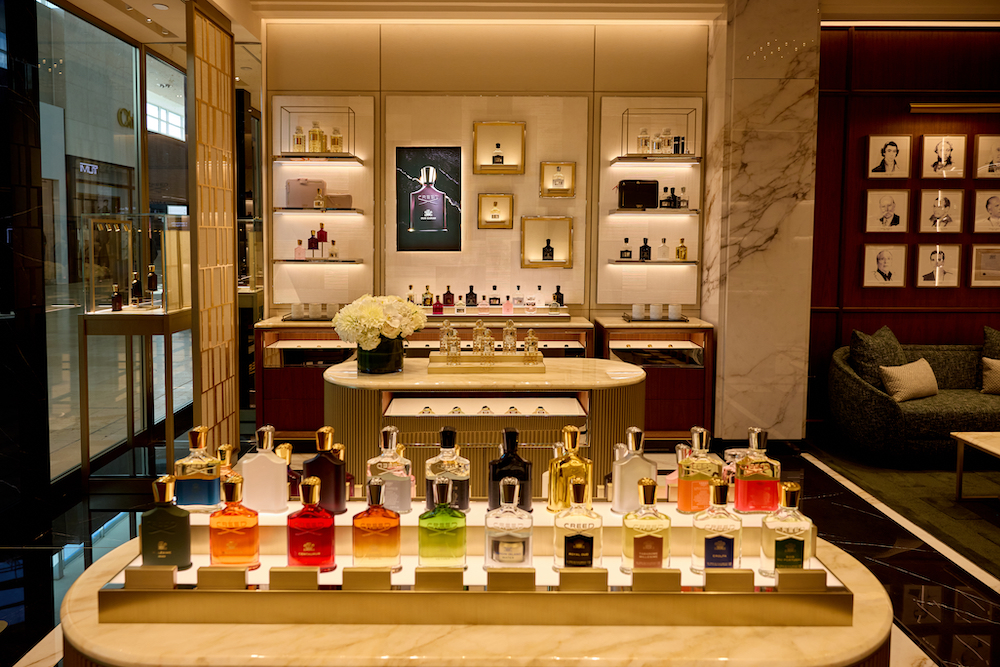
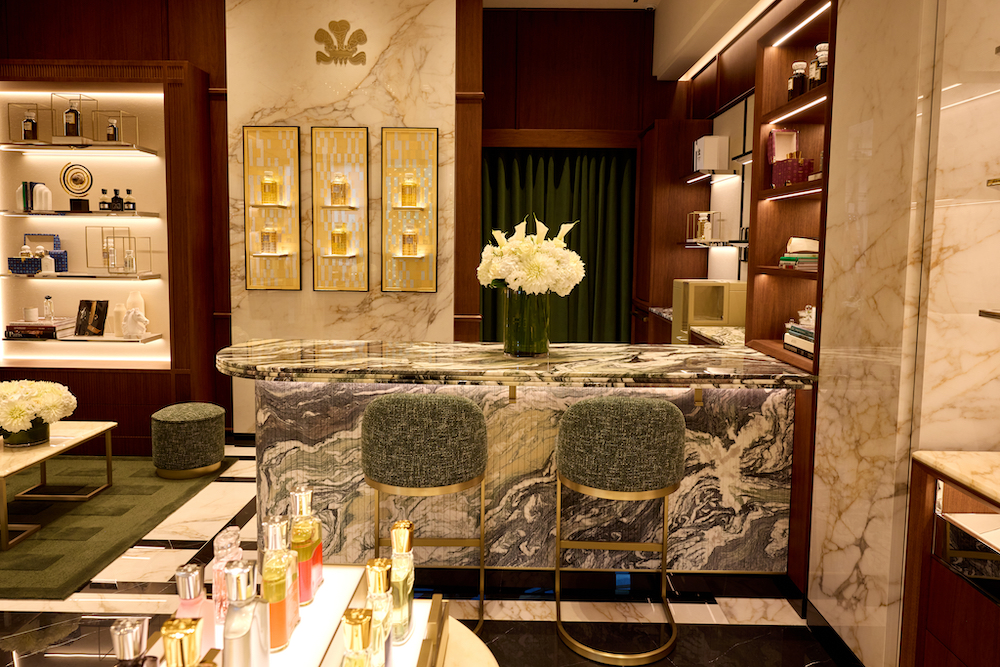
Inside, the design combines craftsmanship and modern elegance. Silk-screened brass inlays frame vitrine windows that highlight featured fragrances, while warm lighting enhances the display of bottles and flacons. The store’s open concept layout invites guests to explore Creed’s complete scent library, including bath and body products.
A lounge area provides a space for private fragrance consultations, and the boutique’s gifting bar offers custom engraving for bottles and exclusive packaging options. Every element of the design underscores Creed’s dedication to artisanal detail and luxury service.
Creed boutique at Yorkdale Shopping Centre in Toronto. Photo: Creed
Full Fragrance Collection Available
At the Creed Yorkdale boutique, visitors can experience the brand’s full range of fragrances, including signature creations such as Aventus, Green Irish Tweed, Millésime Impérial, and Silver Mountain Water. The store also carries the newest scent, Oud Zarian, alongside limited-edition items such as 1000ml collector’s flacons and exclusive leather accessories.
This marks the first time Canadian shoppers can access Creed’s entire fragrance portfolio in one location. Prior to the Yorkdale opening, the brand’s products were available only through select retailers including Holt Renfrew and Harry Rosen. The boutique now provides a direct retail experience consistent with Creed’s luxury standards around the world.
Creed boutique at Yorkdale Shopping Centre in Toronto. Photo: Creed
Yorkdale’s Expanding Luxury Presence
Creed’s debut at Yorkdale comes amid a period of rapid luxury growth at the shopping centre. In 2025, the mall introduced over 75,000 square feet of new luxury space, welcoming several international flagships.
Recent openings include Dior’s 10,700-square-foot Canadian flagship, Maison Margiela, Rimowa, Moncler, and new boutiques for Brunello Cucinelli, Loro Piana, and Versace. Upcoming store launches from Gucci, Tom Ford, and Gentle Monster are expected to further enhance Yorkdale’s profile as the country’s premier destination for luxury retail.
Yorkdale now attracts more than 18 million visitors each year and remains Canada’s top-performing shopping centre by sales per square foot. Owned by Oxford Properties Group and co-owned by AIMCo, the centre continues to set new benchmarks in luxury retail development and experiential design.
A Heritage Rooted in Craftsmanship
Founded in London in 1760 by James Henry Creed, The House of Creed began as a tailoring business serving royal clients before evolving into a fragrance house. Over the centuries, it has become synonymous with handcrafted luxury and refined artistry.
Each Creed fragrance is produced using traditional infusion techniques at the company’s artisanal factory near Fontainebleau, France. Natural raw ingredients are sourced globally, weighed and macerated by hand, maintaining the brand’s commitment to quality and authenticity.
This heritage of craftsmanship is reflected in the Yorkdale boutique’s attention to detail, offering Canadians a chance to experience the brand’s storied legacy firsthand.
Creed boutique at Yorkdale Shopping Centre in Toronto. Photo: Creed
Creed’s Acquisition by L’Oréal
In a major development for the global beauty industry, L’Oréal announced in October 2025 that it had agreed to acquire The House of Creed from Kering for approximately €4 billion (about $4.66 billion USD). The transaction, which is expected to close in 2026 pending regulatory approval, is part of a larger deal that includes a 50-year exclusive licensing partnership between L’Oréal and Kering for fragrance and beauty rights to luxury brands such as Gucci, Bottega Veneta, and Balenciaga.
The acquisition underscores the rising importance of niche luxury fragrance brands in the global market. For L’Oréal, Creed represents both a heritage name and a growth opportunity, combining artisanal prestige with the potential for global scale. Industry analysts predict that L’Oréal will leverage its marketing and retail reach to expand Creed’s presence internationally while maintaining its exclusivity.
Global Context and Selective Expansion
The Toronto boutique joins Creed’s expanding global network, which includes locations in London, Paris, Beverly Hills, Las Vegas, New York, Miami, Houston, and Mexico City. Each store is selected strategically based on market potential, architectural prominence, and international traffic.
This deliberate approach has helped Creed maintain its image as a selective, high-end brand. The opening of the Creed Yorkdale boutique follows the company’s global retail model, ensuring consistency in experience and service. The boutique is designed to serve not just as a point of sale but as a destination where clients can immerse themselves in the brand’s history and expertise.
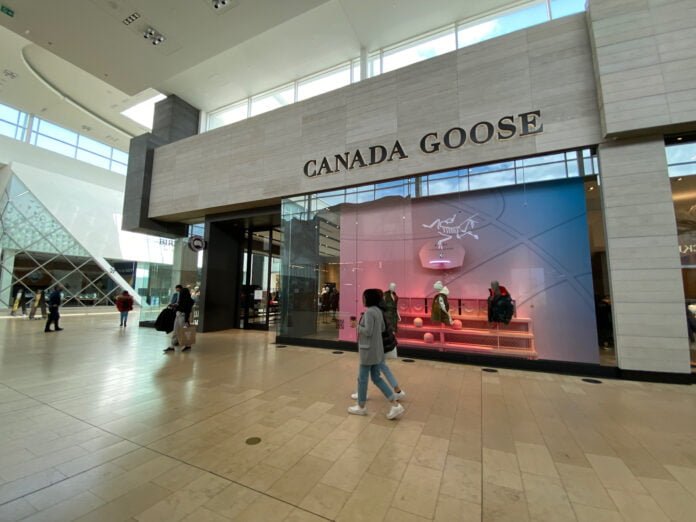
“Our second quarter results reflect strong DTC performance and positive comparable sales growth – clear proof our strategy is working,” said Dani Reiss, Chairman and CEO of Canada Goose.
“We’re exactly where we planned to be, investing with intention, elevating our product offering, brand and consumer experiences, and entering peak season with confidence.”
Second Quarter Fiscal 2026 Business Highlights
Notable highlights from the company’s second quarter included the following:
Launched Fall/Winter 2025 collection, showcasing style-forward storytelling framed through a modern urban perspective, elevating hero products with bold designs and seasonal relevance.
Strengthened global brand cultural resonance through purposeful partnerships. Collaboration with NBA MVP and Champion, Shai Gilgeous-Alexander, fused sport, style, and heritage, and the appointment of acclaimed actor Hsu Kuang-Han as Global Brand Ambassador has deepened engagement across Asia Pacific, particularly in Mainland China.
Continued to expand and elevate store footprint. Relocated Paris store to Champs-Élysées where consumers can find a new elevated design, a vault showcasing iconic products, and curated selections from Canada Goose art collection. Also opened one new store in the quarter, bringing the total permanent store count to 77.
Second Quarter Financial Highlights
All Year-Over-Year Comparisons Unless Otherwise Noted
Total revenue increased 1.8% to $272.6m, down 0.8% on a constant currency basis.
DTC revenue increased 21.8% to $126.6m, or up 20.5% on a constant currency basis driven by DTC comparable sales growth of 10.2% and revenue from non-comparable stores. Performance was driven by a combination of sharper DTC execution, a stronger mix of in-season product newness and more consistent marketing.
Wholesale revenue decreased 1.0% to $135.9m, or 4.8% on a constant currency basis. The decrease is in line with revenue in the comparative quarter.
Other revenue decreased 62.0% to $10.1m, or 63.2% on a constant currency basis due to lower number of Friends & Family events as planned and employee sales.
Gross profit increased 3.7% to $170.1m. Gross margin for the quarter was 62.4% compared to 61.3% in the second quarter of fiscal 2025 primarily due to a higher proportion of DTC revenue, partially offset by higher product costs and product mix.
Selling, general and administrative (SG&A) expenses were $187.7m, compared to $162.5m in the prior year period. The increase in SG&A was primarily driven by store execution ahead of peak season, including labour and training, expansion of the global retail network and our planned increase in marketing spend with Fall/Winter 2025 campaigns.
Operating loss was $17.6m, compared to operating income of $1.6m in the prior year period.
Net loss attributable to shareholders was $15.2m, or $0.16 per basic and diluted share, compared with a net income attributable to shareholders of $5.4m, or $0.06 per basic and diluted share in the prior year period.
Adjusted EBIT was negative $14.2m, compared to positive $2.5m in the prior year period.
Adjusted net loss attributable to shareholders was ($13.3)m, or ($0.14) per basic and diluted share, compared with an adjusted net income attributed to shareholders of $5.2m, or $0.05 per basic and diluted share in the prior year period.
Major construction was a pain for quite some time for many businesses in Calgary’s Marda Loop neighbourhood.
But completion of construction finally has businesses, from retailers to restaurants to services, optimistic about the future and the return of consumers, many of whom had shied away from the district.
Bob van Wegen
“Marda Loop has always been one of Calgary’s most dynamic and diverse neighbourhoods,” said Bob van Wegen, Executive Director at Marda Loop Business Improvement Area (BIA). “With the major construction behind us, we’re excited to welcome Calgarians back to shop, dine, and explore. Every visit supports local businesses and strengthens our city’s economy.”
For the past few years, about 200 local businesses had to be resilient in the face of construction and infrastructure upgrades.
Paul Morissette
“For us, Marda Loop isn’t just a place to run a business, it’s where we connect with our neighbours, celebrate milestones, and create experiences people remember,” said Paul Morissette, owner of Fresh Kitchen, who is also President of the Marda Loop BIA Board of Directors “After weathering the challenges of the past few years, it feels incredible to look out our front door and see people enjoying the sidewalks, patios, and energy of the street again. This community has a renewed spark, and we can’t wait to be part of its next chapter.”
His business has been around for about 17 years.
Morissette said it’s been a tumultuous couple of years, for sure, for business owners.
“We (BIA) represent over 200 businesses and services in the business area, and it’s impacted retailers and I’m also a retailer that has been affected by it, with year over year, customer count decreases. People just don’t want to risk coming the neighborhood anymore because traffic, construction woes, parking issues and stuff like that. So we’ve seen some retailers go and for sure, it’s a sad situation, but we also, because of the vibrancy of that neighbourhood, the popularity of that neighborhood, we’ve seen businesses come in too. So it’s not all doom and gloom for sure,” he said.
“It’s still a very positive place to do business. And we’re also quite excited now that construction is wrapping up to get back to those customer accounts, and putting Marda Loop back on top of mind, where it’s a great, vibrant place to shop in Calgary.”
Marda Loop
What needs to be done when it comes to city construction in business areas?
“I think the best thing that we can probably ask for is clear and concise communication right from the parties involved, whether it’s the City of Calgary or their subcontractors or contractors. I know the Marda Loop BIA as an advocate for the businesses in the neighbourhood, that’s all we really sought, to open up the lines of communication to get realistic deadlines, realistic timelines involved, things like that,” explained Morissette.
So I think construction in its form is disruptive, Renovation is disruptive. So all we can try to do is minimize that in the best way, by just getting a true and realistic timeline from the people involved. And that can be a challenge, for sure, because you’re at the whim of weather, you’re at the whim of labour issues, who knows. But at the end of the day, we’re still businesses trying to exist. And minimizing that from going forward would be the biggest thing you could ask for.”
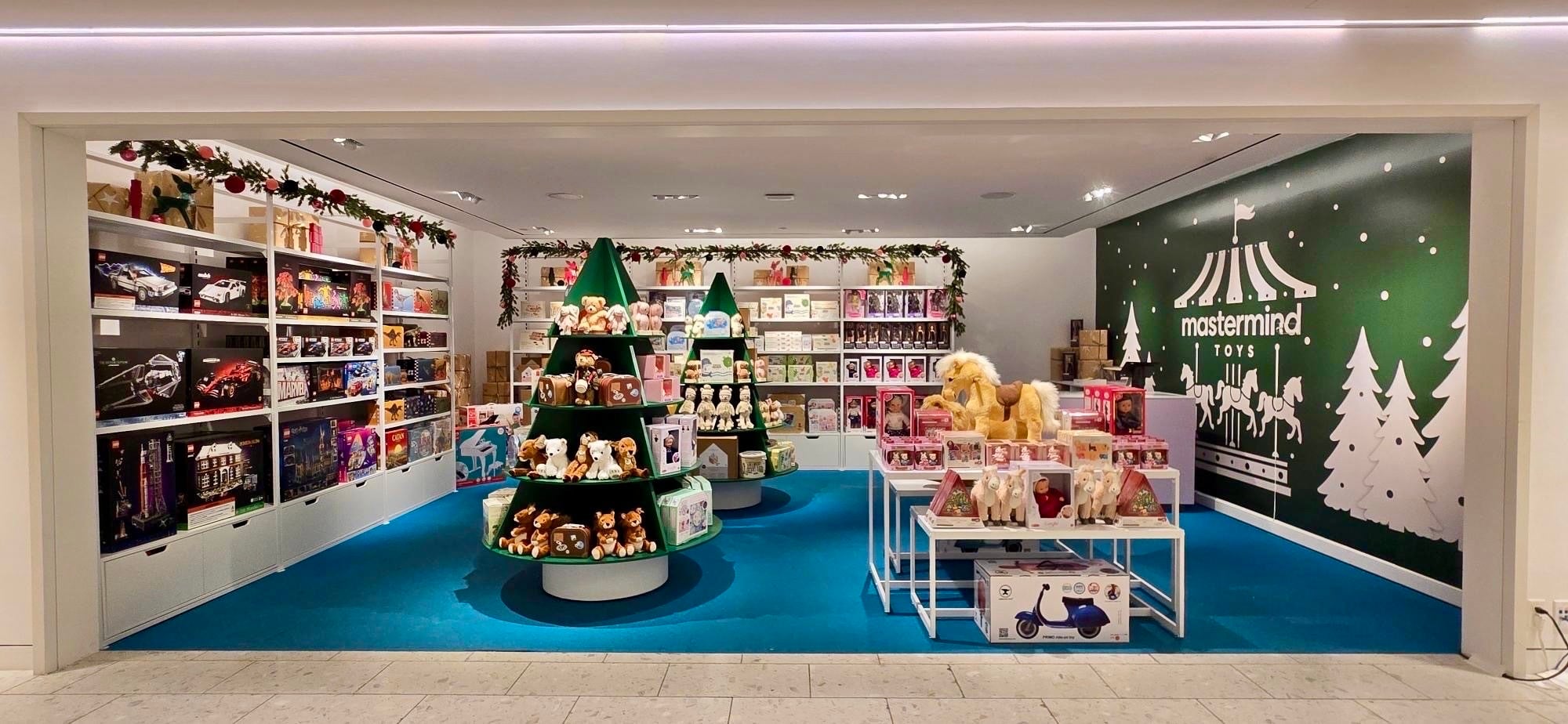
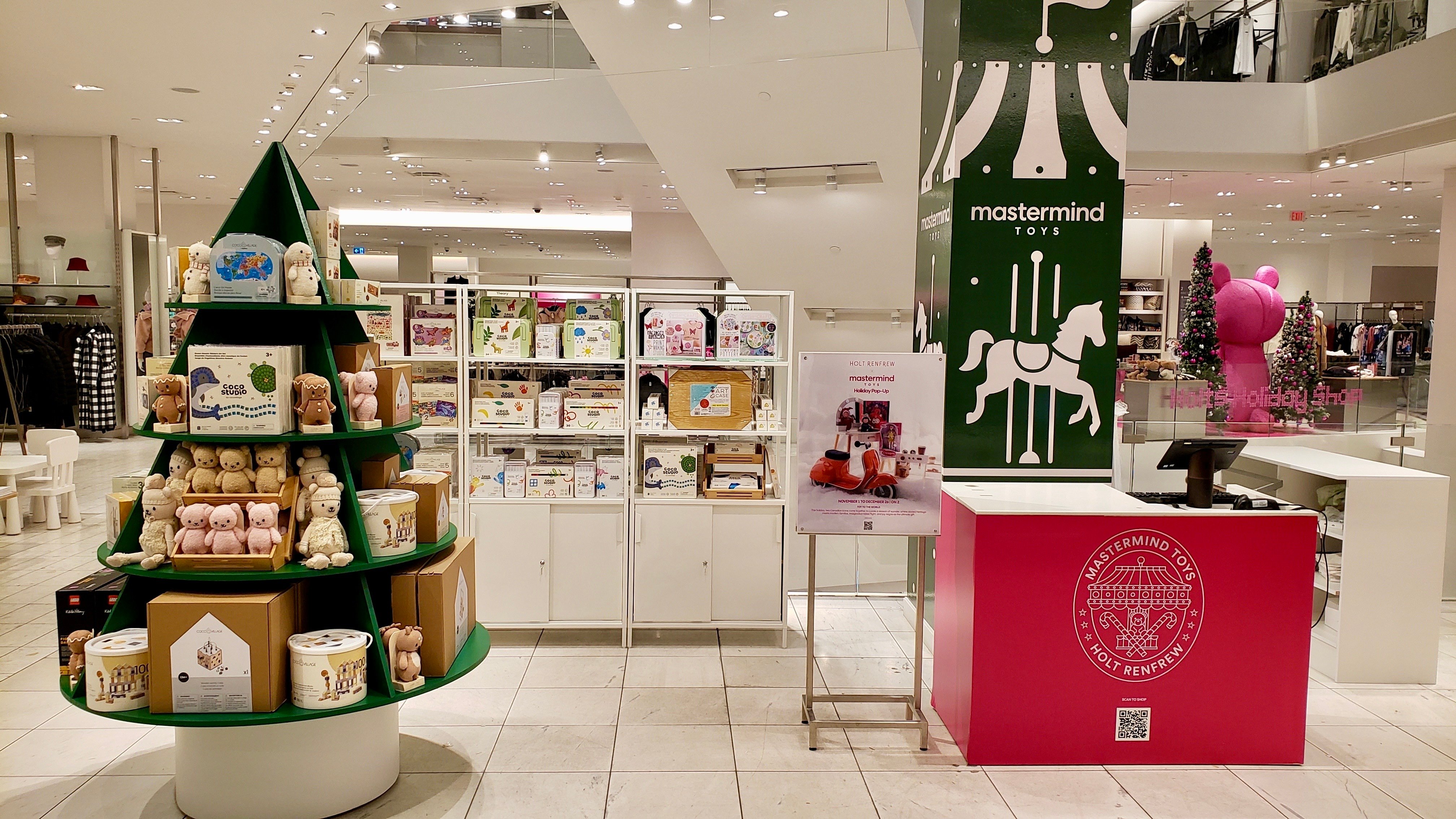
Mastermind Toys pop-up at Holt Renfrew, 50 Bloor St. W. in Toronto. Photo: Mastermind Toys
Mastermind Toys has entered the luxury retail landscape with five new holiday pop-up boutiques inside Holt Renfrew stores across Canada. The collaboration, which runs from November 1 until early January 2026, introduces the toy retailer to a premium audience in four major markets.
The initiative includes pop-ups at Holt Renfrew’s Bloor Street and Square One locations in the Greater Toronto Area, as well as stores in Montreal, Calgary, and Vancouver. The move marks an unexpected yet strategic pairing between Canada’s largest specialty toy retailer and the nation’s leading luxury department store chain.
Marcello Piane, Vice President of Store Operations at Mastermind Toys, said, “It’s a great opportunity to work with Holt Renfrew and reach new customers during the holiday season.
Marcello Piane
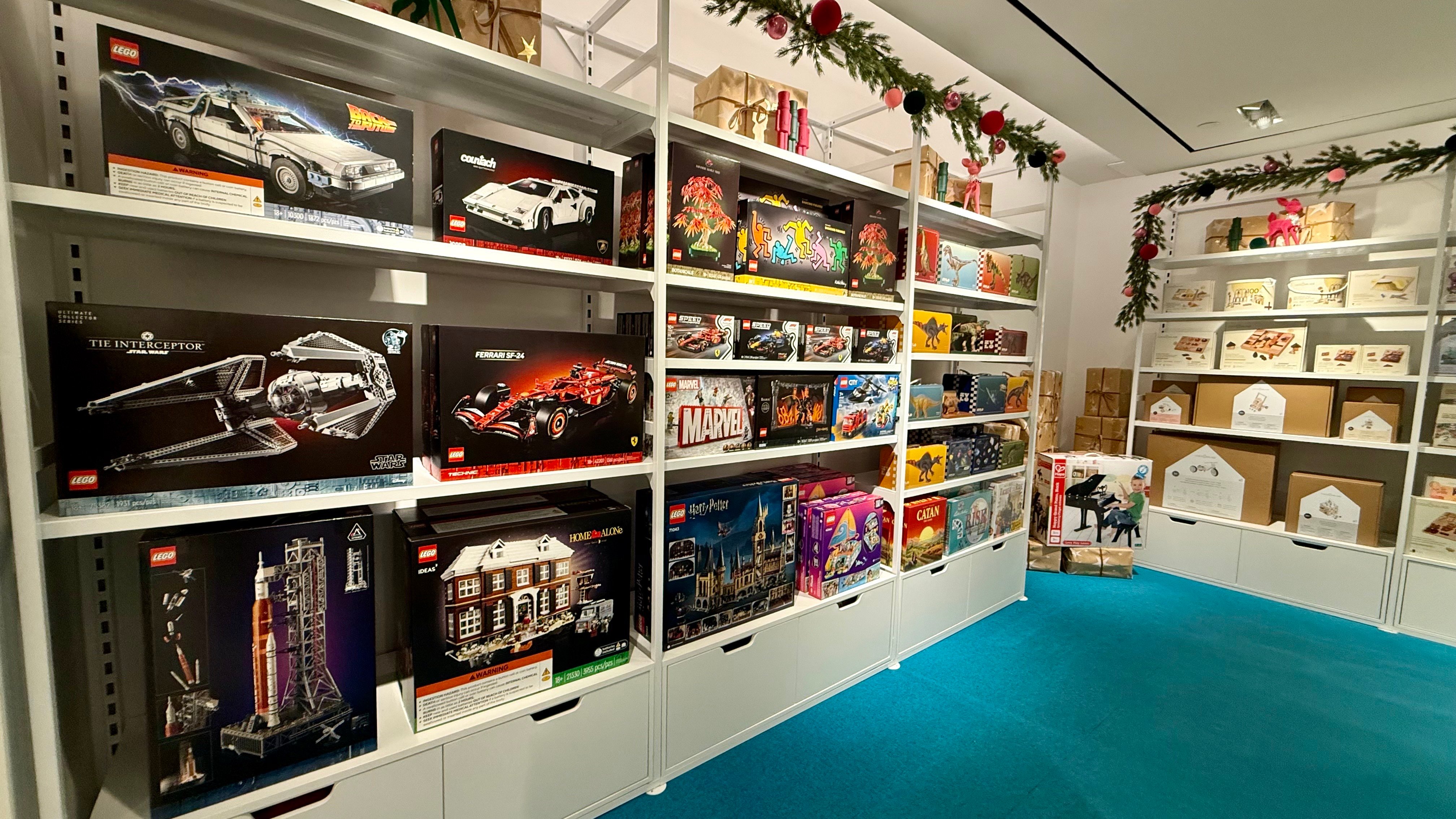
The partnership allows Mastermind Toys to extend its footprint beyond its traditional standalone stores, connecting with a new demographic of customers who frequent Holt Renfrew’s curated retail environments. Each boutique features a tailored selection of premium toys, collectibles, and exclusive holiday merchandise.
“We wanted to make sure each pop-up felt Unique and Playful,” Piane explained. “The assortments are curated to suit the market and reflect Holt Renfrew’s luxury positioning while maintaining our own sense of fun and discovery.”
The Toronto Bloor Street pop-up, located on the mezzanine level of Holt Renfrew’s flagship store at 50 Bloor Street West, sits near the women’s footwear department and next to a Longchamp boutique. The mezzanine level also features holiday gifts and the Holts Café restaurant, creating a seamless integration between gift shopping and luxury experiences.
Mastermind Toys pop-up at Holt Renfrew, 50 Bloor St. W. in Toronto on November 1, 2025. Photo: Craig Patterson
Inside the Bloor Street Pop-Up
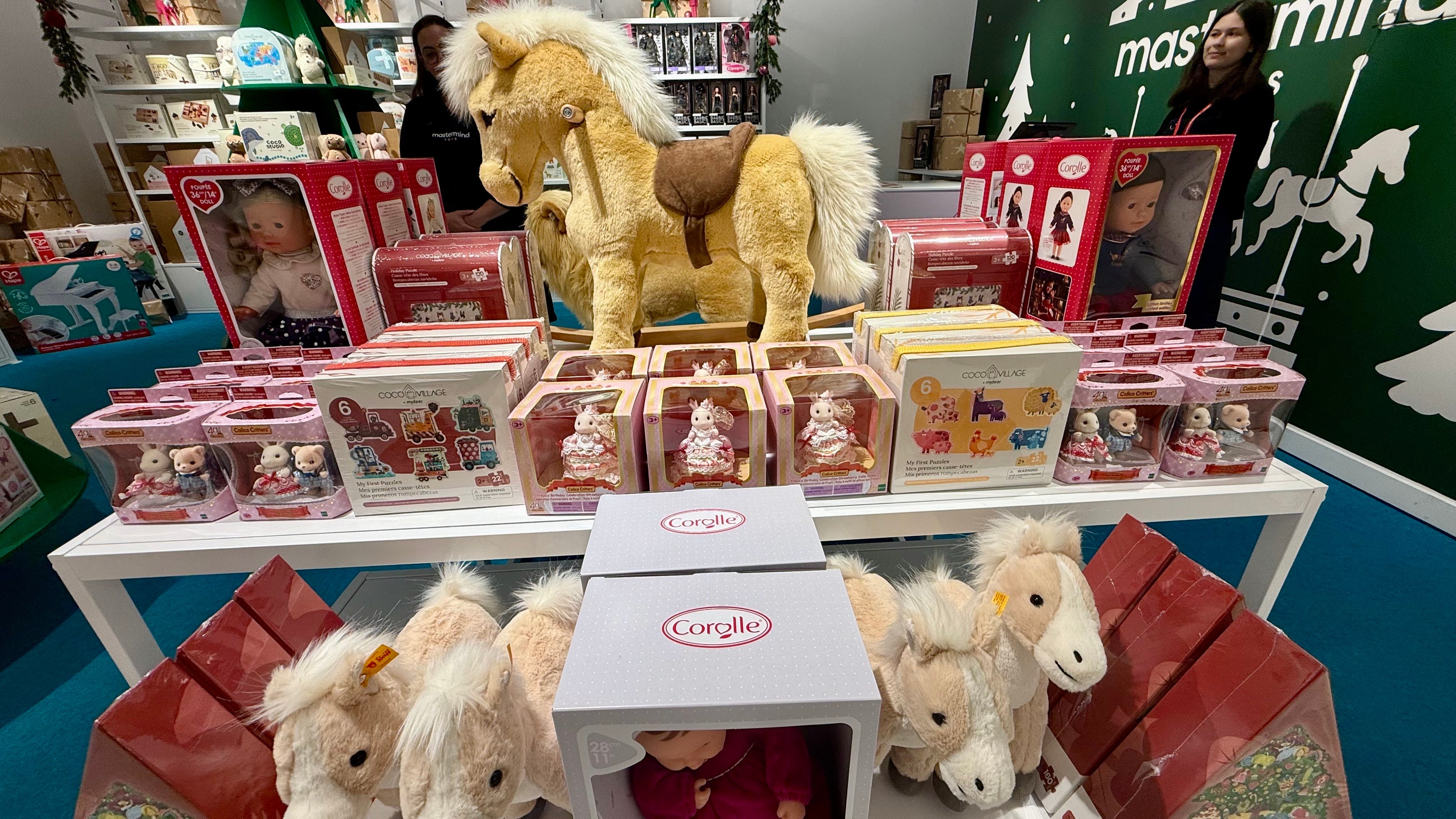
At the Toronto Bloor Street location, the Mastermind Toys pop-up offers a mix of nostalgia, craftsmanship, and luxury appeal. Among the highlights is a limited selection from Germany’s Steiff, the heritage toy brand recognized for inventing the teddy bear in 1902. One of the Steiff bears featured in the boutique is priced at around $700, with a handcrafted rocking horse costing even more.
Manager Josie Grech described the collaboration as “a unique, specially curated experience for Holt Renfrew customers.” She added, “Some items you’ll only find in this location. The Barbie collection and several exclusive Lego designs were chosen specifically for Holt Renfrew Mastermind pop-ups, alongside beautiful Coco Village and Cuddle + Kind products.”
Coco Village, a Quebec-based brand recently acquired by Mastermind Toys’ parent company, adds a design-led aesthetic to the mix. The line includes baby furniture, puzzles, and arts and crafts items. Grech noted that the assortment aims to balance premium materials with educational play.
“It starts with a clear plan, team partnership, and the passion to make it all come together,” said Marcello Piane. “A special thank-you to Joanne Tobin (District Manager), Marley Llakaj (Director, Visual Merchandising), Arif Mukhtar (VP, Retail Development), and our Store Managers who went above and beyond to make this happen — Josie, Jackie, Jamie, Samantha, Bree, and Peter. Your dedication and support brought this to life in a beautiful way, and we are incredibly grateful. Also, a special thanks to our Buyers, Allocators, and Warehouse & Distribution, Marketing, and IT Teams. Your combined efforts and collaboration are very much appreciated.”
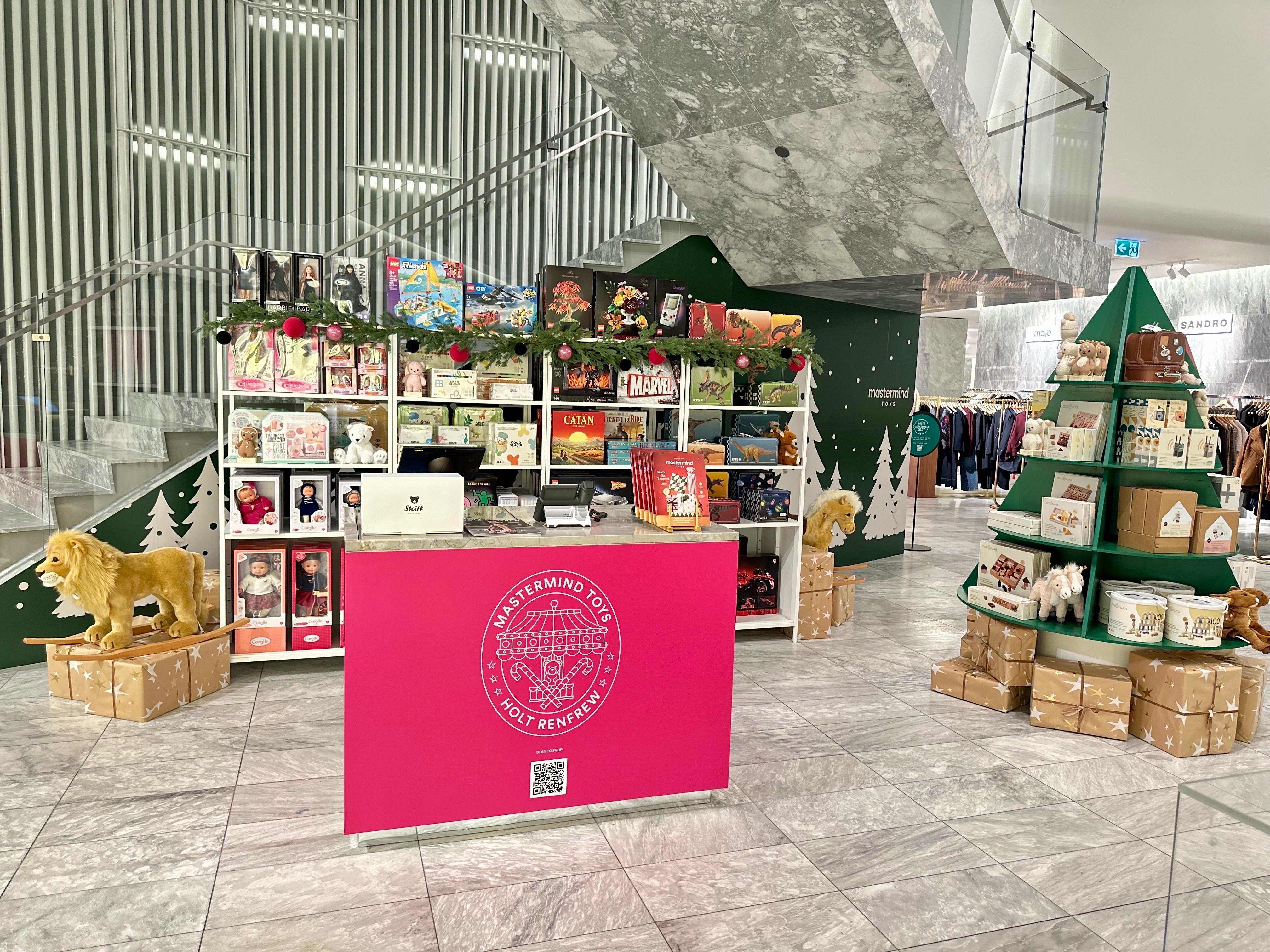
Mastermind Toys pop-up at Holt Renfrew, Square One in Mississauga. Photo: Mastermind Toys
Curated Assortments With a Luxe Touch
Each of the five Holt Renfrew pop-ups reflects both Mastermind Toys’ educational philosophy and Holt Renfrew’s luxury sensibility. Products from Steiff, Coco Village, and Cuddle + Kind embody craftsmanship and social impact, aligning with both retailers’ emphasis on quality and values-driven shopping.
“The Cuddle + Kind line is a beautiful addition,” said Grech. “Each doll is handcrafted and ethically produced, with meals donated for every item sold. They’re the kind of toys that children grow attached to, becoming their companions over the years.”
Other notable items include high-end wooden toys, plush animals, and seasonal exclusives that appeal to both children and collectors. “It’s all about storytelling and discovery,” said Piane. “We want families to find something special that sparks imagination.”
Mastermind Toys pop-up at Holt Renfrew Ogilvy in downtown Montreal. Photo: Mastermind Toys
Aligning With Holt Renfrew’s Holiday Vision
The timing of the collaboration was deliberate, coinciding with Holt Renfrew’s annual transformation into a festive holiday destination. The partnership provides both brands with an opportunity to create experiential retail moments that blend playfulness with sophistication.
According to Grech, preparations began in late summer. “Once the partnership was confirmed, everything came together quickly,” she said. “Our teams worked closely to design the spaces, merchandise the displays, and make sure it reflected both Mastermind’s spirit and Holt Renfrew’s holiday aesthetic.”
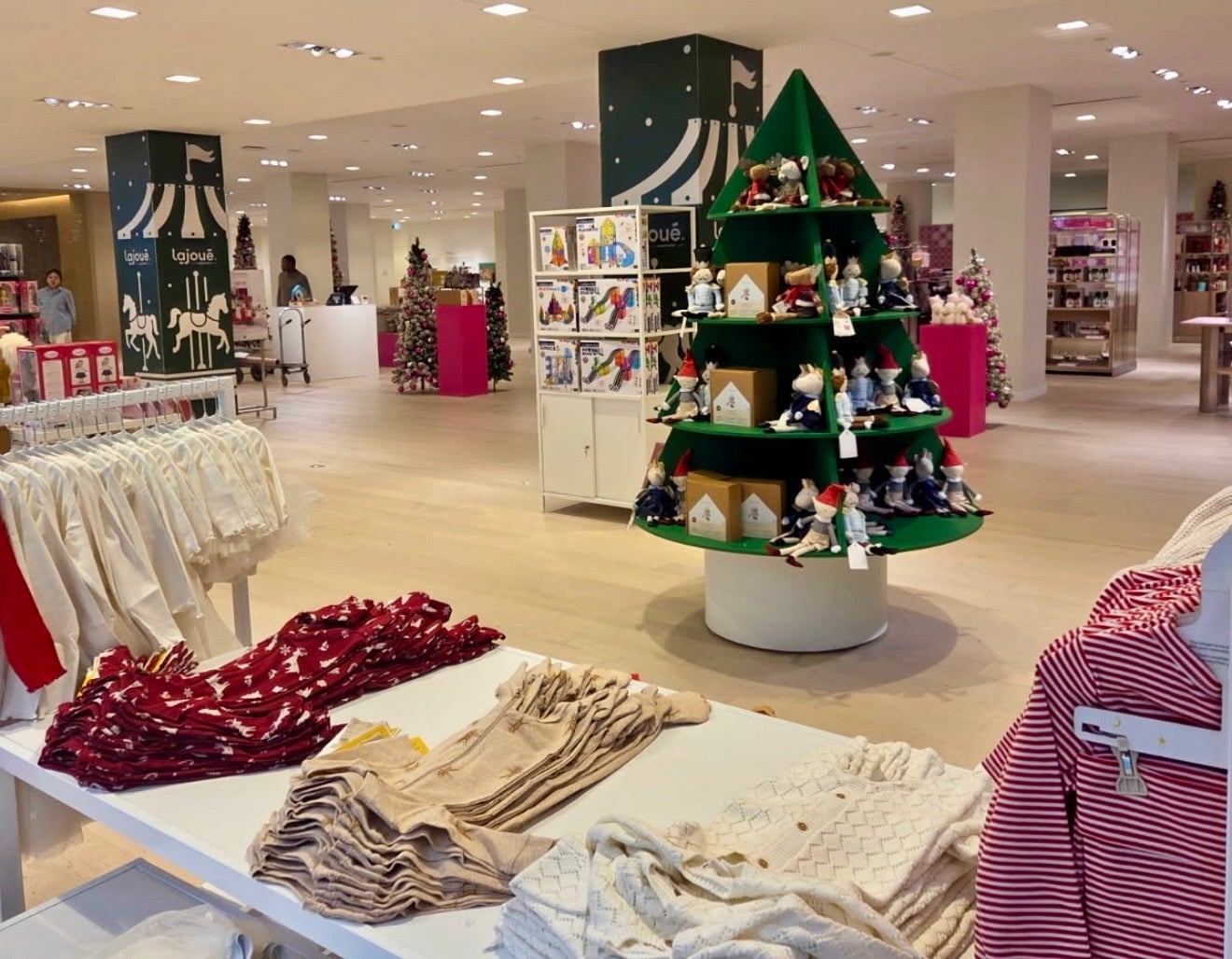
Each location was designed collaboratively, using fixtures and signage consistent with Holt Renfrew’s standards while maintaining Mastermind Toys’ signature colours and interactive displays. The result is a cohesive in-store experience that stands out amid high-end fashion and accessories.
Mastermind Toys pop-up at Holt Renfrew in downtown Calgary. Photo: Mastermind Toys
A Season of Strategic Expansion for Mastermind Toys
The Holt Renfrew partnership follows a period of renewed growth and reinvention for Mastermind Toys under its new ownership. Acquired in 2024 by Unity Acquisitions Inc., a consortium led by Canadian retail veterans Joe Mimran, Frank Rocchetti, and David Lui, the brand has been evolving from a specialty toy store into a broader children’s lifestyle destination.
This year, the company also welcomed toy industry executive Stéphane Tétrault, founder of Imports Dragon and co-owner of McFarlane Toys, as co-owner and investor. Under the leadership of CEO John Bayliss, appointed in May 2025, Mastermind Toys has launched its “3.0” experiential store concept, featuring expanded assortments and more immersive shopping environments.
In October 2025, the company opened its first downtown Montreal flagship, signaling a deeper national push. Around the same time, its sister brand Coco Village debuted at Quartier DIX30, further cementing the company’s expansion into Quebec.
Mastermind Toys pop-up at Holt Renfrew, 50 Bloor St. W. in Toronto on November 1, 2025. Photo: Craig Patterson
Luxury Meets Play: A New Retail Frontier
The partnership between Mastermind Toys and Holt Renfrew reflects a broader shift in luxury retail, where experiential and family-oriented concepts are finding a place alongside high fashion. Holt Renfrew has increasingly embraced pop-ups and short-term activations, using them to showcase new collaborations and bring fresh energy to its stores.
Earlier in 2025, Holt Renfrew hosted the Tilley Sport pop-up at its Bloor Street flagship in Toronto. The launch included a 40-look runway presentation and a green carpet experience featuring designer Kim Newport-Mimran’s new Tilley Sport collection, with the concept slated to rotate to Square One and Yorkdale later in the year.
Recent additions such as Maje and Levi’s further highlight Holt Renfrew’s evolving strategy. The French contemporary label Maje opened boutiques at Square One, Calgary, and Montreal in August following the end of Hudson’s Bay, while Levi’s relaunched its premium denim line through elevated in-store experiences. Together, these efforts reinforce Holt Renfrew’s leadership in luxury retail and its appeal to younger consumers seeking accessible-luxury offerings.
The initiative also coincides with a new leadership era. Holt Renfrew’s recently appointed CEO, Franco Savastano, formerly led Swiss department store Globus under the Selfridges Group, where he oversaw a major modernization of the brand. His arrival follows the departure of Sebastian Picardo earlier this year and signals continued innovation ahead for Canada’s top luxury department store.
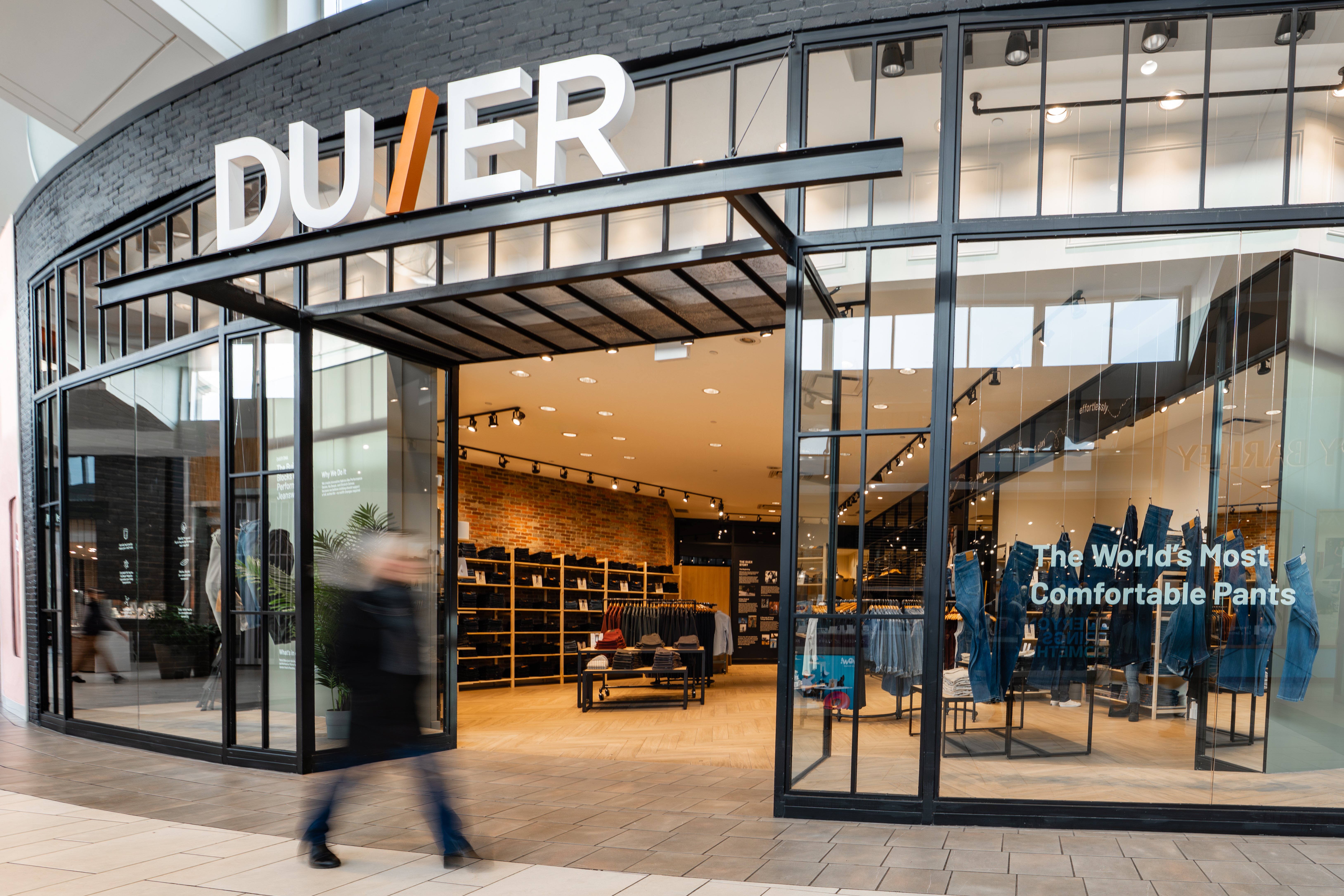
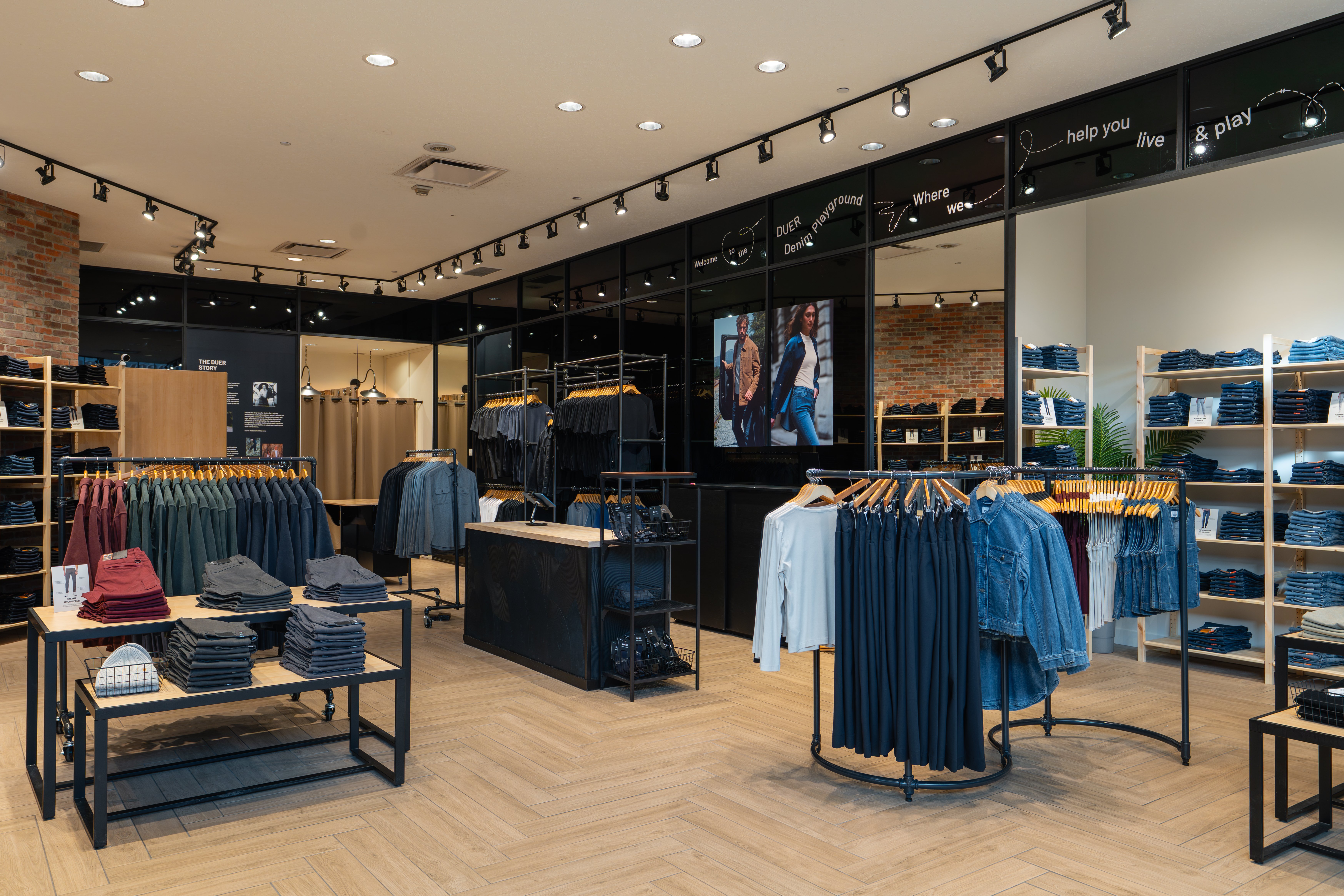
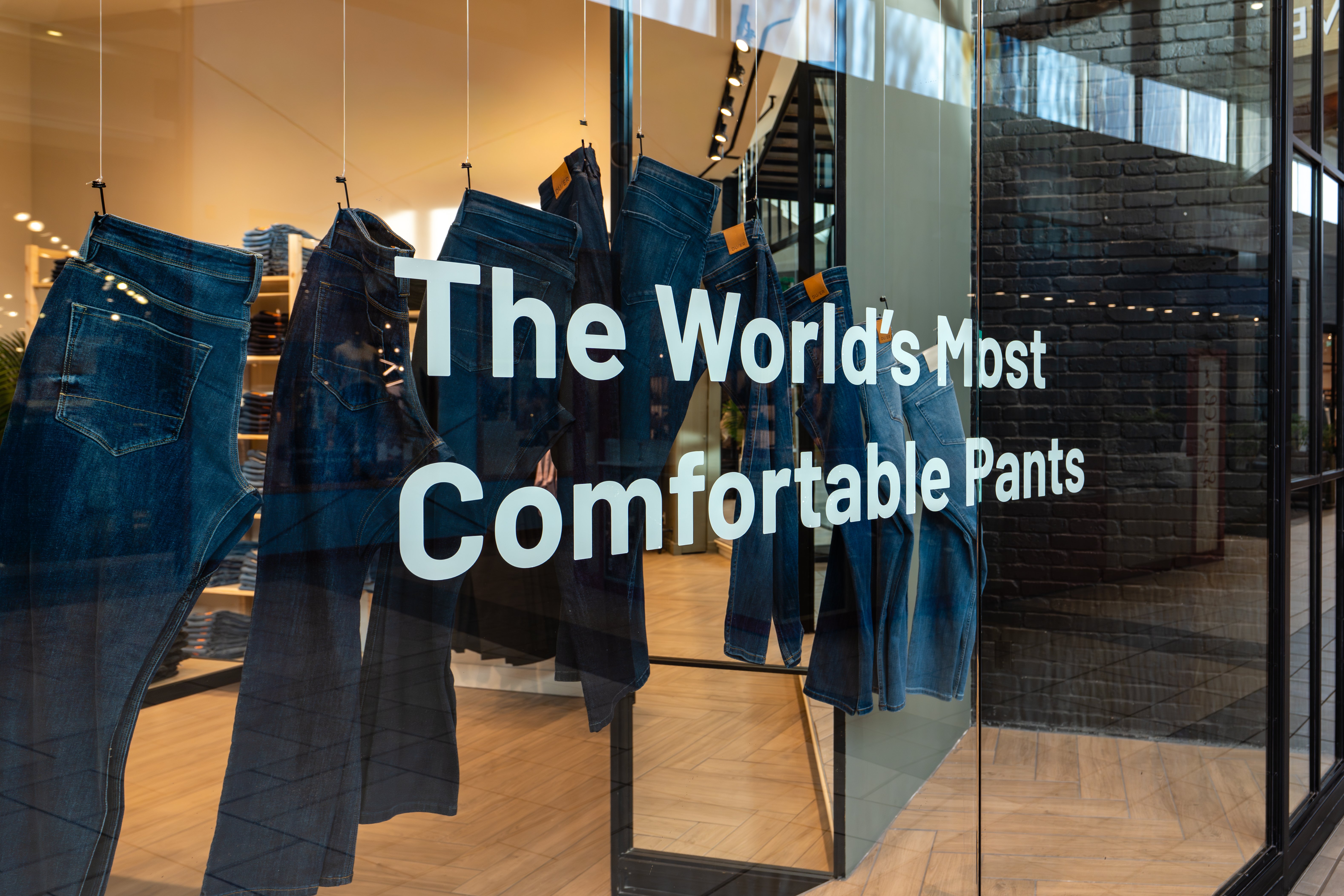
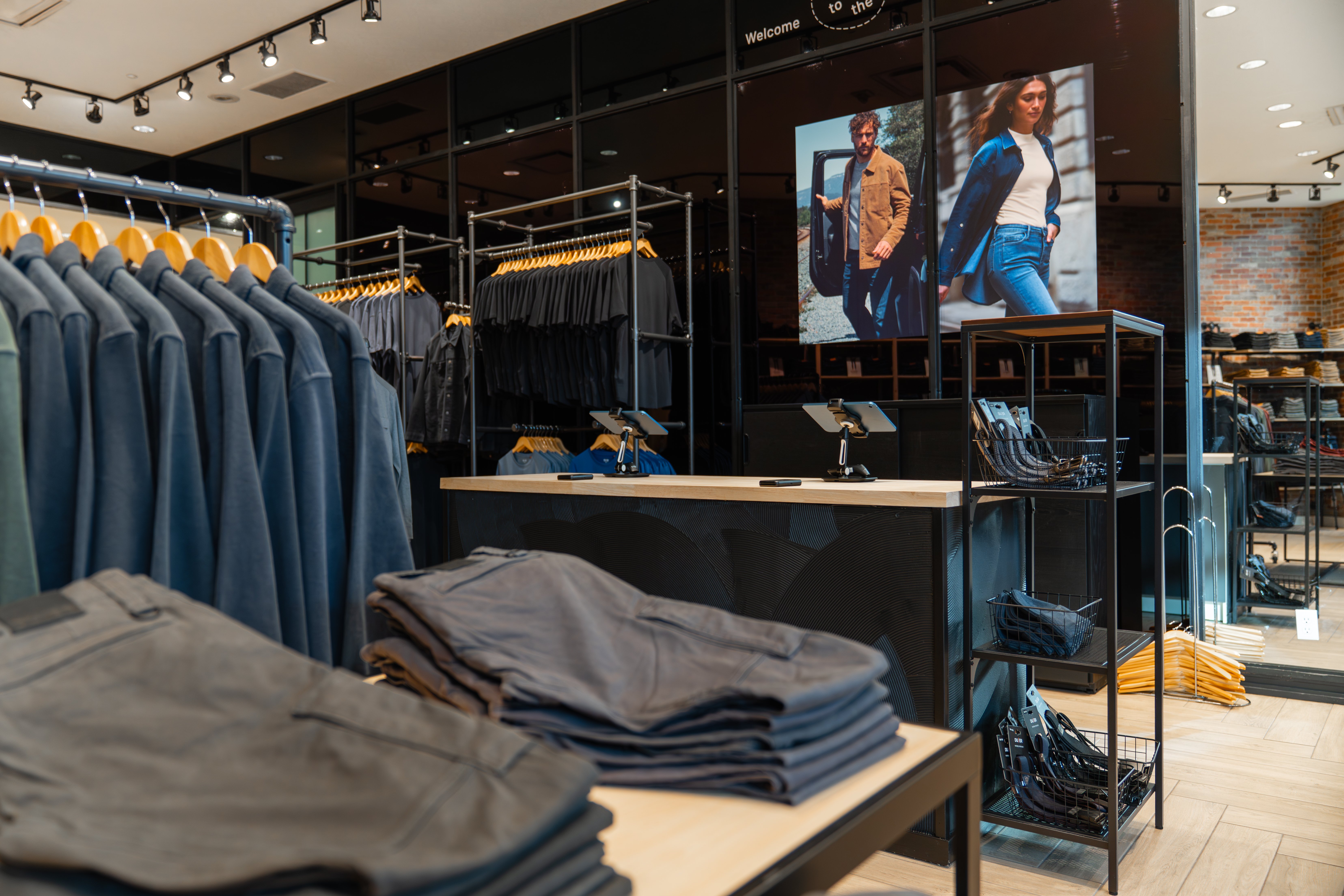
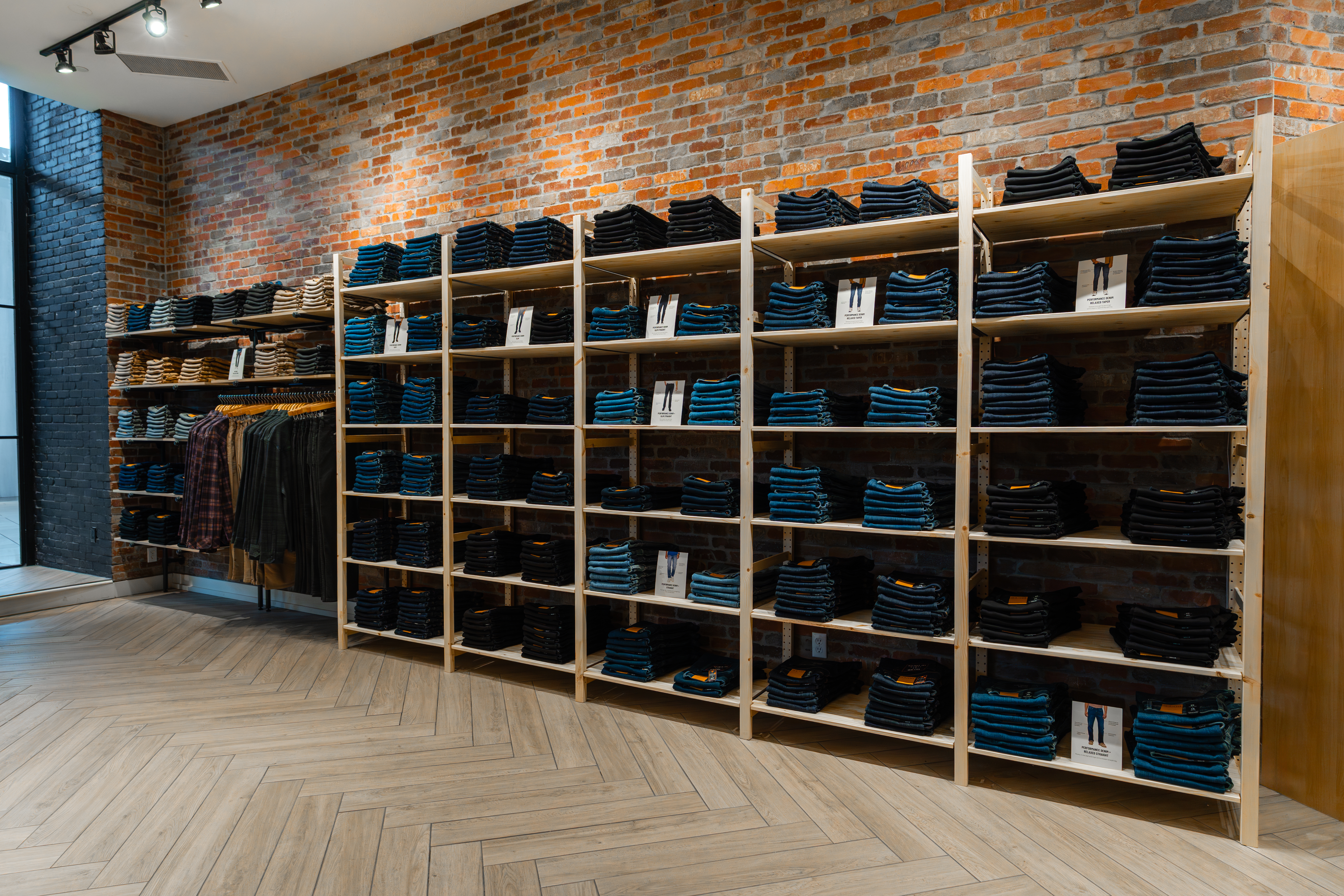
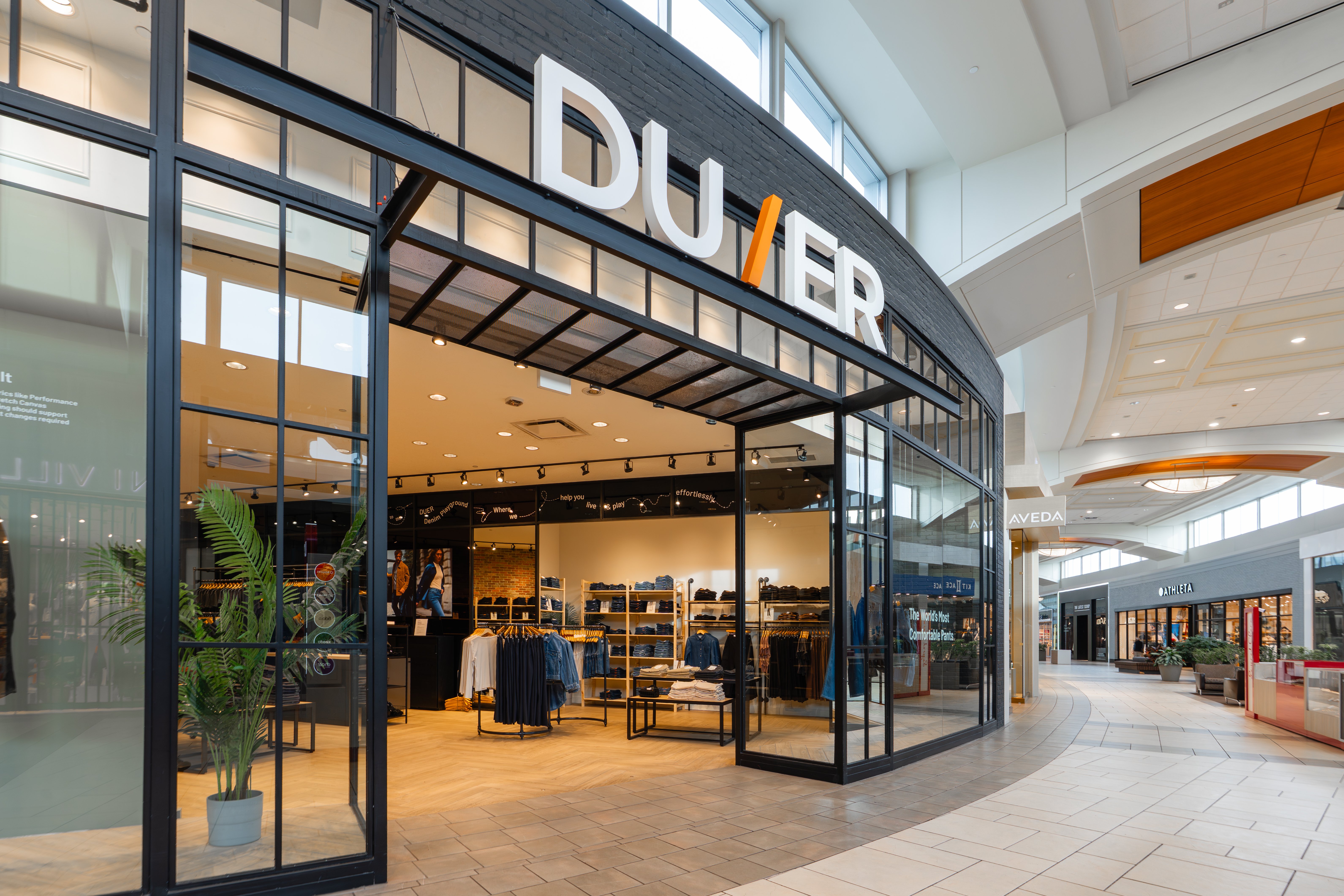
DUER, the Vancouver apparel brand behind Performance Jeanswear, has expanded its Calgary presence with a second retail location at CF Market Mall. Open from November 1 through spring, the new space offers a range of men’s and women’s apparel just in time for the holidays.
Hot on the heels of new store openings in Victoria, San Francisco, and Portland, the Market Mall pop-up is part of the retailer’s ongoing retail expansion strategy as the brand explores new ways to connect with communities and make its products more accessible across North America, said the retailer.
Gary Lenett (Image: Britney Gill / DUER)
“Retail has always been part of our DNA. We love getting people into our product because once they try on a pair of DUERs, they instantly understand what makes them different. Pop-ups give us the flexibility to test, learn, and create more of those in-person moments that bring the brand to life,” said Gary Lenett, company Founder.
“Calgary has been one of our strongest communities from the start, so a second location here feels like a natural next step. We’re bullish about retail and the role it plays in our growth strategy. And less serious but just as true, we’re on a mission to help people live more effortlessly, and the best way in is to get more people in pants.”
Grounded in the belief that performance apparel should never compromise on style, the company said it designs for effortless living – infusing heritage fabrics like denim, canvas, and twill with technical features such as stretch, temperature control, and a signature gusset in the men’s collection. The result is clothing built to move and made to look great.
The decrease is due to a 9.1% decrease in theatre attendance, driven by a stronger film slate in the prior year, which included Deadpool & Wolverine, said the company.
Third quarter theatre food service revenues of $116.3 million decreased $14.3 million or 10.9% compared to the prior year, primarily due to a 9.1% decrease in theatre attendance.
Ellis Jacob
“The consistency of film product and the continued appetite for premium experiences remained evident throughout the third quarter despite not having a title comparable to last year’s historic Deadpool & Wolverine,” said Ellis Jacob, President and CEO, Cineplex. “Audiences responded enthusiastically to a diverse slate of original and international films, reinforcing the value of our elevated and immersive theatrical offerings.
“Cinema media remains a premium platform for advertisers, with sustained year-over-year growth reflecting resilience despite a challenging advertising market. Subsequent to quarter end, we announced the sale of Cineplex Digital Media, which will enhance our financial flexibility, enabling us to reduce leverage, pursue strategic share repurchases within the parameters of our current debt agreements and allocate capital toward broader corporate priorities.
“We also saw contributions from our Location-Based Entertainment portfolio, with the addition of three new venues in late 2024, driving incremental revenue over the prior year. Together, these achievements underscore our commitment to delivering consistent cash flow and long-term value for our shareholders.”
Cineplex is a top-tier Canadian brand that operates in the Film Entertainment and Content, Amusement and Leisure, and Media sectors. Cineplex offers a unique escape from the everyday to millions of guests through its circuit of 171 movie theatres and location-based entertainment venues. In addition to being Canada’s largest and most innovative film exhibitor, the company operates ‘Eats & Entertainment’ (The Rec Room), complexes specially designed for teens and families (Playdium), and an entertainment concept that brings movies, amusement gaming, dining, and live performances together under one roof (Cineplex Junxion). It also operates successful businesses in cinema media (Cineplex Media), digital place-based media (Cineplex Digital Media or CDM), alternative programming (Cineplex Events) and motion picture distribution (Cineplex Pictures).