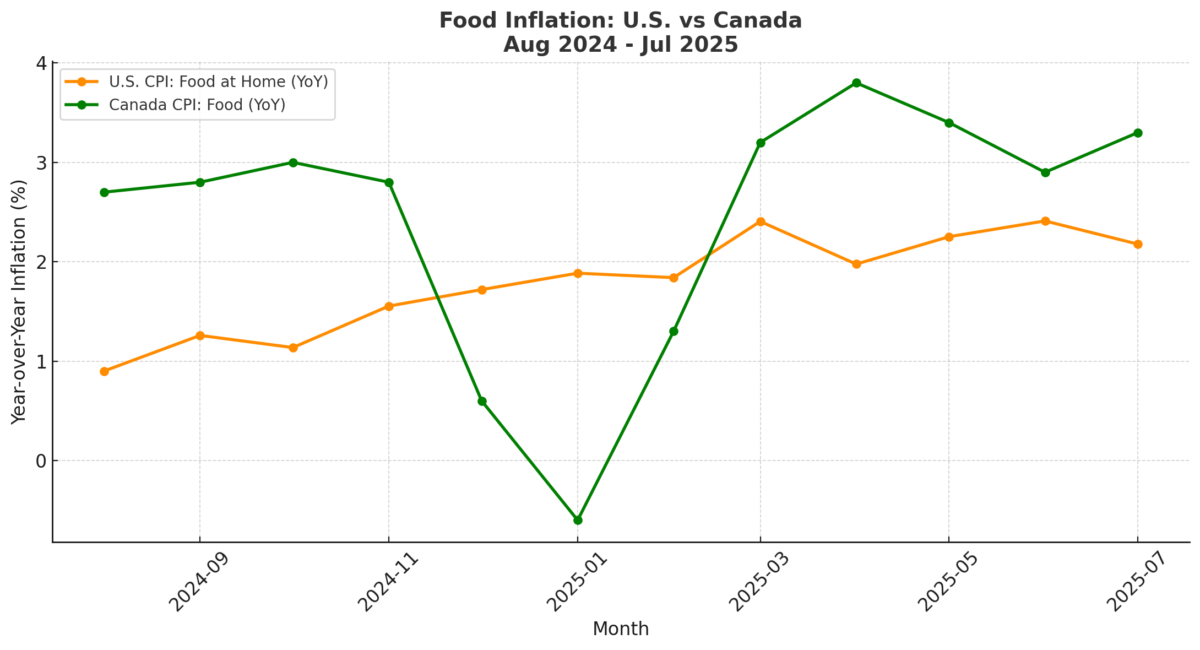
Food inflation has returned as a problem for Canadian households. According to Statistics Canada, food prices rose 3.3% in July, outpacing overall inflation by 1.6 percentage points. Unlike past cycles, this spike cannot be blamed on volatile global markets. The cause lies much closer to home — in our own policy decisions.
Coffee prices surged 28.6%, confectionery 11.8%, and fresh fruit 3.9%, with grapes alone up nearly 30%. Since March 2025 — when Ottawa ended the GST holiday that had distorted winter data — food inflation has exceeded the overall CPI by an average of 1.4 points. A large part of this gap stems from the counter-tariffs imposed on essential imports, many of which lack viable domestic substitutes.
Two facts reinforce this conclusion. First, the cost of major agricultural inputs — wheat, soybeans, and corn — has been stable in recent months, as has the Canadian dollar. Second, food operates on razor-thin margins. A 10% tariff can destabilize an importer; Ottawa has applied tariffs of up to 25% since March. For many firms, this is an impossible burden to absorb without passing costs directly to consumers.
In March, Canada became the only country other than China to retaliate against U.S. tariffs with counter-measures. This strategy, a holdover from the Trudeau era, was framed as a show of resolve against the “tariff tyrant” in Washington. Some still defend it, but the evidence suggests cheaper, less painful options were available.
While U.S. food inflation fell to 2.9% in July — three months after America’s so-called “Liberation Day” on April 2 — Canadian food inflation rose by 0.4 points from June. Nothing suggests this trend will reverse soon. Many expected U.S. food inflation to spike once pre-tariff inventories were exhausted. It didn’t happen. America’s larger, more productive economy, supported by diversified supply chains, absorbed the shock. Canada, one-tenth the size with far less flexibility, simply cannot.
There’s a reason only China and Canada chose to respond with counter-tariffs: such policies weaponize the cost of living, but against one’s own citizens. The July data confirm this. Canadian consumers are paying the price at the checkout.
Meanwhile, Ottawa is collecting billions in tariff revenues. No information has been released about how much has been raised or how those funds will be used. Mark Carney, for his part, clearly understands how damaging grocery tariffs can be — which is why, since taking office, he has resisted adding new ones.
Yet for many consumers, grocers remain the most visible target of blame. For Prime Minister Carney and his government, this reflex is politically convenient: it distracts from the true cost of tariff policy. But the reality is far more complex.
One can only hope that the government will eventually level with Canadians and acknowledge how counter-tariffs at the grocery store hurt Canadian consumers, rather than clinging to the “elbows up” mantra.
The latest inflation numbers underscore the point.
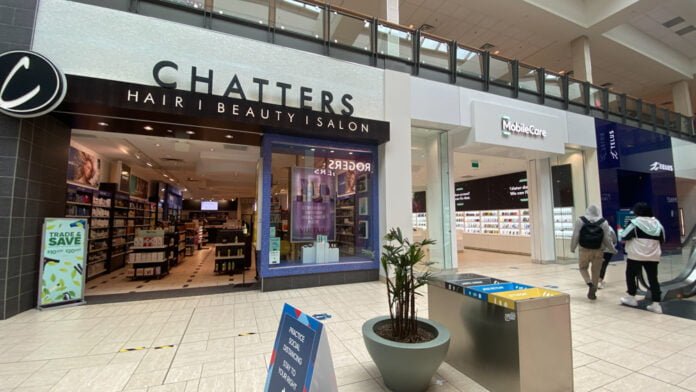
Chatters on the lower level of CF Chinook Centre. Photo: Jessica Finch
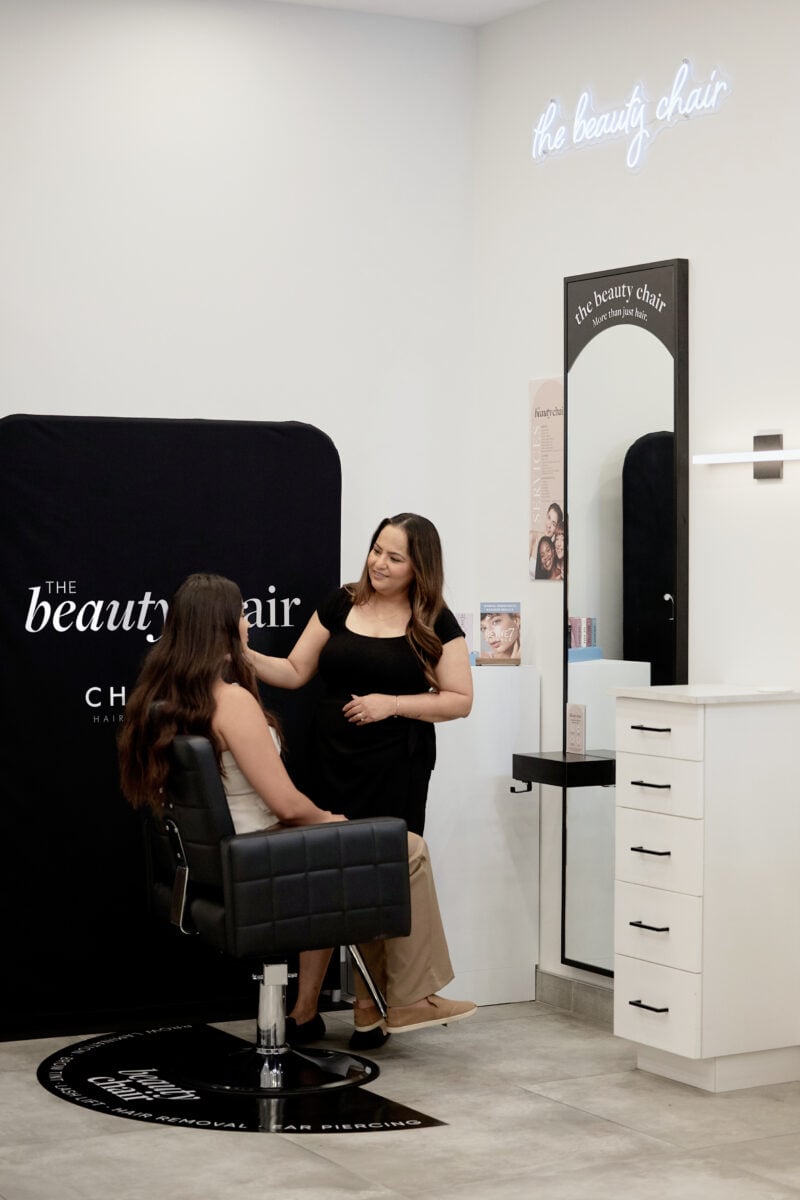
Chatters Hair Salon, Canada’s largest salon-based retailer, has launched a new concept called the Beauty Chair, an express-service station offering a curated menu of beauty treatments designed to complement traditional salon services. From professional ear piercing and brow laminations to lash lifts, tinting, and waxing, the Beauty Chair adds a new dimension to the customer experience by allowing multiple treatments to be booked in one convenient appointment.
“The launch of the Beauty Chair introduces a new level of personalized service to our clients,” said Kelly West, CEO of Chatters Hair Salon. “By offering professional ear piercing alongside brow, lash, and waxing treatments, guests can enjoy salon-quality results across multiple beauty categories in a single, convenient appointment, reflecting our mission to evolve with client needs while delivering elevated self-care.”
Partnership with Revive7
The debut of the Beauty Chair comes with a strategic partnership with Revive7 Beauty, a Canadian brand known for its science-backed lash, brow, and hair products. Revive7 is the first Canadian lash serum company to offer a globally health-approved formula and has built its reputation on clean, cruelty-free, and chemical-free innovation.
Image: Chatters
“Our partnership with Chatters represents an exciting evolution for Revive7,” noted Lauren Spencer, Founder of Revive7 Beauty. “We’ve always been committed to making high-performance, clean beauty accessible, and with Chatters’ incredible network and loyal customer base, we’re bringing our most beloved products to a new generation of beauty lovers across Canada.”
Through the partnership, select Beauty Chair services now include Revive7’s Lash Serum, Brow Serum, and Volume Mascara. These essentials are available with lash lifts, brow laminations, and tinting services, creating opportunities for customers to experience performance-driven results firsthand.
To mark the launch, Chatters is introducing special pricing for its Brow Wax & Tint combo service, available at participating salons until the end of October. The company is encouraging customers to book online or through local salons while promoting the new concept on social media channels such as Instagram, where behind-the-scenes content and client transformations highlight the services.
A Leader in Canadian Hair and Beauty
Founded in 1991 in Red Deer, Alberta, Chatters has grown into a national brand with 118 locations across Canada as of August 2025. The company relocated its headquarters to Mississauga, Ontario, and now employs more than 1,200 stylists and over 2,000 staff nationwide.
Chatters’ service offering includes haircuts for all ages and genders, colouring services, treatments for damaged hair, and barbering. Every cut includes a wash, scalp massage, blow-dry, and style. With the addition of the Beauty Chair, Chatters now offers an expanded express menu of brows, lashes, waxing, and piercing, strengthening its position as a one-stop destination for beauty care.
Image: Chatters
Retail and Sustainability Commitment
In addition to in-salon services, Chatters is also a leading retailer of professional beauty products, carrying more than 2,500 SKUs across over 70 brands, including Redken, Olaplex, Moroccanoil, and Pureology. Approximately 60% of its business comes from retail sales, with the remaining 40% from salon services.
The company emphasizes sustainability through its Style Consciously program, offering vegan-friendly and cruelty-free products while recycling up to 95% of salon waste through a partnership with Green Circle Salons. Its “Beauty Has No Boundaries” initiative also reflects a commitment to inclusivity, with genderless pricing, private room services in select locations, and a focus on welcoming all customers.
Backed by ONCAP since 2015, Chatters has continued to expand nationally, with a focus on enhancing both customer experience and retail innovation. Its new Beauty Chair concept is part of a broader strategy to remain competitive in Canada’s evolving beauty sector, positioning the brand as a leader in combining professional services with retail excellence.
Retail Insider is streamlining its Canadian retail news from around the web to include a handful of top news stories that can be viewed quickly during the day. Here are the top stories from the past 48 hours.
Personal styling is finding a new home inside Canadian shopping centres, thanks to a national partnership between The Style App and Cadillac Fairview. The collaboration is bringing in-person and digital fashion expertise to malls across the country, offering shoppers a convenient way to access professional stylists directly through their local Cadillac Fairview property.
For Linda Stamko, founder and CEO of The Style App, the partnership marks a turning point. “We were super excited about our partnership with Cadillac Fairview. I just can’t stop beaming,” she said in an interview. “It’s like a dream come true.”
Linda Stamko
The Style App, which launched in March 2020 at the height of the pandemic, was created to connect Canadians with stylists both in-person and online. Despite the challenges of starting during COVID, Stamko built a platform that has now positioned itself as Canada’s first in-person styling app, with stylists available in every major city.
Blending Technology with Human Expertise
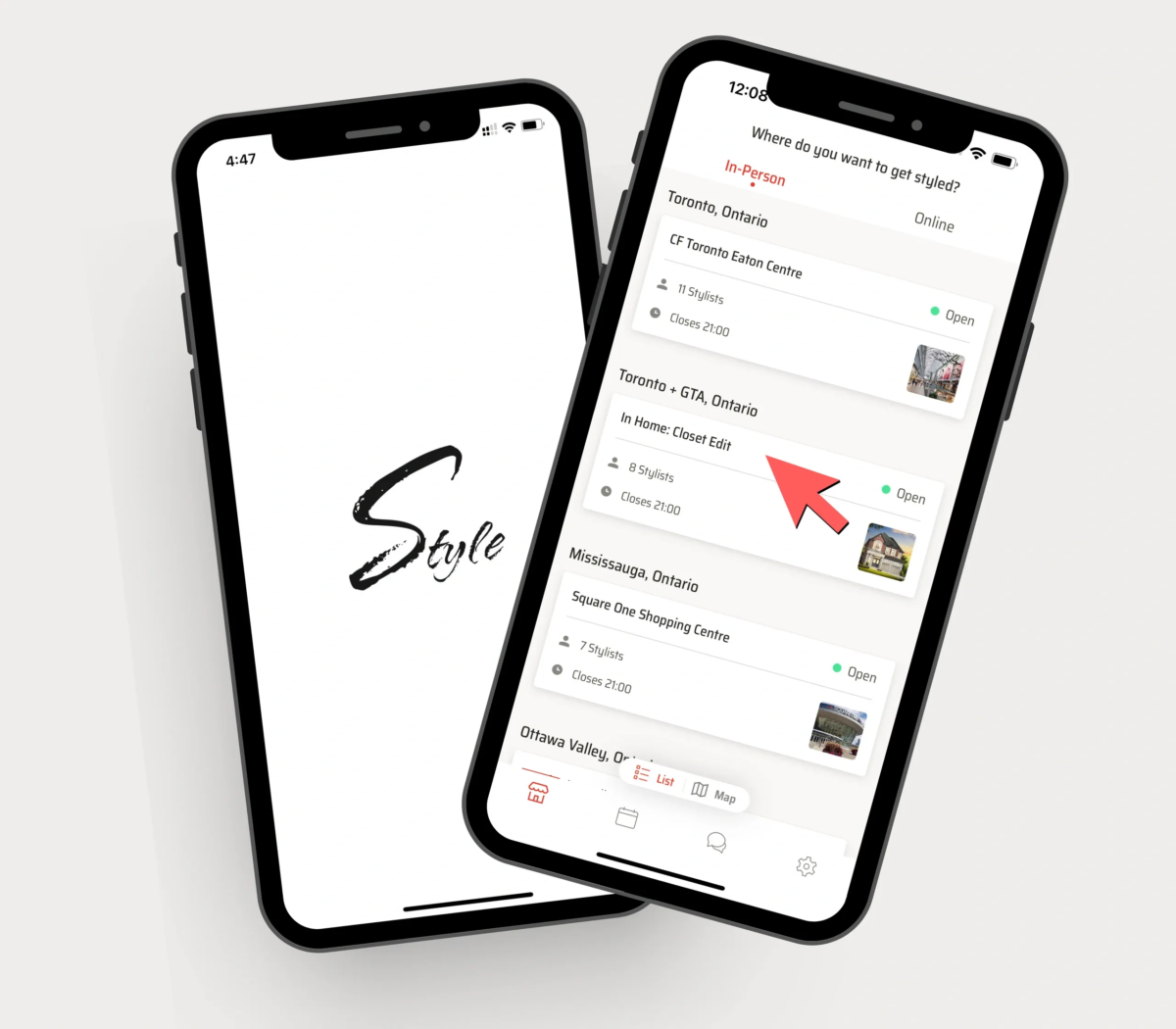
The platform is simple to use. Clients download The Style App, select their city and mall, and choose from a roster of stylists whose profiles and rates are listed within the app. Sessions can be booked in-person or virtually, with options for closet edits and mall shopping experiences.
Rates are tiered: Red Carpet Stylists, with 10 or more years of experience and high-profile credentials, are priced at $180 per hour, while Expert Stylists, with a minimum of five years’ experience, are available at $130 per hour. All in-person sessions require a two-hour minimum.
“We’re really happy because we are the very first in-person styling app, and we are all across Canada,” Stamko explained. “I think that’s what Cadillac Fairview saw in us — we can offer this service nationwide, with stylists who know each mall and understand their local demographic.”
Cadillac Fairview’s Nationwide Rollout
The Style App is now active in Cadillac Fairview shopping centres from coast to coast, including major properties such as Toronto Eaton Centre, CF Rideau Centre in Ottawa, CF Pacific Centre in Vancouver, and CF Chinook Centre in Calgary. In total, the service is rolling out across 16 Cadillac Fairview malls.
At Ottawa’s CF Rideau Centre, the partnership officially launched on June 30, with visible marketing integration. Shoppers can find QR codes on digital directories that link directly to The Style App booking page, while promotions are also featured in newsletters and mall advertisements.
“The engagement has just been overwhelmingly exciting,” said Stamko. “If you go into the mall right now, you’ll see the QR codes and our promotions. Cadillac Fairview has been an incredible partner. They really see the value we’re bringing to their clients.”
Image: The Style App
While the app is designed to be independent of specific stores, Cadillac Fairview’s retailers are already seeing benefits. The Style App incorporates stores directly into styling sessions, boosting visibility and sales while offering customers a more curated shopping experience.
“Retailers love it,” Stamko noted. “We’re showcasing their stores through videos and social media, and shoppers are booking styling sessions that naturally lead to purchases. It’s really a win-win.”
Cadillac Fairview is also encouraging mall-wide contests. At CF Rideau Centre, shoppers can enter to win a $100 CF SHOP! card through Instagram promotions tied to The Style App.
James Jefferson: From Red Carpets to Canadian Malls
For Ottawa-based stylist James Jefferson, who works as a Red Carpet Stylist with The Style App, the partnership is a return to his true passion.
James Jefferson
“I started in my career in fashion design and styling quite a while ago. I was lucky enough to get hired by Marlen Cowpland, and later I had the pleasure of dressing the Right Honourable Michaëlle Jean,” Jefferson explained. “I’ve been working in fashion on and off for about 25 years.”
After running a marketing agency for more than a decade, Jefferson returned to fashion through The Style App. His work today blends online and in-person styling sessions, often beginning with a virtual wardrobe review before moving to mall-based shopping appointments.
A recent client, a government employee, began with a closet edit via video call. The next day, Jefferson took him shopping at CF Rideau Centre to build on what he already owned. “Because we had the closet edit, I was able to help him add the right pieces, show him how to mix patterns and colours, and even help him find a wedding outfit for a trip to Italy,” Jefferson said. “It’s a really rewarding process.”
Personalization as a Competitive Advantage
The collaboration comes at a time when Canadian shopping centres are working to differentiate themselves and offer experiential services to draw customers back into physical spaces. Cadillac Fairview has been at the forefront of such efforts, investing in everything from dining precincts to premium services.
“The truth is, people want to look good,” Stamko observed. “When they feel confident in the clothes they wear, it transforms their shopping experience. That’s what The Style App provides — it’s more than just shopping, it’s about building confidence.”
By embedding personal stylists within its malls, Cadillac Fairview is aiming to offer something that e-commerce cannot replicate: tailored, in-person expertise delivered by professionals who understand local markets.
Growth Ambitions Beyond Canada
While the immediate focus is on deepening its Cadillac Fairview partnership, The Style App has longer-term ambitions.
“My goal right now is to really nurture this partnership,” Stamko said. “Cadillac Fairview actually wants to grow with us, so that’s where my energy is going. But longer term, I want The Style App to dominate the Canadian market and then look to expand into select cities in the United States.”
She added that the Canadian identity of the brand resonates with shoppers. “Because of tariffs and the current market climate, people love that we are Canadian stylists working in Canada. They don’t see us as a U.S. company trying to dominate the space. That really matters right now.”
Looking Ahead
With its Cadillac Fairview partnership, The Style App has positioned itself as a pioneer in merging digital convenience with in-person retail engagement. For Jefferson, the impact is immediate and personal. “You get to meet a lot of great people,” he said. “Helping them feel good, confident, and ready to take on the world, that’s the best part of what we do.”
For Canadian malls, the collaboration is about creating meaningful connections with shoppers in an increasingly competitive environment. As Stamko put it: “It’s a match made in heaven. Shoppers love it, retailers love it, and Cadillac Fairview sees the value in it.”
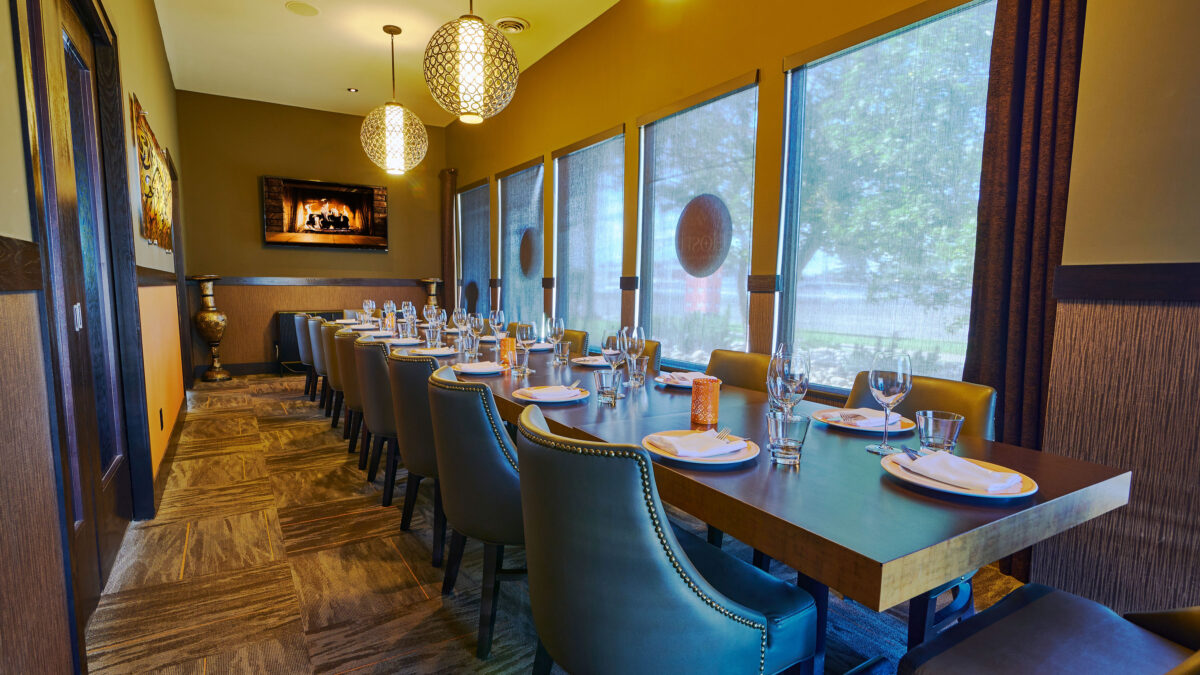
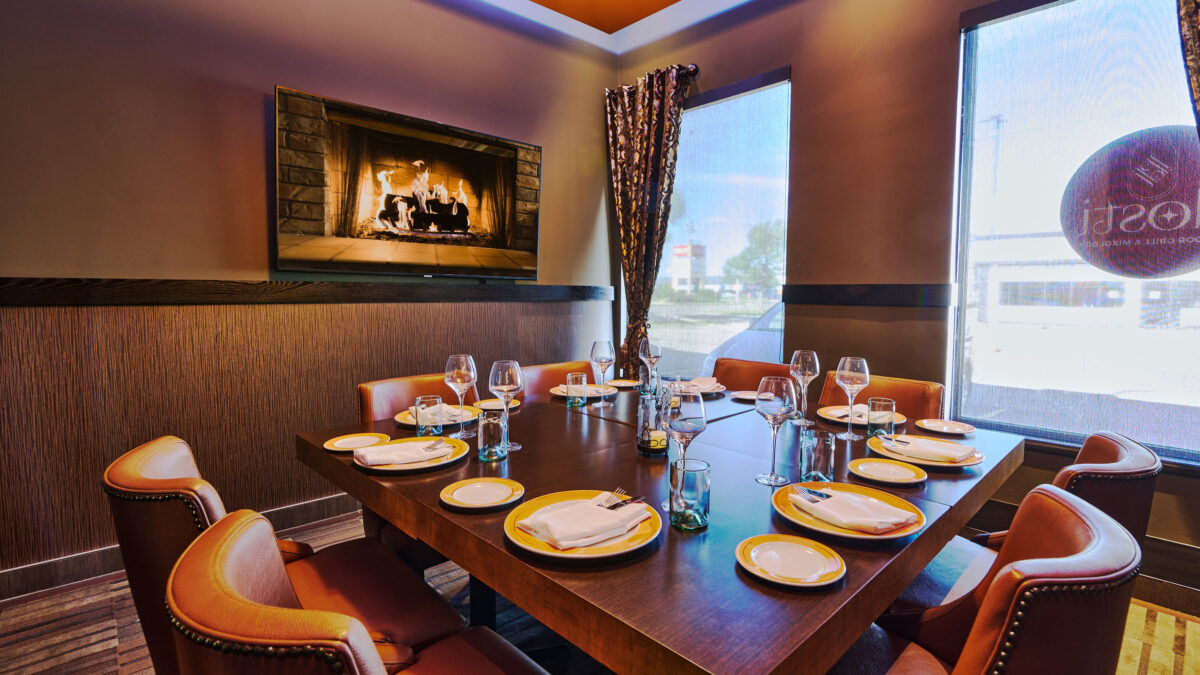
Dosti Tandoor Grill & Mixology is turning up the heat in Edmonton’s west end with a bold, fresh take on modern Indian dining.
A high energy lounge and restaurant experience wrapped in smoky tandoor flavours, seductive cocktails, and warm hospitality, Dosti is more than a restaurant. It’s a vibe.
At the heart of it all is Singh, the visionary entrepreneur behind O& O Group.
Known for her philanthropic spirit and sharp business acumen, Singh brings passion, purpose, and personality to every venture she touches. Dosti is no exception. Her belief in creating spaces that feel inclusive, exciting, and full of life is evident in every detail from the curated design to the vibrant menu and the pulse of the music echoing through the space.
“The word Dosti means friendship, and that spirit of connection is alive in every dish. Guests can expect fire-charred kebabs, playful small plates like butter chicken poutine and tandoori tacos, and a cocktail list that fuses Indian ingredients with contemporary flair. Think chai-infused gin sours, saffron spritzes, and garam masala bitters stirred into smoky old fashioneds,” she said.
“This is not your typical Indian restaurant. Dosti is young, bold, unapologetically modern, and built for those who want their nights out to be full of flavour, culture, and unforgettable moments.”
Under Singh’s leadership, it stands as a testament to what happens when food, friendship, and fearless vision come together.
Dosti is located at 17021-100 Ave NW near the West Edmonton Mall.
Photo: Dosti
Spanning 5,000 square feet, Dosti is one of the most beautifully designed Indian restaurants in the city. The name reflects the couple’s vision: to create a warm, welcoming space where friends and families can come together to celebrate and enjoy the rich flavou rs of modern Indian cuisine.
“The concept is inspired by the origin story of Tim Hortons — a place built on the spirit of community, connection, and comfort. Dosti aims to carry forward that sentiment, offering not just great food and cocktails but an inviting atmosphere rooted in togetherness,” added Singh.
She said the corporate company currently has 25 restaurants – the company operates in the hospitality industry and manages several franchise brands, including Little Caesars, Second Cup Café, Marble Slab Creamery and Pita Pit. Recently, it also took over the management of two Guru Restaurant Fine Dining Indian locations in Edmonton, renowned for their legacy in Indian cuisine. One has become Dosti. The company is planning to expand the Dosti concept by opening another location on the south side of Edmonton
The company also has plans to open 14 locations of Jimmy John’s.
New data from the Canadian Federation of Independent Business (CFIB) reveals that small businesses are being hit hardest by U.S. and Canadian tariffs on steel and aluminum (59%), as well as Canada’s own retaliatory tariffs on other U.S. goods (58%).
In addition, nearly one-third of Canadian SMEs will be negatively affected by the loss of the $800 U.S. de minimis exemption, said the national organization on Wednesday.
“The worst outcome for Canada in the trade war is a bad deal, but the second worst outcome is the never-ending uncertainty small business owners have been wrestling with for the past six months. The federal government needs to provide some stability and return tariff revenue to help small businesses. We’ve suggested several options, including temporarily reducing the federal small business tax rate to zero or a tariff rebate designed on earlier models, like the carbon tax rebate.”
The CFIB is Canada’s largest association of small and medium-sized businesses with 100,000 members across every industry and region.
CFIB said its data shows that the trade war is squeezing small businesses on every front. Nearly two-thirds (62%) face higher expenses while many are also seeing lower revenues (48%), supply chain disruptions (41%), and paused investments (36%). Nearly one in five (19%) small businesses dealing with extra tariff costs report that they will not be able to last more than six months if the tariff status quo remains and nearly four in 10 (38%) said they would last less than a year.
With Ottawa collecting billions in additional tariff revenue on U.S. imports, a strong majority (82%) said the government should ensure that any tariff revenue that is returned includes support for smaller businesses affected both directly and indirectly by trade disruptions, it said.
“The trade war’s impact on Canada’s small businesses should be top of mind for the government as Canada continues its negotiations with the U.S. Canada can’t fix its productivity crisis without empowering its entrepreneurs. If the government wants to build one Canadian economy, it needs to ensure small businesses are part of the solution and that includes providing them with tariff support during this very challenging time,” added Pohlmann.
Royalmount advertising campaign for the one year anniversary. Image: Royalmount/Carbonleo
Royalmount, Montreal’s newest retail and lifestyle destination, is preparing to celebrate its first anniversary this September, and it’s doing so with a bold marketing campaign aimed at keeping momentum high following a landmark opening year.
The newest creative campaign: “The Art of Living, Redefined” celebrates how the shopping destination is dedicated to providing Montrealers a redefined shopping experience. The campaign is a visual and creative expression of Royalmount’s philosophy and brand DNA.
Marie-Michèle Thibault
In an interview with Retail Insider, Marie-Michèle Thibault, Vice President of Marketing for Royalmount, said the newly-launched campaign is a continuation of the energy and excitement that accompanied the centre’s debut.
“The main goal was actually to really create a buzz after our opening,” said Thibault. “During the opening, there were activities around Royalmount and around Christmas as well. But we wanted to make sure that we continue the buzz and also bring information that inform people in certain items that might not have been really clear from the beginning.”
That includes showcasing features that go beyond retail.
“We wanted people to understand that we have an amazing offer in the urban park with our restaurant,” she explained. “Also understand a little bit more the concept of different spaces in Royalmount. So not only a mall with stores, but also those experiences that we would bring to life, activities, programming, and also, again, all the offer in the urban park.”
The campaign is running from June through the holiday season, featuring original content created in-house.
“We need a big campaign and we want to realize it by ourselves, with our team and their amazing talent,” said Thibault. “Let’s do a campaign that can showcase all those elements, showcase restoration, showcase arts, showcase all those fun things, and really play with this tagline that we created.”
Royalmount officially opened its doors in September 2024 and is now home to a mix of retailers, restaurants, and entertainment experiences. The destination will celebrate its first anniversary on September 5.
“It’s going be fun to see the before and after from when we opened to where we are now,” said Thibault.
According to Royalmount, leasing is progressing steadily.
“We’re between 75 to 80% tenant open,” Thibault noted. “We still have great openings coming our way.”
She added that one of the main differentiators over the past year has been the addition of new restaurants.
“When we opened, we were more around the 45–50% (open rate), and a lot of those tenants are restaurants. So that’s what again brought our site to life with the RH (gallery) opening as well and all those fun concepts.”
Royalmount’s development is far from finished.
“There’s more phases to come and there’s more projects,” Thibault said. “We will announce some fun stuff in the upcoming month. But the goal is still to have Royalmount being a district and really bring community together. So it is not something that will stop as is. There’s for sure other projects coming and making it bigger and bolder.”
Consumer behaviour is also helping shape Royalmount’s evolution.
“In the past months, we focused a lot more on our local audience,” said Thibault. “But we were quite happily surprised around the Grand Prix weekend with the tourists coming in. It’s definitely something that we will focus on a little bit more next year.”
Royalmount’s core traffic continues to come from the greater Montreal area.
“There’s a lot of people coming from immediate surroundings. So we’re talking Westmount, TMR, but also downtown Montreal. And we see a little more of South Shore and North Shore coming as well, as they come and experience our restaurants, discover the site, and decide to come back.”
Public transit is also playing a key role in Royalmount’s growth.
“We’re tracking our traffic coming from the Metro is growing,” Thibault added. “This is something that was really important to us . . (It) really brought this ease of access that we were looking for.”
“A lot of our events and programming, we’re pushing for people to come with the Metro and it works well because that’s something that people enjoy.”
With its first year nearly complete, Royalmount’s team is focused on refining its offerings, building community traditions, and remaining a dynamic entertainment destination in the heart of Montreal.
“There’s a lot. I mean, it’s our first year, so we tried and tested a lot of different things,” said Thibault. “We still want to make things different and bold, events and really fun activations for people to come and discover Royalmount, but also not just come for shopping, but really entertainment and really have a good time here.”
“We see both, for sure star events that will become reoccurring and hopefully become traditions for our community.”
The bold new concept Supernatural is opening in Yorkville on August 27.
It’s not a spa, clinic, or gym, but Canada’s most comprehensive science-led, design-driven, personal optimization space where biohacking, medical aesthetics, and immersive wellness therapies come together to help you become your Superbeing.
Supernatural is a first-of-its-kind personal optimization space founded by Toronto-based health performance expert John Kozman. Taking over the former SoulCycle space at Yorkville Village (55 Avenue Road), the 5,000-square-foot flagship reimagines what proactive, high-performance living can look and feel like. The space was born from John’s personal journey through loss, resilience, and two decades in sports medicine and aesthetics, rooted in the belief that vitality should be a lifestyle, not a luxury.
North America’s first RE:SET chair — a multi-sensory meditation experience using synchronized sound, light, and vibration to regulate the nervous system
Canada’s only group Hyperbaric Oxygen Chamber for cellular regeneration and brain optimization
Full-body cryotherapy, red light therapy, lymphatic drainage, and NAD+ IV protocols to support energy, recovery, and longevity
Metabolic and biomarker testing that power fully personalized health and performance plans
A curated retail concept featuring science-backed wellness tools, biohacking tech, and premium supplements
This is Toronto’s answer to the rising global movement around longevity, with a vibe that feels more next-gen design gallery than wellness clinic.
John Kozman
Kozman describes Supernatural as an entirely new category in the health and wellness sector. “It’s Canada’s first advanced longevity and wellness destination where we’re fusing regenerative therapies, clinical grade biohacking, medical aesthetics into a fully personalized experience, using science-backed protocols,” he says.
The mission, he adds, is to go far beyond superficial wellness trends. “We’re helping people not just look better, but to feel sharper, to recover faster and, and hopefully to live longer,” says Kozman. “Our belief is in a world where healthcare often begins too late, that we offer a proactive, inside and out approach to transformation that prioritizes vitality over symptom management.”
The space itself is designed to offer a fully immersive experience from the moment a guest walks in.
“Our physical environment is intentionally engineered to enhance your health and wellbeing through a multisensory experience,” says Kozman. “We have circadian lighting, which dynamically adjusts in intensity and colour throughout the day to mimic the natural progression of sunlight and that helps regulate melatonin production, sleep quality, hormonal balance.”
Sound therapy is also built into the environment. “Low frequency soundscapes and binaural beats will help down regulate the nervous system, enhance focus,” he explains.
Guests are served hydrogen-enriched water, which Kozman says emerging science suggests is both antioxidant and anti-inflammatory. Another unique feature is the studio’s VibrAcoustic floor. “Sound is inducted through your body. So the space itself is therapeutic, which is unique,” he says. “The moment you walk in, you’re being optimized and you’re actually having a wellness experience.”
In addition to the design features, Supernatural offers a full suite of advanced wellness treatments: “IV drips, NAD+ optimization, hyperbaric oxygen chamber, a four-person hyperbaric oxygen chamber, red light therapy pod, pulsed electromagnetic field therapy, cold bath, sauna,” says Kozman.
Another standout area is a space known as The Portal. “It’s for nervous system regulation, where we’re doing breath work and sound baths and different classes. And once again, it’s fully immersive. The floor vibrates, so it actually puts you into a meditative state. There’s nothing like it.”
Supernatural also offers comprehensive biomarker testing. “We can test your genetics and your gut biome and your epigenetics and your micronutrient deficiency,” says Kozman. “It’s really a one-stop shop where people can come in to test themselves, to be able to engage with recovery and optimization treatments. There’s nothing like it right now in Canada.”
Kozman describes Supernatural as a “third space” designed for community and lifestyle. “Longevity has become a lifestyle,” he says. “People who are like-minded want to share in that journey. Instead of maybe going to a bar or instead of going for coffee, now people want to come and do an IV together or do a cold bath or sauna.”
For Kozman, the concept stems from personal experience.
“My health journey started when my father got sick when I was in school and passed away, and then my mom had some strokes,” he shares. “He was a physician actually, and I became interested in prevention. Let’s prevent disease before it happens.”
Photo: Supernatural
He explains how his career has focused on the continuum from preventative health to optimization. “I’ve been curious and an advocate for that for many, many years, into optimization and biohacking, quantified self, before that became popular,” he says. “I’ve run clinics my entire career in preventative health and weight loss and medical fitness and functional medicine and medical aesthetics as well.”
“Supernatural really is the culmination of that. It’s more than a clinic. It’s not a clinic or a member’s club. It’s a lifestyle destination.”
Accessibility is key. “You don’t need to book an appointment. You don’t need to be a member. You don’t need to spend thousands of dollars,” says Kozman. “You could come in and do a $50 cryotherapy session and feel like a million dollars.”
A retail space is also part of the concept. “It has all sorts of longevity lifestyle products, books on longevity, wearables, technology, red light masks, supplements, skincare,” he explains. “All of this longevity lifestyle that’s gone mainstream but people don’t necessarily know where to start.”
In a climate of growing uncertainty, new research from Accenture reveals a surprising trend: Canadian consumers are forging deeper emotional connections and placing greater trust in generative AI.
With 57% of Canadian consumers reporting unusually high levels of uncertainty in their daily lives, generative AI is emerging not just as a tool, but as a trusted companion helping consumers navigate the unknown.
Accenture’s latest Consumer Pulse survey explores how the adoption of AI is reinventing the consumer-brand relationship, influencing not just what people buy, but how they think, feel and engage.
KEY FINDINGS FOR CANADA:
A year ago, consumers were open to AI making purchases on their behalf. Today, they’re not just open – they’re emotionally invested, according to Accenture Consumer Pulse Survey 2025.
One in three (33%) active gen AI users – defined as people using gen AI tools at least weekly for personal and/or professional reasons – think of gen AI as “a good friend.”;
The vast majority (92%) of active gen AI users have or would consider asking gen AI for help with personal development goals, and more than 14%of active users rank gen AI as their single-most trusted source of what to buy;
Generative AI (gen AI) is becoming a go-to for consumers in their daily lives. More than six in 10 (66%) consumers have used standalone gen AI tools such as ChatGPT and Claude, or engaged with gen AI through social media or search;
At the same time, uncertainty is the prevailing backdrop to consumers’ lives, with more than half of consumers (57%) report feeling unusually high levels of uncertainty, a sentiment that has doubled since last year (28% in Dec 2024);
Despite the current economic challenges, retailers and brands that compete on experience and connection can drive growth. It pays off for brands that get this right.
Consumers are 1.6 times as engaged, 2.6 times as likely to recommend a brand online, and 1.9 times as likely to accept a higher price from a brand or retailer that provides emotionally engaging experiences;
More than one-third (35%) of consumers would switch from a preferred brand to one that makes them feel special;
Members of loyalty programs are more willing to share data and engage with personalized experiences; and 1.7 times as likely to help brands refine new products and services.
Fawad Baig
Retailers in Canada are entering a critical phase of transformation as artificial intelligence—particularly generative AI—reshapes how consumers make purchasing decisions, says Fawad Baig, Managing Director at Accenture.
In a recent interview, Baig, who also serves as Senior Client Executive and Retail Leader for Canada, shared key insights from a new consumer survey on AI’s growing role in retail.
“One of the major takeaways was the changing role of AI, specifically generative AI, in consumer behaviour and purchasing decisions,” said Baig. “We’re seeing AI show up in various forms from search tools to product companions and even as referral agents. Consumers are now engaging with virtual assistants that offer a more personal and dynamic experience than legacy search engines or apps have in the past.”
He said this signals a major shift in how people seek and process information during the buyer journey.
“There’s a significant shift in how consumers are making use of generative AI and AI, and the information that comes in terms of how they’re going to make purchase decisions,” he explained. “That was a stark contrast to previous conversations.”
When asked if younger generations are more likely to adopt AI than older ones, Baig said the technology’s simplicity helps bridge generational gaps.
“We were just discussing this with a client recently. Generative AI is actually quite simple to use, and that simplicity helps it transcend typical generational barriers. Anyone who consistently uses it can start to understand its power without needing to know what’s happening behind the scenes.”
While younger users may experiment more readily, Baig added that the technology is intuitive enough for most people to grasp.
Photo: Vlada Karpovich
“Yes, newer generations are likely more able to experiment and have the capacity to experiment a lot faster than perhaps older generations do. But that said, unless you’re completely new to the world of internet, I think the generative AI component of today’s AI actually bridges a lot of the gap for the user.”
He likened the current moment to past technological revolutions, noting that the shift doesn’t require users to understand the underlying complexity.
“Initial hesitation, as it may have been when the Industrial Revolution took place and cars came about, and then many years later the internet came about, and then within the internet, many years later, computing became cloud computing. There were significant jumps that people had to make. I think generative AI allows for a lot of that to become grayed out and not require the users to focus on that, while giving them the output they would simply get.”
On the retailer side, Baig emphasized the urgency of taking a proactive, foundational approach to AI integration.
“Retailers need to think holistically. First, they must evaluate how AI integrates across their existing channels whether in-store, on mobile, or online. Then, they need to assess how their digital footprint needs to evolve to leverage generative AI effectively.”
People, process, and technology all need to align, Baig stressed.
“Retailers have to prepare their workforce for ongoing change. The journey with AI is far from over. It’s only accelerating. The foundation must include investment in AI and strong practices around data and analytics. If decisions aren’t already being made based on data, that has to change immediately.”
He added that each new AI version brings greater capabilities, both for consumers and internal operations.
“Whether it’s cost takeout because things are going to be more efficient, or it’s completely changing the way their business processes are going to work tomorrow in terms of automation and intelligence that couldn’t exist before, it’s now going to be easily accessible.”
Photo: Andrea Piacquadio
The impact on talent development may be profound, he noted, citing how traditional entry-level roles could be replaced by automation.
“For example, some entry-level analytical roles might be replaced by AI. Retailers will need to rethink how they hire and train, given that certain traditional career paths may change or disappear altogether.”
He concluded that success in this new landscape will depend less on the technology itself and more on how well retailers manage organizational change.
“It’s not about the technology. It’s absolutely about thinking through the people and process side of this equation more than it is. And I think that goes for companies across the spectrum of industries and specifically retailers as they’re on the front lines.”
Grocery store carts. Photo: Markus Spiske via Upsplash
When Canadians see headlines about yet another food recall, it is easy to assume something has gone terribly wrong with our food supply. Since 2019, the number of recalls in Canada has jumped dramatically—from fewer than 50 in 2018 to well over 200 in some years. In 2025 alone, we have already crossed the 130 mark. For consumers, the message may feel alarming. For industry, the headlines can be reputationally damaging. But the reality is far more nuanced: more recalls are not necessarily a sign of less food safety. In fact, they tell us our food system is working better than ever.
The turning point came in 2019 with the introduction of the Safe Food for Canadians Regulations (SFCR). These new rules tightened oversight, required stronger traceability, and gave the Canadian Food Inspection Agency sharper tools to monitor and enforce compliance. Before then, recalls were sporadic and sometimes quietly managed between companies and regulators. With the SFCR, systematic reporting became mandatory, transparency for consumers was increased, and accountability for industry was heightened. That is why the 2019 chart looks like a cliff: the law fundamentally changed the way Canada handles risk.
The rise in recalls since then can be explained by several forces acting at once. Stricter allergen and labeling requirements mean that even small mistakes, such as an undeclared trace of milk or peanuts, can trigger a nationwide recall. Globalized supply chains bring in more products from more countries, expanding the chances of contamination or mislabeling. Advances in food science, from genomic sequencing to improved laboratory testing, have made it easier to detect pathogens such as E. coli and Salmonella. And unlike in the past, when certain issues may have been contained quietly, recalls are now systematically announced online, on social media, and through national alerts, ensuring Canadians are quickly informed.
It is tempting to equate more recalls with greater danger, but that assumption misses the point. More recalls often mean that risks are being identified earlier, before they cause widespread illness. A rise in recalls is, in many ways, an indicator of a system that is proactive rather than reactive. Each recall still represents a failure somewhere in the chain—whether a supplier neglecting to declare allergens, a packaging plant cutting corners, or an importer missing a compliance check. Yet the fact that these problems are identified and made public speaks to greater vigilance, not less.
What is often forgotten is that Canada consistently ranks at the very top of the world in food safety. According to the Global Food Security Index, Canada is currently number one when it comes to food safety standards. That ranking reflects a system that is rigorous, transparent, and trusted internationally. The paradox is that while Canada is seen as a global leader, the steady stream of recall headlines risks eroding confidence at home.
Looking ahead, artificial intelligence could reshape how recalls unfold. AI systems are already being tested to monitor supply chains in real time, flagging anomalies in labeling, packaging, and ingredient sourcing before products even reach the market. With machine learning analyzing vast amounts of inspection data, recalls could become more targeted, faster, and in some cases, unnecessary—because the problem is intercepted upstream. At the same time, AI’s growing role in surveillance could increase the number of recalls in the short term, as hidden risks are uncovered with far greater precision than ever before. Whether AI reduces or inflates the number of recalls will depend on how regulators and industry integrate the technology: as a shield to prevent problems from arising, or as a microscope that exposes every flaw, however small.
The numbers since 2019 highlight a paradox. Our food supply has never been under greater scrutiny, yet consumers often feel less confident about its safety. The path forward requires continued investment in detection and enforcement, but also a commitment to helping Canadians understand what those numbers mean. More recalls do not necessarily mean our food is less safe. They mean we are paying closer attention. And with AI now poised to transform how we monitor risk, vigilance may soon reach an entirely new level.