Despite ongoing economic uncertainty, Canada’s commercial foodservice industry has demonstrated remarkable resilience and growth in the first half of 2025. According to Circana LLC, traffic in the sector increased by 3.2%, while spending rose by an impressive 5.7%. These gains extend a consistent upward trend that began in mid-2021, underscoring the sector’s strength and adaptability.
Quick-service restaurants (QSR) led the way in traffic growth, logging a 4.3% increase during the most recent quarter. Retail foodservice also showed exceptional performance, matching QSR quarterly traffic growth of 4.3% and marking its best growth in years. However, full-service restaurants experienced a modest 0.7% decline in traffic, as consumers turned to more budget-conscious options like QSR and retail foodservice to maximize their spending power, said Circana, a leader in providing technology, AI, and data to fast-moving consumer packaged goods companies, durables manufacturers, and retailers seeking to optimize their businesses.
It said independent and small-chain restaurants also outpaced large-chain competitors in traffic growth, reflecting a shift toward localized dining experiences and a growing appetite for unique, bold flavors and innovative menus that celebrate regional and cultural diversity. The industry’s ability to innovate and meet consumer needs — whether through digital ordering, value-driven promotions, convenient delivery options or menu innovation — has driven this sustained success.
Vince Sgabellone
“Canada’s commercial foodservice sector has shown extraordinary resilience and adaptability, with robust growth across key segments like QSR and retail foodservice,” said Vince Sgabellone, foodservice industry analyst at Circana. “The industry’s ability to innovate and meet consumer needs — whether through digital ordering, value-driven promotions or convenient delivery options — has driven this sustained success.”
Circana said several factors have contributed to the robust performance of the commercial foodservice industry in Canada. Over the past four years, the country’s growing population has steadily bolstered demand. More recently, reduced international travel has redirected consumer dollars toward local experiences instead of costly vacations abroad. Canadians are opting for domestic travel and small indulgences, including restaurant visits.
Photo: Andrea Piacquadio
“Additionally, deal rates climbed for the sixth consecutive quarter, helping attract value-seeking consumers. Lunch has emerged as the fastest-growing daypart, supported by the steady return-to-office trend, while digital ordering options — via mobile apps, websites and text — continued their double-digit growth in each of the past three quarters. Delivery, in particular, surged by 13% in the last quarter. Independent and small-chain restaurants also outpaced large-chain competitors in traffic growth, reflecting a shift toward localized dining experiences,” it said.
“The strong performance in H1 2025 reflects Canadians’ evolving dining habits and reallocation of discretionary spending, mirroring broader lifestyle adjustments. Looking ahead, the foodservice industry’s continued focus on affordability, digital solutions and consumer convenience positions it for sustained growth in the coming quarters.”
Retail sales increased 1.5% to $70.2 billion in June. Sales were up in all nine subsectors and were led by increases at food and beverage retailers, according to a report release Friday by Statistics Canada.
Core retail sales, which exclude gasoline stations and fuel vendors and motor vehicle and parts dealers, were up 1.9% in June. In volume terms, retail sales increased 1.5% in June. Retail sales were up 0.4% in the second quarter. In volume terms, quarterly sales increased 0.7%, explained the federal agency.
“Feedback from respondents for June highlighted the effects of trade tensions between Canada and the United States on Canadian retail businesses. Supplementary questions asked to respondents show that 27% of retail businesses were impacted by the trade tensions in June, compared with 32% in May. The most common impacts in June were price increases, change in demand for product and delays in the supply chain,” added Statistics Canada.
It said core retail sales increased 1.9% in June on higher sales at food and beverage retailers (+2.3%), with all four store types within this subsector posting gains. The subsector’s increase was led by higher receipts at supermarkets and other grocery retailers, which were up 1.8% in June following a decline of 0.6% in May. Higher sales at beer, wine and liquor retailers (+4.3%) and convenience retailers and vending machine operators (+5.3%) in June also contributed to the increase at food and beverage retailers.
Higher sales were also recorded at clothing, clothing accessories, shoes, jewelry, luggage and leather goods retailers (+5.1%) and general merchandise retailers (+1.6%) in June, it added.
Photo: Mike Jones
“Sales at gasoline stations and fuel vendors (+1.8%) increased in June after three consecutive monthly declines. In volume terms, sales at gasoline stations and fuel vendors increased 2.7%,” said Statistics Canada.
“Following a decline of 3.4% in May, sales at motor vehicle and parts dealers edged up 0.2% in June. The increase was led by higher sales at new car dealers (+0.1%) and automotive parts, accessories and tire retailers (+1.1%). The sole decrease in the motor vehicle and parts dealers subsector came from other motor vehicle dealers (-0.1%).”
“On a seasonally adjusted basis, retail e-commerce sales decreased 1.7% to $4.2 billion in June, accounting for 5.9% of total retail trade, compared with 6.1% in May.
“Statistics Canada is providing an advance estimate of retail sales, which suggests that sales decreased 0.8% in July. Owing to its early nature, this figure will be revised. This unofficial estimate was calculated based on responses received from 54.7% of companies surveyed. The average final response rate for the survey over the previous 12 months was 90.1%.”
Andrew Grantham
Andrew Grantham, Senior Economist, CIBC Capital Markets, said retail sales have been on a bumpy ride since the start of the year, but through the monthly volatility sales volumes are little changed relative to where they stood in December 2024 (+0.2%).
“This is consistent with a generally more cautious attitude among consumers to spending amid tariff uncertainty, particularly compared to the solid growth seen during the second half of 2024, and isn’t the sort of consumer spending that should worry Bank of Canada policymakers from an inflation point of view as they debate whether to cut interest rates further,” he said.
Shelly Kaushik
Shelly Kaushik, Senior Economist, BMO Capital Markets, said: “Consumer spending looks to have picked up in June, though it seems momentum was short-lived heading into the second half of the year. Even so, the big picture suggests consumers are holding up despite ongoing labour market slack and elevated trade uncertainty.”
“This indicates that auto-driven gains seen in the spring now lost momentum. On a quarterly basis, real retail sales posted a respectable 3.1% annualized gain with June’s strength leaving core sales as the main driver of the topline tally,” she said.
“Consumer spending held up better than we previously expected and we now see real spending tracking 1.2% in the second quarter (quarter-on-quarter, annualized). However, as the advance estimate indicates, momentum is likely to cool in Q3. With employment growth slowing and trade tensions clouding the outlook, there is little for the average Canadian household to get excited about.”
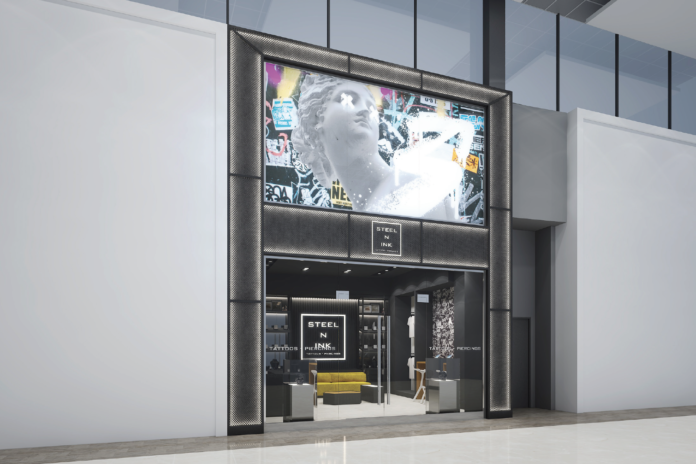
Rendering of the CF Carrefour Laval Steel N Ink location. Image: Optima Design
Steel N Ink, the Canadian tattoo and body piercing retailer, is entering a new era of growth with expansions across the country, a franchise program rollout, and its first international store set to open in Austin, Texas.
Founded in Sauble Beach, Ontario in 2005, the brand has transformed from a small seasonal business into one of Canada’s largest body art retailers, bringing tattoos, piercings, and jewelry into the shopping centre mainstream.
“We’ve had a lot of growth over the last year, and it’s only accelerating,” said Jamie Randolph, President of Steel N Ink, in an interview with Retail Insider. “We’ve opened new locations, moved into larger spaces, and introduced our new concept design. On top of that, franchising has taken off faster than we expected.”
Jamie Randolph
New Concept Stores in Guelph and Niagara Falls
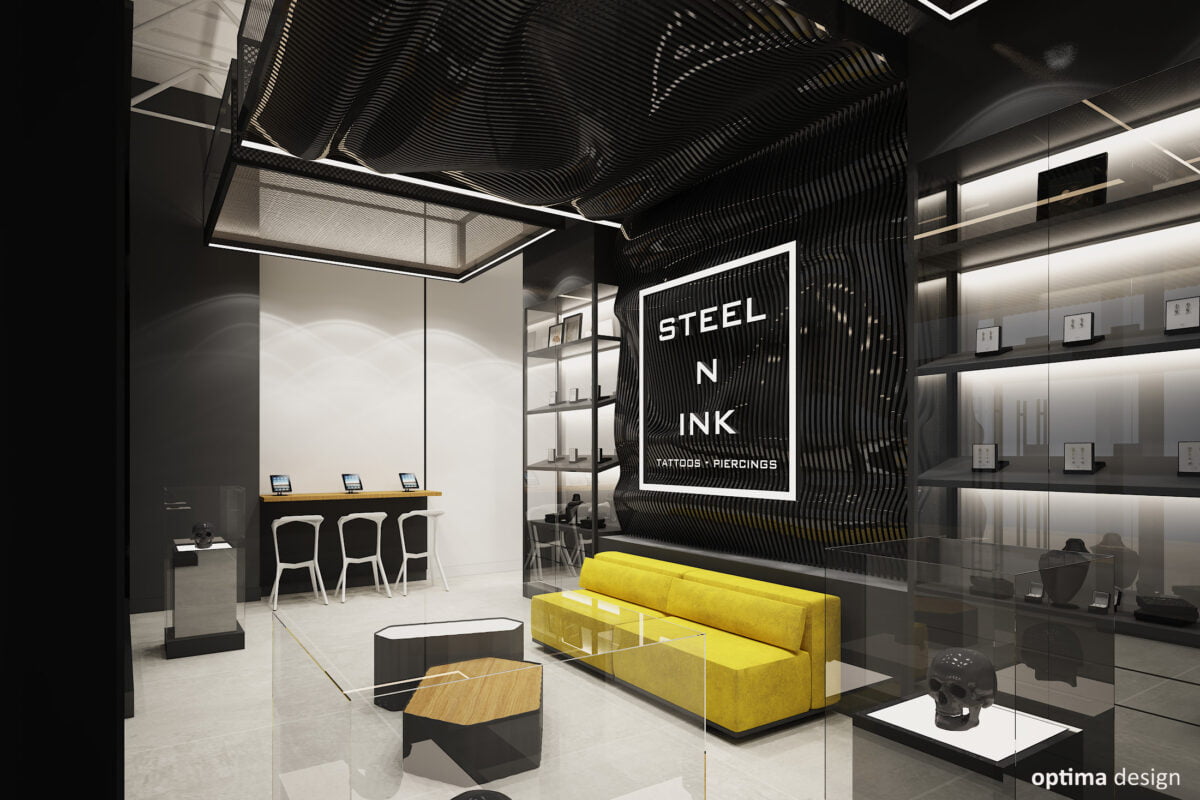
Steel N Ink recently relocated to larger stores in both Stone Road Mall in Guelph and at Fallsview Casino in Niagara Falls, Ontario. These expansions were part of the brand’s rollout of a new store concept designed in partnership with Optima, reflecting a more upscale, approachable environment.
“Our Stone Road location was actually our first mall store,” Randolph explained. “When we opened, we had no idea how much demand there would be, so we started smaller. Eventually, we even had to rent a second unit just for office space and extra tattoo stations. Now we’ve consolidated everything into one larger 1,600-square-foot store built to our new concept.”
At Fallsview Casino, the brand moved into a unit double the size of its original store, now located beside Starbucks. Randolph noted that the impact was immediate: “With the new concept and the larger space, we’re already seeing much higher numbers.”
The sweet spot for new stores is typically 1,200 square feet, but in established markets such as Guelph, the company is opening larger spaces to meet demand.
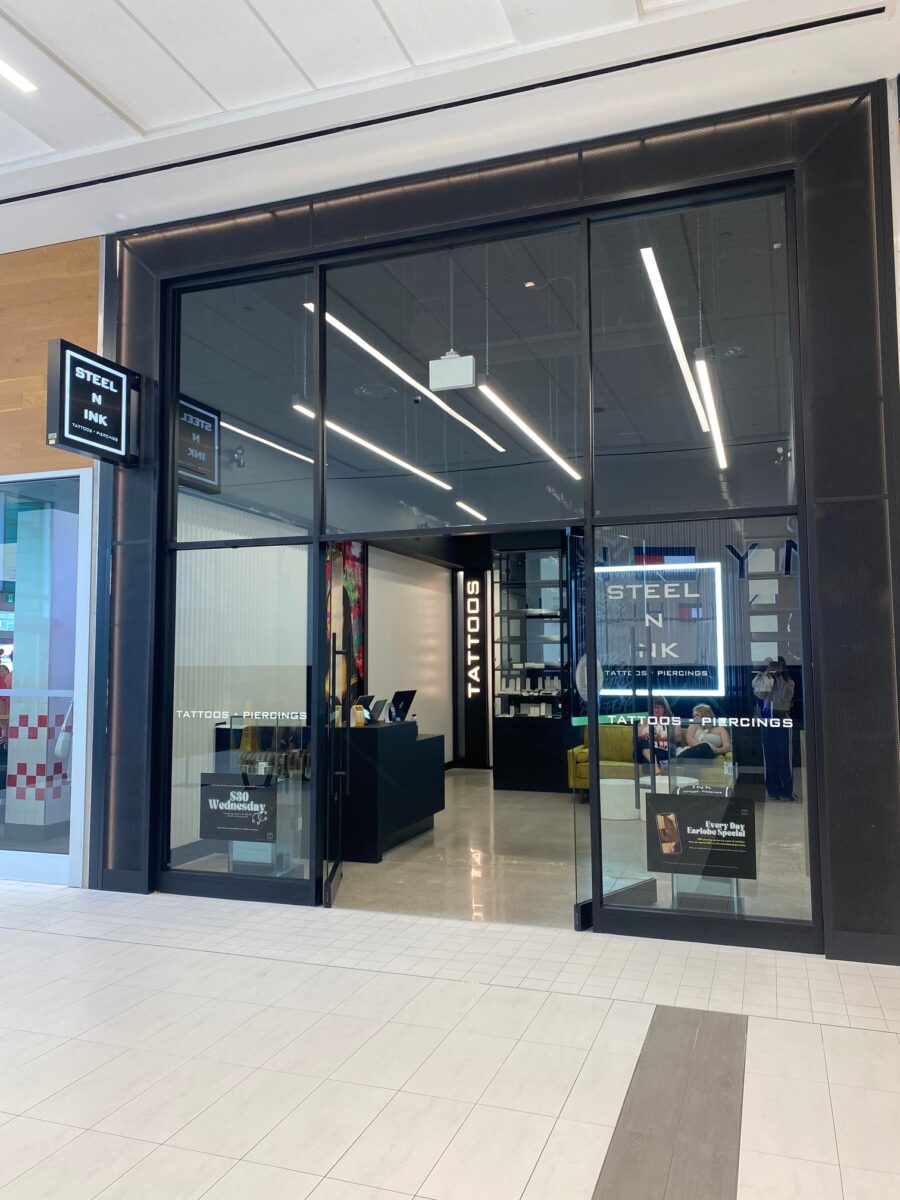
Jamie Randolph and the team at Steel N Ink at CF Carrefour Laval. Image supplied
Entering Alberta and Quebec
Steel N Ink’s growth has also extended west and east. In April, the company acquired and rebranded a competitor’s store in Banff, marking its first entry into Alberta.
“The Banff store has been a huge success for us,” said Randolph. “It’s exceeded our expectations, especially through the busy summer season. Tourists see tattoos as souvenirs that last a lifetime. Just like people buy T-shirts or mugs, a tattoo becomes a permanent memory of the place they visited.”
In July, Steel N Ink opened its second Quebec location at CF Carrefour Laval, following its first Montreal store at Royalmount nearly a year earlier. At 1,550 square feet, the Laval store is one of the brand’s larger footprints, reflecting the market’s scale and demand.
Launching a Franchise Program
One of the company’s most significant recent developments has been the introduction of franchising. Partnering with industry veteran Andy Goodman, who has decades of franchise experience, Steel N Ink formally launched its program in December 2024.
“Andy helped us build a strong foundation,” said Randolph. “We’re only six months in, and we already have four franchises sold and in development, with lots of interest from others.”
The first franchise opened at Vaughan Mills in Ontario recently, along with one in Avalon Mall in St. John’s, Newfoundland. The latter marks the brand’s debut in Atlantic Canada. Additional locations are scheduled for Oshawa Centre, Devonshire Mall in Windsor.
Randolph sees franchising as a key tool for reaching coast-to-coast coverage. “In Eastern Canada, we’ve focused heavily on corporate stores. For the west, we’re looking to grow more through franchising. Vancouver, for example, is a major target market for us.”
Newly opened Steel N Ink at Avalon Mall in St. John’s, Newfoundland. Image supplied
A Coast-to-Coast Vision
Steel N Ink currently operates 17 corporate stores, with more franchises opening in the coming months. The company expects to reach 21 locations by year’s end. Its long-term vision is ambitious: between 40 and 45 locations in Canada.
“Our goal is to be a true coast-to-coast brand,” Randolph said. “We’re already in Ontario, Quebec, Alberta, and now Atlantic Canada. Each region is responding well to what we offer.”
Avalon Mall in St. John’s has been a particularly strong success story. “When the mall announced our opening, our inbox was flooded with messages,” Randolph said. “Customers wanted to book appointments, and artists reached out to join us. The community has been really excited.”
Beyond Tattoos: Jewelry and Retail
What distinguishes Steel N Ink from many other tattoo and piercing studios is its retail component. In addition to tattoos and piercings, the stores feature large selections of jewelry, including branded collections that appeal to a wide range of customers.
“We’ve become almost like a jewelry store,” Randolph explained. “Other shops might have five choices of jewelry, but we have hundreds. That allows customers to really express themselves.”
The brand carries everything from dog bone earrings for pet lovers to Harry Potter and Star Wars–themed pieces. Randolph noted, “We want people to feel they can come in, browse, and find something that reflects their personality. That’s what sets us apart.”
This retail dimension also makes Steel N Ink more approachable. “Walking into a traditional tattoo shop can feel like a big commitment for some people,” he said. “But in a shopping mall setting, customers can stop in casually, ask questions, and explore without pressure.”
Steel N Ink at The Well (Rendering: Optima design)
U.S. Expansion Begins in Austin
Perhaps the most significant next step for the company is its international expansion. This fall, Steel N Ink will open its first U.S. store at Barton Creek Square in Austin, Texas.
“That’ll be a corporate store, and we’re really looking forward to it,” said Randolph. “The U.S. market is the next level of growth for us. If we can do 40 stores in Canada, I believe we can eventually do 400 in the States.”
Randolph acknowledged that the brand is moving into the U.S. earlier than originally planned, but said timing is critical. “We’ve started to see copycats here in Canada, and I think someone will eventually bring a concept like ours to the U.S. We want to establish our market share early.”
A Broader and More Diverse Customer Base
The perception of tattoos has changed dramatically in recent years, and Steel N Ink has been a part of that cultural shift. Randolph described the clientele as more diverse than ever.
“Everybody gets tattooed today. We see all walks of life. Sometimes it’s someone in a suit who, if you met them at the office, you’d never know they have a full back piece. There’s no stigma anymore. That’s been amazing to watch.”
From students to professionals, tourists to locals, the customer base reflects a wide demographic. “It’s really opened up to everyone,” Randolph added.
As Steel N Ink continues its rapid growth, the company remains focused on building a strong foundation for the future. That includes expanding its franchise network, strengthening its corporate structure, and preparing for its U.S. rollout.
“Steel N Ink expansion is about more than just opening stores,” Randolph said. “It’s about creating welcoming spaces where people can express themselves, whether through tattoos, piercings, or jewelry. We’re looking for qualified franchisees who share that vision, especially in Western Canada, where we see enormous potential.”
Retail Insider is streamlining its Canadian retail news from around the web to include a handful of top news stories that can be viewed quickly during the day. Here are the top stories from the past 24 hours.
And the brand has unveiled a focused strategy to expand its Canadian retail footprint, reimagine in-store experiences, and deepen connections with Canadian consumers.
“Being Canadian-owned allows The Body Shop Canada to move with greater agility, tailoring our approach to meet the values and expectations of Canadian consumers,” said Michael Roden, President of The Body Shop Canada. “With the support of a strong executive team, I am proud to be guiding The Body Shop Canada into this new era. Our focus is on creating immersive experiences, both in-store and online, that reignite passion for the brand and welcome the next generation of customers.”
Michael Roden
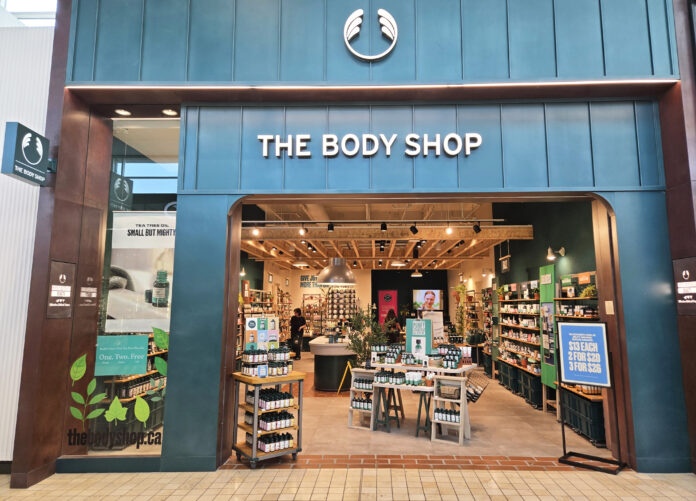
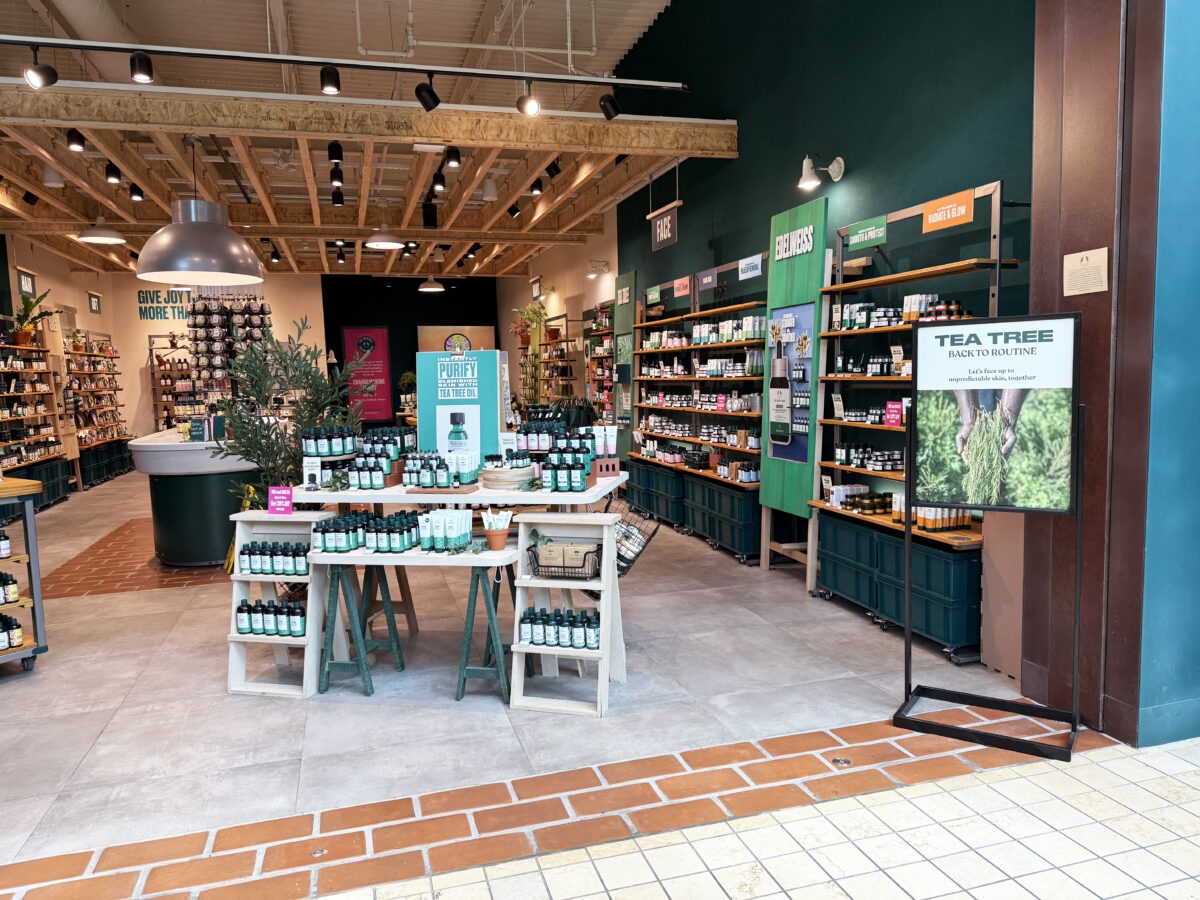
Today, The Body Shop Canada operates 64 stores nationwide and is investing in an enhanced omnichannel strategy. Since January 2025, the brand has opened two new locations in Ontario at Sherway Gardens and Lime Ridge Mall and will debut a flagship store in Vancouver’s Pacific Centre in early November 2025. A new store has opened in CrossIron Mills in the Calgary area. New store designs feature skin consultations, interactive product discovery zones, and community-driven spaces.
“As part of its growth plan, The Body Shop Canada will introduce new collections alongside its hero products, beginning with the launch of the premium Spa of the WorldTM, Sweet On You Mist collection, limited-edition Sugar Pumpkin, and many more exciting products to come. While proudly Canadian-owned, all products will continue to be developed and manufactured in Europe, ensuring consistent global quality and ethical sourcing standards. These launches mark an important opportunity to deepen connections with loyal customers and attract new audiences, reinforcing the brand’s position as an ethical leader in the Canadian beauty market,” said the company.
The Body Shop first entered Canada in 1980, opening its inaugural store in Toronto. In March last year, The Body Shop Canada, the Canadian subsidiary of the global beauty brand with 105 stores across the country, announced it had commenced restructuring proceedings by filing a Notice of Intention (NOI) to Make a Proposal pursuant to the Bankruptcy and Insolvency Act (Canada). It will be closing 33 Canadian stores, it said at the time.
Photo: The Body Shop Canada
In an interview with Retail Insider, Roden said The Body Shop has been in Canada for more than 45 years.
“It has a loyal, a loyal customer and we want to obviously continue to stay connected with that customer. But where we have an opportunity is to be able to connect with the next generation, the younger generation, whot heir parents bought from The Body Shop when they went to university or they went to college. So I think the one opportunity is definitely through our products. We are obviously testing some new product that will be looking at the younger audience,” explained Roden.
“I think number two, definitely there’s an opportunity for us to be more seen in different places, like some of the initiatives that we’re working on. We’re already in Shoppers Drug Mart. We are expanding our brand through third party business outside of just our core business. Shortly we will be launching on Amazon Canada. We have reinstated the online business that was shut down more than a year ago.
“So really we have an opportunity to really make The Body Shop more accessible and convenient while continuing to build on a legacy of ethical, sustainable, product and cruelty-free beauty. We want to live by our values, but we have an opportunity to be expanding.
“And, obviously being now Canadian owned, we also have the opportunity to really speak to our Canadian audience, our core audience here where in the past a lot of the direction came out of the UK. Still the product is out of the UK. We take direction from them but really we are our own business now, so it’s really up to us on how we want to tailor the business through the marketing, through the product and through the customer experience in our stores.”
Roden said the brand still look at retail brick and mortar as an important part of its business, but it’s also open to having diversity and diverting certain parts of the business into new channels
The company was founded in 1976 in Brighton, England by Dame Anita Roddick. Since its beginning, The Body Shop said it has been a pioneer of ethical beauty, offering high-quality, innovation-led skincare, body care, haircare and make-up made with natural, fairly traded ingredients from around the world.
Roden is a seasoned executive in the retail industry who has previously served as CEO of Thrifty’s Inc. (division of YM Inc.), leading large-scale store rollouts, brand repositioning, and operational turnarounds.
“Roden brings deep expertise in market-specific strategy, omnichannel growth, and operational excellence, with a focus on integrating customer experience across physical and digital platforms to drive sustained growth,” said the company.
Roden has been with The Body Shop Canada February 1 when he was brought in to be a consultant to help with the reorganization of the brand. In early June, he became President of the brand.
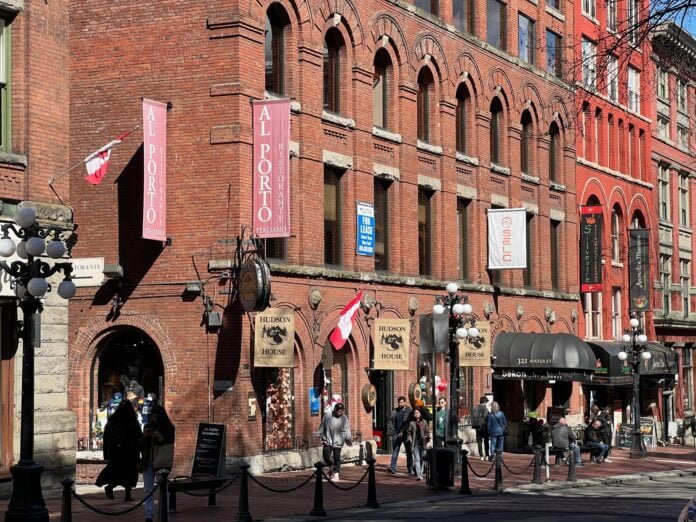
Iconic Former Hudson's Bay Company (HBC) Warehouse on Water Street in Gastown in downtown Vancouver in April 2023. Photo: Lee Rivett
A trade war and the closure of Hudson’s Bay haven’t spelled widespread problems for the Canadian retail industry. Instead, according to CBRE’s new H1 2025 Retail Rent Survey, retail fundamentals have continued to hold up and perform remarkably well amid the challenges.
Retail deals are taking longer to close but are still getting done, although with greater scrutiny. Tenant demand remains healthy with leasing activity seen in almost all sectors, particularly health and wellness, fitness, grocery and restaurants. And while consumers have tightened discretionary spending, they continue to make purchases in a more intentional manner, said the report which was released on Thursday.
Alex Edmison
“The long-term trajectory remains positive,” said CBRE Senior Vice President Alex Edmison. “Canada’s population continues to grow and, save for HBC-anchored shopping centres, supply of quality retail space remains constrained.
“We anticipate vacancy will remain low into the foreseeable future and rental rates for quality properties will continue to appreciate at a modest rate. The space left by HBC will take some time to be leased but we are seeing healthy levels of interest and leasing activity around most locations.”
Here are some other takeaways from CBRE’s Retail Rent Survey:
There continues to be a marked slowing in rental rate appreciation across the country. Rent growth was recorded in just 16 of the total 120 retail format types or key urban areas tracked in the survey.
Four of 11 markets reported no change in rents over the last six months.
Unenclosed community centres experienced escalating rents in four markets, the most of any retail format, followed by neighbourhood centres, with increases in three markets.
While most focus has remained on suburban sites, urban retail nodes are still experiencing demand and interest. Four key urban retail nodes across three markets noted increased rental rates.
Here are the most active retailers and growing segments for 2025, according to CBRE:
• Health & Wellness – Strong growth is being driven by evolving consumer preferences that prioritize holistic wellbeing. Demand comes from fitness gyms, fertility centres, cosmetic enhancement clinics, preventative medicine, and traditional health practitioners. Recent deals include Equinox’s third location in downtown Toronto and Evolve Strength’s new flagship at The Post in Vancouver. Momentum is coinciding with office landlords repurposing underutilized podium levels. Large-format HBC spaces are also emerging as attractive options for these tenants.
Restaurants – Faced with eroding margins and profitability, restaurant operators are increasingly favouring second-generation space to save on high construction and fit-out costs. Urban landlords are taking on some of these expenses through tenant allowances for extensive buildouts. Suburban markets are seeing robust restaurant activity especially where they can capture all-day traffic from morning to late night. With consumers being more conscientious of their spending, overall experience and atmosphere are huge drivers for the restaurant sector.
Big Box – Big box vacancy across the country remains low, with major players such as TJX, Value Village and Canadian Tire taking most prime locations. Availability of box space will increase in the second half of 2025 and into 2026 with HBC units hitting the market. There is strong interest in most of these locations, however most will take time to absorb as landlords re-align the spaces to match the long- term vision for their shopping centres.
Source: The Well
Some of the notable retail trends CBRE has identified to watch for in markets across Canada:
Vancouver – Anchor tenants, apparel and QSR continue to drive demand throughout the region with the likes of T&T Supermarket, Fitness World, Adidas and Diptyque leading the charge. Former Hudson’s Bay stores, representing 1.0 million square feet across Metro Vancouver, present great opportunity.
Calgary – The daycare rollercoaster continues with the Province of Alberta now limiting the number of licenses being approved for for-profit groups. This has not slowed demand. Despite often significant renewal rate increases most daycare tenants are renewing, with some spaces coming back to the market where tenants cannot afford recalibrated rents.
Toronto – Toronto’s retail leasing landscape has been robust with new deals occurring in food and beverage, fashion and luxury and contemporary fashion segments. Quality space is in short supply and rents continue to appreciate in the hottest nodes. Yorkdale continues to welcome first-to-market entrants. The latest is Gentle Monster, a Korean eyewear label. In Bloor-Yorkville recent entrants include Luca Faloni, Loro Piana and Eleventy. Brands continue to flock to the area.
Ottawa – There has been a small increase in availability in quality power centres, community and neighbourhood plazas. Rents continue to remain high with minimal inducements offered by landlords. An increasing number of 5,000-20,000 square foot spaces are becoming available with greater difficulty in finding new tenants with typical users in this size range citing caution due to tariffs and other economic uncertainty. Entertainment based users are the most interested in pursuing spaces of this size.
Halifax – Supply remains relatively limited for both existing and new product, with strong demand coming from food and beverage tenants. Retail plazas with onsite parking are experiencing robust levels of demand. Limited supply and little turnover within these centres have meant that any vacancy that pops up is quickly backfilled.
Asked to provide a national perspective on leasing, Batalion emphasized market tightness and minimal new supply. “The current market conditions remain tight. The market remains a very competitive market. We’re seeing rents continue to rise just given that very little retail is being built.”
Moshe Batalion
When asked about new construction, Batalion confirmed, “New construction for the most part is muted.” This, he added, is “across the country.”
On the development front, RioCan is focused on ongoing projects rather than new builds. “Brand new projects? No. We’ve got out in Calgary East Hills,” he said. “We’ve built out a number of phases and we’re working on building out a few other. There’s a lot of demand in that project particularly.”
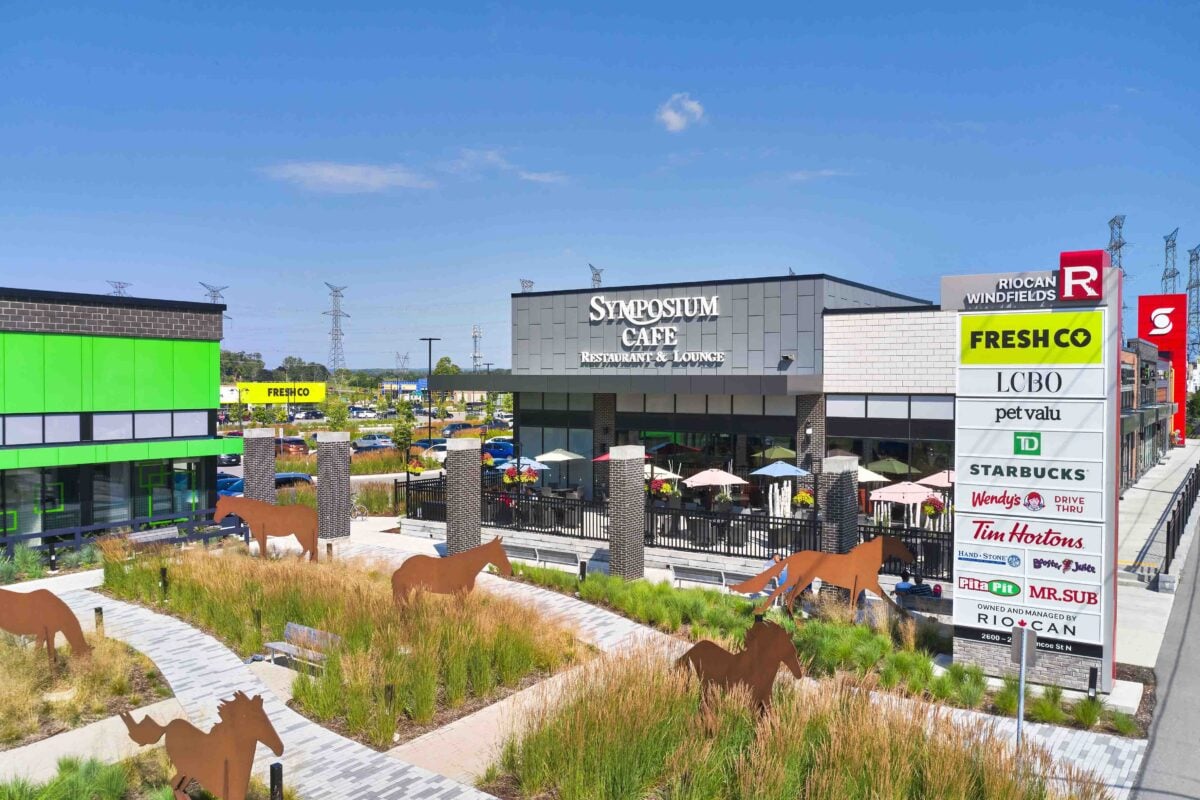
In Ontario, the company is seeing similar traction. “We’ve also got a project in North Oshawa called Windfield Farms. We built out about 350,000 square feet already. And again, much like East Hills, a lot of interest in us building more there.”
Windfield Farms
When asked about which segments are showing the most growth, Batalion pointed to staples. “Right now the necessity-based retailers, basically groceries, pharmacies, banks. We’re seeing a lot of expansion there. And those are really the tenants that we’re focusing on.”
He added, “And then you’re also seeing, you the traffic driving tenants, like fashion, home goods, fitness. Definitely. There’s a lot of appetite from those tenants.”
Quick-service restaurants (QSRs) are also making waves. “QSR drives a lot of traffic,” said Batalion.
Asked about regional differences in strength, Batalion was clear: “I think right now all pockets are, are extremely strong. If you look at our occupancy rate, we’re at an almost an all-time high. We’re 97.5, and so all markets are kind of in that 97 and above occupied.”
Recently, RioCan Real Estate Investment Trust announced it was cutting financial ties to five properties held in its joint venture Hudson’s Bay.
Those properties were the Square One Shopping Centre in Mississauga, Ont., Scarborough Town Centre in Toronto, the downtown Calgary HBC store, and the Carrefour Laval and Promenades St-Bruno locations in Quebec.
On the topic of the ongoing situation regarding HBC properties, Batalion kept within the bounds of public disclosure.
“With us being in front of the courts right now, I really can’t say much other than what you know, has already been disclosed on our earnings call.”
However, he did add: “We will only allocate capital to those buildings where we can demonstrate an acceptable return on investment. My team is actively pursuing backfill solutions for several of the locations that are already in the RioCan operating portfolio. But given the expertise of my team and the strength of our relationships with the retail tenants, we’re well positioned to secure suitable replacement tenants for those properties. And there is considerable interest.
“I can also say that those rents that were paid by HBC were well below market.”
The Well, Toronto
Batalion also pointed to a major industry shift worth watching: the plateau of e-commerce. “The one thing we have seen is that e-commerce has plateaued, really making retail a hybrid of online and physical shopping. Tenants have realized they now need to expand their physical locations alongside their digital presence. So I think that is a key and very important to our business right now.”
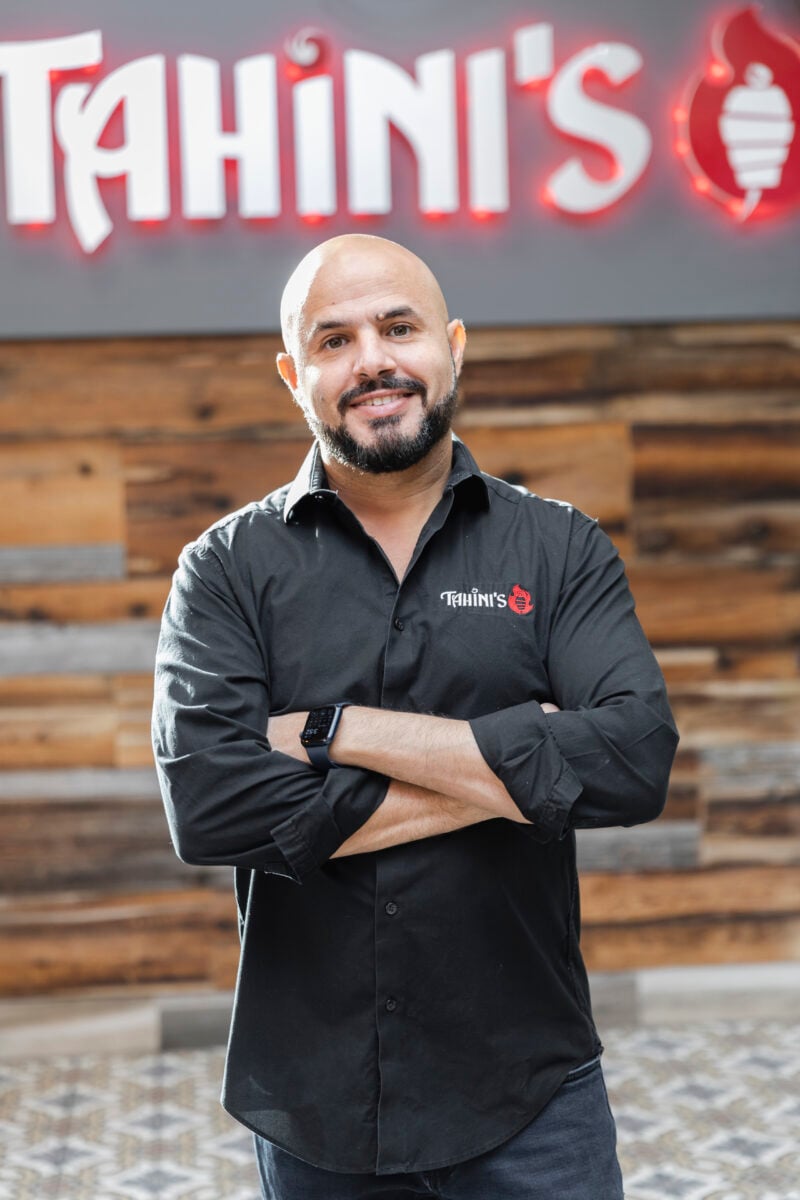
For Omar Hamam,, the path to business ownership wasn’t linear but it was driven by persistence, family, and a fascination with how things work. Now the founder of the fast-growing Tahini’s restaurant chain and Alex Food Service, Hamam’s story begins far from the bustling kitchens of his London, Ontario-based enterprise.
“I was born in Windsor, Ontario,” said Hamam. “And I went to school in Winnipeg, Manitoba. I’ve been living in London since 2011.”
A graduate of the University of Manitoba with a degree in business, Hamam didn’t initially set out to be a restaurateur. “I was in engineering for about four years and I was almost done.I hated engineering. I wasn’t a good one for sure,” he said. “I always knew I had an admiration for business owners. To me, this is like taking me to a candy shop. I love seeing how a business works and hearing the stories of how people started their business.”
Omar Hamam
The shift from engineering to business wasn’t just academic. It meant breaking with family tradition. “My dad’s an engineer, a professor at some point. He has his PhD in engineering, and half my family are engineers,” said Hamam. “In Egypt, the mentality is kind of like, okay, you have to have a good profession. You have to be either a doctor or an engineer. I kind of broke the norm in the family there.”
After graduating, Hamam worked briefly in banking and insurance. “The first job I got was Wells Fargo Bank, doing cold calling for consolidating debts. That was horrible. I lasted less than maybe five months.” He moved to Egypt in 2006 and began working in real estate. But it wasn’t long before a craving from his Winnipeg days sparked a business idea.
“Do you know Slurpees?” Hamam asked. “Winnipeg is known to be the Slurpee capital of the world. I used to drink a lot of Slurpees in Winnipeg. When I went to Egypt I thought, what if I started a business doing Slurpees in Egypt?”
That idea led to meetings with Pepsi and Coca-Cola, negotiations for branded equipment from Italy, and a pilot project in a top Cairo movie theatre. “I launched the first Slurpee in Egypt. It was doing great,” said Hamam. But ultimately, the business climate didn’t suit him. “I couldn’t really manage my way in Egypt. A lot of politics, just a different way of doing business.”
He sold the business and returned to Canada, determined to do things his own way. “When I came back, I decided I didn’t want to work for a company anymore. I love business. I want to do something for myself. I was just looking for a business for months.”
That search led to the purchase of a Middle Eastern shawarma restaurant in 2011. It was busy and successful, but Hamam saw a bigger opportunity. “I didn’t think the name was franchisable,” he said. “I read the book Grinding It Out by Ray Kroc from McDonald’s. I thought what if I can do something like that?”
He studied the stories of major brands, McDonald’s, Subway, Wendy’s, and Burger King, and began developing his own concept. “I needed to open another concept and make sure it’s not just a one-off,” said Hamam. “If I was going to use other people’s money, I’d better be able to bet my own money on it.”
That led to the birth of Tahini’s. “I came up with the name Tahini’s and I opened my first location,” he said. “The first six months I was doing very small sales like $600 a day, which is really, really bad.”
Omar Hamam
But he stuck with it, and by the end of the first year, “I was doing the same numbers as the first restaurant. That was awesome.”
Franchising was always the plan, and Hamam knew it required infrastructure. “The second step is I need to come up with a franchise agreement and an operations manual,” he said. The first franchise was opened in 2020.
He launched Alex Food Service, named after Alexandria, Egypt. “I needed a commissary kitchen to make all the proprietary items,” he explained. “I started going out and approaching restaurants. I got maybe like seven accounts in the first month.”
That dual business model helped support expansion. “Right now, (Alex Food Service) doesn’t just deliver to Tahini’s, but it delivers to a lot of restaurants as well.”
Tahini’s is a unique, category leading quick service restaurant group founded in 2012 and currently operating 60 locations across Canada, in addition to operating Tahini’s Kitchen within select FreshCo locations, a Sobey’s banner, and offering a selection of Tahini’s retail packaged products through select grocers. The brand has been fueled by nearly 2 billion views across all of its social media channels and is preparing for rapid growth across Canada and internationally.
Reflecting on the challenges, Hamam points to the early days as the hardest. “Nobody knows your name. You can’t get real estate because landlords don’t know you. It’s hard to find franchisees.” But persistence paid off. “I never took no for an answer. If you’re a landlord, for example, I can call you a hundred times all day, every day until you say yes.”
Another edge? Marketing. “We had a lot of followers at YouTube, TikTok, Instagram. We went viral. That really helped us with franchisees and having customers before we already opened.”
From Slurpees in Cairo to shawarma in Southern Ontario, Hamam’s journey proves the power of determination, adaptability, and betting on yourself.
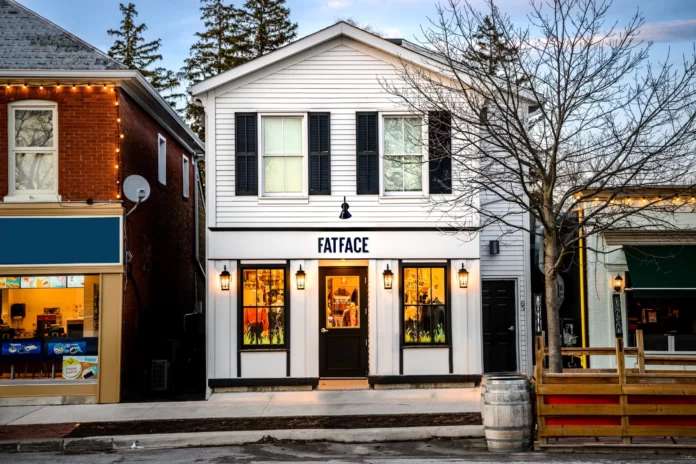
FatFace in Niagara-on-the-Lake Ontario. Photo FatFace
UK-based clothing and lifestyle retailer FatFace has confirmed it will close all of its Canadian stores this year, marking the end of the brand’s short-lived expansion into the country. The decision comes as part of a broader retreat from brick-and-mortar retail in North America, with the company also shutting down its U.S. stores.
The closures affect approximately 145 jobs across the United States and Canada. FatFace cited economic uncertainty and rising operating costs as the driving factors, calling the physical store model “unviable” in the region at this time.
FatFace entered the Canadian market in 2023 with high hopes, initially opening three stores in Ontario—Niagara-on-the-Lake, Barrie, and Newmarket. Later that year, it launched a Toronto Distillery District pop-up and an outlet location at Toronto Premium Outlets in Halton Hills. By the end of 2023, the brand operated five locations in Canada, with plans for additional stores that never materialized.
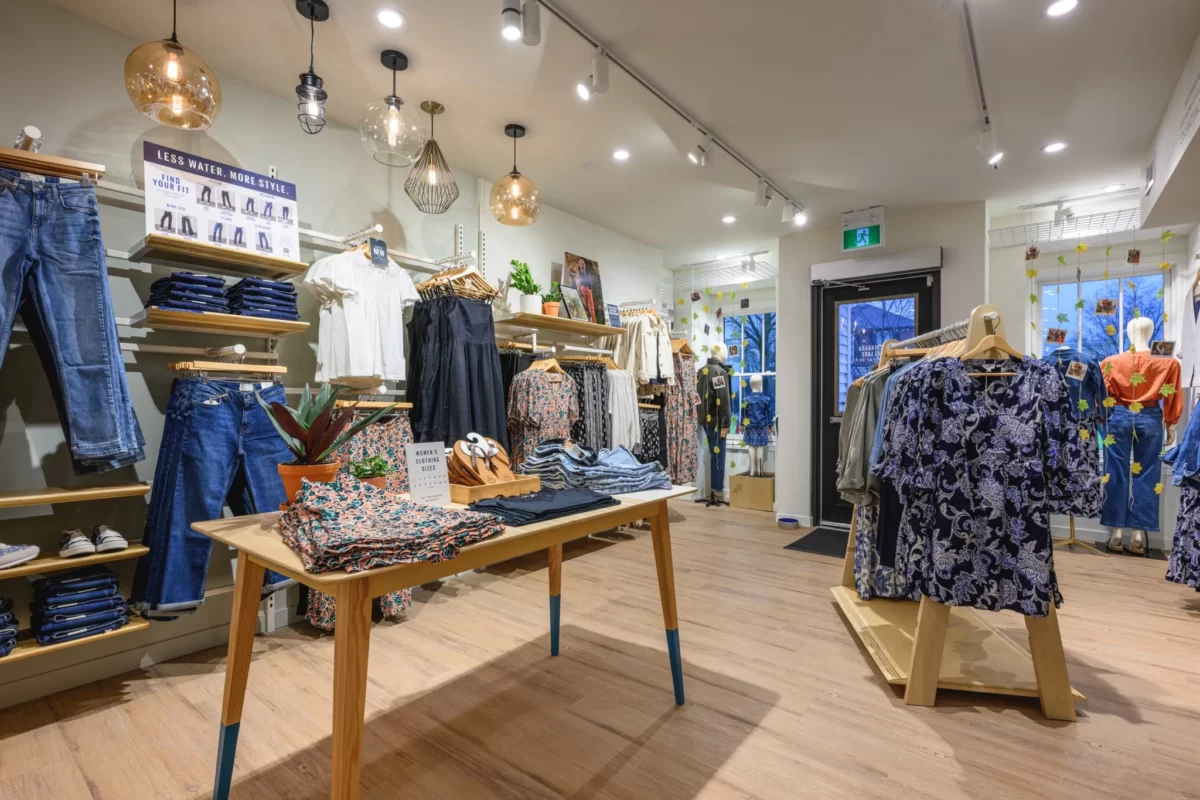
The company sought to appeal to Canadian consumers by tailoring products to the market, including maple-leaf motif sweatshirts. FatFace also secured retail spaces in tourist-driven and high-footfall areas, aiming to replicate its lifestyle-driven approach from the UK.
Despite this effort, the stores will now all close permanently, leaving Canadian shoppers with only online access to the brand.
FatFace in Niagara-on-the-Lake, Ontario (Image: GTA General Contractors)
FatFace Moves to Digital-Only in North America
While FatFace’s Canadian and U.S. storefronts will close, the brand confirmed it will maintain online shopping for North American customers. This follows a growing trend among international retailers consolidating their physical presence while expanding e-commerce operations.
FatFace will continue to operate its 175 stores in the United Kingdom, where it has a stronger foothold and long-standing customer base. Since being acquired by British fashion giant Next plc in 2023, FatFace has been integrated into Next’s digital infrastructure, giving the brand a more scalable online platform.
The company has also announced plans to grow its international online reach, exploring entry into additional countries through e-commerce rather than physical retail.
FatFace’s Brand Identity and UK Strength
Founded in 1988 in Méribel, France, FatFace began as a T-shirt brand for skiers before growing into a full lifestyle retailer offering clothing, footwear, accessories, and even pet products. Today, its customer base is largely driven by womenswear, which accounts for nearly two-thirds of its sales.
The brand has positioned itself as a casual, outdoorsy alternative to traditional fashion retailers, with an emphasis on sustainability. FatFace achieved B Corp certification in the UK, reflecting its commitment to ethical and sustainable practices.
This strong reputation and established physical presence in the UK may help shield the company from the difficulties it faced in North America.
Global real estate investment manager BGO has acquired Rockwood Plaza, a more than 300,000-square-foot grocery-anchored retail property in Mississauga. The transaction was completed on behalf of the Prime Canadian Property Strategy, underscoring the firm’s focus on high-quality assets with strong long-term potential.
Located at 4141 Dixie Road, Rockwood Plaza sits on 23.7 acres at the busy intersection of Burnhamthorpe and Dixie Road. The site benefits from excellent connectivity, with direct access to Highways 401, 403, 427, and the QEW, as well as close proximity to both the Dixie GO Station and the Mississauga Transitway.
Anchored by National Retailers
Rockwood Plaza is currently 95% leased and features a tenant mix that reflects long-standing stability in the local market. The property is anchored by Food Basics and supported by well-established national retailers such as Winners, HomeSense, Shoppers Drug Mart, Dollarama, and three major banks.
The centre has built a reputation for tenant retention, with many relationships extending more than two decades. The open-air format, with most tenants operating from exterior entrances, highlights its appeal as a convenient neighbourhood retail destination.
Simon Holmes, Managing Partner and Chief Investment Officer for BGO Canada, said the acquisition aligns with the repositioning goals of the Prime Canadian Property Strategy.
“Rockwood Plaza not only provides a stable income profile and significant future development optionality given its urban location and favourable zoning, it also showcases the strength of BGO’s vertically integrated platform,” said Holmes.
BGO will undertake an active asset management plan, focusing on selective capital improvements, tenant engagement, and strategic leasing. These initiatives are designed to enhance long-term value while maintaining the plaza’s role as a strong community hub.
BGO’s Growing Presence in Canada
BGO, also known as BentallGreenOak, is among the most significant players in Canadian commercial real estate. The company, formed through the 2019 merger of Bentall Kennedy and GreenOak Real Estate, manages approximately $89 billion USD in assets globally as of June 2025.
In Canada, BGO maintains a deep presence through its BGO Properties division, one of the country’s largest property managers. The firm oversees more than 25 million square feet of industrial real estate nationwide and has expanded investment strategies across industrial, multifamily, retail, office, and hospitality sectors.
Recent initiatives include a Canadian Value-Add Strategy, which raised C$247 million to focus on growth areas such as industrial and multi-residential assets in major markets including Toronto, Hamilton, Vancouver, and Montreal. The firm has also broadened into technology-related infrastructure with acquisitions of data centres in Montreal and the Greater Toronto Area.
Rockwood Plaza and Mississauga’s Retail Landscape
Mississauga has long been one of the most active suburban retail markets in the Greater Toronto Area. With strong population growth, a robust employment base, and transit expansion, the city remains attractive for retail investment.
Rockwood Plaza stands out as a strategically located, grocery-anchored retail centre, a category of real estate that has proven resilient even amid evolving shopping patterns. The strength of daily-needs anchors like Food Basics, combined with a lineup of destination tenants, positions the property as a reliable performer in BGO’s growing Canadian portfolio.
For BGO, the acquisition of Rockwood Plaza is a clear demonstration of its intent to secure high-quality, income-producing retail assets in markets with long-term growth potential. The integration of its in-house property management, operations, and leasing teams ensures that Rockwood Plaza will benefit from the firm’s vertically integrated model.
As Holmes emphasized, the acquisition reflects a dual focus on stability and future growth: “We are uniquely positioned to enhance performance and deliver enduring value for our investors.”