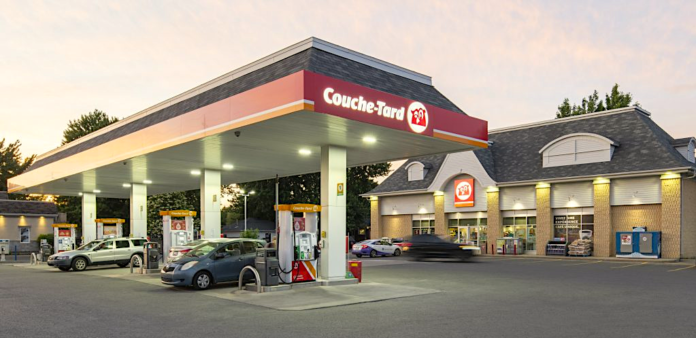
Alimentation Couche-Tard Inc. has reported its financial results for its fourth quarter ended April 27, 2025 citing the resilience of the business despite difficult economic and geopolitical conditions.
Executive Comments on the Quarter

Alex Miller, President and Chief Executive Officer, said: “As we conclude this milestone year, the 45th year since we opened our first store, we are proud of the resilience of our business and the award-winning engagement of our team members. During the fourth quarter, in the face of difficult economic and geopolitical conditions, we held the line in same-store sales in the United States and had strong positive results in Canada and Europe.
“Our initiatives to provide compelling value to our customers with exclusive food and beverage offers are performing well across the network. Compared to the same period last year, in our fuel business, we had positive volumes in Canada, and in the United States, we maintained market share and margins aligned with recent quarters. As we move into the new fiscal year, we remain confident in the strength of our global scale, long-term strategy, and customer-centric teams.”

Filipe Da Silva, Chief Financial Officer, added: “We closed the fourth quarter and fiscal year with disciplined financial results that reflect the strength and operational effectiveness of our business, supported by continued investment in technology and customer value. The integration of our TotalEnergies assets progressed according to plan, and our focus on efficiency enabled us to pursue strategic initiatives while preserving healthy margins. As we enter the new fiscal year, we remain focused on controlling costs, delivering shareholder value, and making impactful capital investments to support our long-term growth agenda.”
Couche-Tard is a global leader in convenience and mobility, operating in 29 countries and territories, with close to 17,000 stores, of which approximately 13,000 offer road transportation fuel. With its well-known Couche-Tard and Circle K banners, it is one of the largest independent convenience store operators in the United States and it is a leader in the convenience store industry and road transportation fuel retail in Canada, Scandinavia, the Baltics, Belgium, as well as in Ireland. It also has an important presence in Luxembourg, Germany, the Netherlands, Poland, as well as in Hong Kong Special Administrative Region of the People’s Republic of China. Approximately 146,000 people are employed throughout its network.
Quarterly Highlights
- Net earnings attributable to shareholders of the Corporation were $439.4 million for the fourth quarter of fiscal 2025 compared with $453.0 million for the fourth quarter of fiscal 2024. Adjusted net earnings attributable to shareholders of the Corporation were approximately $441.0 million compared with $461.0 million for the corresponding quarter of last year, representing a decrease of 4.3%.
- Net earnings attributable to shareholders of the Corporation were $0.46 per diluted share for the fourth quarter of fiscal 2025 compared with $0.47 per diluted share for the fourth quarter of fiscal 2024. Adjusted diluted net earnings per share were $0.46, representing a decrease of 4.2% from $0.48 for the corresponding quarter of last year.
- Total merchandise and service revenues of $4.2 billion, an increase of 2.0%. Same-store merchandise revenues decreased by 0.4% in the United States, while it increased by 3.4% in Europe and other regions, and by 3.5% in Canada.
- Merchandise and service gross margin decreased by 0.2% in the United States to 33.9%, by 0.6% in Europe and other regions to 38.6%, and by 0.8% in Canada to 34.1%.
- Same-store road transportation fuel volumes decreased by 1.9% in the United States, by 0.6% in Europe and other regions, while it increased by 3.7% in Canada.
- Road transportation fuel gross margin of 43.27¢ per gallon in the United States, an increase of 4.48¢ per gallon, US 9.57¢ per liter in Europe and other regions, an increase of US 1.27¢ per liter, and CA 14.05¢ per litre in Canada, an increase of CA 0.37¢ per litre.
Fiscal Year 2025 Highlights
- Net earnings per diluted share of $2.71 compared with $2.82 for fiscal 2024, a decrease of 3.9%, while adjusted diluted net earnings per share1 were $2.71 compared with $2.81 for fiscal 2024, a decrease of 3.6%.
- During fiscal 2025, it repurchased 8.7 million shares for an amount of $518.9 million.
- Solid pipeline execution with 97 new-to-industry openings, and 20 relocated or reconstructed stores during fiscal 2025. As of April 27, 2025, another 41 stores were under construction and should open in the upcoming quarters.
- Increase in the annual dividend declared for fiscal 2025 of 14.3%, from CA 66.50¢ to CA 76.00¢.
In a commentary, Martin Landry, Managing Director, Stifel Financial Corp, said Couche-Tard’s fourth quarter results were “slightly below muted expectations” and the company’s results continue to be challenged in the United States.
“The convenience store channel has lost market share against other channels, in our view, as frugal consumers seek value and look to stretch their dollars,” he said.
Related Retail Insider stories: