Guided by the vision of creating a better everyday life for the many people, Ingka Group, the largest IKEA retailer, said on Wednesday it is stepping up efforts to support customers with low price while ensuring long-term growth.
In many IKEA markets around the world, the price of restaurant meals will be halved Monday through Friday, and children will eat for free.
IKEA Canada clarified that the 50% off discount applies for select main dishes for IKEA family members at IKEA restaurant locations across Canada, starting on July 10 through to the end of August. Offers vary by location and are available while supplies last. Every Wednesday, kids can enjoy a free meal with the purchase of an adult meal.
With hundreds of millions of guests visiting IKEA restaurants every year, the company aims to inspire a better everyday life through food that is healthier, more sustainable, and affordable. As part of ongoing investments in the in-store experience, Ingka Group is introducing this price drop to help people stretch their budgets, nourish their families, and find a little more joy, said the company in a news release.
For example, in France, the price of lunch for a family of four, which includes two hot-meals with meatballs for adults and two meals for kids, will cost EUR 6.96 instead of EUR 19.9. In addition, all restaurant guests will receive a EUR 5 voucher to use in-store, it explained.
Tolga Öncü
“Food has always been very important for IKEA, and we wanted to enable even more people to enjoy our restaurant offer while exploring our home furnishing range,” said Tolga Öncü, Ingka Retail Manager (COO) at IKEA Retail (Ingka Group). “Securing the lowest possible price for our products is always our utmost goal, and this is even more important in today’s times of economic uncertainties and cost-of-living pressures.”
At the same time, IKEA is refreshing its food offer with new dishes inspired by Asian flavours, expanding affordable, healthy options for customers, added the company.
“We always look for ways to bring more variety to our food offer, especially with new plant-based options,” said Lorena Lourido Gomez, Global Food Manager, IKEA Retail (Ingka Group). “We will soon launch our very first falafel, adding this popular food to our restaurants and, later, to our Swedish Food Markets. Good quality, low price, and making a positive difference for the planet – those ingredients remain a guiding star for our food business.”
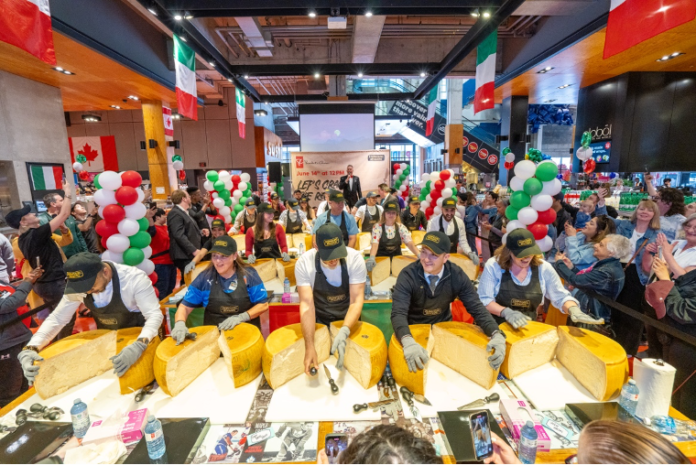
In a landmark celebration of culinary tradition and community, Parmigiano Reggiano and Loblaw Companies Ltd. have officially set a new GUINNESS WORLD RECORDS title for the most Parmigiano Reggiano wheels cracked simultaneously across multiple locations. The achievement took place on June 14, 2025, at exactly 12:00 PM EST, uniting Canadians coast-to-coast in a moment that combined culture, craftsmanship, and food appreciation.
The record-breaking initiative saw 1,672 wheels of the iconic Italian cheese cracked open across 452 Loblaw banner stores, surpassing the previous record of 1,209 wheels set in 2014. The central “hero” location for the event was Loblaws at Maple Leaf Gardens in downtown Toronto, where crowds of onlookers gathered for a live demonstration of the centuries-old art of cheese cracking.
Celebrating Heritage and Craftsmanship
The event coincided with Italian Heritage Month, making the achievement more than just a corporate milestone—it was a celebration of tradition and shared cultural appreciation.
“This achievement is more than just a number—it’s a celebration of tradition, passion, and the global love for Parmigiano Reggiano,” said Nicola Bertinelli, President of the Consortium of Parmigiano Reggiano. “Seeing thousands of Canadians come together to share in this moment is a powerful reminder of how food connects us. We are absolutely thrilled to set a new world record.”
Shoppers at participating stores experienced firsthand the rich history and craftsmanship behind each wheel of Parmigiano Reggiano. Cheesemongers showcased the traditional cracking method—a precise and time-honoured technique passed down through generations—to open the wheels, each weighing approximately 40 kilograms.
National Activation Across Loblaw Banners
The initiative involved a coordinated effort by Loblaw’s corporate and in-store teams, spanning across multiple banner stores including Real Canadian Superstore®, Fortinos®, Loblaws®, Zehrs®, and Your Independent Grocer®. At each location, customers were invited to taste freshly cracked cheese and learn about the significance of Protected Designation of Origin (PDO) certification, which ensures Parmigiano Reggiano is produced exclusively in specific Italian provinces using traditional methods.
“At Loblaw, we’re always looking for meaningful ways to celebrate food and culture with our customers,” said Joe Difalco, Vice President of Fresh Merchandising at Loblaw Companies Ltd. “Breaking this record alongside Parmigiano Reggiano was not just a milestone but an unforgettable experience that brought communities together across Canada.”
In addition to in-store demonstrations, the event featured celebrity chef David Rocco, photo opportunities, and interactive experiences that highlighted the unique qualities of Parmigiano Reggiano—often referred to as the “King of Cheeses.”
Official Recognition from Guinness World Records
The ambitious record attempt was overseen by GUINNESS WORLD RECORDS adjudicator Michael Empric, who travelled to Canada to validate the results. Following the event, he confirmed that all necessary criteria had been met.
“We are pleased to confirm that Parmigiano Reggiano and Loblaw Companies Ltd. have officially set a new GUINNESS WORLD RECORDS title for the Most parmesan cheese wheels cracked simultaneously (multiple venues),” said Empric. “The scale and coordination involved in this event were truly remarkable.”
The record is not only a promotional win for both Parmigiano Reggiano and Loblaw, but also a testament to consumer enthusiasm for authentic, high-quality food experiences—particularly those with deep cultural roots.
Building on a Legacy Record
This is not the first time Loblaw and Parmigiano Reggiano have collaborated to make history. In 2014, the two partnered to crack open 1,209 cheese wheels in a similar coast-to-coast initiative. That event set a precedent, but the 2025 edition has firmly raised the bar and reaffirmed Canadian consumers’ growing appetite for specialty cheeses.
The updated record of 1,672 wheels cracked represents not only the scale of coordination but also the evolving popularity of PDO-certified Parmigiano Reggiano in Canadian households. From gourmet food lovers to everyday shoppers, the cheese has become a staple for its rich, nutty flavour and centuries-old reputation for quality.
About Parmigiano Reggiano and the Consortium
Founded in 1934, the Consortium of Parmigiano Reggiano represents the interests of producers located within the strict Area of Origin—encompassing the provinces of Parma, Reggio Emilia, Modena, as well as portions of Bologna and Mantua. The cheese is produced using just three ingredients—milk, salt, and rennet—without additives, following techniques that have remained virtually unchanged for over 900 years.
Each wheel of Parmigiano Reggiano undergoes a rigorous quality test at 12 months of age. Only wheels that pass are branded with an oval “selection mark” and considered true Parmigiano Reggiano under European Union PDO standards.
This certification guarantees authenticity and supports producers by protecting the name and methods used in crafting one of the most prized cheeses in the world.
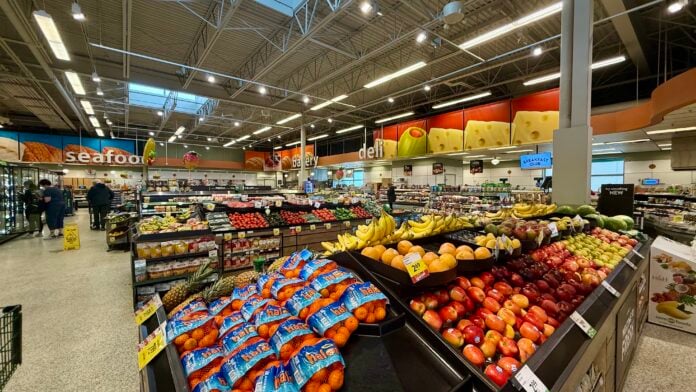
For the first time in 2025, food inflation in Canada has shown meaningful signs of easing. According to the latest Consumer Price Index (CPI) data released by Statistics Canada, the year-over-year food inflation rate dropped from 3.8% in April to 3.4% in May. That shift may seem modest, but in the high-stakes world of food affordability, it’s a significant directional change — and long overdue.
Just weeks ago, Canada had the second-highest food inflation rate among G7 nations. Now we’ve moved down to fourth place. It’s a welcome reprieve for Canadian consumers heading into the costly summer months, when fresh food demand typically peaks.
Regional Divergences: A Country Divided by Grocery Bills
Food inflation is not uniform across the country. New Brunswick currently leads the pack with the highest food inflation rate at 3.7%, while Manitoba boasts the lowest at 3.0%. Quebec sits at 3.1%, and Ontario at 3.6%. These regional differences reflect varying transportation costs, supply chain efficiencies, and even policy priorities.
At the category level, meat products and fruit continue to drive inflation higher. In the case of fruit, it’s largely a byproduct of ongoing substitution behaviours triggered by the informal boycott of American goods — a consumer protest that remains visible, though its intensity has waned compared to earlier in the year.
“Food prices are finally easing — not because of bold government action, but because Ottawa quietly got out of the way.”
A Growing Gap Between Food Prices and Everything Else
The real challenge, however, is not just the absolute level of food inflation — it’s the divergence from general inflation. Across the G7, food inflation is still outpacing overall inflation rates. Here’s the current gap between food inflation and general CPI for each country:
Japan: +2.8%
Italy: +2.0%
Canada: +1.7%
Germany: +1.2%
United Kingdom: +1.0%
France: +0.6%
United States: +0.5%
In Canada, this persistent gap means that even as overall inflation cools, Canadians are still feeling the pinch at the grocery store. It’s why food inflation hits differently — and politically — than other economic indicators.
Silent Shift: The Quiet Pause on Counter-Tariffs
One notable policy action may be contributing to the recent softening of food prices: the federal government’s quiet decision to pause many counter-tariffs on American imports, announced discreetly on May 7 during the peak of the so-called “Elbows Up” election campaign.
Prime Minister Carney has not publicly acknowledged the move, but make no mistake — this decision is having real economic impact. The pause affects products such as citrus fruits, coffee, tea, and alcohol — items disproportionately affected by the previous retaliatory tariff regime. These tariffs had distorted import flows, raised input costs for Canadian businesses, and, ultimately, inflated prices for consumers.
The fact that this pause has gone unmentioned by federal leadership raises questions about transparency. And while this is only a suspension — not a permanent repeal — the effect on pricing has been relatively quick. Both industry players and consumers will be hoping the pause becomes permanent.
GST Holiday: A Painful and Misguided Policy
While the counter-tariff pause has been helpful, other federal interventions have done more harm than good. Chief among them is the so-called “GST Holiday,” a policy that exempted groceries from the federal sales tax. Though designed to reduce consumer costs, it triggered logistical chaos, compliance headaches, and price distortions.
Since January, Canada’s overall food inflation surged from -0.6% to 3.8%. While inflation was bound to rise regardless, the GST holiday inadvertently contributed to pricing volatility across food categories. It was a costly lesson in how well-meaning policies can backfire in the real world of supply chains and consumer behaviour.
Lessons Learned: Government’s Role in Keeping Food Prices Stable
The lesson from the past year is clear: when it comes to food inflation, government intervention should be focused, measured, and limited. Supporting low-income households is one thing. Interfering with pricing mechanisms and trade flows is quite another.
However, that doesn’t mean government has no role to play. Creating the right conditions for market fairness and competition is essential — and that’s where the much-discussed Grocery Code of Conduct comes in.
Slated to be fully implemented by January 1, the code is designed to rein in supply chain bullying by dominant grocers. Listing fees, marketing levies, and chargebacks have long been used to squeeze suppliers, particularly small businesses. These costs inevitably make their way onto consumers’ receipts.
In theory, the Code will bring more discipline and transparency to these practices, leveling the playing field and increasing competition. That should — eventually — translate into fairer prices at the grocery store. But theory and practice don’t always align. Whether the code will have teeth remains to be seen.
A New Phase of Food Policy?
We are, perhaps, entering a new phase in food policy discourse — one in which the emphasis is less on micromanaging prices and more on enabling resilience, competitiveness, and fairness across the supply chain. That means letting markets work, while keeping a close eye on structural distortions like tariffs, regulatory overreach, and concentration of power among a few dominant retailers.
The good news is that food inflation is cooling. But it’s not happening because government mastered the problem — it’s because, in some cases, it finally stepped aside.
Retail Insider is streamlining its Canadian retail news from around the web to include a handful of top news stories that can be viewed quickly during the day. Here are the top stories from the past 48 hours.
The way we pay has undergone a dramatic transformation. We’ve gone from waiting for cheques to clear to the now-familiar tap of your card, phone or watch to instantly pay for your purchases. This evolution has been driven by a relentless pursuit of convenience, speed and security. From chip technology to AI powered cybersecurity, Mastercard has always been at the forefront of this evolution, pioneering innovations that have reshaped commerce and empowered consumers and businesses worldwide.
Of course, this shift didn’t happen overnight. The cards in our wallet went from imprint machines to magnetic stripes. This step revolutionized transactions, making payments faster not just for consumers, but it dramatically reduced the amount of time businesses had to wait for payments to go through.
Security concerns led to the development of chip technology, which added an extra layer of protection against fraud. Then came tap, a truly contactless payment experience that has essentially eliminated the need to physically swipe or insert your card, making transactions even faster and more convenient.
“Tap now makes up roughly 80 per cent of all in-person transactions in Canada,” said Craig Reiff, Senior Vice President, Core Payments, Mastercard. “This widespread adoption is a testament to how easy the technology is to use, and the growing demand for a seamless experience.”
These innovations have been developed through a proactive focus on the growing demand from shoppers for a seamless payment experience, both online and in-store. In fact, Mastercard research* shows that 7 in 10 Canadians consider convenience the most attractive feature of digital payments. In today’s environment, businesses must think beyond the in-store experience and develop robust e-commerce strategies that provide the safe, easy and fast experiences that consumers expect.
As the digital economy grows, the payments landscape will continue to evolve. Mastercard is actively applying new technologies to make payments more secure, inclusive and accessible. Tokenization, for example, has become a cornerstone of secure online and in-app payments. Now, the company moves into the next phase, agentic payments, which integrates AI to revolutionize commerce.
Mastercard is also pushing the boundaries on how it can apply existing technology in new ways, such as embedding biometric authentication like facial recognition into the online payments space. This technology is already available and widely used in other applications and Mastercard is working to accelerate its adoption to improve the consumer experience as they pay for daily items. Instead of relying on one-time passcodes, consumers can simply scan their face for a much faster, and still secure, checkout.
Looking ahead, payment experiences will become even more seamless and integrated. Imagine a world where payments are embedded into everyday devices and interactions, from your car to your smart home. Or a world where biometric authentication becomes the standard, making payments not only more secure but also more personalized and convenient.
“Our focus on the specific needs of consumers drives us to develop innovative solutions that empower individuals and businesses to thrive in the digital economy,” Reiff added. “As the world’s largest payments network, we use our global expertise to accelerate the pace of progress and define the future of payments.”
Interested in reading more about the future of payments? Click here to read about the trends signaling how payments could evolve by 2030.
*The Mastercard survey was fielded in the spring of 2025. Response data are derived from a representative sample of the Canadian population (N = 2,000) that includes an oversample of small business owners (N= 200). The margin of error for commensurate nationally representative survey responses is ± 2.2% at the 95% confidence interval.*
*Partner Content. To work with Retail Insider, contact Craig Patterson at: craig@retail-insider-com
The current conflict in the Middle East, if prolonged, could cause retail price inflation, supply chain disruptions and shortages.
“In the wake of US-led strikes on suspected Iranian nuclear enrichment facilities and a now-brokered ceasefire between Iran and Israel, global supply chains are once again in the spotlight. The dust may have settled for now, but the implications for logistics, energy security, and global trade resilience are far from resolved. For supply chain and retail professionals, the question isn’t whether this recent disruption matters. It’s how much and how fast it could disrupt what you rely on,” said international supply chain expert Gary Newbury.
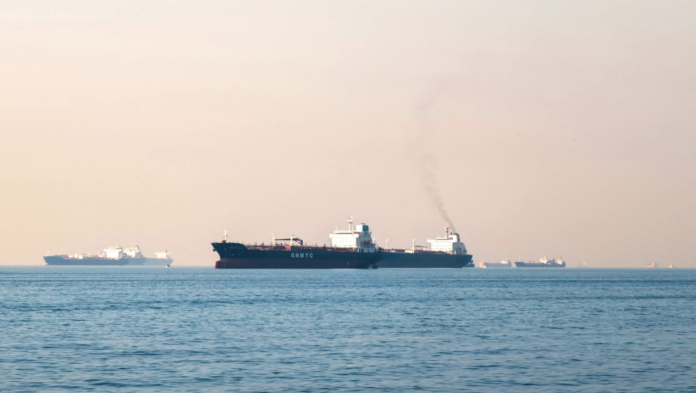
“Iran isn’t just a flashpoint nation. It’s a major energy and trade corridor linchpin. With the Strait of Hormuz carrying over 20% of the world’s oil supply, any instability in the region threatens more than just regional players. Retailers and manufacturers worldwide, especially those dependent on energy-intensive transport, petrochemical inputs, or high-volume shipping lanes, all need to watch this space carefully.
Gary Newbury
“Recent strikes have cast fresh doubt on Iran’s nuclear posture and its future stance on international agreements. Meanwhile, political leadership in the West has shifted. The current US administration has already signalled a harder line, with a “secure domestic base first” posture driving investment inward and reviewing trade dependencies. In this context, Iran’s next moves could swing supply chain risk dramatically in either direction.”
Two Diverging Paths
Newbury, Rapid Performance Recovery Specialist – B2C supply chains, explores the two most plausible trajectories:
1. Continued Compliance and Contained Risk
Under this path, Iran steps back from further nuclear enrichment, allows IAEA inspectors greater access, and preserves its existing trading relationships.
Implications:
Oil flows remain stable mitigating upward pressure on freight and energy costs.
Petrochemical exports (plastics, fertilizers, base oils) continue through existing channels.
Confidence returns to shipping lanes through the Gulf of Oman and Strait of Hormuz.
Logistics planners regain predictability across Asia-Europe and Gulf-to-India routes.
“This would be a welcome relief for retail operations already managing cost inflation and longer lead times across ocean freight and bulk materials,” said Newbury
2. Renewed Isolation and Eastern Realignment
In a more likely scenario, given post-strike tensions and the current US foreign policy stance, Iran could retreat from Western engagement and double down on partnerships with Russia, China, and others outside the G7 orbit.
Implications:
Partial or full disruption of oil exports westward, pressuring global energy prices.
Greater military presence or naval manoeuvres in the Strait of Hormuz, risking commercial vessel security.
Acceleration of Iran’s integration into eastward trade corridors (e.g., China’s Belt & Road, Russia’s INSTC).
US-led sanctions or secondary tariffs could push firms to unwind exposure.
“Retailers, especially those importing goods from Asia or relying on long-haul container movements, may face higher landed costs, tighter freight capacity, and renewed risk to reliability,” added Newbury.
Key Risks for Retail & Supply Chain Leaders
1. Fuel Cost Volatility Diesel, marine fuel, and aviation fuel are all sensitive to Middle East tensions. A $15–30/barrel surge in crude would impact truckload rates, last-mile delivery pricing, and even DC operating costs. This can affect retail margins adversely, quickly.
2. Routing Disruptions If shipping firms re-route vessels to avoid the Gulf, we could see congestion in the Suez and longer rotations on Asia-Europe trade lanes. Increased insurance premiums for risky waters are already being whispered about.
3. Inventory Planning & Supplier Strategy Instability means longer lead times, port delays, and uncertainty on component availability. Multi-sourcing, nearshoring, and risk-adjusted safety stocks are back on the table.
4. Regionalism Over Globalism The broader policy trend is clear: more governments want control over what gets made where. The Iran episode underscores the vulnerability of far-flung, single-point-of-failure supply chains.
Strategic Questions to Resolve Now
Are our key SKUs vulnerable to cost spikes in energy, petrochemicals, or transport?
Can our supply base flex if lead times extend by 2-4 weeks?
Are we overexposed to Gulf-based carriers or manufacturers that rely on open sea lanes in this region?
Have we modelled cost impacts at $120+/barrel crude?
Do we have regional alternatives, or at least trigger points to explore them?
“The Iran-Israel conflict may have hit pause, but the gameboard continues to shift into more uncertainty for supply chains. Retailers and logistics professionals don’t need to panic. They do need to scenario plan. Whether oil soars or shipping slows, those who anticipate disruption and act early will win. As always, it’s not just the headline that matters. It’s your commitment and reaction time that can really make a competitive difference,” concluded Newbury.
“The big question is: Are you already behind and drowning, competitively, or are you already prepared and ready to ride the surf?”
Bruce Winder
Bruce Winder, Retail Analyst & Author, said the current conflict in the Middle East, if prolonged, could cause retail price inflation, supply disruptions and shortages.
“If Iran blocks the Strait of Hormuz, oil supply could be constrained which would force up transportation costs for retailers which in turn would cause retail price inflation,” he said.
“Also, products sourced from that region could face delays or shortages due to rerouting of vessels. Transportation insurance premiums could rise as well, negatively impacting cost.
“Finally, consumer sentiment and thus spending could be reduced due to fear of geopolitical events and gas prices at pumps.”
“Disruptions no matter what their source send shock waves to investors and business leaders. The situation in the Middle East is no exception if oil isn’t allowed to flow which is about 20 million barrels a day, will significantly push the cost of everything we purchase. At least temporarily. Even though, it’s oil the cost of shipping globally would increase, it’s not like we don’t already have enough issues with tariffs,” he said.
“We could see escalation in shipping container pricing, and if a conflict were to spread shipping could become dangerous, the Red Sea passage is still a volatile area and some 60% of ships avoid it and take the longer route around which increases shipping costs and over prices of products. As much as we think we can near shore or re-shore back to our own countries that’s not possible with everything there would be trade offs and all would cost a lot more.
“From the pumps, to shelves to the basket prices are impacted by everything from droughts to conflicts and while in some cases like tariffs can take months to filter through, conflicts that disrupt shipping lanes and energy prices have major ripple effects.
“The best situation is cease fires, followed by negotiated peace, everything else just leaves supply chains vulnerable.”
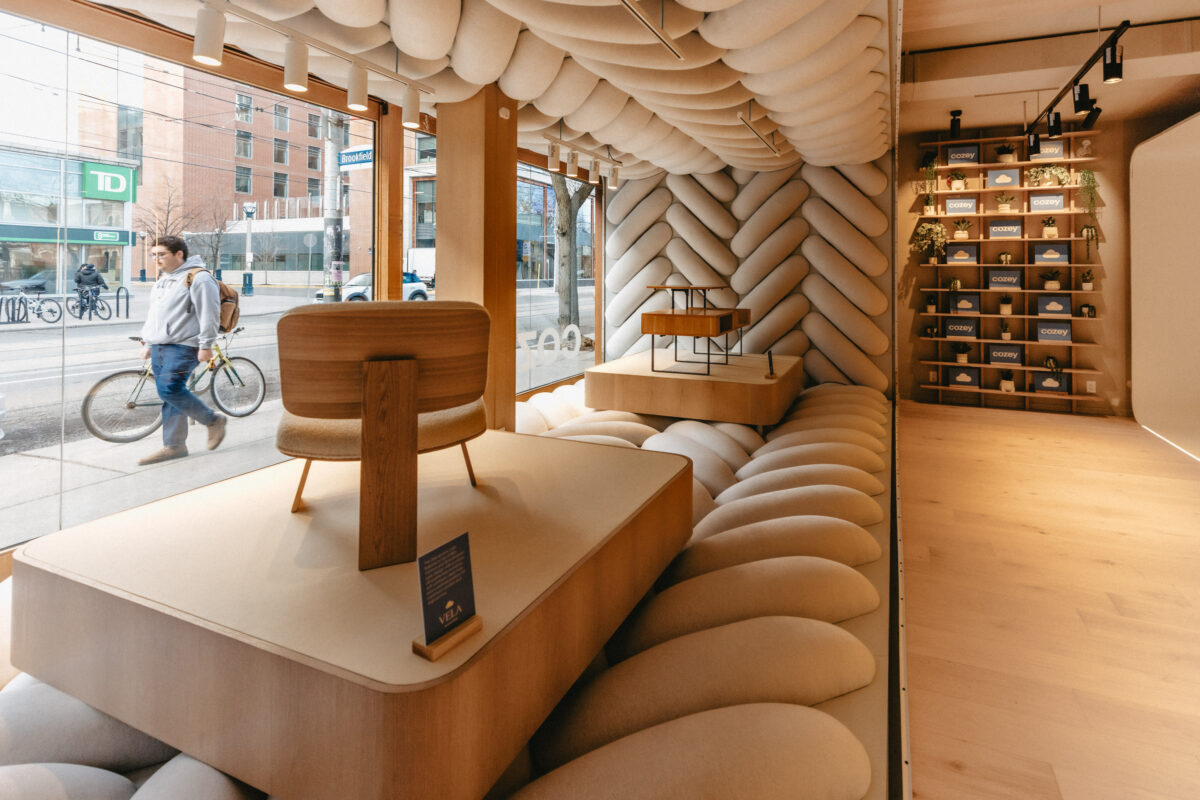
Cozey, the Montreal-founded Canadian furniture brand known for its modular, tool-free sofas and accessible design, is ramping up its national retail footprint with the announcement of two new permanent stores in Vancouver and Calgary. The move comes as the company continues to test the market with pop-up locations, including its newly launched Ottawa store, and marks a significant evolution from its digital-first beginnings in 2020.
“We’re on a good path,” said Frédéric Aubé, Founder and CEO of Cozey, in an interview with Retail Insider. “We’re trying to be optimistic but cautious with the current environment. We’re in it for the long term.”
From Pop-Up Success to Permanent Presence
Frédéric Aubé, Founder and CEO of Cozey
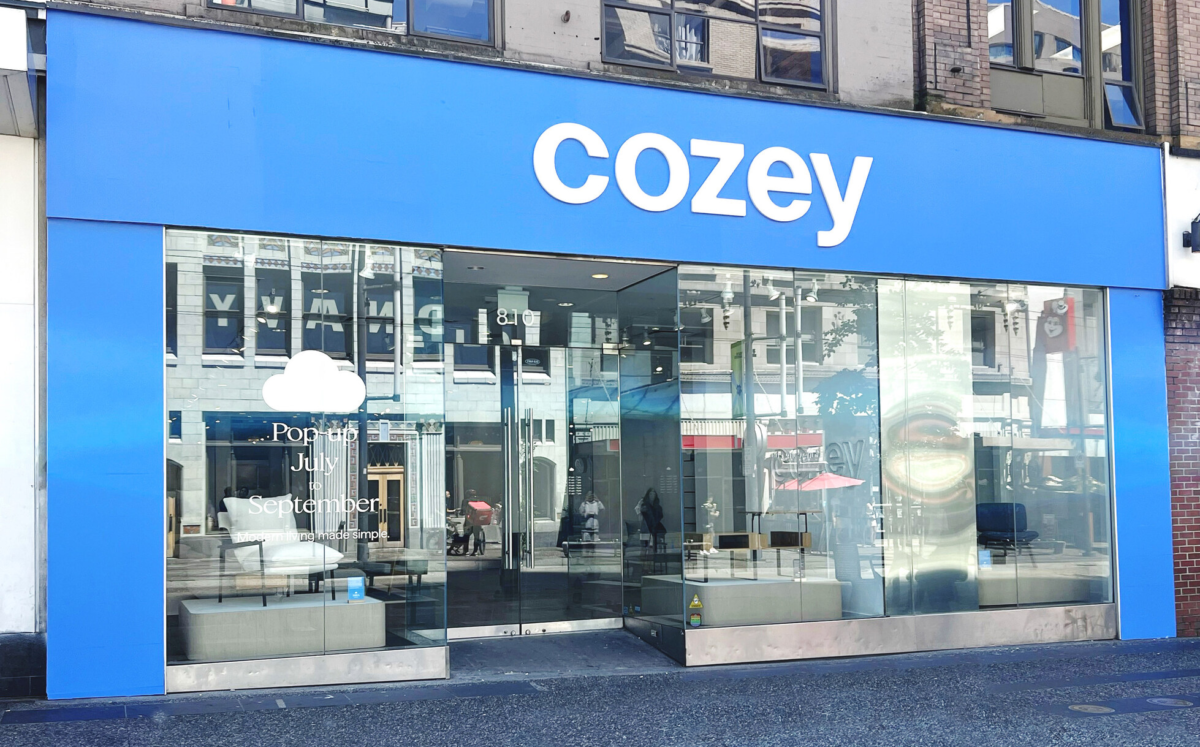
Cozey’s new permanent Vancouver store is set to open this fall at 1168 Robson Street, near the intersection of Robson and Bute in the city’s bustling West End. “That would be our next permanent store,” said Aubé. “It’s right beside the Shangri-La hotel—great visibility, great energy.”
The Calgary store, which has also recently been signed, will be located on the vibrant 17th Avenue corridor, a well-trafficked shopping and dining destination. “We also just signed the lease in Calgary,” confirmed Aubé. “We’re opening later this year.”
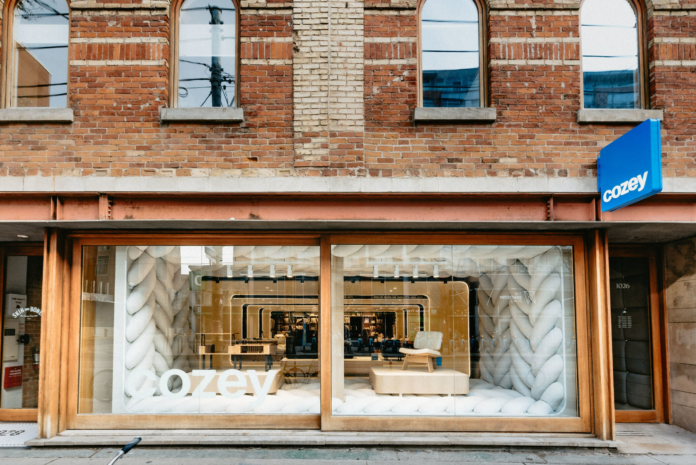
These announcements follow the opening of Cozey’s first permanent store in Toronto in 2024. Situated on Queen Street West, the flagship has proven to be a retail success, with Aubé noting it helped significantly boost the company’s online sales in the region.
“We see a pretty good uptake in e-commerce sales when we open a physical location,” he explained. “Toronto is now our biggest region. The effect of our permanent store has made the region even more profitable for us.”
Testing the Market with Ottawa Pop-Up
In June 2025, Cozey launched its most ambitious pop-up to date at 137 Rideau Street in Ottawa. The two-level, 4,000-square-foot store was designed not just as a showcase for products, but as a full retail concept experiment.
“It’s our first physical presence in Ottawa,” said Aubé. “We haven’t historically done a lot of marketing in the city, but it’s a top five market for us in Canada. There’s strong interest in Ottawa and Gatineau.”
The Ottawa location is designed to operate until January 2026, offering a real-world test for whether a permanent store might follow.
“If it goes well, we’re considering a permanent store at the end of our stay,” Aubé added. “But right now, we’re just starting with a pop-up.”
Cozey pop-up in Ottawa. Photo: Cozey
Streetfront Strategy and a Cautious Rollout
Unlike some direct-to-consumer brands that have embraced mall-based retail, Cozey has deliberately focused on urban streetfront locations.
“We’re not looking at malls that much,” Aubé explained. “We’re trying to control the entire experience. For markets that look and feel like Cozey, that’s what we prefer.”
That said, Aubé is open to the idea of adapting for specific markets. “I think in places like Edmonton, we may eventually need to go into malls. But for now, street experience aligns better with the brand.”
This cautious rollout is rooted in lessons from other digitally native brands that struggled with brick-and-mortar transitions.
“I’ve seen a lot of DTC brands have a rough patch with retail,” he said. “We just want to make sure we have the right infrastructure in place before we go all out. It’s a tough game to master and we want to do it right.”
Building a Furniture Brand Canadians Can Be Proud Of
Founded in 2020 while Aubé was studying finance and economics at McGill University, Cozey emerged as a pandemic-era disruptor with its “sofa-in-a-box” concept: modular, tool-free sofas that arrive in courier-sized boxes and can be assembled easily by anyone.
“Hey, that’s why I made it,” joked Aubé. “You don’t need tools. You just want to touch, feel, see the comfort—it’s something people want to try before they buy.”
While e-commerce still drives the bulk of Cozey’s revenue, the company’s integrated retail approach is paying dividends. “You discover us online, and you fall in love with the brand. But once you experience the product in-store, I think you fall in love with the product too,” said Aubé.
He’s especially proud of the company’s Canadian roots. “We’ve got 150 people in Canada working to build this organization. When I see Canadian companies like Lululemon or Canada Goose succeed globally, I feel proud. I want people to feel the same way when they see Cozey stores open around the world.”
Ambitious Category Expansion on the Horizon
As Cozey scales its physical presence, it is also aggressively expanding its product line. While sofas remain its flagship product, the company has already added rugs, lounge chairs, storage solutions, and accessories.
Next up: dining and bedroom furniture.
“We’re trying to be in the entire home by the end of the year,” said Aubé. “We’ll launch dining and bedroom in the fall. We want to be really aggressive in taking market share in those categories.”
The Road Ahead: National and Global Goals
With plans for additional Canadian pop-ups and permanent locations on the table, Cozey is steadily laying the groundwork for a national rollout—and eventually, an international one.
“Our pop-ups are really a test,” said Aubé. “We want to see where we resonate, what markets are ready. If Ottawa performs well, we’ll look at it for permanent expansion too.”
Beyond Canada, Cozey recently tested the waters in New York City’s Soho district and plans to return with another pop-up this July. “New York and Ottawa will be our only two pop-ups this year,” he noted.
As for wholesale or third-party retail partnerships, Aubé doesn’t see it as part of the future.
“I don’t see us wholesaling,” he said. “We’re as much a retailer as we are a brand. Just like IKEA, we’ll continue to operate as our own channel—even internationally.”
Ultimately, Aubé has set his sights high. “We want to one day be the largest furniture retailer in the world. That’s our goal—to compete with and beat IKEA on a global stage.”
Conclusion: A Modern Retailer with Global Ambitions
From its roots as a Montreal-based e-commerce startup to its growing network of showrooms and pop-ups, Cozey is emerging as a serious player in Canada’s furniture landscape. The upcoming openings in Vancouver and Calgary, alongside its Ottawa pop-up and expanding product lines, signal a brand confidently stepping into its next phase.
With cautious optimism and a long-term mindset, Aubé and his team are building more than just sofas—they’re building a brand that Canadians can rally behind, and one that may soon be seen on high streets around the world.
“We just want to make sure we build a solid organization,” said Aubé. “We’re in this for the long haul.”
The Consumer Price Index (CPI) rose 1.7% on a year-over-year basis in May, matching the 1.7% increase in April, reported Statistics Canada on Tuesday.
Compared with one year earlier, a smaller price increase for rent and a decline in travel tours put downward pressure on the CPI in May. Smaller declines for gas and cellular services put upward pressure on the index compared with the previous month. Excluding energy, the CPI rose 2.7% in May, following a 2.9% increase in April. On a monthly basis, the CPI rose 0.6% in May. On a seasonally adjusted monthly basis, the CPI was up 0.2%, explained the federal agency.
The shelter component grew at a slower pace year over year in May, rising 3.0% following a 3.4% increase in April.
“Prices for rent rose 4.5% on a year-over-year basis in May, compared with a 5.2% increase in April. Rent price growth slowed the most in Ontario, with prices rising 3.0% in May following a 5.4% increase in April. The increased availability of rental units, coupled with slower population growth compared with spring of the previous year, contributed to the slowdown in rent price growth in May. Given the large weight of Ontario nationally, these effects alone were enough to offset faster price growth in seven other provinces,” said Statistics Canada.
“The mortgage interest cost index decelerated for the 21st consecutive month in May (+6.2%) after rising 6.8% in April.”
Gasoline led the decline in consumer energy prices again this month, down 15.5% year over year in May after declining 18.1% in April. Gasoline prices in May remained below May 2024 levels, primarily due to the removal of the consumer carbon levy, noted Statistics Canada.
“In May 2025, prices for gasoline increased 1.9% month over month. The increase was largely attributed to higher refining margins, which were partially due to higher costs associated with switching to summer blends,” it said.
On an annual basis, prices for cellular services fell 5.5% in May, compared with a 10.8% decline in April. On a month-over-month basis, prices for cellular services rose 7.2% in May. The higher prices followed the end of promotions from some wireless service providers, added Statistics Canada.
It also said prices for new passenger vehicles rose 4.9% year over year in May, after increasing 4.6% in April. This faster price growth was primarily driven by higher prices for some electric vehicles.
“Food price inflation also slowed after being lifted by counter tariff measures previously. Goods inflation outside of food and energy rose to 0.3% m/m SA, which may be picking up some tariff passthrough. Overall, the moderation in core measures is a step in the right direction for the Bank of Canada and they will want that progress to be maintained in the next report in order to feel comfortable cutting in July,” she said.
“Top line inflation continues to be restrained as the impact of the end to the consumer carbon tax offset changes in energy prices. For core inflation there was good news too, as all four measures cooled amid falling travel tour and rent prices. The ongoing challenges in the housing market (particularly in Ontario) should help to temper further gains in rents in the coming months,” he said.
“After last month’s uptick in core inflation some giveback was expected. The labour market remains soft and tepid domestic demand growth should keep a lid on inflationary pressures. As has been the case this year, the outlook is heavily dependent on how trade negotiations evolve, but we believe that the soft economic backdrop should give the BoC (Bank of Canada) space to deliver two more cuts this year.”
Big Rock’s Brad Goddard photographed with their new beer line up and branding.
Big Rock Brewery is turning 40 years old and marking the milestone with a bold rebrand, a recommitment to its Alberta roots and the return of its legendary Barn Burner concert in Calgary.
As pioneers of Alberta’s craft beer movement, Big Rock is once again focused on what matters most: Great beer, great people and great community experiences, said the company.
“Founded in 1985, Big Rock helped spark a beer revolution in Alberta. Forty years later, that same pioneering and innovative spirit still drives the brewery forward. This summer, Big Rock’s refreshed look and renewed focus will be on full display at some of Alberta’s most beloved festivals,” it said in a news release.
David Kinder
“We are proud to unveil the next chapter of our journey – a bold and sharper new look, and our unforgettable commitment to creativity,” said David Kinder, CEO, Big Rock.
“Our rebrand is more than a facelift, it’s a celebration of our uniquely Albertan identity, and a commitment to continue our legacy of bringing the best of Alberta to beer drinkers, whether that’s through beer, culture or community. What’s new? – a refreshed logo and design, exciting new beer launches, and a brand story that reflects our roots, spirit, our story and bold vision for the future.
“It was time for our outside to match what we’ve always stood for on the inside. There is a lot more to come from Big Rock, we are just getting started.”
Big Rock said the updated packaging and visual identity are inspired by Alberta’s rugged landscape, with the glacial erratic replacing the traditional rooster as Big Rock’s primary icon. It reflects timelessness, strength and a deep sense of place. Big Rock has also streamlined its beer portfolio to five core beers representing the perfect balance of heritage and innovation.
“Our new look is a reflection of who we are: rooted in craft, proudly Albertan, and passionate about culture,” said Brad Goddard, Vice-President of Business Development & Government Relations at Big Rock. “From brewing great beer to bringing people together through music and festivals, we’re doubling down on what Big Rock has always done best: showing up for our community.”
As part of its ongoing commitment to community and to celebrate its 40th anniversary, Big Rock said it is bringing back Barn Burner, a one-day music festival that transforms the Calgary brewery into a vibrant hub of live music, cold beer, and good times.
Barn Burner details:
When: September 13, 2025 – 3:00 p.m. to 9:00 p.m.
Where: Big Rock Brewery (5555 76 Ave SE)
Who: This year’s event features an all-Canadian lineup. Headlined by Juno Award winner Matt Mays and acclaimed artist Daniel Romano.
Big Rock said it will also continue its long-standing support for the Edmonton and Calgary Folk Music Festivals. Festival-goers can enjoy Big Rock brews throughout both events thanks to all-site licensing allowing attendees to take their brews from the beer gardens to any of the Folk Fest stages.
Stone Island store under construction at Toronto's Yorkdale Shopping Centre. Photo: Craig Patterson
Luxury fashion brand Stone Island will soon open its second standalone store in Canada at Toronto’s Yorkdale Shopping Centre, further solidifying the brand’s growing presence in the Canadian market. The new store will span approximately 3,600 square feet, as Yorkdale continues its evolution as a premier destination for high-end streetwear and global luxury retail.
Stone Island’s upcoming Yorkdale boutique takes over a prominent space previously occupied by menswear brand John Varvatos. That retailer has temporarily relocated to a nearby space within the mall’s original luxury wing. The new Stone Island unit is expected to open later this year and will offer a wide selection of the brand’s technical outerwear, streetwear-inspired apparel, and accessories.
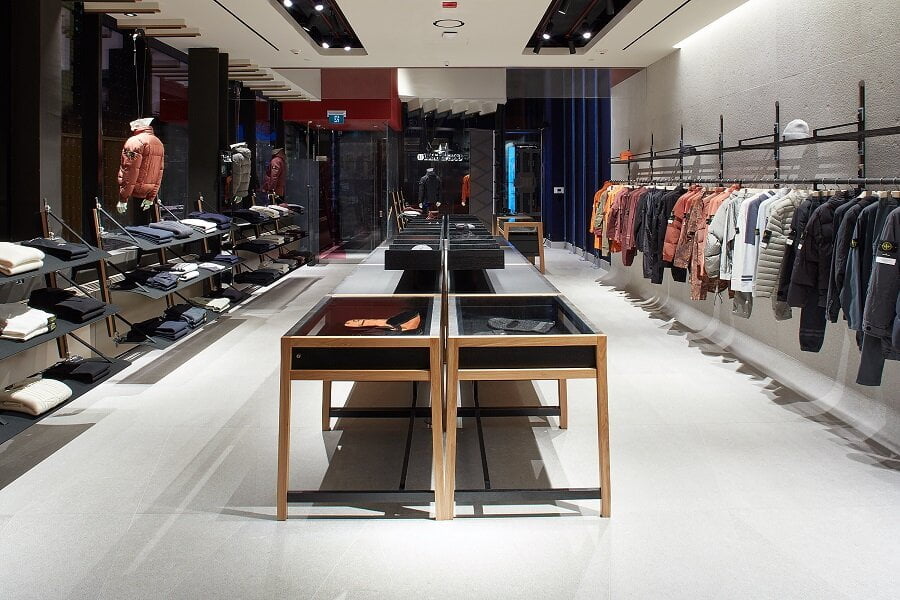
The store marks an important expansion for Stone Island in the Canadian market. It follows the brand’s first Canadian location, which opened in Toronto’s Yorkville area in fall 2019 at 104 Yorkville Avenue. That store introduced Stone Island’s retail concept to Canada with a sleek, industrial aesthetic, featuring over 2,000 square feet across two levels.
Stone Island will locate next to Apple in Yorkdale’s 2012 expansion wing.
Stone Island flagship store at 104 Yorkville Avenue in Toronto, 2021. Photo: Stone Island
A Brand Built on Innovation and Identity
Founded in 1982 by Italian designer Massimo Osti, Stone Island has become a global icon in technical sportswear and experimental fashion. The brand is widely recognized for its signature compass patch logo, garment dyeing techniques, and pioneering fabric technologies, including thermo-sensitive and reflective materials. Originally inspired by military and maritime influences, Stone Island quickly attracted a cult following in Europe, particularly among Italian youth subcultures and British football fans.
Over the years, Stone Island has grown into a leading name in contemporary fashion, thanks to its fusion of functionality and innovation. The brand’s apparel is regularly worn by celebrities and artists in hip hop, grime, and streetwear circles, and it has engaged in high-profile collaborations with brands such as Supreme, Nike, and Dior. In 2020, luxury outerwear brand Moncler acquired Stone Island in a €1.15 billion deal, with the aim of accelerating global expansion.
Canadian Market Embrace and Retail Expansion
Stone Island has seen strong momentum in Canada, where it is carried by major luxury retailers including Holt Renfrew, SSENSE, and Haven. Its decision to expand into Yorkdale reflects both rising brand awareness and the strategic importance of the Toronto market. With a broad customer base that includes fashion-forward youth, design aficionados, and outerwear enthusiasts, the brand’s distinctive aesthetic has gained traction in Canada’s growing luxury streetwear segment.
The Yorkdale store will likely carry the full men’s collection, including outerwear, knitwear, pants, accessories, and pieces from the brand’s more experimental Stone Island Shadow Project. The physical retail space is also expected to reinforce the brand’s distinct identity through a modern, industrial interior—an approach that reflects the values of design precision and material experimentation at the heart of Stone Island’s ethos.
Stone Island exhibit at Holt Renfrew Ogilvy in Montreal, October 2024. Photo: Stone Island
Yorkdale Continues to Attract Top Global Retailers
Stone Island’s arrival at Yorkdale adds to the mall’s expanding roster of premium and street-luxury brands. The Oxford Properties-owned centre has become a magnet for global luxury retailers looking to establish a Canadian presence. In recent years, the mall has secured Canadian firsts and flagship locations for brands including Dior, Saint Laurent, Loewe, Versace, Moncler, Maison Margiela, and many others.
Yorkdale’s transition into a top-tier luxury shopping destination began in earnest in 2009, when the mall introduced Tiffany & Co. and a strategic plan to attract mono-brand luxury boutiques. Subsequent expansions in 2012, and 2016 added significant space and introduced a dedicated luxury wing anchored by Holt Renfrew. Today, the mall hosts one of the most extensive luxury offerings in North America.
Canada’s Most Productive Shopping Centre
Yorkdale Shopping Centre has consistently ranked as Canada’s most productive mall, generating more than $2 billion in annual retail sales. The mall leads the nation in sales per square foot (over $2,300 annually) and continues to outperform thanks to its premium tenant mix and affluent shopper demographic. Amenities such as valet parking, personal stylists, and architecturally designed boutiques help elevate the overall shopping experience.
With over 270 stores, Yorkdale remains a critical entry point for international brands seeking a foothold in the Canadian market. Its status as both a luxury retail hub and a style-forward destination makes it a natural choice for a brand like Stone Island, which bridges high fashion, technical innovation, and subcultural appeal.
Stone Island’s Broader Cultural Impact
While rooted in Italy, Stone Island has maintained a global outlook since its early years. The brand’s embrace of technical materials and experimental design has influenced a generation of designers and fashion brands. It is also one of the few luxury brands to maintain credibility across both high-end and underground fashion scenes.
Stone Island’s customer base includes streetwear enthusiasts, creative professionals, athletes, and musicians. Its commitment to material research and distinctive branding has allowed it to thrive in both luxury and functional fashion categories. The upcoming Yorkdale store will offer Canadian customers a deeper connection to the brand’s philosophy and full product range, supported by immersive in-store storytelling and premium retail design.