Retail Insider is streamlining its Canadian retail news from around the web to include a handful of top news stories that can be viewed quickly during the day. Here are the top stories from the past 24 hours.
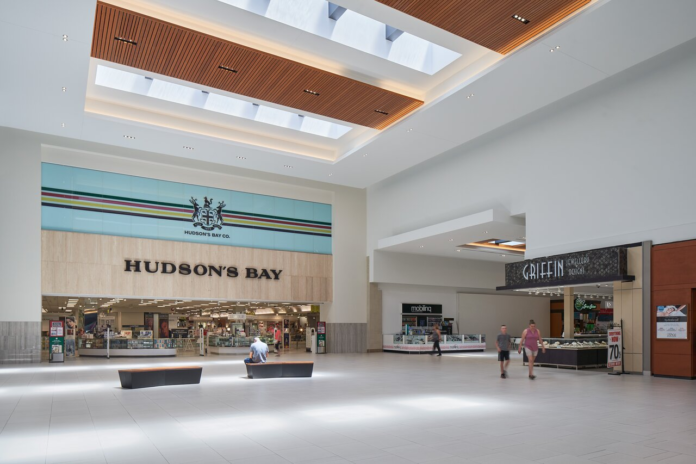
Former Hudson's Bay store at Devonshire Mall in Windsor, ON. Photo: TripAdvisor
As the Hudson’s Bay Company (HBC) moves through court-supervised restructuring and liquidation, Canada’s largest private-sector union, Unifor, is intensifying pressure on the historic retailer to prioritize workers’ rights and compensation.
On Tuesday, May 27, Unifor will hold coordinated solidarity rallies in Toronto and Windsor to demand that HBC fulfil its obligations to employees. The union is calling for immediate protections for workers’ wages, pensions, and benefits as part of the broader Companies’ Creditors Arrangement Act (CCAA) process that the company entered in March.
Union Pushes Back as HBC Winds Down
“Hudson’s Bay’s financial restructuring cannot come at the cost of its frontline workers,” Unifor stated in its announcement. The rallies—one at HBC’s Scarborough-based e-commerce warehouse and another outside the Windsor Hudson’s Bay store—are intended to highlight worker concerns during this period of uncertainty.
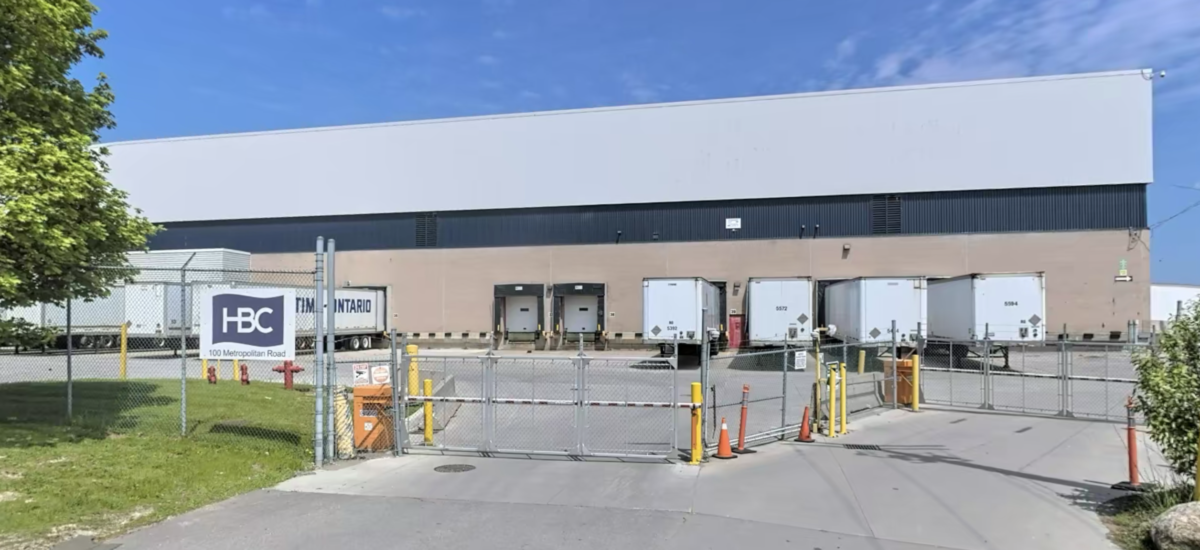
The Toronto rally at 100 Metropolitan Road will feature Unifor Ontario Regional Director Samia Hashi, Local 40 President Dwayne Gunness, and current HBC workers. In Windsor, the rally at 3100 Howard Avenue (Devonshire Mall) will include Local 240 President Jodi Nesbitt, Unifor Retail Director Sharon Walsh, and local retail staff.
Unifor Locals 40 and 240 represent about 595 HBC workers at affected stores in Windsor, Kitchener, and Toronto’s CF Sherway Gardens, along with staff at the company’s Scarborough e-commerce logistics hub.
Federal Insolvency Reform Also on Union Agenda
Beyond holding HBC accountable, Unifor is calling for urgent federal action to overhaul Canada’s insolvency legislation. Among the union’s key demands:
Raising the cap on the federal Wage Earner Protection Program (WEPP), which provides limited compensation to employees of bankrupt companies.
Strengthening “super-priority” status for workers’ claims during insolvency proceedings.
Increasing director liability for unpaid wages, benefits, and pension obligations.
Creating trust-held or federally guaranteed funds to protect workers from corporate failures.
“Canada’s laws should not allow corporations to shed their obligations to workers while executives and creditors walk away whole,” said Unifor in its release.
Hudson’s Bay logistics facility at 100 Metropolitan Road in Toronto. Photo: Apple Maps
HBC’s CCAA Filing and the Road to Liquidation
Founded in 1670, the Hudson’s Bay Company is Canada’s oldest retailer. In recent decades, however, the company has struggled to adapt to shifting consumer trends, rising operational costs, and increasing online competition amid a lack of investment. On March 7, 2025, the company filed for protection under the Companies’ Creditors Arrangement Act, citing the need to restructure amid growing financial strain.
At the time of filing, HBC operated 80 Hudson’s Bay department stores, 3 Saks Fifth Avenue stores, and 13 Saks OFF 5TH outlets across Canada. As part of its restructuring plan, HBC announced that up to 28 store leases would be assigned to Ruby Liu Commercial Investment Corp., with the aim of launching a new department store concept.
In addition to selling its store leases, HBC has agreed to transfer its intellectual property and brand assets to Canadian Tire. Saks Global, which operates Saks Fifth Avenue stores in the United States, is unaffected by the proceedings, as it functions independently.
Tensions Over Wages at Unionized Locations
Labour relations between HBC and Unifor have grown increasingly tense in recent months. In April 2025, during active liquidation sales, HBC eliminated commission-based pay at unionized locations, significantly impacting workers’ take-home earnings. The union filed formal grievances, and in early May, HBC reversed the decision, reinstating commissions for sales employees at affected stores.
Despite the reversal, Unifor maintains that HBC’s broader strategy has lacked transparency and fairness toward workers.
“The sudden elimination of commissions during liquidation was not just unfair—it was a violation of collective agreements,” said Local 40 in a previous statement. “The reversal is welcome, but the damage to morale is already done.”
What’s at Stake for HBC Workers
As the liquidation process unfolds, workers at Hudson’s Bay stores face increasing uncertainty. Severance, vacation pay, pension entitlements, and benefits are all at risk depending on the outcome of court proceedings.
While the CCAA process allows companies to restructure, it also permits them to disclaim leases, modify obligations, and reduce liabilities—including to employees.
HBC has already disclaimed several store leases, including five within the Primaris REIT portfolio, taking effect June 16, 2025. Dozens more may follow, depending on court approvals and investor interest.
For many employees, the potential loss of benefits and retirement income is of particular concern. While the WEPP offers limited short-term coverage for unpaid wages and vacation, it does not guarantee pension protection or full severance payments. This gap in coverage is one of the central issues Unifor is highlighting in its advocacy.
Workers Call for Accountability
Unifor’s message is clear: workers who spent years, and in some cases decades, building Hudson’s Bay deserve more than token compensation.
“The company must not be allowed to walk away from its obligations to the very people who kept it running,” said Unifor representatives in a statement ahead of the May 27 rallies.
Unifor says it continues to work with legal counsel and government representatives to ensure employees’ interests are represented throughout the CCAA process. The union has also indicated it may explore legal avenues if worker protections are not adequately secured.
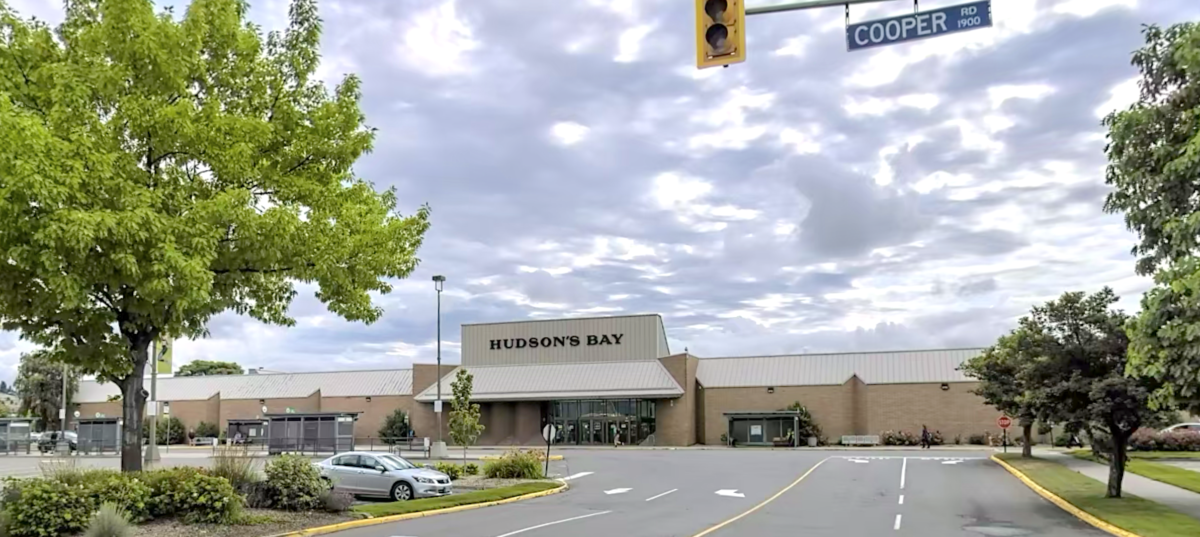
Hudson's Bay store at Cataraqui Town Centre in Kingston, ON. Image: Apple Maps
Primaris Real Estate Investment Trust has announced that five of its nine Hudson’s Bay Company (HBC) store leases have been disclaimed through the ongoing court-supervised Companies’ Creditors Arrangement Act (CCAA) proceedings. The move gives the REIT full control of over half a million square feet of anchor retail space across five properties, marking a turning point in its strategic repositioning of underutilized department store real estate.
The disclaimed leases, which did not receive bids during the lease monetization process, cover stores at Cataraqui Town Centre in Kingston ON, Place d’Orleans in Orleans ON, Les Galeries de la Capitale in Québec City, Medicine Hat Mall in Medicine Hat Alberta, and Calgary’s Sunridge Mall. Collectively, these locations account for 532,100 square feet of gross leasable area (GLA) and will officially revert to Primaris on June 16, 2025.
Five Stores Disclaimed, Major Vacancy Introduced
The loss of HBC as a tenant will lower Primaris’ pro forma portfolio occupancy from 93.2% to 89.5%. The financial hit includes a $5.5 million reduction in annualized revenue and a $3.9 million drop in annualized net operating income (NOI).
However, Primaris says it views this as a value-creation opportunity. “Regaining control of five of our valuable anchor locations allows Primaris to commence repurposing a significant amount of low productivity space, and marks the beginning of our value surfacing exercise,” said Alex Avery, Chief Executive Officer. “While HBC has been the focus of a lot of discussion and attention, the real story is just beginning, as the disclaiming of leases has finally removed obstructionist barriers enabling us to enhance our properties.”
Hudson’s Bay store at Les Galeries de la Capitale in Québec City. Photo: Justus Coon-Come via Google Maps
Redevelopment Plans Already Underway
Primaris has been preparing for this possibility and is now accelerating its re-tenanting and redevelopment strategy. The REIT expects to invest between $50 million and $60 million across the five disclaimed locations, reducing the overall footprint from 532,100 square feet to about 475,000 square feet. Initial occupancy by new tenants is expected in Q2 2026, with rents beginning to flow as early as 2027.
According to the company, the redevelopment will generate $4 million to $5 million in annual NOI, translating into an 8% to 9% yield on invested capital.
“There is strong tenant demand for our HBC boxes, and we are in discussions with strong covenant, high-quality national retailers, including large format tenants,” said Patrick Sullivan, President and Chief Operating Officer. “There are opportunities where tenants are considering the entire box, others will be subdivided, and others are likely to be demolished to accommodate development of new outparcel and higher density opportunities.”
Unlocking Land and Lifting Restrictions
Primaris also gains considerable flexibility in how it can use the real estate. The REIT will be relieved of obligations tied to 1,866 parking spaces — about 13 acres of land — and will no longer face “no-build” restrictions on 71 acres, including the nine acres currently occupied by HBC stores.
“All of these properties now offer significant intensification opportunities spanning retail outparcels, the potential sale of excess lands for multi-residential, hotel, or other high density uses, and the future expansion of the malls themselves,” noted the company.
The departure of HBC also removes a potential drag on mall performance. “Regained control of these leases offers further indirect financial and qualitative benefits to the shopping centres, such as the halo effect on sales and rents from adjacent tenants following re-tenanting, or the positive impact on capitalization rates and valuations for properties that replace underperforming tenancies with new, stronger retailers,” the company stated.
Hudson’s Bay store at Sunridge Mall in Calgary. Photo: Quy La via Google Maps
Remaining Leases Subject to Bids
Four other HBC locations in the Primaris portfolio — at Conestoga Mall (Waterloo), Orchard Park (Kelowna), Oshawa Centre (Oshawa), and Southgate Centre (Edmonton) — remain subject to bids through the CCAA process. Combined, these leases represent 498,770 square feet of space, or about 3.5% of Primaris’ total GLA. The spaces generate $5.4 million in gross rental revenue annually and $2.0 million in net rental income.
Primaris believes it will have “significant influence” over the outcome of these bids. This is due in part to the extensive deferred maintenance across the HBC locations and the capital that will be required to restore them for ongoing retail use.
Ongoing Uncertainty Around Remaining Sites
As of now, the company has limited visibility into the nature of the bids or the retailers behind them. “Limited information is available about these bids, including any retailer plans or requested lease modifications,”
Primaris said in a statement. “We are not yet able to comment on the viability of the operating strategies or financial strength of the retailers bidding on these locations.”
Notably, two of the four leases — at Oshawa Centre and Southgate Centre — were acquired by Primaris in January 2025 as part of a $585 million transaction, just weeks before HBC filed for creditor protection.
Vancouver-based entrepreneur Weihong (Ruby) Liu recently announced that she had won bids on 28 Hudson’s Bay stores. On Chinese social media app RedNote, Primaris was mentioned as a landlord for at least some of these. Canadian Tire also said it bid on several HBC stores, with locations currently unknown.
Co-Tenancy Clauses Have Minimal Impact
Only 27 of the over 2,800 leases in the Primaris portfolio include co-tenancy clauses tied to HBC. Thirteen of those clauses relate to the five disclaimed stores, while 14 pertain to the four stores currently subject to bids.
Primaris estimates the total impact from these clauses on 2025 rental revenue will be less than $2 million and says it is actively working to reduce that number to zero. In many instances, mitigation strategies and tenant-specific arrangements may allow the REIT to circumvent reductions in rent or lease obligations.
Hudson’s Bay store at Orchard Park Shopping Centre in Kelowna, BC. Image: Apple Maps
2025 Financial Guidance Remains Intact
Despite the upheaval, Primaris has reaffirmed its financial and operational guidance for the 2025 fiscal year. The company first issued this guidance on February 13, prior to HBC’s CCAA filing, and reiterated it during Q1 results in April.
“Disciplined capital allocation is a key pillar to Primaris’ strategy,” the REIT stated, emphasizing its commitment to transparency and stability. “Providing financial and operating guidance is not only helpful for investors and analysts… it also creates a rigorous discipline for management.”
Context: The Fall of HBC and Real Estate Ripples
HBC filed for creditor protection under the CCAA on March 7, 2025, citing unsustainable operating losses and mounting debt. Since then, the company has been liquidating inventory and working with a court-appointed monitor to monetize its remaining assets — including leases, trademarks, and valuable historical artifacts.
The broader retail real estate market is still absorbing the fallout. Earlier in May, RioCan REIT disclosed a $209 million loss on its investment in a joint venture with HBC. Canadian Tire has since announced it will acquire the Hudson’s Bay intellectual property portfolio for $30 million.
For Primaris, however, the HBC lease disclaimer represents an opportunity to turn disruption into long-term upside.
“Primaris REIT has been preparing for the departure of HBC, as its department store peers downsized and ceased operations over the past 15 years, including Zellers, Target and Sears,” said Sullivan in a previous statement. “The departure of Canada’s final conventional department store will enable future value creation for our stakeholders, paving the way for optimal use of space that better reflects the evolving needs and desires of the growing communities.”
“We are confident that the quantitative and qualitative benefits of regaining control of these spaces will be materially positive for our properties and our unitholders.”
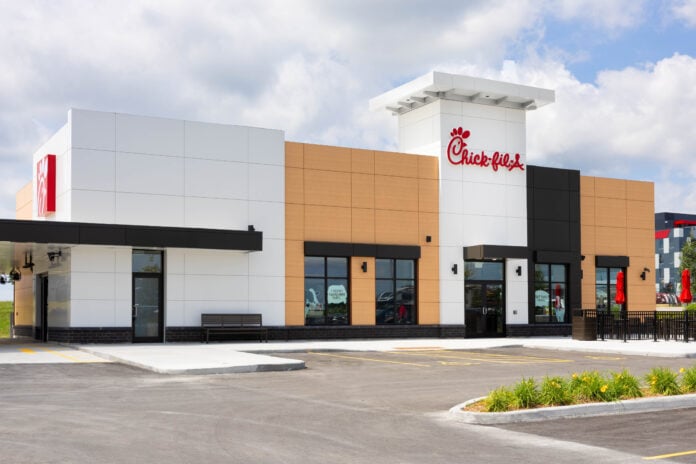
Chick-fil-A is opening a newrestaurant on Thursday, May 29 in Calgary. Chick-fil-A East Hills is located at 1500-250 East Hills Square Southeast.
Last November, the brand opened its first Calgary location at 9223 Macleod Trail SW.
East Hills will be the newest location to open in Calgary. The new restaurant will employ approximately 90-110 full- and part-time people and will be open for dine-in and take-out from 10:30 a.m. to 10:00 p.m. Monday through Saturday.
In honour of the new restaurant opening, the company will donate $40,000 to local non-profit Calgary Dream Centre through Second Harvest, one of Canada’s largest food rescue organizations. Since 2020, it has donated about C$2 million (US$1.46 million) to local hunger-relief organizations through Second Harvest.
The restaurant will be participating in theChick-fil-A Shared Table program, an initiative that will redirect surplus food from the restaurant to the Calgary Dream Centre.
To date, more than 35 million meals have been created using Shared Table donations from 2,300 restaurants throughout Canada and the U.S.
Earlier this year, the company announced it would be opening three new restaurants in Alberta this spring, continuing the brand’s plan to open 20 restaurants across the province by 2030.
Chick-fil-A Sunwapta West is now open in Edmonton at 10104 186th Street Northwest and Chick-fil-A The Meadows is now open in Edmonton as well at 4004 17th Street Northwest.
The company said it expects to open a record eight restaurants across Ontario and Alberta in 2025, marking the most openings in Canada in any year since it opened in 2019.
“We are seeking franchise candidates in Canada with an entrepreneurial spirit and a CEO mindset, who are passionate about serving great food and providing exceptional hospitality in a fast-paced environment. Chick-fil-A franchisees are independent Owner- Operators who run complex Chick-fil-A-branded restaurant businesses with integrity and stewardship,” it said.
Chick-fil-A, Inc. is the third largest quick-service restaurant company in the United States, known for its freshly-prepared food, signature hospitality and unique franchise model. More than 200,000 people are employed by local Owner-Operators in more than 3,000 restaurants across the United States, Canada and Puerto Rico.
Chick-fil-A opened its first restaurant in the UK in early 2025 with the goal of launching five locations across the UK within the next two years. The first Singapore restaurant is set to open in late 2025, marking the brand’s entry into Asia.
The family-owned and privately held company was founded in 1967 by S. Truett Cathy.
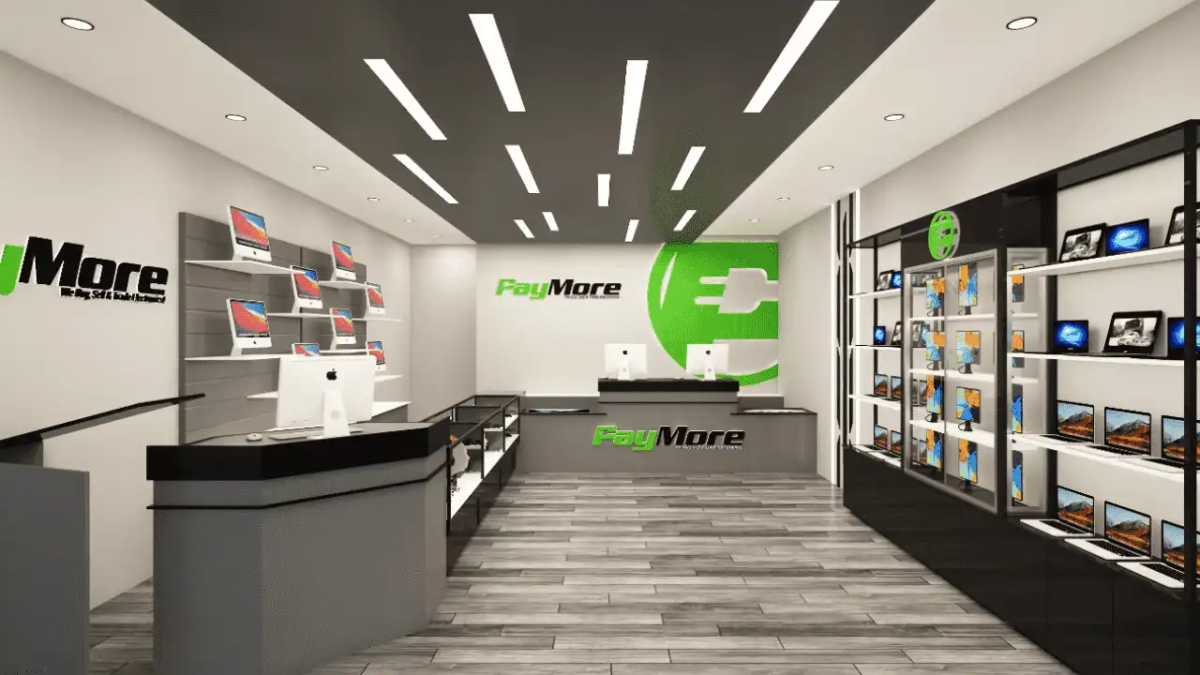
U.S.-based electronics buy-and-sell franchise PayMore is ramping up its Canadian expansion with multiple new storefronts opening this year, including a high-profile downtown Toronto location and new franchisees signed in British Columbia, Calgary, and Ottawa. The company, known for its resale model focusing on consumer electronics, has partnered with Toronto-based Founder Brands, which holds the exclusive Canadian rights to the PayMore brand.
The latest opening, near the busy intersection of Yonge and Wellesley in downtown Toronto, marks a significant step in PayMore’s Canadian growth. “We wanted to be on Yonge Street,” said Adam Corrin, Co-Founder of Founder Brands, in a recent interview. “South of Bloor, north of Dundas—it’s where the density is, it’s where the spending power is, and it’s where people are walking past with old iPhones in their pockets.”
Adam Corrin
Building Momentum from Downtown Toronto to Walmart Locations
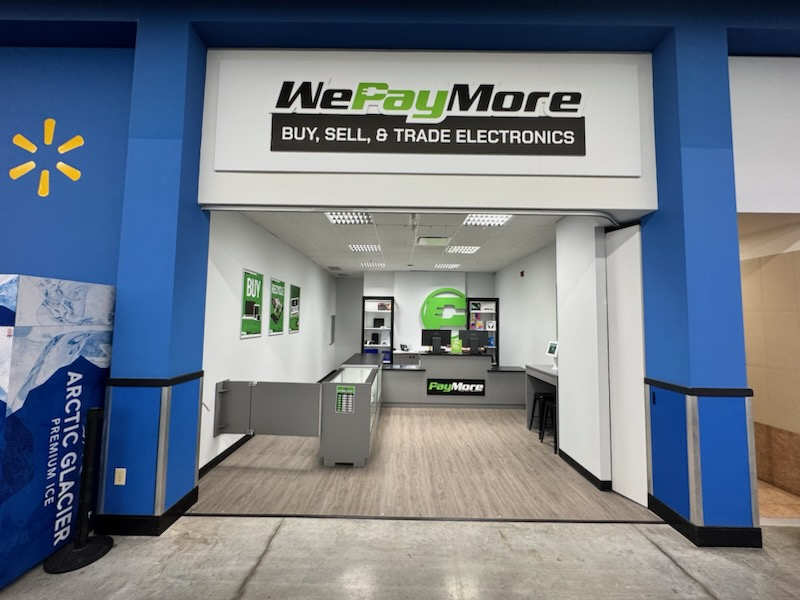
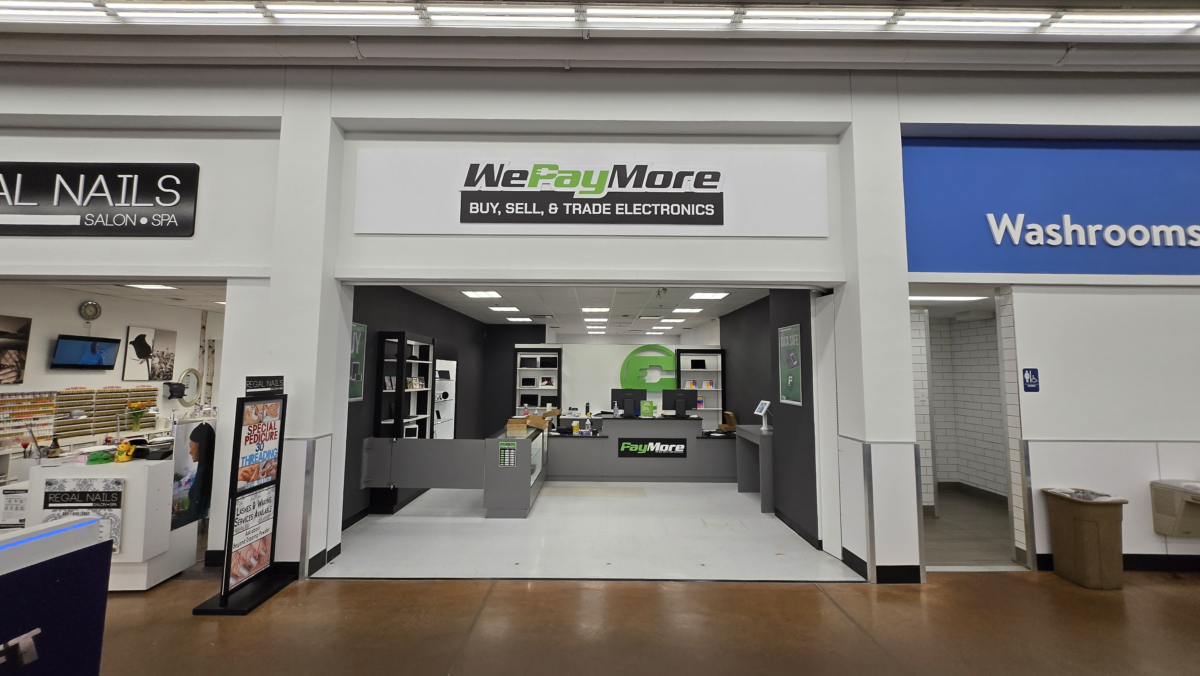
PayMore now has six open storefronts in Canada, with three of those located inside Walmart stores. The retail giant is testing the concept by allowing PayMore to operate in spaces near store entrances—areas often occupied by third-party vendors like McDonald’s or dry cleaners.
“We’re in Markham, Scarborough, and Mississauga, right near the point-of-sale areas at Walmart,” Corrin explained. “That strip of retail at the front of the store is a perfect high-traffic environment for us.”
These locations are part of a strategic three-store pilot, with Walmart monitoring performance before any broader rollout. Corrin says the reception has been strong both from consumers and from Walmart management.
“It’s been a great brand for franchisees and a great brand for landlords,” he said. “Everyone wants to be part of the PayMore story right now. The brand is building traction fast.”
Paymore at Walmart in Markham, ON. Photo: PayMore Canada
Consumers Driving Growth with Trade-Ins and Searches
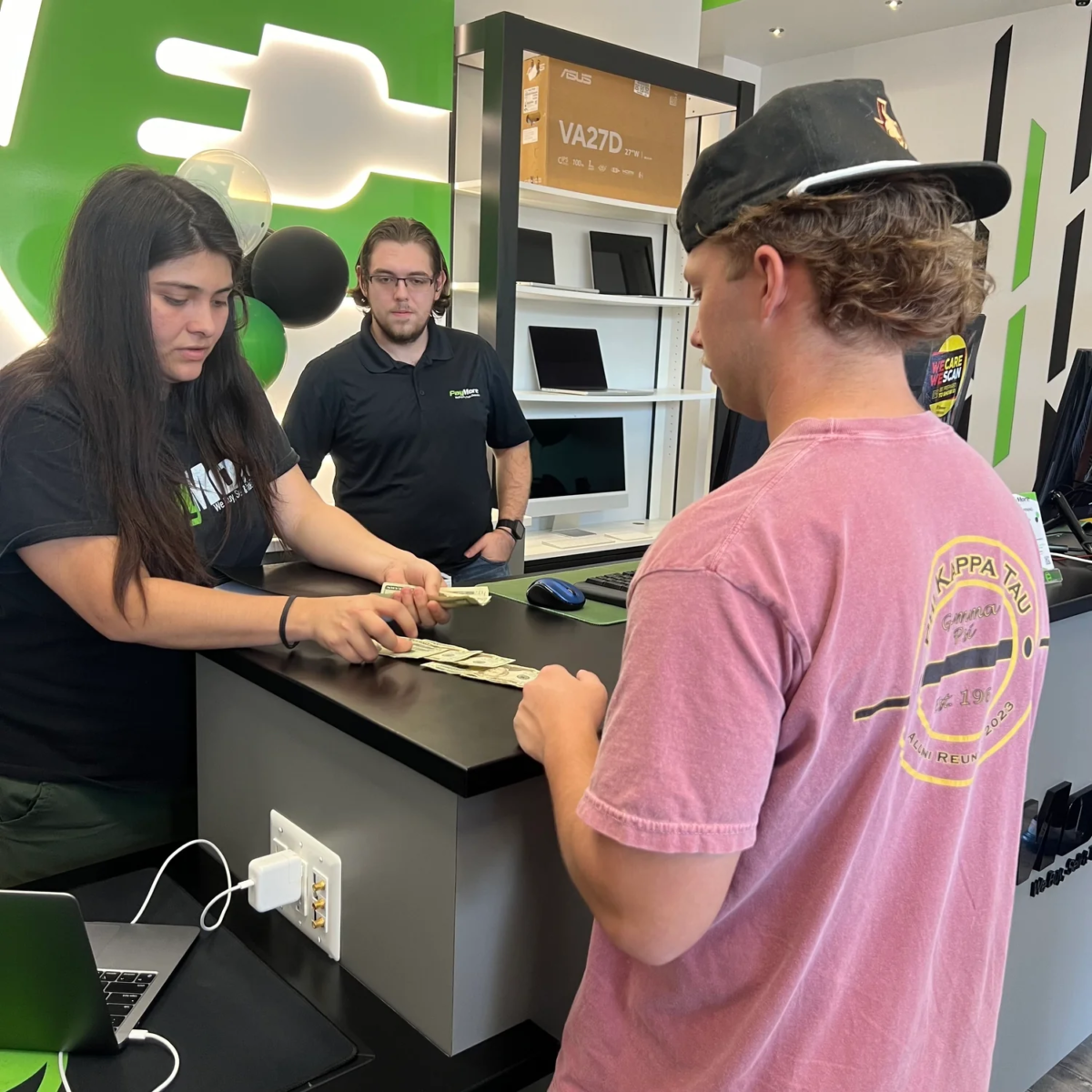
Part of PayMore’s success comes from strong demand among consumers looking to turn in old electronics for cash. As Corrin described, “Every time we open a new store, someone walks in on day one and says, ‘I Googled where to sell my old laptop,’ and PayMore came up.”
He added that the brand is not just attracting tech-savvy customers already thinking about selling their devices, but also people who hadn’t yet considered it. “There are millions of Canadians with drawers full of old electronics,” Corrin said. “They’re just not acting on it—yet.”
Founder Brands has developed a layered marketing strategy to target both actively searching customers and more passive ones. “Right now, we’re focused on digital—SEO, paid search, anything that captures someone who wants to sell their PlayStation or phone,” Corrin said. “But there’s a big opportunity to go after people who haven’t even thought about it yet. The mom who has a drawer of iPads and doesn’t know what to do with them? That’s the next frontier.”
Photo: PayMore Canada
Seasonal and Traditional Marketing to Follow
Corrin noted that as the brand gains scale nationally, broader awareness campaigns will become viable. “We see an opportunity around spring cleaning,” he said. “People want to declutter—and what better way than by trading in unused tech for cash?”
The post-holiday period is another key window. “After Christmas, people have new devices and don’t know what to do with their old ones,” he explained. “It’s a natural moment to reach them.”
In time, Corrin envisions larger-scale campaigns, including PR pushes and possibly even traditional media advertising. “Once we have 30 or 40 stores, we can justify spending more to reach broader audiences,” he said.
Paymore at Walmart in Stouffville ON. Photo: PayMore Canada
Franchising Driving National Footprint
Founder Brands is growing PayMore through a franchise model and has sold nearly 70% of the Canadian territory. So far, eight franchisees are actively pursuing real estate or are in the build-out phase of their stores, according to Corrin.
“We’ve signed franchisees in British Columbia, Calgary, the GTA, and Ottawa,” he said. “We also have letters of intent signed for other markets that will help us fill in the map.”
The pace of expansion is ambitious. Corrin confirmed that Founder Brands is committed to opening 120 PayMore locations across Canada within ten years. With a mix of urban storefronts and co-located retail spaces like Walmart, the company is executing a dual-format approach that allows for flexibility in high-traffic areas.
Opening of PayMore in Mississauga. Photo: PayMore Canada
PayMore’s Canadian Debut: A Look Back
The company’s first Canadian locations were announced in January 2025. At that time, Corrin outlined plans to bring the New York-based PayMore brand north through a scalable franchise model. The initial openings were also tied to the Walmart pilot program, which positioned PayMore to test the Canadian market in locations with steady foot traffic and built-in consumer trust.
“The first stores were a proof of concept,” Corrin said in January. “Now that we’ve validated the business model, we’re ready to scale fast.”
Landlord and Investor Enthusiasm Growing
Real estate landlords have responded positively to the PayMore model, viewing the brand as a strong traffic generator with broad consumer appeal. Corrin confirmed that leasing conversations have moved swiftly across key urban markets, helped by PayMore’s performance south of the border.
“The franchise model helps us move quickly,” he said. “Franchisees are motivated, they know their local markets, and they’re invested.”
Corrin added that many landlords are actively approaching the company about bringing the concept into their properties. “They see this as a fresh take on retail—tech, resale, sustainability. It checks a lot of boxes.”
Photo: PayMore Canada
A Business Model Rooted in Sustainability and Value
In addition to strong unit economics, the PayMore brand appeals to modern consumer values, including sustainability and financial practicality. Corrin noted that resale—and particularly electronics resale—is an increasingly important part of how Canadians think about consumption.
“There’s a cultural shift happening,” he said. “People want to spend smarter, and they’re more aware of the waste associated with electronics. PayMore offers a way to get value from what you already own, and that message is resonating.”
Looking Ahead: Market Penetration and Beyond
Founder Brands’ next challenge is scaling the business while maintaining quality and brand consistency. Corrin said that franchisee training, operational support, and real estate guidance are critical to ensuring the concept’s long-term success.
“Toronto’s just the beginning,” he said. “Soon, you’ll see PayMore stores in suburban communities, college towns, and secondary markets across the country.”
And while the focus remains on PayMore for now, Corrin hinted that more announcements could be on the horizon involving other brands in the Founder Brands portfolio, including experiential retail and food service concepts.
“We’ve got some exciting developments coming,” he said. “But PayMore is definitely the growth engine right now.”
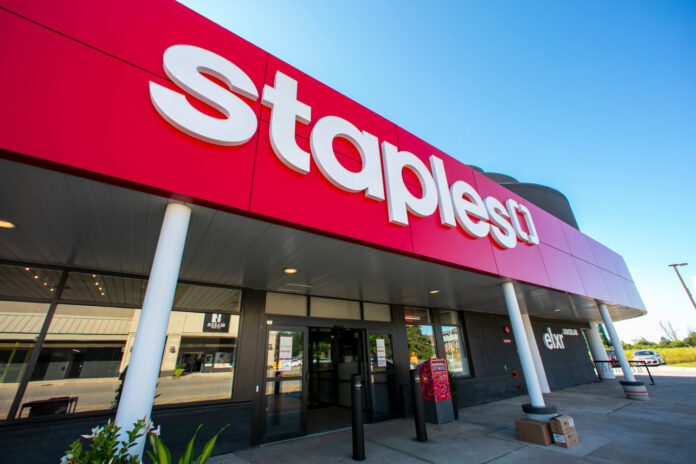
Staples Canada announced Monday the return of its iconic That Was Easy campaign with the launch of a reimagined brand platform designed to help Canadians crush their to-do lists and get back to what matters most.
Celebrating the 20th anniversary of the original campaign and iconic EASY button, this new brand platform goes beyond a nostalgic symbol – it highlights how the brand has evolved over the past two decades, said the company.
Informed by shifting customer needs, this evolution spans Staples’ entire enterprise, across both B2C and B2B operations, and reaffirms its brand promise: to simplify the working and learning experience through curated products, seamless service, and expert support — making life easier for all Canadians, it said.
Rachel Huckle
“For 20 years, the EASY button has symbolized Staples’ commitment to simplifying the working and learning experience for our customers,” said Rachel Huckle, CEO, Staples Canada. “Today, we’re not just reviving a nostalgic part of our brand – we’re redefining EASY. This evolution represents our dedication to curating the right products, creating easy and enjoyable customer experiences, and leveraging our expertise to help Canadians efficiently tackle their to-do lists and get back to what matters most – living.
“We understand that our customers’ lives are busier than ever. Whether you’re a parent, educator, business owner, remote worker, or a student looking for the latest tech, Staples is committed to making your working and learning experience easier, more seamless, and more supportive than ever before.”
The new brand platform reflects how Staples is meeting today’s customers’ needs through:
Curated product selection: Thoughtfully selected offerings across key categories including tech, kids, travel, and services.
Enhanced customer experience: Seamless shopping experiences both in-store and online.
Expert guidance, EASY solutions: Staples associates are at the heart of the EASY experience; knowledgeable, friendly and ready with tailored solutions to help customers make confident decisions.
Human-centered approach: Relating to customers’ everyday challenges with authenticity.
Building confidence: Empowering customers to tackle their to-do lists efficiently.
“The campaign’s TV spot highlights the diverse needs of today’s consumers – from parents gearing up for back-to-school, to remote workers setting up home offices, to business owners streamlining operations – and demonstrates how Staples makes these experiences EASY,” said the retailer.
“At the heart of the creative campaign is the “Staples Family,” who will be featured in all campaign elements throughout the year. The authentic portrayal of everyday Canadians navigating their busy lives showcases how Staples helps them crush their to-do lists so they can get back to enjoying life’s most important moments.
“As part of its continued brand evolution, Staples has introduced a multitude of new products and services to support customers in managing their to-do lists to achieve their goals. These include the expansion of Staples Kids Learn and Play, a partnership to accept Amazon returns, a Print Connect platform to help simplify printing for businesses, and an Apple for Education program to help educational institutions access technology products.”
Heeding the call to address productivity challenges, three quarters of Canadian business leaders say their companies now invest as much as – if not more – than their U.S. and global competitors in technology, machinery, equipment and intellectual property, but American tariffs have put a stranglehold on revenue and are cutting off the funds earmarked for continued investment, according to a new survey by KPMG in Canada,
Most leaders (92 per cent) also acknowledged that they must be bolder and further ramp up their investments in technology and innovation to build a more resilient, prosperous economy. However, six in 10 (59 per cent) say the current economic environment prevents them from investing in the “kind of technologies” that would improve their company’s productivity, said KPMG.
Benjie Thomas
“These results reflect a more ambitious mindset within Canadian business, but they also acutely underscore the difficulties our economy faces right now,” said Benjie Thomas, Chief Executive Officer and Senior Partner, KPMG in Canada. “Tech investment requires a strong bottom line and nine in 10 business leaders say it is essential that governments ‘act with urgency’ and not fall ‘prey to complacency’ in driving tax reform, eliminating interprovincial trade barriers, improving access to capital, and building infrastructure that unites us and opens new markets.”
A 2024 KPMG International survey of global businesses found that large Canadian companies are also outspending their counterparts, but, like the new Canadian survey, many of these investments are still in the early stages and have yet to make up for the extended period when Canadian firms undercapitalized on technology, said the company.
“Canadian firms are at a critical junction in their efforts to modernize and boost productivity,” added Thomas. “The investments they have made in the last few years are making a difference with 75 per cent saying that their digitization efforts have generated the expected returns and benefits. A further three-quarters found their investments in artificial intelligence boosted their productivity by 10 per cent or more, with over a third saying these investments improved it by over 20 per cent.
“There is a big risk that these investments will be stranded if companies don’t have the capital to continue to invest.”
Key KPMG Survey Findings:
75 per cent of 250 Canadian business leaders say their company invests the same if not more than their U.S. and global competitors
92 per cent agree Canadian companies need to ramp up their investments in technologies or risk falling further behind the U.S.
88 per cent say Canadian companies need to be bolder, and not wait around for everyone else to adopt a certain technology
59 per cent say they can’t afford to invest in the kind of technologies that would improve their productivity given the current economic environment
90 per cent say governments “must act with urgency to ensure Canada remains competitive and prosperous,” adding “it’s essential that our governments don’t fall prey to complacency”
75 per cent say their digitization efforts have generated the expected returns and benefits
75 per cent say their investments in AI boosted their productivity by 10 per cent or more, with 37 per cent saying these investments improved it by over 20 per cent
Given ongoing trade uncertainty, three quarters (76 per cent) of respondents are bracing for the worst and taking steps to prepare for a Canadian recession, said KPMG.
To mitigate the effects of a potential downturn, business leaders laid out their top priorities for the Canadian government:
Remove interprovincial trade barriers and harmonize regulations and credentials (64 per cent)
Undertake a comprehensive tax review to improve competitiveness (58 per cent)
Streamline processes and expedite resource and major infrastructure projects (56 per cent)
“In Q1 2025, Happy Belly Food Group marked its 12th consecutive record quarter of growth and reported its first quarter of positive net income from operations-signaling a pivotal cornerstone in our evolution,” said said Sean Black, Chief Executive Officer.
Sean Black
“This achievement underscores our continued progress toward becoming Canada’s premier acquirer and scaler of emerging food brands, while delivering meaningful value to our shareholders. We doubled our system sales, driving a 101% increase versus the same quarter last year. We successfully added 8 restaurant locations in Q1 through our continued focus on organic growth and accretive acquisitions.”
Gary Fung
“I would like to personally congratulate all brand leaders, franchisees, team members and cross functional teams for an amazing start to fiscal 2025. The team continues to execute on our aggressive growth and strategic plans, which is leading to yet another positive step forward and significant growth during Q1 2025. System sales reached $11M (+101%), and total revenues of $4M (+95%) both doubled versus the same quarter last year,” said Gary Fung, Chief Financial Officer.
“Adjusted EBITDA increased 690%, while achieving positive cash flow before changes in non-cash working capital, and our first quarter positive net income from operations. Another key milestone achieved by Happy Belly Food Group.”
As at the end of Q1 2025, Happy Belly had 50 operating restaurants, up 32 or 178% versus the same quarter last year.
“I am very proud of the continued momentum that we have achieved in the business and with our financial results; we doubled our system sales and achieved the first quarter of positive net income from operations. These strong results are a testament to the team-oriented culture we have built at Happy Belly. Our management team and brand partners are working together to support our franchisees as we accelerate national expansion. With a clear focus on growth throughout 2025-2026, we believe our best chapters are still to come,” said Black.
Q1 2025 Financial Highlights
System wide sales across Quick Service Restaurants (QSR) totalled $10.76M in the first quarter of fiscal 2025, up 101% versus the same quarter last year (2024 – $5.36M). The increase is attributed to organic baseline restaurant growth, alongside increased restaurant count, which reached 50 operating restaurants at the end of Q1 2025, up 178% versus 18 in the prior year. Total restaurant count includes the one acquisition during Q1 2025 (Smile Tiger Coffee Roasters; closed January 27, 2025).
Total operating revenues, vendor rebates and interest income totalled $3.67M in fiscal 2024, up 95% versus the same quarter last year (2024 – $1.88M). Year-over-year growth was driven by continued sales growth in both the QSR and Consumer Product Goods (CPG) segments, multiple business acquisitions in the past twelve months, and new net restaurants (6 openings and 1 acquisition during Q1 2025).
Total product sales totalled $3.08M in the first quarter of 2025, up 101% versus the same quarter last year (2024 – $1.53M). In addition, royalties and franchise fee revenues reached $0.39M during the quarter, up 139% from the prior year (2024 – $0.16M), which was driven by an increase in royalties collected from 37 franchised restaurants in the system.
Adjusted EBITDA reached $0.23M or 6.4% in the first quarter of fiscal 2025, up 696% versus the same quarter last year (2024 – $0.03M or 1.5%). During the first quarter of fiscal 2025, net income from operations was net income positive $0.01M versus a loss of ($0.11M) in the prior year.
Net working capital remains healthy at $3.74M as of March 31, 2025 (2024 – $0.80M). Total cash and cash equivalents were $3.60M as of March 31, 2025. One non-brokered private placement was completed on January 9, 2025 for $0.50M. Furthermore, cash flows before non-cash working capital was positive $0.10M in Q1 2025 versus negative ($0.09M) in the same quarter last year.
Happy Belly continued to make accretive cash and equity investments during the first quarter of fiscal 2025 by acquiring Smile Tiger Coffee Roasters on January 27 (1 restaurant location in Kitchener Waterloo).
Happy Belly added eight new restaurants during Q1 2025. The Heal Lifestyle brand opened five new locations. Lettuce Love Cafe and Yolks Breakfast Inc. each opened 1 location. One location was through the acquisition of Smile Tiger Coffee Roasters.
Five individuals and two youths have been charged in relation to an organized retail crime operation that took place at CF Chinook Centre, reported the Calgary Police Service (CPS) recently.
After seeing a concerning rise in organized retail crime, CPS worked alongside the Retail Council of Canada, retail businesses and security teams to develop a coordinated response to protect stores, staff and shoppers, it said in a news release.
“In 2024, retail theft in Canada surpassed $9 billion, with organized groups increasingly targeting high-value goods for resale. The rise in theft has led to increased security costs, declining sales for retailers and growing concern among frontline retail workers,” it said.
“So far in 2025, the CPS has received approximately 400 service calls from retail stores. Of those 400 calls, 142 were related to theft and five were related to robbery. In addition, we have received 3,273 reports through the CPS online reporting system.
“Retail crime may seem like a victimless offence, but it has real consequences for our community,” said Inspector Travis Juska. “It affects business owners, employees and our city’s overall sense of safety.”
In response, CPS said it is working closely with retailers to:
Share intelligence on known offenders and theft patterns.
Encourage timely reporting of all incidents and introduce a direct reporting channel to police and security teams.
Promote crime prevention strategies and staff training.
Between Tuesday, May 13 to Thursday, May 15, officers from the Organized Retail Crime Team conducted targeted enforcement at retail stores in CF Chinook Centre, located at 6455 Macleod Trail S.W., to identify and apprehend individuals involved in retail theft, it said.
Retailers and local businesses are urged to invest in theft deterrence technologies and to report all retail thefts to the CPS to ensure a united front against organized retail crime through the following ways:
Revive Wellness Club at 2100 Bloor St. W. in Toronto. Image: Revive Wellness Club
Revive Wellness Club, a wellness brand originally founded in the United Kingdom, has officially opened its first Canadian location at 2100 Bloor Street West in Toronto’s High Park neighbourhood. The company’s expansion into Canada is spearheaded by Greg Aguilera, who owns 100% of the brand’s Canadian operations.
“This is just the beginning,” said Aguilera. “We plan to open up to 20 locations across Canada, with six corporately owned and the rest franchised. But we’re being selective—this is about doing it right, not just fast.”
Greg Aguilera
A New Kind of Wellness Hub
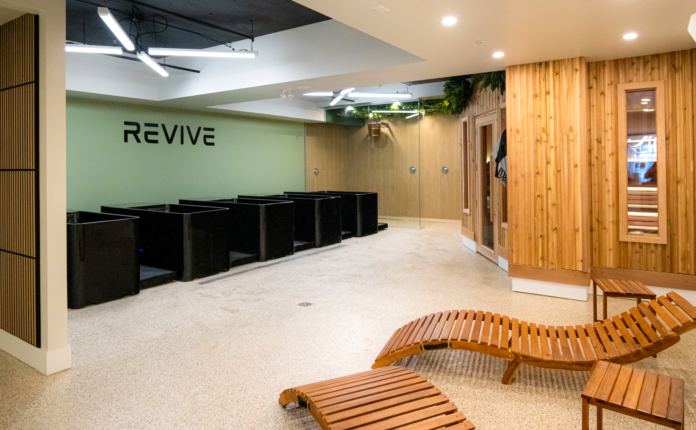
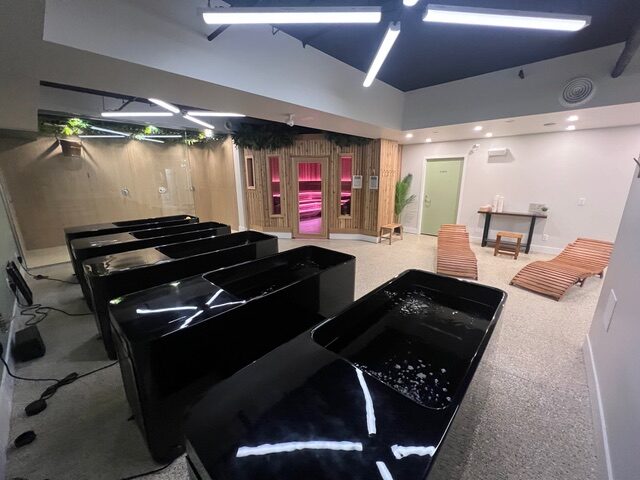
The Toronto location is more than a spa—it blends wellness, research, and community under one roof in just over 2,100 square feet. At its core is contrast therapy, the practice of alternating hot and cold exposure, delivered in a space designed to be calming and seamless.
“There are no corridors, barely any doors,” said Aguilera. “You flow from one space to another. We designed it to be an experience—not just a treatment.”
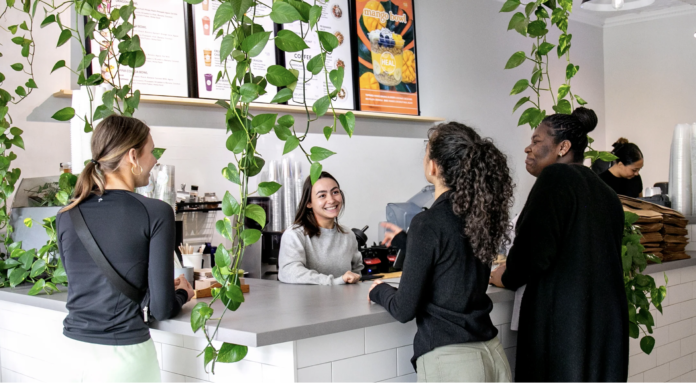
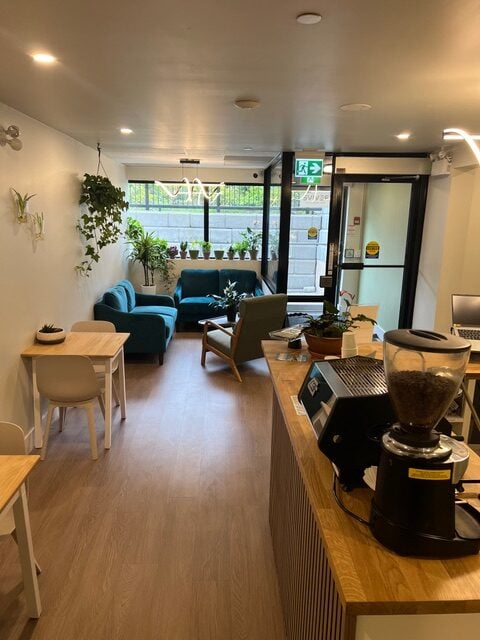
The facility includes a sauna, cold plunge pools, therapy spaces, and a coffee shop—a nod to both wellness and social connection. “We serve the best coffee around,” Aguilera said. “We partnered with Chaveta, a local coffee roaster at 994 Bathurst Street. Our team did six days of barista training. If we’re going to do something, we’re going to do it properly.”
Built from the Ground Up
The Toronto club was developed from scratch. “When we walked in, it was a construction site,” Aguilera said. “We’ve been here since it was a concrete floor. And already, we’re talking about what the first renovation would look like.”
While the space is compact, it’s designed for maximum impact. “This space packs a lot of punch,” he said. “And we’re already thinking—if the space next door becomes available, can we expand?”
A living wall, originally planned for the space, was put on hold due to its $100,000 price tag. “We’ve done the plumbing for it, so maybe down the road. But for now, we wanted to invest elsewhere,” said Aguilera.
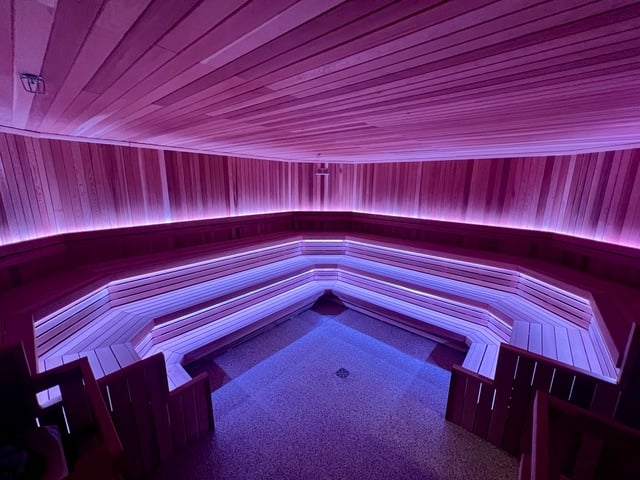
Sauna in the Revive Wellness Club at 2100 Bloor St. W. in Toronto. Image: Revive Wellness Club
Grounded in Science and Research
Revive isn’t just about wellness trends. The brand is partnering with the University of Toronto and OCAD University to foster academic research and creativity.
“We’re working with U of T’s kinesiology, physiotherapy, and chiropractic departments to host student researchers who will study the effects of contrast therapy,” said Christabel, a team member and project leader. “We want real-world data on how this affects both physical and mental recovery.”
A community art project with OCAD is also underway. A mural will adorn a blank wall in the club, reflecting the neighbourhood and Revive’s values.
Aguilera emphasized the importance of these partnerships. “We’re not just saying we’re backed by science—we’re contributing to it,” he said. “Contrast therapy has been around forever, but the research is still limited. We want to change that.”
Wellness for Everyday People
While contrast therapy is often associated with elite athletes, Aguilera says the real growth in the UK—and now in Canada—is among everyday people.
“We thought our main clients would be Olympians and pro athletes,” he said. “But it turns out, the biggest growth is in the everyday person. People with stressful jobs, parents, commuters, anyone looking for one hour to reset.”
Sessions last around 60 minutes and include multiple rounds of hot and cold exposure. “It’s long enough to feel the benefits without diminishing returns,” said Aguilera. “You get dopamine release in the sauna, then you reactivate that with the cold. It’s about balance.”
Waiting area, with coffee, at Revive Wellness Club at 2100 Bloor St. W. in Toronto. Image: Revive Wellness Club
A Space to Unwind and Belong
Beyond the science and saunas, Revive is deeply focused on building community. The club hosts support groups, therapy talks, and will soon launch a running club.
“We want to be a space where people can come have a coffee, work remotely, go for a walk, or do a session,” said Aguilera. “People talk to each other here. The energy shifts depending on who’s in the room.”
The club’s philosophy is simple: wellness should be accessible, consistent, and community-driven. “This isn’t a once-a-year spa day,” he said. “This is something you build into your life.”
Eyes on Expansion—Cautiously Optimistic
Revive Canada has ambitious plans to expand to 20 locations by 2027. The next targets include areas across the Greater Toronto Area, followed by the Golden Horseshoe. Aguilera noted that British Columbia and Nova Scotia are also in consideration, with Kelowna cited as a possible location.
“We want to be careful,” he said. “We’re not giving out franchises like candy. Franchisees need to be passionate. If you’re not invested emotionally, this isn’t the business for you.”
Aguilera added that all of the operational systems in place—from hiring to training to community engagement—are designed with scale in mind.
“We built this for growth. But controlled, intentional growth,” he said.
Revive Wellness Club at 2100 Bloor St. W. in Toronto. Image: Revive Wellness Club
Global Aspirations—and a Wellness Cave
While Canada is the priority, the long-term vision is international. Aguilera owns 33% of Revive UK, which has four locations including partnerships with British Olympians and sports teams.
He teased one particularly ambitious idea: “We want to build the first Revive in a cave in South America,” he said. “A real cave. And all Revive members globally would have access.”
Not Just Wellness—Longevity
Ultimately, Revive is about more than just treatments. It’s about giving people a space to heal, decompress, and invest in their long-term health.
“People are starting to see that wellness isn’t a luxury—it’s a necessity,” said Aguilera. “This isn’t eyebrow threading. This is your vascular system, your mental health, your body’s ability to cope with stress. It’s real.”
Revive Wellness Club is now open to the public at 2100 Bloor Street West in Toronto. The team encourages locals to stop in—for a session, a coffee, or just a chat.
“This is just the beginning,” said Aguilera. “Toronto is the first chapter of a much bigger story.”