Yorkville Avenue in Toronto. Photo: Craig Patterson
Toronto’s retail leasing market remains robust despite economic uncertainty, with strong demand for prime locations and a competitive battle for quality space. According to JLL Canada’s Q4 2024 Toronto Urban Retail Report, demand for retail space continues to outstrip supply in many key corridors, leading to higher rental rates and a challenging landscape for expansion-minded retailers.
The study found that the availability rate across Toronto’s 11 key retail corridors stood at 8.13%, the lowest figure recorded since the report’s inception. Average asking rents across all corridors increased to $98.23 per square foot, with Bloor Street commanding the highest rate at $267.53 per square foot, reinforcing its status as the city’s premier luxury retail destination. Yorkville Avenue followed with an average asking rent of $118.33 per square foot.
Brandon Gorman, EVP of Retail at JLL Canada
Brandon Gorman, EVP of Retail at JLL Canada, described the current leasing market as highly competitive.
“There’s just not a lot of good space available right now. It’s not like there’s a huge pipeline of new retail development, so it’s a battle to find quality locations,” Gorman explained. “We’re seeing situations where tenants are willing to pay key money just to secure a prime spot.”
Food & Beverage Dominates Leasing Activity
Food and beverage (F&B) continues to be the dominant category in retail leasing, accounting for almost half of all new deals. In Q4 2024 alone, F&B tenants signed eight new leases totaling 19,612 square feet, with a particular focus on the Yonge Street and Queen Street West submarkets.
Notable new entrants in the F&B sector include Marugame Udon, which leased 3,932 square feet at 480 Yonge Street, and Seoul Gamjatang, which secured a 2,670-square-foot space at 475 Yonge Street. The trend underscores the continued strength of experiential retail and consumer preference for dining out.
Saks Fifth Avenue at the Hudson’s Bay (Yonge and Queen) building in downtown Toronto. Photo: Dustin Fuhs
Queen Street West and Bloor Street in Transition
While Queen Street West remains an active leasing corridor, it has seen a number of high-profile closures in recent months. Brands like Reigning Champ, Zara, H&M, and Adidas have exited the area, raising concerns about retail turnover. Gorman noted that some closures may be linked to fears over upcoming construction on the Ontario Line, though he believes these concerns are overstated.
“I don’t think construction is going to impact Queen West as much as some landlords fear,” he said. “But there’s definitely been a bit of reshuffling.”
Meanwhile, Bloor Street continues its transformation into a flagship-driven luxury corridor, with significant interest from high-end retailers. The report highlights recent openings such as Burberry’s relocation to 100 Bloor Street West and Nike’s 17,000-square-foot flagship at Bloor and Yonge.
However, concerns remain regarding upcoming construction projects that could disrupt the street for years. “The planned redevelopment of the Harry Rosen building (80-82 Bloor), alongside major projects on the south side of the street, could carve up this retail corridor for seven to ten years,” Gorman cautioned. “That’s something both landlords and tenants are watching closely.”
The report also notes that Yonge Street (Gerrard to Bloor) remains the most active leasing corridor, accounting for 16,420 square feet of newly leased space in Q4 2024. King Street West (Spadina to Bathurst) had the highest vacancy rate at 19.74%, while Ossington Avenue remains one of the tightest markets, with only one available space as of December 31, 2024.
Retail Demand Outweighs Economic Concerns
Despite economic headwinds, including moderating consumer confidence and U.S. tariffs on Canadian goods, retail demand in Toronto remains strong. JLL’s report indicates that visitor spending in 2024 hit $8.8 billion, a 4% increase year-over-year and 7% above pre-pandemic levels. The Taylor Swift Eras Tour alone contributed to a 31% rise in restaurant spending and a 45% jump in hotel spending near Rogers Centre.
Even with ongoing inflation concerns, shoppers are expected to spend more per capita in 2025, with discretionary spending showing resilience. However, tariffs on Canadian goods could create uncertainty for retailers importing products from the U.S., impacting supply chains and pricing.”
The report concludes by saying that with strong demand, limited supply, and ongoing economic uncertainties, Toronto’s retail leasing landscape in 2025 will continue to favour landlords in prime areas. Retailers looking to secure flagship locations should act swiftly, as the city’s most sought-after spaces are becoming increasingly scarce.
As the largest shopping centre ever built in a single phase in South Africa, Mall of Africa stands as a beacon of luxury retail, high-street fashion, and entertainment in the heart of Gauteng. Strategically located in Waterfall City, Midrand, this landmark mall serves as a central shopping hub between Johannesburg and Pretoria, attracting local shoppers and international visitors alike.
A Modern Architectural Masterpiece
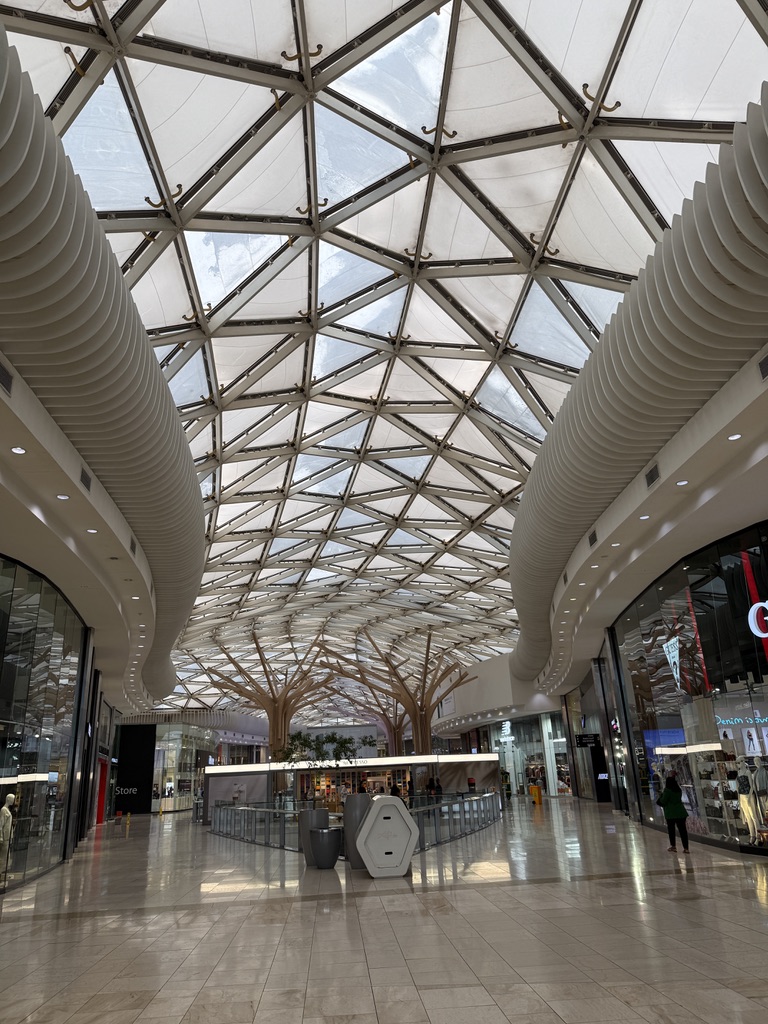
Spanning over 131,000 square meters of retail space, Mall of Africa is an architectural marvel inspired by the African continent. Its design incorporates natural elements drawn from Africa’s geological features, with each shopping court themed around a different region—desert, rain forest, great lakes, and savannah. The mall’s contemporary aesthetic, combined with ample natural light, wide corridors, and stunning water features, creates an inviting, world-class shopping experience.
Mall of Africa. Photo: Lee Rivett.
An Unparalleled Retail Offering
Mall of Africa is home to over 300 stores, featuring a diverse mix of international luxury brands, premium fashion retailers, and local South African designers. Some highlights include:
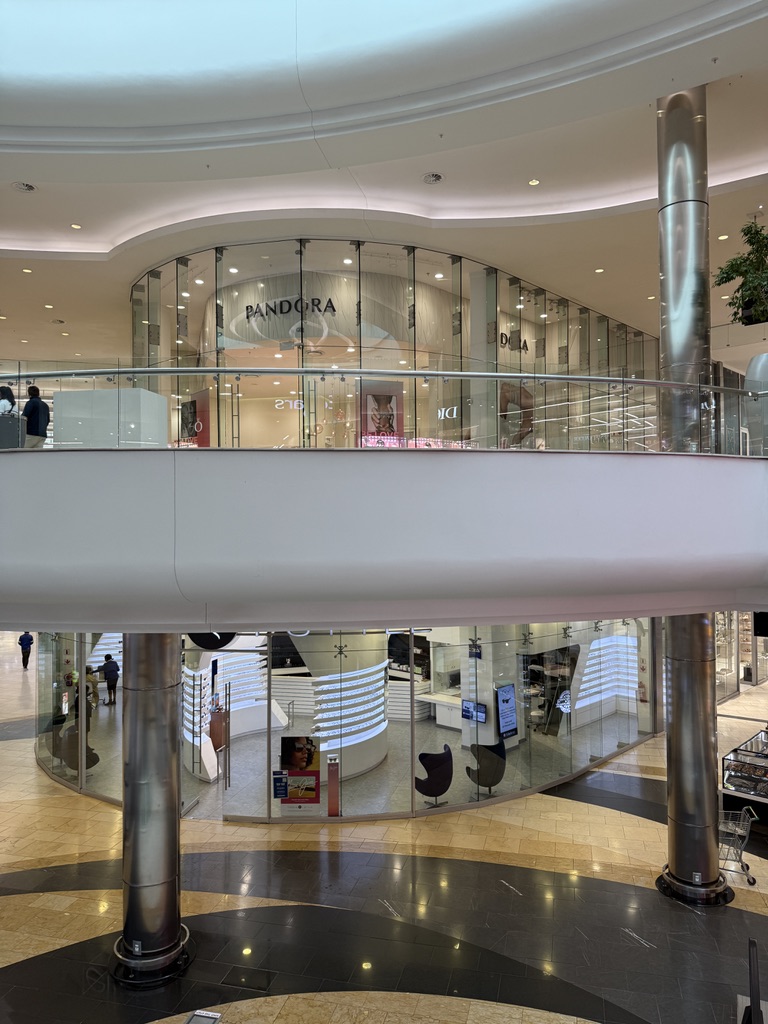
Luxury and Designer Labels: Global fashion houses such as Louis Vuitton, Gucci, and Emporio Armanihave set up flagship stores, making the mall a key shopping destination for high-end fashion.
High-Street and Fast Fashion: Major brands like Zara, H&M, Nike, and Adidas cater to fashion-forward consumers.
South African Retailers: Local giants like Woolworths, Truworths, and Foschini hold a strong presence, blending global trends with uniquely South African style.
Tech and Electronics: Apple, Samsung, and iStore provide the latest gadgets and innovations.
With a mix of department stores, boutique shops, and specialty retailers, Mall of Africa offers something for every shopper, from everyday essentials to high-end indulgences.
Photo: Lee Rivett.
Dining and Entertainment: A Destination in Itself
Beyond shopping, Mall of Africa is a premier lifestyle and entertainment hub. The mall’s expansive outdoor area, known as the Town Square, features open-air restaurants and cafés, offering picturesque views of the Johannesburg skyline. Top dining options include Signature, Tashas, Mythos, and Life Grand Café, each delivering a unique culinary experience.
For entertainment seekers, the mall offers:
A state-of-the-art Ster-Kinekor cinema complex, featuring IMAX and Cine Prestige experiences.
Bounce Inc., an indoor trampoline park, perfect for families and adventure enthusiasts.
An interactive kids’ play area and family-friendly entertainment zones, making it an ideal destination for all age groups.
Convenience and Accessibility
Mall of Africa is easily accessible via major highways, including the N1 and M1, making it a convenient shopping destination for visitors from Johannesburg, Pretoria, and beyond. With over 6,500 parking bays, shoppers can enjoy a seamless experience. The mall also provides free high-speed Wi-Fi, making it a great spot for digital nomads and business professionals looking to mix work with leisure.
Mall of Africa. Photo: Lee Rivett.
Photo: Lee Rivett
A Future-Focused Retail Experience
Mall of Africa is not just a shopping centre—it is a lifestyle precinct designed for the future. The development of Waterfall City, the burgeoning smart city surrounding the mall, has positioned it as a hub for both retail and commercial activity. With continuous expansion, sustainability initiatives, and new tenant offerings, Mall of Africa is set to remain one of South Africa’s premier shopping destinations for years to come.
For those seeking a world-class shopping experience, Mall of Africa delivers on all fronts—luxury, variety, entertainment, and convenience.
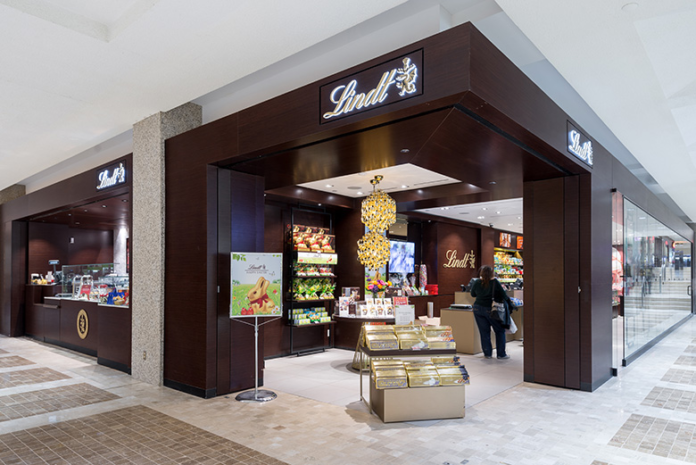
Lindt at First Canadian Place in Toronto. Image: First Canadian Place
Swiss chocolate manufacturer Lindt & Sprüngli is altering its supply strategy for Canada in response to new tariffs imposed by the Canadian government following U.S. trade actions. The company announced that it will shift its Canadian chocolate supply from U.S. factories to European production facilities to circumvent additional duties.
The decision comes as a reaction to U.S. President Donald Trump’s announcement of a 25% tariff on imports from Canada and Mexico, which took effect on Tuesday. In retaliation, Canadian Prime Minister Justin Trudeau implemented equivalent 25% counter-tariffs, affecting various imported goods, including confectionery.
Minimizing Business Disruption in Canada
Lindt, known globally for its Lindor truffles, Gold Bunny chocolates, and Excellence bars, currently produces 95% of its U.S.-sold chocolates within its five American factories. These facilities also supply the Canadian market, making them susceptible to the new trade restrictions.
However, Lindt CEO Adalbert Lechner confirmed that the company is taking steps to shield its Canadian business from the effects of these tariffs. “The volumes that we source currently for Canada can all be shifted to Europe,” Lechner stated following Lindt’s recent full-year financial report.
At present, half of Lindt’s chocolate sold in Canada originates from the U.S., while the other 50% is imported from Europe. The company’s new strategy will see all Canadian supply transition to European production sites, a move expected to be completed by mid-year.
Strategic Inventory Management
Lindt has preemptively increased its Canadian stock levels with U.S.-produced chocolates to allow time for this supply chain shift.
Chief Financial Officer Martin Hug acknowledged that while European shipments will be slightly more expensive, the cost increase is still preferable to the financial burden of tariffs.
“Transporting chocolate from Europe to Canada will be marginally pricier, but this cost is significantly lower than absorbing the tariffs imposed on U.S. goods,” Hug explained.
Additionally, Lindt executives believe Canadian consumers may be more inclined to purchase European-made chocolates over U.S.-produced ones, reducing potential consumer backlash from those opposed to purchasing tariff-affected American products.
Pick & Mix selection at a Lindt store in The PATH in Toronto. Photo Michael Tenaglia
Lindt’s Strong Presence in Canada
Lindt & Sprüngli has been a well-established name in the Canadian chocolate industry. That includes wholesale distribution and a network of over 50 stores coast-to-coast. Founded in 1845 by David Sprüngli-Schwarz and Rudolf Sprüngli-Ammann, the company has grown into one of the world’s most recognized premium chocolate brands.
One of Lindt’s major contributions to modern chocolate production came in 1879, when Rodolphe Lindt invented the conche—a machine that revolutionized the texture and taste of chocolate by creating a smooth, melt-in-your-mouth experience.
Lindt’s global reach now extends to over 120 countries, with its most iconic products including:
In Canada, Lindt operates a network of boutique and outlet stores, offering a broad selection of its signature Swiss chocolate creations. The brand is also available wholesale at retail across the country.
Lindt follows a “bean-to-bar” philosophy, overseeing every stage of production—from cocoa bean selection to the final packaging. This ensures that its chocolates maintain premium quality standards while also adhering to ethical and sustainable sourcing practices.
The Trump administration’s 25% across-the-board tariffs are a massive broadside to the Canadian economy and come at a time of great political and economic uncertainty, says the Canadian Federation of Independent Business (CFIB).
“Governments across Canada need to move into action mode. The majority of small business owners support retaliatory tariffs but recognize that they will hit an even broader swath of our economy than the US tariffs themselves,” said Dan Kelly, President and CEO of the CFIB.
“Many small businesses have already experienced higher costs, cancelled contracts/orders, and lower demand due to the ongoing threats. Now that they’ve been imposed, we expect to see these challenges rapidly escalate.
Dan Kelly
“Sadly, this is not the end of it. We may see additional tariffs on steel and aluminum on March 12 and on another round of products on April 2.”
The CFIB is Canada’s largest association of small and medium-sized businesses with 100,000 members across every industry and region
Last week, Nova Scotia Premier Tim Houston followed through on a long-standing CFIB recommendation to break down internal trade barriers by mutually recognizing the rules of other provinces. Ontario Premier Doug Ford signalled he would do the same. Other provinces and territories need to step up now and match these actions to allow for true free trade within Canada. There is no time to waste, explained the CFIB.
“The federal government should recall Parliament immediately to ensure that Canadian businesses have the support they need and that every dollar Canada collects in tariffs is returned to affected businesses as quickly as possible. The federal government can also send a clear message that Canada is open for business and investment by providing carbon tax clarity and stopping the April 1 increase, passing legislation to make sure carbon tax rebates are tax free and passing proposed legislation to increase the lifetime capital gains exemption threshold to $1.25M and putting the promised Canadian Entrepreneurs’ Incentive stays in place. Political and policy uncertainty is the last thing the country needs at this moment,” added Kelly.
“As we mark five years since the start of the pandemic, Canadian businesses have faced two massive economic threats – the pandemic and an emerging trade war with our largest economic partner. All of us need to come together and do all we can to support local, independent Canadian businesses.”
For more information on the impact of tariffs on small businesses, visit cfib.ca/tariffs.
On Monday, Prime Minister Justin Trudeau issued the following statement on “unjustified U.S. tariffs against Canada”:
Prime Minister Justin Trudeau
“Today, after a 30-day pause, the United States administration has decided to proceed with imposing 25 per cent tariffs on Canadian exports and 10 per cent tariffs on Canadian energy. Let me be unequivocally clear – there is no justification for these actions.
“While less than 1 per cent of the fentanyl intercepted at the U.S. border comes from Canada, we have worked relentlessly to address this scourge that affects Canadians and Americans alike. We implemented a $1.3 billion border plan with new choppers, boots on the ground, more co-ordination, and increased resources to stop the flow of fentanyl. We appointed a Fentanyl Czar, listed transnational criminal cartels as terrorist organizations, launched the Joint Operational Intelligence Cell, and are establishing a Canada-U.S. Joint Strike Force on organized crime. Because of this work – in partnership with the United States – fentanyl seizures from Canada have dropped 97 per cent between December 2024 and January 2025 to a near-zero low of 0.03 pounds seized by U.S. Customs and Border Protection.
“Canada will not let this unjustified decision go unanswered. Should American tariffs come into effect tonight, Canada will, effective 12:01 a.m. EST tomorrow (March), respond with 25 per cent tariffs against $155 billion of American goods – starting with tariffs on $30 billion worth of goods immediately, and tariffs on the remaining $125 billion on American products in 21 days’ time. Our tariffs will remain in place until the U.S. trade action is withdrawn, and should U.S. tariffs not cease, we are in active and ongoing discussions with provinces and territories to pursue several non-tariff measures. While we urge the U.S. administration to reconsider their tariffs, Canada remains firm in standing up for our economy, our jobs, our workers, and for a fair deal.
“Because of the tariffs imposed by the U.S., Americans will pay more for groceries, gas, and cars, and potentially lose thousands of jobs. Tariffs will disrupt an incredibly successful trading relationship. They will violate the very trade agreement that was negotiated by President Trump in his last term.”
Restaurants Canada condemns the U.S. government’s unjustified tariffs on Canada and supports federal and provincial governments in defending Canadian interests. A tariff war will hurt businesses and workers on both sides of the border.
Restaurants are a major driver of the Canadian economy and the fourth largest private sector employer, contributing $120 billion annually and employing 1.2 million Canadians. Our industry supports local economies in every community across the country. We have been and will continue working with governments on crafting a Canadian response that protects Canada while minimizing the impacts on our economy.
We applaud recent efforts by the federal government and Nova Scotia, Ontario and British Columbia in reducing interprovincial trade barriers, and we urge other governments to follow their lead. A strong internal trade infrastructure will lead to more product availability, innovation and stability for the Canadian economy.
Food is essential and we continue to ask the Canadian government to consider exempting a limited number of specific food items and food packaging from its retaliatory tariff response. Without that exemption prices will increase and hurt Canadians already dealing with affordability challenges. It will also lead to job loss in the foodservice industry.
We also urge the federal government to exempt all food from sales tax, as it did during the GST/HST holiday. The two-month period led to unprecedented job growth in our industry—making it permanent would support Canadian job stability and bolster economies across the country. It is an important affordability measure that is good for Canadians, good for workers and good for business.
If the government can’t exempt critical food and food-safe packaging from tariffs, it can soften the blow for the foodservice industry by:
Providing manufacturing credits to enable food and packaging manufacturers to expand production quickly.
Loosening regulations around packaging requirements from out of country products that may be substitutes for American-made products.
Rolling out a wage subsidy program to keep employees connected to their workplaces and prevent job losses.
Provincial governments can also help the restaurant industry weather the removal of U.S. liquor from provincial liquor board shelves by deepening alcohol wholesale discounts and making it easier to buy wine and other products across provincial lines.
It’s hard to believe we’ve reached this point but today marks the beginning of a trade war between Canada and the United States. Misguided threats of sweeping tariffs from American leadership have resulted in necessary counter-tariffs here at home.
Understandably, people in Canada are worried… about the impact this will have on inflation and the cost of living, on their livelihoods, and on the price of groceries. We’re trying hard to support consumers.
Our actions to date include:
1. Buying Canadian: We are already one of the largest purchasers of Canadian products, and we’re doubling down. We’re looking for new ways to secure as much food as possible that is grown or made/prepared in Canada. In fact, we’ve onboarded about 30 new Canadian suppliers this year alone.
2. Alternative sourcing options: Where we historically purchase directly from the U.S. – because product is not grown or made in Canada – we’re working to source options from within Canada and around the world. Our goal is comparable quality and price.
3. Highlighting Canadian: Our customers want us to highlight Canadian companies, brands and products in-store and online. So we are. Customers can look for symbols in-store for products prepared in Canada, and soon, for products affected by tariffs. We are featuring Canadian items in our promotions and flyers, offering points for Canadians products through PC Optimum, and enabling customers to ‘swap’ their chosen product for a Canadian alternative through PC Express.
4. Advocating for Canadians: We will continue to advocate for Canadian consumers. For example, we’re talking to Government and many participants in our supply chain to decode the many potential consequences of this situation. This includes asking the Canadian government to exempt the most essential U.S. products from possible counter-tariffs, especially where customers have limited alternatives.
Canadians are highly resilient, and the country has a history of tackling big issues and opportunities. We know that will be the case with tariffs as well. And while there will undoubtedly be challenging times ahead while these trade measures are in place, we will do our part to be transparent about the impacts, fair in how they are applied, and work hard to mitigate the consequences.
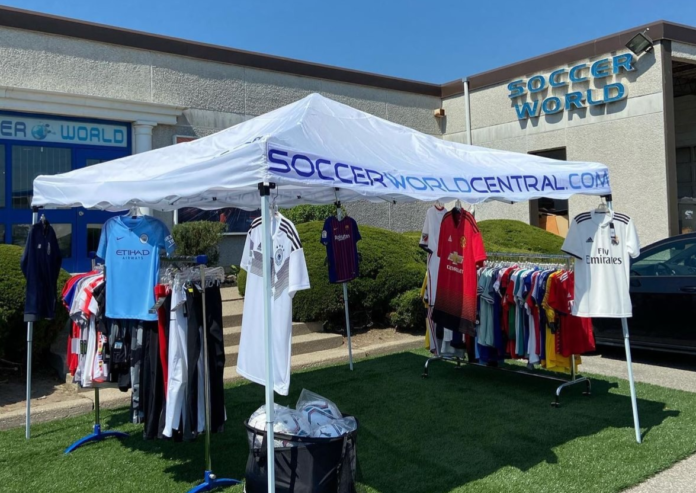
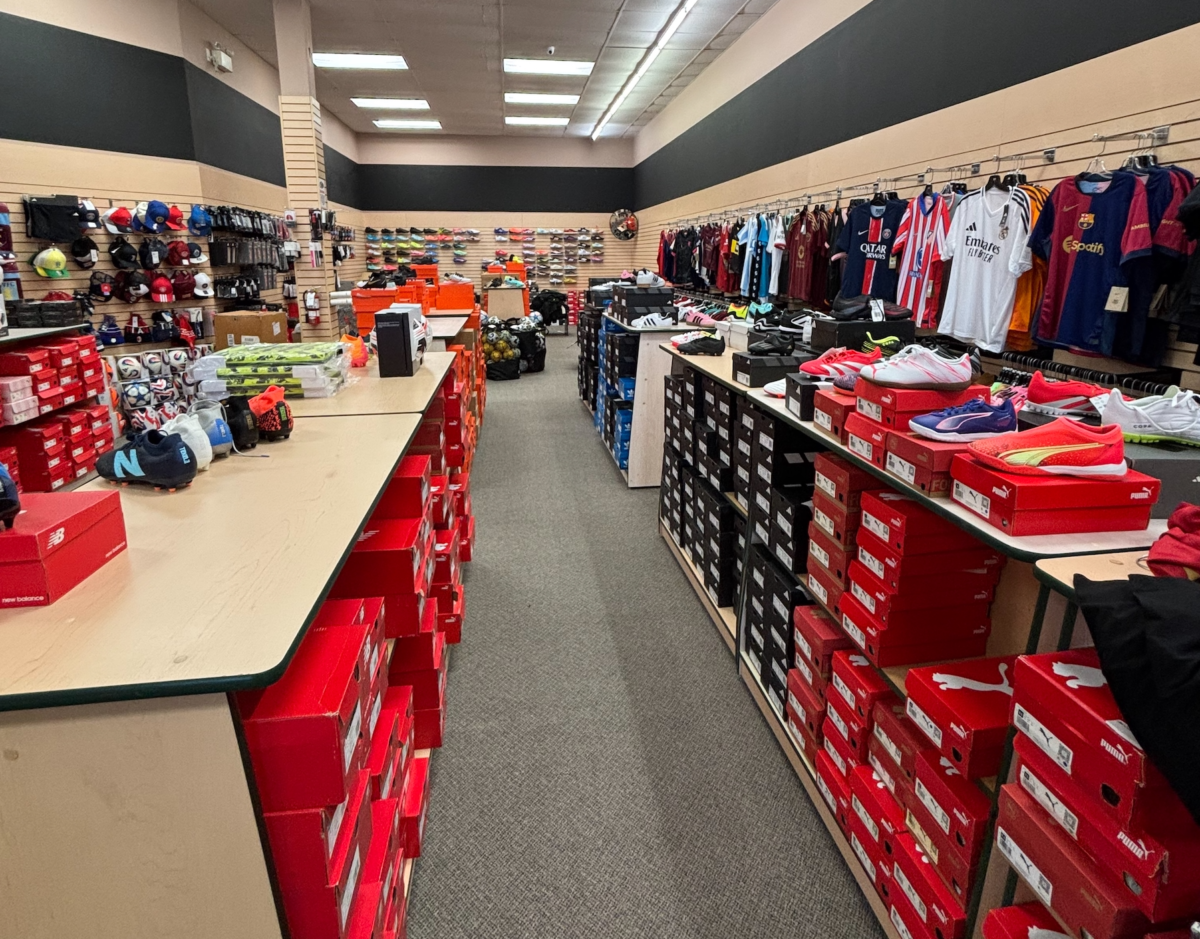
Soccer World Central in Oakville. Photo: Soccer World Central
As the Canadian retail sector braces for the impact of newly imposed 25% tariffs on imported goods, one local retailer is taking a bold stand against price inflation. Soccer World Central, Southern Ontario’s leading soccer specialty retailer, has pledged to absorb the added costs rather than passing them on to customers.
Owner and CEO Chrys Chrysanthou, a seasoned business leader and former CPA, believes that maintaining fair pricing is crucial in supporting the community during these uncertain times. “We need to work together to get through this very tough period,” Chrysanthou stated in an interview. “It is wrong to profit while so many people are struggling.”
Putting Community First
Soccer World Central, founded in 2001, has grown into a premier destination for soccer enthusiasts in Ontario. With flagship stores in Oakville and London (opened March 1), and plans for expansion into Mississauga and Burlington, the retailer has long prioritized community engagement. This latest move underscores the company’s dedication to its customers at a time when many are facing rising costs on all fronts.
Chrysanthou’s decision to absorb the tariff costs stems from firsthand experiences with struggling customers. “We see a lot of different people coming through our doors—some are affluent, but many are struggling to put food on the table,” he explained. “I’ve had customers ask if they could pay for their child’s soccer shoes in installments. We even had someone over Christmas tell us they wanted to buy a gift for their kids but couldn’t afford it upfront.”
These personal interactions have solidified Chrysanthou’s stance on pricing. “For me to profit off their pain? That’s not something I could live with,” he said.
Inside the new Soccer World Central in London, ON. Photo: Soccer World Central
The Tariff Dilemma: How It Works
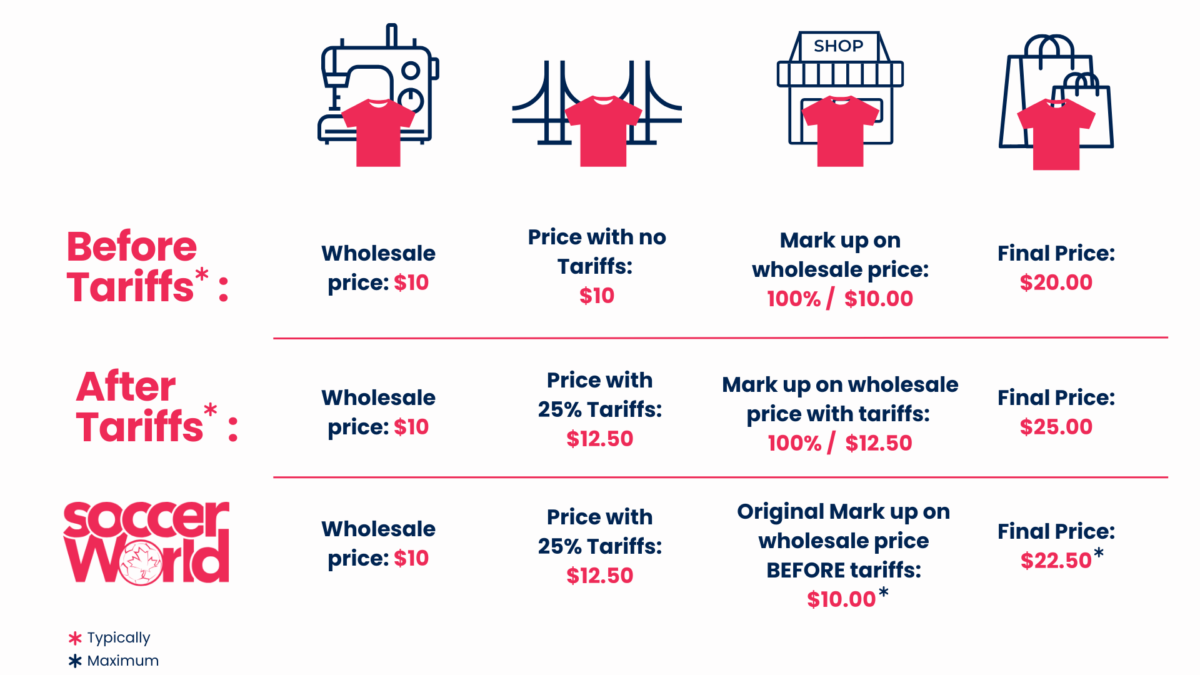
Typically, retailers apply a standardized percentage markup on wholesale goods. If a product costs $10 at wholesale and the markup is 50%, the retail price would be $20. However, with a 25% tariff, the wholesale price increases to $12.50. Many retailers would apply their traditional markup to this new cost, pushing the retail price up to $25. This means customers would pay not only for the tariff increase but also an inflated margin.
Chrysanthou, however, has chosen to do things differently. “Instead of marking up the new tariff-inflated price, I’m keeping my markup at the pre-tariff level,” he said. “So instead of charging $25, I’ll charge $22.50. I’m still covering the increased costs, but I’m not profiting from them.”
While this approach will reduce Soccer World Central’s percentage margins, Chrysanthou argues that his dollar margins will remain stable. “What I was making yesterday is what I’ll still be making tomorrow. My percentage profit might take a hit, but I refuse to profit from an artificial increase.”
Retail Challenges Beyond Tariffs
The tariff situation is only part of a larger economic challenge for retailers. The declining Canadian dollar is expected to further drive up prices, as most goods in the supply chain are denominated in U.S. dollars. “I’ve already had my brands call me to say that if the tariffs come into play, the Canadian dollar will drop, increasing the cost of everything we buy,” Chrysanthou explained. “That’s a reality we’re going to have to navigate as well.”
In addition to currency fluctuations, retailers are contending with rising operational costs. “My rent has doubled in the last four years. Minimum wage has jumped from $12.50 to $17.50. Every aspect of running a business is more expensive,” he noted. “But I firmly believe that as retailers, we have to be part of the solution.”
A Call for Collective Action
Chrysanthou is encouraging other retailers to adopt a similar approach. “If every retailer chose not to profit from tariffs, we could collectively ease the burden on consumers,” he said. “We’ve seen what happens when major corporations prioritize profits over people—the cost of living skyrockets, and more families turn to food banks. We need to do better.”
He argues that the responsibility extends beyond small businesses. “If the big grocery chains, gas companies, and other retailers committed to this, we could ride out this storm. But if we remain ignorant of the pain the average consumer is feeling, we’re going to lose this battle.”
Soccer World Central opened its second storefront in London ON on March 1, 2025 — the chain’s sales have grown from $500k to over $5 million annually in three years. Photo: Soccer World Central
Expanding with a Mission
Despite the economic headwinds, Soccer World Central is continuing its ambitious expansion plans. In addition to its existing location in Oakville and new store in London, the company is in the process of opening a 20,000-square-foot experience store in Mississauga and a 30,000–40,000-square-foot location in Burlington.
These new stores are designed to be more than just retail spaces. “We’re creating soccer entertainment facilities,” Chrysanthou revealed. “Yes, we’ll have retail, but we’re also integrating interactive experiences—turf areas where kids can try on shoes and play, TV lounges for watching games, and even foosball and video game stations. We want to be the local hub for all things soccer.”
This approach mirrors trends in the U.S., where major retailers like Dick’s Sporting Goods have been launching large-scale experiential stores to attract customers. “Retail is evolving,” Chrysanthou said. “If we want to remain relevant, we need to offer more than just products—we need to create experiences.”
A Business Rooted in Giving Back
Beyond pricing strategies and store expansions, Soccer World Central has long prioritized community support. The company has donated over $300,000 to various charities and grassroots soccer initiatives, reinforcing its commitment to accessibility and inclusion in the sport.
“Our mission statement is simple: to make every experience with the beautiful game a positive one,” Chrysanthou said. “That means eliminating barriers—whether they be financial, racial, or otherwise. Absorbing these tariff costs aligns perfectly with that mission.”
As Canadian businesses brace for the full impact of tariffs, Soccer World Central stands as an example of how retailers can put community first. “At the end of the day, it’s not about making a quick profit,” Chrysanthou said. “It’s about doing the right thing. And if more businesses take that approach, we’ll all be better for it.”
Monos store on West 4th Avenue in Vancouver. Image: Monos
Monos, the Canadian travel and lifestyle brand, has achieved a significant milestone by becoming the first North American luggage brand to earn B Corporation (B Corp) certification. This recognition places Monos among a select group of businesses committed to the highest standards of social and environmental performance, accountability, and transparency.
B Corp certification is not merely a stamp of approval but a reflection of Monos’ deep-seated philosophy that thoughtful design and sustainability can coexist. The company, co-founded in 2018 by Victor Tam, Hubert Chan, and Daniel Shin, has built its reputation on producing high-quality, durable travel pieces designed to last a lifetime.
Through a rigorous evaluation process, Monos secured a commendable 84.5 score, demonstrating excellence in governance, worker rights, community impact, and environmental sustainability. With fewer than 10,000 companies worldwide holding this certification, Monos is setting a precedent in the travel goods industry.
Commitment to Ethical and Sustainable Materials
Monos’ approach to sustainability is evident in its meticulous sourcing of materials. The brand has pledged to use premium vegan alternatives instead of animal-derived materials in its luggage, bags, and accessories. By incorporating recycled and recyclable materials, Monos ensures that every product contributes to a reduced environmental footprint. Key sustainable elements include:
Luggage shells made from 100% recycled or repurposed polycarbonate materials, certified by the Recycled Claim Standard and Global Recycled Standard.
Interior liners constructed from 100% recycled polyester.
Sling and belt bag buckles made entirely of recycled nylon.
This commitment extends beyond product materials, as Monos continually refines its supply chain to improve sustainability and ethical standards.
Elemental Blue collection, image: Monos
Environmental and Social Initiatives
As part of its journey to B Corp certification, Monos has implemented several impactful sustainability initiatives:
Water Conservation: The company has equipped its facilities with low-flow faucets, toilets, and showerheads, and has introduced rainwater harvesting for office plant irrigation. A dedicated water meter at its headquarters helps monitor and reduce consumption.
Supplier Accountability: Over 80% of Monos’ suppliers have signed a formal Supplier Code of Conduct, ensuring adherence to strict social and environmental guidelines.
Environmental Purchasing Policy (EPP): Monos prioritizes environmentally responsible purchasing for cleaning supplies, office materials, paper, and landscaping products, opting for recycled alternatives where possible.
Renewable Energy Integration: In partnership with Bullfrog Power, Monos has integrated renewable energy sources across all of its operational locations.
Sustainable Product Accreditations: Nearly all Monos products (99%) have received certifications from globally recognized bodies, including ISO9001, ISO14001, ISO45001, SA8000, and Sedex Members Ethical Trade Audit Report.
Monos Magnolia Bakery Collection. Image: Monos
A Leader in Responsible Travel
For travelers who prioritize quality, ethical production, and sustainability, Monos’ B Corp certification underscores its dedication to responsible design. Beyond its eco-conscious product materials, the company has also introduced a carbon-neutral shipping initiative, reinforcing its goal of reducing its environmental impact at every stage of production.
Victor Tam, CEO and Co-Founder of Monos, expressed his enthusiasm for this achievement: “In our pursuit of better travel, being recognized as the first North American luggage brand to become B Corp Certified is an extension of our ongoing commitment to travel mindfully and tread lightly. Earning this certification is a testament to our belief that thoughtful design can coexist with social and environmental consciousness.”
About Monos
Monos is a Canadian travel and lifestyle brand offering premium suitcases, bags, and accessories. Inspired by the Japanese concept of mono no aware—the appreciation of the beauty in fleeting moments—Monos champions the philosophy that the journey is as meaningful as the destination. Guided by the design principle of “less but better,” Monos crafts high-quality, minimalist products made to last a lifetime of travel.
Recent research indicates a significant number of Canadians are now showing a strong preference for domestic products, with many willing to modify their purchasing behaviours. One recent poll revealed 42 per cent of Canadians polled will “absolutely do everything” to avoid purchasing U.S. products. Eighty-eight per cent said they would buy a product promoted as “made in Canada.”
Another poll found that 56 per cent of Canadians said they would stop buying a certain product altogether if there is no Canadian-made alternative.
While the “buy local” movement has deeper roots, often resurfacing during periods of economic tensions, the current surge stems from a desire to support homegrown brands and manufacturers they see as reflecting their values.
Buy Canadian movement challenges
While the Buy Canadian movement is gaining traction, actually sustaining it comes with notable challenges. Some experts caution that reducing reliance on U.S. imports is a gradual process contingent on consistent consumer commitment.
Two primary barriers stand in the way of this sustained change: the higher costs of Canadian-made goods, particularly during the ongoing cost-of-living crisis, and the difficulty consumers face in identifying domestically produced items.
Addressing these two issues is crucial for the long-term viability of the Buy Canadian movement.
Buying Canadian can be pricey
The first primary obstacle facing the Buy Canadian movement is the price disparity between domestic goods and their imported counterparts.
Canadian domestic goods often come with a higher price tag due to production costs, economies of scale, transportation and other economic factors. These factors make it difficult for local manufacturers to compete with cheaper foreign alternatives.
The ongoing cost-of-living crisis, which is driving up prices for goods and services across various sectors, is further intensifying the challenge. One of the biggest household expenses, the cost of groceries, remain particularly high, having jumped by 7.8 per cent in 2023 — its highest level in nearly 40 years.
Higher prices across almost all sectors has resulted in 71 per cent of Canadians naming the cost of living as a top domestic concern, making it the leading news story in the country in 2024.
The second major obstacle for the Buy Canadian movement lies in confusion over product labels. For many Canadians, identifying which products are truly Canadian versus imported alternatives can be a challenging task.
Compounding matters further, understanding country of origin labelling can also be challenging. Labels such as “Made in Canada” and “Product of Canada” have specific definitions.
“Made in Canada” means the last substantial transformation of the good or service occurs in Canada but may contain up to 49 per cent imported ingredients, while “Product of Canada” means all, or nearly all, significant parts and processing are Canadian.
This nuanced labelling and similarity in wording can lead to confusion, making it difficult for consumers to make informed choices.
Building on the Buy Canadian momentum
Canadian businesses and retailers have been responding to growing consumer demand for domestic products with concrete marketing strategies. For instance, Loblaw Companies, Canada’s largest food retailer, has committed to “doubling down on securing food grown and made” locally.
Grocery stores are also making it easier for consumers to identify local products. Several grocery chains have revamped their in-store displays by using shelf tags, stickers and end-of-aisle signage to clearly identify Canadian-made food items.
Retailers and brands are increasingly spotlighting domestic brands by rolling out targeted pricing deals. Major grocery chains have begun offering significant price reductions and exclusive promotions on items branded as “Made in Canada.”
Additionally, Canadians are flocking to websites such as Madeinca.ca, which aim to demystify country of origin and labelling so shoppers can distinguish domestic products from imports.
Although maintaining this momentum may be challenging, consumers are eager to showcase their patriotism at the check-out. With businesses and policymakers actively improving product transparency and addressing cost concerns, the Buy Canadian movement is poised to gain further traction. After all, nothing embodies unity quite like a little patriotic shopping, the Canadian way.
About the Author:Melise Panetta is a Lecturer of Marketing in the Lazaridis School of Business and Economics, Wilfrid Laurier University.
Pet Valu Holdings Ltd., the leading Canadian specialty retailer of pet food and pet-related supplies, has announced its financial results for the fourth quarter and fiscal year ended December 28, 2024, describing it as a “dynamic year.”
For the year, system-wide sales were $1.452 billion, an increase of 2.3% versus the prior year but same-store sales declined was 0.5%. Revenue was $1.097 billion, up 3.9% versus the prior year.
“These outcomes were supported by our fully operational GTA and Surrey distribution centres, improved online capabilities, highly relevant promotional cadence and solid cost management across our teams.
“2025 will be another exciting year, as we complete our supply chain transformation and deploy improved promotions and pricing tools to enable a return to same-store sales and profit growth as we progress through the year.”
In the fourth quarter, system-wide saleswere $388.1 million, an increase of 2.4% versus Q4 2023. Same-store sales decline was 0.2%. Revenue was $295.1 million, up 2.9% versus Q4 2023. Adjusted EBITDA was $68.2 million, down 4.3% versus Q4 2023, representing 23.1% of revenue. Operating income was $47.9 million, down 0.8% versus Q4 2023. Net income was $28.9 million, up from $28.8 million in Q4 2023.
For the year, Adjusted EBITDA was $247.1 million, up 6.9% versus the prior year, representing 22.5% of revenue. Operating income was $155.3 million, down 3.4% versus the prior year. Net income was $87.4 million, down from $89.5 million in the prior year.
For 2025, Pet Valu said it expects revenue between $1.17 and $1.20 billion, and Adjusted EBITDA between $254 and $260 million.
Pet Valu is Canada’s leading retailer of pet food and pet-related supplies with over 800 corporate-owned or franchised locations across the country. It has been in business for more than 45 years and offers more than 10,000 products, including a broad assortment of premium, super premium, holistic and award-winning proprietary brands. The company is headquartered in Markham, Ontario.
Canadian business leaders remain steadfastly united in fighting U.S. tariffs with two-thirds (67 per cent) saying they can weather a trade war that lasts more than a year, finds a new survey by KPMG in Canada taken last week. Over eight in 10 (86 per cent) continue to support retaliatory tariffs against the U.S. – the same sentiment held a month ago when KPMG first surveyed corporate Canada on their tariff response.
The uncertainty around U.S. trade policy has had Canadian companies rushing to find ways to mitigate their risk and tariff-proof their organization. While it varies by company and industry, mitigation strategies include identifying areas to optimize and streamline operations, forming partnerships to open up new markets, diversifying supply chains, divesting non-core activities, exploring foreign-exchange hedging opportunities, incorporating tariff and transfer pricing plans, seeking exemptions, and securing subsidies or taking advantage of tax incentives, said KPMG.
Timothy Prince
“The business community remains unwavering in its commitment to stand up for Canada,” said Timothy Prince, the Canadian Managing Partner for Clients and Markets, KPMG in Canada. “The size of the tariffs and the length of time tariffs remain in place will impact their ability to weather the coming storm. Already the uncertainty is prompting companies to examine every facet of their business to understand their options, with three-quarters already undertaking a strategic review of their operations.”
“While they will do what they must to ride this out, they expect governments to take bold action to eliminate interprovincial barriers, build a national energy-agnostic corridor, reduce red tape, and revamp the tax system to improve their ability to compete. As many as 86 per cent say it’s time to diversify energy export markets with increased pipelines and infrastructure in Western and Eastern Canada, and reduce our reliance on having to move oil and gas to Eastern Canada through the U.S.”
Nearly nine in 10 (88 per cent) want “strong and determined” political will at all levels of government to finally open up trade within Canada. As many as 84 per cent say the elimination of interprovincial barriers will be “extremely or very important” to the survival of their business in a trade war with the U.S. and want the barriers removed as quickly as possible. Almost a third (31 per cent) say they could redirect 11-to-25 per cent of their sales to markets in Canada, said the KPMG report.
Tammy Brown
“It’s imperative that companies future-proof their operations, take a hard look at their supply chains to find key concentration risks and vulnerabilities, evaluate how tariffs will impact their costs, cash flow, and liquidity and how much they’re able to absorb or pass on to their customers,” said Tammy Brown, National Industry Leader for Industrial Markets, KPMG in Canada. “We are working with our clients to develop scenario plans to map potential trade policy changes and impacts on their organizations. This will help build resiliency and flexibility in their supply chains to react quickly and effectively as the landscape changes. And while many were already focused on optimizing their operations, this trade uncertainty has created a new sense of urgency.”
KINTON RAMEN Guelph has launched a new partnership with the University of Guelph’s Hospitality Services, becoming an official off-campus meal plan partner. This collaboration allows University of Guelph students to use their Meal Plan Cards at the restaurant, enhancing dining options for those looking to enjoy high-quality meals off-campus.
This agreement aims to offer students a more convenient and flexible dining experience, providing access to an expanded selection of off-campus eateries that accept the University’s meal plan, said the company.
Alan De Luna, Senior Marketing Manager, Kinka Family
“We’re excited to partner with the University of Guelph to offer students a top-tier dining experience off-campus,” said Alan De Luna, Senior Marketing Manager at KINKA FAMILY. “This collaboration also enhances convenience, allowing students with meal plans to enjoy high-quality meals without needing cash or debit cards.”
As part of the partnership, the restaurant joins an exclusive group of local off-campus restaurants now accepting University of Guelph meal plans, further enhancing the dining options available to students.
Founded in May 2012, KINTON RAMEN was one of Toronto’s first Japanese ramen restaurants. Led by Executive Chef Aki Urata, the restaurant strives to deliver an extraordinary dining experience with exceptional ramen bowls made from the freshest ingredients.
KINKA FAMILY, established in 2009, is Canada’s largest Japanese restaurant group. Known for its mission of “Serving People Happiness,” KINKA FAMILY operates a diverse portfolio of restaurants and cafés in Toronto, Montreal, Vancouver, Chicago, and New York. Their notable establishments include KINKA IZAKAYA, KINTON RAMEN, and JaBistro.