Consumer insolvencies in Canada saw a significant spike in January 2025, with filings increasing by 20.5% compared to December 2024, according to the Office of the Superintendent of Bankruptcy (OSB). A total of 11,196 consumer insolvencies were filed, which is 1,904 more than the previous month, averaging around 361 filings per day. This represents a 3.8% increase from January 2024 and a 12.3% rise from pre-pandemic levels in January 2019.
The Canadian Association of Insolvency and Restructuring Professionals (CAIRP) highlighted the role that ongoing financial stress, including the high cost of living and escalating household debt, continues to play in driving up consumer insolvencies. The association stressed the need for stronger debt literacy to help Canadians better manage their financial obligations.
“Higher costs for goods and services, combined with existing financial pressures, could push more individuals towards needing debt-relief solutions,” he explained.
Looking at the 12-month period ending January 31, 2025, consumer insolvencies saw a 9.9% increase from the previous year. Notably, New Brunswick experienced the largest year-over-year increase, with insolvencies rising by 9.8%, while Quebec saw a 9.2% increase.
Among insolvency filings, consumer proposals have become increasingly popular. In the 12-month period ending January 31, 2025, consumer proposals accounted for 78.9% of all insolvency filings, while bankruptcies made up 21.1%. Consumer proposals are often seen as a more flexible solution compared to bankruptcy, offering repayment plans of up to 60 months, no ongoing income reporting, and greater stability without the risk of payment increases.
“Unlike bankruptcy, a consumer proposal often offers a more flexible repayment plan of up to 60 months instead of nine to 36 months, no ongoing income reporting, and removes uncertainty and the risk of payment increases,” Bolduc noted. “Additionally, those who have previously filed a bankruptcy often prefer to avoid going through the bankruptcy process again, particularly given the uncertainty of what the terms of their discharge from another bankruptcy might be.”
Bolduc added that consumer proposals allow debtors to retain assets such as their homes and are increasingly being negotiated with more tailored, manageable terms by creditors. Many Canadians see consumer proposals as a more dignified option for regaining financial stability without the perceived stigma of bankruptcy.
Business Insolvencies Rise 7.6% in January 2025
Business insolvencies in Canada also saw an increase in January 2025, rising by 7.6% compared to December 2024, with 424 filings recorded. This marks a 45.2% rise from pre-pandemic levels in January 2019. The 12-month period ending January 31, 2025, saw a 11.7% increase in business insolvencies compared to the same period the previous year.
The sectors most affected by the rise in business insolvencies included accommodation and food services, professional, scientific, and technical services, and arts, entertainment, and recreation. The accommodation and food services sector accounted for the largest share of insolvencies in January, with 14.1% of the total filings.
As Canadians continue to face financial challenges, the increase in both consumer and business insolvencies signals the continued strain on the country’s economy, underscoring the need for accessible and effective debt-relief solutions.
Retail Insider is streamlining its Canadian retail news from around the web to include a handful of top news stories that can be viewed quickly during the day. Here are the top stories from the past 24 hours.
Canada-US trade war - tariffs and de minimus. Image: iStock/licensed
The U.S. government has announced a temporary reprieve for imports from Canada and Mexico, as the planned removal of the de minimis exemption for low-value shipments remains on hold. The exemption, which allows imports valued under $800 to enter the U.S. duty-free, was initially set to end as part of new tariff measures set to take effect on Tuesday. However, a last-minute amendment by President Donald Trump has granted an extension until adequate systems are established for efficient tariff revenue collection.
The delay comes as a relief to e-commerce retailers and businesses that rely on seamless cross-border trade. The exemption enables many small-value goods from Canada and Mexico to avoid tariffs, reducing costs for consumers and businesses alike. Had the exemption been removed as planned, U.S. companies importing lower-cost goods from their top two trading partners would have faced new financial burdens.
Trump’s amendments to the tariff orders clarify that the duty-free de minimis treatment will remain in place until the U.S. Commerce Secretary determines that the necessary revenue processing and collection infrastructure is adequately operational. Once these requirements are met, the exemption will be eliminated for Canada and Mexico, further tightening trade regulations.
The handling of de minimis for Canada and Mexico aligns with the U.S. approach to tariffs on Chinese imports. In February, the exemption for Chinese goods was briefly revoked when the U.S. imposed an additional 10% tariff on imports from China. However, the exemption was later reinstated, citing the need for an effective tariff collection system. The similarities in approach indicate that while the exemption remains for now, it is only a matter of time before Canada and Mexico face stricter import duties.
What This Means for Businesses
For cross-border e-commerce businesses, the temporary extension provides a short-term cushion. However, trade experts caution that importers must begin strategizing for the inevitable removal of the exemption. The continued uncertainty surrounding trade policies highlights the need for companies to explore alternative supply chain solutions and risk-mitigation strategies.
“Businesses should not assume that the exemption will remain in place indefinitely,” said a trade policy analyst. “The U.S. administration has been clear about its intent to tighten import regulations, and it is only delaying implementation until the necessary systems are in place.”
For Canadian and Mexican exporters, the delay means they can continue sending lower-value goods to the U.S. without additional duties. However, once the exemption is removed, these businesses could see a decline in competitiveness due to increased costs. The change is expected to disproportionately affect small and medium-sized enterprises (SMEs) that rely on the U.S. market for growth.
Uncertain Trade Landscape Ahead
While the de minimis exemption remains intact for now, its long-term future is highly uncertain. With tariffs on Canadian and Mexican imports set to proceed, businesses must stay informed about evolving trade policies and prepare for potential cost increases. Companies engaged in cross-border trade should closely monitor policy updates and assess how potential tariff changes may impact their operations.
As tensions escalate between Canada and the United States over impending tariffs, Ontario Premier Doug Ford has announced that his government may introduce legislation requiring retailers to display clear signage indicating whether a product is Canadian-made. This move comes in response to U.S. President Donald Trump’s threat to impose a 25% tariff on most Canadian and Mexican goods, set to take effect as soon as Tuesday.
Speaking at a press conference on Monday, Ford emphasized the importance of supporting Canadian-made products and ensuring consumers can make informed choices.
“I am asking politely before I implement it,” Ford stated. “Every retail store, when you go look at the shelf talker and it has the price, we need to see a Canadian flag on that price. Please work with us, or we are going to legislate it.”
If implemented, the regulation would compel retailers to prominently label products made in Canada, potentially influencing consumer spending habits amid growing trade tensions.
Retaliatory Measures Against U.S. Businesses
Beyond the proposed retail signage mandate, Ford outlined a series of retaliatory measures Ontario will take should the U.S. tariffs be enacted. Among them is the removal of U.S. alcohol products from Liquor Control Board of Ontario (LCBO) shelves. Additionally, the province plans to terminate a $100 million contract with Elon Musk’s Starlink, which was intended to provide satellite internet service to Northern Ontario.
While acknowledging that this move may have little financial impact on Musk, the world’s richest individual, Ford said the decision is a matter of principle.
“It won’t make a difference for Elon Musk, but it is about principle,” he said.
Ontario’s $30 Billion Procurement Strategy
Ford also reaffirmed his commitment to ensuring that U.S. companies do not benefit from Ontario’s substantial government procurement budget, which amounts to approximately $30 billion annually.
“That $30 billion doesn’t even include the municipalities, and I know all 444 municipalities are on board,” Ford noted. “We are going to make sure that we legislate that you are buying Ontario first and Canada second.”
While Ford acknowledged that some products cannot be sourced domestically, he stressed that shifting procurement preferences away from U.S. suppliers could have significant repercussions south of the border.
“If they want to go after our families, take food off our tables, and try to close our companies… well, we are going to fight like we’ve never fought before to protect Canada and to protect the people of Ontario and their businesses, communities, and jobs,” he declared.
Federal Government’s Response to Tariffs
If the U.S. moves forward with its 25% tariffs, the Canadian federal government has stated that it will respond with retaliatory tariffs on $30 billion worth of U.S. goods, followed by additional tariffs on $125 billion in goods within three weeks.
Ford voiced his full support for the federal government’s “dollar-for-dollar” approach to tariffs, emphasizing Ontario’s willingness to stand firm in the escalating trade dispute.
“I didn’t start a tariff war, but we are going to win this tariff war,” Ford said.
Potential Impact on Ontario’s Economy
Economists and business leaders have warned that the proposed tariffs could have devastating effects on Ontario’s economy, particularly given the province’s close trade ties with the U.S. Ford himself has previously stated that such tariffs could lead to the loss of up to 500,000 jobs in Ontario.
The proposed measures, including mandatory retail signage and a shift in government procurement policies, signal Ontario’s determination to push back against what it sees as an aggressive economic threat from its largest trading partner. As the situation develops, businesses and consumers alike will be watching closely to see how this trade standoff unfolds.
Eataly at 55 Bloor St. W., Manulife Centre, Toronto. Image: Eataly
Toronto food enthusiasts looking for a cozy winter escape need look no further than ALPINA, Eataly’s latest seasonal pop-up experience. Bringing the warmth and indulgence of the Italian Alps to the city, ALPINA offers a curated menu of hearty cuisine, rich cocktails, and après-ski festivities that transport guests straight to the slopes of Northern Italy. With locations at Eataly Yorkville, CF Sherway Gardens, and CF Shops at Don Mills, ALPINA delivers an authentic taste of alpine tradition in an inviting setting.
A Taste of the Italian Alps in the Heart of Toronto
ALPINA at Eataly showcases the rich culinary heritage of Italy’s northernmost regions, drawing inspiration from the neighbouring Alpine countries. Diners can expect a menu steeped in comfort food, featuring dishes made with rustic, high-quality ingredients.
One of the highlights is the Polenta Bar, where creamy, stone-ground cornmeal is served on a wooden board with a variety of toppings. Another must-try dish is Fonduta di Formaggio, a decadent take on Swiss fondue made with Fontina DOP cheese and paired with focaccia croutons for dipping. For those seeking a true Alpine specialty, Canederli, a bread and speck gnocchi from Trentino-Alto Adige, is served with Urbani Winter Black Truffle for an extra touch of indulgence.
The experience wouldn’t be complete without a curated beverage selection. Guests can sip on premium wines from Northern Italy or opt for winter-warming cocktails such as the Bombardino, Italy’s take on eggnog, or a classic hot toddy. For those observing Dry January, ALPINA offers a selection of non-alcoholic “zero heroes” cocktails, ensuring everyone can enjoy the seasonal celebration.
Image: Eataly
Eataly Yorkville: ALPINA Winter Pop-Up at La Piazza
Eataly Yorkville’s La Piazza has been transformed into an intimate winter escape, capturing the magic of après-ski culture with warm lighting, cozy seating, and a specially curated ALPINA menu. Guests can enjoy signature dishes such as Cotoletta alla Valdostana, a hearty breaded veal cutlet stuffed with Fontina cheese and prosciutto, alongside a variety of expertly crafted cocktails.
A highlight of the pop-up is the ALPINA Après-Ski Party, a celebration that invites guests to dress in their best après-ski attire and enjoy an evening of Italian-inspired drinks, music, and bites. Featuring classic Italian cocktails and wines, this exclusive event brings the vibrant energy of an Alpine lodge to downtown Toronto.
Reservations for the ALPINA Winter Pop-Up are available, ensuring diners can secure their spot to experience this unique culinary escape.
For those outside of the downtown core, ALPINA’s influence extends to Eataly Ristorante locations at CF Sherway Gardens and CF Shops at Don Mills, where guests can indulge in the cozy flavours of the Italian Alps. These locations feature a selection of warm winter dishes and specialty cocktails, perfect for a relaxed evening with family or friends.
The CF Sherway Gardens and CF Shops at Don Mills locations offer a more intimate dining experience, emphasizing rich, seasonal flavours. Guests can sip on hot cocktails while enjoying dishes crafted with traditional Alpine ingredients, providing an escape from the winter cold without leaving the city.
A Seasonal Experience Not to Be Missed
As the cold weather settles in, ALPINA at Eataly provides a much-needed winter retreat. Whether visiting for an indulgent brunch, a lively après-ski party, or a quiet evening of Italian comfort food, the ALPINA experience offers a unique way to embrace the season.
With limited-time availability until March 31, reservations and ticket purchases for special events are highly recommended. Toronto food lovers can reserve their spot at the ALPINA Winter Pop-Up at Eataly Yorkville or visit CF Sherway Gardens and CF Shops at Don Mills to enjoy a cozy Alpine meal.
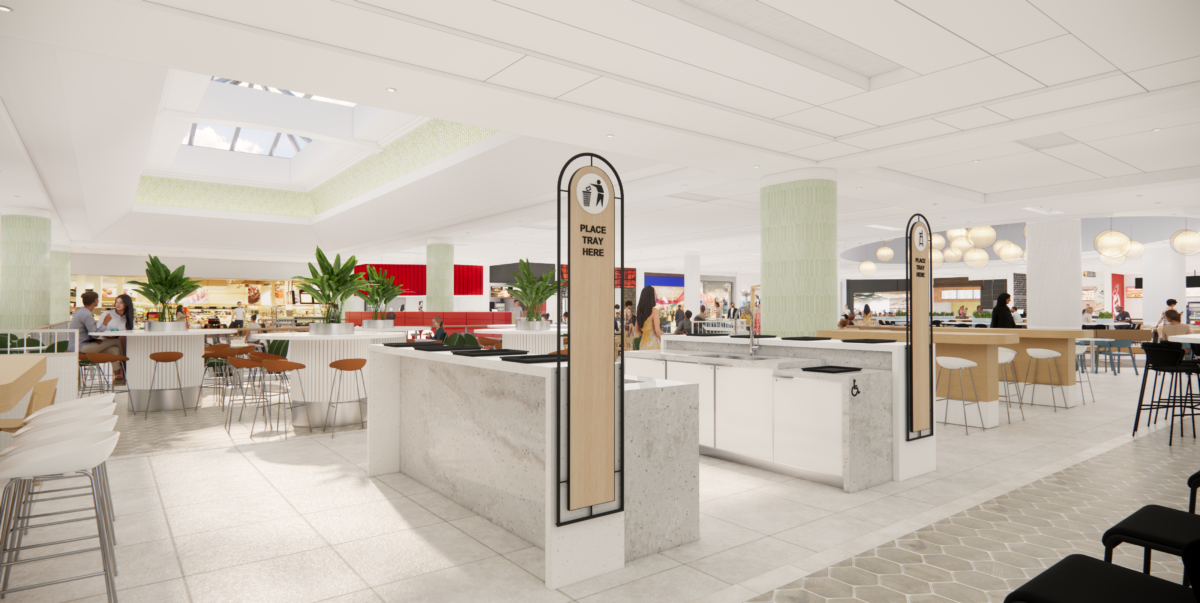
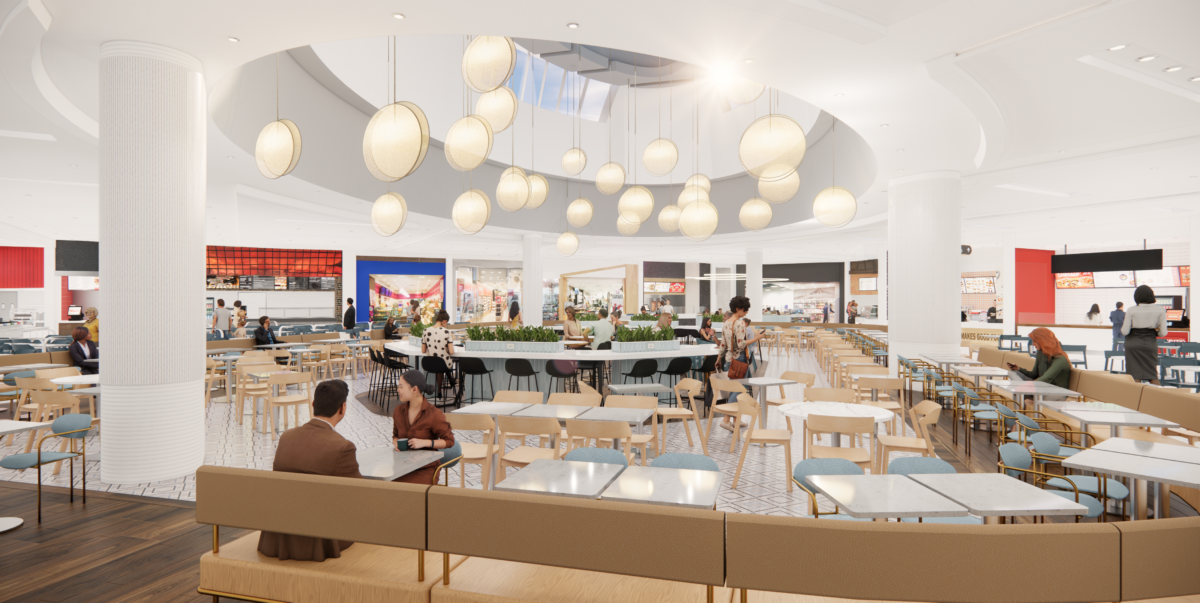
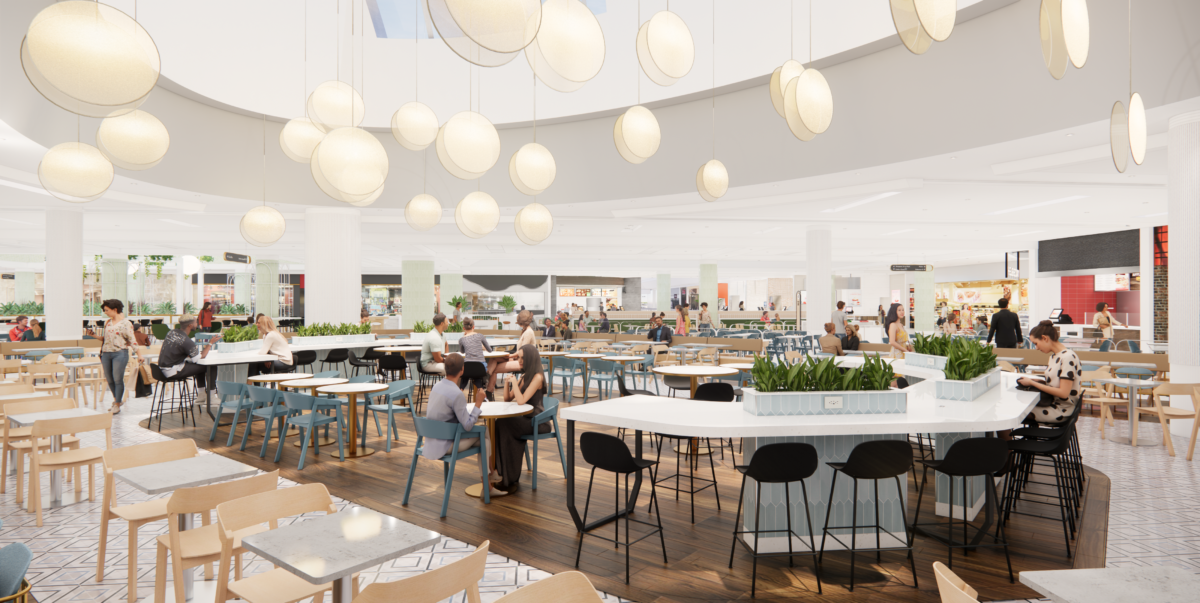
Bramalea City Centre is embarking on a multimillion-dollar renovation of its South Food Court, beginning with Phase One on March 6.
This transformation will introduce a contemporary design, improved functionality, and an enhanced dining experience for visitors. The project will proceed in phases to ensure minimal disruption, with a grand reveal planned for 2026, said the Centre in a news release.
Phase One will focus on foundational upgrades, including the installation of new flooring, ceiling treatments, and enhanced lighting. Seating arrangements will be reconfigured to improve comfort and traffic flow, while work will begin on optimizing waste separation infrastructure and refining storefront visibility to create a more open and inviting atmosphere, it explained.
“This renovation reflects our ongoing commitment to enhancing the visitor experience at BCC,” said Andrew Butler, General Manager Bramalea City Centre. “By modernizing our food court, we are ensuring it remains a vibrant and welcoming space where our diverse community can gather and enjoy a variety of dining options.”
Source- Bramalea City Centre
“Designed by Bess Pappas of Pappas Design Studio Inc. and built by Govan Brown Associates Limited, the refreshed space will feature a contemporary, airy aesthetic with refined finishes, improved circulation, and greater accessibility. These enhancements will create a more enjoyable and seamless dining experience for BCC visitors,” noted the Centre.
“BCC is committed to minimizing disruptions throughout the renovation. Food vendors will remain operational, with most construction taking place after hours. Regular updates will be shared on BramaleaCityCentre.ca and across BCC’s social media channels.”
Bramalea City Centre is one of Canada’s largest shopping destinations, offering over 300 stores, services, and dining options.
Rendering of the new Maison Lipari store in Montreal, across from Royalmount. Image supplied.
Maison Lipari, a cornerstone in Montreal’s luxury homeware scene for over five decades, is set to embark on a significant expansion. The retailer plans to open a sprawling 21,000-square-foot retail space directly across from the Royalmount development, marking a transformative phase in its storied history.
Reflecting on the company’s journey, second-generation owner Patrizia Lipari shared insights into their strategic relocation. “We opened our first store 50 years ago in St. Leonard, which is the East end, a suburb of Montreal,” she recounted. “Five years ago, we opened a second, more central location at the junction of two major highways. It’s an area with furniture stores and luxury car dealerships—a high-traffic zone.”
Maison Lipari co-founder Giovanna Lipari, left, with daughter Patrizia Lipari.
Initially occupying 5,000 square feet, Maison Lipari expanded to 7,500 square feet by integrating adjacent spaces. However, the desire to offer a more comprehensive shopping experience necessitated further growth. “About a year ago, we learned that a major tenant was relocating across the street to Royalmount,” Lipari explained. “We saw an opportunity to take over their spot, which is three times the size of our current location.”
Enhancing the Shopping Experience
The new store isn’t just about increased square footage; it’s about redefining the customer journey. “To do what we’re doing correctly, we need at least 12,000 to 13,000 square feet,” Lipari noted. “We’re currently crammed into 7,500 square feet, which is overwhelming for both us and our customers.”
The expanded space will allow Maison Lipari to introduce new product categories. “We’ll be adding accent furniture, outdoor items, and providing proper space for beds and mattresses,” Lipari said. “We also plan to incorporate a leased restaurant component so customers can have lunch and extend their stay. It’s about creating a destination.”
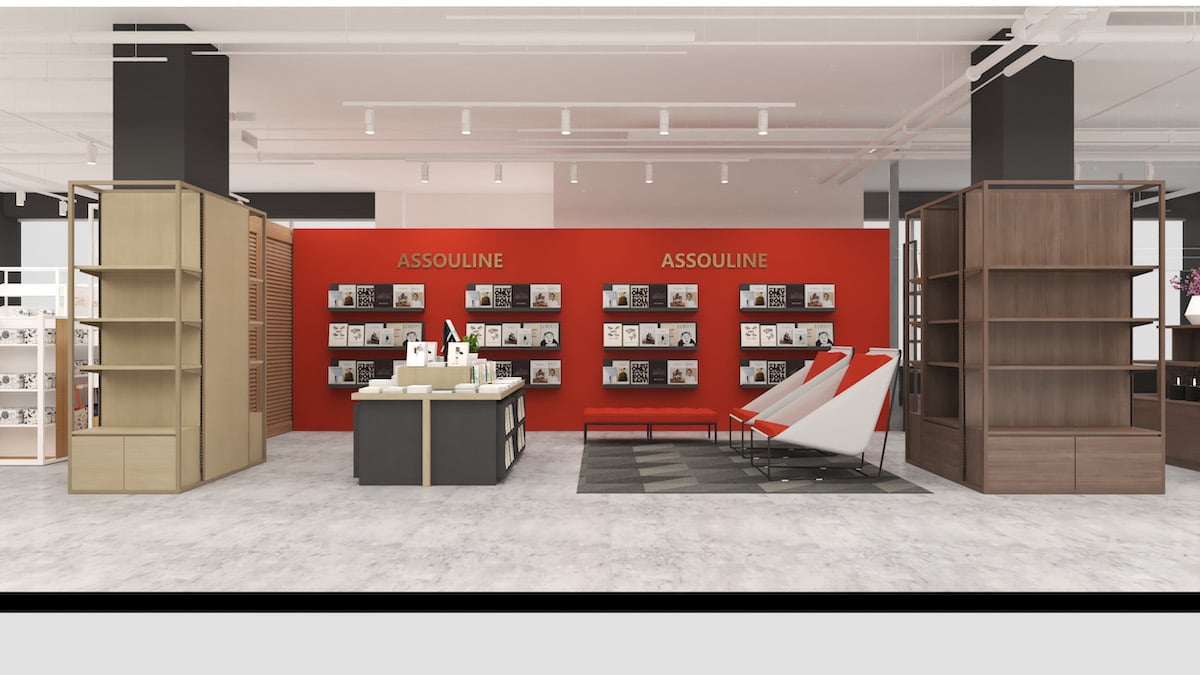
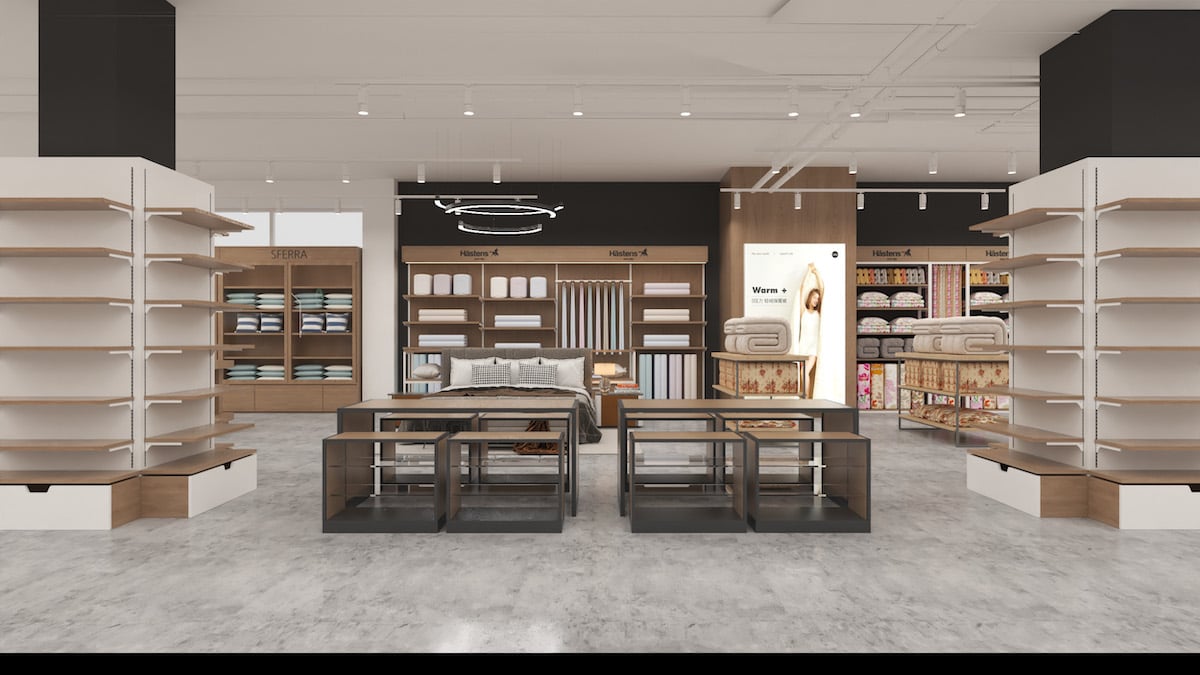
Rendering of the new Maison Lipari store in Montreal, across from Royalmount. Image supplied. Rendering of the new Assouline shop-in-store at the Maison Lipari in Montreal, across from Royalmount. Image supplied.
A Culinary and Lifestyle Destination
The envisioned restaurant aims to reflect the company’s heritage. “We’d like it to align with our French and Italian roots,” Lipari mentioned. “Perhaps a bistro style or Italian cuisine, considering our family’s origins.” A restaurant operator hasn’t been selected as of yet. “We hope to have this component ready by the end of the year or early 2026.”
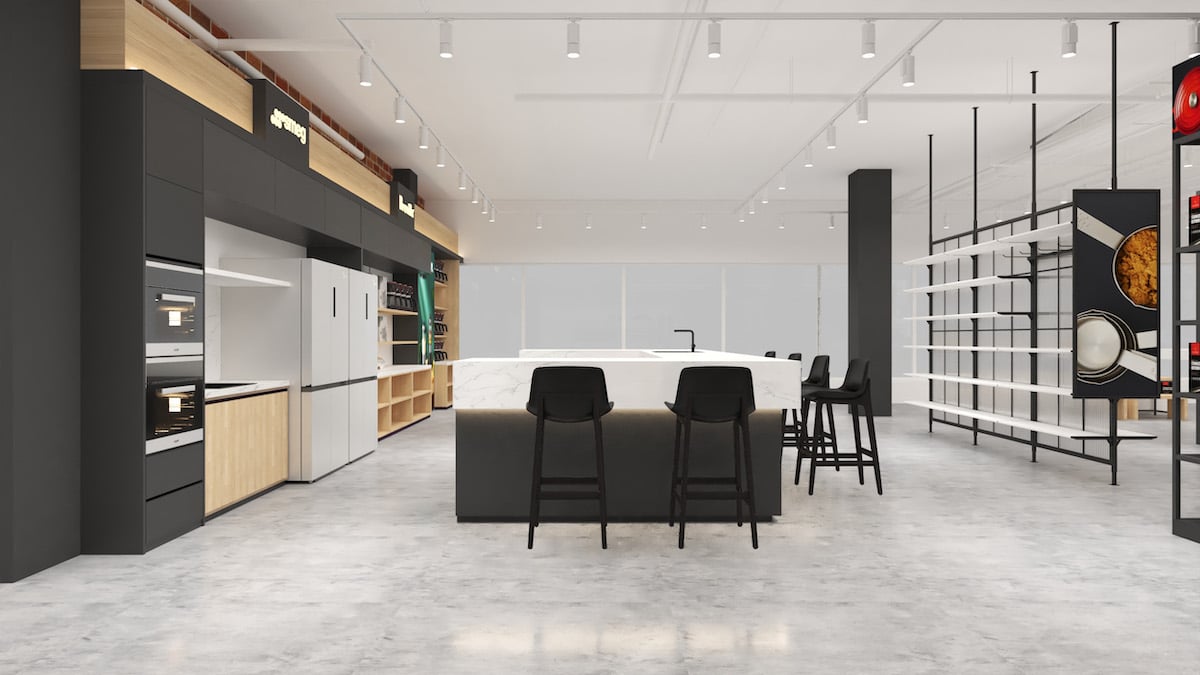
Beyond dining, the new location will feature a functional demonstration kitchen. “We’re installing a demo kitchen for hosting events and chef demonstrations,” Lipari revealed. “It’s an opportunity to showcase our cookware and offer interactive experiences for our customers.”
Situated at the corner of Royalmount and Décarie, the new store will face the Royalmount development. “From our north-facing windows, you can see the mall,” Lipari described. “It’s a complementary relationship. We’re in a design centre, and our offering fills a niche that’s been missing here in Montreal, and even in Canada.”
Rendering of the new Hastens shop-in-store at the Maison Lipari in Montreal, across from Royalmount. Image supplied.
Curated Collections and Exclusive Brands
Maison Lipari prides itself on offering a curated selection of luxury homeware brands. “We carry over 150 brands, many of which are exclusive to us in Quebec,” Lipari stated. “For instance, we’re the only store in the East Coast offering Hästens beds.”
Other notable brands include Christofle, Bernardaud, and Baccarat. “Our product range is thoughtfully curated,” Lipari emphasized. “It’s fine homeware that you can’t necessarily find elsewhere.”
Rendering of a kitchen display at the Maison Lipari in Montreal, across from Royalmount. Image supplied.
Dedicated Spaces for Designers and Customers
Understanding the importance of collaboration, the new store will feature a design centre. “We’re building a large conference room where designers can work privately with their clients,” Lipari explained. “It’s a space to lay out materials and be inspired, enhancing the overall shopping experience.”
Additionally, the store will house branded corners for an immersive experience. “We’re working on creating dedicated spaces for various brands,” Lipari said. “Customers will be able to explore a wide range of offerings in distinct sections.”
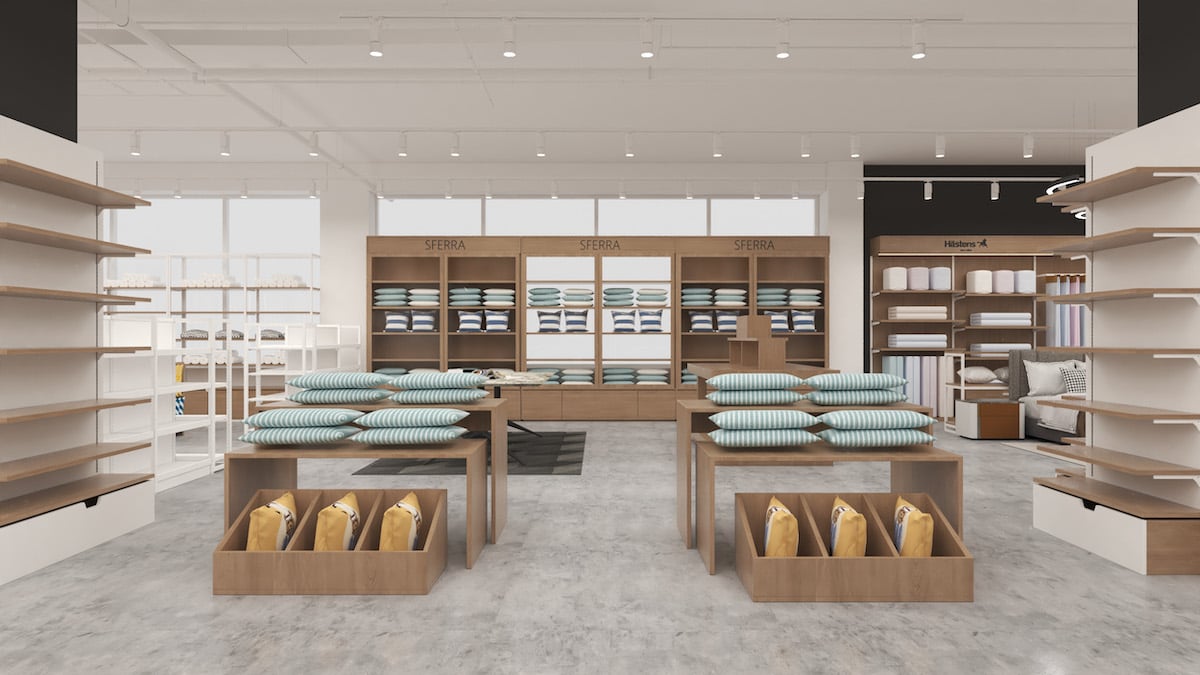
Rendering of the new Sferra shop-in-store at the Maison Lipari in Montreal, across from Royalmount. Image supplied.
Embracing E-Commerce and Future Expansion
While the physical store is central to Maison Lipari’s identity, there’s a growing emphasis on e-commerce. “We’ve been focusing on increasing our online visibility,” Lipari noted. “Our website offers almost our entire product assortment, which is a challenge given we have about 30,000 active SKUs.”
Looking ahead, expansion beyond Montreal is on the horizon. “We’re interested in markets like Toronto and Florida,” Lipari shared. “Many of our customers move between these locations, and we already ship a lot to Florida. But first, we want to fine-tune our new concept here before considering replication elsewhere.”
Baccarat crystal at Maison Lipari in Montreal, Image supplied.
A Legacy of Quality and Service
Maison Lipari’s success is rooted in its commitment to quality and personalized service. “We want customers to enjoy their experience and think of us for anything related to home needs,” Lipari expressed. “Whether it’s outfitting a new room or finding the perfect gift, we’re here to help.”
The company’s dedicated team plays a pivotal role in this mission. “Our staff is incredibly knowledgeable,” Lipari praised. “Many have been with us for decades, bringing a wealth of experience and passion to what they do.”
As the new store’s opening approaches, excitement is palpable. “This expansion is a significant milestone for us,” Lipari reflected. “We’re eager to welcome customers to a space that truly reflects our vision for Maison Lipari’s future.”
Lufa Farms takes on the country’s capital, bringing their first basket of fresh, local, responsible products to Parliament Hill. (CNW Group/Lufa Farms Inc.)
After 15 years of pioneering urban agriculture in Montreal, Lufa Farms is expanding to Ottawa. Known for its innovative approach to sustainable food production and delivery, Lufa Farms is bringing the world’s first and largest commercial rooftop greenhouses to the nation’s capital, providing fresh, local produce and groceries directly to Ottawa residents.
Mohamed Hage. Source: Lufa Farms
“We’ve been looking forward to expanding to Ottawa for a long time,” said CEO Mohamed Hage. “Ottawa is a city that truly values food autonomy and sustainability. We’re thrilled to share our fresh vegetables and an incredible selection of local products with families here.”
Since its founding in 2010, Lufa Farms has been redefining urban agriculture by utilizing state-of-the-art rooftop greenhouses. These greenhouses grow a wide variety of vegetables, including tomatoes, cucumbers, lettuce, and peppers – all free from synthetic pesticides. The company uses a closed-loop hydroponic system, producing fresh, local vegetables with minimal environmental impact.
MarchéCentral. Source: Lufa Farms
As part of the expansion to Ottawa, the community will gain access to Lufa Farms’ online Marketplace, which features over 2,000 products from more than 450 trusted farmers and food makers. The Marketplace offers everything from fresh greens and organic cheeses to artisanal baked goods and responsibly sourced meats. All products are delivered directly to Ottawa residents’ doorsteps six days a week, ensuring the highest level of freshness and convenience.
Steven Guilbeault
“I had the opportunity to visit Lufa Farms in Montreal and witness firsthand their commitment to local, sustainable food production,” said Steven Guilbeault, Minister of Environment and Climate Change of Canada. “Their expansion to Ottawa is great news – more Canadians will have access to fresh, local products that offer both convenience and quality. This is a win for the environment, food security, and Canadian producers!”
Key Facts About Lufa Farms:
Harvest-to-door in under 24 hours: Vegetables are delivered less than a day after being picked.
Grown without synthetic pesticides: All produce is cultivated in hydroponic greenhouses and certified pesticide-free.
Local and sustainable: Delivering within a 3-hour radius of Montreal, including Ottawa, to keep food close to home.
A bounty of choices: Over 2,000 products from local farmers and food makers.
Flexible and easy: Choose your delivery day, pause when needed, or cancel anytime – a service tailored to fit your life.
Lufa Farms’ expansion to Ottawa marks a significant step in the company’s mission to create a more sustainable and accessible food system. The company is excited to become part of Ottawa’s vibrant food community, providing fresh, local produce while supporting sustainable farming practices and food autonomy.
Emefa Kuadey, Toronto-based, British-born Ghanaian fashion designer and founder of brand ISRAELLA KOBLA
By Aynsley Wintrip
Nothing unites a nation like a crisis.
Throw a potential trade war at us and we’ll toss our Canadian civility aside and boo our way through the national anthem of the adversary. We’ll dig out our Canada Day flags from the recesses of our basements to show the world we’re in fight mode. We’ll cancel March Break in Florida and go to Mexico instead. We’ll declare a boycott on American brands and shop Canadian. Take that!
This is well and good, but the patriotic signaling alone won’t make a lick of difference if Trump hammers us with 25% tariffs on everything and our government retaliates.
All businesses will be caught in the crossfire but women-owned businesses and the fearless female warriors at their helm have much to lose. According to Statistics Canada, majority women-owned businesses in Canada make up 19.6% of all private sector businesses in the country (as of Q1 2024). Most of them are in service industries such as retail trade, accommodation, food services and tourism. The rally cry to support Canadian-owned may help in the short term, but are Canadians prepared to change their ways for good?
Aynsley Wintrip
Emefa Kuadey is a Toronto-based, British-born Ghanaian fashion designer. Chances are, you don’t know her (which is a real shame; you should know about her brand, ISRAELLA KOBLA). She mainly sells her collections of feminine, minimalist clothing to Nordstrom in the US. Part of the reason is the nature of the Canadian consumer.
“Canadians will say they like something, but they need to know if others like it too before they make a purchase. Then, they dwell on price,” says Kuadey. “Americans see something they like, and they buy it, no questions asked.”
Kuadey launched her business in 2019. She’s been in crisis mode from the beginning. “Canadians are good at emergency response,” she says, citing the current shop-Canadian sentiment, the push to support local during covid, or to shop black-owned after the murder of George Floyd. “But when the dust settles, we tend to go back to our old patterns, which isn’t helpful to businesses like mine.”
We interviewed Kuadey and four other Canadian women entrepreneurs for a special issue of Genuinely Stellar on the tariff threats. Each woman cited different challenges on top of the ones they deal with every day, such as lack of advanced manufacturing options in Canada; lack of purchasing power for small enterprises; small local market opportunities; shrinking margins. Add in the prospect of Americans having to pay duty at the door when they buy something from a Canadian brand online and the situation feels hopeless.
We launched Genuinely Stellar, a weekly newsletter, to put a spotlight on women-owned brands because we’ve been there ourselves and understand the challenges. We have a tougher time raising capital than men (only about 4% of venture capital dollars go to women-owned businesses); we’re more likely to have domestic responsibilities on top of our business obligations than our male counterparts; we’re more likely than men to fund our businesses from personal savings; and we quite often launch our businesses as side hustles because we need an income to support our ventures.
Our government boasts support for women entrepreneurs. There are programs, funds, meetups and public-private partnerships, but when push comes to shove, are they really there for us when we need it? Kuadey has tapped government resources in the past, but it’s not easy. “I wish the Canadian fashion industry was taken more seriously,” she says. “I’ve taken advantage of government programs, but it’s really hard to find ones that apply to my business.”
Is it ever. Given that most women-owned businesses are in retail, food, accommodation and tourism, there is nary a mention of support for these types of businesses among government programs. Perusing the website of the government’s “Women’s Entrepreneurship Strategy,” established in 2018 to provide resources and supports to women starting businesses, we went down several rabbit holes looking for grants or loans for women in fashion and came up empty handed. Part of the challenge is that the initiative falls under the umbrella of Innovation, Science and Technology. If founders can find an angle to portray their fashion or beauty business as innovative with some tie to technology or science, they may unearth some support. If not, they go it alone. Such is life for women launching lifestyle businesses.
In a time of such uncertainty, one thing is for sure. If anyone is going to fight their way through a trade war, it’s women entrepreneurs. We are feisty, determined and clearly capable of navigating rough seas on our own. We’re not asking for handouts from the government. What we need is an environment where we can succeed, on our own turf.
Consumers have a role to play too. If they seek out smaller, homegrown brands, that put quality, craftsmanship and Canadian ingenuity at the forefront and reward them with their business, we will all be better for it. On that note, Emefa Kuadey will soon open her first ISRAELLA KOBLA boutique in Toronto’s Kensington Market. Visit in person or online. Buy something. Choose quality over quantity. And truly back a woman entrepreneur in your country creating a livelihood for herself and the people she employs.
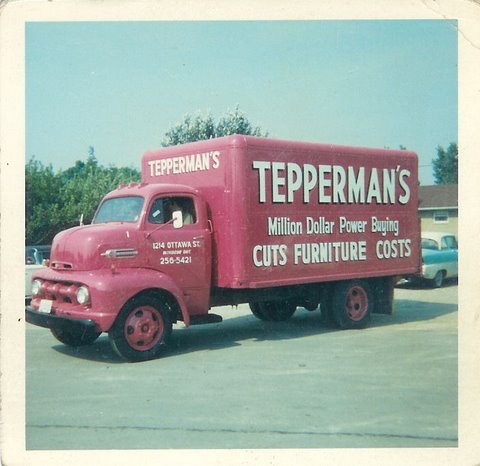
Tepperman’s, a family-owned furniture and appliance retailer with a rich 100-year history, is celebrating its centennial with exciting developments and a renewed focus on innovation. Executive Chairman Andrew Tepperman attributes the company’s longevity to its commitment to values, long-term vision, and adaptability. With efforts like solar installations at its stores and recognition as a top workplace, Tepperman’s continues to thrive in the competitive retail landscape.
The company operates seven stores across southwestern Ontario and is expanding cautiously, with plans for continued growth. Tepperman’s also runs an outlet brand. Rather than quickly entering new markets, the company focuses on enhancing existing locations.
Looking forward, Tepperman’s is addressing industry challenges, including tariff impacts and staying ahead in a tech-driven world. The company is upgrading to Oracle’s NetSuite ERP system to boost operational efficiency. Despite economic uncertainty and competition from larger retailers, Tepperman’s remains focused on its core values, ensuring high-quality service and products as it enters its second century of business.
Andrew Tepperman. Source- Tepperman’s
“This 100th anniversary is more than a celebration of our business—it’s a celebration of our valued customers, employees, and business partners who have contributed to our success over the decades,” said Andrew Tepperman, 3rd Generation, Executive Chairman.
“Looking back 100 years ago, there were 22 home furnishing retailers in Windsor. Today, Tepperman’s is the only one still standing. What we do is not unique, but how we do it is—like building long-term customer relationships and a great work culture.”
The third generation company has seven stores in southwestern Ontario – Windsor, London, Kitchener-Waterloo, Ancaster, Sarnia, Chatham, and St. Catharines. Tepperman’s is an award-winning leader in sustainability, with innovative programs such as EV charging stations installed at all stores, a 914 solar panel installation on the roof of its 70,000-square-foot Kitchener store, partnering with Habitat for Humanity to divert products from landfills, and working with Second Wind Recycling and RecycMattress to reduce waste.
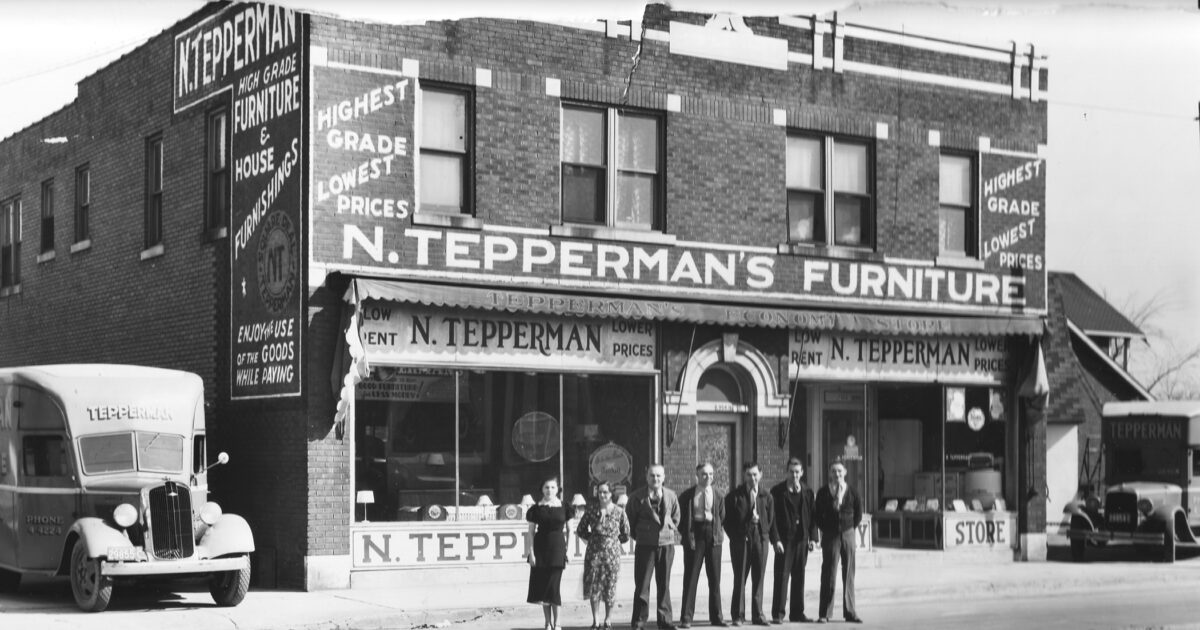
The history of Tepperman’s is a true Canadian immigrant story that started when Nate Tepperman came to Canada after the Russian Revolution. Starting with nothing more than a dream in 1925, Nate began selling rugs door-to-door on foot in Windsor, Ontario. As his business grew, he evolved from walking to a bicycle to a used pickup truck, eventually opening his first brick and mortar store in 1929.
His son, Bill Tepperman, took the helm in 1970, leading expansion into Chatham, Sarnia, and London. Today, under the leadership of brothers Andrew and Noah Tepperman, the company has grown to include stores in Kitchener, Ancaster, and St. Catharines.
Andrew and Noah Tepperman. Source: Tepperman’s
Key milestones include the opening of the Bargain Annex brand (now Outlet at Tepperman’s) in 1984, being honoured with the Canadian Retailer of the Year award in 2003, numerous Environment and Sustainability awards by the local Chamber of Commerce, voted Best Place to Shop by the readers of local newspapers, investing over $1M in children’s education including a unique Indigenous scholarship for post graduate studies, and being recognized as a Great Place to Work by the Great Place to Work Institute Canada for the past two years.
Source: Tepperman’s
Masoud Negad
“As we honour our past with this 100th anniversary, our story continues as there is so much more in store. We’re focused on the future as we innovate and grow. To survive 100 years, a company must be more than just a business — it must wholeheartedly embrace and prioritize the communities it serves. As our mission statement states, when we do it right, they will come back.” said Masoud Negad, newly appointed CEO of Tepperman’s.
Andrew Tepperman said a book was created on the company’s history and they discovered some interesting things. For instance, he found out that his grandfather, who came from Russia in 1920, was about to go to Argentina to follow his girlfriend. Then, all of a sudden, the papers came in for Canada, and he had to make a choice. He chose Canada.
The company opened its seventh store in May 2024 in St. Catharines. It also runs seven separate Outlet stores attached to the main store.
“The next big thing will be finishing the renovation of our stores to the Tepperman’s 2.0 model. We started in 2018, and now the only one left is London,” he said. “It’s about 90,000 square feet, so we had to delay it due to insane construction and renovation costs after COVID. I’ve got all the engineering drawings and the design done, but I just need to wait until it’s cost-effective.
“After that, it’ll be our final renovation. We’re always getting inquiries about new sites in Ontario, but we like to move slowly and carefully. We’re 100 years old now, and with seven stores in seven markets, we focus on controlling them, have the top market share, before we move on. I’d like to digest St. Catharines first.”
3 generations. Source: Tepperman’s
Even though 100 years is a long time and a lot has changed—like technology, marketing, and e-commerce—what hasn’t changed is what Tepperman thinks has been the secret sauce.
“Myself, my parents, and my grandfather have always been fully committed to the retail business. We don’t have hobbies, we don’t golf. We love the retail business, we’re just in it 110%. There are no distractions at all. For example, when I go on vacations with my family, I always leave for a bit to visit other retail stores for new ideas,” he said.
“Another thing is our value system and culture. My brother and I develop 10-year visions each year that are supported by six guiding principles. These are non-negotiable, and our departments must incorporate them into their annual plans. For example, 10 years ago, we said we wanted to double our sales. We didn’t tell our team how to do it; we just let them figure it out. It turned out to be a bit of both: same-store growth and new market growth.
Source: Tepperman’s
“We also set goals like being able to produce our own power and get off the grid. As a result, two of our locations have solar installations. Ten years ago, we set a goal to be certified as the best place to work, and for the second year in a row, we’ve been certified as a great place to work. Many retailers I speak to aren’t doing this, and I don’t know why, because having that far-reaching vision brings the whole team together, and you’re all moving toward that common goal.
“Another thing is the discipline of execution. My father, who retired in 2006, had an expression: “By when.” If we were about to do something, he would ask, “By when?” That simple question forced us to set deadlines and meet them.”
Many independent retailers over the years have been competing against some giant retailers in their same segment of the industry.
Tepperman said the company has been competing against the giants for years. For years the brand only had a presence in Windsor. He said he keeps a Windsor phone book from 1931 on his desk, and it lists 22 furniture stores just in Windsor.
“Today, only one remains—Tepperman’s. Over the years, we’ve competed against major chains like Sears Canada, Future Shop, Eaton’s, and international competitors who eventually left the market,” he said.
“A lot of it comes down to being in it for the long term and adapting quickly. We don’t have a plan B. We’ve got to pivot fast, adapt fast. A lot of it has to do with a culture of continuous improvement.
“We also come from Windsor, being headquartered in Windsor, which has volatile economic conditions and higher unemployment rates compared to the rest of Canada. That creates resilience, and we’ve been able to transfer that to other markets that we’re in.”
Source: Tepperman’s
Tepperman said the retailer is focused on assessing the potential impacts of tariffs, especially on products sourced from the U.S. It has been evaluating alternatives, and if they still want to work with American companies. It is also looking into subsidies to offset the tariffs so it doesn’t have to pass the cost onto the customer.
“We’ve been sourcing globally for 30 to 40 years, so we have options. Over 50% of what we sell is made in Canada,” he said.
“The other big project we’re working on is transitioning to a new ERP (enterprise resource planning) system. We’ve spent the last two years preparing for the switch from a 26-year-old legacy system to Oracle’s NetSuite, which will bring a lot of new efficiencies. This change will impact everything from answering phone calls to digital marketing. We’re looking forward to that.”