Retail Insider is streamlining its Canadian retail news from around the web to include a handful of top news stories that can be viewed quickly during the day. Here are the top stories from the past 24 hours.
Entrance doors to Lululemon at Yonge and Bloor in Toronto. Photo: Craig Patterson
Lululemon Athletica Inc., the Vancouver-founded athletic apparel giant, has raised its revenue and earnings guidance for the fourth quarter of its fiscal year. The company attributes the revision to strong consumer demand during the holiday season, reflecting continued momentum in its business strategy.
Meghan Frank, Lululemon’s Chief Financial Officer, credited the company’s elevated performance to shoppers’ enthusiastic response to its product offerings. “The holiday season proved to be a success, underscoring the strength of our brand and the appeal of our offerings,” Frank said in a statement.
Revised Revenue and Earnings Projections
Meghan Frank, Lululemon’s Chief Financial Officer
The company, which reports its financial results in U.S. dollars, now anticipates net revenue for Q4 to range between US$3.56 billion and US$3.58 billion, compared to the earlier forecast of US$3.48 billion to US$3.51 billion. This updated projection reflects an 11% to 12% growth over the same period in 2023, or a 6% to 7% increase excluding the extra 53rd week in fiscal 2024.
In terms of profitability, Lululemon raised its diluted earnings per share (EPS) estimate to a range of US$5.81 to US$5.85, up from the prior range of US$5.56 to US$5.64. The upward revision demonstrates robust operational performance and efficient cost management during a critical shopping season.
Lululemon’s Evolution from Local Innovator to Global Powerhouse
Founded in Vancouver in 1998 by Chip Wilson, Lululemon began as a yoga-inspired activewear brand with a focus on technical athletic apparel. Initially operating out of a single store in the Kitsilano neighbourhood, the company quickly grew in popularity due to its innovative fabrics, community-driven marketing, and commitment to a health-conscious lifestyle.
The company went public in 2007 and has since expanded its product lines to include apparel for running, training, and everyday wear, as well as an increasingly popular menswear segment. With over 650 stores globally, Lululemon continues to solidify its position as a leader in the activewear market. Its acquisition of home fitness company Mirror in 2020 further showcased its ambition to integrate wellness and technology.
Meeting Consumer Demands in a Competitive Market
Lululemon’s latest guidance reflects its ability to navigate a challenging retail landscape. Despite rising economic uncertainties and intensifying competition from rivals like Alo Yoga, Nike, Adidas, and emerging athleisure brands, Lululemon remains a standout performer. The company’s premium pricing strategy and loyal customer base have helped it maintain healthy margins and consistent growth.
Key to its success is its product innovation. Signature fabrics like Luon, Nulu, and Everlux set the brand apart, catering to both performance and lifestyle needs. Moreover, Lululemon’s commitment to sustainability resonates with modern consumers. Its “Be Planet” initiative focuses on reducing waste, sourcing sustainable materials, and achieving net-zero emissions by 2050.
Momentum Ahead for Fiscal 2024
This positive Q4 outlook caps a strong fiscal year for Lululemon, showcasing its ability to drive growth through product innovation, strategic marketing, and omnichannel expansion. The company’s increased focus on e-commerce, which saw a surge during the pandemic, remains a critical pillar of its growth strategy. Its digital sales continue to complement its brick-and-mortar operations, creating a seamless shopping experience for customers.
Industry analysts view Lululemon’s success as a barometer for the broader athleisure and activewear market. The company’s ability to adapt to changing consumer preferences, such as the shift towards comfort-driven fashion, underscores its resilience and market leadership.
Challenges and Opportunities in 2025
As Lululemon moves into 2025, maintaining its growth trajectory will require balancing innovation with operational efficiency. Expanding into untapped markets and growing its menswear and footwear lines are potential growth areas. However, global economic pressures and evolving consumer habits will test the company’s agility.
Red Apple Stores is set to bring its signature value-driven shopping experience to the residents of Gravelbourg, Saskatchewan, with the grand opening of its newest location on Friday, February 14, 2025.
Known for its commitment to serving small towns and rural communities, Red Apple’s latest store highlights the retailer’s dedication to creating accessible and affordable shopping options for families across Canada.
Commitment to Small Communities
“We couldn’t be more thrilled to expand into Gravelbourg,” says Brendan Proctor, CEO of Red Apple Stores. “Our mission is to deliver great value, incredible deals, and quality products to families, and we’re looking forward to serving the wonderful people of this community.”
Brendan Proctor, CEO of Red Apple Stores
The new Gravelbourg location is part of Red Apple’s strategy to solidify its presence in small-town Canada, where it has become a trusted shopping destination for over 20 years. With more than 140 stores across the country, the retailer is celebrated for offering friendly service, a welcoming environment, and a diverse product assortment tailored to meet the needs of local shoppers.
One-Stop Shopping for Families
The Gravelbourg store promises to deliver an extensive selection of products across several categories, making it a convenient one-stop shop for families. Shoppers can expect to find:
Fashion and apparel for all ages.
Home essentials to refresh living spaces.
Toys and everyday goods to meet household needs.
A curated selection of food items and treats.
Adding to the store’s appeal is Red Apple’s signature Candyworks™ candy shop, a favourite among customers for its wide variety of sweets and confections.
Grand Opening Celebration
To mark the occasion, Red Apple is hosting a grand opening celebration starting at 9:00 a.m. on February 14. The event will include a ribbon-cutting ceremony and several exciting promotions:
$10 shopping card and free laundry basket for the first 100 customers.
Limited-edition Red Apple shopping totes, available while supplies last.
Exclusive deals and discounts throughout the weekend.
A chance to win a $1,000 shopping spree, with no purchase necessary.
These festivities are designed to welcome the Gravelbourg community with a memorable shopping experience, introducing residents to the value and convenience Red Apple Stores is known for.
About Red Apple Stores
Red Apple Stores has built its reputation as Canada’s favourite hometown store, focusing on small-town general merchandise retail. With over 140 locations nationwide, the chain prides itself on providing exceptional service, quality products, and unbeatable value in categories such as food, fashion, and home essentials. For more than two decades, Red Apple has been a reliable retailer, offering big savings and creating a welcoming shopping experience in smaller communities.
Red Apple Stores is a Canadian chain of general merchandise retail stores, serving small towns and rural communities across the country. Founded in 1991, the company has grown to over 140 locations, offering a wide range of products including clothing, household goods, toys, and groceries.
The origins of Red Apple Stores can be traced back to The Bargain! Shop, which was established in 1991 as a closeout store division of Woolworth Canada. In 1999, The Bargain! Shop was sold to a Canadian investment company, marking its transition to a Canadian-owned entity.
In 2012, The Bargain! Shop began rebranding its stores to Red Apple, aiming to refresh its brand identity and better serve its customer base. This rebranding effort was part of a broader strategy to enhance the shopping experience and align the stores more closely with the needs of small-town communities.
The company’s headquarters are located in Mississauga, Ontario, supporting its nationwide operations. With a commitment to meeting everyday needs and more, Red Apple Stores continues to be a reputable neighborhood retailer in Canada’s small towns.
The 2024 holiday season brought a notable shift in consumer spending habits, with Black Friday regaining its position as the busiest shopping day of the year. According to Moneris, Canada’s leading commerce provider processing a third of all nationwide transactions, this marks a return to pre-pandemic patterns.
“Black Friday reclaiming that number one spot represents a change from the past couple of years, where the busiest day for retail has been just before Christmas,” said Sean McCormick, Vice President of Business Development, Data Services at Moneris.
Sean McCormick, Vice President of Business Development and Data Services at Moneris
The shift may stem from shoppers opting to make early purchases to avoid delays caused by the Canada Post strike. This mirrors behaviours observed in 2020 and 2021, when supply chain concerns prompted consumers to shop well ahead of the holiday rush.
Top Spending Days of the 2024 Holiday Season
Moneris’ data, which analyzed retail transactions from November 1 to December 31, reveals that the top three spending days for 2024 were:
Friday, November 29, 2024 (Black Friday): Achieving 100% of its baseline volume.
Monday, December 23, 2024: Reaching 93% of Black Friday’s volume as last-minute shoppers flocked to stores.
Friday, December 20, 2024: Recording 91% of Black Friday’s volume, underscoring the influence of pre-Christmas buying.
“Reviewing a ranking of the busiest days over the holidays helps us identify sweet spots for spending,” McCormick explained. “Looking at the top three busiest days for retail, we see Black Friday followed by the final few days before Christmas, where last-minute shoppers were driving spending.”
Cyber Monday Makes a Comeback
Another significant highlight was the rise of Cyber Monday. Previously ranked as the 17th busiest day in 2023, it jumped to the tenth spot in 2024, capturing 74% of Black Friday’s volume.
“The Canada Post strike may also have helped improve its ranking, with consumers trying to account for shipping delays,” noted McCormick.
This suggests that while in-store shopping dominated, e-commerce played a vital role in the overall holiday spending landscape.
Boxing Day Quiet Among Shoppers
Contrary to popular belief, Boxing Day ranked among the quietest shopping days of the season. It recorded just 46% of Black Friday’s volume, a stark contrast to its historical significance as a major retail event.
“As for the quietest days, they occur in the lull after Christmas and before all the holiday sales have ramped up,” McCormick added.
This trend reflects a growing shift in how Canadians approach post-Christmas shopping, with more emphasis on pre-holiday deals.
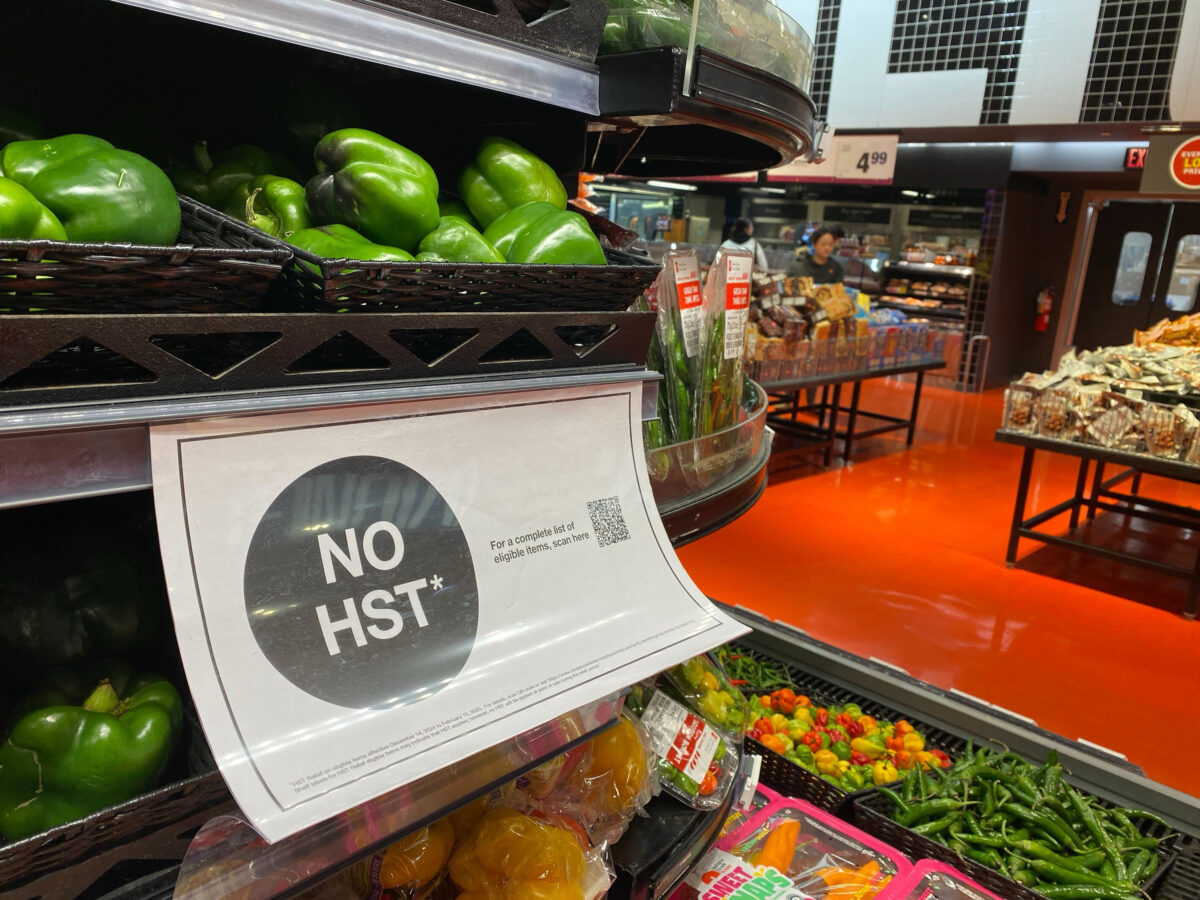
No HST on products in a grocery store in Toronto. Photo: Dustin Fuhs
Modest Growth Despite Temporary Tax Holiday
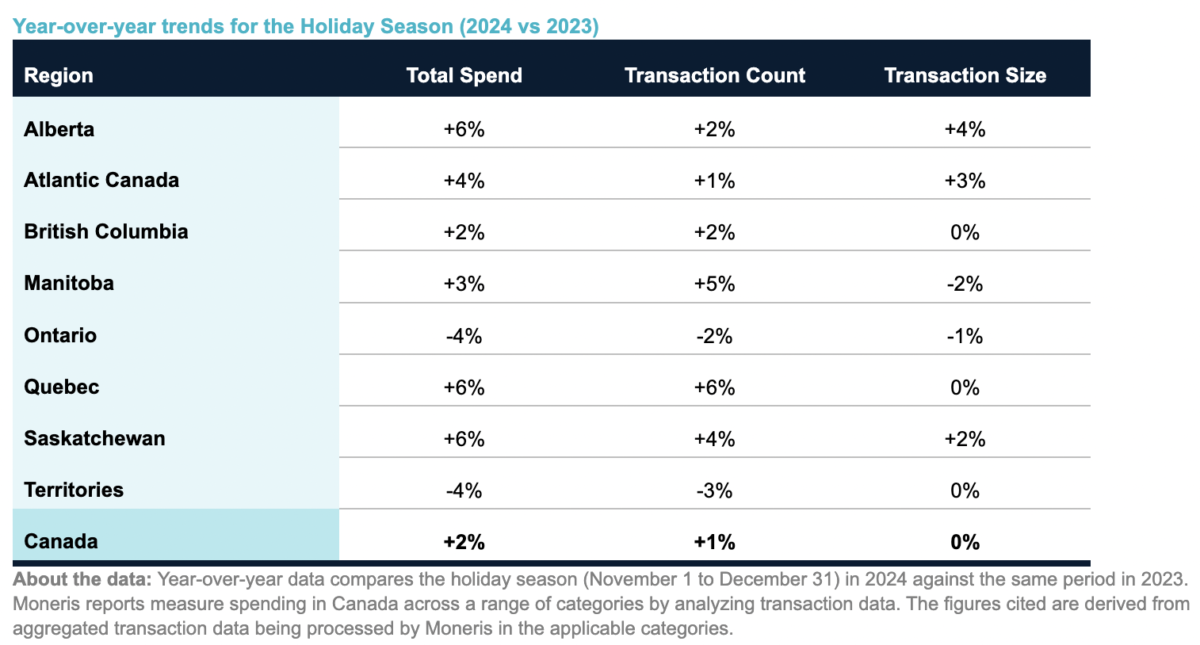
Despite the temporary tax holiday implemented during the 2024 holiday season, spending across Canada saw only a modest 2% increase compared to 2023. Regional differences highlighted contrasting spending patterns, with Alberta and Quebec leading growth at 6%, while Ontario and the Territories experienced declines.
“When thinking about the temporary tax holiday, it’s still a bit too early to tell,” McCormick said. “Through January, as more data becomes available, we’ll be able to get a better understanding of what the impact of the temporary tax holiday has been.”
Regional Holiday Spending Trends
Breaking down spending by province, Moneris observed varied year-over-year trends:
Preparing for Post-Holiday Adjustments
As businesses prepare for February, McCormick advised retailers to update their tax settings once the tax holiday ends on February 15. “Should our merchants need any assistance, we’re here to help,” he said.
McCormick also anticipates a potential lift in February spending as last-minute shoppers take advantage of the remaining tax holiday discounts.
Looking Ahead
The 2024 holiday season reaffirmed the enduring significance of Black Friday as a cornerstone of retail activity in Canada. Moneris’ insights provide a roadmap for businesses to anticipate consumer behaviour, optimize inventory, and plan promotions for key shopping days.
“Understanding these spending patterns is invaluable,” McCormick concluded. “It allows retailers to strategize more effectively and cater to the evolving needs of their customers.”
Customers in U.S. and Canada company-owned and operated stores will no longer pay extra for customizing their beverage with nondairy – including soy, oat, almond and coconut beverage (CNW Group/Starbucks Coffee Company)
A class-action lawsuit has been filed against major coffee chains, including Starbucks, Tim Hortons, and Second Cup, over surcharges for plant-based milk alternatives such as soy or oat beverages. The authorization request, submitted to a Quebec court last week, challenges the fairness of these fees, suggesting they may not be financially justifiable and could even serve to discourage plant-based consumption.
Statistics Reveal Plant-Based Milk Is Often Cheaper Than Dairy
Data from Statistics Canada indicates that plant-based beverages have been consistently cheaper than dairy milk for most of the last six years, with an average price difference of about 15%. The price gap continues to widen, driven by rising dairy production costs and growing consumer demand for plant-based alternatives. While retail prices do not fully reflect what coffee chains pay their suppliers, these trends strongly suggest that surcharges are not aligned with current cost realities. This discrepancy raises a critical question: are these charges a financial necessity, or were they a deliberate strategy to discourage plant-based consumption?
One plausible explanation is that these surcharges served to subtly steer consumers back toward dairy, aligning with the interests of Canada’s supply management system. Under this system, dairy boards regulate production and prices, ensuring a stable market for dairy farmers but also protecting the industry’s dominance. Coffee chains may have indirectly supported this system by imposing financial barriers on plant-based choices, a practice that becomes harder to justify as plant-based options become mainstream and economically competitive.
Significant Revenue Generated from Decades of Plant-Based Surcharges
For nearly three decades, coffee chains have charged fees ranging from $0.50 to $0.80 for plant-based milk, generating significant revenue. Starbucks Canada alone is estimated to have collected over $337 million through these surcharges, with the total across all chains likely reaching billions. The lawsuit also highlights the discriminatory impact of this practice, particularly on consumers who cannot consume dairy. A 2020 study from the Journal of the Canadian Association of Gastroenterology estimated that 44% of Canadians—about 16 million people—experience lactose intolerance due to lactase non-persistence. Penalizing these consumers for their dietary restrictions raises ethical concerns, especially when alternatives are cheaper.
Proponents of free-market principles might argue that coffee chains have the right to set their own prices, and consumers can choose to accept or reject them. However, these practices must also be weighed against ethical responsibilities and consumer perceptions. Charging extra for plant-based options—despite their lower cost—risks being seen as opportunistic or as supporting an already heavily subsidized dairy industry. This perception of “profit gouging” or hidden motivations could erode trust and loyalty among a growing base of consumers prioritizing sustainability and fairness.
Coffee Chains Drop Surcharges Amid Legal and Consumer Pressure
Interestingly, Starbucks Canada eliminated its surcharge for plant-based milk in November, followed shortly by Tim Hortons. While these decisions may reflect shifting consumer expectations or internal cost recalculations, the timing coincides with the lawsuit’s filing. Whether coincidental or strategic, these changes underscore the growing demand for fairness and transparency in food service practices. With plant-based options now cheaper and more accessible than ever, the industry faces increasing pressure to align pricing with consumer values and market realities.
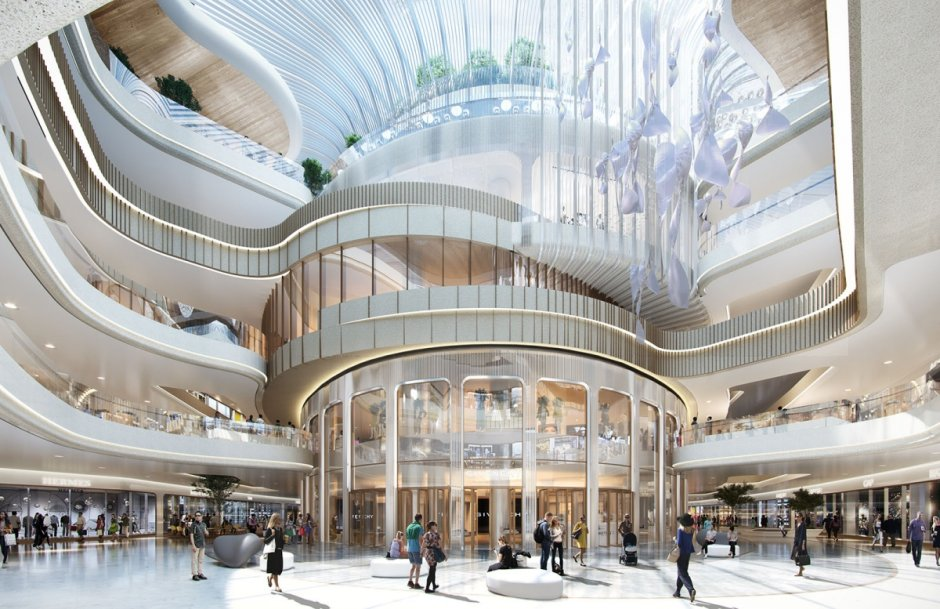
Reimagining the future of shopping centres is often on the minds of retailers and developers, whether through digital transformation, experiential retail, or omnichannel strategies. While these often-discussed concepts are essential, they overlook shifts that will shape the future of these spaces. As we move further into the 21st century, shopping centres will not only change, but may become entirely reimagined spaces that serve multiple functions extending far beyond their original purpose. This transformation, driven by the needs and expectations of Generations Alpha and Beta, presents an innovative and intriguing vision of the future of retail. Shopping mall operators should consider them now to secure the future of indoor and outdoor malls.
Futuristic shopping centre – Image: IDEA.club
Rising generations
Within the next 20 years, the landscape of shopping centres will be intensely influenced by the needs and expectations of generations Alpha and Beta. These generations are coming of age in a world where economic challenges and technological adoption persist, demanding more from these spaces than previous generations – a refuge and shopping access that inspires rather than promotes disillusion. Today, sixty per cent of the population lives paycheck to paycheck—and this will be a future economic reality that will be passed down—so shopping centres must evolve to offer value, accessibility, and purpose-driven experiences that resonate with these future consumers. Their parents, in their 30s and 40s, worry about their children’s futures. As such, malls have a unique opportunity to empower and shape the communities they serve.
Shopping centres can become social ecosystems, where retail is only one of many purposes, filling a more reflective social need in a world progressively defined by remote work and digital everything. Shifting into community hubs, shopping centres can host coworking spaces, educational workshops, and even wellness centres, blurring the lines between commerce and community.
Futuristic shopping centre – Image: IDEA.club
Urban spaces will become more congested, and shopping centres could evolve into micro-urban environments. Shopping centres where you can live, work, play, and shop are already planned. These centres would reduce the need for transportation, tapping into the planning vision of municipalities of 15-minute commutable cities.
As the environmental issues continue as a global challenge, shopping centres can integrate green functionalities and create settings supporting, promoting, and providing clean water, air, and energy. They may even identify sustainable retailers for consumers to find more easily. As consumers demand more transparency, developers will have to deliver it.
Oakridge Park in Vancouver. Rendering: QuadReal
Shopping centres must evolve
Their one-size-fits-all model is getting stale. Shopping venues should reflect the social and economic dynamics of their local demographics. Some might feature innovation labs, tech expos, and maker spaces in areas with a high concentration of tech companies. In contrast, a centre in a suburban district might prioritize restaurants, entertainment, and art events to allow consumers to decompress.
While the integration of digital and physical retail is a common categorization of how and what technology has changed, the future of shopping centres must embrace emerging technologies to keep up with customers and retailers alike. Machine-driven AI experiences will unify humans and their devices, creating an opportunity for the physical space of a shopping centre to engage digitally. Personal AI assistants are coming, and they will create immersive experiences, creating a significant opportunity for retailers and shopping centres.
China Trade Center Architecture Project. Image: IDEA.club
Retail as a service
My favourite opportunity is retail as a service (RaaS). It is a concept that’s sure to raise some eyebrows across the industry. Both in terms of what it means as well as the ways by which it can be delivered. Both retailers and consumers can benefit from these platforms which can be introduced as subscription services.
For retailers, it could mean services like logistics, customer data and technology infrastructure for those less advanced. Consumers would be able to access new product launches or personalized customer experiences. This type of integrated model would allow shopping centre operators to adapt quicker to market changes and consumer preferences.
Of course, there is also healthcare, which has been limited to dentistry and eyecare in shopping centres. Other services will increasingly become consumer-centric, integrating healthcare devices into various physical services, offering exclusive and holistic treatments, and strengthening one’s wellness. This would be akin to new retail therapy aimed at health and longevity for all demographics.
Ultimately, the goal is to continue driving foot traffic. However, this transformation, like most others, calls for leadership with a vision to not just adapt to new trends, but to become dynamic entities that serve a broader purpose.
Canadians are heading into the New Year feeling more pessimistic about their personal finances, despite declining interest rates, according to a new report released Monday by MNP.
The latest MNP Consumer Debt Index, conducted quarterly by Ipsos, dropped a staggering 10 points to 79 points, marking the second-lowest level on record since the Index’s inception in 2017. Canadians’ personal debt rating has plunged to an all-time low, marking a sharp 12-point decline from the previous quarter. The only other time personal debt rating reached close to this low point was in December 2022, the company reported on Monday.
“Many Canadians are already tightening their finances, reassessing budgets, and exploring cost-cutting measures to manage rising living costs or debt repayment. Unfortunately, in some cases, even substantial sacrifices may fall short of providing meaningful financial relief even in the lower interest rate environment.
“Less wiggle room leaves households vulnerable to unexpected expenses or the impacts of economic changes. For those already living paycheck to paycheck, any financial disruption could quickly escalate into a crisis.
“For many, this time of year can feel overwhelming as the holiday bills arrive and financial realities set in, but reaching out for expert advice can mark a critical turning point – an opportunity to regain control and avoid more severe financial consequences such as bankruptcy.”
MNP said economic uncertainty is reflected in Canadians’ pessimistic outlook on their financial future. Fewer Canadians this quarter expect their debt situation to improve one year from now (27%, -4pts), while a growing number anticipate it will worsen (19%, +7pts). Alongside this, job anxiety has reached an all-time high, with two in five (41%, +9pts) worried someone in their household could lose their job. Moreover, half of Canadians (51%, +5pts) believe they will not be able to cover all of their living and family expenses in the next 12 months without going further into debt.
“There was a sharp increase in the number of Canadians teetering on the edge of financial insolvency compared to last quarter, with half (50%, +8pts) now indicating they are $200 or less away from not being able to pay their bills and debt payments each month, a significant eight-point increase since last quarter. One-third say they are already insolvent (35%, +9pts), jumping nine points. Women (55%, +4pts) are more likely than men (44%, +13pts) to be $200 or less away from insolvency, although the jump among men this quarter was particularly striking, increasing 13 points,” it said.
“Despite consecutive interest rate cuts in 2024, Canadians’ attitudes towards their finances and interest rates have worsened this quarter. Half of Canadians (50%, +2pts) are still concerned about their ability to repay their debts, even if interest rates decline. Nearly half (46%, +4pts) are concerned that rising interest rates could move them towards bankruptcy, while two-thirds (65%, +2pts) say they desperately need interest rates to go down.
“In line with these concerns, the financial cushion for many households is eroding as disposable income shrinks, leaving less room to manage unexpected expenses. This quarter, Canadians have on average $147 less left over at the end of the month, decreasing to $790.”
As financial pressures mount, Canadians’ ability to absorb an extra $130 in interest rate increases has deteriorated, explained the report.
“Fewer Canadians this quarter (17%, -5pts) feel much better equipped to handle such an increase than they used to be, while more (37%, +4pts) report being much worse off. The possibility of unexpected expenses or life changes also weighs heavily on Canadians, with one-third (33%, +7pts) expressing a lack of confidence in their ability to cope with an unexpected auto repair or purchase, and nearly two in five (38%, +6pts) indicating they are not confident in their ability to cope with a job loss or change in wages or seasonal work,” it said.
The largest fundraising event spearheaded by the Foundation was its first annual golf tournament at Le Blainvillier Golf Club in September 2024, which welcomed 288 players and over 60 sponsors, raising over $100,000 for the Breakfast Club of Canada, said the organization in a news release on Monday.
“In June 2024, the MTY Foundation fundraised over $34,000 for “Pedal for Kids”, an event led by The Montreal Children’s Hospital Foundation, helping fund the inter-hospital pediatric transport project and supporting the pediatric education services team,” said the Foundation
“In December 2024, the MTY Foundation, in collaboration with The Montreal Children’s Hospital Foundation, organized a toy drive with the goal of distributing over 300 gifts to sick children. All of MTY Group’s Montreal office contributed to the initiative, collecting over 300 gifts and bringing some cheer to the holiday season for children in need.”
Also, MTY Group employees were given the opportunity to contribute to the Foundation throughout the year with discretionary donations in exchange for snacks in the Group’s cafeteria or raffle tickets that were sold during the Group’s Christmas festivities. This helped the Foundation fundraise over $11,000.
The MTY Foundation said it extended its contributions through the Group’s Calgary office, with a $1,500 donation in connection with the 2024 Calgary Stampede. The Calgary Stampede supports programs such as The Young Canadians School of Performing Arts, Calgary Stampede Showband, Band of Outriders, and Calgary Stampede Showriders.
Éric Lefebvre
“Without the participation of our employees and the collaboration of our partners, none of this would be possible. The MTY Foundation’s efforts are a great way to demonstrate one of MTY Group’s three core values: dedication,” said Éric Lefebvre, MTY Group’s President and CEO.
Cineplex, Canada’s leading entertainment and media company, reported box office revenues of $64.8 million for December 2024, representing 125% of December 2023 and 86% of 2019. Cineplex’s combined box office and concession revenues amounted to $112.0 million, representing 129% of December 2023, with strong food and beverage results representing a December CPP record of $9.34, reported the company in a news release on Monday.
November releases gained momentum and performed strongly throughout December. Wicked continued to break records, becoming the highest-grossing movie of all time based on a Broadway musical and the third highest domestic-grossing film of all time released by Universal Pictures. Moana 2 is now one of the top ten highest-grossing animated films of all time domestically, outperforming the first film. Sonic the Hedgehog 3‘s December release marked the franchise’s highest domestic-grossing film, surpassing $190.9 million set by Sonic the Hedgehog 2. Premium experiences accounted for 35.4% of the December box office compared to 31.6% in December 2023, it said.
In December, international programming accounted for 7.63% of Cineplex’s box office revenue, outperforming North American peers at 3.01%. The Last Dance, which became the highest grossing Cantonese film in Cineplex history, and Pushpa: The Rule – Part 2 were among Cineplex’s top ten films for the month, it added.
Ellis Jacob
“This month, we saw the impact of longevity on highly anticipated films, like Wicked and Moana 2 and the continued success of international programming in our theatres that reflect our diverse Canadian population,” said Ellis Jacob, President and CEO, Cineplex. “As we look forward to 2025, a variety of content and release schedules will help to further strengthen the domestic box office and appeal to various audiences.”
The company has 168 movie theatres and location-based entertainment venues. The company also operates The Rec Room, Playdium, and Cineplex Junxion. It also operates businesses in cinema media (Cineplex Media), alternative programming (Cineplex Events), motion picture distribution (Cineplex Pictures), digital commerce (CineplexStore.com), and digital place-based media (Cineplex Digital Media or CDM). Cineplex is a partner in Scene+, Canada’s largest entertainment and lifestyle loyalty program.
CRAFT Restaurant & Beer Market, a premium casual restaurant with a passion for fresh, local food, amazing craft beer and cocktails, will open its first U.S. location in early 2026 in Preston Center, Dallas, Texas.
The brand launched in a historic block in downtown Calgary in 2011 and today has two locations in Calgary, one in Edmonton, two in Vancouver, one in Victoria, one in Kelowna, one in Ottawa and one in Toronto.
In 2019, CRAFT partnered with Tom Gaglardi, owner of the Dallas Stars, and the iconic Moxies and Chop Steakhouse brands, as well as some of the top restaurants and ski resorts in Canada. This collaboration set the stage for CRAFT’s expansion into the U.S. market. With Gaglardi’s extensive business experience, deep understanding of the market, and strong community ties, Dallas emerged as the ideal choice for CRAFT’s first U.S. location.
PJ L’Heureux
“We’ve always believed that the road to our success is through the connections we build with the communities we are part of. Dallas is a natural fit for CRAFT. Our large restaurant footprint, commitment to local products, and dedication to community are what Texas is all about,” said PJ L’Heureux, founder of CRAFT.
“Texas and specifically the Preston area of Dallas, with its booming economy, diverse culture, and love for craft cocktails and beer, is the perfect place for us to begin this exciting new chapter.
“CRAFT has always been about bringing people together, and we’re thrilled to share our passion for craft beer, exceptional dining, and community building with our friends in the Texas market.”
This marks the company’s highly anticipated entry into the American market, building on its strong presence and success across Canada. The Dallas opening is the first step in the company’s broader plans to establish a strong presence in key American cities over the next decade.
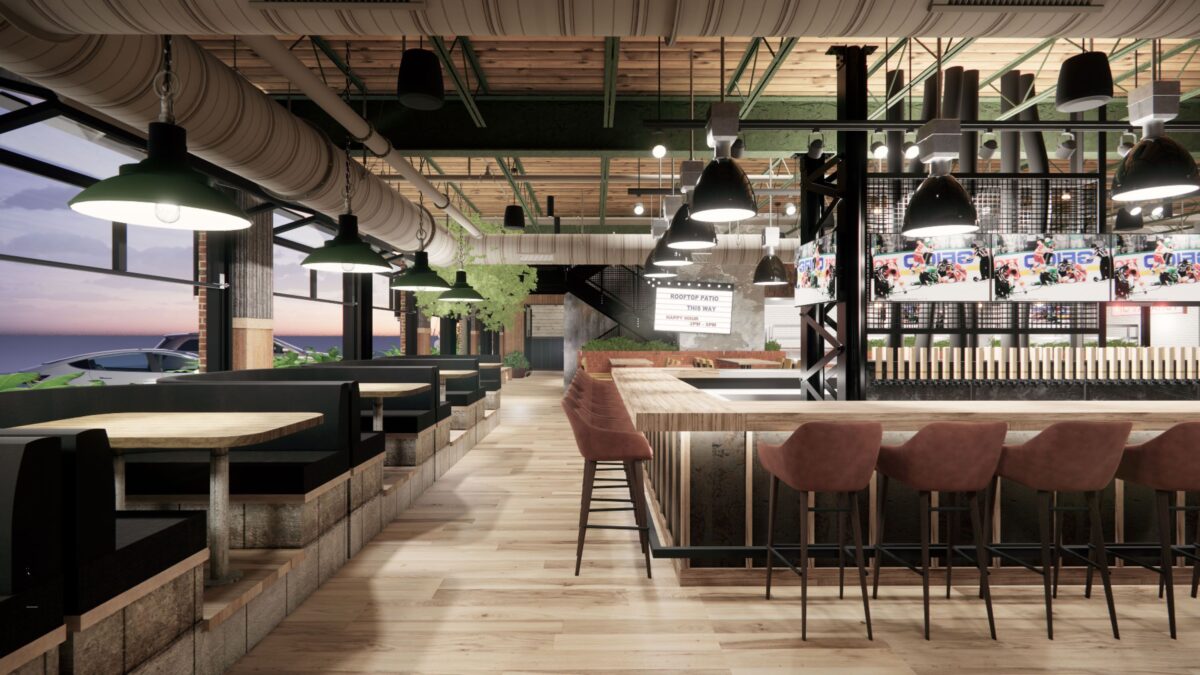
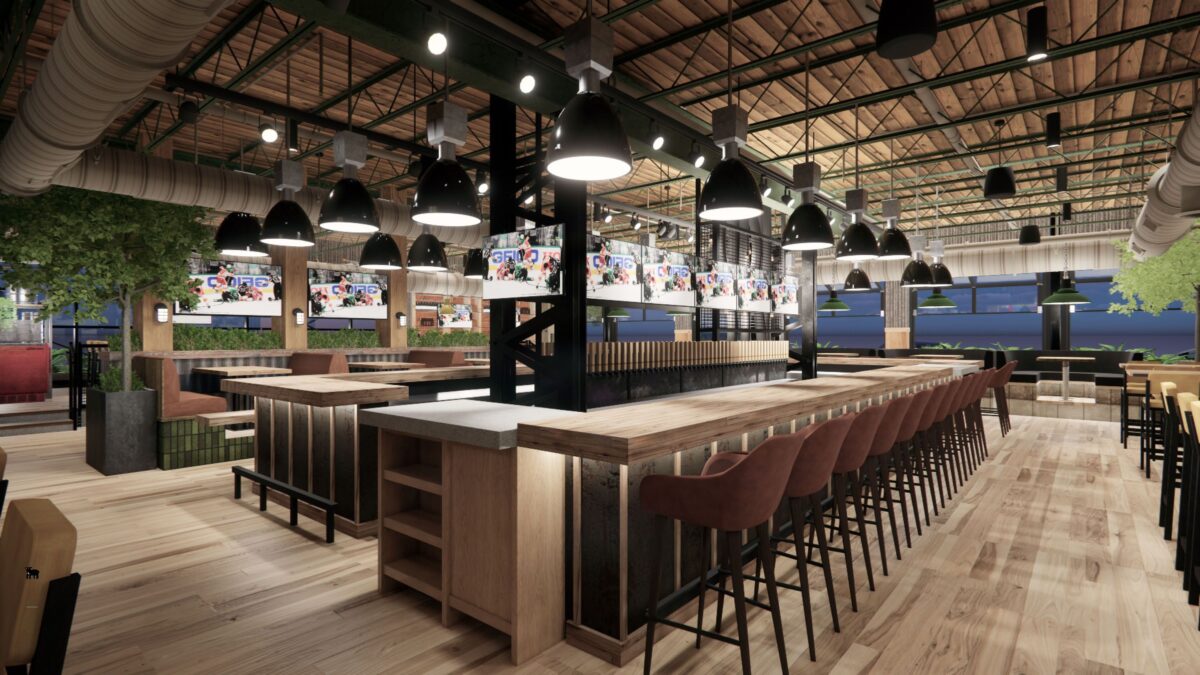
Rendering courtesy of CRAFT Rendering courtesy of CRAFT Rendering courtesy of CRAFT
The company said the Dallas location will be a state-of-the-art, 10,500-square-foot space designed in partnership with Canadian boutique interior design firm Way of Normal and local Texas firm ID Studio 4. Guests can anticipate a modern yet welcoming interior, featuring warm woods, industrial accents, and a massive 360-degree bar as its centre. The space will also include a 5,250-square-foot rooftop patio, complete with a full bar, cozy booth seating, lush greenery, and a games area, offering the perfect atmosphere for both casual gatherings and special celebrations.
“With its expansive design, CRAFT is built to host groups of all sizes, whether it’s a relaxed outing with friends, a team get-together, or a large corporate event. What sets CRAFT apart is its unwavering commitment to creating the perfect ambiance and ensuring every visit is a truly unforgettable experience,” it said in a news release.
“Sustainability continues to be a core value for CRAFT. The new location will incorporate energy-efficient technologies and locally sourced materials into its design. Additionally, the restaurant will support the local community by partnering with Texas-based breweries and exceptional Texas food suppliers to showcase the best of the region’s flavours.”
CRAFT said the flagship U.S. location will feature over 100 beers on tap – including local Texas brews – along with cocktails, wine, and a fresh, globally inspired menu of scratch-made dishes.
Scott Frank
“What I love most about CRAFT is the opportunity to work with local food and beverage suppliers to create unique menus and partnerships in each of the communities we are in,” said Scott Frank, President of CRAFT.