Tourism spending in Canada declined 0.3% in the third quarter, following a 0.6% increase in the second quarter. Foreign demand was down 2.7% in the third quarter, while domestic demand increased 0.5%. Tourism gross domestic product (GDP) decreased 0.6% in the third quarter due to a 2.6% decline in accommodation services, while the number of jobs attributable to the industry was unchanged. By comparison, economy-wide real GDP by industry rose 0.3% in the third quarter. On a nominal basis, its share of GDP dropped to 1.53%, according to a report released Thursday by Statistics Canada.
Tourism and major industrial sectors, gross domestic product, third quarter of 2024
“Lower tourism spending on accommodation services (-2.5%) was the main cause of the overall decline in the third quarter. Food and beverage services (-0.4%), passenger air transport (-0.2%) and travel services (-2.0%) also contributed to the decrease. Pre-trip expenses, such as recreational vehicles, pleasure crafts and camping equipment, rose 3.6% in the third quarter, moderating the overall decline. Lower tourism activity by non-residents impacted accommodation spending growth, as the portion of their tourism spending traditionally allocated to accommodations is nearly double that of domestic tourists (27.2% for non-residents compared with 14.1% for Canadian residents in the third quarter),” explained the federal agency.
Growth in the number of jobs in the industry was flat in the third quarter, after an increase of 0.3% in the second quarter. Tourism job growth within non-tourism industries (+0.7%), travel services (+1.6%) and air transportation (+0.7%) was offset by a decline in accommodation services (-1.3%) in the third quarter. The total number of jobs in Canada was nearly unchanged in the third quarter; as a result, tourism’s share of total jobs remained at 3.31%, added StatsCan.
“Tourism spending by international visitors in Canada fell 2.7% in the third quarter, following a 1.7% gain in the second quarter. Accommodation services (-3.5%), food and beverage services (-3.3%) and passenger air transport (-2.8%) were the main contributors to the decline. Overnight travel to Canada by international visitors decreased 3.4% in the third quarter,” it said.
“Tourism spending in Canada by Canadians was up 0.5% in the third quarter, after a 0.2% increase in the second quarter. Domestic tourism spending on pre-trip expenses (+3.6%), vehicle fuel (+1.5%), food and beverage services (+0.8%) and passenger air transport (+0.4%) were the main contributors to the rise in the third quarter. Growth was moderated by a decline in accommodation services (-1.9%).”
Adam and Matthew Corrin, the visionaries behind Freshii, are embarking on a new entrepreneurial journey with their latest venture, Founder Brands. Based in Toronto, Founder Brands aims to bring innovative international franchise concepts to Canada and scale them across the country. With a proven track record in franchise development, the Corrin brothers are leveraging their extensive expertise to transform Canada’s franchising landscape.
“Our mission is to become the leading partner for retailers looking to establish a strong national presence in Canada,” said Adam Corrin, Co-Founder of Founder Brands. “Canada often gets overlooked by global brands, and we’re here to change that.”
A Team with Proven Expertise
Adam Corrin
Founder Brands boasts a powerhouse team that includes former Freshii executives Paul Hughes and Joe McCullagh. The team is also backed by Mark Cohon, a prominent Canadian businessman, investor, and Chairman of the Board.
“Mark shares our passion for Canada and brings invaluable experience to our board,” said Corrin. “His family’s history, from his father George Cohon bringing McDonald’s to Canada and Russia, to his leadership of the CFL, aligns perfectly with our vision.”
This cohesive team has been instrumental in Founder Brands’ ability to move swiftly and effectively. “There’s inherent trust among us,” Corrin noted. “That trust allows us to make thoughtful decisions and scale at an incredible pace.”
Early Success and Strategic Partnerships
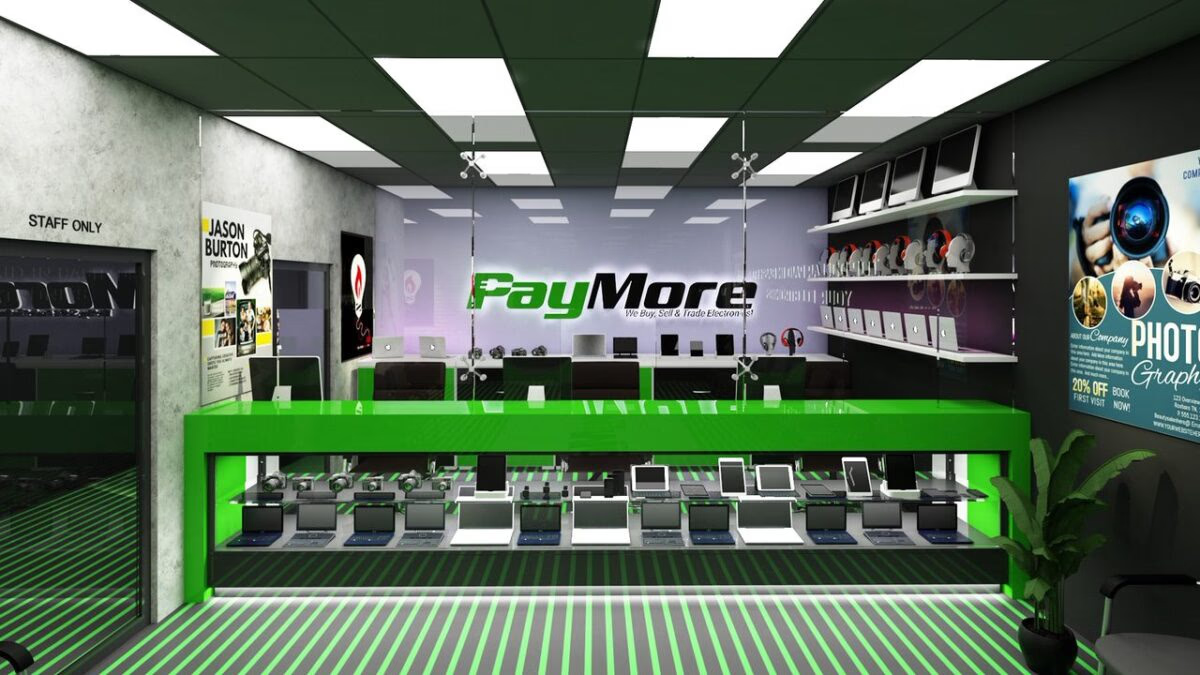
In less than two years, Founder Brands has already made significant strides. Last summer, the company signed a 120-unit master franchise agreement with PayMore, an electronics resale concept, opening its first stores in Ontario in December. Four additional locations are currently under construction.
“We’re solving a problem Canadian landlords have faced for years: finding reliable operating partners for international brands,” Corrin explained. “The feedback from landlords has been overwhelmingly positive. They’re excited about bringing fresh, innovative concepts to their portfolios.”
Beyond PayMore, Founder Brands has secured master franchise agreements with three additional brands:
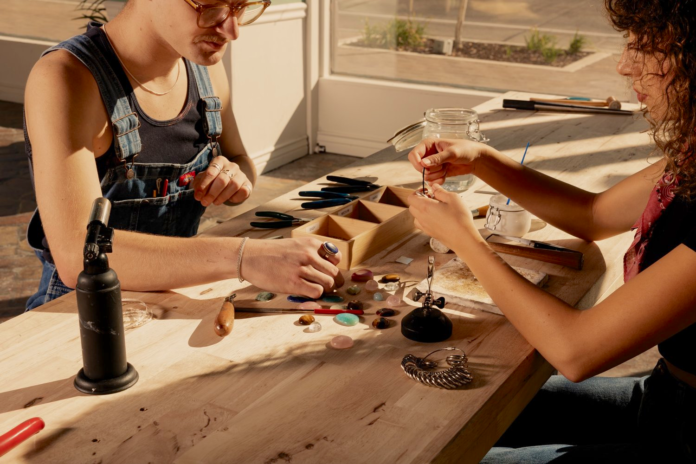
Gem Studio, an experiential retail concept for custom jewelry-making workshops.
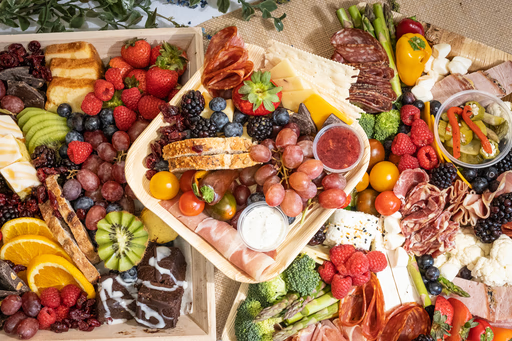
Graze Craze, specializing in custom charcuterie boards and boxes.
Fiiz, a unique specialty soda brand.
A History of Success: From Freshii to Founder Brands
The Corrin brothers are no strangers to success. They founded Freshii in 2005, growing it into a healthy fast-casual restaurant chain with 343 locations. The company went public on the Toronto Stock Exchange in 2017 before being sold to Foodtastic in 2023.
“Freshii was an incredible journey,” reflected Corrin. “It taught us the intricacies of franchising and how to scale a brand successfully. We’re now applying those lessons to a broader range of industries with Founder Brands.”
Image: PayMore Canada
Consumer Demand for International Brands
One of the key motivations behind Founder Brands is the increasing demand from Canadian consumers for unique international retail and dining experiences. Corrin noted that the idea for the company emerged partly from the volume of recommendations he received.
“We’re constantly getting messages, phone calls, and pictures from people saying, ‘You’ve got to bring this to Canada,’” Corrin said. “It’s exciting to see that Canadians are hungry for innovative brands they’ve experienced abroad or seen online.”
This consumer interest underscores the untapped potential in the Canadian market, where certain U.S. brands are either absent or introduced years after their American debuts. “Our goal is to shorten that timeline and ensure Canadians don’t have to wait a decade to access these incredible brands,” he added.
Gem Studio location in Honolulu, Hawaii — Founder Brands is bringing the concept to Canada. Image: Gem Studio
Inspired by the Alshaya Group
Corrin draws inspiration from successful franchise groups like the Alshaya Group in the Middle East. The Alshaya Group has established itself as the go-to partner for global retailers entering the region, and Founder Brands aims to replicate that model in Canada.
“We aspire to be the Canadian equivalent of the Alshaya Group,” Corrin explained. “When any global brand thinks about entering Canada, we want to be their first call.”
By positioning itself as a trusted partner for international brands, Founder Brands is creating a unique niche in the Canadian franchising ecosystem.
A Unique Approach to Canadian Franchising
Founder Brands distinguishes itself by being industry-agnostic. Unlike other Canadian franchising groups that often focus on a single sector, the Corrins are bringing a diverse range of early-stage brands to the market.
“Our goal is to work with founder-led brands in their early stages—what I call the third inning, not the seventh,” Corrin explained. “This gives us first-mover advantage in Canada and allows us to introduce something entirely new to the Canadian consumer.”
Phases of Expansion
Founder Brands has a phased approach to its growth strategy. In phase one, the focus is on scaling brick-and-mortar franchises from the U.S. across Canada. Corrin emphasized the importance of selecting brands that can thrive in major cities as well as smaller markets.
“I always ask myself, ‘Would this work in Winnipeg?’” Corrin said. “If the answer is yes, then we know it has national potential.”
Phase two will involve larger-scale ventures, potentially including international brands beyond the U.S. and other innovative business models. “We have ambitions to take bigger bites as we grow,” Corrin added.
Image: Fiiz Drinks
Leveraging Franchisee and Community Partnerships
Founder Brands places a strong emphasis on empowering franchisees and supporting local communities.
“Exceptional franchisees are the backbone of our strategy,” Corrin explained. “These local entrepreneurs bring a deep understanding of their communities, which allows us to adapt and succeed in diverse markets across Canada.”
The company’s ability to connect with local communities is further bolstered by its industry-agnostic approach, which allows it to offer a wide range of products and services that meet varying consumer needs.
Canadian Market Challenges and Opportunities
Expanding franchises in Canada comes with its own set of challenges, particularly in navigating the country’s real estate and regulatory landscape. Corrin highlighted the importance of deep relationships within the Canadian landlord community.
“Canada’s real estate market is tightly controlled by a handful of major landlords,” he explained. “Our previous experience with Freshii has given us strong connections and credibility with these key players, which is crucial for securing prime locations.”
Another challenge is adapting U.S. brands to the Canadian market. “Canadianizing” brands involves tailoring their offerings to local preferences while maintaining their core identity. “It’s about finding the right balance between preserving what makes the brand special and ensuring it resonates with Canadian consumers,” Corrin said.
Image: Graze Craze
Building a Sustainable Future for Franchising
Founder Brands is focusing on sustainable growth by prioritizing brands that meet key criteria: low upfront capital expenditure, financing options through the Canada Small Business Financing Loan (CSBFL) program, high unit volumes, and strong EBITDA margins.
“Our benchmark for phase one is $100 million in system-wide sales across Canada,” Corrin revealed. “We want brands that can thrive not only in major markets like Toronto, Vancouver, and Montreal but also in secondary and tertiary markets.”
The Road Ahead
Looking to the future, Founder Brands plans to expand its portfolio while deepening its relationships with Canadian landlords and entrepreneurs. The team is already exploring additional franchise opportunities and preparing for phase two of its growth strategy, which may include larger-scale ventures.
“We’re building something special and meaningful,” Corrin said. “Founder Brands is more than a business—it’s a way to bring innovative, high-quality experiences to Canadian consumers while empowering local entrepreneurs to succeed.”
Circle K, a global leader in convenience and mobility, announced Thursday it is making it easier and more affordable for customers to enjoy satisfying meals on the go with the launch of its new Meal Deals across Canada this week.
Recognizing the increasing demand for value and convenience, Circle K has crafted a menu of mix-and-match meal combinations, all priced affordably between $5 and $7, the company explained in a news release.
Trey Powell
“Adding value for our Canadian customers is at the heart of everything we do at Circle K,” said Trey Powell, Sr. Vice President of Global Merchandising at Circle K. “Our new Meal Deals deliver exceptional value, bundling popular items to create a satisfying and affordable meal option.
“Whether it’s a quick bite before a morning meeting or a satisfying lunch during a busy workday, Circle K’s Meal Deals offer something for everyone. We’re excited to offer Canadians a flexible and affordable way to enjoy their favourite foods on the go.”
For a quick and tasty breakfast, fuel up with a savory English muffin sandwich (choose from sausage, egg & cheese or bacon, egg & cheese), a crispy hash brown, and your choice of a medium coffee, a fountain beverage in a 20oz Polar Pop® cup or an energizing Red Bull® (250ml) – all for just $5, said the company.
“Lunch just got easier, too. Grab a classic hot dog paired with crunchy Circle K chips and a refreshing choice of fountain beverages in a 20oz Polar Pop® cup for only $5. Swap a fountain drink for any 591ml Pepsi® product for just a dollar more. Craving something more? For $7, choose a juicy cheeseburger with Circle K chips and a 591ml Pepsi® product. Or grab two slices of hot pizza or a personal pizza, also paired with a 591ml Pepsi® product,” it said in the news release.
Couche-Tard is a global leader in convenience and mobility, operating in 31 countries and territories, with more than 16,800 stores, of which approximately 13,100 offer road transportation fuel. With its well-known Couche-Tard and Circle K banners, it is one of the largest independent convenience store operators in the United States and it is a leader in the convenience store industry and road transportation fuel retail in Canada, Scandinavia, the Baltics, Belgium, as well as in Ireland. It also has an important presence in Luxembourg, Germany, the Netherlands, Poland, as well as in Hong Kong Special Administrative Region of People’s Republic of China. Approximately 149,000 people are employed throughout its network.
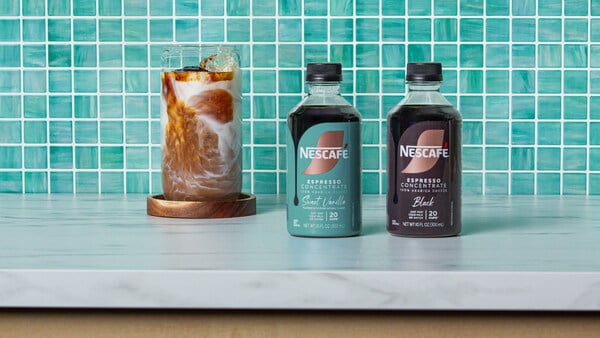
Nescafé Espresso Concentrate allows consumers to make barista-style, personalized cold espresso beverages in the comfort of their home. Available in two variations: Nescafé Espresso Concentrate Black and Nescafé Espresso Concentrate Sweet Vanilla.
Nescafé, the largest coffee brand globally, is launching its first-ever liquid espresso concentrate in the US, the biggest coffee market in the world. With one out of every three cups of coffee consumed outside of the home being a cold coffee, Nescafé Espresso Concentrate allows consumers to make barista-style, personalized cold espresso beverages in the comfort of their home, said the company in a news release.
“The growth of global coffee consumption is being driven by younger generations, and two out of three youth regularly drink cold coffee. In North America, 50% of Generation Z consumers’ first cup of coffee is cold. Nescafé Espresso Concentrate answers this growing demand for customizable, convenient, at-home cold coffee. Because the concentrate easily dissolves in water or milk, consumers can simply mix it with ice and water or milk and then customize it to create their go-to drink, whether an iced mocha, macchiato, or cappuccino,” it said.
Axel Touzet
Axel Touzet, Head of Nestlé Coffee Brands Strategic Business Unit, said: “Through the Nescafé Espresso Concentrate we want to capture what younger generations of consumers are looking for: cold, convenient, customizable, premium coffee that brings the experience and taste they have outside their home to inside their home. We are enabling them to create café-style beverages in an instant without any extra machinery.”
Nescafé Espresso Concentrate is made with 100% Arabica beans and comes in a 300-milliliter bottle (enough for approximately 20 cups of espresso when prepared as directed). In the US, it will be available at retailers starting in February in two variations: Nescafé Espresso Concentrate Black and Nescafé Espresso Concentrate Sweet Vanilla, added the company.
The Nescafé Espresso Concentrate was launched last year in China and Australia.
Canada’s first WNBA team has its first partner. Sephora Canada is a Founding Partner and the Official Beauty Partner of the Toronto Tempo, the team announced on Thursday.
The brand, whose logo will adorn Tempo jerseys when play begins in 2026, shares a foundational set of values with the team, said Toronto Tempo President Teresa Resch in a news release.
Teresa Resch
“From day one, we’ve been building so much more than a sports team with the Toronto Tempo – we’ve been building a community,” said Resch. “And there is no brand in Canada better suited to help us deliver on that vision than Sephora Canada. This is one of the most deeply inclusive, purpose-driven, passionate organizations in this country, and they’re going to work hand-in-hand with us to elevate women’s sport in unprecedented ways.”
For Sephora Canada, the multi-year Toronto Tempo relationship is more than just a brand partnership, it’s an opportunity to harness the power of sport to expand the way Canadians see beauty and create even more inclusivity. This landmark commitment reflects the deep fit between how the brand and the team see the world, and their shared desire to champion individuality, diversity and belonging, said the company.
Allison Litzinger
“We jumped at the chance to help build this team from the ground up and shape the cultural conversation in Canada around beauty and basketball through our partnership with the Toronto Tempo,” said Allison Litzinger, SVP, Marketing, Sephora Canada. “Women’s basketball embraces the unique identities of athletes who bring their full selves to the game, on and off the court, and it has the power to bring so many diverse people together through a shared passion. By celebrating the Beauty of Sport and the inspiring women who fuel it, we’ll show Canadians that we all belong to something beautiful.”
Sephora Canada said it will bring its partnership with the Toronto Tempo to life through integrated campaigns that will include community programming, retail activations, social media integrations and in-arena programming.
“With the launch of the Toronto Tempo, we’re changing the game – for girls, for women, for sports fans and for all Canadians. And we couldn’t be more thrilled that Sephora Canada will be our partners on this journey,” added Resch. “The impact of this historic partnership will be felt across Canada for years to come.”
The Toronto Tempo will begin playing at Toronto’s Coca-Cola Coliseum in 2026.
Sephora has a global omnichannel network of more than 3,000 stores. It was founded in 1969 in Limoges, France, and has been part of the LVMH Group since 1997.
“In May 2024, the Women’s National Basketball Association (WNBA) announced its expansion into Canada by awarding Toronto an expansion team, the league’s first outside the United States. The new team, owned and operated by Kilmer Sports Ventures, will begin play in the 2026 season as the WNBA’s 14th franchise. Sephora Canada is the team’s first announced founding partner. Larry Tanenbaum, Chairman of Kilmer Sports Ventures and a 30-year veteran of building championship-caliber teams, is also Chairman of the NBA Board of Governors and Chairman of Maple Leaf Sports & Entertainment, which owns the NBA’s Toronto Raptors, NHL’s Toronto Maple Leafs, MLS’ Toronto FC and other professional sports franchises. Under his leadership, the Raptors won their first NBA championship in 2019,” explained the news release.
Northern Reflections at Sherwood Park Mall (March 2022)
Putman Investments announced Thursday the acquisition of Northern Reflections, a leading provider of women’s fashion in Canada that blends timeless traditions with modern trends.
This acquisition happens as the brand celebrates 40 years, with 134 stores across nine provinces and a growing e-commerce presence. The acquisition has been completed and financial terms of the deal were not disclosed, according to a news release.
Doug Putman
“The apparel industry has always been on our radar, but we were looking for the right opportunity to get into the space,” said Doug Putman. “Northern Reflections is a great Canadian heritage brand with a loyal customer base, strong leadership and a dedicated in-store team. We really like where the business is now, along with the strategic vision of the leadership team, and look forward to supporting future plans for the company.”
Employing more than 860 people across the country, the company will be led by current Northern Reflections president, Maryann Darling.
Maryann Darling
“Since 1985, Northern Reflections has been a cornerstone of Canadian retail, offering our customers quality, comfort and timeless style,” said Darling. “Our business will only get better. I’m excited about our new ownership and we look forward to continuing to serve our loyal customers in all our store locations and online.”
Putman said gift cards purchased before the acquisition will continue to be honoured and returns can still be made in store or by mail for online purchases. Customers with questions should contact their local store or nrcustomer.relations@northernreflections.com.
Northern Reflections was founded in 1985.
Entrepreneur Doug Putman is the founder of Ancaster-based Putman Investments. He has bought and transformed some of the most iconic brands in Canada, the US and the UK, including Northern Reflections, Toys”R”Us and Babies”R”Us Canada, Sunrise Records, hmv in the UK and FYE, the largest pop culture chain in the USA. His portfolio of companies also include, Alex Brands, T.Kettle, restaurants, a marina as well as significant real estate ownership. He employs more than 20,000 people in Canada, the United States and United Kingdom.
Retail Insider is streamlining its Canadian retail news from around the web to include a handful of top news stories that can be viewed quickly during the day. Here are the top stories from the past 24 hours.
For farmers and stakeholders across the agri-food supply chain, 2025 has started on a high note. January 6 was a particularly good day for the sector. While Prime Minister Trudeau remains at the helm, Parliament has been prorogued, and with it, the future of some contentious legislative proposals is in serious doubt. When MPs return on March 24, the government will likely face a confidence vote, potentially leaving several flawed bills and proposals to die on the order paper.
Among the most notable casualties are Bills C-282 and C-293, as well as proposed changes to the taxable portion of capital gains. For those of us concerned about the economics of food and farming, this marks a rare victory for pragmatism over politics.
The Proposed Capital Gains Tax Reform
One of the most controversial proposals that failed to survive was a plan to increase the taxable portion of capital gains from 50% to 66.7% for individuals and companies earning over $250,000 in capital gains. For farmers, who often rely on the sale of land, equipment, or quotas as part of succession planning, this change would have represented a significant financial burden.
While the Canada Revenue Agency (CRA) may still be considering modifications to capital gains taxation, the rejection of this proposal underscores the importance of sound political leadership. Farmers and agri-food businesses need policies that foster growth and sustainability—not measures that create additional economic barriers. The failed proposal highlights how chaotic and disconnected Ottawa’s approach to economic policy has been in recent years.
Bill C-282: A Misguided Trade Policy
Bill C-282, championed by a Bloc Québécois MP, aimed to grant permanent immunity to supply-managed sectors—poultry, eggs, and dairy—during future trade negotiations. This would have barred Canada from making further concessions on these industries, such as granting tariff-free access to foreign cheese, butter, chicken, or eggs. While supply management plays a critical role in stabilizing certain agricultural markets, the approach proposed in this bill would have significantly narrowed Canada’s trade flexibility.
Currently, tariffs on supply-managed goods can exceed 300% for imports, a level of protectionism that has drawn ire from trading partners, particularly the United States. With Donald Trump set to return to the White House, his administration is already threatening tariffs on nearly all goods, including the $42 billion in agri-food exports Canada sends south annually. Bill C-282 would have made supply management a lightning rod in bilateral trade discussions, exposing the sector to targeted retaliation.
Protecting less than 2% of the Canadian economy at the expense of the other 98% is simply bad trade policy. Supply management has functioned effectively for decades without the need for such drastic legislative measures. This bill’s demise is a relief for those who value balanced trade agreements that benefit the broader economy.
Bill C-293: The Overreach of “Canada’s Vegan Act”
Bill C-293, dubbed “Canada’s Vegan Act,” was another private member’s bill that sparked significant debate. Ostensibly designed to improve pandemic preparedness, the bill included provisions to “de-risk” animal protein production and promote alternative protein consumption. While innovation in food production is important, this bill crossed a line by appearing to push a particular dietary agenda—namely, vegetarianism and veganism—under the guise of public health.
Such proposals alienate farming communities and undermine consumer choice. Canada’s food system thrives on its diversity, and any attempt to dictate what Canadians should eat runs counter to the principles of food democracy. Consumers must remain free to make their own decisions about their diets without undue interference from Ottawa.
The fact that Bills C-282 and C-293 advanced through the House of Commons reflects a deeper dysfunction in Parliament. Private member’s bills rarely make it this far, yet these proposals sailed through the lower chamber and left the Senate scrambling to decide their fate. The prorogation of Parliament provides a much-needed pause, allowing Canada’s lawmakers to reassess their priorities.
Chances of Survival for Both Bills are Slim
While both bills could technically be reintroduced, their chances of survival are slim. With Senate committees requiring reconstitution, the likelihood of either bill becoming law is infinitesimal—much to the relief of Canada’s farming communities and trade partners.
The rejection of increased capital gains taxes, along with the demise of Bills C-282 and C-293, is a win for the agri-food sector and Canadian consumers alike. Farmers and food producers can now move forward with greater certainty, knowing that ill-conceived policies are less likely to hinder their operations.
Supply management has proven its resilience without the need for overly restrictive legislation, and food democracy remains intact. Canada thrives on choice, innovation, and the freedom to compete on the global stage. Let this moment serve as a reminder that political leadership matters, especially in preserving the economic pillars that feed our nation and sustain our communities.
Montreal’s Georges Laoun Opticien has carved a niche in the Canadian optical industry by offering technologically advanced lenses, one-of-a-kind eyewear, supporting local artistry, and maintaining a strong family ethos. Celebrating its 40th anniversary in 2023, the family-run business stands as a testament to innovation, authenticity, and community connection. Founded by the late Georges Laoun, who immigrated to Canada from Egypt in 1969, the company remains a beacon for independent designers and artistic expression.
Laura Laoun (left) with Ann-Marie Laoun. Photo: Karolina Jez
A Legacy Rooted in Vision
“My grandfather’s journey was anything but easy,” shares Laura Laoun, Communications Manager and granddaughter of Georges Laoun. “When he arrived in Canada, his optical diploma wasn’t recognized, so he had to start from scratch. What began as a challenge evolved into a thriving business that continues to embody his values.”
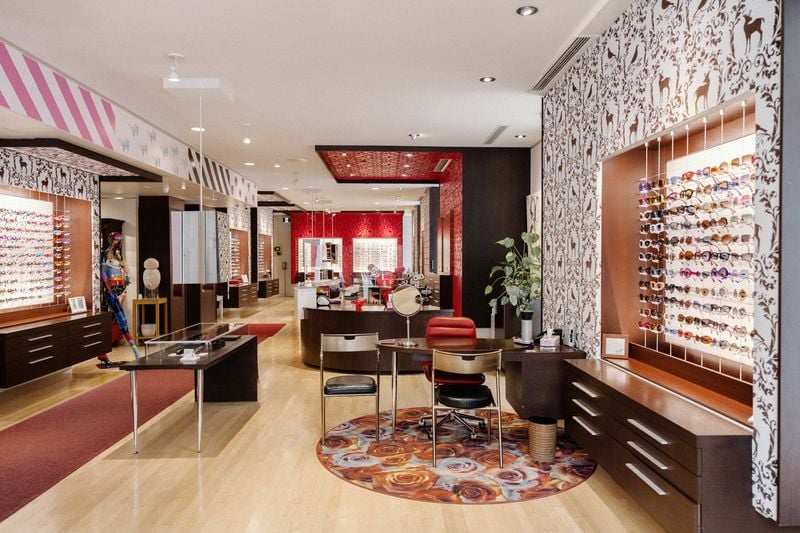
Georges’s dedication to cutting-edge lenses and unique, artist-designed frames set the foundation for the business. Today, the family operates two locations: a store on Sherbrooke Street West, connected to the Montreal Museum of Fine Arts, and a second shop on Saint-Denis Street, known for its vibrant arts programming.
Video of founder Georges Laoun
Independent Designers and Unique Styles
Georges Laoun Opticien distinguishes itself by working exclusively with independent designers. The inventory consists of limited-edition, handcrafted frames, ensuring a bespoke experience for every customer.
“We’ve never been about mass production,” explains Laura. “Most of our frames are one-of-a-kind or small-run pieces. It’s why we don’t have an online catalogue—it wouldn’t make sense to invest in photographing and listing products that might sell out immediately.”
The unique inventory appeals to a diverse clientele. “We have everyone from lawyers and doctors to artists and fashion enthusiasts,” Laura adds. “What unites them is an appreciation for craftsmanship and individuality.”
Montreal Museum of Fine Arts with the Georges Laoun store at the far right of the photo. Image: Montreal Museum of Fine Arts
A Hub for Art and Community
Artistic expression has been integral to Georges Laoun Opticien’s identity since the early days. “My uncle, Sherif, initiated our arts program,” Laura shares. “He saw the potential of our store’s prime corner locations and thought, ‘Why not use these spaces to showcase art?’”
The stores’ walls and windows have since become platforms for various artists, hosting everything from painting exhibitions to poetry readings. Laura’s sister, Jennifer, now manages the program, which continues to grow and evolve.
“It’s rewarding for us too,” Laura notes. “We get new art on our walls every few months, keeping the environment dynamic and inspiring for both our team and clients.”
Georges Laoun store at 1396 Sherbrooke St. W. in Montreal. Photo: Karolina Jez
Family-Run and Passion-Driven
The business remains a deeply personal endeavour for the Laoun family. “Owning a family business is unique,” says Anne-Marie. “It’s a journey that runs parallel to your personal life. Everyone brings their passion and expertise, which makes the business stronger.”
Laura echoes this sentiment. “Every frame in our store represents someone’s dream. Our relationships with suppliers are built on mutual respect and shared values, which adds another layer of authenticity to what we do.”
Even after 42 years, the Laoun family’s passion remains undiminished. “We’ve adapted to changes in technology and trends, but our core values—authenticity, quality, and community—have never wavered,” says Laura.
Family is a big part of the business, with Mylène Laoun having done the buying for the stores since the company was founded, noted Laura.
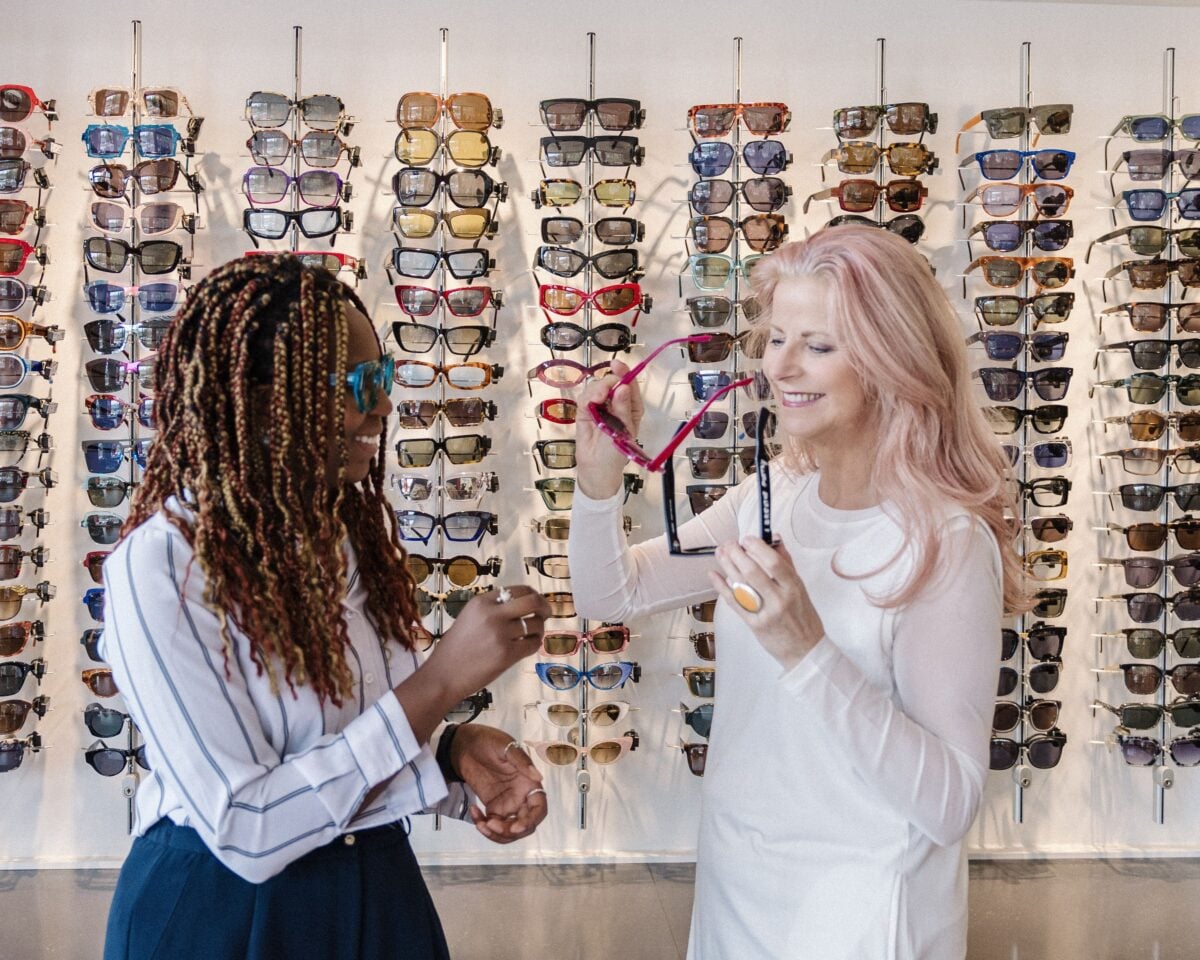
A customer trying on frames at Georges Laoun. Photo: Karolina Jez
A Destination for Eyewear Enthusiasts
Over the years, Georges Laoun Opticien has become a destination for clients far beyond Montreal. “We’ve had customers travel from Ontario, Halifax, and even the United States,” Anne-Marie shares. “One client from Vermont came in for an eye exam, selected his frames, and returned weeks later to pick them up. It’s incredible to see that level of commitment.”
This loyalty stems from the emotional connection customers feel with the brand. “Our frames evoke something in people,” says Laura. “They’re not just functional; they’re works of art that resonate on a personal level.”
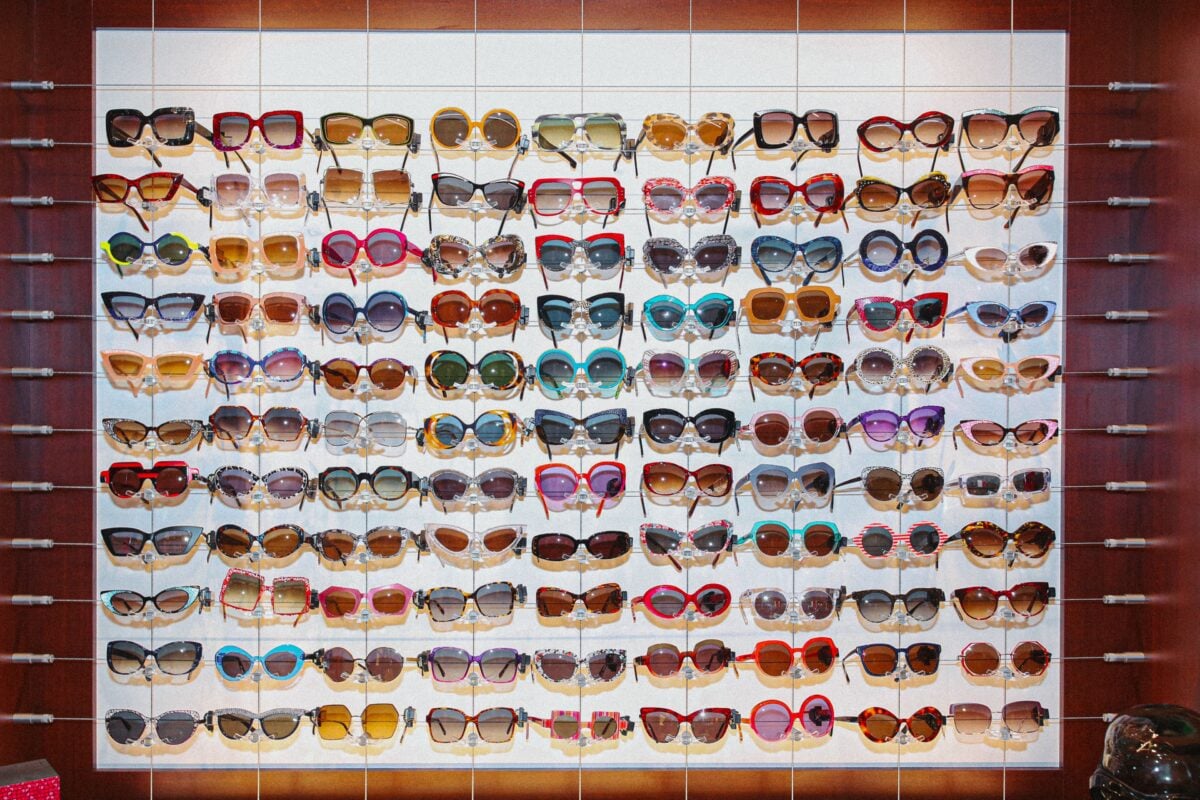
In-store frames at Georges Laoun. Photo: Karolina Jez
Challenges in the Optical Industry
The optical industry has faced significant consolidation over the years, with many independent stores being acquired by larger corporations.
“It’s misleading for consumers,” Laura explains. “These stores keep their original names, so people think they’re still independently owned, but the reality is very different. We’re committed to remaining truly independent.”
Anne-Marie elaborates, “When a family business like ours is sold, it’s often for the client base. The new owners use the reputation of the original brand to attract high-end customers while slowly changing the business model. We’re determined to ensure that doesn’t happen to us.”
Looking to the Future
As the business enters its fifth decade, the Laoun family is exploring opportunities for growth. “We’d love to open a smaller, capsule-style store,” Anne-Marie reveals. “But the location has to feel right. It’s not just about making money; it’s about finding a neighbourhood that aligns with our values and attracts like-minded people.”
For now, the family remains focused on nurturing their existing stores and continuing their legacy. “We want to ensure the business stays in the family,” says Anne-Marie. “It’s not just a store; it’s a piece of our history and our future.”
Conclusion
Georges Laoun Opticien exemplifies what it means to be a family-run, community-driven business. From its curated selection of independent eyewear to its commitment to the arts, the company has stayed true to its roots while adapting to the changing landscape of retail. As it looks to the future, the Laoun family remains steadfast in their mission to deliver quality, authenticity, and a personal touch that sets them apart.
“We’re not just selling glasses,” says Laura. “We’re sharing stories, supporting dreams, and building connections. That’s what makes this journey so special.”
Happy Belly Food Group Inc., a leading consolidator of emerging food brands, announced Wednesday that it has signed a definitive agreement to acquire 100% of Smile Tiger Coffee Roasters Inc – its first acquisition in the coffee sector.
Sean Black
“Today is a big day for Happy Belly Food Group as we announce the 100% acquisition of our newest brand Smile Tiger to our growing list of emerging brands,” said Sean Black Chief Executive Officer of Happy Belly.
“Entering the coffee & tea beverage category is something we have been exploring for some time, so finding our entry point with Smile Tiger is a great step forward. As we continue to execute on our consolidation strategy of brands that fit the 3 P’s of People, Product and Process, we welcome the entry into a new category with so much room for sector consolidation as well as menu expansion. This is another significant achievement as it demonstrates our commitment to our shareholders to focus on value creation across our portfolio.
Smile Tiger Coffee Roasters
“Our mandate is to deliver disciplined organic growth as well as accretive M&A. We look forward to sharing detailed development plans for the brand post closing, but buying cash-flow positive brands that are debt free with positive same store sales is a low-risk plan that I want more of for our shareholders. The key here is what happens to the brand post closing in our hands. Our team continues to demonstrate how we can buy low risk cash-flow positive assets at reasonable multiples and then immediately expand the brands EBITDA. Just like we did with Heal Wellness, Lettuce Love Café, iQ Foods, Via Cibo, Rosie’s Burgers, Yolks Breakfast & Pirho.”
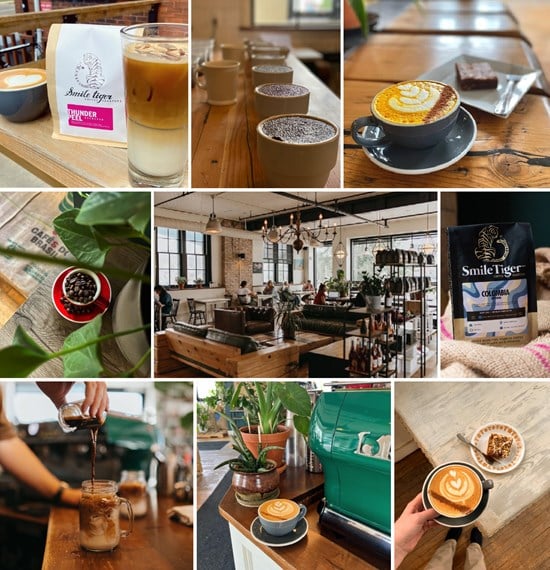
Black said Smile Tiger will operate as a corporate-owned retail location, catering to walk-in customers in the Kitchener region while also reaching a nationwide audience through its online offerings. These include both consumer-packaged goods (CPG) and white-label products.
A key aspect of this acquisition is Smile Tiger’s role as a coffee roaster, enabling large-scale commerce and broad market opportunities including supplying our own brands across the country. Having this market advantage in addition to delivering exceptional coffee and outstanding service, positions us to capitalize on the strong growth potential in the coffee, teas, bubble tea, energy drinks and refreshers vertical that we believe is currently disrupting the beverage category across North America, added Black.
Smile Tiger Coffee Roasters
“We are excited about expanding our coffee capabilities, not only through both additional corporate and franchised retail locations but also in exploring opportunities to provide Smile Tiger products across our existing retail locations going forward. With our diverse portfolio of breakfast, lunch, and dinner brands, Happy Belly consumes a significant amount of coffee, making this expansion a natural fit for cross selling,” noted Black.
“The opportunity to broaden the footprint of our coffee brand-both in product offerings and physical reach-represents a significant growth avenue for us in 2025 and beyond. Thankfully we have significant bench strength in the coffee category within our leadership team. John Delutis brings experience from his time at Second Cup and Tim Hortons, Gary Fung previously served as Head of Finance and Strategy for Tim Hortons, and Randall Papineau successfully led Balzac’s Coffee; so we anticipate the integration to be smooth and acceleration of the brand to be immediate “