Growing up, did you play with hyper-sexualized Barbie dolls, boys-only Thomas the Tank Engine trains, or slim, white Disney princesses? If so, you’re not alone, but this is no longer the case for Generation Alpha.
Brands like Mattel, once criticized for promoting unrealistic body standards and gender stereotypes, now portray themselves as feminist and progressive. The recent Barbie movie serves as a prime example of this shift.
Millennial parents are actively seeking out toys, books and movies to educate their children about life and teach them values that align with their own, from body positivity to diversity to accepting others and embracing their sexuality.
At the same time, Millennial parents are quick to criticize brands that are not reflective of their values. Social media campaigns like #CancelDrSeuss, which called attention to racist imagery in the author’s books, are an example of consumers holding brands accountable for their past missteps.
What’s notable about these calls for accountability is that they often stem from a brand’s history of exclusion, such as American Girl’s limited number of dolls with marginalized identities, or the racist depictions of Indigenous people on Disney’s old Splash Mountain ride. These critiques highlight a broader societal shift towards inclusivity and cultural sensitivity.
Revamping products
As marketing researchers, we aimed to understand how entertainment brands are adapting to changing political, cultural and social norms. Our recent study identified three primary ways these brands are evolving: through changes in their products, shifts in hiring practices and increased involvement in their communities.
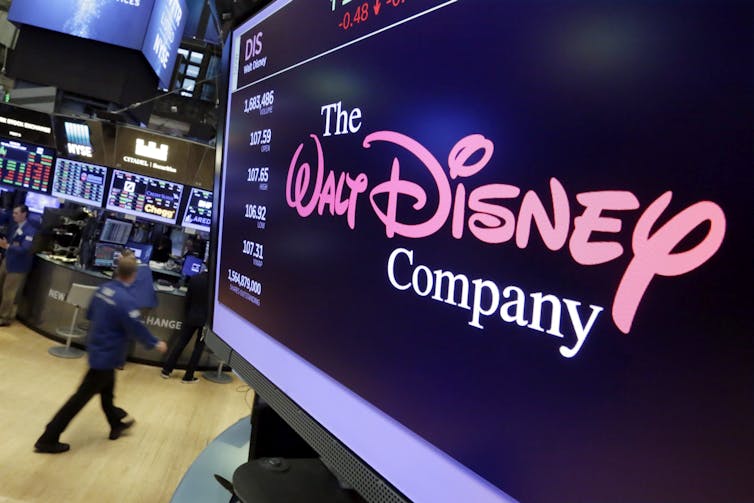
Some brands have made efforts to revamp their products, ranging from apologizing for past mistakes to removing offensive features or overhauling their market offerings entirely. Apologizing, such as the disclaimer Disney has added to some of its older movies about racist stereotypes, was one of the most common actions brands took.
Other brands, like Warner Bros., have opted to remove problematic traits from their characters. In Space Jam: A New Legacy, the character Lola Bunny was redesigned to not be hypersexualized like she was in the first film. Other brands have discontinued products deemed problematic, as seen when Dr. Seuss Enterprises pulled six books out of circulation.
Such actions are sometimes carried out concurrently. In, 2014, Mattel issued an apology for a book it published that enforced gender stereotypes about women not being able to code.
Since then, the brand has conducted a range of systematic changes, such as the introduction of a diverse line of dolls of different professions, even those previously masculinized in the market, as well as dolls with different body types and skin tones, and dolls with different disabilities.
Equity, diversity and inclusion
Along with changes in their products, brands have also reformed their workforce towards equity, diversity and inclusion to varying degrees.
For instance, Nintendo has promised to be more transparent in their recruitment process, since women currently occupy only 23.5 per cent of their global managerial positions. This stands in contrast with Mattel, the parent company of Barbie and American Girl, whose board of directors has five women out of a total of 11 members, with 30 per cent belonging to ethnic minority groups.
Disney, in comparison, has dedicated a page on its website to provide transparency regarding the racial and gender diversity of its workplace across the various levels. This signals its commitment to fostering a more inclusive workplace culture.
These efforts come at a time when companies are increasingly recognizing the importance of diversity and inclusion not only as ethical imperatives, but as strategic advantages for long-term success in today’s global marketplace.
Community involvement
The last change entertainment brands have been making in response to social pressures is increasing their involvement within their communities.
Some brands have pursued traditional approaches of donations to different non-profit organizations like American Girl’s support for Save the Children.
Other brands have partnered with non-profit organizations representing people with disabilities to guarantee the inclusiveness of their products. For example, UNO teamed up with the National Federation of the Blind to create a Braille version of the card game.
Thomas and Friends participated in a United Nations sustainability campaign and consulted with UN advisors to ensure the inclusiveness of their new shows.
Other brands started and maintained their own non-profit organizations to push for changes. Sesame Workshop, the organization behind Sesame Street, provides education materials to help children understand sensitive social issues like racism.
Changing to stay relevant
As our understanding of diversity evolves, so too do our expectations of the media and entertainment we consume, especially when it comes to shaping the values and perceptions of young minds.
Consumers wield significant influence in shaping the trajectory of entertainment brands, as evidenced by their demands for more inclusive and socially conscious content. By holding brands accountable for their actions and advocating for change, consumers play a role in driving the evolution towards a more equitable and diverse entertainment landscape.
In today’s ever-evolving socio-cultural climate, entertainment brands must constantly adapt to stay relevant to parents and their children. These actions can be reactively pursued due to socio-cultural pressures, or taken proactively as brands attempt to stay ahead of trends.
Irrespective of the source of change, to contribute sustainably to inclusion, diversity and equality, the changes need to be echoed on multiple fronts: in products, in the workplace and within our communities.
This article is republished from The Conversation under a Creative Commons license. Read the original article.
By Aya Aboelenien, Assistant Professor of Marketing, HEC Montréal and Chau Minh Nguyen, PhD Candidate in Marketing, HEC Montréal.