Lax-A-Day®’s innovative campaign is taking a relaxing approach to the frustration of experiencing occasional constipation for Canadians.
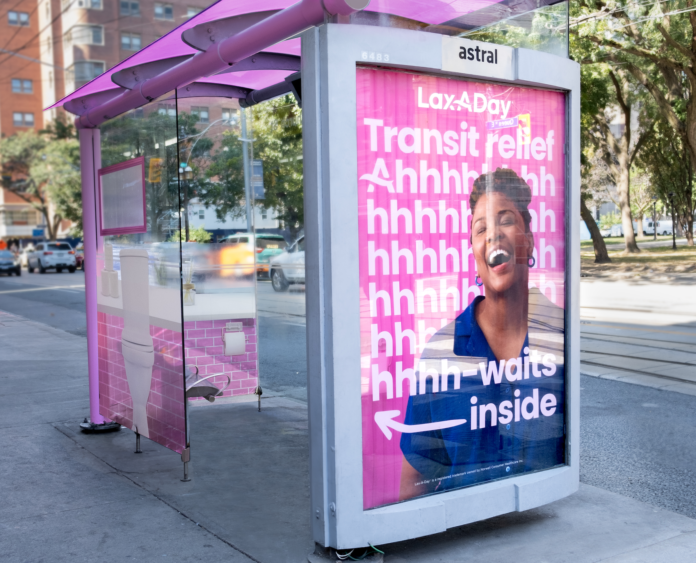
Being Canada’s #1 source for gentle relief of occasional constipation, the Lax-A-Day® campaign turned the daily commute into an interactive and playful experience by leveraging a Toronto transit shelter.
Lax-A-Day®’s campaign is set to provide a much needed sense of relief and relaxation with its unique auditory and visual experience.
Commuters passing by the transit shelter at the corner of Queen Street East and Brooklyn Avenue will notice the playful pink wrapping that has transformed this everyday structure into what looks like their home bathroom.
A red button inside the shelter beckoning to be pressed may catch commuters by surprise with its relaxing audio, featuring bird calls, nature sounds and a soothing narrator’s voice encouraging commuters to enjoy their transit experience.
This stunt is part of the Lax-A-Day® campaign launching this fall nationwide. In addition to taking over Toronto transit, playful signage will be posted across the city, including the well-known Dundas Square.
Canadians living outside of Toronto can also experience a moment of comedic relief when viewing the video commercial that will be streaming from their phone and TV screens.
About Lax-A-Day®
Lax-A-Day® is Canada’s #1 doctor and pharmacist recommended laxative. It’s available over-the-counter in 5 formats so you can find the right one for you.
Are you looking for gentle relief from occasional constipation?
Try Lax-A-Day® for relief that’s gentle on your digestive tract and gentle on your taste buds. It’s 100% soluble and free of sugar, taste and grit, for a comfortable experience.
This product may not be right for you. Always read and follow the label. Lax-A-Day® is a registered trademark owned by Norwell Consumer Healthcare.
Partner content. To work with Retail Insider, contact Craig Patterson at: craig@retail-insider.com
Retail Insider is streamlining its Canadian retail news from around the web to include a handful of top news stories that can be viewed quickly during the day. Here are the top stories from the past 24 hours.
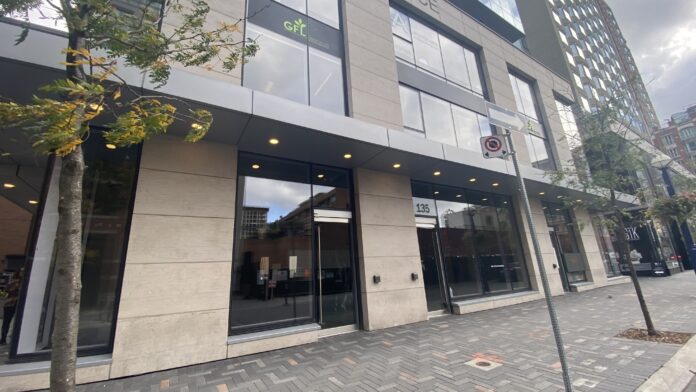
Former CNTRBND location at 135 Yorkville Ave in Toronto on October 15, 2024. Photo: Craig Patterson
CNTRBND, the luxury menswear retailer specializing in high-end streetwear brands, has closed its two stores in Toronto. The retailer says it’s returning in 2025 with a new store in the city’s Yorkville area while it maintains an online presence.
The store closures include CNTRBND’s flagship at 135 Yorkville Avenue as well as its Archives store which closed a few weeks ago at 26 Bellair Street.
CNTRBND was founded in 2012 by Christopher Casuga, a Toronto-based entrepreneur who has been integral in shaping the luxury streetwear scene in Canada. Casuga launched CNTRBND after identifying a gap in the Canadian market for high-end, hard-to-find international fashion labels.
The store quickly made a name for itself by carrying exclusive brands such as Raf Simons, Maison Margiela, and Dries Van Noten, catering to a clientele seeking luxury streetwear. In addition to CNTRBND, Casuga has also been involved in opening Toronto stores for other global brands, including Off-White and Alyx in the past.
Mounting economic pressures, shifting consumer preferences, and increased competition have led to retailers such as CNTRBND struggling, including with high rents for physical stores.
Social media post from CNTRBND on October 15, 2024.
CNTRBND to Return to Yorkville in 2025 with New Energy
Despite the store closures, CNTRBND is planning a comeback. Casuga has announced that a new store will open in Toronto’s Yorkville area in 2025. Reflecting on CNTRBND’s legacy and the changes in the retail landscape, Casuga shared his excitement for the future.
“After over 10 years in business, helping build the fashion community in Toronto and across Canada, we are excited about the new vibe, energy, and sense of community that our new space in Yorkville will bring.”
While the exact details of the new store remain undisclosed, Casuga acknowledged that the previous space was no longer viable given the current retail climate. Nevertheless, the brand is enthusiastic about reestablishing itself in Yorkville, a district known for its dynamic mix of luxury retailers and vibrant fashion culture. “We still feel energized by Yorkville and its sense of community and look forward to what our new space will bring,” Casuga added.
Former CNTRBND Archives store at 26 Bellair St. in Toronto on October 15, 2024. Photo: Craig Patterson
CNTRBND’s store closures highlight broader challenges facing retailers in Canada. In high-rent areas like Yorkville, retailers are dealing with weakening consumer demand for non-essential luxury items. The shift has been exacerbated by the rise of e-commerce and increased competition from established global brands.
Yorkville in Toronto has also seen increased competition recently, from retailers such as Kith (which opened nearby last year) and The Webster, which carries some of the edgy brands also found at CNTRBND.
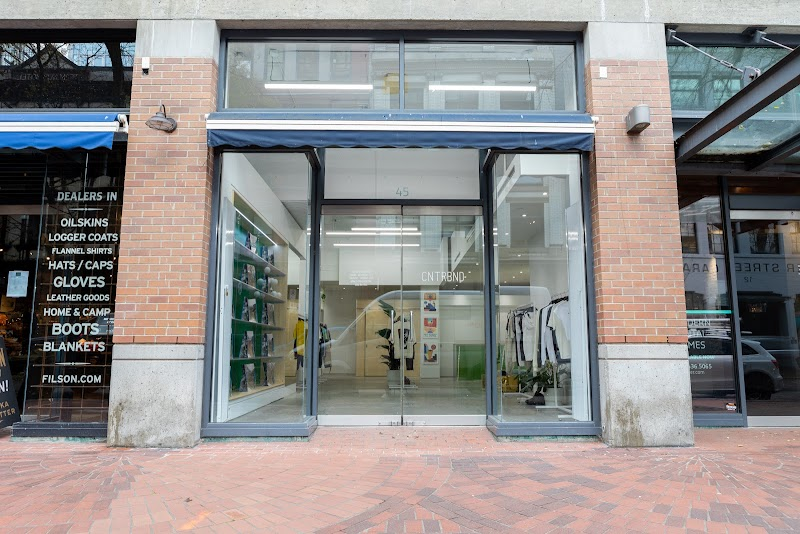
CNTRBND on Crescent Street in Montreal. Photo: Maxime FrechetteCNTRBND at 45 Water Street in Vancouver. Photo: CNTRBND
High rents are becoming an increasingly significant challenge for retailers across Canada, particularly in major urban centres. In premium retail districts, the cost of maintaining a physical store has skyrocketed, forcing many brands to reconsider their long-term strategies.
CNTRBND expanded beyond the Toronto market in recent years with locations in Montreal, Vancouver and Winnipeg.
Retail Insider will follow up on this story when CNTRBND announces its new Yorkville storefront. The retailer continues to operate online and on other physical locations.
Heal is part of the Happy Belly Food Group (Photo credit: Heal website)
The Canadian inflation rate is slowing but price levels remain elevated.
The Consumer Price Index (CPI) rose 1.6% on a year-over-year basis in September, down from a 2.0% gain in August. This was the smallest yearly increase since February 2021 (+1.1%). The main contributor to headline deceleration was lower year-over-year prices for gasoline in September (-10.7%) compared with August (-5.1%). The all-items CPI excluding gasoline rose 2.2% in September, matching the increase in August for this measure, reported Statistics Canada on Tuesday.
“Although the rate at which prices are increasing has slowed, price levels remain elevated. Compared with September 2021, the CPI rose 12.7% in September. Canadians continue to feel the impact of higher price levels for day-to-day basics such as rent (+21.0%) and food purchased from stores (+20.7%), which increased during that same 3-year period,” said the federal agency.
“On a monthly basis, the CPI fell 0.4% in September, after a 0.2% decline in August. Both the monthly and yearly movement in September were led by lower prices for gasoline. On a seasonally adjusted monthly basis, the CPI was unchanged at 0.0% in September.”
james orlando
“With headline inflation now decisively below the Bank of Canada’s (BoC’s) target and core inflation looking likely to follow, inflation risks have eroded over the last few months. Below the surface, this trend looks to continue with housing costs finally starting to subside, with inflation excluding shelter running at a paltry 0.4% y/y. All in, the inflation outlook is looking a bit softer than we expected in our recently published forecast,” said James Orlando, Senior Economist with TD Economics.
“The BoC (Bank of Canada) is scheduled to meet next week and debate over whether the central bank will go big with a 50 basis point cut is rising. Thus far, the bank has been predictable, with a steady streak of 25 bp cuts over the last three meetings. Given the persistent strength of the jobs market, the BoC would be validated in maintaining its steady rate cutting pace. On the other side, market participants are increasingly betting on a 50 bp cut, assuming that the BoC will focus on the downside risks now that headline inflation has moved closer to the bottom end of its target range. Either way, it will be a close call for the BoC next week.”
Year over year, gasoline prices fell to a greater extent in September (-10.7%) compared with August (-5.1%), putting downward pressure on the all-items CPI, said StatsCan, adding that on a monthly basis, gasoline prices fell 7.1% in September following a 2.6% decline in August. The September decline was driven by lower crude oil prices amid increasing concerns over weaker economic growth, as well as lower costs associated with switching to winter blends.
“Prices for food purchased from stores rose 2.4% in September, the same growth rate as in August. This is the second consecutive month that grocery prices increased at a faster pace than headline inflation. While prices declined on a year-over-year basis for some food items, such as seafood and other marine products (-4.9%), nuts and seeds (-0.9%), and fish (-0.3%), others continued to increase and remained elevated, such as fresh or frozen beef (+9.2%), edible fats and oils (+7.8%) and eggs (+5.0%),” said the report.
“Additionally, prices for food purchased from restaurants rose at a slightly faster pace in September (+3.5%) compared with August (+3.4%).”
Claire Fan
“On the cusp of the next BoC interest rate decision on October 23, the latest CPI report showed inflation pressures continuing to slow in Canada as expected in September,” said Claire Fan, Economist with the Royal Bank of Canada. “The drop in headline CPI reading may have been driven lower by lower gasoline prices but slower growth in the slew of Bank of Canada’s core inflation measures also pointed to progress. To be sure, shelter costs were still growing at a faster rate comparing to the rest of the consumer basket.
“But the scope of price pressure outside of shelter has now normalized more fully to what it looked like before the pandemic. Taken together with the third quarter release of the BOS survey last Friday that pointed to further unwinding in inflation pressures in the future, we think there’s little reason for the BoC to turn their worries back from a weakening economy to inflation, and expect them to go ahead with cutting by 50 bps next week.”
The Conference Board of Canada said lower prices for gasoline relative to the same month last year were largely responsible for the weaker pace of price growth. Yet, price pressures have decelerated unevenly. The Bank’s core inflation measures remained the same in September as they were in August, as did the CPI excluding food and energy
“The Bank is still aiming for a soft landing where economic growth isn’t unduly impaired by its recent monetary tightening cycle,” it said.
“Monetary policy remains in a contractionary range which, if maintained for too long, could sap demand further and drag inflation persistently below the two per cent target.”
Designer handbag rental business Zero Collective is making luxury accessories more accessible, affordable, and sustainable for Canadian fashion lovers.
The platform, which launched recently, gives members access to hundreds of iconic, coveted handbags from top designers including Prada, Celine, Gucci, Christian Dior, Chanel, and more—all without the price tag or commitment.
Zero Collective CEO Gina Yoo said it’s a welcome service for Canadians, as the cost of living rises and recent studies reveal that shoppers are more conscious of the environmental and social impacts of their general purchasing decisions.
Gina Yoo
“Canadians are increasingly interested in making more mindful consumption choices, both to support their wallets and the planet. But some are still looking for that coveted, beautiful item or that perfect piece to complete an everyday outfit or special event look,” she said.
“We saw a clear gap in wanting to help style seekers find balance. Zero Collective offers a circular solution that helps keep luxury within reach.”
Yoo knows that luxury items are a huge financial commitment and wants people to have the option of trying expensive items out before purchase, or to return and try something new. This flexibility is essential to Yoo’s vision for Zero Collective, which she likens to a rotating closet that can shift depending on need or occasion.
“The rise of renting rather than purchasing goes beyond fashion,” she said, noting the popularity of services like Rent the Runway and Toronto’s Fitzroy dress rental service. “Whether it’s car sharing or subscription streaming services, today’s consumers are opting for experiences that reflect their values over ownership.”
Prospective members can apply to be a part of Zero Collective through a simple online application where they also select their membership tier (Classic is $159 per month, and Deluxe is $229 per month). The applicant’s name is added to a waitlist for review. Once accepted, Members will receive an invitation to select their first bag.
Celine handbag. Photo: Zero Collective
Zero Collective sources high-quality handbags from the world’s top designer labels. Each exclusive item undergoes a three-step authentication process by Zero Collective’s in-house team, third-party experts, and through artificial intelligence technology, to ensure every piece is authentic and meets the highest standards.
Members are able to access and rent the bag of their choice, with the option to swap it after 30 days, or keep as long as they want. All rented bags are also available for purchase at a special members-only price.
Shipping and insurance are included with membership.
Yoo said she has been “noodling” this idea for so many years but really started to bring the concept to life this past spring.
“We’re still very early on but a lot of excitement about the brand,” she said.
“I think there’s an interesting tension between the fact that I think a lot of people still want luxury designer goods, particularly bags. When you think about, it’s a part of your style. It’s a part of your outfit. A statement to what your style is but at the same time, me included, we really care more and more about the sustainability piece. And there’s an odd tension between you want designer goods but you really care about the planet and there really isn’t a core solution for both and that’s exactly why Zero Collective was started. I wanted to build something that felt like a rotating, shared closet among the collective but at the same time it’s an asset like closet for you personally.
“So you’re not having to purchase everything and having your closet with a lot of these bags maybe collecting dust. You’re really being thoughtful about what you own and what you’re sharing among the collective.”
She said her goal is to build the business so that every Canadian has access to luxury goods in a more affordable, approachable and sustainable way.
“So how I think about this business is continuing to add new styles that consumers want but also adding a lot of vintage pieces, pre-loved pieces, and telling that story to our members.
“I love fashion. I am a designer girl. I have a pretty awesome collection of bags but one of the things that really hit home for me was that earlier this year I was in the UK, at a Chanel store, and on impulse I bought a hot yellow mustard Chanel bag. And then I wore it. But then it was this is really hard to style. I can’t really post on Instagram the same bag over and over. It’s not a classic one. But you really can’t take it back to Chanel because it’s kind of frowned upon. So it’s collected dust in my closet for awhile and I was thinking that the bags are so expensive to buy, there should be like a try before you buy way to do this, because if I was a member of Zero Collective and rented that yellow bag, I would have said I love it for three days but I’m not buying this bag.
“That’s the sustainability piece I’m really excited about. The fact you get to try it and then you really can be choiceful about you actually purchase and what you want to share with other people. That’s where my passion and excitement come from. I really want to democratize access to luxury. Everyone should have access to this.”
Zero Collective’s handbags are all personally sourced and some are pre-loved or vintage, which helps to reduce carbon footprint and democratize access to gorgeous pieces from past seasons.
“By giving Canadians access to high-end, sustainable fashion choices, we’re challenging the notion that luxury has to come at the expense of the environment—or your wallet,” added Yoo.
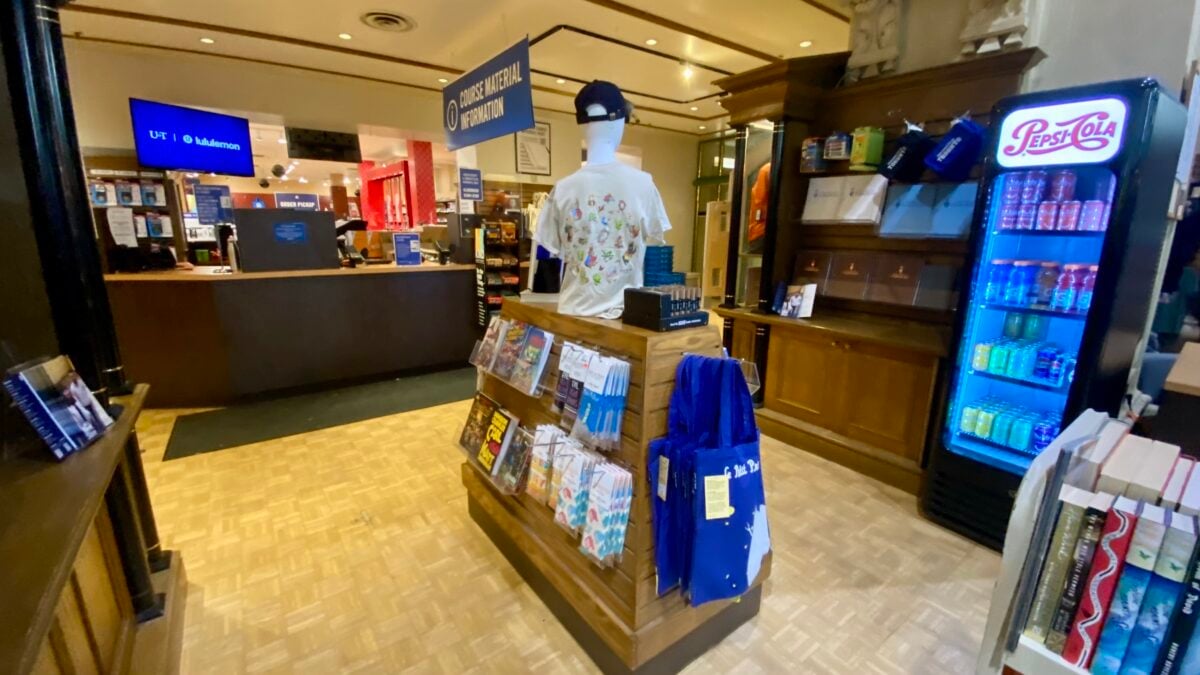
Entrance to the University of Toronto Bookstore at 214 College Street in downtown Toronto. Photo: Craig Patterson
The University of Toronto Bookstore has launched two new partnerships as part of its efforts to bring popular retail brands into its historic space. The store, long known for serving students with books and supplies, now offers much more through collaborations with leading brands such as lululemon and Sephora.
Jason Farrell, Vice President of Distribution and Retail at the University of Toronto Press, which runs the University of Toronto Bookstores, highlighted how the institution has shifted to meet the changing needs of its diverse community.”
“We’ve enjoyed a lot of success in partnering with brands that students know and love,” said Farrell. “These collaborations make the bookstore more relevant and provide students with access to products they might not find anywhere else on campus.”
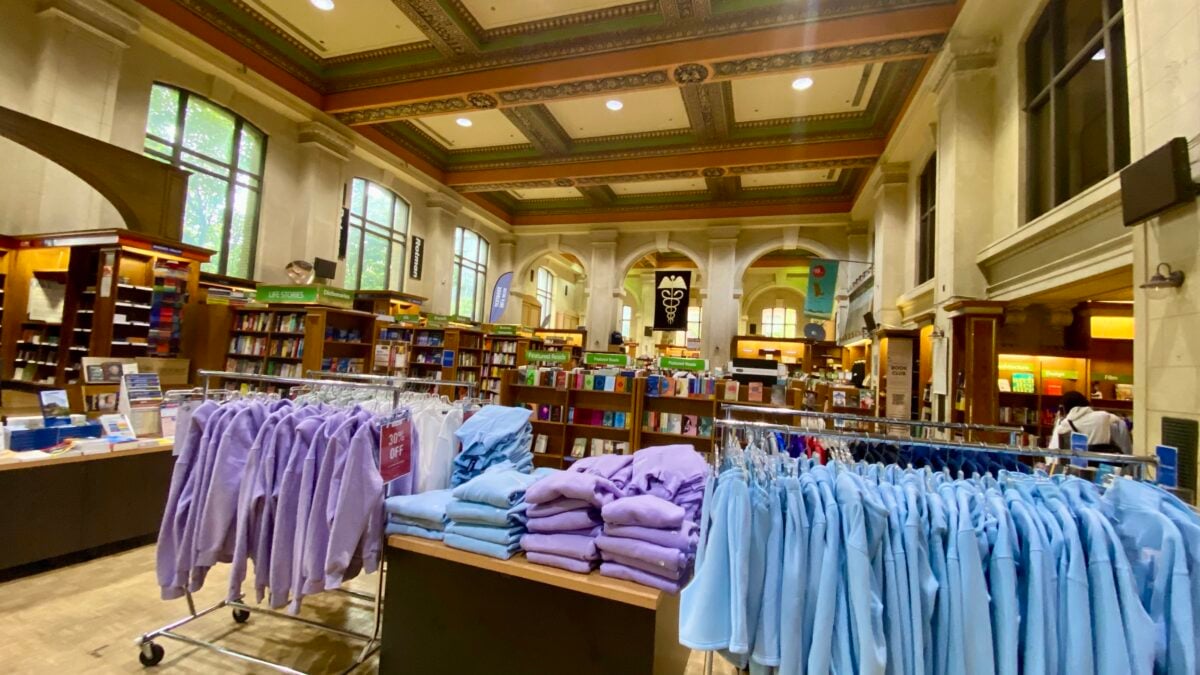
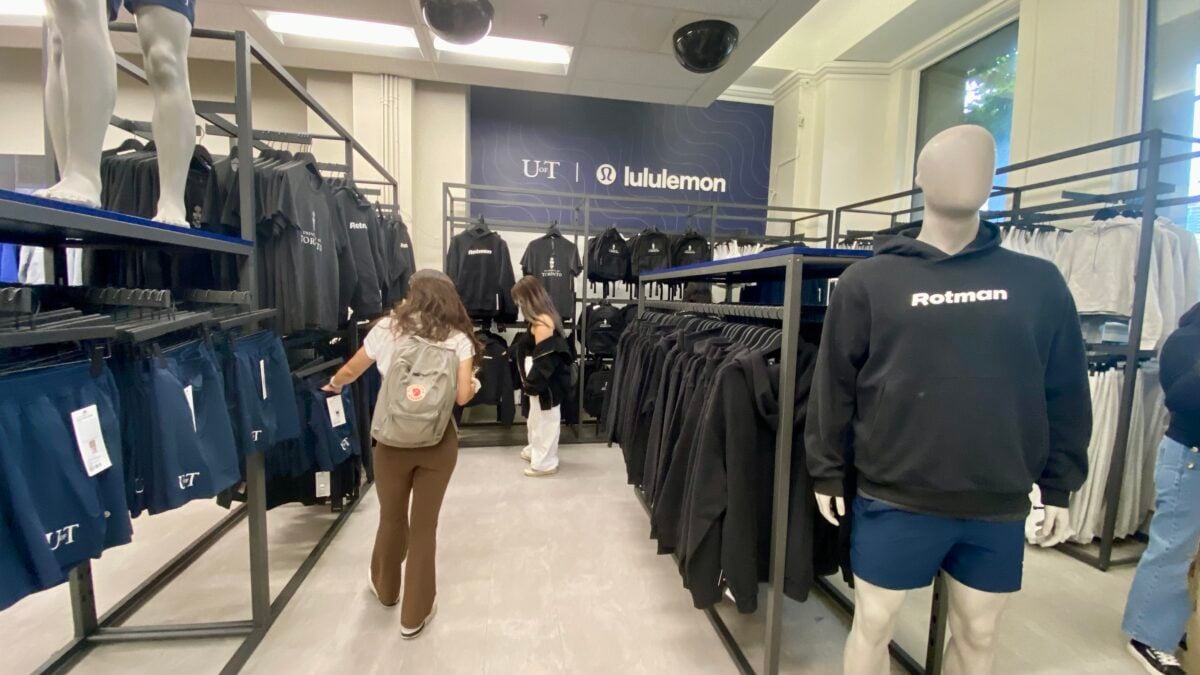
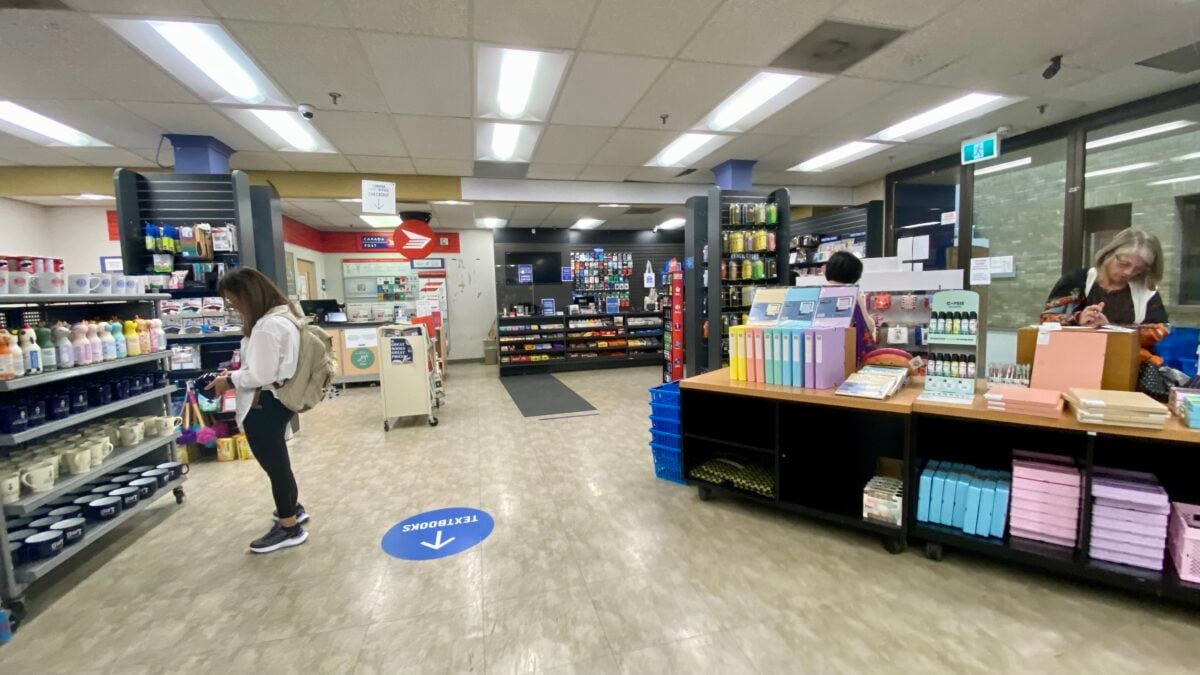
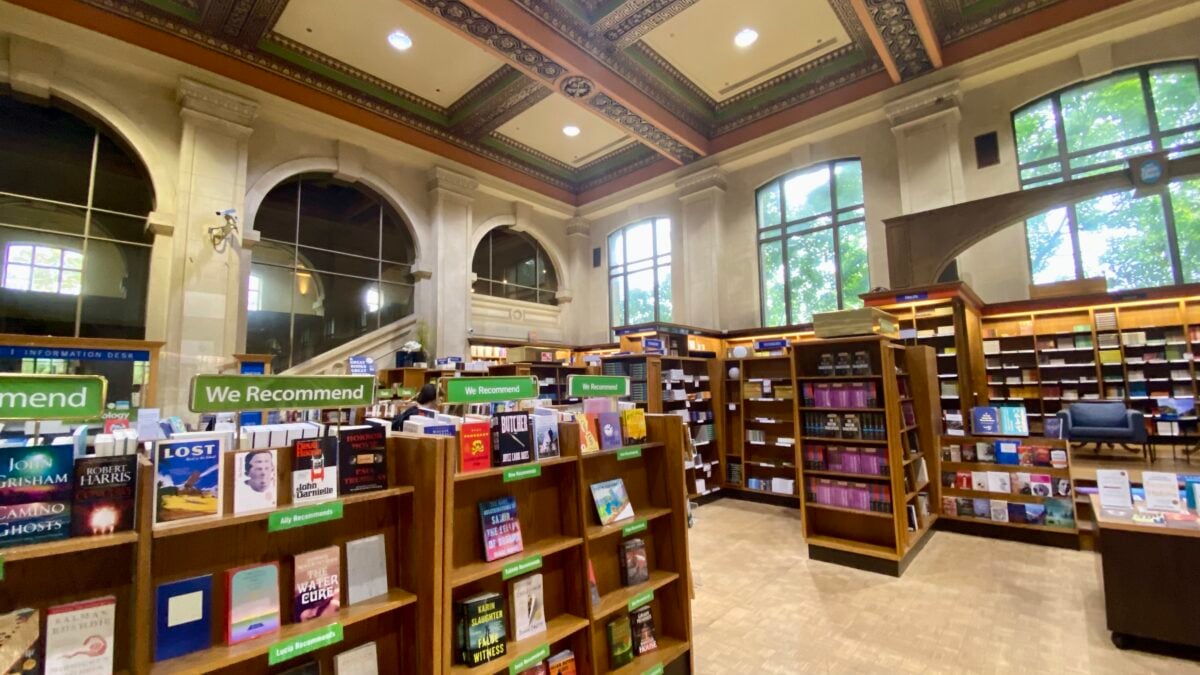
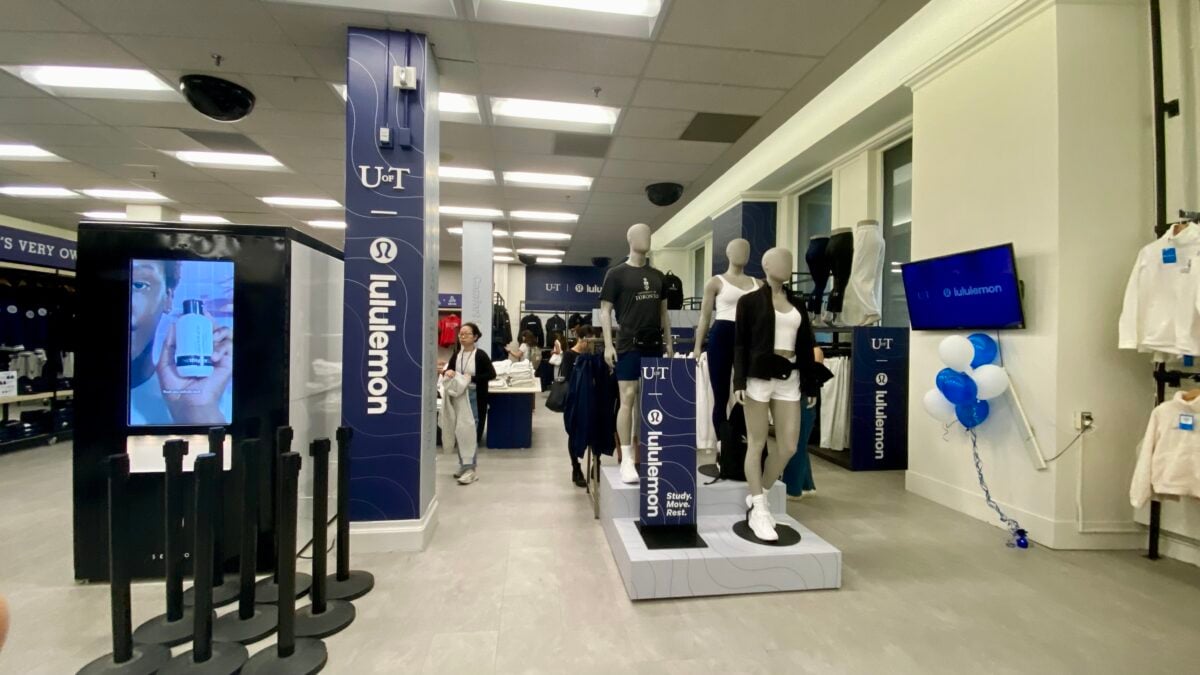
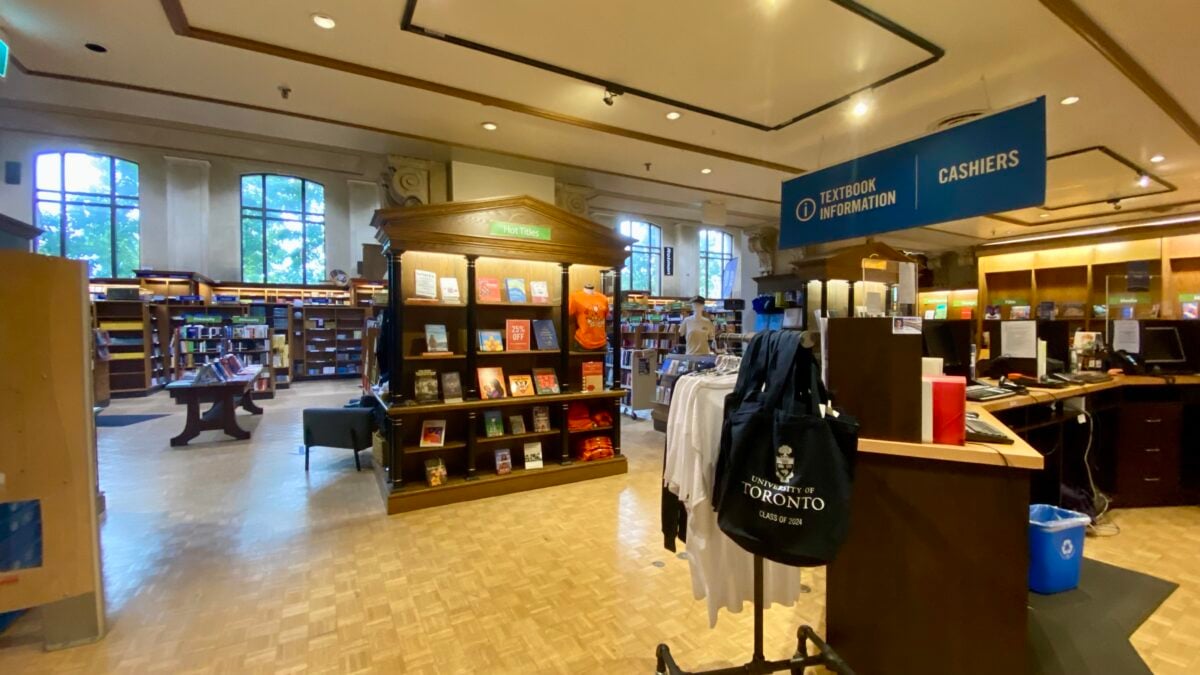
The University of Toronto Bookstore functions like a department store on campus. The two-level store is enormous, featuring various rooms in a heritage building on College Street. Photo: Craig PattersonLululemon shop-in-store at the University of Toronto Bookstore at 214 College Street in Toronto. Photo: Craig Patterson
A Legacy Store Embraces Change
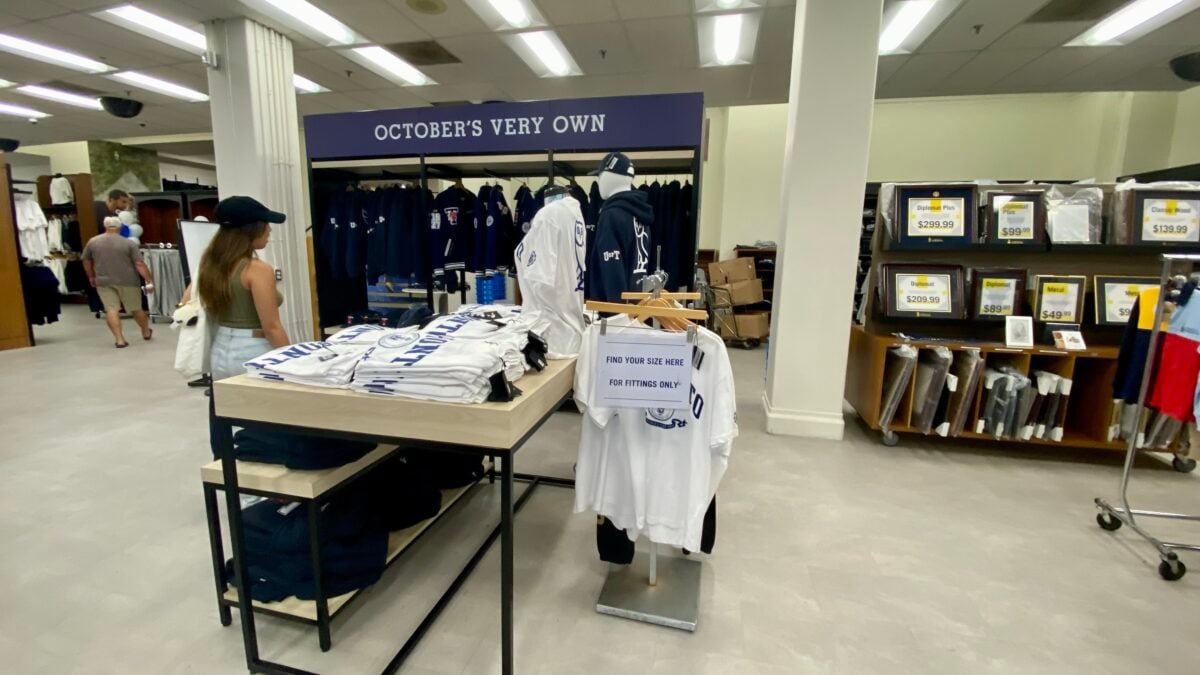
Founded in 1933, the 38,000 square foot University of Toronto Bookstore at 214 College Street has evolved into a retail destination both for academic books and a broader shopping experience that includes brand partnerships. That includes U of T co-branded products from brands such as Roots, OVO, Champion, Fjällräven, and others.
Jason Farrell
The latest addition is lululemon, which has launched a co-branded collection of University of Toronto apparel. The collection features clothing that includes both the University’s logo and lululemon’s popular designs, catering to students’ desire for high-quality athletic wear that also reflects school pride.
“We’ve worked closely with lululemon to create a product line that blends their brand with the University of Toronto’s identity,” explained Farrell.
Sephora Introduces First-Ever Campus Kiosk
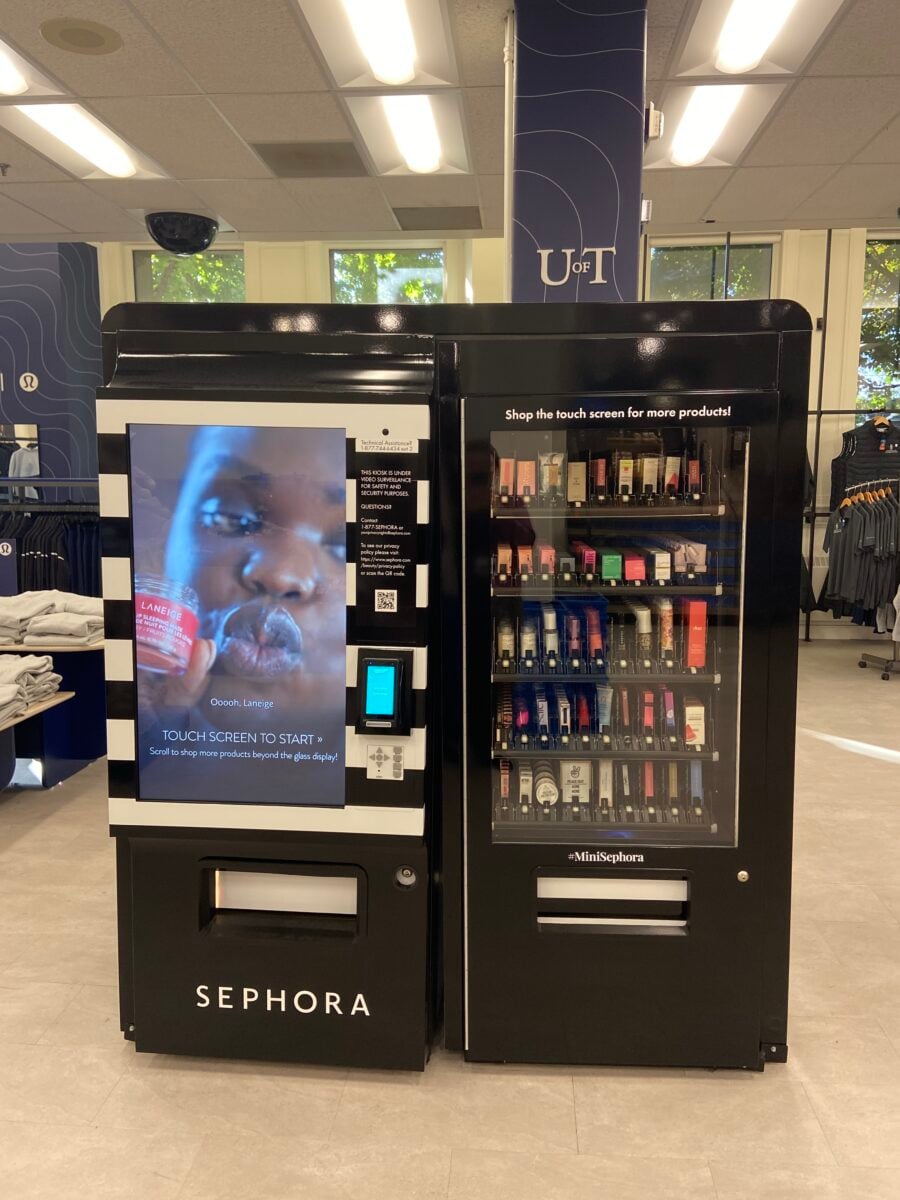
Sephora has also joined the mix, unveiling its first-ever kiosk at the University of Toronto Bookstore. The Sephora vending machine offers students convenient access to popular beauty products, right in the heart of campus.
Thomas Haupt, Country General Manager of Sephora Canada.
“As Sephora continues to grow across Canada, partnering with the University of Toronto Bookstore for our first-ever kiosk has been an exciting opportunity to bring some of our Sephora magic directly to campus,” said Thomas Haupt, Country General Manager of Sephora Canada.
“Here, students will find a handpicked selection of the most-viral products along with quick, on-the-go beauty solutions. This extension of our in-store experience allows for beauty to be even easier to access, explore, and discover than ever before.”
The introduction of Sephora’s kiosk has generated a lot of buzz, with students embracing the convenience of grabbing top beauty products between classes.
“It’s all about convenience—students appreciate having products they need right at their fingertips, especially in a trusted space like the bookstore,” Farrell noted.
Sephora kiosk at the University of Toronto Bookstore at 214 College Street in Toronto. Photo: Supplied
Continued Collaborations with Roots and Champion
Other long-standing partnerships with brands such as Roots and Champion continue to thrive, ensuring that the bookstore remains stocked with styles that resonate with today’s students. “We work with these brands to keep the product offerings fresh and relevant,” said Farrell. “The voice of the student is always important when we make decisions about the designs and logos we carry.”
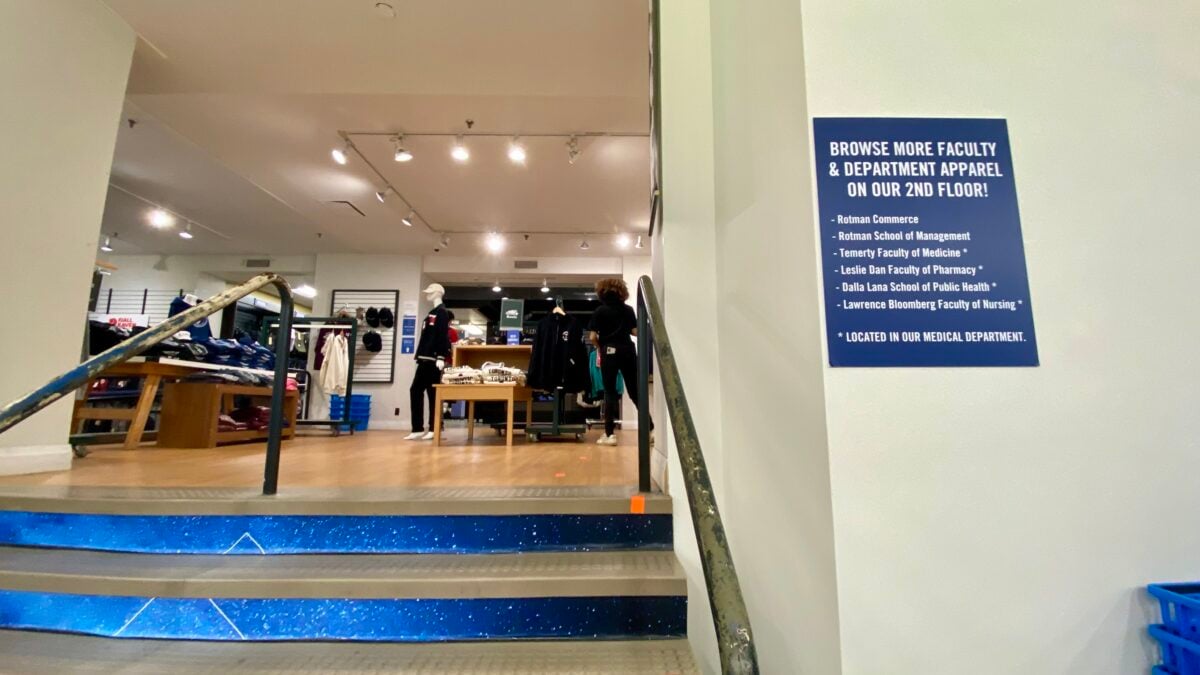
Inside the University of Toronto Bookstore at 214 College Street in Toronto. Photo: Craig PattersonSecond floor inside the University of Toronto Bookstore at 214 College Street in Toronto. Photo: Craig Patterson
The Bookstore as a Community Hub
While the University of Toronto Bookstore still sells books, Farrell emphasized that the store has evolved far beyond its traditional role. “It’s a place where students come to connect, not just to buy textbooks,” he said. “They come here to interact with the University, express their pride, and feel a sense of belonging.”
With the University of Toronto’s growing international reputation, the bookstore is also becoming a destination for tourists and local residents interested in engaging with the University brand.
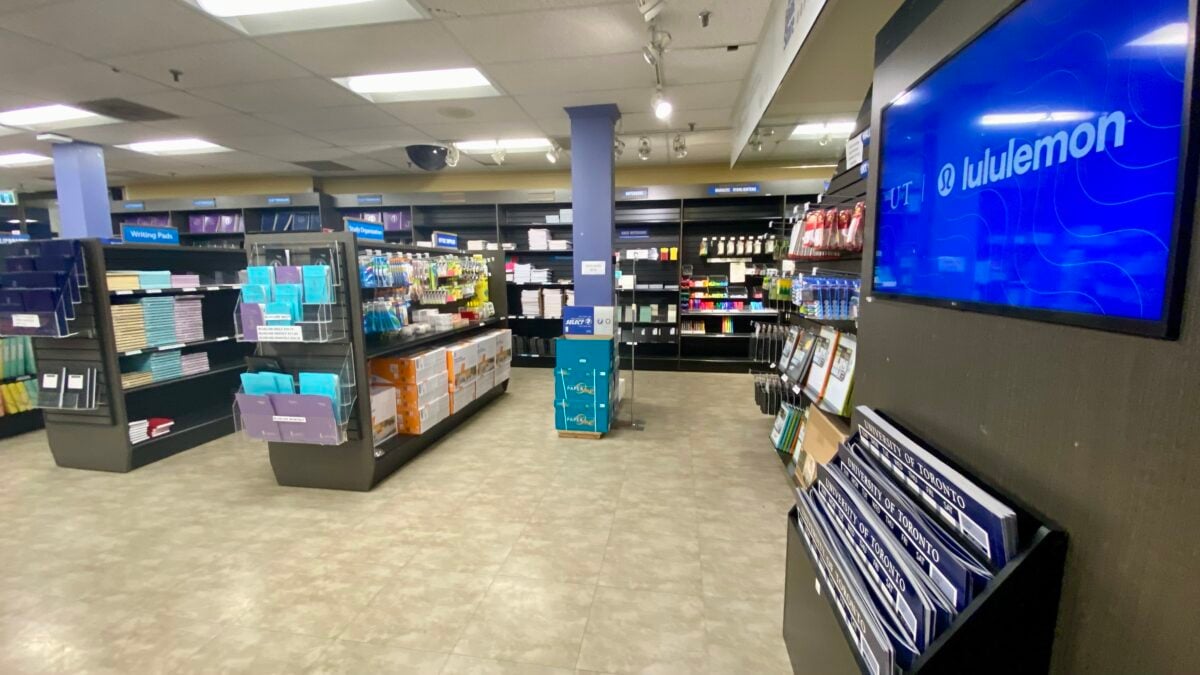
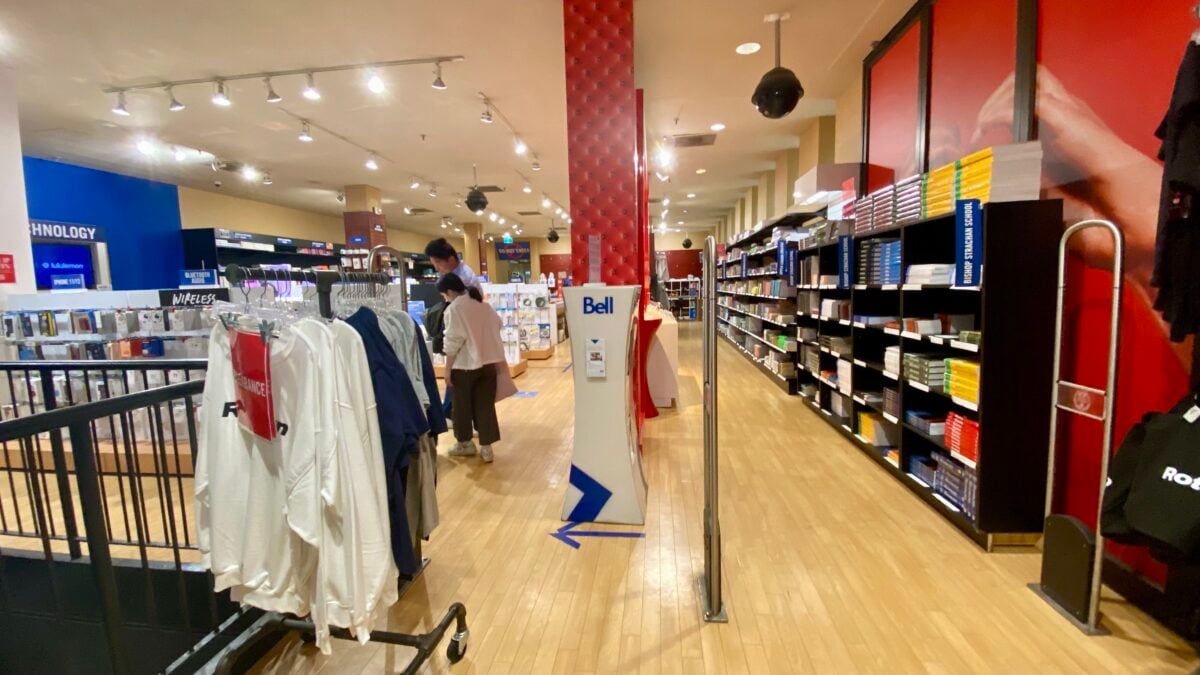
Main floor school supplies department at the University of Toronto Bookstore at 214 College Street in Toronto. Photo: Craig PattersonInside the University of Toronto Bookstore at 214 College Street in Toronto — this main floor area includes Canada Post, and even a food department. Photo: Craig Patterson
Future Growth and Expanding Partnerships
The bookstore’s retail collaborations show no signs of slowing down. Farrell hinted that more exciting partnerships are on the horizon. “This is just the beginning,” he said. “We’re continuously exploring new ways to enhance the store experience and meet the needs of a changing community.”
As the University of Toronto Bookstore continues to evolve, its focus on student experience remains at the forefront. “Higher education is challenging enough,” Farrell said. “We want to make sure students have everything they need to feel comfortable and connected to the University.”
OVO partnership area in the University of Toronto Bookstore at 214 College Street in Toronto. Photo: Craig PattersonSecond floor inside the University of Toronto Bookstore at 214 College Street in Toronto. Photo: Craig Patterson
A Modern Retail Experience on Campus
By embracing partnerships with brands like lululemon and Sephora, the University of Toronto Bookstore is staying relevant in a time when students have many other shopping options. These collaborations help create a retail experience that can’t be found elsewhere, making the bookstore a key destination on campus.
“We’re proud of the experience we’ve created here,” Farrell said. “It’s more than just a store—it’s a place where the University community gathers and feels at home.”
Lululemon area and Sephora kiosk in the University of Toronto Bookstore at 214 College Street in Toronto. Photo: Craig PattersonInside the University of Toronto Bookstore at 214 College Street in Toronto. Photo: Craig Patterson
Campus Retail in Canada: Opportunities for Improvement
David Ian Gray, Founder/Strategist with DIG360 Consulting, had good things to say about the University of Toronto Bookstore and its retail concept. He noted that other universities might want to look at opportunities to create more robust retail strategies.
David Ian Gray
“We’ve been discussing campus retail for a while now, and it’s generally been underwhelming. The main issue is that academic institutions, primarily focused on higher education, are inherently complex and bureaucratic. Retail has often been an afterthought, overseen by non-retail professionals.”
“However, many campuses have large, captive populations, presenting a significant opportunity to better meet the needs of students, staff, and educators. Beyond the sales potential, brands interested in recruiting high-potential graduates can establish early connections here,” Gray said. “Campuses are also great places for brands to introduce themselves to new Canadians, a growing segment of the student population. In the case of urban campuses, surrounding communities can also be drawn in, creating a positive image for the university.”
Gray said that universities should follow in the footsteps of airports, which have brought in better retail offerings in recent years.
“This situation reminds me of airports a couple of decades ago. Retail there used to be an afterthought too. Today, most major airports have professional, well-run retail operations that add real value.”
Second floor inside the University of Toronto Bookstore at 214 College Street in Toronto. Photo: Craig PattersonSecond floor tech area inside the University of Toronto Bookstore at 214 College Street in Toronto. Photo: Craig Patterson
“Improving campus retail offers a revenue stream to budget-constrained institutions. But success requires different lease structures and partnerships with brands and retailers that can adapt to the fluctuating traffic patterns of campuses, both during the day and by semester.”
“The University of Toronto Bookstore is a great example,” Gray went on to say. “They’ve created unique partnerships that benefit both shoppers and brands, while also enhancing the university’s reputation among current and prospective students and faculty. This will serve as a useful case study for other universities.”
Canadian consumers head into the 2024 holiday season still feeling the impacts of inflation and higher interest rates, and continue to be concerned about their personal financial situation and the broader economic outlook, according to Deloitte Canada’s 2024 Holiday Retail Outlook.
“Encouragingly for retailers, holiday spending is expected to rebound by 10% from last year to an average of $1,478. However, this level of planned spend remains well below recent historic levels,” said the report.
“Consumers’ focus on value and this year’s late Black Friday will see retailers battling it out over a significantly shorter holiday shopping season. We expect competition for consumer spend to be particularly intense this year. With some shoppers planning to wait until Black Friday week to kick off their shopping, retailers should be prepared to pull out all the stops to encourage consumers to shop early, shop often—and shop with them.”
“So we have not fully recovered to that point and in fact because Canadians are still somewhat in a state of confusion around how they believe the economy is going to unfold going forward, there’s a pretty even split about whether it’s going to get better or worse and as a result . . . about four per cent (of the increased spending) is going to go in the form of gifts and gift cards. Where the money is going to be going moreso is towards travel and charitable giving and some of the areas that are not necessarily going to fall into retailers’ tills,” he said.
“There’s a general compression that’s going to happen. Black Friday is probably going to be more important this year than in prior years because of the deal taking behaviour. About 67 per cent of consumer budgets are going to be spent on or after Black Friday which is a compressed fewer than five days shorter than last year. It’s going to be a super competitive war of the websites. Spend’s up but it’s not going to go to retailers’ tills and Black Friday and beyond is going to a battle zone for the dollar.”
Key insights for 2024:
Spend forecasted to increase 10% but remains below recent levels: Gift spend is up 4% (a modest amount above inflation); travel and charitable donations are up considerably (+20%, +35%) but remain below historic levels. Continued concerns about rising prices and economic uncertainty appears to be challenging spend in more discretionary categories such as non-gift apparel (-9%).
Retailers have less than four weeks to capture 67% of consumers’ holiday budget: Black Friday, the critical shopping milestone, falls a full five days later this year – giving retailers a more condensed three and a half weeks to capture their share of consumers’ wallets.
Marketplaces and Social Commerce may be driving an upturn in eCommerce growth: 43% of the holiday budget will be spent online (43%, up from 41% last year and 36% in 2019). More than half (51%) of Canadians are Prime members, 1 in 3 have shopped on emerging platforms such as Temu, Shein, Alibaba in the past three months, and 1 in 5 would be interested in shopping on Instagram.
Data breaches challenge consumer trust in retailers: One in four have been impacted by a retailer data breach – driving some to either stop shopping (21%) or shop less often (40%) at the impacted retailer.
Many are skeptical about GenAI, but younger consumers may be early adopters: 6 in 10 are concerned about the technology, and few are excited (19%) or trust it (15%). 1 in 3 have used a GenAI tool in the past three months–higher for those 18-34 (53%) than those 55+ (16%). Deloitte’s annual holiday retail outlook explores the shopping behaviours, attitudes, and preferences of consumers for the upcoming holiday season. This year marks the sixth publication since the holiday retail outlook was first published in 2019. The findings are based on a survey of more than 1,000 Canadian consumers across age groups, financial situations, and geographic regions. All dollar figures quoted are in Canadian currency.
Here’s Deloitte’s full report:
Economic outlook from Deloitte’s chief economist, Dawn Desjardins
Canada’s economy got off to a relatively firm start in 2024, with real GDP increasing at close to a 2% pace. However, the headline numbers contradict a softer performance, with consumer spending slowing dramatically in the second quarter and the labour market showing signs of cooling. On a per capita basis, the economy contracted for the fifth consecutive quarter. Fortunately, the progress on inflation allowed the Bank of Canada to lower the policy rate by 75 basis points over the summer months. Our expectation is that the inflation rate will continue to decline and reach the 2% target in early 2025; as a result, we expect an additional 50 basis points in policy rate cuts to end the year at 3.75% and reach 2.75% by mid-2025.
In the near-term, however, the economy is expected to grow at a more moderate pace, with softer labour market conditions weighing on consumer confidence. Even with interest rates expected to continue to decline, many homeowners who took on mortgages at extremely low rates during the pandemic will face higher debt servicing costs when they renew. For Retailers, this continued pressure on wallets will limit the consumer’s ability to spend on discretionary items this holiday season. We are optimistic about Canada’s economic prospects for 2025. Lower inflation and interest rates will ease the burden of the highly indebted household sector sufficiently to support a pickup in spending— especially if labour market conditions turn around as we expect. After two years of subpar growth, we look for the economy to hit its stride in 2025.
Financial constraints may challenge discretionary spend
Canadians’ holiday spending is forecast to rise 10% this season to $1,478, reversing last year’s decline— though still below levels of recent years ($1,520 in 2022, $1,706 in 2019). Spend on holiday gifts and gift cards are expected to rise 4% – a modest amount above inflation. The categories with the largest increases, travel, and charitable donations, are up 20% and 35% respectively–but also remain below historic levels.
The anticipated rise in holiday spending is not necessarily driven by renewed consumer optimism. Canadians are as concerned about housing costs and rent increases (55%), paying for holiday gifts (35%), and credit card debt (31%) as they were last year, though fewer are likely to say they’re in a worse financial position (36%, compared to 41%). Canadians’ recession concerns persist (63%, slightly down from 67%), and views are fairly evenly split on whether the economy will improve (33%) or worsen (36%) in 2025.
As they strive to make the most of their holiday dollars, consumers unsurprisingly plan to buy gifts from Amazon (71%) and mass merchants (61%)—and a growing number (14%) are starting to look at what emerging online retailers such as Temu, Shein, and Alibaba have to offer. They’re less likely to visit department stores (29%, from 36% last year) or home improvement retailers (12%, from 21%) this season. One in five (21%, compared to 23% last year) consumers plan to shop at specialty apparel retailers this season—but 17% of those shoppers plan to spend less when they do. Given this, spend in non-gift apparel is expected to see the largest decrease across all categories (-9% compared to 2023).
Overall, the driving factor behind the rise in holiday spending this year appears to be inflation. Two out of three Canadians (65%) expect higher prices this season—and 70% still feel retailers are raising prices unfairly. More than half (59%) of those who expect to spend more this year say it’s because things cost more, while 58% of those who plan to spend less cite inflation concerns as the reason.
Photo- Leeloo The First
Black Friday looms large as retailers face a short, intense battle for consumer dollars this year
Black Friday falls on November 29 this year—a full five days later than last year. That means retailers have just three and a half highly competitive weeks to capture their fair share of consumers’ spending in the run-up to the holidays.
Consumers will still be searching for the best deals this season. Eight out of 10 plan to shop around for the best deals, and seven out of 10 plan to shop at retailers offering the lowest prices, search for items on sale, and change brands if their preferred choice is too expensive. This search for value will drive some consumers to postpone their holiday shopping until Black Friday draws closer. Forty-two percent of consumers believe Black Friday offers the best deals of the season—which is likely why 17% plan to start their holiday shopping the week of Black Friday and 48% plan to shop on Black Friday itself. Overall, consumers plan to spend about 22% of their holiday budget on Black Friday – higher for younger consumers at 30%. Of the $350— average planned Black Friday spend, more than half of ($200) will be spent online.
Retailers should shape their marketing strategies to meet ever-growing consumer need for value throughout the holiday season. By fine-tuning their marketing and promotional strategy, retailers can encourage shoppers to make purchases ahead of and during Black Friday. For example, retailers can leverage existing loyalty and customer data to understand consumer preferences and create compelling, personalized offers. Retailers can also work to identify ways to encourage consumers to make purchases earlier in the season beyond traditional discounting (i.e., free/faster shipping if purchased before a select date). Lastly, retailers will need to ensure they have the right products in-stock and can meet delivery expectations during the busy Black Friday season.
Digital shopping remains strong as consumers explore marketplaces and social commerce
While more than half (55%) of consumers prefer to do most of their holiday shopping in-store, digital shopping plays a key role in their shopping plans. Consumers expect to spend an increasing share of their holiday budget online (43%, up from 41% last year and 36% in 2019), with most shopping online due to value or convenience. Retailers will be interested to note that younger consumers and those earning over $150,000 plan to spend half of their holiday budget online.
Though many consumers will visit physical stores for holiday inspiration (48%, down from 53%), even more will turn to Google (73%) and Amazon (65%). Fifteen percent will search for ideas on newer platforms Temu, Shein, and Alibaba, while 8% (up from 5% last year) will ask ChatGPT for ideas and suggestions. These emerging sources of gift inspiration provide consumers with faster, more personalized, and more competitively priced product recommendations than ever before. Traditional retailers will be further challenged by non-traditional players that invest substantially in their marketing efforts to support customer acquisition.
Amazon Prime is more popular than ever: 51% of consumers say they’re Amazon Prime members—the highest proportion we’ve ever recorded. Membership is more common among those earning $50,000– $150,000 (56%) or above (52%); younger consumers aged 18-34 are more likely to be Prime members (58%) than those aged 55 and up (45%). Prime membership isn’t necessarily translating into more spending, however: 59% of consumers expect their planned Amazon spend will remain about the same this year.
Canadian consumers may love Amazon, but they’re also checking out emerging digital shopping alternatives too. One in three consumers say they’ve shopped on platforms such as Temu, Shein, and Alibaba in the past three months, mostly for clothing (63%). Younger consumers aged 18-34 (39%) are more likely to have done so than those aged 55 and up (23%), and the platforms appeal equally to consumers across all income brackets. We expect this trend to grow quickly as consumers continue to search for value, and these platforms offer a wide variety of unique products at extremely competitive prices.
More than half of Canadians (61% – up from 55% last year) are willing to pay a premium for sustainable products and are interested in buying sustainable gifts (59%). However, 6 in 10 find it hard to shop sustainably when their personal finances are challenged, and 4 in 10 don’t believe sustainable products offer good value for money. Consumers may believe there is a trade-off between choosing retailers and products that align with their values while meeting their price expectations. This suggests that there is opportunity for retailers to educate consumers of the efficacy of their products – especially as there are high-quality, sustainable products that can actually help save consumers’ money in the long run. Marketing executives should emphasize sustainable products’ value proposition across channels and customer communications (e.g., website and digital applications, loyalty programs etc.).
Consumers also show interest in shopping directly through social media channels such as Instagram (22%) and TikTok (12%). The 18-34 cohort is far more interested in shopping on Instagram (40%) than their 55-plus counterparts (9%). Retailers will want to pay close attention to these new shopping alternatives and explore opportunities to test these new channels as sources of untapped growth with younger shoppers in relevant categories.
Photo- Andrea Piacquadio
Retailer data breaches are challenging Canadians’ trust in retailers
Four out of 10 consumers (39%) say they’ve been affected by a data breach of some sort—and one in four (24%) say they’ve been impacted by a retailer data breach in particular. These incidents are having a real impact on many consumers’ behaviours: 21% of consumers affected by a breach say they stopped shopping at that retailer, and another 40% say they shop there less often. One in five (18%) changed their payment method, while just 21% didn’t change their shopping behaviour at all.
Retailer data breaches—we’ve seen a number of them in the past year alone—may also be making consumers wary of sharing their information: in fact, 39% would prefer not to share any data at all with retailers. Two out of three consumers are worried about their data being compromised in a breach (67%) or misused (66%). Consumers are also concerned about a lack of transparency about how retailers are using their data (50%), skeptical about how their data will be used to influence their shopping decisions (36%), and leery of their data being deployed to deliver uncomfortably targeted ads (32%).
Despite these concerns, almost half (49%) of consumers say they would share information in exchange for promotions, deals or discounts. While consumers are particular about what type of information they share – they’re fairly comfortable sharing gender or racial information, but much less comfortable sharing financial or social media information – some admit the potential for a deal would make them more willing to share.
Retailers must continuously evaluate their cybersecurity strategies and defenses as the risk of security breaches continues to rise. As retailers seek new avenues for growth in a recovering economy, it’s essential that they also prioritize investments in cybersecurity to protect both their digital assets and ensure they maintain the trust of their customers.
In addition to digital security risks, retailers are also experiencing significantly higher levels of shrink compared to previous years. The reasons for shrink are many and often complicated, but for many retailers today the majority of loss is related to internal and external theft. To combat the rise in shrink, many retailers are implementing technology (e.g., Visual AI/high-resolution camera systems, RFID tags), leveraging next gen analytics to better understand and predict where shrink may occur, and “returning to the basics” through disciplined inventory management practices. However, retailers must carefully consider and balance the impact these practices have on the overall customer experience.
Many are skeptical about GenAI, but young consumers appear to be early adopters
Will Generative AI revolutionize retail and the consumer experience this holiday season? The answer seems to be a definitive “maybe.” While 51% of Canadian consumers believe they understand what GenAI is, very few are excited by the technology (19%)—and even fewer trust it (15%). Most (59%) are concerned about GenAI technology.
One in three (33%) consumers say they’ve used a GenAI tool in the past three months, mainly for information/knowledge purposes (46%) or help with writing (43%)—perhaps experimenting with ChatGPT or Microsoft Co-Pilot. For those who say they haven’t used GenAI, the main reasons are security and privacy concerns (43%), or simply not knowing what they’d use the technology for (35%).
Younger consumers aged 18-34 are far more likely to have used GenAI in the past three months (53%) than those aged 55 and up (16%), though they too are concerned about the technology (53%). Younger consumers are more likely to be excited by GenAI’s possibilities (30%), and they’re also more likely to believe retailers should adopt the technology to improve the consumer experience (30%, compared to 18% overall).
Canadian consumers are skeptical about GenAI. This suggests retailers should consider prioritizing GenAI towards internal operations as a means to learn prior to exploring higher-risk, customer-facing applications. When they do deploy GenAI externally, retailers should consider use cases that may appeal to younger customer segments as these groups are more likely to be early adopters. Lastly, and most importantly, they must be transparent about how they’re using the technology and how data will be used or shared. The usual terms and conditions page won’t suffice.
Value will continue to be top-of-mind this holiday season and beyond
As the holiday season draws closer, Canadian consumers are concerned about inflation, their personal financial situation, and wider economic matters. They’ll be looking for the best value they can find this year both in-store or online, and many will wait for Black Friday deals before starting their shopping in earnest. Retailers will face a shorter, more intensive competitive battle for consumer wallet share this season. It will be critical to focus marketing and promotional efforts across channels to encourage consumers to get an early start on their shopping. At the same time, retailers need to be mindful about recent data breaches that may contribute to consumer skepticism about sharing information online and using new technology such as GenerativeAI.
It will also be important for retailers to pay attention to longer-term consumer trends. New digital shopping destinations such as Temu, Shein, and Alibaba are gaining traction, and social commerce (e.g., Instagram, TikTok) is emerging as new retail channel. Consumers will have an abundance of choice as they navigate an increasingly crowded retail landscape. In an environment where constrained discretionary spend is likely to persist, we expect consumers to continue to gravitate to the retailers and platforms that meet their expectations for value. Retailers that do so and are mindful of the longer-term trends shaping consumer behaviour will be best positioned to succeed during this holiday season and those to come.
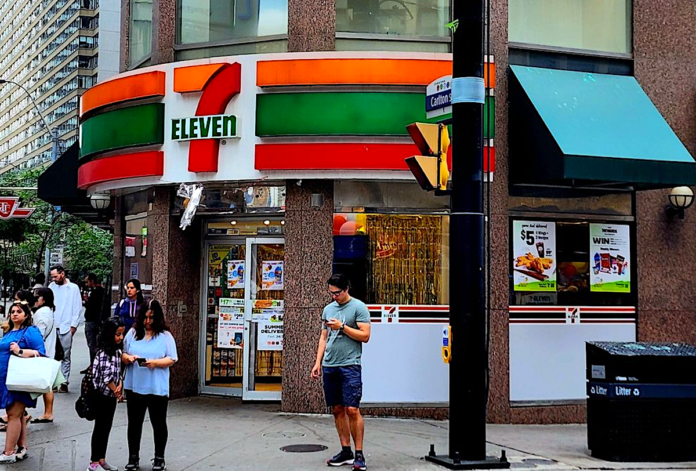
7-Eleven store at Yonge and Carlton Streets in Toronto. Photo: Yelp
7-Eleven is closing 444 underperforming stores across North America, representing about three percent of its total locations, as the company navigates declining sales, inflation, and changing consumer behaviour.
The closures come as parent company Seven & I Holdings makes strategic moves to maintain profitability in challenging economic times.
The shuttered stores span the United States, Canada, and Mexico, though a full list of affected locations has not been released.
Economic Challenges Lead to Store Closures
In its latest earnings report, Seven & I Holdings outlined several factors driving its decision to close hundreds of 7-Eleven stores. Among these are inflationary pressures that have squeezed the purchasing power of middle- and low-income consumers, resulting in reduced discretionary spending. High interest rates and a weakening job market have compounded these issues, making it harder for many customers to justify non-essential purchases.
As a result of these trends, the convenience store giant saw a 7.3 percent decline in foot traffic in August alone, marking six consecutive months of falling customer visits. This steady decrease in store traffic has directly impacted sales, contributing to the decision to close underperforming locations as part of a broader optimization strategy.
Image: 7-Eleven Canada
Shifting Consumer Habits and Reduced Tobacco Sales
A challenge for 7-Eleven has been the decline in cigarette sales, a historically strong revenue stream for the company. According to Seven & I’s earnings report, cigarette sales have plummeted by 26 percent since 2019. Although there has been growth in alternative nicotine products, such as Zyn, the rise in these products has not been enough to offset the overall loss in tobacco sales.
Changing consumer habits, particularly in relation to health-conscious choices and reduced smoking rates, have further exacerbated this trend. With fewer people buying cigarettes, 7-Eleven has had to adjust its strategy and look to other revenue-generating categories, particularly food offerings. Food has now become the chain’s best-selling category in North America, surpassing other traditional convenience store products.
Focus on Food Offerings as Competitors Gain Ground
Despite these closures, 7-Eleven continues to invest in areas where it sees the most growth potential, with food offerings at the forefront of its strategy.
Competing convenience store chains have set a high bar for food and beverage quality, and 7-Eleven is now prioritizing these categories to stay competitive in a fast-changing market. Some competitors have outpaced 7-Eleven in customer satisfaction rankings, largely due to their focus on fresh and diverse food options, a trend 7-Eleven is working to replicate.
The shift toward food as the chain’s leading product category shows how 7-Eleven is adapting to consumer preferences while contending with increased competition. As the company refines its food selection, it aims to enhance its reputation as a convenient and reliable option for quick meals and snacks.
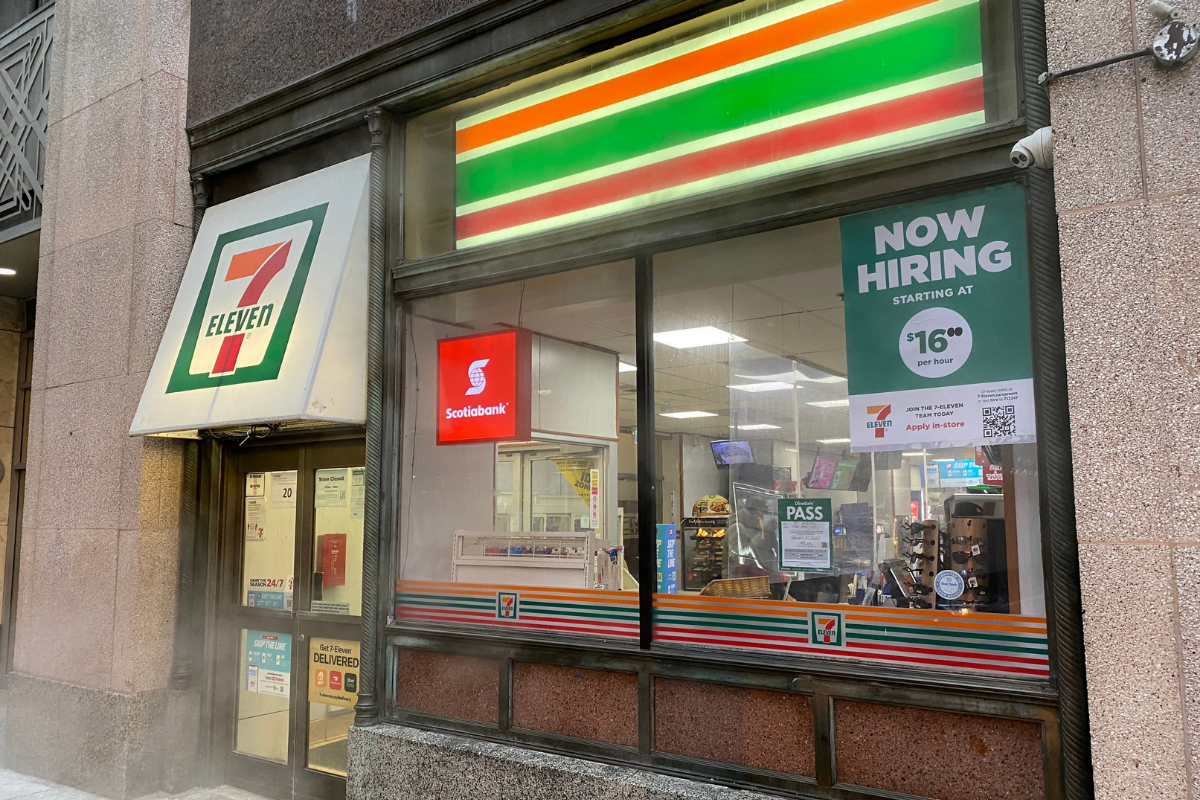
7-Eleven Hiring Sign on Bay Street in Toronto (Photo: Dustin Fuhs)
Future Expansion and Takeover Speculation
In addition to focusing on food, 7-Eleven has signalled its intent to continue expanding into areas with high demand for convenience. While some stores are closing, the company is committed to opening new locations in key markets where foot traffic and customer needs align with its business model. The approach ensures that 7-Eleven maintains a significant presence across North America, even as it closes underperforming sites.
These strategic moves come as the company faces increased pressure from a potential takeover by Couche-Tard, the owner of Circle K. Couche-Tard recently raised its bid to US$47.2 billion to acquire Seven & I Holdings, adding urgency to the company’s efforts to realign and strengthen its operations. The bid is being closely watched as 7-Eleven continues to make decisions that could shape its future for years to come.
While no detailed information has been provided regarding the impact of these closures on Canadian stores, a 7-Eleven spokesperson stated that the company is “optimizing its portfolio” and remains committed to opening new locations in areas with strong demand.
Four 7-Eleven Stores Close in Winnipeg Due to Crime
In Winnipeg, four 7-Eleven stores have closed as part of a larger trend driven by rising crime, particularly shoplifting, which has overwhelmed security efforts. Locations at 815 Ellice Avenue, 665 McPhillips Street, 1007 McPhillips Street, and 1103 Pembina Highway were among those affected.
Despite measures like time-lock safes, security cameras, and reduced access to high-theft items, these stores could not sustain operations. Additionally, the company has warned that up to 10 stores in the city could face similar closures due to ongoing security challenges
Local government and retailers have called for additional policing and broader crime prevention strategies, but many fear that without meaningful intervention, other businesses in these areas could follow 7-Eleven’s lead and shutter their operations.
As Halloween season creeps in, many Canadians have already stocked up on candy for trick-or-treaters. With the cost of just about everything going up, you might expect Halloween treats to be more expensive this year. The reality, however, is a bit more complicated.
Globally, sugar prices are about 24% higher since May of this year, and cocoa prices have skyrocketed by an astonishing 119%. This has fuelled a wave of shrinkflation, where product sizes shrink while prices remain steady, giving consumers less for the same cost. In 2023, shrinkflation hit hard, with smaller chocolate bars and candy packages. Data from CBC shows that since last year, Oh Henry bars have shrunk by 7.2%, Coffee Crisp by 10%, M&Ms by 20%, Kit Kat by 2%, and Toblerone by 10%. Halloween candies have not been spared.
Fewer Pieces and Higher Costs Per Item
Shrinkflation has taken another turn this year, as we see fewer candies, chocolate bars, and chip bags in traditional box sizes. Instead of boxes of 50 or 100, we now see boxes of 45, 90, or 95. This change means your cost per item is climbing, likely by 5% to 10% compared to last year. While some 50 or 100-piece boxes are still out there, they are becoming rare.
If you’re planning to give out chocolate this Halloween, expect to pay between $0.15 and $0.27 per small item. However, these “fun-size” bars are now smaller, typically weighing between 9 and 16 grams. You may be tempted to give out more than one item per child, which will drive up your total cost. If you’re feeling generous, full-size chocolate bars are available for about $0.90 per 45-gram unit. But, depending on where you shop, it may be more cost-effective to stick with the small bars, as they tend to have a lower price per gram.
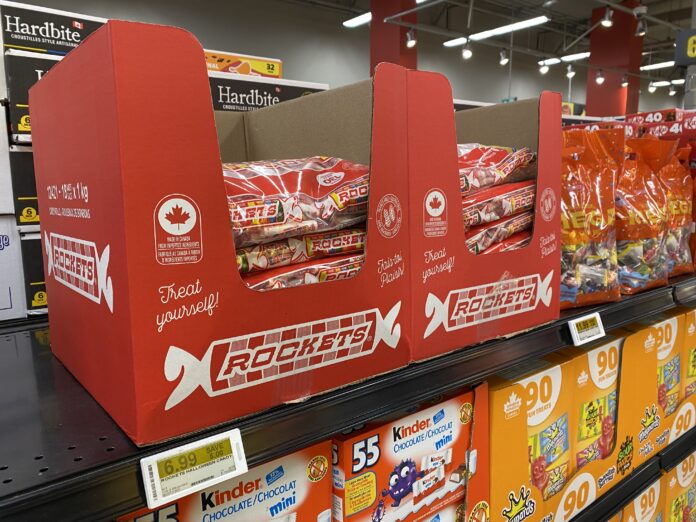
Seasonal Halloween Candy Display at Walmart Gerard Square in Toronto (Image: Dustin Fuhs)
Chips and Other Non-Chocolate Halloween Treats
Chips are another popular Halloween treat, but prices have risen by about 15% over last year. Each bag now costs between $0.24 and $0.29, though they may still be a more affordable option, since most households give out only one bag per trick-or-treater. That said, the bags themselves are now lighter, typically containing only 16 grams.
For those who prefer non-chocolate treats, Skittles will cost around $0.18 per small bag. Tootsie Rolls, Rockets, and other popular Halloween candies remain priced at roughly $0.013 per gram, showing little change from last year. Licorice, while less popular, sits at around $0.14 per piece, making it a mid-range choice for those looking to mix things up.
Should You Hand Out Pop? Think Again
Finally, let’s clear up one thing: handing out pop to trick-or-treaters is not only more expensive, but it’s also impractical. It’s heavy, and kids already have enough to carry without lugging around bottles or cans of pop.
With Halloween fast approaching, your budget for trick-or-treating will likely range from $0.25 to $0.50 per item, similar to last year. Thanks to shrinkflation, though, kids will have to visit more doors to collect the same amount of candy. On the plus side, that means more exercise—unless, of course, their parents are driving them around. Maybe shrinkflation has its perks after all.
Retail Insider is streamlining its Canadian retail news from around the web to include a handful of top news stories that can be viewed quickly during the day. Here are the top stories from the past 24 hours.