Retail Insider is streamlining its Canadian retail news from around the web to include a handful of top news stories that can be viewed quickly during the day. Here are the top stories from the past 24 hours.
e.l.f. Cosmetics, the global beauty brand with a strong presence in Canada, is breaking ice on a new partnership with the Toronto Maple Leafs.
Launching for the 2024-25 regular season, the EYES.LEAFS.FACE. campaign is set to disrupt professional hockey in a way only e.l.f. can, said the company in a news release.
The campaign officially kicked off at the Toronto Maple Leafs home opener on October 12 with a suite of advertising, in-arena events, digital integrations and engaging social media initiatives that celebrate both e.l.f. and the Toronto Maple Leafs.
Patrick O’Keefe
“Partnering with the Toronto Maple Leafs, the most globally recognized hockey team, was a natural extension of our commitment to inclusivity,” said Patrick O’Keefe, Chief Integrated Marketing Officer of e.l.f. Beauty. “45% of the Leafs’ fan base is female and the EYES.LEAFS.FACE. campaign allows us to connect with these incredible women in a way that’s rarely been done before. We love creating unique, tailored experiences that resonate with them directly.”
e.l.f. said it has long been a champion of women in sports, supporting both athletes and fans.
“The brand consistently shows up for its community, identifying unique white space opportunities to connect with female fanbases. From the Big Game to the Indianapolis 500 and now Leafs Nation, e.l.f. Beauty is committed to amplifying underrepresented voices and fostering inclusivity,” it said.
As a dedicated supporter of the Professional Women’s Hockey League (PWHL), the National Women’s Soccer League, and the Billie Jean King Foundation, e.l.f. Beauty remains focused on democratizing access for both players and fans. The company’s ethos of empowering self-expression and promoting inclusivity is at the heart of its mission, continuing to push boundaries and redefine the role of beauty in sports, added the company.
“We’re thrilled to welcome e.l.f. Cosmetics as a partner of the Toronto Maple Leafs,” said Kimberlee Welch, Senior Director, Global Partnerships, MLSE. “This collaboration unites two passionate fan bases and two pioneering brands for one groundbreaking mission: to promote inclusivity and celebrate the diversity of our growing hockey community. We can’t wait to see the creativity that EYES.LEAFS.FACE. will inspire among Leafs Nation.”
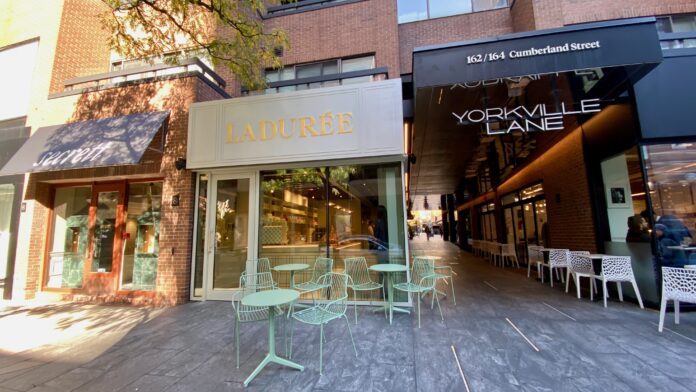
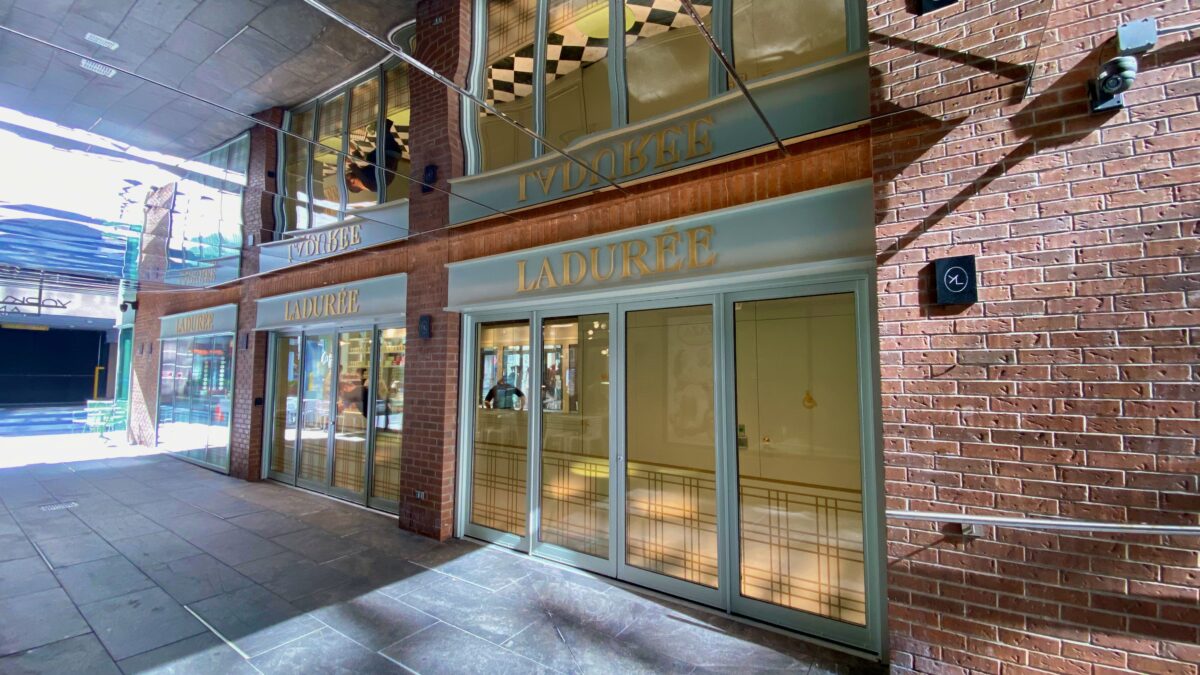
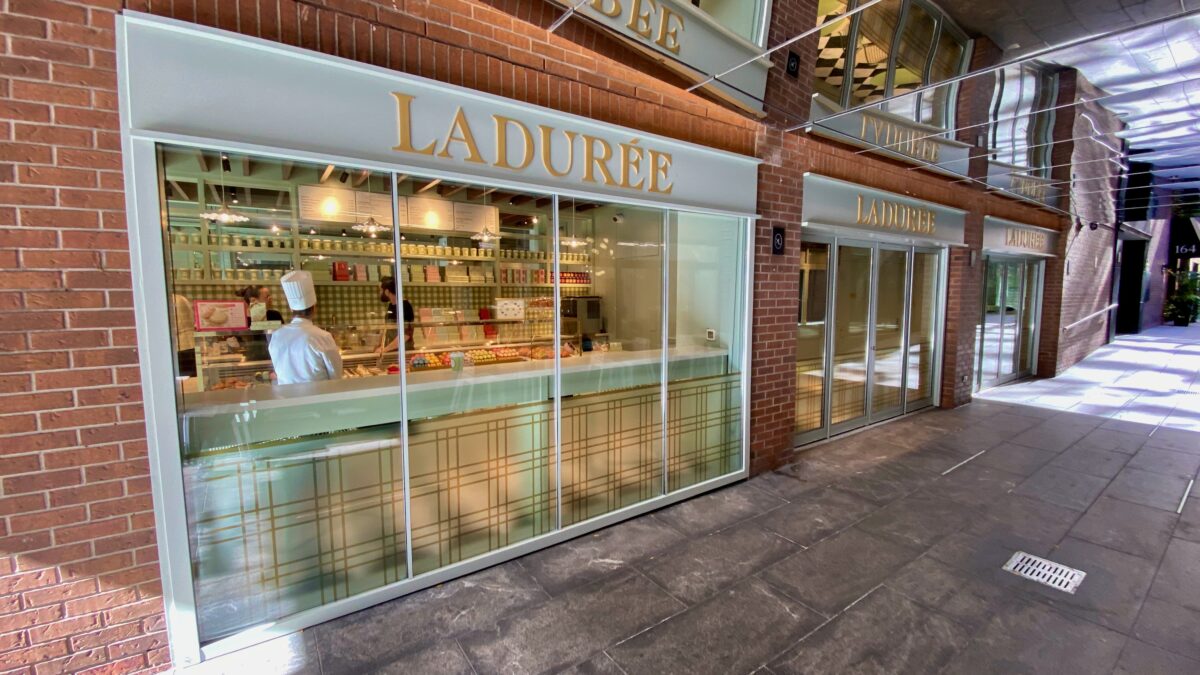
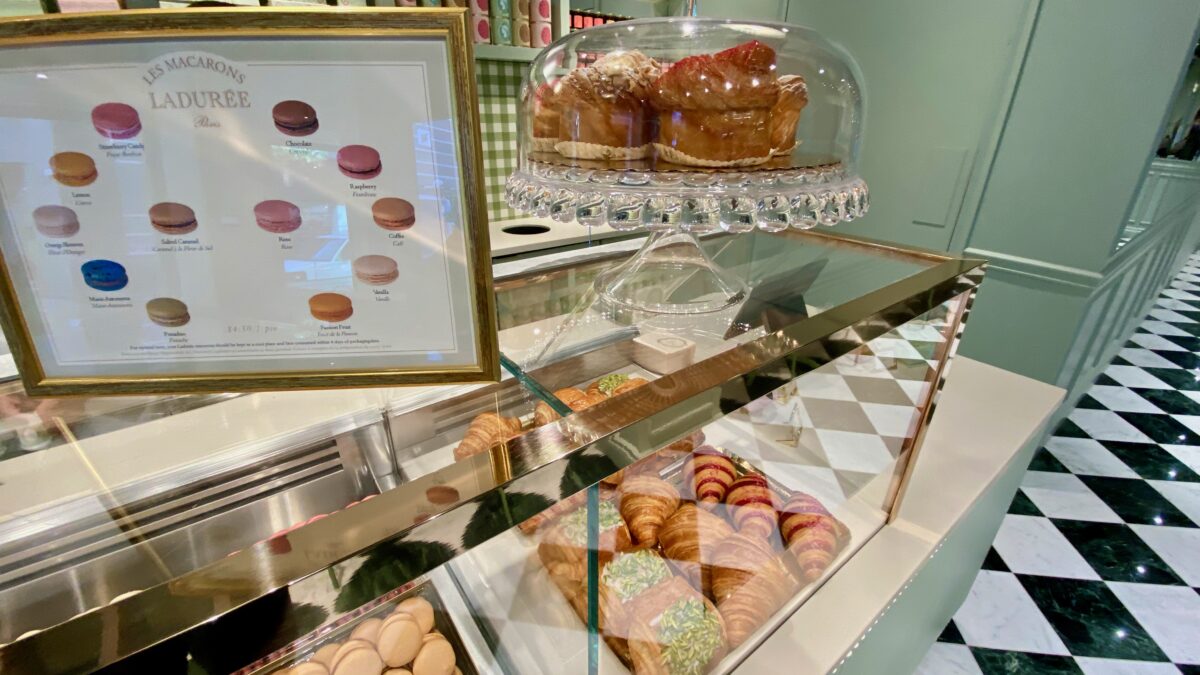
Ladurée Café at 162 Cumberland Street in Toronto's Yorkville area, October 12, 2024. Photo: Craig Patterson
Ladurée, the world-renowned French patisserie, has opened its third Toronto location at 162 Cumberland Street in Yorkville. Launched on October 12, 2024, it’s the first Ladurée Café concept in Canada. The location offers a blend of grab-and-go convenience with refined sit-down dining options, catering to both busy customers and those seeking a more leisurely experience.
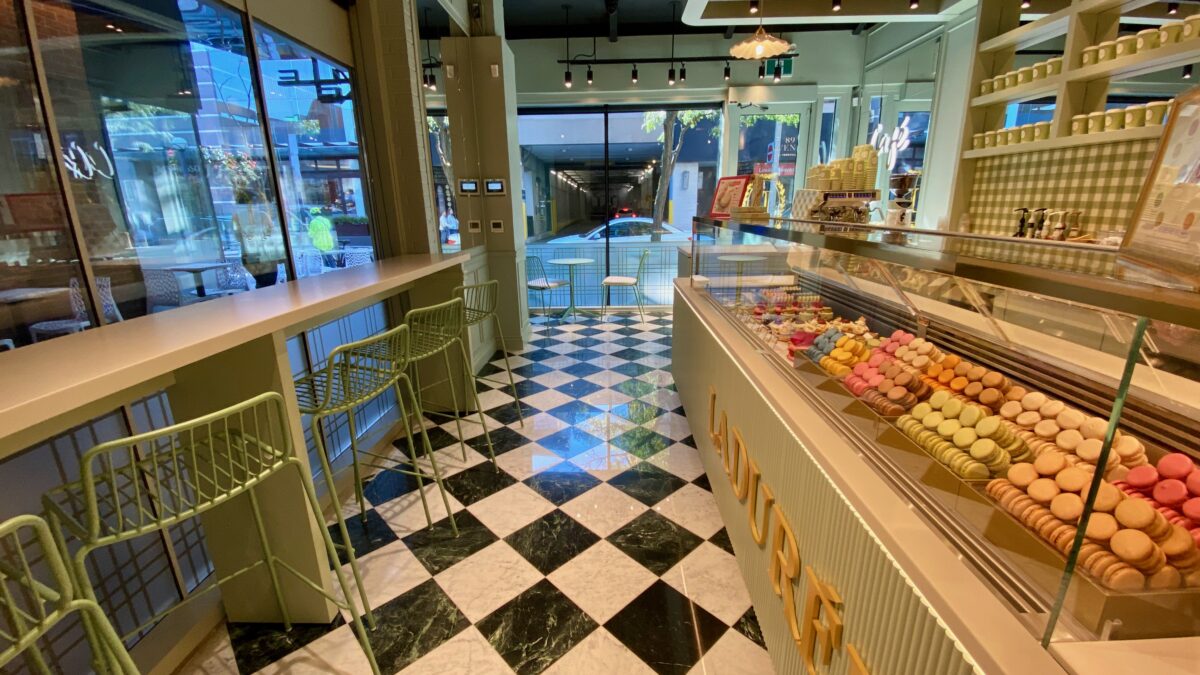
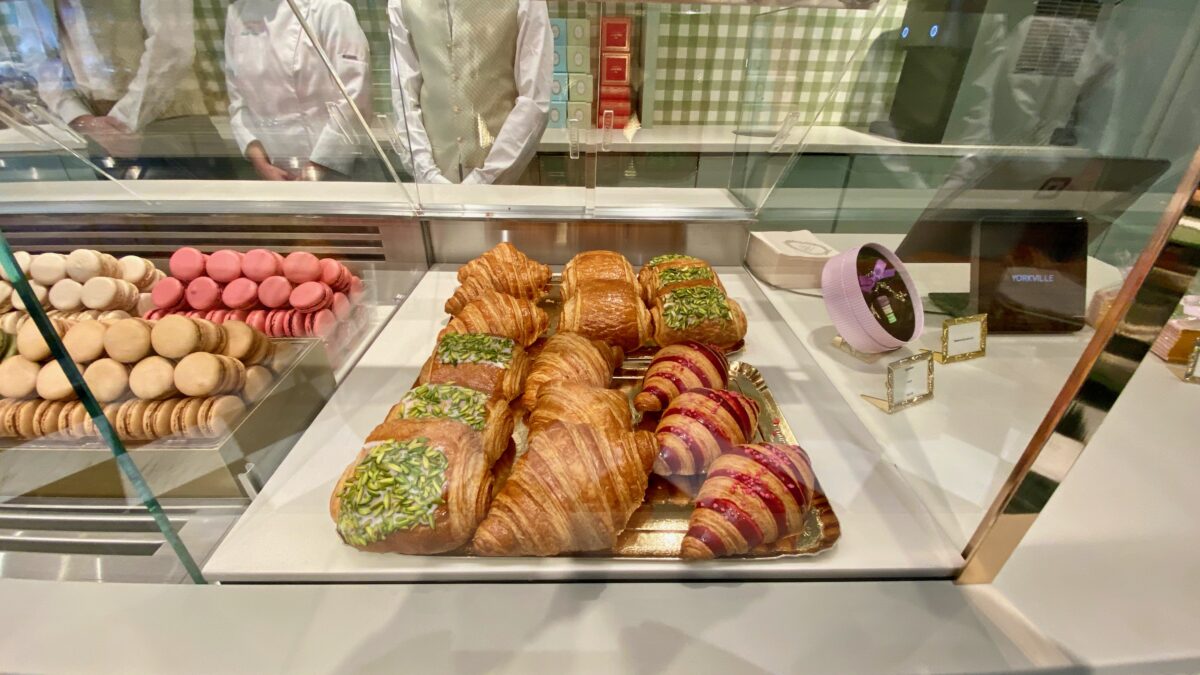
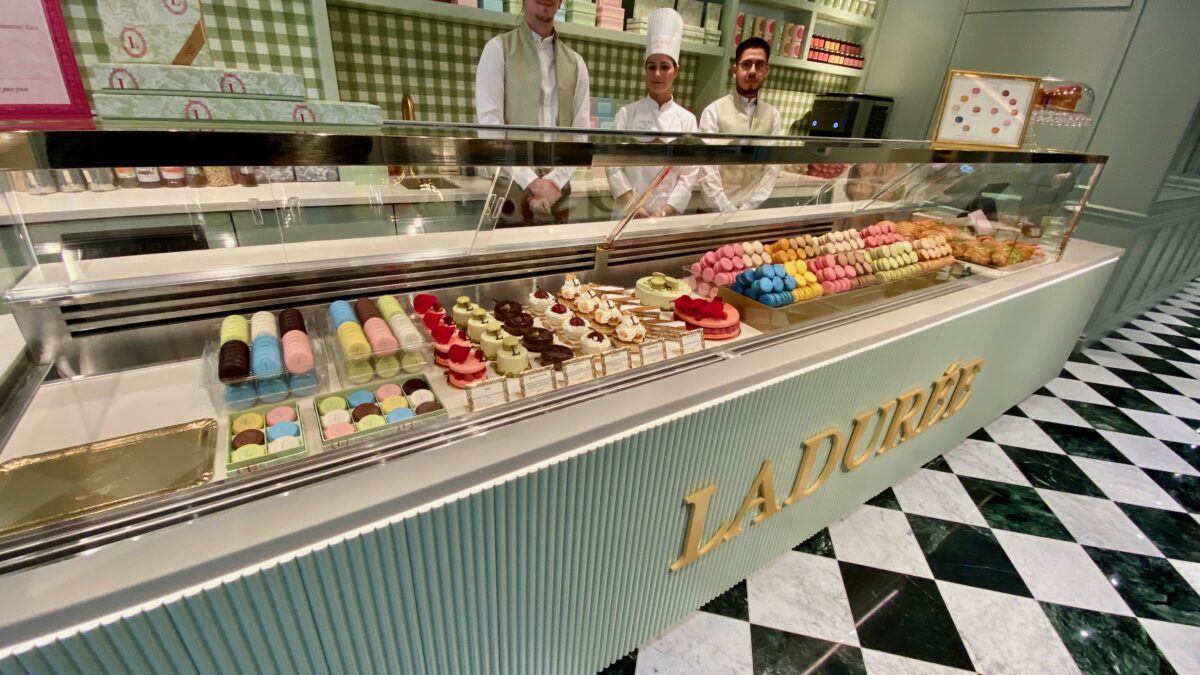
The café provides seating for 13 indoors and 12 on the outdoor patio. It offers a carefully curated selection of Ladurée’s signature macarons, freshly baked pastries, and elegant cakes, crafted under the watch of French-trained Executive Pastry Chef Alexandra Launay.
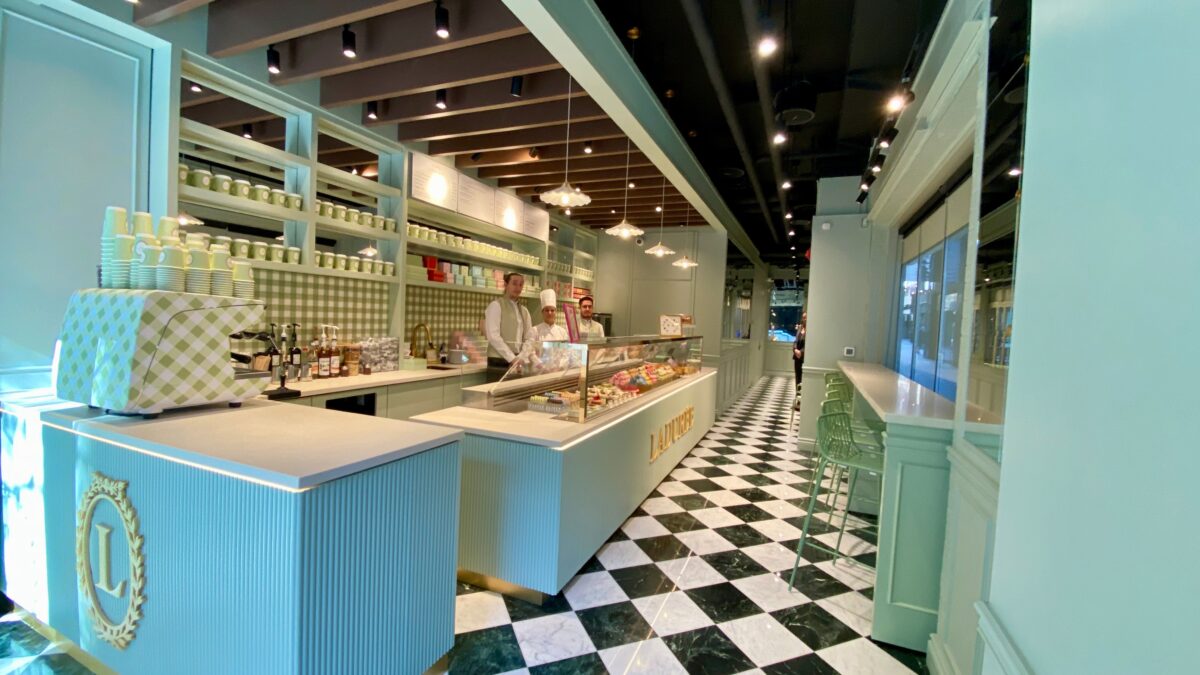
Ladurée Café at 162 Cumberland Street in Toronto’s Yorkville area, October 12, 2024. Photo: Craig Patterson Inside the Ladurée Café at 162 Cumberland Street in Toronto’s Yorkville area, October 12, 2024. Photo: Craig Patterson
Chic Design and Crafted Interiors
The interior of the Ladurée Yorkville café reflects the brand’s Parisian heritage while incorporating modern elements to suit Toronto’s cosmopolitan vibe. Walls are painted a very particular shade of green, reflecting Ladurée’s brand profile. The design features imported checkered wallpaper, known as the Vichy pattern, sourced from France and developed exclusively for Ladurée. The café’s furnishings were shipped from Italy, adding a high-end European aesthetic to the space. The attention to detail extends to branded equipment, including a coffee machine with the same Vichy pattern.
Elevate Build Inc., a Toronto-based construction firm founded by Paul M. Bélanger, managed the construction of the Yorkville location. Bélanger has worked on all of Ladurée’s Canadian locations since 2017, including the Toronto pastry laboratory. Ladurée’s Parisian design team supervised the design and construction.
Ladurée Canada worked with Ulf Bergner of Bergner Real Estate Advisors to negotiate the Yorkville lease deal. CBRE’s Urban Retail Team listed the Dice Fruit retail space for lease.
Inside the Ladurée Café at 162 Cumberland Street in Toronto’s Yorkville area, October 12, 2024. Photo: Craig Patterson Inside the Ladurée Café at 162 Cumberland Street in Toronto’s Yorkville area, October 12, 2024. Photo: Craig Patterson
A New Addition to Yorkville’s Growing Culinary Scene
The café occupies a prime corner space in Yorkville, replacing Dice Fruit. The location is across from key retailers like Nespresso and the upcoming Harry Rosen flagship store. This high-traffic area, just steps away from Village of Yorkville Park, attracts both local residents and visitors. The blend of grab-and-go options alongside traditional café service ensures that Ladurée can cater to a range of customers, from busy professionals seeking a quick coffee to those looking for a leisurely afternoon tea.
Ladurée Canada owner Olesya Krakhmalyova said that Yorkville is the perfect setting for Ladurée’s luxurious yet accessible offerings. “We’ve waited for the right opportunity to bring the Ladurée experience to Yorkville,” said Ms. Krakhmalyova. “This café is a place where people can enjoy the finest pastries, whether they’re stopping in for a quick coffee or sitting down for a more indulgent experience.”
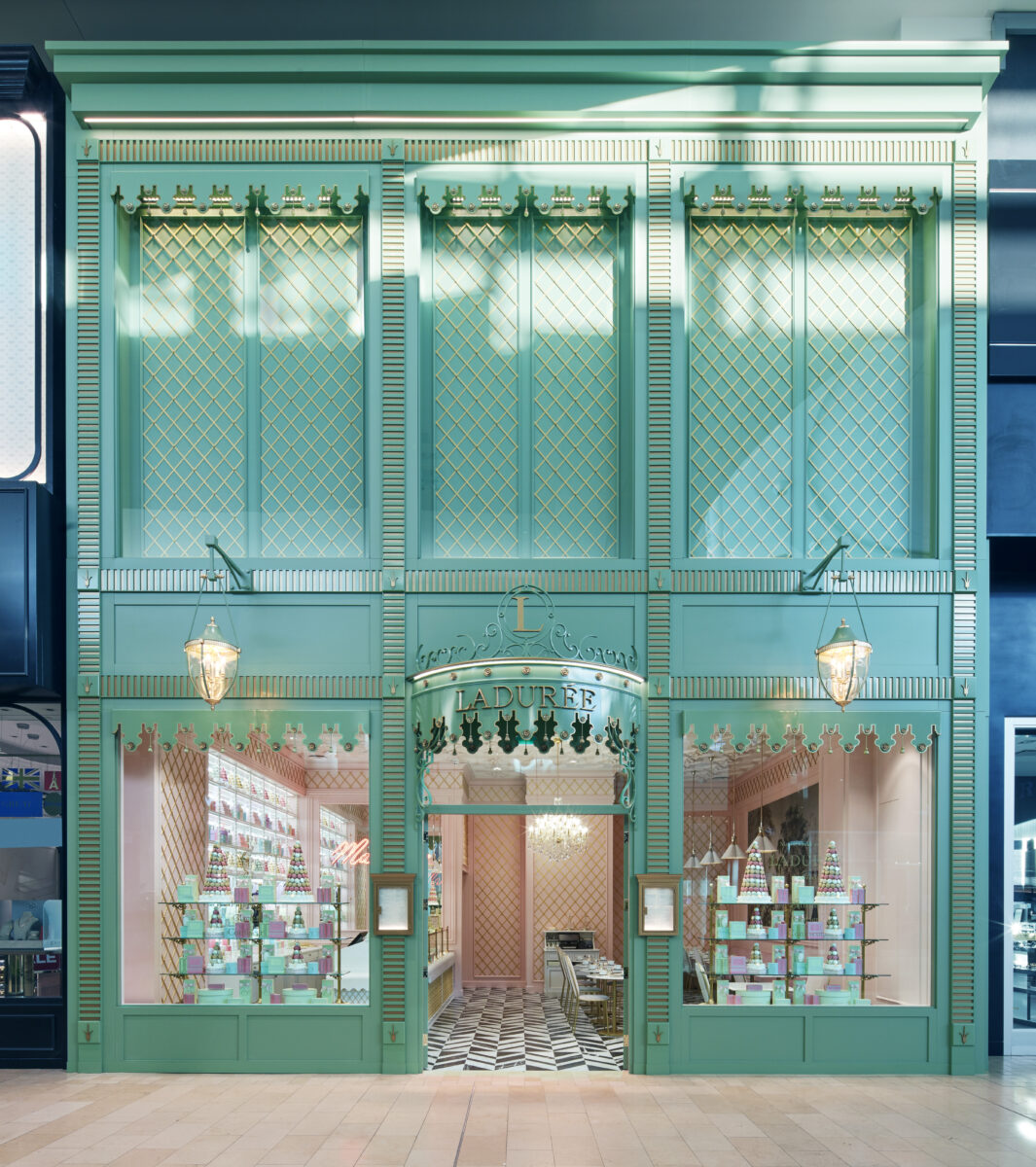
Exterior frontage onto Yorkville Lane: Ladurée Café at 162 Cumberland Street in Toronto’s Yorkville area, October 12, 2024. Photo: Craig Patterson Exterior frontage onto Yorkville Lane: Ladurée Café at 162 Cumberland Street in Toronto’s Yorkville area, October 12, 2024. Photo: Craig Patterson
Pastry Classes and Upcoming Union Station Pop-Up
Ladurée Canada is launching exclusive pastry classes in mid-November. The classes will be held at Ladurée’s Toronto pastry laboratory, offering participants the opportunity to learn how to create Ladurée’s signature Ispahan cake, guided by expert chefs. With limited class sizes, participants will receive personalized instruction, making it a must-attend for pastry enthusiasts.
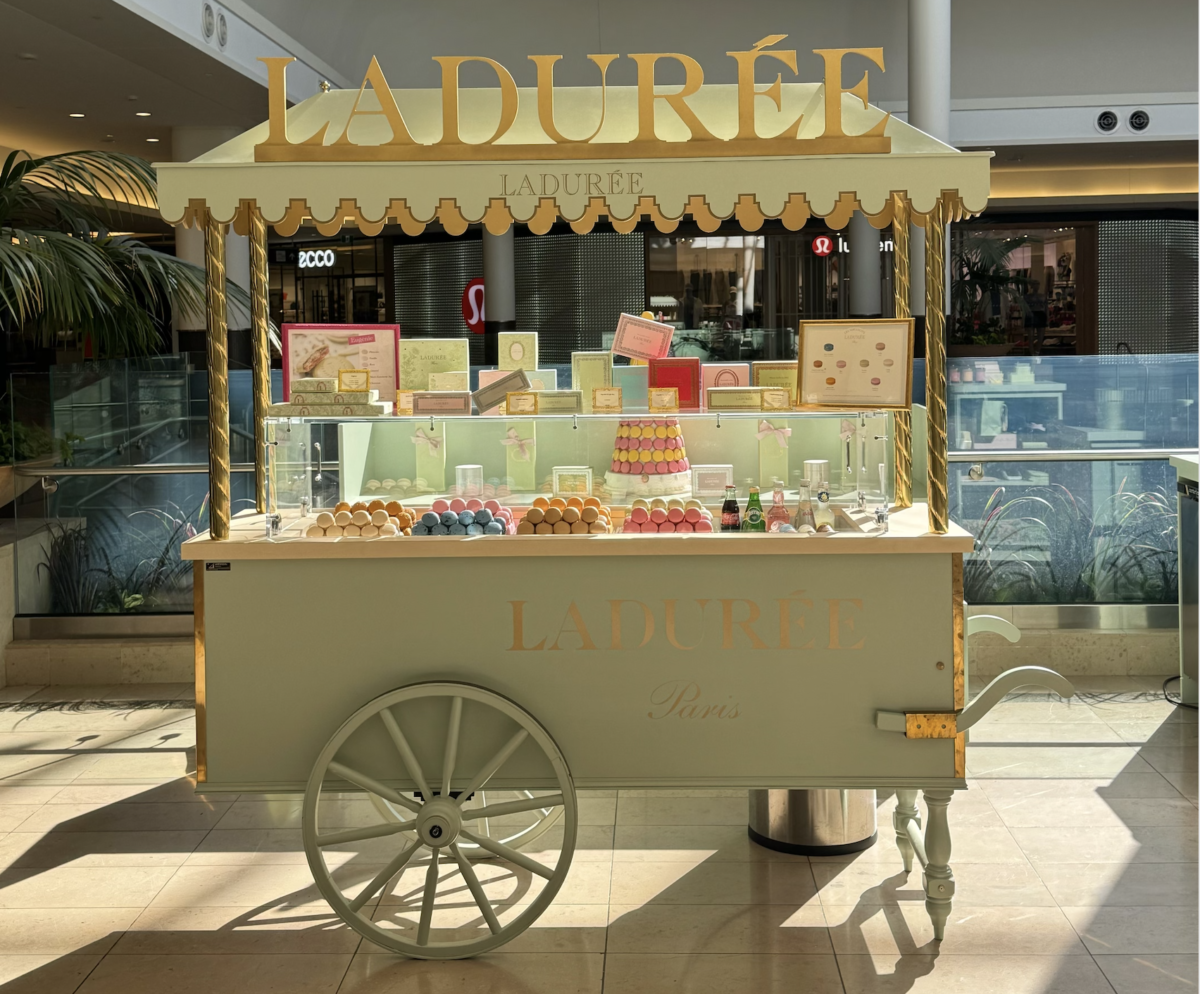
Ladurée’s carriage at CF Sherway Gardens in Toronto — it will be relocating on October 16 to Union Station in downtown Toronto. Photo: Ladurée Canada
Additionally, Ladurée is expanding its Toronto presence with a carriage pop-up set to open on October 16, at Union Station. Located on the Bay Promenade’s lower retail level, the pop-up will offer Ladurée’s famous macarons and other sweet treats to commuters and travelers. The carriage will relocate from CF Sherway Gardens.
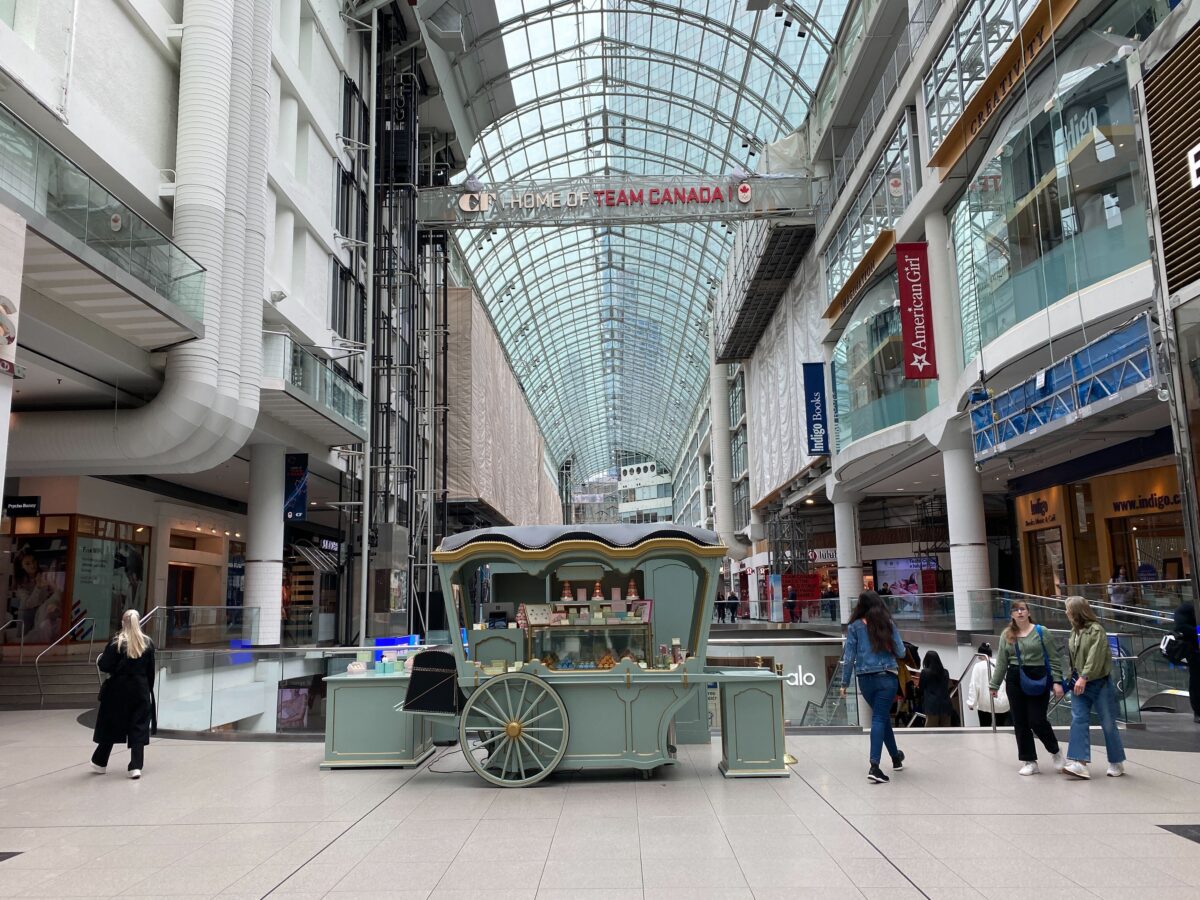
Ladurée Carriage at CF Toronto Eaton Centre (Image: Dustin Fuhs)Ladurée Café at 162 Cumberland Street in Toronto’s Yorkville area, October 12, 2024. Photo: Craig Patterson
Ladurée’s Future Expansion into Montreal
Looking beyond Toronto, Ladurée is considering expansion into Montreal. Krakhmalyova noted that the company is evaluating potential locations, in response to high customer demand. Ms. Krakhmalyova emphasized that any expansion would be done carefully, ensuring that the Ladurée experience remains consistent across all locations.
“We are excited about the possibility of expanding into Montreal,” said Ms. Krakhmalyova. “But we’re taking our time to make sure we find the right space and execute the concept with the same level of quality and detail that Ladurée is known for.”
Inside the new Ladurée Café at 162 Cumberland Street in Toronto’s Yorkville area, October 12, 2024. Photo: Craig Patterson
Yorkville’s Growing Reputation as a Luxury Destination
Ladurée’s Yorkville opening is part of a larger transformation in the neighborhood. The area is home to an impressive array of luxury brands, both on Bloor Street and in the Village of Yorkville itself. New high-end residential developments will also bring more wealth to the area. Yorkville’s blend of luxury shopping and affluent residents has made it a key destination for international brands looking to establish a presence in Toronto.
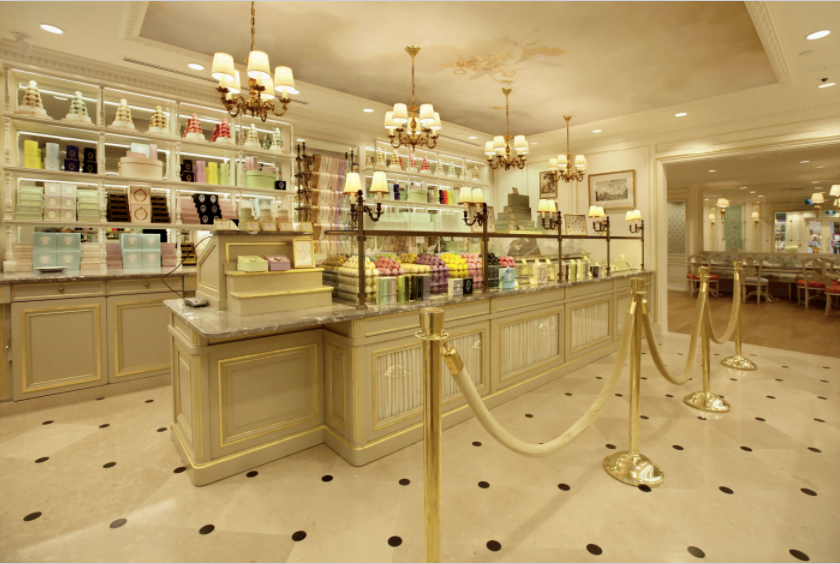
The Toronto locations followed the 2016 opening of Ladurée’s first Canadian storefront at 1141 Robson Street in downtown Vancouver, which spans about 1,100 square feet and has a 23-seat tea salon. There were lineups for weeks after it opened.
Ladurée at the Yorkdale Shopping Centre in Toronto (Image: Ladurée)Inside the Ladurée retail space on Robson Street in Vancouver. Photo: Ladurée Canada
The Robson Street Ladurée also has an expanded assortment of cakes and pastries. A pastry laboratory opened just east of the city in the summer of 2018. As with the Toronto pastry laboratory, a French-trained chef works out of the Vancouver kitchen.
Ladurée, founded in Paris in 1862, is renowned for its double-decker macarons, selling over 15,000 daily. The patisserie also offers ice cream, sorbets, jams, chocolates, candies, and branded accessories. In 1993, French business group Groupe Holder acquired Ladurée, expanding it from a few locations to dozens of boutiques in 27 countries, including the U.S. In March 2022, 80% of Ladurée was purchased by Stéphane Courbit’s Lov Group, with Mélanie Carron becoming managing director, replacing David Holder, son of the Holder Group’s founder.
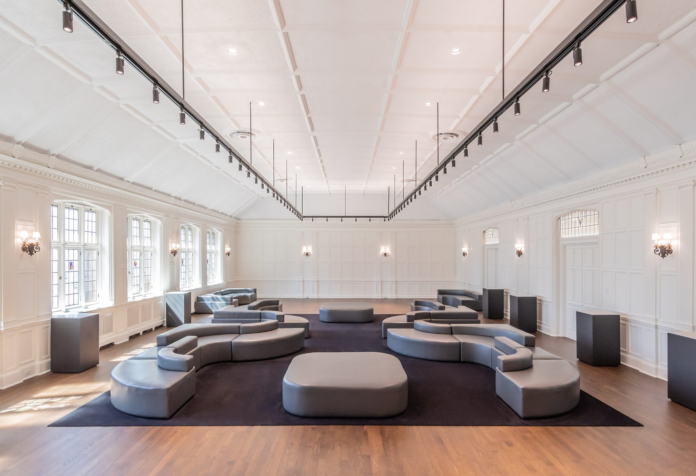
Tudor Hall at Holt Renfrew Ogilvy in Montreal. Photo: Holt Renfrew
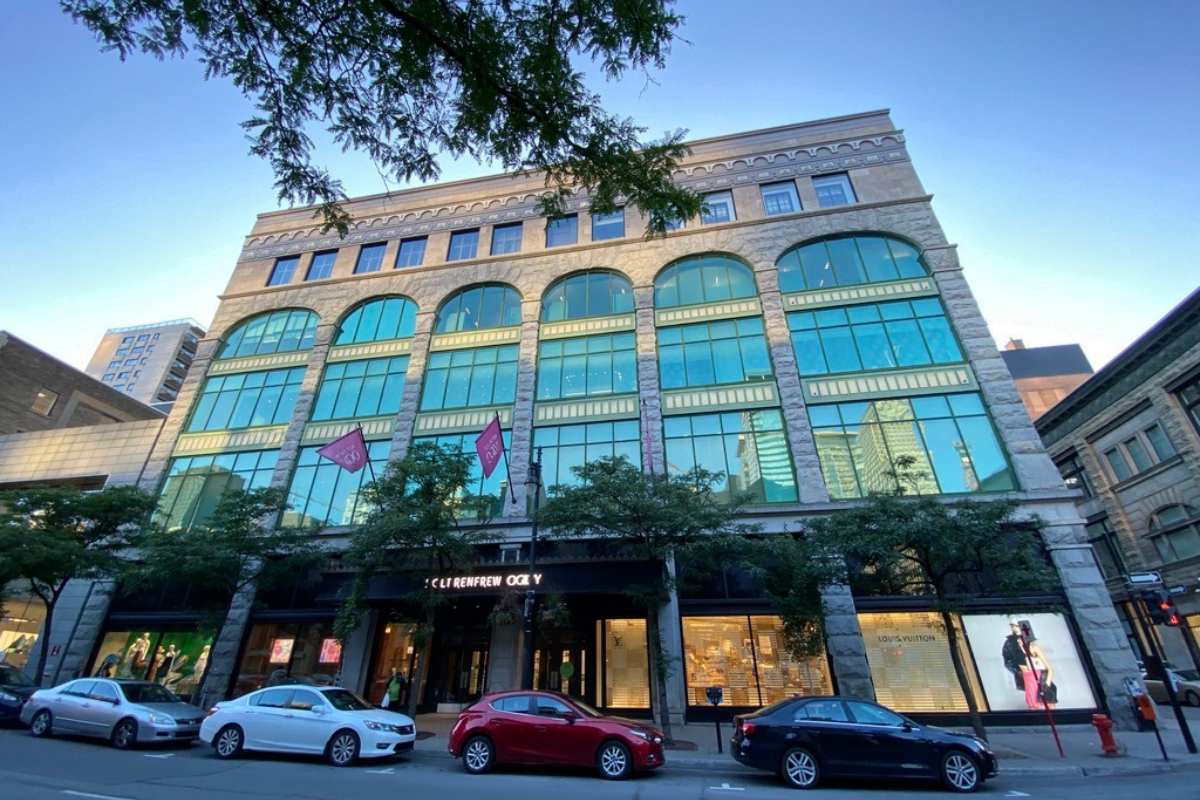
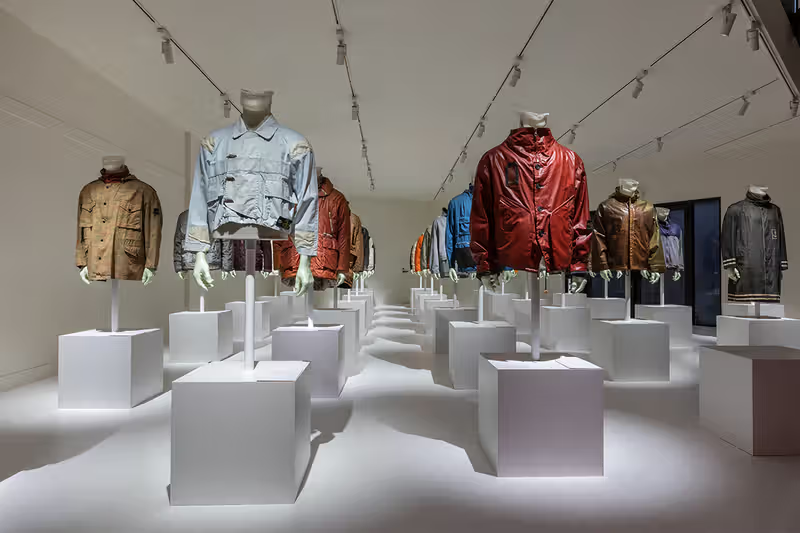
Italian luxury brand Stone Island will host an archival exhibition at Holt Renfrew Ogilvy in downtown Montreal from October 17 to 27, 2024, celebrating four decades of fabric innovation. The exhibit, titled “Material Research ‘984 – ‘024,” will feature iconic pieces from the brand’s past alongside current designs, illustrating its ongoing commitment to cutting-edge material research.
A Collaboration with Holt Renfrew Ogilvy
Holt Renfrew Ogilvy, the 250,000 square foot luxury retail destination in downtown Montreal, will be the exclusive host for Stone Island’s exhibit. Located in the recently renovated Tudor Hall event space, the exhibition will highlight five archival pieces dating back to 1984, paired with five new pieces from Stone Island’s Fall 2024 collection. The curation will emphasize how the brand’s heritage influences its modern designs.
Among the materials to be displayed are Stone Island’s renowned metallic, thermo-sensitive “ice” fabrics, and highly reflective textiles. Carolyn Wright, Senior Vice President of Product at Holt Renfrew, emphasized the significance of this collaboration, noting that Stone Island has been a part of Holt Renfrew’s offerings for nearly a decade. The exhibition marks a special moment in their partnership, inviting visitors to engage with Stone Island’s technological and design achievements.
Additionally, the exhibit will feature a pop-up record shop curated by La Rama Records. This interactive element, along with DJ performances on select nights, will enhance the cultural aspect of the event, blending music and fashion into a unique visitor experience.
Stone Island store at 102 Yorkville Avenue in Toronto. Photo: Stone Island
Stone Island’s Standalone Store in Toronto
Beyond its relationship with Holt Renfrew, Stone Island expanded its footprint in Canada by opening its first standalone flagship store on Yorkville Avenue in Toronto in 2019. This location offers a comprehensive Stone Island experience that includes a focus on exclusive collections and limited-edition pieces.
The Yorkville flagship showcases the full range of Stone Island products, including outerwear featuring the brand’s iconic compass patch and innovative fabric treatments. The opening of this store marked a significant milestone in Stone Island’s North American expansion. The Yorkville location sits among prestigious neighbours that include Brunello Cucinelli and Chanel, as well as a soon-to-close Versace store.
Holt Renfrew Ogilvy at 1307 Saint-Catherine St W (Image: Dustin Fuhs)
Broader Distribution in Canada
Stone Island’s products are available in Canada through a network of upscale retailers, including SSENSE, TNT, and CNTRBND. Holt Renfrew has also been a key partner, with successful pop-up shop-in-shops over the years. Stone Island’s popularity in Canada has grown due to its appeal to fashion-forward consumers who appreciate the brand’s unique combination of functionality and luxury.
Background and History: Stone Island
Stone Island was founded in 1982 by Italian designer Massimo Osti in Ravarino, Italy. Initially launched as a subsidiary of Osti’s main brand, C.P. Company, Stone Island quickly set itself apart due to its experimental approach to fabrics and garment technology. The brand’s foundation was based on rigorous material research, with its first collection featuring the now-iconic Tela Stella fabric, a durable material initially developed for military tarpaulins. This early focus on functionality, combined with Osti’s innovative use of dyeing and treatment techniques, laid the groundwork for Stone Island’s success.
Image: Stone Island
One of the brand’s most significant early innovations was the Ice Jacket, developed in the 1980s, which changed color in response to temperature variations. This forward-thinking approach to garment technology was emblematic of Osti’s design philosophy, which favored function over form. Stone Island’s logo, a compass, reflects Osti’s nautical inspiration, a nod to his fascination with the sea and boats, as well as the brand’s core ethos of technical precision and exploration.
Following Osti’s departure in the early 1990s, Carlo Rivetti took control of the company, continuing its legacy of innovation while pushing the brand into new markets, including North America. Under Rivetti’s leadership, Stone Island expanded globally, becoming a favourite among subcultures like British football “casuals” and, more recently, a mainstream luxury brand, thanks in part to collaborations with high-profile partners like Supreme and Nike.
The Port of Montreal is experiencing significant disruptions as dockworkers begin an indefinite overtime strike. The move threatens to disrupt supply chains and raise costs for businesses and consumers.
The union representing nearly 1,200 longshore workers has halted all overtime work. This is putting pressure on management to reach a resolution in ongoing contract negotiations.
The longshore workers, members of the Canadian Union of Public Employees (CUPE) Local 375, initiated the strike at 7 a.m. EDT on Thursday. Key issues in the negotiations include unpredictable shifts and the reduced use of senior forepersons.
Talks between the union and the Maritime Employers Association (MEA) resumed last week, with federal mediators present.
Murray said that the union is ready to negotiate, and that the overtime strike is a pressure tactic, given delays.
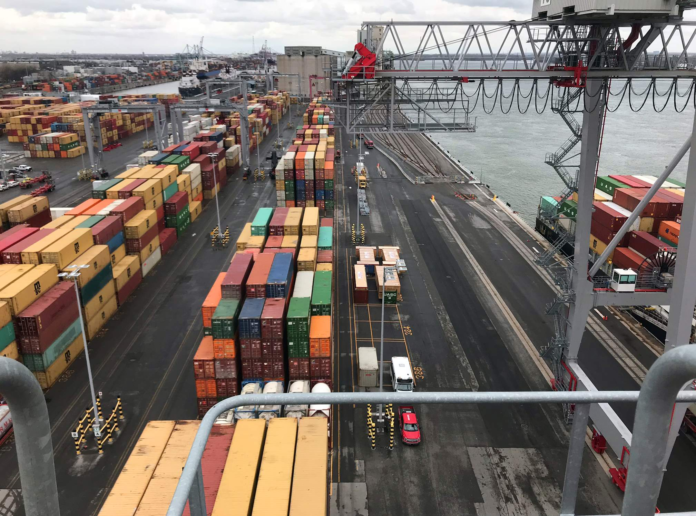
Port de Montreal/Port of Montreal. Photo: Marcel Villeneuve
Port of Montreal Operations Impacted by Overtime Strike
The overtime strike could significantly affect operations at Canada’s second-largest port. The MEA, which represents shipping companies and terminal operators, warned that the refusal of overtime would likely result in slower operations. This in turn would lead to substantial delays and disruptions in the movement of goods.
The MEA stated that the systematic refusal of overtime would have significant repercussions on the port’s activities. That includes even possibly stopping all operations. As a result, retailers, other businesses, and the public would all feel the impact. Employees working shifts with incomplete crews may not be paid, further complicating the situation.
This overtime strike follows a recent three-day walkout at two terminals handling 41% of the port’s container traffic, heightening concerns about long-term impacts on supply chains. Shipping companies have already begun to explore alternative routes and strategies to mitigate potential delays.
Port de Montreal/Port of Montreal. Photo: Marcel Villeneuve
Shipping Costs and Supply Chain Disruptions Loom
Danish shipping giant Maersk announced a surcharge of $2,000 per container for freight bound for Canada from Europe. It’s a cost that could be passed down to consumers, made as a result of the strike.
As companies seek other shipping routes, the availability of containers for Canadian goods could decrease, leading to potential supply chain bottlenecks. Vessels would be rerouted to either Vancouver or Halifax, causing potential overcrowding at those ports.
Fewer containers in circulation could lead to increased shipping prices. Increased cost would eventually trickle down to retailers and consumers.
Previous three-day strike at the Port de Montreal/Port of Montreal. Photo: Marcel Villeneuve
Port of Montreal’s Role in Canada’s Supply Chain
The Port of Montreal plays a crucial role in Canada’s economy, handling a diverse range of goods that include food, medical products, raw materials, and consumer goods. As the largest container port in Eastern Canada and an intermodal hub, the port connects directly to Canada’s national rail networks, making it a key player in the country’s logistics and supply chain.
With the overtime strike now in effect, the Montreal Port Authority (MPA) has activated a business continuity plan to minimize disruptions. However, around 50% of the goods transiting the port, including imports and exports, could face delays. The MPA continues to hope for a swift resolution to the labour dispute, while businesses and the public face uncertainty about the future of the country’s supply chain.
Port activity in Canada supports approximately 590,000 jobs and generates $93.5 billion in economic activity. The reliability of the Port of Montreal is vital to ensuring that goods flow smoothly across the country, and the current labour disruption underscores the high stakes of the ongoing negotiations.
In today’s fast-paced world, where dining out is a staple of modern life, ensuring the safety and well-being of all customers is crucial for any restaurant’s success. For the more than 3 million Canadians living with food allergies, dining out can be a daunting experience, fraught with risk and uncertainty. Yet, the reality is that food allergy management is not just a health issue—it’s good business. Restaurants that prioritize allergy awareness are poised to capture an untapped market and foster customer loyalty.
Food Allergy Canada, which just released a new report this week, has long been at the forefront of advocating for better allergy management in the foodservice industry. Their work is not only helping to improve the dining experiences of millions of Canadians but also providing vital resources to restaurants looking to expand their market. The numbers speak for themselves: Canadian households affected by food allergies spend an estimated $6.5 billion annually on dining out. This presents a huge opportunity for restaurants that can cater to this underserved segment.
Research shows that 80% of food allergic consumers say that a restaurant’s allergen management policies influence their dining decisions. Importantly, the impact goes beyond just the food allergic population. Nearly half (44%) of non-food allergic consumers also consider allergy accommodations when choosing where to dine with others, showing that the demand for allergen-friendly environments extends far beyond the immediate needs of allergic individuals.
What’s more, food allergic customers are less price-sensitive compared to their non-allergic counterparts. Only 39% of food allergic consumers prioritize price when dining out, compared to 65% of non-allergic diners. This means that restaurants offering a safe dining experience for food allergic patrons can charge a premium without alienating this customer base. Safety, transparency, and reliability are what matter most to this group, and these attributes are precisely what foster deep loyalty. A staggering 86% of food allergic consumers say their loyalty is directly influenced by how well a restaurant accommodates their needs.
Perhaps the most compelling finding is the financial impact restaurants can experience by adopting more rigorous allergy management practices. Food allergic individuals often feel their choices are limited, with 37% reporting that they have few safe dining options. However, these consumers dine out or order in just as frequently as their non-allergic counterparts, and their preferences can often influence the entire group’s decision. Therefore, by offering a safe dining experience, restaurants can attract not just food allergic customers, but their entire social circles. This can lead to a significant boost in revenue—restaurants that make concerted efforts to accommodate food allergies can tap into an underserved and highly loyal market, potentially increasing their business by 10-15% simply by becoming a trusted destination for these consumers.
Moreover, the risks associated with poor allergen management are real and significant. Studies found that 33% of food allergic consumers have experienced a severe allergic reaction while dining out or ordering food. Even more concerning is that 78% of these incidents occurred despite the restaurant being informed of the customer’s food allergies. These numbers underscore the urgent need for restaurants to take allergy management seriously and develop robust protocols to prevent cross-contamination and ensure safe meal preparation.
By implementing allergy-friendly practices, restaurants can significantly reduce the risk of allergic reactions, build trust, and attract a highly loyal customer base. Food Allergy Canada offers free resources to help foodservice operators, including training videos, posters, and checklists. These tools provide a clear path forward for any restaurant looking to embrace food allergen management as part of its business strategy.
Ultimately, food allergy management isn’t just about avoiding liability—it’s about creating a dining environment where everyone feels safe and welcome. The business case is clear: restaurants that invest in allergy-friendly practices will not only save lives but also boost their bottom line by attracting and retaining loyal customers. In a competitive market, being allergy-aware is more than just the right thing to do—it’s a recipe for success.
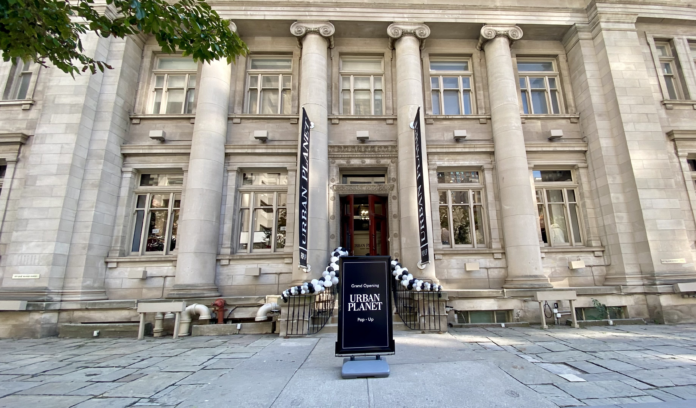
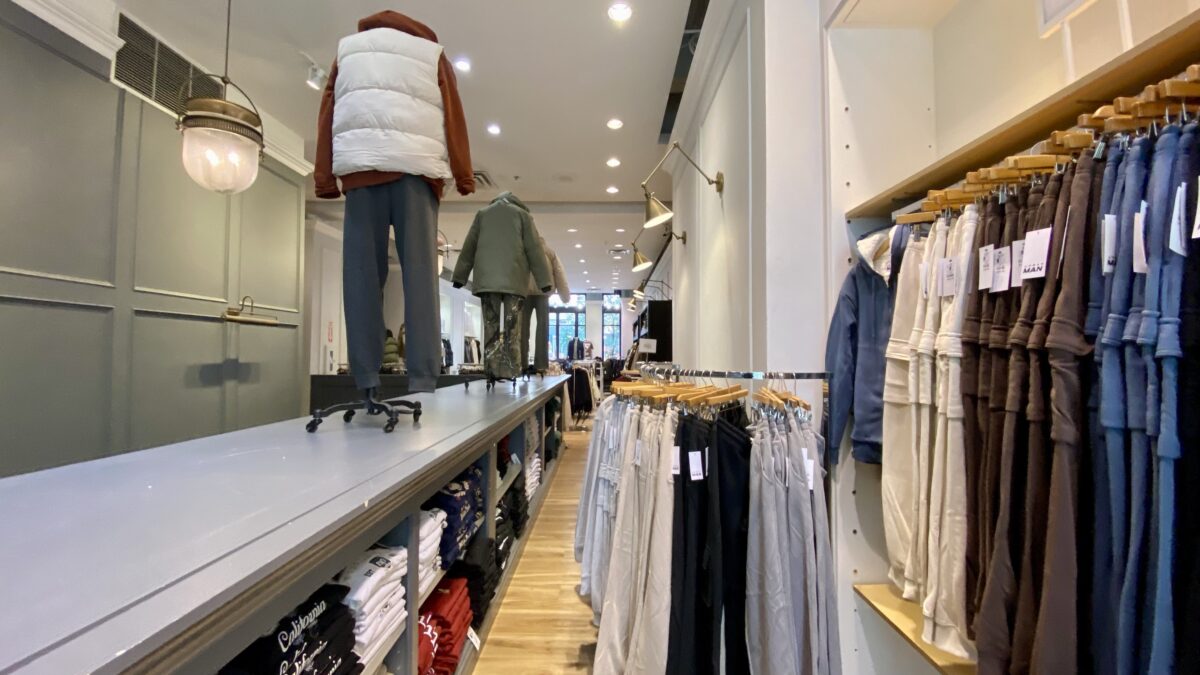
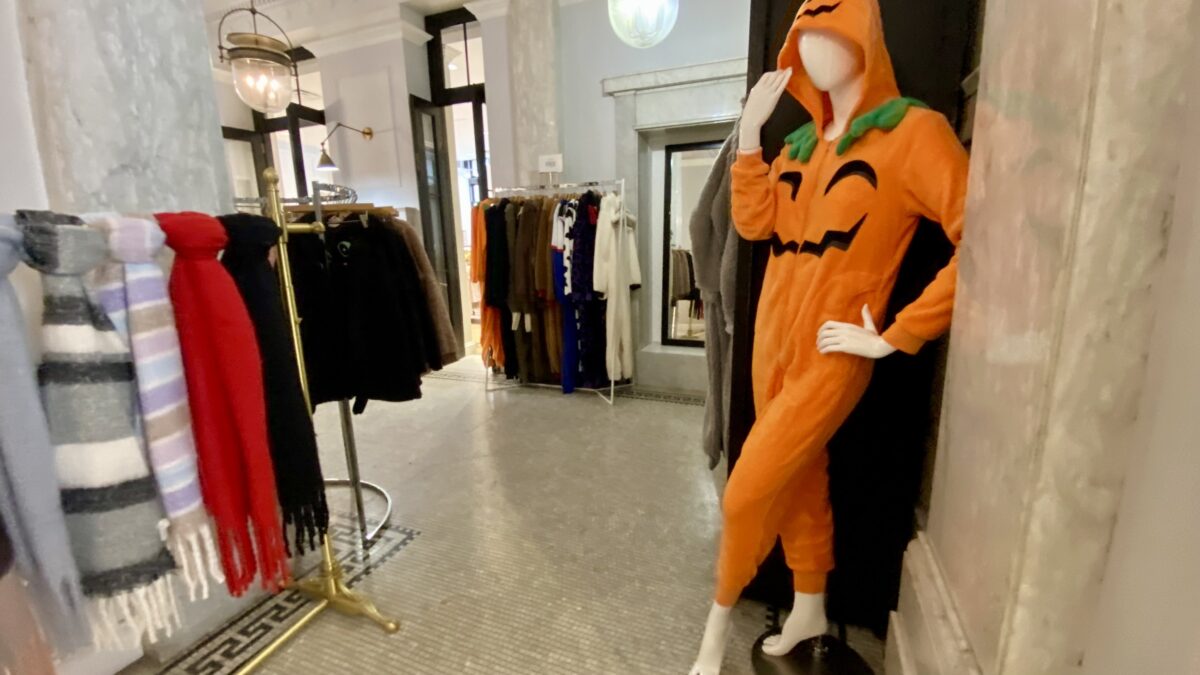
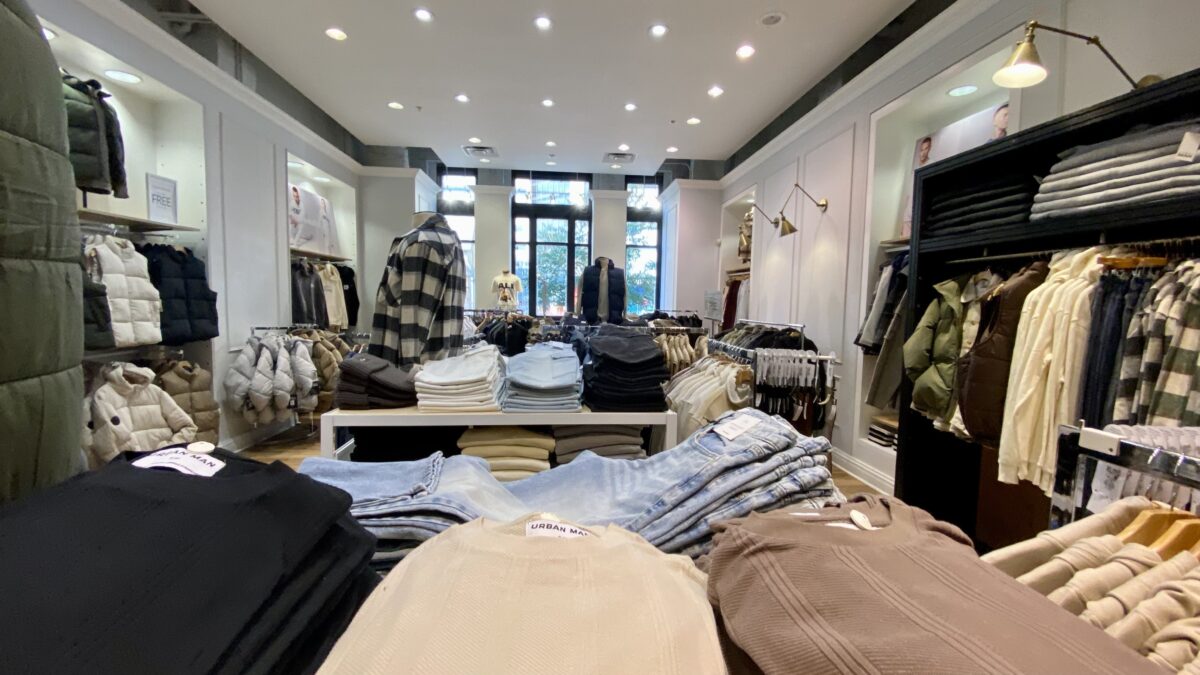
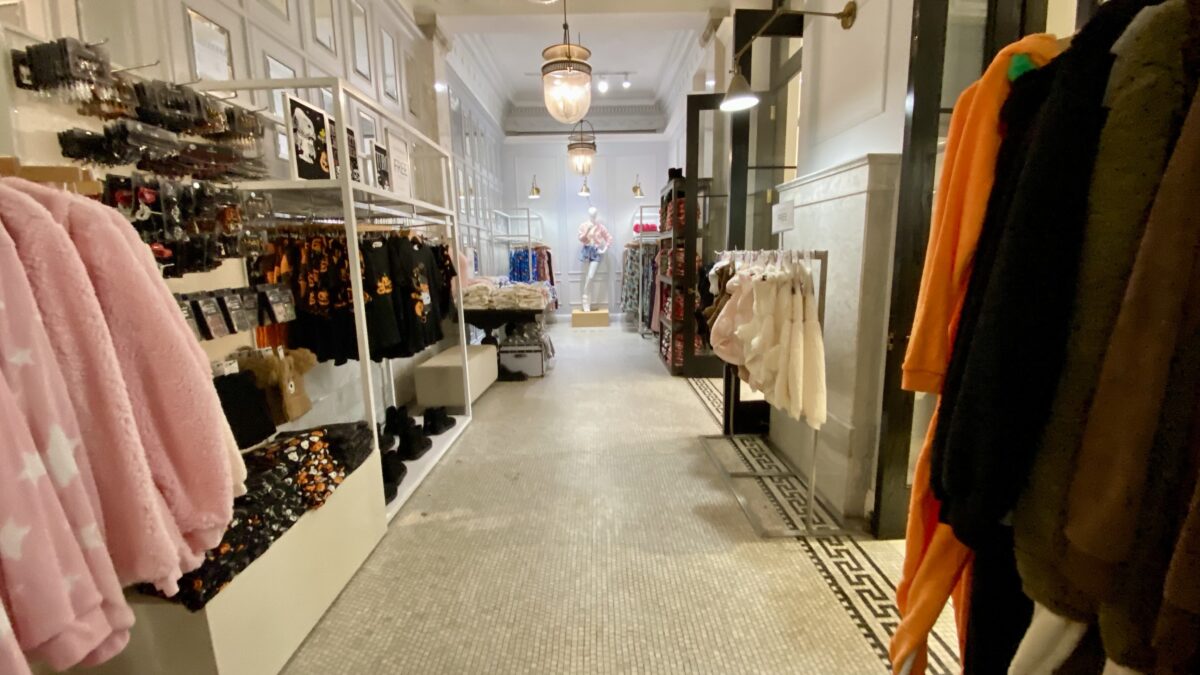
Urban Planet store at 157 Bloor Street West in Toronto on Friday, October 11, 2024. Photo: Craig Patterson
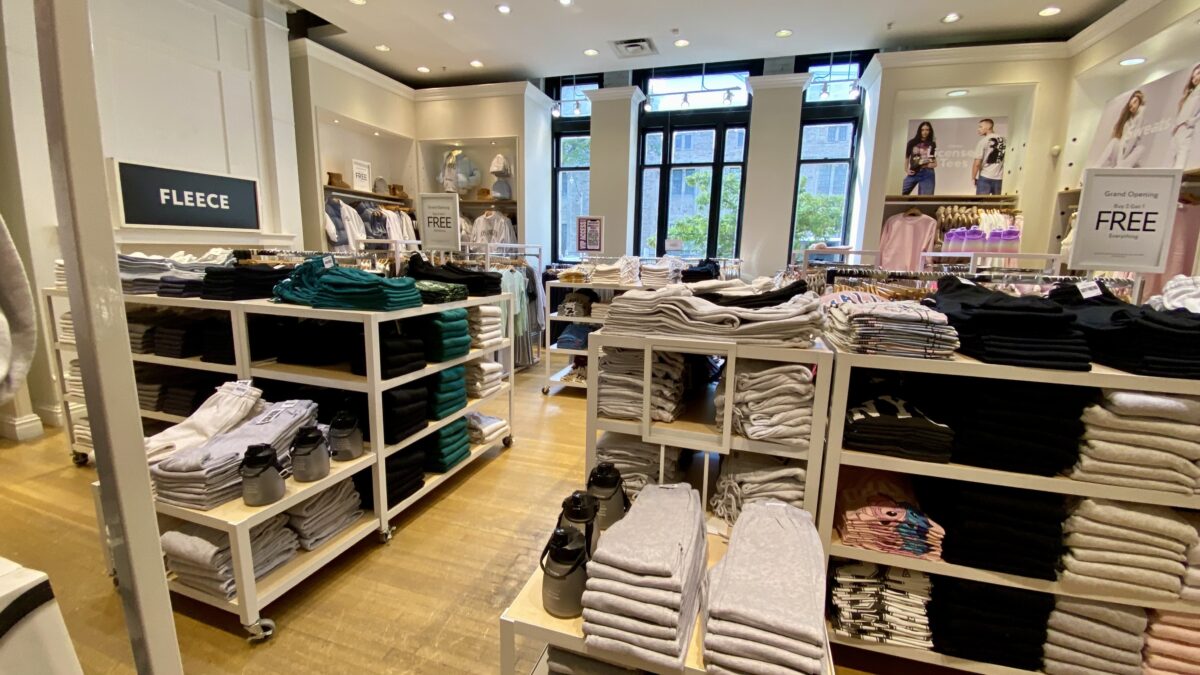
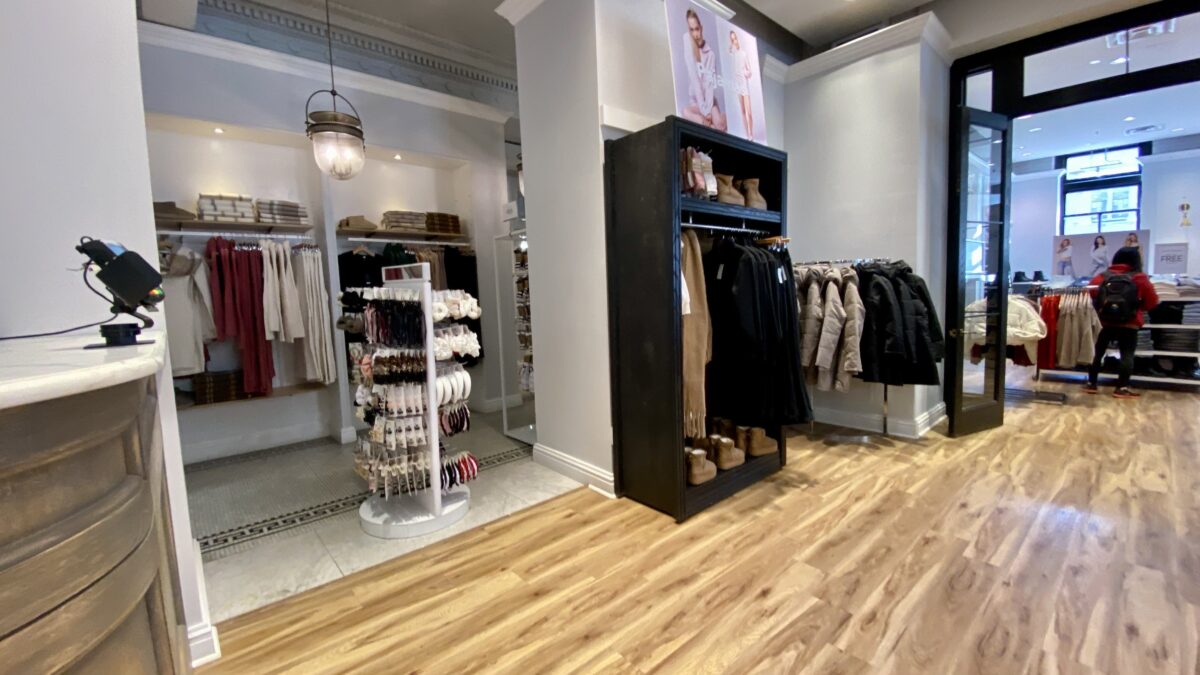
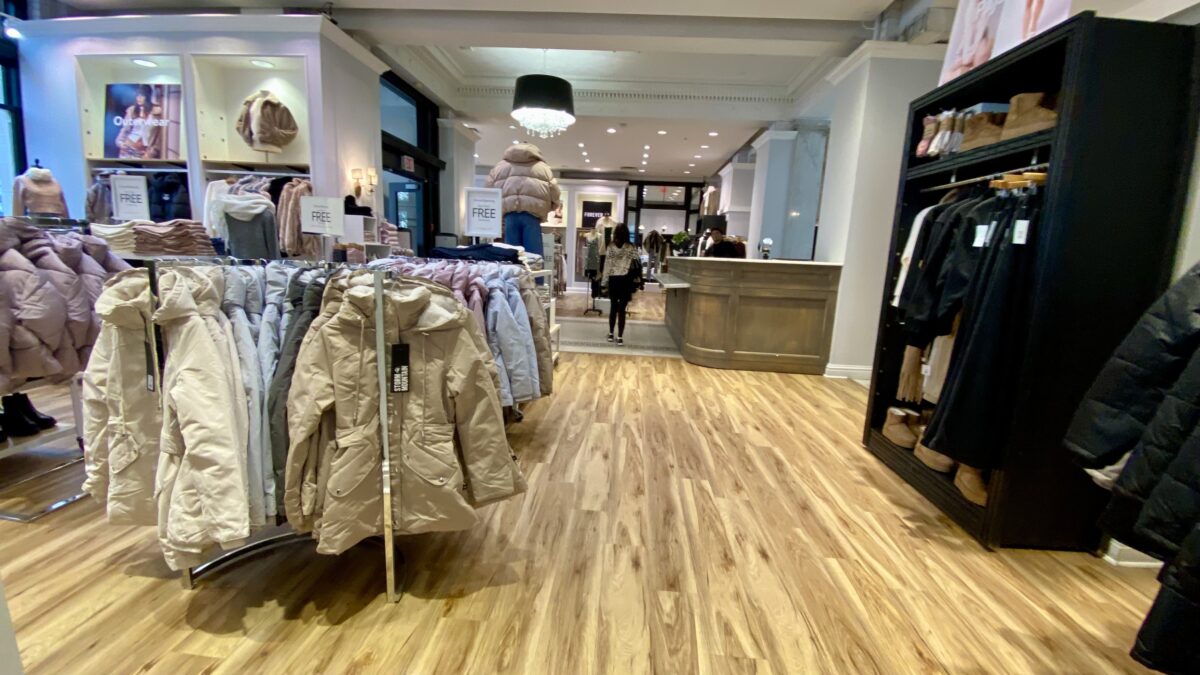
Popular Toronto-based fast-fashion retailer Urban Planet has opened a storefront at 157 Bloor Street West in Toronto, in the space formerly occupied by Club Monaco. Known for offering trendy, affordable fashion, Urban Planet’s presence on Bloor Street represents a temporary shift in the retail landscape of one of Canada’s most prestigious shopping districts.
Parent company YM Inc. is said to have signed a lease for a two-year term for the Bloor Street space, while staff in the store say that Urban Planet will be “open for at least a year”. Signage at the front of the store refers to it as a “pop-up”.
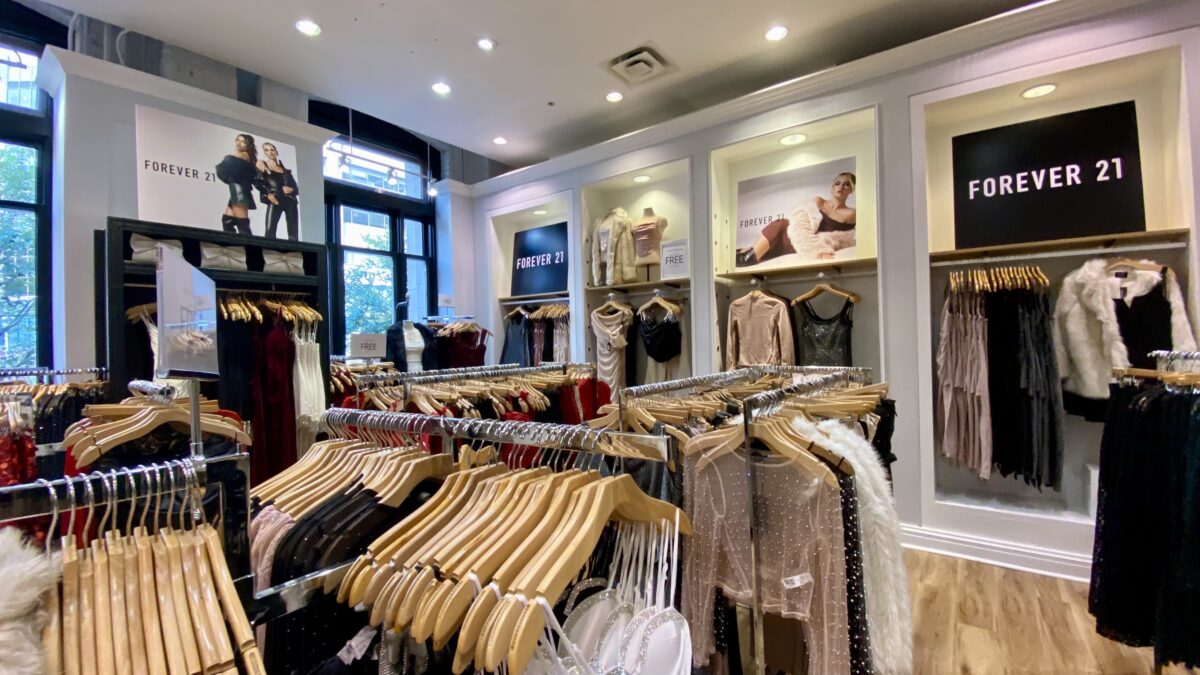
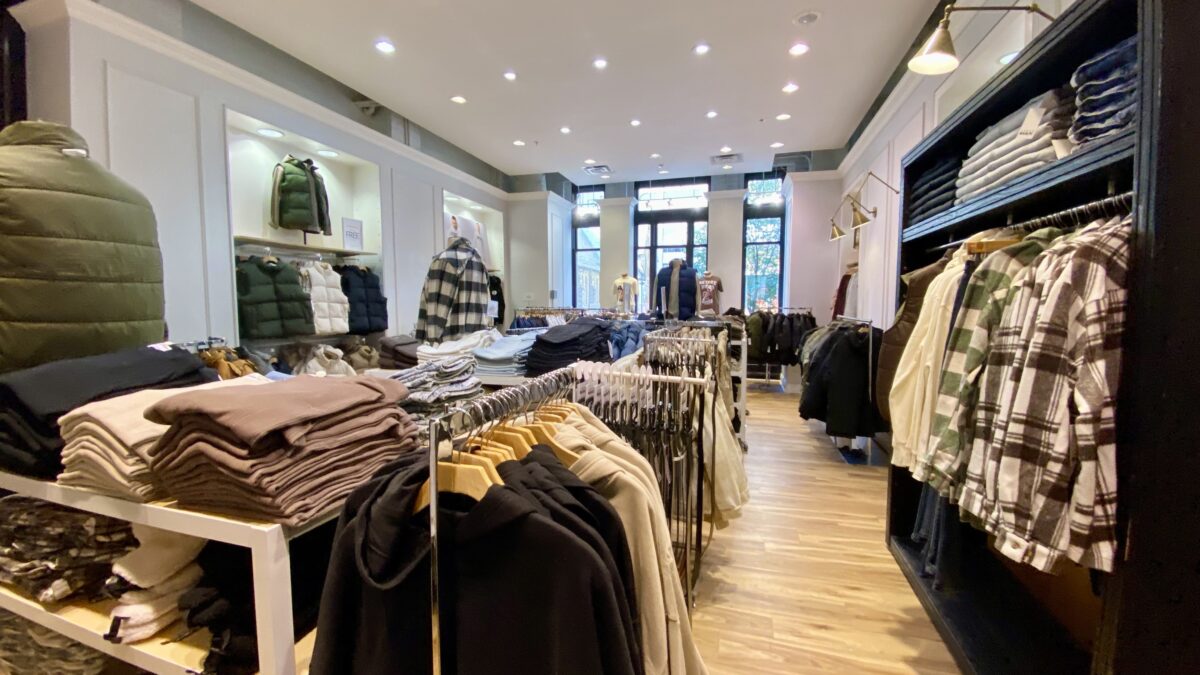
Urban Planet’s product offerings include a wide range of apparel and accessories for men, women, and teens. The brand is known for keeping up with the latest fashion trends at price points that appeal to younger, fashion-conscious consumers.
Urban Planet store at 157 Bloor Street West in Toronto on Friday, October 11, 2024. Photo: Craig Patterson Inside the Urban Planet store at 157 Bloor Street West in Toronto on Friday, October 11, 2024. Photo: Craig Patterson Inside the Urban Planet store at 157 Bloor Street West in Toronto on Friday, October 11, 2024. Photo: Craig Patterson
Urban Planet Opens Amid Luxury Neighbours
Opening a fast-fashion retailer like Urban Planet in such a high-end retail district is notable. The Bloor-Yorkville area is home to some of the world’s top luxury brands, including Bulgari, Louis Vuitton, Tiffany & Co., Gucci, and many more. With its affordable, trend-focused offerings, Urban Planet presents an intriguing contrast to the upscale retailers nearby.
Urban Planet’s move into Bloor Street West aligns with YM Inc.’s broader strategy of expanding its presence in high-traffic, urban locations. YM Inc., one of Canada’s largest privately-held retail companies, owns and operates several well-known brands, including Stitches, Sirens, Bluenotes, and Urban Behavior. Urban Planet, launched in the early 2000s, has become one of YM Inc.’s leading banners, with over 100 stores across Canada. The brand’s focus on providing trendy fashion at affordable prices has resonated with young consumers nationwide.
Staff at Urban Planet said that the store had been busy on opening day, which was Friday, October 11, 2024.
Inside the Urban Planet store at 157 Bloor Street West in Toronto on Friday, October 11, 2024. Photo: Craig Patterson Inside the Urban Planet store at 157 Bloor Street West in Toronto on Friday, October 11, 2024. Photo: Craig Patterson Inside the Urban Planet store at 157 Bloor Street West in Toronto on Friday, October 11, 2024. Photo: Craig Patterson
Historic Lillian Massey Building Welcomes New Retail
Urban Planet’s new store occupies a notable space in Toronto’s retail history. The store is located in the Lillian Massey Building, a Neoclassical landmark completed in 1912. Designed by architect George Martell Miller, the building originally served as part of the University of Toronto’s Household Science program, funded by Lillian Massey Treble, daughter of prominent businessman Hart Massey. Victoria College owns the building.
The Lillian Massey Building’s elegant Indiana limestone facade, topped with Ionic columns, is a striking backdrop for Urban Planet’s fast-fashion offerings. This historic building has housed prominent retail tenants over the years, including Club Monaco, which occupied the space from 1996 until its closure in 2021, and most recently Brooks Brothers, which operated there from February to May of 2024 before its Canadian parent company filed for bankruptcy.
See more photos of the new Urban Planet at 157 Bloor St. W. in Toronto below.
Inside the Urban Planet store at 157 Bloor Street West in Toronto on Friday, October 11, 2024. Photo: Craig Patterson Inside the Urban Planet store at 157 Bloor Street West in Toronto on Friday, October 11, 2024. Photo: Craig Patterson Inside the Urban Planet store at 157 Bloor Street West in Toronto on Friday, October 11, 2024. Photo: Craig Patterson Inside the Urban Planet store at 157 Bloor Street West in Toronto on Friday, October 11, 2024. Photo: Craig Patterson Inside the Urban Planet store at 157 Bloor Street West in Toronto on Friday, October 11, 2024. Photo: Craig Patterson A friendly customer greets us at the Urban Planet store at 157 Bloor Street West in Toronto on Friday, October 11, 2024. Photo: Craig Patterson
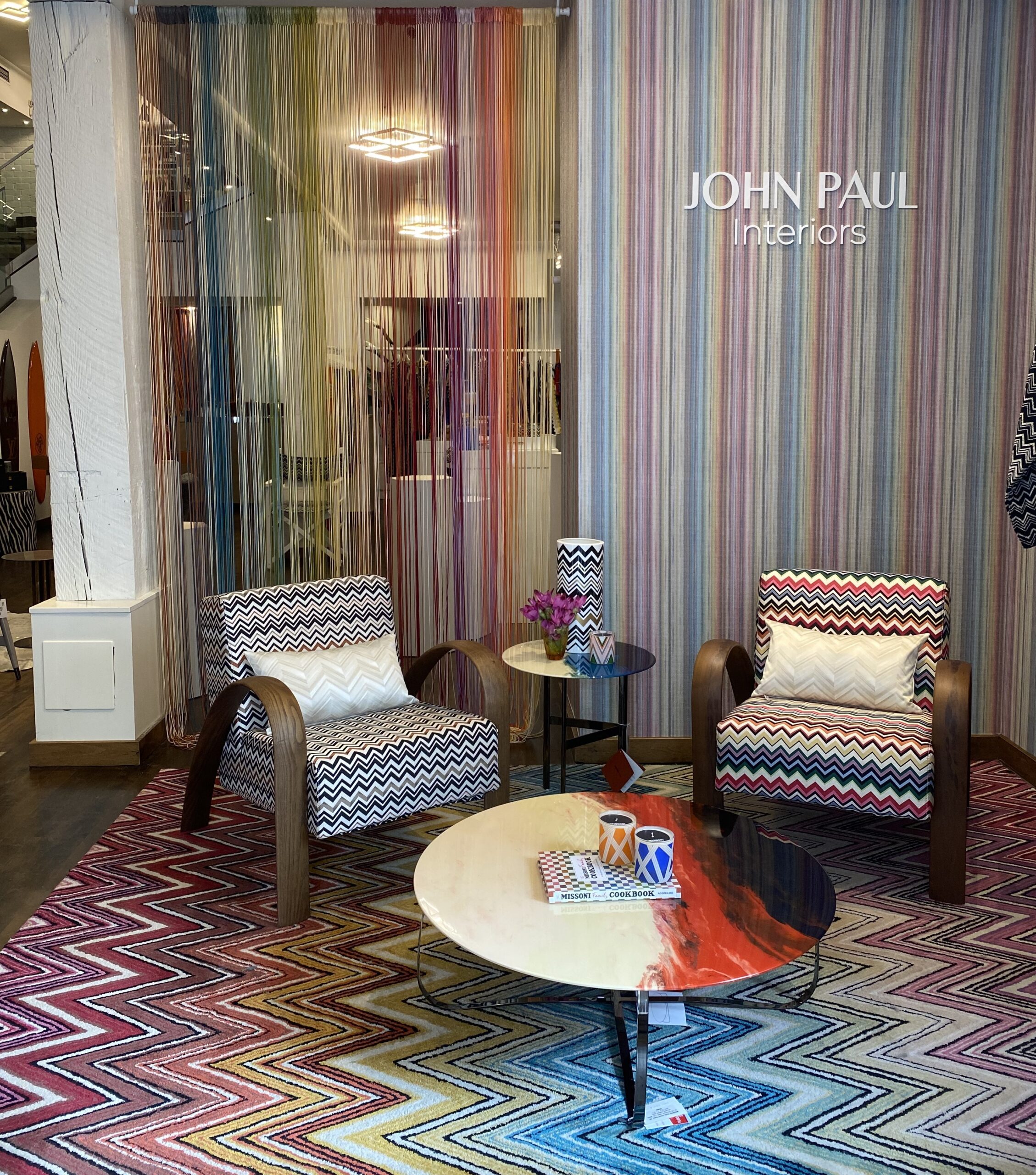
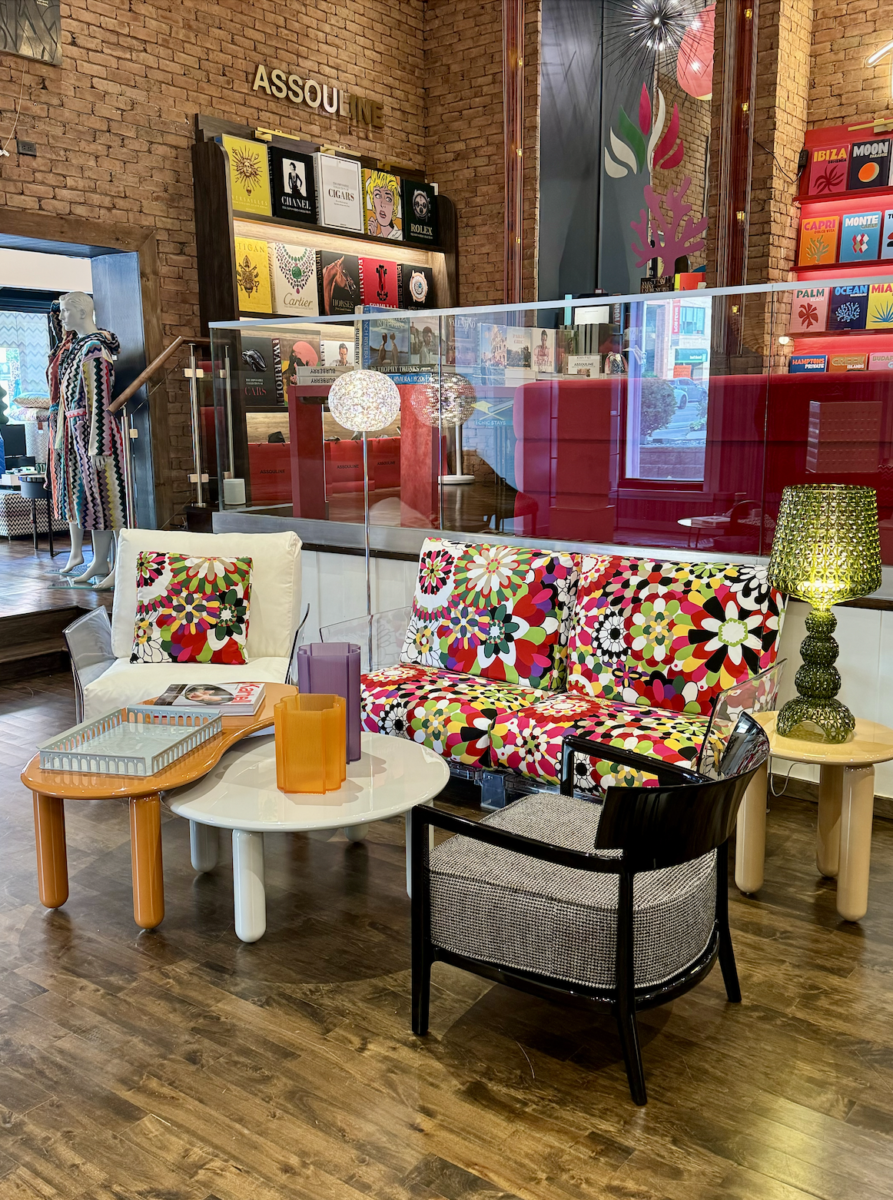
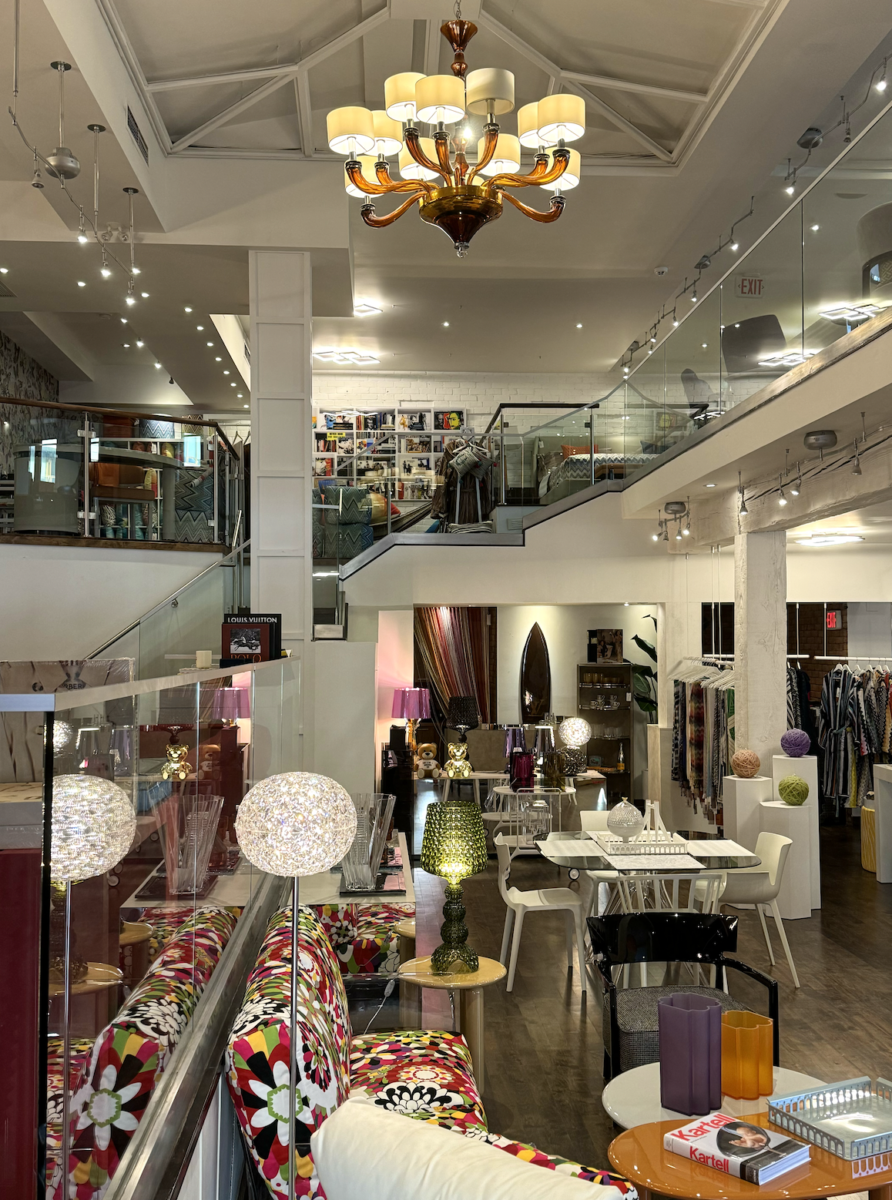
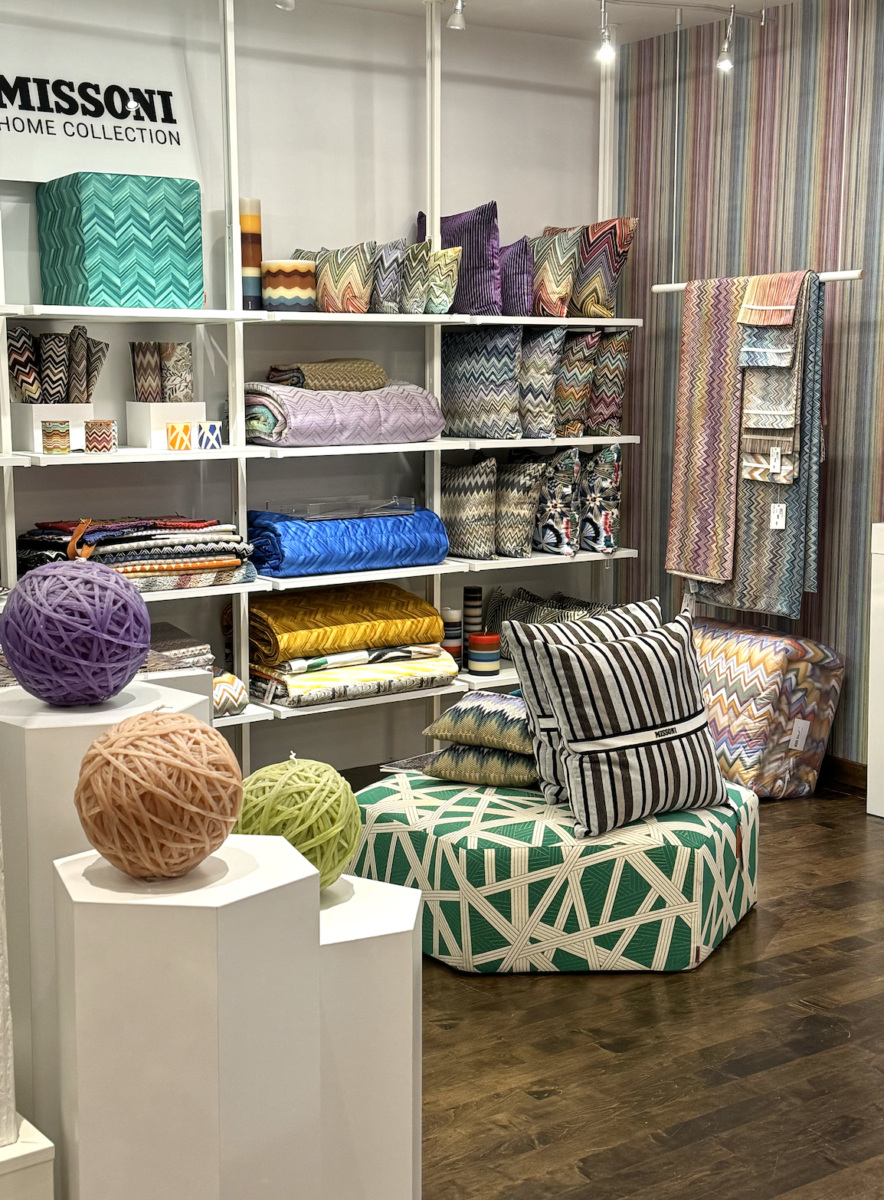
John Paul Interiors, established in 2020 in Toronto’s trend-setting Yorkville neighbourhood, is a boutique interior furnishings showroom specializing in European luxury fashion houses.
Emily Peluso Lopes
Emily Peluso Lopes, the retailer’s CEO and part owner, said the brand’s mission is to help clients rediscover their interior spaces with an exclusive selection of designer furnishings, fabrics, and accessories.
“We focus on high-end luxury goods, mostly for the home, particularly Made in Italy. One of our biggest brands is Missoni Home, we have the largest assortment in North America for Missoni Home. That’s our core,” she said.
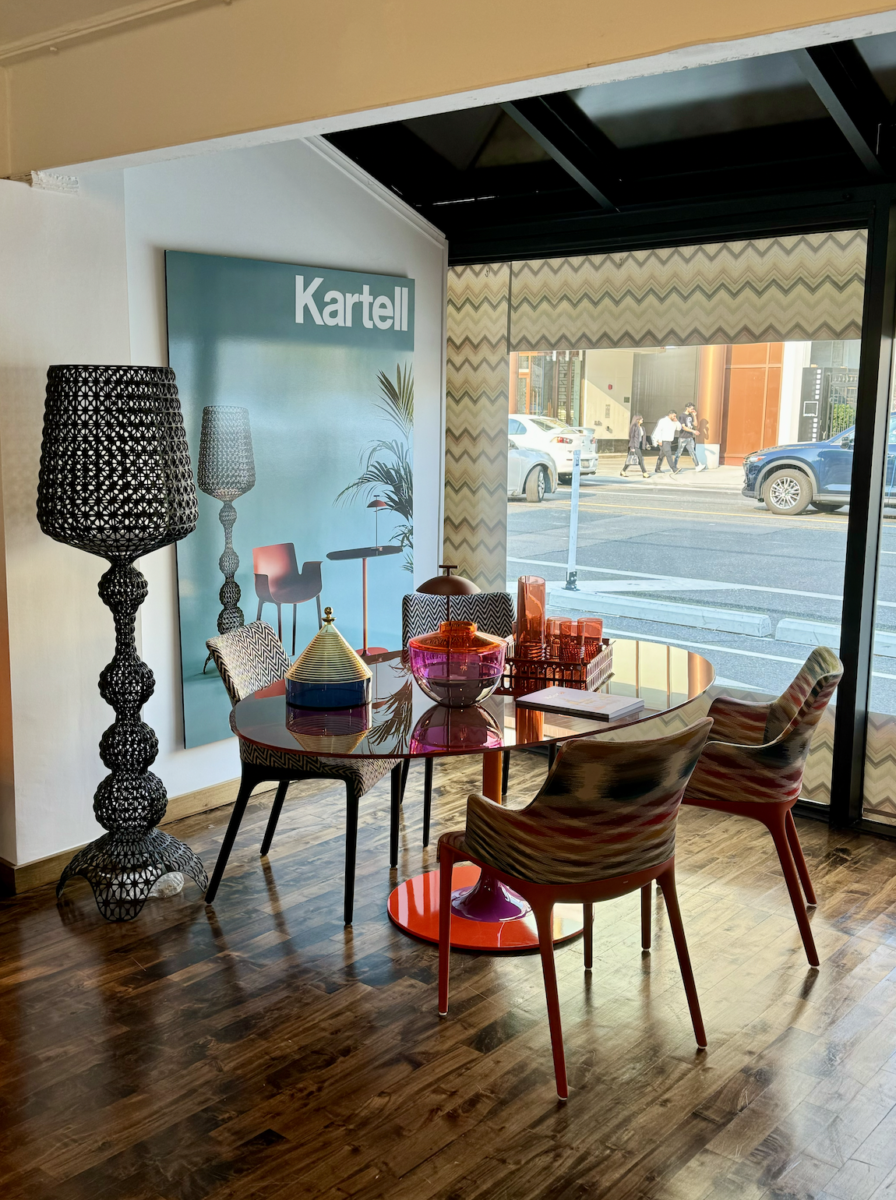
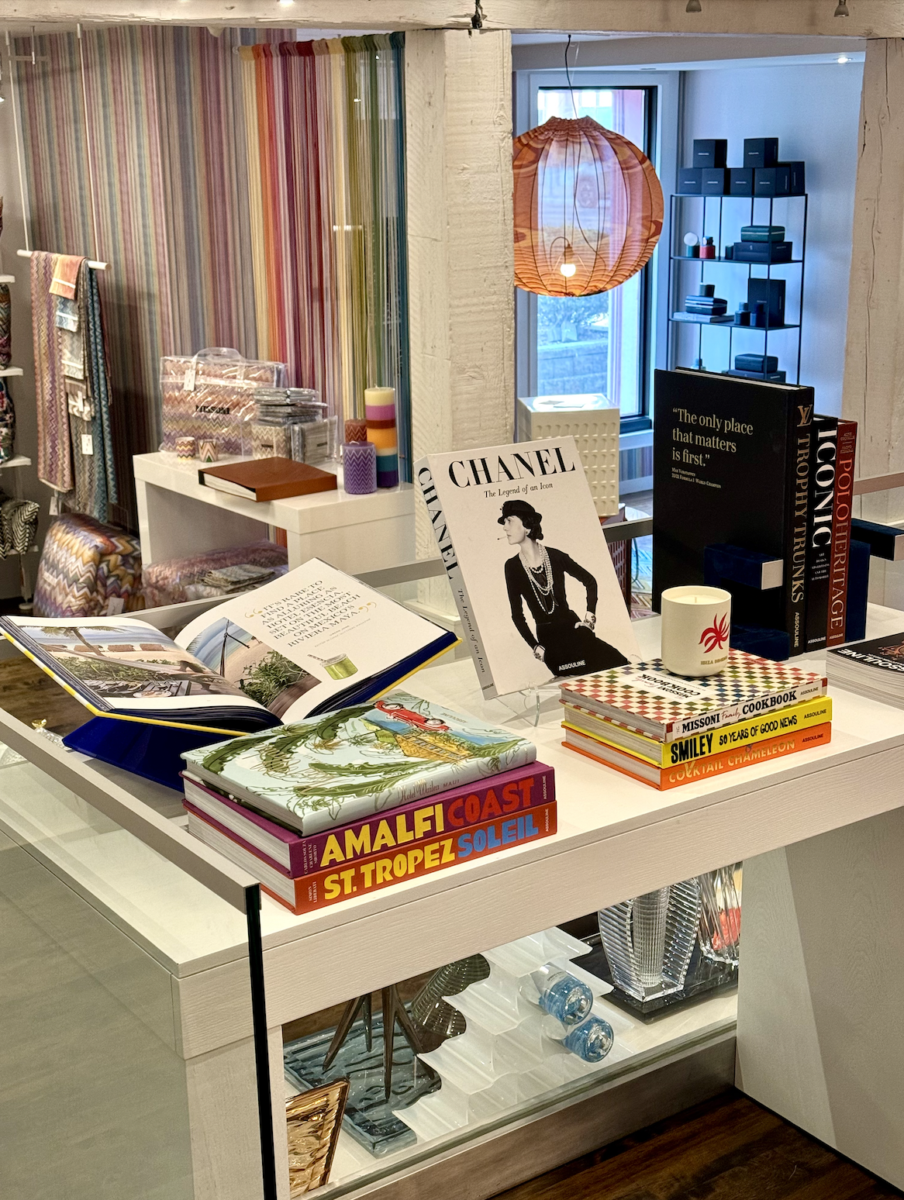
“We’re the official Toronto store for Assouline which is a luxury publisher. It’s a family business celebrating its 30th year anniversary but is partially owned by the LVMH Group (Louis Vuitton Group). A new brand for us which is just launching this month is Kartell Home. The brand is an Italian heritage-design focused brand from Italy, which is world renowned in the design community.
“We definitely tailor to interior design firms but also to the end user. We also carry other high end furniture from Italy, like family-owned brands that do customization. We also carry Versace Home.”
Lopes said the brand might be opening a pop-up location for the holiday season but the location has not yet been released.
Its current store location is in a high traffic area in Yorkville.
“We’re in a great location walking distance to Bloor St, ( Mink Mile) where all the high end luxury fashion brands have their flagship stores,” she said.
On its website, the retailer says: “We proudly offer the latest home furnishings from renowned European brands, imported directly from Italy, and inspired by the fashion runways of Paris and Milan.
“Our showroom features collections from iconic brands like Missoni Home, Assouline, Kartell, Versace Home, Alexandra Von Furstenberg, Roberto Cavalli Home, with custom order and design options available. Whether you envision colourful textural chevron fabrics, unique home accessories, or one of a kind custom furniture, we can bring your vision to life.
“We invite you to visit John Paul Interiors to experience the interiors of some of the world’s most iconic home brands.
“At John Paul Interiors, we define fashionably dressing your interiors.”
Ken Otto knows that to have a truly great company, one must lead by example.
“I am committed to being respectful of how we interact as a team and with our guests. I know that we are at our best when we celebrate each other’s uniqueness and provide a safe environment to offer positive feedback and to grow and thrive together,” says the CEO of Redberry Restaurants, which owns and operates almost 200 restaurants under the Burger King, Taco Bell, and Jersey Mike’s brands.
Otto was born in Winnipeg but moved to Mississauga at a young age.
He holds a Bachelor of Commerce in Hotel and Food Administration from the University of Guelph.
Ken Otto
“I knew I wanted to study business and my father was in the foodservice industry. He said there was a different type of program at the University of Guelph where you get your commerce degree but you’re going to learn a little bit about hotelling and running restaurants. And here I am in the restaurant business,” says Otto.
“The appeal was simply it was very dynamic. I thought very early on that the study of restaurants and hotels and food, there’s a lot of art and science to it. Hospitality in general. Travel. Hotels. Running restaurants. It just seemed to be way more interesting than maybe other industries. And lo and behold it is more interesting I think because it’s so dynamic and it’s always changing.
“It is a fascinating, dynamic, unpredictable, artful industry.”
Prior to joining Redberry, he worked with several iconic QSR and franchise restaurants (including Boston Pizza, Swiss Chalet, Harvey’s, Montana’s and East Side Mario’s), which provided him with unique insight into what it takes to prosper in the vast Canadian landscape.
“Through my past experiences at Boston Pizza, Swiss Chalet and Harvey’s to name a few, I am able to offer a unique insight into what it takes to prosper in the vast Canadian landscape. I feel successful when people are excited to see the Redberry brand break ground; knowing we will bring quality jobs where people want to go to work each day, and a restaurant that provides consistent, speedy service with a smile. I also feel fulfilled when our employees feel valued and see that their opportunities with our company are truly limitless,” he says.
“Challenge number one (in today’s food industry) is how fast consumers expect their retail industry to change and how do running restaurants keep pace with the expectations of that change,” says Otto. “I compare us to other retail industries . . . In most retail sectors, the pace of change is measured by year and almost by season. And when you look at running Burger King or Taco Bell or running any kind of restaurant, consumers are expecting these industries to be perpetually evolving.
“And that is hard. When you’re evolving your menu, when you’re evolving technology, when you’re evolving your physical plant . . . If guests keep expecting you to change, what does change look like? People will often talk about labour and I get it. Labour’s been hard since I first went to school and that was over 40 years ago. And labour will always be hard. There’s inflation. There’s always going to be inflation. I get all that.
“But the biggest challenge I see in the industry that restaurateurs have to face is just how do I stay relevant in a world that is demanding change, sees change around other things they consume. That’s job number one.”
Otto says he wouldn’t describe himself as a “foodie.” He does enjoy food and he likes retail in general and the art of connecting a brand to consumers.
“What is intriguing and what interests me is that it is an art,” he explains. “And art comes in many forms. There’s high end restaurants and steakhouses and there’s the beauty of a Jersey Mike’s sub sandwich. All of it is great food. No different than a Whopper at Burger King or a Chalupa at Taco Bell. And you’ve got to connect that art with what people are looking for.”
He studies restaurant concepts throughout North America, perpetually reading about hot concepts making their way into the market. Otto tries to figure out why certain concepts work.
Is there a recipe for success in the food industry?
“There is. The first part of the recipe is understanding why guests connect with what you’re offering and staying true to that . . . And then there’s the art of consistency. I think that’s probably the hardest part of our industry and one where a lot of people get wrong. They may make one meal super awesome on Monday at lunch but that meal has to be super awesome seven days a week, 52 weeks a year, a million times a year. And that’s hard,” explains Otto.
“So how do I design my systems and my processes around delivering what the guests want consistently.
“The other thing is the art of hospitality. We call it the hospitality industry. Today, people have very high expectations of how they’re treated, how they’re acknowledged and of course they’re connecting with your brand differently. They could be connecting online, at a kiosk, on an app, in person, at the counter. I think great companies have a very welcoming approach to taking care of you. People want things fast, they want things that have value. But they want it in a way that kind of acknowledges that they came there and they want to feel good about their occasion. At Redberry we teach the importance of a smile. Yes, you have to be fast and your Whopper has to be hot, but you want to serve them with a sense of hospitality. That means a lot to people these days.”
Ken Otto
Otto says he could talk about his leadership style and philosophy for days.
“I’ll tell you what wakes me up in the morning. I do believe I have an opportunity to bring a positive influence to people every day. I think leaders have a very wide reach and I have a responsibility to use that to help people out,” he says. “We have lots of people in our office here. We have 5,000 people that work at Redberry. My attitude matters. Doesn’t mean I have good days and bad days. Doesn’t mean that there are issues to be resolved and problems to fix.
“But all that can be done with a measure of respect and all that can be done with a measure of fairness and optimism . . . I love being curious about our industry and what makes things work. There are in this business a thousand moving parts. If all those parts could be understood, if all those parts could be made a little bit better. I want to teach people the art of curiosity and how that’s fun. You’re learning and you’re challenging yourself when you do that.
“We’re not splitting atoms here. I think we want to have a little bit of fun along the way and enjoy each other’s company. Make your eight or 10 hours in the restaurant or the office, and just make it a good day. I’ve always had great success in that. It brings out the best in people and I really believe it works.”
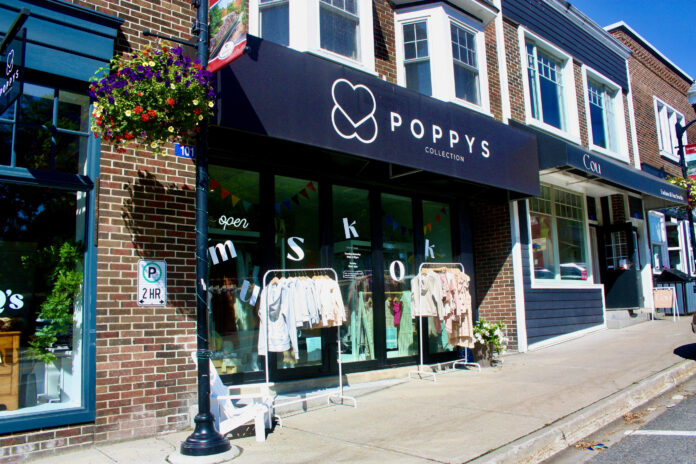
A small town in Muskoka, Port Carling, has become a thriving hub for female entrepreneurs. Kathyrn McNally, founder of Poppy’s Collection, discusses the community, challenges, and future outlook on not just her brand, but other businesses in the area.
“Almost every single one of these businesses I can see around me are female-owned. We have done a really good job of stopping the trend of huge retailers coming in, and it is a lot of really cool small businesses that are thriving in Port Carling,” says Kathyrn McNally. “Retailers really do support each other. We really believe in Port Carling – if one store is successful, the other stores will also be successful.”
Poppy’s Collection
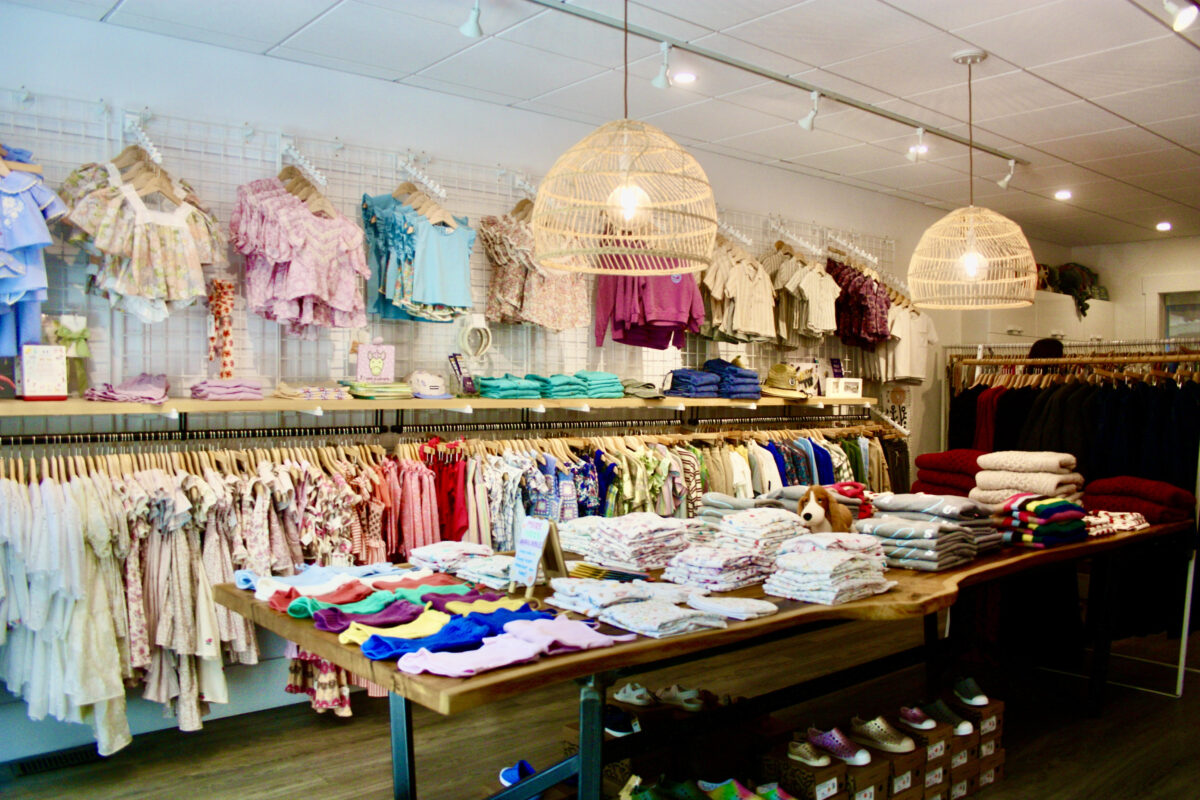
McNally started Poppy’s Collection after a desire to offer something that was missing in the community – high-quality children’s clothing. The inspiration behind the brand came from witnessing her mother have difficulties finding good clothing options for her nephew.
McNally quickly realized that while the market offered plenty of fast-fashion options, it lacked durable, long-lasting products
Female entrepreneur Kathyrn McNally
“Poppy’s Collection started about ten years ago, I was inspired by seeing my mom shop for my nephew, and we were kind of disappointed in the offerings. A lot of the stores were like big massive retailers, and most of the stuff my mom wanted to buy was made in Europe so you could pass it down kid to kid,” says McNally. “I am the youngest of four children, and I wore hand-me-downs from the 70s, 80s, and 90s, and that is how my mom wanted to shop for my nephew and my nieces.”
Poppy’s Collection carries products for infants, toddlers, children, and women. McNally says she aims to provide children’s apparel that will last from the first child to the last.
After several pop-up shops, McNally says she found the perfect location in Port Carling and opened the store in 2020. The brand carries products for infants, toddlers, children, and women.
“I opened the doors in 2020, which was an interesting year to start a store in Port Carling because it was the height of the pandemic. We opened our doors in June 2020, and we have been here ever since then. We actually bought the building two years ago because it was a really great location for us, and we really wanted to invest in Poppy’s being there for years to come and continue to have great local businesses.”
Women supporting women
McNally says Port Carlings is a thriving hub for female entrepreneurs, with a strong sense of community, mutual respect, and support.
Rather than competition, the female entrepreneurs understand that the success of one business helps others. McNally says retailers rather support each other in various ways including cross-promotion, sharing advice, or participating in joint events. This allows the storefronts to share resources, ideas, and opportunities; ensuring everyone has a fair chance of growth.
Inside Poppy’s Collection
“There was a ladies night in July, so we messaged all the other businesses around us to tell them about it and to ask if we can all stay open later so everyone can benefit from it. If one of us stays open, we all stay open, that way we can attract more people to come into our shops. And so, we were able to organize all the businesses to stay open later that night.”
McNally says they also help each other with joint events and activities, social media promotions by promoting each other’s businesses online, sharing knowledge and resources, providing feedback, collaborating on new initiatives, and having emotional and practical support for working moms.
People often fail to take female entrepreneurs seriously
While the women of Port Carling have built a supportive community, McNally says they still face challenges as female entrepreneurs. One of the main challenges is the biases women face while trying to establish their businesses.
“I think female entrepreneurs suffer from not being taken seriously. I think Port Carling is kind of a haven for small businesses, so we don’t really face that too much here, but I do think female entrepreneurs struggle with not being taken seriously and not having the same access to resources that other entrepreneurs have.”
Other challenges include the responsibility to balance their business with family responsibilities such as taking care of their children.
Joys and challenges
McNally is experiencing the joy and challenges that come with being a new mother.
“I have more of an appreciation of female entrepreneurs who are mothers, because I think it is just harder to do it all and still kind of be the primary parent. My husband is very hands-on and he is a fantastic father, but I will have to stop my work every two hours to pump to feed my baby because she can’t be on formula due to allergies – I don’t think that is something a man would obviously would ever have to balance.”
Other female owned brands on the street mentioned by McNally include Snapdragon, Lemonwood, York & Mason, Imala, and Open Court. “These shops are not just businesses; they are the heart of the community.”
Services going beyond retail
McNally says she evolves her business on what the community is seeking.
“This year, I actually had a focus group of local moms, and I was like, ‘ what do you want Poppy’s to be? What do you wish we didn’t do? What do you want us to do?’” McNally says the insights from this focus group provided her valuable information into what exactly her consumers are looking for, this way, she will be able to stay on-top of new trends and expectations.
McNally also has been offering in-store activities such as designing hats, story times for kids, manicures for moms at the store, and more. The list of activities creates a family-friendly space that allows McNally to serve the community’s needs beyond retail.
Going forward, McNally says she will look for new ways to connect with the community.
“We are not afraid to take risks and we will continue to learn from different experiences,” says McNally. “I think consumers can expect going forward from the brand is more services for the customer. So listening to those people who want somewhere to go with their kids on the weekend and listening to their challenges. So more story times, more events that can really help cater to the community. Consumers can expect us to continue to listen to them about what they need and what they want for future years to come.”