The CFIB also reported that the share of firms reporting shortages of unskilled or semi-skilled labour (at 16 per cent) is also at its lowest since the beginning of 2021 and overall trending down albeit it had hovered close to its historical average of 20 per cent since March 2024.
The report said only 12 per cent of firms are planning to hire in the short term. This fresh data from the small and medium-sized (SME) sector (representing more than 99 per cent of employers and 38 per cent of the workforce in the private sector) indicates that the rapidly cooling labour market has continued to lose strength this month, added the CFIB.
Small firms plan to raise wages and prices by an average of 2.3 per cent in both cases, also a low point in over two years and the share of businesses indicating that insufficient demand is limiting their growth is at 53 per cent this month and a full 9 points over its historical average, according to the report.
“The small business optimism index has slightly dropped this month, a disappointing result that is further extending the stretch of subpar confidence displayed by Canadian entrepreneurs. There’s ample room for improvement in the coming months, with a monetary policy that is likely to remain overly restrictive for a while (no matter how fast the Bank of Canada cuts interest rates) and with high costs that continue to exert pressure on small businesses. Our data support a continuation, in fact likely an acceleration, of interest cuts by the Bank of Canada.”
The CFIB said the long-term small business confidence index shaved off two index points, reaching 55.0 in September and has now been below its historical average (60) for 27 months in a row.
Andreea Bourgeois
It said shares of small businesses struggling with numerous cost constraints, such as insurance (68 per cent), taxes (67 per cent), and wages (67 per cent), remain elevated. These indicators have been above their historical averages for at least over a year.
“As businesses are dealing with reduced demand, lower revenues and higher costs, they’re less likely to hire. Instead, they’re hanging on to their existing employees. A lot of SME employers are currently looking for clearer signs of economic improvement before they can make growth-fueling decisions again,” said Andreea Bourgeois, Director of Economics at CFIB.
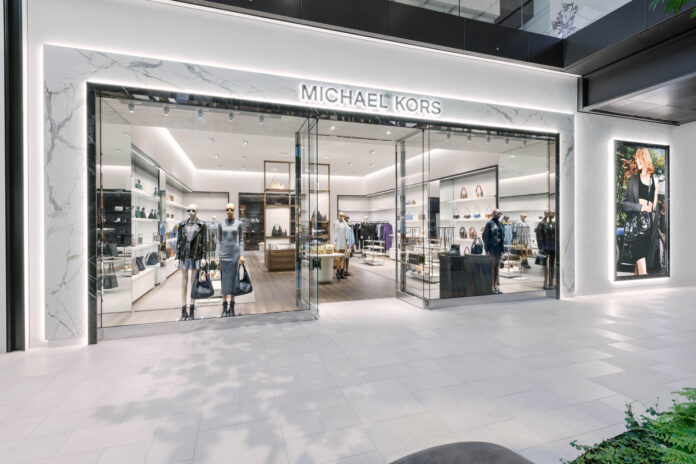
Upscale brand Michael Kors has opened a new lifestyle store at the Royalmount shopping centre in Montreal.
In a news release, the company said the Royalmount is an expansive new development in midtown Montreal that combines luxury shopping, restaurants, parks and experiential activities.
“This new Michael Kors store opens its doors as part of the first phase of the Royalmount project’s grand opening. The new store features a unique, custom design that integrates luxurious materials with a timeless palette that complements the Royalmount’s sophisticated atmosphere,” it said.
Photo courtesy of Michael Kors
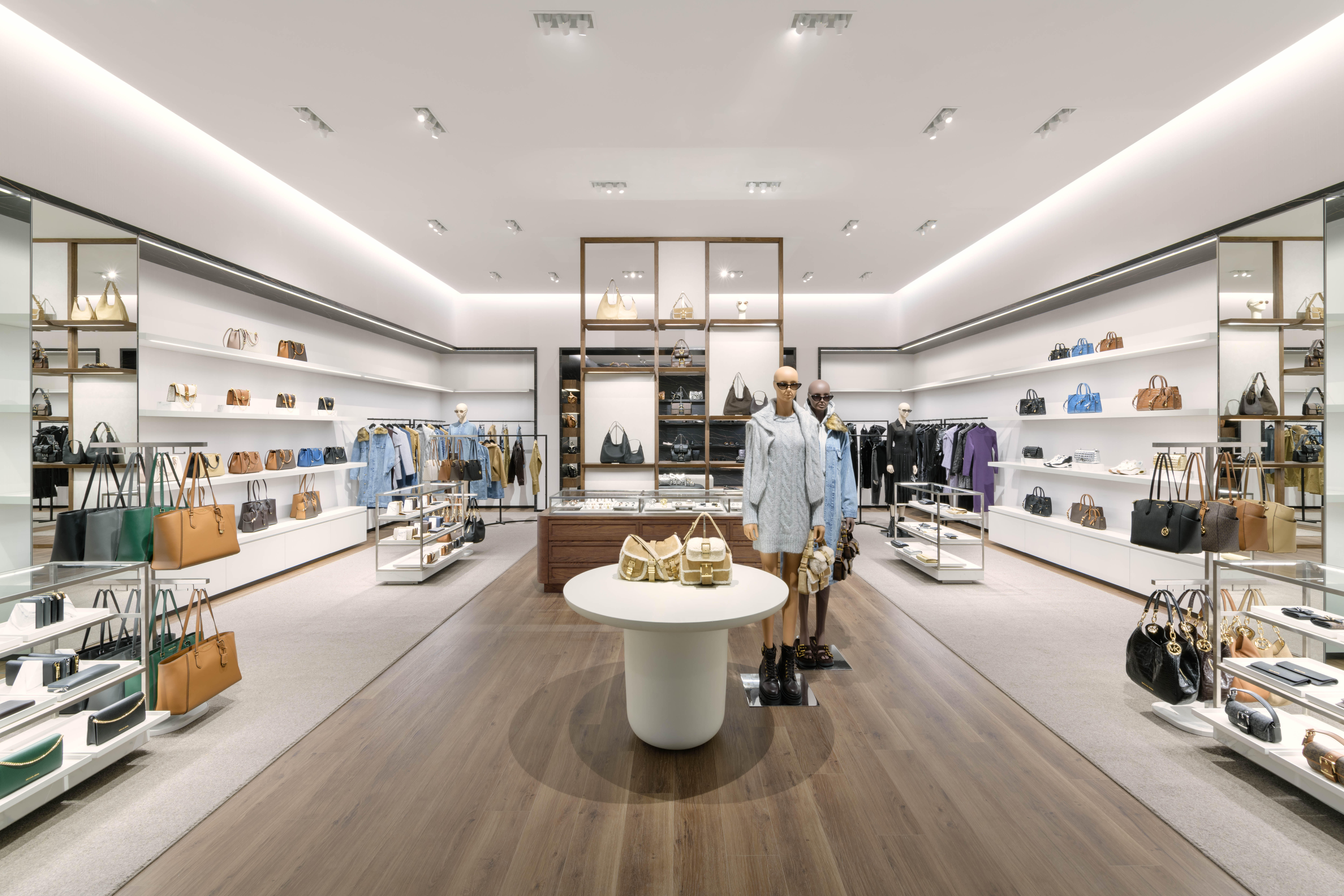
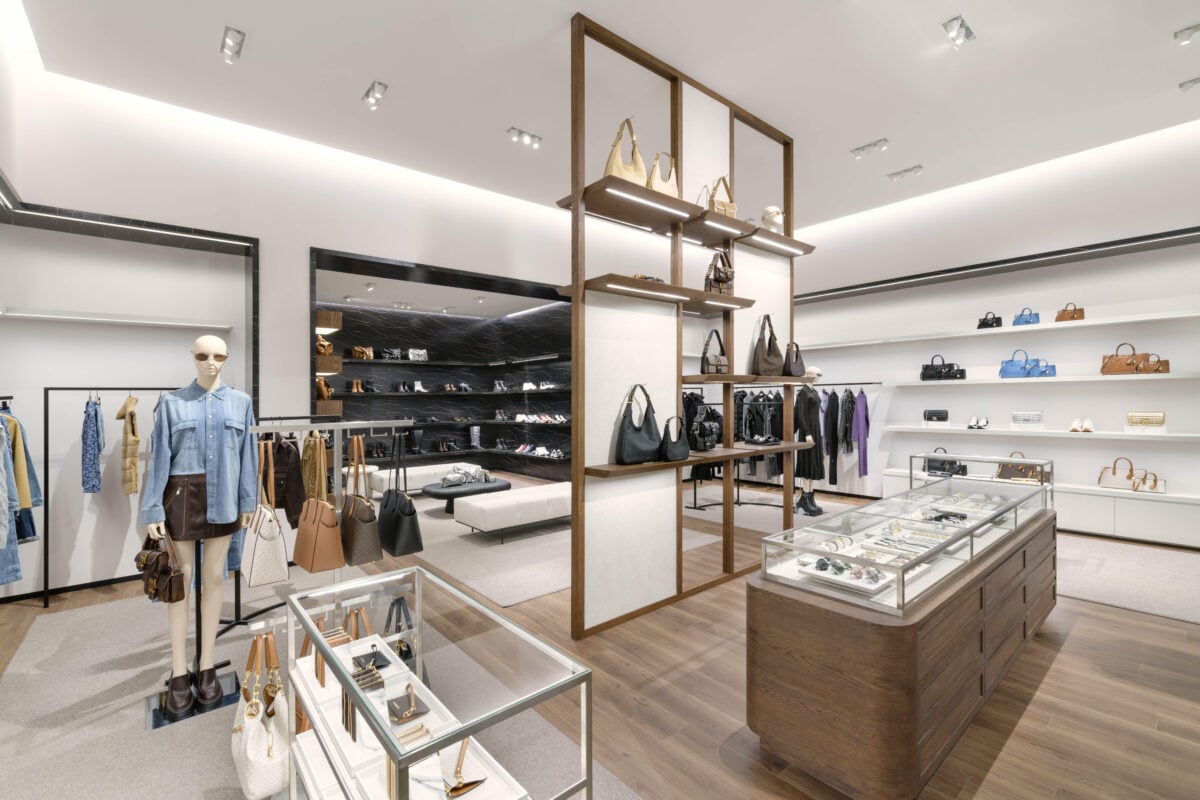
“The 2,356-square-foot store carries a luxe selection of MICHAEL Michael Kors ready-to-wear, handbags, footwear, watches, jewelry, sunglasses, and small leather goods. Luxe finishes, from Calacatta paonazzo to brown marble and stucco, reflect the brand’s aesthetic of laid-back luxury with an emphasis on ease and sophistication.
“The Royalmount storefront boasts large, open windows that provide full sightlines into the store, inviting customers to step inside and explore the carefully curated accessory and apparel vignette at the front of the boutique. The interior features high ceilings and a transparent wood feature wall that serves as a focal point for the store. A watch and jewelry vitrine sits in front of the feature wall. On the other side, customers will discover a minimalistic shoe salon with brown marble walls and linear shelves, showcasing the season’s must-have footwear. The setting invites customers to browse, shop, and enjoy the brand’s exceptional personal styling and service.”
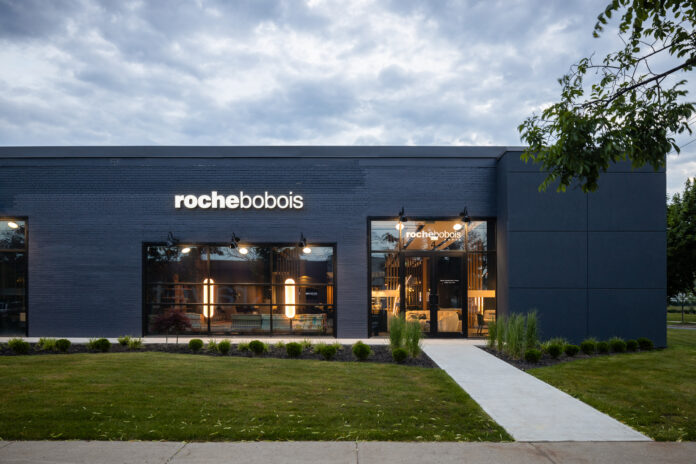
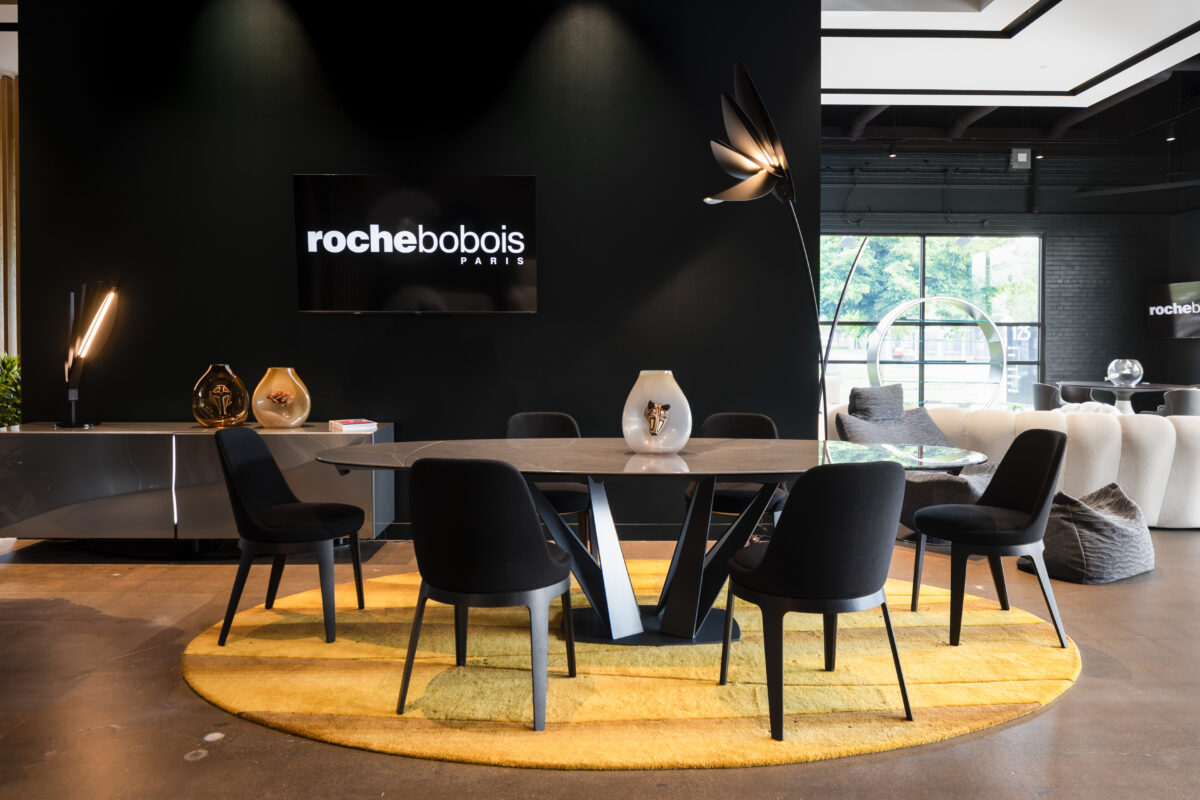
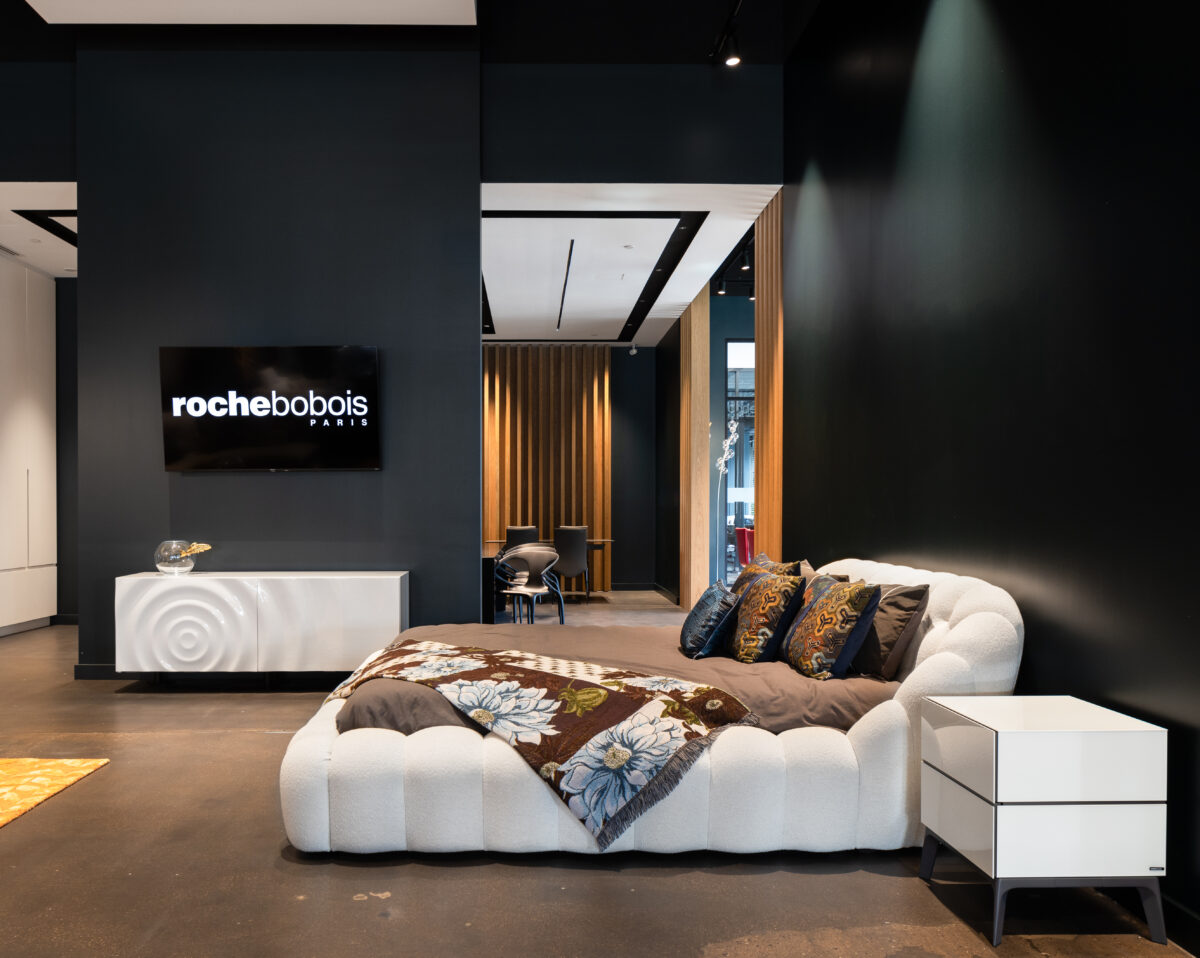
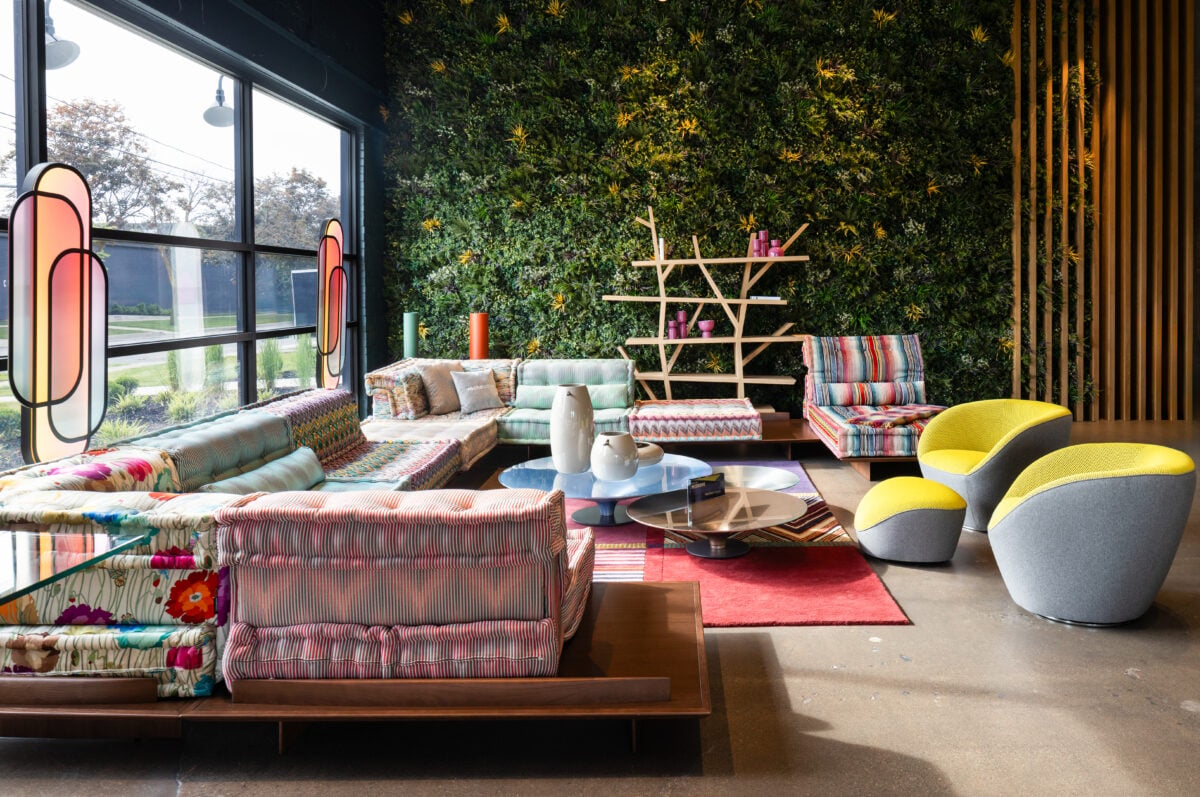
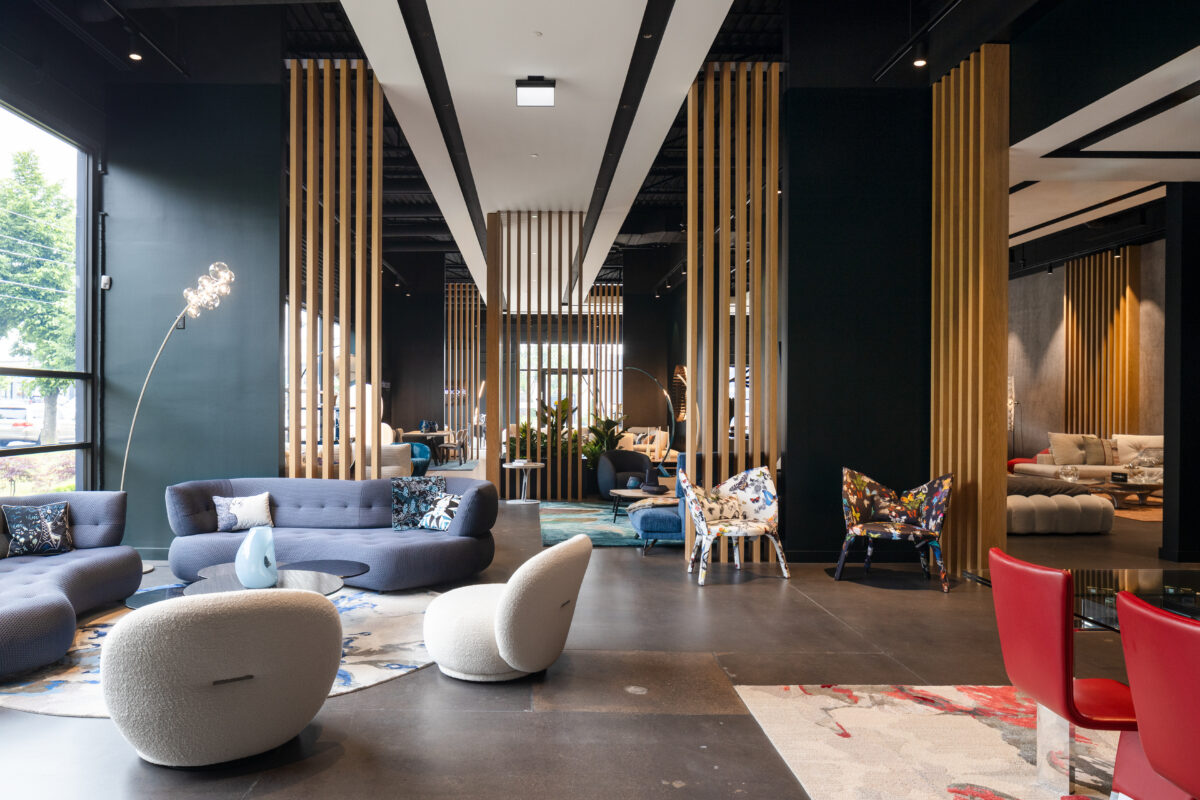
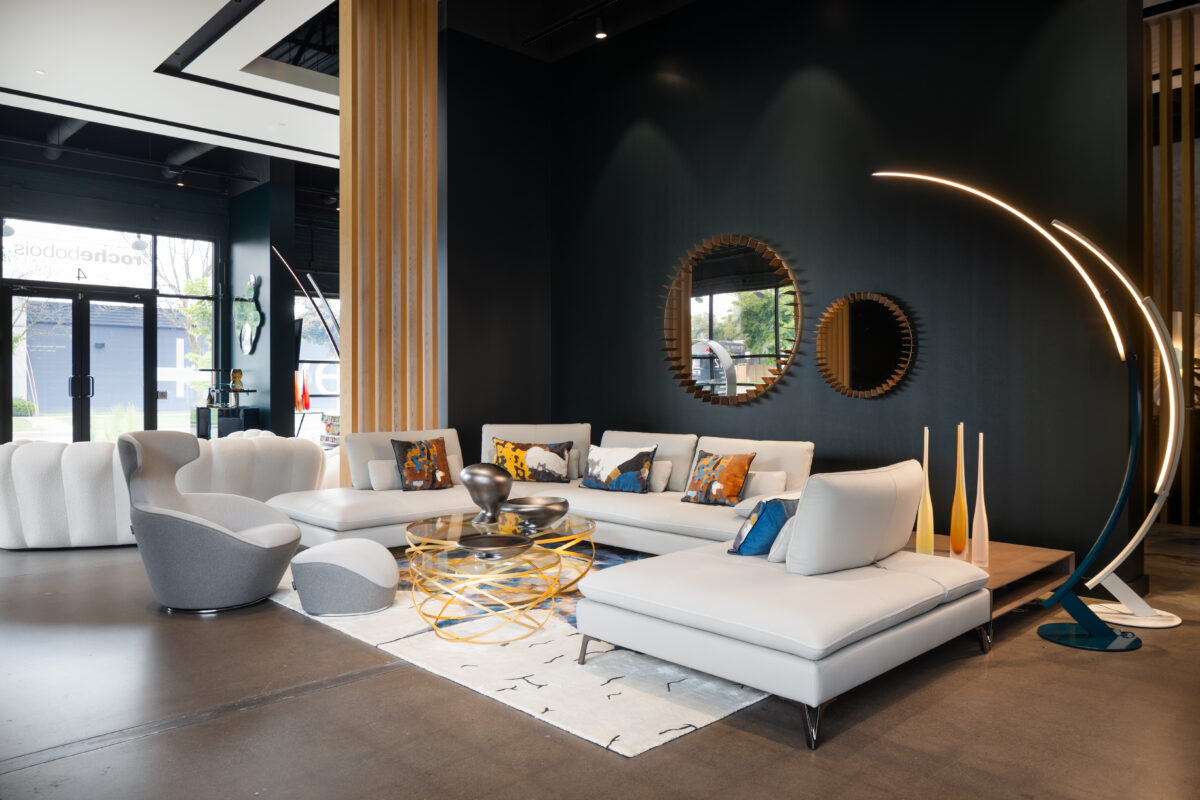
Roche Bobois, the renowned French luxury furniture brand, has opened its second store in Toronto to mark the brand’s 50th anniversary in Canada.
This new space, in the Castlefield Design District, a go-to spot in the city for interior designers, spanning an impressive 4,742 square feet, is set to redefine the luxury furniture shopping experience in the heart of the city, said the retailer.
Recent openings include the store in Toronto’s Castlefield Design District and takeovers in Vancouver and Calgary.
There are three showrooms in Montreal, one in Quebec City, two stores in Toronto, Vancouver and Calgary.
He said the company has been expanding in recent years by opening new showrooms or by taking over new franchises.
By opening a second store in Toronto, Roche Bobois aims to extend its reach to a broader audience while further solidifying its position as a premier destination for luxury furniture in this major Canadian city.
Photo courtesy of Roche Bobois
“We are planning to open in Royalmount in Montreal, which is also a big investment and a big move for us,” said Berardo.
“What we believe in Toronto is that it’s a bit, maybe not like New York, but definitely it has the potential to have more than just one showroom. To give you an example, in Manhattan, just Manhattan, we have three stores. We are the only furniture brand with three stores in Manhattan. We believe that Toronto is two maybe three showrooms in order to really cover the whole potential of this market. Because, as I’m sure, you know, Toronto, it’s a lot of traffic.”
He said many furniture brands are located in the area the retailer has opened its latest store in Toronto and it’s also close to the Yorkdale Shopping Centre.
“Definitely a lot of designers shop in this area. So I will say an affluent area, plus a designer’s destination, makes really the perfect mix to open a location,” he added.
Berardo said the Canadian market is similar to the U.S. with different provinces and different markets.
“But if you take, for example, Toronto, I’ve been living in New York for 15 years. It gives me really a vibe of New York with very strong energy. It’s very hard to find a room in an hotel where you don’t have noise in the morning because everything is under construction, where you look the number of skyscrapers, residential condos, residential units that have been building. It’s very impressive,” he said.
“And so Toronto, for me, it’s like a small New York, or little more, like an energy like New York. This is what it gives me. As far as Toronto, it has a very strong economy, a lot of headquarters real estate, which is still doing pretty well. So all those KPIs are very good for us. Because really, in the furniture business, we follow the stock exchange and we follow the real estate. If real estate does well, if the Stock Exchange does well, we as a business, we also, as an industry, we also do pretty well.
Photo courtesy of Roche Bobois
“On the other hand, you have Montreal, which is a bit different, but still also very wealthy, with a lot of wealthy areas, more than construction, a lot of local companies. The Quebec companies that are are very well established and developed in Montreal, which gives a very, I would say, a strong economical foundation. And we have a very steady business. And for us, for example, Canada has been being a very good business for the last three, four years, since COVID during the pandemic time, but also after that, when the USA is a bit more challenging for the last year, year and a half.
“We strongly believe in the Canadian economy, I would say the foundations allowing us to generate more business.”
He said the brand used to only have a street presence in France before COVID.
During the pandemic, shopping centres took a hit.
“And so we had opportunities in 2021, 2022 to get some strategic locations in malls. And so we have, for example, in the US in California and in New Jersey, we are in malls. And then, as I mentioned, in Royalmount,” added Berardo
Centrally located just a few miles from Yorkdale’s high-end mall, the new Roche Bobois store is easily accessible for customers throughout the Greater Toronto Area (GTA) and beyond, including King City, Vaughan, Markham and Woodbridge.
Photo courtesy of Roche Bobois
The retailer said visitors to the new Toronto showroom will discover a curated selection of Roche Bobois’ best-selling pieces and iconic collections, including timeless favourites such as Mah Jong, Aqua, Lift, Bubble, Furtif and Astréa. The store also offers unparalleled customer service. From personalized 3D design consultations to state-of-the-art digital tools such as connected screens and tablet stands, every aspect of the shopping experience has been crafted with the discerning customer in mind.
Designed by Jacqueline Hopfer, head of Roche Bobois’ design department in Paris and daughter of the iconic Mah Jong sofa designer, the retailer said the space exudes elegance and sophistication. From the striking plant wall to the sleek suspended ceilings and intricate wooden claustra, every element has been meticulously curated to create an immersive environment.
Roche Bobois is a French brand that ranks among the world’s leading premium furniture and décor brands. Roche Bobois aims to celebrate the French Art de Vivre through its creativity, expertise and environmental responsibility. In each of its 260 showrooms/stores worldwide, Roche Bobois offers creative and original collections designed in collaboration with renowned designers and leading fashion houses.
In a news release, the retailer said the partnership was born out of a natural opportunity for two like-minded organizations to come together in an effort to protect and conserve Canada’s habitats, consisting of forests, wetlands, and shorelines, with the long-term vision of achieving a more sustainable future for all.
Meghan Roach
“At Roots, nature is not just an influence but a core element of our inspiration and product design,” said Meghan Roach, President and CEO of Roots Corporation. “Our deep connection with Algonquin Park has shaped our brand identity for over five decades and remains integral to our ethos. Partnering with the Nature Conservancy of Canada is a natural evolution for us—an extension of our commitment to protecting the very source of our inspiration.”
In the first year, Roots said it will be supporting the NCC’s conservation efforts in the Frontenac Arch Natural Area located ineastern Ontario just north of Kingston and northeast of the St. Lawrence River. This is one of the most biodiverse regions in Canada and a place of great beauty that links the Canadian Shield from Algonquin Park with the Adirondacks Mountains in New York State.
Home to thousands of species, the Frontenac Arch serves as a critical habitat linkage through to New York State. It was designated as a UNSECO World Biosphere Reserve in 2002 and is one of the most important forest corridors east of the Rocky Mountains. NCC works here protecting wilderness for species like black bear, moose and eastern wolf, bats, insects and dozens of bird species, said the news release.
“Nature has been at the foundation of the Roots DNA since its inception in 1973 in Canada’s Algonquin Park. Since then, the brand has developed a rich history of supporting a diverse range of communities and charitable partners. These partnerships align with, and support, the brand’s core values of community and authenticity, whilst ensuring efforts contribute to creating positive change today and for future generations. The collaboration with NCC strengthens Roots mission to support and conserve Canada’s natural spaces while identifying and addressing critical environmental needs,” added the retailer.
Roots said it will work collaboratively with NCC throughout the multi-year commitment to identify initiatives requiring priority focus based on research and ongoing analyses.
Catherine Grenier
“Our partnership with Roots marks an exciting step forward in accelerating conservation, starting with the Frontenac Arch Natural Area in Ontario,” said Catherine Grenier, president and CEO of the Nature Conservancy of Canada. “Multi-year partnerships like this are essential to successful conservation outcomes. Roots’ investment in nature is building resilient ecosystems that will thrive for generations.”
By supporting conservation in the Frontenac Arch, the two organizations will also be contributing to Canada’s conservation goals. Other benefits include connecting existing conservation lands and ensuring pathways for species to move throughout their life cycles, the care of existing conservation lands, expanding partnerships in the community to further conservation outcomes, and the prioritization of safe and accessible visitor experiences on lands. NCC currently owns and manages over 2,870 hectares and has assisted with an additional 2,985 hectares of protected habitat in the Frontenac Arch, said the news release.
“In February 2020, Roots launched “Roots Cares,” a program designed to give back to and partner with communities in need. Since its launch, Roots has donated approximately $3.6 million, along with in-kind donations to various organizations within communities in which Roots operates. Roots is deeply committed to preserving the landscapes that inspire the brand. Supporting NCC’s efforts to conserve Canada’s habitats is a commitment both organizations proudly embrace. Together, the goal is to generate meaningful change and promote a brighter, more sustainable future for all,” added Roots.
Established in 1973, Roots is a global lifestyle brand. Starting from a small cabin in northern Canada, Roots has become a global brand with over 100 corporate retail stores in Canada, two stores in the United States, and an eCommerce platform, roots.com. It has more than 100 partner-operated stores in Asia, and it also operates a dedicated Roots-branded storefront on Tmall.com in China.
NCC is the country’s unifying force for nature. NCC seeks solutions to the twin crises of rapid biodiversity loss and climate change through large-scale, permanent land conservation. NCC works with people, communities, businesses and government to protect and care for our country’s most important natural areas. Since 1962, NCC has brought Canadians together to conserve and restore more than 15 million hectares.
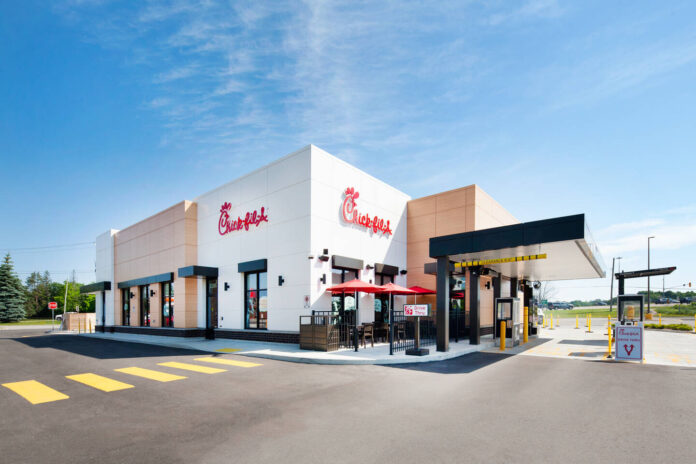
Chick-fil-A says it will open four new restaurants by the end of this year in Ontario and Alberta, expanding the brand’s footprint to 20 locations in Canada.
Construction on the four new locally owned and operated restaurants is nearing completion, and once opened, will create approximately 400 jobs in total and will offer dine-in, take-out and drive-thru service, said the company in a news release.
The new restaurants opening in Ontario and Alberta are:
Chick-fil-A Appleby Crossing will begin serving the Burlington community Thursday October 3 and is located at 2331 Appleby Line. Wesley Lyon has been selected as the independent franchised Owner-Operator;
Chick-fil-A Macleod Trail will begin serving the Calgary community later this year and will be located at 9223 Macleod Trail SW. Robert Bourassa has been selected as the independent franchised Owner-Operator;
Chick-fil-A Newmarket East will begin serving the Newmarket community later this year and will be located at 1111 Davis Drive. Julia Calandra has been selected as the independent franchised Owner-Operator;
Chick-fil-A South Edmonton Common will begin serving the Edmonton community later this year and will be located at 2060 99 Street NW. Thomas Messick has been selected as the independent franchised Owner-Operator.
The company said most Chick-fil-A restaurants are owned and operated by a single individual, which means Chick-fil-A’s local Owner-Operators are small business owners, not passive investors, who work in their restaurants side by side with their Team Members each day.
Since 2020, Chick-fil-A said it has donated about C$2 million (US$1.46 million) to Second Harvest to support local hunger-relief organizations. Second Harvest is one of Canada’s largest food rescue organizations and helps reduce the environmental impact of food waste by redistributing surplus edible food from across the supply chain to non-profits throughout the country. In celebration of each new restaurant opening, Chick-fil-A will donate about C$34,000 (US$25,000) to Second Harvest to support local non-profit organizations in the community in the fight against hunger.
Photo courtesy of Chick-fil-A
“These four new restaurants will also be participating in the Chick-fil-A Shared Table™ program, an initiative that redirects surplus food from participating Chick-fil-A restaurants to local soup kitchens, shelters, food banks and non-profits to help feed those in need,” it said.
“To date, more than 30 million meals have been created using Chick-fil-A Shared Table donations from 2,200 Chick-fil-A restaurants throughout Canada and the U.S.”
Chick-fil-A, Inc. is the third largest quick-service restaurant company in the United States with more than 200,000 staff employed by independent owner-operators in more than 3,000 restaurants across the United States, Canada, and Puerto Rico. In 2023, the company shared plans to expand by 2030 into Europe and Asia.
The family-owned and privately held company was founded in 1967 by S. Truett Cathy.
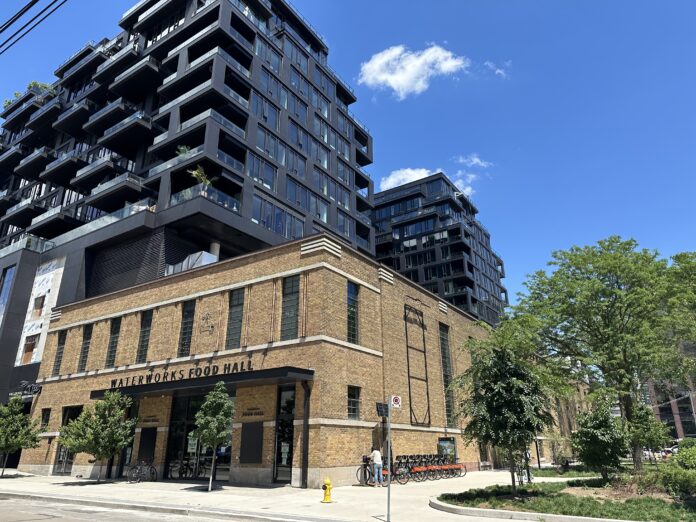
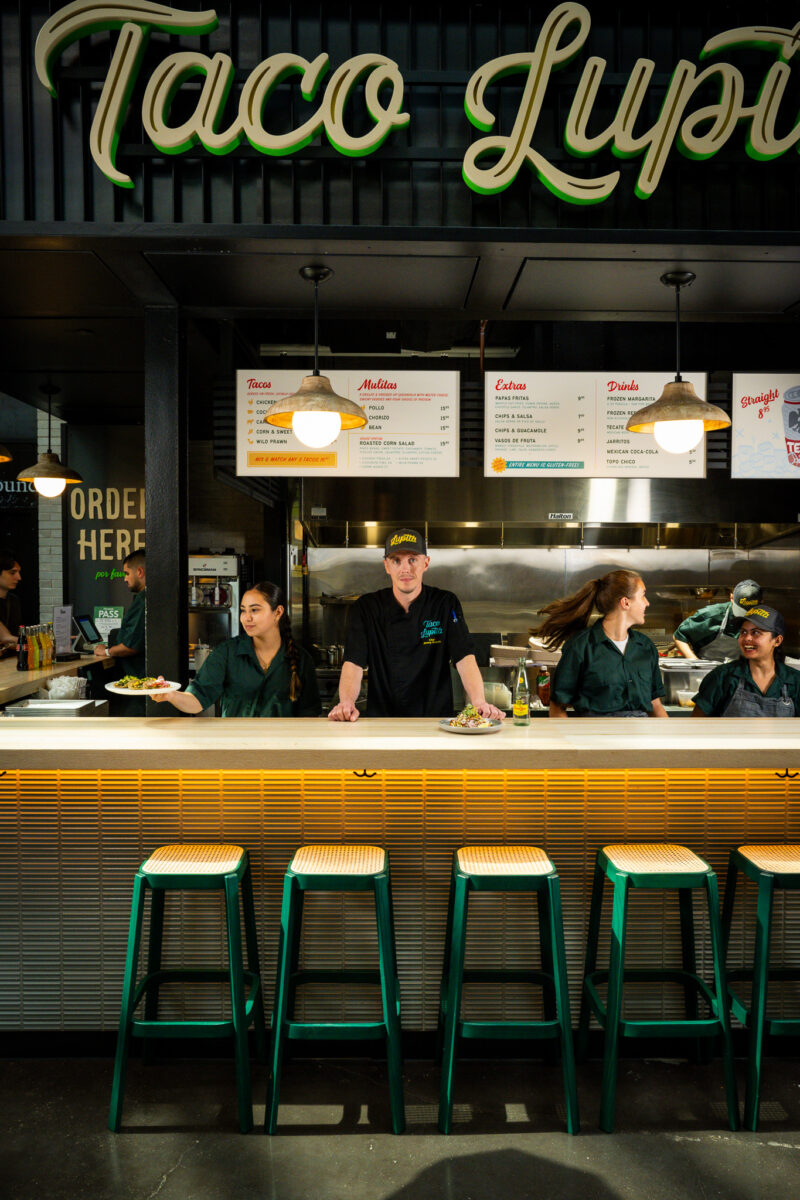
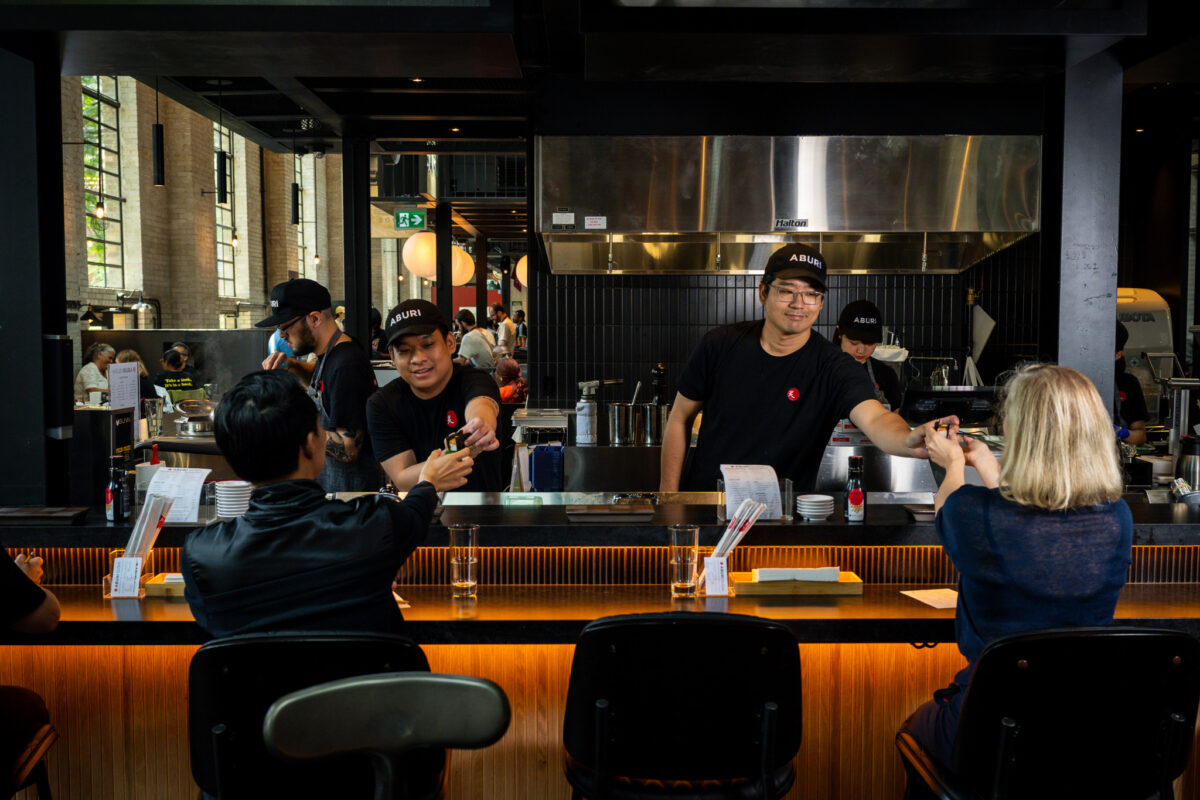
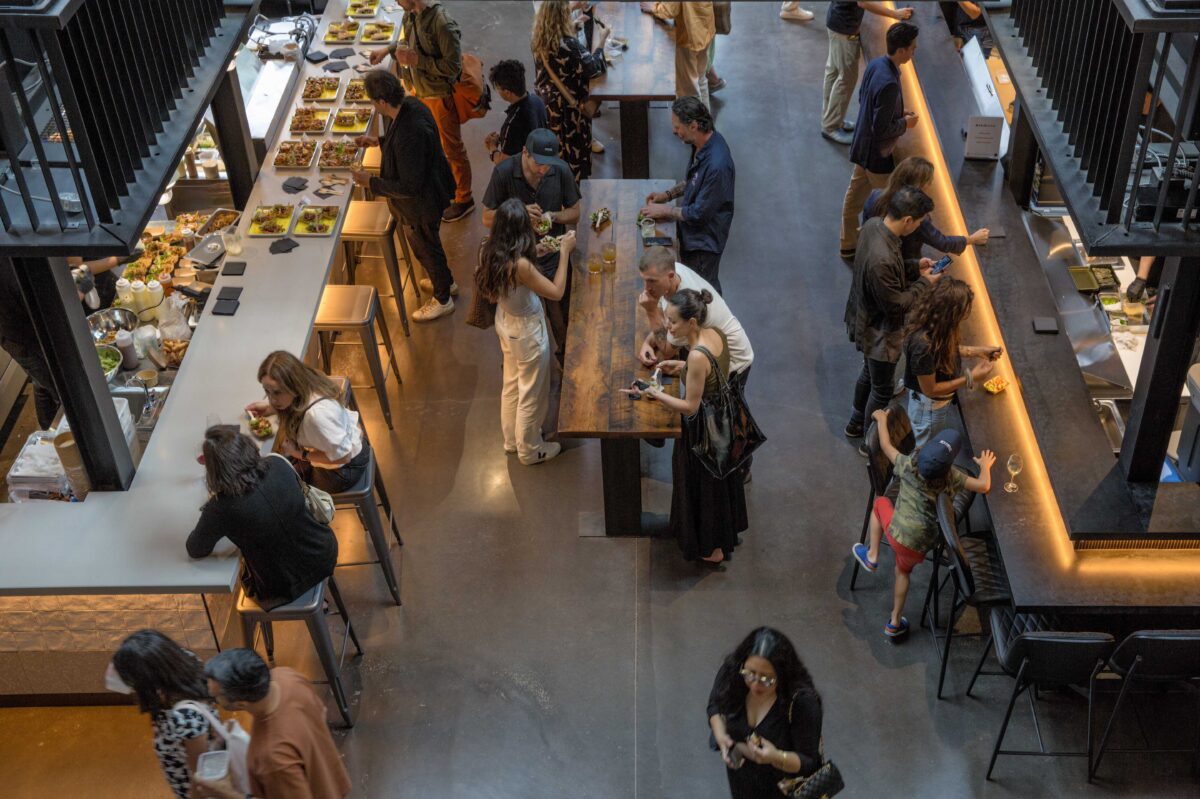
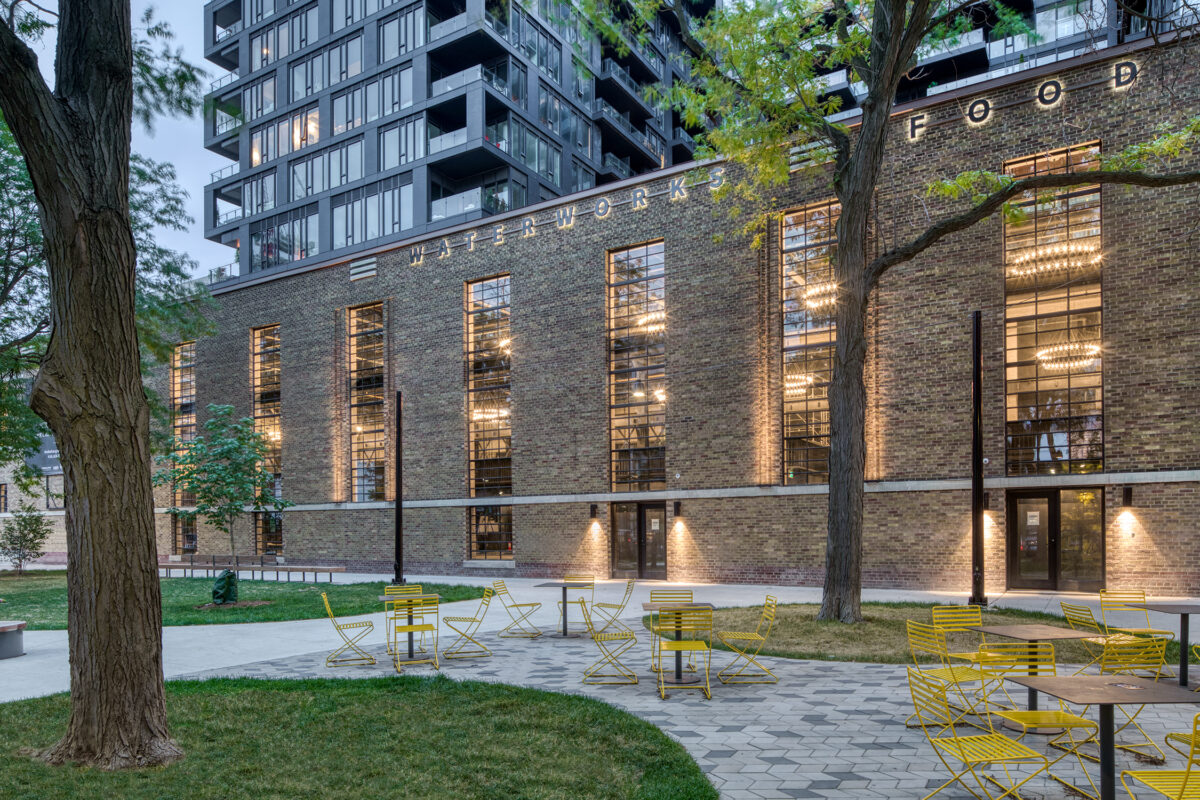
In a soaring heritage building in King West, one of Toronto’s most exciting urban neighbourhoods, Waterworks Food Hall has become a culinary destination offering a memorable and unique food experience.
The European-style food hall celebrates the best of the city’s dynamic culinary scene housed within a beautifully restored heritage industrial building.
Stratton Townley
“Waterworks is the culmination of a collective vision brought to life, and we’re incredibly proud to celebrate it as a completed project rather than just an idea. This has been a true labor of love, and our entire team has been fully dedicated into creating something remarkable – and unique. Every detail, from the design-led heritage restoration to the community-focused approach to finding the right restaurants to join us, reflects our collective effort and vision, and we’re thrilled with the outcome,” said Stratton Townley, Director of Development for Waterworks.
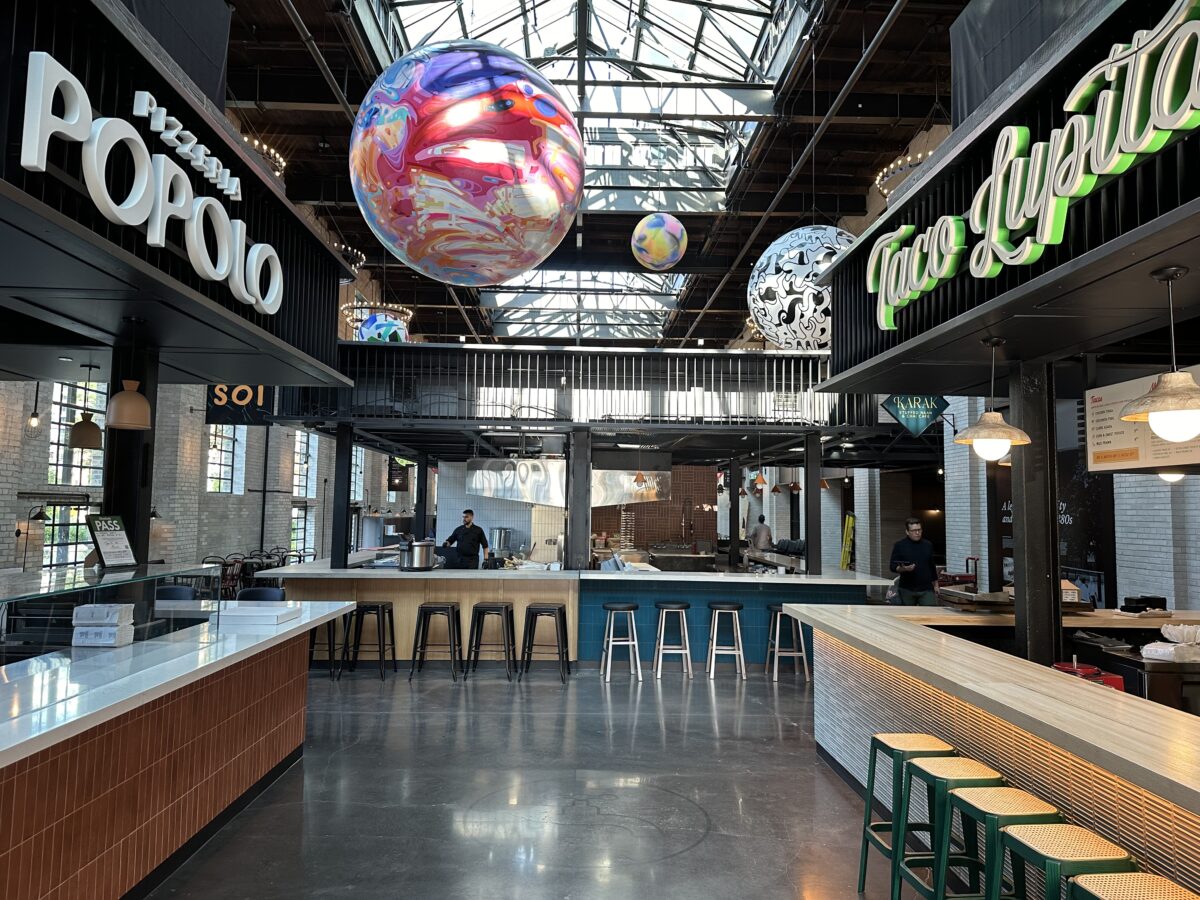
“Our goal was always to ensure Waterworks became a neighbourhood gathering place—one that will serve as the heart and soul of King West for years to come. What makes Waterworks so special isn’t just the stunning heritage property we’ve restored, but how the space itself defies the typical food hall experience. Set within a beautifully transformed site that was once overlooked and run down, Waterworks now offers multiple points of access, overlooks a beautiful adjoining historic park, and showcases airy glass atriums and thoughtfully designed seating—all creating an inviting atmosphere that prioritizes our customer’s experience.
“We’ve worked tirelessly to design not just a great building, but a space that feels unlike anything else in Canada, and we couldn’t be prouder of what we’ve achieved together.”
The 55,000-square-foot Waterworks Food Hall, which will have more than 20 hand-picked vendors serving specialty fare, seasonal offerings and authentic cuisines from around the world, is situated on a site with a rich history, initially serving as a public market, then as a public works space, and now as a landmark destination offering a unique culinary experience.
After eight years of extensive planning, research, development and execution, the Waterworks Food Hall opened its doors earlier this summer with over 15 cuisines, three bars and bottle shop and two patios plus over 12,000 square feet of event space and underground parking in the heart of Toronto at 499 Richmond St. W. in the Entertainment District.
The project, developed by Woodcliffe Landmark Properties and MOD Developments, is a full city block bounded by Adelaide St W, Maud St and Brant St. On the Adelaide frontage is the City of Toronto’s St. Andrew’s Playground Park that was recently overhauled and renovated. There’s also a condo component on the Richmond St side with 290 residential units and a state-of-the-art YMCA of approximately 60,000 square feet, taking the second floor.
Southeast Asian restaurant Lee was relocated from King West to Waterworks – a 6,000-square-foot establishment
Waterworks also includes SOBR Market, downtown Toronto’s first non-alcoholic bottle shop.
Waterworks photo by Daniel Neuhaus
The Behar Group handled tenant leasing at Waterworks and negotiated leases on behalf of the landlord.
With exposed brick walls and a soaring 44-foot ceiling with skylights and steel beams and columns, the Waterworks Food Hall is a stunning heritage building and a rich setting for events. It offers 12,000 square feet and four unique event spaces for private events, intimate gatherings, holiday celebrations, corporate functions, and more.
Here’s the history of the site from the Waterworks Food Hall website:
“A commercial centre for Toronto’s west end, the site once housed St. Andrew’s Market. Originally built in 1850, the first building was destroyed by fire in 1860. A grander and larger market, designed in the Renaissance Revival style was opened in 1873. As a public market, it housed fresh produce, a police station and a public library. Due to waning popularity, the market was decommissioned in the early 1920s and sat vacant for over a decade.
“The Waterworks Building was designed by City of Toronto Chief Architect J.J. Woolnough in 1932 as part of a government initiative to create jobs during the Great Depression. It was a complex of connected structures around a central courtyard with Art Deco detailing like stone quoins, copper coping, and dog-toothed brick. Designed for the Water Works offices, maintenance and storage of equipment, the building was decommissioned in 2013 and awarded heritage status in 2017.
“In 2016, Woodcliffe Landmark Properties, in partnership with MOD Developments, purchased the former public works facility. With frontage on Brant Street, Maud Street, and Richmond Street, was redeveloped for mixed-use including 297 condominiums, a 60,000 sf YMCA, 75 underground parking spaces, and a 55,000 sf European-inspired food hall. Waterworks fronts onto St. Andrew’s Playground Park that added an expanded off-leash dog park, an expansive playground and a myriad of seating options for gathering.
“The restoration of the “Great Hall” resulted in a remarkable adaptive reuse of the former machine shop, which was acquired in a state of disrepair. From preserving the soaring skylights to introducing floor-to-ceiling windows to repositioning the Art Deco gates to the hidden courtyard off Richmond St. and reclaiming wood from the original floor to create a mosaic spanning the height of the main stairwell, every detail has been meticulously executed.”
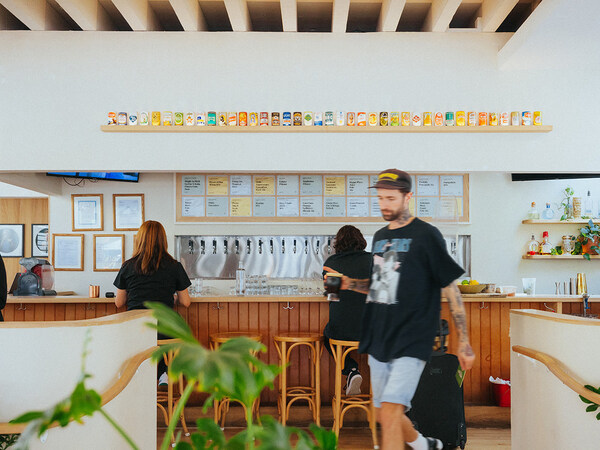
Sing Sing Beer Bar by Freehouse Collective (CNW Group/Donnelly Group)
With an approved extension on its stay of proceedings from the Supreme Court of B.C., the Donnelly Group of companies including its hospitality businesses under Freehouse Collective, announced Thursday its aim now is completing its financial restructuring in order to exit CCAA.
Jeff Donnelly
“It’s been a long and intense process,” said CEO Jeff Donnelly in a news release, “which is now due to end happily thanks to our determination and the remarkable patience of our principal creditor BMO.”
The company said the stay of proceedings extension was registered on September 25 leaving room until November 1 to finalize restructuring terms.
“Our opportunity, with BMO’s support, is to keep this company together and continue to employ our staff, serve our communities, and ensure that great hospitality remains integral to our collective culture,” added Donnelly.
Over the past year the group was forced to sell or release several historic Vancouver businesses such as Cinema as well as The Railway and Bimini’s which have since been sold again before closing, all indelible marks of the real challenges continuing to face the hospitality industry and a loss of two deeply storied venues, it said.
“It’s a tough time for this industry which is news to no one,” explained Donnelly. “Without business experience, access to capital, and a great product suited to your market, the revenues and margins are no longer there. I applaud operators who have survived, thrived even. We’re excited to again be joining those ranks.”
Freehouse Collective has recently opened Sing Sing Beer Bars in Vancouver’s Commercial Drive and on Adelaide St in Toronto’s financial district. It will also open Sing Sing Riverdale in Toronto’s Danforth neighbourhood this Fall, and next Spring, Sing Sing Willowbrook in Langley’s newly constructed Courtyard at Willowbrook Shopping Centre.
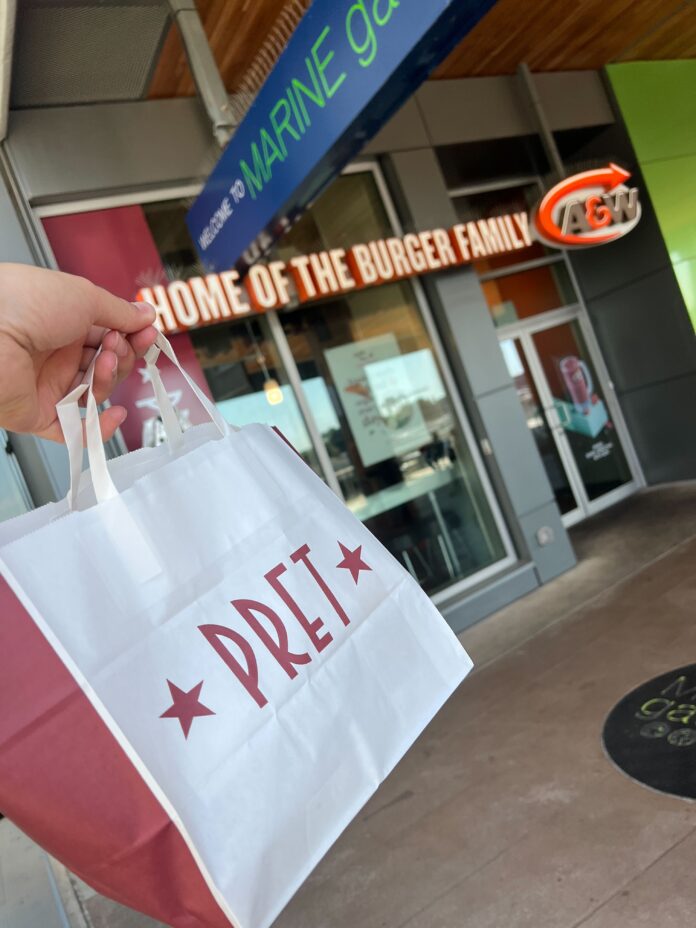
Pret a Manger at A&W Marine Gateway in Vancouver on July 25, 2022. Photo: Lee Rivett
A&W has announced an exclusive agreement to serve Pret A Manger’s Classic Blend coffee in all its Canadian restaurants.
The partnership between A&W and Pret A Manger, which began in 2022, is now reaching new heights. This move comes as part of a broader ten-year development plan signed by both companies in May 2024. The agreement not only includes the nationwide coffee rollout but also plans for opening more standalone Pret A Manger cafés across Canada.
From Concessions to Cups: The Journey of Pret in Canada
Pret A Manger, the UK-based coffee and food-to-go chain, first entered the Canadian market in July 2022. Initially, the brand operated concession sites within select A&W restaurants. The cautious approach allowed Pret to test the waters before expanding its presence.
In January 2024, Pret A Manger opened its first brick-and-mortar location in Toronto, marking a milestone in its Canadian journey. Since then, the company has added a second Toronto outlet and ventured westward with its inaugural standalone site in Vancouver.
Scott Darlow, Pret A Manger Lead at A&W Canada, expressed enthusiasm about the partnership: “Pret’s exceptional quality and taste have won over coffee lovers worldwide, and we’re thrilled to bring it to over 1,000 locations across Canada. We’ve tested Pret coffee in select A&W locations where it quickly became a favourite among guests, which led us to make it our official coffee at all A&W restaurants.”
The decision to serve Pret’s Classic Blend coffee across all A&W Canada locations stems from its success in test markets. The positive reception from customers encouraged A&W to take this bold step, potentially reshaping the Canadian fast-food coffee landscape.
The collaboration represents a significant expansion for Pret A Manger, which currently operates 480 stores in the UK and 210 across 17 international markets. The company recently achieved a milestone of £1 billion in annual sales, with group sales reaching £569 million ($752 million) in the first half of 2024 alone.
A recent survey by Omnisend, an ecommerce marketing automation platform, has uncovered a surprising trend among Canadian shoppers: a willingness to wait longer for deliveries in exchange for lower prices.
Patience Pays Off for Price-Conscious Consumers
The study found that 51.7% of Canadians are content with shipping times exceeding a week if it means scoring better deals. This preference for savings over speed is reshaping how retailers approach their shipping strategies, especially during high-traffic shopping periods like Black Friday and Cyber Monday (BFCM).
Greg Zakowicz, senior ecommerce expert at Omnisend, notes, “Shoppers are conditioned to associate BFCM with great deals, not necessarily fast deliveries. Brands that overly emphasize next-day shipping may be missing an opportunity to attract discount-driven shoppers.”
The Long Wait: A Growing Trend
Remarkably, 78.6% of respondents are willing to wait more than three days for their parcels if it means lower prices. Even more striking, 29.3% said they could wait nine days or more – a timeframe that’s at least five times longer than Canada’s average parcel delivery time of 1.68 days.
“As consumers become more price-sensitive, the huge popularity of companies like Temu and Shein shows that many are willing to wait longer for deliveries if it means significant savings,” Zakowicz explains.
Strategic Shipping for BFCM Success
For retailers gearing up for the BFCM rush, Zakowicz offers several key recommendations:
Prioritize transparent communication about delivery times
Avoid overcommitting to speedy deliveries
Offer tiered shipping options to cater to different customer preferences
Use longer shipping times as a sales tool to highlight savings
Monitor and adjust strategies based on customer behavior
These insights suggest that Canadians prefer slower shipping when it comes with cost benefits, challenging the notion that faster is always better in the world of ecommerce. This trend could shift again as the economy improves, and consumer preferences shift back to prioritizing shipping times.
As winter approaches, Canadian auto shops face a growing threat beyond icy roads: MOTO tire fraud. The scheme, targeting high-demand winter tires, has led to an alarming 89% increase in fraud losses for auto shops nationwide.
The Rise of MOTO Tire Fraud
MOTO (Mail Order/Telephone Order) tire fraud involves criminals using stolen credit card information to purchase tires, exploiting the seasonal demand surge.
Maria Cameron, Director of Risk Management at Moneris, Canada’s foremost payment services provider, explains, “With provinces like British Columbia and Quebec mandating winter tires, fraudsters are targeting these high-ticket, in-demand items for easy resale.”
Protecting Businesses Against Fraud
As auto shops prepare for the winter tire rush, implementing robust fraud prevention measures is crucial. Cameron advises:
Avoid accepting payments over the phone from unfamiliar customers.
Use secure payment terminals for in-person transactions.
Implement online payment solutions with built-in fraud prevention tools.
“Much like preventative vehicle maintenance, businesses need to adopt proactive fraud prevention strategies,” Cameron emphasized. “Using solutions with integrated fraud prevention tools can shift chargeback liability to card issuers, minimizing losses for your business.”
Moneris offers various secure online payment options, from integrated website checkouts to request-for-payment solutions. These tools help validate customer identities and protect businesses from fraudulent activities.
Auto shop owners are encouraged to stay informed about the latest fraud trends and to report any suspicious activities promptly to their payment processor. By remaining vigilant and implementing these preventive measures, Canadian auto shops can better protect themselves against MOTO tire fraud and ensure a smoother winter season for all.