Porsche Cars Canada, Ltd. (PCL) has appointed Trevor Arthur as its new President and Chief Executive Officer, effective October 1, 2024.
Trevor Arthur.: Karen Images 2016
The company said Arthur brings considerable automotive business management experience to lead Porsche’s continued growth in Canada, as the subsidiary’s new President and CEO.
“He comes back to his home country following a period of eight years as Vice President, Area West, at Porsche Cars North America, Inc. (PCNA). He joined the brand in 2008 as a regional manager for PCL and then held the role of Sales Director until 2016,” it said in a news release.
“Before his time with Porsche, Arthur previously worked in sales and service with two other automotive brands in Canada. He received a diploma in Business Administration, Automotive Marketing from Georgian College in Barrie, Ontario.”
Arthur succeeds John Cappella who has been at the helm of the Canadian subsidiary since September 2022.
“Under Mr. Cappella’s leadership, PCL has grown its sales to pass the 10,000-unit threshold for the first time and reach its highest annual level in 2023. In addition, he oversaw the construction of its first-ever Porsche Experience Centre slated to open in the Greater Toronto Area later this year. John Cappella has taken over as Executive Vice President and Chief Operating Officer at PCNA,” added Porsche Cars Canada.
“A successor for Trevor Arthur’s former role as Vice President, Area West, at Porsche Cars North America will be announced in due course.”
NEW SURVEY FROM KITCHENAID SPILLS THE BEANS ON CANADIANS QUIRKY COFFEE HABITS (CNW Group/KitchenAid Canada)
KitchenAid, known for its innovative kitchen appliances, has unveiled compelling insights into Canadian coffee consumption trends through a new survey. The study highlights the coffee habits of Canadians following the launch of the KitchenAid® Espresso Collection in Canada, revealing just how deeply coffee is ingrained in the daily lives of its drinkers.
According to the survey, coffee is indispensable for many Canadians, with respondents admitting they would prioritize their coffee intake over soda (42%), alcohol (30%), and even social media (22%). Some respondents went as far as to say they’d forgo television (14%) and even sex (8%) in favor of their daily cup of coffee.
The findings, which coincide with the launch of KitchenAid’s new line of espresso machines, underscore that the love for coffee isn’t just about taste. A significant portion of the survey participants (68%) drink coffee for the flavor, but for many, it’s a necessity—26% of respondents claim they can’t start their workday without coffee, while 22% need a cup before breakfast, and 21% before leaving the house. Over one-third (37%) admit they couldn’t go more than one or two days without their daily caffeine fix.
Alberta Leads Canada’s Caffeine Charge
Alberta claims the top spot as Canada’s most caffeinated province, with 69% of its coffee drinkers consuming two or more cups a day. Ontario follows closely at 67%, while on the city level, Ottawa and Halifax emerge as the most caffeine-dependent, with over two-thirds (78% and 76%, respectively) drinking at least two cups per day. Quebec City, by contrast, ranks as the least caffeinated, with more than half of its coffee drinkers limiting themselves to just one cup per day.
NEW SURVEY FROM KITCHENAID SPILLS THE BEANS ON CANADIANS QUIRKY COFFEE HABITS (CNW Group/KitchenAid Canada)
Coffee on a Budget: A New Trend
As coffee consumption continues to dominate Canadian routines, affordability becomes an increasing concern. On average, Canadians spend $504 annually on coffee outside the home. To manage this, one-third of coffee drinkers (32%) are cutting back on coffee purchases, while over half (57%) of respondents believe investing in a high-quality coffee machine for home use is a smarter, long-term choice.
“Coffee has clearly become a daily ritual for Canadians, and our new espresso collection aims to make premium coffee more accessible at home,” said Janice Ryder, Country Manager at KitchenAid Canada. The KitchenAid Espresso Collection, which includes both semi-automatic and fully automatic machines, promises quiet operation with the added convenience of premium barista-style brewing. These machines offer Canadian coffee lovers an elevated way to enjoy their coffee while maintaining peace in the morning.
Regional Coffee Preferences and Custom Recipes
To celebrate the launch of the KitchenAid Espresso Collection, KitchenAid partnered with specialty coffee roaster Caitlin Campbell, founder of Street Brew, to create custom recipes inspired by regional coffee preferences uncovered by the survey. These include the Iced Pumpkin Latte for Alberta, a Hot Peppermint Latte for British Columbia, an Iced Honey and Maple Coffee for Ontario, and a Maple Espresso Con Panna for Quebec, offering unique blends that resonate with the diverse tastes of coffee lovers across the country.
Sander Meijers, the Canada Country Manager for Adyen, is an experienced and energetic connector with a demonstrated history of working in the internet, telecommunications, payments and media industry.
He has proven experience in creating successful B2B propositions and strategic partnerships, thriving on creating win-win situations and experiences for business partners and their end-consumers.
Meijers was born and raised in Belgium by two Dutch parents. He holds a Msc in Management from Delft University of Technology in the Netherlands.
Sander Meijers
“I had to choose between three different specializations. One was agriculture and that kind of technology, the other one was transport and the last one was IT. It was very clear to me I was going to choose IT. I was always very found of using computers and how computers solve issues and how you can buy stuff by Amazon.com. Back then it was a bookstore and a CD store and I was one of the first people to order my CDs by Amazon,” he said.
“I always thought I was going to be more like a product manager. I thought I was going to design technical solutions for everyday problems and be sort of an inventor in that space whether that was to create a company or to manage a company. That was my idea. I was always fascinated in solving everyday problems with technology.”
The interest and passion in this area came at an early age. Meijers said he has always liked “tinkering” with things.
“My dad bought me a MacIntosh which was the coolest thing I have ever seen in my life. And when we start opening up the box of opportunity that computer gave me . . . when the internet was launched the whole world opened up, that technology box. It just opened my imagination more than producing a can of beer or building furniture.
“I saw the endless possibility of the internet and IT technology as a young kid and really started focusing on that area a lot.”
Meijers started his career as a product manager for a telecommunications company.
“How we solve communications issues. That was in a period when fibre connections came up. What’s possible over fibre? We’re talking over Zoom now or over MicroSoft meetings. That wasn’t possible before we had fibre in the ground,” he said. “So I was trying to build products around what you can do with glass fibre. Then I shifted more from a product manager perspective to working with built-out products. I worked with Netflix and Spotify. They came up. They were streaming services and they were new and they were exciting and I wanted to do something with it.”
“So I moved away from being an inventor and a thinker into more how do you combine two companies and get the best out of it for a win-win situation. But in order to do that, you need to have a pretty darn good understanding of how it technologically works.”
Sander Meijers
He joined Adyen in 2017 where he led a team and the main accounts in the headquarters of the company in Amsterdam. Meijers decided to take the next step in his career and moved to Toronto with his family to lead the Canadian team in the heart of the “Silicon Valley North.” Only two years later, Adyen opened a new Toronto office, serving as the company’s Canadian headquarters.
Now, he is focused on expanding Adyen’s Canadian market operations and continuing to establish the company as the must-have payments solution for Canadian and global retailers, working with the likes of Mejuri, H&M, and Moose Knuckles.
His leadership style is inline with the Dutch company’s ethos. He’s a very intentional leader that is building Adyen’s presence in Canada for the long-run. As a people manager (and a father of two little ones), he believes in flexible work arrangements that foster culture and collaboration while still giving people the space and time to take care of life (picking up kids, doctor’s appointments, etc.).
Meijers described his leadership style as “energetic”. The company is all about speed and execution.
Sander Meijers
“We want to get stuff done and that requires a lot of energy. You can’t hold back and sit back and hope that somebody does it. I’d rather try stuff out and fail and move fast than just sit back and do a lot of homework and figure out a year after well let’s not do it. I like to do things and create a team around me that feels empowered to that as well. That feels empowered to make mistakes.
“If you haven’t tried, you’ve always missed. That’s a lot of what my leadership is about. I really want to empower people to try and try out stuff. Be very curious and intentional. So am I. It’s okay to fail. It’s okay to really open a box and try to figure out if it’s not going to work. Close the box again. But people who are looking at a box and don’t open it because they think it’s not going to work, no, you open the box and figure it out.
“And to be able to do that kind of empowerment you also have to be close to your people. I can’t push people to really do stuff if they don’t trust me. So I create trust. I’m not very hierarchical. There’s an open door. I don’t have an office. I sit at a different desk every other day.”
“And I’m Dutch, so I’m pretty direct,” he laughed. “You have to talk straight without being rude.”
Meijers is an outdoors type. He loves skiing and boating. He did a triathlon in Muskoka. He loves the world of opportunity in Canada that allows him to pursue these passions.
“It’s truly ingrained into the culture of Canada to do outdoor stuff.”
Automobili Lamborghini has opened a new design aesthetic at the Lamborghini Calgary showroom with the market premiere of the Revuelto, a V12 hybrid plug-in HPEV (High Performance Electrified Vehicle) with more than 1,000 horsepower.
Andrea Baldi, CEO of Automobili Lamborghini Americas. Photo by Mario Toneguzzi
“With demand for Lamborghini vehicles at an all-time high, the Calgary showroom will provide a further elevated experience for our customers, particularly during the brand’s transition into a new era of electrified vehicles.”
Located at 787 Heritage Dr SE, The auto brand said this cutting-edge showroom is strategically positioned to support the surrounding provinces of British Columbia Interior, Alberta, Saskatchewan and Manitoba.
“The updates to the Calgary showroom come at a time of immense growth for Lamborghini. The company delivered 5,558 cars globally in the first six months of 2024, a 4.1 per cent increase over 2023, with the Americas region remaining the number one, accounting for 1,865 units,” said the company.
“These exceptional results provide a strong foundation while the company completes the third step in its electrification strategy with the hybridization of the entire Lamborghini lineup, which now includes the recently debuted Temerario, the flagship Revuelto and Super SUV Urus SE.
Photo by Mario Toneguzzi
“Adding to the allure of Lamborghini’s distinct aesthetic, the all-new retail space features a 360-degree client experience representative of the brand’s cutting-edge style, characterized by polygons, sharp forms and a diffusion of light and color. An Ad Personam customization room featuring the brand’s bespoke offerings provides clients the ability to physically touch and play with combinations of colors and materials, including soft leathers and carbon fiber. Collezione and Accessori Originali fashion offerings also add to the customer experience for those visiting the showroom.”
The company said the updated Calgary showroom, which highlights Lamborghini’s updated corporate identity, serves as the perfect canvas for the brand’s supercars – the 1,015-horsepower hybrid V12 Revuelto and the all-terrain Huracán Sterrato, along with three Urus Super SUV models – the high-performance Urus Performante, the powerful yet refined Urus S and all-new hybrid Urus SE. With a top speed of 312 km/h, the Urus SE can accelerate from 0-100 km/h in 3.4 seconds. Customers will begin taking deliveries later this year at a suggested retail price of $304,100 CAD.
Baldi said the new updated design of the Calgary showroom reflects the image of the brand. It’s bigger and nicer.
“And it’s also prepared to do the most important thing that now our clients want. And that is customization,” he said.
Aldi said the brand has four other dealerships in Canada – two in Toronto, one in Montreal and one in Vancouver.
“Toronto is the biggest market in Canada,” he said. “Compared to other countries Canada has still a propensity for super sports cars – two-seaters – that are selling even more than SUVs.
“Canada is a very good market for us. It’s not very big but it’s in our top 10 globally. Number eight. So it’s pretty important. The United States is number one. The United States alone is 30 per cent of our sales globally. If you consider by state, California and then Florida definitely those two.”
In the Americas, there are 52 dealerships with 43 in the United States.
Vancouver port strike, September 2024. Photo: Youtube screen capture
The (recently settled) strike at Vancouver’s seven grain terminals, which began on September 24, has significant implications for Canada’s agri-food sector. This labour action, led by members of the Grain Workers Union Local 333, threatens to undermine not just Canada’s agricultural economy but also its standing as a reliable global food exporter.
To further complicate matters, dockworkers at the Port of Montreal have recently approved a strike mandate, signalling another potential disruption. With unions asserting their demands, the economic consequences are becoming increasingly severe.
The Grain Growers of Canada estimate that the Vancouver strike alone was costing the economy nearly $35 million in lost exports per day. This figure, now exceeding $100 million in total, underscores the critical role of these terminals, especially as more than half of Canada’s grain exports pass through Vancouver.
Canada is the world’s third-largest exporter of wheat, and with 70% of these exports moving through Vancouver, the stakes are high not only for Canadian farmers but also for global food security. Wheat, which provides 20% of the world’s calories, is central to global food systems, making this disruption a far-reaching problem.
Vancouver port strike, September 2024. Photo: Youtube screen capture
Labour Strikes’ Economic Impact on Canada’s Agri-Food Sector
While most Canadians support workers’ rights to strike for fair wages and improved working conditions, the broader economic impacts of these labour actions are often underappreciated. What is becoming increasingly evident is the toll these disruptions are taking on the cost of doing business in Canada. Stakeholders across the agri-food supply chain—from farm to retail—are being forced to seek alternative supply options, further escalating costs and eroding Canada’s reputation as a reliable trading partner. If the strike expands to Montreal, the country’s food supply chain could be hit from both coasts, amplifying the risks.
These disruptions come on the heels of last year’s port strikes in British Columbia and ongoing challenges with railways this year. In essence, Canada’s food supply chain is being weaponized, with both management and unions using it as leverage. This trend cannot continue if Canada is to maintain its competitiveness on the global stage.
The quality of Canadian grain is likely to suffer due to these delays, damaging our export reputation further. Canada is already struggling to uphold its standing as a consistent supplier in global markets, and these repeated labour disputes only add to the perception of instability.
Vancouver port strike, September 2024. Photo: Youtube screen capture
Ottawa’s Inaction on National Supply Chain Task Force Recommendations
Ottawa has in its hands a clear solution—or at least the start of one. In October 2022, the National Supply Chain Task Force released its final report, Action, Collaboration, and Transformation, which was widely praised for its detailed assessment of vulnerabilities in the transportation system and its recommendations for improving resilience. The report highlighted the critical need to safeguard essential transportation corridors to maintain the flow of goods across the country.
While the report did not explicitly declare the food supply chain an “essential service,” its recommendations clearly implied the system’s vital role in ensuring both economic stability and food security.
Yet, despite these clear warnings and recommendations, the federal government has done little to implement the necessary reforms. The roadmap exists, but Ottawa’s inaction has left Canada’s food supply chain vulnerable to exactly the kinds of shocks we are now experiencing.
At a time when resilience is paramount, this failure to act threatens not only the reliability of our food supply but also Canada’s global competitiveness in agriculture.
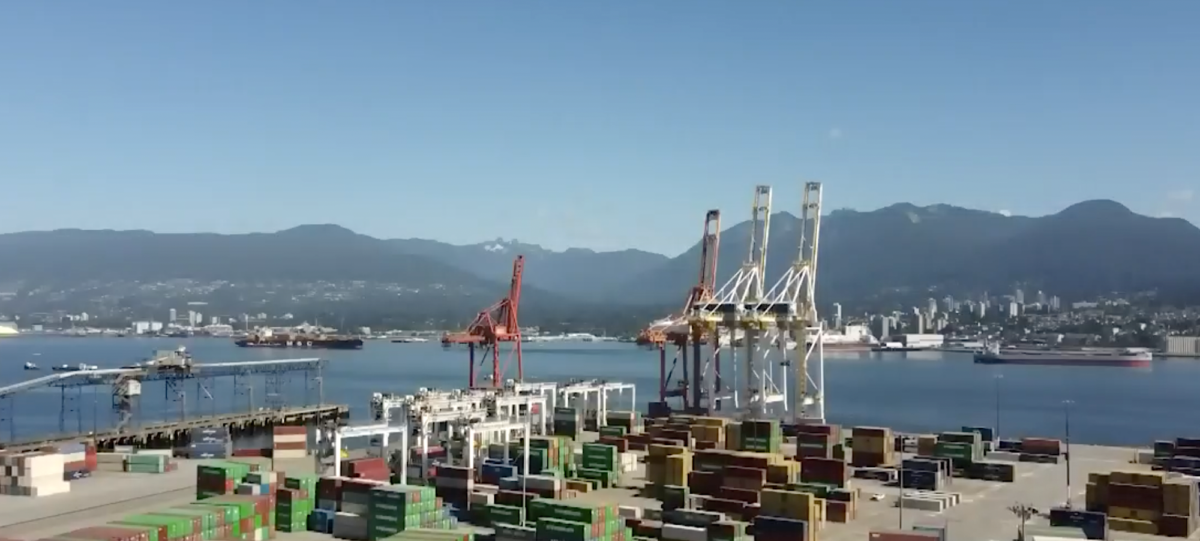
Port of Vancouver. Photo: Helicoptercam
Urging Ottawa to Safeguard the Food Supply Chain
It is time for the federal government to stop ignoring the clear signals from the market and industry experts. We cannot afford to let our food supply chain remain hostage to labour disputes, nor can we allow our agricultural sector to continue absorbing the costs of these disruptions.
Ottawa must act now to implement the recommendations of the National Supply Chain Task Force, safeguarding Canada’s essential role in feeding the world. If not, we risk being left behind, with profound consequences for both our economy and global food security.
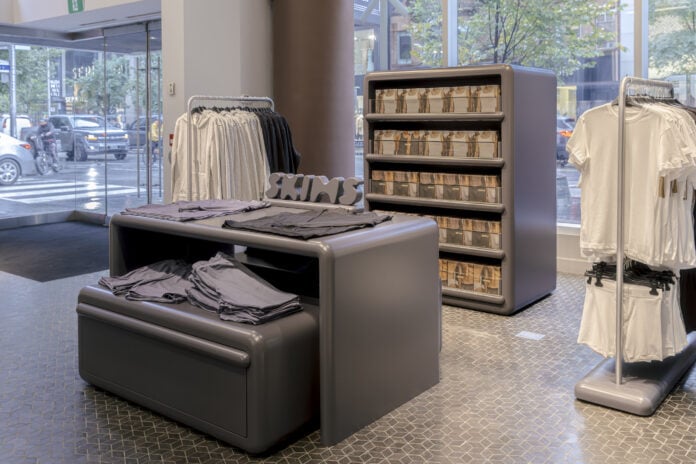
SKIMS Mens display at Holt Renfrew Men, 100 Bloor St. W in Toronto (CNW Group/Holt, Renfrew & Co., Limited)
Holt Renfrew has introduced the SKIMS Mens collection in all its stores and online at holtrenfrew.com, exclusively carrying the line in Canada. The popular SKIMS brand, known for reinventing women’s underwear, expanded into the men’s market last year.
SKIMS, co-founded by celebrity and entrepreneur Kim Kardashian and fashion visionary Jens Grede in 2019, quickly rose to prominence with its focus on inclusive, solution-based design. Initially gaining fame for reinventing women’s shapewear, SKIMS is known for creating garments that combine functionality with comfort, meeting the needs of every body type.
Holt Renfrew SKIMS Mens (CNW Group/Holt, Renfrew & Co., Limited)
The brand is known for offering innovative designs focused on fabric, fit, and style — the new SKIMS Mens line promises to provide exceptional comfort and craftsmanship, offering men comfortable and supportive underwear and foundational pieces. The collection is rooted in the same principles of comfort, fit, and superior movement that made SKIMS popular for women.
Among the SKIMS Mens collections now available at Holt Renfrew are:
SKIMS cotton: Everyday essentials made from a soft, mid-weight cotton blend with built-in recovery for comfortable, all-day wear.
SKIMS stretch: Lightweight, ultra-soft underwear designed with maximum-stretch fabric, ensuring a fit that won’t lose shape.
Fleece lounge: Plush, cloud-like sets for lounging, made from extra soft fleece for ultimate comfort.
Outdoor jersey: Lightweight, stretchy layers crafted from a cozy knit fabric with an incredibly soft feel.
Carolyn Wright, Senior Vice President of Product at Holt Renfrew, said, “We’re thrilled to be the first in Canada to launch SKIMS Mens at Holt Renfrew. Our partnership with SKIMS has been incredibly successful, and this expansion into menswear allows us to offer an even broader range of innovative products to our customers across the country.”
SKIMS launch party at Holt Renfrew Men, 100 Bloor St. W. in Toronto on September 24, 2024. Photo: Craig Patterson SKIMS launch party at Holt Renfrew Men, 100 Bloor St. W. in Toronto on September 24, 2024. Photo: Craig Patterson
Founded in Quebec City in 1837, Holt Renfrew has long been a leading large-format luxury retailer in Canada, known for carrying high-end brands as well as housing an impressive selection of luxury brand concessions. The retailer has stores across Canada—including in the Greater Toronto Area (Bloor, Yorkdale, Square One), Montreal (Holt Renfrew Ogilvy), Calgary, and Vancouver. The retailer, privately owned by the Weston family since 1986, continues to dominate luxury retail in Canada.
SKIMS has quickly established itself as a leader in shapewear, underwear, and loungewear, thanks to its focus on providing solutions for every body type. The brand’s innovation in fabric technology and fit has redefined the way people think about foundational garments, with SKIMS Mens continuing that legacy of innovation. The menswear line, launched in 2023, includes everything from boxers and briefs to tanks and tees, all engineered for maximum support and comfort. That same year, SKIMS also became the official underwear partner of the NBA, WNBA, and USA Basketball, further cementing its influence in the world of performance wear.
Campaign branding as Holt Renfrew Launches SKIMS Mens Across Canada (CNW Group/Holt, Renfrew & Co., Limited)
Les Galeries de la Capitale (Image: Oxford Properties)
Primaris Real Estate Investment Trust (“Primaris”) announced an agreement to acquire Les Galeries de la Capitale in Quebec City from Oxford Properties for a total consideration of $325 million. The transaction, which includes cash, trust units, and preferred units, is part of Primaris’ continued growth strategy of acquiring market-leading shopping centres across Canada.
The deal is structured with $170 million in cash, approximately 2.5 million series A units of the Trust (valued at $21.86 per unit), and $100 million of exchangeable preferred units. The series A units can be substituted with cash if Primaris elects to pay the contracted sum of $34.1 million, based on the unit price of $13.55. The transaction is expected to close on October 1, 2024, pending customary closing conditions.
MEGA PARC (PHOTO: LES GALERIES DE LA CAPITALE)
Strategic importance of Les Galeries de la Capitale
Les Galeries de la Capitale is a super regional enclosed shopping centre located in Quebec City, which is Canada’s seventh-largest population centre. The property sits at the intersection of Highways 40, 73, and 740, providing accessibility and visibility with over 4,100 feet of frontage along Boulevards Lebourgneuf and des Galeries. Covering 91 acres of land with 1,015,000 square feet of leasable space, the shopping centre has a 26% site coverage, offering room for future development opportunities It’s a trend seen with mall landlords across the country who are adding density to unlock more asset value.
With an impressive 96.4% in-place occupancy, Les Galeries de la Capitale generates same-store sales of $761 per square foot and recorded total sales volume of $219 million as of May 31, 2024. The mall has benefited from a significant $165 million redevelopment over the past decade, which included the relocation of La Maison Simons and the renovation of the food court, as well as upgrades throughout the centre. A notable highlight is the fully renovated and redesigned Méga Parc, an indoor amusement park with 18 attractions located adjacent to the new food court.
Patrick Sullivan, President and COO of Primaris, stated, “Les Galeries de la Capitale exemplifies the type of property we are targeting in our growth strategy. Its strategic location, excellent accessibility, and strong tenant mix make it a valuable addition to our portfolio.” He added that the mall’s prominent location along major highways and proximity to one of the region’s busiest bus terminals, with over 400 buses per day, further enhances its attractiveness.
PHOTO: LES GALERIES DE LA CAPITALE VIA FACEBOOK
Potential for income growth and enhanced operations
Primaris says it sees significant potential for net operating income (NOI) growth at Les Galeries de la Capitale, which mirrors the REIT’s broader strategy of optimizing underperforming assets. This includes converting tenants from variable rent agreements to net rent deals, as well as leasing out approximately 110,000 square feet of vacant space. Key vacancies, including the former Sears department store, offer significant opportunities to attract strong tenants and drive higher market rents.
Primaris plans to integrate the property into its scalable, full-service management platform, leveraging cost management strategies and operational efficiencies to further increase income.
Hudson’s Bay at Les Galeries de la Capitale (Image: Oxford Properties)
Financial and strategic implications
Rags Davloor, Primaris’ Chief Financial Officer, emphasized the financial prudence of the transaction. “This acquisition, our first in 2024, aligns with our commitment to maintaining industry-leading credit metrics and a well-capitalized balance sheet,” Davloor said. He also highlighted that Primaris remains a strong transaction counterparty in a market where many others face financing challenges. The deal is expected to be modestly accretive to the Trust’s funds from operations (FFO) on a per-unit basis.
Upon closing, Les Galeries de la Capitale will become the second-largest shopping centre in Primaris’ portfolio by sales volume, following Halifax Shopping Centre. It will rank ahead of other key properties like Conestoga Mall in Waterloo, and Orchard Park Shopping Centre in Kelowna.
Primaris anticipates same-property cash NOI growth of 3.0% to 4.0% in 2024, with expected total cash NOI for the fiscal year ranging between $273 million and $276 million, up from $227 million in 2023.
Quebec City’s economic strength
Quebec City’s economic landscape provides a strong foundation for the continued success of Les Galeries de la Capitale. With an anticipated population growth of 6.6% over the next decade, the city offers a stable environment for retail. Quebec City also boasts a low unemployment rate compared to the national average, supported by a diverse economy anchored in public administration, education, healthcare, and technology.
The presence of Université Laval, a major player in Quebec’s growing tech ecosystem, further contributes to the region’s economic resilience. Advancements in fields like artificial intelligence, software development, and digital media create additional opportunities for long-term growth in the area, according to Primaris.
Primaris’ portfolio expansion
With this acquisition, Primaris strengthens its position as a dominant player in the Canadian retail property landscape. CEO Alex Avery noted that the REIT’s ability to acquire high-quality assets, while maintaining a best-in-class capital structure, has attracted investment from five of Canada’s ten largest pension funds. These funds have sold market-leading shopping centres to Primaris and taken back equity and convertible preferred equity investments in the Trust.
The acquisition of Les Galeries de la Capitale aligns with Primaris’ strategy of focusing on large, enclosed shopping centres in mid-sized Canadian markets. Avery expressed confidence in the property’s potential, saying, “This acquisition enhances our value proposition with retailers and offers substantial income growth opportunities, consistent with the growth we anticipate across our portfolio.”
Retail Insider is streamlining its Canadian retail news from around the web to include a handful of top news stories that can be viewed quickly during the day. Here are the top stories from the past 24 hours.
London Drugs is among many businesses grappling with escalating public safety issues in British Columbia, according to a recent province-wide survey.
A comprehensive study commissioned by Save Our Streets sheds light on the growing BC public safety concerns, particularly in the retail sector. The survey, conducted by Research Co., paints a troubling picture for retailers across the province.
An overwhelming 67 per cent of respondents reported an increase in shoplifting over the past three years. This surge in retail crime is accompanied by other worrying trends:
60 per cent noted a rise in random vandalism, such as broken windows
45 per cent observed an increase in violence against retail employees
44 per cent reported consumer-facing employees leaving positions due to safety concerns
The findings highlight the significant challenges facing retailers like Hudson’s Bay and Best Buy in maintaining safe and secure shopping environments.
Impact on consumers and retail operations
The ripple effects of these safety issues extend beyond the retailers themselves. A staggering 80 per cent of survey respondents believe that retail crime leads to higher prices for consumers, indicating a widespread understanding of the economic impact of these issues.
Jess Ketchum, Co-Founder of Save Our Streets, commented on the findings: “The survey results clearly show that British Columbians recognize the far-reaching consequences of retail crime and public safety issues. It’s not just about the immediate losses; it’s about the long-term sustainability of our retail sector.”
Calls for multi-faceted solutions
In response to these challenges, British Columbians are calling for action:
Government Intervention: 87 per cent want all levels of government to do more to prevent violence against retail employees.
Crime Prevention: 85 per cent support increased efforts to prevent random vandalism and 81% back stronger measures against shoplifting.
Employee Protection: 83 per cent believe more should be done to address the issue of employees leaving consumer-facing positions due to safety concerns.
Broader public safety context
The retail-specific concerns are part of a larger tapestry of public safety issues in BC:
55 per cent of respondents reported an increase in overall criminal activity in their communities
50 per cent fear for their own safety, with slightly higher percentages concerned for friends (52 per cent) and family (57 per cent)
88 per cent believe additional crimes go unreported, primarily due to lack of confidence in the justice system
Support for Innovative Approaches
The survey reveals strong public backing for new strategies to address these interconnected issues:
87 per cent support modifying the bail system to keep repeat offenders in custody while awaiting trial
86 per cent back increased police presence in areas where drugs are being sold illegally
70 per cent support government financial assistance for businesses affected by crime and anti-social behavior
Additionally, there’s significant support for addressing underlying issues:
83 per cent back investment in new facilities for people with mental health problems
81 per cent support creating more spaces for drug rehabilitation
73 per cent favor allowing individuals charged with minor crimes to avoid fines if they complete detoxification programs
As British Columbia approaches its provincial election, these findings underscore the urgency of addressing retail crime and public safety in political platforms and policy decisions.
Save Our Streets plans to host a Communities Driving Change Forum in Vancouver, bringing together retail leaders, experts, and community representatives to explore comprehensive solutions to these pressing issues.
The CFIB also reported that the share of firms reporting shortages of unskilled or semi-skilled labour (at 16 per cent) is also at its lowest since the beginning of 2021 and overall trending down albeit it had hovered close to its historical average of 20 per cent since March 2024.
The report said only 12 per cent of firms are planning to hire in the short term. This fresh data from the small and medium-sized (SME) sector (representing more than 99 per cent of employers and 38 per cent of the workforce in the private sector) indicates that the rapidly cooling labour market has continued to lose strength this month, added the CFIB.
Small firms plan to raise wages and prices by an average of 2.3 per cent in both cases, also a low point in over two years and the share of businesses indicating that insufficient demand is limiting their growth is at 53 per cent this month and a full 9 points over its historical average, according to the report.
“The small business optimism index has slightly dropped this month, a disappointing result that is further extending the stretch of subpar confidence displayed by Canadian entrepreneurs. There’s ample room for improvement in the coming months, with a monetary policy that is likely to remain overly restrictive for a while (no matter how fast the Bank of Canada cuts interest rates) and with high costs that continue to exert pressure on small businesses. Our data support a continuation, in fact likely an acceleration, of interest cuts by the Bank of Canada.”
The CFIB said the long-term small business confidence index shaved off two index points, reaching 55.0 in September and has now been below its historical average (60) for 27 months in a row.
Andreea Bourgeois
It said shares of small businesses struggling with numerous cost constraints, such as insurance (68 per cent), taxes (67 per cent), and wages (67 per cent), remain elevated. These indicators have been above their historical averages for at least over a year.
“As businesses are dealing with reduced demand, lower revenues and higher costs, they’re less likely to hire. Instead, they’re hanging on to their existing employees. A lot of SME employers are currently looking for clearer signs of economic improvement before they can make growth-fueling decisions again,” said Andreea Bourgeois, Director of Economics at CFIB.