Staples Canada in Oakville, Ontario (Image: Staples)
Staples Canada has launched Print Connect, a new, free service designed to meet the diverse printing needs of businesses.
The retailer, in a news release, said Print Connect serves as an exclusive collaboration portal, allowing team members to effortlessly access and print branded materials on demand.
“Our total solution – from design to distribution—streamlines and enhances every step of the printing process, allowing our customers to focus on what truly matters: growing their business.”
The retailer said the concept is designed to simplify printing tasks and strengthen business operations as it offers a secure, all-in-one portal for print-ready file storage and sharing, helping businesses maximize their resources and achieve more. It’s a dedicated space for team members, equipping them with the necessary tools to design, store, share, and print a variety of materials, including banners, business presentations, brochures, signage, business cards, and more with ease, explained Staples.
Print Connect is free with additional tiers for a small monthly fee, according to Staples, which outlined the service below:
Silver Print Connect Silver is free, making it ideal for small teams to finalize high-quality, print-ready designs efficiently. The silver membership is great for smaller businesses to create branded templates, share files, collaborate and streamline processes. Save up to 100 files and easily create or upload designs, all in one centralized portal.
Gold The Gold membership is perfect for medium to large businesses looking for additional features, offering a cost-effective solution at $29.99 per month with a one-time set-up fee. Save and share up to 500 files, create designs, and support teams of up to 100 users. With enhanced support and reporting features, it streamlines template creation and print processes for greater efficiency.
Platinum For large or more complex organizations that need a fully customized solution, Print Connect Platinum is the ideal plan. Enjoy endless possibilities with a managed, white-glove service account and a variety of options.
The Staples network includes 298 stores across Canada and staples.ca, printing and shipping services at Staples Print, and Staples Studio co-working spaces.
Retail Insider is streamlining its Canadian retail news from around the web to include a handful of top news stories that can be viewed quickly during the day. Here are the top stories from the past 48 hours.
Canadian retailers are preparing for a crucial holiday season, with a projected 2% increase in sales over last year. According to Caila Schwartz, Director of Consumer Insights and Strategy for Retail & Consumer Goods at Salesforce, Canadian online retail sales are expected to reach approximately $14.7 billion (USD) between November and December. This growth reflects broader trends seen in major markets, including the U.S., where a similar 2% increase is anticipated.
The forecast, however, comes with a caveat: inflation is driving Canadian shoppers to be more selective and value-driven. Consumers are trading down to less expensive alternatives and waiting for key sales periods, such as Cyber Week, to make significant purchases. In an interview, Schwartz outlined the key trends that will shape the 2024 holiday season, including the rise of Chinese marketplaces, the increasing importance of AI-powered personalization, and the role of loyalty programs in driving consumer decisions.
Key Trends for Holiday Shopping: Value and Chinese Marketplaces
Canadian consumers are entering the holiday season with a strong focus on value. “We’re seeing a very strong gravitation toward value,” Schwartz explained. “Consumers are looking for the biggest bang for their dollar, which is influencing where they shop and how they spend.”
Caila Schwartz
This shift toward value is reflected in changing shopping behaviours, with 78% of Canadians reporting that they are trading down—opting for cheaper alternatives to their usual purchases. This focus on value is likely to define the holiday season, with many consumers holding off on large purchases until Cyber Week in hopes of securing the best deals. Schwartz noted that 69% of Canadian shoppers are planning to wait for this highly promotional period before making major purchases.
In addition to value-focused shopping, Chinese e-commerce platforms such as Temu and Shein are gaining traction among Canadian consumers. Salesforce’s research shows that 59% of Canadians have purchased from these platforms in the past six months, and 41% are expected to make at least one purchase from these sites during the holiday season. “These platforms are growing quickly, especially in Western markets,” Schwartz said. The rise of these marketplaces represents a significant challenge for domestic retailers, who must compete with the low prices and broad product offerings of their global competitors.
Image: SHEIN
AI-Powered Personalization to Shape Retail Landscape
Artificial intelligence is poised to play a critical role in shaping the holiday shopping experience. Schwartz highlighted that AI-powered personalization is expected to influence 16% of all online orders in North America during the 2024 holiday season. This includes personalized product recommendations and dynamic pricing, both of which are becoming increasingly common in online retail. “Consumers are leaning into AI,” Schwartz explained. “They’re curious about how AI can enhance their shopping experience, and they’re already starting to see the benefits.”
AI’s ability to offer tailored shopping experiences is particularly valuable in a crowded marketplace, where retailers are vying for consumer attention. Schwartz emphasized that AI can help businesses deliver the right message at the right time, which is critical during key sales periods like Cyber Week.
While larger retailers are leading the way in AI adoption, smaller businesses are also finding ways to leverage AI to compete more effectively.
For retailers that have brick-and-mortar locations, Schwartz pointed out that buy online, pick up in store (BOPIS) will be especially important this holiday season. “We tend to see that after ground shipping cutoffs, retailers offering BOPIS grow five to seven times faster than those that don’t,” she said. This feature is expected to be crucial as the holiday season progresses, particularly in the final days leading up to Christmas.
Salesforce Dreamforce Keynote stage at the Moscone Centre in San Francisco on September 17, 2024. Photo: Craig Patterson
Loyalty Programs to Drive Consumer Behaviour
Loyalty programs are becoming an increasingly important tool for retailers, particularly as inflation continues to shape consumer behaviour. Salesforce’s research indicates that 66% of Canadian consumers are consolidating their purchases around retailers that offer loyalty programs. Schwartz explained that loyalty programs allow consumers to maximize value, which is especially appealing in today’s economic climate.
“Loyalty programs offer a significant competitive advantage,” Schwartz noted. “They allow retailers to collect first-party data, which can then be used to deliver personalized shopping experiences powered by AI.”
Cyber Week to Be a Critical Moment for Retailers
Cyber Week is shaping up to be the most important period of the holiday shopping season, with many consumers waiting for deep discounts before making significant purchases. Schwartz expects Cyber Week to be highly promotional, with retailers offering aggressive discounts to capture consumer attention. However, the condensed holiday timeline—there’s one less week between Cyber Week and Christmas this year—adds an additional layer of complexity.
“Retailers that offer BOPIS will have a distinct advantage,” Schwartz emphasized. “We’re expecting nearly 50% of online orders placed in the last two days before Christmas to be for buy online, pick up in store.” The combination of value-conscious consumers and a shorter holiday period means that retailers will need to be agile and responsive to consumer needs.
Image: Amazon Prime
Amazon Prime Day’s Limited Impact and the Importance of AI for Smaller Retailers
Amazon Prime Day, which took place earlier this month, had a relatively muted impact on Canadian retail, with only 1% growth in online sales over the two-day event. This was a stark contrast to Prime Day in July, which saw much stronger growth. According to Schwartz, many Canadian retailers likely held back on promotions in October, saving their efforts for Cyber Week. However, the “halo effect” of Prime Day, where non-Amazon retailers benefit from increased traffic, was still present.
For smaller retailers, the challenge of competing with larger players like Amazon is significant, but Schwartz believes AI offers a path forward. “AI can help smaller retailers compete more effectively by allowing them to deliver personalized experiences at scale,” she said. By using AI to analyze customer data and provide tailored recommendations, smaller businesses can build stronger relationships with their customers and better meet their needs.
Looking ahead, Schwartz emphasized that the holiday season will be a critical time for Canadian retailers. “It’s going to be an incredibly competitive season, and retailers that listen to their consumers and deliver personalized experiences will be the ones that succeed,” she concluded.
Customers in U.S. and Canada company-owned and operated stores will no longer pay extra for customizing their beverage with nondairy – including soy, oat, almond and coconut beverage (CNW Group/Starbucks Coffee Company)
Starbucks announced Wednesday that, starting with the launch of its holiday menu on November 7, the company will no longer charge extra for customizing beverages with a nondairy modifier, making it easier for customers to make their beverage their own.
Brian Niccol
“Core to the Starbucks Experience is the ability to customize your beverage to make it yours. By removing the extra charge for nondairy, we’re embracing all the ways our customers enjoy their Starbucks,” said Brian Niccol, Starbucks chairman and chief executive officer, in a news release.
“I made a commitment that we’d get back to Starbucks, focusing on what has always set Starbucks apart – a welcoming coffeehouse where people gather and we serve the finest coffee handcrafted by our skilled baristas. This is just one of many changes we’ll make to ensure a visit to Starbucks is worth it every time.”
Substituting with nondairy – whether its soy, oat, almond, or coconut beverage – in a handcrafted beverage is the second most requested customization from customers, behind adding a shot of espresso. When this change goes into effect on November 7, more than a quarter of current customers in Canada who pay to modify their beverage will see a price reduction of more than 10 per cent, said the company.
In August, Seattle-based coffee giant Starbucks announced a significant leadership change in response to recent challenges and investor concerns. The company appointed Niccol, who was chairman and CEO of Chipotle, to take the helm as its new chief executive officer, replacing Laxman Narasimhan after just over a year in the role.
The unexpected move came as Starbucks grappled with weakening demand and mounting pressure from disgruntled investors. Narasimhan, who assumed the CEO position in March 2023 following Howard Schultz’s interim leadership, stepped down immediately.
The leadership transition occurred against a backdrop of declining sales and market challenges for Starbucks. The company reported its first quarterly sales decline since late 2020 in the January-March period, followed by another drop in the subsequent quarter. These setbacks have been attributed to various factors, including increased competition from lower-cost rivals in China and boycotts in the Middle East due to perceived support for Israel.
The Starbucks Coffee Company, which began in 1971, has close to 40,000 stores worldwide.
Total sales in the food services and drinking places subsector increased for the fifth consecutive month in August, rising 0.3 per cent to $8.1 billion, the highest level on record, according to a report released Wednesday by Statistics Canada.
Unadjusted prices for food purchased from restaurants were up 3.4 per cent in August compared with August 2023 and unadjusted prices for alcoholic beverages served in licensed establishments increased 2.1 per cent over the same period, said the federal agency.
“In dollar terms, the largest increase in August came from higher sales at limited-service eating places (+0.7 per cent), marking this industry’s fifth consecutive monthly increase. Full-service restaurants also posted higher receipts (+0.3 per cent) in August, rebounding from the decrease posted in July,” said Statistics Canada.
“Special food services posted a decrease of 1.5 per cent in August, the third consecutive monthly decline for this industry group. Lower receipts at drinking places (-0.2 per cent) were also seen in August.”
“This doesn’t surprise at all. Spending is up across hospitality including tourism. There are more restaurant openings and Michelin stars than ever before and the reason for that is that Canadians are spending more at home instead of going across the border. The US political climate along with the cost of travel abroad is making Canadians think twice. Everything is more expensive including essentials, homes, fashion and travel. With the drop in interest rates, we will continue to see more spending locally,” said Liza Amlani, Principal and Founder, Retail Strategy Group.
“Canada’s food services and drinking places saw a robust seasonal upswing, with receipts increasing by 10.5 per cent from April to May, and continuing with steady month-to-month gains of 2.1 per cent in June, 1.6 per cent in July, and 1.3 per cent in August 2024. These percentage increases underscore the sector’s resilience as consumer demand held strong over the summer months,” said Dr. Sylvain Charlebois, Professor, Senior Director, Agri-Food Analytics Lab, Dalhousie University.
“Revenue is up month over month, although Statistics Canada admits that the industry doesn’t measure growth this way. It is usually on a year-over-year basis. It’s also important to point out that this industry is impacted by inflation as much as consumers face pressures on food prices. Overall, food inflation and menu inflation can be considered running parallel. The sector also faces rent, transportation, and wage inflation, which find their way onto menu prices,” said George Minakakis, Founder/CEO, Inception Retail Group.
“Menu prices and food inflation rose from nine per cent to 10 per cent in January 2023. Just because food inflation declined to 2.8 per cent in August 2024 doesn’t mean it costs less to supply a restaurant today than it did a year or two ago. The higher prices have remained in place. I believe these sales growth numbers are influenced by inflation. Therefore, the question only the industry can answer is how much this has impacted transaction and customer growth. Is it on a rebound, decline, or flat? Not all consumers have enough disposable income to dine out. My experience in this industry has been 20-60-20. Twenty per cent are struggling, sixty per cent are holding their own, and the other twenty per cent are experiencing growth.”
Sales up in eight provinces
In August, eight provinces saw increased sales. Quebec (+0.9 per cent) posted the largest gains in dollar terms, with higher sales posted in all industry groups, said Statistics Canada.
“Sales were also up in Ontario (+0.4 per cent), increasing for the fourth consecutive month, led by higher sales from limited-service eating places,” explained the federal agency.
“In August, the largest provincial decrease came from lower sales in British Columbia (-0.5 per cent), driven largely by lower sales in full-service restaurants. Sales in Alberta (-0.3 per cent) also fell in August, led by lower sales at drinking places.”
Photo: Mario Toneguzzi
Further information is available in the “Food Services and Drinking Places Sales” dashboard, where users can consult data on sales in food services and drinking places for Canada and by province and territory.
Supercharged by Apple Intelligence, even more powerful Apple silicon with the M4 family of chips, and new capabilities, MacBook Pro accelerates pro workloads like never before. Photo: Apple.
Apple has introduced a new generation of MacBook Pro models powered by the company’s latest M4 family of chips — M4, M4 Pro, and M4 Max — ushering in what it calls “a new era” of pro computing. With dramatic gains in AI processing, GPU performance, and memory bandwidth, the new laptops also mark the arrival of Apple Intelligence for Mac, delivering powerful on-device capabilities with built-in privacy safeguards.
Available in space black and silver, the new MacBook Pro lineup starts at $2,099 (CAD), with pre-orders beginning today and availability commencing November 8.
“With the powerful M4 family of chips, and packed with pro features like Thunderbolt 5, an advanced 12MP Center Stage camera, an all-new nano-texture display option, and Apple Intelligence, the new MacBook Pro continues to be, by far, the world’s best pro laptop,” said John Ternus, Apple’s SVP of Hardware Engineering.
M4 Chips Drive Massive Performance Gains
Built on Apple’s second-generation 3nm process, the M4 chip lineup delivers industry-leading single-thread and multi-core CPU performance, along with faster unified memory and on-device AI acceleration. The M4 Max model includes up to a 16-core CPU, 40-core GPU, and supports up to 128GB of memory — enabling users to run large language models with 200 billion parameters on-device.
Apple’s battery life claims also set a new bar, with all MacBook Pro models offering up to 24 hours of runtime on a single charge.
New Model Highlights
14-inch MacBook Pro with M4: Tailored for creators, students, and small business owners. Offers up to 3.4x faster Blender rendering and support for two external displays, with three Thunderbolt 4 ports.
14- and 16-inch MacBook Pro with M4 Pro: Suited for researchers and engineers, offering Thunderbolt 5 support, 75% more memory bandwidth than the previous generation, and up to 3x faster performance than M1 Pro models.
MacBook Pro with M4 Max: Designed for high-end professionals working in 3D, film scoring, or AI development. Supports 128GB of memory, 40-core GPU, and enables up to 30.8x faster video processing performance compared to Intel-based models.
Apple Intelligence Comes to Mac
The new MacBook Pro is built to run Apple Intelligence, a personal AI system that uses generative models to enable features like systemwide Writing Tools, Genmoji creation, and Image Playground. Siri also gets an overhaul with more fluid voice and text control, while upcoming integration with ChatGPT (starting in December) adds broader conversational AI capabilities — all with privacy-focused infrastructure including Private Cloud Compute.
Nano-Texture Display and Camera Upgrades
All MacBook Pro models include the Liquid Retina XDR display, now with an optional nano-texture glass finish that minimizes glare while preserving clarity. SDR content reaches up to 1000 nits of brightness, while HDR content remains at up to 1600 nits peak brightness.
The new 12MP Center Stage camera keeps users centered during video calls and supports Desk View. Combined with studio-grade mics and a six-speaker audio system with Spatial Audio, the experience is tailored for both professionals and everyday users.
Connectivity and macOS Sequoia
MacBook Pro models with M4 Pro and M4 Max feature Thunderbolt 5, enabling speeds of up to 120 Gb/s for advanced peripherals. Additional ports include HDMI (up to 8K), SDXC, MagSafe 3, and a headphone jack, with support for Wi-Fi 6E and Bluetooth 5.3.
Paired with macOS Sequoia, the MacBook Pro gains system-level enhancements including iPhone Mirroring, personalized Distraction Control, and a revamped Safari with highlights and summary views. A new Passwords app, Game Mode improvements, and built-in video call backgrounds round out the experience.
Built for Sustainability
The new MacBook Pro enclosures are made from 100% recycled aluminum, with recycled rare earth elements, gold, tin, and copper used throughout internal components. The 14-inch model’s packaging is now entirely fibre-based, aligning with Apple’s commitment to eliminate plastic from its packaging by 2025 and reach full carbon neutrality by 2030.
Pricing and Availability
14-inch MacBook Pro with M4: Starts at $2,099 CAD ($1,969 CAD for education)
14-inch MacBook Pro with M4 Pro: Starts at $2,699 CAD
16-inch MacBook Pro with M4 Max: Starts at $3,299 CAD
All models are available for pre-order at apple.com/ca/store, with deliveries and retail availability beginning November 8.
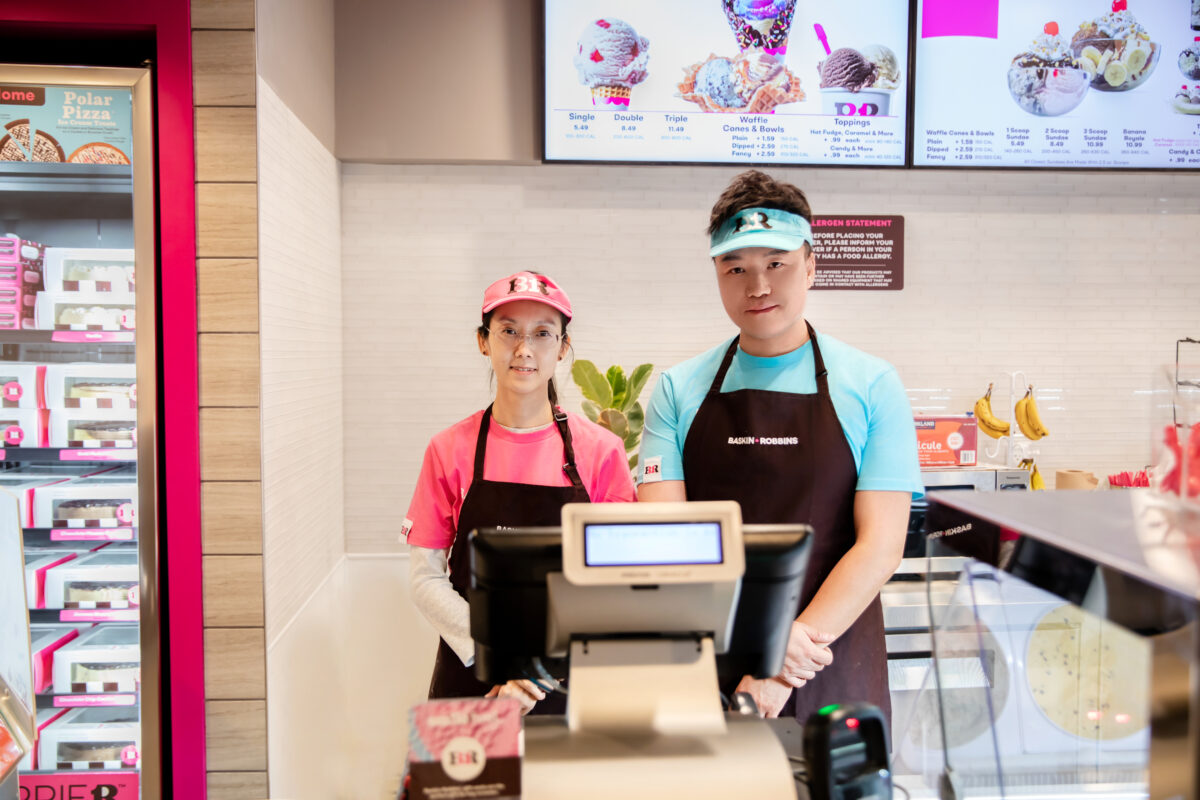
The Baskin-Robbins team in Ottawa at the new Westboro store. Photo supplied
Ottawa entrepreneurs Ronnie Liu and Lina Qu have opened their second Baskin-Robbins location in the city’s bustling Westboro Village at 395 Richmond Road. This store is part of their ambitious 10-location expansion agreement with Baskin-Robbins, which features a fresh “Moments” design.
The 950-square-foot shop is the ninth in Ottawa, offering an inviting space for families, professionals, and students.
Liu and Qu’s journey as franchisees began with their love for Baskin-Robbins and a desire to serve their community. Liu started his career with Baskin-Robbins as a part-time employee while studying at the University of Ottawa. Soon, he realized that his passion lay in customer service, prompting him to leave his software engineering career to open his first franchise.
“Working with Baskin-Robbins didn’t feel like a job – it became a lifestyle,” Liu said in an interview. Since then, he’s expanded his portfolio to five locations across Ottawa, creating joyful experiences for each customer.
Lina Qu and Ronnie Liu in the new Westboro Baskin-Robbins in Ottawa. Photo supplied
Qu joined the business shortly after and made her own career shift, transitioning from restaurant management to Baskin-Robbins franchising. “The history and community appeal of Baskin-Robbins drew me in,” Qu said. She now manages four Ottawa locations and believes strongly in the brand’s ability to bring people together.
Their shared vision has turned them into successful multi-store franchisees, creating jobs and making each location a community hub.
Baskin-Robbins Westboro Features Community-Focused ‘Moments’ Design
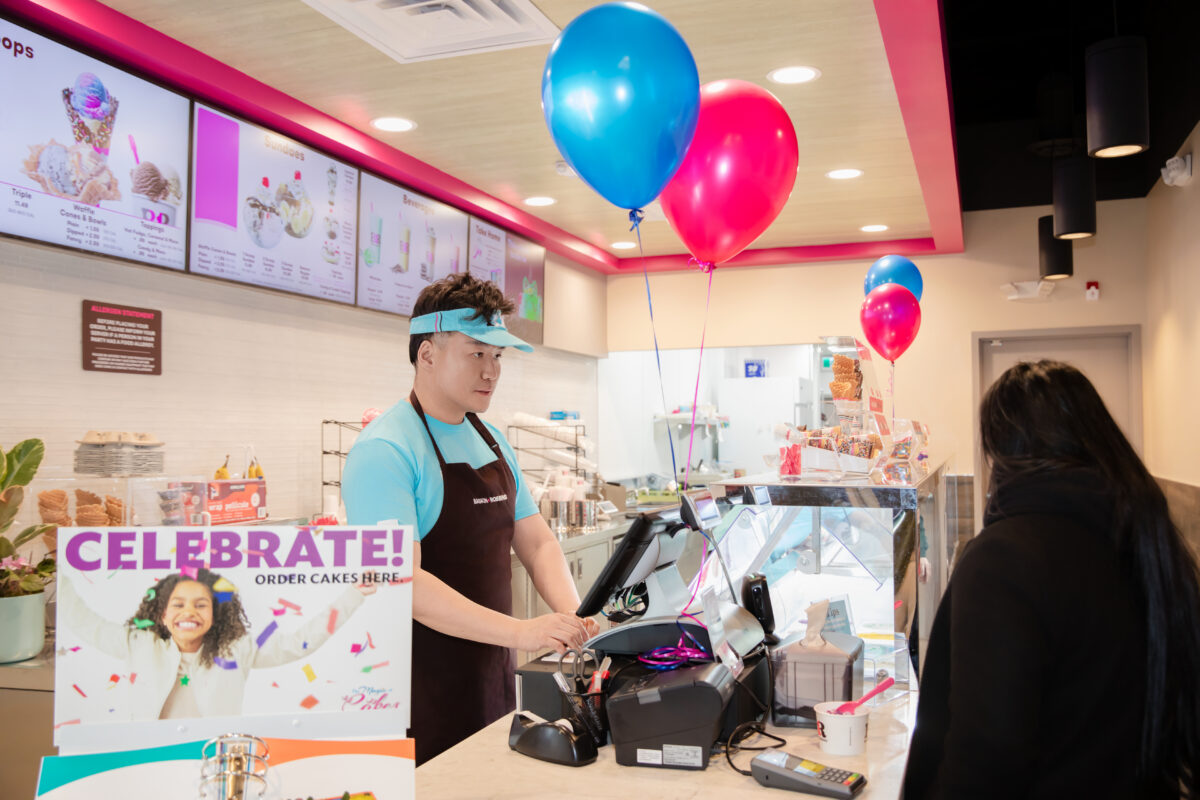
The new Westboro Baskin-Robbins showcases the brand’s “Moments” design. This updated look emphasizes comfort, with cozy seating, digital menu boards, and easily accessible display cabinets. Guests can enjoy Baskin-Robbins’ famous 31 flavours displayed in crystal-clear cabinets designed for better viewing. “This new look enhances the customer experience and aligns perfectly with Westboro’s family-friendly vibe,” Liu explained.
The store includes a colourful mural that’s quickly become a selfie spot, especially popular with younger visitors. Positioned close to the Quebec border, this location attracts customers from Gatineau, who can’t currently find a Baskin-Robbins location in the area. The Westboro store offers a welcoming experience, inviting guests from both Ottawa and Quebec to gather and enjoy their favourite treats.
With the Westboro store, Liu and Qu also expanded their cake display space, which has become an important part of their business. “Our cakes have really taken off,” Qu shared, explaining that the custom options let guests personalize their cakes for different celebrations. This focus on customization and community service aligns with what Ottawa residents value, they noted.
Ronnie Liu with customers in the Baskin-Robbins Westboro store in Ottawa. Photo supplied
An Ambitious Expansion Strategy for Baskin-Robbins in Ottawa
The Westboro location marks the start of a broader plan for Baskin-Robbins in Ottawa. In 2022, Liu and Qu signed a 10-location development agreement with the brand. “Ottawa has been incredibly supportive,” said Qu. “We’re excited to grow in areas like Brockville and Gatineau.” Both franchisees are hands-on in selecting locations, scouting neighbourhoods, and collaborating with local brokers to find ideal spots.
The duo also sees potential in expanding into Quebec, with future locations planned for Montreal and other parts of the province. “Expanding in Quebec is a natural next step,” Liu said. “We want to introduce Baskin-Robbins to areas where people are looking for quality ice cream and a welcoming experience.”
Liu and Qu carefully select locations that meet their vision for community-centred stores where guests can gather, enjoy quality treats, and celebrate together.
In addition to expansion, Liu and Qu say they are committed to supporting local employment. They hire local students and young professionals to build a strong team and plan to promote from within as they open new stores. “We want our team to grow with us,” Liu said.
Liu and Qu’s entrepreneurial journey is a testament to their dedication. By creating spaces that blend tradition with a modern twist, they bring new energy to Baskin-Robbins’ legacy.
Tahini’s Restaurants, renowned for its Mediterranean fusion cuisine and recognized as one of Canada’s fastest-growing restaurant chains, is opening a new location in Vaughan, Ontario.
The company said in a news release that the restaurant, situated at 5-9960 Dufferin St, Maple, officially opened its doors this week in a vibrant and bustling area, ready to serve the wider Vaughan community. Food lovers are invited to indulge in its bold, fresh and innovative flavours that promise to elevate their dining experience, it said.
“Known for its authentic Mediterranean fusion dishes, the Vaughan location brings a fresh twist to the city’s culinary scene, featuring the same signature dishes that have made the brand a hit across Canada, including loaded shawarma platters, fresh falafel wraps and the fan-favourite fusion bowls,” said Tahini’s.
“We’re beyond excited to bring Tahini’s to Vaughan,” said Omar Hamam, Founder and CEO. “This new location is all about celebrating our passion for inventive, delicious food, and we can’t wait to serve the Vaughan community with our signature flavours and hospitality.”
The company said Tahini’s Vaughan franchise owner Mahmood Hakimyar brings a wealth of experience to this new location, having a deep understanding of what it takes to build a thriving franchise. Hakimyar’s journey began in the late 1990s, working alongside his parents, where he gained valuable experience that laid the foundation for his future success. Building on those early lessons, he expanded his efforts and eventually became the number one franchisee for Pizza Nova, it explained.
“I’m absolutely thrilled to be serving the vibrant community of Vaughan. Continuing the legacy my parents started means everything to me, and I’m proud to honour them by upholding the same standards of quality and service they instilled in me,” said Hakimyar. “We invite everyone to experience Tahini’s firsthand—where great food meets fast, friendly service.”
With 50 thriving franchise locations already in operation, Tahini’s is set to amplify its presence across Canada and the United States with ambitious plans for global expansion. The brand is projected to double its footprint, aiming for a remarkable total of 100 restaurants by 2025, said Tahini’s.
RONA inc., one of Canada’s leading home improvement retailers operating or servicing some 425 corporate and affiliated stores, has announced that Joel and Josh McPhail have acquired the RONA store in Portage la Prairie, Manitoba.
The retailer said the new owners are ensuring the store’s future, founded in 2007 and converted to the banner in 2014, while maintaining some 50 jobs.
“With this acquisition, the McPhail brothers, two accomplished sales management and business development executives, are joining forces to carry out their retail project. Their experience spans a wide range of industries, including new housing construction, development, and property management. By taking over the reins of this RONA store, they’re bringing their ambitions to life in the Portage la Prairie community where their friends and families live,” said the retailer in a news release.
“Our goal is to make better use of the store’s huge sales floor and revise the product merchandising strategy to improve customer experience,” said Joel McPhail, co-owner. “We’ll also be reviewing the overall product lineup to better meet our customers’ needs and adapt to the realities of the local economy, which is focused mainly on manufacturing, transportation, and framing construction,” adds Josh McPhail, partner and co-owner of the store.”
The McPhail brothers also plan to open a garden centre as early as spring 2025, which will add 50 to 100 new seasonal products, while creating additional seasonal jobs, added the company.
Alain Ménard
“Joel and Josh McPhail are passionate about retail, and we are delighted by their decision to become owners of the RONA Portage la Prairie store. They perfectly embody the vitality and entrepreneurial spirit of our network of affiliated dealers, and we’re delighted to welcome them onboard,” said Alain Ménard, Senior Vice-President, RONA Affiliated Dealers.
RONA inc. is one of Canada’s leading home improvement retailers headquartered in Boucherville, Quebec. The RONA inc. network operates or services some 425 corporate and affiliated dealer stores under the RONA+, RONA, and Dick’s Lumber banners.
Healthy Planet, Canada’s largest health and organic retailer, opening its third location in Ottawa.
The new store, located at 1600 Merivale Road, will officially open its doors to the public on November 22, further expanding Healthy Planet’s presence in the city due to growing demand in the area, it said in a news release.
The company said the Ottawa Merivale location will offer the community a wide range of health and wellness products, including organic produce & foods, vitamins, supplements, natural beauty products, sports nutrition and eco-friendly household items. Healthy Planet has built a reputation as a trusted destination for health-conscious shoppers across Canada by providing affordable, high-quality products that support a natural and healthy lifestyle.
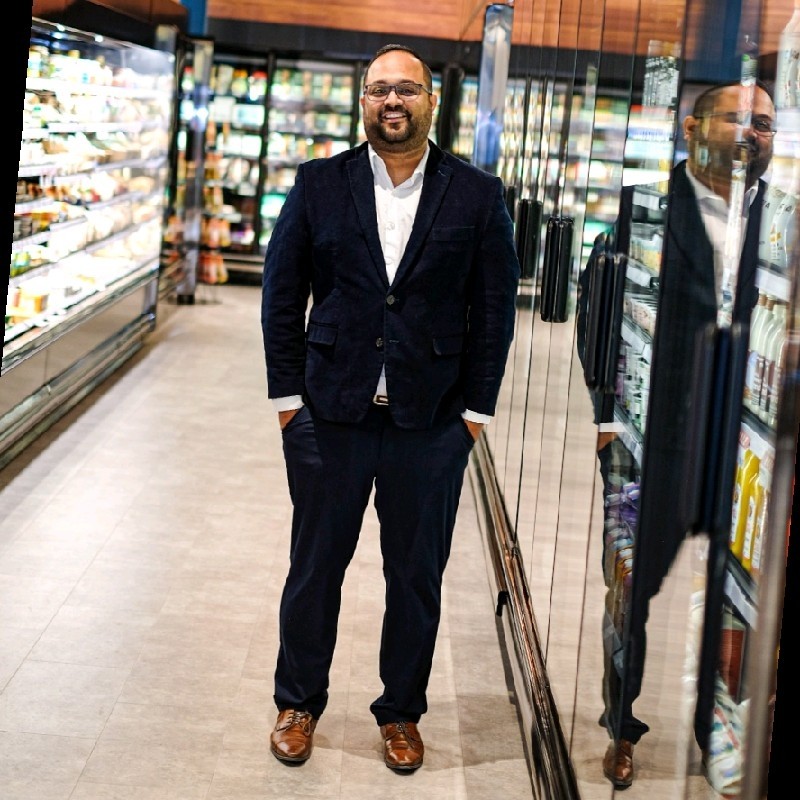
Muhammad Mohamedy
“We are thrilled to open our new location in Ottawa and bring our extensive selection of health and wellness products to even more Ottawa residents,” said Muhammad Mohamedy, General Manager of Healthy Planet. “Our goal is to make healthy living accessible to everyone, and this new store allows us to serve the growing community in Ottawa with the products they need to support their health and well-being.”
Customers visiting the new store can expect a wide selection of organic produce, dietary options, including vegan, gluten-free, and organic products. Healthy Planet is committed to offering a comprehensive shopping experience where customers can find everything from fresh, organic groceries to natural skincare products all under one roof and ask dietary professionals and naturopaths for advice onsite, said the company.
“From a humble kiosk in an Ontario strip mall to a nationwide phenomenon, Healthy Planet has become Canada’s largest organic grocery store chain, proudly operating 37 locations and growing. As the country’s premier destination for health and wellness, we are also Canada’s largest health and wellness e-commerce platform,” says the company.
“Our mission is twofold: ensuring affordability and deepening our connection with every customer. We offer an extensive selection of health foods, organic produce, and healthier alternatives to everyday staples. Beyond food, we provide a vast array of vitamins, herbs, supplements, sports nutrition, and natural beauty products—catering to the entire family, including infants, children, and pets.
“Our online store, www.healthyplanetcanada.com, enhances your shopping experience with intuitive features like the Health Conditions page, guiding you to products that align with your health goals.
“Every Healthy Planet location houses holistic nutritionists ready to help you find the right products to live a healthier life. We also offer access to naturopathic doctors and host free classes and seminars to empower you with knowledge about your nutritional needs. Our website is enriched with healthy living articles and information to support you and those you love.”